
Bloomberg

Nvidia Is on Sale and Cathie Wood Is a Big Buyer

(Bloomberg) — A rebound for Cathie Wood’s exchange-traded funds may depend in part on an equally battered large-cap technology stock that’s been a long-time favorite of hers — Nvidia Corp. 

ETFs controlled by the growth stock proponent’s ARK Investment Management LLC have been loading up on Nvidia shares, purchasing more than 400,000 in September, according to the firm’s daily trading disclosures. ARK funds held more than 675,000 shares as of June 30, according to data compiled by Bloomberg. 

Nvidia shares have plunged 55% this year, the biggest drop among tech stocks with market values of $100 billion or more. Sales growth has slowed at a time when valuations for rapidly expanding companies have come under intense pressure amid soaring interest rates. The stock rose 0.5% on Monday.

That’s left the stock cheaper than it was last year when its market value was climbing toward $1 trillion. Yet at 32 times projected earnings, its still priced above its average over the past decade.

Wood has long been a fan of Nvidia, whose graphics processors are used in personal computers and for complex computing tasks required for artificial intelligence. Shares of the Santa Clara, California-based company have been part of her portfolios since ARK began in 2014, along with electric-car maker Tesla Inc. 

Still, ARK’s conviction has wavered at times. The firm sold nearly 300,000 Nvidia shares on Aug. 23, the day before the chipmaker reported earnings in which its quarterly revenue forecast fell about $1 billion short of the average Wall Street estimate. ARK representatives didn’t respond to inquiries seeking comment.

“Nvidia is a high-quality company and while it was expensive earlier this year, the correction has made it look pretty attractive at these levels,” said Greg Taylor, chief investment officer at Purpose Investments Inc.

Wood’s affinity for Nvidia was a massive boon as the shares soared from about $4 at the start of 2014 to more than $330 late in 2021, when Nvidia’s market value peaked at more than $800 billion. This year, however, the stock has been a big drag. Nvidia has fallen 60% from a Nov. 29 record, shedding about $500 billion in market value along the way. 

Of course, Wood has been criticized as her portfolios have taken a beating with economic conditions weighing disproportionately on the high-growth, high-valuation stocks she tends to favor. Her $8 billion flagship ARK Innovation ETF has fallen 55% this year.

As for Nvidia, Wall Street has been slashing earnings estimates. Projections for 2023 profits under generally accepted accounting principles have fallen more than 50% over the past three months, according to data compiled by Bloomberg.

Tech Chart of the Day

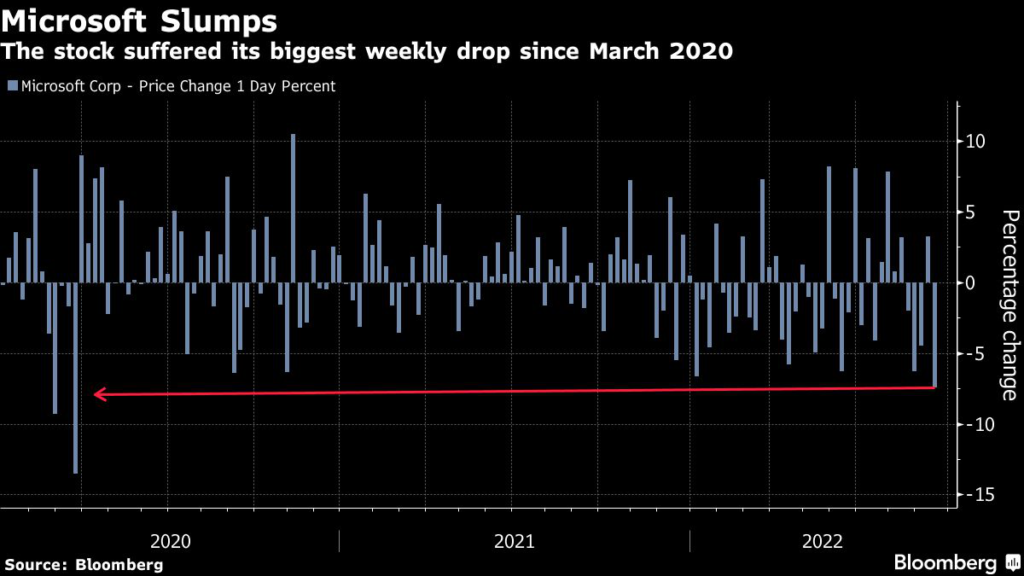
The Nasdaq 100 Index fell 5.8% last week, as a reading on inflation fueled its biggest weekly percentage drop since January, and the selling was especially severe in Microsoft Corp. The software giant dropped 7.5%, its biggest slump since March 2020. The stock, which is down 27% this year, closed at its lowest level since June.

Top Tech Stories

  • China’s heated rivalry with the US over tech supremacy is adding fresh pain points to the world’s second-largest stock market, as the Biden administration steps up efforts to reduce economic reliance on the Asian nation.
  • The UK’s Financial Conduct Authority published a warning to consumers about Sam Bankman-Fried’s crypto exchange FTX, saying it isn’t authorized by the regulator to offer financial services or products in the country.
  • The App Association brands itself as the leading voice for thousands of app developers around the world. In reality, the vast majority of its funding comes from Apple Inc.
  • Oyo Hotels, the once high-flying Indian startup, is reviving plans for a stock-market debut after cost cuts and a recovery in travel helped it reduce losses.
  • Sea Ltd. is preparing to fire 3% of Shopee employees in Indonesia, part of a broader wave of regional job cuts intended to curb ballooning losses and win back investors. The Singapore-based company will begin notifying affected staff Monday at its cash-burning e-commerce arm, according to a memo seen by Bloomberg News.
  • A slide in the Hang Seng Tech Index took the gauge near oversold territory for the first time since a March rout, indicating extreme bearishness that some technical traders see as a sign of rebound momentum.
  • A hacker published authentic, pre-release footage from development of Grand Theft Auto VI, the most anticipated video game from Take-Two Interactive Software Inc.
  • Li Zexiang grew up in rural China during the Cultural Revolution, when capitalists were the enemy. Now the 61-year-old academic has quietly emerged as one of the country’s most successful angel investors, backing more than 60 startups including drone giant DJI.
  • MicroStrategy Inc. co-founder Michael Saylor, one of the biggest advocates of Bitcoin, said the software update of the Ethereum blockchain serves to boost the outlook for the world’s largest cryptocurrency.
  • If you work in US film and TV, the bad news is arriving almost daily. A multiyear boom in film and TV production, driven by media companies racing to sign up subscribers for their new streaming services, has come to a painful halt, giving way to firings, introspection and handwringing.

(Updates to market open)

More stories like this are available on bloomberg.com

©2022 Bloomberg L.P.

Do Kwon at Risk of an Interpol Red Notice as Net Tightens

(Bloomberg) — South Korean prosecutors have asked Interpol for help in arresting Do Kwon, the progenitor of a $60 billion cryptocurrency wipeout, as they seek to charge him with alleged crimes including breaking capital-markets laws. 

“Prosecutors on Monday have made a request to Interpol for their assistance to locate Kwon, whose whereabouts remain unknown, and to have him handed over to Korea,” the prosecutors office said late Monday in a text message. 

Interpol would typically issue a red notice seeking assistance from law enforcement globally to make an arrest after receiving an official request for help. It could take about a week before a notice is issued. 

Kwon had moved from South Korea to Singapore, where his now collapsed Terraform Labs project had a base, but the city-state says he’s no longer there. Kwon has denied being on the run, even as prosecutors in Seoul seek his detention and say he’s trying to avoid redress. 

There has been “circumstantial evidence of escape” ever since he left for Singapore, and that is why an arrest warrant was issued in the first place, the prosecutors’ office said earlier.

The implosion of the TerraUSD algorithmic stablecoin and its sister token Luna sparked huge losses in crypto markets, which were already reeling from tightening monetary policy. Digital assets have yet to recover and regulators are pouring over the wreckage to see how to avoid a repeat. In South Korea, earlier ardor for crypto is being usurped by growing disdain.

Kwon tweeted over the weekend that he doesn’t “have anything to hide” and is in “full cooperation” with officials but didn’t publicly reveal his location.

“We are in the process of defending ourselves in multiple jurisdictions — we have held ourselves to an extremely high bar of integrity, and look forward to clarifying the truth over the next few months,” he also said on Twitter.

However, the Yonhap News Agency in a report cited prosecutors as saying that Kwon is not cooperating with probes and has told investigators via an attorney that he has no intention of appearing before them for questioning.

Kwon faces arrest in South Korea along with five others over the Terra unraveling. Officials could cancel his passport, which in theory would require him to return to Seoul within 14 days of receiving the notice of revocation.

He has a Singapore employment pass which is due to expire Dec. 7 and an application for another pass is pending, government records show.

Not So Stable

The TerraUSD stablecoin, also known as UST, crumbled from its dollar peg earlier this year and brought down the ecosystem Kwon had built. That’s triggered probes as far afield as the US amid renewed regulatory scrutiny of stablecoins — tokens supposed to be pegged to an asset like the dollar. 

Crypto companies, meanwhile, are also waking up to the need for far stronger risk management after a series of blowups including Terra, the Three Arrows Capital hedge fund and crypto lender Celsius.

“Officials are asking questions like, how exposed were companies to some of these players that went down, and they want to take measures to make sure counterparty risk is addressed,” said Sagar Sarbhai, head of business solutions and advisory at Fireblocks Inc. “People are concerned crypto could have a contagion effect and are being cautious.”

(Updates with comment from prosecutors office in second paragraph.)

More stories like this are available on bloomberg.com

©2022 Bloomberg L.P.
Ralph Lauren Sees Faster Growth on Higher Prices, New Customers

(Bloomberg) — Ralph Lauren Corp. is targeting sales growth over the next three years that’s faster than Wall Street’s estimates, with the fashion brand aiming to pick up new customers and continuing to raise prices. 

The New York-based apparel company is targeting revenue growth in the mid- to high-single digits in each of the next three fiscal years, including the current one, according to a statement published Monday ahead of a presentation to investors. The new outlook, which excludes currency-related fluctuations, covers the fiscal years that run through the first three months of 2025. 

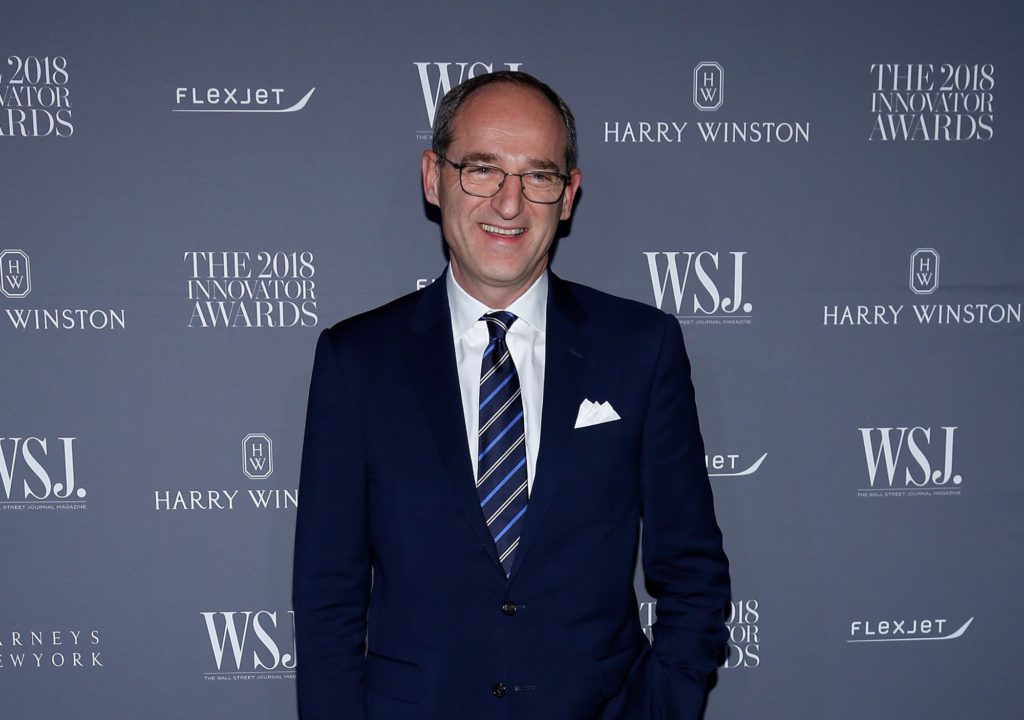
“This company is now poised to accelerate growth and value creation, and we have the momentum to prove it,” Chief Executive Officer Patrice Louvet said in an interview. Canada and the US in particular represent a growth opportunity that investors may be underestimating, he added. 

Ralph Lauren’s strategy builds on the company’s work in recent years to close unproductive stores while cutting back on promotions and offering pricier items. If achieved, high-single digit sales growth would outpace the average of estimates compiled by Bloomberg, which show analysts expecting expansion of 1.6% in the current fiscal year and about 4.5% in the following two periods. 

Fewer Discounts

Ralph Lauren is targeting average price increases for it merchandise in the mid-single digit range over the next several years, Louvet said. The figure, known as average unit retail, has climbed 64% since the company’s last investor day in 2018, he added. The company has achieved this, in part, by decreasing its reliance on discounts in department stores. Ralph Lauren now sells nearly two thirds of its products via its own stores and websites.

Those higher average prices have helped to boost sales and attract more affluent customers that are willing pay higher prices — a trend retailers refer to as “elevating the brand.” Ralph Lauren won’t tarnish its renewed cache by resorting to heavy discounting this holiday season like it has in past years, Louvet said. 

Still, he anticipates major promotions at the end of the year from retailers that are trying to regain lost market share — or whittle down excess merchandise that has built up because of supply-chain snafus. 

“We want to be a lifestyle luxury company,” he said. “We won’t be oblivious to the environment we operate in, but we will not resort to aggressive promotional activity to drive our business.” 

Ralph Lauren will continue to cultivate younger customers, who Louvet credits with helping to push online sales to 26% of revenue. He expects that figure to reach about 33% in the next several years. 

The company is also betting on growth in women’s merchandise in the long term and ultimately aims to have the category represent half of sales — up from around 30% now. Louvet said he wants to seize on the fact that more than half of the customers who come into Ralph Lauren stores are women, but they are often shopping for male friends and family. 

Operating Margin

Ralph Lauren is targeting operating margin of at least 15% by fiscal 2025. That’s higher than Wall Street’s expectations: Analysts surveyed by Bloomberg see the gauge coming in at 12.3% this year and rising to 12.9% in fiscal 2025. 

The company, which reiterated its earlier fiscal 2023 guidance from August, is planning to spend about 4% to 5% of revenue on capital expenditures annually during the three-year span. Ralph Lauren aims to open several hundred more stores in the next three years, mainly in China, South Korea and Japan, Louvet said. 

In the US, the company has space to expand in California and the West Coast, he said. Ralph Lauren plans to open 15 to 20 more stores in the US through the beginning of 2025.

The company will return approximately $2 billion to shareholders over the period via dividends and share repurchases. 

The company’s presentation starts at 10:15 a.m. in New York on Monday. 

More stories like this are available on bloomberg.com

©2022 Bloomberg L.P.
Bitcoin Drops to 3-Month Low; Ether Extends Swoon Since ‘Merge’

(Bloomberg) — A slide in cryptocurrencies Monday sent Bitcoin to a three-month low as sentiment took a knock from a wave of monetary tightening that’s set to stretch from Europe to the US this week.

The largest digital token sank as much as 7.4% and was trading at $18,644 as of 7:28 a.m. in New York. That’s the lowest since digital-asset prices tumbled after the collapse of crypto lender Celsius in June. Ether shed up to 6.6%, struggling to hold the $1,300 mark. Coins like XRP and Polkadot posted heavier losses.

Investors are bracing for volatility from the jumbo Federal Reserve interest-rate hike expected Wednesday to fight price pressures. Higher borrowing costs are sapping the liquidity that the crypto sector relies on. US equity futures were in the red and a dollar gauge pushed higher in signs of wider caution.

The backdrop is such that “in this inflationary environment macro trumps everything,” wrote Antoni Trenchev, managing partner at crypto lender Nexo.

Ether, the second-largest token, was at a two-month low. A jump in the coin since mid-June — spurred by hype around an upgrade of the Ethereum blockchain to slash energy usage — is unwinding now the revamp is done.

An additional token investors received after the Ethereum revamp continued to tumble. EthereumPOW, as the offshoot is known, represents much of the legacy computing operations of the blockchain that chose not to participate in the software update. It was down 40%, according to CoinGecko data.

The XRP token affiliated with Ripple Labs Inc. was among the biggest decliners, shedding as much as 13.5%. That came amid reports that the firm and the US Securities & Exchange Commission prefer an immediate ruling in a court case over whether Ripple was “reckless” in claiming XRP isn’t a regulated security.

The market value of digital tokens is down more than $70 billion in the past 24 hours to $941 billion — a far cry from the $3 trillion peak in 2021, according to CoinGecko figures. Tightening financial conditions and spectacular blowups at leveraged crypto firms sparked a rout in prices this year.

Bitcoin is down almost 60% this year. If the price drops below the $17,599 reached on June 18, it would be at the lowest level since December 2020.

More stories like this are available on bloomberg.com

©2022 Bloomberg L.P.
Peter Thiel-Backed Video Platform Rumble Set to Start Trading After SPAC Deal

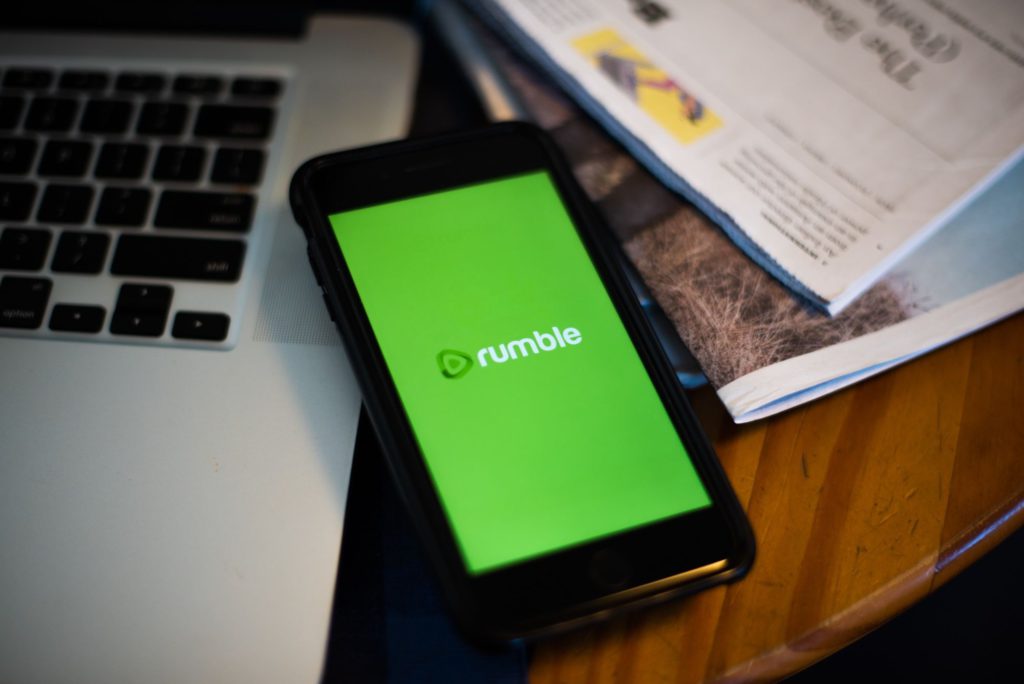
(Bloomberg) — Rumble, the conservative video network backed by billionaire Peter Thiel, is set to become a publicly traded company Monday through a deal with a blank-check firm that will value the business at more than $2 billion. The merger with CF Acquisition Corp. VI, a special purpose acquisition company backed by Wall Street firm Cantor Fitzgerald, is expected to deliver $400 million in proceeds to Rumble.

Rumble, which will trade under the ticker symbol RUM, is one of a growing number of alternative media sites attracting new users as US political divisions intensify. Other conservative apps, including Parler, Gettr and Donald Trump’s Truth Social, have all been downloaded millions of times globally.

Rumble was founded in 2013, but its video sharing service didn’t really take off more recently. During the 2020 election and its aftermath, some conservatives grew frustrated with content moderation policies on large tech platforms that they said unfairly restricted their speech around topics including the pandemic and the Jan. 6 US Capitol riots. 

In the month of August, Rumble’s monthly app installs surged by 250%, pushing the company’s total installations to 7 million, according to data from research firm Sensor Tower. Competing apps Parler, Gettr and Truth Social have been installed 11.4 million, 7.2 million and 3.3 million times respectively, Sensor Tower data show. 

Rumble plans to use some of the proceeds from its SPAC deal to bring more creators to its platform and attract a larger audience. The platform now features daily live shows from the likes of Glenn Greenwald and Russell Brand that are exclusive to the platform. It also features right-wing commentator Dan Bongino along with other high-profile conservatives.

Rumble has plans to create its own cloud service — a move designed to ensure continuous operations independent of providers with more stringent content policies — and an ad network. Trump Media and Technology Group, which operates Truth Social, announced in August it had joined Rumble’s ad platform as its first publisher. The company is also a potential early customer for Rumble’s future cloud offering, according to Rumble’s filing with the US Securities and Exchange Commission. 

“We create technologies that are designed to be immune to cancel culture, because everyone benefits when people have access to more ideas, diverse opinions and dialogue,” Rumble wrote in its filing. “We are on a mission to protect a free and open internet.”

For Thiel — known as much for his early investments in Facebook and Palantir Technologies Inc. as for his political support for Donald Trump — Rumble is a sign that his long-held ambition to launch a conservative news network is taking shape. Thiel co-led an investment in the company last year along with VC firm Narya Capital. Narya, based in Cincinnati and named for a ring in the Lord of the Rings books, is also backed by Thiel and led by his one-time business associates Colin Greenspon and Ohio Republican Senate candidate JD Vance.

More stories like this are available on bloomberg.com

©2022 Bloomberg L.P.
Morgan Stanley Southeast Asia M&A Head Pflug to Join Raine, Sources Say

(Bloomberg) — Jonathan Pflug, head of Southeast Asia mergers and acquisitions at Morgan Stanley, will be leaving the US bank to join Raine Group as the boutique adviser launches its Singapore office, according to people with knowledge of the matter.

Pflug, a managing director who is also head of Singapore coverage at Morgan Stanley, will join the integrated merchant bank, said the people, who asked not to be identified as the information isn’t public yet. He will be a managing director at Raine, while the timing of the move hasn’t been finalized, the people said.

Representatives for Morgan Stanley and Raine declined to comment.

Pflug has been with Morgan Stanley for more than a decade and assumed his current role with the US bank in 2018, according to his LinkedIn profile. He helped advise on over $90 billion of transactions in Southeast Asia including Cuscaden Peak Pte’s acquisition of Singapore Press Holdings Ltd. as well as the merger of Celcom Axiata Bhd. and Digi.com Bhd. in Malaysia, the profile shows.

Raine works on transactions and invests in sectors including technology, media and telecommunications, according to its website. The firm, which had previously advised Grab on its merger with Uber Southeast Asia in 2018,  has offices in New York, San Francisco, Los Angeles, Hong Kong, London, Mumbai, Paris and Shanghai. Its most recent major deal is the £4.3 billion ($4.9 billion) sale of Chelsea Football Club to a group led by financier Todd Boehly.

More stories like this are available on bloomberg.com

©2022 Bloomberg L.P.
Lithium Resumes Insane Gains to Add Pressure on Automakers

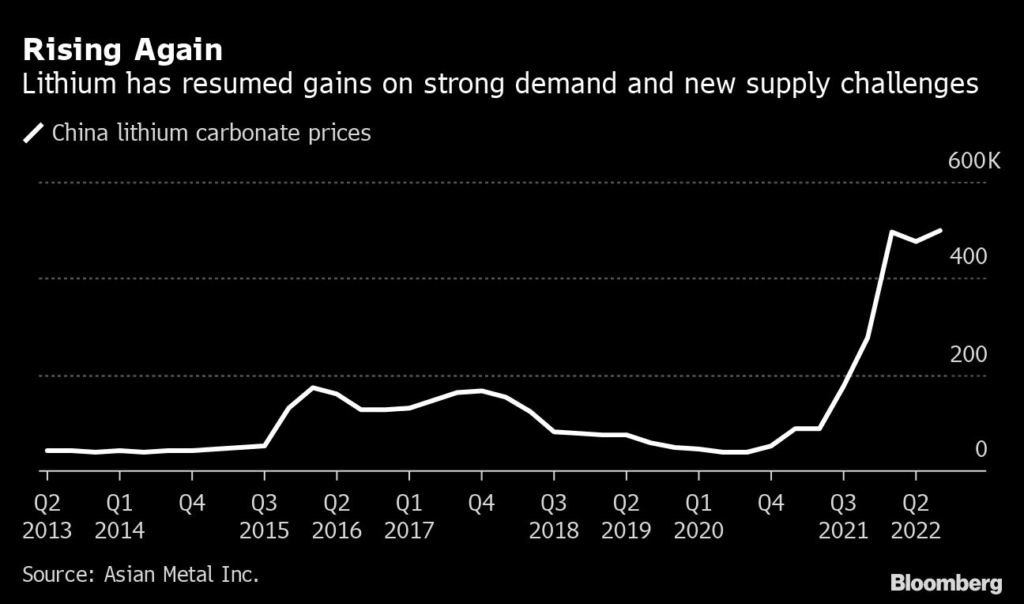
(Bloomberg) — After Elon Musk complained that lithium — the ubiquitous raw material needed in electric vehicle batteries — was trading at insane levels, and China’s authorities in March pushed key industry players to act, prices briefly began to cool. Now, they’re rising again to add pressure on automakers.

Lithium carbonate jumped to a new record Friday of 500,500 yuan ($71,315) a ton in China, according to data from Asian Metal Inc. The battery material has roughly tripled in the past year, and is more than 1,150% higher than a pandemic low touched in July 2020. Prices of lithium hydroxide are also gaining and closing in on an all-time high set in April. 

That threatens to extend a squeeze on battery manufacturers and car producers that’s already eroding profits and prompting some suppliers to hike their own rates.

Earlier this month, a battery-making unit of China’s top lithium supplier, Ganfeng Lithium Co. — which provides small power packs used in wearable products and earbuds for companies like Xiaomi Corp. — said it was reassessing its prices because of a substantial increase in cell costs. Shanghai-based EV producer Nio Inc.’s Chief Financial Officer Steven Feng recently told investors higher battery costs had crimped vehicle margins in the second quarter, and that uncertainty over prices looked set to continue.

For the coming months, the sector is wary over issues like power supply in China, still the epicenter of production of lithium-ion cells and battery materials, during the winter heating season. Electricity outages in August in Sichuan province — home to more than one-fifth of China’s lithium refinery capacity — dented output, and added to market tightness. 

Supply is continuing to lag behind rising forecasts for vehicle demand. The China Passenger Car Association projects EV sales in the world’s top market will hit a record 6 million this year, double the total in 2021. At the same time, commodities producers are struggling to bring new projects online, and to secure financing of approvals for future developments.

“A lot of OEMs and battery producers have been disappointed and have been let down by new producers or suppliers in the lithium space,” in the past several months, raw materials firm Livent’s CFO Gilberto Antoniazzi said at a conference this month.

Fresh concerns over the supply and price outlook prompted Chinese authorities to haul in lithium miners, refiners and other industry groups for a new meeting last week, according to the Ministry of Industry and Information Technology.

Officials asked major firms to ensure prices don’t hugely deviate from their production costs and urged consumers to strike long-term agreements. China will also help boost lithium exploration, stabilize imports and promote recycling of raw materials, according to the ministry.

Unlike an intervention in March, which at least stalled lithium’s surge, authorities aren’t likely to deliver an impact this time “unless more concrete price control measures are being introduced,” Daiwa Capital Markets wrote in a note Friday.

Global suppliers also expect the lithium rally to continue, indicating raw materials will prove an enduring headache for the EV industry.

Soc. Quimica & Minera de Chile SA, or SQM — the world’s No. 2 lithium producer — forecasts a “very tight market” for lithium in the years ahead, according to a presentation to investors in New York last week. Prices this quarter are likely to be slightly higher than the previous three months and remain elevated through the end of the year. 

Lithium production might not align with demand until the end of the decade, Chris Ellison, managing director of Mineral Resources Ltd., a supplier of lithium raw materials with projects in Australia, told investors last month. “We’re in supply deficit at the moment and it feels like it’s going to stay there through at least 2030,” he said.

More stories like this are available on bloomberg.com

©2022 Bloomberg L.P.
UK Regulator Issues Warning on Crypto Exchange FTX to Consumers

(Bloomberg) —

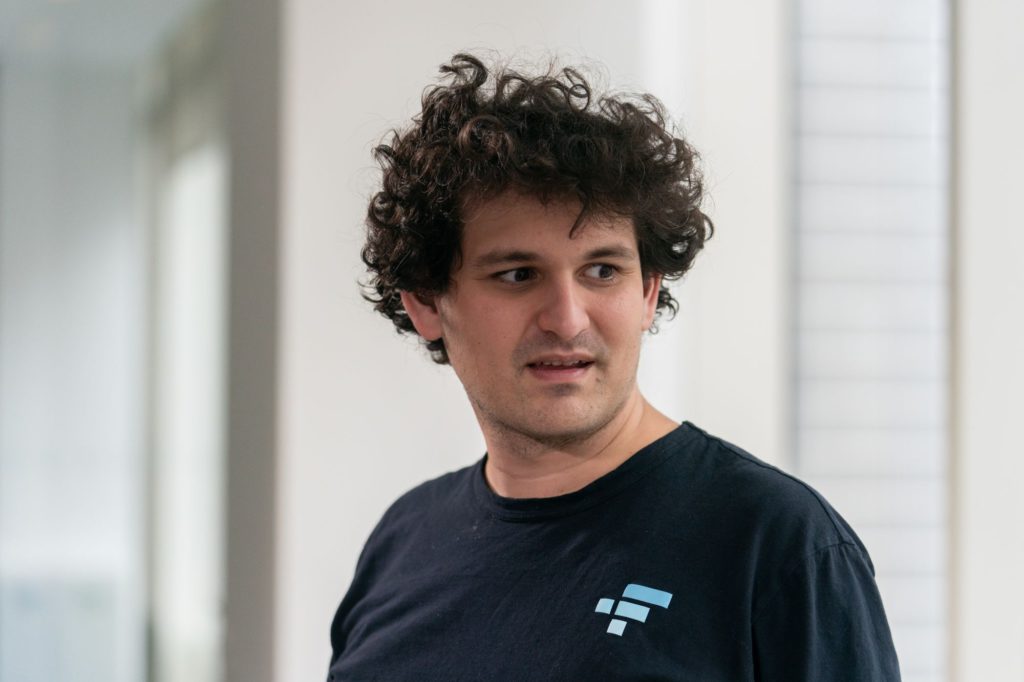
The UK’s Financial Conduct Authority published a warning to consumers about Sam Bankman-Fried’s crypto exchange FTX, saying it isn’t authorized by the regulator to offer financial services or products in the country.

The regulator said on Friday on its website that Bahamas-based FTX “is targeting people in the UK,” adding that investors are “unlikely to get your money back if things go wrong” since they won’t be protected by the country’s ombudsman service and compensation scheme.

The FCA previously issued a similar warning about Binance, another major global crypto exchange, and its activities in the UK. Dozens of regulators around the world later put out similar statements about Binance.

FTX and the FCA did not immediately respond to requests for comment.

The UK made permanent its cryptoasset register in April this year, a program that requires firms conducting crypto activity in the country to meet the FCA’s anti-money laundering standards. While some firms like Gemini, Kraken and Crypto.com are on the register, others such as FTX, Coinbase and Binance are not. All are still accessible by UK consumers.

More stories like this are available on bloomberg.com

©2022 Bloomberg L.P.
Pakistan’s Largest Fuel Retailer Planning to Build $500 Million LNG Terminal

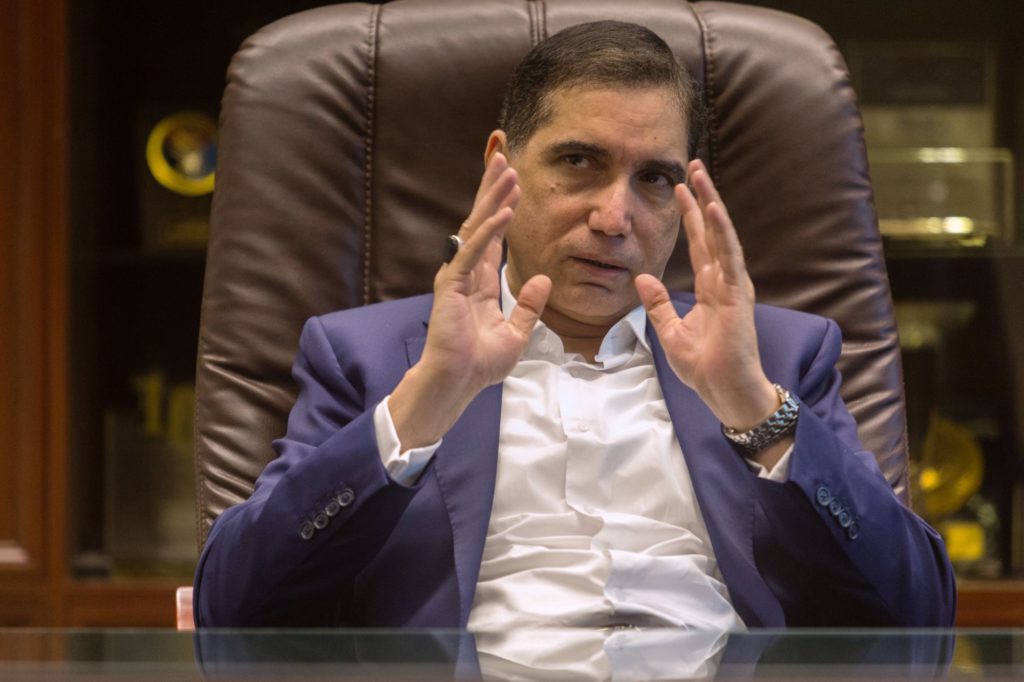
(Bloomberg) — Pakistan State Oil Co., the nation’s largest fuel importer and retailer, is planning to build a $500 million LNG terminal as part of its strategy to diversify into multiple businesses.

The import terminal will be located near Karachi and would take four years to complete, Chief Executive officer Syed Muhammad Taha said in an interview. The company has an understanding with a few large customers and has begun preliminary preparations for the project that will include Pakistan’s first LNG storage facility, he said. 

The South Asian nation has been one of fastest-growing markets for liquefied natural gas, which it mainly uses to generate electricity, after a decline in local production over the last decade. But surging prices, spurred in part by Russia’s war in Ukraine, have seen it struggle to afford the fuel this year, resulting in frequent blackouts.

“As long as there’s a geopolitical crisis in place, prices will remain elevated, but eventually it will come down,” Taha said in Karachi on Friday. “As soon as the prices are conducive we’ll go ahead.”

Europe’s Plan to Quit Russian Fuel Pushes Pakistan Into Darkness

Pakistan State Oil, which owns a network of 3,500 service stations and is the country’s largest company by revenue, may look for a partner for the project, Taha said. He didn’t offer exact details on the size of the project, whether it would be onshore or floating, or when it might be in operation by.

The country currently has two floating LNG import terminals, both near Karachi. Qatar and Mitsubishi Corp. have also said they plan to invest in terminals in Pakistan.

The country has been hit hard by the surge in fuel prices this year, and is now also dealing with catastrophic floods that have been worsened by climate change. It secured a bailout from the International Monetary Fund late last month, but had to agree to increase domestic fuel prices to get the funding.

Pakistan State Oil expects demand for gasoline and diesel to fall 5% to 7% in the year started July, and doesn’t plan to buy any more fuel oil over the period, Taha said. The government is in discussions with Middle Eastern countries on long-term deals that will satisfy about 80% of its imported gasoline requirements, he said. Pakistan already has these types of arrangement for LNG and diesel.

The fuel retailer is also planning to apply for a license to become a mobile wallet operator, and eventually start a digital bank, Taha said, adding that it’s allocating 1 billion rupees ($17.4 million) to set up a venture capital fund. 

“So going forward our objective is very clear. We want to venture into different areas.”

(Updates with details in 8th paragraph.)

More stories like this are available on bloomberg.com

©2022 Bloomberg L.P.

Who Are the Sleuths Protecting Your Crypto From Hacks?

  • Listen to Bloomberg Crypto on the iHeartRadio App
  • Listen to Bloomberg Crypto on Apple Podcasts
  • Listen to Bloomberg Crypto on Spotify  

(Bloomberg) — This episode explores a sector of the crypto universe that’s booming in the midst of a broader meltdown. 

Companies that specialize in finding vulnerabilities in crypto’s software infrastructure are flourishing. Why? Because crypto hacks and frauds are growing, with some estimating as much as $2 billion in losses stemming from these attacks.   

Bloomberg reporter Olga Kharif and senior editor Anna Irrera join me now for more about these crypto sleuths.

Follow us on Twitter @crypto, and subscribe to the Bloomberg Crypto Newsletter at https://bloom.bg/cryptonewsletter

More stories like this are available on bloomberg.com

©2022 Bloomberg L.P.

Close Bitnami banner
Bitnami
