

Bloomberg

Apple Flexes Muscle as Quiet Power Behind App Developer Group

(Bloomberg) — The App Association brands itself as the leading voice for thousands of app developers around the world. In reality, the vast majority of its funding comes from Apple Inc.

The tech giant isn’t a member of the association. But it plays a dominant behind-the-scenes role shaping the group’s policy positions, according to four former App Association employees who asked not to be named discussing internal matters.

In fact, critics note, the association’s lobbying agenda tracks closely with Apple’s — even when it’s at odds with app developers, the companies that make the individual games and programs that run on Apple’s iPhone and other devices. 

The group, known as ACT, says it’s not beholden to Apple, but confirmed that it derives more than half its funding from the company. The former employees say the actual percentage is much higher.

The relationship between Apple and ACT illustrates how big companies quietly pour money into outside groups that promote their agenda in Washington. ACT representatives regularly testify in Congress, file court briefs in defense of Apple’s positions and host annual “fly-in” meetings for developers with lawmakers. 

Rick VanMeter, a former congressional aide who is the head of rival developer group Coalition for App Fairness, said ACT’s purported representation of app developers is deceptive, given its relationship with Apple. “When you pretend to be something that you’re not in order to make a point, that’s bad for the lawmaking process,” said VanMeter. 

Cupertino, California-based Apple declined to comment for this story, but ACT executives defended the role of the company. ACT President Morgan Reed said in an interview that it “doesn’t pass the laugh test” to say the association is fronting for Apple.

“Our job is to make sure we’re paying attention to the way that government can have an impact, unintended or otherwise, on all of those small businesses making cool software products,” Reed said.

Reed and other ACT executives said that they determine policy positions based on the preferences of their members and don’t take direction from Apple, though they take Apple’s positions into account.

ACT spokesperson Karen Groppe declined to say how much of the group’s funding comes from Apple other than to say it’s more than half. Contributions from all donors topped $9 million in 2020, according to the most recently available data from disclosure filings, suggesting Apple makes a multimillion-dollar contribution.

Apple is a major force in the industry. Its App Store is a virtual marketplace for apps, a lucrative business for both the developers and Apple. The company takes a 15% to 30% cut of sales — representing billions of dollars a year.

But many app developers object to the fees and restrictions, which Apple insists it needs so it can vet the systems to ensure the safety of its users.

Proposed antitrust legislation advancing in Congress would loosen Apple’s grip over the App Store and enable developers to circumvent the company’s cut. The measure, known as the Open App Markets Act, is backed by the Coalition for App Fairness. 

But ACT opposes the bill, arguing it would threaten the privacy and security of the App Store, echoing Apple’s talking points against the bill.

ACT’s executive director, Chelsea Thomas, is a former lobbyist on Apple’s government affairs team. 

“Understanding what bigger players in the ecosystem are thinking on policy issues is important to us to understand where the conversations are going,” Thomas said.  

ACT’s work has also drawn scrutiny from some of the developer world’s biggest players. Tim Sweeney, chief executive officer of Epic Games Inc., called the association “Apple’s fake ‘small app developer’ lobby” in a June tweet. 

Epic Games, a member of VanMeter’s Coalition for App Fairness, lost an antitrust case against Apple involving the App Store last year, but did win on some unfair competition claims. 

Both sides are appealing. ACT supported Apple in the case.

ACT’s website says it represents 5,000 developers and device companies around the world, though Reed said the number of active members is smaller. In addition to Apple, other corporate sponsors listed on its website are Verisign Inc., AT&T Inc., Intel Corp. and Verizon Communications Inc.

The group’s annual congressional fly-ins feature policy presentations to the developers by Apple representatives and tech industry experts. People who have attended them said ACT often shared talking points that mirrored Apple’s agenda before they met with lawmakers and staff.

Several ACT members said they appreciate the sessions with lawmakers arranged by ACT, even if they don’t always agree on the group’s positions.

“Is it unreasonable that there is a major donor whose position also aligns and supports all the small contributors in this space?” said Thomas Gorczynski, an ACT member and founder of software development agency DevScale. 

But VanMeter, whose coalition’s members also include Apple antagonist Spotify Technology SA, said he assumed ACT was “the unified voice of app developers” when he received materials from them during his time in Congress.

“They have sown a lot of confusion,” said VanMeter.

More stories like this are available on bloomberg.com

©2022 Bloomberg L.P.
China Nuclear Deal Held Up Over Argentina’s Reactor Fuel Demand

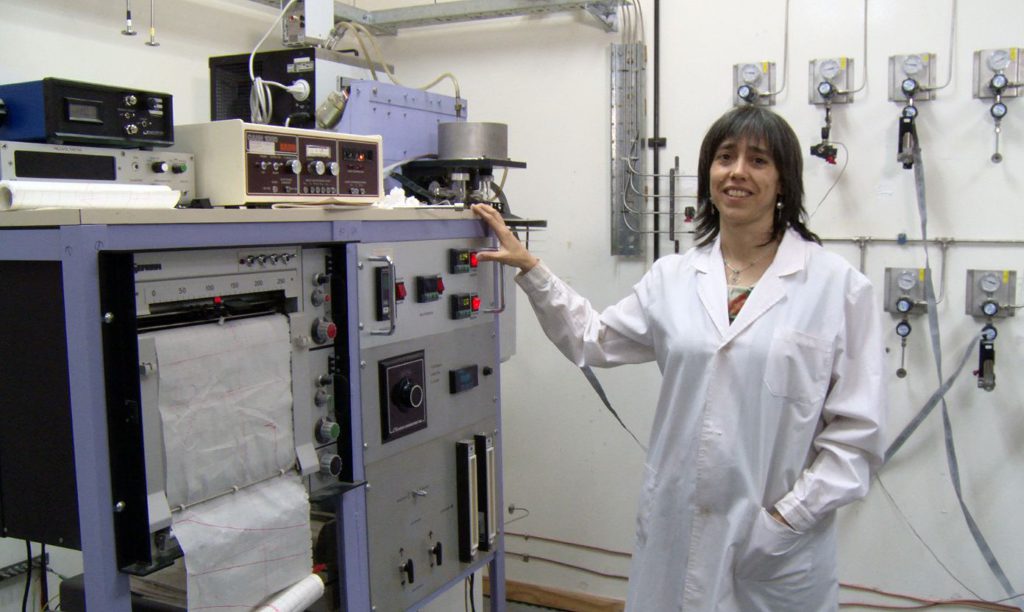
(Bloomberg) — Months after an announcement that China will build and largely finance an $8 billion nuclear power plant outside Buenos Aires, the deal is hung up over Argentina’s demand that its engineers be permitted to manufacture the reactor fuel domestically. 

Becoming the first nation licensed to make fuel for China’s Hualong One reactor would greatly advance Argentina’s atomic program. It would also signal that China is willing to license technology to trading partners, following a commercial pathway blazed by US nuclear manufacturers.

“We are trying to establish the best conditions to transfer the knowledge for making the fuel,” said Adriana Serquis, a physicist and president of Argentina’s National Atomic Energy Commission, in an interview. “The commercial balance for us is very important. We are also hoping that the Chinese understand that a deal with us is also a win for them because that opens more possibilities.” 

Licensing fuel technology could help China to sell more reactors overseas by creating more procurement options, she said, adding, “We’ve been paying attention to what’s happening in Europe.” 

Diversifying nuclear fuel manufacturing has become a big concern in the wake of Russia’s war in Ukraine. More than 100 million Eastern Europeans rely on nuclear power generated by old Soviet reactors and their fuel supplies are almost completely monopolized by Rosatom. Ukraine still relies on Russian fuel and will require years to fully diversify away from Kremlin-controlled suppliers.

Serquis is traveling to Vienna for the Sept. 26 International Atomic Energy Agency general conference, where she’ll be meeting with senior officials from China and around the globe. Climate change and skyrocketing power prices are focusing more attention on the solutions that zero-emission nuclear energy can offer. 

Argentine engineers have been working with Chinese counterparts for months in preparation for a formal agreement, which includes Argentina refurbishing a research reactor in the Chinese city of Qinshan.

“It’s a way of gaining mutual trust,” Jose Luis Antunez, president of nuclear utility Nucleoelectrica SA, said in an interview with Dialogo Chino earlier this year. The sides are discussing different scenarios, which include Beijing supplying enriched uranium to Argentina, where, under Chinese supervision, it could be turned into reactor fuel by Conuar SA. 

Nuclear fuel differs from gas and coal because it requires precision-engineered assemblies that conform to safety requirements. Sharing the technology with other countries could cement China’s growing role in nuclear markets, said Mark Hibbs at the Carnegie Endowment for International Peace. 

Read More: China Finds a New Way to Dominate the US in South America

“Beijing will obtain strategic leverage where Chinese nuclear firms do business,” said the Berlin-based analyst. “Chinese success in exporting nuclear equipment, technology and materials will open the road for China to replicate the success of the US in spreading its influence into the foreign, energy, and technology policies of China’s nuclear partners and clients.”

The growing nuclear cooperation between Beijing and Buenos Aires, which follows billions of dollars worth of Chinese investment in Argentine infrastructure, is raising alarm bells in Washington. Argentine media reported that State Department officials warned counterparts at an April meeting in Buenos Aires that the Hualong One’s safety systems may not meet international safety standards.

Deputy Assistant Secretary of Nonproliferation Policy Ann Ganzer, who led the US mission to Argentina, declined to comment. 

The deal would give Argentina a new reactor at a fraction of the price paid for similar technologies the US and Europe can offer. The pact also opens up the possibility to expand its role on international markets. Argentina is already a top supplier of research reactors to Australia, Algeria, the Netherlands and Saudi Arabia.

Argentina wants to begin selling small-modular reactors after 2025, and the China deal will help. The country’s light-water Carem technology runs on uranium enriched to the low levels needed by China’s Hualong reactors. Buenos Aires is in talks to supply its Carem reactor to Indonesia. 

“It’s important we continue building these fuel capacities,” Serquis said. “It’s important for the future of Carem.”

The Argentine Council on Foreign Relations, a private research group, listed fuel-manufacturing capacity as the top strategic priority for the country’s nuclear program. “Technological innovation aimed at the development of nuclear reactors, accelerators and the nuclear fuel cycle” including “the development and production of nuclear fuels,” is critical, says a Council report published late last year. 

Serquis said that while Argentina confronts the financing difficulties faced by poor countries, its nuclear-science advances over 70 years often surpass those of richer economies. Communicating Argentina’s capabilities has been one of the biggest challenges in negotiations with China. 

“We are not claiming to be in an equal position,” Serquis said. “We are a small economy dealing with one of the world’s biggest. Still, they don’t have to teach us the basics.”


More stories like this are available on bloomberg.com

©2022 Bloomberg L.P.
SoftBank-Backed Oyo Seeks to Resurrect IPO as Growth Resumes

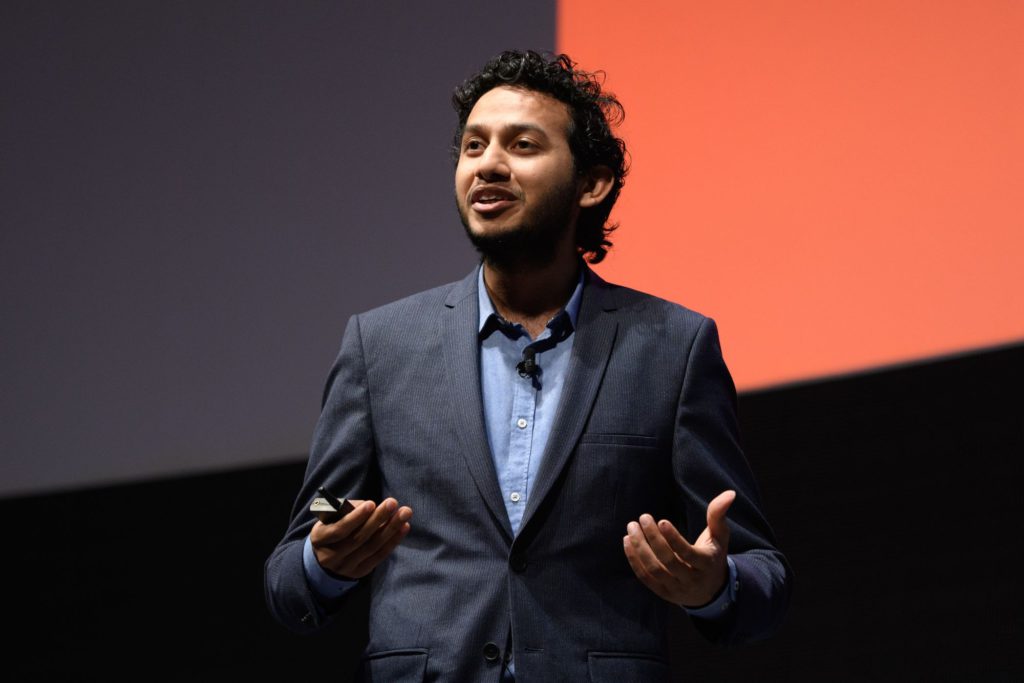
(Bloomberg) — Oyo Hotels, the once high-flying Indian startup, is reviving plans for a stock-market debut after cost cuts and a recovery in travel helped it reduce losses.

The hotel-booking company filed fresh financial documents on Monday and is now targeting an initial public offering in early 2023 provided that India’s stock market continues to hold up and economic conditions improve, according to people familiar with the matter. Oyo, formally known as Oravel Stays Ltd., is internally working toward a January IPO as executives are encouraged by a pick-up in demand, they said, asking not to be named discussing confidential plans.

Oyo had filed preliminary IPO documents in 2021, only to shelve the listing plan earlier this year after the prolonged pandemic hurt its growth and forced the company to cut thousands of jobs. It disclosed its latest financials in an IPO filing addendum on Monday, with the numbers showing narrower losses and a rebound in sales for the year through March 2022 and the following three months.

The startup is now focusing on four main regions: India, Malaysia, Indonesia and Europe, where it manages vacation homes. It has cut down operations in markets it previously considered crucial, such as the US and China, where its employees now measure in the single digits, one of the people said.

Oyo, valued at $9 billion according to researcher CB Insights, may have trouble attaining that level given rapidly eroding investor sentiment. But the company appeared determined to rein in costs and improve the bottom line, which would appeal to markets, said Manav Thadani, co-founder and chairman of hospitality industry consultancy Hotelivate.

“Nobody expected the turnaround after a series of Covid-related challenges to be so quick and so robust,” Thadani said. “It’s good to see they’ve given up expansion in China and the US and are now targeting niche markets. They are focusing on performance.”

Oyo and founder Ritesh Agarwal are trying to pull off a successful IPO after a series of setbacks in their efforts to change the hotel and lodging industry. SoftBank Group Corp. founder Masayoshi Son was an early and enthusiastic backer, and the Japanese conglomerate holds about 47% in the Gurgaon-based startup. The 28-year-old Agarwal owns about one third.

The revived listing plan also underscores how India’s stock market is bucking the trend of globally declining tech stocks. Accelerating inflation, lingering Covid-19 infections and the war in Ukraine have sent the tech-heavy Nasdaq index down 27% this year. Meanwhile India’s benchmark NSE Nifty 50 index is up 1%.

Oyo reported a loss of 18.9 billion rupees ($237 million) for the year through March 2022, nearly halving from the previous 12 months. The numbers were restated from previously undisclosed figures and included in the IPO document addendum made available by its bankers.

The annual loss before interest, taxes, depreciation and amortization shrank to 4.8 billion rupees from 18.7 billion rupees. For the three months through June 2022, earnings on that basis were 105.75 million rupees, while the net loss was 3.5 billion rupees.

Revenue from contracts with customers for the fiscal year through March 2022 increased 21% to 47.8 billion rupees, with travel picking up as the pandemic eased. Revenue is still far below the 131.7 billion rupees booked for fiscal 2020, before the full effect of the coronavirus kicked in.

Oyo filed its preliminary document, the so-called Draft Red Herring Prospectus or DRHP, for a $1.1 billion IPO in September last year, and 12 months have since lapsed without the listing being cleared. Earlier this year, it sought to file additional documents and got regulatory approval for the move.

Oyo was started in 2013 by Agarwal, then 19, who dropped out of college to travel around the country. The startup began to work with small hotels to standardize everything from bed linen to bathroom shower fittings that it then branded with its bright red & white Oyo logo.

With backing from high-profile investors such as SoftBank and Lightspeed Venture Partners, it expanded furiously into Southeast Asia, China, Europe and the US as it signed on hotel partners with agreements of guaranteed returns. At one point, founder Agarwal ambitiously targeted the title of the world’s No.1 branded stay operator.

During the pandemic, Agarwal was forced to overhaul the startup’s business model. Oyo fired thousands of employees and stopped providing hotel vendors any guaranteed returns or capital to refurbish their properties. He described the shift as a transition to an “asset light” model. Instead of offering minimum guarantees, Oyo now supports hotel and vacation home partners with technology and product services, as well as customer support. Hotel owners can self-enroll, and manage bookings and services on its app.

The new strategy helped the company become cash-flow positive in the quarter through June, and a similar positive trend has continued in the current quarter, according to one of the people.

(Updates with comments from hospitality industry expert starting in fifth paragraph)

More stories like this are available on bloomberg.com

©2022 Bloomberg L.P.

China Says No Touching Foreigners Skin-to-Skin After Monkeypox Case

(Bloomberg) — A top Chinese health official warned people against having skin-to-skin contact with foreigners to avoid contracting monkeypox, spurring a backlash among the country’s dwindling expatriate community. 

China reported its first case of the infectious disease on Friday in Chongqing, a municipality in the southwestern part of the country. The patient has been isolated and the risk of an outbreak is low, the local health commission said in a statement on its website.

Despite the reassurance, an official at the Chinese Center for Disease Control and Prevention suggested extreme steps to dodge the virus responsible for an onslaught of infections worldwide since an outbreak was reported in Europe in May. 

“To prevent possible monkeypox infection and as part of our healthy lifestyle, it is recommended that one, you do not have direct skin-to-skin contact with foreigners,” Wu Zunyou, chief epidemiologist at the CCDC, said on his official Weibo page on Saturday. 

The Chinese patient is a 29-year-old salesman who engaged in male-to-male sex when he visited Berlin in September, the CCDC said in a separate report. He then traveled to Spain before returning to China.

When asked whether the warning is official government policy, Chinese Foreign Ministry spokeswoman Mao Ning said it was “not a diplomatic issue” at a Monday news briefing in Beijing. She added: “This is an issue related to public health.” 

Not Racial

Monkeypox has been diagnosed in more than 52,000 people, mainly men, in 102 countries and led to at least 18 deaths since the start of the year, according to the World Health Organization. It is generally spread via close contact, such as touching a contaminated object or one of the skin lesions that are a symptom of the disease. There’s no evidence of a racial component. 

“The last thing we need is further demonization of the few foreigners left here,” said a media professional posting in a WeChat group largely made up of members from abroad, who requested anonymity because he works for a government-affiliated organization. “It seems that during these times that people have regressed to tribalism.”

China’s zero tolerance approach to Covid, including restrictions that curbed international travel, may have limited its exposure to the burgeoning global outbreak. The implication that foreigners were responsible for spreading it, however, was offensive to many. 

The announcement makes everyone feel angry, said a teacher from the UK in Shandong province, who asked not to be identified discussing sensitive issues. While racism happens everywhere, in most countries people know it’s wrong and they speak out about it, the teacher said. But in China, the drumbeat that foreigners are dangerous is continuous, they said, describing it as state-sponsored racism. 

AIDS Comparison

Wu cited past transmission in justifying his remarks, saying the disease spread from Europe and North America to the Western Pacific, including Australia, Singapore, Japan and Thailand. Then Hong Kong and mainland China reported infections, he said. 

“The spread of AIDS was like this, and the spread of monkeypox epidemics currently reported is similar,” Wu wrote.

The blog post also warned against direct contact with the skin of people who returned from abroad within three weeks. People should also disinfect or place a disposable cover on toilet seats if using them in public or hotel washroom facilities, he said. 

“It’s necessary and very important to strengthen the monitoring and prevention of monkeypox epidemic at the social level,” Wu added. 

(Updates with Chinese Foreign Ministry comment)

More stories like this are available on bloomberg.com

©2022 Bloomberg L.P.
Electric Big Rigs Face Uphill Trip From Shows to Highways

(Bloomberg) —

After electric cars, here come the battery trucks.

Global leaders Daimler Truck Holding AG and Volvo AB are joining dozens of commercial-vehicle makers in Germany this week to showcase their latest electric semis, with more zero-emissions vehicles debuting at the IAA Transportation show than ever before.

Daimler is unveiling the Mercedes-Benz eActros LongHaul, capable of hauling 22 tons of cargo for 311 miles before it needs to recharge. Traton SE’s MAN brand is showing off a 40-ton truck that will accommodate fast charging. Sweden’s Volvo is offering visitors test drives of its electric rigs at the Hanover event.

The key question executives will have to answer is just how long it will take for their heavy-duty vehicles to make the jump from show floor to cruising along highways. High battery prices and a virtually non-existent truck charging network remain significant hurdles just as haulers weigh investments during an unprecedented energy crisis in Europe and a slowing global economy.

“A lot more electric trucks are available now, but their adoption is lagging behind, especially in Europe,” said Nikolas Soulopolous, an analyst at BloombergNEF. “Production capacity is still ramping up slowly, there are not enough suitable public chargers available and truck batteries remain expensive.”

Still, there’s pressure to make the shift. Companies in Europe need to comply with tighter rules on trucks operating in urban areas as cities push to improve air quality. Electrifying heavy-duty vehicles will be key for tackling climate change as they’re responsible for around a quarter of the European Union’s road transport emissions.

“We’re confident about these trucks,” Karin Radstrom, chief executive officer of the Mercedes-Benz truck brand, said Monday while presenting the new vehicle at the IAA. “We want to drive this transition.” 

Brussels wants the industry to cut CO2 output of new trucks 30% by 2030, and most manufacturers are betting that battery-electric — rather than hydrogen fuel cells — will be the dominant technology to achieve that. Yet the majority of countries in the region aren’t offering anything close to the $40,000 incentives the US plans to dole out to buyers of an electric heavy-duty truck.

Traton, owned by Volkswagen AG, has pledged that half of its trucks shipped by the end of this decade will run without fossil fuels. Its Scania brand this year delivered an 80-ton electric truck to forest company SCA, which is using the vehicle to haul timber in northern Sweden. Last week, Volvo started series production of its heavy-duty electric rigs and said it has already sold more than 2,600 battery-powered trucks.

“For some use cases, in particular shorter urban duty cycles, the total cost of ownership of battery-electric trucks can soon be as low as that of a diesel vehicle,” Soulopolous said.

Capacity Crunch

Timelines for series production vary as manufacturers struggle to ramp up capacity and battle to source enough parts.

Daimler’s eActros LongHaul won’t be mass-produced until 2024, with MAN’s rig due a year later. Nikola Corp., which plans to unveil its fuel-cell Tre FCEV Beta at this week’s show, has only delivered a few dozen trucks and now risks becoming distracted by the criminal fraud trial of its founder Trevor Milton. And Tesla Inc. has delayed its Semi several times.

Volvo, Traton and Daimler are planning to spend 500 million euros ($498 million) in the next five years to install at least 1,700 chargers in Europe for heavy-duty vehicles. Daimler joined a smiliar project with BlackRock Inc. in the US, and the industry is working to improve batteries and speed up charging times.

“Europe needs a rather dense network of high-speed truck chargers to facilitate wider adoption of long-haul battery-electric trucks,” said Romed Kelp, a partner with consultancy Oliver Wyman. “The appropriate locations need to be identified, and at some of those it’s not yet clear if the energy infrastructure is ready to cope with demand.”

(Updates with comment from Mercedes-Benz Trucks CEO in seventh paragraph.)

More stories like this are available on bloomberg.com

©2022 Bloomberg L.P.
Bitcoin Sinks Toward Lowest Since 2020 on Nerves Over Fed Hike

(Bloomberg) — A slide in cryptocurrencies Monday put Bitcoin on the cusp of the lowest level since 2020 as sentiment took a knock from a wave of monetary tightening that’s set to stretch from Europe to the US this week.

The largest digital token sank as much as 7.4% and was trading at $18,370 as of 7:45 a.m. in London. Ether shed up to 6.6%, struggling to hold the $1,300 mark. Coins like XRP and Polkadot posted heavier losses.

Investors are bracing for volatility from the jumbo Federal Reserve interest-rate hike expected Wednesday to fight price pressures. Higher borrowing costs are sapping the liquidity that the crypto sector relies on. US equity futures were in the red and a dollar gauge pushed higher in signs of wider caution.

The backdrop is such that “in this inflationary environment macro trumps everything,” wrote Antoni Trenchev, managing partner at crypto lender Nexo.

Ether, the second-largest token, was at a two-month low. A jump in the coin since mid-June — spurred by hype around an upgrade of the Ethereum blockchain to slash energy usage — is unwinding now the revamp is done.

An additional token investors received after the Ethereum revamp continued to tumble. EthereumPOW, as the offshoot is known, represents much of the legacy computing operations of the blockchain that chose not to participate in the software update. It was down 40%, according to CoinGecko data.

The XRP token affiliated with Ripple Labs Inc. was among the biggest decliners, shedding as much as 13.5%. That came amid reports that the firm and the US Securities & Exchange Commission prefer an immediate ruling in a court case over whether Ripple was “reckless” in claiming XRP isn’t a regulated security.

The market value of digital tokens is down more than $70 billion in the past 24 hours to $941 billion — a far cry from the $3 trillion peak in 2021, according to CoinGecko figures. Tightening financial conditions and spectacular blowups at leveraged crypto firms sparked a rout in prices this year.

More stories like this are available on bloomberg.com

©2022 Bloomberg L.P.
Billionaire Adani Plans to Double Cement Capacity After Closing Ambuja, ACC Acquisitions

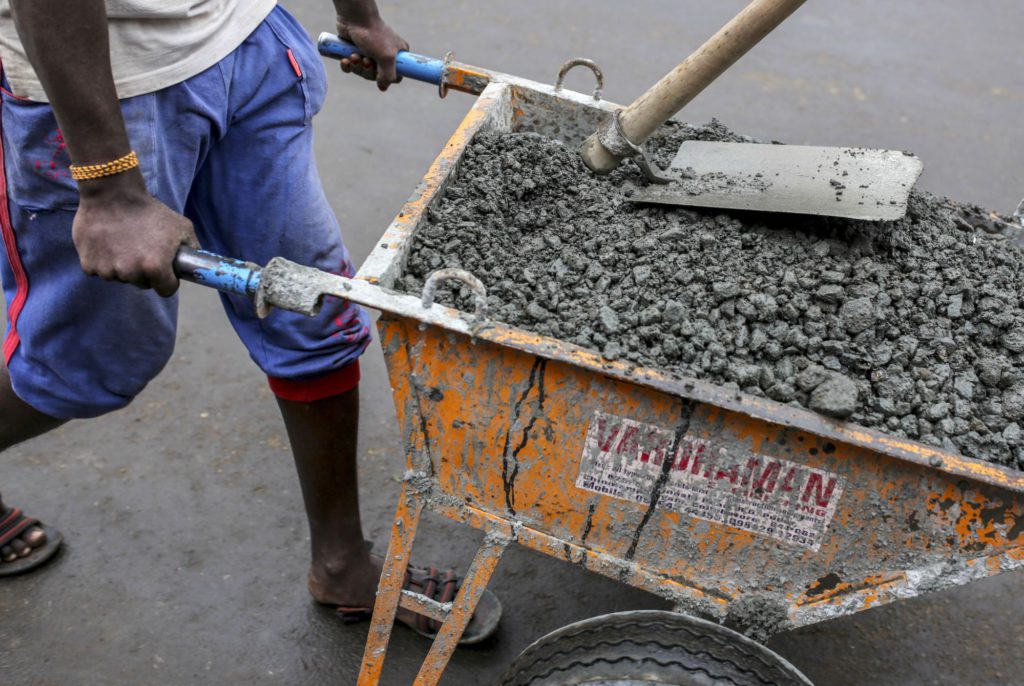
(Bloomberg) — Adani Group, helmed by Asia’s richest man, plans to double annual cement making capacity by 2027 after closing the acquisition of Holcim Ltd.’s Indian assets, a deal that’s made the conglomerate the South Asian nation’s second-largest producer of the construction material.

“We anticipate going from the current 70 million tons capacity to 140 million tons in the next five years,” Chairman Gautam Adani said at an event Saturday that was later uploaded on YouTube on Monday. The tycoon said India’s per capita consumption of cement was almost seven times below that of China, giving the country ample space for expansion.

After taking over Ambuja Cements Ltd. and ACC Ltd. from Holcim in May, Adani — who surpassed Jeff Bezos to become the world’s second-richest person over the weekend — anticipates that Indian government initiatives to spur infrastructure growth will fuel major demand for cement. His ports-to-power conglomerate often aligns with Indian Prime Minister Narendra Modi’s nation-building priorities and has been diversifying rapidly beyond its coal-based empire into green energy, data centers and digital services.

Bezos Overtaken as Second Richest by Adani’s $147 Billion Wealth

The Adani Group said on Friday it will inject 200 billion rupees ($2.5 billion) into Ambuja after being alloted warrants that can be converted into shares within 18 months of issue. Adani was appointed as chairman of Ambuja. His elder son, Karan Adani, 35, will become chairman at ACC and have a seat on Ambuja’s board, as the scion steps in to lead the newly acquired business seen by his father as a new engine of growth.

Adani said in Saturday’s speech that cement was an “attractive adjacency” to his infrastructure business, especially the group’s ports and logistics business, green energy business and the e-commerce platform that’s being developed. 

“These adjacencies give us a significant competitive advantage and puts us in a position to gain unmatched scale,” he said.

More stories like this are available on bloomberg.com

©2022 Bloomberg L.P.
Sea to Fire 3% of Shopee Indonesia Staff as Layoffs Start

(Bloomberg) — Sea Ltd. is preparing to fire 3% of Shopee employees in Indonesia, part of a broader wave of regional job cuts intended to curb ballooning losses and win back investors.

The Singapore-based company will begin notifying affected staff Monday at its cash-burning e-commerce arm, according to an internal memo seen by Bloomberg News. The 3% cut in Indonesia aligns with layoffs of a low-single-digit percentage across the division, a person familiar with the matter said, asking to remain anonymous discussing internal actions. 

Shopee is one of Sea’s two major businesses, alongside a gaming arm that popularized the mobile hit “Free Fire.” The company ended 2021 with more than 67,000 people overall. Management announced the impending layoffs during a town hall on Monday for affected teams, which included Shopee’s marketing as well as operations units.

“These changes are part of our ongoing efforts to optimise operating efficiency with the goal of achieving self-sufficiency across our business,” Shopee said in an e-mailed statement, without elaborating. The company intends to offer severance packages and assistance as needed, according to the memo.

Read more: Sea’s Billionaire CEO to Forgo Salary as Cost Cuts Spread

Sea has lost about $170 billion of market value since an October high on questions about its money-making prospects in an era of rising interest rates and intensifying competition from Alibaba Group Holding Ltd. in its Asian stronghold. 

Last week, billionaire co-founder Forrest Li announced in an internal memo top management will forgo their salaries and tighten company expense policies, as the company, which counts Tencent Holdings Ltd. as its biggest investor, tries to shield itself from the economic slowdown.

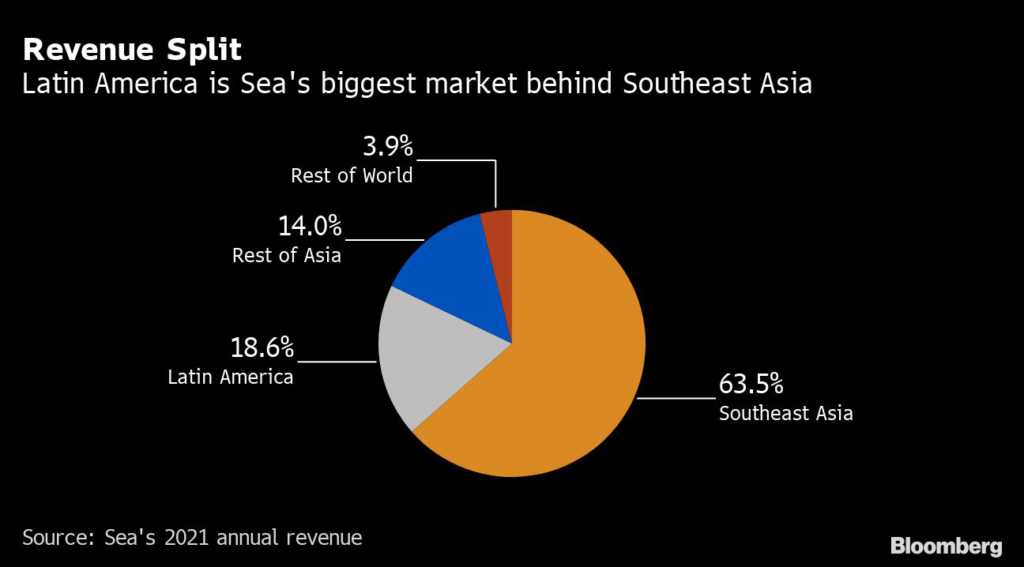
Sea’s Shopee division, in particular, has pulled back from major markets in Europe and Latin America, in addition to getting banned from India because of rising tensions with Chinese companies. Southeast Asia’s largest tech firm is planning to reduce headcount in gaming — its most profitable division — and new ventures at its research and development arm, Bloomberg News has reported.

“This was a very difficult decision to make,” management said in the memo. “In general terms, we will offer a fair package for employees who part with us and provide assistance where needed.”

(Updates with details of layoffs from the second paragraph. A previous version was corrected to clarify scope of firings.)

More stories like this are available on bloomberg.com

©2022 Bloomberg L.P.

Terra’s Do Kwon May Be Trying to Escape Probes, Prosecutors Say

(Bloomberg) — South Korean prosecutors raised the prospect that Do Kwon, the progenitor of a $60 billion cryptocurrency wipeout, is trying to evade redress over a meltdown that shook digital-asset markets worldwide.

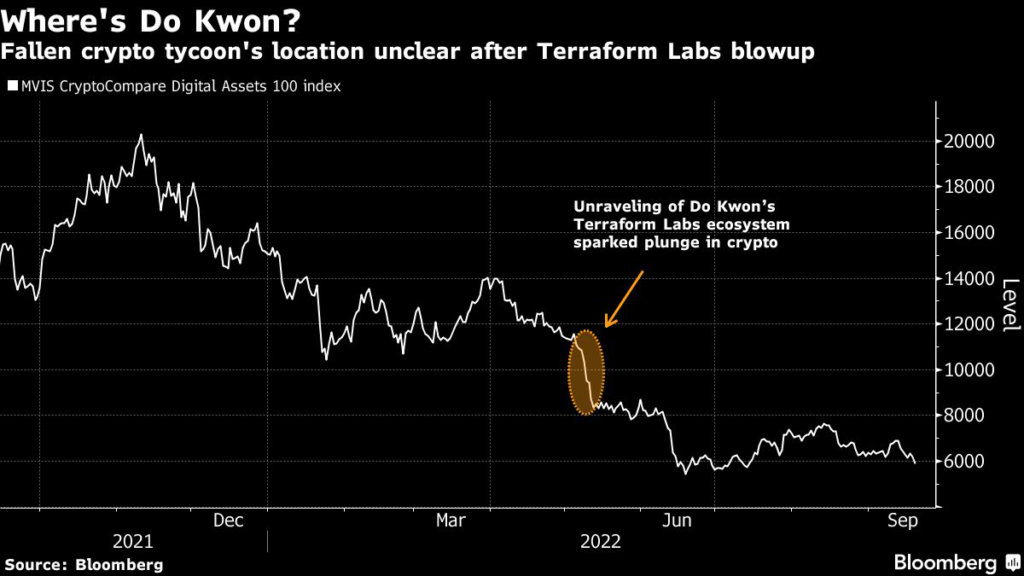
Kwon had moved from South Korea to Singapore, where his now collapsed Terraform Labs project had a base, but the city-state says he’s no longer there. Kwon’s location is unclear and he denies being on the run even as prosecutors in Seoul seek his arrest for allegations including breaches of capital-markets law.

There has been “circumstantial evidence of escape” ever since he left for Singapore, and that is why an arrest warrant was issued in the first place, the prosecutors’ office said in a text message. It declined to comment on whether the office knows of Kwon’s whereabouts or plans to contact Interpol.

The implosion of the TerraUSD algorithmic stablecoin and its sister token Luna sparked huge losses in crypto markets, which were already reeling from tightening monetary policy. Digital assets have yet to recover and regulators are pouring over the wreckage to see how to avoid a repeat. In South Korea, earlier ardor for crypto is being usurped by growing disdain.

Kwon tweeted over the weekend that he doesn’t “have anything to hide” and is in “full cooperation” with officials but didn’t publicly reveal his location.

“We are in the process of defending ourselves in multiple jurisdictions — we have held ourselves to an extremely high bar of integrity, and look forward to clarifying the truth over the next few months,” he also said on Twitter.

However, the Yonhap News Agency in a report cited prosecutors as saying that Kwon is not cooperating with probes and has told investigators via an attorney that he has no intention of appearing before them for questioning.

Kwon faces arrest in South Korea along with five others over the Terra unraveling. Officials could cancel his passport, which in theory would require him to return to Seoul within 14 days of receiving the notice of revocation.

He has a Singapore employment pass which is due to expire Dec. 7 and an application for another pass is pending, government records show.

Not So Stable

The TerraUSD stablecoin, also known as UST, crumbled from its dollar peg earlier this year and brought down the ecosystem Kwon had built. That’s triggered probes as far afield as the US amid renewed regulatory scrutiny of stablecoins — tokens supposed to be pegged to an asset like the dollar. 

Crypto companies, meanwhile, are also waking up to the need for far stronger risk management after a series of blowups including Terra, the Three Arrows Capital hedge fund and crypto lender Celsius.

“Officials are asking questions like, how exposed were companies to some of these players that went down, and they want to take measures to make sure counterparty risk is addressed,” said Sagar Sarbhai, head of business solutions and advisory at Fireblocks Inc. “People are concerned crypto could have a contagion effect and are being cautious.”

More stories like this are available on bloomberg.com

©2022 Bloomberg L.P.

SoftBank-Backed Oyo Seeks to Resurrect IPO After Growth Resumes

(Bloomberg) — Oyo Hotels, the once high-flying Indian startup, is reviving plans for a stock-market debut after cost cuts and a recovery in travel helped it reduce losses.

The hotel-booking company filed fresh financial documents on Monday and is now targeting an initial public offering in early 2023 provided that India’s stock market continues to hold up and economic conditions improve, according to people familiar with the matter. Oyo, formally known as Oravel Stays Ltd., is internally working toward a January IPO as executives are encouraged by a pick-up in demand, they said, asking not to be named discussing confidential plans.

Oyo had filed preliminary IPO documents in 2021, only to shelve the listing plan earlier this year after the prolonged pandemic hurt its growth and forced the company to cut thousands of jobs. It disclosed its latest financials in an IPO filing addendum on Monday, with the numbers showing narrower losses and a rebound in sales for the year through March 2022 and the following three months.

The startup is now focusing on four main regions: India, Malaysia, Indonesia and Europe, where it manages vacation homes. It has cut down operations in markets it previously considered crucial, such as the US and China, where its employees now measure in the single digits, one of the people said.

Oyo and founder Ritesh Agarwal are trying to pull off a successful IPO after a series of setbacks in their efforts to change the hotel and lodging industry. SoftBank Group Corp. founder Masayoshi Son was an early and enthusiastic backer, and the Japanese conglomerate holds about 47% in the Gurgaon-based startup. The 28-year-old Agarwal owns about one third.

The revived listing plan also underscores how India’s stock market is bucking the trend of globally declining tech stocks. Accelerating inflation, lingering Covid-19 infections and the war in Ukraine have sent the tech-heavy Nasdaq index down 27% this year. Meanwhile India’s benchmark NSE Nifty 50 index is up 1%.

Oyo reported a loss of 18.9 billion rupees ($237 million) for the year through March 2022, nearly halving from the previous 12 months. The numbers were restated from previously undisclosed figures and included in the IPO document addendum made available by its bankers.

The annual loss before interest, taxes, depreciation and amortization shrank to 4.8 billion rupees from 18.7 billion rupees. For the three months through June 2022, earnings on that basis were 105.75 million rupees, while the net loss was 3.5 billion rupees.

Revenue from contracts with customers for the fiscal year through March 2022 increased 21% to 47.8 billion rupees, with travel picking up as the pandemic eased. Revenue is still far below the 131.7 billion rupees booked for fiscal 2020, before the full effect of the coronavirus kicked in.

Oyo filed its preliminary document, the so-called Draft Red Herring Prospectus or DRHP, for a $1.1 billion IPO in September last year, and 12 months have since lapsed without the listing being cleared. Earlier this year, it sought to file additional documents and got regulatory approval for the move. The startup was most recently valued at $9 billion, according to researcher CB Insights.

Oyo was started in 2013 by Agarwal, then 19, who dropped out of college to travel around the country. The startup began to work with small hotels to standardize everything from bed linen to bathroom shower fittings that it then branded with its bright red & white Oyo logo.

With backing from high-profile investors such as SoftBank and Lightspeed Venture Partners, it expanded furiously into Southeast Asia, China, Europe and the US as it signed on hotel partners with agreements of guaranteed returns. At one point, founder Agarwal ambitiously targeted the title of the world’s No.1 branded stay operator.

During the pandemic, Agarwal was forced to overhaul the startup’s business model. Oyo fired thousands of employees and stopped providing hotel vendors any guaranteed returns or capital to refurbish their properties. He described the shift as a transition to an “asset light” model. Instead of offering minimum guarantees, Oyo now supports hotel and vacation home partners with technology and product services, as well as customer support. Hotel owners can self-enroll, and manage bookings and services on its app.

The new strategy helped the company become cash-flow positive in the quarter through June, and a similar positive trend has continued in the current quarter, according to one of the people.

More stories like this are available on bloomberg.com

©2022 Bloomberg L.P.

Close Bitnami banner
Bitnami