
Bloomberg

Oracle Reports Sales That Meet Estimates, Touts Cerner Deal

(Bloomberg) — Oracle Corp.’s quarterly sales jumped 18%, buoyed by the software maker’s transition to cloud computing and the acquisition of health records provider Cerner.

Sales were $11.4 billion in the fiscal first quarter, meeting analysts’ average estimate, according to data compiled by Bloomberg. Profit, excluding some items, was $1.03 a share. Oracle said currency fluctuations reduced the earnings by 8 cents a share. Analysts projected $1.06 a share. 

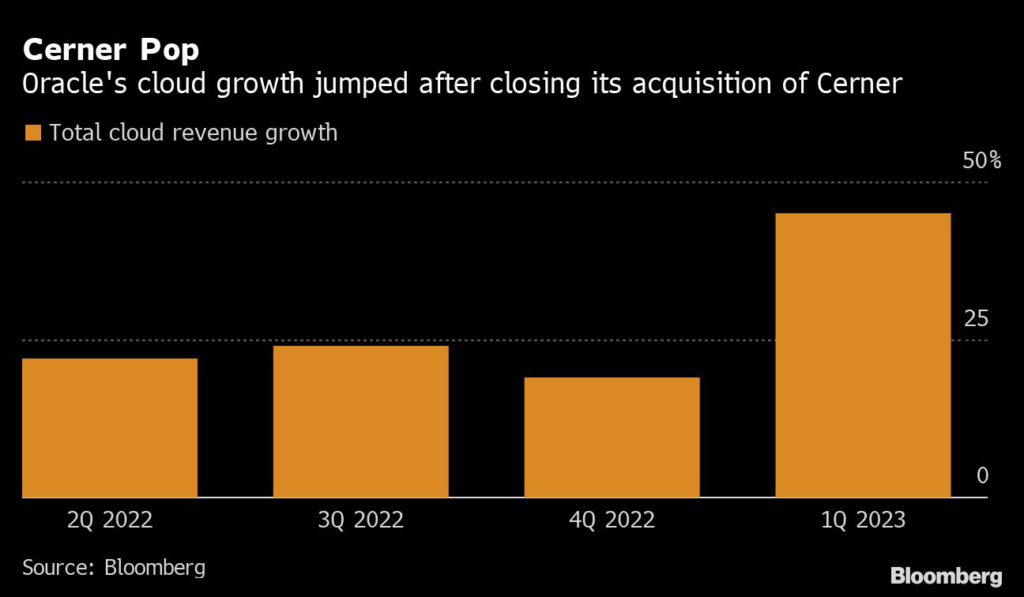
Cloud revenue — the highly watched segment that Oracle has been trying to expand — rose 45% to $3.6 billion in the period ended Aug. 31, the Austin, Texas-based company said Monday in a statement. Growth was 19% last quarter, before the Cerner deal closed. 

Oracle shares gained about 2.3% in premarket trading Tuesday, after closing at $77.08 in New York on Monday. The stock has slipped 12% this year.

The company, known for its database technology, sells business software applications that can be used over the internet as well as offering customers the ability to store and compute information through Oracle’s servers, called cloud infrastructure. Amazon.com Inc. and Microsoft Corp., the leaders in that market, are far ahead of Oracle. Executives say the $28.3 billion Cerner acquisition will give the company inroads in the health care industry, which has been comparatively slow to adopt cloud technology.

“The company’s application and infrastructure cloud businesses now account for over 30% of total revenue,” Chief Executive Officer Safra Catz said in the statement. “As our cloud businesses become a larger-and-larger percentage of our overall business, we expect our constant currency organic revenue growth rate to hit double-digits with a corresponding increase in earnings per share.”

Oracle completed its purchase of Cerner in June. The digital medical records provider generated $1.4 billion in sales in the period, which Catz called its best revenue quarter ever. 

“We expect Cerner to do even better in the coming quarters as we develop an all-new suite of health care cloud services,” she said. 

Oracle’s strong sales growth — even after removing the Cerner contribution — “bodes well for the software sector,” wrote Bloomberg Intelligence analyst Anurag Rana. “Though we were expecting application growth to stay strong, we were particularly surprised by Oracle’s infrastructure strength despite worsening economic conditions.”

Catz said sales in the current quarter will gain 15% to 17% and cloud revenue, including Cerner’s contribution, will be increase as much as 46% compared with the period a year earlier. Excluding Cerner, Oracle’s cloud sales will jump about 30% in the fiscal year, she said on a conference call after the results.

In the fiscal first quarter, sales of the Fusion application for managing corporate finances rose 33%, compared with 20% the previous period. Revenue from NetSuite’s enterprise planning tools, targeted to small- and mid-sized businesses, increased 27%, the same as the previous quarter. 

In June, TikTok announced that all US traffic is being moved to Oracle’s cloud servers. The popular short-video platform, owned by China-based ByteDance Ltd., is working to convince US regulators that user data can’t be accessed by Chinese authorities.

(Updates with premarket trading in fourth paragraph.)

More stories like this are available on bloomberg.com

©2022 Bloomberg L.P.
Democracy Crackdown Moved Taiwan Chip Pioneer to Oppose Beijing

(Bloomberg) — For chip tycoon Robert Tsao, it was a mob attack on Hong Kong democracy activists in 2019 that finally compelled him to turn against China’s rulers.

Tsao, who founded chipmaker United Microelectronics Corp., was living in the city when more than 100 men wielding sticks stormed a train station during that year’s pro-democracy protests, assaulting passengers including activists on a subway car. 

That conflict, which later became emblematic of efforts to quash the nascent movement, raised suspicions Hong Kong police had colluded with pro-Beijing gangs. Authorities later cleared police of claims they did little to stop the attackers — but the controversy persisted.

“I decided then I’ll go public about my anti-Chinese Communist Party stance,” the 75-year-old, who stepped down as UMC’s chairman in 2006, told Bloomberg News on Monday.  

Tsao decided to leave Hong Kong that month, he added, knowing that openly opposing the party would prevent him from setting foot in China again, for fear of detention. “I was very shocked,” he said. “The Chinese Communist Party are downright gangsters.”

Read more: Chip Tycoon Vows to Fund Taiwan’s ‘Civilian Army’ Against China

Since then, Tsao has been an outspoken critic of President Xi Jinping’s regime, which has dismantled democratic freedoms in Hong Kong and put increased military pressure on Taiwan, a self-ruled island Beijing considers a breakaway province.

This month, he vowed to donate NT$1 billion ($32.8 million) to help Taiwan’s military train 3 million civilian soldiers and an additional 300,000 marksmen to bolster its defense against a possible Chinese invasion. Those funds are part of a NT$3 billion ($97 million) pledge the tycoon made last month to aid Taiwan in protecting itself. 

Tsao also announced he was renouncing his Singaporean passport and reverting to Taiwanese citizenship, which he gave up in 2011. 

On Monday, Tsao said he plans to help with local drone development and anti-disinformation programs, without offering specifics. He cautioned that Taiwan cannot assume China won’t attack the island because of its vital chip industry, which makes a majority of the semiconductors that power everything from smartphones to electric cars. 

“When the Chinese Communist Party gets crazy it will not care about anything, and it would be risky for Taiwan to think that its chip industry can fend off China,” Tsao said. “Taiwan needs to assume the Chinese Communist Party will eventually attack and prepare accordingly.”

American military commanders estimate Xi could have the capability to take action across the Taiwan Strait in as soon as five years. In June, a senior Chinese economist at a government-run research group called on authorities to seize Taiwan Semiconductor Manufacturing Co. — the world’s largest contract manufacturer of semiconductors — if the US hits China with sanctions on par with those leveled against Russia.

Tsao’s declarations of support come as relations across the Taiwan Strait are at their most fraught in decades. After House Speaker Nancy Pelosi became the most senior US official to visit Taipei in a quarter century last month, China’s military conducted drills encircling much of Taiwan and fired missiles directly over its main island in protest.  

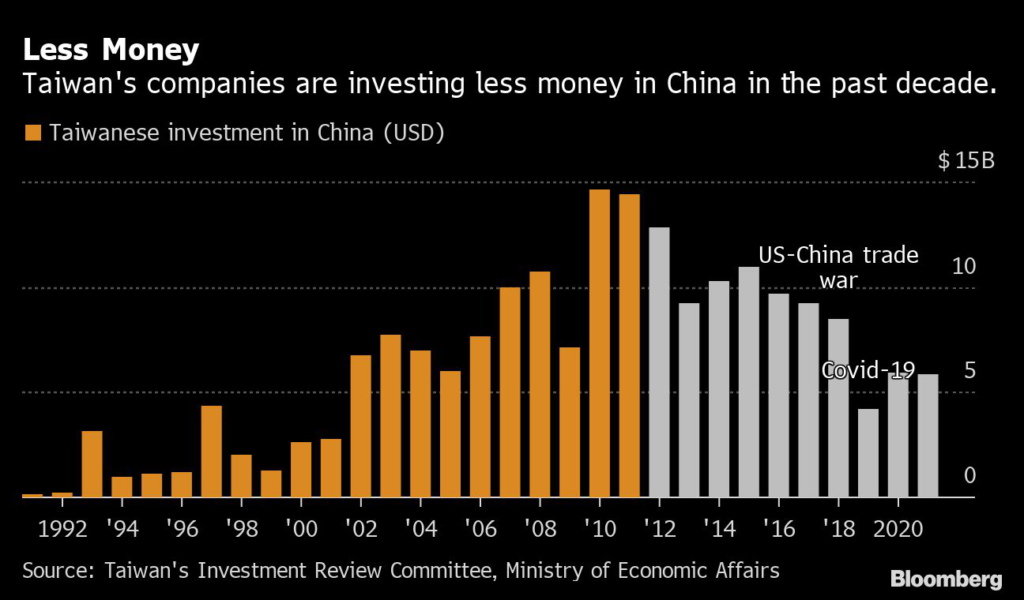
Despite those political tensions, China remains Taiwan’s largest trading partner and Taiwanese companies’ top overseas destination for investments, although Beijing’s trade war with Washington and Covid lockdowns have seen some firms already relocate manufacturing capacity. 

“Taiwanese businesses will not move out from China entirely, but they are changing their ways of doing business,” said Yang Shu-fei, an economist at the Taipei-based Chung-Hua Institution for Economic Research. “They will stay low key, or decrease their shares in Chinese entities, so they become purely investors rather then actual business operators.” 

Tsao dismissed concerns Taiwanese companies can’t do without China as a market or a manufacturing base. “The US is now decoupling from China and Taiwan will need to follow,” he said. “Foxconn has shifted some iPhone production outside of China and its component suppliers will need to move, as well.”

When asked about some Taiwanese people’s reluctance to face China’s aggression, Tsao said he’d use his funds to help build consensus in the democratic island. 

“I will devote the rest of my life to defending Taiwan,” he said. “I will not live to see Taiwan become Hong Kong.”

More stories like this are available on bloomberg.com

©2022 Bloomberg L.P.

Porsche Is Worth Much Less Than What’s Being Touted, HSBC Says

(Bloomberg) — Analysts at HSBC Holdings Plc poured cold water on the lofty valuations being assigned to Volkswagen AG’s Porsche unit ahead of a share sale by the sportscar-maker that’s set to be one of Europe’s biggest initial public offerings. 

Porsche is worth between 44.5 billion euros ($45.1 billion) and 56.9 billion euros, analysts including Edoardo Spina said in a note. That’s lower than the 60 billion euros-to-85 billion euros ballpark being talked about in the media, they wrote.

The analysts cautioned that pricing power may wane as supply recovers over the next two years, while demand may take a hit under a recessionary environment. 

HSBC’s model is based on comparing multiples with luxury vehicle rival Ferrari NV as well as German peers like Mercedes-Benz Group AG and Bayerische Motoren Werke AG, the analysts wrote. The analysts have removed Tesla Inc. from Porsche’s peer group as the US firm’s multiples reflect sales growth and software revenue potential that aren’t applicable to the German firm to the same degree.

HSBC downgraded its rating on VW ordinary shares to hold from buy, assigning a price target of 188 euros.

Read: Porsche Family Seeks Redemption With IPO After Tearful Defeat

The discussion of Porsche’s valuation comes as Intel Corp. scales back expectations for its Mobileye IPO in the face of a broader stock slump. The firm expects the IPO to value the self-driving technology business at as much as $30 billion, less than originally hoped, Bloomberg reported Sept. 12, citing people familiar with the process.

More stories like this are available on bloomberg.com

©2022 Bloomberg L.P.
China Biotech Rout Shows Growing Pain From US Decoupling Drive

(Bloomberg) — The latest US effort to reduce reliance on China is striking hard at the Asian nation’s biotech stocks, as investors price in more indications of decoupling between the world’s two biggest economies.   

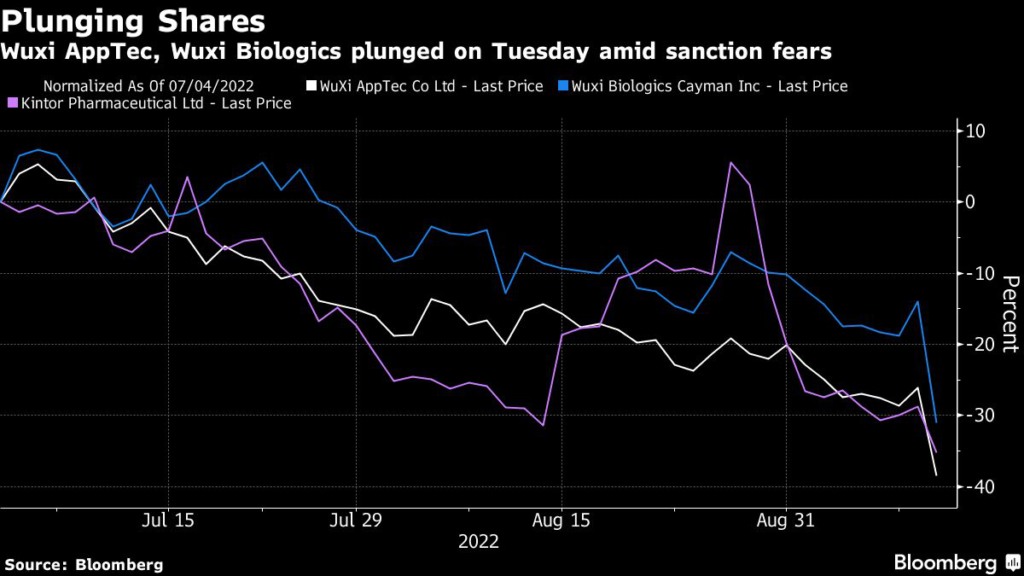
Following US President Joe Biden’s executive order to bolster domestic bio-manufacturing and cut reliance on foreign companies, bellwether Chinese stocks such as Wuxi Biologics Cayman Inc. and WuXi AppTec Co. tumbled at least 16% Tuesday in Hong Kong.  

Read More: Biden Signs Order to Boost Biomanufacturing, Compete with China

Coming on the heels of US export curbs of advanced chips to China, the latest Biden order underlines stiffening strategic competition between the two nations and adds to the selling pressure on Chinese stocks. With the Asian nation also manufacturing a host of industrial and high-tech products, there are questions over what other sectors may be affected next. 

“I think market hasn’t fully priced in such a risk of Sino-US conflicts. That’s why healthcare firms are plunging today,” said Paul Pong, managing director at Pegasus Fund Managers Ltd. “Competition between China and the US in areas including aerospace, AI manufacturing remains fierce and it wouldn’t surprising to see sanctions by US.”

Pharmaron Beijing Co., Asymchem Laboratories Tianjin Co. and WuXi AppTec were the worst performers on China’s CSI 300 Index Tuesday, falling at least 10% each. The benchmark gauge closed up 0.4%. In Hong Kong, Wuxi Biologics tumbled nearly 20%, the biggest drag on the Hang Seng Index.    

The Biden administration has been looking for ways to curb investment in China’s industries as the Asian nation ascends as a superpower in advanced technology. Meantime, China has been relentless in its pursuit for tech supremacy, with President Xi Jinping last week renewing calls to step up development. 

And defying investor expectations of an improvement from the Trump administration days, tension has remained high with a number of thorny issues unresolved.  

Earlier this month, the Biden administration said it will allow Trump-era tariffs on hundreds of billions of dollars of Chinese merchandise imports to continue while it reviews the need for the duties. 

The key question facing traders now is which sector will be the next to be targeted by American officials. 

The US “could move the sanctions down along the supply chain in the areas that’s already sanctioned, such as semiconductor and biotech segments,” said Dai Ming, Shanghai-based fund manager at Huichen Asset Management. It may also target areas that may threaten US position, such as new energy and AI-related industries, he said. 

Any additional sanctions or export restrictions by the US, China’s largest trade partner, will deal a blow to stocks at a time when the economic outlook is under pressure from Beijing’s zero Covid pursuit.  

The Hang Seng China Enterprises Index, a benchmark of Chinese firms trading in Hong Kong, is down more than 19% this year, one of the worst performers among major equity indexes worldwide. 

Further US actions are likely to hit tech stocks particularly hard, deepening woes in a sector that saw more than a year of Beijing’s crackdown and faces the risk of being removed from US exchanges.  

“I think the tension between the two countries stays and there is a lack of trust about each other’s intention and grand strategies,” said Redmond Wong, a strategist at Saxo Capital Markets.   

More stories like this are available on bloomberg.com

©2022 Bloomberg L.P.

Taking Stock of El Salvador’s Bitcoin Gamble at the One-Year Mark

  • Listen to Bloomberg Crypto on the iHeartRadio App
  • Listen to Bloomberg Crypto on Apple Podcasts
  • Listen to Bloomberg Crypto on Spotify  

(Bloomberg) — It’s been one year since El Salvador adopted Bitcoin as legal tender. In September 2021, the Central American nation forged its own path as the first in the world to make the cryptocurrency an official part of its economy. According to tweets and statements from President Nayib Bukele, the government has bought more than 2,000 Bitcoin so far. 

So what’s the problem? Well, many of those purchases were at or near market highs. Price declines mean that, at least on paper, El Salvador has lost more than half the value of those purchases so far. And surveys of both consumers and businesses show most people in the country just aren’t using Bitcoin. Nonetheless, Bukele and government officials are adamant that the nation’s strategy has expanded financial services to a larger segment of the population and encouraged tourism. What’s the real story of Bitcoin in El Salvador?  Bloomberg reporter Mike McDonald joins this episode for more.

Follow us on Twitter @crypto, and subscribe to the Bloomberg Crypto Newsletter at https://bloom.bg/cryptonewsletter


More stories like this are available on bloomberg.com

©2022 Bloomberg L.P.
VC Who Backed Carsome Raising $250 Million for Early-Stage Fund

(Bloomberg) — Indonesia’s AC Ventures is raising $250 million for its fifth fund, banking on its reach in Southeast Asia’s largest economy to find the region’s next wave of early-stage startups.

The firm has secured almost two-thirds of its target at first close, according to its statement on Tuesday. About 80% of commitments are from institutional investors including sovereign funds, foundations, endowments and corporations.

Southeast Asia’s startups are attracting investor interest despite a cloudy global economic outlook that has battered tech companies’ valuations. Venture capital firms including Sequoia Capital India and Singapore’s Jungle Ventures have launched funds focused on the region this year as they look to capture growth opportunities in markets that are adding technology users and online consumers at a rapid clip.

“In downturns, we’ve seen that good companies pull ahead,” Helen Wong, managing partner of AC Ventures, said during a joint interview with co-founder Adrian Li. “It’s a good time now for startups to look closely at their organizational charts, think of ways to optimize cost structures and look at where they can put resources to work that would really make a difference.”

Formed in 2019 through a merger of Agaeti Venture Capital and Convergence Ventures, AC Ventures has $500 million of assets under management. The firm has backed more than 120 companies across Southeast Asia, including Indonesian payments startup Xendit, online lender KoinWorks, fishery platform Aruna and Malaysian used-car online marketplace Carsome Group, which has delayed plans to list in the US and Singapore.

AC Ventures hired Wong from China-based Qiming Ventures this year as managing partner, adding to its senior management team of founding partner Pandu Sjahrir and co-founders Michael Soerijadji and Li.

The fifth fund will allow AC Ventures to further strengthen its team and support portfolio companies on issues such as business development and regulation. The Jakarta-based firm, which mainly invests in Indonesia, targets fields including consumer technology, e-commerce, fintech and logistics. It’s adding climate technology as a new focus area, part of a drive to back companies with strong environmental, social and governance track records. 

More stories like this are available on bloomberg.com

©2022 Bloomberg L.P.

Ocado Plummets as Shoppers Cut Back and Energy Costs Bite

(Bloomberg) — Ocado Group Plc is getting squeezed by Britain’s inflationary crisis, with shoppers placing smaller orders from the online grocery service as the surge in energy prices lifts its costs.

The shares dropped as much as 14% in London on Tuesday morning.

The company said the value of the average shopping basket dropped 6% in the third quarter. That offset an increase in the number of active users, which rose 23% to a record high of 946,000. 

“Consumers are shopping smaller baskets and seeking value-for-money items as they respond to inflationary pressures,” Ocado Retail said. Although it has lifted food prices by 7% on a year earlier, the average selling price is up only 5% because shoppers are switching to cheaper products.

In another sign of the pressure on consumers, Aldi has become Britain’s fourth biggest supermarket, overtaking Wm Morrison Supermarkets Plc. The German discounter now has 9.3% of the UK’s grocery market, according to data company Kantar, with Morrison on 9.1%. Ocado has 1.7%, unchanged from a year ago.

Ocado shares have slumped 63% over the past 12 months as the company, which benefited from Covid lockdowns and the rise in online shopping, has struggled to maintain its momentum as pandemic curbs have eased and inflation has soared. The company, previously viewed as a premium option for affluent Britons, is now attracting more shoppers, but it’s wrestling with the same pressure on pricing that’s squeezed margins at mainstream grocers.

Higher costs for energy and dry ice are likely to weigh on the company’s profits in the fourth quarter, Ocado said.

Cost-of-Living Crisis

Concern about the higher cost of living has reached a record in the UK, with 81% of adults saying they were very or somewhat worried about inflation, according to a survey by the Office for National Statistics. Higher gasoline and energy bills mean that consumers have less to shell out for groceries.

The earnings season looks likely to continue to be tough for retailers. Associated British Foods Plc, owner of budget chain Primark, warned last week that profit will decline next year under pressure from rising energy costs and the strengthening of the dollar. 

Ocado Retail, the online grocer’s joint venture with Marks & Spencer Group Plc, forecast a small sales decline in the full year after revenue rose 2.7% in the third quarter, missing estimates.

Ocado had already slashed its forecast twice this year and said in July it only expects growth in the low single digits.

(Updates with details on Aldi overtaking Morrison in fifth paragraph)

More stories like this are available on bloomberg.com

©2022 Bloomberg L.P.
Netflix’s Megahit ‘Squid Game’ Makes History at Emmy Awards

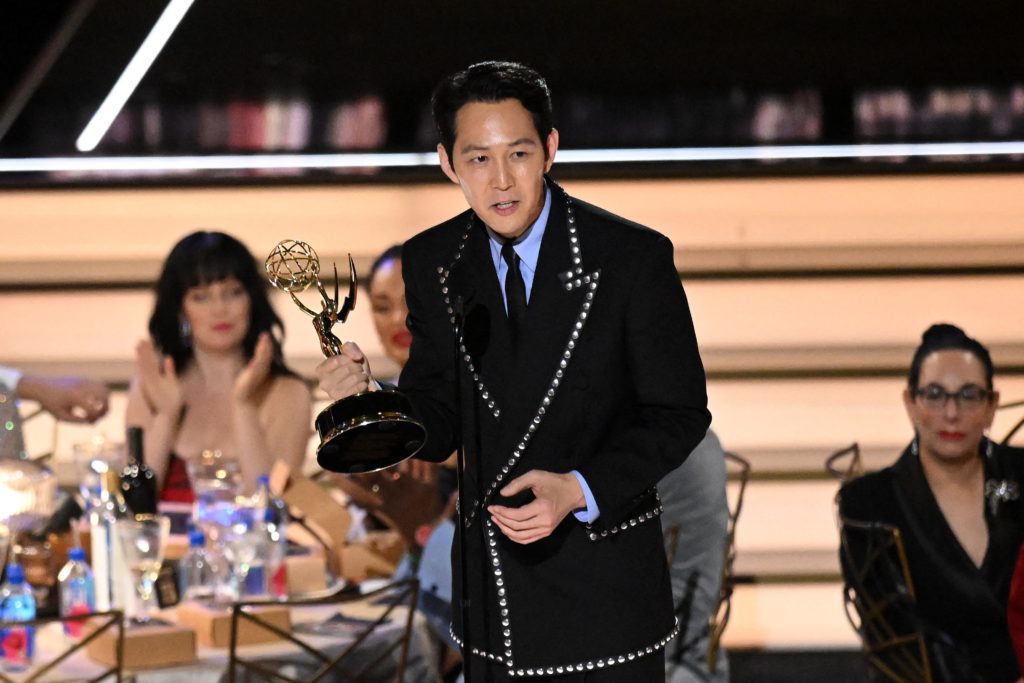
(Bloomberg) — Netflix Inc.’s “Squid Game” made history as the first foreign-language drama to win top honors at the television industry’s Emmy Awards. 

Creator Hwang Dong-hyuk won for outstanding directing and Lee Jung-jae, who played the main character in the South Korean drama, garnered the Emmy for best actor in a drama series. 

“I truly hope ‘Squid Game’ won’t be the last non-English series to be here at the Emmys,” Hwang said after receiving his award. 


The Korean drama earned 14 nominations, competing against the eventual best drama winner HBO’s “Succession.” The megahit followed the success of South Korean director Bong Joon-ho’s Oscar-winning movie Parasite in 2020 and Minari’s Korean actress Yoon Yuh-jung winning the Academy Award for best supporting actress in 2021. South Korea’s Park Chan-wook also won the best director award at Cannes in May with his film Decision to Leave. 

‘Succession,’ ‘White Lotus’ Help HBO Rule the Emmys Again (1)

Parasite, Minari and Decision to Leave all included the theme of inequality and ill-treatment of society’s minorities. Parasite, for example, tells the story of a poor family whose members scheme to secure jobs in a wealthy household by inflating their qualifications and pretending they’re not related. The “Squid Game” similarly follows more than 400 deeply indebted people who play a series of deadly children’s games to win a fortune for the amusement of a few super-rich VIPs.

South Korean President Yoon Suk Yeol congratulated both Hwang and Lee, saying that the global audience could relate to the drama which depicted the “challenges of inequality and the loss of opportunities in modern society.” 

The South Korean drama captivated international audiences by reflecting on some of the darker sides of its society — including its treatment of North Korean defectors, migrant workers, divorcees, unemployed and those with mental health issues. The problems reflected in the drama echoed across the globe as loose monetary policies and, more recently, a pandemic-driven rush for real estate, pushed up home prices internationally. 

It was also Netflix’s biggest launch ever. The series cost $21 million to produce and went on to be watched more than 1.65 billion hours in just four weeks. It remained one of the top shows on Netflix for months.

The series boosted the popularity of Korean content worldwide and prompted global players including Walt Disney Co., Apple Inc. and Warner Media to invest in local-language titles and original series to lure subscribers. The majority of Netflix customers are international, which means the company will increase its investment in foreign-language shows relative to its investment in English. 

Bucket Studio Co., which holds a stake in the agency representing Lee, jumped as much as 12% in Seoul trading, before gaining 2.2% at close.


(updates throughout)

More stories like this are available on bloomberg.com

©2022 Bloomberg L.P.
Woodford Administrator Faces Possible £306 Million Hit, UK Says

(Bloomberg) — The Financial Conduct Authority said the administrator of Neil Woodford’s failed fund could face a penalty of up to £306 million ($358 million) over its collapse, a first indication of the likely findings from the UK regulator’s longrunning probe.

The Financial Conduct Authority “is likely” to require Link Fund Solutions — the entity that managed the Woodford fund — to “pay a financial penalty and/or consumer redress,” the regulator said in a statement Monday, although it noted that the decision was not final and that LFS could challenge it.

The estimated redress payment reflects the regulator’s “current view” of Link’s failings in managing the liquidity of Woodford’s Equity Income Fund. The regulator opened an investigation into the circumstances relating to the suspension in June 2019.

Link Fund Solutions was the fund administrator on the LF Woodford Equity Income Fund, which started to be liquidated nearly three years ago. Woodford froze the vehicle in mid-2019 because he couldn’t meet clients’ withdrawal requests, trapping £3.7 billion of investor funds. 

He was ousted as manager of the fund in October of that year, and announced he would shutter his investment firm, a stunning fall that counts as one of the most dramatic in London’s financial history. Subsequent asset sales have seen investors recoup some of their money but they are still about £1 billion out of pocket.

Link Administration Holdings said in a statement Tuesday that LFS “does not agree with the FCA’s view” and “will explore all options,” including challenging any decision. “Link Group considers that any liabilities relating to the Woodford Matters will be confined to” LFS.

Canadian Deal

The potential penalty could derail Toronto-based Dye & Durham Ltd. proposed acquisition of Australia’s Link Administration Holdings Ltd. The FCA said its approval of Dye & Durham’s acquisition of Link is “subject to a condition to commit to make funds available to meet any shortfall” within the fund administrator to cover potential payments. 

Dye & Durham is assessing the impact of that demand made by the FCA, according to its separate statement Monday. If it can’t accept those terms, it said, then the companies might not be able to close the $1.7 billion deal, which had already been repriced lower after the sharp selloff in technology stocks. 

The firm “must now decide whether to proceed with the transaction at a higher effective purchase price, renegotiate with Link and revise the terms of its offer to account for the incremental liability, or walk away from the deal,” BMO Capital Markets analyst Thanos Moschopoulos said in a note. 

Shares in the Canadian company dropped 2% to C$14.43 in Toronto on Monday. Link shares fell by about a fifth on Tuesday in Sydney.

Read more: Dye & Durham Agrees to $1.7 Billion Deal For Australia’s Link

More stories like this are available on bloomberg.com

©2022 Bloomberg L.P.
Crypto Lending Now Pays Less Than Safest US Government Debt

(Bloomberg) — Cryptocurrencies are facing a new threat: the lure of Treasuries offering a similar payout for a whole lot less risk.

In a rare reversal, crypto yields that institutions typically seek out have fallen below what the US government pays to borrow for three months, giving the hedge funds and family offices that have flocked to the digital space one less reason to keep investing.

The Federal Reserve’s hawkish stance is driving up interest rates almost everywhere — except in the speculative world of crypto, where yields have collapsed alongside volumes, wiping out some of the main avenues for generating double-digit returns, while the implosion of the Terra stablecoin project and the failures of crypto lenders like Celsius Network shook confidence.

“Two years ago, interest rates in crypto were at least 10% and in the real world rates were either negative or near-zero,” said Jaime Baeza, chief executive officer of ANB Investments, a hedge fund focused on digital assets. “Now it’s almost the reverse, because yields in crypto have collapsed and central banks are raising rates.” 

This year’s crypto winter has already challenged some of proponents’ key arguments, such as the asset class being a hedge against inflation and political turmoil. Instead, Bitcoin has traded pretty much in line with stock benchmarks like the S&P 500, except that it’s dropped at a much faster pace. 

But not until recently have crypto yields been matched, or even surpassed, by those of government debt that’s essentially risk free. 

Unlike in traditional markets, falling yields don’t signal lower risks for crypto. Yields are shaped by trading volumes rather than risk sentiment, and reflect the rate an investor can hope to earn lending out holdings on exchanges and decentralized-finance protocols, or depositing them with crypto lenders, often in the form of stablecoins. 

Because they have no direct relation to central bank rates, crypto yields can slump even as borrowing costs spike across financial markets to reflect steep Fed hikes. That’s creating a mismatch that could lead to a secular stagnation in some of the world’s most speculative assets, some market observers say. Lower yields will make it less likely that investors buy tokens to lend them out, leading to lower demand and in turn, lower prices. 

That dynamic is becoming even more pronounced after Fed Chair Jerome Powell’s recent higher-for-longer rates pledge to subdue stubborn inflation. 

“Higher appetite for Treasuries has sucked out liquidity from crypto,” said Sidney Powell, the chief executive of crypto lending company Maple Finance.   

DeFi Outflow

It’s not that investors who previously chased crypto yields are now buying Treasuries; rather, what’s happening is that across most of finance, higher rates are now available for a given amount of risk. For example, the yield investors can earn on global company debt has spiked to financial crisis-era highs of 4.4%, according to a Bloomberg index.

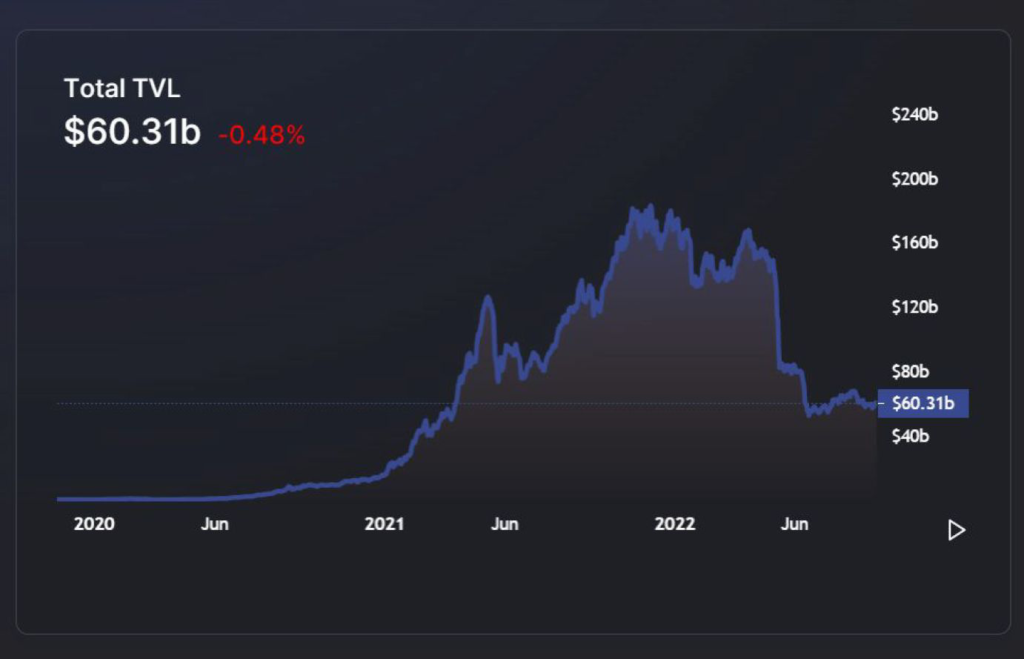
A key measure of investor interest in yield-generating crypto activities is the total value locked in marketplaces where much of the lending takes place — so-called DeFi platforms. This measure has declined to just $60 billion from its peak of $182 billion in December last year, according to data from DeFiLlama. 

Meanwhile, Bitcoin is trading at $22,351, around 53% off its March peak this year after five consecutive weeks of outflows from Bitcoin and Ethereum ETFs totaling $99 million, according to CoinShares.

Kaspar Hense, a portfolio manager at BlueBay Asset Management, says that’s still too high, and suggests $10,000 would be closer to fair value. Double-digit yields were mainly thanks to distorted real rates when central banks kept borrowing costs anchored near zero, Hense argues.

Still, Inigo Fraser Jenkins, co-head of institutional solutions at AllianceBernstein, said that while the investment case for crypto is harder to make in a high-rate macro environment, institutional investors will still gravitate to it in order to gain experience trading an array of related assets.

“The real importance is seeing crypto as a stepping stone to a broader set of digital assets, in particular tokenized real assets,” Fraser Jenkins said. 

Before the recent reversal, crypto had enjoyed exponential growth, even through rollercoaster ups and downs. The post-financial crisis era when central bankers sought to reflate economies via historically low interest rates sent money managers craving returns into ever riskier assets — a windfall for crypto. 

“Now the environment is very different,” said Andrew Sheets, chief cross-asset strategist at Morgan Stanley. “A key cross-asset theme has been the shift from a near zero and negative rate environment to one where you can get over 3% on a triple A-rated T-bill that’s guaranteed by the US government. This will have an impact on the performance of assets with no yield such as gold, some tech stocks and crypto.”

More stories like this are available on bloomberg.com

©2022 Bloomberg L.P.

Close Bitnami banner
Bitnami
