
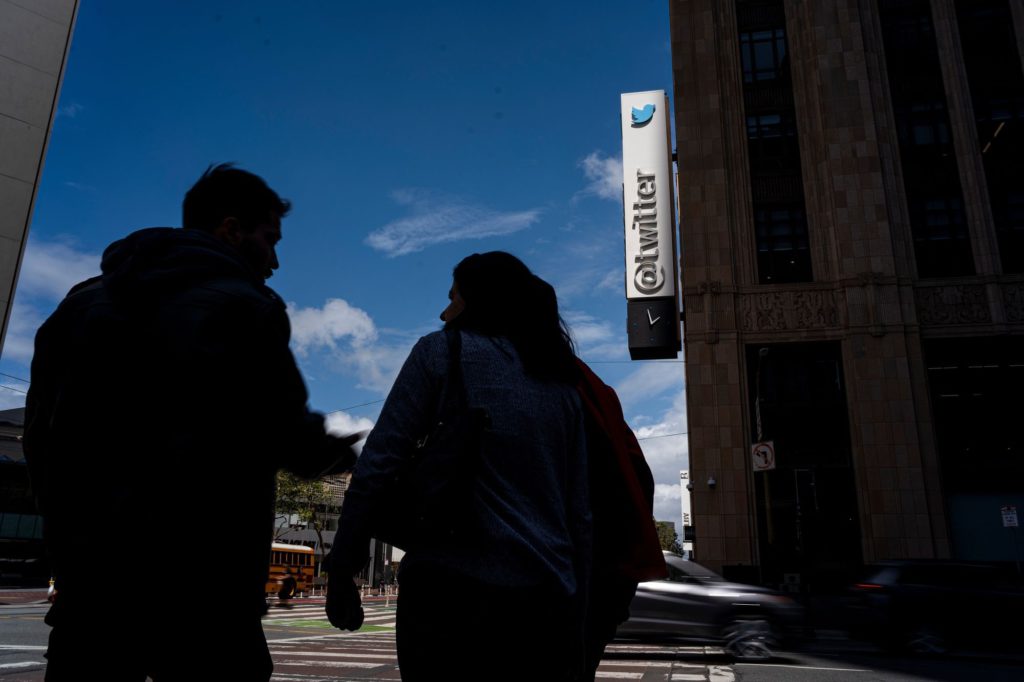
Bloomberg

Twitter Faces Legal, Political Peril in Whistle-Blower Case

(Bloomberg) — A whistle-blower complaint from Twitter Inc.’s former head of security, claiming severe shortcomings in the social media company’s handling of users’ personal data, will have wide ramifications for the business.

US lawmakers vowed to investigate, and the legal team for Elon Musk, who is seeking to abandon his agreement to acquire Twitter, was emboldened by the claims. Twitter shares fell as much as 5% on Tuesday, the biggest intraday drop in more than a month.

The former executive, Peiter Zatko, alleged “egregious deficiencies” in Twitter’s defenses against hackers and other lax approaches to security, according to a copy of the complaint reviewed by Bloomberg. Zatko said he had warned colleagues that some of Twitter’s servers were running out-of-date software and that executives had withheld information about breaches and lack of protections for user data.


US House representatives confirmed the whistle-blower complaint in a joint statement from Frank Pallone and Cathy McMorris Rodgers, the top Democrat and Republican on a House panel that received the report. “The Energy and Commerce Committee is actively reviewing the Twitter whistle blower disclosure and assessing next steps,” they wrote. “There are still a lot of unknowns and questions that need to be answered. Many of these allegations, if true, are alarming and reaffirm the need for Congress to pass comprehensive national consumer privacy legislation to protect Americans’ online data.”

Thousands of employees also had access to core company software, which led to hacks of high-profile users, according to the report. The Washington Post, which first reported on the complaint along with CNN, said it was sent to the US Securities and Exchange Commission, the Justice Department and the Federal Trade Commission. The DOJ, FTC and SEC declined to comment. 

The whistle-blower document also alleged that Twitter prioritized growth over reducing the number of spam accounts, offering executives cash bonuses of as much as $10 million tied to increasing the number of daily users. Spam and “bots” on Twitter have been a key flash point in the company’s dispute with Musk. Musk’s lawyers also said Tuesday that they have issued a subpoena for Zatko to testify in the court battle. Legal experts said Zatko’s complaint bolsters Musk’s case.

Read more: Musk subpoenas Jack Dorsey

Twitter pushed back. “What we’ve seen so far is a false narrative about Twitter and our privacy and data security practices that is riddled with inconsistencies and inaccuracies and lacks important context,” a Twitter spokesman said when contacted for comment by Bloomberg. “Zatko’s allegations and opportunistic timing appear designed to capture attention and inflict harm on Twitter, its customers and its shareholders. Security and privacy have long been company-wide priorities at Twitter and will continue to be.”

Twitter said Zatko was fired in January for “ineffective leadership and poor performance.” Bloomberg was unable to reach Zatko for comment. Whistleblower Aid, which represents him, said he stands by his disclosures. 

“His career of ethical and effective leadership speaks for itself,” John Tye, chief disclosure officer of Whistleblower Aid, said in an emailed statement. “The focus should be on the facts laid out in the disclosure, not ad hominem attacks against the whistle blower.”

In a memo reviewed by Bloomberg, Chief Executive Officer Parag Agrawal told employees it was likely “frustrating and confusing to read” the complaint, “given Mudge was accountable for many aspects of this work that he is now inaccurately portraying more than six months after his termination.” Agrawal warned of further distractions and said he will address employees at a meeting Wednesday.

‘Serious Concerns’

Musk made a reference to the claims via Twitter, with an image of the “Pinocchio” character Jiminy Cricket saying “give a little whistle,” a line from his signature song about listening to your conscience.

If Zatko’s claims are verified, Twitter would be in violation of a 2011 agreement with the FTC. Members of the Senate Judiciary and Intelligence Committees said the report presents serious claims that could impact user privacy and national security.

The budding investigation is reminiscent of congressional probe of whistle-blower allegations against Facebook, owned by Meta Platforms Inc., that first appeared in the Wall Street Journal last year. Meta has lost more than half of its market value since that complaint was published and earnings reports suggested that the level of Facebook’s US users has plateaued.

Despite bipartisan anger at Facebook, Congress hasn’t passed any meaningful legislation to set stricter rules for internet companies. Tech-focused antitrust bills under consideration would only apply to a handful of platforms that are larger than Twitter.

Twitter had largely escaped the ire of lawmakers in this Congress who have called representatives from TikTok, Snap and Meta-owned Instagram to testify. But Judiciary Chair Dick Durbin on Tuesday said the reports “raise serious concerns,” and he promised to “continue investigating this issue and take further steps as needed to get to the bottom of these alarming allegations.”

“If these claims are accurate, they may show dangerous data privacy and security risks for Twitter users around the world,” said Durbin, a Democrat from Illinois.

Iowa Senator Chuck Grassley, the ranking Republican on the Senate Judiciary Committee, is one of the lawmakers who has reviewed the complaint and is working with Zatko. Grassley said the whistle-blower claims “raise serious national security concerns as well as privacy issues, and they must be investigated further.” The Senate Intelligence Committee is also looking into Zatko’s claims, said spokesperson Rachel Cohen.

Florida Senator Marco Rubio, the ranking Republican on the Intelligence Committee, said he and his colleagues are “treating the complaint with the seriousness it deserves and look forward to learning more.”

“Twitter has a long track record of making really bad decisions on everything from censorship to security practice,” Rubio said in a statement. “That’s a huge concern given the company’s ability to influence the national discourse and global events.”

‘Misleading Consumers’

Twitter’s 2011 settlement with the FTC barred the company for 20 years from “misleading consumers about the extent to which it protects the security, privacy, and confidentiality of nonpublic consumer information.” That agreement sprang from a 2009 hack of the social media platform that allowed intruders to send out phony messages from any account, among other issues.

In May, Twitter paid $150 million to the FTC for misusing user phone numbers uploaded for security purposes to target advertising. The use of the phone numbers breached the social media company’s 2011 consent decree where it agreed to better protect users’ personal data.

Zatko’s complaint alleges further violations of the 2011 settlement, which could open Twitter to additional potential fines. A federal judge accepted the $150 million settlement in May, but the FTC could opt to reopen the case or file another complaint.

In his complaint, Zatko alleges that Twitter sales teams have continued to misuse phone numbers collected for security purposes for targeted advertising, that the data from users who deactivated their accounts wasn’t properly deleted and that executives misrepresented information to the FTC about the company’s privacy policies.

His complaint also alleged that Twitter didn’t properly monitor potential threats from insiders or take corrective actions when needed. Earlier this month, a former Twitter employee was convicted of spying for Saudi Arabia, using his access to obtain personal information about the government’s critics.

(Updates with Whistleblower Aid comment in ninth paragraph)

More stories like this are available on bloomberg.com

©2022 Bloomberg L.P.

Read Twitter CEO Agrawal’s Memo About the Whistle-Blower

(Bloomberg) — Twitter Inc. Chief Executive Officer Parag Agrawal defended the company Tuesday in an email to employees after a former executive claimed the social network ignored major security vulnerabilities and doesn’t know how many spam bots it has on the platform. 

Peiter “Mudge” Zatko, the former top security executive at Twitter, filed the whistle-blower complaint with Congress and regulatory agencies. Tesla Inc. CEO Elon Musk’s lawyers are already seeking more information in an effort to help Musk get out of a $44 billion Twitter acquisition deal he signed in April. 

Twitter disputed the claims Tuesday, adding that Zatko was fired in January for poor performance. Agrawal warned employees of coming distractions from media attention, and said he will address them at a staff meeting Wednesday. Zatko couldn’t be reached for comment.

“Mudge stands by everything in his disclosure, and his career of ethical and effective leadership speaks for itself,” John Tye, chief disclosure officer at Whistleblower Aid, said in an emailed statement. “The focus should be on the facts laid out in the disclosure, not ad hominem attacks against the whistleblower.”

Here’s Agrawal’s full email to employees, which was reviewed by Bloomberg:

Team,

There are news reports outlining claims about Twitter’s privacy, security, and data protection practices that were made by Mudge Zatko, a former Twitter executive who was terminated in January 2022 for ineffective leadership and poor performance. We are reviewing the redacted claims that have been published, but what we’ve seen so far is a false narrative that is riddled with inconsistencies and inaccuracies, and presented without important context.

I know this is frustrating and confusing to read, given Mudge was accountable for many aspects of this work he is now inaccurately portraying more than six months after his termination. But none of this takes away from the important work you have done and continue to do to safeguard the privacy and security of our customers and their data. This year alone, we have meaningfully accelerated our progress through increased focus and incredible leadership from Lea Kissner, Damien Kieran, and Nick Caldwell. This work continues to be an important priority for us, and if you want to read more about our approach, you can find a summary here.

Given the spotlight on Twitter at the moment, we can assume that we will continue to see more headlines in the coming days – this will only make our work harder. I know that all of you take a lot of pride in the work we do together and in the values that guide us. We will pursue all paths to defend our integrity as a company and set the record straight.

See you all at #OneTeam tomorrow,

Parag

(Updates with whistle blower’s response)

More stories like this are available on bloomberg.com

©2022 Bloomberg L.P.
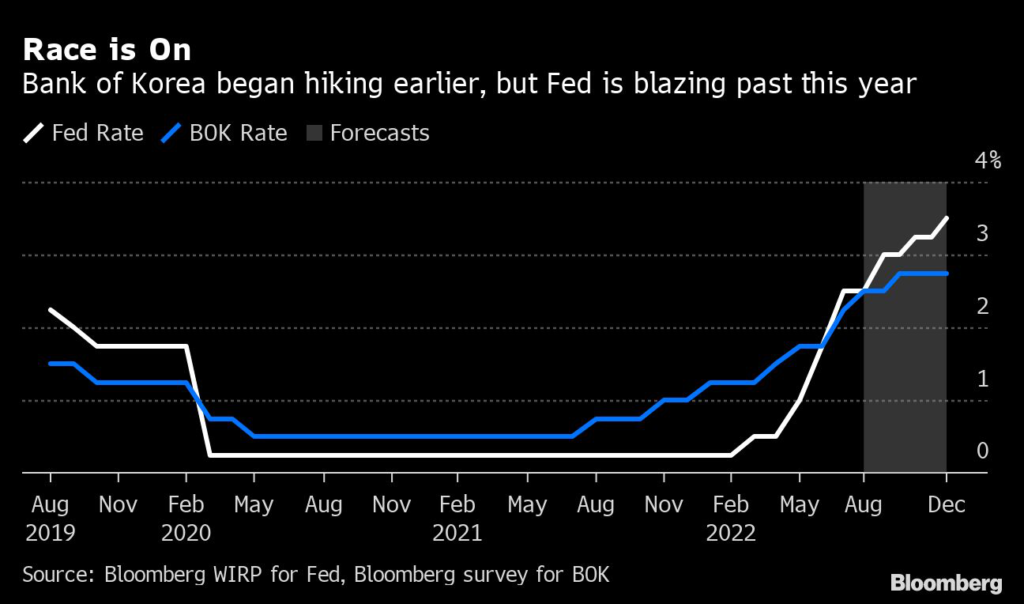
South Korea Set to Resume Quarter-Point Interest Rate Increases

(Bloomberg) — The Bank of Korea is poised to raise its key interest rate by a quarter-percentage point on Thursday, resuming normal-sized increments as it seeks to rein in inflation without damaging the economy’s growth prospects.

The BOK will lift its seven-day repurchase rate by 25 basis points to 2.5%, according to all but one economist surveyed by Bloomberg. Barclays Plc is the outlier with a 50 basis-point call, after the BOK last month delivered its first ever half-point hike to tackle the fastest consumer-price gains in over two decades.

While inflation accelerated further in July, it came in below economists’ estimates for the first time this year. A cooling of global energy and food prices has also eased some of the pressure on central banks to hike hard, enabling some of them to consider a more flexible approach that protects growth.

Korea’s return to quarter-point rises would contrast with fellow early rate mover New Zealand, which last week hiked by a half point for a fourth-straight meeting. 

Still, Korea is unlikely to deviate from a path of tightening as consumer prices run at more than three times the central bank’s 2% inflation target. On top of that, capital outflows triggered by the Federal Reserve’s rate increases run the risk of a continued weakening of the currency that further inflates key import prices.

“Inflation is rising and more US Fed rate hikes will come, so I see the BOK doing another rate hike,” said Lloyd Chan, an economist at Oxford Economics. But, he added, “policy makers will be more cautious about the impact of rapid rate hikes on growth.”

The BOK on Thursday will also release its quarterly update of economic forecasts after having in May predicted growth of 2.7% and inflation at 4.5% this year. The median estimate in a Bloomberg survey of economists this month was for inflation of 5%.

Kwon Goohoon, an economist at Goldman Sachs Group Inc, predicted last week that the BOK may raise its inflation forecast to around 5.5%. But the central bank is likely to avoid a hawkish tone given there are signs of inflation cooling while growth fears continue, he said.

A further concern is slowing exports, as global semiconductor forecasts are downgraded and shipments to China decline. A key driver of domestic economic growth this year has been consumption after the relaxation of Covid rules released pent-up demand, but that spending may start to slow just as external demand weakens.

Governor Rhee Chang-yong has made clear since the last meeting that another outsized rate hike is unlikely unless extraordinary circumstances arise. The BOK is also closely watching the impact of higher interest rates on record household debt, amid rising credit concerns. 

The rate decision should come before 10 a.m. local time followed by a press briefing by Rhee starting around 11:10 a.m. The governor’s remarks on the likely trajectory of the economy, prices and interest rates will be closely followed.

The central bank’s efforts have been assisted by recent government measures to try to ease the burden of rising living costs on the population. These have included the release of grain supplies and an extension of fuel tax cuts. 

In the first extra budget since President Yoon Suk Yeol took office in May, the government provided 3.1 trillion won ($2.3 billion) of support to lower-income households and the stabilization of agricultural prices.

“As both the central bank and the government share a common view on high inflation as a bigger threat to the economy than higher rates, the introduction and implementation of small but frequent measures to cap the price level is likely to help with sentiment,” said Kathleen Oh, an economist at Bank of America Corp. 

More stories like this are available on bloomberg.com

©2022 Bloomberg L.P.
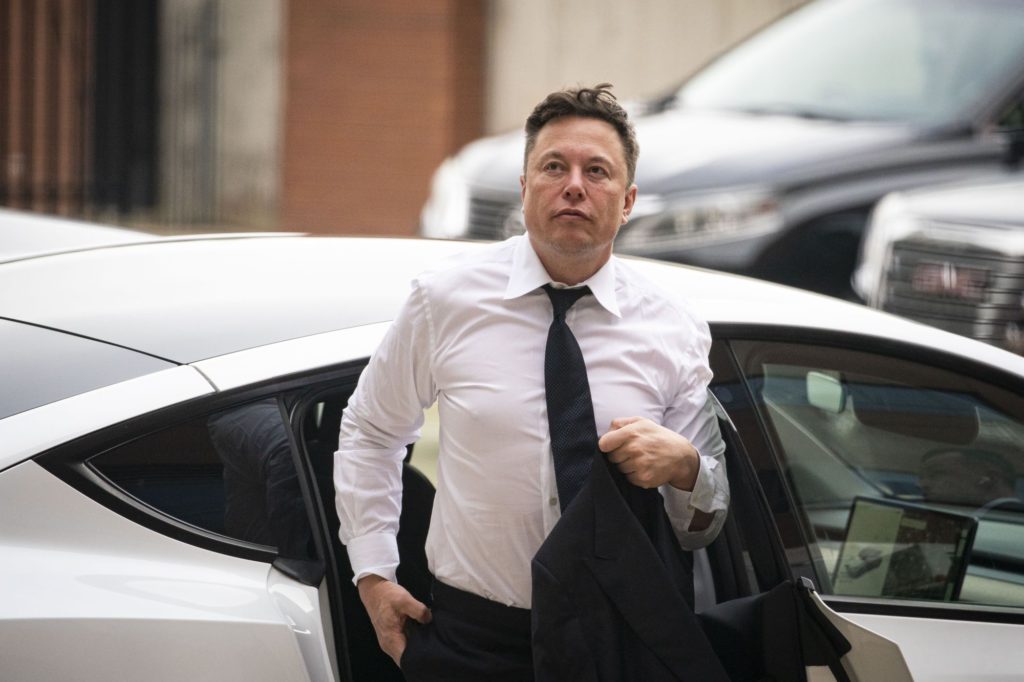
Musk Has to Meet Twitter Data Demand on Potential Investors

(Bloomberg) — Elon Musk was ordered to hand over information about potential investors in the $44 billion buyout of Twitter Inc. he is seeking to cancel, in a win for the social media company that sued to make him consummate the deal.

Delaware Chancery Court Judge Kathaleen St. J. McCormick on Tuesday overruled the billionaire’s objections to Twitter’s demands that he turn over information on parties that may have been involved in an equity raise of more than $7 billion for the $54.20-a-share acquisition. 

McCormick also granted Twitter’s request to make Musk identify people “with knowledge of or involvement in key issues and events” in the deal, over the protests of Musk’s lawyers.

Read More: Musk Says Twitter Is Hounding Him Over Every Chat About Buyout

Both sides are jockeying for position as they prepare for an Oct. 17 trial, sending out a spate of subpoenas to equity investors, advisers and banks involved in the proposed purchase. On Monday, Musk subpoenaed Jack Dorsey, co-founder of Twitter and his longtime friend. Recently Musk’s lawyers complained that Twitter was casting too wide a net in its pursuit of the names of those Musk talked to about the deal. 

Bots and a Whistle-Blower

Tuesday’s ruling comes as Twitter confronts both legal and political dangers after a whistle-blower came forward with allegations that Twitter mishandled security and privacy issues and failed to grapple with spam and bot accounts on its platform. Musk has made the bots issue the centerpiece of his argument for canceling the buyout.

Eric Herman, a spokesman for Musk’s lawyers, declined to comment on McCormick’s ruling. A Twitter spokesman also declined to comment.

Read More: Musk Subpoenas Ex-Twitter CEO Dorsey in Battle Over Buyout 

In her ruling, McCormick noted that Musk’s legal team had agreed to perform searches of only two of the files of “custodians” responsible for assessing the extent of bot and spam accounts, compared with Twitter’s searches of 42 custodians’ records. That imbalance negated the defense’s arguments that it was too burdensome to produce a list of all possible investors, the judge said.

“Delaware law requires the party objecting on burden grounds to explain the burden with some level of specificity,” she wrote. Musk’s side hadn’t, she found.

‘Rang Hollow’

Musk complained this month that Twitter officials were hounding him about casual conversations he’d had about the Twitter deal with friends and colleagues. He asked McCormick to make the platform’s attorneys back off. Instead, the judge found that his arguments “rang hollow” and ordered him to come up with as many names as possible.

McCormick said it was hard to conclude that forcing Musk to list “persons with knowledge, even if those persons have duplicative knowledge, is disproportionate to the needs of any case, particularly a case that concerns a $44 billion merger.”

But in a footnote, she said Musk wasn’t obligated to produce the names of advisers to third parties if he didn’t know them. 

“If he does, then he must,” the judge added.

On other matters, McCormick ruled in Musk’s favor. She denied Twitter’s request to hold that Musk waived his objections to multiple information inquiries “by engaging in obfuscatory discovery tactics.” And she denied as premature Twitter’s request to make the defense hand over any communications with government authorities on the merger.  

It isn’t clear how the ruling might affect a hearing scheduled for Wednesday on information requests by Musk.

The case is Twitter v. Musk, 2022-0613, Delaware Chancery Court (Wilmington).

(Updates with further excerpts of ruling starting in third section.)

More stories like this are available on bloomberg.com

©2022 Bloomberg L.P.

Meta Learned Via a Tweet of FTC’s Suit to Block VR Deal

(Bloomberg) — Meta Platforms Inc. learned that the US Federal Trade Commission was suing the company over one of its smaller acquisitions via a Twitter post.

The Facebook parent company had provided hundreds of pages of documents, data and other details to the FTC as part of a routine disclosure before its acquisition of Within Unlimited, a virtual reality fitness app maker, could be approved, according to people familiar with the matter. But the regulator made no indications it was about to challenge the deal, and didn’t send its legal complaint to the company, the people said. 

After noticing the tweet, Meta confirmed the news by looking at the court docket, the people added. The FTC typically gives companies a chance to meet with the commissioners and argue their case before filing a suit and subsequently alerts companies with a phone call and a copy of the complaint minutes before it’s filed.

The challenge — and the lack of forewarning — indicates the FTC Chair Lina Khan’s more adversarial stance. Khan is a progressive antitrust advocate appointed by President Joe Biden to shake up the agency amid criticism that it stood by as the tech giants like Meta scooped up promising rivals, limiting competition in the market. 

In the weeks before the July 27 legal challenge, the agency never sought sworn testimony from executives at Meta or Within about the deal, a common step if a lawsuit is in the works. The deal was big enough that Meta needed to inform the regulator and undergo an antitrust review. But communications between Meta and the FTC were similar to those for past acquisitions that resulted in no objections, the people said. 

In an emailed statement Tuesday, the FTC said its communications with Meta about the case followed the agency’s normal practices, and that the company met with each of the commissioners before the complaint was filed. The agency said it sent the complaint to Meta and Within after it was filed, as is required by law. The agency declined to answer additional questions about the timing or substance of discussions with Meta, saying that information was nonpublic.

Meta reiterated that it will “vigorously defend” the deal in court. Meta didn’t have any additional comment on how the suit was disclosed. 

The FTC’s challenge is unique in other ways: It’s the first preemptive move to block a takeover by Meta, makes a little-used argument against a deal in a new and growing industry, and came after Khan made the unusual move of overruling her staff in the decision to bring the case.

Read more about the FTC’s debate on Meta’s VR deal

The FTC alleges that Meta — which makes the most widely used virtual reality headset, Oculus — would eliminate future competition in a new market, often referred to as “nascent competition.” The agency rarely sues using that legal theory given the difficulty in proving a deal would tamp down the potential of a young industry. The last time the FTC brought such a case, in a 2015 instance involving sterilization technology, the agency lost. 

The Within challenge seems more focused “on creating an initial splash and a narrative around what the FTC is doing than resulting in lasting legal authority,” said Neil Chilson, the FTC’s chief technologist during the Trump administration, who now works for Stand Together, a philanthropic organization associated with billionaire Charles Koch. “If they wanted to push the boundaries, there are much better cases to do that.”

The FTC staff assigned to review the deal recommended against filing a suit, as Bloomberg earlier reported based on people familiar with the agency’s deliberations. Khan’s own staffers took the lead on the complaint, contacting Meta with additional questions ahead of the July 31 date the companies had set to close the transaction. 

The FTC’s newest commissioner, Democrat Alvaro Bedoya, who joined in May, had multiple meetings with Khan’s office and FTC staff about the deal, according to the Bloomberg report. Before Bedoya’s arrival, the agency was deadlocked at 2-2, allowing the FTC’s two Republican commissioners to stymie several of Khan’s more aggressive antitrust ideas. Bedoya’s vote, his first on a major FTC case, would be the key to the challenge against Meta.

Thanks to Bedoya, Khan won the first battle. After passing on more than 100 deals by the company over a decade, according a 2020 House report on tech company acquisitions, the agency is seeking to block the Within deal.

The transaction is part of Meta’s strategic push beyond social media into the metaverse — a more immersive version of the internet, where people can populate an alternative virtual world to go shopping, go to work and see friends.

The FTC alleged that Within’s Supernatural app competes with Meta’s own Beat Saber, a VR rhythm game where users hit targets in time to music, and the acquisition would discourage Meta from using its existing resources to develop its own virtual fitness offering. Therefore, the FTC argued, the deal decreases potential competition by giving Meta control over the market and eliminating the incentive for others to participate. 

The agency will need to persuade a California federal judge in December that it would likely win an antitrust suit against Meta before the FTC’s in-house court. 

Some don’t think that’s likely. Consumer Technology Association President Gary Shapiro called the FTC’s case “laughable.” The group represents 1,500 consumer tech companies including Meta. Shapiro, a lawyer and registered lobbyist, said the FTC’s legal theory was weak and likely to chill investment in emerging startups. 

“This lawsuit is such a break in policy, so unfair, and so damaging to new investment that I feel compelled to speak,” Shapiro said, noting that he had never commented on an ongoing FTC lawsuit before. 

(Updates with FTC comment in the sixth paragraph)

More stories like this are available on bloomberg.com

©2022 Bloomberg L.P.

Stocks Finish Lower With 10-Year Yield Topping 3%: Markets Wrap

(Bloomberg) — Stocks retreated after weak economic data, with traders awaiting more clarity on the Federal Reserve’s monetary policy path from the annual central bankers’ symposium later this week.

The S&P 500 saw its third straight drop after swinging between gains and losses throughout the session. Trading volume was among the lowest in 2022. Treasury 10-year yields topped 3%, while the dollar halted a four-day rally.

Traders are bracing for hawkish talk at the Jackson Hole event after recent comments from officials convinced many investors the Fed will continue to tighten even with a slowing economy. Data Tuesday showed sales of new US homes fell for the sixth time this year to the slowest pace since early 2016, while business activity contracted for a second straight month.

“For the moment, global sentiment is both skittish and volatile,” said Richard Hunter, head of markets at Interactive Investor. “There is little cause for optimism on the immediate horizon, with any glimmers of economic hope yet to take hold on a sustainable basis.”

Directors at two of the Fed’s 12 regional branches — St. Louis and Minneapolis — favored a 100 basis-point increase in the discount rate in July, signaling internal pressure for a bigger move than policy makers delivered last month.

Citigroup Inc.’s Beata Manthey said the recent rally in stocks had gone too far given the prospect of sticky inflation and the need for further interest-rate rises to tame it. While the strategist said she’s still bullish on equities over the longer term, she added that markets don’t go up in a straight line.

Quantitative tightening by the US central bank is set to kick into gear next month, presenting another potential headwind for equities.

“The near-term outlook for equity markets remains challenging,” said Mathieu Racheter, head of equity strategy at Julius Baer. “The impact of quantitative tightening on financial markets have yet to be felt, while the earnings downgrade cycle has just started.”

In corporate news, Zoom Video Communications Inc. plummeted after its results showed that the transition from an essential Covid-era tool to an enterprise business platform is going to take longer than expected. Macy’s Inc. climbed after cutting its forecasts for profit and revenue in what Citigroup called a “prudent” move.

Elsewhere, US natural gas prices tumbled as the operators of a key export terminal damaged in an explosion earlier this year announced a delay to the timeline for restart. West Texas Intermediate settled above $93 a barrel as the dollar weakened, making commodities priced in the currency more attractive.

What to watch this week:

  • US durable goods, MBA mortgage applications, pending home sales, Wednesday
  • US GDP, initial jobless claims, Thursday
  • Kansas City Fed hosts its annual economic policy symposium in Jackson Hole, Wyoming, Thursday
  • ECB’s July minutes, Thursday
  • Fed Chair Powell speaks at Jackson Hole, Friday
  • US personal income, PCE deflator, University of Michigan consumer sentiment, Friday

Will the meme mania fizzle out? That’s the theme of this week’s MLIV Pulse survey. Click here to participate anonymously.

Some of the main moves in markets:

Stocks

  • The S&P 500 fell 0.2% as of 4 p.m. New York time
  • The Nasdaq 100 was little changed
  • The Dow Jones Industrial Average fell 0.5%
  • The MSCI World index fell 0.3%

Currencies

  • The Bloomberg Dollar Spot Index fell 0.4%
  • The euro rose 0.3% to $0.9969
  • The British pound rose 0.5% to $1.1829
  • The Japanese yen rose 0.5% to 136.81 per dollar

Bonds

  • The yield on 10-year Treasuries advanced five basis points to 3.06%
  • Germany’s 10-year yield advanced one basis point to 1.32%
  • Britain’s 10-year yield advanced six basis points to 2.58%

Commodities

  • West Texas Intermediate crude rose 3.7% to $93.66 a barrel
  • Gold futures rose 0.7% to $1,760 an ounce

More stories like this are available on bloomberg.com

©2022 Bloomberg L.P.
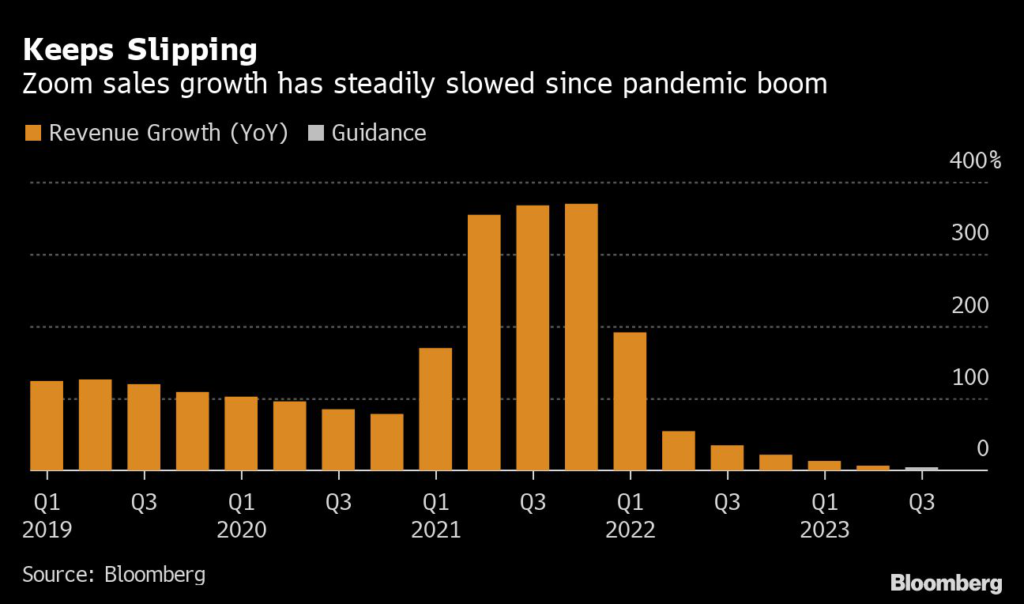
Zoom’s Enterprise Bet Is Delayed as Company Cuts Sales Forecast

(Bloomberg) — Zoom Video Communications Inc.’s results showed that its transition from an essential Covid-era tool to an enterprise business platform is going to take longer than expected. The shares plunged to a closing price last seen in January 2020 before the company began its meteoric rise.

While Zoom said it’s generating a growing percentage of revenue from enterprise customers, the software maker didn’t add as many in the fiscal second quarter as analysts expected. The company also cut its annual revenue forecast, saying it’s losing sales from consumers and small business faster than anticipated.

The results, said Citigroup Inc. analyst Tyler Radke, were “even worse than we expected.” 

Read More: Zoom Video Falls as Online Unit Weighs on Guidance: Street Wrap

Zoom’s breakneck growth during the pandemic has cooled considerably as offices reopen and competition intensifies from Microsoft Corp.’s Teams video communications platform. Online sales to consumers and small businesses are expected to decline 7% to 8% this year, Chief Financial Officer Kelly Steckelberg said on a conference call after the earnings were announced.

The shares dropped 17% to $81.32 at the close Tuesday in New York, the biggest single-day fall since Aug. 31, 2021. The stock has declined 56% this year, missing out on a rally in technology stocks since mid-June.

Zoom has responded by intensifying its focus on larger enterprise clients and pitching an expanded line of products such as software for customer contact centers. In June, the company unveiled a new service bundle — Zoom One — to highlight offerings like internet-connected phones and physical conference rooms. Analysts are generally positive on these secondary offerings, particularly Zoom Phone, but believe they will take time to pay off. Sales to enterprise customers are expected to grow by more than 20% this year, Steckelberg said.

Chief Executive Officer Eric Yuan also expressed confidence in the company’s new products. “Our recently launched Zoom Contact Center and Zoom IQ for Sales products saw some great early wins while Zoom Phone delivered milestone results, hitting a record number of licenses sold in the quarter,” he said in the statement.

Revenue will be about $1.1 billion in the period ending in October, the San Jose, California-based company said Monday in a statement. Analysts, on average, expected $1.16 billion, or growth of about 10% from a year earlier, according to data compiled by Bloomberg. Profit, excluding some items, will be 82 cents to 83 cents a share, compared with analysts’ average estimate of 91 cents. 

The company also reduced its annual sales forecast to about $4.4 billion from its May projection of as much as $4.55 billion. About $115 million of the cut is due to the “broader economic environment” and $35 million is due to the stronger US dollar, Steckelberg said during the call.

For more on Zoom’s bet on corporate customers for growth

Fiscal second-quarter sales increased 7.6% to $1.1 billion, Zoom’s slowest year-over-year growth on record. Analysts, on average, projected $1.12 billion — making it the first quarter that the company has missed revenue estimates. Profit, excluding some items, was $1.05 a share, compared with the average estimate of 92 cents.

Revenue from the region including Europe declined 8% in the quarter due to the Russia-Ukraine war, the strength of the US dollar and weakness in the consumer segment, the company said.

“We recognize that the revenue results are disappointing and below our expectations as we navigate the current environment,” Steckelberg said.

In the period ended July 31, the company said it had 204,100 enterprise customers, an increase of 18% from a year earlier. The growth was lower than a 24% increase in the previous quarter. Analysts, on average, projected Zoom would report 205,854 enterprise customers.

While the enterprise segment saw steady growth in the quarter, customer additions were “quite weak,” which may be a leading indicator of future headwinds, Citigroup’s Radke wrote in a note after the results.

What Bloomberg Intelligence Says: 

Though the strength in enterprise bodes well for growth, weakness in the online business could linger beyond year-end as securing new users in this segment may be challenging amid a choppy economy.

John Butler, BI senior telecom industry analyst 

(Updates with closing shares in first and fifth paragraphs.)

More stories like this are available on bloomberg.com

©2022 Bloomberg L.P.

Toyota Backs Down in Fight Against California Car Emission Rules

(Bloomberg) — Toyota Motor Corp. agreed to recognize California’s authority to set its own auto emission standards, ending a standoff stretching back to the Trump administration. 

The Japanese automaker, which once sued along with several other manufacturers to stop California from setting higher emissions standards than the federal government, said in a statement Tuesday that it has acknowledged in recent communications with the California Air Resources Board the agency’s “leadership in climate policies and its authority to set vehicle emissions standards under the Clean Air Act.”

See also: Toyota’s Lobbying Blitz Gets Results in Manchin-Schumer Deal

The statement is a reversal for a company that had joined peers, including General Motors Co., in a 2019 lawsuit challenging the state. That litigation, filed by the Environmental Defense Fund, came after the Trump administration moved to roll back Obama-era mileage rules and revoke California’s right to set its own emissions standards, which had been allowed under the Clean Air Act since the 1970s. GM later changed its tune and dropped from the suit shortly before pledging to sell only zero-emission vehicles by 2035.

Several major rivals, including Ford Motor Co. and Volkswagen AG, sided with California early, going as far as reaching an agreement on higher standards with the state. That prompted the Trump administration to launch a brief antitrust investigation, which it later dropped.

President Joe Biden’s administration has since ordered carmakers to increase their average fuel economy to about 49 miles (78.8 kilometers) per gallon by 2026. The ambitious effort has largely won support from carmakers to make up for the stalled progress in recent years.

Toyota said in its statement that it “continues to share the vision” of greenhouse gas reduction and carbon neutrality goals with CARB and the state of California. 

The company’s recognition could make it eligible for fleet purchases by the state. Toyota said it is “excited about our efforts to extend zero-emissions activities beyond our core vehicle business” and “eager to explore the state’s engagement with these efforts.”

More stories like this are available on bloomberg.com

©2022 Bloomberg L.P.

Anti-Work Redditors Say ‘Quiet Quitting’ Really Means Just Doing Your Job

(Bloomberg) — Don’t call it “quiet quitting.”

That’s the battle cry from a growing chorus of voices on social media including r/antiwork, a subreddit for work grievances that counts more than 2 million members.  

Redditors on the forum argue that calling the phenomenon any variety of “quitting” implies employees are acting badly, when in reality the viral term simply means  fulfilling the job description and setting healthy boundaries. Posters on r/antiwork, which took off during the pandemic with the motto  “unemployment for all, not just the rich,” blame the media for frenzied coverage of a concept that should be considered the norm, not a scandalous new trend. Others see the new catchphrase as a tool employers may use against employees for not doing more work than their contract (and level of compensation) stipulates.

Memorable expressions have cachet, though, and so the race is on to coin the winning replacement. One of the most commonly suggested: “Act your wage.”   There’s also  “quiet firing,” when bosses make their workers’ lives miserable but stop short of actually firing them.

The internet has been flooded with explanations and debates about so-called quiet quitting, the new buzzword for doing your job as described. Enthusiasts describe the mentality as a stealth retreat from the hustle culture that dominated the pre-pandemic era.

Read More: Everyone Is Talking About ‘Quiet Quitting,’ But Is It a Good Idea?

Pushback against the latest workplace buzzword is mounting, and not just on Reddit. Commentary on Twitter has pointed out how quiet quitting is a confused, flawed expression. LinkedIn shared a viral meme with the prevailing exegesis:

On TikTok, Shini Ko, 28, agrees that the term is problematic. “The idea of quitting hustle culture and not going above and beyond is basically having a healthy work-life boundary. I just don’t think that the term quiet quitting is an appropriate term for it because it sounds negative,” she said in an interview. “It’s dangerous rather than empowering.”

Ko is based in eastern Ontario and works as a software developer to pay the bills and fund her passion project: Bao Bao, a quarter-acre organic farm she started last year that specializes in Asian-heritage vegetables. Ko notes setting clear boundaries at work doesn’t mean you’re not doing your job. “Farming is expensive, and I couldn’t have started my farm without my tech salary,” she said. “It’s really important for me to keep that in mind because at the end of the day, I still need to do my job right.”

@baobao.farm

Someone please let me know when I can ACTUALLY not show up to work and still get paid #quietquitting #antiwork #corporate #corporatelife #career #boundaries

♬ original sound – Bao Bao Farm

For Rahaf Harfoush, an anthropologist who studies digital and work-life culture, the discussion around the word choice should be as much a part of the debate as whether quiet quitting is a good idea or not. 

“The actual term itself is an unintentional, very revealing, vocabulary choice about hustle culture in and of itself,” she said in an interview. The term exposes the internal conflict people face when it comes to setting work-life boundaries. “With quiet quitting, there’s almost like a shame and people admitting it, because if there wasn’t, we wouldn’t call it quiet quitting.”

Harfoush’s published a three-year study on hustle culture, Hustle and Float, that explores the ways in which workers remain deeply enmeshed in the ideals of sacrifice, giving it your all and exceeding expectations — even as this can result in illness, exhaustion and burnout. “Those are the ideals that are buried in our subconscious. So even though we might want work-life balance, when I hear people talk about quiet quitting, I’m like, ‘Ah, we haven’t quite let go of that yet,’” she said. 

Commenters have also argued that all of the attention around quiet quitting says more about the extent to which companies depend on unpaid labor than about any individual employee’s work ethic.

As long as employees feel they have a shot of being rewarded for all their overtime, the hundreds (or thousands) of uncompensated hours could be seen as worth it. Yet many workers, especially younger generations, don’t see it adding up anymore. Wages aren’t keeping up with inflation while surging rents and the housing affordability crisis put both basic quality of life and major milestones out of reach.

Harfoush said that the quiet quitting trend (whether appropriately named or not) is part of a larger recalibration in the labor market. “A lot of generational promises that have been made to people have been broken. We were all told that if we worked really hard, and that if we went the extra mile, and that if we gunned for that promotion, that the payoff would be being able to afford a house, being able to go to school, being able to get a good job, we would be able to move up,” she said. “We were told that in exchange for the sacrifice in the labor market, there would be benefits. And now what we’re seeing, at least with the millennials, is that those promises are not true.”

More stories like this are available on bloomberg.com

©2022 Bloomberg L.P.
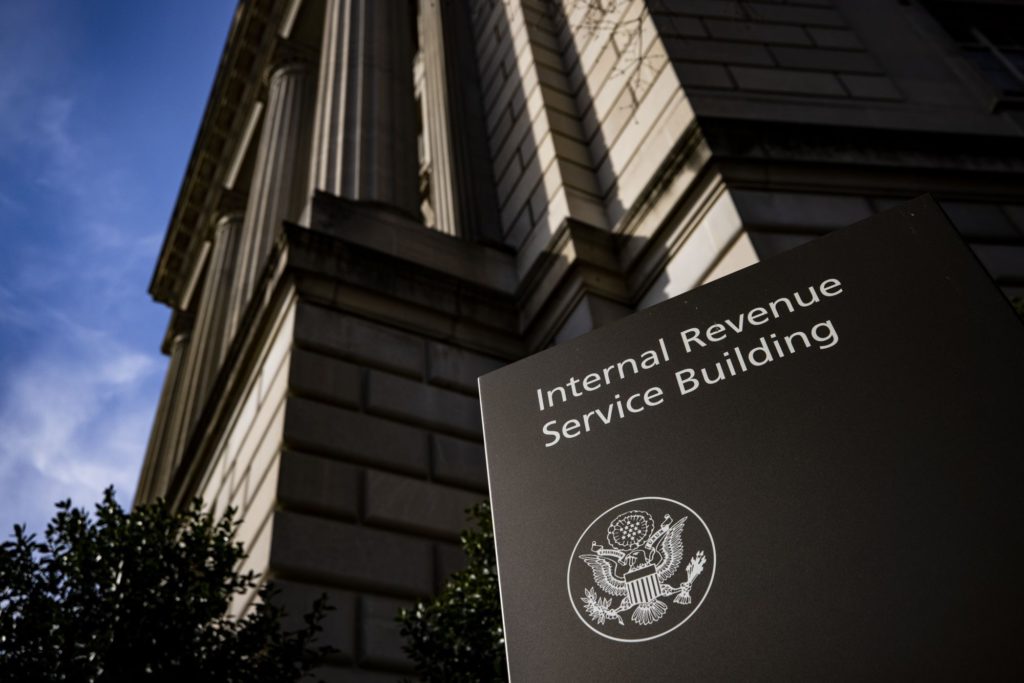
IRS Reviews Security for Offices, Staff After Political Attacks

(Bloomberg) — The Internal Revenue Service is reviewing security for its employees and offices after a wave of political attacks from Republican lawmakers and right-wing groups.

The IRS, which has about 600 facilities nationwide, has become a target of GOP lawmakers in recent weeks, after President Joe Biden signed a new spending law that law includes $80 billion for the agency to enhance tax enforcement and upgrade its computer systems.

Threats against the agency increased after Republicans, including House Minority Leader Kevin McCarthy and Senator Chuck Grassley, have falsely claimed that the additional funding would lead to a massive increase in the number of armed IRS agents and that enhanced enforcement would be aimed at middle-income taxpayers.

“We are conducting a comprehensive review of existing safety and security measures,” IRS Commissioner Chuck Rettig said in a memo to employees on Tuesday. “This includes conducting risk assessments based on data-driven decisions given the current environment and monitoring perimeter security, designations of restricted areas, exterior lighting, security around entrances to our facilities and other various protections.” 

The IRS is also monitoring threat intelligence and has increased engagement with the Department of Homeland Security, local law enforcement agencies and the inspector general that oversees the agency, said Rettig, who was appointed by former President Donald Trump as the top IRS official in 2018. The plan was reported earlier by the Washington Post.

Treasury Secretary Janet Yellen has said that the additional funding for audits will be used to increase enforcement of households making at least $400,000 a year and large corporations. Money will also be spent on technology upgrades and improving customer service.

“For me this is personal. I’ll continue to make every effort to dispel any lingering misperceptions about our work,” Rettig said in the memo. “And I will continue to advocate for your safety in every venue where I have an audience.”

The announcement of the security review comes after a major union representing IRS employees asked for the agency to increase measures to protect workers, particularly those who work in public-facing roles. 

More stories like this are available on bloomberg.com

©2022 Bloomberg L.P.

Close Bitnami banner
Bitnami
