

Bloomberg

Rising Ether Prices Spark Liquidity Crisis at NFT Lender BendDAO

(Bloomberg) — One of the most popular lending platforms for holders of NFTs such as Bored Apes to borrow against their collections is revising its terms after a drop in prices threatened to trigger the liquidation of much of the collateral backing many of the loans.   

A majority of the community of investors known as a decentralized autonomous organization that runs BendDAO voted to support changes in the protocol’s code to make borrowers’ NFT collateral more liquid, while also enticing lenders to stay put with higher interest rate. Users had started rushing to withdraw deposits from the platform amid concern about a potential liquidity crunch on Friday. The total value of crypto assets locked in BendDAO’s protocol dropped by about 50% to around $41 million during the weekend, according to data from DeFi Llama.

Lending against pricey NFTs, which are unique tokens on blockchains, has been one of the latest trends in crypto. The amount of Ether that NFT owners can borrow on the platform is anywhere between 30% and 40% of the NFTs’ floor price on BendDAO, which is the lowest set amount a bidder is eligible to buy an NFT from a collection. NFTs from the Bored Ape Yacht Club collection make up about 68% of the assets that serve as collateral on the BendDAO platform, while another 16% is from Mutant Ape Yacht Club tokens. 

The DeFi peer-to-peer platform enables NFT holders to borrow cryptocurrencies such as Ether without forcing them to cede control of the assets. Meanwhile, Ether holders can lend out their tokens through the protocol and earn interest. Unlike centralized crypto lenders such as Celsius and BlockFi, the DAO allows participants to collectively vote for changes in the protocol’s code.  

The recent rise in Ether prices amid the general crypto bear market combined in part to trigger the large-scale liquidations on BendDAO last week. As the Ether denominated loans increased in value in dollar terms, the value of NFT collateral continued to depreciate. That triggered the protocol to begin a process to liquidate the collateral through auctions. 

The protocol had stipulated the bidding price or the liquidation threshold had to be at least 95% of the NFTs’ floor price and gave borrowers 48 hours to pay down loans before liquidation. That has driven potential bidders away from the auction site since the prices weren’t attractive and sparked investor concern that the price of the collateral was falling below the amount of debt outstanding. 

The DAO initiated a proposal on Monday, in which the platform will lower the liquidation threshold to 70% from 95% and reduce the window for the borrowers to pay down their loans to avoid liquidation to four hours from 48 hours. The new terms aim to make it easier to liquidate NFTs, which have seen less liquidity amid the bear market. 

More stories like this are available on bloomberg.com

©2022 Bloomberg L.P.

Crypto Lender Celsius Accuses Former Money Manager of Theft

(Bloomberg) — A former money manager for Celsius Network LLC deceived the company about his investing abilities and lost or stole tens of millions of dollars in assets, the bankrupt crypto lender alleged in a lawsuit Tuesday.

Celsius, which filed for bankruptcy last month after freezing customer assets, alleges Keyfi Inc. and founder Jason Stone lied about his investing prowess and was incompetent in managing Celsius assets. The crypto lender also accused Stone of outright theft.

Stone began managing money for Celsius in 2020, according to the complaint. Unhappy with Keyfi’s reporting practices, Celsius demanded the return of coins under Stone’s control just months after the arrangement began. Celsius was unable to recover all of the assets and found Keyfi was “extraordinarily inept” at crypto investing and failed to hedge against price swings, according to the lawsuit.

“The Defendants’ liability to Celsius is staggering,” attorneys for Celsius wrote in the complaint. In addition to mismanagement and deception, the company claims Keyfi converted Celsius assets into non-fungible tokens and stole them, covering its tracks with a so-called crypto mixer recently banned by the US Treasury Department.

The allegations come after Stone sued Celsius last month, accusing the crypto lender of fraud and cheating him out of potentially hundreds of millions of dollars in pay.

“As alleged by KeyFi in the complaint it filed last month, the compensation that KeyFi received (including in the form of NFTs) was expressly authorized by Celsius’s CEO Alexander Mashinsky,” Kyle Roche, an attorney for Stone, said in an emailed statement. “Celsius’s most recent filing is an attempt to rewrite history and use KeyFi and Mr. Stone as a scapegoat for their organizational incompetence.” 

The bankruptcy case is Celsius Network LLC, 22-10964, US Bankruptcy Court for the Southern District of New York (Manhattan).

More stories like this are available on bloomberg.com

©2022 Bloomberg L.P.

Yelp Will Issue Disclaimers on Crisis Pregnancy Centers

(Bloomberg) — People who come across crisis pregnancy centers on Yelp will now be met with a disclaimer that explains what the center doesn’t provide: abortion services.

Yelp’s policy change means it now flags the centers, which often try to deter patients from getting abortions, as places that “provide limited medical services and may not have licensed medical professionals onsite.” The rule will apply to religious and secular facilities in the US and Canada.

“The trust and safety of our community is a top priority, which is why providing consumers with reliable and useful information to help inform their decisions is critical to our mission — this includes access to reliable information about reproductive health services,” said Noorie Malik, Yelp’s vice president of user operations. She said the update is an effort to “further protect consumers from the potential of being misled or confused.”

The crisis centers, known as CPCs, vastly outnumber abortion providers in the US and often set up shop near existing abortion clinics. According to a 2015 report by pro-abortion rights group NARAL Pro-Choice America, there were around 2,500 CPCs in the US, and at least 23 states have laws that support CPCs. By contrast, the number of open abortion clinics has been dwindling in recent years, due to restrictions and bans at the state level. The US Supreme Court’s decision in June to overturn Roe v. Wade has accelerated that trend: 43 clinics in seven states have stopped providing abortion care due to trigger laws and bans, the Guttmacher Institute, a pro-abortion rights research group, reported in July.

Search engines have faced growing pressure from abortion-rights groups to crack down on advertising from CPCs. In 2019, Google updated its policies so that any company that wants to run ads against abortion-related keywords must disclose whether they provide abortion services or not. Google Maps also labels whether a clinic provides abortion services or is a “pregnancy care center.” Even so, a Bloomberg analysis of Google Maps listings found that at least a quarter of results related to a search for “abortion clinic” were for CPCs.

Both pro-abortion rights and anti-abortion US lawmakers have pressured Google on its CPC policies in recent months.

In June, Democratic Senators and Congress members wrote a letter asking Google Chief Executive Officer Sundar Pichai to further limit CPC results when a user searches for abortion services. “Google should not be displaying anti-abortion fake clinics or crisis pregnancy centers in search results for users that are searching for an ‘abortion clinic’ or ‘abortion pill,’” the legislators said. They added that if the platform decides to keep such results, they should be “appropriately labeled.”

Meanwhile, Republican attorneys general from 17 US states asked Google to provide assurances that the search giant isn’t suppressing results for crisis pregnancy centers in favor of abortion clinics.  

At Yelp, a site used to find businesses and reviews, search results routinely come up empty if someone searchers for abortion services in a location where there are none, a 2019 Rewire report showed.

Yelp said it had re-categorized 470 businesses as crisis pregnancy centers this year. The new disclaimer will ultimately help both people who are seeking pregnancy services and those looking for abortion care, Malik said.

(Corrects last paragraph to show that Yelp re-categorized 470 businesses this year.)

More stories like this are available on bloomberg.com

©2022 Bloomberg L.P.
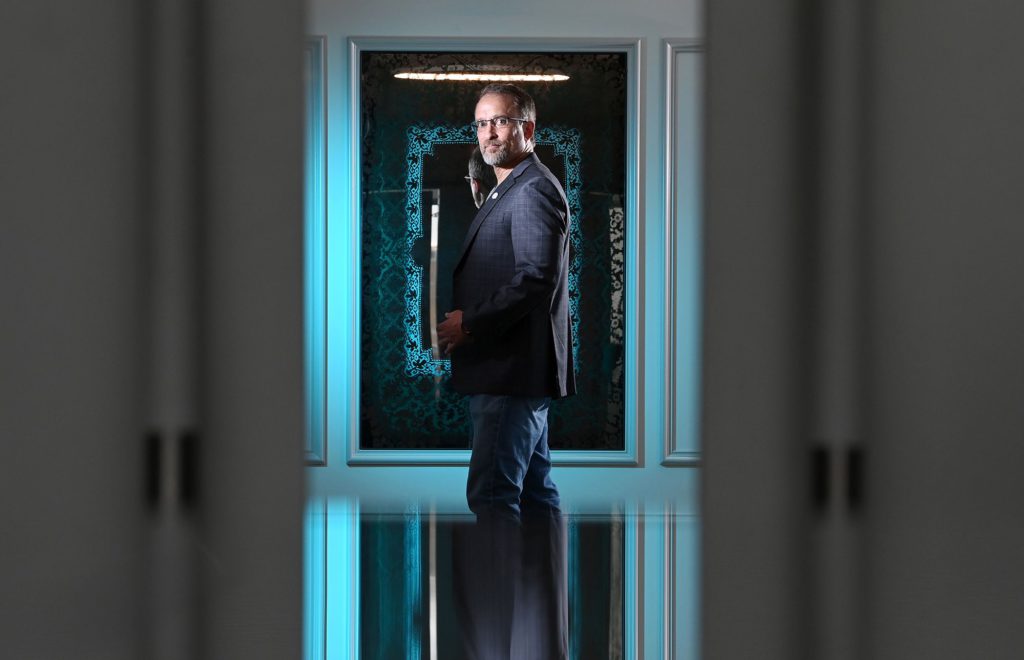
Twitter Whistle-Blower Won Hacker Kudos, Fired Over Performance

(Bloomberg) — The former Twitter Inc. security chief alleging that the company misled investors about data protection issues is no stranger to high-pressure situations. 

Peiter Zatko, also known by the hacker nickname “Mudge,” is a longtime cybersecurity executive who over the years has held various technology-related roles with the US Defense Advanced Research Projects Agency, Google and the payment service Stripe Inc. It’s a resume that’s earned Zatko a distinguished cyber pedigree, and a career that began in earnest with congressional testimony about vulnerabilities in global technology. 

Here’s what you need to know. 

He became a public figure more than two decades ago. Zatko, testifying as Mudge, was one of seven young hackers who in May 1998 warned a Senate committee about fundamental weaknesses in the internet’s infrastructure. As a member of L0pht, an early hacking collective that functioned as kind of a think tank, Mudge told lawmakers that attackers could shut down the functionality of the net within 30 minutes due to weaknesses in technologies called Border Gateway Protocol and the Domain Name System protocol. 

In 2018, members of the same group, including Zatko, again warned Congress that many of those technologies remained insecure. Zatko went on to join Twitter in 2020, after another group of teenage hackers allegedly breached a number of high-profile accounts, including the page of then-presidential candidate Joe Biden. 

Mudge went on to work for DARPA. After winning acclaim as a hacker Zatko went on to work for DARPA, the US Defense Department’s research-and-development agency. 

There, he helped create the Cyber Fast Track, a program designed to accelerate the rate at which the government awarded contracts to independent cyber researchers. The goal was to foster collaboration between the bureaucratic Defense Department and boutique cyber firms that could provide the US with stronger defenses by approving contracts within seven days, as Wired reported. 

In 2016, Mudge and his wife, Sarah, unveiled their own method for assessing the security of software, an attempt to help technology companies and consumers distinguish between reliable and insecure programs. The operation, known as the Cyber Independent Testing Lab, eventually helped users to compare the security of one program, such as a browser or a piece of cybersecurity software, with others. 

The basic concept gained credence when Anne Neuberger, the Biden administration’s Deputy National security advisor for Cyber and Emerging technology, in 2021 suggested a “ cleanliness rating” for software security. 

Zatko had stints in Silicon Valley. Between stints in the US government and at Twitter, Zatko also held cybersecurity jobs at Google and the payment company Stripe. At Google, he worked on special projects, according to Reuters, moving to Stripe in 2017 as the unicorn startup emerged as a ripe target for cybercriminals. 

Twitter poached Zatko from Stripe in 2020, after hackers commandeered high-profile accounts as part of a scheme to raise cryptocurrency. Twitter had struggled for years to police the growing number of employees and contractors capable of resetting user accounts and overriding company security settings, Bloomberg reported in 2020. 

In his whistle-blower complaint, according to the Washington Post, Zatko alleged that thousands of Twitter employees still had deep internal access to core software, a major security issue. 

He was fired from Twitter in January. In a statement to Bloomberg Tuesday, Twitter said Zatko was dismissed from his role earlier this year for ineffective leadership and performance. The company described Zatko’s complaint as “opportunistic” and suggested the allegations were designed to “inflict harm on Twitter.” 

Zatko’s departure from the company coincided with the exit of chief information security officer Rinki Sethi. Both executives joined Twitter in late 2020. They departed the company following “an assessment of how the organization was being led and the impact on top priority work,” according to a memo that CEO Parag Agrawal sent to employees, the New York Times reported at the time. 

“Mudge stands by everything in his disclosure, and his career of ethical and effective leadership speaks for itself,” John Tye, chief disclosure officer at Whistleblower Aid, which is representing Zatko, said in a statement to Bloomberg News. “The focus should be on the facts laid out in the disclosure, not ad hominem attacks against the whistleblower.”

(Updated to include new headline, a Twitter statement about Zatko’s dismissal from the company and a response from Whistleblower Aid.)

More stories like this are available on bloomberg.com

©2022 Bloomberg L.P.
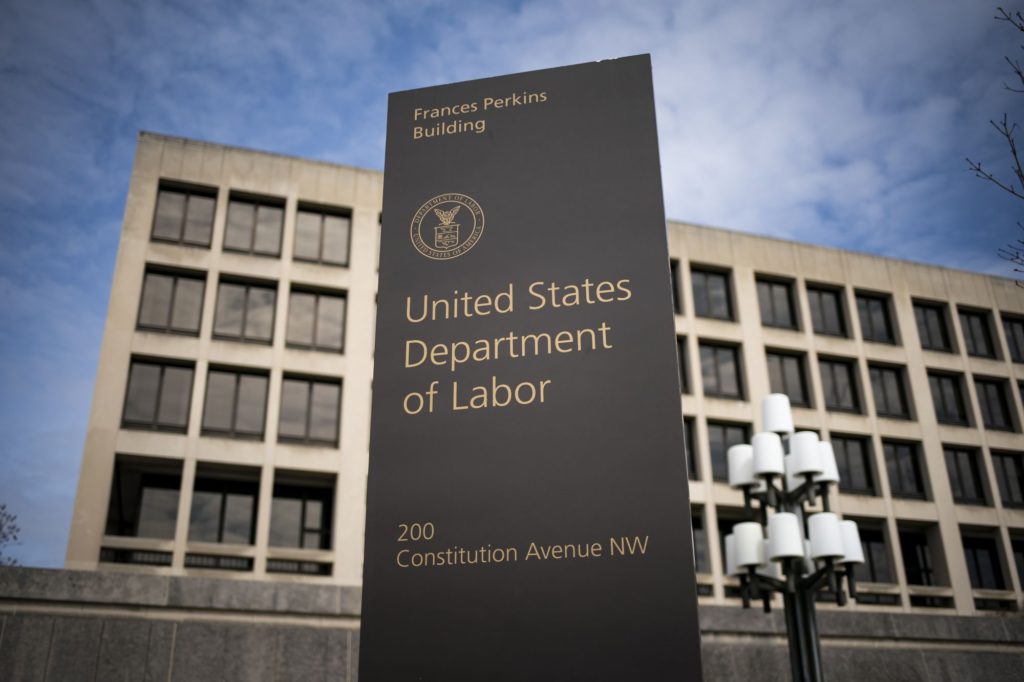
Labor Department Probes Troubled Travel Startup Pollen Over Missed Paychecks

(Bloomberg) — The Department of Labor is questioning former employees of the troubled travel and entertainment startup Pollen, seeking information about wages that haven’t been paid for weeks, according to people with knowledge of the matter.

In social media posts and in interviews with Bloomberg, several ex-staffers have said they didn’t receive pay they were owed for the month of July. An investigator for the Labor Department’s wage and hour division has asked some former employees for information, including copies of recent payslips and descriptions of the hours they worked at the company, according to recently departed employees who asked not to be identified discussing private information. The Labor Department didn’t respond to a request for comment.

Pollen’s owner, Streetteam Software Ltd., said this month said it’s working with Kroll LLC to handle a breakup and sale of its subsidiaries after failing to find a buyer for the whole business. “We’re doing everything we can to secure the best outcome for all our stakeholders, via the sale of our subsidiary companies,” spokesperson Daniel Ritterband said in a statement, adding that its directors are supporting the company with personal funds.

Founded in 2014 by British entrepreneurs Callum Negus-Fancey and his brother Liam, Pollen works with promoters and festivals to plan travel experiences featuring artists, such as reggaeton superstar J Balvin in Cancun and American rapper 50 Cent in Malta. Pollen has raised money from investors including Northzone Ventures, Molten Ventures and Lansdowne Partners.

In the last few months, Pollen has struggled to pay employees, vendors and issue refunds to customers, leaving a trail of complaints behind. Bloomberg reported that some customers didn’t receive refunds for months for events that were canceled or postponed. The startup was derailed by pandemic-related restrictions as well as missteps including unrealistic growth projections, misleading communication with customers, lavish employee perks and unmet financial obligations to departing workers, according to 16 people, including former staffers. Ritterband defended the company’s communications policies.

More stories like this are available on bloomberg.com

©2022 Bloomberg L.P.
Bitcoin Stuck in Narrow Range as Traders Brace for Jackson Hole

(Bloomberg) — The usually volatile Bitcoin has gotten stuck trading within a narrow range ahead of the Federal Reserve’s annual Jackson Hole gathering later this week. 

The world’s largest digital coin by market value rose as much as 2.6% Tuesday to hover around $21,600, though it’s largely been meandering below the $22,000 level since it started to sell off in mid-August. Other cryptocurrencies, including Ether, also rose, with an index of the 100 largest tokens adding roughly 2.3%. 

And it’s happening as US stocks try to stage a comeback from Monday, when they had their worst session since mid-June. Traders are bracing for a hawkish tone at the Jackson Hole event after recent comments from Fed officials convinced many investors the central bank will continue to tighten aggressively, even into a slowing economy.

“As August limps toward a weak close, market attention is turning to this week’s Jackson Hole symposium,” wrote Noelle Acheson, head of market insights at Genesis, in a research note. “A key question on traders’ minds is whether the Fed chairman will signal a potential reduction in the pace of hikes, double down on his nominal commitment to lowering inflation, or indeed try to convince the market that the Fed can have its proverbial cake and eat it, too,” she added.

Cryptocurrencies have been trading in tandem with US equities this year as both have been swayed by the Federal Reserve’s interest-rate-hiking path. The 90-day correlation coefficient of Bitcoin and the S&P 500, after weakening slightly in June, now stands around 0.64 once again, among the highest such readings in Bloomberg data going back to 2010.

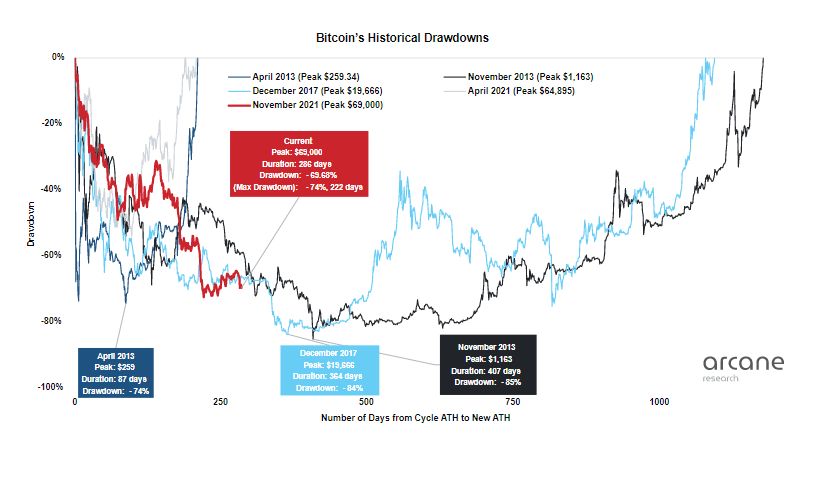
This year’s crypto bear market is tracking ones seen in 2018 and prior years, according to Vetle Lunde an analyst at Arcane Research. This one has lasted for more than 285 days, with Bitcoin down nearly 70% from its November all-time high. The 2018 and 2014 bear markets lasted 12-13 months, with maximum drawdowns of 85%. 

“We don’t find a lot of value in speculative assets, particularly cryptocurrencies, where there really isn’t intrinsic value,” said David Spika, president and chief investment officer of GuideStone Capital Management. “It’s all based purely on speculation.” 

Bitcoin is hovering near levels that would ensure no “hodler” — or investor who buys and holds even through tough times — has made money on any purchases in almost two years, according to Peter Tchir, head of macro strategy at Academy Securities. “That is a long time to wait to make money (or to sit on large losses). FOMO is a big part of crypto trading, and we are on the precipice of declining to levels where many could decide to take their money and run.”

More stories like this are available on bloomberg.com

©2022 Bloomberg L.P.

Lyft Plans to Scale Back Office Space as Staff Opts to Work Remotely

(Bloomberg) — Lyft Inc. plans to reduce its physical office space in its biggest US markets as the ride-hailing company adapts to a largely remote workforce.

The San Francisco-based company will sublease a portion of its corporate offices in San Francisco, New York City, Seattle and Nashville, according to a person familiar with the matter, who requested anonymity because the plan is private. About 44% of the combined 615,000 square feet in office space will be rented out to other businesses. 

The move follows Lyft’s decision to implement a permanent “fully flexible” policy in March, letting employees choose where to work and live. 

“While we continue to believe that in-person connections are important, many of our team members opted to work remotely after we shifted to a flexible workplace strategy,” a spokeswoman said in an emailed statement. Lyft said it “identified a significant amount of office space that isn’t being utilized the way it previously was.”

More stories like this are available on bloomberg.com

©2022 Bloomberg L.P.
Chip Giant Nvidia’s Stock Slump Fails to Remove Its Pricey Tag

(Bloomberg) — Nvidia Corp. is one of the worst-performing semiconductor stocks this year, though the shares are hardly in the bargain basement bin.

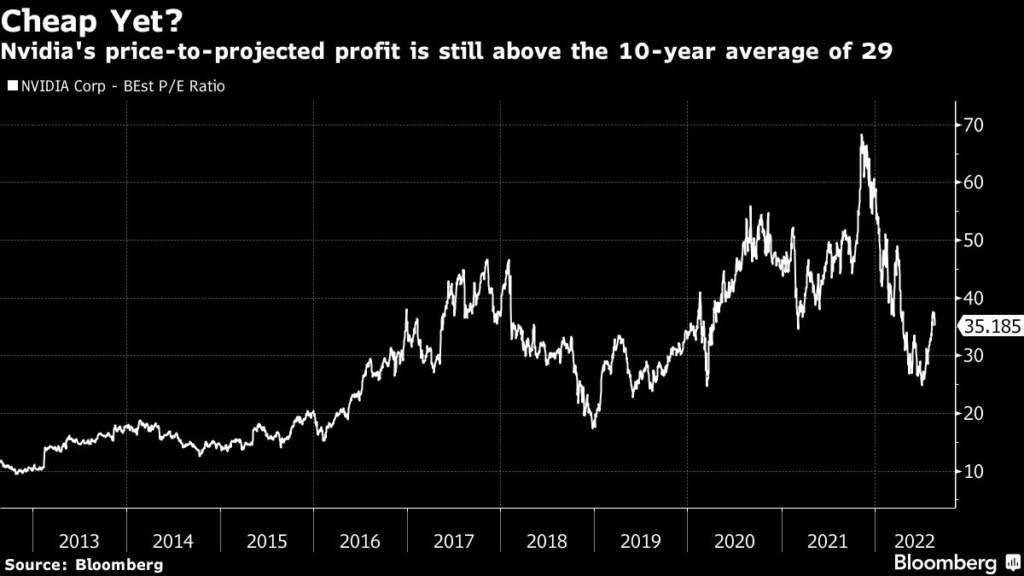
After a 42% drop, and a more than $300 billion loss in market value, the maker of graphics processors is much cheaper than in the heady days of 2021 when its market capitalization was creeping toward $1 trillion. Yet it’s still priced at 35 times projected earnings, rich both historically and compared with peers, especially at a time when revenue growth is expected to slow.

Nvidia’s plight is familiar to investors who have watched stocks with nose-bleed valuations plummet this year under pressure from rising interest rates and concerns about weakening economic growth. Recently, however, the firm has joined the ranks of chipmakers that have warned of slowing demand, putting the emphasis on forecasts when it reports second-quarter results on Wednesday afternoon.

“Nvidia is doing a lot of exciting things and fundamentally we can’t turn our back on them, but obviously we’d love to get some indication of how long this lull is going to last,” said Daniel Morgan, senior portfolio manager at Synovus Trust. “That’s when you can take a look at the stock and say 35 times earnings is a great buy.”

Pricey Multiple

The stock’s multiple compares with an average over the past decade of 29 times. It’s also in stark contrast to fellow chipmakers such as Intel Corp., which trades around 14 times forward earnings. The Philadelphia Stock Exchange Semiconductor Index is priced at nearly 16 times.

Earlier this month, Nvidia gave preliminary second-quarter results that showed revenue missing the company’s previous projection by more than $1 billion. Management blamed a drop in demand for its gaming chips, but also acknowledged a shortfall in its data center business. Revenue growth is projected to slow to just 13% in the current fiscal year.

“We still see outstanding queries about forward demand,” said Wedbush analyst Matt Bryson, who has a neutral rating on the stock. “We are reluctant to get more constructive on the stock until we have more near-term visibility even if we remain positive on NVDA’s longer-term trajectory,” he wrote in a note.

Retail traders seem less reticent. The week of Nvidia’s Aug. 8 warning, the stock was the most popular among mom-and-pop investors, according to Vanda Research. Last week, Nvidia was the sixth-most purchased stock with the retail crowd pouring in more than $150 million.

Tech Chart of the Day

The Nasdaq 100 Index, which had jumped as much as 23% from its June 16 low, has fallen in four of the last five sessions. The tech-heavy gauge closed down 2.7% on Monday, its biggest drop since June 28, as the summer rally in technology stocks cools.

Top Tech Stories

  • Apple Inc. plans to begin manufacturing the iPhone 14 in India about two months after the product’s initial release out of China, narrowing the gap between the two countries but not closing it completely as some had anticipated.
    • A former Apple engineer, Zhang Xiaolang, pleaded guilty to criminal charges that he stole proprietary information from the company while preparing to go work for a Chinese startup that makes electric cars with autonomous driving features.
  • Zoom Video Communications Inc.’s results showed that its transition from an essential Covid-era tool to an enterprise business platform is going to take longer than expected.
  • Meta Platforms Inc.’s Instagram appears to be copying another up-and-coming social media competitor: BeReal, the popular photo app that prompts users to take and post an image once a day at the same time as all their friends.
  • Elon Musk subpoenaed Jack Dorsey, co-founder of Twitter Inc. and a longtime friend, in his defense against the social media company’s lawsuit to make him complete his proposed $44 billion buyout.
  • South Korean messaging giant Kakao Corp.’s manga business is pushing back plans to go public on the Tokyo Stock Exchange until next year, aiming for a valuation of $6 billion or more.
  • Sony Playstation is facing the prospect of a UK class action suit over allegations it “ripped” consumers off by overcharging for games and in-game purchases.
  • A YouTube channel associated with Andrew Tate, an online influencer and self-described misogynist, was disabled Monday, as Google’s video website joins a growing list of social media platforms taking action against the personality in the last week.

(Changes valuation comparison to Intel in fifth paragraph.)

More stories like this are available on bloomberg.com

©2022 Bloomberg L.P.

Electric Car Battery Bottlenecks Have a Way of Being Worked Out

(Bloomberg) —

Supply of battery materials was a key part of the recently passed climate bill in the US, as the country looks to bring online more domestic refining and manufacturing in the coming decade.

The electric-vehicle battery news cycle feels especially frenetic right now, with some groups predicting a decade of shortages for materials like lithium. There were similar statements made about availability of cobalt a few years ago. But amid all the excitement about battery metal demand, prices for cobalt have plunged 40% from their highs earlier this year.


Much of this has been supply-driven. Glencore ramped up output at its Mutanda mine in the Democratic Republic of Congo in the first half, leading to a 40% increase in its cobalt production compared to same period last year. Glencore accounted for about 19% of annual cobalt production in 2021. With Mutanda fully back online, Glencore’s market share could rise to around 26% this year, so what it does moves the market.

Everyone understands that when prices are high, miners are motivated to dig more out of the ground. But there’s also been a less-appreciated trend on the demand side, where battery manufacturers and automakers are quietly engineering cobalt out of the equation.

Back in 2018, lithium-ion battery chemistries with cobalt in the cathode had a very dominant position in the market, accounting for 86% of all batteries that went into vehicles that year. By 2020, that had fallen to 83%. This year, BloombergNEF is expecting it to fall much further to 60%.

Lithium-iron phosphate (LFP) batteries, which contain no cobalt, have taken up the balance due to their lower cost and high stability. This has mostly been a China phenomenon, as domestic champions BYD and CATL have long been pioneers in the technology. Tesla also uses LFP batteries for the standard range Model 3 and Model Y vehicles it produces in China, which are exported globally. Almost half of all of the vehicles Tesla produced in the first quarter used LFP.

Most other Western automakers have so far stuck with nickel manganese cobalt (NMC) batteries due to their higher energy density. But Volkswagen announced in March that its entry-level models would include LFP batteries starting next year, while Ford revealed last month it will add an LFP option for the Mustang Mach-E and F-150 Lightning in 2023 and 2024, respectively. Both these automakers likely see LFP batteries as a way to keep costs under control and diversify supply. Hyundai is also reportedly working on integrating LFP batteries.

According to Chinese media reports, CATL is nearing commercialization of another variant of LFP with added manganese in the cathode for additional density. BNEF expects this latest variation — called LMFP, with the M standing for manganese — to account for about 6% of batteries going into EVs in 2023, and we expect more automakers to announce plans to use LFP and LMFP batteries in the next few years.

Even within the nickel-manganese-cobalt battery family, there’s been a steady progression away from cobalt. The early NMC formulations contained equal parts nickel, manganese and cobalt, called NMC-111 to denote equal shares in the cathode. Those were quickly supplanted by NMC-532 and NMC 622, which in turn has been overtaken by NMC 811, and the latest formulations of NMC batteries have even smaller amounts of cobalt.

For now, the effect of lowering cobalt use is still being outrun by more EVs being sold and larger batteries going into long-range EVs. So while the EV industry still has less-intensive cobalt use per EV, total demand for cobalt going into EV batteries is still rising in absolute terms. But growth is slowing and this has led to some dramatic downward revisions in expected demand. BNEF’s own estimates for cobalt demand from batteries have fallen more than 50% over the last four years.

None of this should be surprising — it highlights the ways markets work and always have. High prices help bring on new supply, and drive more substitution on the demand side. Whenever there’s a boom in a particular material, there are always groups claiming this time things are fundamentally different, that this time the supply curve really is inelastic, or that this time there are no substitutes. Those claims usually get proven wrong by the combined effect of price signals and ingenuity.

Huge investments are still needed in all areas of the battery supply chain to keep pace with growing EV demand. BNEF estimates that demand for nickel in batteries will rise by 286% from now to 2030, while lithium will see a six-fold increase. This will require tens of billions of dollars in targeted investment, particularly on mid-stream refining supply, which is the mostly likely near-term bottleneck. But don’t ignore the way the demand side can change too. Human ingenuity is a powerful force, and there will be some more surprises like cobalt in the years ahead.

(Added legend to second chart.)

More stories like this are available on bloomberg.com

©2022 Bloomberg L.P.

Billionaire Adani to Buy NDTV for Foothold in India Media Space

(Bloomberg) — Asia’s richest man, Gautam Adani, is seeking control of an Indian media firm for a bigger foothold in the nation’s competitive digital and broadcast sector.

Adani Group, indirectly acquired a 29.2% stake in New Delhi Television Ltd., or NDTV, and offered to buy another 26% from the open market for a combined 6.07 billion rupees ($76 million), according to exchange filings Tuesday. Adani Group firms announced an open offer at 294 rupees per share — a 20.5% discount to NDTV’s closing share price on the day. NDTV or its founders were not aware of any transaction and were not part of any discussion regarding the stake sale, the company said in a statement. 

This acquisition marked “a significant milestone” for AMG Media Networks Ltd. that aims to “pave the path of new age media across platforms,” Sanjay Pugalia, the company’s chief executive officer said in a statement. “NDTV is the most suitable broadcast and digital platform to deliver on our vision.”

The group’s founder-billionaire Adani, with the world’s biggest wealth gain this year, built his empire on agri-trading and ports but has speedily diversified into airports, data centers, cement, renewable energy and now media. This breakneck growth, sometimes in unrelated sectors, is making some investors wary about the group being too indebted and the management bandwidth getting too stretched across newer businesses.

Earlier this year, Adani Enterprises Ltd. established AMG Media Networks, an arm it said would be in the publishing and broadcasting businesses among other things.

NDTV produces and broadcasts news in English and Hindi. In March, Adani Media Ventures Ltd. agreed to buy a stake in Quintillion Business Media Pvt.  

The Adani group is exploring buying stakes in some local television and print news outlets, while a few have approached the conglomerate also to study potential deals, Bloomberg reported in May.

(Updates with NDTV’s statement in second paragraph.)

More stories like this are available on bloomberg.com

©2022 Bloomberg L.P.

Close Bitnami banner
Bitnami
