

Bloomberg

Elon Musk’s Bankers Consider Tesla Margin Loans to Cut Risky Twitter Debt

(Bloomberg) — Elon Musk’s bankers are considering replacing some of the high-interest debt he layered on Twitter Inc. with new margin loans backed by Tesla Inc. stock that he’d be personally responsible for re-paying, according to people with knowledge of the matter.

The margin loans are one of several options the Morgan Stanley-led bank group and Musk’s advisers have discussed to soften the burden of the $13 billion of debt that Musk used to purchase the social media company in October, said the people, who asked not to be identified because the discussions are confidential.

While many details, including how terms of the swap from one debt to the other would work and how advanced the talks are, remain unclear, the mere fact that the two sides are discussing such an option underscores just how badly this deal has gone for all involved in the six weeks since it was finalized.

The banks have been unable to find buyers for the Twitter debt and are facing the prospect of realizing steep losses. Musk, meanwhile, is under increasing pressure to turn around the finances of a company that was already struggling when he and his partners bought it. Musk put up billions of his own dollars, selling Tesla shares to make the purchase, and pledging more stock to help prop up Twitter now would be risky. It could give Twitter the breathing room it needs to turn operations around, or it could mean Musk is just throwing good money after bad.

The financing discussions have so far focused on how to replace $3 billion of unsecured debt on which Twitter pays an interest rate of 11.75%, the maximum banks had guaranteed Musk when they agreed to finance the acquisition in April, the people said. The company is estimated to face annual interest costs of about $1.2 billion based on the current debt structure, more than a measure of Twitter’s earnings for the whole of 2021. It’s unclear what the rate would be on the margin loan.

Representatives for Musk didn’t respond to requests seeking comment, nor did Twitter and Tesla, which no longer have communications departments.

Morgan Stanley and the other Twitter lenders — Bank of America Corp., Barclays Plc, BNP Paribas SA, Mitsubishi UFJ Financial Group Inc., Mizuho Financial Group Inc. and Societe Generale SA — did not provide comment.

Tesla shares whipsawed on Thursday, dropping as much as 2.9% at one point before closing down 0.3% at $173.44.

Options

While the $13 billion of debt Musk took to finance the deal sits at the Twitter corporate level, any margin loans against Tesla shares would be taken by the billionaire in a personal capacity. The swap, however, could still make sense considering that Musk has a significant amount of his own money tied up in Twitter equity and given the margin loans would likely carry a much lower interest rate than Twitter’s unsecured debt, the people said.

Tesla’s last proxy statement disclosed that at the end of March, Musk had about half of his Tesla shares already pledged to secure an existing margin loan. After accounting for subsequent share sales, his remaining unpledged shares could secure a margin loan of more than $5 billion at a 20% loan-to-value ratio, according to Bloomberg calculations.

But since the March update, Tesla’s shares are down more than 50%, meaning Musk would likely needed to have pledged more shares to satisfy margin calls unless he repaid some of his existing loan.

Musk could exercise some of his options to obtain more Tesla stock to pledge as collateral for the loan. Those options are currently worth more than $40 billion, according to the Bloomberg Billionaires Index.

The original Twitter financing package included $12.5 billion in margin loan commitments backed by Tesla stock. That was ultimately replaced by additional equity commitments, including investments from several partners.

Musk, who has said he wants to turn Twitter into a forum for free speech, is also facing a backlash from advertisers and Democrats in Washington over concerns that harmful content may increase on the platform.

The banks are not expected to attempt to offload any of the Twitter debt — which also includes $6.5 billion of term loans and $3 billion of secured bonds — to institutional investors until the new year, when the company could offer a clearer picture of how Musk’s changes have affected its operations, the people said.

–With assistance from Tom Maloney.

(Updates with details of interest expense in fifth paragraph.)

More stories like this are available on bloomberg.com

©2022 Bloomberg L.P.

Stocks Snap Back in Countdown to Key PPI Numbers: Markets Wrap

(Bloomberg) — Stocks climbed after a five-day slide, with traders awaiting key inflation figures for clues on whether Federal Reserve officials will be able to notch down their aggressive tightening campaign.

The rebound in the S&P 500 followed a rout that put the gauge on the cusp of breaching an important technical indicator: its average price of the past 100 days. Investors also assessed news that the US Federal Trade Commission is seeking to block Microsoft Corp.’s $69 billion acquisition of Activision Blizzard Inc. Treasuries fell, with 10-year yields hovering near 3.5%. Oil hit a one-year low after earlier rallying on a pipeline outage.

Friday’s producer price index for November is one of the final pieces of data Fed policymakers will see before their Dec. 13-14 policy meeting. The PPI in October cooled more than expected. In the run-up to the numbers, a separate report showed some signs the labor market is cooling, with continuing jobless claims climbing to the highest since early February.

“Investors will have a lot to digest these next few days as they get a clearer picture of where we stand in the fight against inflation before the Fed decision,” said Mike Loewengart at Morgan Stanley Global Investment Office. “The market is largely expecting the slowdown in rate hikes to begin next week, but whether the pivot will be enough to steer the economy into a soft landing remains the question.”

Strategists from Morgan Stanley to JPMorgan Chase & Co. have warned investors against piling back into risk on hopes the Fed is getting close to pivoting to easier policy.

“Presumably if the Fed is pivoting this time around, it’s not for a good reason. It’s a deteriorating fundamental picture,” Joyce Chang, chair of global research at JPMorgan, told Bloomberg Television. “I mean, is that really a reason to be buying risk? I think it’s premature to say that there is a Fed pivot.”

Read: Fed Gets a Win Deflating Asset Bubbles Without Financial Crash

Read: Fidelity Funds Seek to Make Bigger Bets on Individual Stocks

Investor optimism that inflation has peaked is misguided as a potential spike in energy costs in 2023 could keep prices elevated and interest rates high, according to Goldman Sachs’ Peter Oppenheimer.

The bear market that mauled growth stocks this year now threatens the value stocks in the industrial, financial and energy stocks where investors sought refuge this year, noted Morgan Stanley’s chief investment officer Mike Wilson.

“The problem with the value stocks now is they’re probably just as vulnerable to the economic slowdown as the over-earning growth stocks were six or 12 months ago,” Wilson said.

At a time when virtually all of Wall Street is on guard against a recession, Jim Paulsen at Leuthold Group said stocks are about to rally at least 25% in the next year. He predicts the S&P 500 will hit 5,000 in the coming 12 months — a far more bullish call than any provided by the strategists Bloomberg regularly surveys.

“The lows are in, and I think we are starting a new bull market,” Paulsen said. “The Fed is not the only policy driver in the room. There are others and a lot of those have already started to ease.”

Besides the 100-day moving average, the S&P 500 is trading near a key support at 3,900, a level that has provided the pivot point for reversals on multiple occasions this year.

As the equity market rebounded, the Cboe Volatility Index fell to around 22. Yet derivatives strategists at JPMorgan Chase & Co. say the VIX has further room to advance. 

They expect the fear gauge to average at 25 next year, and see the gauge trading above that level in the first half of the year amid elevated monetary-policy concern before subsiding below the line in the latter part of 2023 when the central bank is expected to pivot its stance.

Read: Risky Companies Rush to Buy Time on Debt Before End of Year

Heightened trader concern over an economic recession has recently pushed up the Cboe equities put/call ratio — the relative trading volume of loss-protecting contracts versus bullish ones — to elevated levels

That suggests there’s “too much pessimism,” according to Ed Yardeni, president of his namesake research firm. “It favors a year-end rally rather than a year-end crash.”

Key events this week:

  • US PPI, wholesale inventories, University of Michigan consumer sentiment, Friday.

Some of the main moves in markets:

Stocks

  • The S&P 500 rose 0.8% as of 4 p.m. New York time
  • The Nasdaq 100 rose 1.2%
  • The Dow Jones Industrial Average rose 0.5%
  • The MSCI World index rose 0.7%

Currencies

  • The Bloomberg Dollar Spot Index fell 0.3%
  • The euro rose 0.5% to $1.0556
  • The British pound rose 0.3% to $1.2239
  • The Japanese yen was little changed at 136.67 per dollar

Cryptocurrencies

  • Bitcoin rose 2.2% to $17,203.9
  • Ether rose 3.8% to $1,278.78

Bonds

  • The yield on 10-year Treasuries advanced seven basis points to 3.48%
  • Germany’s 10-year yield advanced four basis points to 1.82%
  • Britain’s 10-year yield advanced five basis points to 3.09%

Commodities

  • West Texas Intermediate crude fell 0.7% to $71.52 a barrel
  • Gold futures rose 0.2% to $1,800.70 an ounce

This story was produced with the assistance of Bloomberg Automation.

–With assistance from Cecile Gutscher, Akshay Chinchalkar and Isabelle Lee.

More stories like this are available on bloomberg.com

©2022 Bloomberg L.P.

Denver Migrants Coordinated Their Travel Through Social Media

(Bloomberg) — This week’s arrival of more than 100 migrants and refugees in Denver from the southern border was coordinated informally on social media by the migrants themselves and the influx is expected to continue, city officials said Thursday. 

“This does not appear to be anything that was organized by another government entity to direct people specifically to Denver,” Evan Dreyer, deputy chief of staff for Mayor Michael B. Hancock, said at a news conference. “I want to make that clear.”

Republican governors from border states sent thousands of migrants to New York City, Chicago and other so-called sanctuary cities earlier this year.

Hailing from Central America and South America — including Venezuela — the men, women and children now in Colorado’s capital city arrived mainly by bus at Denver Union Station and sought help at a homeless shelter, Dreyer said. 

As of Thursday, 120 were housed at a special emergency shelter and about 20 more were anticipated to arrive Thursday, he said.

More stories like this are available on bloomberg.com

©2022 Bloomberg L.P.
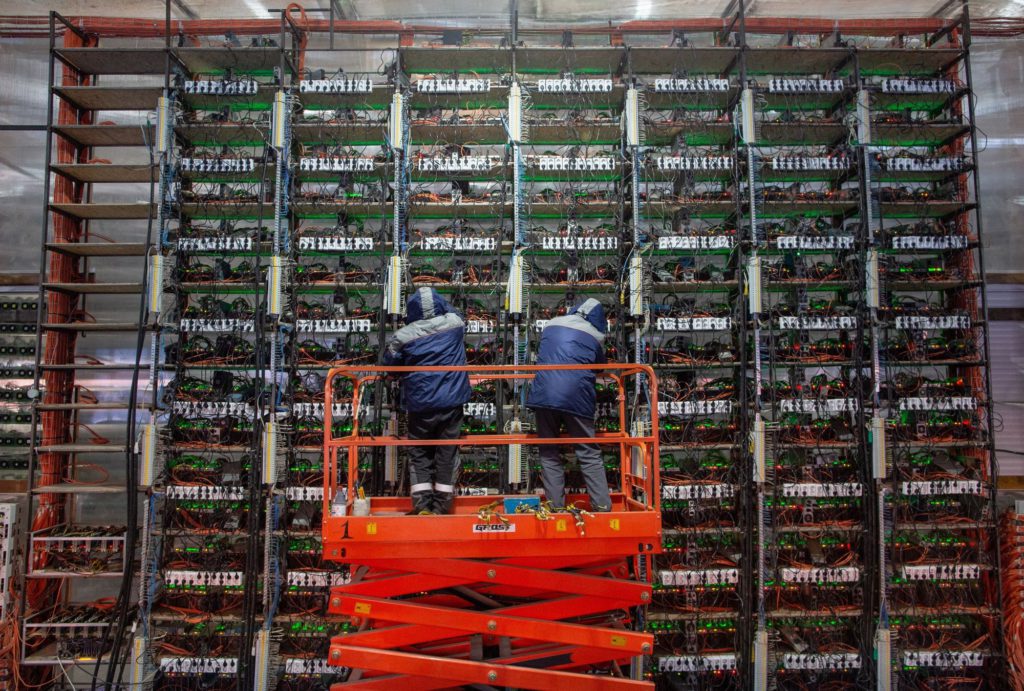
Bitcoin Miners Forced to Report Energy Use in Proposed Bill (1)

(Bloomberg) — US crypto miners would be forced to disclose greenhouse gas emissions under a new bill, adding pressure to a fast-growing industry criticized for its heavy toll on the environment and power grid. 

The legislation, introduced by Democratic Senator Edward Markey, would require crypto miners using more than 5 megawatts of electricity — a threshold that most Bitcoin mining companies would pass —  to report emissions and the source of power, according to a copy of the bill shared with Bloomberg News. The US Environmental Protection Agency would conduct a study on the impact of existing and planned digital mining operations — including the level of stress on the energy grid and fossil fuel usage — and offer any measures state regulators can take to reduce their energy demand. 

Mining digital currency is energy intensive, with companies including Riot Blockchain Inc. and Argo Blockchain often running thousands of specialized computers around the clock, solving equations that award crypto assets. About 60% of global currency mining is fueled by coal and natural gas, as opposed to renewable energy sources, according to data from Cambridge University’s Centre for Alternative Finance. US mining operations produce the equivalent greenhouse gas emissions of 7 million cars on the road for a year, according to a statement from Markey.  

After China banned crypto mining last year, US operators raced to set up shop, now accounting for more than one-third of global Bitcoin mining operations, skyrocketing from just 3.5% in 2020. They gravitated to Texas for its business-friendly policies and cheap power, but the explosion of interest has raised concerns that the surge of new electricity demand will strain a power grid already plagued by widespread blackouts last year.  

“Ensuring crypto mining companies report their greenhouse gas emissions is a necessary step toward holding them accountable and protecting communities across the country that rely on the grid,” Markey, chair of the Senate Environment and Public Works Subcommittee on Clean Air, Climate, and Nuclear Safety, said in a statement. 

Earlier this year, Markey signed onto a letter from Senator Elizabeth Warren, a fellow Democrat from Massachusetts, asking miners to disclose years of power consumption and emissions, but the responses were limited.  The new bill from Markey, co-sponsored by fellow Democrats Representative Jared Huffman and Senator Jeff Merkley and endorsed by several sustainability-focused groups including the Sierra Club, would appropriate $5 million in 2023. 

Markey is pushing for hearings in key committees on the issue, a spokesperson for the senator said.

“We would welcome legislation of this nature as long as the bill holds other industries to the same standard,” Lee Bratcher, president of industry group Texas Blockchain Council, said in a statement. The group disputed that digital currency mining takes up an outsize amount of energy.

(Updates with comments in the last two paragraphs.)

More stories like this are available on bloomberg.com

©2022 Bloomberg L.P.
App-Store Bill’s Sponsors Make Last-Ditch Bid to Get Senate Vote

(Bloomberg) — The co-sponsors of antitrust legislation targeting Apple Inc.’s and Google’s power over app stores are preparing a last-ditch — and likely doomed — effort to move the bill through Congress as they run out of options to advance it before lawmakers leave for the year.

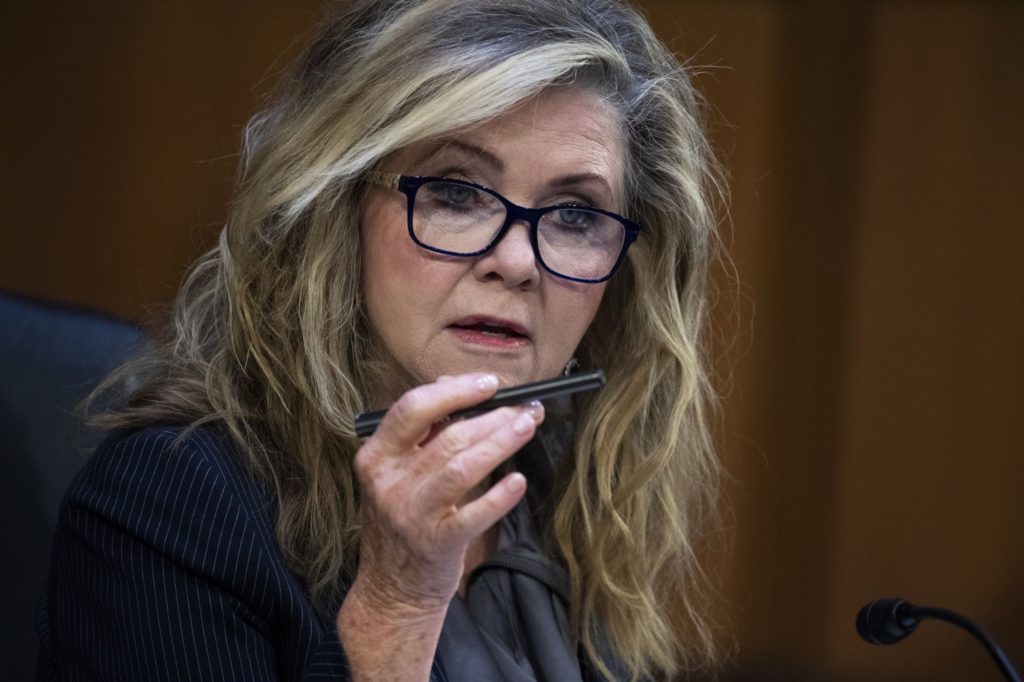
Republican Senator Marsha Blackburn of Tennessee and Democratic Senator Richard Blumenthal of Connecticut are attempting to use a procedural move to expedite a vote on the Open App Markets Act over the next few days, according to five people familiar with the plans. 

The effort is all but certain to fail. It would take only the objection of one senator to derail the process, and Congress is facing a crush of other priorities in the remaining weeks of the current session. 

Supporters of the legislation say the procedure is intended to show momentum and support for the bill, which has received support from the top Republican and Democrat on the Senate Judiciary Committee.

The Open App Markets Act takes aim at the billions of fees collected by Apple and Alphabet Inc.’s Google, requiring the companies to make it easier for users to download other app stores and switch the apps set as the defaults on phones. The measure passed 20-2 out of the Senate Judiciary Committee earlier this year, with opposing votes from Texas Republican John Cornyn and North Carolina Republican Thom Tillis. 

The maneuver by Blackburn and Blumenthal, known as hotlining, comes as the window closes on efforts by critics of giant technology companies to pass legislation this year. Despite earlier momentum, Congress hasn’t advanced the Open App Markets Act or a companion bill, the American Innovation and Choice Online Act, which would prevent large tech companies from using their platforms to disadvantage their rivals. 

–With assistance from Leah Nylen.

More stories like this are available on bloomberg.com

©2022 Bloomberg L.P.
SEC Presses Firms to Disclose Exposure to Crypto Bankruptcies

(Bloomberg) — Publicly traded companies exposed to the “crypto winter” and the collapse of FTX or other digital-asset companies might have to disclose those details to investors under new guidance from the US Securities and Exchange Commission. 

The disclosures would likely apply directly to companies that incorporate digital assets into their businesses. But the guidance released Thursday indicates that they could extend to any company with material exposure to the troubled crypto market.

“Recent bankruptcies and financial distress among crypto asset market participants have caused widespread disruption in those markets,” the SEC’s division of corporation finance wrote. “Companies may have disclosure obligations under the federal securities laws related to the direct or indirect impact that these events and collateral events have had or may have on their business.” 

The guidance is one of the SEC’s first public steps to address crypto-market uncertainty after the implosion of FTX, which filed for bankruptcy last month.

Under that guidance, companies should address the general impact of cryptoasset market developments and look at whether they have counterparty risk exposure. In addition, they should consider risks related to a company’s liquidity and ability to get financing, and legal and regulatory issues, according to the guidance.

FTX faces several federal probes, including by the SEC.

Agency staff who scrutinize public companies’ disclosures will be watching for details on how crypto industry bankruptcies — and their knock-on effects — might have affected firms, according to one of the sample comments in the guidance. 

“Clarify whether you have material assets that may not be recovered due to the bankruptcies or may otherwise be lost or misappropriated,” the staff urged. 

Companies should also explain how they’re taking steps to safeguard customers’ crypto assets and policies or procedures in place to prevent self-dealing or conflicts of interest, the sample letter said.

  • Read more: A Handful of Simple Rules Might Have Prevented FTX’s Demise

More stories like this are available on bloomberg.com

©2022 Bloomberg L.P.

Ethereum Developers Are Targeting March For Next Software Upgrade

(Bloomberg) — Ethereum developers are hoping to roll out the blockchain’s next software upgrade around March to allow withdrawals of the cryptocurrency Ether used to secure the network.

Some 15.57 million Ether, or nearly 13% of all the tokens, has been locked in special staking wallets that help order transactions on the Ethereum blockchain, according to crypto data tracker Dune. The network is the biggest commercial highway in crypto and home to thousands of apps. The owners of staked Ether receive yield, but are unable to withdraw their coins until the upcoming software upgrade, called Shanghai.

Enabling staked Ether withdrawals is expected to drive more users into staking, and to further improve security of the network. The prior upgrade known as the Merge replaced Ethereum’s power-hungry computers called miners with so-called validators in September. 

“This is clearly the highest priority for everybody,” Tim Beiko, who coordinates Ethereum developers, said Thursday, during the last developer call of this year.

Ethereum developers have often delayed upgrades to make sure they go smoothly, so the timing of the upgrade could still shift.       


(Updates headline.)

More stories like this are available on bloomberg.com

©2022 Bloomberg L.P.
Salesforce’s Benioff Avoids Leadership Exodus in Keynote

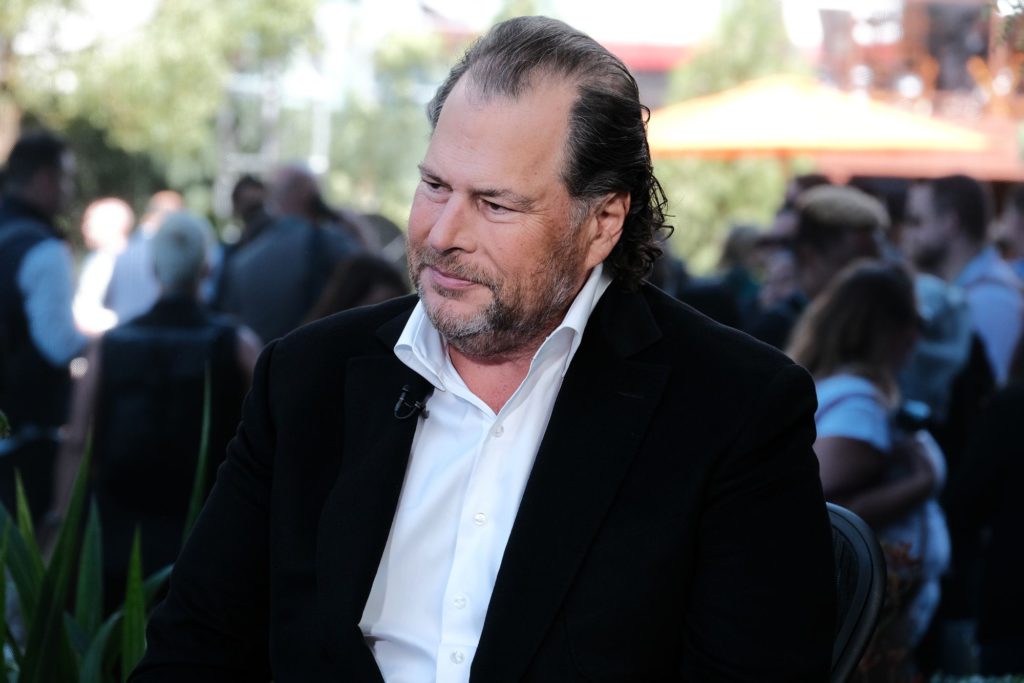
(Bloomberg) — Salesforce Inc. co-Chief Executive Officer Marc Benioff touted new software product features in a keynote speech to customers without acknowledging his company is experiencing a wave of executive turnover and investor skepticism.

Benioff, who co-founded the software company more than two decades ago, spoke Thursday at a Salesforce conference in New York, his first public event since the surprise announcement last week that co-CEO Bret Taylor would leave the post at the end of January.

Taylor was initially scheduled to share the stage with Benioff, according to promotional materials issued in mid-November. Benioff didn’t acknowledge Taylor’s absence, and a press event scheduled after the speech with the soon-to-be sole CEO was canceled.

Benioff and Taylor shared keynote speeches at earlier conferences this year including Dreamforce, the company’s annual major event in September. This time Benioff was joined on-stage by Chief Marketing Officer Sarah Franklin.

Salesforce is grappling with an exodus of top leaders: At least a dozen have announced resignations since October. Days after Taylor’s announcement, three executives from Slack, the business communications platform Salesforce acquired last year for more than $27 billion, said they were departing the company. The exits included Slack co-founder Stewart Butterfield, who was seen as a possible successor to Taylor. Butterfield said his exit was unrelated to Taylor’s departure and long-planned. 

Meanwhile, the software company has projected its slowest growth ever and is under pressure from activists including Starboard Value to improve margins. The shares have tumbled 19% since Taylor’s Nov. 30 resignation announcement and have plunged 49% this year.

The event in New York is an example of the promotional spending that Salesforce is famous for, and may need to scale back to improve margins. Benioff’s keynote was preceded by an appearance by New York City Mayor Eric Adams, and a television commercial featuring Matthew McConaughey. “We’re known for our towers, we’re known for our events,” Taylor said last year in an interview with Greylock Partners.

Franklin, the CMO, told a group of reporters that Salesforce isn’t planning to reduce the number of events as a cost-cutting measure. She added that many aspects of conferences such as Dreamforce are sponsored, and the company is looking to boost that mix. Franklin acknowledged that customers have been asking about Taylor’s departure.

A demonstration during Benioff’s speech highlighted that it will now be easier to use Tableau, a data visualization program acquired in 2019 for nearly $14 billion, to view information stored in other Salesforce services. Much of Tableau’s leadership team has been gutted this year — last week, CEO Mark Nelson stepped down, about a year and a half after the resignation of its previous leader, Adam Selipsky.

(Updates with comments from chief marketing officer in the eighth paragraph.)

More stories like this are available on bloomberg.com

©2022 Bloomberg L.P.
Fidelity Funds Seek to Make Bigger Bets on Individual Stocks

(Bloomberg) — Fidelity Investments is asking shareholders to sign off on a proposal that would allow 13 of the firm’s growth funds to exceed limits on the size of stakes in individual stocks.

The funds — which held almost $140 billion as of Nov. 30 — already have relatively large holdings in tech giants including Apple Inc., Amazon.com Inc. and Microsoft Corp. 

If shareholders approve the proposal filed last week, the growth funds would be able to buy even more shares in these companies and take advantage of this year’s market declines. A spokesperson for Boston-based Fidelity declined to comment.

The largest US tech companies have all slumped this year, with Apple and Amazon tumbling 21% and 47%, respectively, through Wednesday’s close.

Apple, Microsoft and Google-parent Alphabet Inc. “account for very big portions of the large-growth universe,” Morningstar Inc. strategist Robby Greengold said in a phone interview. “It has been very difficult for any growth manager to be overweight these stocks” because of mutual fund rules on diversification, he said.

The filing didn’t specify which positions Fidelity might seek to bolster.

Risk, Volatility

Most mutual funds elect to be diversified, a status that investors often associate with less risk and volatility. Under those rules, the funds must limit the number of individual investments that equal more than 5% of their net assets — such stakes can’t constitute more than a quarter of total net assets.

Diversified mutual funds held about 92% of the industry’s $24 trillion of total assets as of 2020, the US Securities and Exchange Commission told Congress in February. Yet some growth funds have re-classified themselves as “non-diversified,” freeing them to exceed the 25% ceiling. 

T. Rowe Price Group Inc., for example, got shareholder approval last year to reclassify its Blue Chip Growth and Growth Stock funds as non-diversified. Blue Chip Growth held almost half of its assets in stakes of more than 5% at the end of September, while Growth Stock equaled about 32%, according to investor reports.

Fidelity’s board has already approved the re-classification. If shareholders agree, it will take effect May 1. 

More stories like this are available on bloomberg.com

©2022 Bloomberg L.P.

Mystery of Terra Collapse Deepens With Possible FTX Role Raised

(Bloomberg) — The latest twist in the downfall of crypto maven Sam Bankman-Fried is prompting a reexamination of the implosion of the Terra algorithmic stablecoin ecosystem that wiped out around $40 billion in market value earlier this year. 

US prosecutors are said to be investigating Bankman-Fried, the founder of collapsed crypto exchange FTX and its sister trading platform Alameda Research, regarding his possible involvement in orchestrating the death spiral of TerraUSD (UST) and its affiliated token Luna, according to a report in the New York Times citing people with knowledge of the matter. Separately, Bloomberg News reported that FTX’s new CEO and bankruptcy lawyers met this week with Manhattan federal prosecutors investigating the failed exchange. 

The Terra ecosystem was helmed by the symbiotic relationship between the two tokens that was managed by lines of automated code to govern circulation. If the price of UST went above $1, traders were incentivized to swap Luna for UST at a profit, and vice versa, thus in theory keeping UST’s circulation in check. 

But when investors lost confidence in one, the other went down too, and so they were locked in a so-called death spiral that saw their value plummet to near zero in a week’s time in May. 

Whose actions helped precipitate the decline has remained in question. There were two sides to this trade. The first is the side that traders can see on-chain, where wallet addresses were visibly swapping UST for other tokens, and that caused the market to start to panic. The other is on centralized exchanges’ order books, where the “who’s who” is harder to track because user information is not disclosed by platforms.

“People are often seeing half the picture,” Nikita Fadeev, partner at London-based crypto fund Fasanara Digital, said in a message Thursday. “Even blockchain data wouldn’t necessarily tell you the whole picture, and can muddy the water in terms of the ability to interpret the data.”

On-Chain Mismatch

In early May, signs of unease about UST’s stability had begun to emerge. Anchor, a decentralized lending protocol on the Terra blockchain, reduced the yields it offered to clients to 18%, implying that it had started to feel the brunt of offering unsustainable rates to traders willing to lock up their tokens. 

On May 7, UST’s issuer Terraform Labs withdrew $150 million in UST liquidity from Curve, a platform that offered a pool where investors could swap UST for other stablecoins such as USDC at equal value. Do Kwon, Terraform’s founder, said this was a preparatory move ahead of deploying more cash into the pool in a week’s time. 

But one minute later, an unknown wallet swapped $84 million in UST from the pool for USDC. And that wallet wasn’t the only one swapping out their UST, with 12 others also moving tokens between May 7 and May 8, to the tune of $321 million. Seven of those wallets had been withdrawing UST from Anchor as early as January, data analytics firm Nansen said, and as the stablecoin started to spiral in May, the main $84 million perpetrator withdrew around $193 million in UST from Anchor.

Kwon inferred Thursday on Twitter that Alameda had been involved in pushing down the value of UST. 

Suffice to say, all the moves in May imbalanced the Curve pool, which by that point had more UST than any of the other three tokens. Terraform’s Luna Foundation Guard — a fund established to raise money for the sole purpose of keeping UST worth $1 — leapt into action, removing $100 million in UST from the pool. In order to do that, it had to sell Bitcoin it kept in reserves for exactly this purpose, a process which coupled with declining market sentiment, pushed the price of Bitcoin down by 29% that week. 

This was taking place as LFG and Terraform Labs were already in fire-fighting mode, expending a lot of stored crypto cash in a bid to keep UST and Luna from dropping to zero. They weren’t successful either, with panic swapping and $10 billion in withdrawals from Anchor making it impossible for the LFG to balance the scales. 

While most UST activity was happening on decentralized protocols like Anchor and Curve in May, there was also still a bit of action on centralized exchanges like Binance, FTX and others. The only problem was that as UST and Luna’s prices began to come under pressure, virtually all liquidity for UST on major exchanges evaporated.

Data collated by blockchain analytics firm Kaiko at the time showed that on May 8, a huge round of “sell” orders appeared on Binance for a pair that would trade UST and another stablecoin, Tether’s USDT. On the same exchange, the “ask” side of UST’s order book increased, which would have made it really difficult for the token to re-peg to the dollar. 

“Ultimately, the poor liquidity on centralized exchanges likely played a huge role in UST’s depegging, along with a series of events exacerbated by a rush of UST out of Anchor,” Kaiko’s Riyad Carey wrote at the time. 

Kaiko also found that funding rates and volumes suggested that someone was aggressively shorting Luna. But because the LFG was so focused on spending Bitcoin to help shore up UST on Anchor and Curve, there was relatively little left to match the massive sell wall that its price was facing on exchanges.

The bulk of those “sell” orders against UST appeared to be coming from Alameda, the person cited by the New York Times said. US officials declined to comment when reached by Bloomberg News. FTX did not respond to email requests.

“While we can’t prove this was FTX, it could have been them,” said Clara Medalie, head of research at Kaiko, in an email.

–With assistance from Ava Benny-Morrison.

More stories like this are available on bloomberg.com

©2022 Bloomberg L.P.

Close Bitnami banner
Bitnami
