

Bloomberg

Nintendo’s Earnings Miss Echoes Sony Games Woes

(Bloomberg) — Nintendo Co. reported worse-than-expected first-quarter earnings on Wednesday as a weaker yen failed to offset declining hardware and software sales.

The Kyoto-based company reported operating profit of 101.7 billion yen ($763 million) and sales of 307.5 billion yen in the three months to the end of June, missing average analyst estimates of 115.2 billion yen and 332.1 billion yen, respectively. The company said manufacturing bottlenecks affected Switch sales and its current production is behind schedule. It expects to catch up on production from the late summer.

Software sales declined to 41.4 million from 45.3 million in the same period a year ago, while Switch units fell to 3.43 million units from 4.45 million.

The results echoed those of fellow console maker Sony Group Corp., which cut its full-year PlayStation division profit outlook 16% last week after significantly reduced games sales in the previous quarter. Nintendo, whose flagship Switch console can be used both at home and on the move, appears to have also suffered from the loss of stay-at-home demand from Covid-19, which Sony blamed for the reduced playing time on its platform. The weak yen made a bigger contribution for Nintendo, whose costs are largely denominated in its home currency.

Read more: Sony Cuts Profit Outlook on Weaker PlayStation Prospects

US gamers spent 13% less on video games in the second quarter of this year compared to 2021, industry group NPD said. The impact was more strongly felt by Sony, which reported that play time across PlayStation products was down 15% in the period. Switch software sales are expected to accelerate toward the year’s end with holiday-season releases of new entries in the blockbuster Pokémon and Splatoon franchises.

“For a 5.5-year old system, the Switch is still performing remarkably well,” said industry analyst Serkan Toto of Kantan Games. “Nintendo’s software pipeline for this calendar year is chock-full of blockbusters like Splatoon 3. I am not worried about Nintendo, at least not for 2022.”

Hardware remains a pain point for the company, as prolonged component shortages and this year’s elevated materials costs are likely to put pressure on its outlook. Nintendo stuck to its forecast to sell 21 million units of the handheld-hybrid console, down from 23 million in the previous year.

Read more: Nintendo Supplier Withdraws Outlook Citing Chips Uncertainty

(Updates with NPD data in fifth paragraph)

More stories like this are available on bloomberg.com

©2022 Bloomberg L.P.
Africa Defies Global Trend With Funding for Startups Surging

(Bloomberg) — As funding for startups falls across the globe, Africa is standing out as a notable exception, with its under-served population outweighing the impact of inflation and slowing economies. 

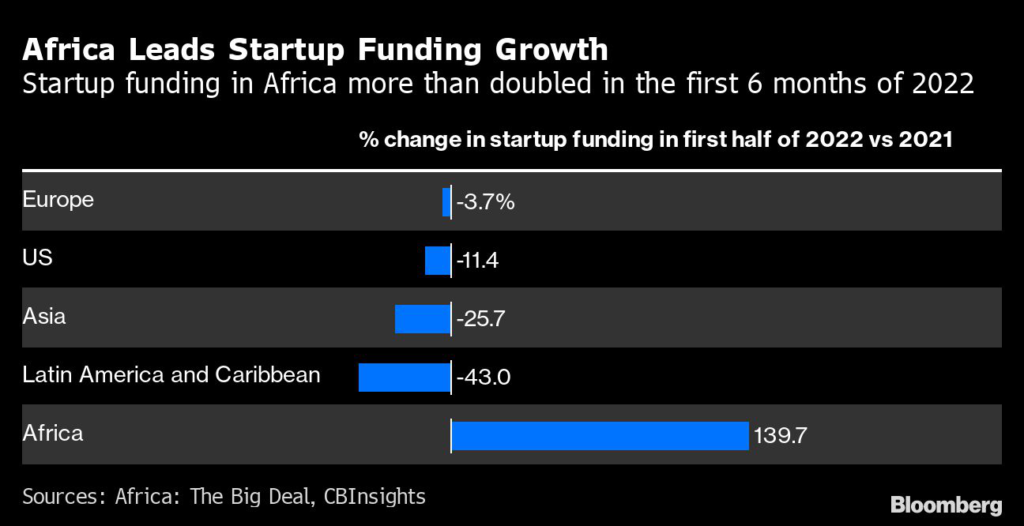
Funding for startups in the world’s second-largest continent more than doubled to $3.14 billion in the first six months of the year, according to research firm Africa: The Big Deal. That compares with a decline ranging from 3.7% in Europe to 43% in Latin American and the Caribbean. 

“Macro trends affecting developed-market tech names will be less impactful to Africa. Klarna, Paypal, others are being hit by fears over inflation and what that means for consumer transactions,” said Lexi Novitske, a general partner with Norrsken22, an Africa-focused tech fund that was set up by Swedish startup founders. “Africa’s story is more around bringing the under-penetrated market online.”

If the trend continues, funding for startups may exceed the record $5 billion raised last year. Entrepreneurs are racing to provide services ranging from payment and health care to educational offerings to more than 1.2 billion people on the continent, which lacks adequate financial infrastructure and last-mile delivery. Still, the amount received by African firms is minuscule when compared with countries such as the US, where companies raised $123 billion in the first six months of the year, 11% less than last year.

For some investors, that shows the opportunity in Africa. 

“The African venture capital market is far less advanced than that of the developed markets,” said Amrish Narrandes, head of private equity and venture capital at Cape Town-based Futuregrowth Asset Management. “It follows that more growth can be expected in the African market.”

Africa’s advantages range from the undeveloped nature of its markets to a relatively young population who are quick to grasp the technology offered by startups. The average age of an African is 18, compared with 31 in South America and Asia, the next youngest continents, according to Visual Capitalist.

“Startup companies in Africa are solving real problems, where existing businesses either do not exist or do not have the dynamism to make changes,” according to the African Private Equity and Venture Capital Association. Traditional banks have failed to broaden access to financial services and decrepit state postal services provide opportunities for delivery companies, it said.

Still, even within Africa hubs are growing at different speeds. In the six months through June, the amount of startup capital raised increased more than fourfold in Kenya, while it more than doubled in Nigeria. New funding was little changed in South Africa, according to Narrandes. 

The pace of the increase will also likely ease in coming months as the economic woes elsewhere have some impact as many of the funding rounds were agreed upon months earlier, Novitske said. 

“I do hear from many founders things are slower,” said Ido Sum, partner at TLcom Capital, a pan-African fund. Even so, “fundamentals are still very attractive, probably more than many other regions,” he said.

More stories like this are available on bloomberg.com

©2022 Bloomberg L.P.

BMW Sees Demand, Strong Model Lineup Offset Drop in Car Sales

(Bloomberg) — BMW AG cut its delivery outlook due to ongoing supply-chain snarls, though it’s making up some of the shortfall with higher prices buoyed by strong demand.

The automaker reported second-quarter results that beat expectations Wednesday. A strong model lineup and used car demand will help it weather the continuing chip shortage, while the company also warned of increasing economic headwinds. 

Carmakers are still seeing healthy demand amid a darkening economic outlook and inflation hitting consumers’ pockets. Mercedes-Benz AG this month raised its outlook, saying it will struggle to keep up with pent-up demand for the rest of the year as the chip crisis is now in its third year. Even so, while many manufacturers are lifting their expectations, concerns over a looming recession are building. 

“We see an increasing economic headwind coming up in addition to the ongoing supply shortages,” BMW Chief Executive Officer Oliver Zipse said in a statement.

BMW’s second-quarter group earnings before interest and tax declined to 3.43 billion euros ($3.5 billion), compared with an average analysts’ estimate of 3.2 billion euros, according to data compiled by Bloomberg. The forecast for margins from automaking remains unchanged at a 7% to 9% range. 

More stories like this are available on bloomberg.com

©2022 Bloomberg L.P.
Stocks Stabilize as Traders Weigh US-China Tension: Markets Wrap

(Bloomberg) — Stocks stabilized in Asia on Wednesday as some of the investor anxiety over tense US-China ties eased, while Treasuries pared a slide sparked by hawkish Federal Reserve comments.

MSCI Inc.’s Asia-Pacific equity index was little changed in a mixed day that included a jump in Chinese technology shares. S&P 500 and Nasdaq 100 futures pushed higher, while European contracts fluctuated in narrow ranges.

US House Speaker Nancy Pelosi is continuing a visit to Taiwan that has provoked an angry response from China, but markets are steadier compared with the wave of anxiety that washed across assets ahead of her arrival. The yen and a dollar gauge were steady.

Read more: Ripples From Pelosi Trip May Take Time to Impact Global Markets

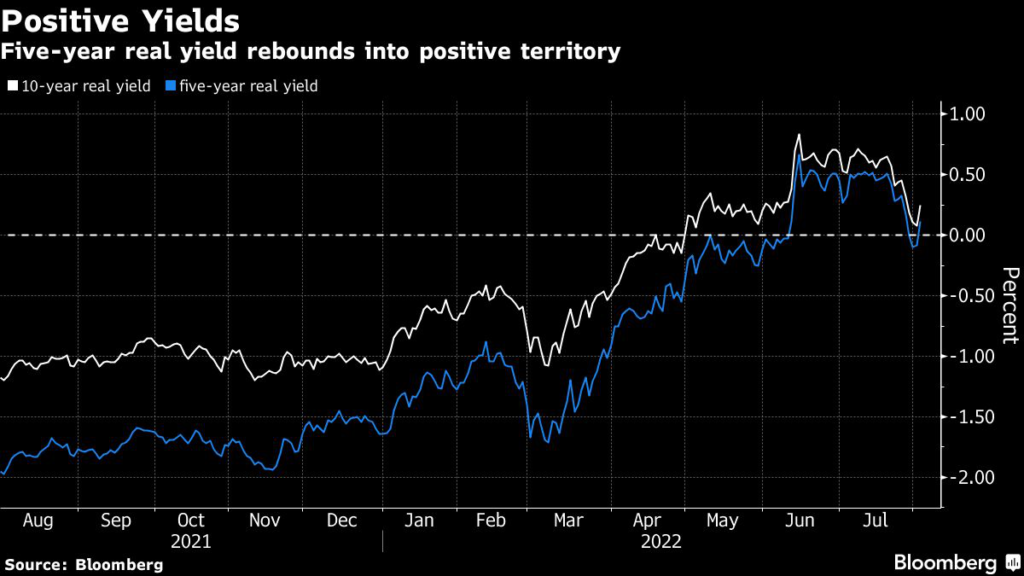
The two-year Treasury yield remained above 3% following a selloff in bonds on Tuesday sparked by Fed officials indicating the central bank has some way to go to curb inflation. That lead traders to trim wagers on policy easing in 2023.

China, which regards Taiwan as part of its territory, announced missile tests and military drills around the island after Pelosi became the highest-ranking American politician to visit in 25 years. China also halted natural sand exports to Taiwan and some fish and fruit imports from the island.

While fears of an acute deterioration in US-China ties appear to have cooled, the ill-will highlights the risk of longer term economic decoupling with an array of potential impacts, such as stickier inflation as supply chains adjust.

“Pelosi’s trip might exacerbate the already strained US-China relationship, and impede on growth if more counter-productive measures are deployed,” said Bernard Shaw, an Asia bond syndicate banker at Daiwa Capital Markets Singapore. He added US tariffs on Chinese goods seem likely to stay in place.

Fed Signals

Meanwhile, comments from Fed officials including Mary Daly, Loretta Mester and Charles Evans served to highlight a challenging backdrop of rising borrowing costs, price pressures and slowing economic growth.

San Francisco Fed President Daly said the Fed has “a long way to go” on reaching price stability around a 2% inflation target. Cleveland counterpart Mester said she wants to see “very compelling evidence” that month-to-month price increases are moderating.

“It’s hard to see any meaningful upside in equities right now,” Xi Qiao, managing director for global wealth management at UBS Group AG, said on Bloomberg Television. “The market is going to trade pretty mixed, stay choppy until we have a little bit more certainty.”

Elsewhere, oil traded at about $94 a barrel ahead of an OPEC+ crude production meeting. Gold climbed and Bitcoin held around $23,000.

This week’s MLIV Pulse survey is asking about your outlook for corporate bonds, mergers and acquisitions and health of US corporate balance sheets through the end of the year. It takes one minute to participate in the MLIV Pulse survey, so please click here to get involved anonymously. 

What to watch this week:

  • OPEC+ meeting on output, Wednesday
  • US factory orders, durable goods, ISM services, Wednesday
  • BOE rate decision, Thursday
  • US initial jobless claims, trade, Thursday
  • Cleveland Fed President Loretta Mester due to speak, Thursday
  • US employment report for July, Friday

Some of the main moves in markets:

Stocks

  • S&P 500 futures added 0.3% as of 7:25 a.m. in London. The S&P 500 fell 0.7%
  • Nasdaq 100 futures rose 0.2%. The Nasdaq 100 fell 0.3%
  • Japan’s Topix index climbed 0.3%
  • South Korea’s Kospi index gained 0.8%
  • Hong Kong’s Hang Seng index was up 0.6%
  • China’s Shanghai Composite index fell 0.1%
  • Australia’s S&P/ASX 200 index fell 0.3%
  • Euro Stoxx 50 futures were little changed

Currencies

  • The Bloomberg Dollar Spot Index was steady
  • The euro was at $1.0172, up 0.1%
  • The Japanese yen was steady at 133.21 per dollar
  • The offshore yuan was at 6.7594 per dollar, up 0.3%

Bonds

  • The yield on 10-year Treasuries fell three basis points to 2.72%
  • Australia’s 10-year yield increased nine basis points to 3.07%

Commodities

  • West Texas Intermediate crude was at $94.42 a barrel
  • Gold was at $1,768.98 an ounce, up 0.5%

More stories like this are available on bloomberg.com

©2022 Bloomberg L.P.

Dubai Buy Now, Pay Later Firm Tabby Gets $150 Million Financing

(Bloomberg) — Sign up for our Middle East newsletter and follow us @middleeast for news on the region.

Dubai-based buy now, pay later startup Tabby secured debt financing worth $150 million from two US-based investors, in what the company said is the largest credit facility for a fintech firm in the Gulf region.

Part of the financing comes from New York’s Atalaya Capital Management, its first deal in the Middle East and North Africa. In addition, San Francisco-based Partners for Growth increased its initial $50 million commitment, Tabby said.

Firms like Tabby allow customers to purchase goods and pay for them in installments. While concerns over inflation and a looming recession have hurt such companies in developed markets, Tabby expects demand to continue rising in the Gulf where access to credit is scarce. 

Less than 20% of the population has a credit card in Saudi Arabia — the largest Gulf economy — compared to more than 70% in the United States, the firm said.

“Demand for our products has continued to scale, and we require this type of capital to support this,” Tabby Chief Executive Officer Hosam Arab said in an interview. “We are planning on continuing to expand our product offering as well the existing customer base.”

Tabby is the Gulf’s largest buy-now, pay-later provider and competes with companies including Tamara in the region. It has so far raised $275 million in capital, including a Series B round this year, and has partnered with firms including H&M Hennes & Mauritz AB and Nike Inc.

Active customer numbers grew eight-fold in the first half of 2022, compared to the same period last year. The firm plans to continue focusing on its core markets, the United Arab Emirates, Saudi Arabia and Kuwait, as well as expanding into Egypt

“As we near profitability, we’re in the fortunate position of not having to raise equity under the current market conditions,” Tabby said in a statement. 

Read More: Buy Now, Pay Later Industry Is About to Meet Its First Big Test 

Firms like Tabby could also benefit from a drop in spending, according to Arab. “The consumer still wants to buy what they want to buy,” and are more likely to direct spending toward buy-now, pay-later services, he said. 

More stories like this are available on bloomberg.com

©2022 Bloomberg L.P.

Pelosi Knocks Out China’s Weibo as Millions Track Taiwan Trip

(Bloomberg) — US House Speaker Nancy Pelosi’s visit to Taiwan briefly crashed Weibo, the Chinese equivalent of Twitter, as millions in the country discussed and debated her Asia trip.

The microblogging platform apologized for a half-hour outage of its mobile app in the period immediately before Pelosi’s landing at 10:40 p.m. on Tuesday, when countless messages tracking her plane flooded social media.

Pelosi’s trip, marking the most senior US official visit to Taiwan in a quarter century, is seen as a provocation by Beijing, which considers Taiwan a part of its territory. Newt Gingrich, who was speaker in 1997 when he visited the island, said last month that she absolutely had to go so that China understands the US is not a “paper tiger,” a phrase popularized by Mao Zedong to describe opponents who looked more terrifying than they actually were.

The move has magnetized attention on social media globally as well as within China, with Twitter’s worldwide trending topics including Taiwan, Pelosi and US-China tensions.

Responses on Weibo flipped the “paper tiger” accusation toward China itself, with some netizens in the country expressing disappointment that their government repeated rhetorical flourishes without adopting harder measures to stop Pelosi’s trip. Hu Xijin, the prominent former editor-in-chief of the Global Times, suggested in a now-deleted tweet that Chinese warplanes could “forcibly dispel Pelosi’s plane” and later posted to Weibo saying that the official response didn’t live up to expectations.

One humorous reaction, featuring an edited image suggesting a youthful romance between Hu and Pelosi, also circulated widely on the social network. On Weibo’s trending list, most of the popular topics Wednesday were about Pelosi’s whirlwind visit and China’s reaction, which included a series of targeted military actions and an article in the state-run People’s Daily about the determination of the Chinese government and people toward unification.

China Missile Tests, Military Drills Set to Encircle Taiwan

“Cancel the Taiwan-friendly policy and strictly prohibit cross-strait trade, making it an isolated island,” one of the most popular Weibo comments, with close to 100,000 likes, read.

After Pelosi’s landing, China halted natural sand exports to Taiwan and some fish and fruit imports from the island. Beijing also announced missile tests and military drills encircling the island that set the stage for some of its most provocative actions in decades.

On Wednesday morning, over a million people in China watched Global Times live streams of coastal cities in Hainan, Guangdong, Fujian, Shandong and Guangxi provinces for signs of military activity. In Taiwan, locals have shown little alarm, having grown accustomed to threats from China.

More stories like this are available on bloomberg.com

©2022 Bloomberg L.P.

Just Eat Records Impairment on Grubhub Value as Orders Slow

(Bloomberg) — Just Eat Takeaway.com NV wrote down part of the value of its US-based Grubhub business and said orders slowed in the first half of the year after customers returned to restaurants and shops following Covid-19 lockdowns. 

Total orders on its platform decreased 6.8% from the same period a year ago to 509.4 million, the Amsterdam-based food delivery company said in a statement on Wednesday. That compares to 547 million orders forecast by analysts surveyed by Bloomberg. Sales rose to 2.78 billion euros ($2.8 billion), compared to analysts’ 2.85 billion-euro target. 

Just Eat struggled in the first half of the year, announcing plans to eliminate staff in France and scale back growth plans. Delivery companies industry wide have been grappling with slowing growth. Rival Deliveroo Plc cut its estimates for order growth this year and Gopuff said in July that it was closing warehouses and cutting jobs. 

Key Insights

  • Just Eat recorded a goodwill impairment of 3 billion euros related to its purchase of Grubhub last year because of a “reduction in sector valuation comparables” and the impact of higher interest rates and equity volatility.
  • Just Eat is exploring a partnership or sale for Grubhub, which it bought last year for $7.3 billion. It’s also looking for a bidder for its 33% stake in iFood.
  • The company maintained its guidance for the year. It had previously pared its expectations for 2022 for gross transaction value to rise by mid-single digits percentage points year-on-year.
  • The first-half loss on adjusted earnings before interest, taxes, depreciation and amortization narrowed to 134 million euros. That compared to analysts’ average estimate for a 138.2 million-euro loss for the half, according to the Bloomberg survey.
  • The company also nominated its chief operating officer Jorg Gerbig for reappointment following the results of an investigation. The company announced in May that the COO would step down while a complaint about his behavior at a company event was probed.
  • Chairman Adriaan Nuhn also didn’t seek reelection this year after shareholder proxy services criticized the board’s lack of gender diversity and governance.
  • Amazon.com Inc. announced a partnership with Just Eat’s Grubhub business last month where it will offer a delivery subscription to Prime users. As part of the deal, Amazon has the option to take a stake of as much as 15% of Just Eat’s US-based business.
  • On Tuesday, the company launched a pilot in Berlin offering 20-minute delivery of grocery and convenience goods from a small urban warehouse known as a “dark store.”

Market Context

  • Shares of Just Eat fell 2.4% in Amsterdam on Tuesday.
  • The stock has declined 61% this year.

Get More

  • Statement
  • Just Eat Jumps on Amazon Deal to Take Stake in Grubhub Unit
  • Just Eat Moves to Eliminate 350 Delivery Jobs in France
  • Just Eat COO Under Misconduct Investigation, Chairman Exits


More stories like this are available on bloomberg.com

©2022 Bloomberg L.P.
Pelosi Visit Highlights TSMC and Taiwan’s Global Tech Import

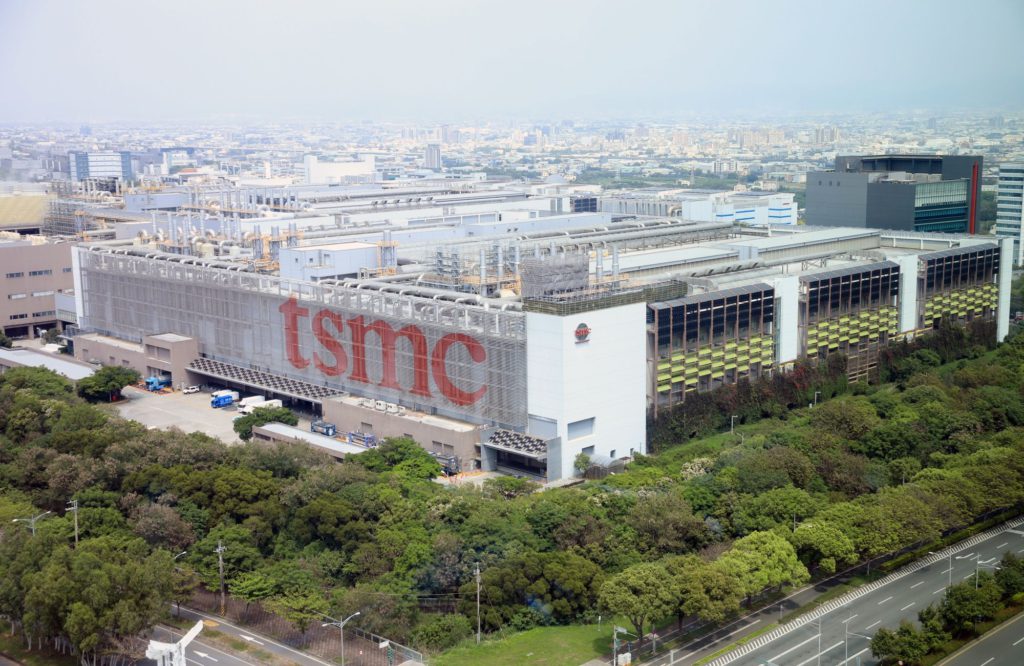
(Bloomberg) — One of Nancy Pelosi’s key meetings on her whirlwind tour of Taiwan reportedly is TSMC, the island’s most valuable company and world’s biggest contract chipmaker.

The US House Speaker is meeting Taiwan Semiconductor Manufacturing Co. Chairman Mark Liu on Wednesday to discuss Congress’ recently passed Chips and Science Act and its $52 billion in subsidies for new chip manufacturing plants on American soil, according to a Washington Post report. It’s a notable stop in an itinerary otherwise packed with government agencies and symbolic photo ops and underscores not just the strategic importance of the island, but its outsized technological weight in the global economy.

Taiwan is home to industry-leading chip factories as well as an industrial base that supplies key components for electronics, medical equipment and sensitive nuclear power and military use. US officials have said that Beijing gaining access to the technology and expertise housed in Taiwan constitutes a security risk. China, which considers Taiwan a region under its jurisdiction, has called the Speaker’s visit to the island “provocative.” 

A TSMC spokesperson declined to comment on Pelosi’s trip to the island. The Hsinchu-based chipmaker is the exclusive supplier of Apple Inc.’s Silicon processors for iPhones and Mac PCs as well as the manufacturing partner of other US companies like Advanced Micro Devices Inc., Broadcom Inc. and Qualcomm Inc. TSMC is now building a $12 billion fab in Arizona to help boost chip production on US soil, but it still makes the majority of its chips and all of its cutting-edge semiconductors at home.

This Is How China Could Hit Back Over Pelosi’s Taiwan Visit

In response to Pelosi’s visit, Beijing announced four days of live-fire military drills in the waters surrounding Taiwan. The announcement included six exclusion zones encircling Taiwan, blocking ships and aircraft from passing through large swaths of water and airspace and triggering concern that the drills will hamper shipments and exacerbate supply chain issues.

The Taiwan Strait is one of the world’s busiest shipping routes and is the primary path for ships passing from China, Japan, South Korea and Taiwan to westward destinations. Even a minor disruption can mean critical delays for businesses, hospitals and utilities. Asia-based companies like Sony Group Corp. have battled logistics snarls since the start of the pandemic and any further disruption is liable to impact global distribution of key products.

TSMC and peers like Samsung Electronics Co. have had to strike a balance between the US and China, as Washington’s attempts to thwart Beijing’s technological ambitions escalate. Part of the Chips and Science Act passed this week said that companies receiving funding must promise not to boost production of advanced chips in China.  

Following Pelosi’s arrival, China halted natural sand exports — used to make glass and concrete — to Taiwan, along with imports of some fish and fruit. Chinese electric-vehicle battery maker Contemporary Amperex Technology Co. has also decided to push back its announcement of a North American factory to supply Tesla Inc. and Ford Motor Co., Bloomberg News reported.

More stories like this are available on bloomberg.com

©2022 Bloomberg L.P.
Ripples From Pelosi Trip May Take Time to Impact Global Markets

(Bloomberg) — From an accelerated decoupling of the world’s two largest economies to a discussion on whether China might weaponize its vast holding of Treasuries, investors are outlining how US House Speaker Nancy Pelosi’s Taiwan trip may ripple across global markets. 

Haven assets whipsawed as concerns about the level of military response from China dissipated and Treasuries sold off on hawkish comments from Federal Reserve officials. The yen saw an abrupt turnaround, sinking more than 1% Tuesday after its strongest four-day run since 2020 but climbing again Wednesday. Most stocks and equity futures struggled for traction.

Pelosi’s visit has fanned fresh jitters among investors already spooked by the threat of a global slowdown amid surging inflation. Some strategists warned of dismissing China’s initial response too early — military exercises and some Taiwan trade restrictions — with markets vulnerable to any hint of a worsening of Sino-American relations. 

“This issue will linger far longer than the market’s attention span will allow,” said Michael Every, head of Asian financial market research at Rabobank. “Yet geostrategists are largely united in the view that we are still worryingly close to a potential Fourth Taiwan Strait Crisis.”

China and Treasuries 

Investors were still parsing headlines and market moves Wednesday for clues as to how China could retaliate. The dizzying surge in Treasury yields overnight triggered discussions whether Beijing might weaponize its near $1 trillion pile of US government bonds. Chinese defense stocks rose while Taiwanese shipping and tourism shares retreated.

Volatility Hits Markets With Geopolitics Adding to Set of Risks

“Given the magnitude of the selloff, it was only a matter of time before speculation that China was using its significant Treasury holdings in retaliation for Pelosi’s visit,” said Ian Lyngen, a strategist at BMO Capital Markets. “In the event this is the case (which we doubt), the bearishness should be limited as the near-term flow influences are overshadowed by the negative impact on the global macro outlook.”

Others such as Huang Huiming, a fund manager at Nanjing Jing Heng Investment Management Co., are bracing for the start of “salami tactics” by Beijing — a piecemeal approach to divide and conquer an opposition — and how this could impact already choked up supply chains. 

“Looking closely at the exercise zones, this is the nearest to the island ever and encircles it — all military operations are at first disguised as drills,” said Huang. “We might be concerned if the drills become longer and more intense to impact supply chains, but there is no sign of that happening now.”

Pelosi to Meet Taiwan Leader as China Opens Military Drills

Faster Decoupling

While some investors are looking to sell the rumor, buy the news for now on Pelosi’s visit, others are mapping out a longer-run macro view of how this could prove to be a seminal moment in Asia-Pacific history and potentially alter asset-allocation in the region. Taiwan is a critical global supplier of semiconductors and other high-tech goods. 

There are risks of a longer-term economic decoupling between the world’s two largest economies with a slew of potential impacts including fresh stress on supply chains worsening inflation. Beijing has already announced the beginnings of an economic response, halting natural sand exports to Taiwan and stopping imports of fruit and fish. 

“The official return of the US influence in Asia-Pacific will inevitably accelerate US-China decoupling,” said Xiadong Bao, a fund manager at Edmond de Rothschild Asset Management in Paris. “Given it’s an evolving event, investors should brace for a test of nerves which may implicate high market volatility in the near-term.”

Caution Prevails

When everything looks this uncertain, sometimes the biggest trades include buying the traditional safe havens of the world — Treasuries and the dollar.

That’s the view of Jessica Amir at Saxo Capital Markets who reckons the latest tensions are only going to further fray investors’ nerves, spurring safer assets to outperform. 

“Right now we think the tone has been set for equities for August and the rest of the year. Geopolitical tensions will rise,” said Amir. “We also see the return to safe havens, and the dollar to see increased buying.”

It’s an outlook shared by AMP Capital Markets’ Chief Economist Shane Oliver, who sees gains for Treasuries to gold should the visit spark actual conflict. “Longer-term it signals a further escalation in cold war tensions between the West and China/Russia which means higher risk premiums,” he said.

Sentiment to Recover

In Zurich, fund manager Jian Shi Cortesi sees parallels in market outcomes between Newt Gingrich’s trip to Taiwan in 1997 and Pelosi’s today. Back then, the Hang Seng Index and Taiwan’s bourse both fell before the visits, but rebounded strongly afterwards. This time around, investors saw similar weakness for China, Hong Kong and Taiwan stocks prior to Pelosi’s trip. 

China’s military exercises near Taiwan island “may still keep investors on their toes,” said the investment director at GAM Investment Management. “Market sentiment will recover once the military exercise ends.”

(Updates throughout.)

More stories like this are available on bloomberg.com

©2022 Bloomberg L.P.

Vin Scully, Voice of Baseball’s Los Angeles Dodgers, Dies at 94

(Bloomberg) — Vin Scully, who broadcast Brooklyn and Los Angeles Dodgers baseball games over a six-decade career that made him one of the sport’s most recognizable and respected voices, has died. He was 94.

Scully died at his home in Los Angeles, according to the team, the Associated Press reported.

“We have lost an icon,” Dodgers President and Chief Executive Officer Stan Kasten said in a statement posted on the team’s Twitter account.

Scully called Dodgers games starting in 1950, when the team was based in Brooklyn, New York. When the franchise moved to Los Angeles in 1958, Scully went with them, and over the next 58 years he became inextricably linked to the team and the sport.

Frequently tapped to do play-by-play for nationally televised games, Scully’s calm demeanor and lyrical style grew familiar to millions of baseball fans across the US. He received the Ford C. Frick Award from the National Baseball Hall of Fame in 1982.

“Like no other, he has developed baseball broadcasting into an art form,” Ernie Harwell, the longtime announcer for the Detroit Tigers, wrote of Scully in 2003. Harwell, who died in 2010, called Scully “the best of all time.”

‘Dance, Sing’

Curt Smith, in his 2005 book “Voices of Summer” ranking baseball’s all-time best announcers, gave Scully the only perfect score. “Vin made network baseball breathe, dance, sing,” Smith wrote.

On Oct. 2, 2016, at age 88, Scully called his final game. His 67 seasons with the Dodgers was the longest consecutive service of any Major League Baseball broadcaster with one team. 

During his tenure, he narrated many of the greatest moments in the team’s history: The Dodgers’ championships in 1955, while still in Brooklyn, and in 1959, 1963, 1965, 1981 and 1988 in Los Angeles; Sandy Koufax’s four no-hitters, including his perfect game in 1965; and the scoreless-innings streaks of pitchers Don Drysdale (58 2/3 innings) in 1968 and Orel Hershiser (59) in 1988. He also worked the Dodgers’ game against the Atlanta Braves in which Hank Aaron hit his 715th career home run to break Babe Ruth’s record.

In all, he called 25 World Series, 12 All-Star games, 18 no-hitters and three perfect games.

Memorable Moments

Scully was in the television booth when Kirk Gibson ended Game 1 of the 1988 World Series with a pinch-hit two-run home run that stands as one of baseball’s most memorable swings. “In a year that has been so improbable,” he said, “the impossible has happened.”

He kept a level temperament even at tense moments, relying on the action on the field to provide excitement. When Koufax was on the verge of retiring his 27th consecutive Chicago Cub batter to pitch a perfect game, Scully made the following call: “Two and two to Harvey Kuenn, one strike away. Sandy into his windup, here’s the pitch. Swung on and missed, a perfect game!” Then he was silent for 38 seconds, an eternity in broadcasting, letting the cheers of the Dodger Stadium crowd travel into listeners homes.

He went silent again more than 20 years later, when Mookie Wilson’s dribbler evaded the glove of Bill Buckner, scoring Ray Knight to cap the New York Mets’ improbable comeback victory against the Boston Red Sox in Game 6 of the 1986 World Series. Scully narrated: “Behind the bag. It gets through Buckner! Here comes Knight, and the Mets win it!” After several minutes of silence to let the images speak for themselves, he said, “If a picture is worth a thousand words, you’ve seen a million.”

Early Career

Vincent Edward Scully was born Nov. 27, 1927, in the Bronx, New York. At age 8, he wrote for the school newspaper about becoming an announcer.

He began his broadcasting career while at Fordham University in New York, working baseball games for the school’s radio station. He also played two seasons as a center fielder.

Following graduation, Scully, then 22, joined the Brooklyn Dodgers in 1950 and worked alongside fellow Hall of Fame announcer Red Barber. He became the team’s lead announcer in 1954 after Barber started working for the New York Yankees, and he went west with the franchise after the 1957 season.

He was named the country’s outstanding sportscaster four times by the National Sportscasters and Sportswriters Association and won a Lifetime Achievement Sports Emmy Award from the National Academy of Television Arts and Sciences.

Fan’s Choice

Scully has a star on the Hollywood Walk of Fame. A street was named after him at the Dodgers’ spring-training complex in Vero Beach, Florida, as was the press box at Dodgers Stadium.

In 1976, the team took a poll of its fans to determine the franchise’s most memorable personality. Fans chose Scully over stars such as Jackie Robinson, Pee Wee Reese and Duke Snider.

Scully had three children with his first wife, Joan, who died in 1972, and one child with his second wife, Sandra. Scully’s oldest son, Michael, died in a helicopter crash in 1994.

More stories like this are available on bloomberg.com

©2022 Bloomberg L.P.

Close Bitnami banner
Bitnami
