Bloomberg

Twitter Doesn’t Oppose Oct. 17 Trial in Musk Buyout Case

(Bloomberg) — Twitter Inc. snapped back at billionaire Elon Musk over accusations it’s being intransigent on setting a specific trial date and isn’t agreeing to hand over documents. 

The company, which sued Musk after he halted a planned $44 billion takeover, said it was false for the Tesla Inc. co-founder to claim in his own filing on Tuesday that Twitter was insisting “without justification” on an Oct. 10 trial start.  

“Twitter repeatedly informed Musk it does not object to beginning trial on October 17 if the court has sufficient availability to complete a five-day trial that week, provided only that Musk commit not to seek more than five trial days,” the company said in a a filing Wednesday. 

It also rejects the idea it’s refusing to hand over documents. “Twitter agreed to begin a rolling production of documents if Musk did the same,” the company said. “Musk is the party holding up productive and disciplined discussions on the scope of discovery by delaying filing an answer.”

Read More: Musk, Twitter Spar Over Trial Date, Document Production (1)

The Delaware judge hearing the case agreed last week to fast-track the trial over the cancelled $54.20-per-share deal, and asked both parties to agree to a specific five-day trial in October. 

The social-media platform — which Musk uses almost daily — contends the world’s richest man is refusing to agree to an even-handed schedule and lobbed a letter onto the court docket without sharing it with his opponents. 

Musk’s discovery proposal “requires Twitter’s immediate compliance with extravagant and onerous one-way discovery demands unrelated to the issues to be tried,” Twitter’s lawyers said in the 14-page filing.

The case is Twitter v. Musk, 22-0613, Delaware Chancery Court (Wilmington). 

(Updates with detail from filing from fifth paragraph.)

More stories like this are available on bloomberg.com

©2022 Bloomberg L.P.

Tech Roars in Post-Fed Rally as Bond Yields Slump: Markets Wrap

(Bloomberg) — Stocks rallied and Treasury yields fell with the dollar as Jerome Powell said the Federal Reserve will slow the pace of rate increases at one point, while adding that officials would refrain from offering “clear guidance” on the magnitude of their next move.

About 85% of the S&P 500 companies rose, while the Nasdaq 100 soared over 4%, the most since November 2020. Two-year US yields tumbled as much as 10 basis points. Expectations for the pace of Fed hikes eased — with swap markets showing 58 basis points of tightening priced in for September.

The lack of forward guidance on rates was seen as positive by several traders, with officials trying to boost their credibility as they fight the hottest inflation in four decades. However, Wednesday’s market reaction was met with skepticism. The upside for markets is “very much capped” and the Fed needs tighter financial conditions to achieve slack in the labor market and bring inflation down, according to former New York Fed President Bill Dudley.

“It seems traders aren’t thinking another large move will be justified in September,” said Ed Moya, senior market analyst at Oanda. “A clear greenlight to buy up risky assets won’t happen until we see evidence inflation is coming down.”

For Bloomberg Economics’ Anna Wong, the July Fed decision signaled the central bank is nowhere close to pausing rate hikes. “Market expectations of a Fed put are premature. Looser financial conditions could end up making the Fed’s task of reining in inflation more challenging,” she added.

The Fed’s boss rejected speculation the US is in recession and said the central bank is moving “expeditiously” when it comes to dealing with inflation. Powell also noted that another unusually large boost in rates would depend on data after officials hiked by 75 basis points Wednesday, taking the cumulative June-July increase to 150 basis points, the steepest since the early 1980s.

Fresh economic data reduced the odds the US will report two straight quarters of a contracting economy and avert what is commonly regarded as a recession. Economists at Morgan Stanley, JPMorgan Chase & Co. and Goldman Sachs Group Inc. boosted their estimates for second-quarter gross domestic product after government reports showed firmer durable-goods shipments, a narrower trade deficit and gains in inventories last month.

Earnings:

  • Meta Platforms Inc., parent company of Facebook and Instagram, reported its first ever quarterly sales decline, as economic turmoil caused advertisers to shrink budgets.
  • Qualcomm Inc., the biggest maker of chips that run smartphones, gave a lackluster forecast for the current period, fueling concern that weaker consumer spending will hurt demand for mobile devices.
  • Ford Motor Co., preparing to slash thousands of staffers to help fund its electric-vehicle future, reported second-quarter earnings that beat Wall Street estimates.
  • Best Buy Co. cut its profit forecast, saying high inflation was hammering demand for consumer electronics.

Here are some key events to watch this week:

  • Apple, Amazon earnings, Thursday
  • US GDP, Thursday
  • Euro-area CPI, Friday
  • US PCE deflator, personal income, University of Michigan consumer sentiment, Friday

Musk, Tesla and Twitter are this week’s theme of the MLIV Pulse survey. Also share your views on the S&P 500’s biggest stocks. Click here to get involved anonymously.

Some of the main moves in markets:

Stocks

  • The S&P 500 rose 2.6% as of 4 p.m. New York time
  • The Nasdaq 100 rose 4.3%
  • The Dow Jones Industrial Average rose 1.4%
  • The MSCI World index rose 1.9%

Currencies

  • The Bloomberg Dollar Spot Index fell 0.6%
  • The euro rose 0.9% to $1.0206
  • The British pound rose 1.1% to $1.2165
  • The Japanese yen rose 0.3% to 136.52 per dollar

Bonds

  • The yield on 10-year Treasuries declined two basis points to 2.79%
  • Germany’s 10-year yield advanced two basis points to 0.95%
  • Britain’s 10-year yield advanced four basis points to 1.96%

Commodities

  • West Texas Intermediate crude rose 3.3% to $98.16 a barrel
  • Gold futures rose 0.9% to $1,751.10 an ounce

More stories like this are available on bloomberg.com

©2022 Bloomberg L.P.

Fintech Pioneer Chases $1 Billion Goal Unfazed by IPO Fiasco

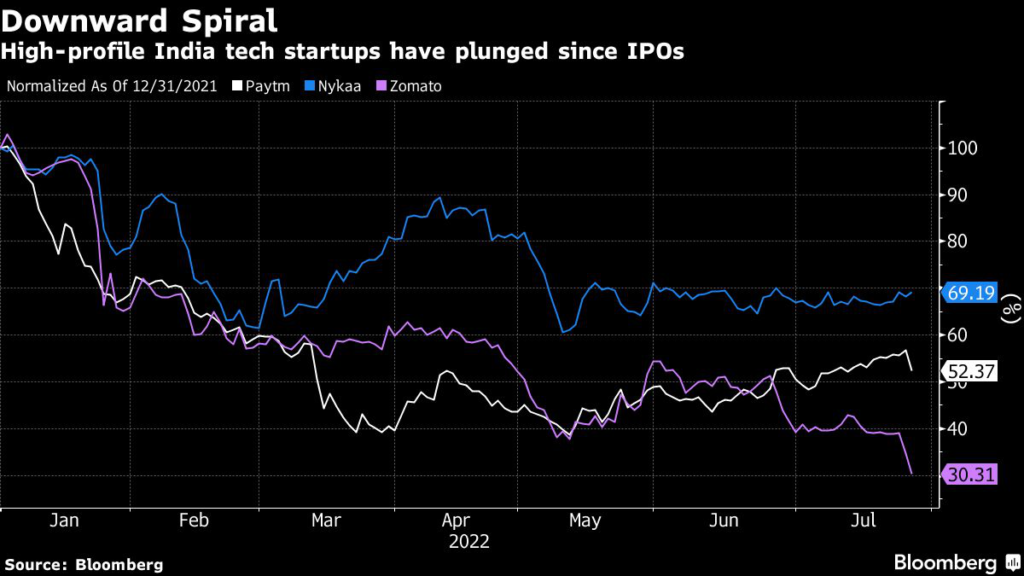
(Bloomberg) — Paytm was the poster boy for India’s tech startups, only to lose two-thirds of its value since its IPO and become a symbol of the industry’s crash. Now its founder promises a sharpened focus on financial performance to convince investors of the money-losing company’s prospects.

The digital-payments provider is set to become India’s first internet company to hit $1 billion in annual revenue by the end of this fiscal year in March, said Vijay Shekhar Sharma, 44. The brand, known formally as One97 Communications, is also shifting its attention from growth toward profitability, Sharma said in his first extensive interview following the high-profile public debut in November.

“We’re earnestly chasing the $1 billion goal,” he said during an hours-long conversation last week at Paytm’s new chrome-and-glass headquarters in Noida, outside New Delhi, in a vast green expanse filled with wandering cattle. “For me, the public listing was a sort of graduation, and taking Paytm to break-even and to profits gives me a clarity of purpose.”

Paytm’s stock-price collapse exacerbated a crisis for India’s startups, sending valuations plummeting as investors began to grow cautious about their earnings potential. Young firms — dozens of which had hit unicorn status as capital flowed to everything from online retail to digital learning in the country of 1.4 billion — suddenly saw their fundraising plans grind to a halt.

Describing his approach as a rewind-and-reset, Sharma is on a mission to win back investors. And he’ll have his hands full: Paytm’s operating losses widened over the past year to about $350 million, competition is intensifying and investors have lambasted the lack of clarity in the company’s business model.

One step toward regaining trust is a demystifying of Paytm’s revenue structure, said the founder, who is also the company’s chief executive officer. He said its work can be simplified to two short lines: Paytm is in the business of payments, and it sells loans.

India’s payments market differs from that of more developed countries, as it bypassed card-based systems popular in regions such as Europe and the US to jump directly from cash to mobile device payments. While that’s attracted droves of contenders like Alphabet Inc.’s Google Pay, Amazon.com Inc.’s Amazon Pay and Walmart Inc.’s PhonePe, Sharma is confident Paytm’s products — some modeled on success cases in other markets — will help it retain its leadership position.

Its Sound Box, for instance, is a $2-a-month subscription which instantly reconciles payments and announces a successful purchase via a speaker at the merchant’s counter. Another product generates a unique QR code for each transaction and lets shoppers pay swiftly through Paytm’s smartphone application as well as other apps — a model already prevalent in China.

“I want to make Paytm the most relevant payments company of our times,” he said, dressed in a checked shirt and blue jeans, seated in a conference room framed against a distant backdrop of high rises.

To expand Paytm’s reach, Sharma has steadily ramped up its lending business. While taking on traditional banks is a challenge, Paytm is convinced it’ll win over users in what is currently a credit-starved market.

In both payments and lending, Paytm has started to publish more metrics. It’s revealed more data on users, revenue streams and loan disbursals, treating investors on par with board members — and so far, the numbers have been beating internal expectations, Sharma said.

Sharma, who grew up the son of a teacher in the small town of Aligarh in central India, founded Paytm parent One97 Communications over two decades ago. The company began offering digital payments in 2014, and has since snared a who’s who of global investors including Masayoshi Son’s SoftBank Group Corp., Warren Buffett’s Berkshire Hathaway Inc. and Jack Ma’s Ant Group Co., growing into the country’s most ubiquitous payments brand.

If the early years were challenging, this has been Paytm’s most grueling phase ever. The IPO shone light on Paytm’s business model, allowing investors to more closely scrutinize the company’s earnings logic and valuation. The founder defended both, citing the successful listings of internet peers like Nykaa and Zomato Ltd. and bankers’ advice on the maturity of Paytm’s revenue model. Paytm plunged 27% on the first day and is currently down more than 60% from its IPO price.


“On hindsight, the pricing and the timing look haywire,” said Sharma. “Used to private exits where things are a lot more under control, we weren’t prepared for this.”

In the past months, Sharma has told investors that his strategy will allow Paytm to reach operational break-even by September 2023. The company has slashed spending and is considering an exit from a pricey cricket sponsorship and terminating an agreement to acquire insurer Raheja QBE General Insurance.

“Earlier the team used to be like, ‘Cricket sponsorship? that’s so cool!’ to now, ‘How much money can we save if we gave that up?’” the CEO said.

Skeptics say profitability will remain an uphill battle. Analysts at Macquarie Capital Securities (India) Pvt., who were early to predict Paytm’s stock decline, said in March that the shares would plummet further to 450 rupees. Sharma said board member and early investor Ravi Adusumalli, founder of Elevation Capital, recently told him he’d prefer $1 billion in profit over $1 billion in revenue.

Putting his money where his mouth is, Sharma said his personal stock grants will vest only after the shares stay sustainably above the IPO offer price.

“I’m going to be the last person to be paid in this company,” he said. “One day soon, we will get our due.”

More stories like this are available on bloomberg.com

©2022 Bloomberg L.P.

‘Chips and Science’: Tech Bill Loses Name Inspired by WWII Icon

(Bloomberg) — When Senator Todd Young first introduced a bill to re-invent US research and development for the 21st Century, he chose a name that would inspire the nation’s scientists and innovators to boldly go, as Star Trek advised, where no one has gone before.

It was called the “Endless Frontier Act,” a nod to WWII-era inventor and public policy guru Vannevar Bush, who wrote a 1945 landmark report laying the groundwork for the National Science Foundation.

But by the time the bill came to the Senate floor for final passage on Wednesday, the churn through the congressional grinder had stripped out the inspirational origins. 

“We’re calling it the ‘Chips and Science’ bill,” Senate Majority Leader Chuck Schumer, Young’s partner on the legislation, said with an air of resignation. “After many different names, this is the final name.”

The story of how the bill, which runs to more than 1,000 pages, wound up sounding like an unappetizing side dish at a space-themed restaurant is in many ways a reflection of how unusual the process of crafting big bipartisan pieces of legislation is in Washington today.

Known at various points as the US Innovation and Competition Act, the Bipartisan Innovation Act and the COMPETES Act, the titles changed over time to show the points of view of the legislation’s authors. The names were numerous and so were the number of conference committee members appointed to hash out differences between the House and Senate versions, which helps account for the slow pace of development.

Sitting in his Senate office on a recent morning, Young, an Indiana Republican, pondered over the process while he attempted to reattach a button to his suit jacket using a small sewing kit. 

“I’ve seen this institution operate dysfunctionally for years,” said Young, a Naval Academy graduate and former Marine who was elected in 2016. “It’s been frustrating.”

Young wanted a return to what is known as regular order — ideas fashioned into legislation that is vetted and refined by various committees with expertise and attracting bipartisan support — rather than bills generated by a small cadre of leaders.

He achieved some measure of success. To get it moving through Congress, the bill was chopped down to mostly a $52 billion package of incentives for semiconductor companies. 

Through texts, phone calls and conferences, Young worked with colleagues across the aisle, including Democratic Senators Kyrsten Sinema and Mark Kelly of Arizona, to incorporate significant elements of the science-focused portion of the original bill into the chips funding. Hence the new name from Schumer, “Chips and Science,” and passage Wednesday on a bipartisan 64 to 33 vote. 

Technically, it’s still officially called the Chips Act of 2022. As the bill heads to the House, where it’s expected to pass later this week, the title will likely get changed again. 

More stories like this are available on bloomberg.com

©2022 Bloomberg L.P.

Shopify Soars 12% on Tech Rally Despite Weaker Earnings Outlook

(Bloomberg) — Shopify Inc. rallied to one of its biggest gains of the year despite releasing disappointing earnings and a weak profit outlook for the rest of 2022.  

The shares rose 11.7% to $35.24 in New York, riding a surge in technology stocks. While the Shopify’s second quarter results missed forecasts, the stock jumped after executives gave more detail on plans to cut expenses and improve services for small-business customers. 

The company’s riskiest bet is its move to build its own distribution network to help its merchant customers, Chief Executive Officer Tobi Lutke said during a conference call with analysts. Making bold bets is something “our company especially is defined by — not following some kind of orthodox playbook,” he said. 

Ottawa-based Shopify posted a loss of 3 cents per share on an adjusted basis in the second quarter, falling short of estimates for a profit of 3 cents, according to data compiled by Bloomberg. Revenue rose 16% to $1.3 billion from a year earlier, broadly in line with expectations of $1.33 billion.

The worse-than-expected results came one day after Shopify said it would cut 10% of its workforce, after it wagered on a hiring spree to meet pandemic-driven demand from businesses moving their sales online. On Wednesday, the company warned of higher operating losses in the second half of the year and said inflation was beginning to hurt the sector.

“We now expect 2022 will end up being different, more of a transition year, in which e-commerce has largely reset to the pre-Covid trend line and is now pressured by persistent high inflation,” the Ottawa-based company said.

While Shopify’s move to providing payments services in physical stores could help the company weather an e-commerce slowdown, investors should brace for weakness beyond 2022 as macroeconomic concerns mount, according to DA Davidson analyst Tom Forte.

“There’s tremendous uncertainty on what e-commerce revenue looks like the next 18 months,” Forte said in an interview. “We’re in the midst of a multiyear elevated inflationary environment, so I expect the same pressure on discretionary spend next year as well.”


Gross merchandise volume — the value of merchant sales flowing through Shopify’s platform — grew 11% to $46.9 billion during the quarter, missing estimates of $48.6 billion.

The shift out of pandemic lockdowns, elevated inflation and the threat of a recession have shifted consumer habits. Retail stocks fell earlier this week after Walmart Inc. made a surprise cut to its profit outlook as surging prices cause consumers to spurn bigger-ticket purchases.

(Updates with closing share price, context in third graph, and analyst commentary)

More stories like this are available on bloomberg.com

©2022 Bloomberg L.P.

Oracle’s Larry Ellison Can Win Lawsuit Even If He Loses

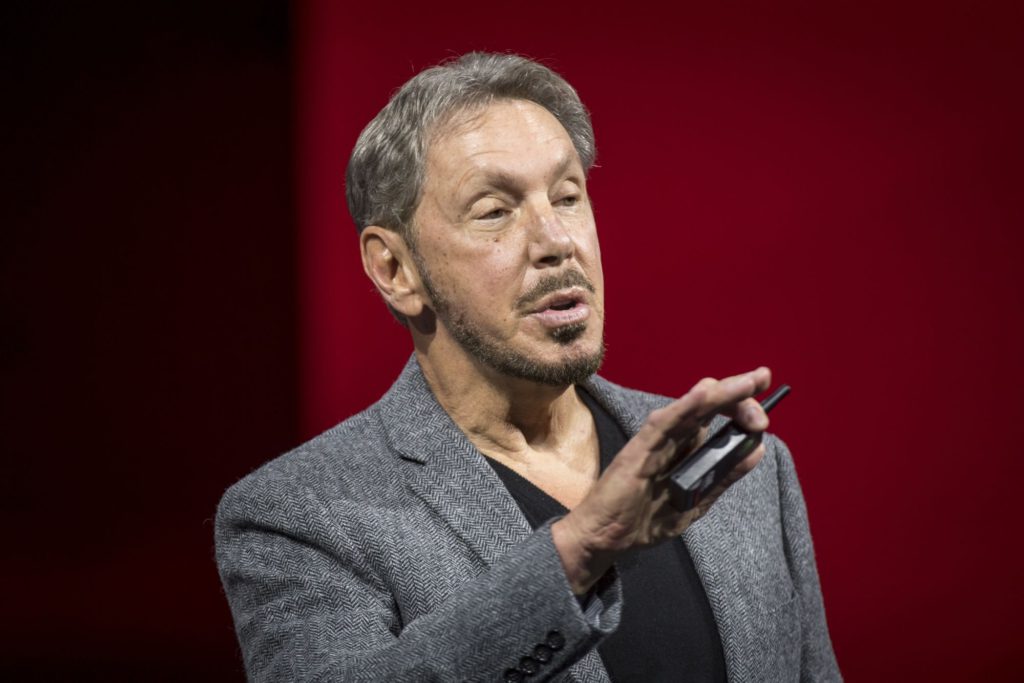
(Bloomberg) — Oracle Corp. Chairman Larry Ellison testified in a lawsuit on Wednesday that he didn’t call the shots at the company he co-founded and in which he holds a 40% stake and was not involved in discussing the acquisition at the center of the dispute.

The investor suit, brought in a Delaware court by a pension fund, accuses the 8th-richest American and others at Oracle of overpaying by $3 billion for rival software maker NetSuite Inc. in 2016. Ellison owned 47% of NetSuite at the time of the $9.3 billion deal and held about 28% of Oracle’s shares. 

The Firemen’s Retirement System of St. Louis, an Oracle investor, sued Ellison and the company’s board in 2017 to challenge the acquisition. The case, known as a derivative suit, was brought on behalf of the company, so any money recovered will be returned to Oracle. The company didn’t respond to an email and phone call seeking comment on the case. 

A win by the shareholders could force changes to management or the board, or result in an award that would boost the value of the company. As a significant shareholder, Ellison would benefit from any increased value in the company, but that might be offset by any amount he’d be forced to pay — although payouts are often covered by insurance, said Eric Talley, a professor at Columbia Law School who specializes in corporate and transactional law.

Appearing remotely, Ellison was pressed repeatedly on the plaintiff’s assertion that he remained Oracle’s chief decision-maker even after stepping down as chief executive officer in 2014 and becoming chief technology officer. Lawyers played clips of his successor as CEO and erstwhile boss, Safra Catz, in which she suggested Ellison continued to hold sway.

“Larry Ellison is it,” Catz was shown saying in a 2018 excerpt. “Don’t let titles fool you.”

Ellison, speaking calmly, said Oracle’s board and top managers didn’t defer to him after he stepped down as CEO, adding that there were many instances in which he did not get his way. “The idea that these people just blindly do what I tell them is just not true,” he testified.

Under questioning earlier in the day from a defense lawyer, Ellison also said that he had recused himself from discussions at both companies related to the NetSuite acquisition.

The billionaire said under cross-examination by fund lawyer Randy Baron that he stepped back from the NetSuite deal and gave up his rights to block higher offers for the software maker to eliminate any appearance of a conflict. 

“I would have been very vulnerable if I didn’t recuse myself on both sides of this transaction,” Ellison said.

The trial in Delaware Chancery Court got under way last week and Ellison appeared by video after some his defense lawyers tested positive for Covid-19. Getting an executive of Ellison’s stature on the stand in a shareholder suit trial is fairly unusual, but not unique. Tesla Inc. founder Elon Musk — a friend of Ellison’s — spent two days in a Delaware court last year testifying to defend his takeover of SolarCity, which shareholders claimed he pushed for his own benefit rather than theirs. Musk won.

While not in the public eye as much as Musk, Ellison is worth $92.6 billion, according to the Bloomberg Billionaires Index. His fortune has almost doubled since 2019 as Oracle stock has jumped. He’s also benefited from owning a stake in Tesla that now exceeds $12 billion. Ellison joined the board of Tesla in 2018.

Read More: Larry Ellison, Lord of Lanai: Bloomberg Businessweek

The suit accuses Ellison, Oracle Chief Executive Officer Catz and director Renee James of orchestrating the combination when NetSuite’s sales were slowing because of increased competition from Oracle to unfairly benefit Ellison and his family. The fund also alleges a majority of Oracle directors deceived investors about Ellison’s role in the NetSuite acquisition process. 

An Oracle executive floated the idea of buying NetSuite at a January 2016 Oracle board retreat at Ellison’s estate in Rancho Mirage, California, according to a court filing. Because of his stake in the target, Ellison recused himself from discussions about the deal, but didn’t leave the room, the pension fund claims. Catz and NetSuite executives reached a deal at a price of a $109-a-share, which amounted to a more than 42% premium over the target’s share price, according to the complaint.

‘Best Deals’

Ellison and the other defendants counter the company set up a special board committee to evaluate the NetSuite deal and address the conflict allegations. That group held 15 meetings about the buyout; Ellison didn’t attend any of them, according to Oracle’s court filings.

The committee hired the investment firm Moelis & Co to review the deal concluded the value was “fair from a financial point of view to the company,” the filings said. “Oracle’s acquisition of NetSuite, Inc. was not merely a valid exercise of business judgment; it was one of the best deals Oracle has ever made.” 

Since the 2016 NetSuite deal, Oracle has acquired 22 more companies. Most recently, it paid $28.3 billion for health care records provider Cerner Corp. to try and build inroads in the health care industry, which has been comparatively slow to adopt cloud database technology. 

The defense also belittled the fund’s allegations Ellison used Catz and James as his pawns to engineer the deal in a way that unduly benefited the billionaire and his family. “It would make no sense for Ellison to risk his far more significant Oracle investment — and his reputation/legacy — by causing Oracle to engage in a conflicted and value-decreasing transaction, just to save his much-smaller investment in NetSuite,” according to the brief.

To make out their case under Delaware law, the fund must prove to the judge that Oracle’s buyout of NetSuite wasn’t “entirely fair,” and Ellison, Catz and James violated legal duties to shareholders by overpaying for the software maker.

Judge Sam Glasscock III is hearing the case in Georgetown, Delaware. He’s expected to hand down a decision later this year.

The case is In Re Oracle Corporation Derivative Litigation, 2017-0337, Delaware Chancery Court (Wilmington).

More stories like this are available on bloomberg.com

©2022 Bloomberg L.P.

Ethereum’s Offshoot Unexpectedly Surges Amid Upgrade Mania

(Bloomberg) — Ethereum’s long-anticipated software upgrade has made the blockchain’s early offshoot an unexpected winner, pushing up the prices of the latter’s token in recent days.

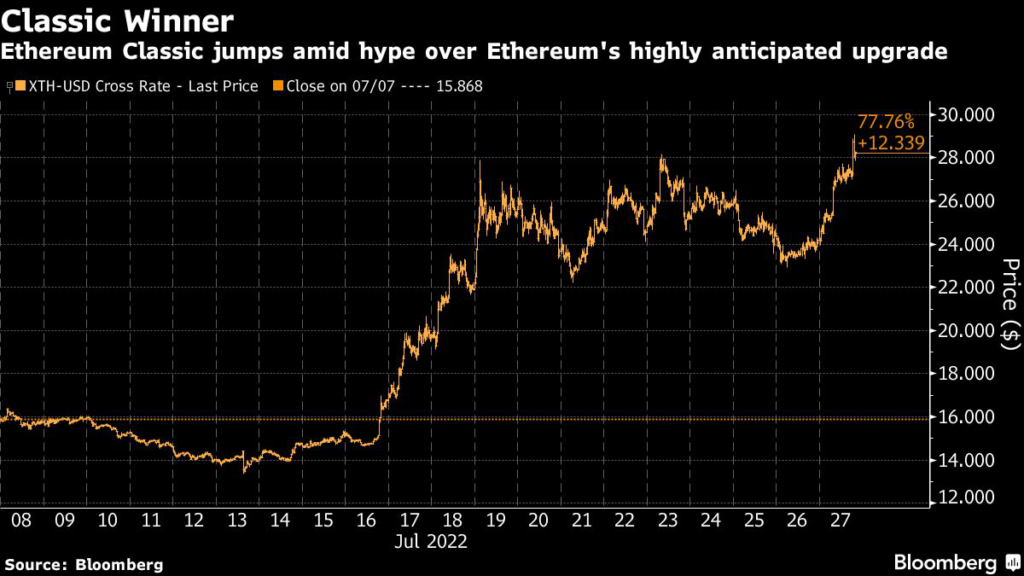
Ethereum Classic, which was created after a 2016 software change known as a “hard fork” on Ethereum’s blockchain, saw its token’s price jump by as much as 29% on Wednesday. Ethereum also rose by as much as 18% as the crypto industry awaits the blockchain’s biggest transition, also called the Merge, which could take place in September after being kicked down the road for several years. Cryptocurrencies surged across the board Wednesday amid a broad rally in risk assets, with Bitcoin rising as much as 10%, the most in more than a month.

The Merge is set to take Ethereum to a system called Proof of Stake, in which staked Ether tokens will order transactions, from its current system called Proof of Work, a mechanism which uses powerful computers to order transactions.

The offshoot’s outperformance first came after Ethereum blockchain’s co-founder Vitalik Buterin mentioned it at the annual Ethereum Community Conference, or EthCC, in Paris on July 21.

“If you want to cancel Proof of Stake, we are not going to cancel you… there’s Ethereum Classic, which is the original Ethereum,” he said. “It’s a very welcoming community and I think they’ll definitely welcome proof of work fans…It’s not even a joke. If you like proof of work, you should go use Ethereum Classic. It a totally fine chain.”

Buterin’s comment has helped “drive speculation” among traders, Thomas Dunleavy, senior analyst at crypto research firm Messari, said. 

Ethereum Classic, which still uses the Proof-of-Work mechanism, may be one of the biggest beneficiaries of the Ethereum’s migration, which is expected to cut off earnings for as many as one million people. Miners who are looking for a platform for their costly mining equipment may turn to Ethereum Classic. 

The “original Ethereum” was pushed further into the limelight after AntPool, the mining pool affiliated with mining giant Bitmain Technologies Ltd., said it has invested $10 million to support it. 

But analysts remain skeptical of the fate of Ether’s sister token. Since its inception, Ethereum Classic, which is the No. 20 largest cryptocurrency, has never gained a similar level of success as Ether. Its network has also suffered several attacks in the past.

“This seems like a trade more than an investment,” Dunleavy said. “I don’t think Ethereum Classic has any long-term viability.”

(Updates to add size and scope of Bitcoin prices. An earlier version was corrected to fix the amount of the investment made by Antpool.)

More stories like this are available on bloomberg.com

©2022 Bloomberg L.P.
Apple Nabs Key Lamborghini Executive to Work on Its Electric Car

(Bloomberg) — Apple Inc. has enlisted one of Lamborghini’s top car-development managers in a sign that it’s stepping up work on a self-driving electric vehicle, according to people with knowledge of the situation. 

The company hired Luigi Taraborrelli, a 20-year veteran of the Italian carmaker, to help lead the design of Apple’s future vehicle, said the people, who asked not to be identified because the matter isn’t public. Taraborrelli was most recently Lamborghini’s head of chassis and vehicle dynamics. 

The move is another signal that Apple is committed to producing a car following years of setbacks and upheaval. With his experience, Taraborrelli becomes one of the most senior managers on Apple’s EV team and brings some exotic-car panache to the effort. 

The executive worked on Lamborghini models such as the Urus, Huracan and Aventador, in addition to more limited models like the Huracan Sterrato off-road vehicle and Asterion concept car. He oversaw Lamborghini’s chassis development, as well as areas such as handling, suspensions, steering, brakes and rims, according to his LinkedIn profile.

An Apple spokeswoman declined to comment on the hire. 

Earlier this year, Apple tapped a 31-year veteran of Ford Motor Co. to lead its vehicle-safety efforts. Last year, it hired Ulrich Kranz, the former chief of struggling electric-car maker Canoo Inc. and former leader of BMW’s electric-car business. Before that, Apple enlisted former Tesla Inc. Autopilot chief Stuart Bowers to work on self-driving technology. 

The Apple project includes hundreds of former engineers from Tesla and other car companies, including Rivian Automotive Inc., Alphabet Inc.’s Waymo, Volvo Car AB and Mercedes-Benz Group AG. It also has former senior design executives on staff from Tesla, McLaren, Porsche and Aston Martin.

The company is aiming to introduce a car around 2025 with a design that lets riders face each other in a limousine-like interior, Bloomberg has reported. Apple has grand ambitions to create a car without a steering wheel or pedals, relying instead on fully autonomous technology, though many team members and industry watchers doubt such a move is possible on its current schedule.

Even with the recent hires, the team has lost key talent, including the former head of the project, Doug Field, and artificial intelligence specialist Ian Goodfellow. Field had joined Apple in 2018 after leading vehicle programs at Tesla. He left the iPhone maker to join Ford after about three years, a relatively short period for an Apple executive in charge of a major initiative. 

The car project is currently run by Kevin Lynch, who also oversees the company’s Apple Watch and health software teams, and John Giannandrea, the company’s head of machine learning. Apple has been working on an electric car since at least 2014, but the project has been plagued by turmoil, including leadership turnover, strategy changes and layoffs.

Apple and Lamborghini have some history together. In 2020, the carmaker released an Apple-based augmented reality feature to help people preview the Huracan EVO RWD Spyder. At the time, Apple’s head of marketing said the company “cares deeply” about Lamborghini.

More stories like this are available on bloomberg.com

©2022 Bloomberg L.P.

Google Delays Phasing Out Ad Cookies on Chrome Until 2024

(Bloomberg) — Google said it will delay a plan to phase out third-party cookies on its Chrome browser until late 2024, a move that will upend how ads are targeted on websites.

The Alphabet Inc. unit has been working with publishers, marketers and regulators on its plan to replace cookies, the software marketers use to track people’s online activity and tailor ads accordingly, through an initiative known as the Privacy Sandbox. In a blog post on Wednesday, Google said it would postpone the shift to the new system to give marketers more time to test its tools.

“The most consistent feedback we’ve received is the need for more time to evaluate and test the new Privacy Sandbox technologies before deprecating third-party cookies in Chrome,” Anthony Chavez, a vice president at Google, wrote in the post. “We now intend to begin phasing out third-party cookies in Chrome in the second half of 2024.”

Trials of the new, privacy-sensitive advertising tools will expand to more users in early August, ramping up over the rest of this year and 2023. The news was first reported by Insider.

Google’s decision to phase out cookies echoes moves by Apple Inc., which shook up the digital ad market last year by restricting advertisers’ access to user data in its iOS operating system. But at a time when tech giants are facing mounting antitrust scrutiny, some experts are concerned Google’s move to do away with cookies could increase its power in the market for digital advertising, where it already plays a dominant role.

More stories like this are available on bloomberg.com

©2022 Bloomberg L.P.
Ron DeSantis Takes Aim at ‘Woke CEOs’ 

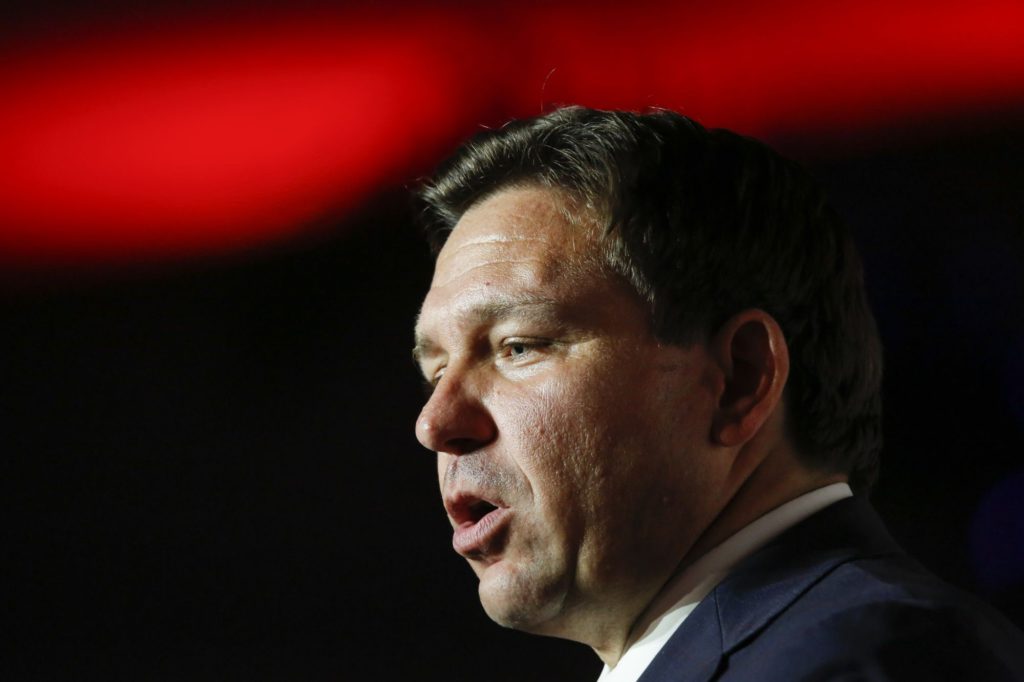
(Bloomberg) — Florida Governor Ron DeSantis criticized ESG investing and companies including PayPal Holdings Inc., saying he would work with the state legislature to battle what he called a “woke ideology” being promoted by Wall Street banks, asset managers and big tech companies.

“Do we govern ourselves through our constitution and through our elections or do we have these masters of the universe occupying these commanding heights of society?” DeSantis said at a press briefing Wednesday. “For every master of the universe who’s prattling on about, you know, no emissions and all this stuff, I don’t see very many of them giving up their private jets.”

DeSantis, who is increasingly being viewed as a possible Republican presidential contender, has embraced a number of culture-war issues popular with his base. Earlier this year he signed a law to strip Walt Disney Co. of its self-governance privileges in the state after it criticized a law he backed that limits school instruction about gender identity and sexual orientation. 

Read more: DeSantis says Disney district control likely to go to state

Speaking in front of a banner that said “Government of Laws, Not Woke CEOs,” he slammed ESG — environmental, social and governance — asset managers and banks for actions he said made the country more dependent on foreign energy, and moves to disfavor certain industries like gun manufacturing.

DeSantis said he would be taking administrative action so that the State Board of Administration, which manages Florida’s pension funds, won’t be able to use “political factors” when making investment decisions that instead must focus only on “maximizing the return on investment.” Banks, credit card companies and money transmitters including PayPal would be prohibited from discriminating against customers for their religious, political and social beliefs.

“They’re using things like social credit scores to be able to marginalize people that they don’t like,” DeSantis said, also mentioning crowdfunding site GoFundMe and the trucker protests in Canada earlier this year. 

DeSantis said the payment processor PayPal had “cut off people that they basically disagree with.” Tina Descovich, co-founder of Florida-based nonprofit Moms for Liberty, which seeks to combat “gender ideology” in schools, said the group’s PayPal account had been frozen after over $100,000 in donations had been received in a three-day period in April.

“It brought our organization to a screeching halt,” she said at the briefing. “We were paralyzed for weeks.”

PayPal, based in San Jose, California, didn’t immediately respond to an emailed request for comment. 

“We’re also going to make very clear that discrimination, particularly in the financial sector, is not something that we want to see here in the state of Florida,” DeSantis said, suggesting that other states including Texas, Arizona and Tennessee could work together as a bloc. 

“We’d have a lot of money, a lot of voting power under management,” he said. “And so we could be a real check against a lot of the excesses that we’ve seen and probably have enough resources to beat back a lot of the stuff.”

Read more: Political Right Zeroes In on ESG Investors as New US Enemy No. 1

A record number of shareholder proxy questions addressing issues of racial justice, gender equality and gun violence have been on the agenda at annual meetings this year. While a majority failed — most shareholders campaigns do — some initiatives received significant backing. 

Average support for racial audits has been above-average at about 45% and at least eight of the resolutions passed, according to Bloomberg Intelligence. BlackRock Inc. recently released research that showed about two-thirds of resolutions that get 30% to 50% support lead to companies partially or fully meeting the requests.

(Updates with data on shareholder proxy questions in last paragraph)

More stories like this are available on bloomberg.com

©2022 Bloomberg L.P.

Close Bitnami banner
Bitnami