
Bloomberg

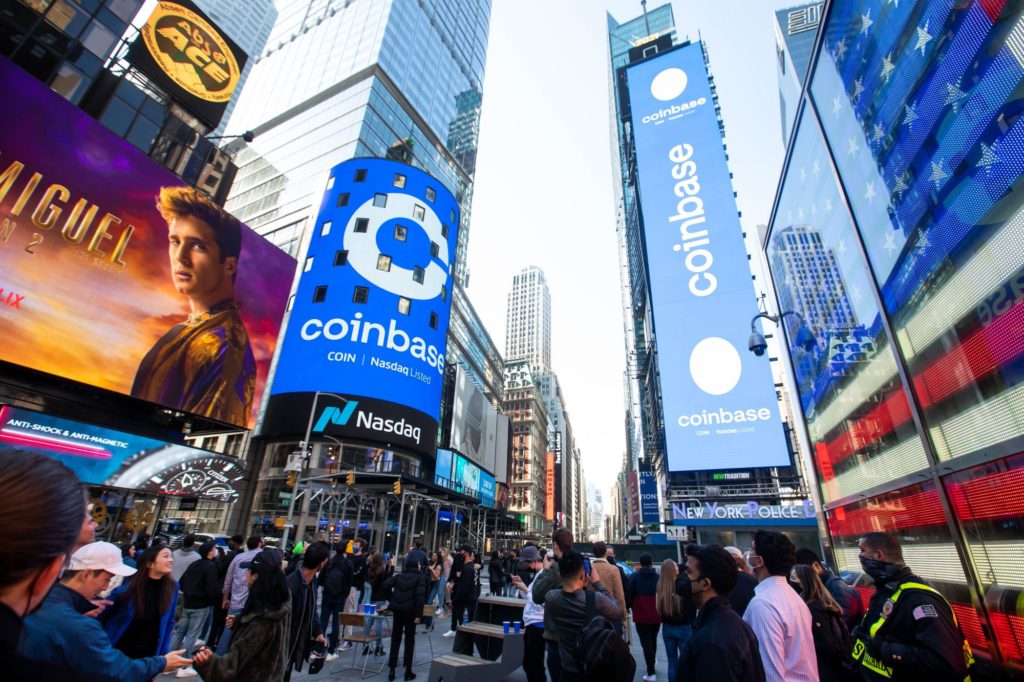
Coinbase SEC Probe Into Listed Tokens Has Crypto Traders Rattled

(Bloomberg) — The US Securities and Exchange Commission’s scrutiny of digital currencies that are listed on Coinbase Global Inc. is igniting concerns that a major crackdown for the rest of the industry is imminent.

Digital coins are headed for a losing week, dragged down by the revelation that the SEC has been investigating whether Coinbase shirked regulations by offering trading in certain tokens. Anxieties were already running high after the regulator took the unusual step of identifying several crypto assets that it considered to be securities as part of an insider trading case. 

The SEC lawsuit against a former Coinbase manager and two others, coupled with the probe into the platform’s listings, signal that after more than a year of warnings by Chair Gary Gensler the regulator’s stance appears to be hardening. Meanwhile, the agency’s assertion last week that nine tokens fall under its jurisdiction is drawing pushback inside the Commodity Futures Trading Commission, the US derivatives watchdog that also oversees crypto.

“This is a shot across the bow of the industry, not just across one boat within that armada,” said James Cox, a professor specializing in securities law at Duke University School of Law.

The SEC on July 21 accused one of Coinbase’s former employees of violating its insider-trading rules by leaking information to help his brother and a friend buy tokens just before they were listed on the platform. The regulator said it was its first for crypto insider trading.

Federal prosecutors in Manhattan also charged the three men with wire fraud conspiracy and wire fraud. Neither the SEC nor Justice Department accused Coinbase of wrongdoing. 

Bitcoin advanced 2.3% and Coinbase rose 7.2% on Wednesday at 10:28 a.m. in New York, rebounding from declines on Tuesday. Bitcoin tumbled more than 5% and Coinbase plunged 21% Tuesday after Bloomberg News reported that the firm was facing a US probe into whether it improperly let Americans trade digital assets that should have been registered as securities.

A more aggressive approach by the SEC in asserting that specific tokens are securities would be problematic for the industry because such a label triggers strict investor-protection requirements. Crypto enthusiasts say many of those strictures are incompatible with digital assets. A previous move by the regulator’s enforcement division to crack down on initial coin offerings resulted in a sharp decrease in that corner of the crypto market.  

Regulators at the CFTC, which was also looking into the insider trading allegations, were put off by the SEC’s move last Thursday to declare that nine tokens — including seven that trade on Coinbase — were securities and under its purview, according to two people familiar with the matter, who asked not to be named to discuss internal discussions.

CFTC officials have said that Bitcoin, the largest cryptocurrency, and Ether, the second biggest, are commodities and under its jurisdiction. However, the legal status of thousands of other tokens — including those named last week in the SEC’s lawsuit — has remained more murky.

To decide if a digital asset is a security, the SEC applies a legal test, which comes from a 1946 US Supreme Court decision. Under that framework, the agency considers a token generally to be under SEC purview when it involves investors kicking in money to fund a company with the intention of profiting from the efforts of the organization’s leadership. 

CFTC staff have argued internally that some of the tokens the SEC identified in its complaint as securities could just as easily be considered commodities. Some have expressed concerns that the SEC case could set a precedent that the derivatives regulator needs permission to pursue digital-asset cases, one of the people said. 

“If you’re trying to say that virtually every token, except Bitcoin, is a security, that raises an existential threat to Coinbase and the whole crypto economy,” said Aitan Goelman, a partner at Zuckerman Spaeder and previously a director of enforcement at the CFTC.

Representatives for the CFTC and SEC declined to comment.

In a sign of the tension at the CFTC, Republican Commissioner Caroline Pham broke with typical Washington protocol by issuing a statement on the SEC’s insider trading case critiquing the agency’s move as “regulation by enforcement” with “broad implications beyond this single case.” 

Kristin Johnson, a Democratic commissioner at the derivatives watchdog, said people should be focused on protecting investors and not over any brewing turf battles. “Policing markets is a shared priority,” she said in an interview.

For its part, the SEC has long said many coins are subject to its investor-protection strictures and that trading platforms should register with the agency, though none of them have. 

As the CFTC and SEC jostle over which tokens are securities, several bills have been proposed in Congress to sort out the confusion. 

One highly-watched piece of legislation from Cynthia Lummis, a Republican senator from Wyoming, and Kirsten Gillibrand, a Democratic senator from New York, would significantly expand the CFTC’s role. On Tuesday, Pat Toomey, the highest-ranking GOP member of the Senate Banking Committee, sent a letter to Gensler criticizing the SEC’s approach on crypto. 

Beyond Gensler, and his predecessor Jay Clayton, suggesting that the vast majority of tokens are securities, the regulator has mostly avoided weighing in on specific coins. The lack of specificity has prompted calls in the industry for more clarity — including last week from Coinbase itself. 

Meanwhile, an SEC enforcement action against the platform or a potential court ruling over whether certain tokens are securities, could call into question many digital exchanges’ business operations.

“The uncertainties and competing visions about crypto regulation are coming to a head,” said Andrew Verstein, a professor of law at the University of California, Los Angeles.

With its latest moves, the SEC is showing it’s willing to bet–potentially in court–on its vision of how the space should be regulated, he said.

More stories like this are available on bloomberg.com

©2022 Bloomberg L.P.
‘Tinder Swindler’ Victim Loses Bid to Blame Bank for Transfers

(Bloomberg) — ING Groep NV can’t be found negligent for failing to stop money transferred to the perpetrator of the “Tinder Swindler” scam, a Dutch court ruled.

A Swedish woman said the bank had breached its duty of care by not blocking the transfers she made to a person who then sent the funds onto Simon Leviev — an Israeli conman who is said to have tricked a string of women he met on dating sites into parting with millions of dollars to help fund a lavish lifestyle that attracted more victims. 

The elaborate scam, which is estimated to have stolen $10 million from victims, was detailed in a hit Netflix documentary earlier this year. Leviev was ultimately arrested in Greece for traveling on a fake passport and extradited to Israel where he was convicted of fraud. He served just five months of a 15 month sentence and is living a free man.

He is wanted for fraud and forgery offenses by Norway, Sweden, the UK and Spain, according to reports.

Read: Women Conned by Netflix’s ‘Tinder Swindler’ Are Fighting Back

The Amsterdam court ruled Wednesday that “the bank carried out sufficient investigation and that it did not know that third parties, like the Swedish woman, were potentially at risk.” 

The Swedish claimant has been ordered to pay the costs of the legal proceedings of 2,356 euros ($2,384).

More stories like this are available on bloomberg.com

©2022 Bloomberg L.P.

Twitter Pares Office Space to Save Cash, Deepen Remote-Work Tilt

(Bloomberg) — Twitter Inc. is cutting back on its physical office space in several global markets, including San Francisco, New York and Sydney, as the company cuts costs and leans harder into remote work. 

Twitter will significantly decrease its corporate presence in San Francisco by vacating an office on Tenth Street directly behind the Market Street headquarters, according to an email sent to employees on Wednesday. Twitter currently occupies multiple floors in the building. It has also scrapped plans to open an office across the Bay in Oakland. 

The company may close its office in Sydney and is considering plans to shutter several other offices once leases expire, including those in Seoul; Wellington, New Zealand; Osaka, Japan; Madrid; Hamburg, Germany; and Utrecht, The Netherlands, according to the memo. It may find alternative office space in some of those locations.

Corporate space in other key markets will be reduced, including Tokyo, Mumbai, New Delhi, Dublin and New York. Twitter isn’t planning job cuts, according to the email. 

“I want to make it clear that this does not change our commitment to the work in each of these markets,” wrote Dalana Brand, Twitter’s chief people officer. “If certain offices were to close, there would be no impact” to Twitter workers’ jobs; they would simply transition to full-time work-from-home employees, she said.

A spokesperson said the decisions don’t affect current headcount or employee roles, “and we’ll continue to support and regularly meet with our customers to help them launch something new and connect with what’s happening on Twitter.” The company had more than 7,500 employees at the end of 2021.

The changes are the latest in a series of cost cuts from the social media company, which has pointed to global economic factors as a reason for the reductions. Twitter implemented a hiring freeze in early May, and Chief Executive Officer Parag Agrawal also announced pullbacks in marketing and corporate travel, and asked employees to be more thoughtful with their spending. A companywide outing scheduled for early 2023 at Disneyland was also canceled.

Twitter is tightening the reins after the board agreed to sell the company to Tesla Inc. CEO Elon Musk for $44 billion in late April. But Musk has since tried to back out of the deal, and the two sides are now in the middle of a contentious legal battle. Twitter is suing Musk in Delaware Chancery Court to force him to complete the deal with a trial planned for sometime in October. Musk had previously told advisors and bankers that he was planning cost cuts at the company once he took over. The billionaire also has been adamant about workers coming in to the office. In June he sent an email to employees at Tesla requiring them to be in the office 40 hours a week. 

Turning the lights out in global offices solidifies a major cultural change for Twitter, which announced in mid-2020 that its employees could work remotely forever as the world hunkered down during the pandemic. The prospect of permanent remote work has raised questions about the need for corporate office space, especially in expensive cities like San Francisco and New York, prompting several big tech companies to reconsidering their real estate needs.

That shift has hit San Francisco particularly hard, and the city is actively working to restore its appeal with businesses and tourists. Block Inc., another company that moved to permanent remote work during the pandemic under CEO Jack Dorsey, has  cut down on its San Francisco office space. Salesforce Inc. has reduced its office footprint multiple times since the pandemic, and earlier this spring decided to lease 40% of its 43-story namesake tower, according to the San Francisco Chronicle.

Meanwhile on the East Coast, Amazon.com Inc. cut back on the amount of space it had intended to lease from JPMorgan Chase & Co. at Hudson Yards, reducing the square footage it aims to take over, people familiar with the company’s plans have said. Facebook parent Meta Platforms Inc. decided against taking an additional 300,000 square feet (27,870 square meters) of space in a building in Manhattan near where it’s already located and is also pausing plans to further build out new offices in Hudson Yards.

(Updates with other tech companies reducing office space.)

More stories like this are available on bloomberg.com

©2022 Bloomberg L.P.
‘The Pitch’ Podcast Is Latest to Leave Spotify

(Bloomberg) — Another podcast, “The Pitch,” is leaving Spotify Technology SA’s Gimlet Media.Host Josh Muccio bought the “Shark Tank”-like business investing program from Spotify for an undisclosed amount of money and will operate it independently, he said on an episode released Wednesday.“I’m stoked,” Muccio told listeners. “I get to be an entrepreneur again, at my own fledgling startup.”

Muccio first created the show, where entrepreneurs pitch investors on their business ideas, in 2015. It was acquired by Gimlet in 2017, which was then itself bought by Spotify in 2019. Muccio took a break from recording new episodes in December 2020, both because of the difficulty of bringing entrepreneurs and investors together during the pandemic and because he wanted some time off. “The Pitch” will still be available through Spotify, as well as all other podcast platforms.

Though Muccio’s situation is specific, it adds to the continued losses of original programming at Gimlet. Shows ceasing production there include “The Nod,” whose hosts publicly discussed their lack of ownership of the program and now host a show for Sirius XM Holdings Inc. called “For Colored Nerds.” Spotify ended production last month on “Reply All,” a popular tech show that became entrenched in controversy surrounding unionization and a toxic work environment. Other shows that ended include the company’s attempt at a morning radio format, “The Get Up.” 

Spotify did not respond to requests for comment on why it decided to sell “The Pitch” or why it ended production of “The Get Up.”

At the same time, high-profile executives have also left the network. Matt Lieber, a Gimlet co-founder who most recently oversaw Spotify’s studios, departed the company this summer and is serving as an advisor. Lydia Polgreen, Gimlet’s managing director, left the network for the New York Times, and Courtney Holt, who oversaw Spotify’s original podcast strategy, left the company in April and now serves in a yearlong advisory role.

The company shook up its podcast leadership this past spring, naming the Ringer Podcast Network’s Bill Simmons to oversee global sports content, and Julie McNamara to handle the company’s three studios, including Gimlet. Parcast podcast network founder Max Cutler is now in charge of licensed content and new initiatives.

More stories like this are available on bloomberg.com

©2022 Bloomberg L.P.
Tech Earnings Buoy Stocks as Traders Brace for Fed: Markets Wrap

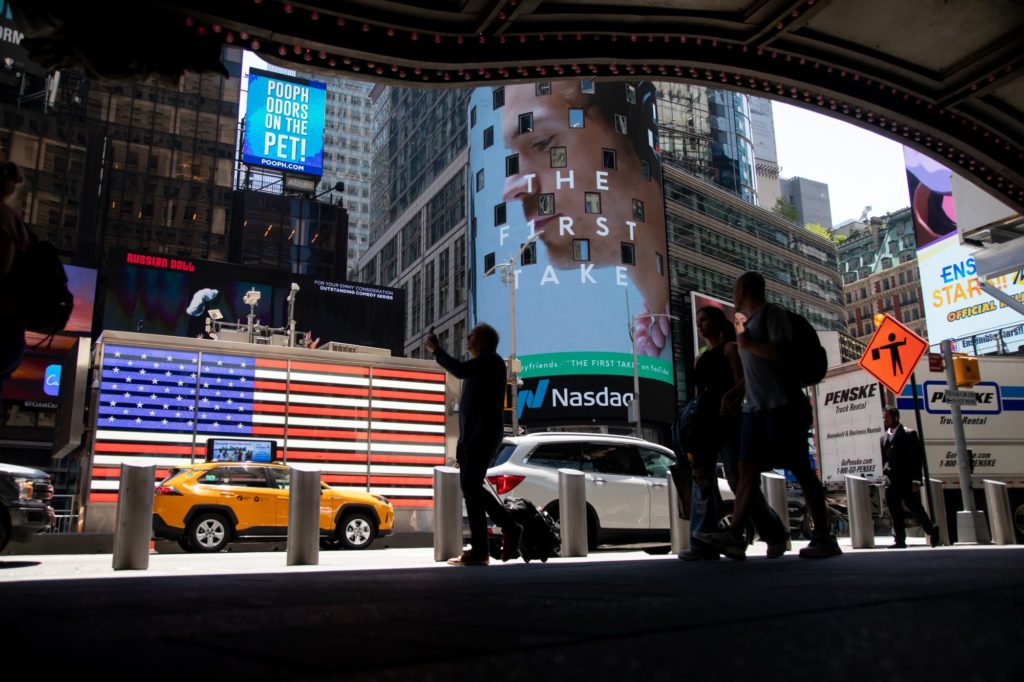
(Bloomberg) — Stocks rallied as earnings from a trio of tech giants spurred hope the industry can handle an economic slowdown, with traders keenly focused on the upcoming Federal Reserve decision for reassurance on its resolve to thwart inflation without provoking a deep recession.

The Nasdaq 100 outperformed as Alphabet Inc., Microsoft Corp. and Texas Instruments Inc. posted double-digit revenue growth and expressed optimism about the coming months. Their results set the tone for a week that will include results from heavy hitters like Meta Platforms Inc., Qualcomm Inc., Apple Inc., Amazon.com Inc. and Intel Corp. Treasury 10-year yields dropped.

Fed Chair Jerome Powell is set to deliver the largest back-to-back rate increase since the early 1980s, with investors seeking signs he’s open to shifting to smaller moves from September amid falling commodity prices. The decision will be announced at 2 p.m. in Washington. No quarterly forecasts will be released and Powell will hold a press conference 30 minutes later.

“Powell will try to strike a Goldilocks tone at the press conference, sounding sufficiently hawkish about inflation without further stoking recession fears,” said Anna Wong is the chief U.S. economist for Bloomberg Economics. He won’t want to sound soft on inflation to avoid giving the impression of a “Fed put” as that could cause financial conditions to ease further — contradicting the Fed’s goal, she added.

Read: Fed Readies Largest Rate Hikes Since Volcker: Decision-Day Guide

One of the biggest surprises the Fed could deliver to the market would be a clearer view of how much further borrowing costs would need to rise to restore price stability. That would mean any steer on the outcome of a major conflict between those who see policy makers starting to bring rates back down early in 2023, and those expecting officials to hold off for some time to come.

The Fed finds itself in an “uncomfortable spot” right now, with traders pricing in a quick pivot from aggressive tightening next year to bolster the economy, according to For Craig Erlam, senior market analyst at Oanda.

“The Fed must walk a fine line as any validation of that will undermine its efforts to tighten and get a grip on inflation,” Erlam said. “One thing is clear, it must stress that its primary focus continues to be fighting inflation and the decision coming the day before the GDP data tomorrow makes that a little easier.”

The US economy may have eked out modest growth in the second quarter to skirt a so-called technical recession, yet at a pace tepid enough to feed concerns of an eventual downturn. Economists expect gross domestic product grew an annualized 0.4% in the April-June period, which on the surface would be an improvement after the 1.6% drop in the first quarter. However, the breakdown of second-quarter GDP may illustrate a more concerning softening of demand.

Orders placed with US factories for durable goods rose unexpectedly in June, fueled by a surge in defense aircraft as well as sustained demand for equipment.

Read: Taming Inflation Without Hurting GDP Hard But Possible, IMF Says

Other corporate highlights:

  • T-Mobile US Inc. raised its subscriber growth forecast for the second straight quarter, blowing past inflation-related setbacks that ensnared rivals AT&T Inc. and Verizon Communications Inc.
  • Boeing Co. generated $81 million in cash from its operations during the second quarter, sharply reversing its heavy cash use earlier this year as the planemaker stepped up deliveries of its highly profitable 737 Max jetliners.
  • Kraft Heinz Co. reported sales that topped analysts’ projections, and raised its full-year outlook, as price increases damped demand but drove strong performance.
  • Bristol Myers Squibb Co. trimmed its full-year revenue guidance on the strong dollar even as it posted better-than-expected second-quarter results because sales of certain drugs countered lower spending on the blood cancer drug Revlimid.
  • Sherwin-Williams Co. sank as stagnant demand and accelerating inflation hurt results, prompting a slash in full-year adjusted earnings guidance.

Here are some key events to watch this week:

  • Apple, Amazon earnings, Thursday
  • US GDP, Thursday
  • Euro-area CPI, Friday
  • US PCE deflator, personal income, University of Michigan consumer sentiment, Friday

Musk, Tesla and Twitter are this week’s theme of the MLIV Pulse survey. Also share your views on the S&P 500’s biggest stocks. Click here to get involved anonymously.

Some of the main moves in markets:

Stocks

  • The S&P 500 rose 1.3% as of 11:21 a.m. New York time
  • The Nasdaq 100 rose 2.6%
  • The Dow Jones Industrial Average rose 0.4%
  • The Stoxx Europe 600 rose 0.5%
  • The MSCI World index rose 0.9%

Currencies

  • The Bloomberg Dollar Spot Index was little changed
  • The euro rose 0.2% to $1.0135
  • The British pound rose 0.2% to $1.2049
  • The Japanese yen fell 0.2% to 137.15 per dollar

Bonds

  • The yield on 10-year Treasuries declined five basis points to 2.76%
  • Germany’s 10-year yield was little changed at 0.93%
  • Britain’s 10-year yield advanced four basis points to 1.95%

Commodities

  • West Texas Intermediate crude rose 2.5% to $97.34 a barrel
  • Gold futures were little changed

More stories like this are available on bloomberg.com

©2022 Bloomberg L.P.
Lloyds CEO Says Bank Will Look Into More Fintech Acquisitions

(Bloomberg) —

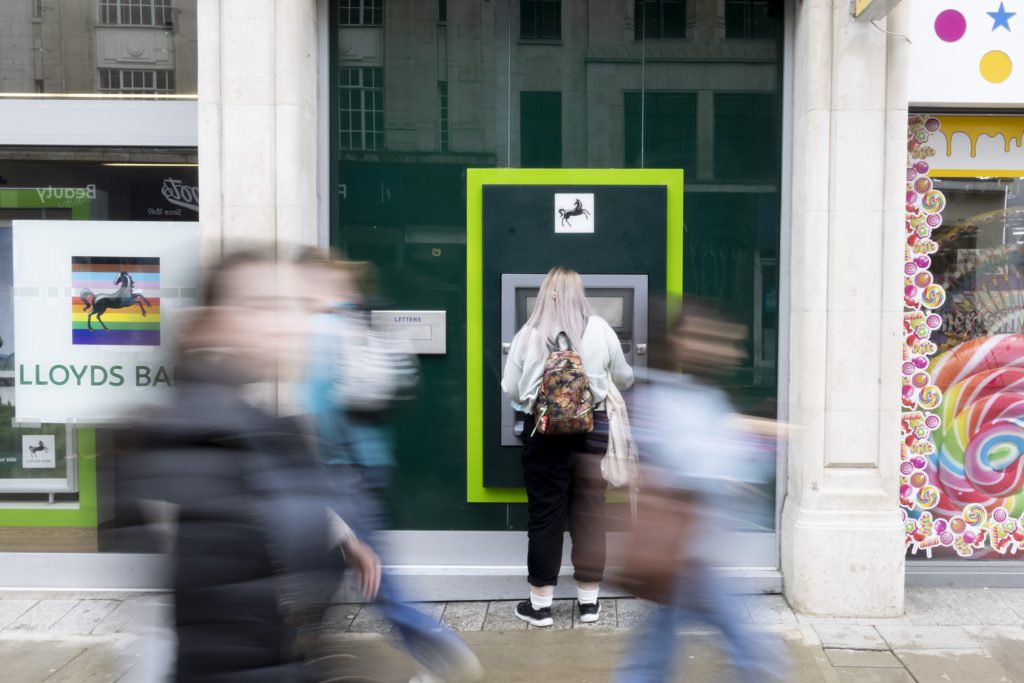
Lloyds Banking Group Plc could buy more financial technology companies to bolster its digital offering, Chief Executive Officer Charlie Nunn told Bloomberg TV. 

The bank has already agreed to buy wealth platform Embark Group and protection firm Cavendish Online in the past year or so, and in terms of more acquisitions would “definitely continue to look at those as we go forward,” according to Nunn. 

Any bolt-on deals would need to improve Lloyds’ core business, which is building new digital offerings “in a way no fintech can,” Nunn said in an interview after Lloyds reported better-than-expected earnings. Lloyds boasts more than 19 million online users and says it is the UK’s largest digital bank.

The bank has partnered with Swedish fintech Minna Technologies to help customers manage their spending on subscriptions via its app, amid the highest inflation in Britain for four decades. Between June 2021 and March 2022, users halted 1.2 million regular payments, with streaming services making up the bulk of this. About 2.2 million subscriptions have now been canceled.

“There is a sub-segment in the UK that are going through a really challenging time,” Nunn said. “20% are having to really adapt their spending to make the space for the increase in costs and energy, foods and fuel, but circa 1% can’t make ends meet and that’s where we’re focused.”

Lloyds has also said it’s monitoring developments in buy now, pay later credit, but so far has avoided the fast-growing market popularized by the likes of Klarna Bank AB. Rival NatWest Group Plc became the first UK high street bank to offer BNPL services this summer. 

More stories like this are available on bloomberg.com

©2022 Bloomberg L.P.
Senate’s Antitrust Crackdown Sputters as Schumer Signals Doubts

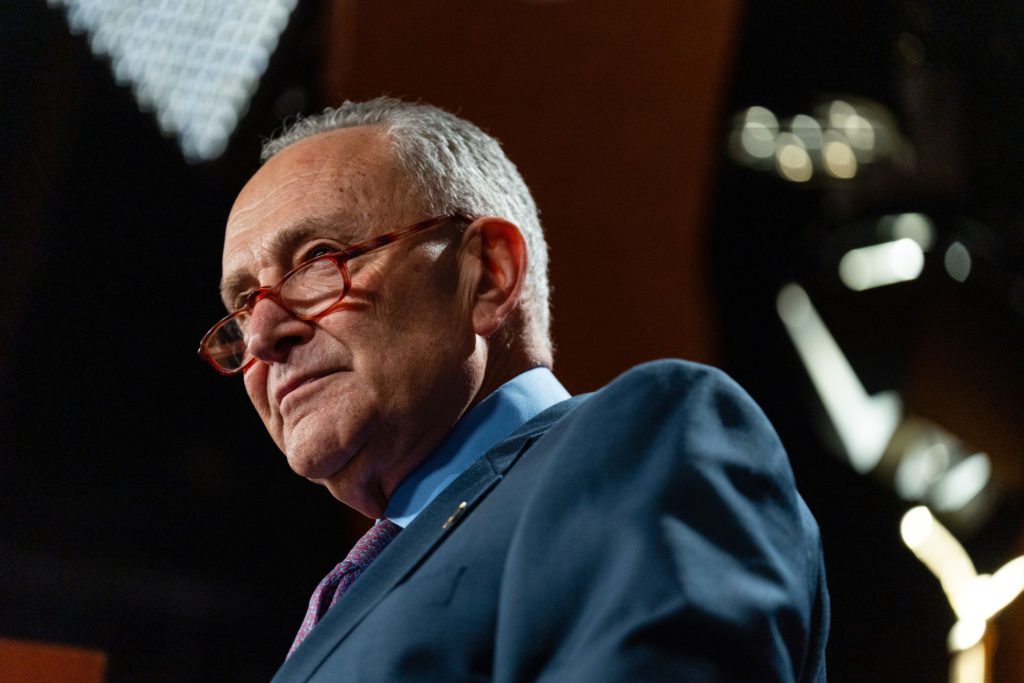
(Bloomberg) — Legislation aimed at reining in the power of giant technology companies appears to have hit a wall after Senate Majority Leader Chuck Schumer told a group of donors Tuesday evening that he doesn’t believe there are enough votes to pass the measure. 

Schumer called the bill a “high priority,” but said the Senate doesn’t have the 60 votes needed to approve it, according to people who attended a fundraiser for Schumer at Bistro Bis, a restaurant near Capitol Hill.

Schumer made the comments in response to a question about the measure, the American Choice and Innovation Online Act, which would prevent internet platforms from giving advantages to their own products and services. 

Schumer had previously affirmed that he was working with the legislation’s lead Democratic sponsor in the Senate, Amy Klobuchar of Minnesota, but he hadn’t said publicly that he thinks the bill’s prospects are dim. He had earlier pledged to bring the legislation to a vote early this summer. Four senators have tested positive for Covid-19 in recent days, making it more difficult to pass legislation on contentious issues.

The bill would prevent Apple. Inc., Alphabet Inc.’s Google, Meta Platforms, Inc. and Amazon from using their gatekeeper power to discriminate against rivals.

The legislation now faces an extremely narrow window when the Senate returns in September with other priorities pushing ahead of the closely watched measure. 

Schumer at a press conference earlier Tuesday said the Senate’s priorities ahead of the August recess are semiconductor legislation, budget reconciliation and a bill to address healthcare for veterans. He didn’t include the tech antitrust bill.

Schumer told the donors that people have urged him to put the bill on the floor, a strategy that would put pressure on undecided lawmakers to vote in favor. He said that he doesn’t believe that would be effective.

The bill’s co-sponsors have maintained that they have the votes to pass the bill with votes from both Democrats and Republicans. And support for the legislation has been growing. On Tuesday, the National Federation of Independent Business, which represents small businesses across the country, announced that it’s backing the bill.

Klobuchar, referring to Schumer, said in a statement Tuesday night that “we were promised a vote on this bill and we take him at his word.”

“We have growing momentum and the support to pass the bill despite the fact that the companies have spent an atrocious amount of money on lobbyists and TV ads spreading false information,” she added.

A spokesman for Schumer referred to his recent comment that he was working with Klobuchar and reaffirmed his support.

Schumer made the remarks while a group of roughly two dozen protesters gathered outside of Bistro Bis, an effort to pressure Schumer into holding the vote on the tech legislation. The protesters held signs that read “Stop Chuckin’ up to Big Tech!” and chanted, “Hold the vote!”

“This is a bipartisan priority,” said Jon Schweppe, director of policy and government affairs at the American Principles Project, a right-leaning group that advocates for antitrust reform. “The fact is that by a lot of peoples’ estimations, the votes are there so it’s down to Chuck Schumer.”

The fundraiser for Schumer’s political action committee, held at a pivotal moment before the congressional August recess, had a suggested contribution of $2,500 or $5,000. Attendees included lobbyists for Microsoft Corp., American Express. Co. and Procter & Gamble Co.

Representative Ken Buck, a Colorado Republican, made an appearance at the happy hour for the protesters, which took place before the group moved to the front of Bistro Bis.

Schumer left the fundraiser after the protest dissipated.

More stories like this are available on bloomberg.com

©2022 Bloomberg L.P.
Shopify Rallies With Tech Stocks Despite Weaker Earnings Outlook

(Bloomberg) — Shopify Inc. rallied, reversing losses in premarket trading, as Chief Executive Officer Tobi Lutke urged investors to overlook the slowdown in e-commerce and focus on the company’s longer-term growth strategy. 

Shopify rose 8.4% to $33.20 at 10:14 a.m. in New York amid a broad rally in technology shares. While the company’s second quarter results missed analyst forecasts, the stock jumped after executives gave more detail on plans to cut expenses and improve services for small-business customers. 

The company’s riskiest wager is “the vertical integration of logistics,” Lutke said during a conference call with analysts. 

“It’s worth saying it’s a characteristic of innovative companies that they think in bets, in general,” he said. “I know by there’s generally not a lot of appetite for this kind of risk-taking, but I think our company especially is defined by not following some kind of orthodox playbook.”

In a statement, the company warned of higher operating losses in the second half of the year and said inflation was beginning to hurt the e-commerce sector. The acquisition of logistics firm Deliverr is one reason for the expected higher losses.

“We now expect 2022 will end up being different, more of a transition year, in which e-commerce has largely reset to the pre-Covid trend line and is now pressured by persistent high inflation,” the Ottawa-based company said.  

The weaker outlook — and the company’s decision this week to cut 10% of its workforce — came with an admission from Lutke that executives had misjudged the durability of the pandemic-related boom in online sales and that company’s rapid expansion was unsustainable. 

“Ultimately, placing this bet was my call to make and I got this wrong. Now, we have to adjust,” Lutke said in a memo to employees. “As a consequence, we have to say goodbye to some of you today and I’m deeply sorry for that.”

Ottawa-based Shopify posted a loss of 3 cents per share on an adjusted basis in the second quarter, falling short of estimates for a profit of 3 cents, according to data compiled by Bloomberg. Revenue rose 16% to $1.3 billion from a year earlier, broadly in line with expectations of $1.33 billion.

Gross merchandise volume — the value of merchant sales flowing through Shopify’s platform — grew 11% to $46.9 billion during the quarter, missing estimates of $48.6 billion.

The worse-than-expected results came one day after Shopify said it would cut about 1,000 jobs, mostly in recruiting, support and sales.

The shift out of pandemic lockdowns, elevated inflation and the threat of a recession have shifted consumer habits. Retail stocks fell earlier this week after Walmart Inc. made a surprise cut to its profit outlook as surging prices cause consumers to spurn bigger-ticket purchases.

(Updates first four graphs with context from conference call, share moves.)

More stories like this are available on bloomberg.com

©2022 Bloomberg L.P.
Jefferies Hires Moelis Banker Chu to Expand Dallas Presence

(Bloomberg) — Jefferies Financial Group Inc. has hired Moelis & Co. investment banker Lawrence Chu to help build out the bank’s presence in Dallas, according to people familiar with the matter.

Chu will be a vice chairman at Jefferies and its global head of telecommunications, the people said, asking not to be identified because the matter isn’t public. Chu, who is relocating from New York, will start in October, the people added. 

Chu, who had been at Moelis for about seven years, was most recently a managing director at the firm. He’s a longtime adviser to AT&T Inc., which is based in Dallas.

Representatives for Moelis and Jefferies declined to comment.   

Jefferies isn’t the only financial firm looking to grow in Dallas, one of the largest cities in Texas. Goldman Sachs Group Inc. has been planning an office tower for 5,000 workers while Charles Schwab Corp. left San Francisco for the affluent Dallas suburb of Westlake. Fidelity Investments and Vanguard Group Inc. also have big offices there. 

Before joining Moelis, Chu worked at boutique banks including Greenhill & Co. and Evercore Inc. He also had a stint as special adviser to the US Federal Communications Commission, according to Moelis’ website. 

More stories like this are available on bloomberg.com

©2022 Bloomberg L.P.

Tether Says There Is No Chinese Corporate IOUs Among Its Reserves

(Bloomberg) — Tether said the reserves backing its $66 billion stablecoin do not contain any Chinese commercial paper, likely marking the first time that the issuer of the world’s most used cryptocurrency explicitly stated it doesn’t hold the controversial assets. 

Tether Holdings Ltd., which issues and operates the US dollar-pegged token USDT, had most recently refuted speculation that its token was 85% backed by Chinese or Asian commercial paper in June. It has been steadily decreasing its exposure to commercial paper in favor of holding US Treasury bills, with a goal of reducing its paper holdings to zero by early November.

USDT aims to maintain a one-to-one peg with the dollar by relying on a reserve of cash or cash-based equivalents, though the quality of those assets have previously been called into question. A Bloomberg investigation last year found evidence that Tether’s reserves included short-term loans to large Chinese companies. A downturn in the Chinese property market raised concern about the liquidity of assets associated with the sector.

Alex Welch, a spokesperson for Tether, said in an emailed statement that the firm discloses its reserves of CP “to the rating level,” pointing to quarterly attestations filed by its accounting firm. “When we had commercial paper, we always remained conservative and these were rated A2 or better from agencies such as Fitch and Standard and Poor’s,” Welch added.

As of Wednesday, Tether said in a blog post that it now holds around $3.7 billion in commercial paper, down from $8.4 billion at the start of July and around $20 billion in March. 

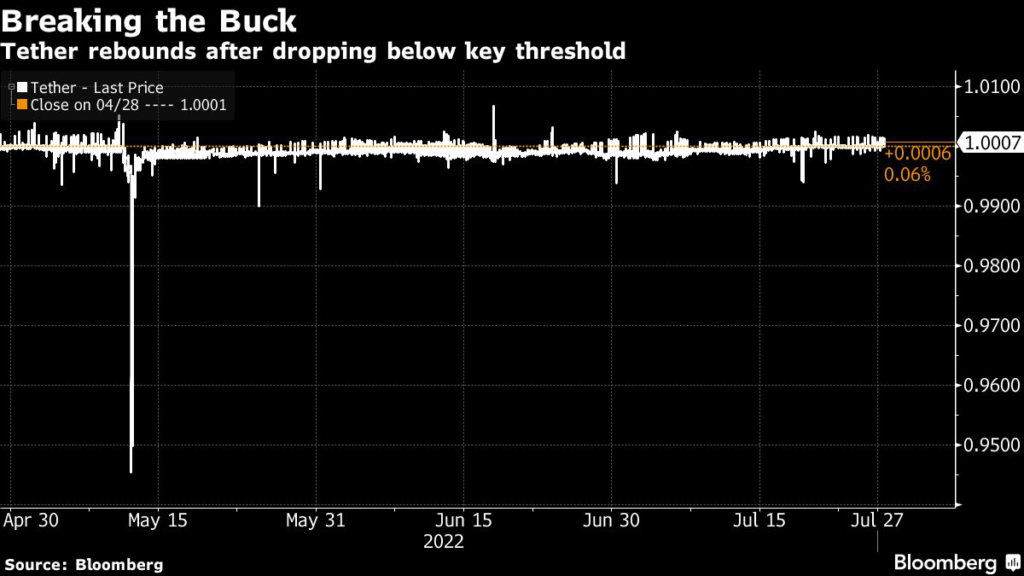
The stablecoin has sought to maintain its dollar peg as the crypto market soured, briefly falling as low as 94 cents during the height of the crash in mid-May. Data from blockchain analysis firm Kaiko showed USDT had traded at a discount to $1 for more than 60 days since that time, but regained that level last week. 

Tether began to provide quarterly reports on its reserves to New York last year as part of a settlement over allegations that it hid the loss of funds and lied about reserves in prior years. A March 2021 disclosure that Tether held commercial paper triggered a guessing game in both the crypto and fixed income world as investors tried to figure out what securities were held beyond the amounts listed. 

Several countries have announced plans to regulate the stablecoin sector in the near term, including the US, the UK and Japan. Rules could include a requirement that operators are more transparent about the assets backing their tokens, as well as bringing them under existing non-bank licensing regimes.   

More stories like this are available on bloomberg.com

©2022 Bloomberg L.P.

Close Bitnami banner
Bitnami