
Bloomberg

Tether Says There Is No Chinese Commercial Paper Among Its Reserves

(Bloomberg) — Tether said the reserves backing its $66 billion stablecoin do not contain any Chinese commercial paper, likely marking the first time that the issuer of the world’s most used cryptocurrency explicitly stated it doesn’t hold the controversial assets. 

Tether Holdings Ltd., which issues and operates the US dollar-pegged token USDT, had most recently refuted speculation that its token was 85% backed by Chinese or Asian commercial paper in June. It has been steadily decreasing its exposure to commercial paper in favor of holding US Treasury bills, with a goal of reducing its paper holdings to zero by early November.

USDT aims to maintain a one-to-one peg with the dollar by relying on a reserve of cash or cash-based equivalents, though the quality of those assets have previously been called into question. A Bloomberg investigation last year found evidence that Tether’s reserves included short-term loans to large Chinese companies. A downturn in the Chinese property market raised concern about the liquidity of assets associated with the sector.

Alex Welch, a spokesperson for Tether, said in an emailed statement that the firm discloses its reserves of CP “to the rating level,” pointing to quarterly attestations filed by its accounting firm. “When we had commercial paper, we always remained conservative and these were rated A2 or better from agencies such as Fitch and Standard and Poor’s,” Welch added.

As of Wednesday, Tether said in a blog post that it now holds around $3.7 billion in commercial paper, down from $8.4 billion at the start of July and around $20 billion in March. 

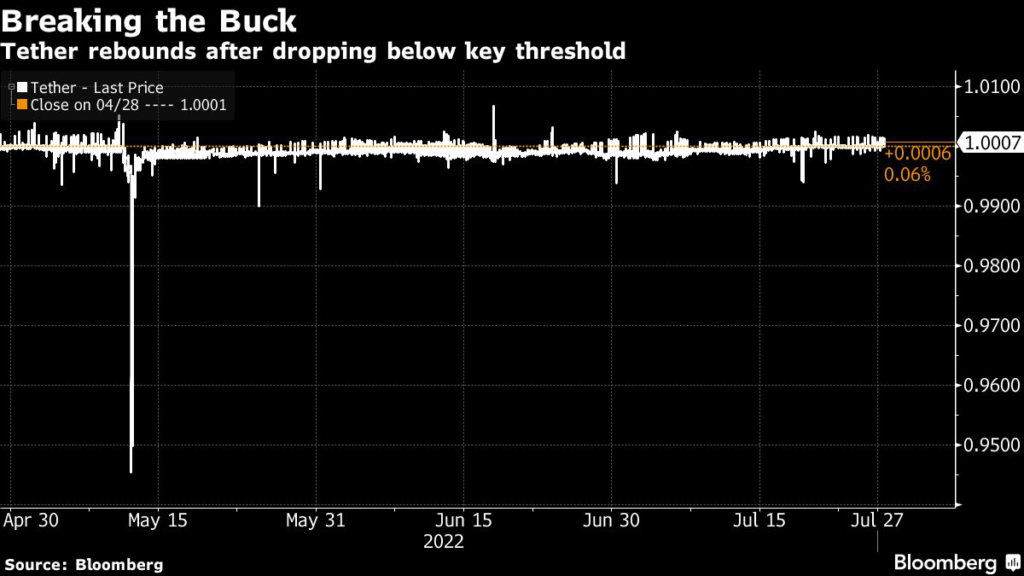
The stablecoin has sought to maintain its dollar peg as the crypto market soured, briefly falling as low as 94 cents during the height of the crash in mid-May. Data from blockchain analysis firm Kaiko showed USDT had traded at a discount to $1 for more than 60 days since that time, but regained that level last week. 

Tether began to provide quarterly reports on its reserves to New York last year as part of a settlement over allegations that it hid the loss of funds and lied about reserves in prior years. A March 2021 disclosure that Tether held commercial paper triggered a guessing game in both the crypto and fixed income world as investors tried to figure out what securities were held beyond the amounts listed. 

Several countries have announced plans to regulate the stablecoin sector in the near term, including the US, the UK and Japan. Rules could include a requirement that operators are more transparent about the assets backing their tokens, as well as bringing them under existing non-bank licensing regimes.   

More stories like this are available on bloomberg.com

©2022 Bloomberg L.P.

African Bitcoin Adopter’s Cryptocurrency Sale Falls Flat

(Bloomberg) — Sales of the national cryptocurrency of Africa’s first Bitcoin adopter got a lukewarm response this week, as the controversial project got off to a slow start.

By Wednesday afternoon buyers had bought just $1.2 million of $21 million worth of coins for sale by the Central African Republic since Monday, according to the project’s official website. The currency was sold against a minimum deposit of $500 in Bitcoin or Ether.

CAR became the first African country to adopt Bitcoin as legal tender earlier this year. The announcement by the landlocked and poorly-connected country was met with some excitement among crypto enthusiasts and warnings from the International Monetary Fund and the regional central bank.

The wider slump in the crypto market this year doesn’t seem to have deterred the government, which argues that Sango Coin will attract foreign investment and help open up the country’s mining sector.

Foreign direct investment was just over $30 million in 2021, according to World Bank data. 

Many details about the Sango project, such as which technology is being used, whether the price will be fixed or free floating and who’s backing the project, remain scarce. 

CAR plans 12 more Sango Coin sales, according to the project’s website, with the price increasing each time. The country is also offering citizenship for $60,000, with the equivalent in Sango Coin held as a deposit for five years. 

More stories like this are available on bloomberg.com

©2022 Bloomberg L.P.
Spotify Jumps After Ad Revenue Growth Defies Industry Slowdown

(Bloomberg) — Spotify Technology SA avoided an advertising slowdown in the second quarter, escaping the fate of other tech stocks, like Snap Inc., which took a hit from lower ad spending.

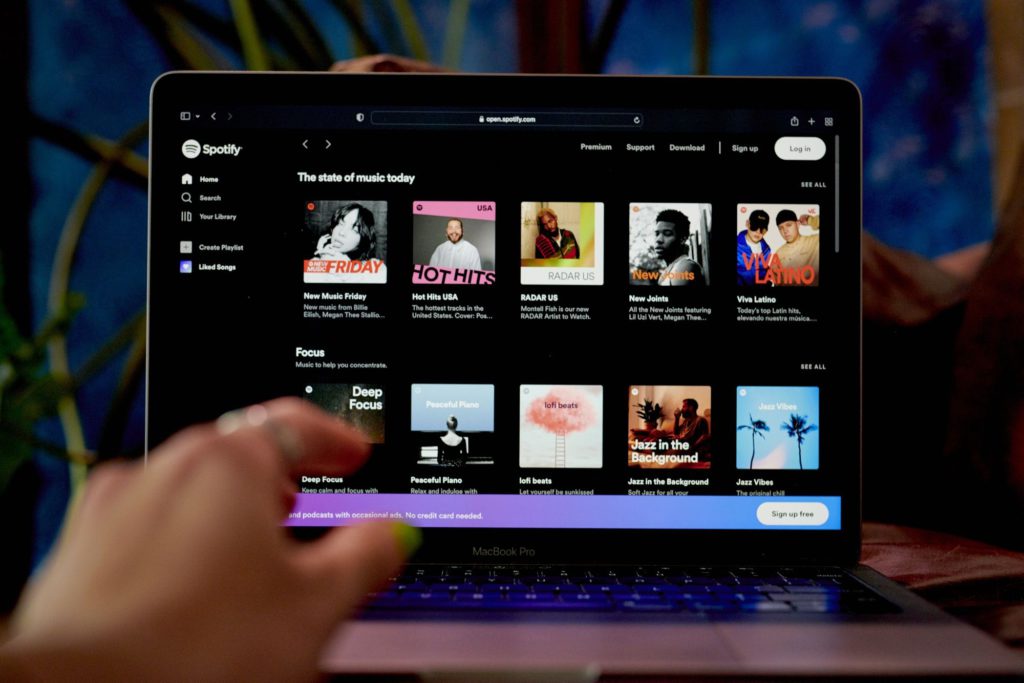
The music-streaming service said Wednesday that advertising sales generated 360 million euros ($365 million) last quarter, an increase of 31% from a year ago. Advertising accounted for 13% of the company’s total revenue in the quarter.

Spotify shares rose as much as 15%, their biggest intraday gain since December 2020. The stock had fallen 56% so far this year through Tuesday’s close.

Other encouraging news from the earnings report included Spotify’s paid subscribers rising to 188 million, exceeding the 187 million projected by analysts and factoring in the expected loss of 600,000 Russian subscribers. Monthly active users and revenue also topped analyst estimates.

At the same time, gross margin, the primary focus of investor angst last quarter, continued to drop. The company’s decision to stop manufacturing Car Thing, a Bluetooth-enabled device for controlling Spotify in a vehicle, cost the company 31 million euros.

During a call with analysts, Chief Financial Officer Paul Vogel said the decision to cease production partially had to do with difficulty finding an attractive price point for the service.

“This initiative has unlocked helpful learnings, and we remain focused on the car as an important place for audio,” the company said in an emailed statement.

On Wednesday, the company said it would launch an audiobook product during the third quarter, a widely anticipated growth area for the company following  its acquisition of Findaway, an audiobook creation and distribution platform.

(Update with comments from earnings call beginning in sixth paragraph.)

More stories like this are available on bloomberg.com

©2022 Bloomberg L.P.
Rogers Rises on Strong Outlook, Shaw Deal Extension

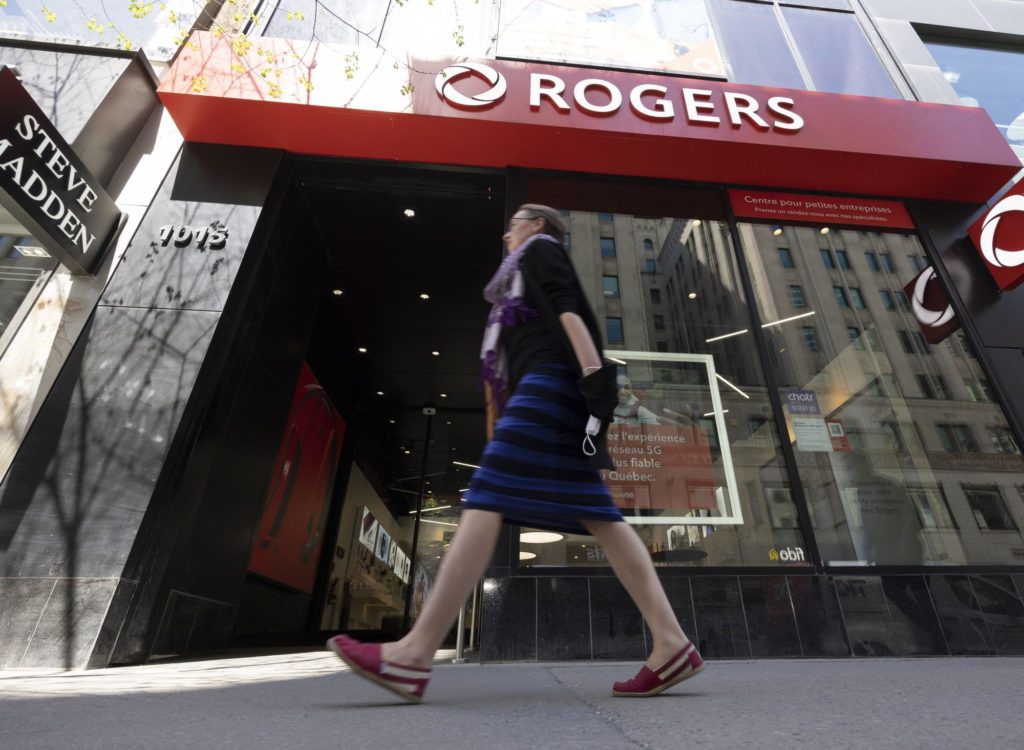
(Bloomberg) — Rogers Communications Inc. reiterated its forecast for at least 6% growth in service revenue this year and extended the deadline for its proposed acquisition of Shaw Communications Inc. to the end of December.

Rogers beat sales and profit estimates for the second quarter. Canada’s largest wireless and cable operator earned C$463 million ($318 million) or 86 Canadian cents per share, beating the average analyst estimate of 85 cents. Its shares were up 2.3% to C$61.19 at 9:43 a.m. in Toronto.

The Toronto-based company has come under intense political pressure after its network had a massive failure on July 8, knocking 12 million customers offline and disrupting 911 services and businesses.

“In the coming quarters, we will continue to focus on delivering additional improvements as we build on these results, while also working hard to regain the trust of our customers following our recent network outage,” Chief Executive Officer Tony Staffieri said in a statement on Wednesday.

Staffieri said Monday at a Canadian parliamentary committee hearing that the company would spend at least C$250 million to split its wireless and wireline networks, hoping to avoid a repeat of the July incident. He said the company “failed to deliver” on a promise of reliable service.

Read More: Rogers CEO Says Firm ‘Failed,’ Will Spend Heavily to Fix Network

Staffieri said last weekend that Rogers would invest C$10 billion over the next three years, including “more oversight, more testing and greater use of artificial intelligence” to improve network reliability.

Rogers expects capital expenditures of about C$3 billion this year, and more of that will be dedicated to network improvements than in the past, Staffieri said this week. The company will also give customers an automatic five-day billing credit that’s expected to cost about C$150 million in the third quarter.

Despite the outage and expected compensation, the company said it’s confident it can maintain its full-year guidance for total service revenue growth of 6% to 8%. The Canadian wireless market is still expected to grow, driven by continued immigration, which will also help moderate the impact of any slowing economy, Staffieri said during a conference call on Wednesday.

Read More: Rogers Faces Probe of Network Failure as Shaw Investors Shaken

The network incident has heaped more scrutiny on Rogers as it tries to gain approval from Ottawa to take over Shaw in a C$20 billion deal. But the company has defended the merger as a way to free up capital to improve its systems.

Rogers said the extension of the outside date for the Shaw transaction to December showed the commitment that Rogers, Shaw and Quebecor Inc. have to the deal, which is currently facing a legal challenge from the Competition Bureau.

(Updates with more details throughout.)

More stories like this are available on bloomberg.com

©2022 Bloomberg L.P.

T-Mobile Tops Subscriber Estimates After Rivals Hit Setbacks

(Bloomberg) — T-Mobile US Inc. raised its subscriber growth forecast for the second straight quarter, blowing past inflation-related setbacks that ensnared rivals AT&T Inc. and Verizon Communications Inc. 

T-Mobile now expects to add 6 million to 6.3 million new subscribers this year, up from a prior view of 5.3 million to 5.8 million. The company also led wireless competitors in second-quarter total customer growth, adding 1.7 million regular monthly subscribers, including 723,000 phone customers.

The results show T-Mobile may be gaining ground at the expense of its competitors, especially market leader Verizon. While AT&T and Verizon have recently raised prices by $6 a line on older plans, T-Mobile has focused instead on price promises and new promotions. That’s helped the second-largest US wireless carrier post industry-leading growth without a dramatic dent in free cash flow.

“These trends reflect a very different organic growth picture than peers,” New Street Research analyst Jonathan Chaplin wrote in a note.

For comparison, AT&T added 1.06 million subscribers in the quarter, including 813,000 phone customers. Verizon signed up only 12,000 net new phone customers in the same period. Both companies raised red flags for investors in their earnings reports last week — the former warning about the high cost of phone giveaways and the latter failing to meet growth targets.

AT&T also cautioned that some of its customers are putting off paying their bills, by about two days on average. On Wednesday, T-Mobile Chief Financial Officer Peter Osvaldik said in an interview that his company is also seeing an uptick in bill-payment delays compared with a year ago. Inflation pressure was apparent in the quarter, he said.

“I’m not seeing anything that gives me great concern. We are still well below prepandemic levels,” Osvaldik said of the bill-payment delays.

Shares of T-Mobile rose 3.7% at 9:45 a.m. New York time. The stock is the best performer among the three big US wireless companies this year with a 15% gain through Tuesday’s close. AT&T had fallen 1.4% and Verizon had dropped more than 13% this year.

T-Mobile raised the low end of its guidance for full-year free cash flow to a range of $7.3 billion to $7.6 billion, up from $7.2 billion to $7.6 billion. 

For the second quarter, the Bellevue, Washington-based company reported a 9-cent loss per share, which included merger-related costs and other special expenses amounting to $1.52 a share.

(Updates with analyst comment in fourth paragraph.)

More stories like this are available on bloomberg.com

©2022 Bloomberg L.P.
Grand Theft Auto VI Will Have Female Main Character for First Time In Series’ History

(Bloomberg) — After a public controversy four years ago, Rockstar, the maker of Grand Theft Auto, is reinventing itself as a kinder, gentler company. But employees aren’t sure it can still produce the chart-topping caliber of game the studio has become known for.

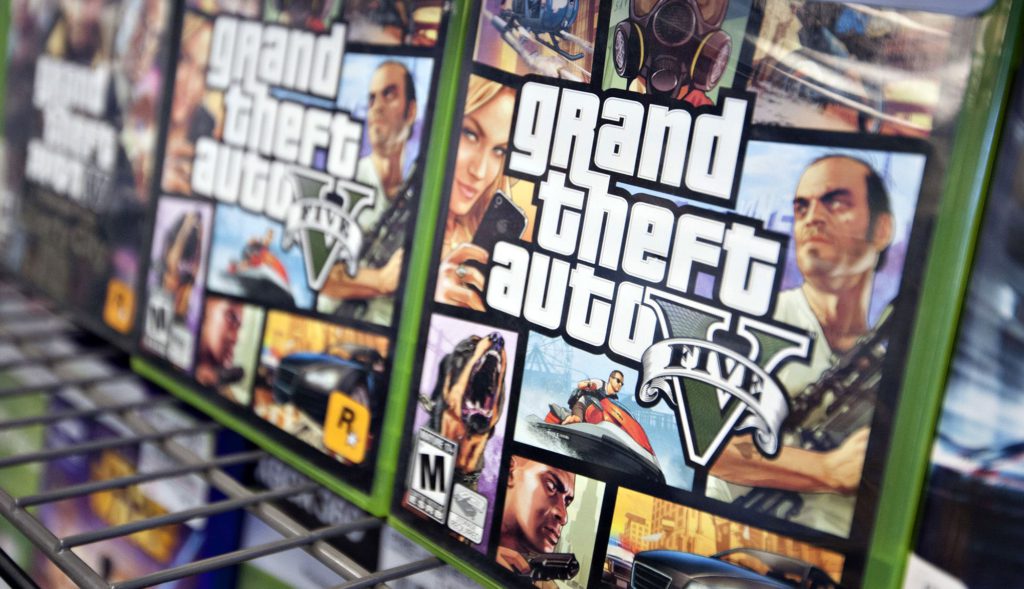
The development of Grand Theft Auto VI has been slower than impatient fans and even longtime employees have expected, despite morale across the company being higher than ever, according to many staffers. Between the company’s new direction and the 2019 departure of Dan Houser, who led creative direction on many previous games, all indications suggest Grand Theft Auto VI will feel very different than its predecessor.

Read the full story for more details on the development process of GTA VI.

Here’s what we know.

There will be a female protagonist

The game will feature a playable female protagonist for the first time, according to people familiar with the matter. The woman is Latina and will be one of a pair of leading characters in a story influenced by the bank robbers Bonnie and Clyde. Developers are also being cautious not to “punch down” by making jokes about marginalized groups, the people said, in contrast with previous Grand Theft Auto games.

The game’s release is likely two years away

Industry analysts anticipate that the next Grand Theft Auto will be out sometime in Take-Two’s 2024 fiscal year, which runs from April 2023 through March 2024, but developers are skeptical. The game has been in development in some form since 2014. Although there are loose schedules in place, people interviewed for this article said they didn’t know of any firm release date and that they expect the game to be at least two years away. Earlier this year, a group of designers quit Rockstar’s Edinburgh office, telling colleagues they were sick of the lack of progress.

Rockstar wanted to include large portions of North and South America but had to be reeled in

Original plans for the title, which is code-named Project Americas, were for it to be bigger than any Grand Theft Auto game to date. Early designs called for the inclusion of territories modeled after large swaths of North and South America, according to people familiar with the plans. 

The new map is a fictionalized Miami but will update over time

The game’s new map is now focused on a fictional version of Miami and its surrounding areas. Rockstar’s plan is to continually update the game over time, adding new missions and cities on a regular basis, which leadership hopes will lead to less crunch during the game’s final months. Still, the game’s world remains large, with more interior locations than previous Grand Theft Auto games, affecting the timeline.

(Adds detail on game locations in final paragraph. A previous version of the story was corrected to clarify analysts’ timeline for the game’s release in the sixth paragraph.)

More stories like this are available on bloomberg.com

©2022 Bloomberg L.P.
Megacap Tech Earnings Have Investors Looking Past the Fed Decision

(Bloomberg) — This is one of the biggest weeks of the year for technology company earnings, to the point that the Federal Reserve’s interest-rate decision Wednesday could be something of an afterthought.

Economists predict the central bank will raise rates by another 75 basis points as it seeks to combat surging inflation. While higher rates have been the primary headwind to tech stocks this year, investors say the policy path is now priced in, especially since consumer inflation expectations are falling, suggesting the Fed may be able to be less hawkish. 

And two titans of the tech industry are giving investors cause for optimism: Microsoft Corp. late Tuesday gave an encouraging sales forecast, while Google parent Alphabet Inc. reported resilient ad revenue. The Nasdaq 100 index rose 1.5%, with Microsoft up 3.7% and Alphabet gaining 3.2%.

“The market is comfortable with the path of hikes, and if rates are stabilizing here, that should be a good backdrop for growth stocks to come back again,” said Jack Janasiewicz, lead portfolio strategist at Natixis Investment Managers, who has been taking profits on energy stocks and rotating into tech, while also telling clients to add to the sector. 

Because the Fed is a known quantity, Janasiewicz added, earnings will be critical for the market. He is focused on how margins are holding up amid inflation, and on how much consensus estimates may need to fall.

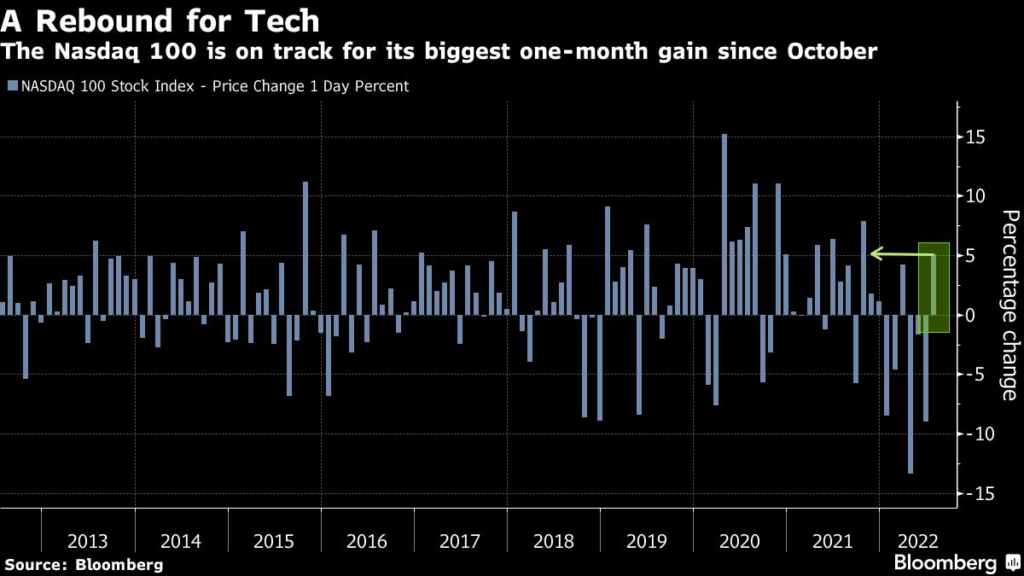
The Nasdaq 100 has risen 10% from its June low, and recently broke above its 50-day moving average for the first time since April, a positive signal for near-term momentum. It is on track for its biggest one-month percentage gain since October but remains down about 25% this year. The yield on the 10-year Treasury is below 2.8%, down from a June peak of almost 3.5%. 

The Fed’s meeting comes in a busy week for earnings. Apple Inc., Amazon.com Inc., and Facebook parent Meta Platforms Inc. are all scheduled to report this week. 

So far this earnings season, about 80% of technology companies in the Nasdaq 100 have reported better-than-expected earnings and revenue, according to data compiled by Bloomberg.

Of course, the macroeconomic backdrop remains a key factor behind earnings and corporate outlooks. Matt Calkins, the chief executive officer of enterprise software company Appian Corp., is so concerned about inflation that he wants the Fed to be extremely aggressive, raising rates by 100 or 125 basis points.

“We need to either get inflation back in the box, down to 2% again, or we will need to end up with some kind of long-term acceptance of higher inflation,” he said in a phone interview. A recession is inevitable, he said, and “the main issue is whether we will still have inflation on the other end.”

Some investors are also concerned that earnings estimates and stock prices don’t yet reflect the full effect of a slowing economy triggered by higher rates. The Nasdaq 100 is trading at 20.8 times forward earnings, slightly above its 10-year average. 

However, if consensus estimates continue moving lower, as they are expected to, that multiple might be deceptively low. Last week, Bank of America Corp. warned that the technology sector hasn’t priced in a full recession, and that it may have further room to fall.

Anthony Saglimbene, global market strategist at Ameriprise Financial, said that tech stocks still look expensive, and that there are a number of risks to the downside.

“Tech probably can’t move too high so long as the Fed is aggressively moving rates up,” he said, adding that he is overweight the sector for its long-term prospects. “If the market is wrong about the economy moving into a recession, then I think you’ll see growth in tech really propel higher.”

The cross-currents between the macro backdrop and how companies are faring in it reinforces how this earnings season could be pivotal for the market’s prospects.

Nicholas Colas, co-founder of DataTrek Research, was blunt in his assessment on what will drive trading. “Only earnings truly matter,” he wrote. “Other issues are simply sidebars to that main narrative.”

Tech Chart of the Day 

Uber Technologies Inc. shares, up 13% in July, are poised to notch their first monthly gain in 2022. The ride-hailing giant’s stock is down 45% this year as the company tried to manage driver shortages by offering them incentives. While demand has rebounded as travel picks up, higher fuel prices also are making fares more costly for clients and eating into its drivers’ take-home earnings. Uber is slated to report second-quarter results on Aug. 2. 

Top Tech Stories

  • Alphabet, Microsoft and Texas Instruments Inc. posted double-digit quarterly revenue growth on Tuesday and expressed optimism about the coming months, reassuring investors who had been fretting that the technology industry was poised for a dour second half.
    • Google parent Alphabet reported second-quarter revenue that met analysts’ expectations, reflecting the internet giant’s resilience amid slowing growth in advertising.
    • Microsoft gave an upbeat sales forecast for the fiscal year that just began, easing investor concerns about growth that had flared up following a lackluster fourth-quarter earnings report.
    • Texas Instruments, the maker of chips used in everything from washing machines to satellites, gave a bullish forecast for the current period, countering concern that a slowing economy is hurting demand for electronics.
  • Elliott Investment Management is building a stake in PayPal Holdings Inc., the payments giant that has been firing staff and closing offices to cut expenses.
  • Twitter Inc. shareholders will get their say in September on Elon Musk’s proposed acquisition of the social media company.
  • Funds controlled by Cathie Wood dumped Coinbase Global Inc.’s stock for the first time this year amid reports the largest US crypto exchange is facing a probe.
  • Alibaba Group Holding Ltd. may attract at least $16 billion of Chinese money by shifting to a primary listing in Hong Kong, strategists say, getting a much-needed boost as its stock struggles to bottom out.
  • Atos SE said it secured 1.5 billion euros ($1.5 billion) of financing to fund its breakup plan, giving the French IT company breathing room after revenue declined in the first half.
  • MBK Partners is considering making a bid for Chinese data center company Vnet Group Inc., according to people familiar with the matter, potentially kicking off a battle with another private equity firm.
  • South Korean chipmaker SK Hynix Inc. warned of waning memory growth and rising inventories, becoming the latest tech giant to sound the alarm over global economic uncertainty.
  • A $52 billion boost to the US domestic semiconductor industry moved one step closer to reality Tuesday when the Senate advanced legislation providing grants, incentives and tax breaks to the sector and set it up for final passage this week.

(Updates to market open.)

More stories like this are available on bloomberg.com

©2022 Bloomberg L.P.
Elon Musk Crafts New Master Plan Before Tesla Pulls Off the Old One

(Bloomberg) —

At some point, Elon Musk is going to blog again.

Four months have passed since the chief executive officer of Tesla tweeted he was working on a third “master plan” for the electric-car maker. Parts one and two were playful, endearing and hugely effective in burnishing Musk’s reputation as a visionary, ginning up excitement among investors and prospective hires. Who wouldn’t want to do good for the world by making a difference in global carbon emissions? Does ambition get any bigger than disrupting every major form of terrestrial transport?

Before Musk hits publish on another blog post, though, it’s worth taking another look at Master Plan Part Deux, released six years ago this month. Tesla has made incredible strides since 2016, becoming the world’s most valuable car company by a wide margin. But it’s also fallen short or completely whiffed on each of the four goals its CEO listed.

Let’s break them down, one by one:

Integrating energy generation and storage

It was no wonder this came first on Tesla’s list of plans six years ago. A month before part deux was published, the company announced it had offered to acquire SolarCity, the debt-laden panel installer run by two of Musk’s cousins, for $2.86 billion. The CEO was under pressure to justify what some investors believed amounted to a bailout.

Musk wrote that Tesla would “create a smoothly integrated and beautiful solar-roof-with-battery product that just works,” and “scale that throughout the world.” He said this wouldn’t be feasible if Tesla and SolarCity were two different companies.

Tesla just reported its best quarter for solar deployment in more than four years, but the solar roof product Musk touted to help close the SolarCity deal has been plagued by manufacturing and installation difficulties. He’s fired executives who led the effort, raised prices and even said in a deposition that it probably would have been better to let SolarCity execute on its own.

Covering all major forms of transportation

Musk made it Tesla’s mission to bring a new compact SUV, semi truck, pickup and bus to market. The first of those products was a nod to the Model Y, which has been a runaway hit. The Semi and Cybertruck — prototypes of which debuted in 2017 and 2019 — are years behind schedule, and there’s been no sign of a bus.

When Musk opened Tesla’s factory in Austin, Texas, in April, he said the Cybertruck and Semi will be in production next year. He put a finer point on when it might be ready during last week’s earnings call, saying the company hopes to start deliveries in mid-2023.

Autonomy

Musk’s third goal was perhaps his most famous and now controversial: fully self-driving vehicles.

He wrote that all Teslas would have the hardware necessary to navigate streets on their own. The company ended up changing the computers in its cars, requiring retrofits that Musk said would be free, then charged $1,500, then dropped the price to $1,000. Last year, Tesla pivoted away from using radar, five years after its CEO said such sensors may have prevented a fatal crash.

More than 100,000 drivers now have access to Full Self-Driving, a system that’s still in beta and still requires fully attentive drivers to keep their hands on the wheel. On Tuesday, the US National Highway Traffic Safety Administration added a 39th incident involving a Tesla vehicle suspected to be using the company’s driver-assistance systems to a broader special crash investigation. The agency is also conducting two other probes into whether Tesla’s Autopilot is defective.

Sharing

The final objective was an add-on to the full autonomy concept. Musk wrote that Tesla owners would be able to add their cars to a shared fleet that would dramatically lower the cost of owning the company’s vehicles.

Tesla not only lacks the robotaxis for a shared network, it lacks a network. Musk’s plan was perceived as a potential threat to Uber and Lyft, and indeed Musk said years later that Tesla would compete against those two companies. But in a twist of fate that worked out well for Tesla’s market value, the automaker landed a huge order from Hertz last year, and half of the 100,000 vehicles purchased will be rented to Uber drivers.

Owners still can’t summon their Tesla from “pretty much anywhere,” in Musk’s words, without risking their car running into things. There’s no way to earn income from a Tesla sharing app that offsets or exceeds monthly car payments. And the cost of Teslas keeps rising: Musk said during last week’s earnings call that prices are “frankly at embarrassing levels,” and that he’d like to lower them as supply shocks and inflation ease.

Will Musk take over Twitter, eventually? Which of the S&P 500’s biggest stocks has the most upside? Share your views in this week’s MLIV Pulse survey. It takes only one minute and is anonymous.

For the most part, Musk didn’t give a time frame for all he wanted to pull off in his last master plan. Tesla may still execute some of what he laid out, and it deserves plenty of credit for forcing other automakers, entrepreneurs and investors to take electric vehicles seriously.

But before readers of Musk’s next plan get their hopes up about all he intends to achieve, this track record suggests cautious optimism is warranted.

More stories like this are available on bloomberg.com

©2022 Bloomberg L.P.
Fanatics Signs Deals With Netflix, Legendary for Collectibles

(Bloomberg) — Fanatics Inc.’s collectibles division has signed deals with Netflix Inc. and Dalian Wanda Group Co.’s Legendary Entertainment as it moves beyond sports memorabilia into pop culture.

As part of the agreements, Fanatics will make trading cards for Netflix’s “Stranger Things” sci-fi show and Legendary’s “Dune” film franchise. It has also come to an arrangement with filmmaker Kevin Smith for his upcoming “Clerks III” project. The first products, which haven’t yet been revealed, will be released under the Zerocool card brand later this year. 

Fanatics has been expanding from its roots as a licensed sports-merchandise seller, adding new business lines like trading cards and sports betting under Chief Executive Officer Michael Rubin. It has made substantial investments in collectibles, acquiring Topps in January for $500 million and signing deals across professional and college sports as it builds a portfolio of card brands.

Zerocool, which debuted in March, is leading Fanatics’ efforts in culture, art and entertainment. Early products include lines with Paramount Global and entrepreneur Gary Vaynerchuk. Executives said earlier this year that they’re looking to sign long-term licensing deals with more production studios, musicians, fashion houses and other properties.

The agreement with Legendary gives Fanatics exclusive rights to make cards for the “Dune” films starring Timothee Chalamet, Rebecca Ferguson and Zendaya through 2025. Meanwhile, “Stranger Things,” the most popular TV show of the year and an even bigger hit than Netflix anticipated, will add another collection to a lineup that has spawned merchandise across apparel, collectibles and toys.

Fanatics expects its collectibles business to surpass $1 billion in revenue in 2022. Its e-commerce division, by comparison, is projected to hit about $4.5 billion in sales.

More stories like this are available on bloomberg.com

©2022 Bloomberg L.P.

US Futures Rise on Earnings Amid Countdown to Fed: Markets Wrap

(Bloomberg) — Stocks and US equity futures rallied Wednesday as a batch of resilient company earnings helped alleviate some of the wider caution in markets ahead of a pivotal Federal Reserve monetary-policy meeting.

Contracts on the technology-heavy Nasdaq 100 led gains as major tech and internet stocks advanced in premarket trading after reassuring reports from Alphabet Inc., Microsoft Corp. and Texas Instruments Inc. European stocks also rose, with the banking sector up even as Credit Suisse Group AG posted a larger-than-expected loss and Deutsche Bank AG warned on costs. 

The mood remains edgy ahead of a much-anticipated Fed interest-rate increase — part of a global wave of monetary tightening to quell inflation that’s stoking concerns about a worldwide economic slowdown. Investors are bracing for the busiest reporting day of the season and a slew of macro-economic data on Thursday. 

Orders placed with US factories for durable goods rose unexpectedly in June, fueled by a surge in defense aircraft and pointing to sustained demand for equipment despite rising interest rates. 

Italian bonds fell after S&P Global Ratings lowered the nation’s outlook to stable from positive. The dollar and Treasury yields slipped, while oil and European natural gas prices extended gains.

Among individual stock moves, Shopify Inc. slumped in premarket trading after the company kicked off earnings season for e-commerce firms with a result that missed analysts’ estimates and said the outlook is getting worse. 

In Europe, Credit Suisse shares gained as the bank replaced its embattled chief executive officer and said it would embark on a new turnaround plan, while Deutsche Bank fell after it scrapped an efficiency target for the year and warned a key profitability goal was getting harder to reach.

UniCredit SpA shares soared about 7% after posting second-quarter profit that almost doubled analyst expectations and lifted its full-year target in anticipation of further gains from rising interest rates in Europe.

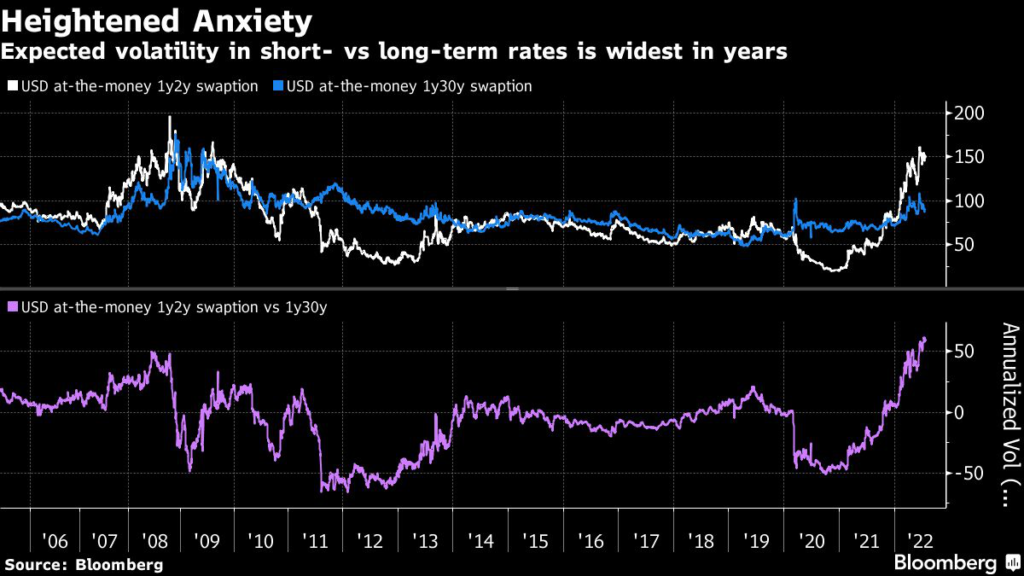
The projected 75 basis-point Fed move to tackle price pressures would cement the steepest two-month rise in rates since the 1980s. The key question is whether Chair Jerome Powell’s policy signals validate or refute scaled-back bets projecting a 3.4% peak fed funds rate around year-end and cuts in 2023 to shore up an economy at risk of recession. 

“The Fed hasn’t even gotten to neutral yet,” Jason England, global bonds portfolio manager at Janus Henderson Investors, said on Bloomberg Television. “For them to start easing already or for them to start seeing eases priced in is, I think, a little premature.”

IMF Warning

Meanwhile, the European Central Bank will deliver only 50 basis points of additional interest rate increases this year as the euro zone succumbs to a recession in the fourth quarter, according to JPMorgan Chase & Co.

Monetary tightening, Europe’s energy woes amid Russia’s invasion of Ukraine and challenges from China’s property sector and Covid are among the risks darkening the global outlook. The International Monetary Fund warned the world economy may soon be on the cusp of an outright recession, while Goldman Sachs Group Inc. said the euro area is probably already contracting.

US company earnings are providing a sliver of hope — more than three-quarters of firms that have reported so far either beat or met expectations. But there are doubts about how long they can weather economic challenges.

“Inflation is hurting companies and the question is whether these policy rate hikes are going to do anything to alleviate the pain,” Quadratic Capital Management founder Nancy Davis said on Bloomberg Television. 

Elsewhere, President Joe Biden will speak with Chinese leader Xi Jinping on Thursday amid fresh tensions over Taiwan. The White House is also considering whether to lift some tariffs on Chinese imports to stem inflation. 

Here are some key events to watch this week:

  • Apple, Amazon, Meta earnings due this week
  • Fed policy decision, briefing, Wednesday
  • Australia CPI, Wednesday
  • US GDP, Thursday
  • Euro-area CPI, Friday
  • US PCE deflator, personal income, University of Michigan consumer sentiment, Friday

Musk, Tesla and Twitter are this week’s theme of the MLIV Pulse survey. Also share your views on the S&P 500’s biggest stocks. Click here to get involved anonymously.

Some of the main moves in markets:

Stocks

  • Futures on the S&P 500 rose 0.9% as of 8:35 a.m. New York time
  • Futures on the Nasdaq 100 rose 1.4%
  • Futures on the Dow Jones Industrial Average rose 0.5%
  • The Stoxx Europe 600 rose 0.5%
  • The MSCI World index fell 0.9%

Currencies

  • The Bloomberg Dollar Spot Index fell 0.2%
  • The euro rose 0.3% to $1.0150
  • The British pound rose 0.2% to $1.2055
  • The Japanese yen was little changed at 136.87 per dollar

Bonds

  • The yield on 10-year Treasuries declined one basis point to 2.79%
  • Germany’s 10-year yield advanced three basis points to 0.96%
  • Britain’s 10-year yield advanced six basis points to 1.97%

Commodities

  • West Texas Intermediate crude rose 1% to $95.94 a barrel
  • Gold futures rose 0.2% to $1,738.80 an ounce

More stories like this are available on bloomberg.com

©2022 Bloomberg L.P.

Close Bitnami banner
Bitnami