

Bloomberg

Stocks Roar Back With S&P 500, Nasdaq 100 Up 2%: Markets Wrap

(Bloomberg) — US stocks extended gains as investors assessed the outlook for earnings amid speculation disappointments may be already priced into markets.

The S&P 500 jumped 2%, with all 11 industry groups rising. The broad rally was mirrored in the tech-heavy Nasdaq 100, up more than 2%, as megacaps Apple Inc. and Alphabet Inc. bounced back from Monday’s losses ahead of Netflix Inc.’s earnings due later today. Johnson & Johnson gained even as it lowered its earnings and revenue forecast for the year. 

With the potential for earnings disappointments baked into markets, any upside surprises may lead to outsized gains. Investors remain on high alert for signs that high inflation and monetary tightening are squeezing consumers and employment, with allocation to stocks plunging to levels last seen in October 2008, according to the latest Bank of America Corp.’s monthly fund manager survey.

“Earnings, so far, there’s been some caution and there’s been a little bit of dialing down of expectations, but I don’t think the worst-case scenarios are really in play anymore,” Shawn Cruz, head trading strategist at TD Ameritrade, said in an interview. “We’ve heard from the big banks, we’ve heard from IBM, we’ve heard from Johnson & Johnson, we’ve heard from enough companies that have had a big enough footprint that if there is something at the macro level severely impacting these businesses, it would have shown up in a lot of these earnings.”

Also on the earnings front, Hasbro Inc., the largest US toy company, gained after earnings beat analyst estimates, while International Business Machines Corp. fell as the tech company lowered its forecasts for free cash flow. Lockheed Martin Corp. also slipped after the defense contractor cut its forecast. 

The dollar fell against its Group-of-10 peers. Treasuries traded lower, with the 10-year yield rising back to 3%.

Meanwhile, the euro rose to its highest level in about two weeks after Bloomberg News reported the European Central Bank may consider raising interest rates on Thursday by double the quarter-point outlined previously to counter worsening inflation. 

Markets are pricing in about 38 basis points of tightening on Thursday, when the ECB is expected to raise rates for the first time in more than a decade. That reflects about a 50/50 chance of a 50-basis point increase. 

The ECB is under pressure to subdue inflation, but the potential for a Russian gas shutdown could plunge Europe into recession. The European Union is preparing to tell members to cut gas consumption “immediately” to preserve supplies for winter, according to a report. 

Oil slid, with West Texas Intermediate crude falling to about $100 a barrel, after posting the biggest one-day advance since May.

More market commentary:

  • “Stocks have been beaten down,” Kristina Hooper, chief global market strategist at Invesco, wrote in a note. “That doesn’t mean we won’t see more downside for some stock markets around the world, especially given that earnings expectations are likely to be adjusted downward. But I believe we are far closer to the bottom than the top.”
  • “There is a growing feeling in the market that the gradual and cautious normalization process the ECB started at the end of 2021 has been the wrong decision and that to make up for that slow and late,” wrote Fawad Razaqzada, market analyst at City Index. “Indeed, even until its June meeting, the ECB was pre-committing to a 25-basis point hike in July. But with the broad weakening of the euro helping to import more inflation in the eurozone, the ECB could surprise with a 50 bp hike.”

How far will the Fed go in this hiking cycle? It takes one minute to participate in the confidential MLIV Pulse survey, so please click here to get involved. 

Key events to watch this week:

  • Earnings this week include Netflix, Tesla
  • US Treasury Secretary Janet Yellen visits South Korea. Tuesday
  • Reserve Bank of Australia releases July minutes. Tuesday
  • UK Chancellor Nadhim Zahawi and Bank of England Governor Andrew Bailey speak at event. Tuesday
  • Bloomberg Crypto Summit in New York. Tuesday
  • Bank of Japan, European Central Bank rate decisions. Thursday
  • Nord Stream 1 pipeline scheduled to reopen following maintenance. Thursday

Some of the main moves in markets:

Stocks

  • The S&P 500 rose 2% as of 12 p.m. New York time
  • The Nasdaq 100 rose 2.3%
  • The Dow Jones Industrial Average rose 1.7%
  • The Stoxx Europe 600 rose 1.4%
  • The MSCI World index rose 1.6%

Currencies

  • The Bloomberg Dollar Spot Index fell 0.6%
  • The euro rose 0.9% to $1.0238
  • The British pound rose 0.6% to $1.2022
  • The Japanese yen rose 0.1% to 137.94 per dollar

Bonds

  • The yield on 10-year Treasuries advanced one basis point to 3.00%
  • Germany’s 10-year yield advanced six basis points to 1.28%
  • Britain’s 10-year yield advanced two basis points to 2.18%

Commodities

  • West Texas Intermediate crude rose 0.2% to $102.77 a barrel
  • Gold futures rose 0.1% to $1,712.20 an ounce

More stories like this are available on bloomberg.com

©2022 Bloomberg L.P.
Workers at Activision Studio Behind ‘Diablo’ Seek to Unionize

(Bloomberg) — A group of Activision Blizzard Inc. video game testers in New York are petitioning to unionize, expanding labor’s foothold in the gaming industry.

Employees at the Activision subsidiary Blizzard Albany are organizing with the Communications Workers of America and asking the US labor board to hold a unionization election, the group said in a statement Tuesday. CWA prevailed in a May election among staff at Activision’s Raven Software arm, the first such win at a US-listed game company.

“There’s issues in the video game industry that often go unnoticed because our work is seen as more of a passion instead of a job,” Activision employee Amanda Laven said in the statement. “We know that by having a seat at the table our union will not only give us structure and power, but also give us a path forward to improve our workplace because management won’t be able to ignore us all anymore.”

Microsoft Corp. plans to buy Activision for $69 billion, and the deal is expected to be completed by June 2023 pending regulatory approval. In June, CWA announced a pact with Microsoft Corp. to ease future organizing at Activision. Under that agreement, Microsoft will stay neutral when Activision workers seek to organize, rather than campaigning aggressively against unionization as US companies often do.

An Activision spokesperson said the company’s employees are its top priority. “We deeply respect the rights of all employees under the law to make their own decisions about whether or not to join a union,” the spokesperson said in an emailed statement. “We believe that a direct relationship between the company and its employees is the most productive relationship.”

In the union’s statement, workers said they want to secure fair pay, better treatment, and job security by organizing.

Blizzard Albany staff work on the popular Diablo game franchise; their studio, once called Vicarious Visions, was acquired by Activision in 2005 and recently merged into Blizzard.

Activision’s campaign comes amid a wave of organizing at prominent US tech companies, including successful efforts by CWA among New York Times tech workers and sub-contracted Google Fiber staff, as well as victories by other unions at an Apple Inc. store and an Amazon.com Inc. warehouse.


More stories like this are available on bloomberg.com

©2022 Bloomberg L.P.
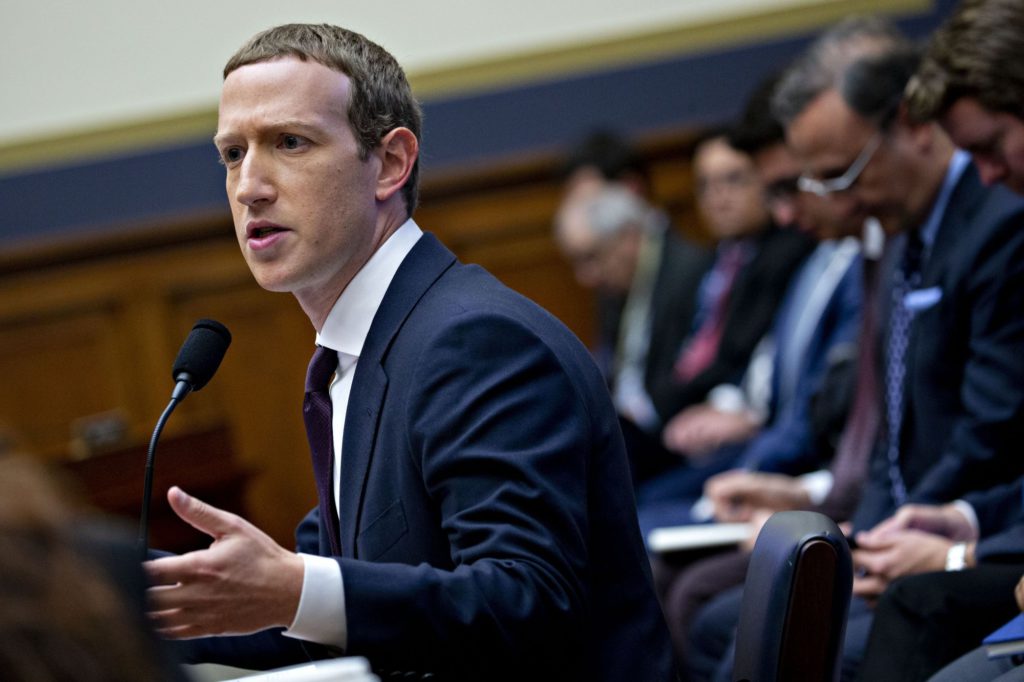
Facebook Internal Memo on Rivals Undercuts Antitrust Defense

(Bloomberg) — Facebook’s parent company insists that its social-networking and messaging services have dozens of outside rivals, but an internal memo reveals that Meta Platforms Inc.’s top executives were more worried about the threat posed by its own products.

The memo, written in October 2018 for Chief Executive Officer Mark Zuckerberg and other executives, maps out the company’s growth strategies. It outlines ways to prevent Instagram and WhatsApp, acquired by Facebook in 2012 and 2014 respectively, from cannibalizing Facebook’s trajectory. 

The memo figured prominently in a congressional inquiry into competitive practices across the technology industry that focused on some of the biggest companies, including Meta’s Facebook. The House Judiciary antitrust subcommittee released the memo Tuesday for the first time in its entirety as part of its final report on competition in digital markets. 

The memo, which Meta turned over voluntarily, helped shape the antitrust panel’s crafting of proposed antitrust legislation that would affect the company, according to a person familiar with the matter who was granted anonymity to discuss non-public deliberations. One of those measures could be voted on by Congress as soon as next week. 

The American Innovation and Choice Online Act would force Meta to provide the same level of access to its platforms that its own products have –- for example, increasing the ability of users to cross-post or import contacts to other social networks.

Christopher Sgro, a Meta spokesman, noted that the memo wasn’t new and was turned over to the House panel. “The full record confirms what we have said from the beginning of these proceedings — that we operate in a highly competitive space, and our acquisitions have been good for competition, good for advertisers, and good for people.” 

The legislation has advanced in the House and the Senate, but requires a final vote in both chambers. Meta opposes the bill, as do Alphabet Inc.’s Google, Amazon.com Inc. and Apple Inc.

The memo shows that Facebook is “trying to compete on size, not quality,” said Charlotte Slaiman, competition policy director for the non-profit consumer advocacy group Public Knowledge, which calls for more aggressive antitrust enforcement against technology giants.

The US Federal Trade Commission sued Meta in late 2020 to force it to divest Instagram and WhatsApp, alleging that Facebook broke anti-monopoly laws even though those deals weren’t challenged at the time. 

The fact that Meta executives were more concerned about Instagram and WhatsApp than other rivals years after the acquisitions proves they were important nascent competitors, said a former FTC official. Either of them could have grown to challenge Facebook’s dominance, but instead acted as a bulwark to help maintain the monopoly, the person said, requesting anonymity to discuss the agency’s case.

Meta argues that it faces “intense competition” in the social networking space and has sought information from what it says are more than 100 rivals including ByteDance Ltd.’s TikTok, Google, Apple Inc., Twitter Inc, Pinterest Inc. and Snap Inc.    

That argument is belied by the company’s internal analysis. Social apps benefit from a “ratchet effect” where users tend to get hooked on one service, according to the memo. Only one messaging and one sharing app can dominate a market, wrote Thomas Cunningham, a former Facebook senior data scientist and economist.

“Once users start using a social app, their use declines slowly,” Cunningham wrote. According to his LinkedIn profile, he now works at Twitter.

The memo concluded that while, in some countries, Facebook and WhatsApp were both popular, “it remains unclear whether Instagram and Facebook can coexist” and “it seems unlikely that three Sharing Apps can coexist.”

The Information first reported on a portion of the memo in 2019.

The document used internal data to show that in nations where WhatsApp was popular, Facebook’s Messenger app had little usage and vice-versa.   

While other social apps exist, they only succeed if they connect a different group of users, the memo found. For example, Microsoft Corp.’s LinkedIn connects coworkers, while Nextdoor Holdings Inc. connects neighbors, instead of Facebook’s focus on friends and family. Other apps like Google’s YouTube and Spotify Technologies SA are popular for specific things such as watching videos and listening to music, but not specifically for sharing.

Apple’s iMessage poses a threat to both WhatsApp and Messenger, the memo said, but those products have an advantage since they work on Apple and Android phones. 

The Cunningham memo is cited repeatedly in the House report to explain Facebook’s dominance in the social networking market. The company’s predominance in the market makes it hard for rivals to compete, since new social networks would have difficulty attracting the same level of users, the report found. 

(Updates with Facebook comment in sixth paragraph. Earlier versions of the story were corrected to show that Meta turned over the document to the House panel voluntarily)

More stories like this are available on bloomberg.com

©2022 Bloomberg L.P.

China-Made GPS Tracker is Found to Be Risk for Vehicle Hacking

(Bloomberg) — Vulnerabilities in a popular GPS tracker made in China and used around the world could allow hackers to disrupt vehicles, cut off their fuel and surveil drivers’ movements, according to new research.

Several “severe” flaws in the Micodus MV720 tracker affect customers, private companies and government agencies, creating a “high risk” of personal injury, vehicle disablement and supply-chain disruption, according to Boston-based BitSight Technologies. Researchers believe 1.5 million Micodus devices are in use in more than 160 countries.

The US Department of Homeland Security issued several warnings Tuesday about the flaws. Micodus didn’t immediately respond to emails and phone calls seeking comment from Bloomberg News since early Monday.

In a statement, Eric Goldstein, executive assistant director for the Cybersecurity Infrastructure Security Agency, a division of DHS, said the agency is not aware of any active exploitation of the vulnerabilities that were identified. The agency encouraged specialists like product integrators to “implement mitigation measures,” he said.  

GPS trackers used in fleet management can monitor the location of a company’s vehicles. They also can be anti-theft devices, allowing company employees to remotely cut the gas to stymie a carjacker or monitor its fuel consumption, for instance. But if hackers gain access to that same device, they, too, can stop vehicles or track their whereabouts.

The vulnerabilities would allow a bad actor in multiple situations to “easily gain complete control over any GPS tracker of this type,” said Pedro Umbelino, BitSight’s principal security researcher. Some of the vulnerabilities, BitSight said, were rated a 9.8 out of a possible 10, the most severe. 

BitSight urged those who have the trackers, which sell for about $20 online, to stop using them until a fix is made available. BitSight said it made repeated attempts to share information about the flaws with the Shenzhen, China-based firm  dating back to September 2021 but was “disregarded,” the company said.

BitSight says the trackers are deployed by major firms in the energy, aerospace and technology sectors, as well as an unidentified national government in Western Europe and a national military in Eastern Europe.

Researchers found that Ukraine had the most Micodus GPS trackers in all of Europe, used by a state-owned transportation system and a top bank in Kyiv. That raises the specter that Russian operatives could exploit those flaws, allowing them to track or disable vehicles amid its months-long war against Ukraine.

“The vulnerabilities discovered by BitSight can directly impact our physical world, potentially resulting in disastrous consequences for individuals and organizations if not addressed,” said BitSight Chief Executive Officer Stephen Harvey. “Our research highlights why it is critical for organizations to consider internet-of-things devices in cyber-resilience efforts.”

More stories like this are available on bloomberg.com

©2022 Bloomberg L.P.

Vestager’s Idea for Tech to Pay Telecom Costs Gets More Pushback

(Bloomberg) — Seven countries sent a jointly written letter urging the European Commission to be cautious as it considers measures to force internet companies to help pay for upgrades to telecom firms’ infrastructure.

Commission officials — including Executive Vice President Margrethe Vestager and Internal Market Commissioner Thierry Breton — said in May that they are interested in examining how streaming platforms such as Netflix Inc. and Google’s YouTube could help telecom providers shoulder the cost of the infrastructure they rely on.

No formal proposal has yet been made, and lawmakers haven’t said when one might take place. Still, just the idea that it’s possible caused alarm among tech companies, net neutrality advocates, lawmakers, and now member states.

The commission should have an “open and transparent debate” about the idea before presenting any formal proposal, Germany, Ireland, Sweden, Denmark, Estonia, Finland and the Netherlands said in the letter, seen by Bloomberg.

It also suggested the commission wait for a final analysis from the EU’s telecom regulating body, as well as open consultations with the the bloc’s members and the public.

Members of the European Parliament also wrote a letter to the commission last week to express “deep concern” over the “radical proposal.” Politico first reported that letter.

More stories like this are available on bloomberg.com

©2022 Bloomberg L.P.
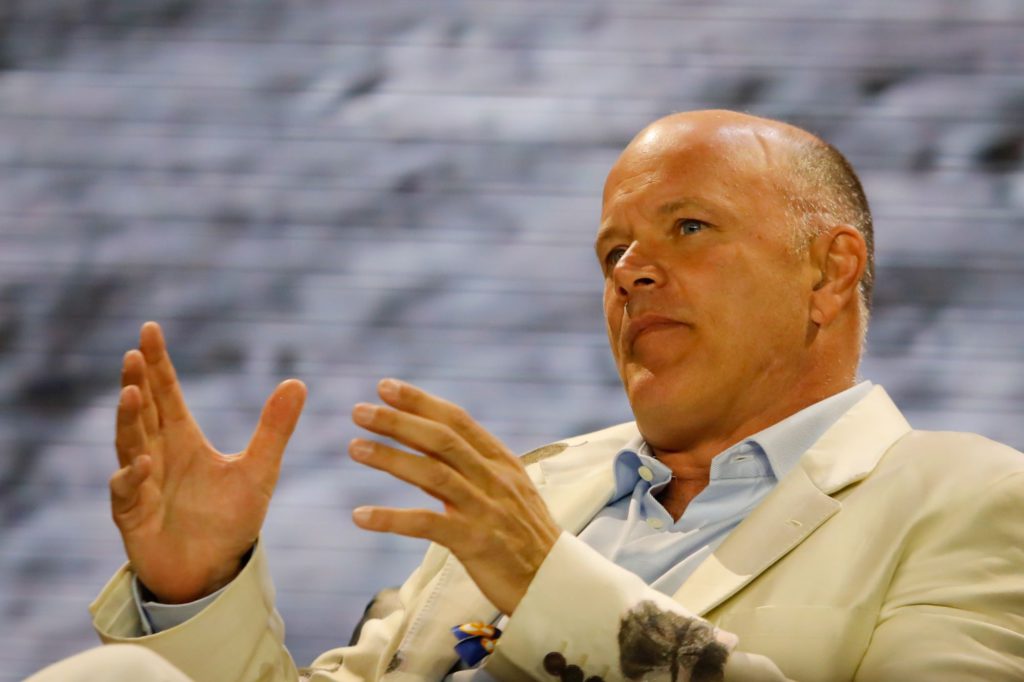
Novogratz Says He Was ‘Darn Wrong’ on Crypto Leverage Risks

(Bloomberg) — Mike Novogratz, the billionaire investor who once called himself the “Forrest Gump of Bitcoin,” said the recent turbulence in the cryptocurrency industry is a “full-fledged credit crisis” and acknowledged that he was “darn wrong” about the magnitude of the leverage in the system. 

“What I don’t think people expected was the magnitude of losses that would show up in professional institutions’ balance sheets and that caused the daisy chain of events,” Novogratz said at the Bloomberg Crypto Summit Tuesday. “It turned into a full fledged credit crisis with complete liquidation and huge damage on confidence in the space.”

Read more: Novogratz Goes Silent After Cryptocurrency He Promoted Plunges

The founder of Galaxy Digital Holdings Ltd., who was a big promoter of Terraform Labs, the company behind Terra and Luna, said the lesson learned from the collapse of the stablecoin was that both the industry and retail investors “really had very, very little concept of risk management.” 

Bitcoin has plunged since its peak last year, trading in a $19,000 to $22,000 range as investors reel from a rout that coincided with a slumping stock market and has been exacerbated by implosions across the industry.

TerraUSD, or UST, lost its peg to the dollar in May and, along with its digital coin counterpart Luna, saw almost all of its value disappear. It sparked what is being called a “crypto winter,” with Celsius and Babel, as well as hedge fund Three Arrows Capital, dragging down the industry. 

Novogratz blamed regulators for not doing enough to protect investors and allowing institutions to take on a huge amount of leverage. He compared the crypto fall-out to the collapse of Lehman Brothers in the financial crisis, and called for more transparency and disclosure in the industry.

“I don’t know what the SEC should have done, or could have done or might have done, but they didn’t do a lot to protect the retail investors,” Novogratz said.

Other Highlights:

  • Novogratz said his heart doctor recently lost $1 million in the collapse of Celsius.
  • He said the “worst is over” in the crypto industry and that while the current issues may have increased distrust among retail investors, the argument for Bitcoin is still strong, particularly as central banks around the world fight inflation.
  • He called Bitcoin an “anti-populist” asset that will increase in value in part because politicians in both parties spend too much.
  • He credited Senator Joe Manchin for rejecting more government spending.
  • He predicted Bitcoin will eventually reach $500,000.


(Adds additional information.)

More stories like this are available on bloomberg.com

©2022 Bloomberg L.P.
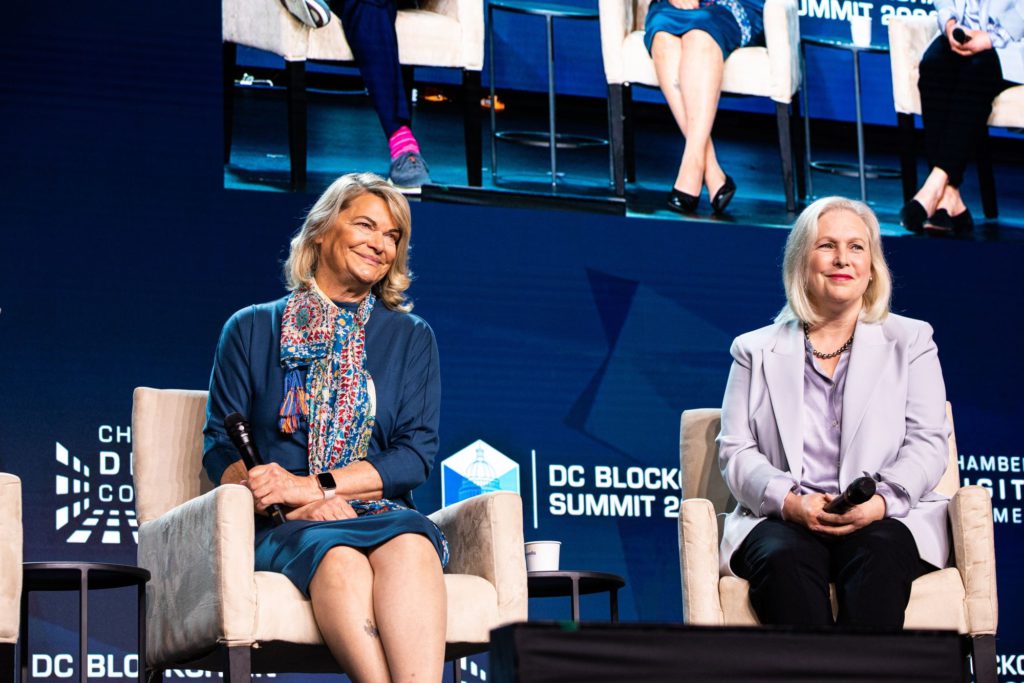
Crypto-Regulation Bill Unlikely to Get Senate Vote This Year, Lummis Says

(Bloomberg) — A sweeping piece of legislation that would overhaul how the cryptocurrency industry is regulated by Washington is unlikely to be voted on this year by the US Senate, according to one of the lawmakers driving the effort.

Wyoming Senator Cynthia Lummis said on Tuesday that the full bill she released last month with Democrat Kirsten Gillibrand would probably not be considered until next year. The lawmakers said various Senate committees, which first need to first green-light aspects of the proposal, could advance pieces of the plan during 2022.

“It’s a big topic, it’s comprehensive, and it’s still new to many US senators,” Lummis, a Republican, said in a joint prerecorded interview with Gillibrand that was played at the Bloomberg Crypto Summit on Tuesday. She added that the wide-ranging scope of the legislation may make it difficult for lawmakers to digest quickly. 

Lummis and Gillibrand have said their plan seeks to both create guardrails to protect consumers and leave space for innovation in digital assets. The bipartisan legislation is being closely watched by the industry and regulators as it’s considered to be among the efforts that have the best chance of becoming law. 

Notably, the bill would give the Commodity Futures Trading Commission additional authority to oversee coins that are deemed to be commodities — likely giving the regulator direct oversight of Bitcoin and Ether. Currently the agency’s remit is mostly limited to crypto derivatives. Under the bill, the Securities and Exchange Commission would police coins that are used to raise money from the public, similar to a stock offering.

The legislation also outlines reserve requirements for stablecoin, sanction compliance, and energy consumption reporting.

Gillibrand said the Senate Agriculture Committee is finalizing the portion that focuses on the CFTC jurisdiction and could vote on it by the end of the year. Lummis added that the bill’s stablecoin provisions could make their way through the Senate Banking Committee in the next few months.

More stories like this are available on bloomberg.com

©2022 Bloomberg L.P.
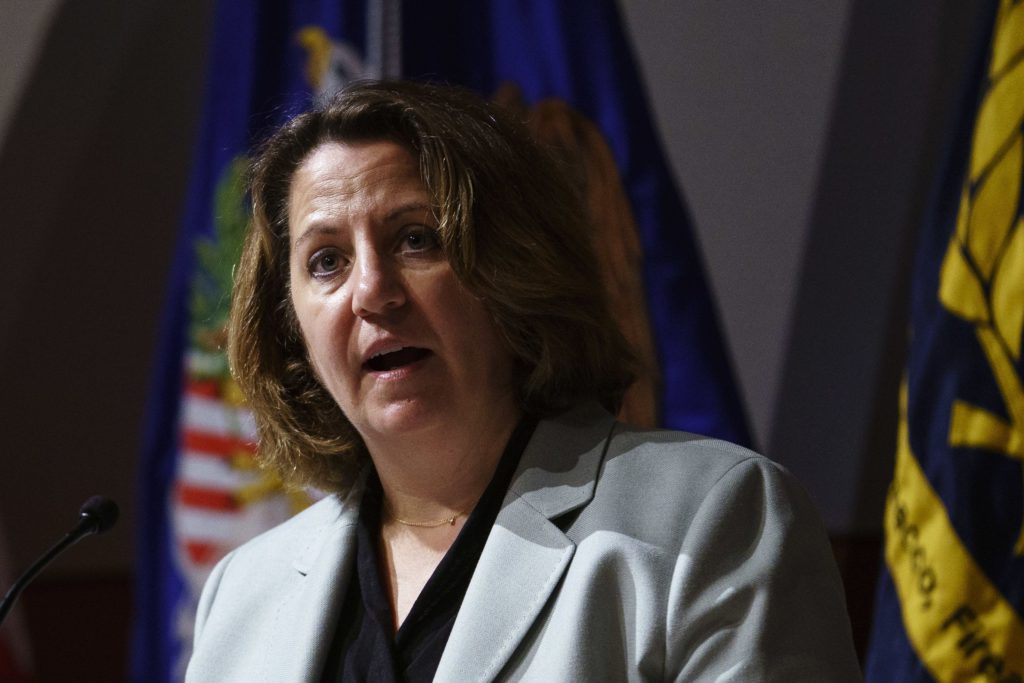
US ‘Disrupted’ North Korean Hackers Who Breached Health Sector

(Bloomberg) — Federal investigators “disrupted” a North Korean state-sponsored hacking group that targeted US medical facilities and other health organizations, a top Justice Department official said Tuesday.

The attacks included the targeting of a medical center in Kansas last year, Deputy Attorney General Lisa Monaco said, disabling the hospital’s systems that store important data and run key equipment. Monaco said the government’s investigation led to a public warning, with the Department of Homeland Security, about “Maui” ransomware targeting the health sector.

“The hospital’s leadership faced an impossible choice: Give in to the ransom demand, or cripple the ability of the doctors and nurses to provide critical care,” Monaco said at the International Conference on Cyber Security at Fordham University in New York. 

The Biden administration has increasingly warned of cyber threats from countries, including Russia, and has urged the private sector to do more to harden its security. The Cybersecurity and Infrastructure Security Agency, for instance, has widely published tips it said could help deter and mitigate potentially disruptive attacks.

Through the investigation into the ransomware attacks on medical centers, the FBI identified China-based money launderers — who Monaco said “regularly assist the North Koreans in ‘cashing out’ ransom payments” — and seized about $500,000 in payments and cryptocurrency, including all the funds paid by the Kansas medical center.

“Today, we have unsealed the seizure warrant and initiated proceedings to return the stolen funds to the victims,” Monaco said. She declined to name the Kansas facility.

The Justice Department has also brought charges against major cybercriminals that allegedly conducted major hacks against critical infrastructure. In March, a federal grand jury indicted four Russian nationals it said committed cyberattacks against hundreds of companies in the energy sector worldwide, including a nuclear power facility in Kansas.

US officials have also pushed for more disclosure from critical infrastructure operators, such as a new law that requires certain firms to report hacks to the Department of Homeland Security within 72 hours — and within 24 hours if they make a ransomware payment. The FBI last year estimated it had visibility into only a quarter of cyber incidents.

More stories like this are available on bloomberg.com

©2022 Bloomberg L.P.

Ocado Retail CEO Departs Amid Turbulent UK Grocery Market

(Bloomberg) — The CEO of Ocado Group’s online grocery arm is leaving a few months after warning that revenue will be impacted by Britain’s inflation crisis. 

Melanie Smith, who heads Ocado Retail, a joint venture with Marks & Spencer Group Plc, will depart at the end of August. She will be temporarily replaced by deputy CEO Lawrence Hene while the company seeks a permanent replacement, Ocado said in a statement Tuesday. 

Smith has been at the helm since the venture with M&S began in 2019 and was one of the retail sector’s few female leaders in Europe. 

Ocado Retail, as the venture is called, said earlier this year it’s starting to cut costs across the business after first-quarter sales dropped 5.7%. The business missed out on the boom in online shopping during the pandemic due to capacity constraints, having to temporarily close its website in March 2020 because it was deluged with orders.

Ocado Slumps on Marks & Spencer Online Venture’s Weak Sales 

“The last two years have been extremely challenging with a pandemic to contend with affecting the grocery market in ways that we could never have predicted,” Tim Steiner, chairman of Ocado Retail and CEO of Ocado Group Plc, said in the emailed statement.  

Ocado Group stock is down about 55% since the start of the year. 

More stories like this are available on bloomberg.com

©2022 Bloomberg L.P.

GM Will Finally Have Rival to Tesla’s Model Y With Blazer EV

(Bloomberg) — General Motors Co. will start selling a battery-powered Chevrolet Blazer next year, giving it a direct competitor to Tesla Inc.’s Model Y, the US’s best-selling electric SUV.

The electric Blazer model will go on sale in the summer of 2023, the automaker said Monday, quickly following the launch of the Chevy Silverado EV, with the $30,000 Equinox coming later in the year. 

The three vehicles, two of which — the Blazer and Equinox — will be made in Mexico, kick off GM’s long-awaited effort to establish the kind of lead in mass-market EV sales that the company has in internal combustion models. At the moment, the company’s newest EVs are pricey models from Hummer and Cadillac.

Shares of GM rose 4.2% to $33.99 as of 10:13 a.m. in New York on Tuesday. The stock is down about 42% this year.

The Blazer will use the Ultium battery that the company has been developing for several years with Korean partner LG. The automaker has been saying that with the dedicated Ultium platform, its vehicles will be more profitable, easier to build and go father before needing a recharge.

“This is a massive statement for us,” said Chevrolet Vice President Scott Bell. “Silverado is the first. Blazer is the next piece of that puzzle. We see that 35% of consumers are considering buying an EV. It will have really broad appeal.”

That trio of vehicles could lead GM past all rivals, including market-leader Tesla, in electric vehicle sales by 2025, Bank of America Securities analyst John Murphy said in his “Car Wars” report. By then, Murphy forecasts that GM will have more than 14% of U.S. EV market share and Ford Motor Co. will be slightly ahead of Tesla at more than 10%.

Blazer Range

The Blazer’s range, which is a key selling point for EVs these days, will beat Tesla and match other competitors like the Ford Mustang Mach-E. Tesla’s Model Y costs almost $66,000 and goes 318 miles on a charge. The Blazer’s 320-mile RS version goes for $52,000. 

One problem for GM is that its dedicated battery, which comes out after other models came to market, isn’t delivering much better range compared with its traditional competitors. The $45,000 version of the Blazer is $1,000 more than the Ford and both go 247 miles on a charge. Premium versions of both vehicles have similar extended ranges — and price points.

“At each price point, it’s almost the same range as the Mach-E,” said Sam Abuelsamid, principal analyst at research firm Guidehouse Insights. 

But GM says that the Silverado electric truck will have 400 miles of range, which beats Ford’s Lightning pickup because the company can fit more battery in the dedicated truck platform, but for smaller models the performance is close. 

20 Models

The real advantage of the Ultium battery will be in GM’s ability to get 20 models out globally in the next two years and build scale in a way that quickly improves profitability, Abuelsamid said. GM has two US battery plants and two more in the works. At the start of production, that will lower battery costs for GM while other competitors are still getting cell manufacturing going.

The platform may also enable GM to sell the Chevy Equinox small SUV next year starting at $30,000 and give middle-market buyers a vehicle with decent range and a roomy cabin. And GM may be able to make money doing it, according to Abuelsamid.

“They can get profit advantage over Ford,” Abuelsamid said. “It will be an advantage to consumers when they launch the Equinox because they can sell them at a lower price point.”

(Updates with opening shares in fourth paragraph.)

More stories like this are available on bloomberg.com

©2022 Bloomberg L.P.

Close Bitnami banner
Bitnami
