Bloomberg

Stocks Rally as Odds of Fed Going Bigger Come Down: Markets Wrap

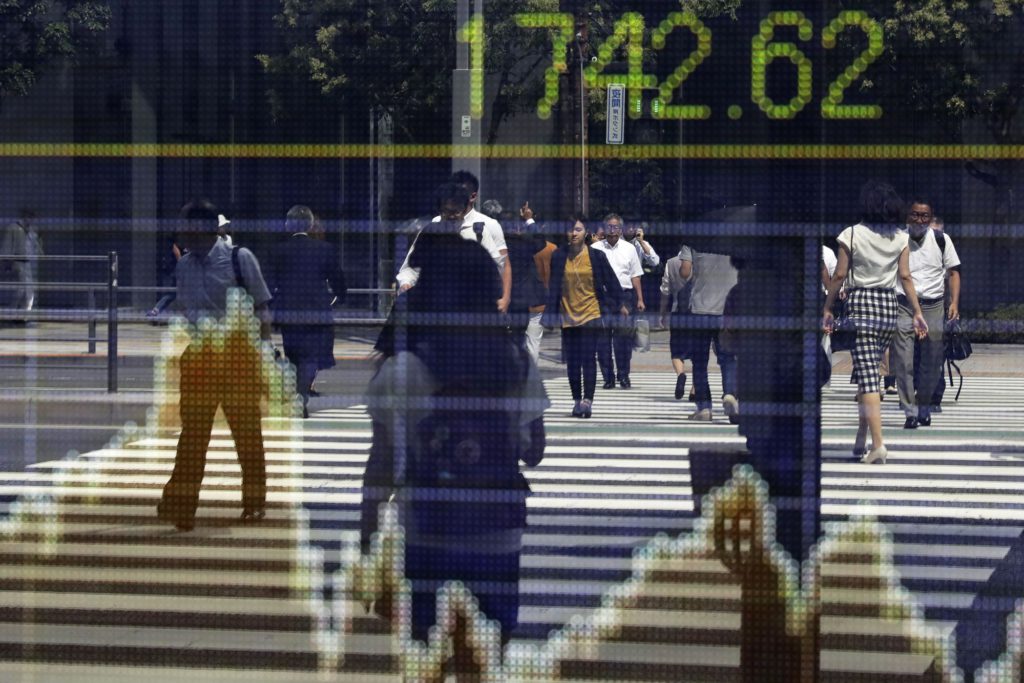
(Bloomberg) — The stock market snapped back at the end of a dizzying week as traders reduced their wagers on a bigger Federal Reserve hike in July, while parsing a raft of Wall Street earnings and hoping for signs of capitulation that could set the stage for a more sustained recovery.

American equities halted a five-day slide, with the expiration of about $1.9 trillion in options. Banks led gains after Citigroup Inc.’s blowout results. Swaps are pricing in nearly 75 basis points of Fed tightening this month — down from a full-point bet earlier in the week — but still an aggressive boost that leaves investors wondering about the odds of a recession. The dollar and bond yields fell. Oil rose, while ending below $100 a barrel.

Read: White House Expects More Saudi Oil After Biden Met With King

Economic readings were all over the place, but it was a drop in US consumer long-term inflation expectations to a one-year low that effectively captured traders’ attention. The reason is that it may provide some solace to policy makers that price pressures aren’t becoming entrenched.

Another reason for hope is that two Fed officials didn’t sound too keen on a full-point hike in July. Atlanta Fed President Raphael Bostic voiced wariness about a super-sized increase, and St. Louis’s James Bullard said he would defer judgment to the central bank’s meeting. He was quoted earlier this week as saying he favored sticking with a 75-basis-point boost.

“While a recession is increasingly likely, bulls note that a lot of bad news is already being priced in, and if a recession is shallow, there is upside to markets over the next year,” said Mark Hackett, chief of investment research at Nationwide. “The path to get there may not be pleasant, but if earnings can hold up, there is reason for cautious optimism.”

Read: BlackRock’s Fink Says Economic Woes Most Challenging in Decades

Odds are now close to even that the US will slip into a recession within the next year. The probability of a downturn over the next 12 months stands at 47.5%, up sharply from 30% odds in June, according to the latest Bloomberg monthly survey of economists. 

US stocks could see more declines as the risk of a hard economic contraction and a stronger dollar rises in the second half of the year, according to Bank of America Corp. strategists. Equity markets could see “proper capitulation” if second-quarter earnings are worse than expected, Michael Hartnett wrote.

“The markets today reflect a slowdown or a mild recession already,” said Kara Murphy, chief investment officer at Kestra Holdings. “As soon as we have confirmation that the Fed is winning the war with inflation — that means we need to see multiple data points suggesting that prices are slowing — I think that will be a risk-on sign for the market.”

In other corporate news, Wells Fargo & Co. said it will continue to do share repurchases, but it’ll be “prudent,” even as its peers JPMorgan Chase & Co. and Citigroup have both announced plans to pause buybacks. UnitedHealth Group Inc.’s results were lifted by lower costs of care that portend well for other health insurers.

Bullish positioning on the US dollar has surged to its highest level in seven years while investors have amped up their bearishness on the euro and turned against emerging-market currencies, according to a BofA survey of fund managers.

Elsewhere, copper capped its worst weekly decline in a year, at one point dropping below $7,000 a ton for the first time since 2020 amid deepening recession concerns. 

Some of the main moves in markets:

Stocks

  • The S&P 500 rose 1.9% as of 4 p.m. New York time
  • The Nasdaq 100 rose 1.8%
  • The Dow Jones Industrial Average rose 2.1%
  • The MSCI World index rose 1.6%

Currencies

  • The Bloomberg Dollar Spot Index fell 0.5%
  • The euro rose 0.6% to $1.0083
  • The British pound rose 0.4% to $1.1868
  • The Japanese yen rose 0.3% to 138.52 per dollar

Bonds

  • The yield on 10-year Treasuries declined four basis points to 2.92%
  • Germany’s 10-year yield declined five basis points to 1.13%
  • Britain’s 10-year yield declined one basis point to 2.09%

Commodities

  • West Texas Intermediate crude rose 1.8% to $97.55 a barrel
  • Gold futures fell 0.1% to $1,703.60 an ounce

More stories like this are available on bloomberg.com

©2022 Bloomberg L.P.

Facebook Parent Meta, Amazon Pull Back on NYC Office Expansions

(Bloomberg) — Tech giants Meta Platforms Inc. and Amazon.com Inc. are cutting back on planned office expansions in New York.

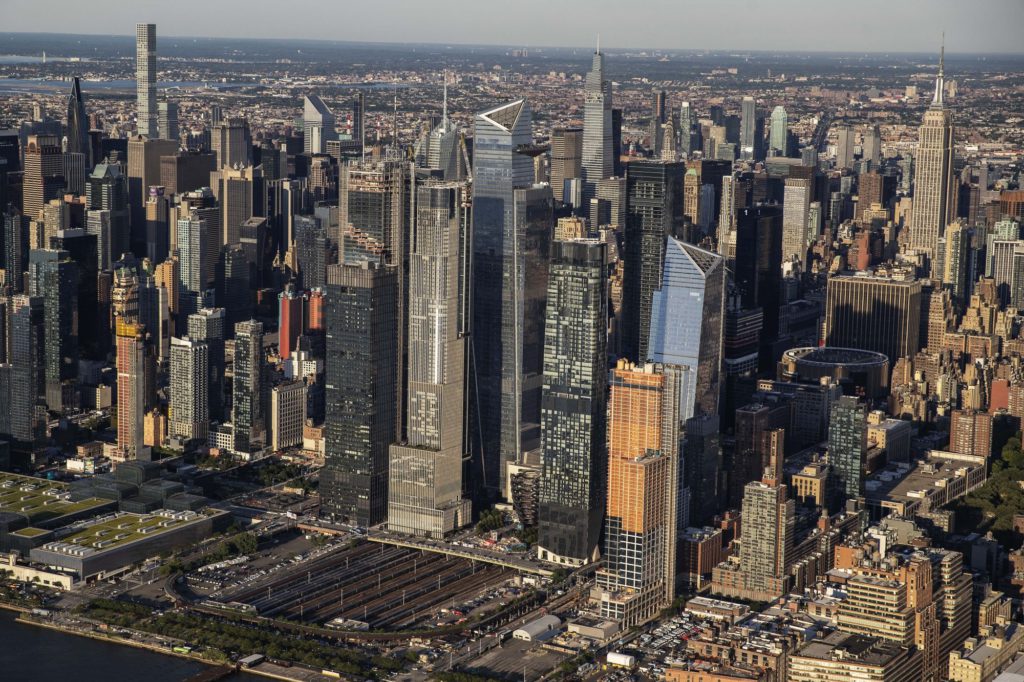
Facebook’s parent company Meta has decided against taking an additional 300,000 square feet (27,870 square meters) of space at 770 Broadway, a building near Astor Place where it’s already located, according to people familiar with the matter. The company is also pausing plans to further build out its new offices in Hudson Yards as it evaluates what to do with the space, said the people, who asked not to be named discussing private information. 

Nearby, Amazon has also cut back on the amount of space it had intended to lease from JPMorgan Chase & Co. at Hudson Yards, reducing the square footage it aims to take over, according to a person familiar with the matter. No deal has been signed yet.

Meta spokesperson Jamila Reeves said the company remains firmly committed to New York and is looking forward to opening the Farley Building near Pennsylvania Station in the coming months.

“There are often a number of reasons why we wouldn’t proceed with a particular deal, including office utilization,” Reeves said in an emailed statement. “The past few years have brought new possibilities around the ways we connect and work. We are working to ensure we’re making focused, balanced investments to support our most strategic long-term priorities.” 

Spokespeople for Amazon and JPMorgan declined to comment.

Office Shifts

Many tech companies have been moving toward more flexible, remote-working options since the start of the pandemic. At the same time, broad stock market declines and increasing concerns about the potential for the US economy to head into a recession have prompted some companies to slow hiring. Meta has announced plans to slow or pause hiring for some mid- to senior-level positions.

While both Meta and Amazon are still building out giant offices in Manhattan, the two companies’ more-cautious approach is a potential harbinger of future challenges across the city’s office market as businesses seek to cut costs and re-evaluate real estate strategies. New York still faces a glut of office supply, with more than 18% of space available despite a slight leasing rebound earlier this year, according to second-quarter data from Savills Research.  

Meta is still committed to large leases the company signed in recent years at both Hudson Yards and the redeveloped Farley Building. Even while most of its employees worked from home, the firm continued to build out its new offices and seek extra space in anticipation of even more growth.

Meanwhile, Amazon also leased space in Hudson Yards in 2019 and shelled out more than $1 billion in 2020 to purchase the Lord & Taylor building in midtown Manhattan for new offices. 

More stories like this are available on bloomberg.com

©2022 Bloomberg L.P.

Raj Rajaratnam Is Out of Jail and Hunting for His Next Big Trade

(Bloomberg) — In the spartan offices of his small private investment firm, Raj Rajaratnam, former inmate 62785-054, is searching for his next big trade.

All is quiet inside the townhouse in Manhattan’s East 50s — 200 miles and a world away from the federal prison where he served seven-and-a-half years for insider trading.

It’s been three years since the former hedge-fund magnate was freed from FMC Devens, the medical prison west of Boston where he did time with Ponzi schemer Nicholas Cosmo, AKA, the “mini-Madoff”, among others.

His new surroundings are undoubtedly a step up. But they’re surprisingly modest for the man known as Raj-Raj, the high-rolling trader who became the Ivan Boesky of his time. Nothing about this unassuming building might suggest this is where Rajaratnam — “Sunk by Greed” and “bound for brig,” the New York Post trumpeted 11 years ago — hopes to stage a comeback, maybe in more ways than one.

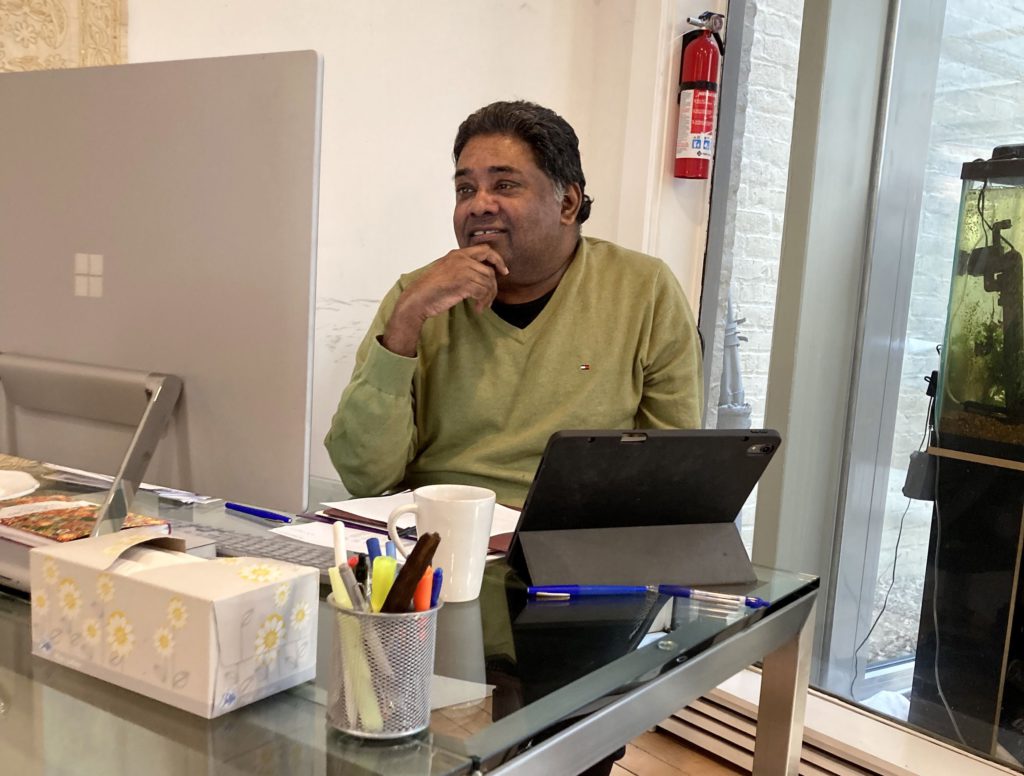
In his heyday at his multibillion-dollar Galleon Group LLC, computer screens crowded his huge, curved desk, monitoring markets around the globe. Here at Synamon Global LLC, Rajaratnam works at a utilitarian glass-topped table that looks as if it might’ve come from Ikea. A leather satchel is tossed on the blond-wood floor behind him. A beige tapestry hangs on one white wall, a red fire extinguisher nearby. The fish tank in the adjoining sunroom-workspace could stand a cleaning.

Rajaratnam, 65, is less fleshy than he was in his days as tabloid fodder. His temples are graying. The neat mustache is gone, as are the rimless glasses, but the gap-toothed smile is the same as ever. He peers into his monitor and pecks at the keyboard. Barred for life from managing other people’s money, and with Galleon long since shut, Rajaratnam spends his days tending his considerable personal fortune in obscurity. With about 18 people working or consulting for his family-office firm — the name “Synamon” echoes the spice most associated with his native Sri Lanka — he’s trading stocks, investing in real estate, whatever catches his eye. 

As much as anything, Rajaratnam is looking for a shot at redemption. He’s embarked on a long, lonely quest to rehabilitate his reputation, or at least indict the legal system that indicted him. Ever since federal agents showed up at his pricey Sutton Place apartment in 2009, he’s maintained his innocence. His case riveted Wall Street, and with reason: He ended up being convicted on all 14 counts of securities fraud and conspiracy and sentenced to 11 years, one of the the harshest penalties the US has ever levied for insider trading. It was the first major insider trading case in which the government used wiretaps, a tactic often used against organized crime and drug traffickers.

Today Rajaratnam insists he doesn’t want to relitigate his case. But he’s been doing that a lot lately in media interviews and in a book, “Uneven Justice: The Plot to Sink Galleon,’’ published in December. Like Michael Milken, a symbol of the greed-is-good 1980s who has successfully refurbished his reputation and been re-embraced by the global business elite, Rajaratnam is also using his wealth for various philanthropic efforts, particularly in his native Sri Lanka.

But make no mistake: Raj Rajaratnam is unrepentant. He says he was the “fall guy” for the feds’ failure to convict any prominent bankers following the 2008 financial crisis. “I was entrapped, framed, unlawfully wiretapped, surveilled, and then made to endure a brutal and very public media lynching,” Rajaratnam writes in “Uneven Justice.” Federal agents and prosecutors crossed legal lines to convict him, he says. Threatened with prison, employees and business contacts testified against him to save themselves, he says.

At FMC Devens, where he was sent because he has diabetes and kidney disease, he did time with murders and sex offenders – he says he tried to avoid them – and befriended drug dealers and white-collar crooks. Some fellow inmates tried to extort money from him. “That was not going to happen with me,” he says.

“This is a huge infrastructure that has to change,” Rajaratnam says of the criminal-justice system.

That’s not quite the way federal prosecutors saw things. Government authorities called Rajaratnam “a billion-dollar force of deception and corruption on Wall Street.” Tapping a network of informants across swaths of corporate America, he illegally used inside information to trade stocks such as Goldman Sachs Group Inc., Google, Intel Corp. and Hilton Worldwide Holdings, prosecutors said. His trading generated profits or avoided losses of $72 million, not quite $10 million for each year he served in prison.

The explosive case exposed the trafficking in illicit information at the highest echelons of American finance. Roughly a hundred other people were eventually ensnared by insider trading cases. Most pleaded guilty or, like Rajaratnam, were convicted by a jury.  Among those who went to prison were Rajat Gupta, former global head of McKinsey & Co. and former board member for Goldman Sachs, who blamed Rajaratnam for his downfall. The two were later reunited at FMC Devens, where Rajaratnam says they played bridge and Scrabble together. (Gupta ​​was convicted of passing tips to Rajaratnam related to Goldman Sachs and was sentenced to 2 years; he has long maintained his innocence.)

“Yeah, we were civil to each other,” Rajaratnam says of Gupta.

Rajaratnam has been far less charitable toward Preet Bharara, the former US attorney who spearheaded the government’s sweeping crackdown. Some celebrated Bharara as the Sheriff of Wall Street for aggressively going after hedge fund managers. Others accused him of letting Wall Street off the hook for the financial crisis. To hear Rajaratnam tell it, Bharara used the power of his office to win at all costs and advance his own career. He mentions Bharara 325 times in his 333-page book.

Bharara today says he doesn’t care what Rajaratnam thinks. In an email, the former prosecutor called the hedge funder he put away possibly “the least sympathetic defendant ever.”

Says Bharara: “Raj Rajaratnam was a privileged billionaire who engaged in massive insider trading, and there was an avalanche of evidence to prove it.” Bharara pointed to Rajaratnam’s failure to win over jurors and judges, despite an aggressive and costly defense.

“Whatever fairy tales he may now tell to rehabilitate his reputation or settle scores or peddle his book, Raj Rajaratnam was and is guilty. Period,” wrote Bharara, who was fired by Donald Trump in 2017.

Still, like Milken, Rajaratnam may have another act yet. Anita Raghavan, a former Wall Street Journal reporter who wrote a book about Rajaratnam and Gupta, says that in all likelihood Rajaratnam is still a billionaire. She calls his book a “selective retelling” of the Galleon affair and says there was ample evidence at trial to convict Rajaratnam. But wealth begets wealth, and also influence. In the waning days of the Trump administration, Milken received a presidential pardon.  

For his part, Rajaratnam won’t say if he’s still a billionaire.

“Yes I am, in many currencies — rupees, lira, pesos,” he jokes.

Back at Synamon, Rajaratnam is working with his small staff to spot investment opportunities

 “We invest in real estate, as well as in the stock market,” he says. “And so I come to work every day. Rather than having hundreds of investors, we have one investor.”

Galleon specialized in technology and healthcare, waters Rajaratnam is still plying today. Synamon’s investments include companies in medical technology, cloud computing, cybersecurity and clean energy, including electric vehicles. Its real estate investment business is buying residential properties in New York and in 10 states across the South, he says. His employees include recent college students who are working for him as analysts. The US staff is spread among New York, Pittsburgh and San Francisco. A team in Sri Lanka covers e-commerce.

Ean Renaud, 23, has been working for Rajaratanam since a chance, five-minute encounter with him last year while meeting with another trader. Renaud is a former competitive swimmer who says he dropped out of college to launch a clothing line, then worked at a start-up and traded stocks for his own account. As a rookie analyst, he’s thrilled to benefit from Rajaratnam’s years of experience in finance.

“You can kind of tell, he’s grinning and he enjoys thoroughly what he’s talking about,” Renaud said. “He hopes to see the excitement return from the other person he’s teaching.”

In an online meeting, the two discuss a recent downturn in the shares of Chinese electric car makers.

Rajaratnam seems delighted to hear from Renaud that one, XPeng Inc., is developing a flying car. Another analyst briefed Rajaratnam on Procept BioRobotics Corp., which sells equipment for robotic surgery.

After the call, Rajaratnam’s office is quiet again. He takes a few M&M’s from a bag. “I really have no regrets about the decisions I made,” he said. “I’m not looking back with bitterness.”

Whether Rajaratnam can pick himself up after such a spectacular fall is anyone’s guess. But he still has the money to try. The year was arrested, Forbes estimated he was worth $1.3 billion. He says legal fees and fines cost him $200 million. As for what he’s worth today? “Subtract that from whatever number you think I had,” he says with a laugh.

More stories like this are available on bloomberg.com

©2022 Bloomberg L.P.

Stocks Rally as Swap Traders Dial Back Fed Wagers: Markets Wrap

(Bloomberg) — The stock market snapped back at the end of a dizzying week as traders reduced their bets on a bigger Federal Reserve rate-hike in July, while parsing a raft of Wall Street earnings and hoping for signs of capitulation that could set the stage for a more sustained recovery.

American equities halted a five-day slide, with about $1.9 trillion of options set to expire. Banks led gains after Citigroup Inc.’s blowout results. Swaps are now pricing in 80 basis points of Fed tightening this month — still an aggressive boost that leaves investors wondering about the odds of a recession — but down from a full point earlier this week. The dollar and bond yields fell.

Economic readings were all over the place, but it was a drop in US consumer long-term inflation expectations to a one-year low that effectively captured traders’ attention. The reason is it may provide some solace to policy makers that current price pressures aren’t becoming entrenched.

Another reason for hope is that two Fed officials didn’t sound too keen on a full-point hike in July. Speaking separately, Atlanta Fed President Raphael Bostic voiced wariness of a super-sized rate increase, and St. Louis’s James Bullard said he would defer judgment to the central bank’s meeting. He was quoted earlier this week as saying he favored sticking with a 75-basis-point boost.

Read: Fed’s Daly: Inflation Too High, No Worry of ‘Overcooking’ Policy

“While a recession is increasingly likely, bulls note that a lot of bad news is already being priced in, and if a recession is shallow, there is upside to markets over the next year,” said Mark Hackett, chief of investment research at Nationwide. “The path to get there may not be pleasant, but if earnings can hold up, there is reason for cautious optimism.”

Read: Mammoth Trade in Fed Funds Futures Bets Against Full-Point Hike

Odds are now close to even that the US will slip into a recession within the next year. The probability of a downturn over the next 12 months stands at 47.5%, up sharply from 30% odds in June, according to the latest Bloomberg monthly survey of economists.

US stocks could see more declines as the risk of a hard recession and a stronger dollar rises in the second half of the year, according to Bank of America Corp. strategists. Equity markets could see “proper capitulation” if the second-quarter earnings season is worse than expected, strategists led by Michael Hartnett wrote.

“The markets today reflect a slowdown or a mild recession already,” said Kara Murphy, chief investment officer at Kestra Holdings. “As soon as we have confirmation that the Fed is winning the war with inflation — that means we need to see multiple data points suggesting that prices are slowing — I think that will be a risk-on sign for the market.”

In other corporate news, Wells Fargo & Co. said it will continue to do share repurchases, but it’ll be “prudent,” even as its peers JPMorgan Chase & Co. and Citigroup have both announced plans to pause buybacks. UnitedHealth Group Inc.’s second-quarter results were lifted by lower costs of care that portend well for other health insurers but may be a warning sign for hospital companies.

Some of the main moves in markets:

Stocks

  • The S&P 500 rose 1.5% as of 12:44 p.m. New York time
  • The Nasdaq 100 rose 1.3%
  • The Dow Jones Industrial Average rose 1.8%
  • The MSCI World index rose 1.4%

Currencies

  • The Bloomberg Dollar Spot Index fell 0.4%
  • The euro rose 0.6% to $1.0079
  • The British pound rose 0.2% to $1.1848
  • The Japanese yen rose 0.3% to 138.61 per dollar

Bonds

  • The yield on 10-year Treasuries declined three basis points to 2.93%
  • Germany’s 10-year yield declined five basis points to 1.13%
  • Britain’s 10-year yield declined one basis point to 2.09%

Commodities

  • West Texas Intermediate crude rose 2.3% to $97.95 a barrel
  • Gold futures fell 0.2% to $1,703.10 an ounce

More stories like this are available on bloomberg.com

©2022 Bloomberg L.P.
Bitcoin Miner Woes Risk Getting Worse After Celsius Collapse

(Bloomberg) — An already beleaguered cryptocurrency mining sector could soon be facing some additional pressure from the Celsius Network bankruptcy filing. 

The troubled crypto lender’s mining subsidiary also filed for protection from creditors late Wednesday. Celsius Mining said in the filing that it owns 80,850 rigs — with 43,632 in operation — and expects to run about 120,000 rigs and generate more than 10,000 coins by the end of this year. That would make the unit one of the largest Bitcoin miners, which use energy-intensive computers to process records of transactions and earn rewards in the virtual currency.

Industry observers had speculated that the mining business could be for sale as way to raise cash since Celsius halted investor withdrawals last month. Besides any bankruptcy related complications that may now arise, a possible offloading of the rigs could prove to be troublesome. 

“Celsius Mining selling machines would add downward pressure to already falling machines prices,” said Matthew Kimmell, digital asset analyst at CoinShares. 

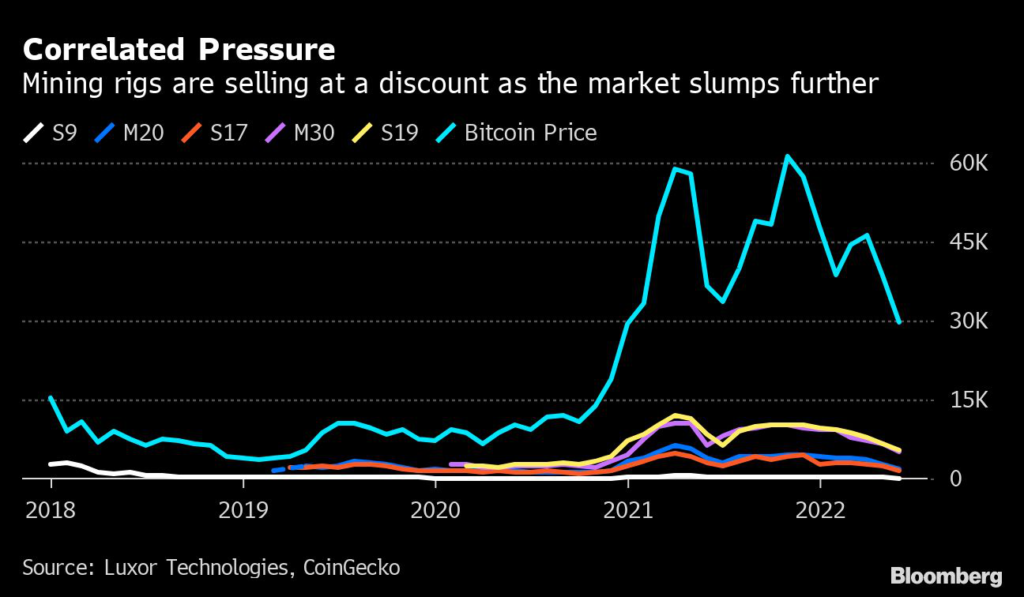
The bankruptcy comes as the value of mining rigs plunges with Bitcoin prices in sharp decline. Some of the most popular machine models have fallen as much as 50% since the last bull run and miners are struggling to complete purchase orders they made several months ago. Miners in Texas shut down this week because of stress on the local power grid.

Our trading desk “usually sees a 10-15% slippage of the market of a sell order if the machines want to move quickly,” said Ethan Vera, chief operations officer at crypto-mining services provider Luxor Technologies. “This will likely represent a 60-70% loss on their initial investment.”   

The Jersey City, New Jersey-based firm had been touting the unit as an attractive strategic asset. Celsius invested about $500 million in Celsius Mining and even prepared it for an initial public offering in May.

“The Mining Center is an essential driver of growth in the debtors’ business and will allow the debtors to expand and more profitably mine Bitcoin.” according to the filing. 

Celsius Mining has also started building a mining facility in Texas with four sites, where it could host over a quarter of the company’s rigs. The company engaged vendors to procure and provide goods and services for the construction, which could be completed in the coming weeks, according to the filing. 

In June, the company sold at least 7,000 rigs through a confidential auction before it filed for bankruptcy, CoinDesk reported earlier. However, it remains unclear whether Celsius will completely sell or continue its mining unit after the restructuring process. A Celsius representative didn’t return a message seeking comment on the reported rig sales.     

“It seems Celsius is aiming to continue at least part of the Celsius Mining operations following the restructuring as a means to generate Bitcoin rewards and pay down some of their outstanding liabilities.” Kimmell said. 

Even with the price of Bitcoin down about 70% from its November high and many miners struggling, Kimmell said the assets may still prove to be attractive if Celsius decides to shed them. 

This “may present a good opportunity for well capitalized miners to expand depending on their ability to deploy, electricity cost, and the efficiency of Celsius’ machines,” he said.

More stories like this are available on bloomberg.com

©2022 Bloomberg L.P.
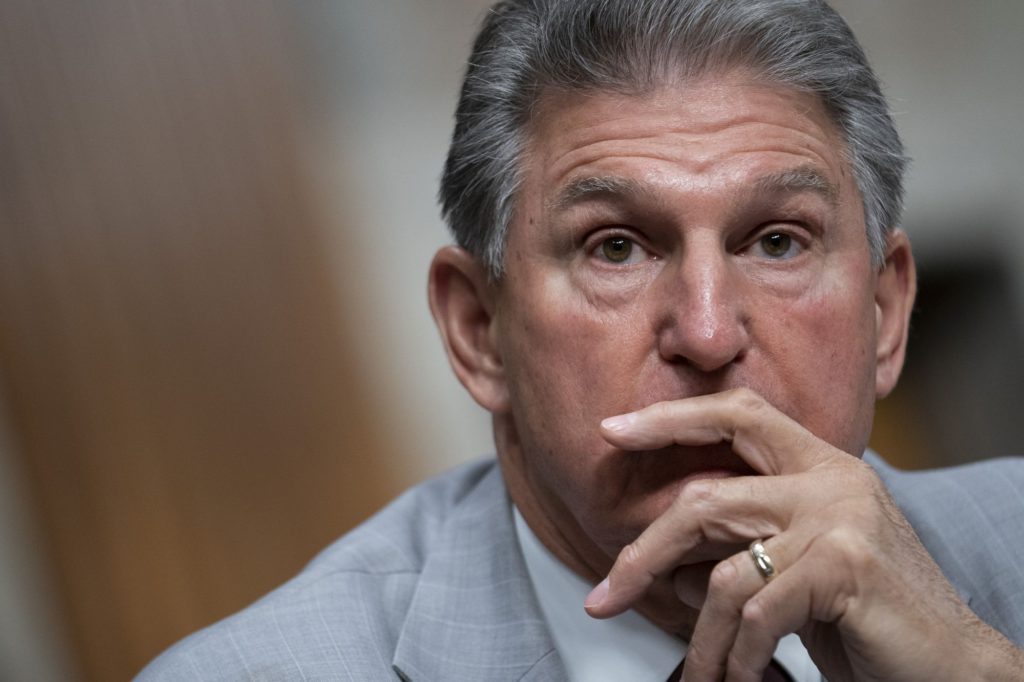
Manchin Says He’ll Reconsider Biden’s Tax, Climate Plan in September

(Bloomberg) — Senator Joe Manchin said he put the brakes on the Democrats’ tax and climate agenda in order to wait for July inflation data and to see what the Federal Reserve does next — but is willing to consider moving ahead in September.

The West Virginia Democrat said Friday that he told Senate Majority Leader Chuck Schumer he wouldn’t agree to go forward with an economic package that includes tax and climate provisions before an August congressional recess.

“I said, Chuck, can we just wait until the inflation figures come out in July,” Manchin said on “Talkline with Hoppy Kercheval” on West Virginia broadcast station MetroNews. “He took that as no, I guess.”

Manchin said parts of the package he’d be willing to consider in the meantime include provisions lowering prescription-drug prices and extending enhanced Affordable Care Act subsidies.

The July consumer price index report is scheduled for release Aug. 10, and a consensus estimate for it isn’t yet available. But the median forecast of economists surveyed by Bloomberg for the third quarter is currently 8.1%, suggesting continued historically high readings for July through September. The CPI surged 9.1% in June.

Deadline Looming

As for the Federal Reserve, policy makers are likely to raise interest rates by at least 75 basis points on July 27. Bets on a bigger move, of a full percentage point, retreated on Friday after a gauge of consumers’ longer-term inflation expectations dropped in July.

Sept. 30 is the hard deadline for Democrats to use the fast-track budget process to try to ram a bill with climate, tax, prescription-drug and other measures through the Senate without Republican support. Pushing action closer to the November midterm election would likely make it harder to pass any controversial tax increases through the narrowly controlled House.

Democrats now need to weigh whether to move forward now with a prescription drug and Obamacare health bill, using their one shot with the current budget reconciliation process for fiscal 2022, or wait to see if Manchin comes back to the table in September for a larger bill.

Some states announce Affordable Care Act premium increases in mid-August. If nothing is done, voters would be hit with bigger bills in October, just before the November election.

A spokesman for Schumer didn’t immediately respond to a request for comment.

China Bill

Manchin’s position is pivotal in the evenly divided Senate. Democrats need a united caucus to pass the economic package by simple majority under special budget reconciliation rules. 

Just days ago, Manchin and Schumer were negotiating over hundreds of billions in spending on measures designed to fight climate change, including tax breaks for renewable energy, electric vehicles and other clean-power sources. The loss of those plans will be a bitter pill for many Democrats on Capitol Hill and at the White House.

Dropping the climate package, which at one point contained a historic $555 billion sum for clean power, electric vehicles and resilience to global warming, would represent a major setback in the Biden administration’s efforts to confront emissions. The president pledged last year that the US would cut its greenhouse-gas emissions 50% to 52% from 2005 levels by the end of the decade.

Manchin in his radio interview insisted that while he and Schumer were far apart on the climate and energy portion two or three months ago, they were making significant progress more recently, saying that “as far as I’m concerned we’ve had good conversations.”

Meantime, Manchin’s comments leave in question whether Republicans will continue to block work on a separate bill aimed at boosting US competition against China, particularly in the technology sector.

Senate GOP leader Mitch McConnell has said that that legislation, which includes $52 billion in incentives for US semiconductor manufacturing, wouldn’t go forward if Democrats insist on passing their longer-termeconomic package on a party-line vote. Republicans aides said Friday morning that no decisions had been made yet.

Top Democrats were also weighing their next move. House Speaker Nancy Pelosi said she would confer with Schumer.

“I would be of course be disappointed if the whole saving-the-planet is out of the bill,” Pelosi said.

(Adds more detail about climate proposal and negotiations beginning in seventh paragraph.)

More stories like this are available on bloomberg.com

©2022 Bloomberg L.P.
Amazon Considered Ending Private-Label Sales to Appease Regulators

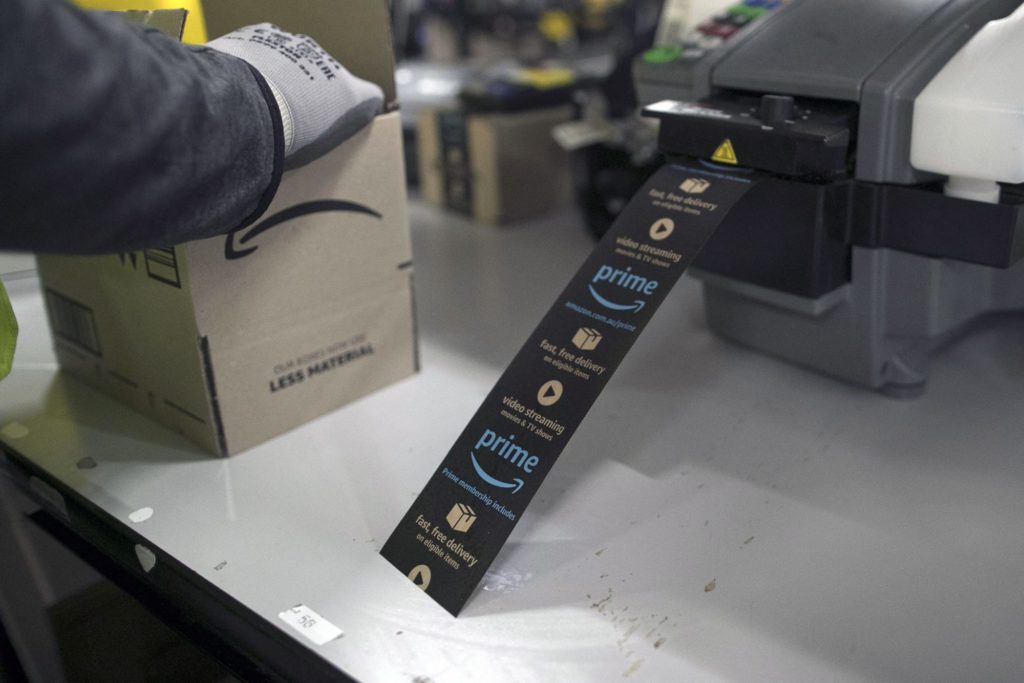
(Bloomberg) — Amazon.com Inc. has considered abandoning its private-label business as a peace offering to regulators, according to a person familiar with the matter. 

The company’s growing set of house brands is at the core of investigations launched by US and European regulators into whether the world’s largest e-commerce company is abusing its market power. Regulators have accused Amazon of using in-house sales data to select best-selling products sold by third-party merchants and then copy them.

Exiting the private-label business could help appease regulators without jeopardizing Amazon’s overall business, said the person, who requested anonymity to discuss an internal matter. The company has said house brand products account for about 1% of its revenue.

“We never seriously considered closing our private-label business and we continue to invest in this area, just as our many retail competitors have done for decades and continue to do today,” the company said in an emailed statement. The Wall Street Journal and Vox reported earlier that Amazon had considered exiting its private-label operation.

In Europe, Amazon has already offered to stop using data on independent sellers for its competing businesses as well as offering shoppers a clearer path to finding alternative products outside Amazon’s “buy box.” That favored designation on Amazon’s websites, selected by algorithms, can make or break a seller’s sales. EU regulators on Thursday said they were asking Amazon’s rivals to weigh in on the proposed concessions

Taken together, the proposed EU concessions and discussions about Amazon’s private-label business suggest the company is seeking a way to resolve its antitrust entanglements without making major changes to its core businesses. As antitrust scrutiny on Amazon and other US tech giants has ratcheted up, executives have realized they would likely have to make some changes, according to two people familiar with the discussions.

Amazon has been selling private-label products on its retail website for more than a decade, under the Amazon Basics brand and dozens of others. The effort has been the source of public-relations headaches for the Seattle-based giant, with companies from Williams-Sonoma Inc. to smaller independent sellers accusing Amazon of copying their products with cheap knock-offs. Amazon has denied that it uses data from individual sellers on its site to inform its product decisions. 

More stories like this are available on bloomberg.com

©2022 Bloomberg L.P.
TikTok Names New Head of Security Amid Heightened US Scrutiny

(Bloomberg) — TikTok named a new head of security as the popular video app has come under increasing scrutiny from congress and other US officials over concerns that user data could wind up in China.

Kim Albarella was appointed to serve as interim head of TikTok’s Global Security Organization, the company said in a statement Friday. She will oversee the transition as Roland Cloutier, who is stepping back from day-to-day operations on Sept. 2, moves into an advisory role focusing on the business impact of security and trust programs. TikTok is owned by China’s ByteDance Ltd.

“Part of our evolving approach has been to minimize concerns about the security of user data in the US, including the creation of a new department to manage US user data for TikTok,” Chief Executive Officer Shou Zi Chew and ByteDance Vice President of Technology Dingkun Hong said in a statement. “This is an important investment in our data protection practices, and it also changes the scope of the Global CSO role.”

Several Republican senators wrote to Chew in a June 27 letter expressing concern about a report in Buzzfeed News that said TikTok’s US consumer data was accessed by company engineers in China. The lawmakers said TikTok and ByteDance “are using their access to a treasure trove of US consumer data to surveil Americans.” The senators added that this “unfortunately extends beyond consumer data into the national security space.”

Brendan Carr, a Republican member of the Federal Communications Commission, has been one of the most vocal opponents of TikTok, and has pushed Apple Inc. and Google to remove the popular video app from their stores. This week, Carr testified on a House panel about his concern that military personnel using the app could be risking national security.

TikTok responded to the senators in a June 30 letter, acknowledging that certain China-based employees can access information from US users, but denied information goes to the Chinese Communist Party.

TikTok has also said it’s working with the US government to strengthen the security around user information — particularly anything defined as “protected” by the Committee on Foreign Investment in the United States, or CFIUS. The new effort includes physically storing US information in data centers on US servers owned by software giant Oracle Corp.

Cloutier’s exit from the role has been in the works for the last quarter, as the company has been setting up a US-specific data security team called “USDS” to address those needs in the region, according to a person familiar with the matter. This team has reported into TikTok’s CEO directly and also includes employees working across engineering, product, content moderation and operations, the person said. 


More stories like this are available on bloomberg.com

©2022 Bloomberg L.P.
GM’s Self-Driving Startup Cruise Faces Scrutiny After EV Snafus

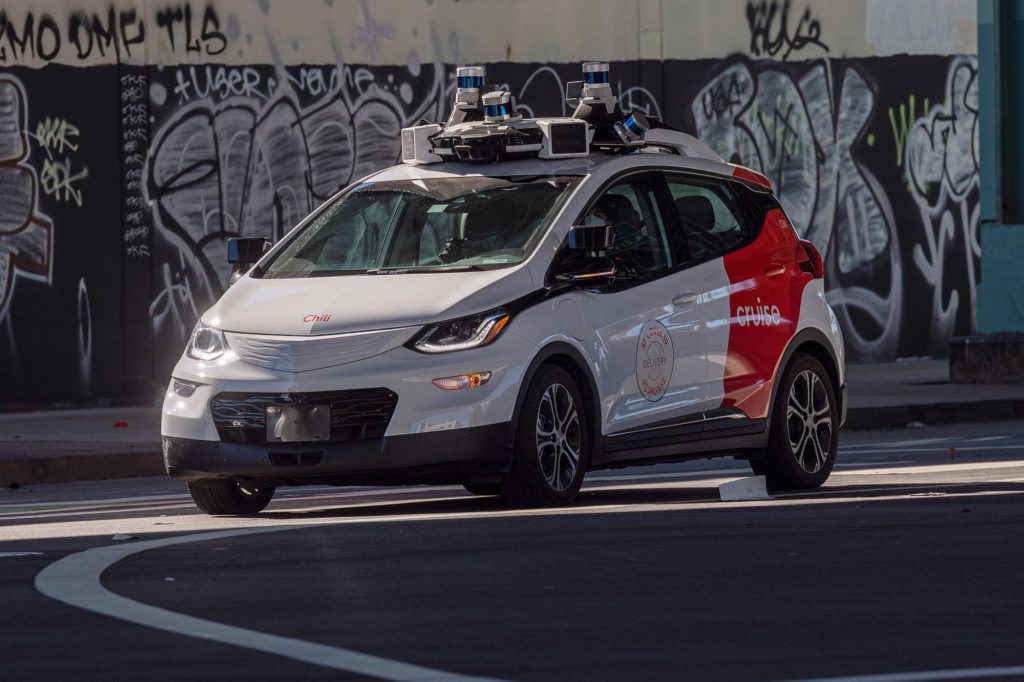
(Bloomberg) — General Motors Co.-backed self-driving startup Cruise LLC is facing scrutiny from US regulators and its own board of directors after a pair of on-road incidents raised questions about how ready the company is to expand its services.

GM’s autonomous-vehicle unit scored a triumph last month when it beat Alphabet Inc.’s Waymo to market with permission to charge for rides. The next day, there was an accident involving a Cruise car and a Toyota Prius that left two people with minor injuries. Later in June, as many as a dozen Cruise vehicles stopped at a single intersection due to a technical problem, blocking other motorists for more than an hour. 

Since then, state regulators and the San Francisco Municipal Transportation Agency have been in contact with Cruise because residents complained about the traffic jam. The National Highway Traffic Safety Administration has also contacted Cruise requesting information. Cruise spokesperson Aaron McLear said the NHTSA “has not opened a formal investigation into Cruise” for these or any other issues.  

Cruise’s board of directors — which is controlled by top GM executives including Chief Executive Officer Mary Barra — has also taken notice. It has pressed the startup on whether its processes were robust enough, said people familiar with the matter who asked not to be named because the conversations were private.

One Cruise director, GM General Counsel Craig Glidden, asked many questions about the June 28 incident that saw a cluster of Cruise cars gum up an intersection shortly after midnight, the people said. 

“We listen to feedback from various regulatory agencies and we take it seriously,” McLear said. “We also review our operations regularly.”

Expansion Plans

While neither of the incidents caused serious injuries, they serve as a reminder of the limitations of nascent self-driving technology and put pressure on Cruise to ensure its technology doesn’t become a nuisance or, worse, a safety hazard.

The snafus come just as Cruise is beginning to commercialize its technology, charging fares in part of San Francisco between 10 p.m. to 6 a.m. It hoped to grow quickly to the rest of the city and beyond, but there are some managers inside Cruise who are questioning whether the service is ready for rapid expansion, one of the people said. 

McLear said the latest incidents won’t slow down Cruise’s plans unless regulators in California delay expanding permitted services as a result. 

“We’ll continue to work with our regulators to safely expand our operations,” he said.

Still, Cruise may need to make sure it has its processes working smoothly before moving to daytime hours when traffic is heavier, said Sam Abuelsamid, principal analyst with Guidehouse Insights. 

“It might be that it’s time for a pause in the commercialization of autonomous vehicles,” Abuelsamid said. “We have a lot of work to do with AV services. They need to operate all hours of the day in all parts of the city before they can think about expanding somewhere else.”

Traffic Jam

The first incident to raise concern was on June 3, when a Cruise vehicle with a passenger got in an accident with a Prius that was speeding through a turn lane. The Cruise vehicle stopped while making a left turn and was hit by the Prius, which was traveling at 40 miles (64 kilometers) per hour in a 25 miles-per-hour zone. The Prius also went straight through the intersection in a right-turn lane, the police report said. The report did not say why the Cruise vehicle stopped. Passengers in both cars sustained minor injuries.

The traffic obstruction took place on June 28, less than a week after Cruise started charging for rides, and occurred as a result of two key problems. 

First, Cruise identified that there were intermittent connectivity issues between the cars on the road and the remote assistance staff who can help those vehicles make decisions if they’re unsure how to handle unusual situations. That prompted the company to call them back to the depot.

Then, 10 or 12 of the vehicles headed back on the same route and ended up in the same intersection. There was a connectivity issue at that location and the cars all stopped in place, sitting still for more than an hour.

There was no accident and no one was injured, but the Cruises caused a traffic jam in early morning hours. If that had happened in the afternoon, the logjam could have been much worse. It took Cruise employees almost two hours to arrive and manually drive the cars back. 

That, too, is another aspect of the incident that Cruise is reviewing: why it took so long for the company to get its cars off the road.

Anonymous Letter

The California Public Utilities Commission, which approved Cruise’s permit to charge fares, is also looking at an anonymous letter that says the company takes too long to address vehicle safety concerns from employees. The letter, sent by someone who claims to be a Cruise employee, also says vehicle retrieval events like the one that occurred on June 28 happen frequently. CPUC spokesperson Terrie Prosper said that the CPUC is looking into the letter and trying to determine its validity.

In response, Cruise pointed out that 94% of its employees said in an April survey that safety is the company’s top priority.

“Our safety record is tracked, reported, and published by multiple government agencies. We’re proud of it and it speaks for itself,” McLear said in an email.

McLear also said the technology issues that caused the traffic snarl were fixed “the next morning.” 

The company’s service is regulated by the California Department of Motor Vehicles, which is looking into the incident. “The DMV is aware of the incident on June 28 in San Francisco and is meeting with Cruise to gather additional information,” said California DMV spokesperson Kimberly Keys.

More stories like this are available on bloomberg.com

©2022 Bloomberg L.P.
GM’s Self-Driving Startup Cruise Scrutinized After Its Cars Crash, Jam Traffic

(Bloomberg) — General Motors Co.-backed self-driving startup Cruise LLC is facing scrutiny from US regulators and its own board of directors after a pair of on-road incidents raised questions about how ready the company is to expand its services.

GM’s autonomous-vehicle unit scored a triumph last month when it beat Alphabet Inc.’s Waymo to market with permission to charge for rides. The next day, there was an accident involving a Cruise car and a Toyota Prius that left two people with minor injuries. Later in June, as many as a dozen Cruise vehicles stopped at a single intersection due to a technical problem, blocking other motorists for more than an hour. 

Since then, state regulators and the San Francisco Municipal Transportation Agency have been in contact with Cruise because residents complained about the traffic jam. The National Highway Traffic Safety Administration has also contacted Cruise requesting information. Cruise spokesperson Aaron McLear said the NHTSA “has not opened a formal investigation into Cruise” for these or any other issues.  

Cruise’s board of directors — which is controlled by top GM executives including Chief Executive Officer Mary Barra — has also taken notice. It has pressed the startup on whether its processes were robust enough, said people familiar with the matter who asked not to be named because the conversations were private.

One Cruise director, GM General Counsel Craig Glidden, asked many questions about the June 28 incident that saw a cluster of Cruise cars gum up an intersection shortly after midnight, the people said. 

“We listen to feedback from various regulatory agencies and we take it seriously,” McLear said. “We also review our operations regularly.”

Expansion Plans

While neither of the incidents caused serious injuries, they serve as a reminder of the limitations of nascent self-driving technology and put pressure on Cruise to ensure its technology doesn’t become a nuisance or, worse, a safety hazard.

The snafus come just as Cruise is beginning to commercialize its technology, charging fares in part of San Francisco between 10 p.m. to 6 a.m. It hoped to grow quickly to the rest of the city and beyond, but there are some managers inside Cruise who are questioning whether the service is ready for rapid expansion, one of the people said. 

McLear said the latest incidents won’t slow down Cruise’s plans unless regulators in California delay expanding permitted services as a result. 

“We’ll continue to work with our regulators to safely expand our operations,” he said.

Still, Cruise may need to make sure it has its processes working smoothly before moving to daytime hours when traffic is heavier, said Sam Abuelsamid, principal analyst with Guidehouse Insights. 

“It might be that it’s time for a pause in the commercialization of autonomous vehicles,” Abuelsamid said. “We have a lot of work to do with AV services. They need to operate all hours of the day in all parts of the city before they can think about expanding somewhere else.”

Traffic Jam

The first incident to raise concern was on June 3, when a Cruise vehicle with a passenger got in an accident with a Prius that was speeding through a turn lane. The Cruise vehicle stopped while making a left turn and was hit by the Prius, which was traveling at 40 miles (64 kilometers) per hour in a 25 miles-per-hour zone. The Prius also went straight through the intersection in a right-turn lane, the police report said. The report did not say why the Cruise vehicle stopped. Passengers in both cars sustained minor injuries.

The traffic obstruction took place on June 28, less than a week after Cruise started charging for rides, and occurred as a result of two key problems. 

First, Cruise identified that there were intermittent connectivity issues between the cars on the road and the remote assistance staff who can help those vehicles make decisions if they’re unsure how to handle unusual situations. That prompted the company to call them back to the depot.

Then, 10 or 12 of the vehicles headed back on the same route and ended up in the same intersection. There was a connectivity issue at that location and the cars all stopped in place, sitting still for more than an hour.

There was no accident and no one was injured, but the Cruises caused a traffic jam in early morning hours. If that had happened in the afternoon, the logjam could have been much worse. It took Cruise employees almost two hours to arrive and manually drive the cars back. 

That, too, is another aspect of the incident that Cruise is reviewing: why it took so long for the company to get its cars off the road.

Anonymous Letter

The California Public Utilities Commission, which approved Cruise’s permit to charge fares, is also looking at an anonymous letter that says the company takes too long to address vehicle safety concerns from employees. The letter, sent by someone who claims to be a Cruise employee, also says vehicle retrieval events like the one that occurred on June 28 happen frequently. CPUC spokesperson Terrie Prosper said that the CPUC is looking into the letter and trying to determine its validity.

In response, Cruise pointed out that 94% of its employees said in an April survey that safety is the company’s top priority.

“Our safety record is tracked, reported, and published by multiple government agencies. We’re proud of it and it speaks for itself,” McLear said in an email.

McLear also said the technology issues that caused the traffic snarl were fixed “the next morning.” 

The company’s service is regulated by the California Department of Motor Vehicles, which is looking into the incident. “The DMV is aware of the incident on June 28 in San Francisco and is meeting with Cruise to gather additional information,” said California DMV spokesperson Kimberly Keys.

More stories like this are available on bloomberg.com

©2022 Bloomberg L.P.
Close Bitnami banner
Bitnami