Bloomberg

MTN in Talks With Telkom to Combine South African Phone Groups

(Bloomberg) — MTN Group Ltd. is in talks to buy smaller domestic rival Telkom SA SOC Ltd. in a deal that would combine South Africa’s second and third-largest telecommunications operators.

MTN would pay for the partially state-owned company in shares or a combination of cash and stock, according to a statement on Friday. Discussions are at an early stage and there is no certainty the transaction will be completed, the carriers said.

Telkom shares soared 15%, the most since September, valuing the company at almost 20 billion rand ($1.2 billion). 

Following a multi-year asset-disposal program, MTN is flush with cash and looking to strengthen its hand in core African markets. A combination with Telkom would help close the gap with Johannesburg rival Vodacom Group Ltd., South Africa’s market leader, though a number of competition issues would have to be worked through as the deal would create an effective duopoly.

Bloomberg first reported MTN’s interest in Telkom last year.

More stories like this are available on bloomberg.com

©2022 Bloomberg L.P.

Stocks Gain, US Futures Waver as Bonds Advance: Markets Wrap

(Bloomberg) — Stocks in Europe gained, US futures wavered and bonds gained at the end of a week in which markets have been whipsawed by shifting expectations for monetary tightening by the Federal Reserve and other major central banks.

S&P 500, Nasdaq 100 contracts fluctuated after Wall Street came off Thursday lows to close with a small drop as investors dialed back expectations of how aggressively the Fed will hike interest rates to combat inflation. Traders are awaiting earnings from CitiGroup Inc. and Wells Fargo & Co. Friday after disappointing results yesterday from JPMorgan Chase & Co. and Morgan Stanley. 

The Stoxx Europe 600 index was led higher by the construction and healthcare sectors. Italy’s benchmark index rallied after the country’s president rejected an offer from Mario Draghi to resign as prime minister as his coalition government teeters on the brink of collapse. A slide in China tech shares on renewed worries about regulatory obstacles sapped an Asian stock index.

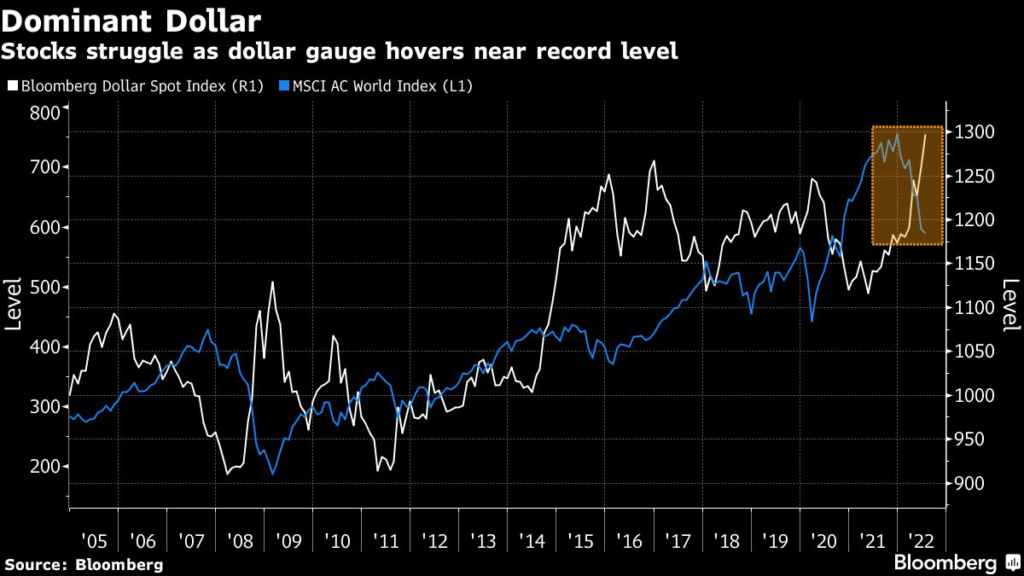
Treasuries rose and the the yield curve between two-year and 10-year maturities remained inverted, something viewed as recession signal. The Bloomberg Dollar Spot Index hovered around a record high. Brent crude oil is poised to end the week below $100 a barrel for the first time since April.

Investors are weighing up how hawkish the Fed must be to curb inflation and the likely toll on the economy. Bets on a one-percentage-point July rate hike have been scaled back after the latest commentary pointed toward 75 basis points. The pace of monetary tightening along with ebbing liquidity still threatens to stir more market volatility after steep losses for stocks and bonds in 2022.

“We need liquidity to dry up in order to reduce inflation,” Erin Gibbs, chief investment officer at Main Street Asset Management, said on Bloomberg Radio. “It’s a challenge, it’s a difficult situation, transition. I don’t envy the Federal Reserve, but we’ve known there has been too much money out there and that’s why we’re here in this position.”

In the latest Fed comments, Governor Christopher Waller backed raising rates by 75 basis points this month, though he said he could go bigger if warranted by the data. St. Louis Fed President James Bullard echoed some of those comments, saying he favored hiking by the same amount.

Elsewhere, China’s second-quarter growth slowed on Covid lockdowns but consumption rallied in June as curbs eased. Officials refrained from injecting funds into the banking system and left borrowing costs unchanged.

Meanwhile, about $1.9 trillion of options are set to expire Friday, a event that could bring some volatility to markets. Investors are also awaiting the next batch of US bank profit reports as the earnings season intensifies. 

What to watch this week:

  • US business inventories, industrial production, University of Michigan consumer sentiment, Empire manufacturing, retail sales, Friday
  • G-20 finance ministers, central bankers meet in Bali, from Friday
  • Atlanta Fed President Raphael Bostic speaks, Friday

Will the eurozone avoid a recession or a debt crisis? How will the euro and stocks perform in the next six months? Share your views and participate in the latest MLIV Pulse survey. It only takes a minute, so please click here anonymously.

Some of the main moves in markets:

Stocks

  • The Stoxx Europe 600 rose 0.8% as of 8:26 a.m. London time
  • Futures on the S&P 500 rose 0.2%
  • Futures on the Nasdaq 100 rose 0.2%
  • Futures on the Dow Jones Industrial Average rose 0.1%
  • The MSCI Asia Pacific Index fell 0.4%
  • The MSCI Emerging Markets Index fell 0.6%

Currencies

  • The Bloomberg Dollar Spot Index was little changed
  • The euro was little changed at $1.0024
  • The Japanese yen rose 0.2% to 138.74 per dollar
  • The offshore yuan fell 0.2% to 6.7762 per dollar
  • The British pound was little changed at $1.1826

Bonds

  • The yield on 10-year Treasuries declined four basis points to 2.92%
  • Germany’s 10-year yield declined nine basis points to 1.09%
  • Britain’s 10-year yield declined six basis points to 2.05%

Commodities

  • Brent crude fell 0.3% to $98.80 a barrel
  • Spot gold fell 0.3% to $1,704.34 an ounce


More stories like this are available on bloomberg.com

©2022 Bloomberg L.P.

Crypto Deal Delay Casts Doubts Over Thai Bank’s Makeover

(Bloomberg) — A delayed deal between Thailand’s oldest bank and its largest cryptocurrency exchange is raising doubts about the 115-year-old financial group’s ambition to become a regional fintech powerhouse. 

Bangkok-listed SCB X Pcl agreed to acquire a majority stake in Bitkub Online Co. for 17.9 billion baht ($490 million) at the peak of crypto craze in November, with a target to wrap up the deal earlier this year. But SCB last week said there’s still due diligence to be carried out amid discussions with regulators. 

Thailand’s cryptocurrency industry is facing heightened regulatory scrutiny just as SCB attempts a push to become a market leader in digital assets. Falling fees and rising competition within traditional banking businesses are forcing lenders to develop new markets within Southeast Asia’s second-biggest economy and further afield. 

“Bitkub is a key step for SCB to achieve its expansion into digital asset and fintech businesses,” said Therdsak Thaveeteeratham, an analyst at Asia Plus Securities Pcl. “The delay further raises doubt about the deal completion. This would be a significant blow to SCB’s regional tech ambition.”

Bitkub and its chief executive officer last month were fined by the Securities & Exchange Commission for creating “artificial trading volume” on its platform. In May, the company and five officials were also fined by the regulator for breaching guidelines in listing the company’s own digital coins. 

Meantime, the global crypto market is contending with a $2 trillion crash and a slew of high-profile bankruptcy filings. Bitcoin, the world’s biggest token, is down more than 70% from its peak in November. Crypto lender Celsius Network and broker Voyager Digital Ltd. filed for Chapter 11 bankruptcy, while liquidators have been called in for bankrupt crypto hedge fund Three Arrows Capital.

“The biggest concern now is the depressed cryptocurrency trading worldwide,’ said Nares Laopannarai, the secretary general of the Thai Digital Asset Association. “Coupled with some tax and regulation issues, this has made most investors and participants more cautious about the crypto market.”

Trading of cryptocurencies on Thailand’s licensed exchanges slumped to 58 billion baht in June, the lowest level since January 2021, according to Securities & Exchange Commission’s data. The total number of active trading accounts fell to 305,000 in June from 556,000 a month before, data showed.

No Deadline

SCB hasn’t given a new completion deadline for the proposed takeover of Bitkub. 

Still, for SCB, which counts Thailand’s King Maha Vajiralongkorn as its biggest shareholder, the setback to the pending Bitkub deal is unlikely to derail the group’s expansion into fintech, according to Bloomberg Intelligence. The group saw broad-based digital adoption in the first quarter for users, loans and revenue, a recent Bloomberg Intelligence report showed. 

“SCB may continue to focus on high-growth fintech business,” said Rena Kwok, a Bloomberg Intelligence analyst. “Its peer-leading digital transformation and foray into high-growth fintech space could offer medium-term earnings drivers.”

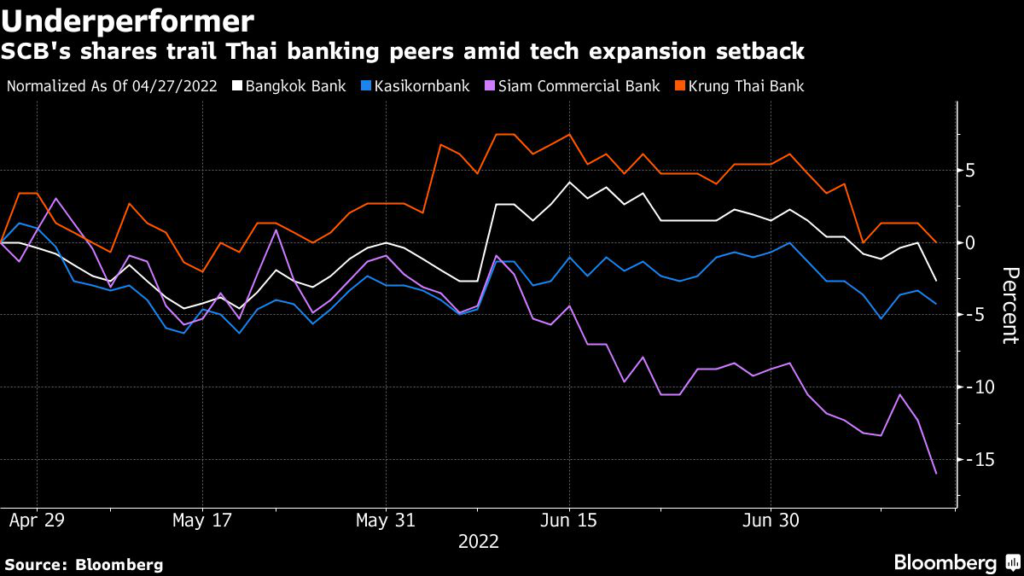
SCB shares fell 1.3% at lunch break on Friday, extending a decline to 18% since they began trading in April after a successful stock-swap offer for the previously-listed entity called Siam Commercial Bank Pcl. They have trailed peers such as Bangkok Bank Pcl, Kasikornbank Pcl and Krung Thai Bank Pcl. 

(Adds crypto trading volume in eighth paragraph.)

More stories like this are available on bloomberg.com

©2022 Bloomberg L.P.

VW’s Battery Unit Faces Supply-Chain Hurdles in Road to IPO

(Bloomberg) — Volkswagen AG’s newly formed battery business is working to overcome supply-chain headwinds as it ramps up production and prepares for an initial public offering.

PowerCo, which bundles the carmaker’s global battery efforts, is trying to secure raw materials amid surging prices and logistics issues, according to the unit’s Chief Financial Officer Kai Alexander Mueller. VW plans to partner with Umicore SA to source cathode materials, is exploring working with Robert Bosch GmbH for machinery and agreed to offtake battery-grade lithium hydroxide from miner Vulcan Energy Resources.

“The supply chain for our business simply doesn’t exist today,” Mueller said in an interview. “What is important is working with suppliers to scale this industry.”

Automakers from VW to General Motors Co. are exploring different business models as they race to electrify their lineups and catch Tesla Inc., the world’s top seller of electric vehicles. Europe is trying to build up a homegrown battery industry to counter the dominance of Asian suppliers.

READ: The Next Electric-Car Battery Champion Could Be European

PowerCo, which broke ground on its first European factory last week, is expected to invest more than 20 billion euros ($20 billion) in five of its own cell factories by 2030. VW is building a sixth factory in Sweden via a partnership with Northvolt AB.

VW’s flagship battery plant in Salzgitter, Germany, will be able to produce 40 gigawatt-hours of cells per year, enough for roughly 500,000 EVs, according to the company. Salzgitter is home to VW’s main motor factory, and last year the carmaker opened a facility there to research, develop and test EV batteries.

VW remains open to IPO the battery unit after financing it internally and inviting in strategic partners, VW CFO Arno Antlitz said last month, adding that this process would begin next year.

PowerCo is meant to bundle VW’s battery-making activities much in the same way as its Cariad unit is attempting to streamline software efforts. It will oversee activities including procurement, raw-materials processing, product development and plant management. The push ties into VW’s efforts to streamline decision-making and make the vast conglomerate leaner and more focused.

“We are starting from the beginning to cover all aspects, from the mine to the end product,” Mueller said. “We need to understand the sourcing, pricing to have a competitive product.”

(Updates with details on Salzgitter facility in sixth paragraph.)

More stories like this are available on bloomberg.com

©2022 Bloomberg L.P.

Scrutiny of Alibaba in Record Breach May Ensnare All China Tech

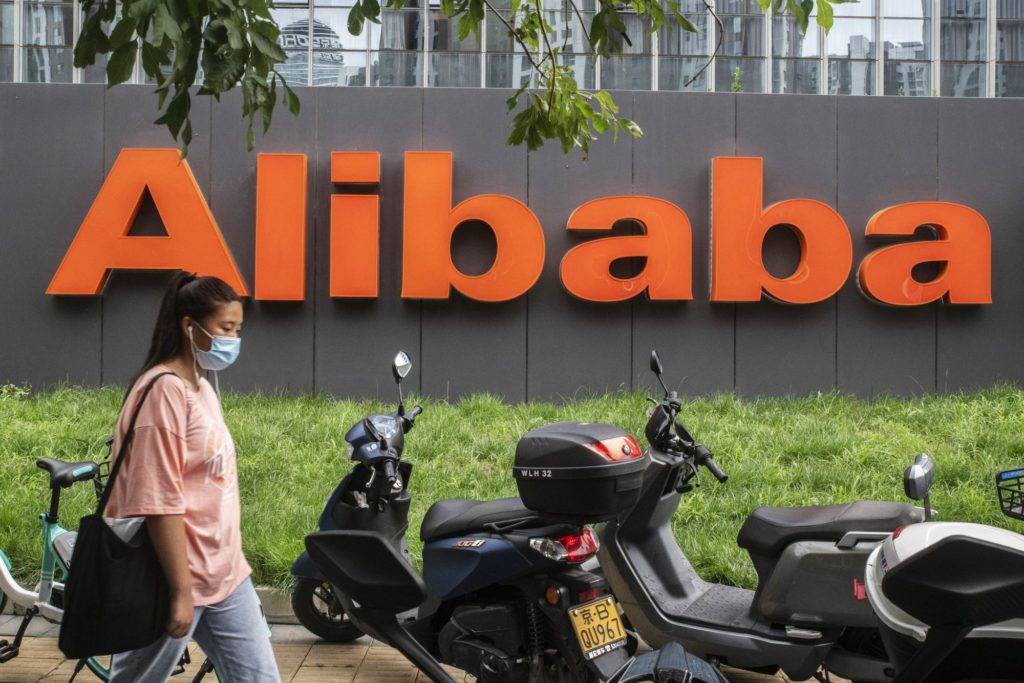
(Bloomberg) — Questions surrounding Alibaba Group Holding Ltd.’s role in China’s largest known cybersecurity breach may fuel Beijing’s resolve to clamp down on domestic tech giants and accelerate a move away from their private cloud services.

Researchers studying the leaked data of close to a billion Chinese residents earlier this month have noticed hallmarks of Alibaba’s cloud service, including the domain name of the hosting service. This week, executives of the company’s cloud division, known as Aliyun, were summoned by Shanghai authorities in relation to that data dump, the Wall Street Journal reported, citing sources familiar with the matter.

The embarrassing data breach comes as Chinese President Xi Jinping, months away from potentially an unprecedented third term, has stressed the importance of cybersecurity. It has sent a jolt through the Chinese security community, given not only the massive scale of the leak but also because the data in question was managed by Shanghai’s police, who help to collect data on citizens and enforce the country’s increasingly strict cyber laws.

Officials in Shanghai and from the Cyberspace Administration of China have not publicly commented on the high-profile incident, even two weeks after a hacker sought to sell the vast trove of stolen personal info that includes names, phone numbers, addresses, and criminal records. Alibaba declined to comment.

The company’s shares were down as much as 5.8% in Hong Kong on Friday and led a wide swathe of declines among Chinese tech firms operating in related fields. Investors fear the incident will affect Chinese regulations on cloud services going forward, affecting some of the country’s biggest names from Tencent Holdings Ltd. and Baidu Inc. to Huawei Technologies Co.

Read more: Alibaba Leads Drop in China Tech Shares as Regulatory Fears Grow

“Even though the incident was only related to Alibaba Cloud, its impact will likely spill over into other private cloud providers such as Tencent and Baidu,” said Shen Meng, a director at Beijing-based investment bank Chanson & Co. “If Aliyun is indeed found to have flaws in its system, it would deal a heavy blow to the reputation of non-state cloud providers and could even trigger a massive user migration to state-backed cloud systems.”

That migration was already underway even before the July hack, as Beijing’s relentless and widespread crackdown of its formerly high-flying tech giants nudged risk-averse institutions toward state-owned providers. Large-scale businesses like the China Construction Bank and local municipalities in cities such as Nantong were already moving closer to state-backed cloud platforms.

Aliyun’s reputation took a hit last year when China’s Ministry of Industry and Information Technology, the country’s powerful tech overseer, upbraided the service provider for not reporting a software flaw to the government in a timely fashion. MIIT then suspended cooperation with Aliyun on a cybersecurity information-sharing platform for six months.

Hacker’s Record Theft Claim Exposes Dangers of China Data Trove

Multiple security researchers who analyzed the leaked database have said its certification information pointed to it being hosted on AliCloud and that it may have been left unsecured online for months, without a username or password guarding access. Bob Diachenko, from the cyber threat intelligence site Security Discovery, said he had discovered the database in April, and an analysis by LeakIX, which tracks exposed data online, showed that the database may have been publicly accessible since last April.

It is unusual for the targeted organization in a claimed data breach to let so many days pass without offering public comment on the incident, which has created a “vacuum of information” around it, said Troy Hunt, the Australia-based creator of the Have I Been Pwned? website. In general, it was more likely for a cloud service subscriber to make a mistake in its security and configuration settings rather than for a third-party cloud service provider to have serious vulnerabilities that would be responsible for data breaches of this kind, he said.

“It’s pretty expected that the owner of the data might call to account the cloud provider,” he said. “The interesting question is, is this a problem with Alibaba Cloud, or is it a problem with the way that the customer configured it? It is more likely that a single subscriber of the cloud provider, in this case the Shanghai police, made a mistake.”

Beijing Crackdown Derails Alibaba’s Bid for Amazon-Size Profit

Since the data theft was publicized, security researchers say that access to the database online has been pulled. Alibaba temporarily disabled access and began internally investigating the incident, including reviewing the database architecture and configurations for their contracts with customers, particularly for government agencies and financial institutions, the Journal reported.

More stories like this are available on bloomberg.com

©2022 Bloomberg L.P.

Huawei’s Secretive Chip Arm Seeks PhDs to Get Past US Sanctions

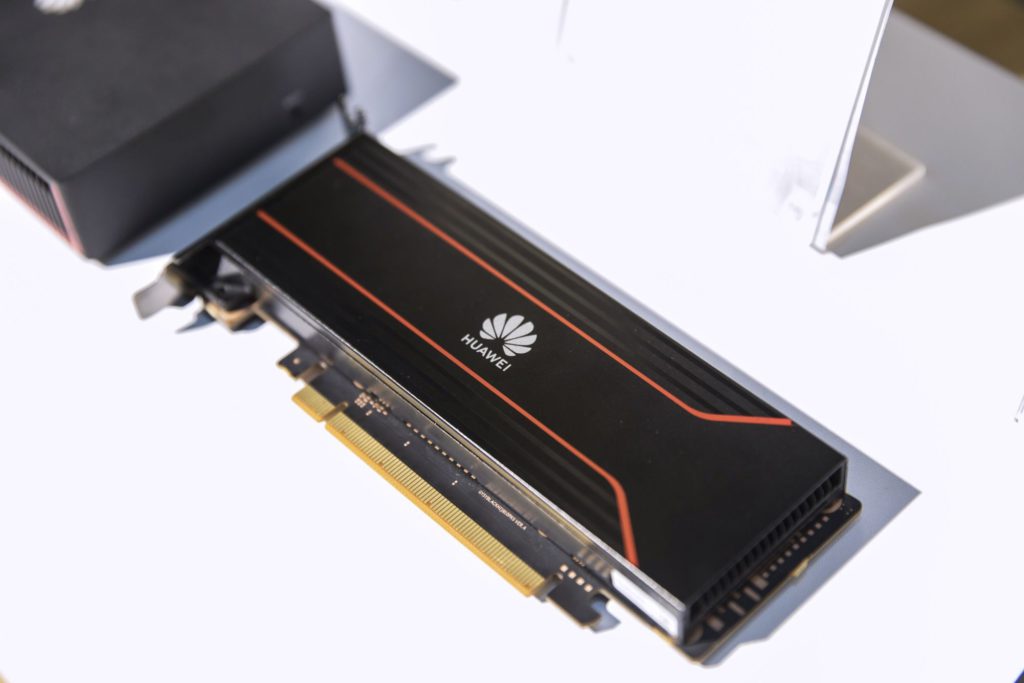
(Bloomberg) — Huawei Technologies Co.’s secretive chipmaking arm is hiring scores of highly trained engineers to help develop its own semiconductor-design software, a niche field now dominated by America’s Cadence Design Systems Inc. and Synopsys Inc.

The hiring spree marks the Chinese tech giant’s latest effort to develop technologies it can no longer access freely because of US sanctions. HiSilicon, which makes the processors that power Huawei’s smartphones and telecom gear, has advertised for 50 roles involved in next-generation computing and manufacturing technologies, according to job posts on HiSilicon’s WeChat account. 

Among those are roles focused on developing in-house chip design tools known as electronic design automation software, an essential product that Huawei can’t buy from Cadence or Synopsys because of the sanctions. Since Washington blacklisted Huawei — which it views as a national security threat — the Chinese company has resorted to outdated EDA software and clumsy local alternatives to draw up blueprints for their latest chipsets.

Read more: Synopsys Probed on Allegations It Gave Tech to Huawei, SMIC (2)

Candidates will be responsible for “researching advanced EDA technologies,” according to one job description. In a separate post, another unit at Huawei said it’s seeking talent to participate in EDA development projects that can achieve “breakthroughs” in core chip technologies. Huawei didn’t disclose the overall size of the hiring — for instance, if multiple people were required for specific posts or roles, and representatives declined to comment.

Washington is tightening China’s access to the latest chipmaking technologies, years after the Trump administration first blocked Huawei from getting the most advanced chipsets and software. The US is now pushing the Netherlands to ban ASML Holding NV — which dominates the production of machines critical in making the most advanced silicon — from selling gear to China. 

More stories like this are available on bloomberg.com

©2022 Bloomberg L.P.

Europe Car Sales Slump to Worst June in Decades on Supply Issues

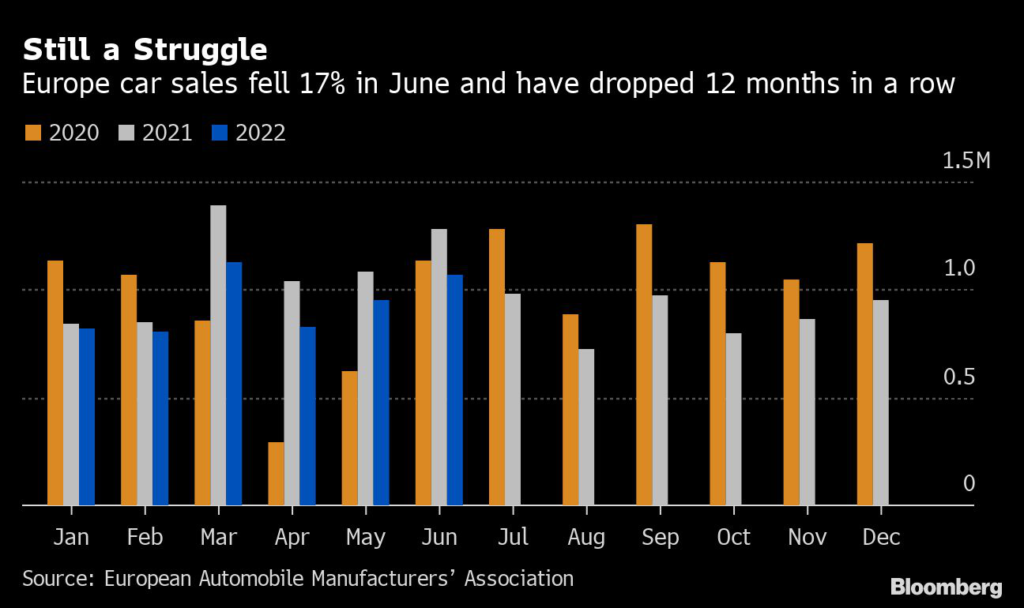
(Bloomberg) — Carmakers registered the fewest new vehicles in the European Union since 1996 as persistent supply chain snarls and record inflation afflict the industry.

New-car sales in the EU and four other states tracked by the European Automobile Manufacturers’ Association fell 17% to 1.07 million last month, according to a statement. Volkswagen AG was the hardest-hit major carmaker, with registrations dropping 24% from a year ago.

While manufacturers including VW, BMW AG and Mercedes Benz AG said last month the shortage of semiconductors had started to ease, it takes time for any boost in production to flow through to showrooms and enable dealers to work down order books. Manufacturers are also dealing with raw material and energy costs, which are contributing to vehicle price increases.

“The industry will not overcome supply constraints anytime soon,” LMC Automotive said in an update this month. “Another concern relates to underlying demand, which has weakened in recent months as the economic outlook has deteriorated.”

Sales in major markets including Germany and the UK may return to growth this month due to an easy year-ago comparison, according to Bloomberg Intelligence. While that suggests the industry stands a chance of snapping a 12-month streak of consecutive declines, it will be difficult to make up for production losses during the first half. LMC Automotive now estimates Western European passenger car deliveries will drop 6.3% this year to 9.92 million. In January, the market researcher predicted sales would grow almost 9%.

Forecasting demand remains difficult due to risk that energy shortages will worsen. The main conduit for Russian gas to Europe went down for maintenance this week, and Berlin and its allies are bracing for President Vladimir Putin to cut off flows for good in retaliation for sanctions and support for Ukraine.

“An increasing fear developing concerns potential plant shutdowns in Germany related to energy shortages,” Tom Narayan, RBC Capital Markets’s European auto analyst, wrote in a July 5 report. “The concern has more to do with the supply chain (chemical plants in Germany shutting down production of plastics used for car components, etc), and as such, may not impact German OEMs any more than others.”

Carmakers have compensated for lost volume by charging higher prices and focusing on their most expensive and profitable models. But with inflation soaring and consumers cutting back spending, that strategy could run up against limits.

“We are a little bit cautious about the outlook next year,” VW Chief Executive Officer Herbert Diess said in an interview last week with Bloomberg Television. “The world will remain unstable. That’s our assumption, so we have to be a bit cautious.”

More stories like this are available on bloomberg.com

©2022 Bloomberg L.P.

US Futures Up, Stocks Steady as Dollar Jump Pauses: Markets Wrap

(Bloomberg) — US equity futures ticked higher Friday and an Asian equity gauge was little changed as investors assessed the outlook for Federal Reserve interest-rate hikes and the latest readings on China’s economy.

S&P 500, Nasdaq 100 and European contracts rose as Asian shares pared losses and after Wall Street came off Thursday lows to close with a small loss.

Alibaba Group Holding Ltd. contributed to a slide in China tech. Speculation that the firm faces a data-theft probe reignited worries about regulatory obstacles.

China’s second-quarter growth slowed on Covid lockdowns but consumption rallied in June as curbs eased. Officials refrained from injecting funds into the banking system and left borrowing costs unchanged.

Treasuries edged up and the the yield curve between two-year and 10-year maturities remained inverted, something viewed as recession signal. The Bloomberg Dollar Spot Index hovered near a record high. Oil is poised to end the week below $100 a barrel for the first time since April.

Traders are weighing up how hawkish the Fed must be to curb inflation. Bets on a one-percentage-point July rate hike have been scaled back after the latest commentary pointed toward 75 basis points. Ebbing liquidity threatens to stir more market volatility after steep losses for stocks and bonds in 2022.

“We need liquidity to dry up in order to reduce inflation,” Erin Gibbs, chief investment officer at Main Street Asset Management, said on Bloomberg Radio. “It’s a challenge, it’s a difficult situation, transition. I don’t envy the Federal Reserve, but we’ve known there has been too much money out there and that’s why we’re here in this position.”

In the latest Fed comments, Governor Christopher Waller backed raising rates by 75 basis points this month, though he said he could go bigger if warranted by the data. St. Louis Fed President James Bullard echoed some of those comments, saying he favored hiking by the same amount.

Meanwhile about $1.9 trillion of options are set to expire Friday, a event that could bring some volatility to markets. 

What to watch this week:

  • US business inventories, industrial production, University of Michigan consumer sentiment, Empire manufacturing, retail sales, Friday
  • G-20 finance ministers, central bankers meet in Bali, from Friday
  • Atlanta Fed President Raphael Bostic speaks, Friday

Will the eurozone avoid a recession or a debt crisis? How will the euro and stocks perform in the next six months? Share your views and participate in the latest MLIV Pulse survey. It only takes a minute, so please click here anonymously.

Some of the main moves in markets:

Stocks

  • S&P 500 futures rose 034% as of 1:38 p.m. in Tokyo. The S&P 500 fell 0.3%
  • Nasdaq 100 futures rose 0.4%. The Nasdaq 100 rose 0.3%
  • Japan’s Topix index was up 0.1%
  • South Korea’s Kospi index added 0.2%
  • Australia’s S&P/ASX 200 index fell 0.7%
  • China’s Shanghai Composite index lost 0.2%
  • Hong Kong’s Hang Seng index declined 1.2%
  • Euro Stoxx 50 futures added 1.2%

Currencies

  • The Bloomberg Dollar Spot Index was steady
  • The euro was at $1.0028, up 0.1%
  • The Japanese yen was at 139.02 per dollar, down 0.1%
  • The offshore yuan was at 6.7756 per dollar, down 0.2%

Bonds

  • The yield on 10-year Treasuries dropped two basis points to 2.94%
  • Australia’s 10-year yield was at 3.41%

Commodities

  • West Texas Intermediate crude was at $96.44 a barrel, up 0.7%
  • Gold was at $1,709.46 an ounce, down 0.1%


More stories like this are available on bloomberg.com

©2022 Bloomberg L.P.

After Corvette Failure, Automakers Tread Carefully Into NFTs

(Bloomberg) — In June, Chevrolet was hoping to cash in on the cryptocurrency bonanza that saw a non-fungible token made with Steve Aoki and packaged with the last Lamborghini Aventador LP 780-4 Ultimae Coupé ever made sell for $1.6 million. So it offered a car-themed NFT of its own.

Chevy paired a digital image of a Corvette Z06 in a Blade Runner-style cityscape, with a real-life 2023 ’Vette custom-painted to match the artwork. The Detroit automaker’s acid-green duo failed to receive a single bid—even after the sale was extended by a day. Trevor Thompkins, a spokesperson for Corvette, characterizes the endeavor as “very educational.” 

Chevy will eventually wade back into digital assets, Thompkins says. For now, the fiasco remains a stark example of the NFT market’s epic volatility. On July 14, the average sale price for an Ethereum NFT had dropped to $391, an 84% decrease from May’s $2,436 average, according to data from Cryptoslam. Sales volumes on the world’s biggest NFT marketplace, OpenSea, are down 75% since May, according to Dune. 

Still, pumped brakes don’t mean the ride is over. Google any automaker’s name with the term “NFT,” and you’ll find yourself swimming in art. Porsche, Bentley, Rolls-Royce, BMW, Hyundai, Lotus, and Nissan, among others, have announced projects.

The drop in prices may cast doubts about the long-term usefulness of NFTs at companies built on real-world tangible assets, but the urge to mint money, crypto or not, isn’t going away. Chevy’s neon-bright cautionary tale shows that automakers will have have to do much more than produce a few quick pictures by a fresh artist and expect a windfall. “It just requires thinking about what are the right ways that you can engage with your user base,” says Jonathan Victor, the business lead for NFT.Storage and head of NFTs at Protocol Labs, which builds Internet tools.

“We are undeniably in a crypto winter,” says Alex Micol, who founded the online-ad developer Scalers Agency and the NFT-based community Divergents Key in 2021. “It’s on any creator to think, what’s next?”

Smart brands will use NFTs to build a community of fans and collectors, experts say. Acquiring a specific NFT needs to feel meaningful.

“Car companies should focus on the value the user gets with their NFTs, not just a collectible,” Micol says. “Don’t just give away a car to the highest bidder. Provide real value, like an invitation to an exclusive event or Formula One tickets. It should provide access to a community.”

Small memorabilia NFTs such as the kind given at sporting events do this well. They are called Proof of Attendance Protocols, or POAPs, and somebody could use them to brag they’ve been to every Dallas Mavericks game, for instance. Limited-edition runs and authenticators for commodities (including cars) also apply. Fashion houses are already using NFTs like watermarks to secure such luxury items as bags and watches. And access to special events, VIP privileges, and other exclusive content accessed via NFT ownership generate a sense of camaraderie. 

“It’s really figuring out how do I—as a brand who knows what my consumers like—create the experience that will let them showcase that this is a part of their identity?” Victor says.

Mercedes-AMG’s Race Collection of NFT Ticket Stubs for Formula One fans does this. The brand created 2,500 numbered Ticket Stubs each for most races, with five races having 1,000 rare editions in collaboration with different artists, for 14,888 NFTs total. Fans registered for free on the FTX platform to get a stub, which unlocked gated access to releases and physical prizes. The idea was to gather the entire Mercedes F1 collection. The floor price was 0.04 SOL (about a penny) with sales averaging $8,124 on Thursday.

Larger ambitions may need to be scaled back.

Porsche successfully sold its first widescale NFT in August 2021 for about $90,000. (The Ether tokens are now worth $60,000.) Then the automaker announced an entire NFT program at its annual press conference in March. “We intend to sell original Porsche NFTs on our platform,” said Lutz Meschke, deputy chairman of the executive board of Porsche AG at that time. “You can look forward to highly emotive, Porsche-quality products.”

The Porsche NFT site has been headlined “Launching Soon” ever since. “There are currently no live NFT auctions or additional activities planned at Porsche,” said a spokesperson via email on July 12, adding when pressed further that, “as Meschke said, something is currently being created.” 

Bentley, meanwhile, is approaching its 208-piece Genesis NFT drop this September with an open mind. It will be the first foray for the brand, which plans eventually to include such other crypto applications as gaming, blockchain operations, and NFTs tied directly to the VINs of each vehicle, says Jeff Kuhlman, a Bentley spokesperson.

“We have very modest expectations for the Genesis NFT in terms of revenue,” he says. “There’s an opportunity to story tell and hopefully, connect with a new audience and have that conversation about who we are and who we want to be. We are still learning what is possible.”

More stories like this are available on bloomberg.com

©2022 Bloomberg L.P.

Myanmar Suspends Foreign Loan Repayments Amid Dollar Crunch

(Bloomberg) — The Central Bank of Myanmar ordered companies and individual borrowers to suspend repayment of foreign loans, the latest in a series of steps to defend the nation’s dwindling foreign exchange reserves. 

In a letter to banks licensed to deal in foreign exchange, Deputy Governor Win Thaw directed borrowers to suspend the repayment of interest and principal of various foreign loans obtained either in cash or in kind. The directive requires licensed banks to inform their business customers with foreign debt to adjust loan repayment schedules with overseas lenders. 

Companies in Myanmar have at least $1.2 billion in outstanding dollar-denominated loans, according to data compiled by Bloomberg. Those borrowers include Ooredoo Myanmar Ltd., a telecom company, City Square Commercial Co., a real estate firm, and telecom tower companies Apollo Towers Myanmar Ltd. and Irrawaddy Green Towers Ltd.

Myanmar’s military regime has tightened foreign exchange rules after the nation’s currency lost a third of its value against the dollar last year after the coup triggered a freeze on parts of the foreign reserves held in the US and suspension of multilateral aid — both key sources of foreign currency supplies. 

Most foreign exchange earners are mandated to convert their currencies into kyat at the central bank’s reference rate of 1,850 to a dollar set in April, a move designed to shield the local currency from volatility. 

The government has banned imports of cars and luxury items as well as tightened fuel and cooking oil imports to preserve its reserves. The regime is also allowing the use of yuan and baht for trade along the Chinese and Thai borders.

On Thursday, the central bank also allowed foreign institutions to establish wholly-owned non-bank financial institutions or enter into joint ventures, in a bid to boost foreign capital. The government earlier revoked exemptions given to registered companies with minimum 10% foreign ownership from the mandatory foreign exchange conversion rule.

Earlier this month, junta spokesman Major General Zaw Min Tun told reporters that Myanmar must spend about $700 million for domestic and foreign loan payments every year. 

(Updating details on foreign loans in third paragraph.)

More stories like this are available on bloomberg.com

©2022 Bloomberg L.P.
Close Bitnami banner
Bitnami