Bloomberg

Twitter Uses Elon Musk’s Tweets Against Him in Buyout Lawsuit

(Bloomberg) — Twitter Inc. responded to billionaire Elon Musk’s decision to withdraw from his proposed $44 billion takeover of the company with a 62-page lawsuit. In it, the social network operator alleges Musk materially breached the original agreement and displays direct examples of him doing so — in the form of his own tweets.

Read Twitter’s full filing here

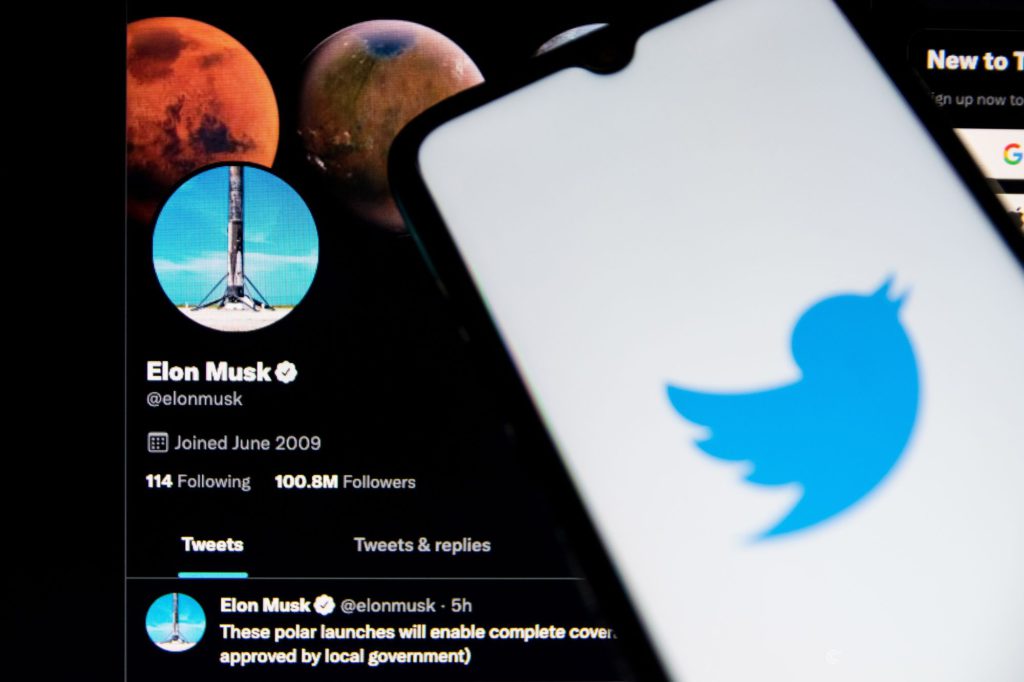
Twitter’s suit cites no fewer than 13 Musk tweets in setting out the arc of the billionaire’s infatuation with the service, which started with the pun of “love me tender” before his bid in April. It later devolved to Musk posting poop emoji in response to Twitter Chief Executive Officer Parag Agrawal’s explanation of how the company estimates the number of bot accounts on the platform.

After the release of the lawsuit, Musk tweeted “Oh the irony lol” in response.

More stories like this are available on bloomberg.com

©2022 Bloomberg L.P.

Here’s Alphabet CEO Sundar Pichai’s Memo on the Hiring Slowdown

(Bloomberg) — Alphabet Inc.’s Google is planning to slow hiring for the rest of the year, in line with other tech giants who have either made similar decisions or announced job cuts. Historically, Google has remained relatively immune to the economic dips of the technology sector, but in an internal memo seen by Bloomberg News, Chief Executive Officer Sundar Pichai highlighted the uncertain global economic outlook as the key reason for the hiring slowdown. 

Here’s the memo, in full:

Hi Googlers,

Hard to believe we’re already through the first half of 2022. It’s the right opportunity to thank everyone for the great work so far this year, and to share how my Leads and I are thinking about H2.

The uncertain global economic outlook has been top of mind. Like all companies, we’re not immune to economic headwinds. Something I cherish about our culture is that we’ve never viewed these types of challenges as obstacles. Instead, we’ve seen them as opportunities to deepen our focus and invest for the long term.

In these moments, I turn to our mission: to organize the world’s information and make it universally accessible and useful. It’s what inspired me to join the company 18 years ago, and what makes me so optimistic about the impact we are able to have on the world. Knowledge and computing are how we drive our mission forward. That’s the lens we use to decide where to invest — whether it’s in areas like Search, Cloud, YouTube, Platforms and Hardware, the teams that support them, or in the AI that enables more helpful products and services.

We help people and society when we focus on what we do best, and do it really well. The investments we’ve made in the first half of the year reflect this vision. In Q2 alone, we added approximately 10,000 Googlers, and have a strong number of commitments for Q3 start dates which reflects, in part, the seasonal college recruiting calendar. These are extraordinary numbers, and they show our excitement about long-term opportunities, even in uncertain times.

Because of the hiring progress achieved so far this year, we’ll be slowing the pace of hiring for the rest of the year, while still supporting our most important opportunities. For the balance of 2022 and 2023, we’ll focus our hiring on engineering, technical and other critical roles, and make sure the great talent we do hire is aligned with our long-term priorities.

Moving forward, we need to be more entrepreneurial, working with greater urgency, sharper focus, and more hunger than we’ve shown on sunnier days. In some cases, that means consolidating where investments overlap and streamlining processes. In other cases, that means pausing development and re-deploying resources to higher priority areas. Making the company more efficient is up to all of us — we’ll be creating more ways for you all to engage and share ideas to help, so stay tuned.

Scarcity breeds clarity — this is something we have been saying since the earliest days of Google. It’s what drives focus and creativity that ultimately leads to better products that help people all over the world. That’s the opportunity in front of us today, and I’m excited for us to rise to the moment again.

–Sundar

More stories like this are available on bloomberg.com

©2022 Bloomberg L.P.

An Abu Dhabi Fund Is Deploying Its Billions Defying Tech Decline

(Bloomberg) — An Abu Dhabi sovereign wealth fund is fast emerging as a white knight for tech firms seeking funds in a volatile market.

Mubadala Investment Co., the $284 billion state-owned fund, is defying a rout in technology valuations and becoming a go-to investor in a sector where fortunes have turned overnight. The investor backed raises this week for both Klarna Bank AB and Wefox.

Mubadala is committing its capital at a time its owner, the Abu Dhabi government, benefits from a surge in oil prices driven mainly by the war in Ukraine. The Gulf fund is stepping in to invest in technology-focused businesses just as other investors turn away from what they see as risky and potentially overpriced assets. 

“As a long-term investor, Mubadala continues to deploy capital opportunistically across a range of key sectors,” a spokesperson for the fund said.

It led the latest funding round for German insurance-technology firm Wefox, which raised $400 million at a valuation of $4.5 billion this month. The fund also came in as a new investor in the $800 million raise by Klarna, the buy-now-pay-later giant, that saw its valuation plunge to $6.7 billion from the $45.6 billion achieved last year. 

Mubadala’s first major foray into technology was when it emerged as one of the key backers to SoftBank Group Corp.’s $100 billion Vision Fund a few years back. Mubadala is now exploring whether to back Rajeev Misra, the main architect of the Vision Fund, as he seeks to start his own fund, the spokesperson said. 

More recently, Mubadala led an $768 million funding round for Turkish grocery delivery app Getir in March at a valuation of $11.8 billion. The fund also participated in a $300 million raise for payments business SpotOn, which valued the company at about $3.6 billion. It also led a $100 million round for Swedish fintech firm Juni last month. 

Another key focus area for the Mubadala has been health care, where the fund has been stepping up its investments. Buyout firm EQT AB and Mubadala agreed to buy Swedish medical freight company Envirotainer AB for an enterprise value of about 2.8 billion euros last month. Mubadala teamed up with another investment firm, Warburg Pincus, on a more than $2 billion deal for Informa Plc’s pharma analytics unit reached in February. 

More stories like this are available on bloomberg.com

©2022 Bloomberg L.P.

Global Finance Chiefs Head to Bali to Talk Inflation, Debt, Oil

(Bloomberg) — Financial stewards of the biggest economies in the world descend on the tropical island of Bali this week at a time when rapid inflation threatens to further destabilize populations and turn fragile recoveries into recession.

The Group of 20 meetings of finance ministers and central bank governors Friday and Saturday in Indonesia will focus on a bevy of issues around soaring prices, threats of more sovereign defaults, and engineering soft landings for economies still in Covid recovery mode. 

Officials will have plenty more to discuss, with war raging in Ukraine and US-China tensions remaining on the boil, all while seeking to advance global initiatives around green energy, digital banking, and common tax standards.

Here’s a look at some of the top issues set to dominate the gatherings:

Inflation, Central Bank Credibility

Credited for rescuing the world economy from the Global Financial Crisis a decade ago, central bankers are now under fire for having to play catch-up on fighting rampant inflation this year. More than 80 central banks have hiked interest rates this year, with “jumbo” increases of 50 basis points or more becoming more popular. 

For Federal Reserve Chief Jerome Powell, the “bigger mistake” is falling further behind on inflation rather than pushing the economy into recession. Other economies have weaker fundamentals and buffers than the US, making for more volatile decisions.

Growth issues are high on the agenda for the G-20 meetings, with two of the six priorities addressing post-Covid exit strategies to support the recovery and scarring effects from the last crisis. 

Many central bank governors in attendance will stay quiet this week, given blackout rules and norms around public comment with scheduled decisions coming soon. The European Central Bank, Japan, and Indonesia are among those with announcements next week. The Fed usually leaves public communication to the Treasury secretary at such gatherings. 

Currency

Investors rushing to the safe-haven US dollar in a risk-off environment are triggering a cascade of capital outflows, forcing officials to weigh decisions to intervene to protect their currencies. 

The issue will likely take center-stage with US Treasury Secretary Janet Yellen and her Japanese counterpart Finance Minister Shunichi Suzuki as the yen plummets. 

Yellen has shown no willingness to green-light intervention to defend currencies crashing against the dollar. With a strong currency aiding the battle against imported inflation, getting any agreement beyond statements of concern and pledges to consult may be tough.

Emerging Market Pain 

With limited external buffers and depleted foreign currency reserves, lower-income nations are struggling to beat back inflation as unsettled populations stoke political tension. Investors are turning increasingly cautious, pulling money out and in turn accelerating those economies’ stresses. 

A soaring debt pile of $237 billion due to foreign bondholders in notes trading in distress looms over a developing-market world that’s bracing for a potential domino effect of defaults. After Russia and Sri Lanka, Bloomberg Economics now sees five economies as most vulnerable to a default: El Salvador, Ghana, Egypt, Tunisia and Pakistan.


Beijing, which became the No. 1 official lender to developing countries in recent years, has shown little enthusiasm for a new G-20 program, known as the Common Framework, meant to streamline the process of organizing creditors to act jointly with struggling debtors. That intransigence drew criticism from Group of Seven finance ministers when they gathered in Germany in May.

The yawning emerging market-developed market divide will be a talking point among the multilateral development bank representatives.

Food Security

Several countries are especially troubled by ongoing supply issues, with Egypt, Turkey, Bangladesh, and Iran depending on Russia and Ukraine for more than 60% of their wheat, according to a United Nations report published in March.

In April, during spring meetings of the International Monetary Fund and World Bank in Washington, the US Treasury convened a meeting of top international financial officials and food security experts to address the deepening crisis. Participants agreed to work out a set of common principles and a plan for action, but there has since been little visible progress.

Oil-Price Cap, Geopolitics

Having staged a walkout when Russian officials began speaking at a previous G-20 gathering, Yellen is again likely to arrive in Indonesia with a much colder stance than the host country toward the aggressor of the conflict in Ukraine.

At stake are soaring oil prices and lingering trade jams stemming from Russia’s ability to choke up global energy supply. The gathering this week will feature a mix of those whose governments have spoken out against Russia and those who remain somewhat quiet in the face of stark economic realities. 

Yellen will remain firm on ideas to mitigate the risks from Russia, including an oil-price cap initiative that’s unlikely to garner enough backing, while US President Joe Biden this week will be in Saudi Arabia to pitch for a production boost.

The US and Canada have already banned Russian oil purchases, and the European Union has agreed to prohibit seaborne shipments to member countries by the end of the year, and to ban insurers from covering any tankers that carry Russian oil anywhere in the world.

The new proposal would create an exception to the insurance ban for shipments priced below an agreed cap, set just above Russia’s production costs. The aim is to limit Moscow’s revenues from oil exports, while keeping Russian oil on the market and preventing another global price spike.

A senior US Treasury official speaking to reporters in Tokyo on Tuesday said blocking exports of Russian petroleum through the insurance ban without a price-cap exception would increase the global price of oil significantly, possibly to about $140 a barrel. It’s currently just above $100 a barrel. 

Country leaders at a recent Group of Seven meeting in Germany, at Biden’s urging, agreed to explore the proposal, but the plan is seen as practically and politically complex. It would require unanimous support within the EU to enact legal changes. Agreeing on a price level would also be fraught. And then there are questions over whether countries like China, India and Turkey would cooperate.

Trade

Lurking in the background on geopolitics and trade is the Biden administration’s loose pledge to announce a lifting of at least some tariffs on China instituted under the Trump White House. While the move has been advertised as another effort to bring down domestic US inflation, any further hints of a slashing of those levies will be watched, especially by the Asia-Pacific economies that are more closely linked to China.

New Global Economy

A global tax deal struck last year among more than 130 countries remains hobbled by implementation hurdles as politics intervenes, including in the US. While big new milestones are unlikely to be met at these meetings, look for smaller agreements that could be struck to move the issues forward toward eventual widespread adoption.

The agreement aims to prevent the world’s biggest companies from dodging taxes by instituting a global 15% minimum tax rate and also redistributing some taxing rights so that multinationals pay more taxes in the countries where they generate revenue, instead of only where they book profits. The deal was initially scheduled to take effect by the end of 2023, but that schedule has already been scrapped.

The “build back better” era of global economic growth recovery also has consistently pushed green-economy issues at the forefront — even as so many economies are facing the reality of crude-oil dependence. 

Digital banking and financial inclusion also score separate slots among the meeting’s half-dozen stated priorities. Those initiatives get special attention among Asian economies that have made strides on issues like central bank digital currencies and electronic payments systems — including Indonesia and observer economies at the G-20 like Singapore and Thailand.

More stories like this are available on bloomberg.com

©2022 Bloomberg L.P.

Twitter Lawyers Say They Can Prevail Over Musk in Just Four Days

(Bloomberg) — Twitter Inc. wants a lightning-quick trial to resolve its claim that billionaire Elon Musk wrongfully canceled his proposed $44 billion buyout of the social-media platform.

Lawyers for the San Francisco-based company say they need only four days in Delaware Chancery Court to prove that the world’s richest man should be forced to honor his agreement and pay $54.20 a share for Twitter. The company hopes to start the non-jury case on Sept. 19.

Unlike some states where it can take several years to get a case to trial, Delaware Chancery Court generally moves quicker. Chancery judges — business law experts — are known for being able to parse through the legal thickets of complex merger and acquisition disputes more quickly and thoroughly than other US courts. Even complex business cases are often argued before a judge within six or seven months of being filed.

The Twitter buyout agreement specifies all legal disputes over the deal must be heard in Delaware, corporate home to more than half of U.S. public companies, including Twitter and Musk’s Tesla Inc.. 

Musk and his lawyers didn’t immediately return emails Tuesday seeking comment on both the suit and whether the case can be tried on Twitter’s schedule. Musk did issue a tweet Tuesday, saying: “Oh the irony lol.”

A judge hasn’t yet been assigned to the case, but Chief Judge Kathaleen St. J. McCormick already has taken on investor suits over the teetering transaction. She may pick up Twitter’s suit as well. McCormick, a Delaware native, is a former legal-aid lawyer and graduate of Notre Dame Law School.

Twitter’s legal team argues it can easily show in less than a week of court time that Musk didn’t have legitimate grounds to nix the $54.20-per-share buyout. Twitter shares closed at $34.06 on Tuesday.

“Litigation on the schedule Twitter proposes permits the parties and their experienced counsel ample time to assemble a trial record,” the lawyers wrote.

That would provide enough time for a judge to rule and have the Delaware Supreme Court review the ruling before the Oct. 24 closing date for the transaction, the lawyers said.

The case is Twitter v. Musk, 22-0613, Delaware Chancery Court (Wilmington)

More stories like this are available on bloomberg.com

©2022 Bloomberg L.P.

Tencent Fails to Win Game Approval as China Concerns Persist

(Bloomberg) — China approved its third batch of new games this year, but Tencent Holdings Ltd. again failed to make the list, which traders watch to gauge Beijing’s intentions for the world’s largest mobile entertainment arena.

There were no Tencent games among the 67 titles approved by the National Press and Publication Administration in the group of licenses granted this week. The WeChat operator had missed out on two previous rounds that started April, when regulators resumed publishing regular lists of approved titles following a months-long suspension. Titles by smaller rival NetEase Inc. were also absent.

Tencent-backed mobile gaming developer iDreamsky’s Eternal Return was among the titles that won approval. Other titles included ByteDance Ltd.’s role-playing mobile game Crystal of Atlan and Bilibili Inc.’s F.I.S.T.: Forged In Shadow Torch for PC and consoles.

“We believe the two consecutive months of approvals should allay market concerns about industry trends,” wrote Jefferies analyst Thomas Chong in a note to investors. Quality content will be a “crucial factor for new games to be released in the future.” Although absent from the list, Tencent and NetEase will benefit from the resumption of gaming approvals. Game broadcasting platforms Huya Inc. and Douyu International Holdings and short-form video platform Kuaishou Technology will also be helped by more content-driven traffic, he wrote.

Beijing’s tech crackdown — which ensnared sectors from e-commerce to fintech and even online education over a tumultuous year — spread to gaming in August, when regulators introduced stringent measures such as capping play time for minors and imposed other requirements aimed at curbing addiction. The media watchdog has since been reviewing new titles to determine whether they meet stricter criteria on content and child protection, slowing rollouts, Bloomberg News has reported.

Read more: China Ends Game Freeze by Approving First Titles Since July

Concerns persist about the long-term viability of holding shares in Chinese internet and gaming firms, following a year of unprecedented scrutiny from Beijing. Investors have been watching regulators’ moves to decide when to re-enter the market.

(Adds approved titles, analyst comment from third paragraph)

More stories like this are available on bloomberg.com

©2022 Bloomberg L.P.

Twitter Hits Back at Musk, Suing to Force $44 Billion Buyout

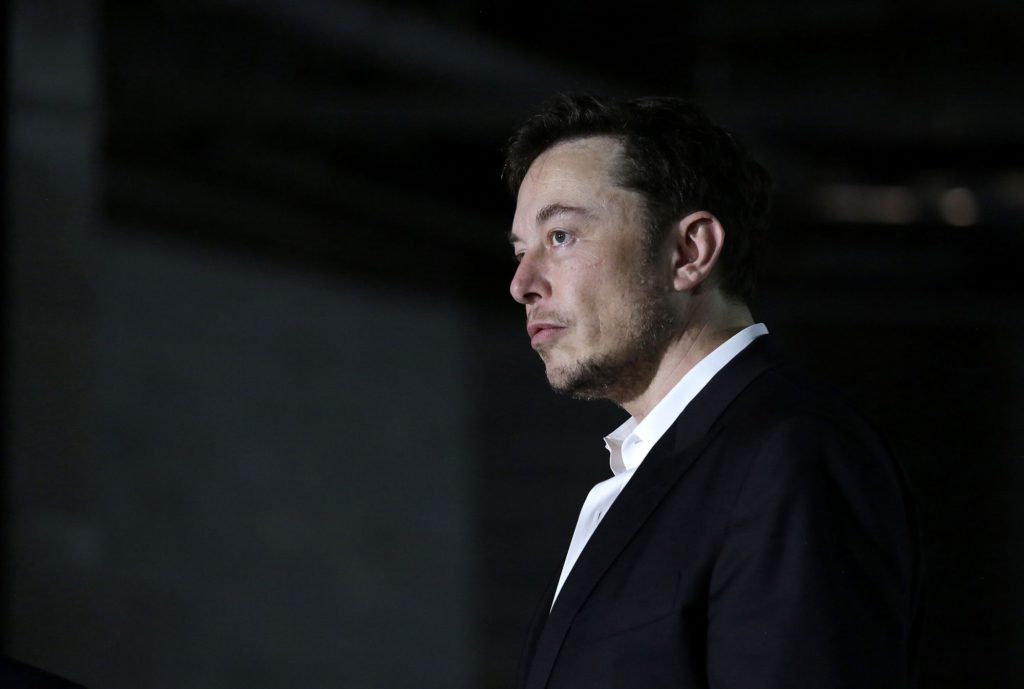
(Bloomberg) — Twitter Inc. sued Elon Musk over his abandoned $44 billion takeover bid, accusing the billionaire of having buyer’s remorse after his fortune declined.

Lawyers for Twitter told a Delaware judge that the world’s richest man should be forced to honor his agreement to pay $54.20 a share for the San Francisco-based social-media platform. Musk abandoned the deal Friday, citing in part concerns about the number of fake accounts among users.

The filing sets up what will be a closely watched court battle between Musk and Twitter, a communications tool that the billionaire favors but where his missives have previously gotten him in legal trouble. The lawsuit hit back at a number of Musk’s claims, saying that it “has bent over backwards” to provide Musk with the information he’s requested.

Read Twitter’s court filing here

“Having mounted a public spectacle to put Twitter in play, and having proposed and then signed a seller-friendly merger agreement, Musk apparently believes that he — unlike every other party subject to Delaware contract law — is free to change his mind, trash the company, disrupt its operations, destroy stockholder value, and walk away,” Twitter said in the lawsuit.

Musk backed out of the deal to buy the platform on July 8 saying in a regulatory filing that the company has made “misleading representations” over the number of so-called spam bots on the service. Twitter hasn’t “complied with its contractual obligations” to provide information about how to assess how prevalent the bots are on the social media service,” Musk said in a letter to Twitter.

Musk also argued that Twitter has failed to operate its normal course of business. The company instituted a hiring freeze, fired senior leaders and saw other major departures. “The company has not received parent’s consent for changes in the conduct of its business, including for the specific changes listed above,” Musk said in the letter, calling it a “material breach” of the merger agreement.

Twitter said it provided Musk, the co-founder of electric-carmaker Tesla Inc., with “the full ‘firehose’ data set that he has been mining for weeks,” handing the billionaire “granular monthly reporting identifying each of the sampled accounts by ‘user id’ and the determination as to whether the account was false or spam, along with the calculations supporting Twitter’s estimates, going back to January 1, 2021.”

After Twitter filed its suit Tuesday, Musk tweeted, “Oh the irony lol.”

Alex Spiro, an attorney for Musk, didn’t have an immediate comment. 

Twitter said that in Musk’s termination notice, he claimed the company withheld information that “does not exist, has already been provided, or is the subject of requests only made recently,” the suit said. “All of this information sweeps far beyond what is reasonably necessary to close the merger.”

It added that Musk’s unsolicited offer was accompanied by a threat: “My offer is my best and final offer and if it is not accepted, I would need to reconsider my position as a shareholder,” he told the company in an April 13 letter, according to the suit.

Musk’s deal with Twitter had included a provision that if it fell apart, the party breaking the agreement would pay a termination fee of $1 billion, under certain circumstances. Legal experts have debated whether the conflict over spam bots is enough to allow Musk to walk away from the deal.

The merger agreement also includes a specific performance provision that allows Twitter to force Musk to consummate the deal. Twitter must prove it didn’t violate the buyout agreement’s terms and that Musk breached the pact by pulling out. The company hired merger law heavyweight Wachtell, Lipton, Rosen & Katz to represent it in the fight. 

Read more: Twitter assembles legal team to sue Musk over dropped takeover

Musk “is the underdog in court,” Matthew Schettenhelm, a litigation analyst for Bloomberg Intelligence, said in a note before the suit was filed. “While Musk didn’t get all the data he sought, he will still struggle to prove a material breach.”

Twitter told staff in a memo that it has asked for the case to be heard on an expedited basis, in September. 

“This repudiation follows a long list of material contractual breaches by Musk that have cast a pall over Twitter and its business,” the lawsuit said. “Twitter brings this action to enjoin Musk from further breaches, to compel Musk to fulfill his legal obligations, and to compel consummation of the merger upon satisfaction of the few outstanding conditions.”

Twitter pointed to an estimated $100 billion loss in Musk’s personal wealth from Tesla’s peak in November 2021, saying: “Musk wants out.” The company accused him of trying to have Twitter’s shareholders “bear the cost of the market downturn.”

While he hasn’t been sued by the company before, Musk has faced several Twitter-related legal challenges in the past, including winning a defamation suit by someone that he called a “pedo” on the platform. 

His 2018 “funding secured” tweet about taking Tesla private spurred several lawsuits and an inquiry by the US Securities and Exchange Commission. In April, he lost a court bid to get out from under terms of the 2018 settlement he agreed to with the SEC, which required review of any Tesla-related tweets.  

Delaware, the corporate home to more than 60% of Fortune 500 companies, has a court system that is well-versed in business battles. In recent years, the chancery court has ruled on failed mergers such as the combination of insurers Anthem Inc. and Cigna Corp., as well as retailer LVMH Moet Hennessy Louis Vuitton SE and jeweler Tiffany & Co.

Earlier this year, Musk won a suit filed in Delaware by investors who claimed that the Tesla buyout of SolarCity was improper. 

Twitter shares lost 12% of their value in the first trading day after Musk announced he was walking away from the deal. The stock is down 21% from the start of the year, trading at $34.04 at the close Tuesday.

“Musk refuses to honor his obligations to Twitter and its stockholders because the deal he signed no longer serves his personal interests,” Twitter said in the suit.

The case is Twitter v. Elon Musk, 22-0613, Delaware Chancery Court (Wilmington)

(Updates with Musk’s lawyer in ninth paragraph.)

More stories like this are available on bloomberg.com

©2022 Bloomberg L.P.

Google to Slow Hiring for Rest of Year, Alphabet CEO Says

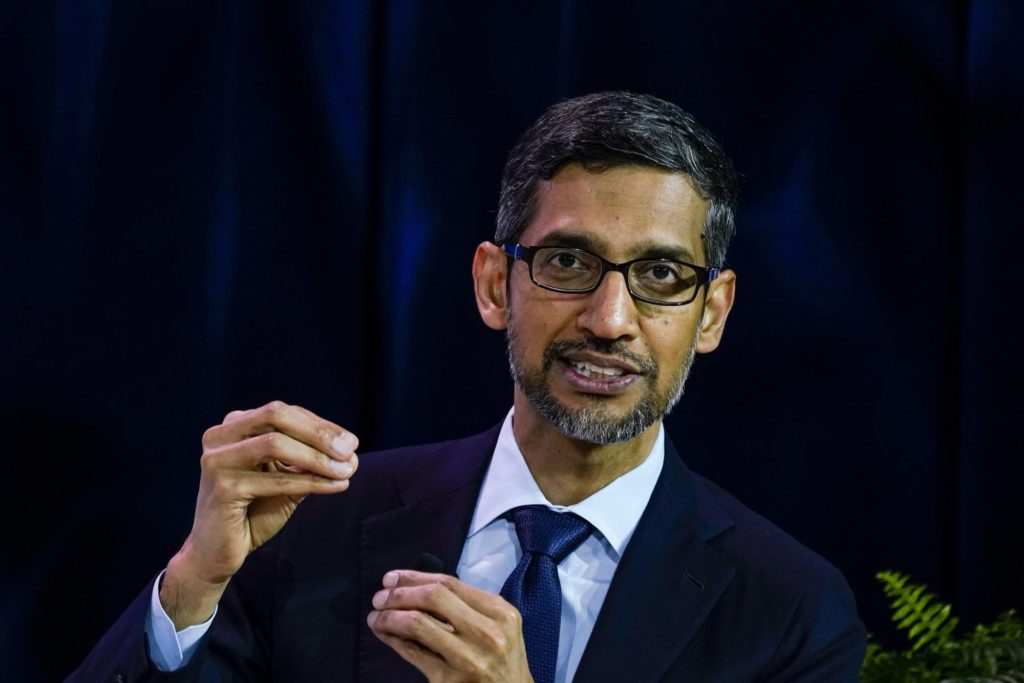
(Bloomberg) — Alphabet Inc.’s Google plans to slow hiring for the remainder of the year in the face of a potential economic recession, Chief Executive Officer Sundar Pichai said Tuesday in an email to staff. 

Pichai said the company will focus on hiring “engineering, technical and other critical roles,” in 2022 and 2023, according to a copy of the email viewed by Bloomberg News.

“Moving forward, we need to be more entrepreneurial, working with greater urgency, sharper focus, and more hunger than we’ve shown on sunnier days,” Pichai wrote. “In some cases, that means consolidating where investments overlap and streamlining processes.”

Historically, Google has remained relatively immune to the economic dips of the technology sector. The internet giant paused hiring after the financial crisis more than a decade ago, but has since regularly added waves of new employees for its main advertising business as well as areas such as smartphones, self-driving cars and wearable devices that aren’t yet profitable. Google parent Alphabet, which employed almost 164,000 people as of March 31, has hired primarily in recent years for Google’s cloud division and new fields like hardware. 

Google’s move mirrors that of other tech companies. In May, Snap Inc. and Lyft Inc. said they would slow hiring. Several weeks later, Instacart Inc. said it would dial back job growth and Tesla Inc. followed with an announcement of a 10% reduction for its salaried workforce. Earlier this week, Google rival Microsoft Corp. announced it was cutting a small number of jobs. Meta Platforms Inc. also reduced its hiring plans because of concerns over economic conditions. 

In the email, Pichai said Google added 10,000 staffers during the second quarter and had “strong commitments” in the next few months to hire college recruits. Business Insider reported earlier on Google’s plans.

Earlier this week, Google rival Microsoft Corp. announced it was cutting a small number of jobs. Meta Platforms Inc. also reduced its hiring plans because of concerns over economic conditions. 

Here’s the email:

Hi Googlers, 

Hard to believe we’re already through the first half of 2022. It’s the right opportunity to thank everyone for the great work so far this year, and to share how my Leads and I are thinking about H2. 

The uncertain global economic outlook has been top of mind. Like all companies, we’re not immune to economic headwinds. Something I cherish about our culture is that we’ve never viewed these types of challenges as obstacles. Instead, we’ve seen them as opportunities to deepen our focus and invest for the long term.

In these moments, I turn to our mission: to organize the world’s information and make it universally accessible and useful. It’s what inspired me to join the company 18 years ago, and what makes me so optimistic about the impact we are able to have on the world. Knowledge and computing are how we drive our mission forward. That’s the lens we use to decide where to invest — whether it’s in areas like Search, Cloud, YouTube, Platforms and Hardware, the teams that support them, or in the AI that enables more helpful products and services.

We help people and society when we focus on what we do best, and do it really well. The investments we’ve made in the first half of the year reflect this vision. In Q2 alone, we added approximately 10,000 Googlers, and have a strong number of commitments for Q3 start dates which reflects, in part, the seasonal college recruiting calendar. These are extraordinary numbers, and they show our excitement about long-term opportunities, even in uncertain times. 

Because of the hiring progress achieved so far this year, we’ll be slowing the pace of hiring for the rest of the year, while still supporting our most important opportunities. For the balance of 2022 and 2023, we’ll focus our hiring on engineering, technical and other critical roles, and make sure the great talent we do hire is aligned with our long-term priorities.

Moving forward, we need to be more entrepreneurial, working with greater urgency, sharper focus, and more hunger than we’ve shown on sunnier days. In some cases, that means consolidating where investments overlap and streamlining processes. In other cases, that means pausing development and re-deploying resources to higher priority areas. Making the company more efficient is up to all of us — we’ll be creating more ways for you all to engage and share ideas to help, so stay tuned.

Scarcity breeds clarity — this is something we have been saying since the earliest days of Google. It’s what drives focus and creativity that ultimately leads to better products that help people all over the world. That’s the opportunity in front of us today, and I’m excited for us to rise to the moment again.

–Sundar

(Updates with more context on hiring beginning in the fourth paragraph.)

More stories like this are available on bloomberg.com

©2022 Bloomberg L.P.
US Says Will Back Miners to Stop China’s Weaponization of Battery Metals

(Bloomberg) — Developers of battery metals projects can win support from the US government as it seeks to counter the dominance of China in clean-technology supply chains, Energy Secretary Jennifer Granholm said.

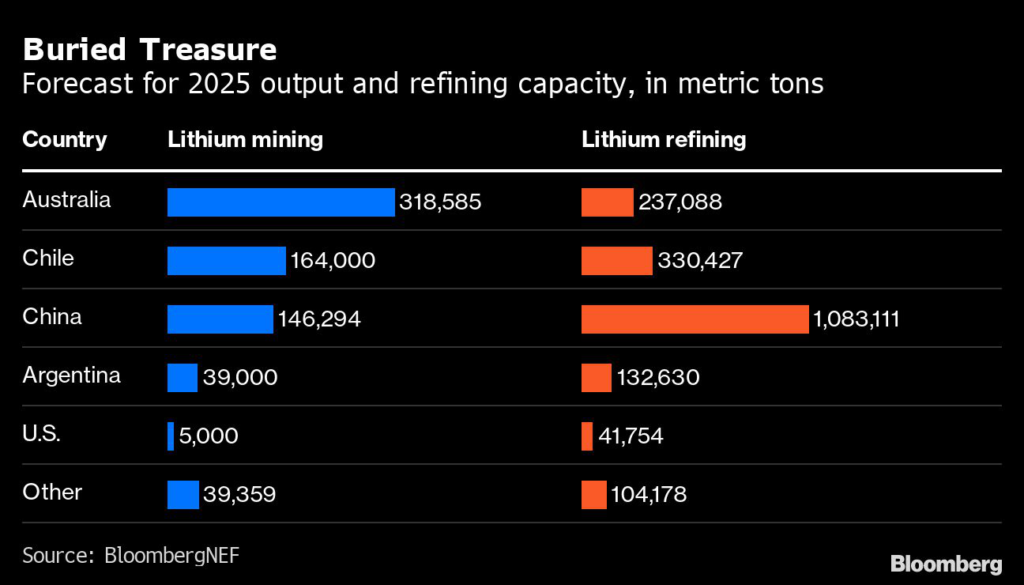
Nations including the US have raised concerns over the global concentration of refining and production capacity for key materials like lithium, rare earths and cobalt, prompting President Joe Biden to invoke the 1950 Defense Production Act to encourage domestic production.

“Our concern is that critical minerals could be vulnerable to manipulation, as we’ve seen in other areas, or weaponization,” Granholm said Wednesday in a meeting in Sydney with companies including BHP Group, Rio Tinto Group and Lynas Corp. “We are very serious about establishing strong relationships with Australia, and with you and with your potential customers for offtake.”

Producers in nations including Australia can also access support through agencies including the Department of Energy’s loan programs office, Granholm said at the Wednesday meeting. 

How a Battery Metals Squeeze Puts EV Future at Risk: QuickTake

China accounts for almost three-quarters of manufacturing capacity for lithium-ion batteries needed for electric vehicles and renewables energy storage, and dominates steps throughout the supply chain, including the processing of a suite of key metals. The nation is also the world’s dominant supplier of solar power equipment, and is seeking to build out its market share in the emerging clean hydrogen sector. 

Syrah Resources Ltd., a Melbourne-based graphite producer with facilities in Mozambique and Louisiana, in April won a $107 million commitment from the loan programs office. Rare earths producer Lynas Rare Earths Ltd. in June signed a contract with the U.S. Department of Defense to establish a plant in Texas.

More stories like this are available on bloomberg.com

©2022 Bloomberg L.P.
Key Takeaways From Twitter’s Lawsuit Against Elon Musk

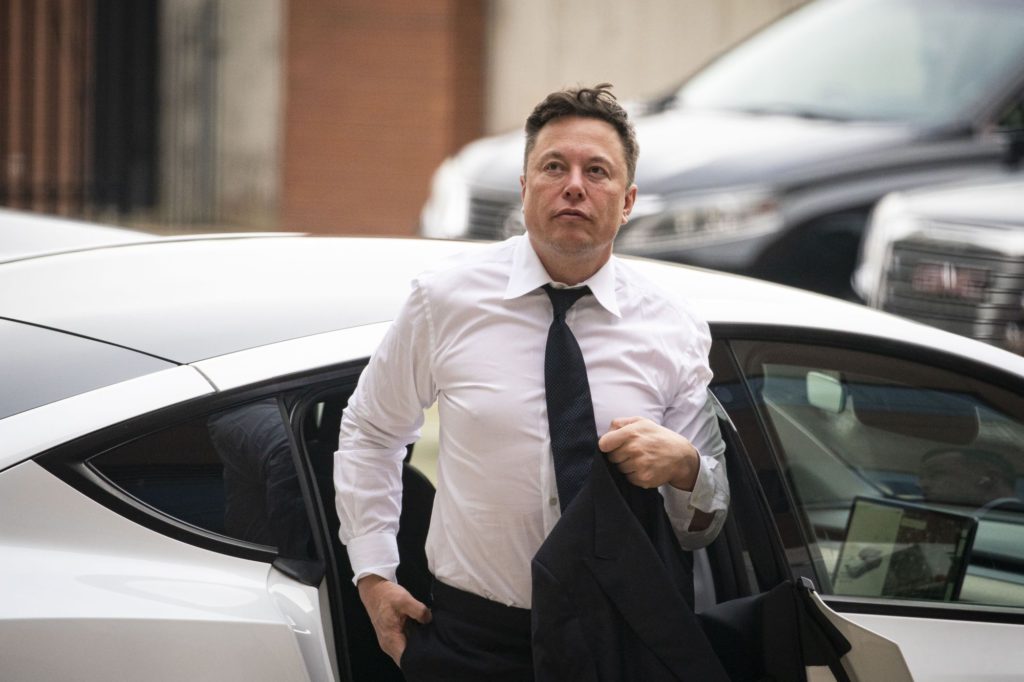
(Bloomberg) — Here are the key takeaways summing up what Twitter Inc.’s lawsuit file Tuesday against Elon Musk over his abandoned $44 billion takeover bid. Terminal users can click here for the TOPLive blog.

  • Twitter said the deal should go forward, and it did not violate its obligations in the agreement. “Twitter brings this action to enjoin Musk from further breaches, to compel Musk to fulfill his legal obligations, and to compel consummation of the merger upon satisfaction of the few outstanding conditions,” the suit said.
  • Musk’s argument that so-called spam bots are the issue isn’t valid as he’s known they exist all along, Twitter said. The company called Musk’s requests for more details on bots “absurd” and “unusual.”
  • Twitter’s CEO and CFO tried to answer Musk’s many requests for details on bots, and Musk skipped meetings and ignored briefings.
  • Musk engaged in a “long list of material contract breaches“ and violated SEC disclosure rules, causing the company to suffer “irreparable harm,” Twitter said. Musk has shown the company “disdain“ and his exit strategy is “a model of hypocrisy” and “a model of bad faith,” the suit said.
  • A source familiar with the suit told Bloomberg that Twitter hopes this will go to trial at the Delaware Chancery Court as early as mid-September.

More stories like this are available on bloomberg.com

©2022 Bloomberg L.P.
Close Bitnami banner
Bitnami