Bloomberg

North Korean Hackers Suspected in $100 Million Harmony Heist

(Bloomberg) — Suspected North Korean hackers known as the Lazarus Group are believed to be behind the recent $100 million heist on California blockchain Harmony, a firm that tracks stolen cryptocurrency said Wednesday.  

Harmony confirmed that its Horizon Bridge, a seamless layer which allows cryptocurrency to move across different blockchains, had been hacked last week.   

The blockchain forensics company Elliptic Enterprises Ltd., which has been tracking Harmony’s stolen cryptocurrency to identify who is moving it around the web, said it believes the Lazarus Group was responsible because the laundering method bears their hallmarks. In April, the US Department of Homeland Security issued an alert saying the group was sponsored by the North Korean government, and that it has targeted crypto firms since 2020. 

In this case, the hackers targeted username and password credentials of Harmony workers in Asia Pacific to break into the bridge, Elliptic said. While using automated laundering services, hackers moved the funds during Asia Pacific night time hours. All of these are signatures of Lazarus’ attack methods, Elliptic added. 

As of Wednesday, the hacker has already sent 41% of the $100 million to a Tornado Cash mixer, according to Elliptic, a reference to the service used to hide the transaction trail.

The hack bore similarities to the recent $600 million Ronin Bridge attack, which was attributed to Lazarus by the US Treasury Department, Elliptic said.

“There are strong indications that North Korea’s Lazarus Group may be responsible for this theft, based on the nature of the hack and the subsequent laundering of the stolen funds,” Elliptic wrote in a blog published on Wednesday. 

“Team members are working to gather wallet data and strategize plans based on the impact the Horizon bridge theft has caused on users,” Horizon said on Twitter.

While remarkable for the sheer amount of stolen cryptocurrency, the Horizon attack highlighted a vulnerability in so-called cryptocurrency bridges, which have been seen as a solution to clunky inoperability of some blockchains and virtual currencies. 

However recent hacks suggest bridges are more exposed to breaches as the technology running them is complex, making them a prime target for hackers.

The North Korean government has consistently denied any role in cyber-enabled theft. 

(Updates with Horizon Twitter post in eighth paragraph.)

More stories like this are available on bloomberg.com

©2022 Bloomberg L.P.

Globe Telecom Said in Advanced Talks for $1.5 Billion Tower Sale

(Bloomberg) — Globe Telecom Inc. has entered exclusive talks with bidders for its telecommunication tower portfolio in a deal that could be worth as much as $1.5 billion, according to people with knowledge of the matter.

The Filipino telecom giant is considering selling about 6,000 towers in a two-part deal, said the people, who asked not to be identified as the information is private. A consortium comprising Stonepeak Partners and local power retailer Manila Electric Co., known as Meralco, is in discussions for some of the assets, they said.

Another party consisting of buyout firm Partners Group Holding AG and Aboitiz Group, a conglomerate owned by the billionaire Aboitiz family, is negotiating for the remainder of the portfolio, according to the people.

While talks are at an advanced stage, they could still fall apart, the people said. Other suitors including private equity firm KKR & Co. remain interested in the assets, they said. Globe could also decide not to proceed with any deal, the people added.

Globe, which counts Singapore Telecommunications Ltd. and Filipino conglomerate Ayala Corp. among its largest shareholders, is looking to sell about 6,000 of its towers in a deal that could be valued at as much as $1.5 billion, Bloomberg News reported earlier this month. 

Digital infrastructure assets such as telecom towers and data centers have increasingly become targets for deal activity in the region. Globe Telecom’s divestment plan comes after its rival PLDT Inc. sold its towers for 77 billion pesos ($1.4 billion) in April to Axiata Group Bhd.’s edotco Group Sdn. and EdgePoint Infrastructure Sdn., backed by DigitalBridge Group Inc.

Representatives for Globe Telecom, KKR and Stonepeak declined to comment, while representatives for Aboitiz, Meralco and Partners Group didn’t immediately respond to requests for comment. 

More stories like this are available on bloomberg.com

©2022 Bloomberg L.P.

Working From a Tropical Island Is the New Working From Home

(Bloomberg) — In the new world of work, there’s a new type of employee: The business-leisure traveler.

It’s the latest attempt to find a happy medium between working arrangements like Airbnb Inc.’s — where staff can work anywhere, anytime — and those at companies like Tesla Inc., whose chief executive officer Elon Musk tweeted that unless employees turn up in the office, “we will assume you have resigned.” 

Business-leisure travelers are a subset of digital nomads, living and working abroad for longer than a typical holiday without taking up permanent residence. They usually spend weeks or months overseas before returning home, while other nomads may spend years on the road. 

David Abraham realized there was a market for this type of ultra-remote working while at his laptop in a Tokyo Starbucks. When he noticed the customers around him were working too, he asked himself “why couldn’t they be in an amazing place like Bali?” Abraham now runs Outpost, a company that provides temporary living-working spaces in Indonesia and Sri Lanka. 

Employees’ growing enthusiasm for business-leisure travel is slowly being met with policy momentum. Governments are trying to work out visa and tax regulations while businesses fret about compliance and corporate culture. 

Officials in tourism hotspots Thailand and Indonesia see the longer-term travel trend working in their favor — if everyone can get the rules right.

On the Indonesian island of Bukabuka, a four-hour-plus journey by airplane and boat from the capital city of Jakarta, eco resort Reconnect is seeing a surge in inquiries from foreigners. Now that borders have reopened, overseas visitors with plans to work remotely are booking sojourns of anywhere between a month and half a year.

The resort features large communal spaces and work stations, ready to accommodate the new cohort of business-leisure travelers. Most days, the Internet is stable enough too. 

“But the main selling point is really the island itself,” said Reconnect founder Thomas Despin. Between Zoom meetings, guests can go snorkeling, learn the local art of spearfishing, and even enjoy a barbecue in the middle of the sea.

There is one drawback: “Potential guests ask us, how legal is it for me to come and stay and work?” Despin said. “At the moment, we don’t have a specific answer.”

Under Indonesian law, anyone who stays in the country for 183 days in a 12-month period is legally considered a tax resident. But paying taxes requires a work permit commonly referred to as a KITAS, which isn’t available to those traveling on a tourist visa. That leaves some would-be business-leisure travelers in a legal gray area.   

In April 2021, Indonesia floated the idea of a special five-year visa exempting remote workers from paying local taxes if they don’t earn an income domestically. But there’s no timeline as yet. 

“You don’t want to just be hoping for the best when it comes to your visa status,” said Despin. “You want to know what the rules are.” Colleagues of his have left Indonesia for Mexico, Portugal and neighboring Thailand, where immigration and tax laws are more supportive and clearer.

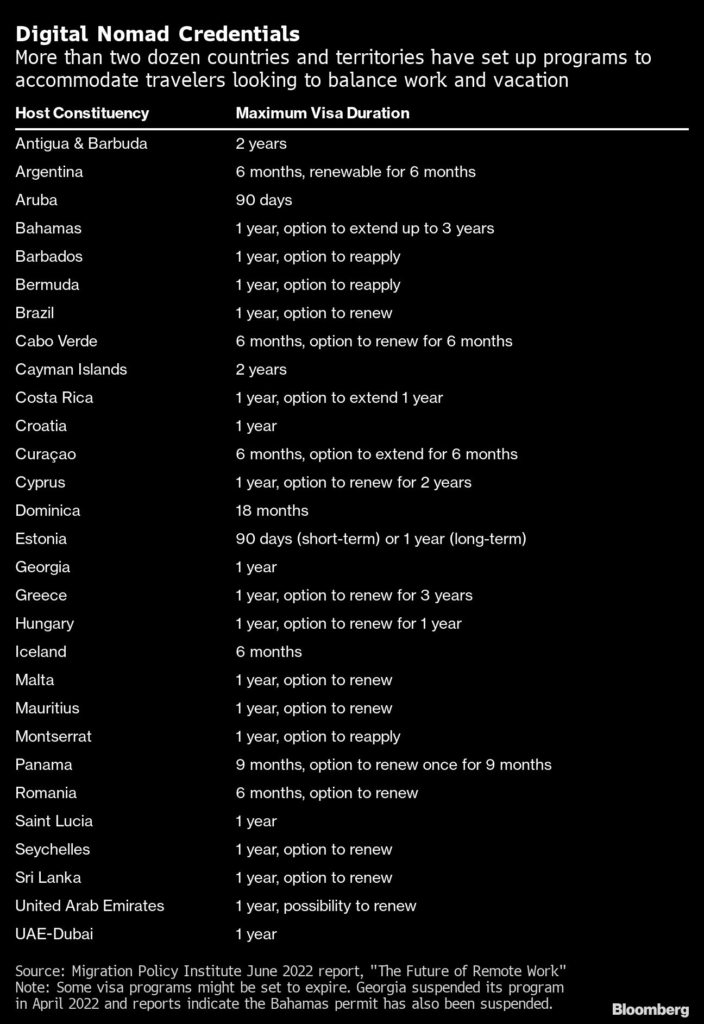
Since 2019, more than two dozen countries have introduced “digital nomad” schemes that allow people to live and work remotely for a period of months or even years, according to Migration Policy Institute analyst Kate Hooper, who analyzed data from law firm Fragomen.

Thailand began experimenting early in the pandemic with programs designed to attract longer-term travelers, such as golf-course quarantines and “sandbox” arrangements. The country got about one-fifth of its economic juice from tourism before Covid-19 arrived. 

Now, in the spirit of targeting more digital nomads and business-leisure travelers, the government has approved tax incentives for long-term visa holders and will lift all remaining Covid-related entry restrictions from July 1. 

The country has several plus points for longer-term visitors who also plan to work, according to tourism minister Phipat Ratchakitprakarn. “The Internet in Bangkok and in many big cities is fast,” he said, while Thailand also offers “service and atmosphere” and a relatively low cost of living. 

And, he added, “we don’t tax digital nomads. Their income is generated overseas.” 

The next round of tax changes can’t come soon enough for the country’s still-struggling hospitality industry. 

“I am sure we can compete in terms of fundamentals but the problem is policy implementation,” said Bhummikitti Ruktaengam, president of the Phuket Tourist Association. He argues that a simple visa application process is needed to attract working travelers. 

“They won’t come if they need to fill up a pile of paperwork,” he said. 

Longer-term visitors may bring economic benefits, but they can also create problems for the local population, a Migration Policy Institute report points out. Wealthy visitors bring with them rising costs of living, increasing competition for resources and associated tensions “as evidenced in existing hotspots such as Goa and Bali.”

While governments face a hefty set of challenges in marrying a tourism revival with ease of doing business, companies have their own list of concerns.

At established firms, chief financial officers often have little appetite for Airbnb-style worker freedom because of tax issues and other liabilities, according to Simon Hayes, director of the Asia CFO Network. 

Yet many business leaders are accepting what their human resources departments already know: Most employers will be forced to keep up with the times. 

Business-leisure travelers aside, tight labor markets around the world are giving workers the power to demand more flexibility. Over the next three to six months, Hayes expects more companies to set up remote-work options for those employees who are trusted to get their jobs done on the beach or elsewhere.

There’s a clear willingness to at least consider looser policies around remote work, according to an Asia CFO Network survey of 31 multinational companies across the Asia-Pacific region. But there are also significant concerns, with tax issues and “corporate culture dilution” at the top of the list.

“One issue is navigating the tax, social security, and employment and labor provisions of both countries to ensure compliance in both locations,” said MPI’s Hooper. Another is the risk of triggering permanent establishment rules that may incur corporate tax obligations, she said.

While business-leisure travel isn’t about to overtake other types of travel, it’s still an opportunity for tourism-heavy economies. 

“It’s a growing segment but will remain a ‘niche’ segment,” said Margaux Constantin, a partner at McKinsey & Co. who leads the firm’s work in tourism. The potential for high spending on longer-than-average trips makes business-leisure travelers an attractive market, she said. 

“It’s not surprising to see that some destinations are actively prioritizing this segment as part of their tourism strategy.”

More stories like this are available on bloomberg.com

©2022 Bloomberg L.P.

Lenskart Buys Owndays Shares in Bid to Form an Amazon of Eyewear

(Bloomberg) — Lenskart is buying a majority stake in Japan’s Owndays Inc. in a deal that will create one of Asia’s biggest online retailers of eyewear.

The Indian startup backed by SoftBank Group Corp. has agreed to buy Owndays shares held by L Catterton Asia, Mitsui & Co. and Principal Investments, the companies said in a statement. Owndays will then operate as a separate brand led by co-founders Shuji Tanaka and Take Umiyama, but target the premium segment while Lenskart focuses on the middle and mass market segments, they said.

Lenskart will own a majority stake in Owndays but the deal is designed as a merger, the Indian company said.

The move will create a retail giant with operations in more than a dozen markets from India and Japan to Southeast Asia. Lenskart, which uses technology and supply chain automation to directly sell eye wear to consumers, will lean on Owndays to expand its presence in physical retail.

“About 4.5 billion people globe-wide need to wear prescription glasses but only half of them do,” said Peyush Bansal, Lenskart’s 38-year-old co-founder and chief executive officer.  He declined to comment on the size of the deal. “We are seeing a $50 billion to $100 billion opportunity and a real chance to build an Amazon for eye wear.” 

Lenskart should reach profitability when it hits $400 million in sales in the year ending March 2023, Bansal estimated. The companies project combined sales of $650 million by March 2023, he said. His startup, which was founded in 2010 and backed by Falcon Edge Capital, KKR & Co., Temasek Holdings Pte and PremjiInvest, grew 65% last year and is projected to surpass that this year, Bansal said on a video call.

Read more: SoftBank-Backed Lenskart Raises $220 Million as India Tech Booms

Bansal graduated in engineering from McGill University in Montreal and worked at Microsoft Corp.’s headquarters before returning to India. He co-founded Lenskart Solutions Pvt in 2010 in the dusty, industrial town of Faridabad outside New Delhi with three others he met on LinkedIn.

It’s since grown into the country’s largest optical brand, shipping over 10 million pairs of eye wear annually, offering facial analysis-driven recommendations on its mobile app and home vision tests.

Tokyo-headquartered Owndays was founded in 1989, and opened its first overseas stores in 2013.  It currently operates 460 stores in a dozen countries besides Japan, selling over 2.5 million pairs of glasses annually. L Catterton and Mitsui acquired Owndays in November 2018 for an undisclosed sum. 

Read more: Longreach, Navis Capital Said In Talks for Eyewear Chain Owndays

L Catterton was formed as a partnership between Catterton, luxury goods brand LVMH and Groupe Arnault. Its Asian arm had been mulling a sale of the Japanese chain for more than a year. At one point, Owndays’s owners were in exclusive negotiations with private equity firms Longreach Group and Navis Capital, Bloomberg News has reported. 

In June, it sold $360 million worth of minority interests to accounts managed by Hamilton Lane and other institutional investors, a move that raised capital for the Asia unit to be redeployed in new investments.

A public listing for the newly enlarged Lenskart is at least 36 months away, Bansal said. The company is now building what it bills the world’s largest eyewear manufacturing plant northwest of Delhi. The $150 million factory will ship 50 million pairs of eyewear annually, Bansal said, giving Lenskart a presence in the entire cycle from manufacturing to consumer sales.

“Digital transformation is the key to our next phase of growth in the post-pandemic operating environment,” Owndays co-founder Tanaka said in the announcement.

More stories like this are available on bloomberg.com

©2022 Bloomberg L.P.

Equinix, STT Among Bidders for Time Dotcom’s Data Centers

(Bloomberg) — US-based investors DigitalBridge Group Inc., I Squared Capital-owned BDx and Equinix Inc. are among potential suitors for the data center business of Malaysia’s Time Dotcom Bhd., according to people familiar with the matter.

Stonepeak-backed Digital Edge and Temasek Holdings Pte’s ST Telemedia Global Data Centres are also among the possible bidders, the people said, asking not to be identified because the matter is private. The suitors are conducting due diligence on the assets, known as Aims Data Centre, as they weigh making binding offers, the people said. 

A potential deal for Aims could raise about $500 million to $600 million, Bloomberg News has reported.

Considerations are ongoing and the firms could still decide against any transaction, the people said. Representatives for Time Dotcom, DigitalBridge, Equinix and STT GDC declined to comment. Malaysia is a potential future location for BDx facilities as the company looks to expand its footprint across Asia, said Braham Singh, chief executive officer of BDx, in response to a query from Bloomberg News.

Data center companies in Asia have been attracting strong takeover interest, in part due to the perception they have stable returns and expectations of ongoing growth as people increasingly rely on technology.

Backed by Malaysia’s sovereign wealth fund Khazanah Nasional Bhd., Time Dotcom offers fixed-line voice and broadband services to consumers and businesses, as well as enterprise solutions in areas such as cloud and security. Beyond Malaysia, it has stakes in providers in Vietnam and Thailand, according to its latest annual report. Its shares have dropped about 6% this year, valuing the firm at around $1.8 billion.

(Updates share price in last paragraph. An earlier version corrected name of ST Telemedia unit in second paragraph.)

More stories like this are available on bloomberg.com

©2022 Bloomberg L.P.

Privatizing NHS Services May Lead to Declining Care, Study Says

(Bloomberg) — Privatizing England’s National Health Service may have led to a decline in the quality of patient care, according to research that links increased outsourcing to for-profit providers with higher death rates in the public system. 

Legislation passed in 2012, allowing greater outsourcing of health services is associated with a rise in deaths that should have been avoidable, a group of University of Oxford researchers said Wednesday, in a study published in The Lancet Public Health journal. 

Using a database of outsourcing contracts, the authors found that a 1% annual increase of outsourcing of services to for-profit providers corresponded with an increase in “treatable mortality” of 0.38%. Overall, changes to outsourcing since 2014 were linked to an additional 557 deaths across 173 clinical commissioning groups in England.

The authors acknowledged limitations with their study, saying they can’t rule out that other factors could explain a rise in mortality. It was also difficult to precisely measure outsourcing that took place before the new policy came into effect. Additionally, outsourcing files analyzed in the study did not contain details of specific services provided by suppliers, they said. 

“While more research is needed to determine the precise causes of the declining quality of health-care in England, our findings suggest that further increases in NHS privatisation would be a mistake,” said Aaron Reeves, a professor in the department of social policy and intervention at Oxford. 

One potential explanation for the findings is that private providers receiving NHS contracts could be delivering lower quality care, the researchers said. Another, they said, could be that for-profit providers selectively treat profitable cases, concentrating patients with more difficult treatments in public settings. 

“Despite the inability to establish a causal mechanism, the study adds to the evidence base examining the impacts of privatization on the health system in England,” said Andrew Street, a professor in health economics at the London School of Economics and Political Science in a statement. He was not involved in the study.

“For-profit providers may secure greater profit for their shareholders by being innovative and quick to adopt the latest technologies. But a faster route to making profits might be to compromise quality,” Street said. The way forward is to enforce strict quality standards through contracts and to make sure the performance is monitored, he added. 

More stories like this are available on bloomberg.com

©2022 Bloomberg L.P.
Xerox CEO Visentin Dies After Ongoing Illness

(Bloomberg) — Xerox Holding Corp. Chief Executive Officer John Visentin died Tuesday after complications from an ongoing illness, the company announced.

“Since joining the company in May 2018, John drove Xerox forward,” Chairman James Nelson said in a statement announcing Visentin’s death. “John’s drive, energy and commitment to the business and its customers, partners and employees will be greatly missed.”

Before joining Xerox, Visentin, 59, worked at a variety of tech companies, including International Business Machines Corp. and Hewlett-Packard Co.

Steve Bandrowczak, Xerox president and chief operations officer, will serve as interim CEO, the company said.

Visentin’s tenure was marked by an unsuccessful hostile takeover bid in 2020 for HP Inc., the computer and printer maker. Xerox, a pioneer in photocopying, argued the combination would help modernize the companies in the face of falling demand for printed documents. Xerox has been buffeted by declining revenue the past four years.

(Updates with Visentin’s age in the third paragraph)

More stories like this are available on bloomberg.com

©2022 Bloomberg L.P.

Google’s ‘Fast-Track to Surveillance’ Sparks European Backlash

(Bloomberg) — Google came under attack from European consumer groups who accuse the US giant of putting users on “a fast-track to surveillance” when they sign up to an account.

The Alphabet Inc. unit may be violating privacy law by steering people to an intrusive system, “where everything they do is monitored and exploited by the digital behemoth,” according to regional consumer organization BEUC, which is coordinating actions by 10 national groups against the company. 

“Through a combination of deceptive design, unclear language, misleading choices and missing information, Google’s account signup process is designed to get consumers to allow an extensive and invasive processing of their data,” BEUC said in a statement on Thursday. 

The Brussels-based body said Greek, French, Slovenian, Norwegian and Czech members had filed complaints with local regulators. Others had tipped off authorities of the company’s practices, while a German organization was sending Google a warning ahead of a potential lawsuit. 

The European Union’s General Data Protection Regulation, or GDPR, empowers regulators to levy penalties of as much as 4% of a company’s annual revenue. Overnight, it turned Ireland’s watchdog into the bloc’s top regulator probing dozens of powerful U.S. tech firms with European bases in the nation — such as Meta Platforms Inc. National authorities also retain some powers to step in on cases affecting local consumers. 

Google said it’s presenting different options now when someone creates a new account “to help people make choices on their terms.”

“These options are clearly labeled and designed to be simple to understand,” Google said in an emailed statement. “We have based them on extensive research efforts and guidance from” data protection authorities “and feedback from testers” and Google is “committed to ensuring these choices are clear, simple and state of the art.”

BEUC said in some instances users are forced to create a Google account when they want to use some of the company’s products and services, such as when they buy a smartphone based on the firm’s Android system. 

The sign-up stage is a “critical point” that dictates how accounts will operate, BEUC said. With only one step, or “express personalization,” the user sets up all the account settings “that feed Google’s surveillance activities,” it said, adding that there’s no option “to turn all settings ‘off’ in one click.”  

If they want a more privacy-friendly option, users need to “navigate through a longer process and a mix of unclear and misleading options,” BEUC said.


More stories like this are available on bloomberg.com

©2022 Bloomberg L.P.
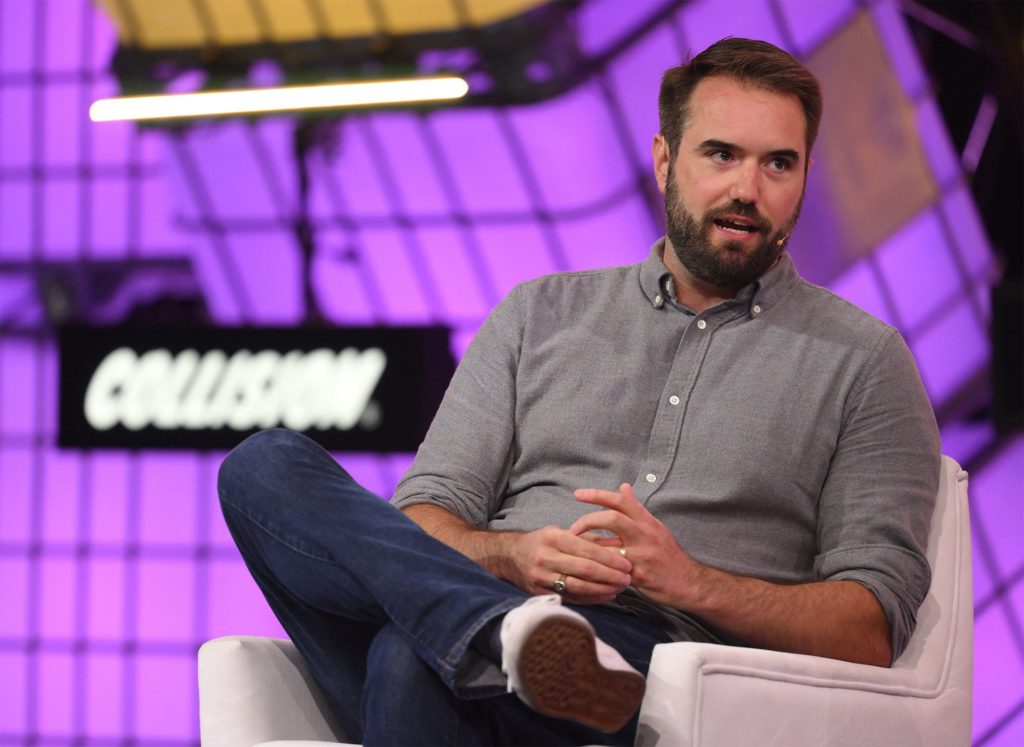
Newsletter Startup Substack Cuts 14% of Staff as Downturn Looms

(Bloomberg) — Newsletter platform Substack Inc. cut 13 jobs on Wednesday, citing a gloomy economic outlook, the company’s chief executive officer said in an email to staff. 

The jobs represent 14% of the startup’s workforce, according to a company spokeswoman. Substack’s digital platform allows writers to publish free or paid newsletters, and the San Francisco-based startup collects a roughly 10% cut of the paid subscriptions. The job cuts were previously reported by the New York Times.

Substack CEO Chris Best said he and his two co-founders chose to eliminate the positions in order to make Substack less reliant on additional fundraising in the future, especially as a market downturn has sent technology stocks diving in recent months. Venture capital funding and deal volume have also dropped significantly in the past quarter, according to new data. 

“In recent weeks, the macroeconomic outlook has become increasingly uncertain, making it clear that we should be prepared for a period of challenging conditions that could last years,” Best wrote in the email.

Best also said he was “very sorry” for going back on his word to his employees. “Not so long ago, I told you all that our plan was to grow the team and not do layoffs,” he wrote. 

The company, which has attracted high-profile independent writers such as Matt Yglesias, has raised about $83 million since its founding in 2017, according the spokeswoman.

More stories like this are available on bloomberg.com

©2022 Bloomberg L.P.

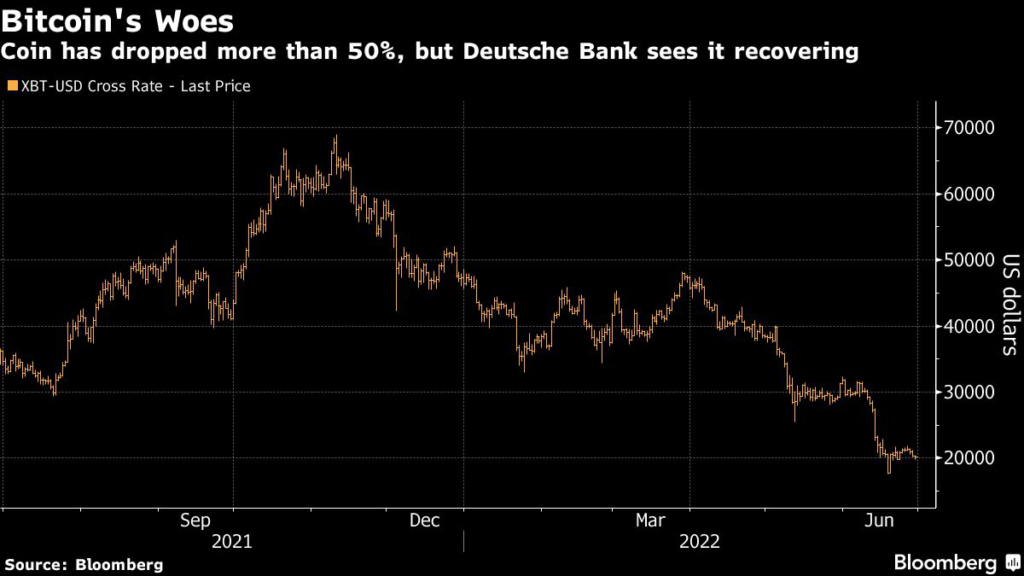
Deutsche Bank Sees Bitcoin Returning to $28,000 by Year-End

(Bloomberg) — Given how closely it has been trading with US stocks, Bitcoin could reach as high as $28,000 by the end of the year, according to an analysis from Deutsche Bank.

Bitcoin, the world’s largest digital token, has slumped in 2022 amid a risk-off mood driven by rate hikes and inflation fears. The analysis by Marion Laboure and Galina Pozdnyakova suggests a more-than 30% rally from the coin’s Wednesday trading level of around $20,000 — though even that price-point leaves the token trading at less than half its November peak.

Cryptocurrencies have been — since November — increasingly correlated to benchmarks like the tech-heavy Nasdaq 100 and the S&P 500, Laboure and Pozdnyakova said. The bank’s strategists predict the S&P will recover to January levels by year-end and Bitcoin may come along for the ride.

The digital currency is more like diamonds — a highly marketed asset — rather than gold, a stable safe-haven commodity, the duo wrote.  

Bitcoin failed to live up to predictions by pundits and market-watchers that it would prove to be an investor refuge, posting losses of more than 50% this year. Digital coins have underperformed stocks, bonds and commodities during the market-wide rout as the removal of excess liquidity by major central banks created downward pressure on their prices. Gold, on the other hand, held up much better. 

Laboure and Pozdnyakova tell the tale of De Beers, a major player in the diamond space, which was able to change consumer perception about diamonds thanks to its advertising efforts.

“By marketing an idea rather than a product, they built a solid foundation for the $72 billion-a-year diamond industry, which they have dominated for the last eighty years. What’s true for diamonds, is true for many goods and services, including Bitcoins,” they said. 

The analysts also point to some of the troubles that have gripped the crypto space in recent weeks, including turmoil at certain digital-asset hedge funds and lenders. 

“Stabilizing token prices is hard because there are no common valuation models like those within the public equity system. In addition, the crypto market is highly fragmented,” they said. “The crypto freefall could continue because of the system’s complexity.”

More stories like this are available on bloomberg.com

©2022 Bloomberg L.P.

Close Bitnami banner
Bitnami