Bloomberg

EU Moves Closer to Strict Anti-Money Laundering Rules on Crypto

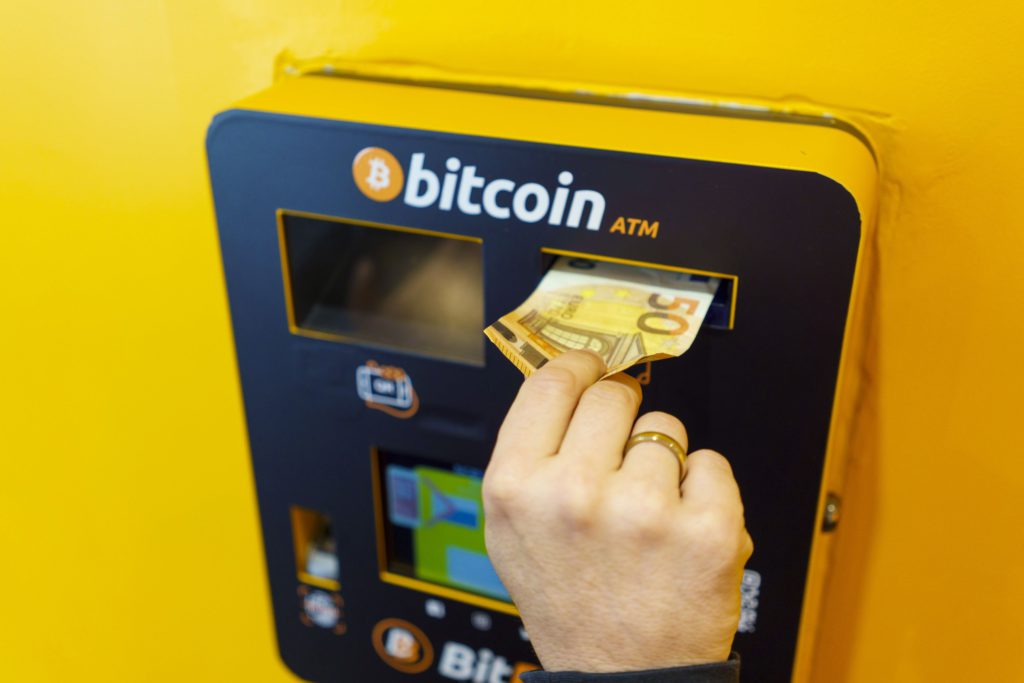
(Bloomberg) — The European Parliament and Council reached a provisional agreement to force crypto providers to provide identifying information on all digital asset transactions, despite an industry backlash.

The so-called transfer of funds regulation, or TFR, seeks to strengthen anti-money laundering requirements to ensure that crypto transfers can always be traced and suspicious transactions blocked.

The deal means that exchanges must obtain information and personal data on all crypto transfers, no matter the size, and provide that information to authorities if requested. It also extends that responsibility to so-called unhosted wallets — which are not managed by a licensed exchange or service provider — when they interact with exchanges in transactions above 1,000 euros.

More than 40 crypto firms had sent a letter to EU finance ministers in April protesting the rule, saying it infringed on user privacy and safety. Signatories included exchanges such as Coinbase Global Inc., and crypto ETP providers Coinshares International Ltd. and Valour Inc. 

On Thursday, the European Parliament, Council and the Commission will hold a final round of talks on the bloc’s Markets in Crypto Assets, or MiCA, regulation to hammer out any last sticking points.

Ernest Urtasun, an MEP and rapporteur for TFR who was present for Wednesday’s debate, said the two processes are intertwined as the EU is seeking to implement its rulings on crypto in one swoop, meaning certain definitions used in the TFR aren’t applicable until MiCA passes.

“We will put an end to the anonymity of crypto transactions, which was a huge loophole when it comes to the fight against money laundering and criminality,” he said in an interview.

Discussions around MiCA and TFR have been ongoing for several years, with crypto companies in other jurisdictions like the UK pushing for a more incremental approach to rule-making.

Wednesday’s decision means the text of the TFR is now closed at a political level. The bill will now move to discussions on the technical aspects of the text, before heading to approval by several EU committees and Parliament as a whole.


More stories like this are available on bloomberg.com

©2022 Bloomberg L.P.

Bull Market Never Ended for Analysts Wedded to 100% Price Rally Calls

(Bloomberg) — Whether it’s commendable courage or a refusal to face reality, a receding stock market tide has left Wall Street analysts sitting with price predictions that will take more than a little luck to come true.

Bear-market casualties from Peloton Interactive Inc. to Coinbase Global Inc. are forecast by equity handicappers to double, going by consensus targets compiled by Bloomberg. It’s the same story for a swath of gutted stocks whose travails haven’t dissuaded perennially optimistic analysts of their bullishness.

Novavax Inc., a developer of coronavirus vaccine, is poised to surge 193%, analyst estimates compiled by Bloomberg show. Uber Technologies Inc.’s failure to earn a profit in four years shouldn’t keep it from vaulting 129%, its professional followers agree. Anyone upset about Carvana Co.’s 90% plunge in 2022 can take heart in the experts’ opinion that it’s due for a 218% rebound.

All of which is to say that the brutal six-month repricing in markets has been met with a significantly less hurried reappraisal of analyst forecasts, leaving many stocks sporting projections that require a doubling or tripling to achieve.

“Investors are just too sick of the whole thing to really believe that kind of number,” said Ed Yardeni, the president of Yardeni Research Inc. who recently asked whether analysts are “delusional” boosting earnings estimates amid signs of an economic slowdown. “When investors own a stock that’s gotten put down by 30% and an analyst tell them that it’s going double a year from now, that doesn’t really have much credibility.” 

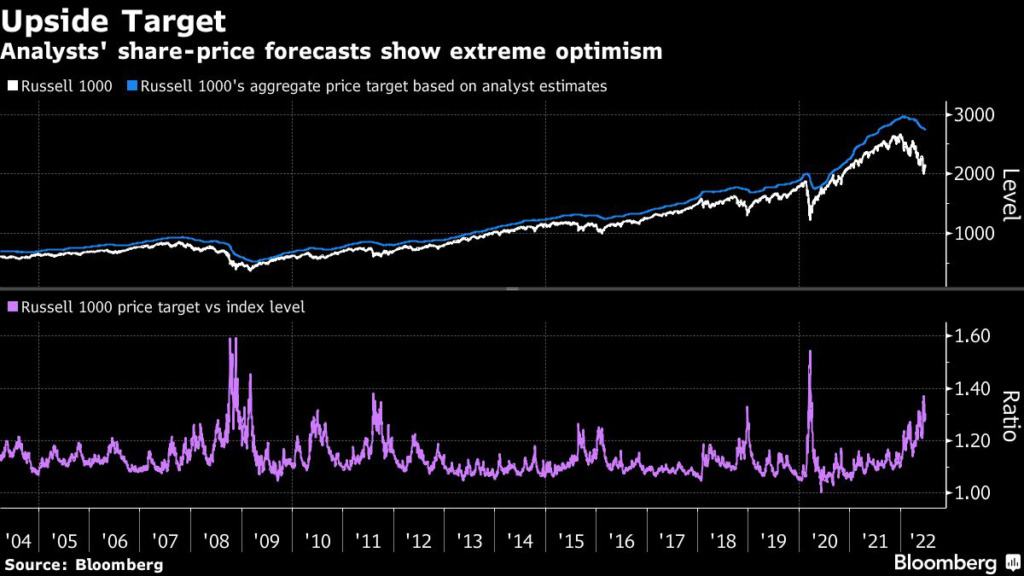
The equity selloff has left 33 companies in the Russell 1000 with forecasts for rallies of 100% or more. Stocks where a consensus of forecasters see a gain of 50% number in the hundreds. All told, following the index’s 21% plunge, the median price target for companies is 32% above its current level, compared with 12% at the start of the year.

History is clear: While a few may succeed in calling big market turns, no larger community of prognosticators is likely to do the same. The state of analyst estimates today is a carbon copy of situations in past bear markets, including in 2020, when nearly 300 companies sat with predictions they would double, and 2009, when at least 100 did.

A lot of factors explain the big gaps between price forecasts and where stocks sit, most obviously that analysts who’ve watched companies they cover plunge may simply believe they’ll bounce back as recession anxiety lifts. Many of the stocks with giant discounts to estimates at the bottom of the Covid crash did end up rebounding to hit their targets.

Corporate America is also on the eve of an earnings season in which the impact of inflation and Federal Reserve rate hikes on consumer consumption will be described. Securities analysts, who move deliberately in the best of times, may be waiting for second-quarter results to decide how sharp an ax to take to their views.

“The market has sold off in anticipation of an economic collapse that may not actually materialize,” said Ivan Feinseth, analyst and chief investment officer at Tigress Financial Partners. “We still haven’t gotten a big wave of earnings pre-announcements from companies that everyone has feared.” 

Beyond those are certain behavioral restraints, including hubris, an unwillingness to admit to being wrong, and institutional groupthink. “Analysts are fearful of putting out a sensational shift in their expectations,” said Chad Morganlander, senior portfolio manager at Washington Crossing Advisors. “The fear is, if you’re the first out the gate to revise your estimates lower and you’re wrong, you may as well revise your resume.”

Added together, bottoms-up forecasts for individual companies project a gain of 31% for the Russell 1000. For that to come true, the index would not only need to exceed its previous all-time high set in January, but it would also require one of the fastest climbs ever recored in Bloomberg data going back to 2004. 

As virtually always happens, the velocity of share declines this year has taken Wall Street by surprise. Adjustments have been slow, not just on price targets but also on forecasts on corporate earnings. At $249 a share, their expected 2023 profits for S&P 500 firms have increased by roughly $7 this year, an improvement that’s at odds with growing recession warnings.

For some of the biggest losers, analysts haven’t been able to slash forecasts fast enough. Peloton’s average price-target has dropped to $21 from $74 this year. Still, with the stock plunging as it has been, even the lowered number points to a doubling in prices. 

The same is true for Novavax and online used-car dealer Carvana, which going by estimated returns are expected to rank atop the Russell 1000 leaderboard. 

The meltdown in the crypto space has yet to completely shake Wall Street confidence in Coinbase. While Goldman Sachs Group Inc. recently downgraded the digital currency exchange to a sell rating, the majority of analysts still consider the stock a bargain.

No profits are no problem for ride-hailing company Uber, whose stock analysts say would recover all its losses from the past year. 

Among analysts, there is a belief that many stocks got unduly penalized during the sweeping selloff triggered by a hawkish Fed and war in Europe.

Angelo Zino at CFRA Research, who cut Uber to buy from strong buy in May, says the bar for analysts to come up with new investment rationales is much higher than top-down macro prognosticators who can simply call a market or economic bottom when sentiment shifts.

“I can’t change target prices and recommendations just because there could be a bad second quarter,” Zino said. “It’s almost too late to start downgrading names to a large extent unless there’s a situation where the competitive position for these companies or industry landscape is so bad that it warrants it.”

More stories like this are available on bloomberg.com

©2022 Bloomberg L.P.

Shopify Shares Slide After Completing 10-for-1 Stock Split

(Bloomberg) — Shopify Inc. shares fell after the Canadian e-commerce giant completed a 10-for-1 split of its common stock on Wednesday.

It’s the latest in a parade of tech-stock splits this year as companies in the beleaguered sector attempt to drum up interest among retail investor. Amazon.com Inc. and Alphabet Inc. have also announced stock splits, but the moves failed to boost sentiment amid a broad market selloff on concern central bank attempts to rein inflation risked stifling economic growth.

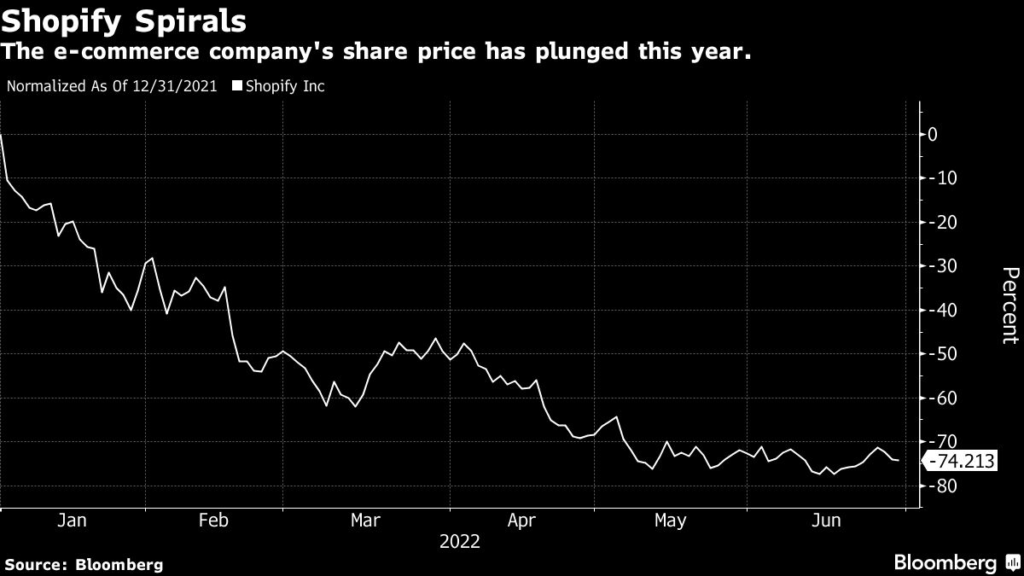
Shopify’s shares fell 5.8% Wednesday to C$42.47 in Toronto. The stock has plunged about 76% this year as e-commerce traffic slows and investors flee growth stocks, particularly sensitive to rising borrowing costs.

It is getting some retail trader interest Wednesday with Fidelity customers snapping up shares, making it the seventh most-bought stock on the platform. The company’s ticker was also trending on popular retail trader chatroom Stocktwits. 

“While it does not change the fundamentals for the stock, we believe this split could have a positive near-term impact on shares as some investors perceive lower priced shares of companies to be less expensive than higher priced ones,” D.A. Davidson analyst Tom Forte said in a note to clients.

The share split, which was approved by shareholders at the company’s annual meeting on June 7, “will make ownership more accessible to all investors,” the company said in a statement before the stock split.

At that meeting, a proposal to give Chief Executive Officer Tobi Lutke a special “founder share” passed with 54% of the vote in favor. Under the plan, Lutke retains 40% of the votes at the company, even as his ownership stake changes. Prominent advisory firm Glass Lewis & Co. said that the arrangement was likely opposed by most of the company’s shareholders, yet it passed because of a single influential director.

(Updates with closing share price in third graph)

More stories like this are available on bloomberg.com

©2022 Bloomberg L.P.
TikTok Is Target of FCC Republican Without Authority or Votes

(Bloomberg) — A member of the US Federal Communications Commission will have a tough time getting Apple Inc. and Google to remove the popular Chinese-owned video app TikTok from their app stores.

The FCC doesn’t regulate the stores and Brendan Carr is a Republican on the agency controlled by Democrats. Its agenda is set by Chairwoman Jessica Rosenworcel, who was appointed by President Joe Biden.

In a letter to Apple and Google that was disclosed Tuesday, Carr called TikTok “a sophisticated surveillance tool that harvests extensive amounts of personal and sensitive data.” He called on the companies to take the app out of their stores.

The FCC didn’t immediately reply to a request to comment. TikTok, Apple and Alphabet Inc.’s Google declined to comment.

TikTok has been under pressure from US officials over whether Americans’ private data gathered through the app could be handed over to the authoritarian regime in China — something TikTok has said it would never do.

“What TikTok’s been trying to do is get themselves on the right side of the US government,” said Rick Sofield, a Washington-based partner at Vinson & Elkins LLP and former Justice Department official. “The government is still trying to figure out what to do.”

Biden last year told the Commerce Department to analyze TikTok. That review continues and national security officials also are examining the app, including its recent deal to have Oracle Corp. house data from US citizens, Sofield said in an interview.

Carr’s letter is among “signals from the US government that they’re not satisfied,” Sofield said.

Former President Donald Trump tried to ban the app and force parent ByteDance Ltd. to sell TikTok’s US business over what he claimed were security risks. The action was challenged in court and Biden revoked Trump’s ban in June 2021.

In the US, TikTok has been installed 321.6 million times, and generated $694.3 million in consumer spending, which may translate to about $208.3 million in fees for the Apple and Google app stores, according to SensorTower, which analyzes app growth.

(Updates with analyst comment in sixth paragraph.)

More stories like this are available on bloomberg.com

©2022 Bloomberg L.P.
FCC Official Wants App Stores to Cancel TikTok. That’s Unlikely

(Bloomberg) — A member of the US Federal Communications Commission will have a tough time getting Apple Inc. and Google to remove the popular Chinese-owned video app TikTok from their app stores.

The FCC doesn’t regulate the stores and Brendan Carr is a Republican on the agency controlled by Democrats. Its agenda is set by Chairwoman Jessica Rosenworcel, who was appointed by President Joe Biden.

In a letter to Apple and Google that was disclosed Tuesday, Carr called TikTok “a sophisticated surveillance tool that harvests extensive amounts of personal and sensitive data.” He called on the companies to take the app out of their stores.

The FCC didn’t immediately reply to a request to comment. TikTok, Apple and Alphabet Inc.’s Google declined to comment.

TikTok has been under pressure from US officials over whether Americans’ private data gathered through the app could be handed over to the authoritarian regime in China — something TikTok has said it would never do.

“What TikTok’s been trying to do is get themselves on the right side of the US government,” said Rick Sofield, a Washington-based partner at Vinson & Elkins LLP and former Justice Department official. “The government is still trying to figure out what to do.”

Biden last year told the Commerce Department to analyze TikTok. That review continues and national security officials also are examining the app, including its recent deal to have Oracle Corp. house data from US citizens, Sofield said in an interview.

Carr’s letter is among “signals from the US government that they’re not satisfied,” Sofield said.

Former President Donald Trump tried to ban the app and force parent ByteDance Ltd. to sell TikTok’s US business over what he claimed were security risks. The action was challenged in court and Biden revoked Trump’s ban in June 2021.

In the US, TikTok has been installed 321.6 million times, and generated $694.3 million in consumer spending, which may translate to about $208.3 million in fees for the Apple and Google app stores, according to SensorTower, which analyzes app growth.

(Updates with analyst comment in sixth paragraph.)

More stories like this are available on bloomberg.com

©2022 Bloomberg L.P.
Shell Is Seeking Applications to Dominate Your TikTok Feed

(Bloomberg) — Shell Plc is looking for someone to manage its TikTok channel, seeking to diversify its social media efforts and appeal to younger, greener audiences.

The London-based oil and gas giant wants a candidate who is a TikTok expert, passionate about video and able to “catapult Shell to be one [of] the best content creators” according to the job description updated June 27. The person will be based in London and be responsible for designing the “overall strategy and vision” for the Shell brand on TikTok, including reporting audience growth data and collaborating with videoagraphers and influencers. 

“You will start a new chapter that will help Energy Engaged Audience and Gen Z worldwide understand in an engaging way the opportunities of Energy Transition and the Shell role and ambition in it,” the post reads.

It won’t be the first time Shell embarks on youth-targeted social media campaigns. For years, the company has touted its glitzy, influencer-led campaign #MakeTheFuture. In 2017, Shell released a music video for the initiative featuring international pop stars like Jennifer Hudson and Pixie Lott highlighting green energy ideas. The company also sponsors the Shell Eco Marathon to “help create a more sustainable, renewable, energy-rich, lower carbon future” by getting university students from across the globe to compete in building fuel-efficient vehicles. 

Some of Shell’s efforts to promote its environmental commitments have backfired. In August 2021, a Dutch advertising watchdog ruled the company’s “carbon neutral” ad campaign telling consumers they could offset the carbon emissions from their fuel purchases is misleading, concluding the company couldn’t prove it is fully offsetting emissions.

Read More: Shell Calls Police as AGM Disrupted by Environmental Protest

Representatives from Shell did not immediately respond to a request for comment.

More stories like this are available on bloomberg.com

©2022 Bloomberg L.P.
Tesla Autopilot Probe ‘Will Take Us Where It Takes Us,’ NHTSA Chief Says

(Bloomberg) — The new head of the US National Highway Traffic Safety Administration said an investigation into whether Tesla Inc.’s Autopilot is defective “will take us where it takes us,” leaving open the possibility that authorities could take action to rein in the carmaker’s signature technology.

The agency this month upgraded a preliminary probe over how Autopilot handles crash scenes with first-responder vehicles. Since opening the inquiry about 10 months ago, NHTSA has reviewed a broader set of collisions.

“We want to get it right,” Administrator Steven Cliff said in an interview Wednesday. “We want to make sure that when we’re doing an investigation, that we’re learning information that will help us identify unreasonable risks to safety and then taking the appropriate action as a result. I can’t say where this ultimately will go.”

Read more: Tesla Autopilot Defect Probe Spirals as US Reviews 191 Crashes

In about 50 of the 191 crashes NHTSA has examined in the Autopilot inquiry, it found drivers were insufficiently responsive to the driving task. The primary factor in roughly two dozen others appears to be drivers using the system in environments and conditions where the technology runs up against limitations, such as inclement weather.

Upgrading the probe to an engineering analysis “allows us to get a little more hands-on with technology,” Cliff said.

NHTSA issued a record number of recalls in 2021 across all auto manufacturers, accumulating a total of 1,093, including several that were related to Tesla vehicles, he noted.

Tesla’s staff has largely been cooperative with the Autopilot investigation and other recalls, he said, despite combative tweets from Tesla Chief Executive Officer Elon Musk like one that derided NHTSA as the “fun police.”

“Of course, we’re the regulator and they understand that,” Cliff said. “They’re responsive. We work well with them. And my team assures me that when they’re talking to them about issues, they’re getting information and able to get their get their questions answered.” 

More stories like this are available on bloomberg.com

©2022 Bloomberg L.P.
Crypto Hedge Fund Three Arrows Gets Liquidation Order

(Bloomberg) —

A British Virgin Islands court ordered the liquidation of Three Arrows Capital, the crypto hedge fund that bet big on everything from Bitcoin to the ill-fated Luna tokens and then succumbed to a $2 trillion wipeout of the digital-asset markets. 

The court, which made the order on Monday, has appointed two partners at consulting and advisory firm Teneo to handle the liquidation, according to a person familiar with the matter, who declined to be identified because the information is confidential. 

Teneo will oversee talks with potential buyers that may be interested in Three Arrows’s remaining holdings, such as tokens or equity stakes in crypto startups, the person added. A website will be set up to locate creditors and determine who is owed what. Three Arrows has invested in a range of decentralized finance platforms such as Aave and dYdX, as well as crypto infrastructure firms such as StarkWare, according to its website. It’s not immediately clear what or how much of these holdings will be subject to a sale. 

The court order brings down the curtain on one of crypto’s most famous hedge funds, founded by Zhu Su and Kyle Davies, former Credit Suisse traders, at the kitchen table of their apartment in 2012. Their fortune rose along with the crypto market bull run, and Three Arrows’ assets under management were estimated to be about $10 billion in March, according to blockchain analytics firm Nansen. In April, Zhu said the fund is planning to move its headquarters to Dubai from Singapore. 

Three Arrows has become emblematic of the industry’s excesses during last year’s bull run, when firms built up the leverage that hobbled them as the market turned. This month, a cryptic tweet from Zhu hinted at Three Arrows’s reversal of fortune and growing plight, setting off a market spasm.

The liquidation of Three Arrows “will present a setback to the industry’s policy efforts and ongoing engagement in DC,” said Ryan Selkis, co-founder of Messari Inc., a crypto data and research platform. “Many of the centralized institutional leaders in the space had poor risk controls, and put customer funds at risk.”

The fund’s liquidity crunch is among a series of crises that rippled through the battered crypto sector during this year’s downturn, including the implosion of the TerraUSD stablecoin and liquidity issues at lenders Celsius Network and Babel Finance. Three Arrows’s woes have hit firms such as crypto broker Voyager Digital Ltd., which this week said it issued a notice of default to Three Arrows after failing to get repayment on a loan worth roughly $675 million. Earlier, crypto lender BlockFi and prime brokerage Genesis said they had to liquidate one of their large counterparties recently, without naming the counterparty. 

Read More: Crypto’s $2 Trillion Shakeout Portends Lehman Moment

Three Arrows’ fund is incorporated in the British Virgin Islands. The Commercial Court there orders a company to be liquidated if it is regarded as insolvent because it cannot pay its debts. Companies can also voluntarily liquidate, though that’s less common.  

Sky News reported on the liquidation order earlier. 

(Adds commentary in the sixth paragraph.)

More stories like this are available on bloomberg.com

©2022 Bloomberg L.P.

Crypto Hedge Fund Three Arrows Set for Liquidation

(Bloomberg) —

A British Virgin Islands court ordered the liquidation of Three Arrows Capital, the crypto hedge fund that bet big on everything from Bitcoin to the ill-fated Luna tokens and then succumbed to a $2 trillion wipeout of the digital-asset markets. 

The court, which made the order on Monday, has appointed two partners at consulting and advisory firm Teneo to handle the liquidation, according to a person familiar with the matter, who declined to be identified because the information is confidential. 

Teneo will oversee talks with potential buyers that may be interested in Three Arrows’s remaining holdings, such as tokens or equity stakes in crypto startups, the person added. A website will be set up to locate creditors and determine who is owed what. Three Arrows has invested in a range of decentralized finance platforms such as Aave and dYdX, as well as crypto infrastructure firms such as StarkWare, according to its website. It’s not immediately clear what or how much of these holdings will be subject to a sale. 

The court order brings down the curtain on one of crypto’s most famous hedge funds, founded by Zhu Su and Kyle Davies, former Credit Suisse traders, at the kitchen table of their apartment in 2012. Their fortune rose along with the crypto market bull run, and Three Arrows’ assets under management were estimated to be about $10 billion in March, according to blockchain analytics firm Nansen. In April, Zhu said the fund is planning to move its headquarters to Dubai from Singapore. 

Three Arrows has become emblematic of the industry’s excesses during last year’s bull run, when firms built up the leverage that hobbled them as the market turned. This month, a cryptic tweet from Zhu hinted at Three Arrows’s reversal of fortune and growing plight, setting off a market spasm.

The liquidation of Three Arrows “will present a setback to the industry’s policy efforts and ongoing engagement in DC,” said Ryan Selkis, co-founder of Messari Inc., a crypto data and research platform. “Many of the centralized institutional leaders in the space had poor risk controls, and put customer funds at risk.”

The fund’s liquidity crunch is among a series of crises that rippled through the battered crypto sector during this year’s downturn, including the implosion of the TerraUSD stablecoin and liquidity issues at lenders Celsius Network and Babel Finance. Three Arrows’s woes have hit firms such as crypto broker Voyager Digital Ltd., which this week said it issued a notice of default to Three Arrows after failing to get repayment on a loan worth roughly $675 million. Earlier, crypto lender BlockFi and prime brokerage Genesis said they had to liquidate one of their large counterparties recently, without naming the counterparty. 

Read More: Crypto’s $2 Trillion Shakeout Portends Lehman Moment

Three Arrows’ fund is incorporated in the British Virgin Islands. The Commercial Court there orders a company to be liquidated if it is regarded as insolvent because it cannot pay its debts. Companies can also voluntarily liquidate, though that’s less common.  

Sky News reported on the liquidation order earlier. 

(Adds commentary in the sixth paragraph.)

More stories like this are available on bloomberg.com

©2022 Bloomberg L.P.
More Crypto ‘Meltdowns’ to Come Thanks to Fed Mistakes, Pantera’s Morehead Says

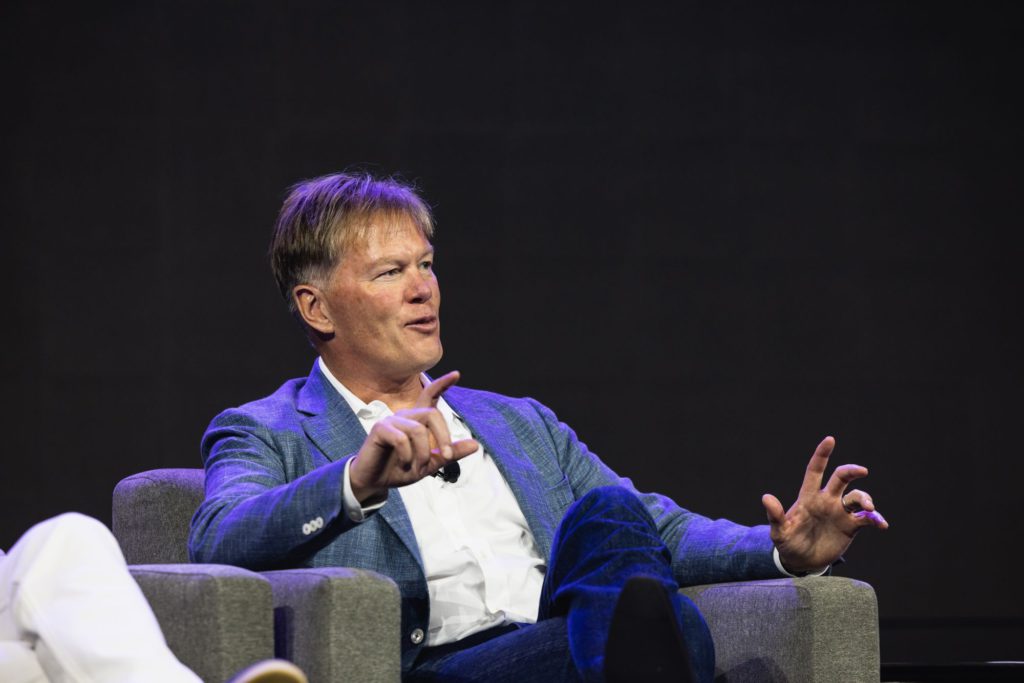
(Bloomberg) — The Federal Reserve has for too long made grievous mistakes, and the repercussions are now reverberating in the crypto world, where there’s likely to be more “major meltdowns” to come.

That’s according to Pantera Capital’s Dan Morehead, who runs a crypto hedge fund and says the central bank has, via its policies in keeping overnight rates too low and in manipulating the bond market, made the worst policy mistakes the former Goldman Sachs Group Inc. bond trader has seen in 35 years of investing. Though the Fed is working on correcting the first slowly, it seems to not understand the latter, he said. 

“This will be painful to unwind,” the hedge fund chief executive wrote in a note. “Unfortunately, the Fed still doesn’t seem to understand what they’ve done.”

Morehead, who started a Bitcoin fund when the token was still being ignored by many on Wall Street, says the “cascading collapse” of major digital-asset projects has helped expose the leverage in the system. At the center of the maelstrom are a number of hedge funds and lenders who have found themselves in hot water amid a digital-asset price slump this year. 

Morehead lists the implosion of Terra, which he says had an unsustainable economic/stabilization model, and also mentions Celsius, which has poor risk-management practices. Embattled crypto hedge fund Three Arrows Capital was over-leveraged and could not meet margin calls. He calls these events “major meltdowns.”

“There are probably a few more to come in the next month or two,” he wrote. “Each bankrupt leveraged entity leaves a string of problems for their counterparties.” 

He added that his firm put a large portion of its assets into Bitcoin in late May, and that once it’s “very clear” the market has found a floor, it will make sense to rotate out of that coin and into higher-risk, higher-reward alts. 

“While we remain long-term bullish on many of these projects, during the crash we have taken on a larger Bitcoin allocation to reduce downside risk,” he said. 

As for the Fed, its “manipulation” of the bond market is destructive. The central bank hadn’t, in nearly a century of its history, ever touched interest rates past the overnight rate, Morehead argues, and hadn’t loaned “almost-free money” to millions of individuals to speculate on houses. 

Cryptocurrencies have suffered this year as the Fed has raised rates to combat rising prices. Digital tokens like Bitcoin have been highly correlated to stocks in this environment, with the two groups often moving in the same way during trading. Historically, Bitcoin’s correlation to stocks has tended to spike during major S&P 500 downdrafts, Morehead said, adding that he anticipates that relationship to come down in the near term. 

“It may take a few more months for blockchain to decouple, but when the dust settles I can easily see a world where bonds, stocks, real estate, and everything with a discounted cashflow is down — and blockchain, commodities, oil, gold, and other things that are truly not connected to rates, are up a ton,” he wrote. 

More stories like this are available on bloomberg.com

©2022 Bloomberg L.P.

Close Bitnami banner
Bitnami