Bloomberg

Richard Branson Takes Aim at Crypto Scams That Use His Name as Lure

(Bloomberg) —

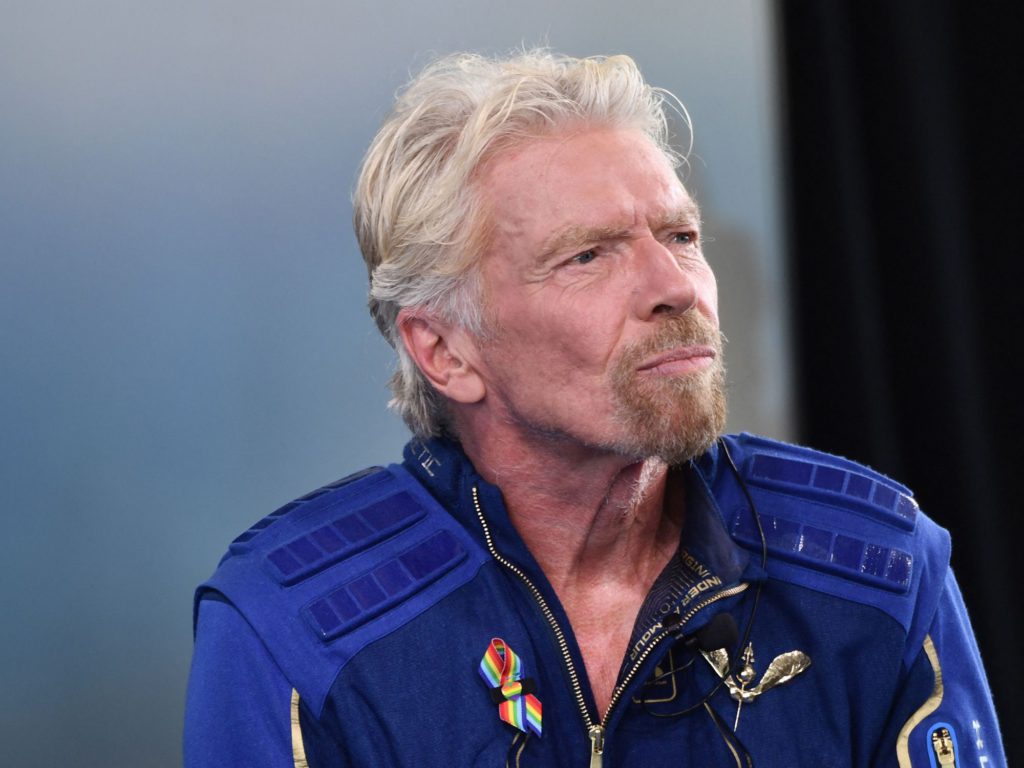
British billionaire Richard Branson hit out at cryptocurrency scammers and said he’s stepping up efforts to stop his name from being used to convince unsuspecting victims to sign up to fraudulent schemes.

“It’s a terrible thing because it affects a small person who can ill afford it,” Branson said in an interview in Austin, Texas. “We are doing enormous amounts to try to stop it.”

The Virgin Group founder said he has spoken with Meta Platforms Inc.’s outgoing Chief Operating Officer Sheryl Sandberg about erroneous promotions appearing on Facebook, and directed lawyers to confront other social media players whose platforms have hosted fake advertising.

Read More: Bitcoin Tumbles to 18-Month Low

Branson spoke in Austin during a promotional visit after his Virgin Atlantic Airways Ltd. launched flights there. The city was also hosting CoinDesk’s Consensus conference, one of the crypto industry’s largest annual confabs.

In the UK, Branson has joined with business figures including Martin Lewis, founder of consumer website MoneySavingExpert.com, to persuade the government to include paid-for scam ads in the new Online Safety Bill, which will make tech firms responsible for user-generated cons. Legislation including the amendment was published in March and is proceeding through Parliament.

Branson’s name may be particularly open to exploitation because he has backed Bitcoin as a sensible investment. A report last year from the UK’s National Cyber Security Centre listed him as among celebrities whose names are most often used by cryptocurrency fraudsters.

The scams typically feature fake online newspaper reports in which individuals appear to endorse crypto schemes that readers can access via links in the articles. Money is extracted from the unwary in a variety of ways, including so-called advance fee frauds seeking upfront payments.

Despite the rout in cryptocurrencies, Branson said he continues to recommend Bitcoin purchases via legitimate avenues as long as individuals aren’t overexposed.

“If people can afford it I still would put a little bit of money into Bitcoin, maybe a couple of percent of one’s investments,” he said.

Cryptocurrency has also provided a vital option for people who might otherwise have lost their savings, he said, for example Ukrainians fleeing the war or people escaping Afghanistan after the Taliban regained control, who “would be very glad that they didn’t have all their money tied up in a local currency.”

Branson’s space venture, Virgin Galactic Holdings Inc., is open to taking payment in Bitcoin from would-be astronauts, with billionaire twins Cameron and Tyler Winklevoss, founders of cryptocurrency exchange Gemini Trust Co., having made just such a booking.


More stories like this are available on bloomberg.com

©2022 Bloomberg L.P.

WTO Set to Debate Tariffs on $26.7 Trillion in Global E-Commerce

(Bloomberg) —

For the past quarter century, the meteoric rise of the digital economy has been exempt from the kind of tariffs that apply to trade in physical goods.

That era may come to a screeching halt this week as a handful of nations threaten to scrap an international ban on digital duties in a game-changing bid to draw more revenue from the global e-commerce market that the United Nations estimated at $26.7 trillion.

If governments fail to reauthorize the World Trade Organization’s e-commerce moratorium, it could open a new regulatory can of worms that could increase consumer prices for cross-border Amazon.com purchases, Netflix movies, Apple music, and Sony PlayStation games. 

“Absent decisive action in the coming days, trade diplomats may inadvertently ‘break the internet’ as we know it today,” International Chamber of Commerce Secretary-General John Denton wrote in a Hill opinion piece published last week. 

E-commerce Tariffs

The WTO’s e-commerce agenda dates back to 1998, when nations agreed to avoid taxing the then-fledgling market for digital trade. WTO members have periodically renewed that ban at their biennial ministerial meetings and are considering whether to do so again at this week’s gathering of ministers in Geneva. 

But some nations like India and South Africa argue that the growth of the internet justifies a rethink about whether the WTO’s e-commerce moratorium remains in their economic interests. In 2020, they introduced a paper that said the moratorium prevents developing countries from gaining tariff revenue from transformative technologies like 3D printing, big-data analytics, and artificial intelligence. 

While nations could draw somewhere between $280 million and $8.2 billion in annual customs revenue, new digital tariffs would also harm global growth by reducing economic output and productivity, according to the Paris-based Organization for Economic Cooperation and Development. 

The International Monetary Fund previously calculated that a splintering of the digital economy could ultimately deliver a 6% hit to global economic output over the next decade. 

If the moratorium lapsed, “it could set in motion a stampede to impose tariffs on digital flows across borders, put an unnecessary strain on an already battered global economy, and signal to the world that inflation be damned,” according to John Neuffer, the CEO of the Semiconductor Industry Association.

Practical Challenges

To be sure, it’s not immediately clear how exactly a government would impose customs duties on electronic transmissions. 

It would probably be “prohibitively expensive” for customs officials to track and quantify the value of the countless data packets that bring these products to consumers’ devices, according to Denton. 

“While viewing a single movie, a device could receive as many as 5 million data packets from nine jurisdictions,” Denton wrote. “How, then, would countries accurately (and impartially) calculate the tariff on a single viewing session, byte of data or file size – let alone on the endless stream of data and messages that enable modern business-to-business transactions?”

Furthermore, the WTO does not define the scope of e-commerce transmissions so there is no clarity as to which online services would be subject to new duties — be it Bitcoin cryptocurrency transactions, Airbnb lodging, Uber car rides, Doordash food delivery or Peloton fitness classes. 

Finally, the proliferation of virtual private network applications that mask internet protocol addresses would complicate, if not render impossible, efforts to identify the origin of many digital commerce transactions. 

Economic Trade-off

There’s reason to believe that India is using the threat of new tariffs as a negotiating tactic to persuade other nations to concede to its demands for unrelated trade concessions. 

India previously threatened to scrap the e-commerce moratorium during the WTO’s last ministerial in 2019 but backed off after nations agreed to avoid initiating disputes over certain questionable intellectual-property practices. The e-commerce debate may also be used as leverage for India’s demands to water down WTO subsidy rules for public stockholding food programs. 

Such brinkmanship is made possible by the WTO’s principal of consensus, which allows any one of its 164 members to block any agreement for any reason. 

“India, South Africa and their allies use the moratorium as leverage because they can,” said Hosuk Lee-Makiyama, director of the European Centre for International Political Economy in Brussels. “Developing countries have everything to win and nothing to lose by holding the WTO prohibition on data tariffs ransom.” 

More stories like this are available on bloomberg.com

©2022 Bloomberg L.P.

Embracer CEO Says Swedish Values ‘Unwavering’ After Saudi Stake

(Bloomberg) — Embracer Group AB’s chief executive says his “values as a Swedish entrepreneur are unwavering” in response to the many questions he has faced as a result of Saudi Arabia’s investment unit taking an 8% stake in the gaming firm.

 “I have been asked over the past few days why we are accepting investment from an entity in a non-democratic country,” Lars Wingefors said in a statement late on Friday. His remarks follow last week’s announcement that the Public Investment Fund’s Savvy Gaming Group is buying nearly 100 million shares in the Swedish company for 10.3 billion kronor ($1.02 billion).

“We need to look ourselves in the mirror, we are a public company and already have many hundreds of institutions from all parts of the world as shareholders,” Wingefors said.

The CEO added that there “is only a handful of players in the world” able to provide sufficient capital over the long term. And when asked about sustainability, he said the company is “committed to equality, a diverse work environment treats its employees with dignity and cultivating an atmosphere focused on improving the world around us.”

Read More: Saudi Wealth Fund Makes Second $1 Billion Bet on Swedish Gaming

More stories like this are available on bloomberg.com

©2022 Bloomberg L.P.

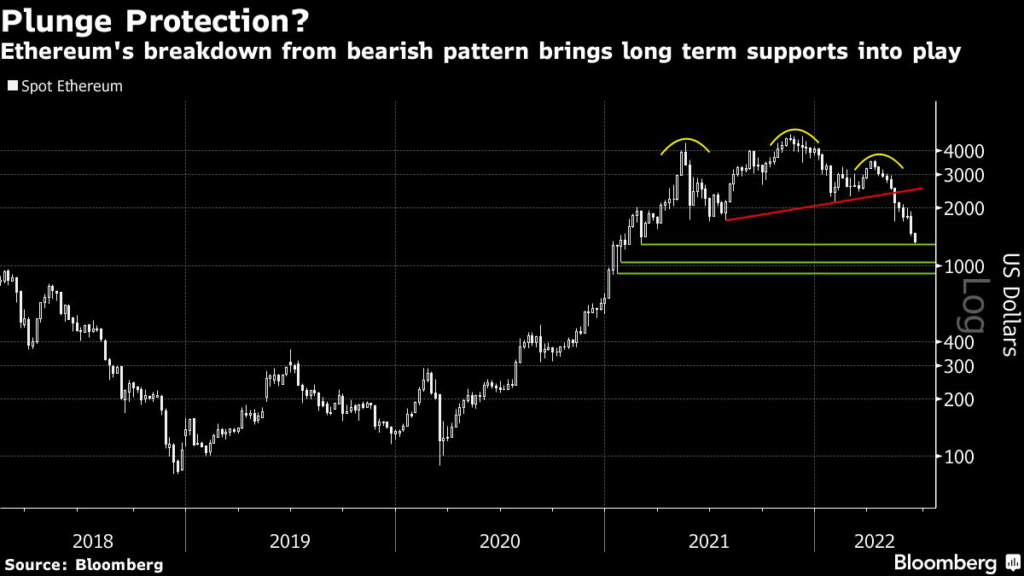
Ether Price Chart Shows More Pain May Be Ahead for Token

(Bloomberg) — Ethereum is down 30% month-to-date after having plunged as much in May, and price action suggests more pain may be in store through year-end. The bearish head-and-shoulders top has a measured objective around the $1,000 area, which is also where the 2018 peak formed. Immediate support lies at $1,300, extending down to the $913 to $1,042 area where two so-called long-legged doji weekly candles formed on the way up. 

More stories like this are available on bloomberg.com

©2022 Bloomberg L.P.

Google Suspends Engineer Who Claimed AI Bot Had Become Sentient

(Bloomberg) — Blake Lemoine, a software engineer on Google’s artificial intelligence development team, has gone public with claims of encountering “sentient” AI on the company’s servers after he was suspended for sharing confidential information about the project with third parties.

The Alphabet Inc. unit placed the researcher on paid leave early last week on claims he breached the firm’s confidentiality policy, he said in a Medium post titled “May be fired soon for doing AI ethics work.” In the posting, he draws a connection to prior members of Google’s AI ethics group, such as Margaret Mitchell, who were eventually dismissed by the company in a similar fashion after raising concerns.

Google’s Ethical AI Turmoil Began Long Before Public Unraveling

The Washington Post on Saturday ran an interview with Lemoine, wherein he said he concluded the Google AI he interacted with was a person, “in his capacity as a priest, not a scientist.” The AI in question is dubbed LaMDA, or Language Model for Dialogue Applications, and is used to generate chat bots that interact with human users by adopting various personality tropes. Lemoine said he tried to conduct experiments to prove it, but was rebuffed by senior executives at the company when he raised the matter internally.

Artificial Intelligence Is Scary, Boring and Useful: QuickTake

“Some in the broader AI community are considering the long-term possibility of sentient or general AI, but it doesn’t make sense to do so by anthropomorphizing today’s conversational models, which are not sentient,” Google spokesperson Brian Gabriel said in response. “Our team –- including ethicists and technologists –- has reviewed Blake’s concerns per our AI Principles and have informed him that the evidence does not support his claims.”

The company said it does not comment on personnel matters when asked about Lemoine’s suspension.

More stories like this are available on bloomberg.com

©2022 Bloomberg L.P.

Stocks, Bonds Fall on Inflation Shock; Yen Slumps: Markets Wrap

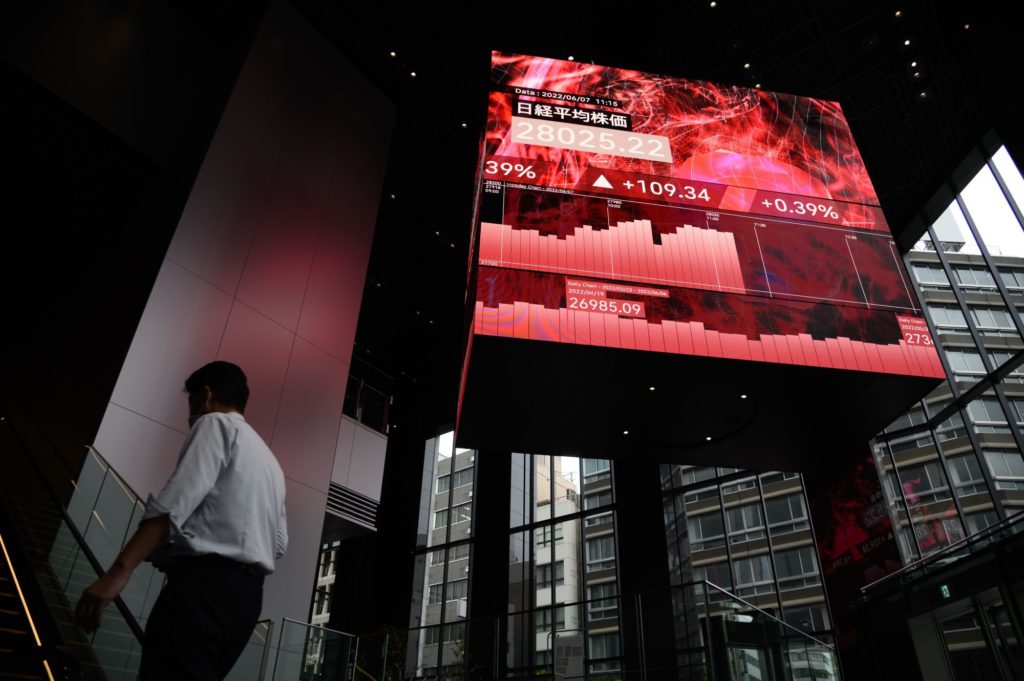
(Bloomberg) — Asian stocks dropped and bond yields surged on Monday following a fresh high in American inflation that heaped pressure on the Federal Reserve to intensify monetary tightening. The yen reached a 24-year low.

Equities shed more than 2% across Asian markets. Tech shares in Hong Kong declined further by 3.7%, weighing on the broader Hang Seng index.

US futures slid, with Nasdaq 100 contracts falling 1.8% and those for the S&P 500 dropping 1.2%, putting the later on the cusp of a 20% decline from January’s high. The moves come in the wake of steep losses on Wall Street that contributed to the worst drop in global shares last week since October 2020. 

The yen weakened to 135.19 per dollar, the lowest level since 1998, as Japan’s easy monetary policy increasingly stands at odds with that of developed-market peers hiking rates.

Treasury yields rose across the curve, led by shorter maturities, with the two-year rising 10 basis points to the highest level since late 2007. Yields on 30-year Treasuries are below those on five-year notes, pointing to fears that sharp Fed interest-rate hikes will spark a hard economic landing. New Zealand’s 10-year bond yield topped 4% for the first time since 2014 in the slipstream of the moves in Treasuries. 

The dollar was stronger on haven demand amid the toxic mix of rising costs and slower growth. Risk sensitive currencies like the Australian dollar weakened. Oil, one of the commodities stoking price gains, retreated to about $119 a barrel. 

Markets are also contending with Covid outbreaks in China, where Beijing and Shanghai resumed mass virus testing. The fear is China’s Covid-zero strategy will lead to repeated lockdowns that damage both its economy and global supply chains. The latter are also being affected by the war in Ukraine.

“At some point financial conditions will tighten enough and/or growth will weaken enough such that the Fed can pause from hiking,” Goldman Sachs Group Inc. strategists including Zach Pandl wrote in a note. “But we still seem far from that point, which suggests upside risks to bond yields, ongoing pressure on risky assets, and likely broad US dollar strength for now.”

The US consumer price index rose 8.6% in May from a year earlier — a fresh 40-year high — in a broad-based advance, adding to a slate of troubling inflation data globally. Many investors expect half-point Fed rate hikes this week and again in July and September. Barclays Plc and Jefferies LLC said an even bigger 75-basis-point move is possible at the June meeting.

No Smooth Ride

The volatility in Treasuries “can’t be anything that any central bank would welcome,” Sonal Desai, Franklin Templeton’s fixed income chief investment officer, said on Bloomberg Television. “We’re going to see more of the same. It’s not going to be a nice, smooth grind upwards. The Fed is going to need to do more.”

The yen’s slide against the greenback reflects the stark policy contrast between a hawkish Fed and a still dovish Bank of Japan. Chief Cabinet Secretary Hirokazu Matsuno reiterated “concern” over the recent rapid weakening of the yen and said foreign exchange rates should move stably and in line with economic fundamentals.

Still, the Japanese currency will “come under renewed selling pressure” if the Bank of Japan doesn’t change its easy policy, Rob Carnell, chief economist and head of Asia-Pacific research at ING Groep NV in Singapore, said on Bloomberg Television on Monday. “I think it’s a question of when rather than if with them, exactly what kind of nuance they put into play with the yield curve control.”

Poor sentiment was evident over the weekend in a cryptocurrency slide that took Bitcoin below $25,000 to the lowest in 18 months.

In Australia, financial markets are closed for a holiday.

What to watch this week:

  • First WTO ministerial meeting in nearly five years. Through June 15.
  • ECB’s Luis De Guindos due to speak, Monday.
  • US PPI, Tuesday.
  • China key economic activity data, liquidity operations, medium-term lending facility, Wednesday.
  • FOMC rate decision, Chair Jerome Powell briefing, US business inventories, empire manufacturing, retail sales, Wednesday.
  • ECB President Christine Lagarde due to speak, Wednesday.
  • Bank of England rate decision, Thursday.
  • US housing starts, initial jobless claims, Thursday.
  • Bank of Japan policy decision, Friday.
  • Eurozone CPI, Friday.
  • US Conference Board leading index, industrial production, Friday

Some of the main moves in markets:

Stocks

  • S&P 500 futures fell 1.2% as of 1:19 p.m. in Tokyo. The S&P 500 fell 2.9%
  • Nasdaq 100 futures fell 1.8%. The Nasdaq 100 dropped 3.6%
  • Japan’s Topix index down 2%
  • South Korea’s Kospi index shed 3%
  • Hong Kong’s Hang Seng index fell 2.8%
  • Hong Kong’s Hang Seng tech index declined 3.7%
  • China’s Shanghai Composite index dropped 1.1%

Currencies

  • The Bloomberg Dollar Spot Index rose 0.4%
  • The euro was at $1.0488, down 0.3%
  • The Japanese yen tumbled to 135.19
  • The offshore yuan was at 6.7573 per dollar, down 0.4%

Bonds

  • The yield on 10-year Treasuries rose three basis points 3.18%

Commodities

  • West Texas Intermediate crude fell 1.4% to $119.04 per barrel
  • Gold fell 0.5% to $1,862.76 an ounce

More stories like this are available on bloomberg.com

©2022 Bloomberg L.P.

Attack on Chinese Women Revives #MeToo Anger Xi Can’t Extinguish

(Bloomberg) — Footage of a violent attack on female diners at a barbecue restaurant in China has sparked outrage online, threatening to revive the #MeToo movement against gender inequality that President Xi Jinping’s government has repeatedly tried to suppress.

Security footage shared online shows a man approaching a table of three female diners early Friday morning in the northern city of Tangshan and putting his hand on one woman’s back. When she resists, the man attacks her and a friend, and several other men pile in. The woman is then dragged outside by her hair, where she’s beaten and kicked on the ground.

Nine suspects were arrested Saturday after a search spanning two provinces, according to the official Xinhua News Agency, with a Tangshan official vowing to “severely punish” those involved.  

That pledge didn’t satisfy users of China’s Twitter-like Weibo, where the assault was still trending Monday morning and becoming a broader conversation about gender inequality. One woman demanded an apology from a man she said harassed her on a beach in 2021. “Since then, I no longer dare to leave home alone at night,” she wrote, in a post that received more than 1 million likes. 

Two members of girl band CKG48 shared a video of being forced to accept a toast from a man after polite refusals. That topic was viewed some 26 million times.

Despite that outrage, the state-run China Daily newspaper dismissed the idea the attack exposed any problem with women’s rights in a Sunday commentary. The case “should never be interpreted as any form of sexual antagonism,” the newspaper said. 

Xiaowen Liang, a New York-based feminist and lawyer, said that by denying this was gender-based violence, Chinese authorities were trying to avoid addressing a systemic problem. 

“Women’s voices in Chinese society are some of the strongest and loudest outspoken voices that are constantly challenging the existing system,” Liang said. “That’s why the Chinese government is trying everything it can to try to marginalize women’s voices, or dissenting feminist ideas, and trying to stigmatize feminism as a whole.”

The ruling Communist Party has repeatedly suppressed the country’s nascent #MeToo movement, viewing it as a vehicle for spreading liberal Western values. Consequently, women who have spoken about up sexual assault have been repeatedly silenced by the nation’s patriarchal culture. There’s only one woman in its 25-member top decision making body, the Politburo, and she’s set to retire this year. 

Alibaba Group Holding Ltd. fired a woman who accused a manager of sexual assault last year, a scandal that ignited intense debate about the excessive drinking perpetuated by Chinese corporations and discrimination against females at tech firms.

Women’s rights also threatened to overshadow the Beijing Winter Olympics in February, as international coverage of multiple scandals marred Xi’s final major international event before his landmark bid to secure a third term in office later this year. 

Concern for tennis star Peng Shuai prompted the United Nations Human Rights Office, the White House and high-profile sports stars including Serena Williams to issue statements demanding China clarify her whereabouts in the Olympics run-up. Peng disappeared from public view after making allegations against a former vice premier that were promptly wiped from China’s internet.

Weeks later, authorities in the eastern province of Jiangsu were accused of downplaying the case of a mother of eight filmed chained by the neck in a doorless hut. Chinese censors removed a letter signed by 100 alumni of Peking University calling for the central government to look into the matter, which shone a spotlight on the problem of bride trafficking in rural areas.

Yaqiu Wang, senior researcher on China at Human Rights Watch, said the Tangshan attack had sparked such anger online because so many Chinese women have pent-up frustration about a lack of public safety for them and the impunity for attackers.

“Authorities need to investigate gender-based violence, enforce laws and hold perpetrators of assault and harassment to account,” she said. “They should also stop censoring online discussions about women’s rights issues, cease harassing or intimidating women’s rights activists and allow an independent press to report on these issues.”

(Updates throughout.)

More stories like this are available on bloomberg.com

©2022 Bloomberg L.P.

Bids for India Cricket Rights Touch $6 Billion on Auction Day 1

(Bloomberg) — The auction of broadcast rights for India’s coveted cricket league saw heated competition on the first day as bids went past 450 billion rupees ($5.8 billion), according to people familiar with the proceedings.

The sum offered by the end of Sunday for the Indian Premier League’s rights already exceeded the floor price of 328 billion rupees set by India’s cricket board and is nearly three times what the sport’s local governing body got in the last auction in 2017. Bidding will resume Monday.

A representative for the Board of Control for Cricket in India, or BCCI, declined to comment on the bidding progress.

Global media giants are battling for a five-year contract for one of the world’s most popular sporting events. Bidders include current rights holder Walt Disney Co., Sony Group Corp., Viacom 18 Media Pvt. — a venture between Reliance Industries Ltd. and Paramount Global –and local entertainment firm Zee Entertainment Enterprises Ltd.

Amazon.com Inc. had initially planned to take part but reported to retreat at the last minute. Billionaire Mukesh Ambani’s Reliance was bidding out of a commercial office complex in Mumbai, once used to house a textile mill, but kept satellite teams on standby in case of a technology snag.

It was a slow start on Sunday as bidders navigated carefully through the e-auction process — this is the first time it’s being tried for the IPL — but heated up later, according to one of the people, who didn’t want to be named as the information is not public. Bidding was more intense for digital rights and may eventually even exceed the collection for television, a separate person said.

Indian viewers, coming out of two years of pandemic-led curbs, are steadily pivoting toward consuming entertainment online and away from TV — the staple source for middle-class Indian families until a few years ago. Acquiring IPL’s rights is a sure-shot way for any media firm to add millions of eyeballs in the cricket-crazy nation of almost 1.4 billion people.

The IPL is a multiweek tournament typically held in April and May every year. Ten teams comprising players from mostly the British Commonwealth countries play matches that last three hours each, a shortened and more entertaining format compared to the classic five-day test cricket. Drawing more than half-a-billion viewers, the annual IPL tournament trails only English soccer and the National Football League in popularity globally, according to organizer BCCI. Amazon had signed a deal to broadcast Thursday Night Football in the US at $1 billion a season until 2033. 

(Adds Amazon’s deal to broadcast Thursday Night Football in the US in the last paragraph.)

More stories like this are available on bloomberg.com

©2022 Bloomberg L.P.

The UK’s Finance Cop Cracks Down

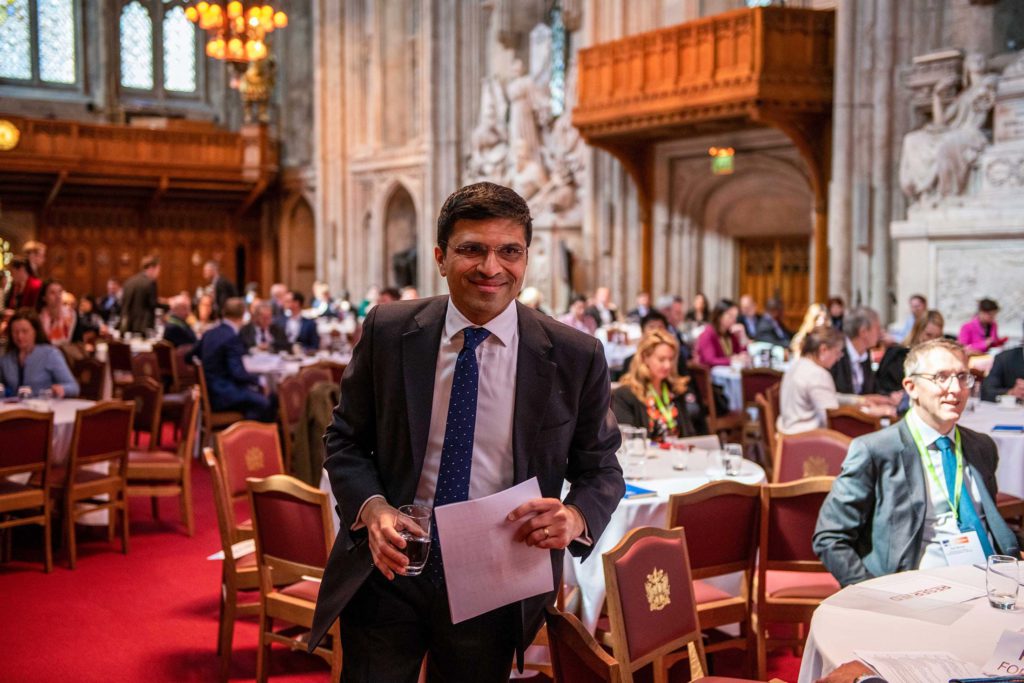
(Bloomberg Markets) — Not long into his tenure as Britain’s top financial cop, Nikhil Rathi summoned some of America’s most powerful tech executives for a showdown. A world away from Silicon Valley, Rathi works in a remote government office building in gritty, gentrifying East London. Via videoconferencing, he conveyed his message to the representatives of Google: Scams and get-rich-quick schemes that companies advertised on their site could lead consumers to lose their life’s savings—and the dodgy online material needed to come down.

Rathi had been meeting with Google for months. Like other international companies, the search engine giant argued it couldn’t set rules for a single jurisdiction. “This is serious,” he told the executives, a person familiar with the exchange recalls. “We don’t accept that you’re unable to prevent this.”

If he kept seeing these ads, Rathi warned, he reserved the right to take enforcement action, according to the person, who requested anonymity to discuss last year’s private talks. In June, Google relented. It would no longer run ads in the UK from companies that didn’t pass muster with Rathi’s agency, the Financial Conduct Authority. Google, a unit of Alphabet Inc., says the policy, which builds on earlier company initiatives, is delivering “a substantial reduction in users’ risk from scam ads.”

Since becoming the FCA’s chief executive officer in 2020, Rathi has positioned himself as one of the world’s toughest financial enforcers. He’s extracted some headline-­grabbing penalties, including the £265 million ($333 million) fine of NatWest Group Plc last year for failing to monitor money laundering at an English gold dealer. The company admitted to the criminal charges and said it deeply regretted its failings.

Under Rathi the agency is investing an additional £120 million in technology, including artificial intelligence, in an effort to root out fraud and streamline paperwork. In keeping with a leader whose last job was CEO of the London Stock Exchange, he’s also using financial incentives—­overhauling the agency’s compensation plan—to improve his staff’s performance. It’s been something of a rocky start. Financial technology companies are fuming, and part of his own workforce is in open revolt over what they view as a huge pay cut.

The FCA has 4,000 employees and oversees more than 50,000 businesses ranging from Goldman Sachs Group Inc. to secondhand car dealerships. It has a reputation for being understaffed and overstretched. It’s also a young agency. Parliament created the FCA in 2013 to protect consumers and the UK financial system as part of a regulatory overhaul after the 2008 financial crisis. At 42, Rathi is young, too, and moving fast. His name is often floated as a future governor of the Bank of England, though he’s best known as a behind-the-scenes policy adviser to two prime ministers.

In his most sweeping measure, Rathi last year proposed holding all financial firms to a higher “standard of care” toward customers. Brokers would be required to sell only products that are actually good for their clients—the kind they might offer their own friends and family. In the US a narrower version of this rule has faced years of political ­reversals, delays, and lawsuits because of industry opposition.

Rathi, who declined to be interviewed for this article, maintains that selling suitable products shouldn’t be controversial. “Firms showing leadership and doing the right thing should welcome action to tackle businesses who lower standards,” he said in April, in detailing his strategy.

The FCA is taking an especially hard line on crypto. In December a member of Parliament nailed down Rathi’s views. “Are they the tulip bulbs of the 21st century?” asked Harriett Baldwin, a Conservative Party MP and former JPMorgan Chase & Co. banker, referring to the famed speculative bubble that ended in disaster in the 1630s. Rathi’s response made cryptocurrencies sound like mosquitoes in a malarial swamp—in his words, “a vector for serious organized crime and money laundering.” What’s more, he told the Treasury Committee, “anyone who invests in them must be ready to lose all their money.” Digital currencies’ swoon in May vindicated his concerns.

Over the past two years the FCA has effectively banned Binance, the biggest crypto exchange, from the UK; denied permission for so-called crypto ATMs; and made its standards for doing business so stringent that most digital currency companies can’t operate in the country.

On crypto the FCA may have an enforcement edge over the US, according to Eugene Soltes, a Harvard Business School professor who studies regulation. “In the US we have an alphabet soup of regulators,” he says. “We’re trying to figure out still who is the regulator, not how we should regulate them. The FCA already has one up.”Read More:  Crypto Goes Shopping for a Regulator It Can Push Around

Academics and business executives tend to see Rathi’s approach as similar to that of another energetic regulator: Gary Gensler, chair of the US Securities and Exchange Commission. Richard Gnodde, a London-based executive who oversees Goldman Sachs’s businesses outside of North America, says the agency under Rathi could end up a world leader in crafting rules for crypto. “There are a number of regulatory centers in the world competing for this, and the UK is in the game, but we’ve got to keep moving and keep moving fast,” he said at an April conference in London.

No doubt there’s risk for London, a world financial center that’s second only to New York. Bankers are already relocating to the Continent after Brexit, the withdrawal of the UK from the European Union. Christian Faes, co-founder and executive chairman of LendInvest Plc, a London-based mortgage technology company, says he’s fed up with UK regulation. Recently he chose the US as the location of a new venture, a so-called Bitcoin mine, where coders mint digital tokens. “The FCA are very anti-crypto, and it feels like they are very happy for that to be the message,” says Faes, who chairs the Fintech Founders group in London. “The UK regulators are basically saying, ‘Don’t come and try and build those businesses here.’”

Rathi Grew up in Barrow-in-Furness, a former shipbuilding town on the coast in northwest England. His father, a doctor and magistrate, was from Madhya Pradesh in central India; his mother, who worked on and off while raising the family, came from Rajasthan in the north. He’s told others that his father’s practice, which treated poor patients, sensitized him to the needs of protecting the financially vulnerable from predatory businesses.

Before turning 12, Rathi became a regional tennis champion. Tall and lean, with only a few gray hairs, he still plays twice a week. He attended Oxford University, where he studied politics, philosophy, and economics and earned a “first class” degree, which represents the highest honors. In his 20s he worked as a private secretary for Prime Ministers Tony Blair and Gordon Brown.

In 2008, Rathi joined the Treasury’s financial stability unit, where he negotiated with the EU over bank bailouts during the financial crisis. There he caught the eye of Xavier Rolet, then head of London Stock Exchange Group Plc, who hired him in 2014 as chief of staff. “He was one of the fastest-­promoted, youngest, and most talented people in the Treasury,” Rolet says. A year later, Rathi became CEO of the company unit in charge of the exchange.

But government beckoned again. In 2020 he beat 59 other candidates to lead the FCA, succeeding Andrew Bailey, now governor of the Bank of England. At the time, the agency was reeling from the 2019 collapse of London Capital & Finance Plc, which exposed retail “mini-bond” investors to $300 million in losses. Elizabeth Gloster, a former judge who issued a report into the scandal, found a sluggish investigative culture at the FCA, with inadequate training of staff to root out fraud. Mel Stride, a Conservative lawmaker and chair of the House of Commons’ Treasury Committee, called the collapse “one of the largest conduct regulatory failures in decades.”

Early one morning in May, about 30 protesters gathered in front of FCA headquarters. Representing a union that’s become one of Rathi’s primary antagonists, they were a decidedly white-collar crew dressed in khaki trousers, suits, and puffer jackets. “What do we want? A voice. When do we want it? Now,” they chanted. “Hey, hey, FCA. Much more work and much less pay.”

Their beef: Before the Covid-19 pandemic, FCA employees got quasi-automatic bonuses of as much as 12% a year, on top of their salaries. Rathi, who’s paid £455,000 annually, scrapped the bonuses and offered performance-based salary increases and raises to the lowest-paid front-line workers, who make as little as £23,000 annually.

The union, called Unite, says his proposal amounts to a “punishing package” of pay cuts. In February a staff survey found that 56% of 1,852 respondents were considering leaving the agency because of the changes. About 300 FCA staffers have voted to strike over pay and working conditions.

The dispute demonstrated the challenge facing Rathi as he tries to remake the agency while keeping within its £640 million budget. To make up for limited staffing, he’s counting on artificial intelligence algorithms to identify troublesome businesses. For reinforcements he’s given senior roles to finance veterans who’ve worked for companies such as BlackRock, the world’s biggest money manager; Goldman Sachs; and Dutch insurer Aegon.

Rathi is also experimenting. He’s expressed high hopes for the FCA’s “regulatory sandbox,” where he lets companies test new products with less red tape. The businesses can assess their market, while the agency sorts out consumer safeguards. Tomato Pay, a UK software company that helps small businesses manage invoices on a smartphone, played in the sandbox before entering the world of financial adults; Spanish financial giant Banco Santander SA has used the startup’s payment services in a now-completed pilot and says it is reviewing the outcome.

The FCA has also held what it calls TechSprints, which bring together regulators from around the world to address financial crime and other issues. With crypto, Rathi has insisted companies prove their businesses aren’t being used for money laundering—a tough bar that’s kept many out of the UK.

He’s using the TechSprints to address—and one day, perhaps, resolve—conflicts with fintech companies chafing at his rules. In May, following one sprint, Rathi and his agency’s top brass met with about 100 executives from companies that were eager for guidance on which digital tokens could be listed legally on exchanges, according to a person who attended the summit but wasn’t authorized to speak publicly about it.

Suggesting how much Rathi is shaking up the FCA, a former senior executive at the agency describes him as a “Dalek,” one of the Earth-invading robot-mutants from the TV show Doctor Who. Rathi has been known to send emails to top aides from 5:30 a.m. to 11 p.m., though he’s told others he’s cut back lately because of the demands of his family life. (He’s married with three young children.)

In an April email, he stressed to his lieutenants that their work will grow only more urgent. Unemployment may spike amid rising interest rates and the war in Ukraine, he predicted. “Millions of consumers will depend on us performing our best,” Rathi wrote. “Sadly, in these circumstances, scammers tend to intensify their activity, and consumers will be relying on us to tackle them assertively.” —With Jonathan Browning

Shaw and Nicolle report on finance and cryptocurrencies for Bloomberg in London.

More stories like this are available on bloomberg.com

©2022 Bloomberg L.P.

Crypto Lender Celsius Freezes Withdrawals, Fueling Market Rout

(Bloomberg) — Celsius Network Ltd. paused withdrawals, swaps and transfers on its platform, fueling a broader market selloff as traders continued to question the sustainability of high-yielding tokens in the wake of the Terra blockchain collapse.

Celsius’s CEL token sank 53% to 18 cents as of 11:13 a.m. in Hong Kong, according to pricing data site CoinGecko, pacing a slump in crypto assets that sent Bitcoin to its lowest level since December 2020.

Doubts about the sky-high yields backing protocols such as Celsius have intensified after Terra’s collapse in May and as tighter monetary policy from global central banks curbs demand for riskier assets. The CEL token promises “actual financial rewards,” including as much as 30% extra returns weekly, according to its website.

“We are taking this action today to put Celsius in a better position to honor, over time, its withdrawal obligations,” the platform said in a memo on its website, adding that users will continue to accrue rewards during the pause.

Bitcoin headed for a seventh straight day of losses, falling to as low as $24,903.49. 


More stories like this are available on bloomberg.com

©2022 Bloomberg L.P.
Close Bitnami banner
Bitnami