

Bloomberg

Alameda Bet Big on Crypto Miner Genesis Before Sector Implosion

(Bloomberg) — One of the bigger questions surrounding the collapse of Sam Bankman-Fried’s crypto empire is what venture investments his trading firm Alameda Research poured billions of dollars in. 

A company document indicates that his largest bet was on the Bitcoin mining company Genesis Digital Assets during the height of the crypto gold rush. Alameda continued to pour money into the firm even as the price of Bitcoin tumbled and soaring energy costs wreaked havoc across the industry. 

Alameda has invested a total of about $1.15 billion in Genesis Digital, valuing the company at $5.5 billion in an April fund-raising round, according to an internal spreadsheet listing FTX and Alameda’s venture portfolio obtained by Bloomberg News. The miner isn’t related to crypto lender Genesis, whose lending unit has halted customer withdrawals. 

The investment spanned across four rounds between August 2021 and April this year. An initial injection of about $100 million was made last August, followed by another $550 million in January, $250 million in February and $250 million in April. The total amount makes it Alameda and FTX’s biggest venture bet, according to the spreadsheet. 

Representatives of Genesis Digital, which has its roots in Iceland, didn’t respond to requests for comment. Caroline Ellison, the head of Alameda Research, didn’t respond to a request for comment.

In the most recent crypto boom, miners were able to raise billions of dollars from the equity market and lenders at generous terms, often using the equipment purchased as collateral on loans. In the first half of this year, the Bitcoin mining industry saw as much as 90% profit margins. 

But the mining industry quickly went from one of the most lucrative corners in the digital world to one of the most distressed sectors, given the plunge in Bitcoin, soaring energy costs and more competition among miners. Some of the largest mining companies are on the verge of bankruptcy with a key mining revenue gauge falling to a record low. 

Genesis Mining, the predecessor of Genesis Digital Assets, was one of the oldest mining companies, opening its first facility in Iceland in 2014. It had large-scale mining operations in China before the government imposed a sweeping ban on crypto mining last May. Marco Streng, the founder, later started Genesis Digital Assets in April 2021 as he shifted focus to self-mining Bitcoin rather than being a crypto-service provider, according to his blogpost on Linkedin. 

“We’re going big,” Streng said in the LinkedIn post in June 2021, about two months before Alameda made its first investment to the company. Other investors included Paradigm, NYDIG, Ribbit, Electric Capital and Skybridge Capital.  

With the funding, Genesis Digital Assets embarked on a rapid expansion plan across the US. It has secured over 700 megawatts of power for its mining operations in Texas, South Carolina and North Carolina over the first six months of 2022, making the company a major Bitcoin miner in the country.

Now miners are shuttering facilities as the crypto downturn grows longer. And billions of dollars of other FTX and Alameda assets remain unaccounted for. 

–With assistance from Hannah Miller.

More stories like this are available on bloomberg.com

©2022 Bloomberg L.P.
Portfolio Manager Exits After His FTX Bet at Standard Industries

(Bloomberg) — Oliver Wiener, a portfolio manager who led Standard Industries’ investment in the now-bankrupt cryptocurrency exchange FTX Trading Ltd., has left the company, according to people with knowledge of the matter.

Standard Industries, led by co-CEOs David Millstone and David Winter, is controlled by the families of the late corporate raider Samuel Heyman. The firm’s 40 North unit made an investment in FTX as part of a July 2021 funding round that valued the company at $18 billion alongside a roster of backers including Sequoia Capital, Thoma Bravo, Izzy Englander and Dan Loeb’s Third Point, the exchange said at the time. 

Standard Industries representatives didn’t respond to multiple requests for comment. Wiener, who’s based in New York, declined to comment, and an email to his Standard Industries address bounced back with a message saying he “is no longer with the firm.”

Wiener, a founding member of the brokerage BTIG LLC, left that firm after a more than 18-year tenure last year for a role at Standard Industries. He is a founding member of the Association for Digital Asset Markets, or ADAM, its website shows. As recently as last month, his LinkedIn profile showed that he was an advisory board member at FTX.

Read more: Sequoia Capital Says Sorry for FTX But Defends Vetting Process

More stories like this are available on bloomberg.com

©2022 Bloomberg L.P.

Amnesty Decries Student’s Arrest in Nigeria Over Tweet

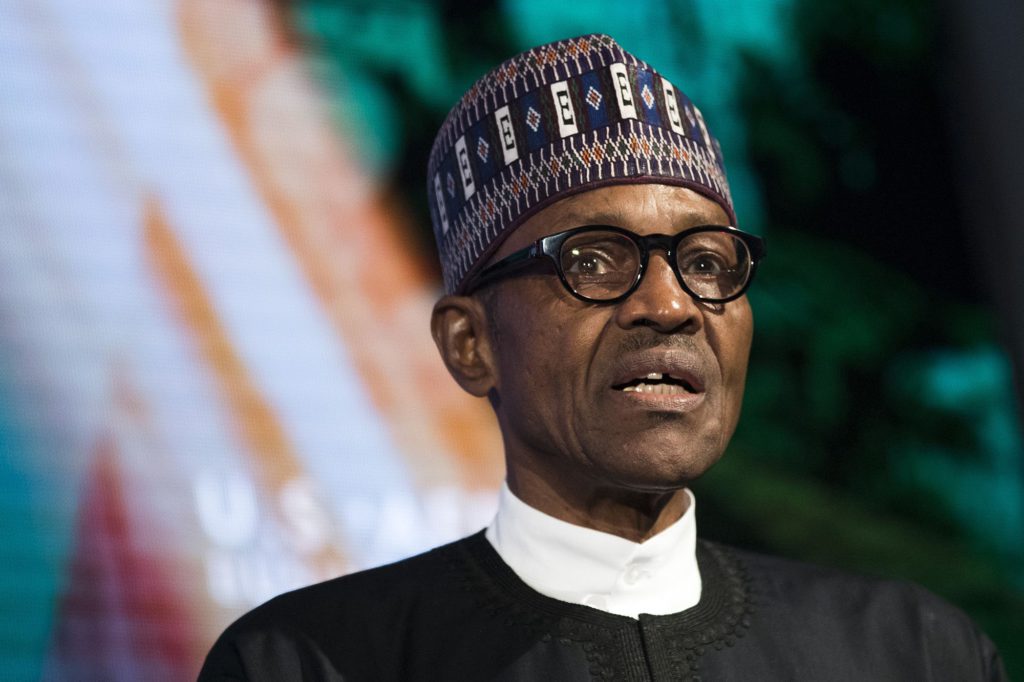
(Bloomberg) — Amnesty International has asked Nigeria to release a student who’s been arrested for a tweet, which allegedly defamed the wife of the nation’s President Muhammadu Buhari. 

Aminu Adamu Muhammed was brought before Aisha Buhari in the presidential villa and later detained before being charged on Nov. 21 in the capital, Abuja, according to court documents. He’s been accused of posting a captioned image of the first lady that he knew to be false and capable of damaging her reputation, the charge sheet shows.

The arrest has sparked anger, raising fresh concerns about abuse of authority in Africa’s largest economy, as the overwhelmingly youthful population prepares for national elections in February. Buhari’s ruling party, represented by Bola Tinubu, is bidding to retain its hold on power in the face of strong competition from two candidates and a struggling economy.

Nigeria had previously banned Twitter after the company deleted one of President Buhari’s posts for violating its rules. The government said the platform was shut down because “unscrupulous elements” used it for “subversive purposes and criminal activities, propagating fake news, and polarizing Nigerians along tribal and religious lines.” 

Nigeria lifted the San-Francisco-based social media giant’s seven-month suspension in January.

Police witness statements filed in the case indicate a high level of personal involvement by the first lady and her staff in the detention of the 24-year-old, who was formally arraigned on Tuesday.

Spokesmen for the president and first lady didn’t respond to a request for comment.

Muhammed’s family and friends allege that he was the victim of “severe beating, torture and other forms of ill-treatment” while in detention, Amnesty International Nigeria said on Twitter on Nov. 27. 

His bail application is due to be heard on Dec. 5. Amnesty International on Friday called on the government to “urgently” release Muhammed. An association of Nigerian students also called for nationwide protests starting on Dec. 5 over Muhammed’s treatment.


More stories like this are available on bloomberg.com

©2022 Bloomberg L.P.

CVC Weighs Options for Razer After $3.2 Billion Buyout

(Bloomberg) — CVC Capital Partners is exploring options for Razer Inc., less than a year after taking the gaming peripherals maker private in a $3.2 billion deal, according to people familiar with the matter.

The buyout firm is conducting a strategic review of Razer and has held initial discussions with potential advisers, said the people, who asked not to be identified as the matter is private. Options include a sale, introducing a strategic investor and acquiring assets to grow the company, the people said.

Considerations are preliminary and no final decision has been made, the people said. Representatives for CVC and Razer declined to comment.

The review could become the latest twist in the history of 17-year-old Razer, co-founded by Min-Liang Tan and the late Robert Krakoff in California and Singapore. Razer went public in Hong Kong with much fanfare in 2017 but it had since floundered afterwards, with its shares trading below its initial public offering price of HK$3.88 apiece. The company also struggled to expand into financial services. It shuttered its e-wallet Razer Pay in 2021 after failing to win a license from the Singapore government to launch a digital bank. 

A consortium including CVC, Tan and board member Kaling Lim earlier this year offered to buy out the gaming peripherals maker in a $3.2 billion deal. Razer’s shares were delisted from the Hong Kong stock exchange in May. 

More stories like this are available on bloomberg.com

©2022 Bloomberg L.P.
Silicon Valley Bank Names Platts to Lead Its $16 Billion Wealth Unit

(Bloomberg) — Silicon Valley Bank named Erin Platts head of its private banking and wealth-management arm, which caters to the financial needs of technology and venture capital executives.

Platts, 40, the chief executive officer of Silicon Valley Bank UK, will be president of SVB Private, which managed $15.9 billion as of Sept. 30, the Santa Clara, California-based company said. She’ll relocate to New York from London for her new role, which will involve leading the firm’s private banking, wealth planning and trust services.

“There’s this massive opportunity with all the wealth creation happening in the innovation economy,” Greg Becker, CEO of SVB, said in an interview. “Despite the headwinds we have right now, there’s a lot of wealth creation.”

SVB Private specializes in working with wealthy individuals from fields like health care, technology, venture capital, life sciences and private equity. Many of those industries have struggled in 2022 as the Federal Reserve raises interest rates and investors flee the most speculative assets.

Technology companies in the Silicon Valley region, from Meta Platforms Inc. to Intel Corp. to DoorDash Inc., have been reducing headcount this year to contend with a slowing economy and sinking stock prices. 

“The tech industry goes through ups and downs,” Becker said. “If you get overly focused on one period of time — one year, two years — you’re going to miss out on the long-term trajectory in tech and health care.” 

David Sabow, who previously was the firm’s head of technology and health-care banking, will take over for Platts as CEO of Silicon Valley Bank UK.

More stories like this are available on bloomberg.com

©2022 Bloomberg L.P.

US to Announce New North Korea-Related Sanctions Today

(Bloomberg) — The Biden administration is considering “all available tools” to punish North Korea over an unprecedented series of missile tests, an official said, a day after the US, Japan and South Korea revealed a new round of sanctions to pressure Pyongyang to come back to the negotiating table. 

The coordinated action represents the renewed strength of the US-Japan-South Korea alliance, White House National Security Council spokeswoman Adrienne Watson said in a statement Friday, saying that an “increasingly desperate” North Korea was turning to “virtual currency heists and other cyberthefts” to fund its weapons program.

“As we have made clear, the door has not closed on diplomacy, but Pyongyang must cease its destabilizing actions and engage diplomatically,” she said.

On Thursday, the US announced measures against three individuals for their connection to the ruling Workers’ Party of Korea, while Japan targeted three groups and one individual. South Korea added eight individuals and seven institutions it said were connected to North Korea’s missile and nuclear weapons development program. 

The allies are grappling for new ways to ramp up pressure against North Korea, which is already under comprehensive US and United Nations sanctions. The existing sanctions regime includes a cap on fuel imports and limits on foreign income, but analysts say western sanctions have been largely ineffective at halting North Korea’s weapons program.

Russia and China, two longtime partners of North Korea, have veto power at the UN Security Council and have shown no intent to punish leader Kim Jong Un with extra sanctions. They played a critical role in passing such measures five years ago after Kim’s last nuclear test.

North Korea has fired off a record number of missiles this year as the US and its allies are focused on Russia’s invasion of Ukraine. In November, North Korea test-fired a suspected intercontinental ballistic missile with an estimated range far enough to carry a warhead to the American mainland, highlighting the challenge for President Joe Biden.

Earlier: North Korea Fires Suspected ICBM After Warning US on Exercises

The US, South Korea and Japan have promised a coordinated response if Kim defies United Nations resolutions and detonates a nuclear device. 

Among the organizations added to Japan’s sanctions list was Lazarus Group, which the government said also goes under aliases including the New Romantic Cyber Army Team. North Korea has intensified its cybercrime operations in recent years, including stealing from cryptocurrency platforms, to generate revenue to prop up its ailing economy.

A report from blockchain research firm Chainalysis said North Korea’s hacker army stole $400 million in crypto assets in 2021. In April of this year, the US Treasury Department tied the North Korean hacking group Lazarus to the theft of more than $600 million in crypto from a software bridge used by a popular video game.

The US previously sanctioned a “virtual currency mixer,” Blender.io, that the government said was tied to North Korean hacking and money-laundering activities.

The US could still target North Korean shipping companies, coal exports to China and Chinese companies employing overseas North Korean laborers, as well as North Korean efforts to steal cryptocurrency, said Anthony Ruggiero, a former North Korea director on the White House National Security Council who is now at the Foundation for Defense of Democracies.

“There’s a lot left to sanction,” Ruggiero said, speaking Thursday at an event on threats to nonproliferation. “We’ve got to reinvigorate the pressure campaign.”

Read more: US Links North Korean Hacker Group to Record Crypto Heist

National Security Council Advisor Jake Sullivan told a Center for Strategic and International Studies forum on Wednesday that new sanctions were “coming forward” and that the US would bolster military and intelligence cooperation with Japan and South Korea. 

Tighter military cooperation will include upgrading “the alliance software that we have in the region,” and “steps with respect to the hardware,” Sullivan said, without providing further details.

More stories like this are available on bloomberg.com

©2022 Bloomberg L.P.

New San Francisco DA Vows to Fight the City’s ‘Lawlessness’

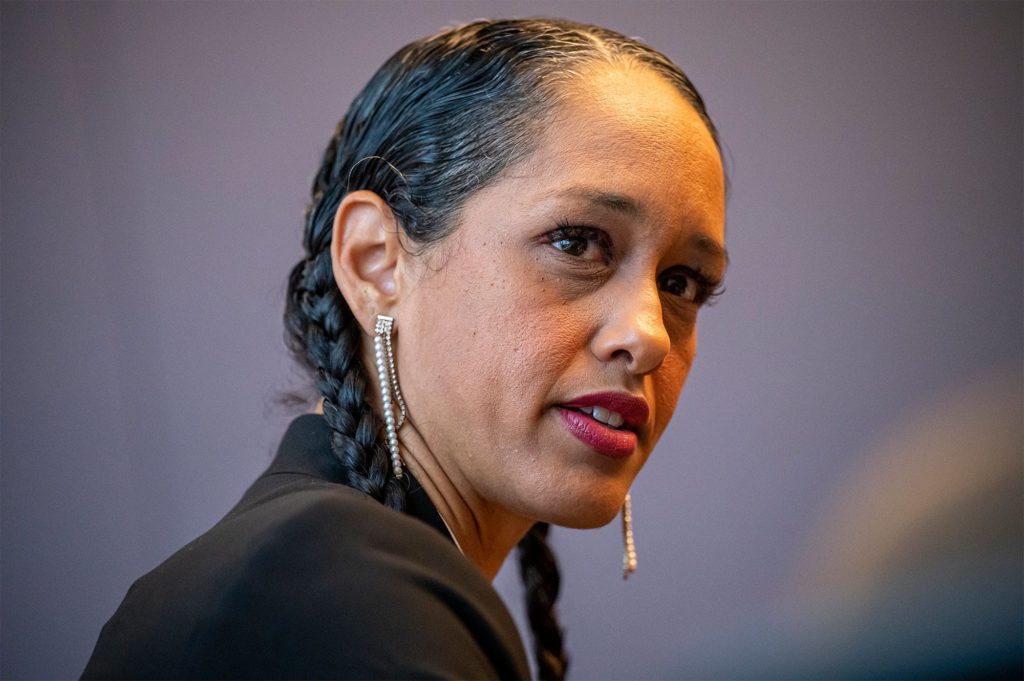
(Bloomberg) — San Francisco District Attorney Brooke Jenkins has a message about the “lawlessness” she says she inherited in her city: “All crime in San Francisco is illegal again.”

Changing the perception that San Francisco has lost its allure after the pandemic to help keep the city’s economic machine running is “a significant factor” that plays into her efforts, Jenkins said in an exclusive interview at Bloomberg News in San Francisco Thursday. 

Jenkins, 41, landed in the city’s top prosecutor job by actively helping to unseat her predecessor and former boss, Chesa Boudin, who was recalled by voters in June amid criticism he was too soft on crime. Appointed to her post in July by Mayor London Breed, Jenkins went on to win election to the remainder of Boudin’s term last month — and she will face voters again next year. 

With its quality of life perennially plagued by open-air drug markets, brazen retail theft and thousands of people who live on the streets, many of them mentally ill, San Francisco has found itself in the spotlight lately over an intrusion into House Speaker Nancy Pelosi’s home by a man who struck her husband in the head with a hammer and the near death of an infant who reportedly ingested fentanyl in a city park.

Pledging to repair what she described as a dysfunctional relationship between her office and the city police department, Jenkins said the city can’t afford for business owners to shut their stores and families to flee to the suburbs because they fear for their safety, or for businesses and tourists to avoid the city altogether.

“A very strong message not only to San Francisco, but the world is that we will make it safer,” she said.

While city police data shows burglaries and homicides have decreased this year compared to the same period last year, high-profile smash and grab incidents, car thefts and hate-driven attacks on Asian Americans have rattled residents and deterred visitors. 

Read More: San Francisco Mayor Names Boudin Recall Supporter as New DA

Jenkins said that based on her conversations over months with residents and business owners alike, crime statistics aren’t accurate.

“The amount of people who are not reporting crime is astounding,” she said.

To support the city’s retail sector she’s been meeting with businesses like Walgreens and trade group leaders who want to know what can be done to reduce crime.  

She explains that law enforcement can’t help if business owners fail to report crimes — and if employees aren’t made available to testify as witnesses when cases are prosecuted.

Jenkins said she’s not the antithesis to Boudin, a progressive whose reforms proved unpopular, such as offering plea deals to repeat drug dealers, the elimination of cash bail and a reticence to charge juveniles as adults. 

Saying that “accountability looks different for different people,” she called for an individualistic approach to prosecution that reserves incarceration for dangerous and hardened criminals, but which allows flexibility to send lower-level offenders to drug-treatment programs.

The goal is to offer programs that target the “root cause” of illegal behavior, she said.

Jenkins, who is biracial, the daughter of a Black mother and a father from El Salvador, says she understands the concerns of residents who fear police. “As a Black woman growing up in America, police never made me feel more safe or more comfortable,” she said. “I really think we’ve shifted into a zone where people not only accept that policing is a part of society, but are imploring that we have a greater police presence so that they feel safer.”

More stories like this are available on bloomberg.com

©2022 Bloomberg L.P.
Meta Urges Washington to Take Hands-Off Approach to Regulating the Metaverse

(Bloomberg) — Meta Platforms Inc. is urging policymakers to hold off on creating new rules governing the metaverse. 

In a policy paper released Friday, Meta argues that many of the world’s existing laws and regulations will also apply to activity in the metaverse — a catch-all term that refers to an immersive virtual world that doesn’t yet exist in which users could someday work, play games, shop and interact.

Edward Bowles, Meta’s head of fintech policy, told reporters that regulators could “stymie innovation” if they create an entirely new regulatory scheme for the metaverse. 

It’s common for corporations, particularly Silicon Valley titans, to discourage politicians from creating new regulations. But in recent years, lawmakers have become interested in reining in the biggest tech companies — including their investments in virtual reality. 

The paper is an effort by Meta to shape future legislation impacting the metaverse, a technology so central to the company’s mission that it rebranded to “Meta” from “Facebook” last year. 

Governments around the world are still playing catch-up on the nascent technology, which has been the subject of massive interest and enormous investments but remains years away from mainstream use. The European Union’s digital chief Margrethe Vestager earlier this year called for regulators to scrutinize the metaverse in order to address issues before it’s too late. And a report by French regulators in October called for extending the EU’s privacy and online speech rules to the metaverse. 

But in the US, policymakers are only beginning to consider the policy implications of a digital world in which people may buy and sell items and contracts, attend concerts, hold work meetings and more. 

Meta’s policy pronouncements come as regulators and lawmakers grapple with troubles in another emerging technology that has shaken finance: crypto currencies. Regulators around the world are wrestling with how best to oversee digital currencies, questions brought even more urgently to the fore by the spectacular collapse of Sam Bankman-Fried’s FTX crypto currency exchange, which is buffeting other players in the broader crypto market. 

Bowles said the paper was planned far in advance to the FTX blowup. “But I would really encourage people to think very carefully about the reaction to particular incidents and not take a one-size-fits-all approach,” he said. 

Meta’s paper calls for the government and private sector to work closely on any new rules that emerge in the future — as well as take a step back when the industry is creating its own standards.

“Regulators should encourage a forward-looking, collaborative relationship with industry participants,” the paper reads. “Where industry participants come together to collaborate in open forums on standards, we would encourage governments to consider ways to support and embrace such standards.” 

More stories like this are available on bloomberg.com

©2022 Bloomberg L.P.

VW Will Join Tesla and BMW in Selling China-Built EVs in Europe

(Bloomberg) — Volkswagen AG will follow Tesla Inc., BMW AG and other automakers in exporting electric vehicles from China to Europe, citing limited production capacity in its home market.

The German carmaker’s sporty Spanish brand Cupra will produce its first electric SUV, the Tavascan, at one of its joint ventures’ factories in Anhui, Volkswagen said in a statement Friday. Built on the same hardware and software platforms as the ID series, it’s due to hit the European market in 2024.

“The Anhui factory was the plant with the right capacity and technology at the time of production planning,” VW said, adding it has no plans to produce other vehicles in China for export.

VW is working on its five-year financial plan to decide which new models will be built in which factories and how much money to invest in those locations by the middle of the decade. Those decisions hinge on the launch of software platforms for forthcoming electric models that the company has repeatedly had to delay.

Electric models already being shipped from Chinese factories to European showrooms include Tesla’s Model 3, BMW’s iX3 and Renault SA’s Dacia Spring. PwC recently predicted automakers will sell 800,000 cars imported into Europe from China.

More stories like this are available on bloomberg.com

©2022 Bloomberg L.P.

Stocks Slump on Jobs as Traders Lift Fed Peak Bets: Markets Wrap

(Bloomberg) — Stocks slumped and bond yields jumped after a solid jobs report added to concern the Federal Reserve’s policy will remain tighter for longer.

The S&P 500 almost wiped out this week’s gains. Two-year US yields — which are more sensitive to imminent Fed moves — approached 4.4%. The dollar halted a three-day slide that drove it to the lowest since June.

Overnight-index swaps linked to Fed meetings showed the outlook for where the central bank’s target will top out climbing to 4.97%, up more than 10 basis points from where it was before the jobs data. The current benchmark sits in a range between 3.75% and 4%.

Comments:

  • Seema Shah at Principal Asset Management:

The labor market is hot, hot, hot, heaping pressure on the Fed to continue raising policy rates. What is there in this jobs report to convince them not to take policy rates above 5%?

  • Callie Cox at eToro:

A strong job market gives the Fed more basis to hold rates higher for longer, even if they start slowing hikes down. A high-rate environment is a challenging one to invest in, and we could be in for a tougher slog to the highs until inflation comes down significantly.

  • Ronald Temple at Lazard Asset Management:

Investors need to reassess their optimism regarding the end of policy tightening – both the level of terminal rates, and how long the Fed keeps rates there.

  • Cliff Hodge at Cornerstone Wealth:

The November jobs report provides another dose of reality for the markets which have gotten ahead of themselves on another Fed pivot narrative.

  • Chris Zaccarelli at Independent Advisor Alliance:

This jobs report is another example of why the Fed is going to be fighting inflation for a much longer period than many currently expect. Next year is likely to be a volatile one  as a weakening economy and tight financial conditions is our base case.

  • Krishna Guha at Evercore ISI:

We are confident that the report will have no effect on the decision to slow the pace of Fed rate hikes to 50bp in Dec. But it means the median Fed official will likely write down a peak rate of 5% to 5.25% rather than 4.75% to 5% and the Fed will maintain a hawkish tone at that meeting.

  • Hussain Mehdi at HSBC Asset Management:

Good news on payrolls is bad news for markets. With this in mind and amid broader US economic resilience and sticky core inflation, we think speculation of a Fed pause as soon as the January/February meeting is unjustified.

  • Charlie Ripley at Allianz Investment Management:

The Fed has made significant steps to slow the economy, but today’s employment report is a sign that they are not out of the woods yet and we expect additional policy tightening measures to continue into next year.

Nonfarm payrolls increased 263,000 last month, topping the median estimates in a Bloomberg survey of economists called for a 200,000 advance in payrolls. The unemployment rate held at 3.7%. Average hourly earnings rose twice as much as forecast.

Fed Chair Jerome Powell said earlier this week that a moderation in demand for labor is needed to bring the jobs market back into balance, and the central bank has only seen “tentative signs” of that so far.

Read: Barkin Sees Long-Term US Labor Constraint Keeping Inflation Heat

Stock investors’ optimism around a cooling labor market and a Fed pivot is overdone, according to Bank of America Corp. strategists, who recommend selling the rally ahead of a likely surge in job losses next year. Their note was published before Friday’s jobs data.

“Bears (like us) worry unemployment in 2023 will be as shocking to Main Street consumer sentiment as inflation in 2022,” strategists led by Michael Hartnett wrote in a note showing that global equity funds just had their biggest weekly outflows in three months. “We’re selling risk rallies from here,” he said, reiterating his preference for bonds over equities in the first half of 2023.

Some of the main moves in markets:

Stocks

  • The S&P 500 fell 1.1% as of 9:54 a.m. New York time
  • The Nasdaq 100 fell 1.7%
  • The Dow Jones Industrial Average fell 0.8%
  • The Stoxx Europe 600 fell 0.3%
  • The MSCI World index fell 1%

Currencies

  • The Bloomberg Dollar Spot Index rose 0.4%
  • The euro fell 0.5% to $1.0468
  • The British pound fell 0.4% to $1.2203
  • The Japanese yen fell 0.2% to 135.57 per dollar

Cryptocurrencies

  • Bitcoin fell 0.1% to $16,908.55
  • Ether rose 0.2% to $1,279.29

Bonds

  • The yield on 10-year Treasuries advanced 10 basis points to 3.60%
  • Germany’s 10-year yield advanced four basis points to 1.85%
  • Britain’s 10-year yield advanced three basis points to 3.13%

Commodities

  • West Texas Intermediate crude rose 0.8% to $81.84 a barrel
  • Gold futures fell 1% to $1,796.60 an ounce

This story was produced with the assistance of Bloomberg Automation.

–With assistance from Cecile Gutscher and Isabelle Lee.

More stories like this are available on bloomberg.com

©2022 Bloomberg L.P.

Close Bitnami banner
Bitnami