
Bloomberg

Biden’s Climate Bill Is a Put Option on Automakers’ Big EV Bets

(Bloomberg) —

Investors often use a term to describe the role the Federal Reserve plays as a backstop when markets crash: The “Fed put” refers to the central bank being willing to intervene and offer a form of insurance that downside risk is covered.

Considering what General Motors is saying about its electric vehicles, the company seems to view the Inflation Reduction Act that President Joe Biden signed into law in August as a sort of put that protects the big investments it’s making in battery and EV production. Well before the IRA passed, GM vowed to have the capacity in place to build 1 million EVs in North America by mid-decade.

“This was all in place before the incentive package came as a part of IRA,” GM CEO Mary Barra told Bloomberg Television on Thursday. To loosely borrow a famous cinematic phrase, GM was going to build the EVs; Uncle Sam will make sure consumers come to buy them.

“To really get all companies and consumers to move forward to EVs, this is very important,” Barra said. “We think that it will be helpful and allow us to continue to invest in the US.”

Barra’s comments follow an investor day GM held last month in which management said US tax credits of $3,750 or $7,500 per EV — depending on factors including where battery materials are sourced — will help bring profit margins on EVs in line with those of its gasoline-powered vehicles. Ford CEO Jim Farley has similarly praised the IRA, saying during his last earnings call that the company expects $7 billion worth of tax credits toward battery production by 2026.

Barra and Farley are among auto executives saying their customers are increasingly ready to go electric. If that’s the case, the IRA starts to look a bit like pork for the EV business. But that only would be true if massive growth in sales were a certainty.

EVs are still expensive and taking more market share almost entirely in premium and luxury segments of the US market. There are also risks to worry about including economic recession and rising interest rates. Some forecasters are convinced automakers’ plans for hundreds of new EV nameplates and ambitious production targets will lead to far more output than demand.

AutoForecast Solutions reckons that in 2025, automakers globally will produce 18 million to 19 million EVs, but sees just 15 million sales. Its prediction gets bleaker for 2029, when the firm sees global production of 38 million EVs that could go begging for sales of just 26 million units.

If the industry ends up running plants at just 68% capacity, as AutoForecast Solutions predicts, there’s going to be a whole lot of money lost. Automakers generally like their plants running at well more than 80% of capacity to ensure profitability.

Of course, forecasts can be wrong. Battery improvements and the proliferation of charging infrastructure may entice more consumers to buy plug-in vehicles. But Toyota is taking a more conservative approach, with its $28 billion EV investment trailing both Ford and GM.

Jack Hollis, the automaker’s executive vice president of sales for North America, said in an interview that he sees EV demand coming along slowly among non-luxury buyers, so the company will be offering a slew of gasoline-electric hybrids for years to come.

If GM and Ford are right with their big EV bets, government money will get them to profitability quicker. If Hollis is right and EVs don’t take off as quickly as Barra and Farley expect, Biden’s climate bill will act as a sort of insurance policy for profits.

–With assistance from Carol Massar and Tim Stenovec.

More stories like this are available on bloomberg.com

©2022 Bloomberg L.P.
FTX Investors Are Squeezed by US for Information on Firm and Bankman-Fried

(Bloomberg) — US authorities are asking crypto investors and trading firms that worked closely with FTX to hand over information on the company and its key figures, including founder Sam Bankman-Fried and the former head of his Alameda Research investment arm, Caroline Ellison.

The US Attorney’s Office for the Southern District of New York recently sent out a slew of requests, asking recipients to voluntarily hand over information on a list of FTX employees and associates, according to people familiar with the case.

Recipients include firms that frequently traded on FTX and may have had conversations with platform executives or hold other information that might help the criminal investigation, the people said. Such requests are often used to start tapping into potential sources of information held by witnesses, investors or customers without seeking grand jury subpoenas.

SEC Parallel

Attorneys from the US Securities and Exchange Commission’s enforcement division, which is running a parallel civil probe into the exchange-operator’s collapse, sent similar requests for information to companies that invested in or traded on the crypto platform, people familiar with those inquiries said.

The agency is seeking to learn more about relationships those companies had with the former crypto giant, as well as communications with former top brass at FTX and Alameda, including Bankman-Fried and Ellison, the people said. The SEC is also trying to get a better sense of what FTX representatives told investors and whether any misrepresentations were made that would violate securities laws, the people said. 

The moves show authorities are casting a wide net as they embark on their investigations into FTX’s collapse, examining what the company and its leaders told investors and customers as the exchange imploded last month. So far, authorities haven’t accused anyone of wrongdoing.

Representatives for SDNY prosecutors and the SEC declined to comment. FTX and Bankman-Fried didn’t respond to requests for comment.

‘Egg on Their Face’

Galaxy Digital Chief Executive Officer Mike Novogratz, whose crypto financial-services firm disclosed a $76.8 million exposure to FTX, acknowledged in a Bloomberg Television interview Thursday that authorities have been getting in touch with firms that had interactions with FTX. 

“Broadly, yes,” the prominent crypto investor said when asked if the SEC, Commodity Futures Trading Commission or Justice Department was reaching out to FTX clients such as his company. He declined to elaborate.

“Regulators have some egg on their face,” he said. “Sam was very far along at pitching to be the cash Bitcoin market here in the US, both with the SEC and CFTC.”

Employees and Allies

The flurry of activity from authorities provides an insight into the early innings of the criminal investigation.

FTX, Alameda or any of its former top executives haven’t been accused of any wrongdoing by US authorities. The opening of criminal or civil investigations doesn’t necessarily mean that they will press charges or take other actions.  

The probe would start wide, focusing on customers and trading partners that had a lot of contact with FTX before narrowing down onto the crypto platform’s key figures.

Former prosecutors, who spoke on the condition of anonymity because their clients were tied up in the FTX bankruptcy case, said investigators would look for material false statements in what Bankman-Fried and his allies, including Ellison and Gary Wang, told customers or trading partners.

Slow Burn

Despite the public revelations about FTX’s chaotic recordkeeping and allegations about the misuse of customer funds, the investigation will likely be a slow burn.

“While the crypto industry is evolving, the statutory enforcement tools really aren’t,” said Seth DuCharme, a former acting US Attorney in Brooklyn.

Investigators will use blunt, well-established powers to determine the extent of any criminal wrongdoing, such as statutes dealing with wire fraud, money laundering and conspiracy, said DuCharme, now a partner at the Bracewell law firm, said.

“You can lose a lot of money and no one may have done anything intentionally wrong,” he added. “Mistake is a defense to a crime.”

The fact FTX was run out of the Bahamas and its founder still lives there adds a layer of complexity to the investigation.

If they need to act fast, prosecutors can seek a provisional warrant and request that Bahamian authorities arrest Bankman-Fried. The US then has 60 days, according to an agreement between the two countries, to file a formal extradition request through diplomatic channels.

Anyone arrested could waive their right to an extradition hearing in the Bahamas, in turn speeding up their arrival on US soil.

The entire process can be avoided if there is an agreement with US prosecutors to surrender.

Lack of Action

Short-changed investors have publicly criticized the lack of enforcement action to date and made comparisons to the swift arrest of notorious fraudster Bernie Madoff.

In an interview with Good Morning America aired on Thursday, Bankman-Fried said he understood the comparison with Madoff but it wasn’t who he was at all.

“I think when you look at the classic Bernie Madoff story there is no real business there,” he said from the Bahamas. “The whole thing as I understand it, I think, was just one big Ponzi scheme. FTX was a real business.”

(Updates with more context on the future of the investigations. An earlier version of this story corrected the date of Novogratz’s interview.)

More stories like this are available on bloomberg.com

©2022 Bloomberg L.P.
Novogratz’s Galaxy Agrees to Buy Assets From Celsius Bankruptcy

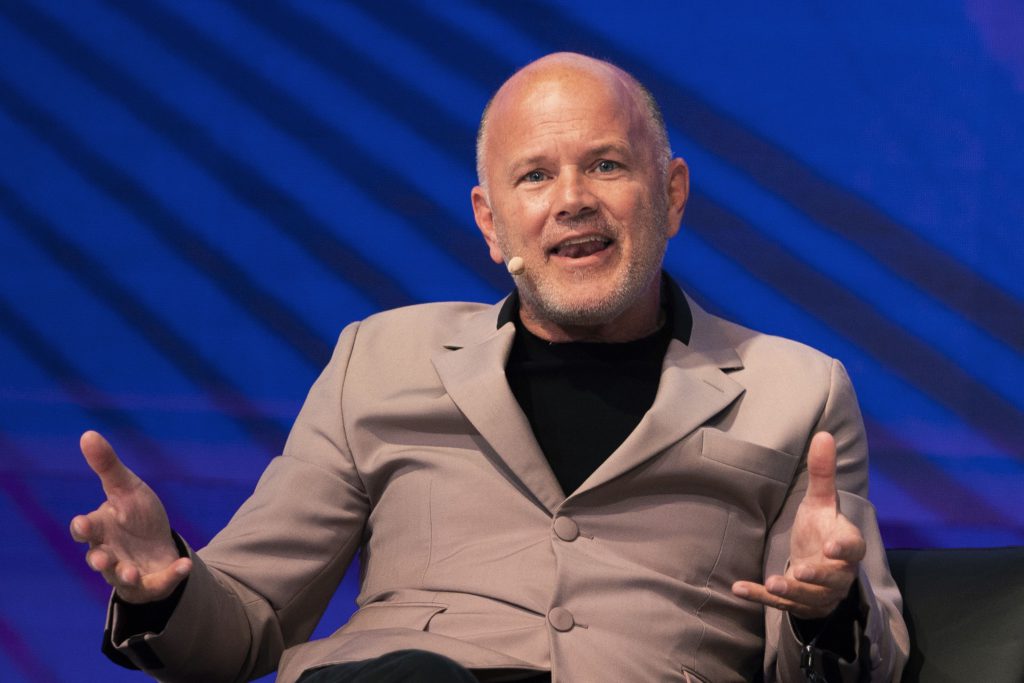
(Bloomberg) — Galaxy Digital Holdings Ltd., the firm run by Mike Novogratz, won an auction to buy self-custody platform GK8 from Celsius Network as it was put up for sale during a Chapter 11 bankruptcy process. 

Galaxy will be adding a team of nearly 40 people including cryptographers and blockchain engineers, and expects GK8 to help expand its prime brokerage, according to a statement. Terms weren’t disclosed. Galaxy bought the assets for materially less than the $115 million Celsius paid for them last year, Galaxy Co-President Chris Ferraro said. 

“This is a point of time in the market where trust is at its lowest, and we think that going forward now, there’s going to be a much higher bar, much higher scrutiny on all the players market participants depend on,” Ferraro said in an interview. “It puts Galaxy in a very sticky way into the infrastructure of digital assets.”

Novogratz, Galaxy’s founder and chief executive officer, said the firm is looking to pick up distressed assets during a cryptocurrency crisis that has led to the Chapter 11 filings of multiple firms. The addition of new talent comes after Galaxy itself has let go of 15% of its own headcount. In a Bloomberg Television interview on Thursday, Novogratz said that, in three months, acquisitions could end up expanding the firm’s headcount. 

The deal is subject to court approvals, Galaxy said in the statement. The acquisition will expand the firm’s reach to institutional investors by offering clients greater control of their digital assets, and would also give Galaxy a more global reach with a new office in Tel Aviv, the firm said. 

“The idea of having self-custody as an option is very top of mind,” Ferraro said. “We’ve had our sights on bringing forward the tech side of Galaxy for a long time now.”

More stories like this are available on bloomberg.com

©2022 Bloomberg L.P.

Spain Weighs Indra Options as Activist Calls for Break-up, Sources Say

(Bloomberg) — Spain and the board of Indra Sistemas SA are mulling options for the company after an activist shareholder called for it to be broken up, people familiar with the matter said.

Board members have discussed possibilities for Indra’s future since activist hedge fund Amber Capital LP said Nov. 22 that the state-controlled company should be split in two by separating its defense activities from information technology, said the people, asking not to be named discussing confidential information. Still, the board hasn’t had any formal deliberations on a break-up, they said.

Any sale of the technology division could be politically sensitive due to the thousands of jobs at stake, some of the people said. Still, while the impact on jobs is a concern, it’s unlikely to be a deal-breaker if a decision is made to split up the company or sell the unit, they said. 

Press officers for Indra and for the government’s corporate investment holding, which controls the stake in the company, declined to comment. Spain owns 25% of Indra, according to regulatory data, and has said it wants to reach 28%.

Shares jumped as much as 6.3% to €10.7 per share at 1:43 p.m. in Madrid, the biggest rise since July 7. 

The board is unlikely to make a decision before the government signals its preference, one of the people said. Half of the board is formed by independents, the majority of whom were appointed in late October. Potential investors have already shown informal interest in the technology unit, the person said. 

Amber Chief Executive Officer Joseph Oughourlian, whose fund owns 5% of Indra, said that each of the two spun-off units could potentially be worth as much as the current €1.8 billion ($1.9 billion) market value of the full company, and called for a split-up, or for the technology unit to be sold or merged with another firm. 

Indra’s defense division is the more profitable of the two units, and is widely considered to have strong growth prospects — especially if Spain delivers on its pledge earlier this year to ramp up military spending. The technology unit, known as Minsait, accounts for the bulk of revenue, offering consulting services in a range of sectors and providing voting systems. 

The two divisions were carved out within the company under previous Executive Chairman Fernando Abril-Martorell, who was replaced in 2021 by Marc Murtra, who serves as a non-executive chairman. Murtra, a government nominee, has signaled in the past that he’s not opposed to splitting the company up.

(Updates with shares in fifth paragraph)

More stories like this are available on bloomberg.com

©2022 Bloomberg L.P.
Stocks Meander in Buildup to Key US Jobs Report: Markets Wrap

(Bloomberg) — US equity futures slipped on Friday, reflecting a generally cautious mood on world markets ahead of a crucial monthly jobs report that could offer clues on how much further the Federal Reserve might raise interest rates.

Contracts on the S&P 500 and Nasdaq 100 edged lower, with both underlying indexes still set for a second week of gains. Premarket US trading reflected concern over the impact of higher rates on company earnings, especially in the tech sector, where shares in cloud security company Zscaler Inc. and chipmaker Marvell Technology Inc. declined after downbeat outlook reports. Europe’s Stoxx 600 index was steady, on course for a seven-week rising streak.

Stocks got a boost this week from a softening in China’s stringent Covid zero stance and signals from Fed Chair Jerome Powell of a downshift in the pace of rate hikes. Bets on where the US central bank’s rate will peak have now dropped below 4.9%, according to swap markets. The current benchmark sits in a range between 3.75% and 4%.

However, many economists reckon Friday’s employment report may fall short of the turning point Fed officials are seeking in their battle to beat back inflation. The median projection in a Bloomberg survey calls for payrolls to rise 200,000 in November, cooling only slightly from the previous month. Other market watchers point to signs that steep rate hikes will tip more economies into a downturn.

“Consensus is that recession is coming but equities cannot bottom before it starts, inflation won’t fall quickly so central banks can’t blink, China reopening will be a messy process, and Europe remains tricky,” Barclays Plc strategist Emmanuel Cau wrote in a note. 

The ebbing rate hiking bets pushed the dollar lower for the fourth straight day against a basket of currencies, allowing lower-yielding G-10 currencies such as the yen and euro to extend gains. Ten-year Treasury yields held just off 2-1/2-month lows, having dropped 45 basis points last month.

Recession concerns have become more pronounced after data on Thursday showed November factory activity sliding in a range of countries, with American manufacturing contracting for the first time since May 2020. 

Recent company reports also hint at mounting pressure on company earnings, and companies, ranging from Amazon.com to Ford Motor Co., have announced thousands of job cuts. 

Bank of America Corp. strategists highlighted the labor market cooldown as one reason to prefer bonds to equities. They join others including JPMorgan Chase & Co. and Goldman Sachs Group Inc. in pointing to equity declines early next year amid the specter of an economic recession.

“We’re selling risk rallies from here,” the BofA strategists said, warning unemployment would replace inflation as the main worry in 2023. 

Elsewhere, South Africa’s rand rebounded, paring some of Thursday’s 2.6% drop. The rand has bucked this week’s upswing in emerging market currencies because of political turmoil swirling around President Cyril Ramaphosa. 

Oil headed for its biggest weekly gain in almost two months, benefiting from looser Chinese curbs, calls by the Biden administration to halt sales from US strategic reserves and an OPEC producers’ group decision to cut crude supply by the most since 2020.

Key events this week:

  • US unemployment, nonfarm payrolls, Friday

Some of the main moves in markets:

Stocks

  • Futures on the S&P 500 were little changed as of 6:58 a.m. New York time
  • Futures on the Nasdaq 100 fell 0.2%
  • Futures on the Dow Jones Industrial Average fell 0.1%
  • The Stoxx Europe 600 was little changed
  • The MSCI World index was little changed

Currencies

  • The Bloomberg Dollar Spot Index fell 0.2%
  • The euro rose 0.2% to $1.0539
  • The British pound rose 0.3% to $1.2280
  • The Japanese yen rose 1% to 134.00 per dollar

Cryptocurrencies

  • Bitcoin rose 0.4% to $16,999.05
  • Ether rose 1% to $1,289.03

Bonds

  • The yield on 10-year Treasuries was little changed at 3.51%
  • Germany’s 10-year yield declined three basis points to 1.78%
  • Britain’s 10-year yield declined five basis points to 3.05%

Commodities

  • West Texas Intermediate crude rose 0.2% to $81.39 a barrel
  • Gold futures fell 0.2% to $1,812.20 an ounce

This story was produced with the assistance of Bloomberg Automation.

–With assistance from Tassia Sipahutar.

More stories like this are available on bloomberg.com

©2022 Bloomberg L.P.

Trophy Rolex, Patek and Audemars Piguet Prices Skid to Pre-Boom Levels

(Bloomberg) — Falling prices for Rolex, Patek Philippe and Audemars Piguet watches have dragged down an index of the most traded timepieces on the secondary market to pre-boom levels, according to UK-based reseller Subdial.

The Subdial50 Index, which tracks prices for the 50 most traded luxury watch references by value, has fallen to levels not seen since before an unprecedented surge in 2021 and early 2022.

The decline shows the most sought-after watches from the top Swiss brands haven’t been able to maintain lofty prices hit during the pandemic when cash-flush consumers stuck at home snapped up Patek Nautilus, Audemars Piguet Royal Oaks and Rolex Daytonas in a frenzied search for the next hot asset class. 

Dominated by Rolex references including the Daytona ceramic bezel chronograph and GMT Master II, the Subdial50 Index has declined by almost 5% in 12 months and nearly 17% in half a year. 

The falling demand coincided with declines in technology stocks and the crash in cryptocurrencies. 

Secondary market prices for the Royal Oak “Jumbo” reference 15202 soared above £110,000 ($134,840) at their peak in March, more than doubling over 12 months. Now the watch is trading at around £70,000. 

Yet even as prices for the most traded Rolex, AP and Patek references have fallen, values for many dress watches, so-called neo-vintage pieces from the 1980s, 1990s and early 2000s, as well as some models featuring complex complications are outperforming, according to Subdial.

For example, many references from classically styled German brand A. Lange & Sohne, owned by Richemont, have gained ground during the year, rising between 30% and 40%, Subdial data shows.

Prices have also gained for some models by IWC, another brand owned by Richemont known for its classic pilot watches and chronographs. Prices for the Big Pilot reference IW501902 climbed 20% in a year, buoyed by the release of the recent Top Gun film.

Finally, more intricate pieces featuring chronographs, perpetual calendars and other complications have outperformed. Patek Philippe’s 5070 chronograph is up 20% in a year.  

“When a bubble starts to build around one thing, watch enthusiasts find another,” said Christy Davis, a Subdial co-founder. “Steel sports watches went mad but this isn’t crypto at the end of the day: it’s a market driven by people who are actually passionate about it and want to own the watch itself.” 


(Updates with graphics showing price declines)

More stories like this are available on bloomberg.com

©2022 Bloomberg L.P.

This Technology Shocks Sharks to Save Them

(Bloomberg) — Tuna sashimi may be tasty but every bite comes with a high body count: the millions of sharks killed each year when they’re inadvertently caught by industrial fishing vessels. Now a new technology has shown promising results in sharply reducing the slaughter of a top predator key to keeping ocean ecosystems healthy.

Called a SharkGuard, the cylindrical device is attached to a baited fishing hook and emits a three-dimensional electric field that can be sensed by sharks and rays. The electrical pulse overstimulates the animal’s electroreceptors that it uses to locate prey, and like fingernails on a chalkboard, repels the shark away from the hook.

In July and August 2021, two longline vessels fishing for bluefin tuna off the south coast of France tested SharkGuard on hundreds of baited hooks. During the trials, “bycatch” of blue sharks per 1,000 hooks fell 91.3% while the snaring of stingrays fell 71.3%, according to a peer-reviewed paper. The study was published last week in the journal Current Biology by scientists from the University of Exeter in the United Kingdom and Fishtek Marine, the UK company that developed SharkGuard.

An estimated 100 million sharks are killed annually by commercial fisheries, and shark populations have fallen 71% since 1970, according to scientists.

“I see this as being potentially a game-changer,” said Rachel Graham, a marine scientist and a member of the International Union for Conservation of Nature’s Shark Specialist Group, which determines the conservation status of shark species. “The use of these instruments will be very helpful for companies to be able to label their tuna or their other target species as being ‘shark safe,’ like they do with dolphin-safe tuna.”

Graham, the founder and executive director of ocean-focused nonprofit MarAlliance, was speaking from Panama, where she was attending a meeting of the Convention on International Trade in Endangered Species of Wild Fauna and Flora. The international treaty organization voted on Friday to regulate the global trade in 60 species of sharks, including blue sharks. That requires CITES’ 183 member nations and the European Union to not issue permits for export of protected sharks unless such trade is sustainable and does not threaten the species’ survival.  The move comes amid a growing demand for shark meat.Robert Enever, head of science at Fishtek and a co-author of the paper, said retail companies that have environmental, social and corporate governance reporting requirements might declare, “‘We’re going to require that when we buy tuna, you don’t kill sharks,’” Enever said. “You have this technology that can reduce the millions of sharks destroyed every year.”

Sara Mirabilio, a fisheries specialist at North Carolina Sea Grant, tested a prototype of a similar device developed by Australian company Ocean Guardian during a 15-day trial in 2021. Catch of nine shark species fell more than 50%, she said.

“I absolutely believe we can harness this electro-sensory capability of sharks and use it as a deterrent,” said Mirabilio, who will be conducting further trials of the device over the next two years. “Somebody is going to come up with a retail-ready device soon. It’ll just be a matter of fishermen’s willingness to use it.”

The SharkGuard capsule contains a battery-powered capacitor that generates an electric field. The current iteration of the device has its limitations and it is not yet commercially available. The battery must be changed after 65 hours, which would not be feasible for vessels that deploy thousands of hooks on fishing lines that can stretch for miles.

A solution, though, is under development. Fishtek has obtained funding from Schmidt Marine Technology Partners to create an induction charging system that would be built into the bins that store longline hooks. When the hooks are reeled in, said Enever, they would dock in a charging cup and be fully powered for the next deployment.

“Technologies like SharkGuard can be transformational,” said Jake Hanft, program manager for Schmidt Marine Technology Partners, a San Francisco-based organization that issues grants for the development of ocean technologies and is part of the Schmidt Family Foundation established by Wendy and Eric Schmidt, the former Google chief executive officer.

“It’s an elegant and productive way to keep sharks and rays off longlines without disrupting the fishing of target catch, reducing bycatch by incredibly impressive rates,” he said.

SharkGuard is one of several technologies under development to reduce incidental killing of sharks. In January, scientists published a study that found that attaching LED lights to huge fishing nets off the coast of Mexico slashed by bycatch of sharks and rays 95%.

Fishtek estimates a SharkGuard induction charging system for 2,000 hooks would cost about $20,000 and last three to five years. To persuade commercial fleets to adopt SharkGuard, though, Fishtek will have to demonstrate the technology doesn’t reduce catch of tuna and other seafood.

Catch of bluefin tuna during the trials in France was unseasonably low but it could not be determined if SharkGuard was a factor, according to the paper. Enever noted that a Fishtek device of a similar size has been deployed by longline fisheries on hundreds of thousands of hooks to deter killing of seabirds without an impact on catch.

Graham said devices like SharkGuard are mostly likely to be deployed on longline vessels regulated by regional fisheries management organizations. “If they want to be sustainable, absolutely SharkGuard can help them,” she said.

“But we are seeing a really big surge in demand for shark meat across multiple countries around the globe,” she added. “So if people are just increasing fishing effort across the board, they may not want to reduce their catch of sharks. And I think that’s going to be one of the key challenges to adopting this type of technology.”

More stories like this are available on bloomberg.com

©2022 Bloomberg L.P.

NYC’s Most Discerning Diners Get Wowed by Old-School Tableside Carts

(Bloomberg) — Turn a corner in a New York City restaurant today, and there’s a good chance you’ll bump into a tableside cart.

The luxe piece of dining equipment, also known as a trolley or gueridon, was once reserved for formal white-tablecloth dining rooms. They were operated by suited servers who deboned a classic Dover sole and portioned a porterhouse for two as smoothly as a TikTok dance move.

Now, thanks to social media and Big Apple operators who are keen to offer a more personal dining experience, the art of tableside service is back in full force, even at casual places.

“People definitely like the show,” says chef Andrew Carmellini, owner of the year-old downtown steakhouse Carne Mare. There, he offers a trio of dishes delivered to tables on carts: a seasonal vegetable salad that’s mixed and dressed à la minute; smoked beets, carved in front of diners; and an Italian meringue-encased spumoni for two that’s set ablaze, then served.

The allure of finishing a dish in front of guests “is not a new thing,” says the chef, but platforms such as Instagram and TikTok have heightened diners’ desire for experiential dining beyond the plate.

Dudi Sasson, co-owner of Midtown’s month-old continental spot Monterey, believes it’s increasingly important to create a signature dish that “keeps people talking, long after their meal has ended.” Tableside service provides that memorable element. Monterey offers three cart options: a carved prime rib; flaming bananas foster for two; and bespoke martinis garnished with a briny olive or pickled chanterelle mushroom.

“Visually, it is stimulating for the diner,” says Sasson of the team’s decision to add carts. “There’s “that ‘ohh’ and ‘ahh’ moment that brings energy to the room.” At the same time, the videos posted on social media operate as built-in marketing opportunities.

The carts aren’t cheap: Monterey’s custom trolleys cost from $8,000 to $15,000 each; the ones equipped with cooking features are the most expensive. And, Carmellini notes, they take time and extra labor to prepare the tableside items, which “works against the bottom line.”

But the showy presentations help engage guests and often boosts a restaurant’s bottom line. Sasson says his restaurant’s carts generate increased revenue, especially for the martini service.

Monterey sells around 10 martinis per hour from the cart at roughly $24 a drink (one pays the base price of the spirit plus $8 for cart service), which amounts to $240 an hour in martini sales alone. 

Tableside Tipples

Drinks carts invariably help boost a restaurant’s revenue. In the West Village, neighborhood fixtures Jack & Charlie’s No. 118 and Hancock Street both use bloody mary carts to boost brunch sales. Since adding a cart this summer, Jack & Charlie’s partner and beverage director Craig Hutson says the restaurant has “seen a big uptick in brunch traffic.” While patrons can order the house bloody mary, built tableside from a rolling cart for $14, the drink comes customizable with a variety of premium spirits and thick-cut bacon for an extra charge. 

At Hancock Street, executive chef Ryan Schmidtberger agrees that cocktail cart service helps to upsell drinks. “It’s the visual of seeing what you want,” as well as capturing social media content, which he believes “definitely increases sales.”

The concept of introducing diners to lesser-known spirits was the motivation for the booze cart at the refined Korean restaurant Genesis House in the Meatpacking District. With a focus on sool (alcoholic Korean drinks), the cart comes stocked with sojus, fermented rice makgeollis and cheongju rice wines. At the Flatiron’s Southeast Asian beach-bar-inspired Singapura, the trolley highlights unsung spirits and cocktails inspired by Singapore’s lauded bar culture and local distillates such as Tanglin Orchid Gin, distilled with Java pepper and vanilla bean.

While some operators gear carts to a specific drink or theme, others see them as a way to bring the action from behind the bar to the table. At the new luxe Japanese cocktail bar Shinji’s in the Flatiron, every diner has the opportunity to watch their drink be made: The team designed a custom cart from which bartenders can prepare any of the lounge’s technique-driven libations—like an ultrasonically homogenized dirty martini that can hold a bracing subzero temperature for 10 minutes.

Flaming Eggplant Carts

For upscale Greek restaurants, tableside service is generally focused on breaking open a classic salt-baked fish. But when he was looking to capitalize on an Instagram moment, Iris chef-owner John Fraser designed a tableside presentation for eggplant moussaka. A server pours the Greek anise-flavored spirit ouzo over the top, then dramatically lights it on fire.

At the globally accented 63 Clinton on the Lower East Side, chef Sam Clonts leans into luxury ingredients for his tableside cart service. The $55 Russian ossetra caviar hand roll, constructed at the table, is a supplement to his $92 tasting menu.  “It’s one of the most photographed moments,” says co-owner Raymond Trinh. Cart service is, he says, a “great way to add visibility to a dish.” 

The Sweet Spot 

At the casual new West Village Italian spot Ferdi, one of the most popular dishes is a tableside gelato presentation. Customers who order the dessert for two for $28 can watch vanilla bean gelato whisked to order in seconds thanks to a splash of liquid nitrogen, which produces a cloudy spectacle. The cart “captures the attention of patrons dining at surrounding tables, which inspires more orders,” according to executive chef Fernando Scarpati.

At the new Le Rock in Midtown, the baba au rhum cart designed by pastry chef Mariah Neston presents slices of the spongy vanilla-, chamomile- and sage-infused cake. They’re finished in front of diners with a choice of four herbal liquors, such as sweet and piney Dolin Génépy, and a dollop of whipped cream. “We are offering an experience over just landing a plated dessert on the table,” says Neston, who notes that a cart alleviates the need for a server carrying multiple liquor bottles to a table.

Still flames are the most popular selling point for a trolley dessert, from Carne Mare’s set-ablaze spumoni to Les Trois Chevaux’s flambéed, kumquat caramel-imbued crêpes to Monterey’s bananas foster. But even a no-gimmicks cart makes an impression on guests. Laurent Tourondel’s year-old Skirt Steak offers a $35 prix fix meal of beef and unlimited fries. What helps bump up the check average are desserts from the eye-catching glass encased trolley that rolls around the dining room. Inside are treats like meringue topped key lime pie, pumpkin cheesecake and Dutch apple tart, each going for $12. Even after multiple servings of fries, it’s hard for most tables to turn the sweets down when the chart shows up at their table. 

More stories like this are available on bloomberg.com

©2022 Bloomberg L.P.

This AI Chatbot Is Blowing People’s Minds. Here’s What It’s Been Writing.

(Bloomberg) — A new chatbot created by artificial intelligence non-profit OpenAI Inc. has taken the internet by storm, as users speculated on its ability to replace everything from playwrights to college essays.

From historical arguments to poems on cryptocurrency, users took to Twitter to share their surprise at the detailed answers the so-called ChatGPT provided, after the startup sought user feedback on the AI model Wednesday.

OpenAI’s chief executive officer Sam Altman said in a tweet Thursday that there has been “a lot more demand” than expected.

This AI Chatbot Is a Shockingly Competent Macro Pundit

California, San Francisco-based OpenAI has made headlines over its GPT-3 software which allows AI models to respond intelligently to text prompts. Earlier this year, the second version of its DALL-E model went viral for its ability to generate photo-realistic images from user submissions.

OpenAI was co-founded by Tesla Inc. CEO Elon Musk and Altman with other investors about seven years ago to develop AI technologies that “benefits all of humanity.” While Musk left the company in 2018 after disagreements over its direction, on Thursday, he offered an endorsement of the model’s abilities on Twitter.

Chatbot technology is not new, although its deployment has seen mixed success. Microsoft Corp.’s AI bot ‘Tay’ was taken down in 2016 after Twitter users taught it to say racist, sexist and offensive remarks. Another developed by Meta Platforms Inc. suffered similar issues this year. 

Developers acknowledge the model “sometimes writes plausible-sounding but incorrect or nonsensical answers” and can be “excessively verbose” due to the training it received from humans.

While most people were delighted with the bot’s musings, some were quick to point out flaws, such as the model giving a detailed but incorrect answer to a question on algebra, and its ability to override limits on output related to issues like gore, crime and racism.

(Updates to include tweet. An earlier version corrected the spelling of Meta Platforms)

More stories like this are available on bloomberg.com

©2022 Bloomberg L.P.

Tesla Hands Over First ‘Badass’ Big Rig Semis to PepsiCo

(Bloomberg) — Tesla Inc. handed over the first of its electric Semi trucks, a milestone for the automaker more than five years after it unveiled the vehicle.

“If you want the most badass rig on the road, this is it,” Chief Executive Officer Elon Musk said Thursday at Tesla’s battery factory near Reno, Nevada. He capped off the delivery event with a handover of key cards to two PepsiCo Inc. executives.

While passenger cars get most of the buzz, electrifying big commercial vehicles is crucial to transitioning to more sustainable transportation. Tesla estimates that while combination trucks are just 1% of the US vehicle fleet, they account for 20% of vehicle emissions.

Tesla has designed the Semi around the driver, with a central seating position, room to stand up and ample storage space. The company released footage of a 500-mile (805-kilometer) demonstration run carrying a full load from its plant in Fremont to San Diego on one charge.

To quickly replenish the Semi’s battery, Tesla developed a liquid-cooled cable capable of one-megawatt charging. Musk said the technology coming to the company’s superchargers next year also will be used for the upcoming Cybertruck.

Tesla shares were little changed as of 5 a.m. Friday in New York, before the start of regular trading. 

During Tesla’s last earnings call, Musk said the company is aiming to produce 50,000 Semis for North America in 2024. He appears to have taken the product off the back burner after the passing of the Inflation Reduction Act, which makes tax credits of as much as $40,000 available to commercial vehicles. Musk didn’t discuss production volume or pricing Thursday evening.

Large fleet operators like PepsiCo, Walmart Inc., Meijer Inc. and J.B. Hunt Transport Services Inc. were among the companies that placed non-binding reservations for the Semi starting in 2017. The first deliveries are going to PepsiCo’s Frito-Lay plant in Modesto, California.

See also: Tesla Has California to Thank for Its First Semi Truck Delivery

Tesla will put the Semi to work carrying freight between the company’s factories in Nevada and California so that engineers can continually refine the product, Dan Priestley, the program manager for the truck, said on stage. He thanked customers for sticking with the company through setbacks to the model initially scheduled for production in 2019.

“Sorry for the delay,” Musk said. “The sheer amount of drama between five years ago and now is insane. A lot has happened in the world, but here we are, and it’s real.”

–With assistance from Ed Ludlow.

(Updates with early share trading in the sixth paragraph.)

More stories like this are available on bloomberg.com

©2022 Bloomberg L.P.

Close Bitnami banner
Bitnami