Bloomberg

Amazon Is Closing Its Gig Economy Delivery Service in Germany

(Bloomberg) — Amazon.com Inc. is shuttering its gig economy delivery service in Germany. 

The company’s Flex program, which began in the US in 2015 before expanding to Germany two years later, pays drivers to ferry packages in their own vehicles from Amazon warehouses to customers’ homes.

“We regularly evaluate our various programs and have made the difficult decision to discontinue the Amazon Flex program in Germany at this time,” a spokesperson for the Seattle-based company said in an emailed statement. “We are actively supporting former Amazon Flex delivery partners to find other opportunities across the hundreds of roles and opportunities across Amazon’s operations in Germany.”

Amazon declined to say why it decided to halt the service in Germany, its second largest market after the US. But in recent years, the company has built a more formal delivery network, relying on small startups beholden to Amazon, which the company calls Delivery Service Partners, or DSPs. 

Amazon is offering some Flex drivers a one-time payment equal to four weeks’ pay, according to communications reviewed by Bloomberg. The notices also encourage them to join one of hundreds of German DSPs. That network is capable of absorbing “the very small portion of deliveries that Amazon Flex has been making” while meeting delivery pledges, the company said on Tuesday. 

Amazon has 67 delivery stations in Germany, according to MWPVL International Inc., a logistics consulting firm. At the beginning of the pandemic, there were 10 such facilities, which are each typically served by several DSPs. The company doubled its warehouse capacity during the pandemic, when virus fears and stay-at-home orders supercharged demand, and is now seeking to sublease some space. 

Amazon sales in Germany totaled $37 billion in 2021, up 26% from the prior year.

More stories like this are available on bloomberg.com

©2022 Bloomberg L.P.

Waymo Partners With Uber on Trucking After Bitter Lawsuit Ends

(Bloomberg) — Waymo will connect its autonomous trucking operation to Uber Freight, the logistics business owned by the ride-hailing firm, a few months after the companies ended a bitter legal fight over self-driving technology.

The companies announced Tuesday a “deep, long-term partnership.” In the deal, carriers that use self-driving tech from Alphabet Inc.’s Waymo will be able to join the network from Uber Freight, which serves as a broker among truckers and shipping firms. The companies said in a statement that they will also work on a service to provide “easy and fast transfers between” autonomous systems and human drivers. 

Trucking is one of the main applications of self-driving technology that investors see primed for commercial success. Waymo, one of a few leading contenders in the field, has been testing big rigs in Texas. A Waymo spokesperson said the company’s trucking service, Waymo Via, will be running on Uber Freight’s network within the year. The companies didn’t share financial details of the partnership. 

Uber Technologies Inc. once worked on self-driving trucks and cars, but has since sold off that unit in a broader move to shed assets and cut costs. Uber Freight, launched in 2017, pairs trucking companies with those seeking to transport loads. The business is a standalone subsidiary of Uber, which in 2020 sold a stake in the unit. At the time, Uber Freight was valued around $4 billion, Bloomberg News reported. Last year, Uber Freight acquired Transplace, a logistics company owned by TPG Capital, for $2.25 billion.

One reason Uber shuttered its autonomous efforts was a massive lawsuit from Waymo, which accused Uber and an engineer it had hired of stealing self-driving technology. Uber agreed to pay Waymo $245 million in stock and settled the full litigation in February.

More stories like this are available on bloomberg.com

©2022 Bloomberg L.P.

Shopify’s Lutke Wins New Voting Rights on Shareholder Ballot

(Bloomberg) — Shopify Inc. investors have agreed to grant Chief Executive Officer Tobi Lutke special voting rights, securing his influence at the e-commerce software company he founded. 

Shareholders voted in favor of a proposal to create a “founder share” for Lutke, ignoring the advice of two prominent advisory firms. The change guarantees Lutke at least 40% of the voting rights at the company under certain conditions, including that he stays with the company. 

Shopify had argued that the proposal would benefit shareholders by ensuring Lutke maintains an active role at the Ottawa-based firm. He isn’t allowed to pass the founder share on to anyone. 

To pass, the proposal required a majority of the votes cast by shareholders, excluding the shares he controls.

Shopify announced the proposal in April. Several weeks later, shareholder advisory firms Glass Lewis & Co. and Institutional Shareholder Services Inc. urged investors to reject it. The California Public Employees’ Retirement System had indicated it would vote against the proposal.

Shareholders also voted in favor of a 10-for-1 stock split.

Shopify rose 2.6% to $370 as of 10:36 a.m. in New York. The shares have dropped 73% this year.

Read more: Shopify Was on Top of the World, Then Its Stock Fell 73%

(Updates share move. An earlier version corrected a sentence in the last paragraph to indicate the share price is in New York trading.)

More stories like this are available on bloomberg.com

©2022 Bloomberg L.P.

Citadel Securities Ready for Crypto ETFs When Regulators Approve

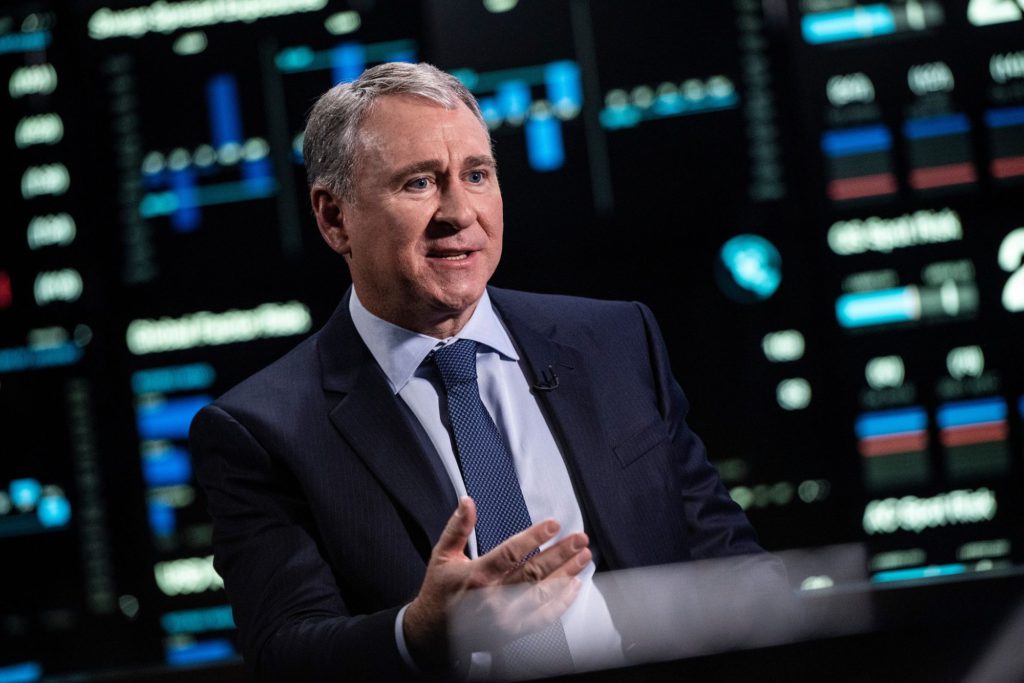
(Bloomberg) — Ken Griffin’s Citadel Securities is willing to make markets in exchange-traded funds that hold cryptocurrencies, if regulators allow it.  

“We will be ready if and when those products are approved, but we are taking a measured approach,” Kelly Brennan, head of the firm’s ETF group, said in an interview at Bloomberg’s headquarters in New York, adding that the firm can’t provide liquidity until regulatory issues are resolved.

Citadel Securities has grown from a small group built alongside Griffin’s hedge fund to a global trading behemoth not only in US‑listed markets but also international ones, pushing into investment banks’ favored products. It’s a market maker in equities, options, Treasuries and ETF trading.

For almost a decade, ETF issuers in the US have tried to launch a fund that physically holds Bitcoin as a way to gain further exposure to the asset class. But regulators have consistently denied the requests, citing concerns about the cryptocurrency’s volatility and its potential to be used for fraud.

Last year, the Securities and Exchange Commission finally allowed an ETF that tracks Bitcoin futures, which follow the coin’s spot price indirectly and are overseen by the Chicago Mercantile Exchange. 

Griffin has called for the SEC to pivot from just talking about regulating crypto to actually establishing rules. For now, the agency has said existing securities laws apply to crypto. But Griffin said that once more specific regulations are set, “tier-one” firms will start providing liquidity and other services will regularize digital assets.

“We get a huge volume of calls about spot Bitcoin ETFs, but they are all from prospective issuers,” said Cory Laing, head of Delta-One sales at Citadel Securities. “The calls are not coming from clients.” 

Customers who want to be in crypto are finding ways, according to Laing. “They aren’t waiting for a nice packaged product,” he said. If a spot Bitcoin ETF gets approval, Laing anticipates that demand will follow. 

Although the futures funds from issuers such as ProShares and VanEck have proved less popular with investors than hoped, companies are still seeking to release a spot Bitcoin ETF. Grayscale Investments LLC in particular is pushing hard to convert its Bitcoin trust into the format. But the SEC continues to deny applications, including one for a product from One River Asset Management last week.

While ETFs that hold crypto-related stocks such as Coinbase Inc. have climbed the ranks over the past year, performance has been dour. The six worst-performing, non-leveraged ETFs in the $6.6 trillion arena in 2022 are all crypto-linked equity funds, according to data compiled by Bloomberg.

Read More: Crypto-Linked ETFs Are 2022’s Biggest Losers With 60% Drawdowns

Citadel Securities is watching regulatory action and existing ETF performance before any formal decision is made at the firm, Brennan said. “We haven’t seen a lot of changes in the space over the past couple months, but we are thinking about what comes next.”

More stories like this are available on bloomberg.com

©2022 Bloomberg L.P.

Robinhood, Rivian Lead Slide in Pandemic-Era IPOs

(Bloomberg) — The bear market has not been kind to the scores of technology companies that went public in the US during the pandemic, when issuers rushed to market while demand was hot and valuations soaring.

More than 80% of tech-related initial public offerings since March 2020 are trading below their listing price, according to data compiled by Bloomberg that looked at IPOs of at least $500 million. 

The losers include some of the most-anticipated IPOs of the past couple of years, such as online brokerage firm Robinhood Markets Inc., electric-vehicle maker Rivian Automotive Inc., dating service Bumble Inc. and language learning app Duolingo Inc. 

The performance reflects investors’ sudden loss of appetite for the riskiest stocks, triggered by the Federal Reserve’s efforts to control inflation by raising interest rates. The tech-heavy Nasdaq 100 Index has slumped nearly 24% since its November record, while the broader S&P 500 has fallen by half that in the same period. 

“There will be a time when speculation comes back into fashion, but right now you have to hunker down and realize that things change and that you can’t use the same strategy all the time,” said Mark Grant, chief global strategist at Colliers Securities LLC.  

Shares of companies with the fastest expected growth, some of which were pandemic beneficiaries, performed phenomenally last year and a lot had been priced in, said Mark Hawtin, investment director at GAM. 

“That has now created a situation which has gone from being, fairly fully valued to one where there’s immense opportunity,” he said.

To be sure, there are still a few companies that have made gains since going public. Among them, Warren Buffett-backed software firm Snowflake Inc., GlobalFoundries Inc. and home rental company Airbnb Inc. are all trading higher.  

Tech Chart of the Day

The Roundhill Ball Metaverse ETF, which features stocks like Roblox Corp., Meta Platforms Inc. and Nvidia Corp., surged late last year as the metaverse became one of 2021’s tech buzzwords, but with the macro environment changing the ETF has fallen 40% this year compared to the Nasdaq 100’s 23% drop in the same period. 

Top Tech Stories

  • Apple Inc. unveiled a flurry of new software features and services at its Worldwide Developers Conference, including an updated iPhone lock screen, multitasking features for the iPad and a pay-later service that vaults it further into finance
    • Apple unveiled the most significant overhaul to its popular MacBook Air laptop in more than a decade, bringing a fresh design, new colors and a speedier M2 processor from its homegrown chip line
  • All smartphones and tablets would have to use a common charger under a provisional European Union agreement clinched Tuesday. The plan would force all companies — most notably Apple Inc. — to make phones, tablets, e-readers and digital cameras to use the USB-C charger, negotiators said
  • Digital watch dials offered on the Samsung Galaxy App store violated trade marks for Swiss watch brands including Omega, Blancpain and Tissot, a London court ruled
  • ByteDance Ltd. is considering selling a minority stake in Poizon, an online marketplace for sneakers, according to people familiar with the matter
  • SoftBank Group Corp. spent $130 million to snatch up its own shares the day after its Vision Fund reported a record loss, for its biggest single-day buyback in more than a year

(Updates share move in fourth paragraph.)

More stories like this are available on bloomberg.com

©2022 Bloomberg L.P.

Musk’s ‘Buyer’s Remorse’ Won’t Get Him Out of Twitter Deal

(Bloomberg) — Elon Musk formally and forcefully revived his assertion that Twitter Inc. has a serious bot problem, and threatened to walk away from his deal to buy the company if the social network doesn’t do more to prove its users are real people.

Legal experts widely speculated that Musk is using the bot issue as an excuse to abandon or renegotiate the deal, which has looked better and better for Twitter as the broader stock market has taken a dive in recent weeks. Twitter shares were up slightly Tuesday morning in New York.

In a securities filing on Monday, Musk said he thinks Twitter is breaching their agreement by not meeting his demands for more information about spam and fake accounts. But behind the scenes, the deal is proceeding, according to people familiar with the matter. Both sides have been meeting regularly and sharing information, said two of the people, who weren’t authorized to speak publicly.

“He’s jockeying here — he’s trying to create a paper trail,” said Andrew Freedman, a partner at the law firm Olshan Frome Wolosky LLP, who is an expert in activist investment. “The unfortunate thing for Musk is that termination provisions under merger agreements don’t allow for buyer’s remorse.”

Last month, Musk said he was putting the deal “on hold” until the social media giant can prove bots make up fewer than 5% of its users, as the company has stated in public filings. Musk has estimated that fake accounts make up at least 20% of all users. 

But Twitter said it has indeed shared information with Musk on how it calculates the number of spam accounts on the service, and executives have told employees that Musk can’t just put the deal on hold as the two sides have signed a merger agreement. On Monday the company reiterated that it will hold Musk accountable to the terms of his proposed $44 billion takeover, a suggestion that even the company believes he may be trying to blow up the deal. 

In a statement, Twitter said it “has and will continue to cooperatively share information” with Musk. The company said it believes the deal is in the best interest of all shareholders and intends to “close the transaction and enforce the merger agreement at the agreed price and terms.” It’s possible that Twitter could try to sue Musk to complete the deal if he tries to walk away from the acquisition. 

“The board of Twitter is going to get tired of this and file a lawsuit in Delaware and say, ‘I want a declaratory judgment saying that I am not in violation of the agreement and that Musk has to complete the deal,’” said Brian Quinn, an M&A professor at Boston College Law School. “That’ll be Twitter’s next step.”

Twitter’s shares were up less than 1% on Tuesday to $39.60. The gap between the market’s expectations and the billionaire’s $54.20-a-share widened on Monday, fueling market speculation that the deal may fall apart. The shares have barely — and only briefly — surpassed $50 since Musk sprung his buyout plan on April 14. The deal came together at breakneck speed in part because Musk waived the chance to look at Twitter’s finances beyond what was publicly available. 

Twitter Chief Executive Officer Parag Agrawal has sparred with Musk publicly on Twitter about bots. Agrawal has said the company has human reviewers look at “thousands of accounts” to determine the prevalence of bots, but added that he couldn’t share more specifics because of privacy concerns. “Unfortunately, we don’t believe that this specific estimation can be performed externally, given the critical need to use both public and private information,” Agrawal wrote in May.  

In the filing Monday, Musk sharply disagreed with Twitter’s assessment on bots.

“Twitter’s latest offer to simply provide additional details regarding the company’s own testing methodologies, whether through written materials or verbal explanations, is tantamount to refusing Mr. Musk’s data requests,” Musk’s lawyer wrote in a letter to Twitter’s top lawyer, Vijaya Gadde. “Twitter’s effort to characterize it otherwise is merely an attempt to obfuscate and confuse the issue. Mr. Musk has made it clear that he does not believe the company’s lax testing methodologies are adequate so he must conduct his own analysis. The data he has requested is necessary to do so.”

Musk believes the company’s resistance to provide more information is a “clear material breach of Twitter’s obligations under the merger agreement and Mr. Musk reserves all rights resulting therefrom, including his right not to consummate the transaction and his right to terminate the merger agreement.”

Making such a filing wasn’t legally necessary, said Jill Fisch, an expert on business and law at the University of Pennsylvania Carey Law School. “This is him using the SEC filing to reach the capital markets with this statement.” 

Complicating Musk’s claims, though, is the fact that he has been publicly complaining about Twitter’s bots since before he made an offer to buy the company. 

“He obviously was aware of the bots issue — he was open about that as something he wanted to fix, as an area to create value,” said Freedman. “He would likely have to demonstrate that Twitter’s methodology is reckless or negligent” in order to force the company to renegotiate the deal. 

The proposed takeover includes a $1 billion breakup fee for each party, but Musk can’t just walk away by paying the charge. The merger agreement includes a specific performance provision that allows Twitter to force Musk to consummate the deal, according to the original filing. That could mean that, should the deal end up in court, Twitter might secure an order obligating Musk to complete the merger rather than winning monetary compensation for any violations of it.

Musk’s lawyer, Mike Ringler of Skadden, Arps, Slate, Meagher & Flom, said Twitter must cooperate by providing the data requested so that Musk can secure the debt financing necessary to consummate the deal. 

That claim is also complicated by the fact that numerous financial institutions have handed Musk commitment letters for debt financing, said Quinn. 

Musk likely has a different experience with bots on the platform than most. Those designing automated accounts program them to follow popular users on a site, so that they fit in with the crowd and look more human. Musk, with a following of 96 million, probably attracts a higher percentage of bots than most users. His image has also been used by cryptocurrency accounts to run scams.

Though many outside estimates put portion of Twitter bots above the 5% threshold that the company has claimed, their assessments and methodologies vary. Andrea Stroppa, a former data consultant for the World Economic Forum and a veteran of scrutinizing online counterfeit goods, estimates that bot accounts have accounted for about 10% of Twitter’s global audience over the past nine years.

The rate rises to as much as 20% for some specific topics such as cryptocurrencies, the researcher said, and above 30% for accounts engaged in certain conspiracy theories.

“There’s a lot of money on the table, so he would have to have a lot of evidence to make it worth Twitter’s while to give up rather than fight for the original price,” said Ann M. Lipton, an associate professor in business law and entrepreneurship at Tulane University Law School in New Orleans. It could be “an ugly court battle.”

(Updates shares in ninth paragraph.)

More stories like this are available on bloomberg.com

©2022 Bloomberg L.P.

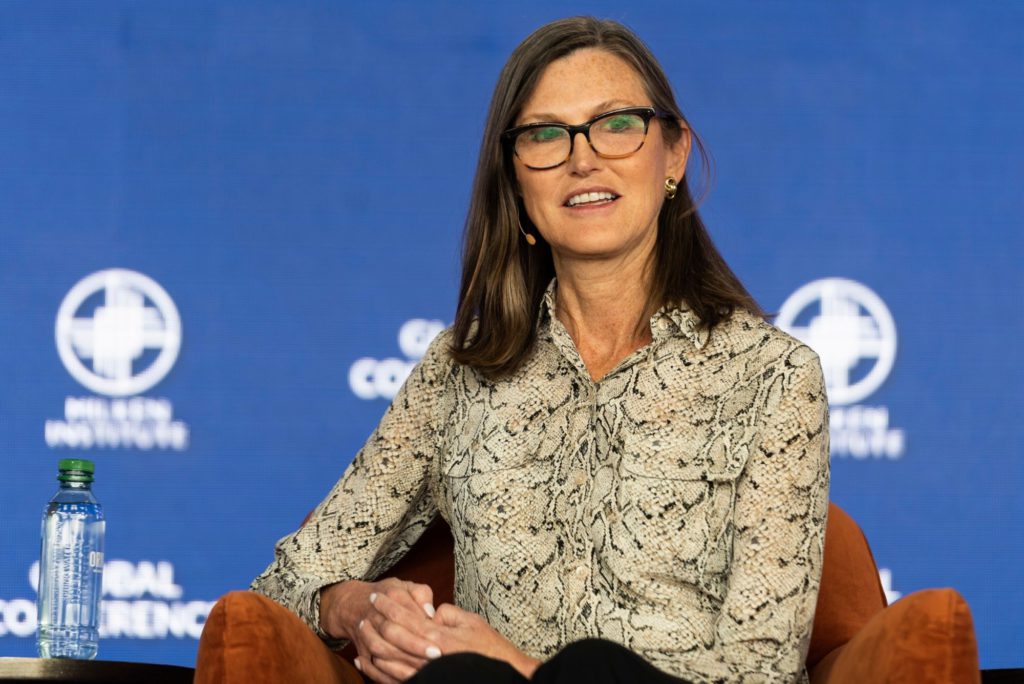
Cathie Wood’s Asset Plunge Is Biggest Among ETF Issuers in 2022

(Bloomberg) — Cathie Wood’s Ark Investment Management is suffering a steeper drop in assets than almost any other US exchange-traded fund issuer this year.

Ark’s lineup holds $15.3 billion across nine ETFs, a 48% decrease from the start of 2022, according to data compiled by Bloomberg Intelligence through June 1. That’s the biggest collapse in assets among the 25 largest US issuers. 

Notably, the drawdown in assets is a result of weak performance rather than investors yanking out cash. While all nine Ark ETFs have posted double-digit losses in 2022, dragged down by declines in richly valued technology shares, the lineup is still clinging to net inflows of $167 million. While such a dismal showing would normally prompt an investor exodus, Wood has cultivated a loyal following on social media and a reputation for her disruption-focused bets, Bloomberg Intelligence’s Athanasios Psarofagis said. 

“It’s definitely pretty unprecedented because most would probably collapse if they had the same performance, but Cathie and Ark have a strong following,” said the ETF analyst. “The big Twitter presence and the funds are truly very unique.”

Wood emerged as a star manager during the pandemic, when trillions of dollars worth of fiscal and monetary stimulus drove valuations on speculative tech firms and growth shares to eye-watering heights. The firm’s flagship Ark Innovation ETF (ticker ARKK) soared almost 150% in 2020.

Now, with the Federal Reserve tightening policy, ARKK has plunged almost 55% this year, the second-worst showing among the firm’s funds. ARKK currently holds $8.5 billion, down from more than $16 billion at the start of 2022 and from a high-water mark of around $28 billion in February 2021.

On the other end of the spectrum, Pacer has dominated as a breakout star this year. The firm’s assets across 42 funds have surged 47%, with its biggest ETF — the Pacer US Cash Cows 100 ETF (COWZ) — growing to $6.5 billion, from $1.3 billion at the start of 2022. 

For Ark, a combination of loyalists and dip-buyers is likely limiting outflows despite “massive” underperformance, according to The ETF Store’s Nate Geraci. For context, the tech-heavy Nasdaq 100 has dropped roughly 24% this year. 

“Diehard Cathie Wood loyalists, ‘disruptive tech’ bottom fishers, and ETF shares being created for short sellers are all helping to staunch outflows,” said Geraci, president of the advisory firm. “It seems that one or more of these groups will have to throw in the towel before ARK experiences meaningful outflows.”

More stories like this are available on bloomberg.com

©2022 Bloomberg L.P.
Pentagon’s New AI Chief Vows to Crack ‘Bureaucratic Inertia’ on Tech Advances

(Bloomberg) — The Pentagon’s new head of artificial intelligence wants to speed up technological modernization after an onslaught of what he calls “valid” criticism from recently departed senior leaders who expressed frustration at slow progress.

Craig Martell, who was previously head of machine learning at Lyft Inc. and Dropbox Inc. and led AI initiatives at LinkedIn, told Bloomberg News in his first interview since starting his job as the Pentagon’s chief digital and artificial intelligence officer that he wanted to make progress despite the department’s labyrinthine “bureaucratic inertia.”

Martell’s arrival is a boost for the Pentagon, which is seeking to attract expert talent from the private sector. Martell, who said his first day at the Pentagon on Monday was “overwhelming,” added he had taken a “not trivial” pay cut to do the job.

“It’s not my goal to come in here and change the entire culture of the DoD. It’s my goal to demonstrate that with the right cultural changes, we can have really big impact,” he said, adding that the opinions of senior leaders who had left were “mostly correct.”

Several senior defense officials working on technological modernization have recently left the Department of Defense and expressed frustration at the slow pace of change, with some citing concerns that China – which researchers say is heavily investing in artificial intelligence for the military – could overtake US defense capabilities.

Nicolas Chaillan resigned his job as chief software officer for the Air Force last year and derided military leaders who he claimed were ill-equipped to spearhead technological change needed to outpace China. Earlier this year, three Pentagon officials left their jobs and urged the department to accelerate efforts to adopt cutting-edge digital technology: David Spirk, the chief data officer; Preston Dunlap, the Air Force’s chief architect; and Jason Weiss, the Defense Department’s chief software officer.

Spirk told Bloomberg on Monday that the new team spearheaded by Martell, along with the reorganization of the Pentagon office he now leads, was “exactly what the Department of Defense needs.”

The Pentagon has previously run into ethical concerns over its potential use of AI. For instance, some Google employees refused to work on potential military applications for artificial intelligence, amid concerns over potential future use of autonomous lethal weapons and targeting. Martell’s responsibilities include work on “algorithmic warfare,” an under-defined concept that seeks to apply artificial intelligence to combat.

In a paper for the Center for Strategic and International Studies published on Monday, Gregory Allen, formerly head of strategy and policy for AI at the Pentagon until he stepped down in April, said the department needed to update its nearly 10-year-old policy about the use of autonomous weapon systems and address the role of AI-enabled systems and machine learning. Despite regular rhetoric from senior defense officials that there would always be a “human in the loop” in any decision to fire a weapon, there is no explicit ban on autonomous weapons or written requirement that humans must authorize weapons engagement, he said.

Martell said he was attracted to the role because his remit was “responsible AI.” 

“For me, whenever there are lives on the line, humans should be in the loop,” he said, adding the Pentagon needed to have robust ethical guidelines for the use of artificial intelligence in warfare and to ensure that machines would be 99.999% correct before any were deployed. His office will feed into an update of the department’s policy on autonomy in weapons systems.

But he said he didn’t believe “we’re ever gonna get to Skynet,” a reference to a future in which advanced AI could threaten humans as was portrayed in the Terminator movie series.

(Updates with detail on office in penultimate paragraph.)

More stories like this are available on bloomberg.com

©2022 Bloomberg L.P.

Sweeping US Crypto Legislation Targets Stablecoins, Mining

(Bloomberg) — A sweeping bill from a bipartisan Senate duo would buttress rules pertaining to some of the hottest issues facing the crypto industry, including sanctions compliance, stablecoin oversight and energy usage. 

The legislation, introduced Tuesday by Wyoming Republican Cynthia Lummis and New York Democrat Kirsten Gillibrand, is one of the most ambitious attempts to regulate the volatile asset class. While chances of passage are slim ahead of November’s midterm elections, it could act as a starting point for negotiations next year.

The lawmakers have been drafting the plan for months, and it was widely anticipated to be favorable to crypto firms because of Lummis’s reputation as an industry ally. Both senators said in statements that it’s important to create guardrails for the industry and ensure consumers are protected, while also allowing room for innovation to flourish. 

Here are some highlights of what’s in the Lummis-Gillibrand bill: 

  • A requirement that stablecoin issuers maintain 100% reserves and publicly disclose the assets backing their token. Stablecoins have been in focus following the implosion of popular coin TerraUSD.
  • Tasking US Treasury with developing guidance to clarify the responsibility of stablecoin issuers to comply with sanctions.
  • A requirement that the Federal Energy Regulatory Commission — in consultation with the Commodity Futures Trading Commission and the Securities and Exchange Commission — analyze and report on energy consumption in the digital-asset market, including the amount used for activities such as mining. Environmental groups have been calling for both federal and state policymakers to crack down on Bitcoin mining.
  • A directive that a government watchdog study the opportunities and risks of investing retirement savings in digital assets.
  • Tasking the CFTC with more authority to regulate coins categorized as commodities directly, which is something crypto exchanges and other firms have supported.
  • The creation of an advisory committee — comprised of private and public sector members — to help the government keep pace with changes and provide recommendations.

The two senators said in an interview on CNBC that they will continue to work with other lawmakers and regulators, including the SEC and CFTC, as they try to move their bill through Congress. Lummis said she’s meeting with SEC Chair Gary Gensler this week to discuss crypto regulation. 

The legislation — which could be broken into smaller bills — would likely have to clear at least three different Senate committees before being brought up for a full chamber vote.

(Updates with senators’ plans to work with regulators.)

More stories like this are available on bloomberg.com

©2022 Bloomberg L.P.

Online Car Dealer Cazoo Cuts Jobs Due to Rising Recession Risks

(Bloomberg) — Cazoo Ltd., the British online used car platform backed by some of the world’s best-known investors, said it’s slashing hundreds of jobs due to the rising prospect of a UK recession. 

The company will cut its existing workforce by 15%, halt new hires and delay investment projects, it said Tuesday. A combination of high inflation, supply-chain disruption and rising interest rates have dented consumer confidence, according to the company, leading the firm to abandon plans for accelerating growth.

“This perfect storm has placed cash conservation top of mind for the company,” Alex Chesterman, chief executive officer of Cazoo and founder of Zoopla, a property website. 

Cazoo currently employs about 3,500 staff.   

Cazoo’s decision adds to signs for the automotive sector girding for an economic downturn. Elon Musk last week said Tesla Inc. will cut 10% of its salaried staff.

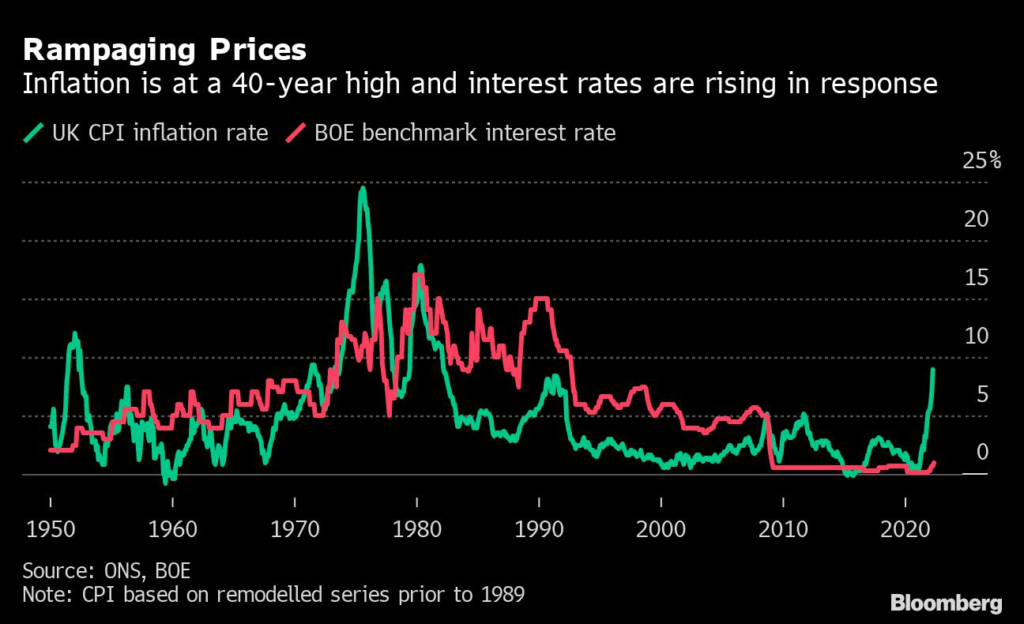
The UK is on the front line of a wave of inflation washing over major economies. Price rises hit a 40-year high in April, eating into consumers’ spending power and adding to warning signs the economy could tip into recession. With confidence at a low ebb, increasingly cash-strapped households are less likely to buy big-ticket items like cars. 

Cazoo, founded by serial internet entrepreneur Chesterman, buys and restores used cars before selling them online and delivering them directly to consumers’ homes. The firm expects to sell as many as 80,000 cars in 2022, generating revenues of as much as £1.5 billion pounds ($1.87 billion). 

The company was planning for rapid growth over coming years, hoping to hit sales of 210,000 vehicles in the UK in 2024, a benchmark that would make it one of the largest automotive dealers in the country. 

The company has also made moves to expand in continental Europe, buying brumbrum in Italy and Swipcar in Spain to add to its small car-subscription services acquired in the UK, France and Germany.

More stories like this are available on bloomberg.com

©2022 Bloomberg L.P.
Close Bitnami banner
Bitnami