Bloomberg

Apple Products Set to Use Common Charging Point After EU Deal

(Bloomberg) — All smartphones and tablets would have to use a common charger under a provisional European Union agreement clinched on Tuesday. 

The plan would force all companies — most notably Apple Inc. — to make phones, tablets, e-readers and digital cameras use the USB-C charger, negotiators announced. Around 15 product types are included in the scope, including headsets, video-game consoles and headphones.

The plan, unveiled last year, was provisionally approved Tuesday and will save consumers an estimated 250 million euros ($267 million) each year according to the European Commission. The European Parliament and 27 EU countries need to sign off on the agreement. 

Phones and tablet makers will have to comply by the fall of 2024. Laptops will have more time to make the switch, with negotiators giving laptop producers 40 months after the new rules go into effect.

“A common charger is common sense for the many electronic devices on our daily lives,” Internal Market Commissioner Thierry Breton said in a statement. “European consumers will be able to use a single charger for all their portable electronics — an important step to increase convenience and reduce waste.”

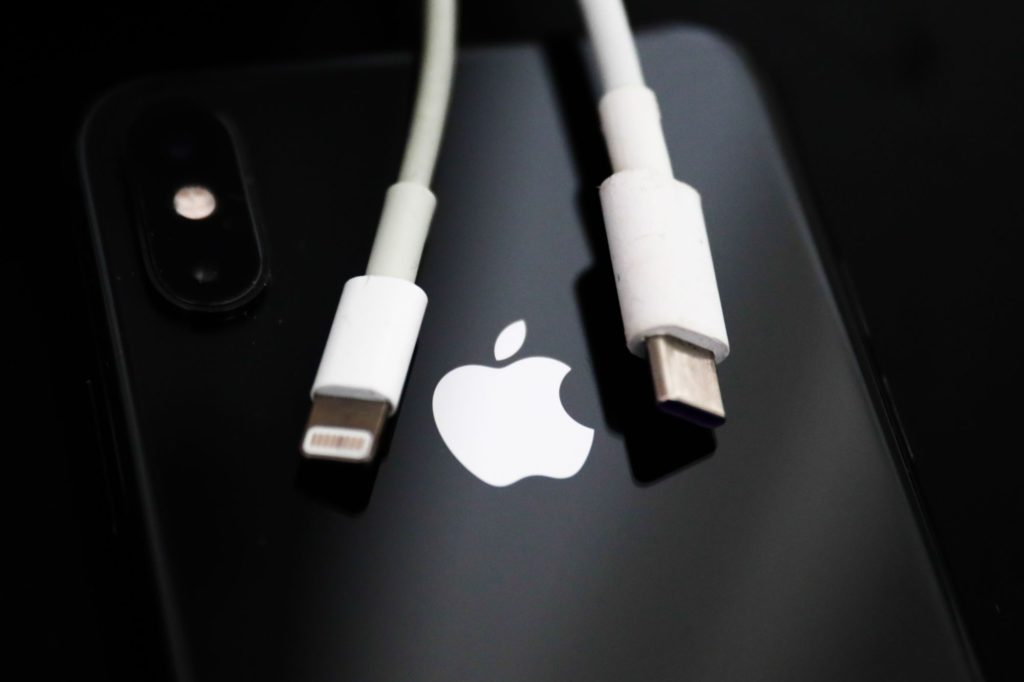
The proposal originally angered Apple, which said it would reduce innovation. But the company is currently testing future iPhone models that replace the current Lightning charging port with the more prevalent USB-C connector. Current Apple laptop models already use the USB-C charger.

The commission will be able to set standards for wireless charging in the future, said Alex Agius Saliba, the lead negotiator for the European Parliament, as the EU does not want to “end up in a situation where we will be legislating for a market which is basically dying out.”

Read more: Apple Plans Shift to USB-C Charging on IPhone to Meet New EU Law

(Updated with context.)

More stories like this are available on bloomberg.com

©2022 Bloomberg L.P.

Bitcoin Falls Back Below $30,000 as Range-Bound Trading Persists

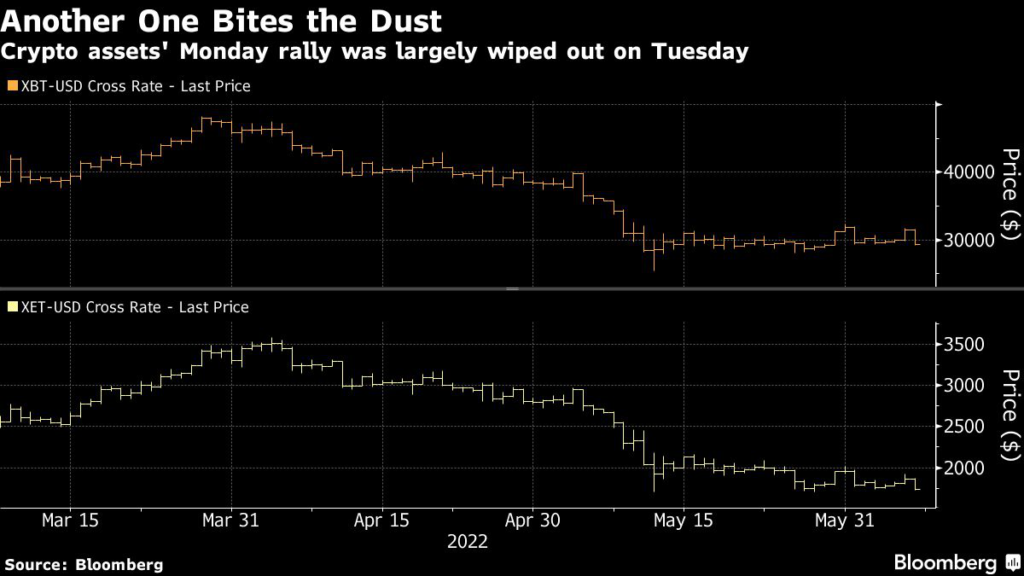
(Bloomberg) — Bitcoin fell back below $30,000, sliding along with equities and settling back into the middle of the narrow range where it’s been trading since mid-May. 

Tuesday’s 6% drop to around $29,500 wiped out the previous three days of gains and ended Bitcoin’s second brief break above $31,000 of the past three weeks. European equities and US futures also fell. Australia’s central bank delivered a bigger-than-expected rate hike to combat rising costs, adding to the risk-off mood in markets. 

Investor concerns about tighter monetary policy and tougher regulations have dueled with optimism that Bitcoin may have found a bottom to keep the token in a tight range around $30,000. Bitcoin faces “significant resistance” around $31,500 to $32,000, according to Marcus Sotiriou, an analyst at UK-based digital asset broker GlobalBlock.

“This market is languishing,” said Adam Farthing and Collin Howe of crypto liquidity provider B2C2 in a note. “Without a catalyst to the upside, current sentiment is likely to keep prices rangebound, with some clear and immediate risk of a break lower.”

The declines for crypto came as the dollar extended gains. A jump in Treasury yields late Monday fueled concerns that rising borrowing costs could induce a recession. 

Adding to fears of tougher oversight, US regulators are investigating whether Binance Holdings Ltd. broke securities rules by selling digital tokens just as the crypto exchange was getting off the ground five years ago, Bloomberg reported on Monday.  

Markets will continue to watch for signals that the current ranges — $28,000 to $32,750 for Bitcoin, and $1,700 to $2,100 for Ether — may break, B2C2 said in the note. Ether, the second-largest cryptocurrency, fell as much as 7.3% and traded at $1,747 at 12:40 p.m. in London. 

Solana dropped as much as 11% while Avalanche declined as much as 9.3% in a trading session where all the major cryptocurrencies were in the red, Bloomberg data show. 

(Updates with reference to Australia rate increase in second paragraph.)

More stories like this are available on bloomberg.com

©2022 Bloomberg L.P.

Toshiba’s CEO Says Staying Public Is Still an Option as PE Firms Circle

(Bloomberg) — Toshiba Corp.’s chief executive officer said nothing is decided on going private and staying public remains a possibility, after the Japanese industrial giant received eight buyout offers as part of a process to decide its future.

“If there’s greater value in not taking the company private, that’s still an option,” Taro Shimada said in an interview with Bloomberg News in Tokyo. “What’s important is that value is maximized for all of the company’s stakeholders.”

It’s a reminder that the next step is far from certain for the famous Japanese firm, where shareholders and management have been at loggerheads for years over strategy and corporate governance. It comes after an outside director spoke out against about Toshiba’s plan to put representatives of activist investors on its board, an unusually public display of dissent that highlights the tensions that exist within the conglomerate.

Toshiba said last week it got eight buyout offers and two proposals for capital and business alliances as part of its process to solicit strategic options. While it didn’t disclose the bidders, Bain Capital, Blackstone Inc. and CVC Capital Partners are among the private equity firms that were weighing bids, Bloomberg has reported.

Toshiba’s leaders had long fought against the idea of privatization, with former CEO Satoshi Tsunakawa laying out five reasons why it would be the wrong decision just this February. His management team instead argued the company should be split in two, but investors voted down that approach.

Toshiba will closely review the buyout offers and alliance proposals and narrow the list down to a “realistic” number, Shimada said. 

The company has to consider a wide pool of stakeholders including customers, shareholders, employees and the government, Jerry Black, an outside director who chairs Toshiba’s special committee for the review process, said in the interview.

Analysts have warned that getting government approval for any buyout wouldn’t be easy. Toshiba’s nuclear power business, which is deemed important to Japan’s national security, could be a major obstacle.

Read more: Private Equity Firms Eyeing Toshiba Buyout Face Nuclear Dilemma

Black said Toshiba would look at the ability to win government approval as one of the criteria for selecting bids.

We’ve asked each of the bidders “for their ideas and solutions,” he said. “It will be the sponsors’ responsibility to get approval,” he said. “And from that perspective, we want to understand the probability.”

Toshiba has lurched from one disaster to another over the past seven years, starting with an accounting scandal in 2015 that devastated profits and led to a company-wide restructuring. The subsequent unraveling of a costly foray into nuclear power business in the U.S. led to a $6.3 billion writedown and saw it teeter on the edge of delisting. It was forced to sell its crown jewel memory-chip unit and offer stock that was snapped up by activist investors, giving them an outsized presence on the shareholder register.

Since then, stock owners and management have clashed over the company’s future.

“We’ve lost a significant amount of shareholder trust,” Black said. “We have to execute,” he said. “And we have to communicate better.”

More stories like this are available on bloomberg.com

©2022 Bloomberg L.P.

US Says China Fabricated Quotes From Diplomats on Xinjiang

(Bloomberg) — The US hit back at China over a social media post claiming American officials in Guangzhou downplayed allegations of human rights abuses, saying the behavior puts Washington’s envoys at risk.

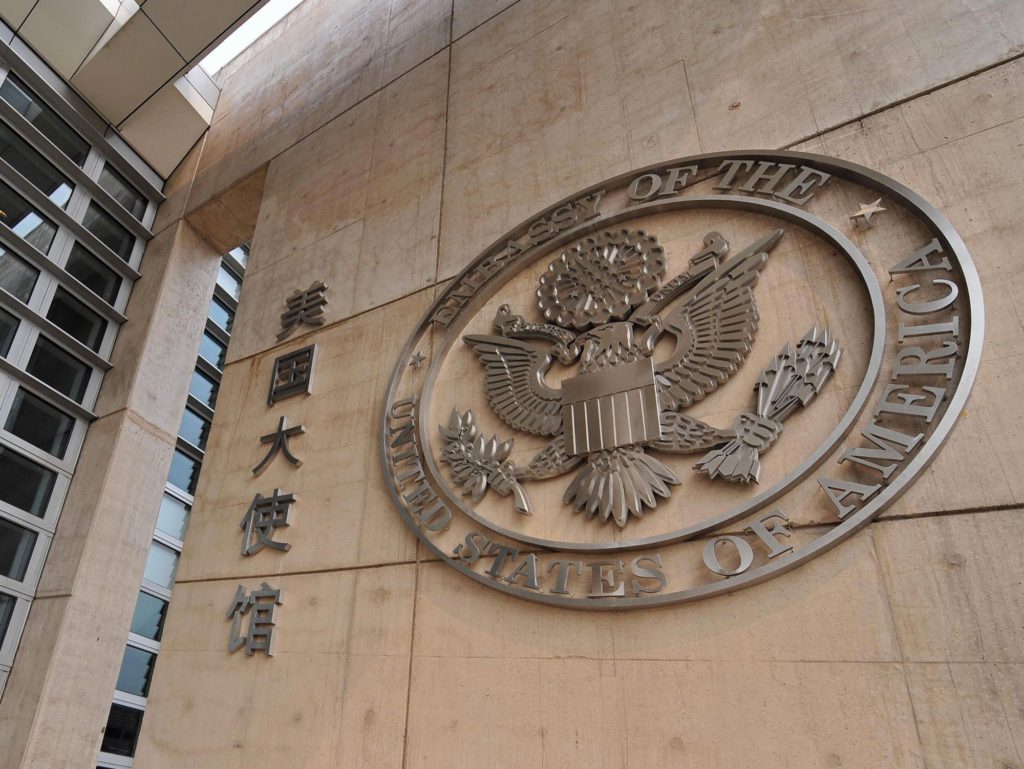
A spokesperson for the US Embassy in Beijing said Tuesday that China should “stop attributing false statements to US officials or taking other actions that might subject our diplomats to harassment.” 

“Such action potentially endangers the US officials being named,” the spokesperson said, adding China was obligated to treat American diplomats with respect.

The US and China are embroiled in an escalating dispute over human rights, with Washington alleging that Beijing is carrying out genocide in its western region of Xinjiang and China saying that is “the lie of the century.”

The latest chapter in the controversy started Sunday, when Buyidao, a social media account linked to the Communist Party’s Global Times newspaper, posted that two officials of the US consulate in the southern city of Guangzhou said at a reception in 2021 that Washington understood “that nothing is wrong about Xinjiang.”

The post quoted two officials by name as saying that “the hype” about forced labor, genocide and human rights was “an effective measure to separate Xinjiang from the global industrial chain.”

“We can use this to get the Chinese government trapped deep in a quagmire,” the post cited the two as saying. The Buyidao post said the remarks were heard by a person it identified only as the “supplier of a well-known international sports brand” who attended the reception. The post didn’t make clear what specific comment each of the two officials allegedly made.

Foreign Ministry spokesman Zhao Lijian said Tuesday at a regular press briefing in Beijing that the comments “are not a fabrication of the Chinese government.” Assistant Minister of Foreign Affairs Hua Chunying has sent multiple tweets about the post, writing: “A rare truth from US officials who’ve been lying through their teeth. Waiting for an explanation.”

The US Embassy spokesman added that added that Washington’s position on Xinjiang has not changed.

(Updates with comment from China’s Foreign Ministry.)

More stories like this are available on bloomberg.com

©2022 Bloomberg L.P.

Central Bank Digital Money Risks Being an ‘Expensive Failure’

(Bloomberg) — Central-bank-issued digital currencies run the risk of turning into a costly waste of time, according to the Center for European Reform.

Europe — one of the most advanced economies considering the initiative — should instead use regulation to make payments cheaper and more competitive, the London-based think-tank said Tuesday in a report. It warned that the cost benefits and privacy incentives of a so-called CBDC are unlikely to be sufficient to entice consumers to use it.

“Without widespread adoption, a CBDC will be an expensive failure, and will do little to advance central banks’ goals,” senior research fellow Zach Meyers said. “The EU shouldn’t be distracted by the prospect of a digital euro — which may sound impressive and exciting, but may give Europeans few benefits they can’t enjoy already.”

The payment initiative is being explored in about 100 countries across the globe, with backers touting various advantages — from boosting financial inclusion to lowering the cost of electronic payments. 

Pioneers like the Bahamas and Nigeria have already started allowing the public to use CBDCs, and policy makers in Europe say they will ensure that a future digital euro would be attractive enough not to be swept aside by other private means of payment. The European Central Bank says it may roll out its own CBDC in the coming years.


More stories like this are available on bloomberg.com

©2022 Bloomberg L.P.

EU Agrees Deal on Common Phone Charger in Blow to Apple

(Bloomberg) — All smartphones and tablets would have to use a common charger under a provisional European Union agreement clinched on Tuesday. 

The plan would force all companies — most notably Apple Inc. — to make phones, tablets, e-readers and digital cameras to use the USB-C charger, negotiators announced.  

The plan, unveiled last year, was provisionally approved Tuesday and will save consumers an estimated 250 million euros ($267 million) each year according to the European Commission. The European Parliament and 27 EU countries need to sign off on the agreement. 

Phones and tablet makers will have to comply by the fall of 2024. Laptops will have more time to make the switch, with negotiators giving laptop producers 40 months after the new rules go into effect.

“A common charger is common sense for the many electronic devices on our daily lives,” Internal Market Commissioner Thierry Breton said in a statement. “European consumers will be able to use a single charger for all their portable electronics — an important step to increase convenience and reduce waste.”

The proposal originally angered Apple, which said it would reduce innovation. But the company is currently testing future iPhone models that replace the current Lightning charging port with the more prevalent USB-C connector. Current Apple laptop models already use the USB-C charger.

Read more: Apple Plans Shift to USB-C Charging on IPhone to Meet New EU Law

(Updated with context.)

More stories like this are available on bloomberg.com

©2022 Bloomberg L.P.

ASML to Expand China Staff 14% as Covid Disruptions Ease

(Bloomberg) — ASML Holding NV is hiring more than 200 staff in China this year to keep up with growth in the country, where its chipmaking tools are seen as crucial in a long-term contest with Washington for tech supremacy.

The Dutch firm, whose machines are indispensable to making advanced semiconductors, is expanding its workforce 14% from about 1,400 currently. It recorded sales of 2.7 billion euros ($2.9 billion) in the 2021 financial year, accounting for 14.5% of global sales, the firm said in a statement Tuesday.

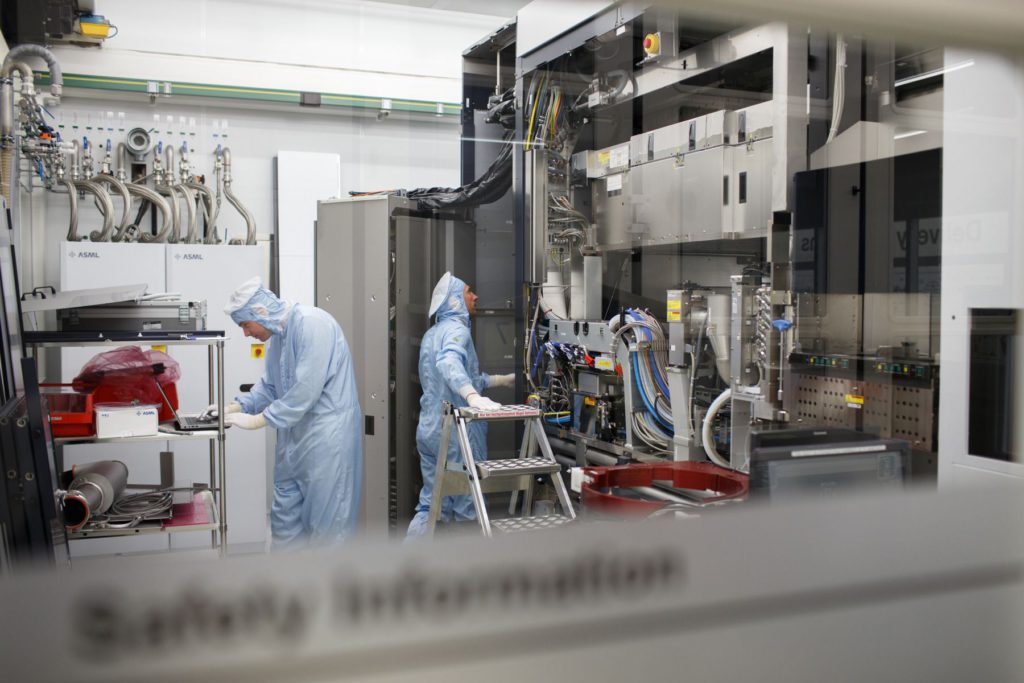
ASML is enlarging its presence in China just as the world’s biggest semiconductor market starts to emerge from a series of Covid-19 lockdowns that have hampered production, disrupted shipments of components and dampened electronics demand. The company is the world’s No. 1 supplier of Extreme Ultraviolet Lithography (EUV) machines, which are used by leading chipmakers Taiwan Semiconductor Manufacturing Co. and Samsung Electronics Co. to produce the most advanced chips for clients such as Apple Inc.

US trade sanctions imposed on leading Chinese tech firms such as Huawei Technologies Co. could limit ASML’s potential trading partners in the country. Still, ASML does business with major Chinese chipmakers like Shanghai-based Semiconductor Manufacturing International Corp. and has many more customers operating plants within Chinese borders. Its engineers have made a practice of visiting and working with clients on-site to accelerate production and catch up on time lost to pandemic-related shutdowns.

Among the jobs listed by ASML is a post looking for a Head of Export Control & Sanctions Compliance China, whose job it will be to figure out how the business should balance its legal responsibilities to local and international authorities. The company has also accused Chinese firms of stealing its intellectual property.

Read more: Engineer Charged With Stealing Chip Technology Thriving in China

ASML occupies a pivotal role in the global chip supply chain, which is grappling with a systemic shortage of semiconductors that arose during the pandemic. Beside its EUV systems, it also supplies more mature technologies to help fabricate the ubiquitous chips enabling things like wireless connectivity, driving automation and smart homes.

More stories like this are available on bloomberg.com

©2022 Bloomberg L.P.

Electric Vehicle Outlook Is Even Brighter If the World Bikes and Takes the Bus

(Bloomberg) —

Last week, my team at BloombergNEF published our big annual Electric Vehicle Outlook. The report looks at how all the different segments of road transport could evolve over the coming decades and maps out the impact on oil markets, electricity demand, batteries, metals and materials, charging infrastructure and emissions.

There’s a lot of different angles within a big report like this. Here’s what I’d highlight among the many interesting storylines:

Combustion vehicle sales have peaked and are now in terminal decline.

Automotive sales are still recovering from the combination of Covid-19, semiconductor shortages and a host of other factors. The overall market should pick up in the next few years, but EV sales are rising fast enough now to keep combustion vehicles from returning to their previous peak.

By 2025, BNEF estimates sales of internal combustion passenger vehicles will be 19% below their 2017 peak. While the transition still isn’t happening fast enough for road transport to reach net zero by 2050, this is still a remarkable development after over 100 years of growth for the internal combustion engine. My colleague Nat Bullard wrote more about this here.

Electrification has now spread to all segments of road transport.

There are fascinating e-mobility case studies in both wealthy and emerging economies. China, for example, has 685,000 electric buses on the road and 195 million electric two-wheelers. In South Korea, 17% of light commercial vehicles sales were electric last year. In India, almost 40% of the three-wheeler fleet is already electric.

Each country has a very different mix of mobility needs, and very different starting points in their vehicle fleet. But if something moves and it travels on a road, somebody is now working on trying to electrify it. There will likely be more surprising successful case studies in the years ahead.

The battle between hydrogen fuel cells and batteries in heavy trucks is heating up. Or is it?

Ten years ago, there were lively debates over whether batteries or fuel cells would power the next generation of passenger cars. That’s largely been settled now, with about 20 million passenger EVs on the road and fewer than 50,000 fuel cell ones. Even Toyota, an ardent supporter of hydrogen, has been coming up well short of its relatively modest target to sell 30,000 fuel cell vehicles annually by now, moving just 5,930 of them in 2021.

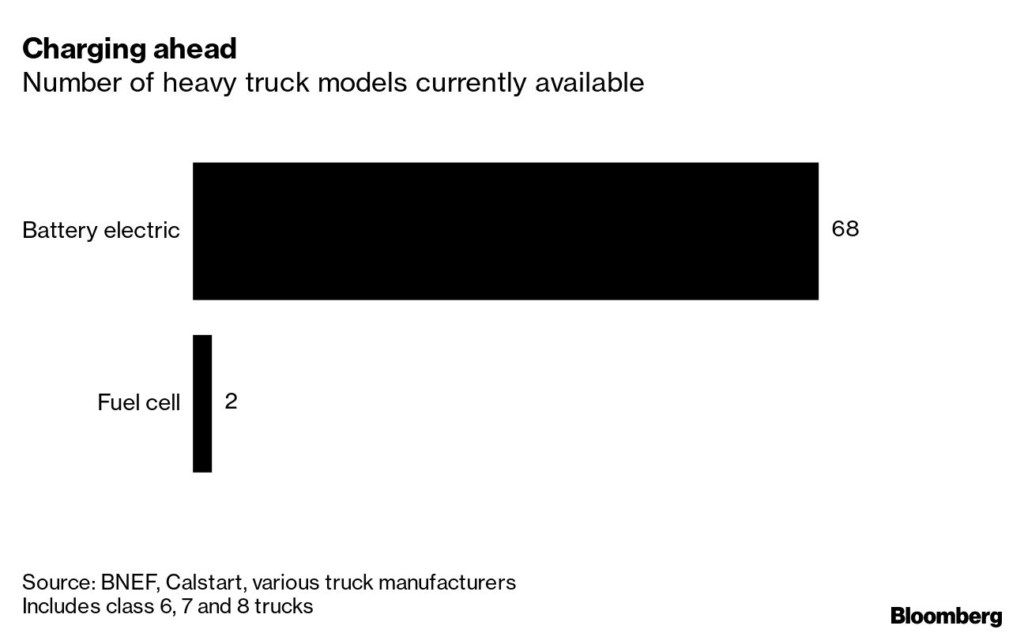
The discussion has now shifted to heavy trucks, where fuel cells could still play a role. But the data there suggests a similar outcome may be in the cards. A global tally in this year’s outlook report found 68 electric heavy trucks available today and just two fuel cell models.

It’s still early days, and decarbonizing long-haul trucking will be particularly difficult. But there are plenty of miles driven by heavy trucks in shorter duty cycles, or on routes where volume, not weight, is the limiting factor. There’s also ongoing work to further “truckify” lithium-ion batteries, fine-tuning their chemistry to reflect truck usage cycles instead of just using the same cells put into passenger cars. Many fleet operators are eager to make the switch soon, so having real models on the market now is a major advantage.

Expected cobalt demand from EVs is dropping.

The story of cobalt in EV batteries is fascinating. Most of the high-density lithium-ion batteries going in EVs are in the nickel manganese cobalt family, or NMC, with different numbers denoting different ratios of these three ingredients in the cathode (for example, NMC 622 or NMC 811). Demand for cobalt looked ready to rocket a few years ago — this appeared to be the preferred chemistry as EVs scaled up.

Cobalt demand is still set to rise, but by much less than previously expected. High cobalt prices and supply chain concerns accelerated the switch to different chemistries, including lithium iron phosphate, or LFP, which uses no cobalt or nickel. BNEF now expects LFP batteries to account for 42% of all EV battery demand next year.

This highlights an essential feature of how markets work: high prices not only drive investment in new supply, but also induce demand-side substitution. Large amounts of new investment are needed in all areas of the battery supply chain, but there are good reasons to be skeptical about warnings of endless shortages. Battery raw materials will likely go through the same cyclical fluctuations as commodity markets in the long term. The cure for high prices is still high prices.

Net zero requires more than just a drivetrain switch.

Just swapping out the drivetrain isn’t the most efficient way to reach carbon neutrality by 2050. This year’s outlook report includes a reduced demand scenario looking at how governments can combat car dependency.

Even a modest 10% reduction in miles traveled via car globally by 2050 yields major benefits and makes the journey to net zero much easier. This can be accomplished with modal shifts, primarily to active transport (cycling and walking) and public transport.

In this scenario, the global car fleet drops by 145 million cars in 2050, reducing cumulative CO2 emissions by 2.25 gigatons and cutting annual battery demand by 433 gigawatt hours, reducing strain on supply chains. An all-the-above approach is needed to get on track for net zero.

More stories like this are available on bloomberg.com

©2022 Bloomberg L.P.

‘Beauty Contest’ With Batteries Will Decide the Future of Trucking

(Bloomberg) —

Conventional wisdom in the transport sector has moved rather quickly from “electric cars aren’t happening” to “the future of all cars is battery powered.” But that only applies to light vehicles. There is still a healthy debate among executives of top automakers and analysts on what type of drivetrain will come to rule long-haul trucking.

It’s not an academic debate either. The demand for goods transported by road is expected to increase 50% by 2040, according to BloombergNEF. That growth could account for 40% of increase in global oil demand in the next few decades, according to the International Energy Agency. And medium and heavy commercial vehicles are the types of road transport that are furthest from where they need to be to help the world meet climate goals, according to BNEF’s Electric Vehicle Outlook published last week.

And because the debate is not settled, Volvo Group is hedging its bets. “We are going in parallel with three technologies,” said Lars Stenqvist, chief technology officer at the Swedish multinational, which owns the trucks manufacturing division Volvo Trucks. The company is developing trucks that run on batteries, hydrogen fuel cells and combustion engines that burn biofuels, synthetic fuels and even hydrogen.

Stenqvist said battery electrics are already the choice for buses, excavators and reloaders like refuse collectors. “There is no reason for any city in the world to buy anything else than battery electric refuse collectors,” he said in an interview with Bloomberg Green at the World Economic Forum in Davos last month. Volvo Trucks was the market leader for heavy all-electric trucks in Europe last year with a market share of 42%, the company said, referencing statistics from market analysis group IHS Markit. Volvo is going further on its all-electric investments by building a charging network, as part of a joint venture, specifically for battery-powered heavy-duty vehicles.

Fuel cells, however, are a different game. While in theory tanks of hydrogen emptied via fuel cells can provide superior range that matches fossil-fuel versions, the drivetrain has struggled to gain market share because there are few incentives to build enough hydrogen-filling stations as there are gas stations in the world.

Stenqvist isn’t worried. The reason hydrogen produced from renewables didn’t become a fuel of choice in the past, he said, is because it wasn’t cheap enough to produce. That’s no longer the case. “We believe we will get low-cost green hydrogen,” he said. “It’s because other industries will be very dependent on green hydrogen. Take steel, chemicals or aviation. In the long run, our estimate is that less than 10% of green hydrogen will be used for transport. So we will piggyback on the big investments across the globe on hydrogen.”

Volvo isn’t going alone. For fuel-cell development, it’s working with Daimler Truck AG. The joint venture called “cellcentric” will supply fuel cells to both companies starting in 2025, even as they compete to sell trucks to customers.

While making internal combustion engines for biofuels (derived from crops) or synthetic fuel (derived from captured carbon dioxide) isn’t exactly cutting edge at the moment, few automobile manufacturers are considering burning hydrogen gas in engines. The cost of developing all these technologies simultaneously is already weighing on Volvo, said Stenqvist. While Volvo Group does not always split spending by divisions, the company spent nearly 20% of its gross income in 2021 on research and development.

What’s clear is the winning technology hasn’t been decided yet. “When I talk to my engineers, I talk about it as a beauty contest,” Stenqvist said. “Three teams in parallel are sort of competing with each other.”

Why stretch the company so much? “My belief is that the type of drivetrain will be dependent on the infrastructure in different regions and the price of energy there,” he said. Some places it will be cheap to buy biofuels, while in other places it will be cheap to get green hydrogen.

For proof, Stenqvist says look at the sales of zero-emission heavy trucks in China. Though a small proportion of total vehicles sold, the trend seems promising. “It is clear that in China everyone is investing in hydrogen,” he said.

It’s not just the drivetrain that Volvo has to worry about. The company has set out a target to have reach net-zero emissions by 2050, which would mean all the vehicles it sells from 2040 onward need to be zero-emission vehicles. “I will definitely not open any door for offsets,” Stenqvist said. Because if you do, “you will not take it seriously. You can always plant a tree here and plant a tree there and avoid the tough discussions.”

That’s meant focusing not just on the fuel its vehicles burn, but also the emissions attached to the materials needed to build the vehicle. It’s one reason why Volvo is one of the first members to sign up to the First Movers Coalition that’s collating the demand from different global companies for green alternatives of everyday commodities. As part of its delivery, last week Volvo unveiled the world’s first vehicle made entirely from fossil-free steel.

Akshat Rathi writes the Net Zero newsletter, which examines the world’s race to cut emissions through the lens of business, science, and technology. You can email him with feedback.

More stories like this are available on bloomberg.com

©2022 Bloomberg L.P.
Singapore Eyes Listings as China Firms Hedge Political Risk

(Bloomberg) — Singapore Exchange Ltd., which has seen stock listings dwindle over the years, is betting on a reversal in fortunes as companies in China look to hedge political risks and Southeast Asia’s unicorns seek to tap the market, according to a top executive. 

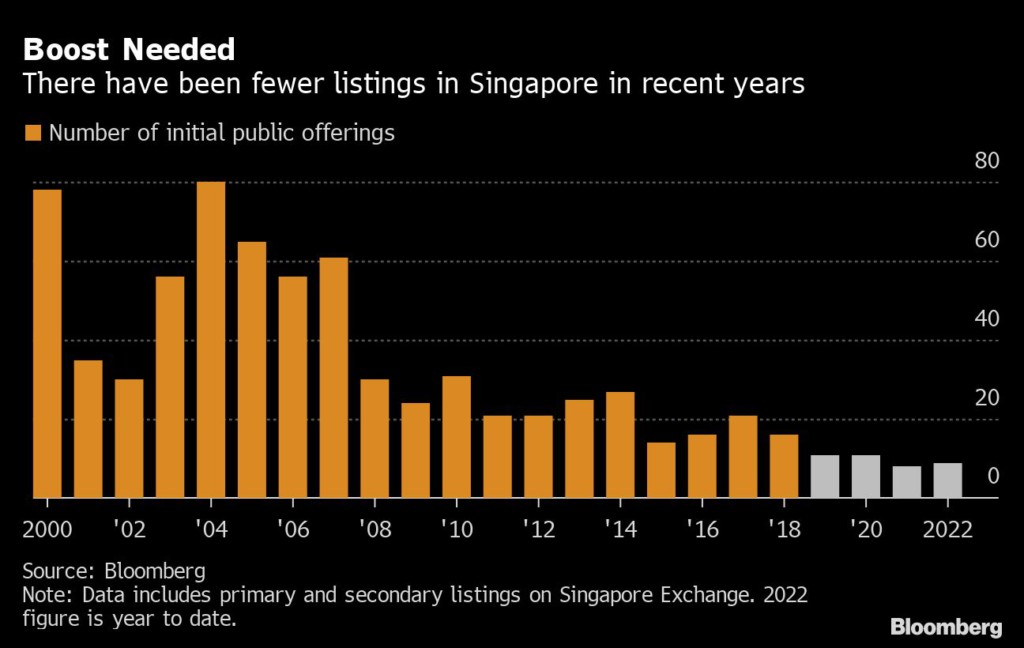
The bourse may see 30 to 40 first-time and secondary listings annually within the next five years, Pol de Win, SGX’s head of global sales and origination, said in an interview — more than double the average of about 13 listings a year since 2017. SGX is stepping up talks with Chinese firms that are seeking alternatives to a US or Hong Kong listing as well as to raise their profiles in Southeast Asia, he said.  

“If some of these companies are really going to be forced to delist in the US, they would still have an international trusted venue here where they can attract and interact with the global investor universe,” said de Win, who joined the exchange in July from Goldman Sachs Group Inc. “Our pipeline is stronger than it’s ever been in a long period of time.” 

Some global trends may work in SGX’s favor. More Chinese firms with US-listed shares may look at alternative venues amid delisting risks stateside, following in the footsteps of electric carmaker NIO Inc. that debuted in the city-state without raising funds last month. Blank-check companies may also consider different venues with the US tightening disclosure rules, while Southeast Asia is becoming a breeding ground for tech-backed billion-dollar businesses. 

These trends could help the Singapore exchange regain some ground after missing out on big-ticket initial public offerings to other hubs. Stock listings have slumped in recent years amid liquidity concerns, prompting a government-backed effort last year to try to bolster the market. The primary and secondary listings that SGX is targeting will likely have a market value of at least S$500 million ($364 million), according to de Win. 

He said SGX is in talks with firms in China and Southeast Asia that operate in areas such as financial tech and consumer tech, as well as real estate investment trusts and blank-check companies across the globe. “Our team actively covers, interacts with more than 100 of these companies,” the Singapore-based executive said. So far this year, three blank-check firms have listed on the exchange.

IPO activity, which has been slammed by this year’s market turbulence, is expected to revive by the end of the year globally, de Win said. “It’s very rare for markets to remain shut for three quarters in a row because at the end of the day, people need access to liquidity,” he said.

Here are some other comments from de Win:

  • The bourse isn’t yet considering a review of a framework for listing special purpose acquisition companies that was released in 2021. This differs from the US Securities and Exchange Commission, which proposed increased disclosures for the vehicles earlier this year, prompting some major banks to rethink their work on these listings
  • SGX is working on both rolling out an exchange-traded fund trading link with Shenzhen and making a derivatives trading link with India operational in the second half of 2022
  • The introduction of derivative contracts in battery metals such as cobalt metal, cobalt hydroxide, lithium carbonate and lithium hydroxide is still in the works

(Updates with number of SPAC listings in Singapore in sixth paragraph. A previous version corrected range of targeted market value for listings in fifth paragraph.)

More stories like this are available on bloomberg.com

©2022 Bloomberg L.P.
Close Bitnami banner
Bitnami