Bloomberg

Top Economist Urges China to Seize TSMC If US Ramps Up Sanctions

(Bloomberg) — A senior Chinese economist at a government-run research group called on authorities to seize Taiwan Semiconductor Manufacturing Co. if the US hits China with sanctions on par with those leveled against Russia.

“If the US and the West impose destructive sanctions on China like sanctions against Russia, we must recover Taiwan,” said Chen Wenling, chief economist at the China Center for International Economic Exchanges. The research group is overseen by the National Development and Reform Commission, China’s top economic planning agency.

“Especially in the reconstruction of the industrial chain and supply chain, we must seize TSMC,” Chen said in a speech last month hosted by the Chongyang Institute for Financial Studies at Renmin University, which was posted online Tuesday by the nationalistic news website Guancha. 

“They are speeding up the transfer to the US to build six factories there,” she added. “We must not let all the goals of the transfer be achieved.”

The comments are some of the most prominent so far showing how Taiwan’s chip industry is seen in Beijing as a key strategic asset in the intensifying rivalry between the world’s two largest economies. TSMC is the world’s largest contract manufacturer of semiconductors, accounting for more than 50% of the global foundry market, which involves businesses purely making chips for other companies. Its customers include Apple Inc., which relies on Taiwanese chips for iPhones. 

A TSMC representative declined to comment on Chen’s remarks. Media reports have said TSMC will build six chip fabs in the US, but the company has announced just one so far. It has bought more land for possible construction. 

The Global Fight Over Chips Is About to Get Even Worse

It’s unclear how the scenario Chen described would occur, given the US and other nations only leveled harsh economic sanctions on Russia after it invaded Ukraine in February. Beijing claims Taiwan as part of its territory that must be brought under control by force if necessary, while the government in Taipei asserts it’s already a de facto independent nation in need of wider international recognition.

Chinese President Xi Jinping has sought to achieve tech self-sufficiency, and tapped economic czar Liu He to shepherd a key initiative aimed at helping domestic chipmakers overcome U.S. sanctions. Those sanctions, which emerged during Donald Trump’s presidency, are impeding longer-term efforts by chipmakers including Huawei Technologies Co.’s HiSilicon and Semiconductor Manufacturing International Corp. from migrating toward more advanced wafer fabrication technologies.

At the same time, President Joe Biden has announced plans to put $52 billion into domestic semiconductor research, development and production as part of the administration’s broad China competition bill, which is still awaiting approval.

More stories like this are available on bloomberg.com

©2022 Bloomberg L.P.

Former Sony CEO Idei Has Died of Liver Failure at 84

(Bloomberg) — Nobuyuki Idei, former chief executive officer of Sony Group Corp., has died of liver failure. He was 84.

Idei, who joined the company in 1960 and served as CEO from 1998 to 2005, passed away June 2 in Tokyo, the company said in a statement.

“Idei was surely a visionary leader who was able to make management decisions looking 20 to 30 years into the future,” said Atsushi Osanai, a professor at Waseda Business School, who once worked in Sony’s television business.

Idei held leadership roles in Sony’s audio, home video and creative communication divisions, according to the statement. During his stint as CEO, Sony advanced its PlayStation gaming business and introduced the second-generation of the console that has since become the company’s most important product line.

The former CEO was once synonymous with the rise of corporate Japan around the world. He started his own consultancy after retiring, Quantum Leaps Corp., focusing on finding and financing promising corporations and tech projects. He was also a member of the General Motors Co. and Baidu Inc. boards.

Read more: Life After Sony Leads Idei to Back $82,000 Handmade Cars

“During his seven years as CEO from 1998, Mr. Idei made an immense contribution to Sony’s evolution as a global company,” current Sony CEO Kenichiro Yoshida said in the statement. 

Yoshida served as a general manager under Idei’s leadership for two years during that period and credits the former chief for inspiring his own career. 

“The experiences and learning I gained there were a turning point in my career and life, and in many ways connect directly to my management of Sony today,” he said.

(Updates with more detail about Idei’s career; a previous version corrected the date of the announcement)

More stories like this are available on bloomberg.com

©2022 Bloomberg L.P.

Bitcoin Tumbles as Much as 7.1% to Drop Back Below $30,000

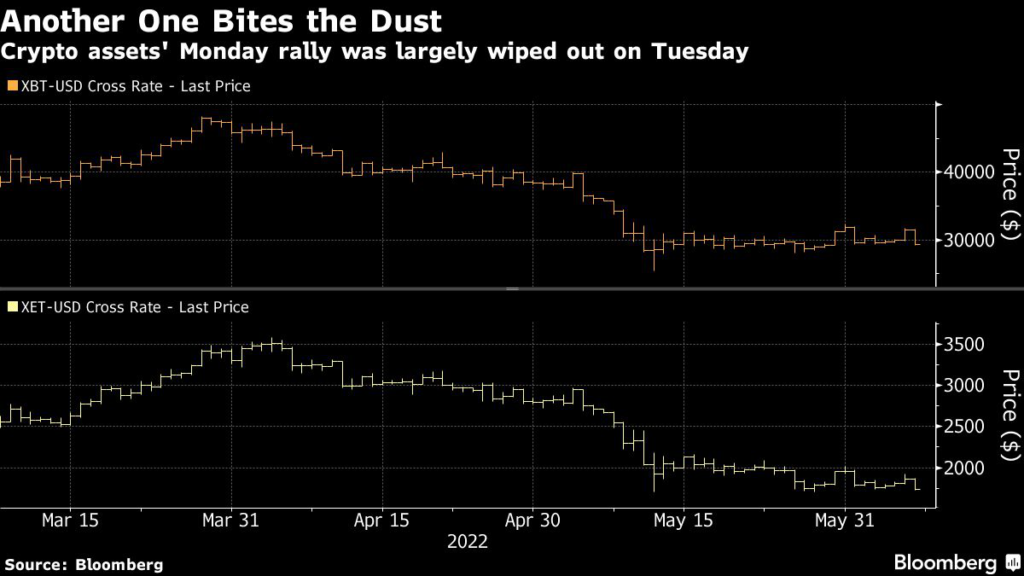
(Bloomberg) — Bitcoin fell back below $30,000 to the lowest in a week as yet another attempt at upward momentum lost steam amid risk-off markets.

The largest cryptocurrency fell as much as 7.1% to $29,209, a level not seen since May 30. Other tokens also declined, with Ether falling up to 7.3% to $1,725. Avalanche dropped as much as 9.3%.

The moves come a day after Bitcoin climbed back above $31,000, sparking expectations among some investors that it has more room to rise. But it faced “significant resistance” around $31,500 to $32,000, according to Marcus Sotiriou, an analyst at UK-based digital asset broker GlobalBlock.

“This market is languishing,” said Adam Farthing and Collin Howe of crypto liquidity provider B2C2 in a note. “Without a catalyst to the upside, current sentiment is likely to keep prices rangebound, with some clear and immediate risk of a break lower.”

The declines for crypto came as US stock futures stayed in the red and the dollar extended gains. A jump in Treasury yields on Monday fueled concerns that rising borrowing costs could induce a recession. Bitcoin has been strongly correlated with risk assets for much of the past couple years.

Markets will continue to watch for signals that the current ranges — $28,000 to $32,750 for Bitcoin, and $1,700 to $2,100 for Ether — may break, B2C2 said in the note.

More stories like this are available on bloomberg.com

©2022 Bloomberg L.P.

Three Charts Show China Tech Stock Rally Primed for More Gains

(Bloomberg) — China’s technology stocks are riding a wave of optimism that a regulatory crackdown on the sector may ease, and technical indicators suggest the gains could hold.

The Hang Seng Tech Index rallied to a two-month high on Monday after the Wall Street Journal reported that Chinese regulators were close to wrapping up their probe of Didi Global Inc. Technical signs indicate that the advance may be longer-lasting than in previous episodes. 

The turnaround mirrors a broader shift in sentiment toward Chinese stocks amid hopes that an easing of virus curbs in major cities may revive spending and investment. The CSI 300 Index edged higher, and more gains may be in the offing after upbeat forecasts from strategists at JPMorgan Chase & Co. and Morgan Stanley. 

The Hang Seng Tech Index fluctuated on Tuesday as traders weighed the government’s regulatory stance. 

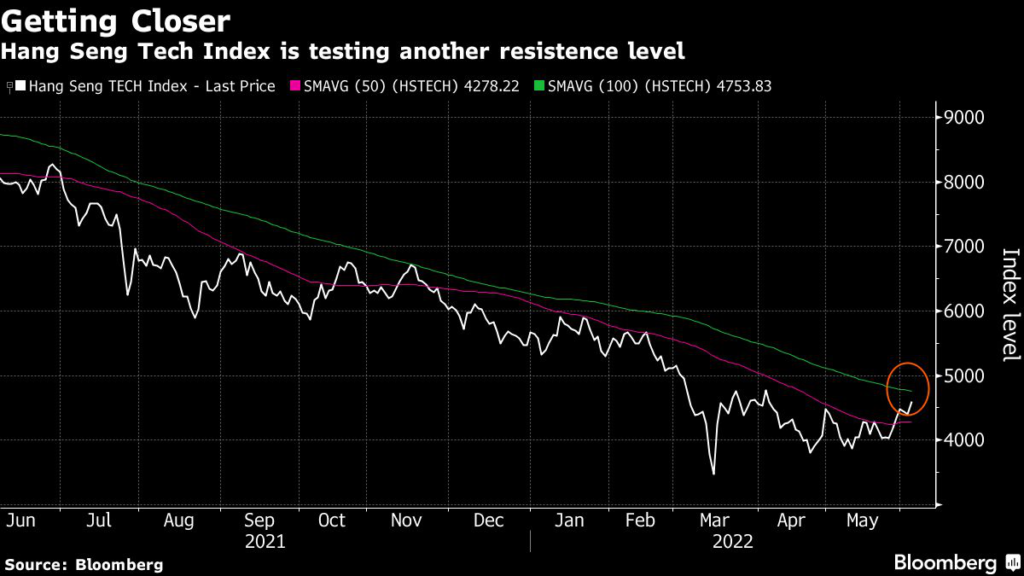
Here are three charts to illustrate the improving sentiment in Chinese tech stocks: 

The Hang Seng Tech Index has climbed above its 50-day moving average and managed to hold above that level for a week. This is in contrast to previous breakouts over the past year, when it tended to post brief rallies once topping that mark. The gauge is now testing its 100-day moving average, a level it hasn’t effectively broken since the crackdown on the sector began.

The Hang Seng Tech Index’s moving average convergence divergence, or MACD, indicator suggests that the index may have switched to a rising trend. The daily MACD line crossed above zero for the first time since November, and is above the red signal line, which signals a growing bullishness.

Valuations for the technology sector remain far below the longer-term average, which may indicate there’s room for more gains. The Hang Seng Tech Index is trading at about 25 times its forward 12-month earnings, which is 25% below its historical average, according to data compiled by Bloomberg. 

More stories like this are available on bloomberg.com

©2022 Bloomberg L.P.

Israel’s Vayyar Becomes Unicorn With $108 Million Round

(Bloomberg) — Vayyar Imaging Ltd. raised $108 million in a funding round led by Koch Disruptive Technologies, propelling the Israeli startup’s valuation to more than $1 billion. 

The maker of four-dimensional imaging radar sensors announced the fundraising in a statement on Monday that confirmed an earlier Bloomberg News report. It plans to use the money to expand into markets such as China, Japan and Australia, Co-Founder and Chief Executive Officer Raviv Melamed said in an interview.

“China is an extremely important and fast-growing market,” Melamed said. “We’re dealing with one of the biggest challenges it faces, that is, elderly care.”

The series E round was joined by new investors GLy Capital Management and Atreides Management. Existing backers including Battery Ventures, Bessemer Ventures, KDT, More VC, Regal Four and Claltech also participated, according to the statement.

Vayyar has now raised a total of more than $300 million since its inception. The company is considering an initial public offering outside Israel in two to three years, Melamed said.

Founded in 2011, Vayyar started in the field of medical imaging, using radio frequency technology to screen for early-stage breast cancer. The startup has expanded into sectors such as automotive, senior care, smart buildings, public safety and retail, according to its website. 

Vayyar last year announced a joint venture with HCH, a unit of China’s Haier Group Corp., focusing on providing touchless fall detection for seniors. The company’s 4D imaging radar sensors can also be used to detect lighting and weather conditions in order to optimize ventilation, power consumption and other applications in smart homes or offices. 

The automotive sector has huge growth potential for Vayyar, according to Melamed. The company is looking for strategic partners in China to help develop vehicle safety solutions for autonomous-driving cars. 

“We’ve been engaging with several tier-one carmakers in China,” Melamed said, adding that Vayyar has partnerships with car manufacturers outside the country such as Toyota Motor Corp. 

GLy Capital, a new investor in Vayyar, counts Zhejiang Geely Holding Group Co. and SK Inc. among its backers. The firm focuses on investments related to mobility and the transportation sector. 

China International Capital Corp. served as lead adviser to Vayyar on the funding round. 

(Updates with adviser to fundraising in last paragraph.)

More stories like this are available on bloomberg.com

©2022 Bloomberg L.P.

Elon Musk Says Twitter’s Lack of Info on Bots Breaches Merger Deal

(Bloomberg) — Elon Musk formally and forcefully revived his assertion that Twitter Inc. has a serious bot problem, and threatened to walk away from his deal to buy the company if the social network doesn’t do more to prove its users are real people.

Legal experts widely speculated that Musk is using the bot issue as an excuse to abandon or renegotiate the deal, which has looked better and better for Twitter as the broader stock market has taken a dive in recent weeks.

In a securities filing on Monday, Musk said he thinks Twitter is breaching their agreement by not meeting his demands for more information about spam and fake accounts. But behind the scenes, the deal is proceeding, according to people familiar with the matter. Both sides have been meeting regularly and sharing information, said two of the people, who weren’t authorized to speak publicly.

“He’s jockeying here — he’s trying to create a paper trail,” said Andrew Freedman, a partner at the law firm Olshan Frome Wolosky LLP, who is an expert in activist investment. “The unfortunate thing for Musk is that termination provisions under merger agreements don’t allow for buyer’s remorse.”

Last month, Musk said he was putting the deal “on hold” until the social media giant can prove bots make up fewer than 5% of its users, as the company has stated in public filings. Musk has estimated that fake accounts make up at least 20% of all users. 

But Twitter said it has indeed shared information with Musk on how it calculates the number of spam accounts on the service, and executives have told employees that Musk can’t just put the deal on hold as the two sides have signed a merger agreement. On Monday the company reiterated that it will hold Musk accountable to the terms of his proposed $44 billion takeover, a suggestion that even the company believes he may be trying to blow up the deal. 

In a statement, Twitter said it “has and will continue to cooperatively share information” with Musk. The company said it believes the deal is in the best interest of all shareholders and intends to “close the transaction and enforce the merger agreement at the agreed price and terms.” It’s possible that Twitter could try to sue Musk to complete the deal if he tries to walk away from the acquisition. 

“The board of Twitter is going to get tired of this and file a lawsuit in Delaware and say, ‘I want a declaratory judgment saying that I am not in violation of the agreement and that Musk has to complete the deal,’” said Brian Quinn, an M&A professor at Boston College Law School. “That’ll be Twitter’s next step.”

Twitter’s shares slumped 1.49% on Monday, suggesting increased skepticism that Musk will finalize his $54.20-a-share offer and further widening the gap between the market’s expectations and the billionaire’s price. The shares have barely — and only briefly — surpassed $50 since Musk sprung his buyout plan on April 14. The deal came together at breakneck speed in part because Musk waived the chance to look at Twitter’s finances beyond what was publicly available. 

Twitter Chief Executive Officer Parag Agrawal has sparred with Musk publicly on Twitter about bots. Agrawal has said the company has human reviewers look at “thousands of accounts” to determine the prevalence of bots, but added that he couldn’t share more specifics because of privacy concerns. “Unfortunately, we don’t believe that this specific estimation can be performed externally, given the critical need to use both public and private information,” Agrawal wrote in May.  


In the filing Monday, Musk sharply disagreed with Twitter’s assessment on bots.

“Twitter’s latest offer to simply provide additional details regarding the company’s own testing methodologies, whether through written materials or verbal explanations, is tantamount to refusing Mr. Musk’s data requests,” Musk’s lawyer wrote in a letter to Twitter’s top lawyer, Vijaya Gadde. “Twitter’s effort to characterize it otherwise is merely an attempt to obfuscate and confuse the issue. Mr. Musk has made it clear that he does not believe the company’s lax testing methodologies are adequate so he must conduct his own analysis. The data he has requested is necessary to do so.”

Musk believes the company’s resistance to provide more information is a “clear material breach of Twitter’s obligations under the merger agreement and Mr. Musk reserves all rights resulting therefrom, including his right not to consummate the transaction and his right to terminate the merger agreement.”

Making such a filing wasn’t legally necessary, said Jill Fisch, an expert on business and law at the University of Pennsylvania Carey Law School. “This is him using the SEC filing to reach the capital markets with this statement.” 

Complicating Musk’s claims, though, is the fact that he has been publicly complaining about Twitter’s bots since before he made an offer to buy the company. 

“He obviously was aware of the bots issue — he was open about that as something he wanted to fix, as an area to create value,” said Freedman. “He would likely have to demonstrate that Twitter’s methodology is reckless or negligent” in order to force the company to renegotiate the deal. 

The proposed takeover includes a $1 billion breakup fee for each party, but Musk can’t just walk away by paying the charge. The merger agreement includes a specific performance provision that allows Twitter to force Musk to consummate the deal, according to the original filing. That could mean that, should the deal end up in court, Twitter might secure an order obligating Musk to complete the merger rather than winning monetary compensation for any violations of it.

Musk’s lawyer, Mike Ringler of Skadden, Arps, Slate, Meagher & Flom, said Twitter must cooperate by providing the data requested so that Musk can secure the debt financing necessary to consummate the deal. 

That claim is also complicated by the fact that numerous financial institutions have handed Musk commitment letters for debt financing, said Quinn. 

Musk likely has a different experience with bots on the platform than most. Those designing automated accounts program them to follow popular users on a site, so that they fit in with the crowd and look more human. Musk, with a following of 96 million, probably attracts a higher percentage of bots than most users. His image has also been used by cryptocurrency accounts to run scams.

Though many outside estimates put portion of Twitter bots above the 5% threshold that the company has claimed, their assessments and methodologies vary. Andrea Stroppa, a former data consultant for the World Economic Forum and a veteran of scrutinizing online counterfeit goods, estimates that bot accounts have accounted for about 10% of Twitter’s global audience over the past nine years.

The rate rises to as much as 20% for some specific topics such as cryptocurrencies, the researcher said, and above 30% for accounts engaged in certain conspiracy theories.

“There’s a lot of money on the table, so he would have to have a lot of evidence to make it worth Twitter’s while to give up rather than fight for the original price,” said Ann M. Lipton, an associate professor in business law and entrepreneurship at Tulane University Law School in New Orleans. It could be “an ugly court battle.”

More stories like this are available on bloomberg.com

©2022 Bloomberg L.P.

Singapore Eyes More Listings as China Firms Hedge Political Risk

(Bloomberg) — Singapore Exchange Ltd., which has seen stock listings dwindle over the years, is betting on a reversal in fortunes as companies in China look to hedge political risks and Southeast Asia’s unicorns seek to tap the market, according to a top executive. 

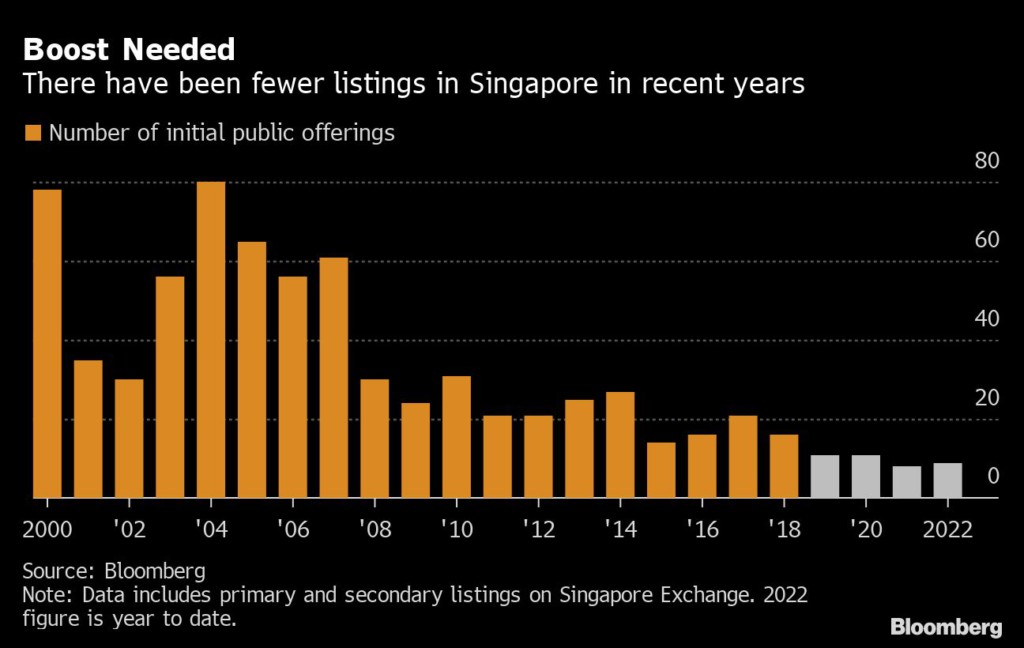
The bourse may see 30 to 40 first-time and secondary listings annually within the next five years, Pol de Win, SGX’s head of global sales and origination, said in an interview — more than double the average of about 13 listings a year since 2017. SGX is stepping up talks with Chinese firms that are seeking alternatives to a US or Hong Kong listing as well as to raise their profiles in Southeast Asia, he said.  

“If some of these companies are really going to be forced to delist in the US, they would still have an international trusted venue here where they can attract and interact with the global investor universe,” said de Win, who joined the exchange in July from Goldman Sachs Group Inc. “Our pipeline is stronger than it’s ever been in a long period of time.” 

Some global trends may work in SGX’s favor. More Chinese firms with US-listed shares may look at alternative venues amid delisting risks stateside, following in the footsteps of electric carmaker NIO Inc. that debuted in the city-state without raising funds last month. Blank-check companies may also consider different venues with the US tightening disclosure rules, while Southeast Asia is becoming a breeding ground for tech-backed billion-dollar businesses. 

These trends could help the Singapore exchange regain some ground after missing out on big-ticket initial public offerings to other hubs. Stock listings have slumped in recent years amid liquidity concerns, prompting a government-backed effort last year to try to bolster the market. The primary and secondary listings that SGX is targeting will likely have a market value of S$500 million ($364 million) to S$1 billion, according to de Win. 

He said SGX is in talks with firms in China and Southeast Asia that operate in areas such as financial tech and consumer tech, as well as real estate investment trusts and blank-check companies across the globe. “Our team actively covers, interacts with more than 100 of these companies,” the Singapore-based executive said.

IPO activity, which has been slammed by this year’s market turbulence, is expected to revive by the end of the year globally, de Win said. “It’s very rare for markets to remain shut for three quarters in a row because at the end of the day, people need access to liquidity,” he said.

Here are some other comments from de Win:

  • The bourse isn’t yet considering a review of a framework for listing special purpose acquisition companies that was released in 2021. This differs from the US Securities and Exchange Commission, which proposed increased disclosures for the vehicles earlier this year, prompting some major banks to rethink their work on these listings
  • SGX is working on both rolling out an exchange-traded fund trading link with Shenzhen and making a derivatives trading link with India operational in the second half of 2022
  • The introduction of derivative contracts in battery metals such as cobalt metal, cobalt hydroxide, lithium carbonate and lithium hydroxide is still in the works

More stories like this are available on bloomberg.com

©2022 Bloomberg L.P.

SEC Weighs Sending Retail Stock Orders to Auctions for Execution

(Bloomberg) — The US Securities and Exchange Commission is weighing changes to stock-market rules that could force trading firms to directly compete to execute trades from retail investors, according to people familiar with the matter.

A move by the SEC to press major wholesale brokerages to win auctions for orders by mom-and-pop investors would be a major change for the stock market. While nothing has been announced, the change is among those being considered by staff at Wall Street’s main regulator, said the people who asked not to be named discussing the plans which remain private.

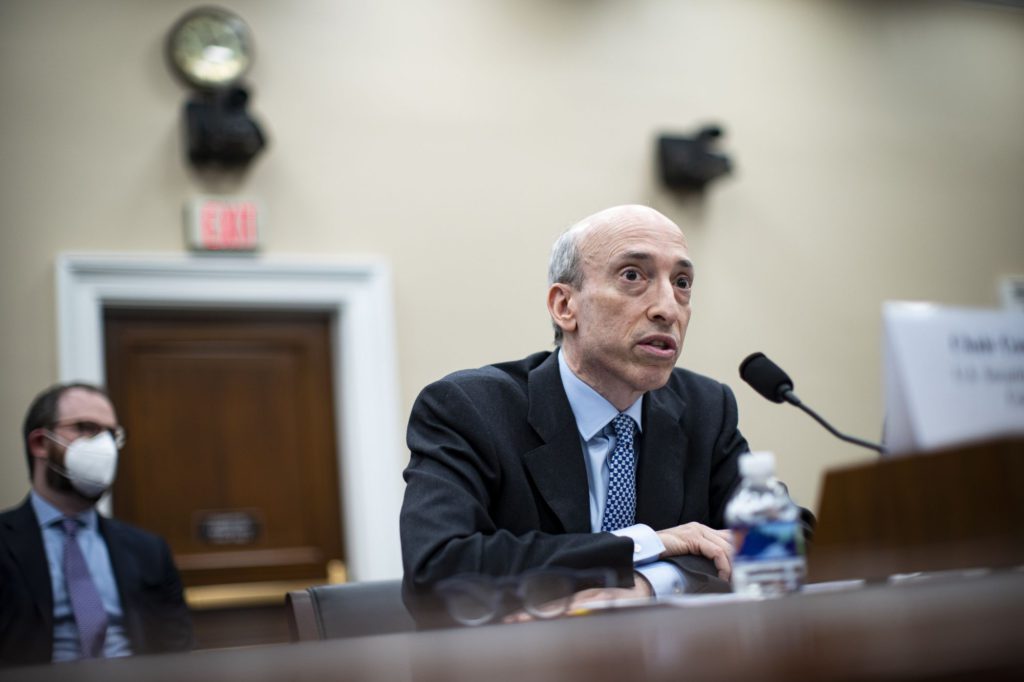
The specifics of the SEC’s plans, which are still taking shape, follow a months-long review of regulations. Almost exactly one year ago, SEC Chair Gary Gensler said he’d asked the agency’s staff to examine best execution requirements — legal mandates that ostensibly force brokers to process customers’ orders at advantageous prices.

The SEC didn’t respond to a request for comment on the possible rule changes, which were earlier reported by The Wall Street Journal.

Gensler rattled financial firms last year when he refused to rule out prohibiting the practice of brokers getting paid to send customers’ stock orders to trading as part of the agency’s rule changes. Currently, firms including Virtu Financial Inc. and Citadel Securities pay retail brokerage firms to execute their clients’ trades, a practice known as payment-for-order-flow. 

Doug Cifu, Virtu’s chief executive officer, said the SEC should be careful not to make changes that unintentionally make trading more expensive. “Order-by-order competition enables selective competition because it removes the retail brokers’ ability to demand best execution from wholesalers on every order,” he said in a statement. 

“The current market structure has resulted in tighter spreads, greater transparency, and meaningfully reduced costs,” a spokesperson for Citadel Securities said in an emailed statement. “We look forward to reviewing the proposals and working with the SEC and the industry towards our longstanding objective of further improving competition and transparency.”

Changes would also impact the exchange businesses which display prices and aggregate trading data. Representatives from Nasdaq Inc. and the New York Stock Exchange declined to comment. 

Online brokers argue that replacing customer-paid commissions with revenue that comes from market makers has opened up investing to millions of young people, including women and minorities who traditionally have kept their money out of the securities markets. Firms also argue that the vast majority of the retail orders they offload are executed at a lower price. That complies with SEC rules that demand investors get the “best execution” for trades.

Opponents, however, say the order payments are difficult to understand and include hidden costs that investors pay without even knowing. They also say it gives massive trading firms knowledge of where the market is heading.

More stories like this are available on bloomberg.com

©2022 Bloomberg L.P.
Texas Attorney General Opens Investigation of Twitter Bots

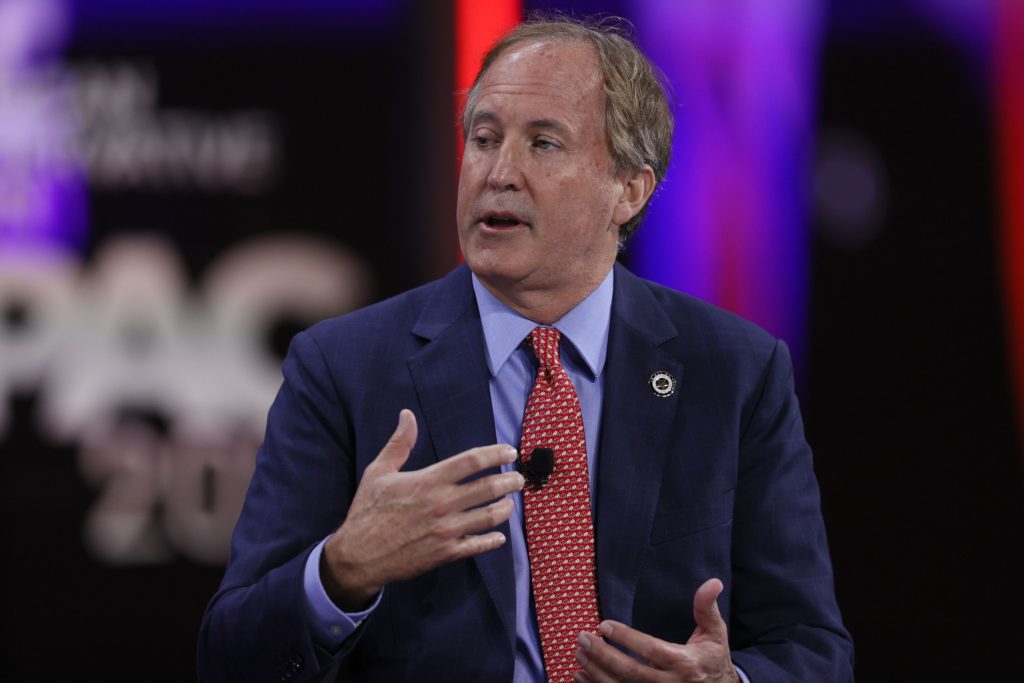
(Bloomberg) — Texas Attorney General Ken Paxton said he opened an investigation of Twitter, claiming the social media platform may be misleading people with false reporting of its bot accounts, violating the Texas Deceptive Trade Practices Act.

The Republican attorney general announced the probe the same day Twitter would-be buyer, billionaire Elon Musk, threatened to pull out of his deal to purchase the company, saying it wasn’t meeting his demands for more information about spam and fake accounts.

In regulatory filings Twitter reported fewer than 5% of all users are bots, while they may make up as much as 20%, Paxton said in a press release.

Twitter declined to comment on the probe.

Paxton’s investigation requires Twitter to turn over documents related to how the company calculates and manages its user data and how the data relates to its advertising businesses. The company has until June 27 to respond. 

Musk’s bot demands are raising suspicions among analysts that he is using it as a negotiation tactic to lower the price or to walk away from the deal altogether. “We believe the announcement could lead to negotiations on price to avoid a big court fight,” Mandeep Singh, a Bloomberg Intelligence analyst wrote in a note.

Paxton’s move follows a US Supreme Court ruling that blocked enforcement of a Texas law restricting social media platforms with more than 50 million users from moderating their content. Critics said the law would require companies such as Twitter and Facebook to allow hate speech and extremism. 

Musk moved to Texas in 2020, followed by Tesla, SpaceX and The Boring Company. Since his move, he has been cozying up to the Republican party. In May, he tweeted he’d vote Republican.

Lone Star state Republicans have been expressing their support of Musk buying Twitter on the platform.

Governor Gregg Abbot wrote “@elonmusk. Bring Twitter to Texas to join Tesla, SpaceX & the Boring company.” 

Since Musk announced he was interested in buying Twitter he has spoken out about how he would focus on increasing free speech on the platform, including restoring former president Donald Trump’s access. Twitter banned Trump following the Jan. 6 riot at the US Capitol, saying it was doing so “due to the risk of further incitement of violence.”

But Musk has also complained the number of bots on Twitter is likely higher than the company states in its regulatory filings and has pressed for more information.

Bots are automated accounts that can send out tweets, follow other users and like and retweet postings. Spam bots can be used to engage in potentially deceptive, harmful or annoying activity. They could also be used to drive traffic to a website for a product or service or to spread misinformation and promote political messages.

According to Twitter’s policy, bots are allowed as long as the accounts indicate that they’re automated. Spam bots are not permitted and users are encouraged to report policy violations.

There are bots on Twitter that, for example, automatically post when an earthquake occurs. But one bot, created by a 19-year-old in Florida has irked Musk in particular, by automatically tracking the movements of Musk’s private plane.

The teenager, Jack Sweeney, rose to online fame for turning down $5,000 from the Tesla CEO to shut down the bot, with Musk citing privacy concerns.

Read more: Teen Tracking Musk’s Jet on Twitter Is Making Contingency Plans


(Updates with additional details)

More stories like this are available on bloomberg.com

©2022 Bloomberg L.P.
Bitcoin Reclaims $31,000 Level After Weeks of Languishing

(Bloomberg) — Bitcoin advanced for a third day, rising back above the $31,000 mark, as risk appetite returned to US financial markets.

The largest cryptocurrency by market value gained about 5% to $31,438 as of 5 p.m. in New York. Ether increased around 2.8%, while a number of altcoins also finishing in the green — Solana, Avalanche, Cardano were all up as much as 11% on Monday as market sentiment improved.

“Bitcoin’s fundamentals and technicals have both been improving over the last few days. Though it may still be premature, some of the more optimistic traders are already calling for a floor on this extended drawdown,” Mati Greenspan, founder of Quantum Economics, told Bloomberg on Monday.

BNB, the native token of the Binance blockchain, dropped about 2%. Bloomberg reported that US regulators are investigating whether Binance Holdings Ltd. broke securities rules by selling digital tokens just as the crypto exchange was getting off the ground five years ago, according to people familiar with the matter.   


The crypto market could also get a boost from US consumer-price data later this week. If inflation is indeed coming down there’s a good chance the Federal Reserve will ease up on market conditions, explains Greenspan. 

Bitcoin has been trading around the $30,000 level for weeks now, defying predictions of a potential further decline but also struggling to gain upward momentum as the broader US market has also taken a beating. Speculative assets like technology stocks and cryptocurrencies are expected to be hit the hardest by the Fed’s plans to shrink its balance sheet, according to the latest MLIV Pulse survey.

“Bitcoin has stabilized over the past few weeks on improved short-term momentum,” Katie Stockton, co-founder of Fairlead Strategies, wrote in a note Friday. She said a short-term counter-trend buying signal was logged by Tom DeMark’s popular TD Sequential model for technical analysts, “increasing the probability of a more pronounced oversold bounce. We assume the 50-day moving average will provide resistance.”

Stablecoins are continuing to face scrutiny from global regulators following the collapse of the Terra/Luna ecosystem in May, which has further undermined confidence in the space; algorithmic stablecoin UST is trading at $0.016, according to data from CoinGecko, sinking even lower after losing its peg to the dollar.

On Friday, Japan became one of the first major economies to introduce a legal framework around stablecoins, following UST’s implosion. Stablecoins must be linked to the yen or another legal tender and guarantee holders the right to redeem them at face value, according to the new law.

More stories like this are available on bloomberg.com

©2022 Bloomberg L.P.
Close Bitnami banner
Bitnami