

Bloomberg

Sandvine Pulls Back From Russia as US, EU Tighten Control on Technology It Sells

(Bloomberg) — In 2017, the Canadian technology firm Sandvine merged with a Silicon Valley rival, Procera Networks. Both companies sold a powerful internet monitoring tool called deep packet inspection technology that can manage network traffic, block malware and spam and — more controversially — be used by national governments to censor the web. Following the merger, Sandvine relocated its headquarters to the US and started marketing itself in a country that it had tried and failed to crack during its 20-year history: Russia.

During meetings and product demonstrations in Moscow in 2018, Sandvine representatives promoted the advantages of deep packet inspection. They told prospective clients that it could be used to block or slow access to specific websites, discover the location of particular people and support local law enforcement, according to company documents reviewed by Bloomberg News and three people familiar with the matter.

The company ultimately struck deals to sell its equipment to two telecommunications providers: Megafon, Russia’s second-largest mobile operator, and Tele2 Russia, a company controlled by the Russian government, according to internal records. Since Russia’s invasion of Ukraine, Sandvine has pulled back on its Russia work, stopping all sales in the country, a spokesperson said. In addition, the spokesperson said the company’s equipment was used in Russia for billing and “quality of service” and not to censor the internet.Sandvine’s experience in Russia comes amid a broader reckoning on the use of deep packet inspection equipment. The technology has many legitimate uses, but it has also been deployed in other countries, including Belarus, Egypt and Jordan, for internet censorship, Bloomberg News has reported.

Before the company pulled out of Russia and even since then, some Sandvine employees have expressed concerns during internal meetings that the company’s technology could be used in the country to enable censorship, according to three people familiar with the discussions. And at least three articles detailing some of Sandvine’s business ties to Russia were removed from the company’s website, according to the people.More generally, the US Commerce Department recently finalized a rule that would control the export of deep packet inspection systems that could enable “large-scale government surveillance,” according to a department spokesperson. Such controls are needed from many allied countries, the spokesperson said, “in order to keep sensitive technologies out of dangerous hands.” 

Last year, the EU introduced export controls on deep packet inspection equipment and other technologies, though the new rules apply primarily to governments and their proxies and not to commercial uses.

It’s not clear how the new export rules would impact Sandvine, which has deferred to customers on what websites should be blocked, not wanting to play “world police,” according to records reviewed by Bloomberg.A company spokesperson declined to comment on the new government edicts, or on the articles that were allegedly removed from the company’s website. 

The goal of the company’s equipment, the spokesperson said, is “to make the internet work more smoothly.” Local authorities often seek to remove illegal or objectionable content, such as child pornography, the spokesperson said. “National views on other types of content (content for mature audiences, gambling) may vary and Sandvine recognizes the rights of nations to implement their own social norms.” 

Sandvine never agreed to provide censorship tools in Russia, the spokesperson said. If a company tried to reconfigure the technology for that purpose, Sandvine would have considered it a misuse and terminated the contract, the spokesperson said.Natalia Krapiva, legal counsel for the digital rights group Access Now, said it’s difficult to monitor how Russian-controlled businesses use technologies such as Sandvine’s. “Sandvine put its trust in a Russian state-controlled company not to abuse the equipment,” she said.

“This repression has been going on for years,” she added. “It wasn’t a secret for anyone.”

Sandvine’s business in Russia highlighted a need for tougher controls on exports of US technologies, said Michael McFaul, former US ambassador to Russia and director of Stanford’s Freeman Spogli Institute for International Studies. Failure to do so, he said, would undermine the Biden administration’s reported efforts to counter advances in Chinese technology and stop the spread of its authoritarian governance model.

“If the Biden administration wants to have credibility in trying to block the sale of Chinese surveillance technologies to autocracies, Washington must do more to stop the sale of American technologies to dictators,” McFaul said. “It’s that simple.”

A representative for Russia’s Foreign Ministry didn’t respond to a request for comment.

In August 2020, Bloomberg reported that the government of Belarus used Sandvine’s equipment to restrict access to outside news and social-media websites during the country’s disputed presidential election. Afterward, Sandvine cut ties with the country, saying that it abhors the “use of technology to suppress the free flow of information resulting in human-rights violations.”

A subsequent Bloomberg investigation, in October 2020, found that Sandvine’s equipment was used to block an LGBTQ website in Jordan and independent news sites in Egypt, in addition to being deployed for a social media blackout in Azerbaijan.

Markéta Gregorová, a member of the European parliament, said deep packet inspection equipment was mentioned in the EU’s regulation because of the abuse of Sandvine’s equipment in Belarus. 

U.S. Tech Is Used to Censor the Web From Algeria to Uzbekistan

Sandvine, founded in 2001 in Waterloo, Canada, tried for years to sell to leading telecommunications providers in Russia but backed off after it became clear it would have to follow government censorship requirements, said Don Bowman, a co-founder of Sandvine who is no longer with the company.

“They had some sort of global blacklist,” said Bowman, referring to the Russian government. He added that Canadian export controls may have prevented such deals. Prospective Russian clients were also asking for the ability to track emails and messages sent using the social media app Telegram, “and we didn’t have that technical capability,” Bowman said.

In 2017, Sandvine was acquired by Francisco Partners, which merged Sandvine with another company, Procera Networks, that sold deep packet inspection technology. Procera, for its part, had established a foothold in Russia in 2012, deploying its equipment in telecommunications networks across the country in what it described at the time as the first installation of its kind.

Following the Francisco Partners takeover, Sandvine began pursuing deals in Russia again, using Procera’s network of contacts as a way into the market, according to four people familiar with the company’s business in the country.

A representative for Francisco Partners said Sandvine “has never had a big presence in Russia” and added that Francisco had “directed its portfolio companies to cease all business in Russia and exit the market” following the Ukraine invasion.

Alexey Telkov, Tele2 Russia’s chief technology officer, said his company began integrating Sandvine equipment about four years ago; a second phase of the project was completed in 2020, according to the documents. He said in a recent interview that the company originally intended to use Sandvine’s gear partly to enforce government internet censorship blacklists. The telecom had problems installing Sandvine’s equipment, he said, adding that it ended up being used to manage network traffic and ensure customers pay correct fees for internet use. A MegaFon representative didn’t respond to requests for comment.

While Sandvine says it has monitored its technology to ensure it wasn’t misused, the spokesperson acknowledged it was worried about that possibility. In 2021, as Russia tightened its grip on internet freedoms, Sandvine’s senior executives held meetings with Tele2 and Megafon and “received assurances” that Sandvine’s technology “was not and would not be misused in order to aid Russia’s internet censorship,” according to the Sandvine spokesperson. The meetings had been arranged after “it became known that the Russian government was using internet blocking technology to suppress free speech,” the spokesperson added.In addition, Sandvine has a business ethics committee to ensure oversight of sales, according to the spokesperson.

However, an internal document presented during an ethics committee meeting in 2020, which was reviewed by Bloomberg, shows that censorship isn’t the purview of that committee. “Every sovereign country dictates its own policy in what to allow or not allow,” the document says.  

About the time Sandvine’s deals in Russia were being rolled out, its chief technical officer, Alexander Haväng, told the ethics committee that it wouldn’t be able to control customers’ use of the technology to block access to websites. “We want to control our products to the furthest extent that we can to protect against legal, ethical and reputational risk. The problem is, we don’t want to play world police,” Haväng said, according to a recording reviewed by Bloomberg.

Last June, Haväng praised Russia’s internet regulator on LinkedIn after it fined Facebook and Telegram for failing to remove content banned by Russia’s government.“In the ‘my-country-my-rules-and-I-will-keep-my-country-safe-first’ corner today we find Russia,” according to the post, which was later deleted. “All governments have the safety and security of their citizens and the sovereignty of their nation as priority #1, not profits.”The Sandvine spokesperson said Haväng’s post didn’t represent Sandvine’s view.While Sandvine’s work has received recent scrutiny, there are many other manufacturers of deep packet inspection equipment. In 2012, Wired reported that California-based Cisco Systems Inc., Israel’s Allot and China’s Huawei Technologies Co. sold deep packet inspection equipment to Russia. In response to questions for this article, Amy Lucas, a Cisco spokesperson, declined to comment on specific sales in Russia, but said the company “is stopping all business operations, including sales and services, in Russia and Belarus for the foreseeable future.” Allot and Huawei declined to comment.Researchers at Censored Planet, a group at the University of Michigan that monitors internet censorship, reported in 2019 that internet providers in Russia were building a “national censorship apparatus” using commercially available deep packet inspection equipment. The researchers said they had identified more than 130,000 websites that Russia has blacklisted, which included some news and politics websites. Russia has only stepped up those restrictions since invading Ukraine. In late February, the country began blocking platforms such as Facebook and Twitter, later expanding that effort to cover several Western news websites, according to Alp Toker, director of London-based internet monitoring firm NetBlocks. 

Such restrictions in Russia and elsewhere are what prompted governments on both sides of the Atlantic to try to control the technology that may be facilitating the repression. Gregorová, the European parliament member, led the effort in the EU to reform export regulations for so-called dual-use technology, which can be used for civilian and military purposes. Even so, she said the EU rules leave too much gray area because in some cases the onus remains on the customer not to abuse the equipment.

“How do you differentiate commercial use from evil use?” she asked. “In the end, it’s in the hands of the customer.” 

More stories like this are available on bloomberg.com

©2022 Bloomberg L.P.

New York Lawmakers Send Crypto Mining Moratorium Bill to Hochul

(Bloomberg) — New York state lawmakers passed a bill that would trigger a two-year moratorium on new permits for certain power plants involved in Bitcoin mining. 

The measure, which was approved by by a vote of 36 to 27 in the state Senate early Friday morning, now moves on to Governor Kathy Hochul for consideration. The state Assembly approved the bill last month. 

Crypto industry groups as well as environmental conservationists have been closely monitoring the decision as lawmakers weigh the pros and cons of digital assets mining that use energy intensive proof-of-work authentication methods for cryptocurrencies like Bitcoin. 

The bill calls for a two-year halt on new permits for miners that use carbon-based fuel and also, requires an environmental impact study with an eye on meeting climate goals established under a 2019 statute. Existing mining firms or ones currently undergoing the permit renewal process would be allowed to continue operations.

Crypto mining became a hot button issue after China and others banned the practice last year, driving much of that activity to North America. 

Read more: Texas Bitcoin Miners Seek Cheap Power, Land and a Place to Stay

The rise of so-called miners, which use high-powered computers to process transactions and collect rewards in crypto, has drawn ire from climate advocates. Meanwhile, industry groups including Blockchain Association have criticized the moratorium, saying it could hamper business growth.   

Read more: China Warns State Firms on Crypto Mining, Mulls Punitive Steps


More stories like this are available on bloomberg.com

©2022 Bloomberg L.P.

Biden Keeps Funds Flowing to Build US Electric Vehicle Supply Chain

(Bloomberg) —

President Joe Biden has taken lots of heat for stoking inflation with government spending. It’s not stopping him from keeping the spigot open to fund a domestic electric vehicle supply chain.

The latest sum of support was tucked into the Ukraine aid bill that Biden signed into law late last month — another $500 million to expand funds available under the Defense Production Act to obtain critical battery minerals like nickel, cobalt, lithium and graphite. That adds to the $750 million fund mining companies could access when the president invoked the Defense Production Act in March. The Ukraine bill also lifted the cap on the size of grants and expanded eligible projects to include the U.K. and Australia, as well as the US and Canada.

All this builds on $7 billion in federal funding that was part of the bipartisan infrastructure bill passed last year. Those grants — which companies are now jostling for — target areas including battery manufacturing, recycling and materials processing. Biden’s use of the Defense Production Act, a Cold War-era power that President Trump also invoked to combat shortages at the outset of the pandemic, is focused further upstream, on mining and recycling.

There’s some overlap, but that’s OK, because it still doesn’t come close to matching what China has invested in this space, said Ben Steinberg, a lobbyist who represents mining companies at Washington-based Venn Strategies.

“The funding is going to be heavily oversubscribed, and they won’t be able to nearly fund everyone or what they deem good projects,” Steinberg said. “This adds a little cushion to it.”

One of the companies seeking funds under the Defense Production Act, as well as the infrastructure bill, is Indiana-based American Resources, which has developed a way to process recycled battery materials that’s cleaner and safer than what’s currently done in China, according to Chief Executive Officer Mark Jensen.

This approach, which stems from work done by scientists at several universities and Eli Lilly, borrows concepts from the pharmaceutical industry to isolate and purify certain elements to turn them into production-ready cathode material. Cathodes and anodes are the two components of a battery that store lithium ions. The federal grants would amount to just a slice of the company’s capital expenditures, he said.

Jensen says he hasn’t had any trouble raising money privately — he’s opening a facility in Indiana this month that will process minerals for rare earth magnets used in things like electric motors, as well as missiles and drones. But he still thinks the government money is important.

“What the administration’s capital will provide is just faster growth,” he told me. “It’ll help us work with more collaborative partners faster.”

Beyond money, the government grant process is forcing companies to seek partners and organize who will tackle which piece of the supply chain, Jensen said. He’s already talking to a few automakers that are racing to find ways to source battery minerals domestically.

“It’s herding the cats and making it happen quicker, better and stronger,” he said.

Biden’s goal is for half of US passenger car and light-truck sales to be zero-emission by 2030. Current EV manufacturing will have to grow 15 times to do that, according to a Defense Department presentation obtained by Bloomberg.

Jensen thinks that’s probably not realistic, but he’s happy to try — it’ll be good for business.

I couldn’t help but wonder what this will do for Biden’s inflation woes: more companies flush with cash, scrambling for materials, equipment and labor. The sudden surge in demand for components is already pushing up metal prices and making EVs more expensive.

Anna Wong, Bloomberg Economics’ chief US economist, said that unlike pandemic stimulus checks or student debt cancellation, the Biden administration’s investments in EV infrastructure won’t be inflationary. The DPA funds are a drop in the bucket, and infrastructure spending will be spread out over several years, so it’s unlikely to affect prices today.

“With China sticking with zero-Covid policy, and now elevated geopolitical tensions, this will shield the economy from supply shocks,” she wrote in an email. There’s “more benefit than harm.”

Like getting this newsletter? Subscribe to Bloomberg.com for unlimited access to trusted, data-driven journalism and subscriber-only insights.

More stories like this are available on bloomberg.com

©2022 Bloomberg L.P.
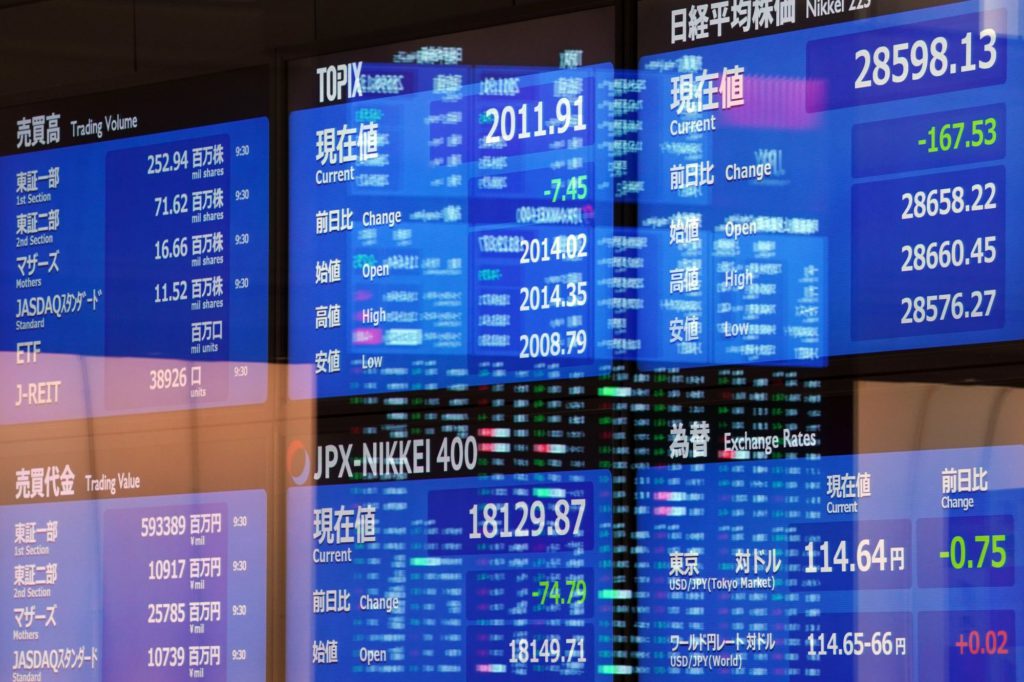
Ex-Merrill Banker’s Broker App Boosts Valuation to $5.4 Billion

(Bloomberg) — Berlin-based broker app Trade Republic Bank GmbH, co-founded by former Merrill Lynch banker Christian Hecker, raised about 250 million euros ($268 million) in its latest funding round, boosting its valuation despite difficult market conditions.

The round, led by Ontario Teachers’ Pension Plan Board, was an extension of an earlier one and raised the company’s valuation to 5 billion euros from 4.4 billion euros, Hecker told Bloomberg in an interview. 

The new money comes as startups around the world have faced difficulty raising money as surging inflation and the war in Ukraine have dampened the economic outlook and soured investors on technology companies. Financial technology funding globally fell 18% last quarter from the previous one, the largest drop since 2018, according to a CB Insights research report. Many startups are also slashing jobs. 

Trade Republic lets customers trade stocks, ETFs, cryptocurrencies and other financial products, mostly without order commissions or other fees. It was founded in Germany in 2015, and is now also available in Austria, Netherlands, France, Italy and Spain. 

Hecker, who doesn’t see an IPO any time soon, said the company will use the fresh money to expand to other European markets over the next year. Trade Republic also plans additional investments in existing markets that have shown strong growth, he added. 

The company has massively expanded its engineering team in recent months, according to Hecker. “Between 20 and 30 developers have joined the company each month,” he said. Trade Republic now employs about 700 people, up from 600 in February. US-based rival Robinhood Markets Inc. said in April it is dismissing 9% of its staff. 

More stories like this are available on bloomberg.com

©2022 Bloomberg L.P.
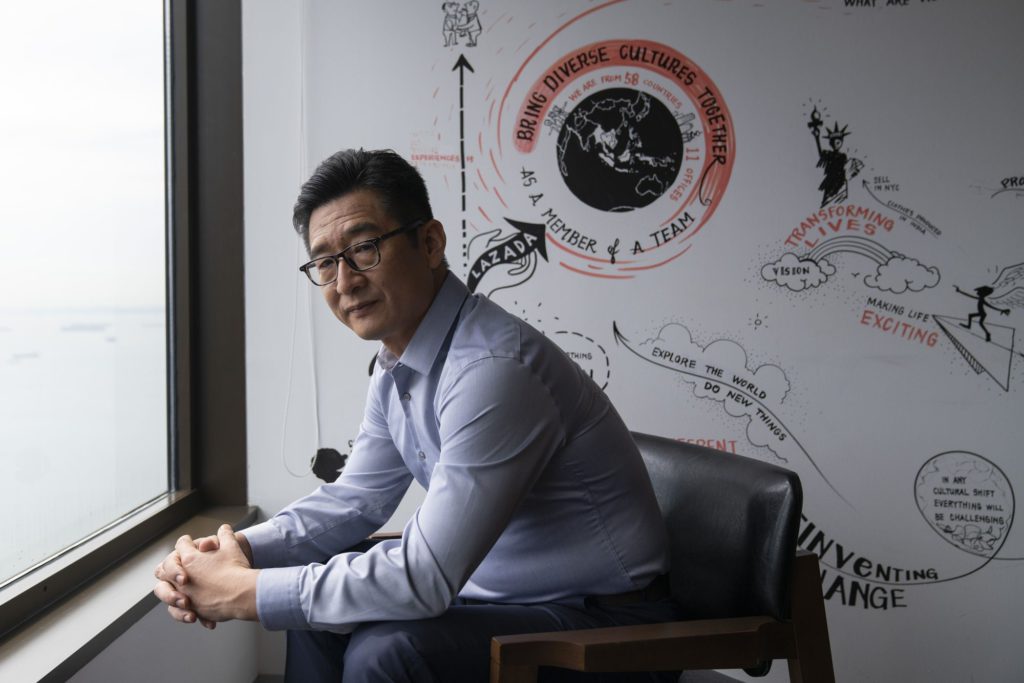
Futures Drop With Tesla Jobs, US Payrolls in Focus: Markets Wrap

(Bloomberg) — US index futures fell after a report that Tesla Inc. Chief Executive Officer Elon Musk said the electric carmaker needs to cut staff amid a gloomy economic outlook. Investors are also awaiting key US payrolls data that they will study for clues on the pace of Federal Reserve policy tightening. 

Tesla shares slid 4.2% in New York premarket trading. Contracts on the Nasdaq 100, where Musk’s company is among the largest index components, were 0.9% lower. S&P 500 futures dropped 0.5%. Europe’s Stoxx 600 index edged higher, with trading volumes reduced by UK holidays marking the Queen’s Jubilee. 

A Bloomberg gauge of the dollar steadied after overnight losses, while the yen held near the psychologically important 130 level against the greenback. Benchmark Treasury yields held at around 2.91%.

Investors remain on edge as some fear the pace of US monetary tightening could throw the world’s largest economy into a recession. Friday’s May labor report is likely to show the smallest gain in jobs since April 2021 alongside a down shift in average hourly earnings growth, Bloomberg Economics said. 

“Investors remain nervous, trying to collect more information about earnings prospects on one side and economic data on the other,” said Cedric Ozazman, head of investment solutions at Mirabaud & Cie SA in Geneva. “The jobs report will be crucial as any bad news will reignite speculation about a pause in the Fed monetary tightening cycle during the last quarter of the year.” 

Still, “any bad economic news might be actually good for risky assets, as they will probably remove some pressure on interest rates,” Ozazman said. The median forecast in a Bloomberg survey of economists is for the payrolls data to show a 320,000 gain after a 428,000 increase in April.

Federal Reserve Vice Chair Lael Brainard said it was hard to see a case for a September pause in rate hikes and that increases of 50 basis points in June and July seemed reasonable. 

Tesla’s Musk said the electric carmaker needs to cut staff by around 10%, noting he had a “super bad feeling” about the economy, according to an internal email seen by Reuters.

Other electric-vehicle stocks dropped in New York premarket trading following the Tesla report, with Nikola Corp. and Rivian Automotive Inc. lower. Elsewhere, Lululemon Athletica Inc. climbed after the athletic-wear retailer’s results surpassed analyst’s expectations and software company Okta Inc. rallied after its earnings. 

“There’s still a long way to go for the selloff,” Tatjana Puhan, deputy chief investment officer at Tobam SAS, said on Bloomberg TV. “What markets completely underestimate at the moment is this idea that inflation is going to persist, that supply disruption will become even worse, the Ukraine conflict is not fully priced in and asset allocations have not adjusted yet either.”

Oil headed for a sixth weekly advance after a keenly anticipated OPEC+ meeting delivered only a modest increase in output that failed to assuage concerns over a widening supply deficit.

How will markets be affected by the Fed’s quantitative tightening? QT officially starts Wednesday and is the theme of this week’s MLIV Pulse survey. Click here to participate anonymously.

Here are some key events to watch this week:

  • US May employment report Friday
  • The UN’s Food and Agriculture Organization releases its monthly food price index at a time of maximum concern about global supplies on Friday

Some of the main moves in markets:

Stocks

  • Futures on the S&P 500 fell 0.5% as of 6:49 a.m. New York time
  • Futures on the Nasdaq 100 fell 0.9%
  • Futures on the Dow Jones Industrial Average fell 0.3%
  • The Stoxx Europe 600 was little changed
  • The MSCI World index was little changed

Currencies

  • The Bloomberg Dollar Spot Index was little changed
  • The euro was little changed at $1.0737
  • The British pound fell 0.1% to $1.2562
  • The Japanese yen fell 0.3% to 130.18 per dollar

Bonds

  • The yield on 10-year Treasuries advanced one basis point to 2.92%
  • Germany’s 10-year yield advanced three basis points to 1.27%

Commodities

  • West Texas Intermediate crude fell 0.5% to $116.25 a barrel
  • Gold futures fell 0.2% to $1,867.60 an ounce

More stories like this are available on bloomberg.com

©2022 Bloomberg L.P.

Apple Supplier BYD Aims to Make Tablets in Vietnam From June

(Bloomberg) — Apple Inc. supplier BYD plans to begin commercial production of iPads this month in northern Vietnam after a trial run started in May, according to a provincial government official. 

The production of the tablets is a boost for a country expected to benefit as electronics manufacturers seek alternatives to China.

“The factory has been running a trial phase since May and is scheduled to start commercial production this month,” said Nguyen Ngoc Hanh, head of the management board for industrial parks in Phu Tho province. “That is what they reported to us. They plan to hire 12,000 workers in total. They already have hired 4,000.”

Officials at the Phu Ha Industrial Park in December granted BYD a construction license to build a 6.23 trillion dong ($268 million) factory, according to a statement posted on the website of Phu Tho province. The plant will have the capacity to make 4.33 million tablets a year from as early as June 2022, according to the statement. BYD, which now assembles iPads mostly in China, will also be able to produce 50 million units of optical glass a year.

BYD plans to expand production lines in 2024, Hanh said by phone. 

It’s unclear whether the figures were preliminary estimates, and the notice didn’t specify iPads. Representatives of BYD in Vietnam were not immediately available for comment, while calls and emails to the company’s Shenzhen headquarters went unanswered after regular hours.

Apple suppliers with large production bases in China began considering shifting capacity to Southeast Asia after tensions between Washington and Beijing escalated, a shift that pandemic-era upheaval is expected to accelerate. This year, a series of lockdowns from Shanghai to Shenzhen have cast supply chains in disarray, exposing the fragility of a system that depends on China to make the majority of the world’s electronics. 

Apple estimates Covid restrictions in China and other supply constraints will cost the company as much as $8 billion of sales. The company now plans to shift some iPad production to Vietnam from China, the Nikkei reported June 1. BYD could begin iPad production in the Southeast Asian country soon, Nikkei said.

Vietnam’s government said in January 2021 that Foxconn Technology Group — Apple’s most important production partner — planned to invest $700 million in the country that year. The northern province of Bac Giang granted a $270 million investment license to its unit Foxconn Singapore to produce laptops and tablets, officials said.

(Updates with government official saying BYD is producing iPads in the first and third paragraphs.)

More stories like this are available on bloomberg.com

©2022 Bloomberg L.P.
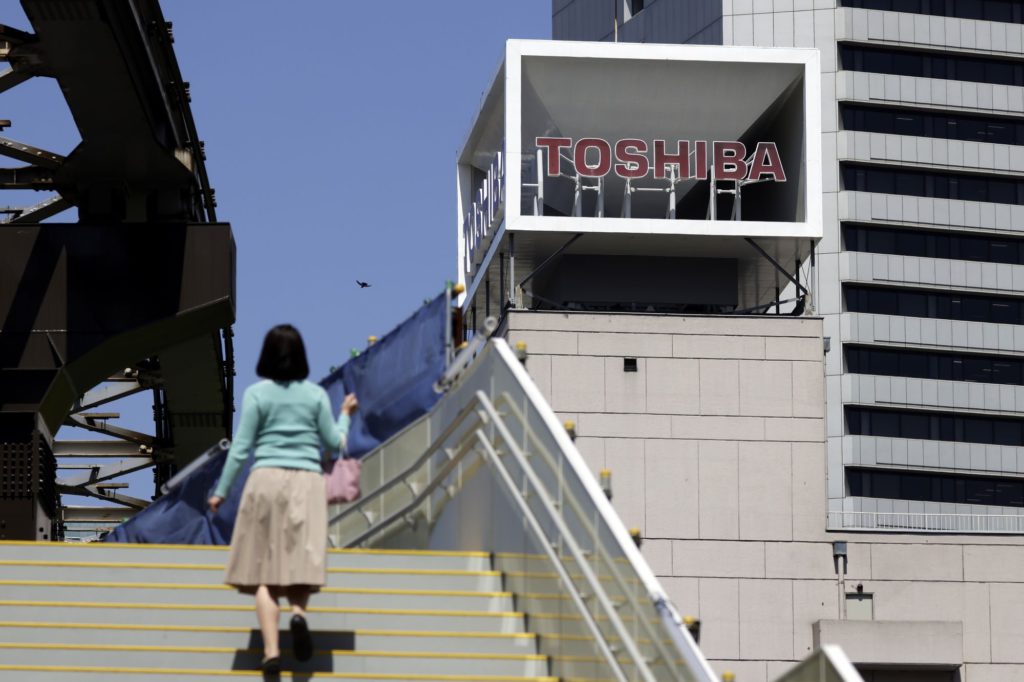
Alibaba Replaces Lazada CEO in Southeast Asia Shakeup

(Bloomberg) — Alibaba Group Holding Ltd. replaced Lazada Group Chief Executive Officer Chun Li with the head of its Thailand business and one-time business assistant to Alibaba CEO Daniel Zhang as competition in Southeast Asia intensifies.

James Dong, 42, is taking the reins of Lazada, Alibaba’s Southeast Asian arm, with immediate effect while Li will serve as adviser to Lazada Group Chairman Jiang Fan and remain on Lazada’s board of directors, the company said Friday in a statement, confirming an earlier Bloomberg News report.

The leadership change comes as the battle for supremacy in Southeast Asia’s internet arena intensifies. Lazada is locked in fierce competition with Sea Ltd.’s Shopee, which has been expanding in Latin America, as well as Tokopedia, part of GoTo Group, which went public in April. 

Dong, a former associate partner at McKinsey & Co., served as the head of globalization strategy and corporate development at Alibaba Group and a business assistant to group CEO Zhang before joining Lazada as its CEO for Thailand in 2018, according to the company’s website. 

The following year, he took on the additional role of CEO for Vietnam, where he oversaw a push to bolster logistics and improve operations to cope with rising orders at the height of the pandemic. Between June and August of 2021, at the peak of the fourth wave of Covid-19 in the country, Lazada’s orders quadrupled from a year earlier, Vietnam-based CafeF reported, quoting Dong. 

The number of shoppers on Lazada Vietnam doubled in the third quarter of 2021 from the previous year, while its mall offering recorded its highest revenue with a growth rate of more than four times, according to a report by the company in 2021. 

“Since James joined Lazada in 2018, he has quickly delivered success in his various roles,” the company said in its statement.

Dong has since passed on the Vietnam top role to Kaya Qin and had continued on as CEO for Thailand, where he led the launch of a new social commerce platform. He has an MBA from Cambridge University. 

Li, a veteran technologist, is stepping down after two years as Lazada Group CEO. He took over from Pierre Poignant, who co-founded Lazada for Rocket Internet in 2012. Since being absorbed by Alibaba, the Singapore-based company has had four CEOs before Dong and frequent management shuffles.

More stories like this are available on bloomberg.com

©2022 Bloomberg L.P.

Who Owns Crypto in Congress?

  • Listen to Bloomberg Crypto on the iHeartRadio App
  • Listen to Bloomberg Crypto on Apple Podcasts
  • Listen to Bloomberg Crypto on Spotify

(Bloomberg) — Today on Bloomberg Crypto: Cryptocurrencies are increasingly popular as investments  – everyone from retail traders on Reddit to big institutional shops like Fidelity seems to have a crypto strategy. But what happens when the people investing in this asset class are also the ones in charge of regulating it? 

Senators Pat Toomey of Pennsylvania and Cynthia Lummis of Wyoming hold crypto investments while also weighing in on who and how to potentially regulate the industry. What are the ethical implications when members of congress buy Bitcoin? 

Bloomberg reporter Akayla Gardner joins this episode to wade through the thorny question of regulating the regulators. 

Follow us on Twitter @crypto, and subscribe to the Bloomberg Crypto Newsletter at https://bloom.bg/cryptonewsletter

More stories like this are available on bloomberg.com

©2022 Bloomberg L.P.

Stocks Edge Higher Before Key US Payrolls Report: Markets Wrap

(Bloomberg) — European shares crept higher, following gains in their Wall Street peers, ahead of a key US jobs report that investors will study for clues on the pace of central bank policy tightening. 

Europe’s Stoxx 600 index was up 0.2%, with chemicals companies and utilities leading the limited advance. UK markets remain closed for holidays marking the Queen’s Jubilee, reducing trading volumes. Contracts on the S&P 500 slipped 0.2% and those on the Nasdaq 100 dropped 0.5% after gains of 1.8% and 2.8% in the respective underlying gauges in New York Thursday. 

In Asia, stocks rose in Japan, Korea and Australia. Markets are shut in Hong Kong and China, where officials have vowed to carry out a slew of government policies to stimulate the economy. The offshore yuan rose amid thin trading in Asia.

A Bloomberg gauge of the dollar steadied after overnight losses, while the yen held near the psychologically important 130 level against the greenback. Benchmark Treasury yields held at 2.91%.

Investors remain on edge as some fear the pace of US monetary tightening could throw the world’s largest economy into a recession. Friday’s May labor report is likely to show the smallest gain in jobs since April 2021 alongside a down shift in average hourly earnings growth, Bloomberg Economics said. 

“We really do just need a lot more data, not one data point, not just the jobs data,” Carol Schleif, BMO Family Office LLC deputy chief investment officer, said on Bloomberg TV. “The potential range of outcomes is wider than it has been. We do think that you are going to see a lot of volatility through the summer.”

The median forecast in a Bloomberg survey of economists is for the payrolls data to show a 320,000 gain after a 428,000 increase in April.

Tesla Inc. Chief Executive Officer Elon Musk said the electric carmaker needs to cut staff by around 10%, noting he had a “super bad feeling” about the economy, according to an internal email seen by Reuters.

Federal Reserve Vice Chair Lael Brainard said it was hard to see a case for a September pause in rate hikes and that increases of 50 basis points in June and July seemed reasonable. 

“We believe a slight lean toward defensive sectors and away from the growth-oriented areas of this market still make sense,” said Scott Brown, technical market strategist at LPL Financial. “Outside of this recent rally, very little about this market has changed from a technical standpoint and that makes us wary of calling the all-clear.” 

Meanwhile, OPEC+ agreed to increase the size of its oil-supply hikes by about 50% in July and August, bending to pressure by major consumers including the US to fill the gap created by sanctions on Russian supplies. Oil futures pared overnight gains.

How will markets be affected by the Fed’s quantitative tightening? QT officially starts Wednesday and is the theme of this week’s MLIV Pulse survey. Click here to participate anonymously.

Here are some key events to watch this week:

  • US May employment report Friday
  • The UN’s Food and Agriculture Organization releases its monthly food price index at a time of maximum concern about global supplies on Friday

Some of the main moves in markets:

Stocks

  • The Stoxx Europe 600 rose 0.2% as of 8:33 a.m. London time
  • Futures on the S&P 500 fell 0.2%
  • Futures on the Nasdaq 100 fell 0.4%
  • Futures on the Dow Jones Industrial Average were little changed
  • The MSCI Asia Pacific Index rose 0.4%
  • The MSCI Emerging Markets Index rose 0.3%

Currencies

  • The Bloomberg Dollar Spot Index was little changed
  • The euro was little changed at $1.0750
  • The Japanese yen was little changed at 129.86 per dollar
  • The offshore yuan rose 0.4% to 6.6300 per dollar
  • The British pound was little changed at $1.2576

Bonds

  • The yield on 10-year Treasuries was little changed at 2.91%
  • Germany’s 10-year yield was little changed at 1.23%

Commodities

  • Brent crude fell 0.4% to $117.11 a barrel
  • Spot gold fell 0.1% to $1,866.11 an ounce

More stories like this are available on bloomberg.com

©2022 Bloomberg L.P.

Toshiba Director Opposes Board Nominees From Elliott, Farallon

(Bloomberg) — A Toshiba Corp. outside director opposed the nominations of two directors representing the company’s activist investors, suggesting possible conflict ahead in what has become a litmus test for corporate governance in Japan. 

Mariko Watahiki, a former Nagoya High Court chief justice, opposed the nomination of directors from Elliott Capital Advisors LP and Farallon Capital Management LLC, fellow Toshiba outside director Jerry Black said at a media roundtable Friday. Black declined to comment further on why Watahiki was against the appointments. Hedge funds are sometimes seen to prioritize their own short-term investment gains over companies’ long-term growth.

Under crticism that it was ignoring the wishes of shareholders, Toshiba last month nominated to its board Eijiro Imai and Nabeel Bhanji to represent activist investors Farallon and Elliott.

Toshiba said the previous day it received eight offers to buy out the conglomerate, as well as two proposals for capital and business alliances. The company said in a filing it will evaluate the non-binding bids and choose one or more to pursue after its annual shareholder meeting scheduled for June 28. 

The likelihood of any bid to pass clearance with Japan’s Foreign Exchange and Foreign Trade Act will be one of the criteria when narrowing down the bids, Black said. The country’s Ministry of Economy, Trade and Industry will play an important role, he added.

Private equity investors including CVC Capital Partners, Blackstone Inc. and Bain Capital were considering making bids, Bloomberg News has reported. State-backed investment fund Japan Investment Corp. was also mulling an offer, Bloomberg reported last month. Private equity fund MBK Partners also submitted a bid and may form a consortium for Toshiba, Maeil Business Newspaper reported, citing unidentified people in investment banking industry. Toshiba has not disclosed the bidders.

More stories like this are available on bloomberg.com

©2022 Bloomberg L.P.

Close Bitnami banner
Bitnami