Chinese Business

Indonesian designer's wheels behind leaders' bamboo bike bromance

As Indonesian President Joko Widodo led Anthony Albanese around the lush gardens of a presidential palace south of Jakarta earlier this month, he presented the new Australian prime minister with an unusual gift: a bamboo bike.

The night before, designer Singgih Susilo Kartono learned it would be the Spedagi model he crafts in a small village on the island of Java that the leaders would ride side-by-side in a unique moment of bicycle diplomacy.

Prime Minister Albanese would tuck his trousers into his socks after the statesmen stripped off their jackets and ties and donned helmets, setting off on the light and environmentally friendly two-wheelers for the symbolic bike ride.

The 54-year-old designer told AFP the diplomatic gesture was a “special, magical moment” for him after years spent working on the bike.

“It’s not about the bike being bought by Jokowi, but the fact that it was used to welcome PM (Albanese),” he said.

When not arming world leaders with new bamboo wheels, Kartono is using his sustainable bike craftsmanship to bring jobs to locals and show Indonesian villagers how they can make use of the environment around them.

“I train youths here who lack skills. We have a system to train unskilled people until they can create quality products,” he said.

The model, named after the Indonesian words “sepeda” for bicycle and “pagi” for morning, is built by a team of 15 employees at a workshop in Kartono’s village in Central Java, where he saddles up for his own bike ride every day.

Fast-growing bamboo stalks are cut by his team, coated with preservatives, dried, then laminated before being combined with other parts to assemble the sturdy bike frame.

Pound for pound, bamboo is as strong as steel when used in lightweight structures, studies have shown, with a high tensile strength that makes it a worthy and environmentally friendly substitute.

A fully assembled Spedagi bamboo bike can take a week of intricate work, fetching up to 15 million rupiah ($1,000), and some have been sold as far away as Japan, company co-founder Tri Wahyuni told AFP.

– Friendship on wheels –

The green wheels used by the two leaders were built with more expensive parts, said Kartono, declining to disclose the price of their rides.

Widodo, famous at home for gifting bikes to ordinary Indonesians, is a Spedagi fan and bought one personally from Kartono in 2015. 

Albanese was similarly beaming about the bike, taking it back to Canberra and saying people would see him on the streets riding what might be “the only bamboo bike” in the Australian capital.

Both bicycles and bamboo — affordable and plentiful in Indonesia — are closely linked with the archipelago nation’s lower classes, something that struck a chord with the two leaders from humble backgrounds.

But while the Kartono creation merged two symbols of Indonesian heritage, it is now tied to a blossoming bromance cultivated in the first weeks of Albanese’s premiership.

“Every time I ride on the bike, I will remember the friendship with President Widodo,” he said.

With his own creation now crossing the Pacific, Kartono said it was seeing bamboo bikes being made where the plant is rarely found — such as in northern Europe — that first motivated him to craft his design.

“When I dug deep into bicycle products online, I found that bamboo bicycles are made in countries that do not have bamboo. That served as a slap for me,” said the entrepreneur.

“Bamboo is everywhere around my house.”
Japan inflation stays at seven-year high in May

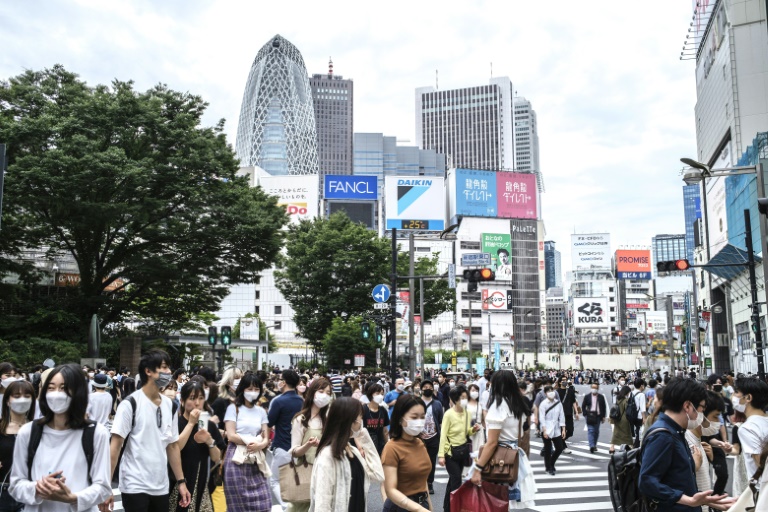
Japan’s core consumer prices jumped 2.1 percent again in May, the second consecutive monthly jump of a level not seen in seven years, official data showed Friday.

The core consumer price index, which excludes fresh food, jumped 2.1 percent year-on-year in May, according to figures released by the internal affairs ministry.

The rise follows a 2.1 percent jump in April, the first time since March 2015 that the figure breached the 2.0 percent set by the Bank of Japan (BoJ) as its long-term inflation target.

The reading, in line with market expectations, comes after the Japanese central bank last week stuck to its monetary easing policy even as other central banks raise interest rates to tame inflation.

The BoJ did, however, said it would “pay due attention” to forex markets after the yen hit a 24-year low.

Excluding energy, prices were up 0.8 percent in May, also in line with market consensus, following a 0.8 percent rise in April.

The BoJ’s ultra-loose monetary policy aims to achieve two-percent inflation, a target that has been stubbornly out of reach during years of price stagnation.

But the bank has cautioned that it sees recent rising prices as a temporary and volatile trend and that it needs to stick with easing to achieve more long-lasting rises.

Inflation has been rising for months in the United States and elsewhere as buoyant demand for cars and other goods clashes with supply problems caused by Covid-19 lockdowns.

The problem became dramatically worse after Russia invaded Ukraine in February and Western nations imposed steep sanctions on Moscow, sending food and fuel prices soaring, a particular problem in resource-poor Japan.

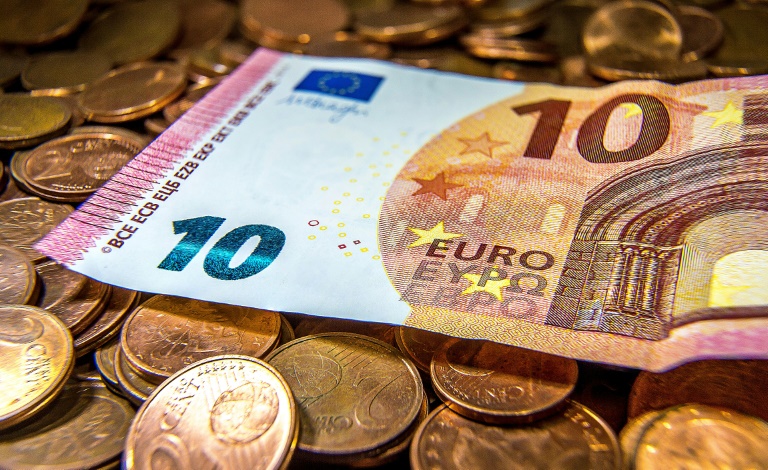
Euro retreats as recession prospects grow

The euro retreated against the dollar Thursday as economic data pointed to increased prospects of recession in Europe.

Global stock markets wobbled after another battering this week, while oil prices slid further.

Economic growth in the eurozone plummeted in June, a key survey showed, as high prices took the wind out the strong recovery from the deep lows of the coronavirus pandemic.

The closely-watched monthly purchasing managers’ index by S&P Global slumped to 51.9 from 54.8 in May. A figure above 50 indicates growth.

PMI data also revealed that Britain’s private sector business activity is languishing at its lowest level for more than a year on decades-high inflation.

“The latest PMI numbers from France and Germany have weighed on the euro, with economic activity slowing more than expected in June, raising concerns that both countries are heading into a recession,” said market analyst Michael Hewson at CMC Markets. 

“While ECB (European Central Bank) policymakers continue to insist that a recession isn’t their base case, all the evidence points to exactly that,” he added.

European stocks also fell, with London ending the day down 1.0 percent and Paris shedding 0.6 percent. Frankfurt tumbled 1.8 percent after Germany hiked its alert level about natural gas supplies, taking it one step closer to rationing.

Government bond yields also fell in another indication that investors are more worried about the prospect of a recession, removing some of the financial sting on governments from rising interest rates.

“The global economy continues to be afflicted by severe supply shocks, which are pushing up inflation and driving down growth,” noted Citi analyst Nathan Sheets.

“We see the aggregate probability of recession as now approaching 50 percent,” he added.

Commentators have warned for some time that the world economy could be heading for contracting growth owing to the sharp increase in global interest rates aimed at cooling inflation.

Federal Reserve boss Jerome Powell on Wednesday said recession in the short term was “certainly a possibility”.

He said “inflation has obviously surprised to the upside over the past year, and further surprises could be in store”.

The Fed this month hiked US interest rates by 75 basis points and is expected to do the same in July, with some observers predicting two more such moves after that.

US PMI data also showed a slowdown in growth similar to that in Europe, but Wall Street stocks rose in morning trading as US Treasury bond yields fell.

“A retreat in the US 10-year yield has sparked buying,” said David Madden at Equiti Capital.

Patrick O’Hare at Briefing.com called this a “myopic” move by investors as “long-term rates are dropping because growth prospects are dropping — and if growth prospects are dropping, so are earnings prospects” for companies.

The prospect of a retreat in the global economy continued to drag on oil prices as traders fretted over slowing demand. 

Brent and WTI, the international and US benchmarks, have slumped over the past week, even with sanctions on Russian crude exports and China’s gradual reopening from lockdowns.

Adding to the selling of crude was data Wednesday indicating a jump in US stockpiles.

– Key figures at around 1530 GMT –

Euro/dollar: DOWN at $1.0516 from $1.0570 late Wednesday

Pound/dollar: DOWN at $1.2258 from $1.2263

Euro/pound: DOWN at 85.77 pence from 86.17 pence

Dollar/yen: DOWN at 134.64 yen from 136.22 yen 

New York – Dow: UP 0.1 percent at 30,517.27 points

EURO STOXX 50: DOWN 0.6 percent at 3,442.31

London – FTSE 100: DOWN 1.0 percent at 7,020.45 (close)

Frankfurt – DAX: DOWN 1.8 percent at 12,912.59 (close)

Paris – CAC 40: DOWN 0.6 percent at 5,883.33 (close)

Tokyo – Nikkei 225: UP 0.1 percent at 26,171.25 (close)

Hong Kong – Hang Seng Index: UP 1.3 percent at 21,273.87 (close)

Shanghai – Composite: UP 1.6 percent at 3,320.15 (close)

Brent North Sea crude: DOWN 0.6 percent at $111.13 per barrel

West Texas Intermediate: DOWN 0.8 percent at $105.38 per barrel

burs-rl/lth

Euro, pound drop as recession prospects grow

The euro and pound retreated against the dollar Thursday as economic data pointed to increased prospects of recession in Europe.

Global stock markets recovered some ground after another battering this week, while oil prices extended losses.

Economic growth in the eurozone plummeted in June, a key survey showed, as high prices took the wind out the strong recovery from the deep lows of the coronavirus pandemic.

The closely-watched monthly purchasing managers’ index by S&P Global slumped to 51.9 from 54.8 in May. A figure above 50 indicates growth.

PMI data also revealed that Britain’s private sector business activity is languishing at its lowest level for more than a year on decades-high inflation.

The surveys weighed on Europe’s major currencies, with foreign exchange markets seen as a clearer indicator of a country’s economic health compared with stock markets that feature many multinationals.

“The global economy continues to be afflicted by severe supply shocks, which are pushing up inflation and driving down growth,” noted Citi analyst Nathan Sheets, adding the likelihood of recession had reached 50 percent. 

Commentators have warned for some time that the world economy could be heading for contracting growth owing to the sharp increase in global interest rates aimed at cooling inflation.

Federal Reserve boss Jerome Powell on Wednesday said recession in the short term was “certainly a possibility”.

He said “inflation has obviously surprised to the upside over the past year, and further surprises could be in store”.

The Fed this month hiked US interest rates by 75 basis points and is expected to do the same in July, with some observers predicting two more such moves after that.

Deutsche Bank CEO Christian Sewing also said there was a 50 percent chance of a contraction next year.

Elon Musk, JP Morgan boss Jamie Dimon and economist Nouriel Roubini are among several others to have made similar forecasts.

The prospect of a retreat in the global economy continued to drag on oil prices as traders fretted over slowing demand. 

Brent and WTI have slumped over the past week, even with sanctions on Russian crude exports and China’s gradual reopening from lockdowns.

Adding to the selling of crude was data Wednesday indicating a jump in US stockpiles.

“A slowdown in global growth is a risk to oil demand, which could help ease some of the tightness in the market,” said Warren Patterson of ING Group. 

“Already, we have seen demand estimates revised lower.”

– Key figures at around 1115 GMT –

London – FTSE 100: UP 0.2 percent at 7,105.32 points

Frankfurt – DAX: DOWN 0.4 percent at 13,089.22

Paris – CAC 40: UP 0.4 percent at 5,941.75

EURO STOXX 50: UP 0.2 percent at 3,472.03

Euro/dollar: DOWN at $1.0499 from $1.0570 late Wednesday

Pound/dollar: DOWN at $1.2204 from $1.2263

Euro/pound: DOWN at 86.02 pence from 86.17 pence

Dollar/yen: DOWN at 135.34 yen from 136.22 yen 

Tokyo – Nikkei 225: UP 0.1 percent at 26,171.25 (close)

Hong Kong – Hang Seng Index: UP 1.3 percent at 21,273.87 (close)

Shanghai – Composite: UP 1.6 percent at 3,320.15 (close)

New York – Dow: DOWN 0.2 percent at 30,483.13 (close)

Brent North Sea crude: DOWN 0.3 percent at $111.44 per barrel

West Texas Intermediate: DOWN 0.4 percent at $105.77 per barrel

Markets fluctuate, oil falls again as recession warnings build

Asian markets mostly rose Thursday on bargain buying after the previous day’s battering, though oil extended losses after US Federal Reserve boss Jerome Powell admitted the economy could tip into recession as the bank hikes interest rates to fight runaway inflation.

Soaring prices and the battle by central banks to rein them in have sent a chill through global trading floors this year, while investors are also having to deal with the uncertainty brought by the Ukraine war and patchy pandemic recovery.

Commentators have warned for some time that the world economy could be heading for another contraction owing to the sharp increase in borrowing costs and rampant inflation, which is at decades highs in several countries.

And on Wednesday, the head of the most powerful central bank in the world told lawmakers it was “certainly a possibility”.

While saying the economy was strong enough for rates to rise, he added that “frankly, the events of the last few months around the world have made it more difficult for us to achieve what we want, which is two percent inflation and still a strong labour market.”

He also warned: “Inflation has obviously surprised to the upside over the past year, and further surprises could be in store.”

The Fed this month hiked rates by 75 basis points and is expected to do the same in July, with some observers predicting two more such moves after that.

After a day of swings, Wall Street ended in negative territory, though off big early lows.

Asia fluctuated in the morning but enjoyed a more positive afternoon, though optimism remains at a premium among investors, and analysts warned it was unlikely to improve anytime soon.

Hong Kong and Shanghai led gains thanks to a pick-up in tech firms after Chinese President Xi Jinping chaired a meeting Wednesday that pushed for “healthy” development of the fintech sector, adding to optimism that a crackdown on the industry may be coming to an end.

Xi also reaffirmed the country’s 5.5 percent growth target for this year despite months of lockdown-induced pain for the economy.

The comments suggest the government will unveil market-friendly measures to boost growth.

Tokyo, Sydney, Singapore, Mumbai, Bangkok and Wellington were higher, but Seoul, Taipei, Manila and Jakarta fell.

London, Paris and Frankfurt sank, with data showing the eurozone economy slowed sharply in June. There were also concerns about Germany after it raised its gas alert level owing to Russia’s war in Ukraine, with the country moving a step closer to rationing.

“Having listened to Powell’s lengthy Senate testimony… it is clear that inflation is the domestic issue at the top of the political agenda,” said SPI Asset Management’s Stephen Innes. 

“Powell consistently bobbed and weaved his way through commenting on anything of fiscal nature but was focused on deploying the tools within the Fed’s power to address their dual mandate” of reining in inflation and keeping unemployment in check. 

“So we should still position for more rate hike fallout to occur.”

Powell’s comments came as other top economists added to the recession talk, with former New York Fed President Bill Dudley saying it was “inevitable within the next 12 to 18 months”.

And Deutsche Bank CEO Christian Sewing said there was a 50 percent chance of a contraction next year.

Elon Musk, JP Morgan boss Jamie Dimon and economist Nouriel Roubini are among several others to have made similar forecasts.

“We are still in an era where uncertainty is elevated and is expected to remain so for quite a while,” said JoAnne Feeney, of Advisors Capital Management, on Bloomberg Television.

“It’s risky right now in terms of the forward outlook for the global economy. Recession risk has clearly risen.”

The prospect of a retreat in the global economy continued to drag oil prices down as traders fret over demand, with both main contracts down around one percent, having tumbled on Wednesday. However, they were well off morning lows.

Brent and WTI have dropped around 15 percent over the past week, even with sanctions on Russian crude exports and China’s gradual reopening from lockdowns.

Adding to the selling was data Wednesday indicating a jump in US stockpiles.

“A slowdown in global growth is a risk to oil demand, which could help ease some of the tightness in the market,” Warren Patterson, at ING Groep, said. 

“Already, we have seen demand estimates revised lower.”

– Key figures at around 0810 GMT –

Tokyo – Nikkei 225: UP 0.1 percent at 26,171.25 (close)

Hong Kong – Hang Seng Index: UP 1.3 percent at 21,273.87 (close)

Shanghai – Composite: UP 1.6 percent at 3,320.15 (close)

London – FTSE 100: DOWN 0.8 percent at 7,029.19

West Texas Intermediate: DOWN 1.9 percent at $104.23 per barrel

Brent North Sea crude: DOWN 1.6 percent at $109.94 per barrel

Dollar/yen: DOWN at 135.43 yen from 136.22 yen late Wednesday

Pound/dollar: DOWN at $1.2181 from $1.2263

Euro/dollar: DOWN at $1.0508 from $1.0570

Euro/pound: UP at 86.27 pence from 86.17 pence

New York – Dow: DOWN 0.2 percent at 30,483.13 (close)

China's Xi calls for stronger fintech oversight, security

A high-level Chinese government meeting led by President Xi Jinping has called for stronger oversight and better security in financial tech, state media reported, with the sector hit hard by a regulatory crackdown.

The government action has pummelled some of China’s biggest tech firms, wiping out hundreds of billions of dollars in market value since last year.

But with the Chinese economy hammered by Covid lockdowns, the government has rolled out a series of support measures, including a call for “predictable” tech regulation.

“Regarding large payment and fintech platform enterprises, Xi called for efforts to improve regulations, strengthen institutional weak links, ensure the security of payment and financial infrastructure, and guard against and defuse potential systemic financial risks,” according to a readout of the Wednesday meeting by the official Xinhua news agency.

The Chinese leader also “called for these enterprises to be better supported in serving the real economy”, Xinhua said.

The officials at the meeting discussed  promoting the “healthy development” of fintech companies, it added, and said “China will tighten oversight” of financial holding firms and internet financial services.

Investors have been heartened in recent weeks by similar statements by the Chinese government, with some perceiving them as signals that the tech crackdown is finally easing.

Hopes also soared this month when dozens of new video games were approved, and tech stocks rose on reports that authorities were wrapping up a cybersecurity probe into ride-hailing giant Didi.

But regulators this month denied reports that they were discussing the potential revival of Ant Group’s scuppered IPO, which would have been the world’s largest public offering at the time.

Ant Group — the payments affiliate of e-commerce giant Alibaba — had its share offering cancelled at the last minute in 2020.

Alibaba was later hit with a $2.75 billion fine over alleged unfair practices.

Ant Group is set to apply for a financial licence as soon as this month, Bloomberg News reported Wednesday, citing unnamed people familiar with the matter.

Markets fluctuate, oil falls again as recession warnings build

Asian markets struggled Thursday to recover from the previous day’s battering, while oil extended losses, after Federal Reserve boss Jerome Powell admitted the economy could tip into recession as the bank hikes interest rates to fight runaway inflation.

Soaring prices and central banks’ battle to rein them in have sent a chill through global trading floors this year, while investors are also having to deal with the uncertainty wrought by the Ukraine war and patchy pandemic recovery.

Commentators have warned for some time that the world economy could be heading for another contraction owing to the sharp increase in borrowing costs and rampant inflation, which is at decades highs in several countries.

And on Wednesday the head of the most powerful central bank in the world told lawmakers that it was “certainly a possibility”.

While saying the economy was strong enough for rates to rise, he added that “frankly, the events of the last few months around the world have made it more difficult for us to achieve what we want, which is two percent inflation and still a strong labour market.”

He also warned: “Inflation has obviously surprised to the upside over the past year, and further surprises could be in store”.

The Fed this month hiked rates by 75 basis points and is expected to do the same in July, with some observers predicting two more such moves after that.

After a day of swings, Wall Street ended in negative territory, though off big early lows.

Asia fluctuated after a big sell-off Wednesday, with optimism at a premium among investors and analysts saying it is unlikely to improve anytime soon.

Hong Kong, Sydney, Singapore and Wellington were slightly higher but Tokyo, Shanghai, Seoul, Taipei, Manila and Jakarta fell.

“Having listened to Powell’s lengthy Senate testimony… it is clear that inflation is the domestic issue at the top of the political agenda,” said SPI Asset Management’s Stephen Innes. 

“Powell consistently bobbed and weaved his way through commenting on anything of fiscal nature but was focused on deploying the tools within the Fed’s power to address their dual mandate” of reining in inflation and keeping unemployment in check. 

“So we should still position for more rate hike fallout to occur.”

Powell’s comments came as other top economists added to the recession talk, with former New York Fed President Bill Dudley saying it was “inevitable within the next 12 to 18 months”.

And Deutsche Bank CEO Christian Sewing said there was a 50 percent chance of a contraction next year.

Elon Musk, JP Morgan boss Jamie Dimon and Nouriel Roubini are among several others to have made similar forecasts.

“We are still in an era where uncertainty is elevated and is expected to remain so for quite a while,” said JoAnne Feeney, of Advisors Capital Management, on Bloomberg Television.

“It’s risky right now in terms of the forward outlook for the global economy. Recession risk has clearly risen.”

The prospect of a retreat in the global economy continued to drag oil prices down as traders fret over demand, with both main contracts down more than three percent, having tumbled on Wednesday.

Brent and WTI have dropped around 15 percent over the past week, even with sanctions on Russian crude exports and China’s gradual reopening from lockdowns.

Adding to the selling was data Wednesday indicating a jump in US stockpiles.

“A slowdown in global growth is a risk to oil demand, which could help ease some of the tightness in the market,” Warren Patterson, at ING Groep, said. 

“Already, we have seen demand estimates revised lower.”

– Key figures at around 0230 GMT –

Tokyo – Nikkei 225: FLAT at 26,146.71 (break)

Hong Kong – Hang Seng Index: UP 0.2 percent at 21,039.28

Shanghai – Composite: DOWN 0.1 percent at 3,263.02

West Texas Intermediate: DOWN 3.5 percent at $102.51 per barrel

Brent North Sea crude: DOWN 3.2 percent at $108.14 per barrel

Dollar/yen: DOWN at 135.74 yen from 136.22 yen late Wednesday

Pound/dollar: DOWN at $1.2241 from $1.2263

Euro/dollar: DOWN at $1.0561 from $1.0570

Euro/pound: UP at 86.27 pence from 86.17 pence

New York – Dow: DOWN 0.2 percent at 30,483.13 (close)

London – FTSE 100: DOWN 0.9 percent at 7,089.22 (close)

Recession fears send oil prices plunging, equities diverge

Wall Street stocks climbed Wednesday as the US Fed chief stressed the need to combat decades-high inflation, but elsewhere equities and oil prices tumbled on mounting recession fears as central banks hike interest rates.

Wall Street was moderately higher in late morning trading, while European and Asian markets closed in the red, a day after healthy gains.

Federal Reserve boss Jerome Powell began two days of testimony to US lawmakers on Wednesday, warning that the US economy faced an “uncertain” global environment and could face further inflation “surprises”.

His testimony to Congress this week will be pored over for an idea about officials’ plans for fighting runaway prices, which are being fanned by supply chain snarls, China’s Covid lockdowns and the war in Ukraine.

Powell once again stressed that the Fed was committed to bringing down inflation — which has reached a 40-year high — with higher interest rates.

But the world’s largest economy “is very strong and well positioned to handle tighter monetary policy”, he said.

Most observers expect the Fed to aggressively hike US interest rates several more times this year, having recently carried out the sharpest lift in almost 30 years.

Powell said rapid interest rate increases were meant to cool demand and bring inflation down, but he acknowledged the risk that the hikes could trigger a US recession.

“It’s not our intended outcome at all, but it’s certainly a possibility,” Powell said in testimony to the Senate Banking Committee.

“The ‘R’ word is likely to come up a lot today and the Chairman will have a tough time dodging it, especially with mid-terms in five months,” said OANDA market analyst Craig Erlam, referring to recession.

“Naturally, he’ll do his best to remain apolitical but I’m not sure investors will be able to ignore so much recession chat,” he added.

Expectations of more rate hikes have been handing support to the dollar, which pushed the yen briefly to a fresh 24-year low Wednesday, before sliding against major rivals.

The Bank of Japan is holding back from lifting interest rates, in sharp contrast to other major central banks.

Oil prices were feeling the heat from recessionary fears, with both main contracts tanking more than six percent at one point.

“Concerns about a global slowdown appear to be outweighing any concern over supply issues derived from Russia’s invasion of Ukraine, and the prospect that Chinese demand could return,” said market analyst Michael Hewson at CMC Markets.

Crude and gas prices have soared in recent months after major economies lifted pandemic lockdowns and following the invasion of Ukraine by major energy producer Russia.

Surging energy costs are fuelling global inflation, with official data Wednesday showing the British annual rate hitting a fresh 40-year high above nine percent.

In the United States, President Joe Biden asked Congress on Wednesday to suspend the federal gas tax for three months as skyrocketing prices cause widespread anger among Americans just months before crucial mid-term elections.

A senior administration official noted that US gas prices — averaging near $5 per gallon — had jumped almost $2 since Russian President Vladimir Putin began building up forces on the Ukrainian border earlier this year.

– Key figures at around 1530 GMT –

Brent North Sea crude: DOWN 3.7 percent at $110.39 per barrel

West Texas Intermediate: DOWN 110.39 percent at $104.86 per barrel

New York – Dow: UP 0.3 percent at 30,623.29 points

EURO STOXX 50: DOWN 0.8 percent at 3,467.26

London – FTSE 100: DOWN 0.9 percent at 7,089.22 (close)

Frankfurt – DAX: DOWN 1.1 percent at 13,144.28 (close)

Paris – CAC 40: DOWN 0.8 percent at 5,916.63 (close)

Tokyo – Nikkei 225: DOWN 0.4 at 26,149.55 (close)

Hong Kong – Hang Seng Index: DOWN 2.6 percent at 21,008.34 (close)

Shanghai – Composite: DOWN 1.2 percent at 3,267.20 (close)

Euro/dollar: UP at $1.0594 from $1.0535 late Tuesday

Pound/dollar: UP at $1.2304 from $1.2273

Euro/pound: UP at 86.10 pence from 85.80 pence

Dollar/yen: DOWN at 135.89 yen from 136.64 yen

burs-rl/jj

US Fed chair admits recession a 'possibility' after rate hikes

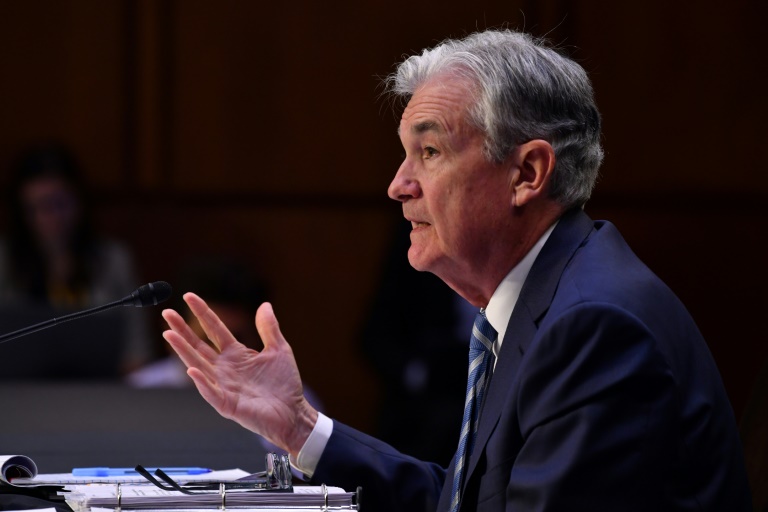
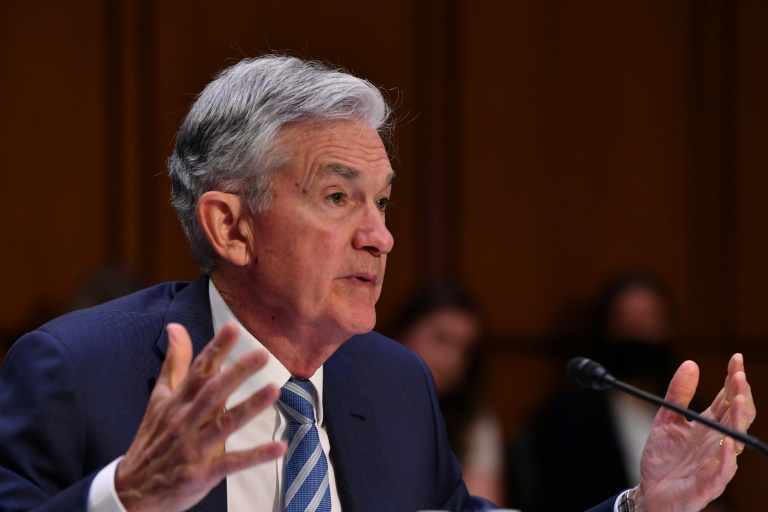
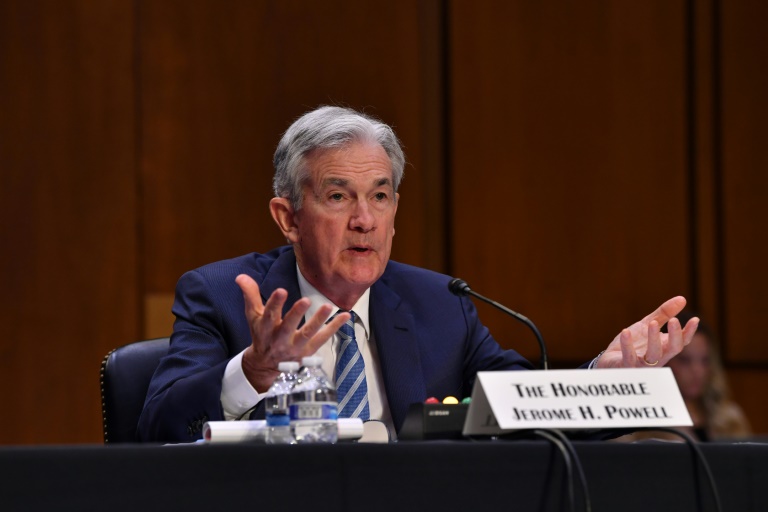
The US economy remains strong but a series of aggressive rate hikes meant to cool soaring inflation could eventually trigger a recession, Federal Reserve Chair Jerome Powell cautioned Wednesday.

Powell, whose testimony before senators was closely watched by investors and analysts, also said the world’s largest economy faces an “uncertain” global environment and could see further inflation “surprises.”

The Fed chair again stressed that policymakers understand the hardships caused by rising prices and are committed to bringing down inflation, which has reached a 40-year high.

Last week, the US central bank announced the sharpest interest rate increase in nearly 30 years and promised additional similar moves to combat the price surge, with gas and food costs skyrocketing and millions of Americans struggling to get by.

But when peppered with questions about the prospect of a recession, Powell acknowledged the risk.

“It’s not our intended outcome at all, but it’s certainly a possibility,” he told the Senate Banking Committee.

“And frankly, the events of the last few months around the world have made it more difficult for us to achieve what we want, which is two percent inflation and still a strong labor market.”

In his opening remarks, Powell insisted the US economy “is very strong and well positioned to handle tighter monetary policy.”

“Inflation has obviously surprised to the upside over the past year, and further surprises could be in store,” the Fed chief said in his semi-annual appearance before Congress.

Policymakers “will need to be nimble” given that the economy “often evolves in unexpected ways,” he said.

The Fed is facing intense criticism that it was too slow to react to the changing economy, which benefited from a flood of federal government stimulus.

Last week’s super-sized 0.75-percentage-point increase in the benchmark lending rate was the third since March, taking the policy rate up a total of 1.5 points. Powell at the time said a similar increase was likely in July.

The ideal scenario would be for those moves to cool the economy enough to douse inflation pressures, without choking off growth — the hoped-for “soft landing.”

“I think it’s going to be very challenging,” Powell said, insisting there are “pathways” to avoid recession, and that he does not view the risk of a downturn as “particularly elevated.”

Financial markets seemed cheered by his relatively upbeat comments, which echo those of other Fed officials in recent days who have pushed back against rising pessimism. 

But Wall Street stocks lost steam late in the trading session, and the Dow finished the day down 0.2 percent.

– ‘Essential’ to curb inflation –

In addition to easing the financial strain on less-wealthy American families, the Fed chief said tamping down inflation was “essential” to maintain a healthy labor market.

The US economy recovered quickly from the Covid-19 pandemic, helped by robust consumer spending, and has continued to create jobs at a strong pace, pushing unemployment down to near a 50-year low.

But the buoyant demand for homes, cars and other goods clashed with transportation and supply chain snarls in parts of the world where Covid-19 has remained a challenge.

That fueled inflation, which got dramatically worse after Russia invaded Ukraine in late February and Western nations imposed stiff sanctions on Moscow, sending food and fuel prices up at a blistering rate.

But Powell noted that inflation is a global issue, not unique to the United States.

Many major central banks have joined the Fed in beginning to tighten monetary policy — with the notable exception of the Bank of Japan.

Powell said many factors driving inflation are beyond the Fed’s control, but he pointed to signs that rising rates are having an impact, as business investment slows and “activity in the housing sector looks to be softening, in part reflecting higher mortgage rates.”

Average home loan rates jumped to 5.23 percent in May for a 30-year, fixed-rate mortgage, from 4.98 percent in April, according to Freddie Mac, while the median price for homes topped $400,000 for the first time.

“The tightening in financial conditions that we have seen in recent months should continue to temper growth and help bring demand into better balance with supply,” Powell said.

US Fed chair admits recession a 'possibility' after rate hikes

The US economy remains strong but a series of aggressive rate hikes meant to cool soaring inflation could eventually trigger a recession, Federal Reserve Chair Jerome Powell cautioned Wednesday.

Powell, whose testimony before senators was closely watched by investors and analysts, also said the world’s largest economy faces an “uncertain” global environment and could see further inflation “surprises.”

The Fed chair again stressed that the US central bank understands the hardship caused by rising prices and is committed to bringing down inflation, which has reached a 40-year high.

Last week, the Fed announced the sharpest interest rate increase in nearly 30 years and promised more action to combat the price surge, with gas and food costs skyrocketing and millions of Americans struggling to make ends meet.

But when peppered with questions about the prospect of a recession, Powell admitted it could not be ruled out.

“It’s not our intended outcome at all, but it’s certainly a possibility,” he told the Senate Banking Committee.

“And frankly, the events of the last few months around the world have made it more difficult for us to achieve what we want, which is two percent inflation and still a strong labor market.”

In his opening remarks, Powell insisted the US economy “is very strong and well positioned to handle tighter monetary policy.”

“Inflation has obviously surprised to the upside over the past year, and further surprises could be in store,” the Fed chief said in his semi-annual appearance before Congress.

Policymakers “will need to be nimble” given that the economy “often evolves in unexpected ways,” he said.

The Fed is facing intense criticism that it was too slow to react to the changing economy, which benefited from a flood of federal government stimulus.

Last week’s super-sized 0.75-percentage-point increase in the benchmark lending rate was the third since March, taking the policy rate up a total of 1.5 points. Powell at the time said more such increases were likely in July.

“I think it’s going to be very challenging. We’ve never said it was going to be easy or straightforward,” Powell said when asked about efforts to stave off recession.

– ‘Essential’ to curb inflation –

In addition to easing the financial strain on less-wealthy American families, the Fed chief said tamping down inflation was “essential… if we are to have a sustained period of strong labor market conditions that benefit all.”

The US economy recovered quickly from the Covid-19 pandemic, helped by robust consumer spending, and has continued to create jobs at a strong pace, averaging 408,000 in the past three months. 

Unemployment is near a 50-year low.

But the buoyant demand for homes, cars and other goods clashed with transportation and supply chain snarls in parts of the world where Covid-19 has remained a challenge.

That fueled inflation, which got dramatically worse after Russia invaded Ukraine in late February and Western nations imposed stiff sanctions on Moscow, sending food and fuel prices up at a blistering rate.

Powell said the fallout from the conflict “is creating additional upward pressure on inflation.”

In addition, “Covid-19-related lockdowns in China are likely to exacerbate ongoing supply chain disruptions.”

But he noted that the issue is not unique to the United States.

“Over the past year, inflation also increased rapidly in many foreign economies,” he said.

In fact, many major central banks have joined the Fed in beginning to tighten monetary policy — with the notable exception of the Bank of Japan.

Powell pointed to signs that rising rates are having an impact, as business investment slows and “activity in the housing sector looks to be softening, in part reflecting higher mortgage rates.”

Average home loan rates jumped to 5.23 percent in May for a 30-year, fixed-rate mortgage, from 4.98 percent in April, according to Freddie Mac, while the median price for homes topped $400,000 for the first time.

“The tightening in financial conditions that we have seen in recent months should continue to temper growth and help bring demand into better balance with supply,” Powell said.

Close Bitnami banner
Bitnami