Chinese Business

SoftBank Q2 net profit boosted by sales of Alibaba shares

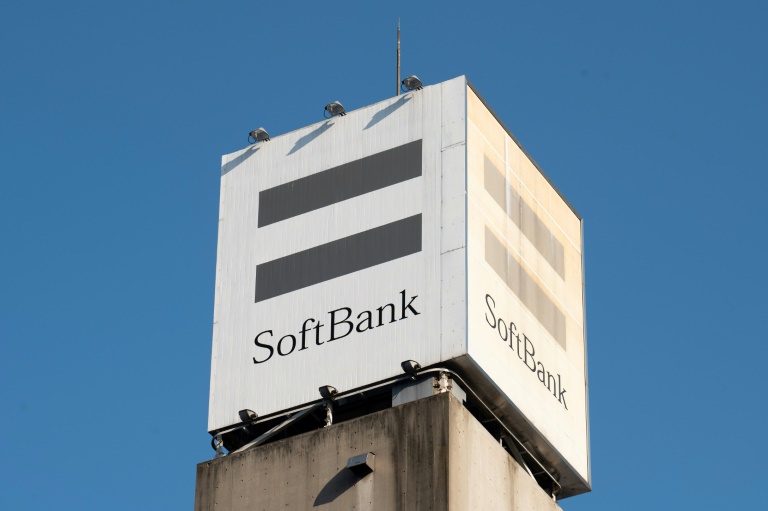
Japan’s SoftBank Group on Friday posted a net profit in the second quarter, partly thanks to gains from the recent reduction of its stake in Chinese e-commerce giant Alibaba.

But falling share prices for many of its tech start-up ventures continue to hurt the company’s balance sheet.

The investment behemoth has made huge bets to find and grow new tech companies around the world — making its earnings vulnerable to fickle market forces.

SoftBank’s results have lurched between dizzying highs and lows in recent years, while China’s crackdown on its tech sector has also taken a toll on the company.

In August, the group announced it would sell down some of its shares in Alibaba, reducing its stake in the Chinese tech giant to around 15 percent from 24 percent.

This helped boost SoftBank’s earnings in the second quarter for a net profit of 3.03 trillion yen ($21.4 billion).

Over the first half of this financial year, however, it suffered a net loss of 129 billion yen, brought down by its record net loss in the first quarter.

SoftBank’s performance in the April-to-June quarter was dragged down by a global tech share rout, triggered by interest-rate hikes by the US Federal Reserve and other central banks to tackle inflation.

The bleak investment climate caused losses in SoftBank’s investments in ventures from US food delivery app DoorDash to South Korean e-commerce brand Coupang.

And the trend continued in the second quarter, which saw investment losses on its two main tech-focused funds of 1.4 trillion yen (nearly $10 billion).

– ‘Very pessimistic’ –

CEO Masayoshi Son said in August that he expected the “winter” for tech start-ups will continue, pledging to cut personnel at the group’s tech-focused Vision Fund.

In September, SoftBank confirmed to AFP that 30 percent of its investment advisors would lose their jobs.

Son is known for his unconventional and often sanguine presentations at earnings announcements, where he highlights the thinking behind sometimes controversial decisions, such as investing generously in risky ventures like the troubled WeWork.

In a change of tack for the company, however, Son on Friday let Chief Financial Officer Yoshimitsu Goto do most of the talking at a post-results press conference.

Goto said the company did not know when the difficult period for technology-related shares would end.

“Looking at just the market over the past month, there has been a slightly more positive change,” he said.

“But basically, we are very pessimistic.”

“We could make a lot of money if we knew when (share prices) will recover, but honestly, we don’t know,” Goto said, adding that the future for the company was difficult to predict given the current geopolitical situation.

Commenting on the recent drama surrounding crisis-hit cryptocurrency platform FTX.com, Goto reassured listeners that SoftBank’s “investment in these virtual currencies and crypto assets is extremely small”. 

Regarding plans to take its microchip powerhouse Arm Holdings public, the company said that an IPO would be tricky within the current financial year, but that it hopes to move forward with the plan by the end of the 2023 calendar year.

Japan govt backs major firms in next-gen chip project

Japan will pour half a billion dollars into a new project to develop and make next-generation microchips, the government said Friday, as the global shortage of semiconductors sparks economic security concerns.

Eight major companies including Sony, SoftBank, Toyota and telecoms giant NTT have joined forces for the venture, the industry ministry said.

Named Rapidus, the new firm says it aims to mass-produce next-generation semiconductors by 2027.

The pandemic has fuelled a global shortage of semiconductors, an essential component of nearly all modern electronics, from smartphones to kitchen appliances and cars.

This has forced businesses to slow manufacturing activity, and has prompted calls for governments and firms to secure chip supplies as geopolitics become increasingly volatile — especially concerning Taiwan, which has a huge chip-producing capacity.

Japan’s industry ministry said each company has invested around one billion yen ($7 million) in Rapidus, with MUFG Bank investing 300 million yen.

On top of this, the government has said it will grant 70 billion yen to the project.

At an unveiling of the new venture, Rapidus president Atsuyoshi Koike said economic security issues were “very problematic considering the global supply chain”, with many chipmakers based in China and Taiwan.

“It seems that everyone has come to understand the importance of semiconductors in recent years,” Koike told reporters, adding that “there has also been growing concern about the decline of the Japanese semiconductor industry”.

US officials have posited that the world is closer than ever to seeing a conflict over Taiwan, which China considers its own territory, to be taken one day, by force if necessary.

Given Taiwan ii top player in the semiconductor world, any move to invade would wreak havoc with global supply chains.

Washington recently introduced new measures to limit China’s access to high-end semiconductors with military uses, a move that has wiped billions from chip companies’ valuations worldwide.

The German economy ministry also has recommended that the sale of a chip factory to a Chinese-owned firm should be blocked as it poses a security threat, government sources said Tuesday.

Last year, Taiwanese chip giant TSMC and Sony said they would tie up on a new $7 billion plant in Japan.

Asian shares surge as investors cheer slower US inflation

Asian markets surged on Friday after a bumper session on Wall Street as lower US inflation dimmed expectations of more aggressive Federal Reserve rate hikes.

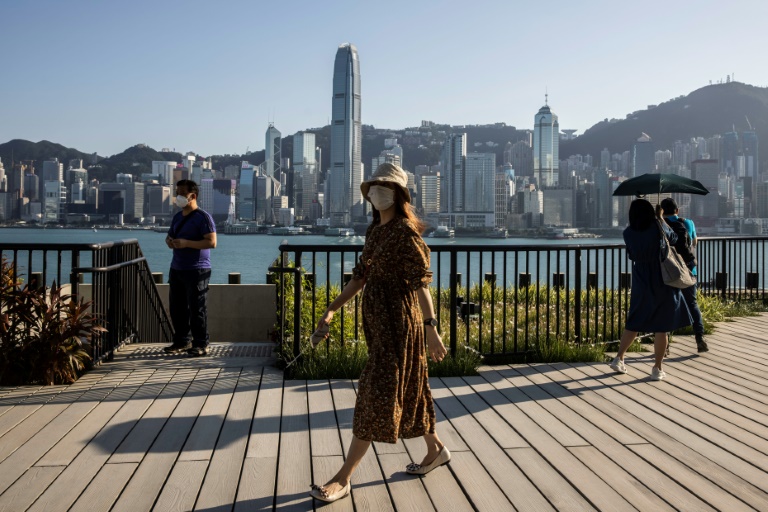
Hong Kong stocks rocketed more than 7.7 percent, while Tokyo’s key Nikkei index also surged, closing up almost three percent.

The gains extended global rallies after the US consumer price index (CPI) showed that the annual pace of inflation was a lower-than-expected 7.7 percent in October, down from 8.2 percent in September.

As US residents reel from sky-high costs, the central bank has moved forcefully to lower demand by raising the benchmark lending rate six times this year.

The latest inflation data should be welcome news to Fed policymakers because prices are “finally showing some response” to the steep rate hikes, said Rubeela Farooqi of High Frequency Economics.

“Inflation has finally started to drop like a rock in the US and this is the best news that anyone can expect,” added AvaTrade analyst Naeem Aslam.

The dollar slumped against rival currencies following the data release, and shares rallied as investors cheered the prospect of less hawkish moves by the central bank.

The Dow was up 3.7 percent at the close and the tech-heavy Nasdaq index soared 7.4 percent. 

Most Asian markets matched the upbeat mood, with the Hong Kong, Shanghai and Shenzhen indexes also buoyed by China’s announcement of a slight relaxation to its hardline Covid-19 restrictions.

Shanghai was up 1.7 percent, and Shenzhen closed up 1.3 percent.

Taipei jumped 3.7 percent, Seoul was up 3.4 percent and Sydney climbed 2.8 percent. Singapore rose 1.6 percent and Mumbai put on 1.7 percent.

European stock markets rose at the open Friday but failed to match the huge gains in Asia and on Wall Street.

“As expected, buying in Asia tech is standing out this morning,” Stephen Innes of SPI Asset Management said.

“But with investors still looking over their shoulders at the crypto schism and rising Covid cases in China, that tide that was lifting all boats is starting to recede in places,” he cautioned.

Trade may also be “dominated by profit-taking and position squaring” after the rallies overnight and ahead of a US market holiday on Friday.

The crypto world has meanwhile been rocked by a surprise decision from Binance, the world’s biggest cryptocurrency platform, to scrap a possible acquisition of rival FTX.com — plunging bitcoin to a two-year low.

Investor Louis Navellier said the US inflation data was “a welcome relief” for markets.

“(It) takes stocks back to green for November and should let the seasonal rally continue with a little less fear of the Fed and more optimism about (2023) earnings estimates,” he said in a note.

Daniel Berkowitz, senior investment officer for investment manager Prudent Management Associates, however, struck a note of caution.

“While it always feels good to see markets rally, we think this morning’s rally is bordering on silly,” he said.

“The market is reacting as if this is the continuance of a multiple-month, downward trend in inflation, and it is not.”

– Key figures around 0800 GMT –

Tokyo – Nikkei 225: UP 2.98 percent at 28,263.57 (close)

Hong Kong – Hang Seng Index: UP 7.7 percent at 17,325.66

Shanghai – Composite: UP 1.7 percent at 3,087.29 (close)

Pound/dollar: UP at $1.1722 from $1.1642 on Thursday

Euro/dollar: UP at $1.0233 from $1.0131

Dollar/yen: DOWN at 141.41 yen from 143.15 yen

Euro/pound: UP at 87.29 pence from 87.20 pence

West Texas Intermediate: UP 2.6 percent at $88.75 per barrel

Brent North Sea crude: UP 2.6 percent at $96.07 per barrel

New York – Dow: UP 3.7 percent at 33,715.37 points (close)

London – FTSE 100: UP 1.1 percent at 7,375.34 (close)

ASEAN leaders struggle for answers to Myanmar crisis

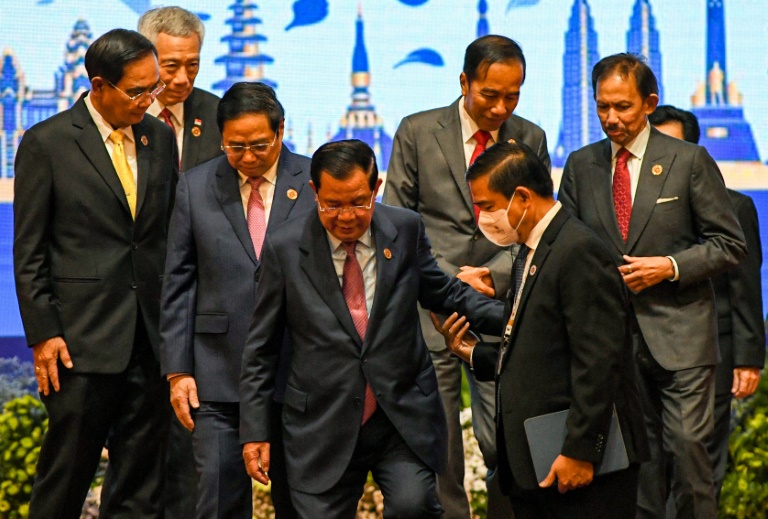
Southeast Asian leaders on Friday demanded the Myanmar junta take action to implement a peace plan aimed at quelling the country’s escalating bloodshed which has seen thousands killed in clashes since last year’s coup.

The Myanmar crisis dominated the first day of a summit of the Association of Southeast Asian Nations (ASEAN) regional bloc in Phnom Penh that US President Joe Biden will join on Saturday.

Myanmar has spiralled into bloody conflict since the military ousted Aung San Suu Kyi’s civilian government in February last year.

ASEAN agreed a “five-point consensus” peace plan with Myanmar in April last year but the junta has so far ignored it and the bloc has struggled for months to come up with ways to enforce it.

Frustration is growing among the other nine ASEAN countries at the generals’ foot-dragging and President Ferdinand Marcos Jr of the Philippines told his fellow leaders that “speedy implementation” of the consensus was needed.

ASEAN has blocked junta chief Min Aung Hlaing from attending the gathering in Phnom Penh, which Chinese Premier Li Keqiang is also attending.

China, the bloc’s biggest trading partner, has historically had good ties with the Myanmar junta, though it has voiced some unease at the ongoing chaos in the country.

Indonesian Foreign Minister Retno Marsudi said the leaders had agreed on a 15-point decision plan, thrashed out over two days of talks with her counterparts.

While she did not give details of the agreement she said it represented a stern admonition to the junta to act or face serious consequences — including expanding a ban on junta figures attending ASEAN meetings.

“This is a warning, this is a strong message from the leaders,” Marsudi told reporters.

Within the bloc, Indonesia has been one of the main voices calling for tougher action on the junta, along with Malaysia and Singapore.

Marcos also called for ASEAN to open contacts with opposition groups in Myanmar, echoing a draft summit statement seen by AFP that suggested engaging with the National Unity Government (NUG).

The NUG is a self-declared parallel body dominated by former lawmakers from Suu Kyi’s party which considers itself to be Myanmar’s legitimate government.

The Myanmar junta regards the NUG as “terrorists”, and engaging with the group would be a significant step for ASEAN.

Last year’s coup slammed the door on Myanmar’s brief dalliance with democracy after decades under army rule.

Earlier this month Singapore’s Foreign Minister Vivian Balakrishnan warned that the Myanmar military had “a very high tolerance for pain, very high tolerance for isolation” and the crisis could take decades to resolve.

– US pressure –

Western powers have heaped sanctions on the junta and the United States has urged ASEAN to take a “forceful” stance to squeeze the junta to reduce the violence, which escalated in recent weeks with deadly military air strikes on civilian targets including a school and concert.

Daniel Kritenbrink, the top US diplomat for East Asia, said Myanmar would be a top subject when Biden meets ASEAN leaders on Saturday.

After Phnom Penh, Biden is due to fly to a high-stakes meeting with his Chinese counterpart Xi Jinping on the sidelines of the G20 summit in Indonesia on Monday.

– Junta defiance –

ASEAN foreign ministers held emergency talks on Myanmar last month and said afterwards they were “even more determined” to find a solution.

Myanmar state media have slammed ASEAN’s involvement, accusing the bloc of being a “lapdog for the US” while the junta warned against imposing a timeline on the peace process, saying it could lead to “negative implications”.

On the eve of the summit, rights campaign group Amnesty International called on the leaders to agree a complete embargo on the transfer of arms and aviation fuel to Myanmar.

China's Singles Day shopping spree enters final stretch

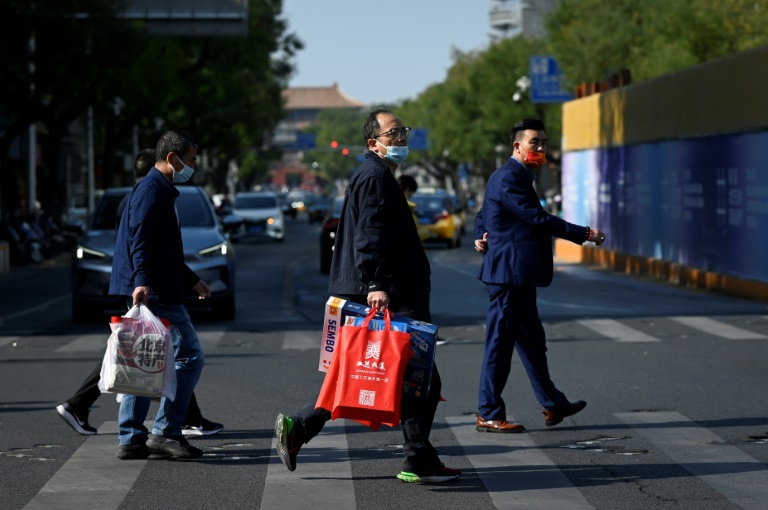
China’s Singles Day shopping bonanza entered its final stretch Friday, with all eyes on whether sales can top a record one trillion yuan ($140 billion) despite the country’s struggling economy.

Conceived by technology giant Alibaba, the informal holiday’s title riffs on a tongue-in-cheek celebration of singlehood inspired by the four ones — “11/11” — that denote its date of November 11.

It has grown to encompass much of China’s retail sector — including traditional brick-and-mortar stores, second-hand sales platforms and even rival shopping giant JD.com — with merchants offering varying levels of discounts starting in late October.

The combined gross value of products sold by Alibaba and JD.com this year “may surpass a trillion yuan,” Xiaofeng Wang, principal analyst at research firm Forrester, said in a note — up from the total of 965 billion yuan raked in at last year’s event.

Once a festival of frenzied consumption led by Alibaba’s effervescent founder Jack Ma, Singles Day has been more muted in recent years as Beijing cracks down on online platforms.

Last year’s holiday was virtually ignored by state-controlled news outlets with a host of other events competing for shoppers’ wallets.

Beijing resident Liu Yingxue said the Single’s Day atmosphere was “not as enthusiastic” as in previous years.

“Platforms like (Alibaba’s) Taobao and JD.com used to have more ads and promotions,” she told AFP. 

“And they don’t give so many discounts these days.”

– Economic strain –

The mood has been dampened further this year as Beijing persists with a zero-Covid strategy that has hammered business confidence and chipped away at consumer demand.

The holiday, conceived in 2009, has previously lured throngs of Chinese influencers alongside Western celebrities including Kim Kardashian and Taylor Swift, drawing heavy coverage in both domestic and international media.

This time around, a series of scandals and a campaign against tax evasion have lowered expectations of celebrity endorsements, with influential Chinese live-streamer Viya disappearing from social media late last year in the wake of a tax probe.

Alibaba said last week the event could “make a big difference” for retailers struggling with supply-chain disruptions and inflation this year, including a slew of foreign brands.

Businesses and consumers alike have been laid low by China’s stringent Covid prevention policies, which see officials wield snap lockdowns, mass testing and lengthy quarantines in response to a handful of cases.

Beijing resident Li Xiaofeng said the “state of the whole economy” was likely putting platforms and merchants under more pressure, “so they are offering fewer discounts”.

“I think it’s because of Covid,” said Lin Xiangru, another denizen of China’s capital. 

“People have less guaranteed income than before, so they don’t want to spend money on desired products at such a specific moment.”

China is the last major economy wedded to a strategy of extinguishing new outbreaks as they occur.

State media reported Thursday that top leaders had again vowed to stick “unswervingly” to the policy.

SoftBank posts Q2 net profit after Alibaba share sales

Japan’s SoftBank Group on Friday posted a net profit in the second quarter, partly thanks to gains from its recent reduction of its stake in Chinese e-commerce giant Alibaba.

The investment behemoth has made huge bets to find and grow new tech ventures around the world — making its earnings vulnerable to fickle market forces, and leading to dizzying highs and lows in recent years.

China’s crackdown on its tech sector has also hit SoftBank hard, because the Japanese group has long been a major shareholder in Alibaba and others such as ride-hailing giant Didi Chuxing.

In August, SoftBank announced it would sell down some of its shares in Alibaba, reducing its stake in the Chinese tech giant to around 15 percent from 24 percent.

This helped boost SoftBank’s earnings in the second quarter for a net profit of 3.03 trillion yen ($21.4 billion).

“The company’s voting ownership in Alibaba fell below 20 percent, and Alibaba was therefore excluded from the associates of the company,” SoftBank Group noted in a statement.

Over the first half of this financial year, however, it suffered a net loss of 129 billion yen, brought down by its record net loss in the first quarter.

SoftBank’s net loss in April to June was partly due to a global tech share rout triggered by interest-rate hikes by the US Fed and other central banks to tackle inflation.

These market losses caused painful drops in SoftBank’s investments in unicorn ventures, such as US food delivery app DoorDash and South Korean e-commerce brand Coupang, a broad trend that continued in the second quarter, SoftBank said.

CEO Masayoshi Son is known for his unconventional and often sanguine presentations at earnings announcements to highlight his vision and philosophy behind his decisions, such as investing generously in risky ventures like the troubled WeWork.

But in a change of tack for the company, Son will let his deputies do most of the talking at a post-results press conference later on Friday.

In 2021-22, SoftBank logged a record full-year net loss — having recorded Japan’s biggest-ever annual net profit the previous financial year.

To illustrate the financial woes of the Covid-19 pandemic, Son once displayed a drawing of horses trotting toward a “Valley of Coronavirus”, some staying at its bottom while others grew wings and horns to soar to the heavens as unicorns.

And at his last earnings announcement in August, Son showed a painting of a grimacing samurai warlord who suffered a major battlefield setback as he discussed deep losses that plagued his company.

Repeat hacks highlight Australia's cyber flaws

Inadequate privacy safeguards and the stockpiling of sensitive customer information have made Australia a lucrative target in the eyes of foreign hackers, cybersecurity experts told AFP following a series of major data breaches.

Medibank, Australia’s largest private health insurer, recently confirmed that hackers had accessed the data of 9.7 million current and former customers, including medical records related to drug abuse and pregnancy terminations. 

Telecom company Optus fell prey to a data breach of similar scale in late September, during which the personal details of up to 9.8 million people were accessed. 

Both incidents sit comfortably among the largest data breaches in Australian history. 

Australian National University cybersecurity expert Thomas Haines said many companies had been hoarding personal data that they should not have been hanging on to. 

“There was a famous line for a while: Data is the new oil,” he told AFP. 

“If data is the new oil, then we’re living the era of the weekly oil spill.” 

Haines contrasted Australia’s approach with that of the European Union, which in 2018 adopted sweeping privacy reforms limiting how organisations collect, use and store personal data.

“There have got to be incentives in place to stop companies hoarding data they don’t need, or to penalise those companies for big leaks. Europe has done this,” he said.

“At the moment the business incentives are basically along the lines of: Let’s just keep a whole bunch of data.”

Haines said Medibank appeared to be an exception, in that most of the sensitive information within its databases had been stored for good reason. 

– Hacking ‘for profit’ – 

Australia’s comparatively weak safeguards against identity theft meant it was also easier to exploit stolen personal information, Haines said. 

“All they need to know is your passport, your driver’s licence and some other things — and then I can start taking out loans in your name.”

Haines said European countries such as Norway had much more stringent requirements involving face-to-face contact.

Dennis Desmond, a former FBI agent and US Defense Intelligence Agency officer, said most hackers were searching for particular types of data. 

“For-profit hackers are going after healthcare data, they’re going after identity data and credentials to access systems,” he told AFP.

“There is a profit motivation there, otherwise they wouldn’t be risking jail and prosecution.”

The Medibank hackers this week started leaking stolen data to a dark web forum, after the company refused to pay a US$9.7 million (Aus$15 million) ransom.

The Optus breach led to the theft of customers’ names, birth dates, and passport numbers.

– Russia blamed –

Australian Federal Police Commissioner Reece Kershaw on Friday blamed the Medibank cyberattack on a team of hackers based in Russia.

“We believe those responsible for the breach are in Russia,” he told reporters.

“Our intelligence points to a  group of loosely affiliated cyber criminals who are likely responsible for past significant breaches in countries across the world.”

Medibank data leaked to the dark web so far has included hundreds of potentially-compromising medical records related to drug addiction, alcohol abuse and sexually-transmitted infections. 

Home Affairs Minister Clare O’Neil conceded on Friday the country’s cyber defences had not always been up to scratch. 

University of Sydney data researcher Jane Andrew said one major flaw was that Australian companies were not always obliged to report data breaches. 

“There are heaps of data breaches happening all the time that we don’t hear anything about,” she told AFP. 

“Companies have been gathering data because it’s seen to be valuable, without fully understanding the potential risks.” 

China's Singles Day shopping spree enters final stretch

China’s Singles Day shopping bonanza entered its final stretch Friday, with all eyes on whether sales can top a record one trillion yuan ($140 billion) despite the country’s struggling economy.

Conceived by technology giant Alibaba, the informal holiday’s title riffs on a tongue-in-cheek celebration of singlehood inspired by the four ones — “11/11” — that denote its date of November 11.

It has grown to encompass much of China’s retail sector — including traditional brick-and-mortar stores, second-hand sales platforms and even rival shopping giant JD.com — with merchants offering varying levels of discounts starting in late October.

The combined gross value of products sold by Alibaba and JD.com this year “may surpass a trillion yuan,” Xiaofeng Wang, principal analyst at research firm Forrester, said in a note — up from the total of 965 billion yuan raked in at last year’s event.

Once a festival of frenzied consumption led by Alibaba’s effervescent founder Jack Ma, Singles Day has been more muted in recent years as Beijing cracks down on online platforms.

Last year’s holiday was virtually ignored by state-controlled news outlets with a host of other events competing for shoppers’ wallets.

Beijing resident Liu Yingxue said the Single’s Day atmosphere was “not as enthusiastic” as in previous years.

“Platforms like (Alibaba’s) Taobao and JD.com used to have more ads and promotions,” she told AFP. 

“And they don’t give so many discounts these days.”

– Economic strain –

The mood has been dampened further this year as Beijing persists with a zero-Covid strategy that has hammered business confidence and chipped away at consumer demand.

The holiday, conceived in 2009, has previously lured throngs of Chinese influencers alongside Western celebrities including Kim Kardashian and Taylor Swift, drawing heavy coverage in both domestic and international media.

This time around, a series of scandals and a campaign against tax evasion have lowered expectations of celebrity endorsements, with influential Chinese live-streamer Viya disappearing from social media late last year in the wake of a tax probe.

Alibaba said last week the event could “make a big difference” for retailers struggling with supply-chain disruptions and inflation this year, including a slew of foreign brands.

Businesses and consumers alike have been laid low by China’s stringent Covid prevention policies, which see officials wield snap lockdowns, mass testing and lengthy quarantines in response to a handful of cases.

Beijing resident Li Xiaofeng said the “state of the whole economy” was likely putting platforms and merchants under more pressure, “so they are offering fewer discounts”.

“I think it’s because of Covid,” said Lin Xiangru, another denizen of China’s capital. 

“People have less guaranteed income than before, so they don’t want to spend money on desired products at such a specific moment.”

China is the last major economy wedded to a strategy of extinguishing new outbreaks as they occur.

State media reported Thursday that top leaders had again vowed to stick “unswervingly” to the policy.

Australia blames Russian hackers for medical data theft

Russian hackers carried out a cyberattack on a major Australian healthcare company that breached the data of 9.7 million people, including the country’s prime minister, police said Friday.

The hackers started leaking the data this week after Medibank, the country’s largest health insurer, refused to pay a $9.7 million (Aus$15 million) ransom.

Australian Federal Police commissioner Reece Kershaw blamed the attack on Russia-based “cyber criminals”. 

“We believe those responsible for the breach are in Russia,” he told reporters.

“Our intelligence points to a group of loosely affiliated cyber criminals who are likely responsible for past significant breaches across the world.”

The hackers have been drip-feeding the stolen data to a dark web forum.

The first leaks appeared to have been selected to cause maximum harm: targeting those who received treatment related to drug abuse, sexually transmitted infections, or pregnancy terminations.

Kershaw said the hackers also appeared to be supported by people living outside Russia.

“These cyber criminals are operating like a business with affiliates and associates who are supporting the business.

“We also believe that some affiliates may be in other countries.”

He added that Australian police would be working with Interpol and seeking the cooperation of their counterparts in Russia.

“We’ll be holding talks with Russian law enforcement about these individuals,” he said.

“Russia benefits from the intelligence sharing and data shared through Interpol and with that comes responsibilities and accountability.”

– Retaliation threat –

Australia has repeatedly condemned Russia’s invasion of Ukraine and has provided Kyiv with hundreds of millions of dollars in aid and military equipment.

Australia’s foreign intelligence agency in April warned that backing Ukraine could open the country up to reprisals from Russian hackers. 

“Russian-aligned cybercrime groups have threatened to conduct cyber operations in retaliation for perceived cyber offensives against the Russian government,” the Australian Signals Directorate said in an advisory note. 

“Some groups have also threatened to conduct cyber operations against countries and organisations providing materiel support to Ukraine.”

Kershaw said police knew the identities of the hackers but he would not be naming them.

Cybersecurity analysts have suggested they could be linked to Russian hacker group REvil. 

REvil — an amalgam of ransomware and evil — was reportedly dismantled by Russian authorities earlier this year, after extracting an $11 million ransom from JBS Foods, a major food conglomerate. 

– ‘Rolled gold mongrels’ –

Australian National University cybersecurity expert Thomas Haines said tracking the hackers down was the easiest part for police.

“It’s unusual for hackers to cover their tracks so well that you don’t know where they came from,” he told AFP. 

“But there are certain areas of the world where the ability to apply any pressure is effectively zero.”

Kershaw said Australian police were taking “covert measures” to bring the hackers to justice. 

“To the criminals, you know we know who you are,” he said. 

“The Australian Federal Police has some significant runs on the scoreboard when it comes to bringing overseas offenders back to Australia to face the justice system.”

Education Minister Jason Clare on Friday called the hackers “rolled gold mongrels”, while Home Affairs Minister Clare O’Neil has dubbed them “scummy criminals”.

O’Neil on Thursday said the “smartest and toughest” people in Australia were hunting down the hackers.

In a taunting reply posted to the dark web early Friday morning, the hackers said: “We always keep our word.” 

“We should post this data, because nobody will believe us in the future.”

Japan govt backs major firms in next-gen chip project

The Japanese government will pour half a billion dollars into a new project to develop and make next-generation microchips, chief cabinet secretary Hirokazu Matsuno said Friday.

Eight major companies including Sony, SoftBank, Toyota and telecoms giant NTT have joined forces for the venture, Japanese media reports said.

The new firm, named Rapidus, will develop and mass produce next-generation semiconductors by 2027, according to major media outlets including national broadcaster NHK and the Mainichi Shimbun.

The pandemic has fuelled a global shortage of memory chips, with governments scrambling to secure supplies as carmakers and tech companies have been forced to make production cuts.

Each company has invested around one billion yen ($7 million), with MUFG Bank investing 300 million yen, according to the industry ministry. 

The investor companies are expected to officially announce the project later on Friday. 

The ministry will grant 70 billion yen to Rapidus to lead a research and development project for next-generation semiconductors, Matsuno said without elaborating.

“Semiconductors are a key technology that supports digitalisation and decarbonisation,” Matsuno said at a regular briefing.

“We hope these steps will help improve the competitiveness of our country’s semiconductor industry.”

The chip shortage has prompted calls for the government and businesses to secure semiconductor supplies for Japan’s economic security, as geopolitics become increasingly volatile — especially concerning Taiwan, which has a huge chip-producing capacity.

The United States recently introduced new measures to limit China’s access to high-end semiconductors with military uses, a move that has wiped billions from chip companies’ valuations worldwide.

The German economy ministry also has recommended that the sale of a chip factory to a Chinese-owned firm should be blocked as it poses a security threat, government sources said Tuesday.

Last year, Taiwanese chip giant TSMC and Sony said they would tie up on a new $7 billion plant in Japan.

Close Bitnami banner
Bitnami