Chinese Business

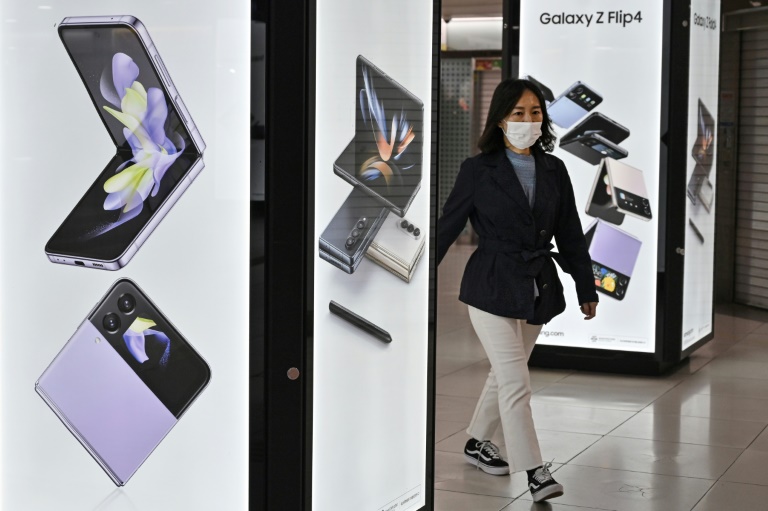
Samsung Electronics says Q3 operating profit down 31% on-year

South Korean tech giant Samsung Electronics on Thursday said its third-quarter operating profits were down 31.39 percent year on year after a global economic downturn hit demand for consumer electronics.

Earnings in its crucial memory chips division dropped, the company said in a statement, adding that “demand for consumer products remained weak”.

Operating profit for July to September 2022 fell to 10 trillion won ($7 billion), down from 15.8 trillion won for the same period last year, the company said.

The results are the first year-on-year decline in profit in nearly three years for Samsung Electronics, the world’s biggest smartphone maker.

But the company said it had seen an increase in sales, which were up by 3.79 percent from the same period last year to 76 trillion won.

The world’s biggest memory-chip maker is the flagship subsidiary of the giant Samsung group, by far the largest of the family-controlled empires known as chaebols that dominate business in South Korea, Asia’s fourth-largest economy.

The conglomerate is crucial to the country’s economic health — its overall turnover is equivalent to a fifth of the national gross domestic product.

Until the second quarter of this year, Samsung, along with other tech companies, significantly benefited from strong demand for electronic devices — as well as chips that power them — during the pandemic.

But the global economy is now facing multiple challenges, including soaring inflation, rising interest rates and the growing threat of a broad debt crisis.

The situation has been exacerbated by Russia’s invasion of Ukraine — which has spurred a surge in energy prices and pushed global food prices up — along with China’s adherence to a strict zero-Covid policy.

“In 2023, demand is expected to recover to some extent, but macroeconomic uncertainties are likely to persist,” Samsung Electronics said.

“In the Memory Business, after a dampened first half, demand is expected to rebound centering on servers as data center installations resume,” it added.

Analyst Park Sung-soon of Cape Investment & Securities told AFP he did not expect consumer demand for tech products to recover until the second half of 2023. 

“So the focus for Samsung will be adjusting its supply rather than relying on demand recovering anytime soon,” he said.

Samsung also said it had benefited from the strength of the US dollar against the Korean won, “resulting in an approximately 1.0 trillion won company-wide gain in operating profit compared to the previous quarter”.

Parent company Samsung Group announced Thursday that heir and de facto leader Lee Jae-yong — who received a presidential pardon in August over a fraud conviction — would be promoted to chairman.

– Geopolitics –

The vast majority of the world’s most advanced microchips are made by just two companies — Samsung and Taiwan’s TSMC — both of which are running at full capacity to alleviate a global shortage.

The supply of memory chips has become an issue of global geopolitical significance recently, with leading governments scrambling to secure supplies.

That was demonstrated in May when US President Joe Biden kicked off a South Korea tour by visiting Samsung’s sprawling Pyeongtaek chip plant.

Russia’s invasion of Ukraine has “further spotlighted the need to secure our critical supply chains”, Biden said at the plant, underscoring the importance of bolstering technology partnerships among “close partners who do share our values”.

Samsung employs about 20,000 people in the United States and work is under way to build a new semiconductor plant in Texas, scheduled to open in 2024.

The US also recently introduced new measures to limit China’s access to high-end semiconductors with military uses, a move that has wiped billions from chip companies’ valuations worldwide.
Euro bounces back above dollar parity

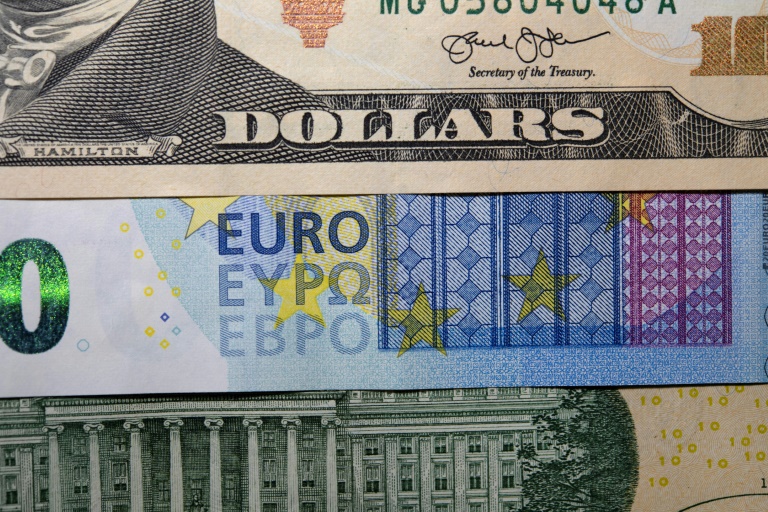
The euro on Wednesday jumped back above parity with the dollar, the US currency sliding against its main rivals on concerns over the world’s biggest economy and the prospect of slower interest rate hikes.

The euro bounced back above one dollar for the first time since mid-September, helped also by expectations of a big interest-rate hike from the European Central Bank on Thursday.

There were large gains against the dollar also for the British pound and yen, helping them recover some ground following the recent sharp losses.

The dollar retreated following “a string of negative (US) economic data released since the beginning of the week,” noted ActivTrades senior analyst Ricardo Evangelista.

Poorly received data, including slower house price growth and weaker consumer confidence, showed that big rate hikes from the Federal Reserve are “starting to open some cracks in the American economy,” he said.

“The Federal Reserve has been hiking rates aggressively in an attempt to bring inflation under control, and the country’s economy is starting to suffer as a result,” Evangelista added.

– Risk investments rebound –

A string of poor economic news has been welcomed by investors as it opens up the possibility that the Fed can slow down or end its interest rate hikes sooner. The recent news has seen risk investments like equities rebound in recent weeks.

The Bank of Canada on Wednesday increased its main rate by a smaller than expected 0.5 percentage points.

Market analyst Michael Hewson at CMC Markets said the move “suggests that central banks are starting to wake up to the possibility that too aggressive rate rises could do more harm than good.”

He added: “It’s also got markets asking the question, could the Fed follow suit next week after another poor set of housing numbers from the US.”

Wall Street stocks, which had rallied the last three days on hopes of expectations of moderating Fed policy, mostly fell following disappointing results from Boeing and tech giants Microsoft and Google parent Alphabet. 

In Europe, London, Frankfurt and Paris stocks all ended the day higher.

Sterling on Wednesday jumped more than one percent against the dollar, winning a boost also from markets welcoming the appointment of Rishi Sunak as British prime minister.

The move was seen as offering stability to the UK economy after weeks of upheaval fuelled by predecessor Liz Truss’s tax-cutting budget.

“The pound pushed back above the 1.1600 area against the US dollar today and risen against the euro despite the prospect that next week’s budget statement has been delayed until 17th November in order to allow time” for updated fiscal forecasts, said Hewson.

– Key figures around 2300 GMT –

Euro/dollar: UP at $1.0087 from $0.9966 on Tuesday

Pound/dollar: UP at $1.1621 from $1.1472 

Dollar/yen: DOWN at 146.39 yen from 147.93 yen

Euro/pound: DOWN at 86.77 pence from 86.88 pence

New York – Dow: FLAT at 31,839.11 (close)

New York – S&P 500 DOWN 0.7 percent at 3,830.60 (close)

New York – Nasdaq: DOWN 2.0 percent at 10,970.99 (close)

London – FTSE 100: UP 0.6 percent at 7,056.07 (close) 

Frankfurt – DAX: UP 1.1 percent at 13,195.81 (close)

Paris – CAC 40: UP 0.4 percent at 6,276.31 (close)

EURO STOXX 50: UP 0.6 percent at 3,605.31 (close)

Tokyo – Nikkei 225: UP 0.7 percent at 27,431.84 (close)

Hong Kong – Hang Seng Index: UP 1.0 percent at 15,317.67 (close)

Shanghai – Composite: UP 0.8 percent at 2,999.50 (close)

Brent North Sea crude: UP 2.3 percent at $95.69 per barrel

West Texas Intermediate: UP 3.0 percent at $87.91 per barrel

burs-jmb/st

Seeing no China progress, Boeing eyes other prospective MAX buyers

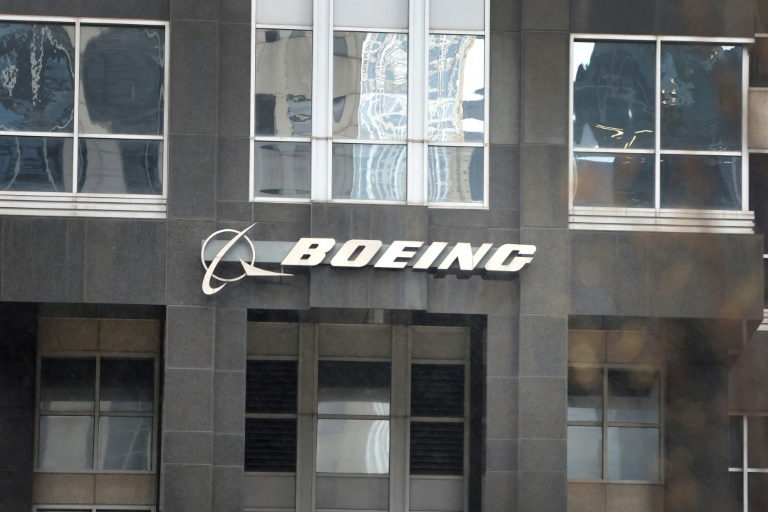
Boeing said Wednesday it is seeking other potential customers for its 737 MAX because China is still not taking delivery of the jetliners it has ordered.

Chief Financial Officer Brian West said the company was in “active discussions” with other customers about 138 planes in inventory ordered by Chinese companies.

There is “more to come and we’ll keep you updated,” West told analysts.

Executives described the outreach as part of an effort to “de-risk” Boeing’s finances given the murky outlook for the company’s China business.

China’s zero-tolerance Covid-19 policies “have reduced demand for airplanes in general,” Chief Executive Dave Calhoun said during a conference call with analysts.

“We still would like to deliver airplanes to China. We continue to support our customers,” Calhoun said.

“But we also are clear-eyed about the geopolitical risks that are out there and we are not going to impart new risks on our investors,” said Calhoun, adding, “I have not gotten a single signal … they’re going to take deliveries in the near term.”

The MAX was grounded globally following the second of two deadly crashes in March 2019 until the Federal Aviation Administration became the first major regulator to clear the plane in November 2020 to resume service following upgrades, extensive testing and new training protocols.

China was the last major Boeing market to deem the jet airworthy in December 2021. But the plane still needs to clear a few final hurdles with Chinese regulators and has not resumed service in that country.

Euro bounces back above dollar parity

The euro on Wednesday jumped back above parity with the dollar, the US currency sliding against its main rivals on concerns over the world’s biggest economy and the prospect of slower interest rate hikes.

The euro bounced back above one dollar for the first time since mid-September, helped also by expectations of a big interest-rate hike from the European Central Bank on Thursday.

There were large gains against the dollar also for the British pound and yen, helping them recover some ground following the recent sharp losses.

The dollar retreated following “a string of negative (US) economic data released since the beginning of the week”, noted ActivTrades senior analyst Ricardo Evangelista.

Poorly received data, including slower house price growth and weaker consumer confidence, showed that big rate hikes from the Federal Reserve are “starting to open some cracks in the American economy”, he said.

“The Federal Reserve has been hiking rates aggressively in an attempt to bring inflation under control, and the country’s economy is starting to suffer as a result,” Evangelista added.

– Risk investments rebound –

A string of poor economic news has been welcomed by investors as it opens up the possibility that the Fed can slow down or end its interest rate hikes sooner. The recent news has seen risk investments like equities rebound in recent weeks.

The Bank of Canada on Wednesday increased its main rate by a smaller than expected 0.5 percentage points.

Market analyst Michael Hewson at CMC Markets said the move “suggests that central banks are starting to wake up to the possibility that too aggressive rate rises could do more harm than good.”

He added: “It’s also got markets asking the question, could the Fed follow suit next week after another poor set of housing numbers from the US.”

Wall Street, which had opened lower on poor results from tech giants, was mostly higher in late morning trading.

In Europe, London, Frankfurt and Paris stocks all ended the day higher.

Sterling on Wednesday jumped more than one percent against the dollar, winning a boost also from markets welcoming the appointment of Rishi Sunak as prime minister.

The move was seen as offering stability to the UK economy after weeks of upheaval fuelled by predecessor Liz Truss’s tax-cutting budget.

“The pound pushed back above the 1.1600 area against the US dollar today and risen against the euro despite the prospect that next week’s budget statement has been delayed until 17th November in order to allow time” for updated fiscal forecasts, said Hewson.

– Key figures around 1530 GMT –

Euro/dollar: UP at $1.0071 from $0.9971 on Tuesday

Pound/dollar: UP at $1.1612 from $1.1478 

Dollar/yen: DOWN at 146.40 yen from 147.92 yen

Euro/pound: DOWN at 86.73 pence from 86.85 pence

New York – Dow: UP 1.0 percent at 32,165.41 points

EURO STOXX 50: UP 0.6 percent at 3,605.31

London – FTSE 100: UP 0.6 percent at 7,056.07 (close) 

Frankfurt – DAX: UP 1.1 percent at 13,195.81 (close)

Paris – CAC 40: UP 0.4 percent at 6,276.31 (close)

Tokyo – Nikkei 225: UP 0.7 percent at 27,431.84 (close)

Hong Kong – Hang Seng Index: UP 1.0 percent at 15,317.67 (close)

Shanghai – Composite: UP 0.8 percent at 2,999.50 (close)

Brent North Sea crude: UP 2.4 percent at $95.79 per barrel

West Texas Intermediate: UP 3.2 percent at $88.04 per barrel

burs-rl/jj

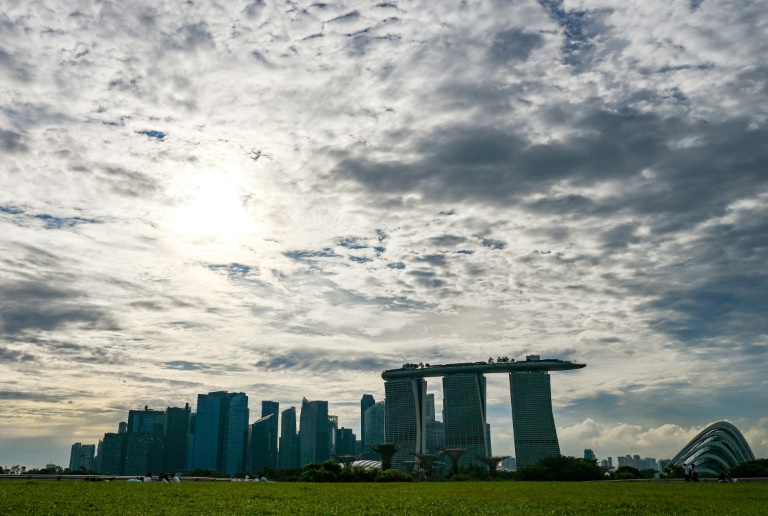
Would-be crypto investors in Singapore could face risk awareness tests

People looking to trade cryptocurrency in Singapore may soon have to take a test to prove they understand what they are getting into, the central bank said Wednesday, as it looks to prevent clueless investors from bankrupting themselves.

The Asian finance hub has taken cautious steps to expand its digital assets market, but has warned against the risks from trading in digital coins, especially among small investors lured by stories of quick riches.

“Trading in cryptocurrencies is highly risky and not suitable for the general public,” the Monetary Authority of Singapore (MAS) said as it unveiled proposals to protect traders.

“However, cryptocurrencies play a supporting role in the broader digital asset ecosystem and it would not be feasible to ban them.”

Under the plan, which will face public scrutiny before it can become legislation, the MAS will require cryptocurrency service providers to be more transparent in telling consumers about the risks so they can make informed choices.

Would-be investors must also take a test to assess their understanding of the risks before they are allowed to trade, and they will be barred from using credit cards or payment apps to buy the units.

If an applicant fails to answer the questions correctly, service providers can give them “educational materials… to strengthen the customer’s knowledge of the risks… This should not be limited to those questions to which the retail customer answered incorrectly”.

Incentives encouraging consumers to invest in crypto are not allowed, and service providers must also adhere to certain standards on how to carry out their business, the MAS said.

Chia Hock Lai, co-chairman of the Blockchain Association Singapore, said while the proposed measures are “comprehensive”, they run the risk of “over-regulating” as some are interconnected.

For example, the risk awareness test “should negate the need to bar credit card payments and provision of incentives to retail customers”, he told AFP.

There has been a global push to regulate the crypto market following wild swings and a string of high-profile collapses, some of which took place in the city-state, hitting its reputation as a potential crypto hub.

In June, Singapore-based cryptocurrency hedge fund Three Arrows Capital collapsed, while Hodlnaut — a crypto lender based in the country — has been placed under interim judicial management.

Fugitive South Korean national Do Kwon, founder of cryptocurrency Terra, was also based in the city-state.

Despite the risks, digital currencies continue to attract investors because of reported big gains made over short periods and promotional endorsements encouraging the public to get into the market, the MAS said.

Cryptocurrencies are not backed by real-world assets, making them subject to huge price swings and trading in them is highly speculative.

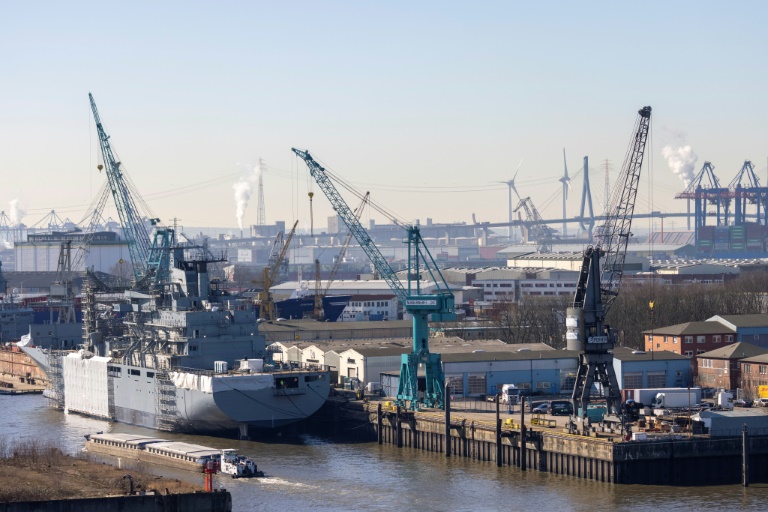
Germany allows controversial Chinese stake in Hamburg port

Germany’s coalition government on Wednesday allowed a Chinese firm to buy a reduced stake in a Hamburg port terminal, after Chancellor Olaf Scholz resisted calls to ban the controversial sale outright over security concerns.

Under the compromise agreed by Scholz’s cabinet, Chinese shipping giant Cosco has the go-ahead to buy a stake “below 25 percent” in the Tollerort container terminal owned by HHLA, the economy ministry said in a statement.

“The reason for the partial prohibition is the existence of a threat to public order and safety,” said the ministry.

China’s state-owned Cosco had initially sought a 35-percent stake and the deal would have automatically gone ahead if a compromise solution wasn’t found this week.

The breakthrough came ahead of Scholz’s visit to China next week as the first European Union leader to make the trip since November 2019.

Scholz, a former Hamburg mayor, backed the Cosco deal and has repeatedly stressed the importance of strong trade ties between China and Europe’s biggest economy.

But six ministries wanted to veto the sale, including those of defence, economy and foreign affairs, at a time of heightened concerns about critical infrastructure falling into foreign hands.

The row pitted Social Democrat Scholz against his coalition partners, the Greens and the liberal FDP, who said lessons had to be learned from Germany’s breakdown in ties with Russia.

Beijing welcomed Wednesday’s green light and hit back at critics.

“We hope the relevant parties will view pragmatic cooperation between China and Germany rationally and stop baselessly hyping it up,” said foreign ministry spokesman Wang Wenbin.

Scholz meanwhile was “convinced” that the smaller stake offered to Cosco “does not create strategic dependence”, German government spokeswoman Christiane Hoffmann told reporters.

– ‘Naive’ –

Badly burned by the over-reliance on Russian gas imports, many in Germany are wary of falling into the same trap and becoming too dependent on China economically.

The European Commission also voiced scepticism over the Hamburg project, a source close to the matter told AFP at the weekend, amid fears sensitive information about activity in the port could be relayed to China’s government.

The agreement to settle for allowing a reduced stake of 24.9 percent, thereby depriving Cosco of voting rights, “reduces the acquisition to a purely financial participation”, the economy ministry said.

German harbour logistics firm HHLA for its part said Cosco’s participation would help secure jobs at Hamburg’s port and boost its role as a key trading “hub” with Asia.

But the face-saving compromise failed to silence critics.

Anton Hofreiter, a Green party lawmaker and chairman of the German parliament’s European affairs committee, said approving the deal was the wrong decision.

Scholz’s argument “that this is a purely commercial project is fatally reminiscent of the statements on Russia and Nord Stream (gas pipelines),” he told Funke media group.

“The attitude can be described as naive at best,” he said.

Franziska Brandmann, leader of the FDP’s youth wing, likewise accused the government of being “naive”.

Conservative opposition leader Friedrich Merz said Germany needed “a reassessment of its relationship with China”, noting that the Asian giant was becoming “more repressive” at home and “increasingly aggressive” abroad.

– Tougher stance –

Chinese firms already hold stakes in other European ports, including Rotterdam and Antwerp, but the EU’s stance against Beijing has hardened since then.

Germany too has in recent years taken a closer look at Chinese investment in sensitive technologies and other areas, and reserves the right to veto acquisitions.

The economy ministry said Wednesday that as part of the Cosco compromise, the Chinese firm would not be allowed to appoint senior staff members or have a veto right on strategic business decisions.

Any future attempt to increase the shareholding above the 25-percent threshold would trigger a fresh government review, the ministry added.

China is a key trading partner for Germany, especially for its flagship automotive industry.

But the relationship has been soured in recent years by China’s strict zero-Covid policy, the escalation of tensions over Taiwan and concern over human rights issues in the Muslim-dominated Xinjiang region.

Euro back above dollar parity on US economic strains

The euro on Wednesday surged back above parity with the dollar, with the US currency sliding against its main rivals on concerns over the world’s biggest economy.

The euro bounced back above one dollar for the first time since mid-September, helped also by expectations of a big interest rate hike from the European Central Bank on Thursday.

There were large gains against the dollar also for the British pound and yen, helping them to recover some ground after recent sharp losses.

The dollar retreated following “a string of negative (US) economic data released since the beginning of the week”, noted ActivTrades senior analyst Ricardo Evangelista.

He said that poorly-received data, including slower house price growth and weaker consumer confidence, showed that big rate hikes from the Federal Reserve are “starting to open some cracks in the American economy. 

“The Federal Reserve has been hiking rates aggressively in an attempt to bring inflation under control, and the country’s economy is starting to suffer as a result,” Evangelista added.

Sterling on Wednesday jumped more than one percent against the dollar, winning a boost also from markets welcoming the appointment of Rishi Sunak as prime minister.

The move was seen as offering stability to the UK economy after weeks of upheaval fuelled by predecessor Liz Truss’s tax-cutting budget.

The dollar also slumped against the yen following recent 32-year highs, as the Bank of Japan holds off from raising interest rates.

– Stocks track earnings –

Stock markets were mixed Wednesday as traders digested another batch of earnings from some of the world’s biggest companies.

Banks are enjoying large profits as interest rates rise but there are concerns over bad loans with the global economy threatened by possible recession.

Shares in Barclays fell 1.3 percent despite the British bank announcing a 10-percent jump in quarterly net profits.

Google parent Alphabet meanwhile reported quarterly earnings that fell short of market expectations as belts tightened in the digital ad market that drives its revenue.

Alphabet shares slipped 6.8 percent to $97.35 in after-market trades that followed the release of the earnings report.

“When Google stumbles, it’s a bad omen for digital advertising at large,” said Insider Intelligence analyst Evelyn Mitchell.

“This disappointing quarter for Google signifies hard times ahead if market conditions continue to deteriorate.”

– Key figures around 0945 GMT –

Euro/dollar: UP at $1.0023 from $0.9971

Pound/dollar: UP at $1.1567 from $1.1478 on Tuesday

Dollar/yen: DOWN at 147.14 yen from 147.92 yen

Euro/pound: DOWN at 86.64 pence from 86.85 pence

London – FTSE 100: DOWN 0.4 percent at 6,983.15 points

Frankfurt – DAX: DOWN 0.5 percent at 13,115.31

Paris – CAC 40: UP 0.1 percent at 6,255.26

EURO STOXX 50: DOWN 0.1 percent at 3,580.76

Tokyo – Nikkei 225: UP 0.7 percent at 27,431.84 (close)

Hong Kong – Hang Seng Index: UP 1.0 percent at 15,317.67 (close)

Shanghai – Composite: UP 0.8 percent at 2,999.50 (close)

New York – Dow: UP 1.1 percent at 31,836.74 (close)

Brent North Sea crude: UP 0.4 percent at $93.89 per barrel

West Texas Intermediate: UP 0.6 percent at $85.82 per barrel

burs/bcp/rox

China Covid curbs disrupt production at world's biggest iPhone factory

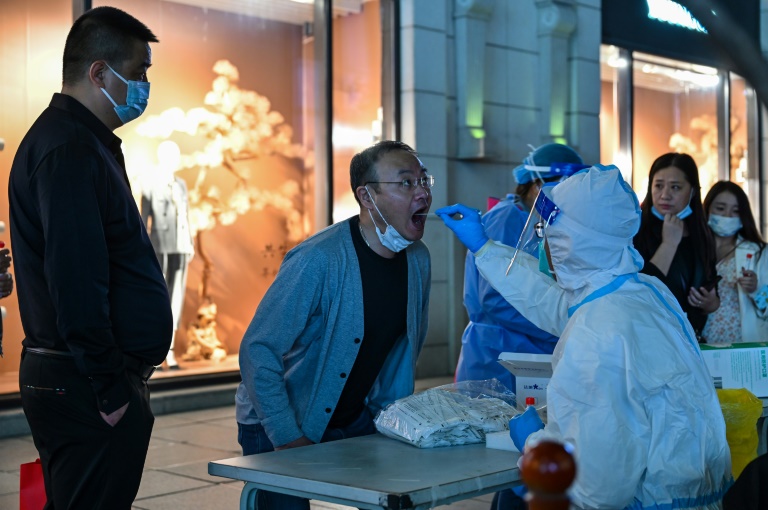
Millions of people in China were under tight Covid restrictions on Wednesday as sporadic outbreaks across the country prompted business closures and disruption at the world’s largest iPhone factory.

China is the last major economy welded to a zero-Covid strategy, persisting with snap lockdowns, mass testing and lengthy quarantines in a bid to keep infections to a minimum.

But fast-spreading virus variants have challenged that approach in recent months, with shutdowns and an ever-shifting patchwork of curbs sparking public exasperation and rare pockets of protest.

The world’s most populous nation recorded just 1,241 new local cases on Wednesday, the majority of which displayed no symptoms, according to the National Health Commission.

But they include an outbreak at a factory in the central city of Zhengzhou that employs around 300,000 people and is known as the largest producer of iPhones in the world.

Foxconn Technology Group, which runs the facility, acknowledged the flare-up on Wednesday but said “operation and production… is relatively stable”.

“Health and safety measures for employees (are) being maintained,” the Taiwanese electronics maker said, adding that it was “providing the necessary guarantees for livelihoods, including material supplies, psychological comfort and responsive feedback”.

The company did not specify how many staff were affected by the outbreak but said it was a “small number” and that unsubstantiated online rumours of tens of thousands of infections were “patently false”.

“At present, the epidemic prevention work in Zhengzhou is progressing steadily, and the impact… is controllable,” the statement said.

“The operating outlook for this quarter remains unchanged,” it added.

There were signs of further tightening in Beijing, with the capital’s Universal Resort theme park saying on Wednesday that it had “closed temporarily… to implement epidemic control requirements”.

“We will continue to evaluate the impact on operations and work hard to restore them as soon as possible”, the resort said on its official Weibo social media account, without giving a timeline for reopening.

– Inhalable vaccine –

Chinese authorities have shown little willingness to ease Covid measures even as the number of daily cases has diminished, with Japanese investment bank Nomura estimating this week that more than 200 million people are under some form of enhanced restrictions.

In the northwestern city of Xining — home to 2.5 million — residents complained on social media about grinding stay-home measures, with some making accusations of underreported cases that AFP was unable to verify.

“Xining is like Shanghai in April,” wrote one Weibo user, referencing the months-long lockdown that triggered isolated protests in the eastern megacity earlier this year.

But Shanghai’s situation has since improved, and officials there began rolling out an inhalable Covid vaccine on Wednesday in what is thought to be the first such campaign in the world.

The vaccine — produced by Tianjin-based manufacturer CanSino Biologics — was approved by domestic regulators last month and is being administered as a booster for those who have previously received a jab.

Footage posted on social media by local news outlets showed residents lifting translucent beakers to their lips and sucking in the mist-like vaccine through a nozzle.

Would-be crypto investors in Singapore could face risk tests

People looking to trade cryptocurrency in Singapore may soon have to take a test to prove they understand what they are getting into, the central bank said Wednesday, as it looks to prevent clueless investors from bankrupting themselves.

The Asian finance hub has taken cautious steps to expand its digital assets market, but has warned against the risks from trading in digital coins, especially among small investors lured by stories of quick riches.

“Trading in cryptocurrencies is highly risky and not suitable for the general public,” the Monetary Authority of Singapore (MAS) said as it unveiled proposals to protect traders.

“However, cryptocurrencies play a supporting role in the broader digital asset ecosystem and it would not be feasible to ban them.”

Under the plan, which will face public scrutiny before it can become legislation, the MAS will require cryptocurrency service providers to be more transparent in telling consumers about the risks so they could make informed choices.

Would-be investors must also take a test to assess their understanding of the risks before they are allowed to trade, and they will be barred from using credit cards or payment apps to buy the units.

If an applicant fails to answer the questions correctly, service providers can give them “educational materials… to strengthen the customer’s knowledge of the risks… This should not be limited to those questions to which the retail customer answered incorrectly”.

Incentives encouraging consumers to invest in crypto are disallowed, and service providers must also adhere to certain standards on how to carry out their business, the MAS said.

There has been a global push to regulate the crypto market following wild swings and a string of high-profile collapses, some of which took place in the city-state, hitting its reputation as a potential crypto hub.

In June, Singapore-based cryptocurrency hedge fund Three Arrows Capital collapsed, while Hodlnaut — a crypto lender based in the city-state — has been placed under interim judicial management.

Fugitive South Korean national Do Kwon, founder of cryptocurrency Terra, was also based in the city-state.

Despite the risks, digital currencies continue to attract investors because of reported big gains made over short periods and promotional endorsements encouraging the public to get into the market, the MAS said.

Cryptocurrencies are not backed by real-world assets, making them subject to huge price swings and trading in them is highly speculative.

Markets rise with Wall St on rate hope, healthy earnings

Stocks rose Wednesday to build on another strong performance in New York following more healthy earnings from big-name firms while hopes for a slowdown in Federal Reserve rate hikes spread cheer.

Hong Kong and Shanghai enjoyed a much-needed advance after China’s central bank and forex officials pledged support for the country’s equities, bonds and yuan, helping investors bounce back from Monday’s rout.

The mood across trading floors has been generally positive this week after a report on Friday suggested the Fed could begin discussing applying the brakes on its monetary tightening campaign aimed at fighting decades-high inflation.

That came as some bank officials hinted they could be open to the prospect of hiking by less than the 75 basis points seen after the past three meetings.

And while a similar move is expected next month, there are flickers of hope that the pace could slow in December or next year.

Adding to that optimism was data indicating that higher borrowing costs were having an impact on the world’s biggest economy, with house prices falling, consumer confidence at a three-month low and weakness in the factory sector.

“A few economic reports all told a similar story… that the economy is weakening,” said OANDA’s Edward Moya. “A weakening economy will bring down inflation and that is good news for long-term investors looking to get back into equities.”

CMC Markets analyst Michael Hewson added: “There appears to be an increasing belief that a Fed pause is close.”

He pointed to comments from San Francisco Fed boss Mary Daley that it could be time to talk about stepping back after November’s hike.

All three main indexes on Wall Street rallied, with the Nasdaq up more than two percent, helped by a drop in Treasury yields.

Investors also welcomed another round of better-than-expected profits, this time from Coca-Cola and General Motors.

However, after-hours big misses from Microsoft, Texas Instruments and Google parent Alphabet soured the mood a little among tech investors and tempered early gains in Asia.

– China concerns –

The gains in Hong Kong came after it collapsed more than six percent Monday on concerns over Chinese President Xi Jinping’s plans, after he strengthened his grip on power and put in top jobs loyalists who backed his economically painful zero-Covid strategy.

News that part of the Chinese city of Wuhan had been put into lockdown reinforced market worries and helped pare the morning’s rally in Hong Kong and Shanghai. 

Still, helping the mood was China’s central bank and forex regulator saying they would maintain the development of stock and bond markets, and that the yuan would be “basically stable”.

The currency sank against the dollar Tuesday, with the onshore yuan hitting a 15-year low and the offshore unit at its lowest level since being allowed to trade overseas in 2010. 

Both clawed back some of their losses on Wednesday.

The remarks, however, were in response to the end of the Communist Party’s twice-a-decade gathering in Beijing rather than in reaction to the markets selloff, Bloomberg News reported.

Elsewhere, Tokyo, Sydney, Singapore, Seoul, Wellington, Taipei and Manila were also up.

London was flat while Paris and Frankfurt rose.

The prospect of a slowdown in US rate hikes helped weaken the dollar, which has surged against most currencies this year.

The yen, which touched a fresh 32-year low of 151.95 per dollar Friday, was back below 147, while the euro hovered just below $1.0 ahead of the European Central Bank’s policy meeting this week that is expected to end with another big rate hike.

And the pound was also just approaching $1.16 — the first time since mid-September — after former finance minister Rishi Sunak took over as UK prime minister.

His appointment provided a much-needed sense of stability to markets after weeks of upheaval fuelled by predecessor Liz Truss’s debt-fuelled tax-cutting budget last month.

– Key figures around 0810 GMT –

Tokyo – Nikkei 225: UP 0.7 percent at 27,431.84 (close)

Hong Kong – Hang Seng Index: UP 1.0 percent at 15,317.67 (close)

Shanghai – Composite: UP 0.8 percent at 2,999.50 (close)

London – FTSE 100: FLAT at 7,012.76

Pound/dollar: UP at $1.1583 from $1.1478 on Tuesday

Dollar/yen: DOWN at 146.84 yen from 147.92 yen

Euro/dollar: UP at $0.9996 from $0.9971

Euro/pound: UP at 86.62 pence from 86.85 pence

West Texas Intermediate: DOWN 0.9 percent at $84.59 per barrel

Brent North Sea crude: DOWN 1.1 percent at $92.49 per barrel

New York – Dow: UP 1.1 percent at 31,836.74 (close)

Close Bitnami banner
Bitnami