Chinese Business

China fiscal deficit balloons to nearly $1 trillion as economy cools

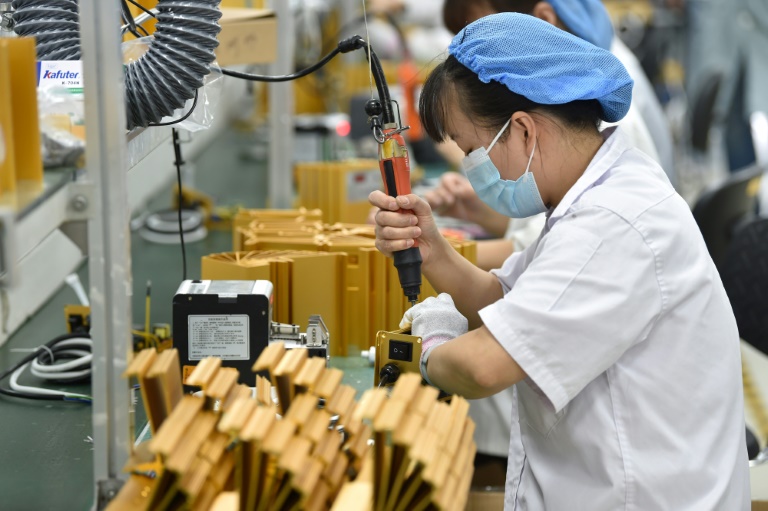
China’s fiscal deficit ballooned to an all-time high of nearly $1 trillion in the first nine months of the year, analysis of government data by Bloomberg showed, as a real estate crisis and tax rebates to boost a cooling economy emptied government coffers.

The budget shortfall for all levels of government from January to September was 7.16 trillion yuan ($980 billion), according to an analysis based on data released by Beijing’s Ministry of Finance on Tuesday — almost three times the 2.6 trillion shortfall over the same period last year.

Overall government revenue dropped 6.6 percent to 15.3 trillion yuan from January to September as the government dolled out more tax rebates to businesses, according to the finance ministry.

Fiscal expenditure then rose 6.2 percent to 19.04 trillion yuan in the first nine months, following a government-driven infrastructure push to boost growth and create employment.

China’s economy grew 3.9 percent year-on-year in the third quarter, data showed this week, beating expectations.

But President Xi Jinping’s re-election to a historic third term as leader of the Communist Party spooked investors Monday, with China’s currency slumping and stocks in Hong Kong nosediving to their lowest level since the global financial crisis.

China is also battling an unprecedented crisis in its real estate sector, which makes up more than a quarter of the country’s GDP when combined with construction.

In October, second-hand home prices fell by the highest month-on-month rate since 2014.

“The housing market is still stuck in a downward spiral, global demand is set to cool further, and the weak renminbi is constraining the central bank’s ability to provide policy support,” Julian Evans-Pritchard from Capital Economics wrote in a research note.

Consumer demand has also been dampened by sudden lockdowns and strict travel restrictions under Beijing’s strict zero-Covid policy.

China is the last of the world’s major economies still sticking to a zero-Covid strategy.

“There is no clear sign of a significant easing of the zero-Covid strategy,” Ting Lu, chief China economist at Nomura, said, adding that at least 207 million people were under some form of lockdown across 28 cities in China earlier this week.

“The actual economic recovery momentum is not strong,” he added.

Hong Kong arrests two in $446 million money-laundering case

Hong Kong authorities have arrested two men for laundering funds worth HK$3.5 billion ($446 million) by reselling precious metals, one of the city’s largest money-laundering cases, officials said Wednesday.

The two were involved in a scheme selling around eight tonnes of precious metals — mostly gold and palladium — between 2020 and 2021 for returns “incommensurate” with their backgrounds, customs official Rita Li said at a press conference.

It was a record for money-laundering cases busted by Hong Kong Customs, Li said, although the police have cracked larger cases.

Precious metals can be bought and sold anonymously in Hong Kong and are attractive to criminals because of their high value, small size and ease of transportation, Li added. 

“Unlawful elements can easily use proceeds from crime to buy precious metals and then resell them, or conduct multi-layer transactions, to launder money,” she said.

The two men used company accounts to receive large sums from precious metal trading firms and jewellery stores, then quickly transferred the funds to shell companies or accounts abroad, authorities said.

The suspects — believed to be linked to a crime syndicate — were arrested for money laundering last Friday and are on bail pending investigation.

Authorities say they are investigating the origins of the precious metals and will not rule out further arrests.

Last month, four suspected Hong Kong gang members were arrested for laundering $52 million over a two-year period.

Australia admits cyber defences 'inadequate' as medical hack hits millions

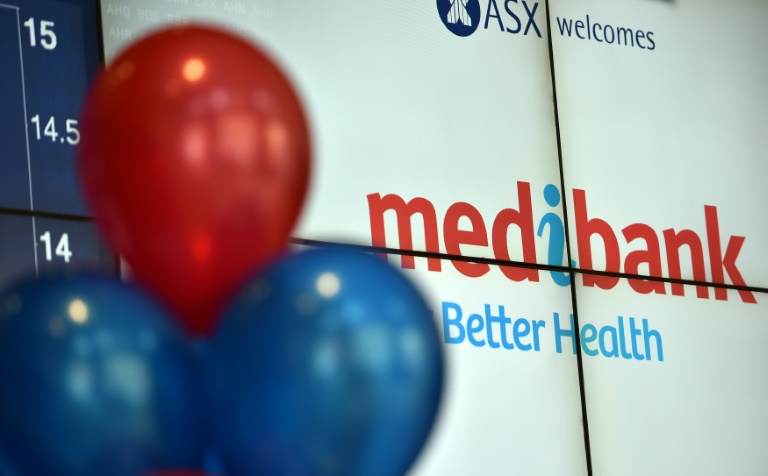
Hackers accessed millions of medical records at one of Australia’s largest private health insurers, the company said Wednesday, prompting the government to admit the nation’s cyber safeguards were “inadequate”.

This was the latest in a series of hacks targeting millions of people that have brought Australian companies’ lax approach to cyber security into sharp relief.

Medibank chief executive David Koczkar said information about each of the company’s 3.9 million policy holders — some 15 percent of Australia’s population — had been compromised.

“Our investigation has now established that this criminal has accessed all our private health insurance customers’ personal data and significant amounts of their health claims data,” he said in a statement to the Australian stock exchange.

“This is a terrible crime. This is a crime designed to cause maximum harm to the most vulnerable members of our community.”

The cyber attack was revealed last week, but it was not known until now how many people were impacted.

The hackers have previously threatened to leak the data, starting with 1,000 famous Australians, unless Medibank pays a ransom.

Medibank on Wednesday also confirmed it was not insured against cyber attacks, estimating the hack could cost the company as much as Au$35 million (US$22 million).

The Medibank hack followed an attack on telecom company Optus last month that exposed the personal information of some nine million Australians — almost a third of the population.

The Optus attack was one of the largest data breaches in Australian history.

– ‘Inadequate’ –

Australia’s Attorney-General Mark Dreyfus has previously accused companies of stockpiling sensitive customer data they did not need. 

Firms currently face paltry fines — Au$2.2 million — for failing to protect customer data. 

Dreyfus last week said these fines would be ratcheted up to Au$50 million. 

“Unfortunately, significant privacy breaches in recent weeks have shown existing safeguards are inadequate,” he said. 

“It’s not enough for a penalty for a major data breach to be seen as the cost of doing business.”

Home Affairs Minister Clare O’Neil on Tuesday said the fallout from the Medibank hack was “potentially irreparable”.

“One of the reasons why the government is so worried about this is because of the nature of the data,” she told Australia’s parliament. 

“When it comes to the personal health information of Australians, the damage here is potentially irreparable.”

O’Neil has previously described hacking as a “dog act” — an Australian phrase reserved for something especially shameful or despicable. 

Asian markets rally with Wall St on rate hope, healthy earnings

Asian stocks rose Wednesday to build on another strong performance in New York following more healthy earnings from big-name firms while hopes for a slowdown in Federal Reserve rate hikes spread cheer.

Hong Kong and Shanghai were among the best performers after China’s central bank and forex officials pledged support for the country’s equities, bonds and yuan, helping investors bounce back from Monday’s rout.

The mood across trading floors has been generally positive this week after a report Friday suggested the Fed could begin discussing applying the brakes on its monetary tightening campaign aimed at fighting decades-high inflation.

That came as some bank officials hinted they could be open to the prospect of hiking by less than the 75 basis points seen after the past three meetings.

And while a similar move is expected next month, there are flickers of hope that the pace could slow in December or next year.

Adding to that optimism was data indicating the higher borrowing costs were having an impact on the world’s biggest economy, with house prices falling, consumer confidence at a three-month low and weakness in the factory sector.

“A few economic reports all told a similar story… that the economy is weakening,” said OANDA’s Edward Moya. “A weakening economy will bring down inflation and that is good news for long-term investors looking to get back into equities.”

All three main indexes on Wall Street rallied, with the Nasdaq up more than two percent, helped by a drop in Treasury yields.

Investors also welcomed another round of better-than-expected profits, this time from Coca-Cola and General Motors. However, after-hours big misses from Microsoft, Texas Instruments and Google parent Alphabet soured the mood a little among tech investors.

Still, Asian markets were well up, led by Hong Kong’s jump of more than two percent while Shanghai climbed one percent.

– China concerns –

The rally in Hong Kong came after it collapsed more than six percent Monday on concerns over Chinese President Xi Jinping’s plans after he strengthened his grip on power and put in top jobs loyalists who backed his economically painful zero-Covid strategy.

Helping the buying was China’s central bank and forex regulator saying they would maintain the development of stock and bond markets, and that the yuan would be “basically stable”.

The currency sank against the dollar Tuesday, with the onshore yuan hitting a 15-year low and the offshore unit at its lowest level since being allowed to trade overseas in 2010. Both clawed back some of their losses on Wednesday.

The remarks, however, were in response to the end of the Communist Party’s twice-a-decade gathering in Beijing rather than in reaction to the markets selloff, Bloomberg News reported.

Elsewhere, Tokyo and Singapore each rose more than one percent while Sydney, Seoul, Wellington, Taipei, Manila and Jakarta were also up.

The prospect of a slowdown in US rate hikes helped weaken the dollar, which has surged against most currencies this year.

The yen, which touched a fresh 32-year low of 151.95 per dollar Friday, was back just above 148, while the euro is hovering just below $1.0 ahead of the European Central Bank’s policy meeting this week that is expected to end with another big rate hike.

And the pound was also holding above $1.14 after former finance minister Rishi Sunak took over as UK prime minister, giving a much-needed sense of stability to markets after weeks of upheaval fuelled by predecessor Liz Truss’s debt-fuelled tax-cutting budget last month.

– Key figures around 0300 GMT –

Tokyo – Nikkei 225: UP 1.20 percent at 27,577.15 (break)

Hong Kong – Hang Seng Index: UP 2.2 percent at 15,492.01

Shanghai – Composite: UP 1.0 percent at 3,007.38

Pound/dollar: DOWN at $1.1460 from $1.1478 on Monday

Dollar/yen: UP at 148.32 yen from 147.92 yen

Euro/dollar: DOWN at $0.9953 from $0.9971

Euro/pound: UP at 86.89 pence from 86.85 pence

West Texas Intermediate: DOWN 0.5 percent at $84.93 per barrel

Brent North Sea crude: DOWN 0.7 percent at $92.84 per barrel

New York – Dow: UP 1.1 percent at 31,836.74 (close)

London – FTSE 100: FLAT at 7,013.48 (close) 

Pound bounds higher on new PM, stocks rise

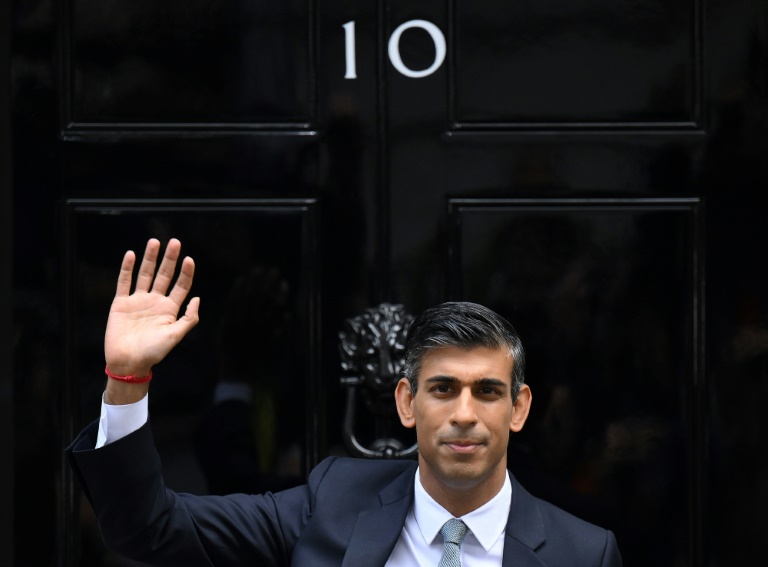
The pound shot higher Tuesday as former finance chief Rishi Sunak became Britain’s prime minister, while stocks mostly rose as bond yields slid.

Sunak on Tuesday promised to bring economic stability after the turmoil that forced predecessor Liz Truss out of Downing Street.

“Right now our country is facing a profound economic crisis,” he told the nation in a televised address.

He vowed to place “economic stability and confidence at the heart of this government’s agenda”, and kept Jeremy Hunt on as finance minister.

His reassuring message resonated on bond markets, where the yields on British government bonds, or gilts, fell. Rising bond yields had helped push Sunak’s predecessor Liz Truss out of office.

“UK gilt yields have continued to track lower, as Rishi Sunak’s journey to Downing Street further improves market sentiment after a tumultuous month,” said Joshua Mahony, senior market analyst at online trading platform IG.

“With yields falling into a one-month low, we are seeing markets provide a clear vote of confidence that Sunak will manage to avoid the kind of missteps taken by his predecessor,” he added.

The pound was up 1.9 percent at $1.489 in late European trading.

A strong pound is not good for many multinational firms listed on London’s blue-chip FTSE 100 index, which ended the day down half a point.

Frankfurt stocks rose 0.9 percent and Paris jumped 1.9 percent. 

Lower US bond yields also helped Wall Street, which was solidly higher in late morning trading.

Some market support also came from reports suggesting the Federal Reserve could slow its pace of interest rate hikes.

The central bank’s policy of ramping up US borrowing costs to fight decades-high inflation has hammered global markets this year as investors worry that they will send the economy into recession.

“Investors are getting more confident that inflation will soften as the consumer rethinks massive purchases,” said Edward Moya, analyst at Oanda trading group.

Consumer confidence in the United States weakened more than anticipated in October, reinforcing hopes that the Fed could slow down or pause its interest rate hikes.

“Fed rate hike expectations will remain volatile, but expectations are growing that a weaker economy will let the Fed pause their tightening after the February policy meeting,” said Moya.

Investors also had quarterly earnings reports to wade through, with better-than-expected quarterly numbers from Coca-Cola and GM helping boost sentiment.

General Motors climbed 3.3 percent as the US automaker confirmed its full-year financial forecast despite a “challenging environment”, saying that consumer demand remained strong.

Third-quarter profits rose 37 percent to $3.3 billion on soaring revenues.

Shares in Coca-Cola gained 1.6 percent as the drinks giant posted double-digit gains in revenue and profits.

Earlier Tuesday, US tech giant Meta resolved a major WhatsApp outage that prevented its popular service from connecting or sending messages.

Meta shares rose 4.1 percent.

In commodities trading meanwhile, European gas prices wobbled around 100 euros per megawatt hour, while the drop in the dollar helped global oil prices edge higher.

In Asian equities trading, Hong Kong steadied after the previous session’s rout triggered by China President Xi Jinping tightening his grip on power.

– Key figures around 1530 GMT –

New York – Dow: UP 0.8 percent at 31,742.28 points

EURO STOXX 50: UP 1.6 percent at 3,585.58

London – FTSE 100: FLAT at 7,013.48 (close) 

Frankfurt – DAX: UP 0.9 percent at 13,052.96 (close)

Paris – CAC 40: UP 1.9 percent at 6,250.55 (close)

Tokyo – Nikkei 225: UP 1.0 percent at 27,250.28 (close)

Hong Kong – Hang Seng Index: DOWN 0.1 percent at 15,165.59 (close)

Shanghai – Composite: FLAT at 2,976.28 (close)

Pound/dollar: UP at $1.1489 from $1.1281 on Monday

Dollar/yen: DOWN at 147.63 yen from 148.95 yen

Euro/dollar: UP at $0.9976 from $0.9876

Euro/pound: DOWN at 86.80 pence from 87.56 pence

West Texas Intermediate: UP 0.6 percent at $85.09 per barrel

Brent North Sea crude: UP 0.2 percent at $93.45 per barrel

burs-rl/cdw

Stocks mixed on earnings; pound up on new PM

Stock markets were mixed Tuesday as traders reacted to earnings reports, while Hong Kong steadied after the previous session’s rout triggered by China President Xi Jinping tightening his grip on power.

The pound climbed more than one percent as markets welcomed the appointment of former finance chief Rishi Sunak as Britain’s prime minister.

Sunak on Tuesday promised to bring economic stability after the turmoil that forced predecessor Liz Truss out of Downing Street.

“Right now our country is facing a profound economic crisis,” he told the nation in a televised address.

He vowed to place “economic stability and confidence at the heart of this government’s agenda”.

“This will mean difficult decisions to come,” Sunak added.

Some market support came from reports suggesting the Federal Reserve could slow its pace of interest rate hikes.

The central bank’s policy of ramping up US borrowing costs to fight decades-high inflation has hammered global markets this year as investors worry that they will send the economy into recession.

“Investors are getting more confident that inflation will soften as the consumer rethinks massive purchases,” said Edward Moya, analyst at Oanda trading group.

“Fed rate hike expectations will remain volatile, but expectations are growing that a weaker economy will let the Fed pause their tightening after the February policy meeting.”

It comes as investors pore over earnings updates from some of the world’s biggest companies.

Shares in HSBC slumped 6.3 percent after the banking giant warned on bad loans owing to global economic headwinds.

Elsewhere, shares in General Motors climbed 2.0 percent as the US automaker confirmed its full-year financial forecast despite a “challenging environment”, saying that consumer demand remained strong.

Third-quarter profits rose 37 percent to $3.3 billion on soaring revenues.

Shares in UPS and Coca-Cola were also trading higher after releasing earnings reports.

“Their gains are generating some offsetting support, yet there is a big earnings shadow that is hanging over the market and likely keeping investor enthusiasm in check this morning after the market’s big run,” said market analyst Patrick O’Hare at Briefing.com.

“That shadow is the earnings reports that will be heard after today’s close from Microsoft, Alphabet, and Visa,” he added, companies which outweigh those that reported today by market capitalisation several times over.

The Dow dipped 0.2 percent as Wall Street opened for trading, but both the S&P 500 and tech-heavy Nasdaq Composite moved higher.

Earlier Tuesday, US tech giant Meta resolved a major WhatsApp outage that prevented its popular service from connecting or sending messages.

Meta shares rose 2.8 percent.

In commodities trading meanwhile, European gas prices nudged back above 100 euros per megawatt hour, and global oil prices also edged higher.

– Key figures around 1330 GMT –

London – FTSE 100: DOWN 0.6 percent at 6,971.91 points

Frankfurt – DAX: DOWN 0.3 percent at 12,896.77

Paris – CAC 40: UP 0.7 percent at 6,173.20

EURO STOXX 50: UP 0.3 percent at 3,536.88

New York – Dow: DOWN 0.2 percent at 31,450.92

Tokyo – Nikkei 225: UP 1.0 percent at 27,250.28 (close)

Hong Kong – Hang Seng Index: DOWN 0.1 percent at 15,165.59 (close)

Shanghai – Composite: FLAT at 2,976.28 (close)

Pound/dollar: UP at $1.1423 from $1.1281 on Monday

Dollar/yen: DOWN at 148.05 yen from 148.95 yen

Euro/dollar: UP at $0.9931 from $0.9876

Euro/pound: DOWN at 86.91 pence from 87.56 pence

West Texas Intermediate: UP 0.4 percent at $84.94 per barrel

Brent North Sea crude: UP less than 0.1 percent at $93.33. per barrel

burs-rl/gw

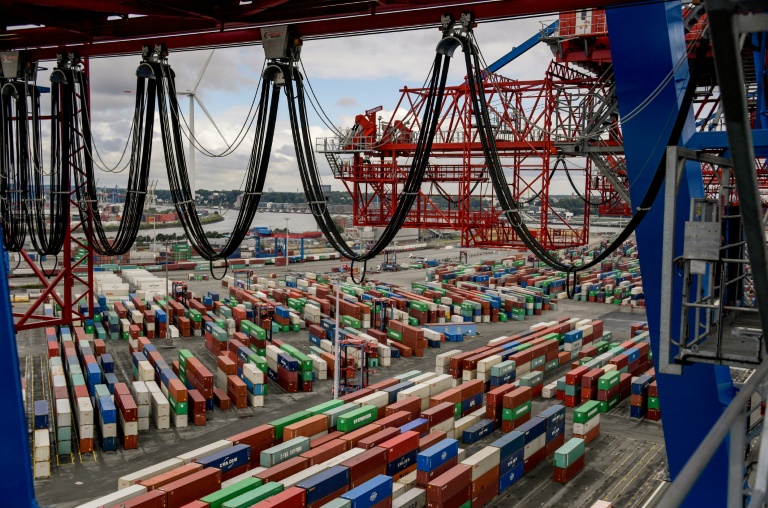
Germany eyes reduced China stake in Hamburg port to end row

Germany’s government is eyeing a compromise that would allow a Chinese firm to take a smaller-than-planned stake in a Hamburg container terminal, after Chancellor Olaf Scholz rejected banning the sale outright.

Chinese shipping giant Cosco had sought a 35-percent stake and the deal would have automatically gone ahead despite opposition from several German ministries if an “emergency solution” was not found this week, a government source told AFP.

Under the proposed compromise, the government would greenlight a 24.9-percent sale, a big enough reduction to deprive China’s state-owned Cosco of any voting rights.

The fate of the Tollerort terminal at Hamburg’s port, Europe’s third busiest, has sparked fierce debate in Germany.

Badly burnt by its over-reliance on Russian energy, Germany has become increasingly wary of allowing foreign powers to gain hold of critical infrastructure.

Six German ministries, including the economy, defence and foreign offices, wanted to veto the Cosco deal, while former Hamburg mayor Scholz supported the sale.

“The emergency solution would prevent a strategic participation and reduce it to a purely financial participation,” the source said.

“Of course, this does not solve the actual concerns,” the source said, adding that the six ministries would still have preferred an outright ban.

The port controversy is the latest dispute to rattle Scholz’s three-way coalition government between his Social Democrats, the left-leaning Greens and the liberal FDP.

A standoff between the Greens and the FDP on whether to keep Germany’s nuclear plants operational for longer in Europe’s powerhouse economy only ended when Scholz stepped in earlier this month and pulled rank.

Scholz ordered all three remaining plants to stay online until mid-April to help counter a shortfall in Russian energy imports — including the Emsland plant the Greens had wanted to see decommissioned. 

The FDP meanwhile had hoped to keep all three plants running until 2024.

– EU concerns –

The Greens and the FDP were united however in their opposition to Cosco’s participation in Hamburg’s port.

“This is neither good for our economy nor for our security,” Green party co-leader Omid Nouripour told German media last week.

Michael Kruse, head of the FDP in Hamburg, called the project “dangerous”. 

The proposed sale has sent alarm bills ringing in Brussels too.

The European Commission warned Germany months ago against Chinese investment in Hamburg, a source close to the matter told AFP at the weekend.

The commission was worried that sensitive information about activity in the port could be relayed to China’s government, the source said.

Chinese firms already hold stakes in other European ports but the EU’s stance against Beijing has hardened since then.

Germany too has in recent years taken a closer look at Chinese investment in sensitive technologies and other areas, and reserves the right to veto acquisitions.

Scholz is due to visit China in early November, the first European Union leader to make the trip since November 2019.

Despite growing concerns at home and abroad about economic dependence on China, Scholz has repeatedly insisted that Germany should maintain strong business relations with the Asian giant.

“We do not have to decouple ourselves from some countries, we must continue doing business with individual countries — and I will say explicitly, also with China,” Scholz recently said.

China is a top trading partner for Germany, especially for its flagship automotive industry.

HSBC profits slide on bank impairment charges

Global bank giant HSBC on Tuesday announced tumbling profits for the third quarter on impairment charges linked to a weak economic outlook and its upcoming sale of French retail operations.

The London-headquartered bank’s share price was down nearly seven percent in early afternoon deals, making it the biggest faller on the British capital’s FTSE 100 index.

HSBC also announced a boardroom shake-up with the appointment of a new chief financial officer, as the Asia-focused lender faces headwinds in China and global recession prospects.

Net profit slumped 46 percent to $1.91 billion in June-September compared with the third quarter last year. Pre-tax profit slumped 40 percent, HSBC added in a statement.

The bank was hit by a $2.4-billion write-off from the planned disposal of its French business next year, offsetting gains made by soaring interest rates.

HSBC has meanwhile set aside provisions totalling $1.1 billion for loans expected to sour.  

“Macroeconomic headwinds, including higher inflation and a weaker outlook, continue to weigh on the global economy,” it said. 

The bank specifically cited global uncertainty sparked by Russia’s invasion of Ukraine, the fall of the British pound and China’s troubled real estate sector.

Stripping out the one-off hits, adjusted pre-tax profit jumped 18 percent to $6.5 billion, beating analyst expectations.

The bank’s net interest income, measuring what it makes from lending minus interest paid on deposits, came in at $8.6 billion — its best third quarter in more than eight years.

– China strains –

“We retained a tight grip on costs, despite inflationary pressures, and remain on track to achieve our cost targets for 2022 and 2023,” said chief executive Noel Quinn.

In a call with media, he welcomed stability returning to UK markets as former finance chief Rishi Sunak replaced Liz Truss as prime minister.

“It’s been a challenging few weeks. I am glad to see the market has stabilised.”

The bank announced its own shake-up, with HSBC senior executive Georges Elhedery next year stepping up as chief financial officer, replacing Ewen Stevenson who departs the group.

Senior HSBC executives are next week expected in Hong Kong for a bank summit after the city recently lifted mandatory quarantine for all international arrivals. 

It comes after Chinese leader Xi Jinping tightened his grip on power by securing a third five-year term in office, handing top jobs to a number of loyalists who back his strict zero-Covid strategy.

The policy of lockdowns and other strict measures have been a major cause of the country’s economic woes and the prospect of more upheaval has sent chills through trading floors.

HSBC has vowed to accelerate a multi-year pivot to Asia and the Middle East, with ambitions to lead Asia’s wealth management market.

But the lender is under pressure from Chinese financial giant and major shareholder Ping An to spin off its Asian operations to unlock shareholder value amid tensions between China and Western powers.

HSBC, which has rejected the calls, added Tuesday that it was “exploring the potential sale” of its Canadian division.

In midday deals, HSBC shares were down almost 7.0 percent at 442.45 pence.

“Rising interest rates may be good news for banks but it’s all the other stuff which is causing them headaches right now,” noted AJ Bell financial analyst Danni Hewson.

“Concern about the impact of a slowing economy on bad debts and growth in the loan book is being exacerbated at HSBC by the departure of well-respected finance director Ewen Stevenson and the deteriorating situation in China.”

She added that “Stevenson’s departure may also make HSBC more vulnerable to pressure from its largest shareholder Ping An to break up the bank.”

Stocks mostly retreat on mixed earnings; pound up on new PM

Stock markets mostly fell Tuesday as traders reacted to mixed earnings, while Hong Kong steadied after the previous session’s rout triggered by China President Xi Jinping tightening his grip on power.

The pound climbed as markets welcomed the appointment of former finance chief Rishi Sunak as Britain’s prime minister.

Sunak on Tuesday promised to bring economic stability after the turmoil that forced predecessor Liz Truss out of Downing Street.

“Right now our country is facing a profound economic crisis,” he told the nation in a televised address.

He vowed to place “economic stability and confidence at the heart of this government’s agenda”.

“This will mean difficult decisions to come,” Sunak added.

In commodities trading meanwhile, oil and European gas prices slid further on weaker demand expectations.

Some market support came from reports suggesting the Federal Reserve could slow its pace of interest rate hikes.

The central bank’s policy of ramping up US borrowing costs to fight decades-high inflation has hammered global markets this year as investors worry that they will send the economy into recession.

“Investors are getting more confident that inflation will soften as the consumer rethinks massive purchases,” said Edward Moya, analyst at Oanda trading group.

“Fed rate hike expectations will remain volatile, but expectations are growing that a weaker economy will let the Fed pause their tightening after the February policy meeting.”

It comes as investors pore over earnings updates from some of the world’s biggest companies.

Shares in HSBC slumped 7.5 percent after the banking giant warned on bad loans owing to global economic headwinds.

Elsewhere, General Motors confirmed its full-year financial forecast despite a “challenging environment”, saying that consumer demand remained strong.

The big US automaker scored third-quarter profits of $3.3 billion on soaring revenues.

Earlier Tuesday, US tech giant Meta resolved a major WhatsApp outage that prevented its popular service from connecting or sending messages.

– Key figures around 1115 GMT –

London – FTSE 100: DOWN 0.8 percent at 6,961.25 points

Frankfurt – DAX: DOWN 0.9 percent at 12,820.86

Paris – CAC 40: UP 0.2 percent at 6,145.10

EURO STOXX 50: DOWN 0.1 percent at 3,523.07

Tokyo – Nikkei 225: UP 1.0 percent at 27,250.28 (close)

Hong Kong – Hang Seng Index: DOWN 0.1 percent at 15,165.59 (close)

Shanghai – Composite: FLAT at 2,976.28 (close)

New York – Dow: UP 1.3 percent at 31,499.62 (close)

Pound/dollar: UP at $1.1328 from $1.1281 on Monday

Dollar/yen: DOWN at 148.92 yen from 148.95 yen

Euro/dollar: DOWN at $0.9854 from $0.9876

Euro/pound: DOWN at 87.01 pence from 87.56 pence

West Texas Intermediate: DOWN 1.4 percent at $83.39 per barrel

Brent North Sea crude: DOWN 1.4 percent at $91.94 per barrel

burs/bcp/rl

HSBC profits slide on bank impairment charges

Global bank giant HSBC on Tuesday announced tumbling profits for the third quarter on impairment charges linked to a weak economic outlook and its upcoming sale of French retail operations.

The London-headquartered bank’s share price slid seven percent in morning deals, making it the biggest-falling on the British capital’s FTSE 100 index.

HSBC also announced a boardroom shake-up with the appointment of a new chief financial officer, as the Asia-focused lender faces headwinds in China and global recession prospects.

Net profit slumped 46 percent to $1.91 billion in June-September compared with the third quarter last year. Pre-tax profit slumped 40 percent, HSBC added in a statement.

The bank was hit by a $2.4-billion write-off from the planned disposal of its French business next year, offsetting gains made by soaring interest rates.

HSBC has meanwhile set aside provisions totalling $1.1 billion for loans expected to sour.  

“Macroeconomic headwinds, including higher inflation and a weaker outlook, continue to weigh on the global economy,” it said. 

The bank specifically cited global uncertainty sparked by Russia’s invasion of Ukraine, the fall of the British pound and China’s troubled real estate sector.

Stripping out the one-off hits, adjusted pre-tax profit jumped 18 percent to $6.5 billion, beating analyst expectations.

The bank’s net interest income, measuring what it makes from lending minus interest paid on deposits, came in at $8.6 billion — its best third quarter in more than eight years.

– China strains –

“We retained a tight grip on costs, despite inflationary pressures, and remain on track to achieve our cost targets for 2022 and 2023,” said chief executive Noel Quinn.

The bank said HSBC senior executive Georges Elhedery would next year become chief financial officer, replacing Ewen Stevenson who departs the group.

Senior HSBC executives are next week expected in Hong Kong for a bank summit after the city recently lifted mandatory quarantine for all international arrivals. 

It comes after Chinese leader Xi Jinping tightened his grip on power by securing a third five-year term in office, handing top jobs to a number of loyalists who back his strict zero-Covid strategy.

The policy of lockdowns and other strict measures has been a major cause of the country’s economic woes and the prospect of more upheaval has sent chills through trading floors.

HSBC has vowed to accelerate a multi-year pivot to Asia and the Middle East, with ambitions to lead Asia’s wealth management market.

But the lender is under pressure from Chinese financial giant and major shareholder Ping An to spin off its Asian operations to unlock shareholder value amid tensions between China and Western powers.

HSBC, which has rejected the calls, added Tuesday that it was “exploring the potential sale” of its Canadian division.

In late-morning deals, HSBC shares were down 7.0 percent at 441.35 pence.

“Rising interest rates may be good news for banks but it’s all the other stuff which is causing them headaches right now,” noted AJ Bell financial analyst Danni Hewson.

“Concern about the impact of a slowing economy on bad debts and growth in the loan book is being exacerbated at HSBC by the departure of well-respected finance director Ewen Stevenson and the deteriorating situation in China.”

She added that “Stevenson’s departure may also make HSBC more vulnerable to pressure from its largest shareholder Ping An to break up the bank.”

Close Bitnami banner
Bitnami