Chinese Business

Hong Kong, Shanghai fall again on China worries as other markets mixed

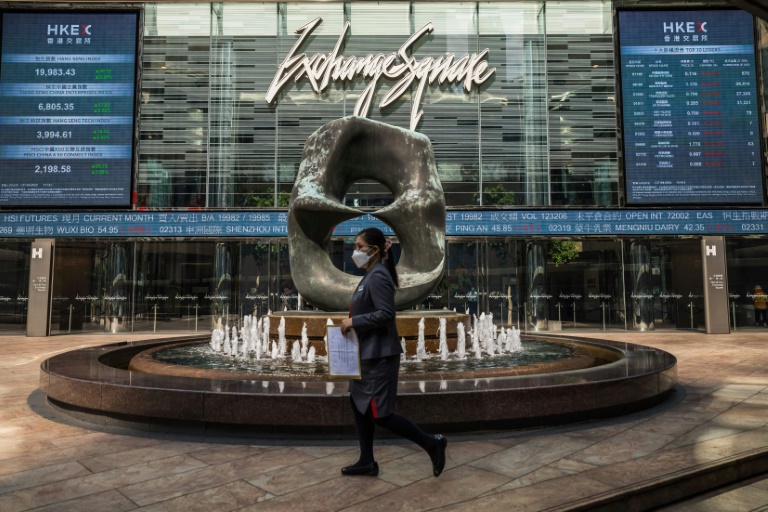
Hong Kong and Shanghai stocks saw big swings Tuesday following the previous day’s rout after Xi Jinping tightened his grip on power in China, while other markets fought to maintain a rally fuelled by hopes of a less hawkish Federal Reserve.

Optimism about upcoming corporate earnings was providing some support, with Wall Street chalking up another strong day ahead of reports this week from big-name firms including Apple, Amazon and Microsoft.

Investors were keeping a wary eye on developments in China after Xi at the weekend was handed another five year term as leader and gave top jobs to a number of loyalists who back his strict zero-Covid strategy.

The policy of lockdowns and other strict measures has been a major cause of the country’s economic woes and the prospect of more upheaval has sent chills through trading floors.

The uncertainty resulted in a drop of more than six percent in Hong Kong on Monday, with tech firms — which have been hardest hit by Xi’s crackdown on a range of private-sector companies — taking the brunt of the pain.

The selling spread to New York later in the day, with the Nasdaq Golden Dragon China Index of 65 Chinese stocks diving 14 percent — its biggest fall on record — wiping more than $90 billion off their market value.

Any hopes for a big bounce from bargain-buying on Tuesday were short-lived with wild fluctuations in the city seeing the Hang Seng Index swing from gains to losses in a three percent band before finishing down 0.1 percent.

Shanghai struggled to get out of negative territory and ended slightly lower, while the onshore yuan sank to its weakest level since 2007 and the offshore yuan hit its lowest level since trading in it started 12 years ago.

“We’re certainly staying away from the Chinese market right now because the political scene is not favourable,” Laila Pence, of Pence Wealth Management, told Bloomberg TV.

“There’s a lot less risk in the US and just as much upside.”

The gloomy mood in China cast a shadow over an largely positive start to the week elsewhere as investors were cheered by a report suggesting the Fed could discuss at next week’s policy meeting the possibility of slowing down its pace of interest rate hikes.

The bank’s policy of ramping up borrowing costs to fight decades-high inflation has hammered global markets this year as investors worry that they will send the economy into recession.

“Investors are getting more confident that inflation will soften as the consumer rethinks massive purchases,” said OANDA’s Edward Moya.

“Fed rate hike expectations will remain volatile, but expectations are growing that a weaker economy will let the Fed pause their tightening after the February policy meeting.”

Tokyo, Sydney, Singapore, Wellington, Manila and Bangkok all rose, though Seoul, Taipei, Mumbai and Jakarta fell.

Focus is now on the release of earnings, with a sense of hope that the results will not be as bad as feared.

A fifth of S&P 500 companies have so far released their figures, with more than half beating expectations, according to Bloomberg News.

The yen hovered around 149 to the dollar after rallying Friday and Monday, with speculation swirling that Japanese authorities had intervened to support the struggling currency.

However, there are expectations it will continue to drop owing to the divergence between the Bank of Japan’s ultra-loose monetary policy and the Fed’s tightening.

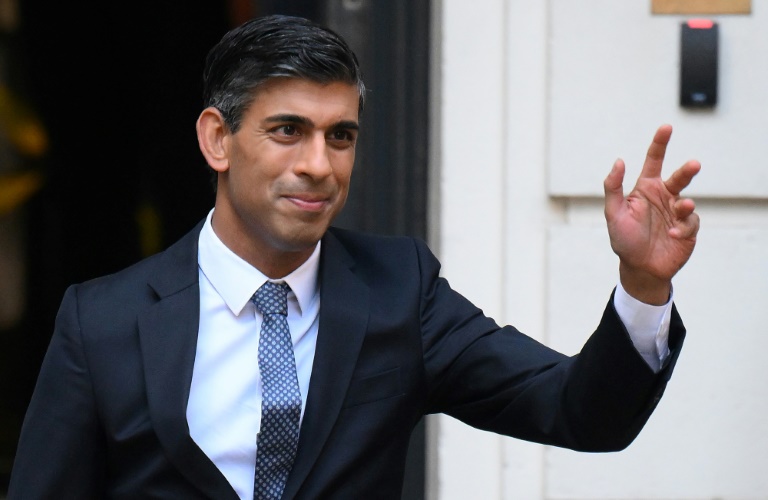
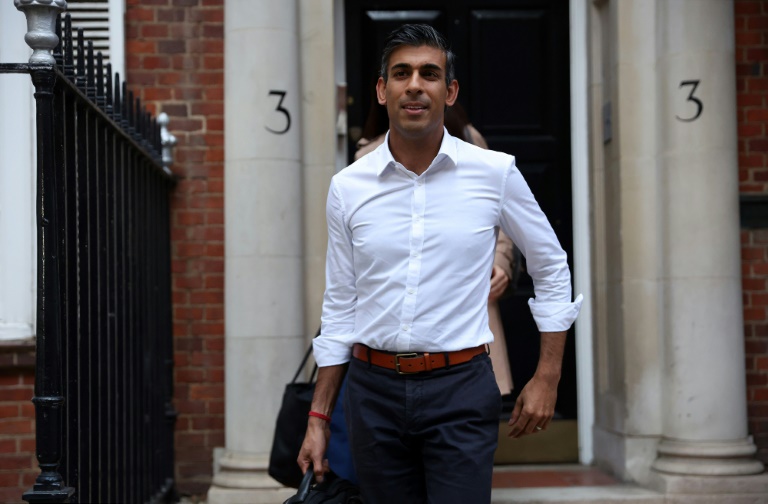
The pound was also sitting around $1.13 as the choice of former chancellor Rishi Sunak as Britain’s next prime minister provided a sense of stability after weeks of uncertainty caused by former leader Liz Truss’s controversial debt-fuelled budget.

London was lower ahead of Sunak becoming Britain’s third premier in less than two months with a full in-tray including a cost-of-living crisis, boosting the economy and uniting his fractured Conservative party. Paris and Frankfurt rose.

– Key figures around 0810 GMT –

Tokyo – Nikkei 225: UP 1.0 percent at 27,250.28 (close)

Hong Kong – Hang Seng Index: DOWN 0.1 percent at 15,165.59 (close)

Shanghai – Composite: FLAT at 2,976.28 (close)

London – FTSE 100: DOWN 0.4 percent at 6,984.49

Pound/dollar: UP at $1.1310 from $1.1281 on Monday

Dollar/yen: DOWN at 148.89 yen from 148.95 yen

Euro/dollar: DOWN at $0.9871 from $0.9876

Euro/pound: DOWN at 87.21 pence from 87.56 pence

West Texas Intermediate: DOWN 0.8 percent at $83.87 per barrel

Brent North Sea crude: DOWN 0.8 percent at $92.53 per barrel

New York – Dow: UP 1.3 percent at 31,499.62 (close)
Singapore targets net zero by 2050, eyes hydrogen power

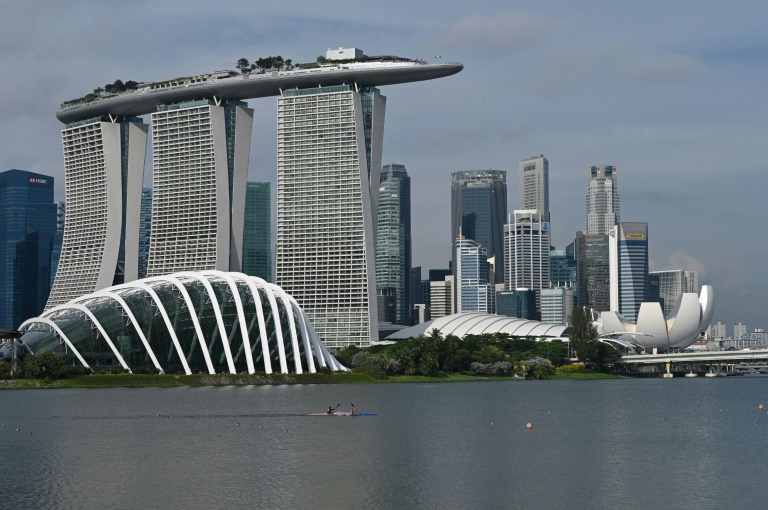
Singapore announced Tuesday it aims to achieve carbon neutrality by 2050, giving a firm date for the first time, and will look at using hydrogen as a major power source.

The city-state targets for carbon emissions to peak in 2030 at 60 million tonnes, a reduction of five million tonnes from the previous goal, Deputy Prime Minister Lawrence Wong said.

The Southeast Asian nation also has plans to look at developing low carbon hydrogen as a major power supply in the long term.

“If technology continues to advance, we foresee that hydrogen can supply up to half of our power needs by 2050, alongside domestic renewable energy sources and electricity imports,” Wong said at an industry conference.

He added that Singapore would experiment with key hydrogen technologies to see how it can be implemented on a large scale.

“We do not have the land for large solar or wind farms, or fast flowing rivers for hydro-electric power,” said Wong, the country’s prime minister in waiting.

Green hydrogen is in sharp focus as governments seek to slash carbon emissions amid global warming and to safeguard energy supplies hit by the invasion of Ukraine by oil and gas producer Russia.

But the “hydrogen economy” has not fully kicked into gear awaiting significant uptake from high-polluting sectors like steel and aviation.

“Many hydrogen technologies are still under development, and a global supply chain has yet to be established,” the Singapore government said in a statement.

“Nevertheless, there has been strong interest internationally from the public and private sectors to accelerate the development,” it added.

Prime Minister Lee Hsien Loong has said the low-lying island nation is especially vulnerable to rising sea levels and defending it from the threat is “existential”.

China's yuan hits 15-year low after Xi extends rule

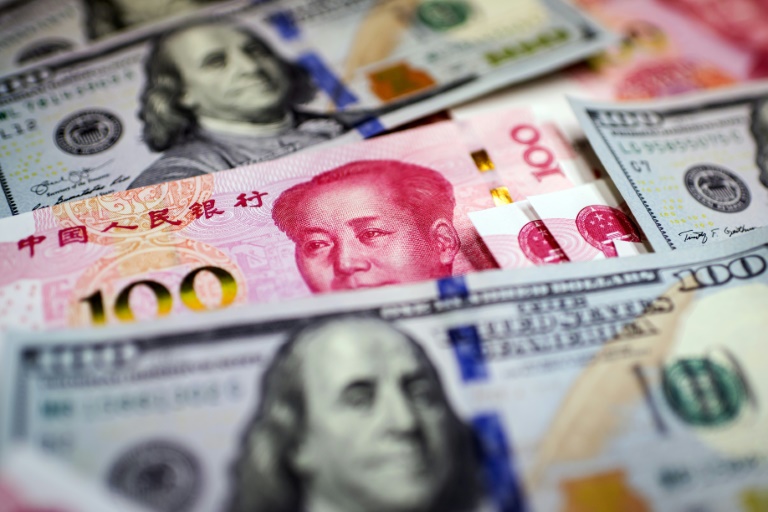
China’s yuan hit a 15-year low against the US dollar on Tuesday, with investors spooked after President Xi Jinping gained complete dominance over the Communist Party at a key meeting last week.

The onshore yuan fell as much as 0.6 percent to 7.3084 per dollar, its weakest level since December 2007 and close to the lower limit of the trading band set by the central bank on Tuesday.

The offshore yuan — which is circulated outside mainland China and is more freely traded than currency in the domestic market  — fell to 7.3735 against the dollar, the weakest since clearing banks in Hong Kong were given the go-ahead to open renminbi accounts freely in 2010.

China’s currency has taken a hit, along with other major currencies, as the Federal Reserve’s hawkish tone sends investors piling into the dollar.

The announcement over the weekend that Xi had secured a third term as party leader, stacking leadership positions with proteges and allies, raised fears among investors that Chinese authorities would continue zero-Covid lockdowns and other policies that have hammered the economy.

The yuan, along with Hong Kong-listed Chinese stocks plummeted on Monday, despite the announcement of better-than-expected growth in the third quarter the same day.

One of the most pressing concerns is Xi’s zero-Covid policy, which continues to put tens of millions of people under rolling lockdowns that also shutter factories. 

China is the last of the world’s major economies to hew to the strategy, with Xi insisting in his speech to mark the end of the Chinese Communist Party Congress on Saturday that the country’s Covid response has been a success.

China is also battling an unprecedented crisis in its real estate sector — which makes up more than a quarter of the country’s GDP when combined with construction. 

Following years of explosive growth fuelled by easy access to loans, Xi oversaw a crackdown on excessive debt.

Property sales are now falling across the country, leaving many developers struggling and some owners refusing to pay their mortgages for unfinished homes.

But Yuting Shao, a strategist at State Street Global Markets, told Bloomberg News “the market reaction is a little bit overblown”.

“You still have to wait for more policy detail plans in the future,” she said.

HSBC profits fall on French retail impairment charge

HSBC on Tuesday said pre-tax profit slipped more than 40 percent in the third quarter, with the bank citing an impairment on the planned disposal of its retail banking operations in France.

However results were better than analyst estimates and were boosted by rising interest rates making lending more profitable.

The Asia-focused giant said pre-tax profit fell by $2.3 billion to $3.1 billion on year while net profit dropped 46 percent to $1.91 billion.

In a statement to the Hong Kong stock exchange, HSBC said it was looking to offload its French retail arm “as part of our actions to simplify our operations” in Europe adding that it hoped the sale would go through in the second half of 2023.

While reclassifying the French division the bank “recognised an impairment of $2.4 billion”, which impacted the third-quarter figures. 

But adjusted pre-tax profit rose 18 percent to $6.5 billion, beating Bloomberg News analyst estimates.

The bank’s net interest income, which measures what it makes from lending minus interest paid on deposits and is a key measure of profitability, came in at $8.6 billion, its best third quarter in more than eight years.

International banks face a mixed bag. 

Rising interest rates make lending more profitable but at the same time much of the world is staring at a pronounced downturn. 

“Macroeconomic headwinds, including higher inflation and a weaker outlook, continue to weigh on the global economy,” HSBC said, adding it had set aside more provisions against bad loans and had expected credit losses of $1.1 billion for July-September.  

The bank specifically cited global uncertainty sparked by Russia’s invasion of Ukraine, the fall of the pound in Britain and the grim condition of China’s real estate sector.

– Hong Kong and China –

But chief executive Noel Quinn said the bank was focused on delivering a returns target of at least 12 percent for next year as well as keeping costs down.

“We retained a tight grip on costs, despite inflationary pressures, and remain on track to achieve our cost targets for 2022 and 2023,” he said in the earnings report.

HSBC is headquartered in London but makes the vast majority of its profits in Asia, especially China and Hong Kong.

The lender is under pressure from Ping An, which has a 9.2 percent stake, to spin off its Asian operations, in a bid to unlock shareholder value amid tensions between China and the west.

So far HSBC’s leadership have rejected those calls.

Senior executives from the bank are expected to be in Hong Kong next week for a bankers’ summit that is being hosted by the city, which only last month lifted mandatory quarantine for all international arrivals. 

Over the weekend Chinese leader Xi Jinping tightened his grip on power by securing a third five-year term in office, handing top jobs to a number of loyalists who back his strict zero-Covid strategy.

The policy of lockdowns and other strict measures has been a major cause of the country’s economic woes and the prospect of more upheaval has sent chills through trading floors.

HSBC has vowed to accelerate a multi-year pivot to Asia and the Middle East, with ambitions to lead Asia’s wealth management market.

The bank said it would invest $6 billion in Hong Kong, China and Singapore and hire more than 5,000 wealth advisers — while slashing 35,000 jobs and cutting less profitable operations in other markets including France and the United States.

In Tuesday’s earnings report HSBC said it was “exploring the potential sale” of its Canadian division.

Most Asia markets rise on Fed bets as Hong Kong, Shanghai struggle

Hong Kong and Shanghai stocks saw big swings Tuesday following the previous day’s rout after Xi Jinping tightened his grip on power in China, while other Asian markets extended gains on hopes the Federal Reserve will slow down its pace of rate hikes.

Optimism about upcoming corporate earnings was also providing support, with Wall Street chalking up another strong day ahead of reports this week from big-name firms including Apple, Amazon and Microsoft.

Investors were keeping a wary eye on developments in China after Xi at the weekend was handed another five year term as leader and gave top jobs to a number of loyalists who back his strict zero-Covid strategy.

The policy of lockdowns and other strict measures has been a major cause of the country’s economic woes and the prospect of more upheaval has sent chills through trading floors.

The uncertainty resulted in a drop of more than six percent in Hong Kong on Monday, with tech firms — which have been hardest hit by Xi’s crackdown on a range of private-sector companies — taking the brunt of it.

And the selling spread to New York later in the day, with the Nasdaq Golden Dragon China Index of 65 Chinese stocks diving 14 percent — its biggest fall on record — wiping more than $90 billion off their market value.

Alibaba, JD.com and Tencent all saw double-digit losses, matching the selling earlier in Hong Kong.

Any hopes for a bounce from bargain-buying on Tuesday appeared to be short-lived with wild fluctuations in the city seeing the Hang Seng Index swing from gains to losses.

Shanghai struggled to get out of negative territory, while the onshore yuan sank to its weakest level since 2007 and the offshore yuan hit a record low.

“We’re certainly staying away from the Chinese market right now because the political scene is not favourable,” Laila Pence, of Pence Wealth Management, told Bloomberg TV.

“There’s a lot less risk in the US and just as much upside.”

The gloomy mood in China cast a shadow over an otherwise positive start to the week elsewhere as investors were cheered by a report suggesting the Fed could discuss at next week’s policy meeting the possibility of slowing down its pace of interest rate hikes.

The bank’s policy of ramping up borrowing costs to fight decades-high inflation has hammered global markets this year as investors worry that they will send the economy into recession.

“Investors are getting more confident that inflation will soften as the consumer rethinks massive purchases,” said OANDA’s Edward Moya.

“Fed rate hike expectations will remain volatile, but expectations are growing that a weaker economy will let the Fed pause their tightening after the February policy meeting.”

Tokyo, Sydney, Seoul, Singapore, Wellington, Manila and Jakarta all rose, though Taipei fell.

Focus is now on the release of earnings, with a sense of hope that the results will not be as bad as feared.

A fifth of S&P 500 companies have so far released their figures, with more than half beating expectations, according to Bloomberg News.

The yen hovered around 149 to the dollar after rallying Friday and Monday, with speculation swirling that Japanese authorities had intervened to support the struggling currency.

However, there are expectations it will continue to drop owing to the divergence between the Bank of Japan’s ultra-loose monetary policy and the Fed’s tightening.

The pound was also sitting around $1.13 as the choice of former chancellor Rishi Sunak as Britain’s next prime minister provided a sense of stability after weeks of uncertainty caused by former leader Liz Truss’s controversial debt-fuelled budget.

– Key figures around 0230 GMT –

Tokyo – Nikkei 225: UP 0.8 percent at 27,201.37 (break)

Hong Kong – Hang Seng Index: DOWN 1.3 percent at 14,977.72

Shanghai – Composite: DOWN 0.8 percent at 2,954.65

Pound/dollar: UP at $1.1301 from $1.1281 on Monday

Dollar/yen: DOWN at 148.92 yen from 148.95 yen

Euro/dollar: UP at $0.9880 from $0.9876

Euro/pound: DOWN at 87.44 pence from 87.56 pence

West Texas Intermediate: UP 0.1 percent at $84.62 per barrel

Brent North Sea crude: DOWN 0.1 percent at $93.21 per barrel

New York – Dow: UP 1.3 percent at 31,499.62 (close)
London – FTSE 100: UP 0.6 percent at 7,013.99 (close)

Tough odds for Macau as casinos pray for a pandemic shift

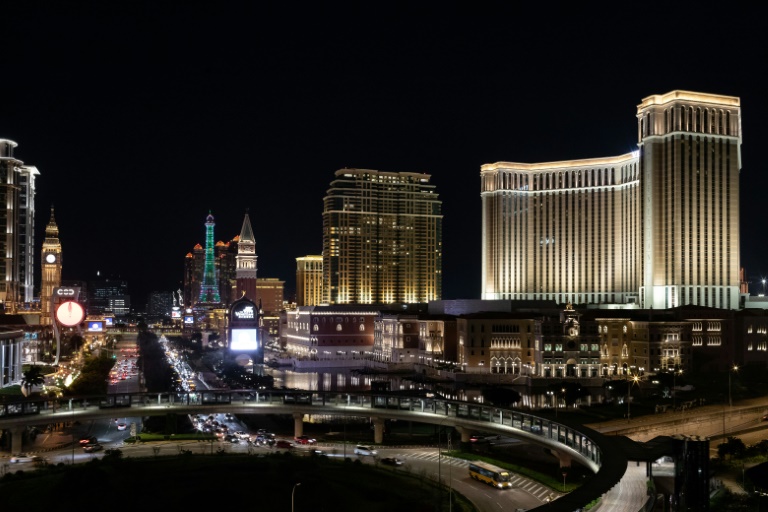
When Pinky Tam lost her job in Macau last year, she found herself among the many thousands cast adrift as the city’s casino industry crumbled beneath the twin forces of politics and a pandemic.

The former Portuguese colony has been limping for nearly three years as coronavirus restrictions have kept away mainland Chinese tourists, depriving the gaming sector of its chief revenue source and tanking the wider economy.

“Back when things were good, it would be almost too crowded to walk,” Tam, who used to work at the gambling operator Suncity Group, recalled of the narrow streets leading from the Ruin of St Paul’s, Macau’s most famous landmark.

“Now you can find maybe one or two locals passing through. I think the people of Macau are frustrated about the economy and future prospects,” she told AFP.

The crisis comes at a sensitive time for Macau’s oligopoly of casinos.

Officials are currently renegotiating the six concessions, which will expire by the end of the year.

It is an industry reshuffle that will shape Macau’s next decade, raising questions over whether the city can return to being the world’s top casino hub, whether it must seek an alternative path, and whether its golden years are over. 

Since its handover to Chinese rule in 1999, Macau has been the only place in the country where casinos are legal, growing to the point two decades later where it was generating nearly six times the annual gaming revenue of Las Vegas.

It was a heady time of extraordinary growth and riches.

– ‘Junket King’ arrest –

But even before the pandemic emerged, its wings were being clipped by President Xi Jinping’s anti-corruption drive.

Then last November, authorities arrested Suncity boss Alvin Chau — nicknamed the “Junket King” for his success in bringing in Chinese high-rollers — and charged him with fraud, money laundering and running a crime syndicate.

It was the clearest sign yet of Beijing’s crackdown on officials and wealthy tycoons who used Macau as a conduit to siphon cash out of China.

“Up until now, 90 percent of our visitors and 90 percent of our revenue comes from China… We basically are a hub to attract mainland Chinese gamblers,” Macau-based gaming analyst Ben Lee told AFP.

“So the Macau government is obviously being pushed to try and redirect the industry away from China.”

Until recently, the renewal of concessions seemed like a done deal for the six companies permitted to operate casinos, which include the subsidiaries of three Las Vegas giants — Sands China, MGM China and Wynn Macau.

But at the last minute, a surprise contender, Malaysia’s Genting Group, threw its hat into the ring.

With the concession renewal taking place at a time of spiralling tensions between Washington and Beijing, Lee posits that one of the US companies may well lose out.

“Why would (China) let the Americans keep 50 percent of the gaming industry in Macau,” said Lee, founder of Macau gaming consultancy IGamiX.

“I cannot see any good reason.”

– Industry shakeup –

Macau’s government has long been keen to diversify away from gaming into tourism and leisure.

For the new concessions, it is demanding “much more non-gaming investment”, Credit Suisse analysts wrote in a research note last week.

“An increase in investment commitment would inevitably put more stress into the already stretched balance sheet of certain operators, as well as lowering the long-term margin for the sector,” it added.

For Macau’s 680,000 residents, the cycle of lockdowns, testings and border closures have been some of the roughest years since the handover in a city where one in five people in the labour force works in gaming.

The biggest test came in July when much of the city, including casinos, was locked down to fight an outbreak of the Omicron coronavirus variant.

“It was an extreme situation for a relatively free and open city like Macau,” former lawmaker Sulu Sou told AFP, adding that the economy emerged from the lockdown “on life support”.

Tam, the former Suncity worker, said she took a one-third pay cut to land a new secretarial job, adding that similar openings were routinely advertised with a monthly wage of just $1,100.

Even if Chinese tourists return en masse under tentative plans to kickstart tour groups in November, Macau’s gaming revenue this year will only be 15 percent of 2019 levels, while the following year will reach 35 percent, according to Credit Suisse estimates.

“In the last two to three years, Covid-19 has really put a spotlight on the need to diversify,” said Glenn McCartney, an associate professor in integrated resort and tourism management at the University of Macau.

“(Diversification) won’t happen overnight, it’s a slow progression.”

Megayacht sparks warnings Hong Kong could become Russia haven

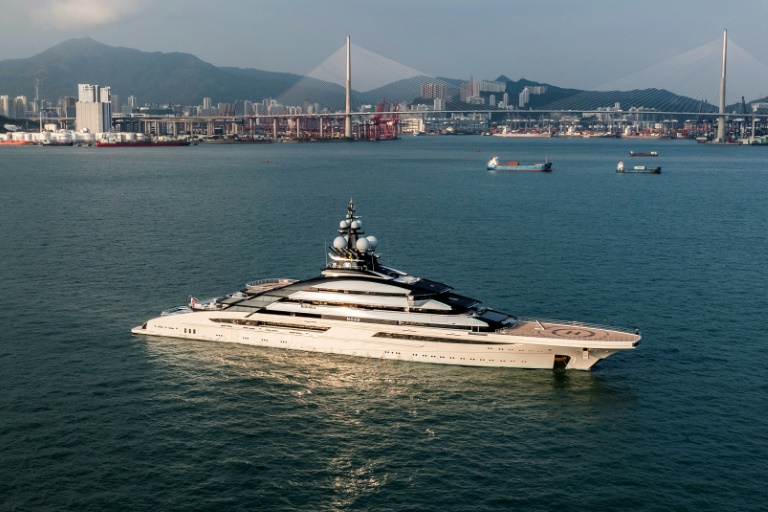
The recent visit of a Russian megayacht to Hong Kong has sparked warnings from corruption investigators that the city could become a haven for oligarchs and officials hiding from Western sanctions.

The Nord — a $500 million vessel linked to Russian billionaire Alexei Mordashov — spent a little over three weeks in the Chinese territory before leaving last Thursday.

Mordashov is among tycoons close to Russian President Vladimir Putin who have been sanctioned by the United States, the European Union and Britain following Moscow’s invasion of Ukraine.

Multiple jurisdictions have seized Russian oligarchs’ yachts and other assets this year. But Hong Kong made clear it would not do the same, saying it only implements United Nations sanctions, not “unilateral” ones.

That prompted a rebuke from Washington that Hong Kong’s reputation as an international business hub could be damaged.

But Maira Martini, a corrupt money flows expert at Transparency International, said the city has long been a useful jurisdiction for those “wanting to hide assets and launder dirty money”.

She cited Hong Kong’s “easy incorporation of shell companies that can be used to layer funds and obscure the real owners”.

“The government’s recent declaration that it has no interest in implementing sanctions makes Hong Kong an even more enticing option for Russian elites,” she told AFP.

Hong Kong is increasingly taking its cue from Beijing, a key ally of Moscow, said Anthony Ruggiero, an expert on nonproliferation at the Foundation for the Defense of Democracies. 

“I think at this moment and level, we have to treat Hong Kong really as China when it comes to their willingness to cooperate on proliferation, or in this case, the willingness to cooperate on pressuring Russia,” he told AFP.

City leader John Lee and other senior officials are themselves blacklisted by Washington for their role in a crackdown on political freedoms.

– Shell companies –

A major part of Hong Kong’s appeal is how easy it is to set up companies — about 1.4 million businesses are domiciled in the city.

Directors do not need to live there and companies can register addresses via secretarial businesses making it easier to mask true ownership.

The Panama Papers in 2016 exposed how crucial front companies in Hong Kong were for those wanting to hide wealth and avoid tax.

Businesses registered in Hong Kong have also repeatedly appeared on US and other sanctions lists.

Companies helping North Korea evade sanctions were cited by the Treasury and United Nations experts in 2017 and 2018.

More recently the focus has shifted to Iran.

Last month the Treasury named 10 companies allegedly involved in helping Iran sell petroleum products, mostly to China. Three were based in Hong Kong. 

When AFP checked their filings with the city’s Companies Registry, all were registered to secretarial company addresses. 

Two had directors who were Indian nationals, the other was owned by a Dominican Republic national living in China’s Zhejiang province. Very little other public data was available.

– ‘Plenty of competition’ –

Ruggiero, a former US national security advisor, said he expects Moscow to “unleash a network of front companies” around the world as Western sanctions gather pace.

“The Russians have expertise in doing this,” he said. “They’re probably going to be better at it than North Korea and Iran — and North Korea and Iran are pretty good at it.”

David Webb, a Hong Kong activist investor, said the city will have “plenty of competition for being a safe haven, including Dubai and Singapore”.

Nonetheless banks, law firms and other businesses that rely on access to international markets will still be wary of Russian clients lest they face scrutiny.

“Financial institutions that have a United States or European nexus will need to assess their compliance in view of any relevant domestic sanctions,” Syren Johnstone, from the University of Hong Kong’s law school, told AFP.

Igor Sagitov, Moscow’s consul general in Hong Kong, said Russians were already facing difficulties.

“Some foreign financial institutions, insurance and transport companies based here discriminate Russian companies or nationals, even if they are not on the sanctions lists,” he told AFP.

But Sagitov was optimistic that the city remained a good place for business. 

“When the trade volume between Russia and China is growing rapidly, Hong Kong can for sure benefit,” he said.

Asked about Mordashov’s megayacht, he said Moscow “appreciates the approach the Hong Kong government has taken”.

“This approach is based on the rule of law, and not on the law of some imaginary rules.”

Greening global economy brings dependence on critical minerals

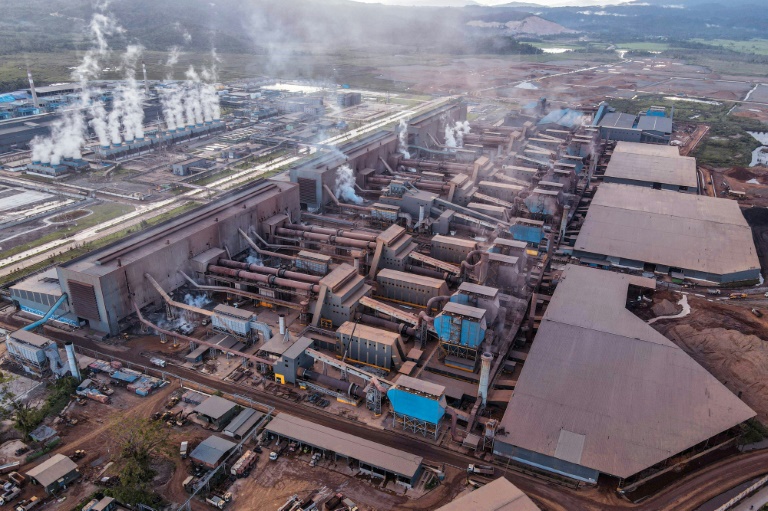
After nearly a century of geopolitical tension over access to oil, experts worry that the global transition to clean energy is creating new dependencies on the critical minerals needed for solar panels, wind turbines and electric vehicle batteries.

Control over most of these essential elements is concentrated in a handful of countries, none more than China, they note.

– Which metals are key for the energy transition? –

Cobalt, nickel, manganese and lithium are critical to making electric vehicle batteries. Rare earths such as neodymium, praseodymium and dysprosium are used in computer memory and magnets in wind turbines. 

Copper and aluminium are used in electricity networks, and platinum is a catalyst for hydrogen.

These materials “will be at the centre of decarbonisation efforts and electrification of the economy, as we move from fossil fuels to wind and solar power generation, battery- and fuel-cell-based electric vehicles (EVs) and hydrogen production”, consulting firm McKinsey reported earlier this year.

– How much demand is there? –

Global demand for these critical metals may quadruple by 2040 if the world is to meet its pledges under the Paris climate pact, according to estimates by the International Energy Agency (IEA).

French researcher Olivier Vidal has calculated that more of the metals will need to be manufactured by 2050 than humanity has produced throughout history.

While many predict shortages, some believe technology improvements and recycling will keep up with increased production needs.

But some regions are more vulnerable than others.

According to a study by Belgium’s Louvain university, Europe faces critical shortages of metals for the next 15 years, particularly lithium, cobalt, nickel, copper and rare earths. 

The European Raw Materials Alliance (ERMA) says Europe will only be able to cover between five and 55 percent of its key metals needs by 2030.

While Europe does have untapped resources of cobalt, gallium, germanium and lithium, it will need to issue mining permits to get to them, noted senior ERMA official Bernd Schaefer.

On Monday, industrial minerals manufacturer Imerys announced plans for a major lithium mine in central France.

The United States is opening its first cobalt mine in decades, in Idaho.

Automakers such as Tesla have announced their intention to enter directly into the capital of mining firms. 

– Which countries produce these metals? –

Cobalt mining is dominated by the Democratic Republic of Congo, which accounts for 70 percent of the world total. But in terms of processing, China is the leader, at 50 percent.

South Africa accounts for 37 percent of global manganese output.

China and Guinea account for more than half of the global production of bauxite, which is used to make aluminium.

Argentina, Australia and Chile are major lithium producers, while Bolivia has considerable untapped resources.

– What are the geopolitical risks? –

“The oil and gas triangle — Saudi Arabia, Russia and the United States — has governed the world for 40 years,” said Philippe Varin, who has led French steel and car firms and recently wrote a report on the supply of raw materials to French companies.

He said that is now “little by little transforming into a bipolarisation of the world between the United States and China, the major users of metals in the energy transition”.

Varin said Chinese companies had taken control of 40 percent of the value chain for the metals needed for battery production.

Emmanuel Hache, a forecaster at the French Institute of Petroleum, said that raw materials “could be the cause of a confrontation between China and the United States in the years to come”.

“Behind all conflicts you find raw materials as a top cause,” said CyclOpe, an annual French publication on raw materials, making a link between the military coup in Guinea in 2021 and bauxite.

Stocks, pound up as Sunak poised to become new British PM

Global stocks and the pound climbed on Monday as markets reacted to the news that former finance minister Rishi Sunak was to become Britain’s new prime minister.

European markets closed in positive territory, despite data showing Britain and Germany heading for recession and the Hong Kong stock market plunging as Chinese President Xi Jinping handed key economic posts to loyalists behind his zero-Covid strategy.

Wall Street stocks also continued to rise on Monday. The Dow Jones was up by around one percent around 1530 GMT, with sentiment boosted by hopes the US Federal Reserve would soon slow the pace of its interest rate hikes.

News that European gas prices were at a four-month low also spurred traders. The reference Dutch TTF dipped below 100 euros ($99) for the first time since June, reaching 98.60 euros per megawatt hour at around 1030 GMT on Monday.

Analysts at Energi Danmark said the price fall was due to mild weather in Europe and high levels of gas stocks, with governments replenishing reserves before winter after supply cuts from Russia.

Oil prices were also down, on recession fears.

– Sunak ‘the final chance’ –

All eyes were on Britain as Sunak prepared to become the country’s third prime minister in less than two months following the resignations of Boris Johnson and Liz Truss.

His last rival for leadership of the ruling Conservative party, Penny Mordaunt, dropped out of the race on Monday, clearing the way for Sunak to become prime minister.

“The pound started the week trading higher, as many see the new potential PM as a source of some stability, particularly when compared to the chaotic term served by the Truss government, which saw massive volatility across markets,” noted XTB chief market analyst Walid Koudmani.

“Many see Sunak as the final chance for the Conservative party, as he has managed to maintain some credibility” compared with the uncertainty of the Truss and Johnson premierships, he added.

Yields on 10-year UK government bonds also dropped following recent surges in the wake of the disastrous budget that led to Truss’s downfall, while the benchmark FTSE 100 index closed 0.6 percent higher.

“Investors clearly hope Sunak will stabilise the economy and the political situation — though it’s hard to work out at this point which is the harder task,” commented AJ Bell financial analyst Danni Hewson.

Focus was also on the euro after new Italian Prime Minister Giorgia Meloni took office following her post-fascist Brothers of Italy party’s historic victory in the general election on September 25.

Meloni’s new government is the most far-right in Italy since World War II. It takes power at a time of decades-high inflation and an energy crisis linked to Russia’s invasion of Ukraine.

Milan’s stock market was up in early afternoon trading on Monday, while yields on Italian government bonds fell.

The eurozone was meanwhile looking ahead to Thursday, when the European Central Bank is expected to announce another bumper rise in interest rates aimed at curbing sky-high prices.

– Key figures around 1530 GMT –

London – FTSE 100: UP 0.6 percent at 7,013.99 points (close)

Frankfurt – DAX: UP 1.6 percent at 12,931.45 (close)

Paris – CAC 40: UP 1.6 percent at 6,131.36 (close)

EURO STOXX 50: UP 1.5 percent at 3,527.79

New York – Dow: UP 1.0 percent at 31,395.76

Tokyo – Nikkei 225: UP 0.3 percent at 26,974.90 (close)

Hong Kong – Hang Seng Index: DOWN 6.4 percent at 15,180.69 (close)

Shanghai – Composite: DOWN 2.0 percent at 2,977.56 (close)

New York – Dow: UP 2.5 percent at 31,082.56 (close)

Pound/dollar: UP at $1.1296 from $1.1258 on Friday

Dollar/yen: UP at 148.83 yen from 147.65 yen

Euro/dollar: UP at $0.9877 from $0.9863

Euro/pound: UP at 87.47 pence from 87.26 pence

West Texas Intermediate: DOWN 0.9 percent at $84.33 per barrel

Brent North Sea crude: DOWN 0.6 percent at $90.81 per barrel

burs/imm/gil

Stocks, pound up as Sunak to become new British PM

Global stocks and the pound climbed Monday as markets reacted to the news that former finance minister Rishi Sunak would become Britain’s new prime minister.

European and American equities climbed despite data showing Britain and Germany headed for recession and a plunging Hong Kong stock market as Chinese President Xi Jinping handed key economic posts to loyalists behind his zero-Covid strategy.

Wall Street also opened in the green on Monday, with sentiment boosted by hopes the Federal Reserve would soon slow its pace of interest rate hikes.

News that European gas prices were at a four-month low also spurred traders, as the reference Dutch TTF dipped below 100 euros for the first time since June, reaching 98.60 euros per megawatt hour at around 1030 GMT on Monday.

All eyes were on Britain as Sunak was poised to become the country’s third prime minister in less than two months following the resignations of Boris Johnson and Liz Truss.

His last rival for leadership of the ruling Conservative party, Penny Mordaunt, dropped out of the race on Monday, clearing the way for Sunak to become prime minister after his failed bid earlier this year.

“The pound started the week trading higher as many see the new potential PM as a source of some stability, particularly when compared to the chaotic term served by the Truss government which saw massive volatility across markets,” noted XTB chief market analyst Walid Koudmani.

“Many see Sunak as the final chance for the Conservative Party as he has managed to maintain some credibility” compared with the uncertainty of the Truss and Johnson premierships, he added.

“Investors clearly hope Sunak will stabilise the economy and the political situation — though it’s hard to work out at this point which is the harder task,” commented AJ Bell financial analyst Danni Hewson.

Yields on UK government bonds also dropped following recent surges in the wake of Truss’s disastrous budget that led to her downfall.

Focus was also on the euro after new Italian Prime Minister Giorgia Meloni took office.

Meloni’s post-fascist Brothers of Italy scored a historic victory in general elections on September 25.

Her new government is the most far-right in Italy since World War II, and takes power at a time of decades-high inflation and an energy crisis linked to Russia’s invasion of Ukraine.

Milan’s stock market was up 1.3 percent in early afternoon trading on Monday, mirroring strong gains in Frankfurt and Paris, while yields on Italian government bonds also fell.

London was up by 0.6 percent in mid-afternoon trading, but the stronger pound and falling oil and gas prices were weighing on the heavyweight energy sector, according to traders.

The eurozone was meanwhile looking ahead to Thursday when the European Central Bank is expected to announce another bumper rise in interest rates aimed at curbing sky-high prices.

On the corporate front, Dutch medical device manufacturer Philips announced it would axe 4,000 jobs after its recall of faulty sleep respirators pushed it into a loss.

Following the news, the group’s share price dropped 0.8 percent on the Amsterdam stock exchange on Monday.

– Key figures around 1330 GMT –

London – FTSE 100: UP 0.6 percent at 7,014.28 points

Frankfurt – DAX: UP 1.8 percent at 12,957.93

Paris – CAC 40: UP 1.9 percent at 6,147.93

EURO STOXX 50: UP 1.7 percent at 3,537.16

New York – Dow: UP 0.6 percent at 31,263.39

Tokyo – Nikkei 225: UP 0.3 percent at 26,974.90 (close)

Hong Kong – Hang Seng Index: DOWN 6.4 percent at 15,180.69 (close)

Shanghai – Composite: DOWN 2.0 percent at 2,977.56 (close)

New York – Dow: UP 2.5 percent at 31,082.56 (close)

Pound/dollar: UP at $1.1285 from $1.1258 on Friday

Dollar/yen: UP at 149.14 yen from 147.65 yen

Euro/dollar: DOWN at $0.9835 from $0.9863

Euro/pound: DOWN at 87.16 pence from 87.26 pence

West Texas Intermediate: DOWN 0.4 percent at $84.70 per barrel

Brent North Sea crude: DOWN 0.3 percent at $91.07 per barrel

burs/imm/cdw

Close Bitnami banner
Bitnami