Chinese Business

European stocks, pound up awaiting new British PM

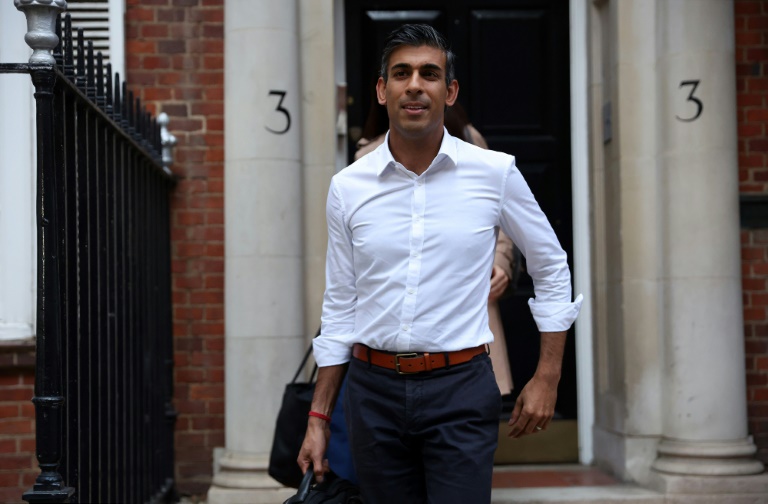
European stocks and the pound climbed Monday as markets awaited confirmation that former finance minister Rishi Sunak would become Britain’s new prime minister.

European equities climbed despite data showing Britain and Germany headed for recession and a plunging Hong Kong stock market as Chinese President Xi Jinping handed key economic posts to loyalists behind his zero-Covid strategy.

Sentiment was boosted by hopes the Federal Reserve would soon slow its pace of interest rate hikes and on news that European gas prices were at a four-month low.

The reference Dutch TTF gas price on Monday dipped below 100 euros for the first time since June, reaching 98.60 euros per megawatt hour at around 1030 GMT.

All eyes were on Britain, set for its third prime minister in less than two months following the resignations of Boris Johnson and Liz Truss. 

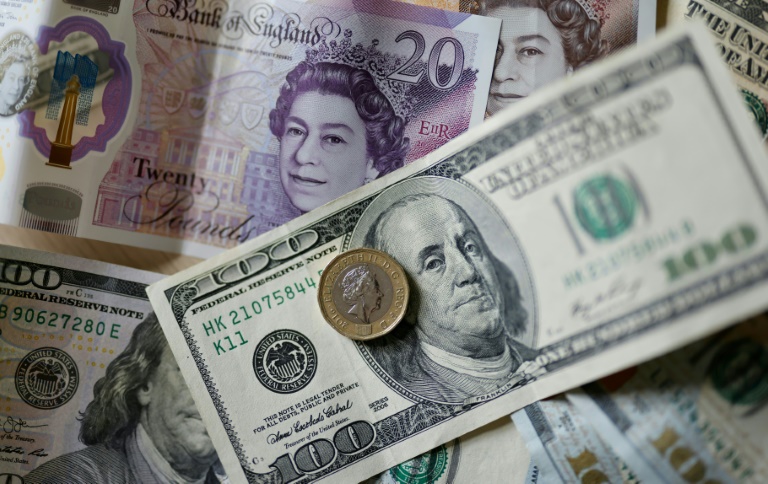
“The pound started the week trading higher as many see the new potential PM as a source of some stability, particularly when compared to the chaotic term served by the Truss government which saw massive volatility across markets,” noted XTB chief market analyst Walid Koudmani.

Yields on UK government bonds also dropped following recent surges in the wake of Truss’s disastrous budget that led to her downfall.

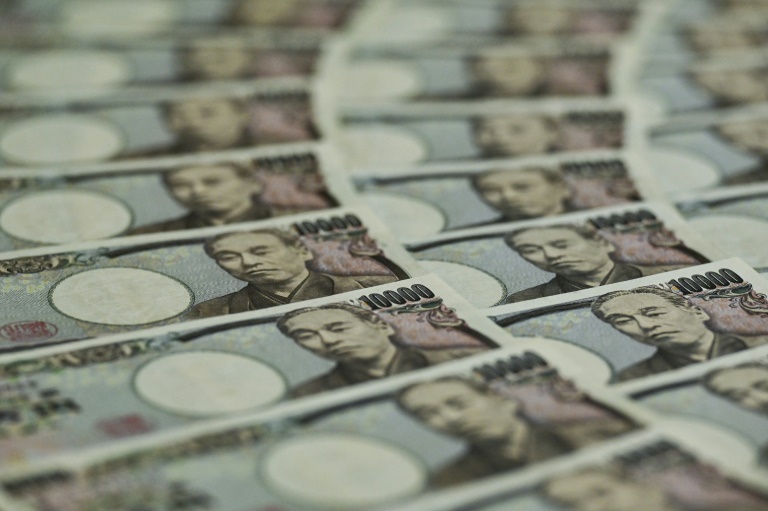
Elsewhere, the embattled yen saw only a brief rally against the dollar on speculation Japanese authorities stepped in to support their currency for a second time in as many sessions.

Focus was also on the euro after new Italian Prime Minister Giorgia Meloni took office.

Meloni’s post-fascist Brothers of Italy scored a historic victory in general elections on September 25.

Her new government is the most far-right in Italy since World War II, and takes power at a time of decades-high inflation and an energy crisis linked to Russia’s invasion of Ukraine.

Milan’s stock market was up 1.3 percent in early afternoon trading on Monday, mirroring strong gains in Frankfurt and Paris.

London was up only slightly, with the stronger pound and falling oil and gas prices weighing on the heavyweight energy sector, according to traders.

The eurozone was meanwhile looking ahead to Thursday when the European Central Bank is expected to announce another bumper rise in interest rates aimed at curbing sky-high prices.

On the corporate front, Dutch medical device manufacturer Philips announced it would axe 4,000 jobs after its recall of faulty sleep respirators pushed it into a loss.

Following the news, the group’s share price dropped 0.8 percent on the Amsterdam stock exchange.

– Key figures around 1100 GMT –

London – FTSE 100: UP 0.2 percent at 6,980.53 points

Frankfurt – DAX: UP 1.3 percent at 12,891.41

Paris – CAC 40: UP 1.5 percent at 6,123.30

EURO STOXX 50: UP 1.3 percent at 3,521.53

Tokyo – Nikkei 225: UP 0.3 percent at 26,974.90 (close)

Hong Kong – Hang Seng Index: DOWN 6.4 percent at 15,180.69 (close)

Shanghai – Composite: DOWN 2.0 percent at 2,977.56 (close)

New York – Dow: UP 2.5 percent at 31,082.56 (close)

Pound/dollar: UP at $1.1303 from $1.1258 on Friday

Dollar/yen: UP at 149.37 yen from 147.65 yen

Euro/dollar: DOWN at $0.9822 from $0.9863

Euro/pound: DOWN at 86.88 pence from 87.26 pence

West Texas Intermediate: DOWN 1.1 percent at $84.14 per barrel

Brent North Sea crude: DOWN 0.8 percent at $92.80 per barrel

burs/bcp/imm
China economy grows, but Xi's new power spooks investors

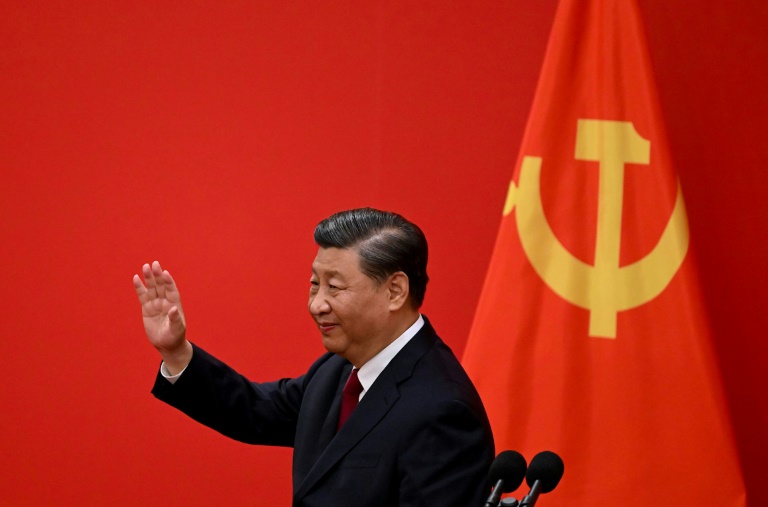
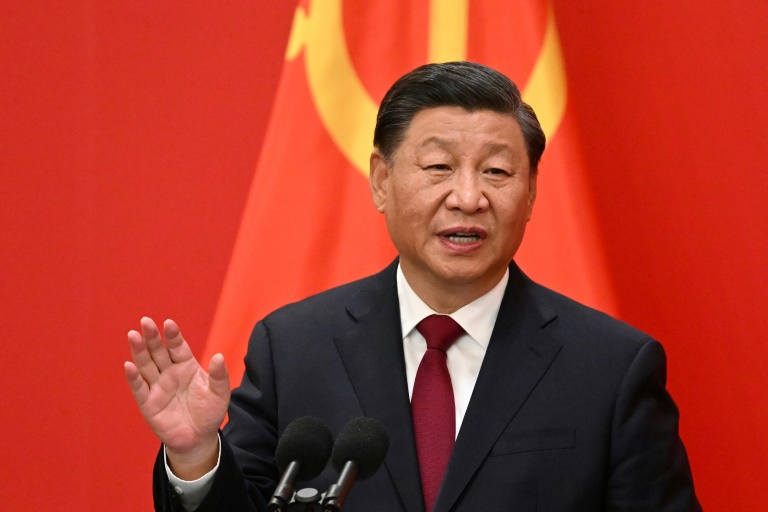
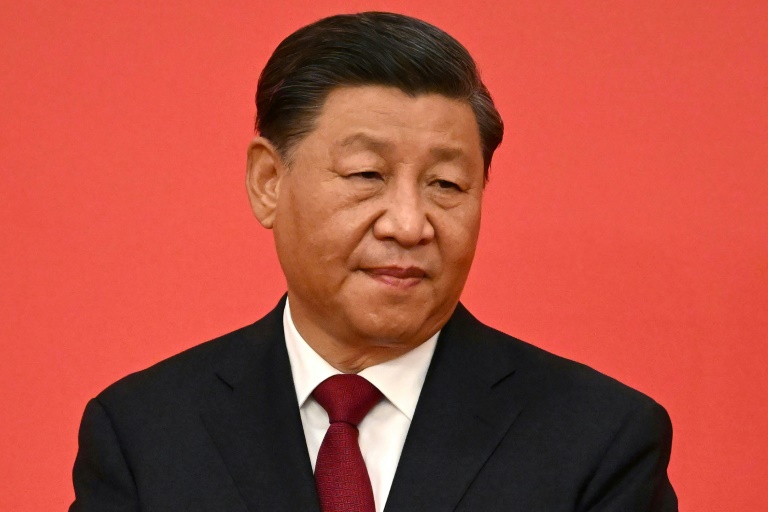
China’s economy grew at a faster pace than forecast in the third quarter, official data showed Monday, but investors reacted with alarm to President Xi Jinping’s sweeping new powers over the ruling Communist Party.

Xi secured an expected third term as leader at a party Congress over the weekend, but surprised observers by stacking leadership positions with proteges and allies. 

After delaying the release of economic data last week, the government announced Monday that the economy grew 3.9 percent year-on-year in the third quarter.

China had been expected to announce some of its weakest quarterly growth figures since 2020, with the world’s second-biggest economy hobbled by Covid-19 restrictions and a real estate crisis.

But investors instead focused on the political developments, which raised fears Xi and his allies would continue with gruelling virus lockdowns and other policies that have punished the economy.

China’s currency slumped and stocks nosedived in Hong Kong to their lowest level since the global financial crisis.

On Monday, the onshore yuan dipped more than 0.4 percent to 7.2633 per dollar — its weakest since January 2008.

The Hang Seng China Enterprises Index, a gauge of Chinese stocks listed in Hong Kong, closed down by more than 7 percent — the worst showing after any Communist Party Congress since the start of the index in 1994.

“The market is concerned that with so many Xi supporters elected, Xi’s unfettered ability to enact policies that are not market friendly is now cemented,” said Justin Tang, head of Asian research at United First Partners.

One of the most pressing concerns is Xi’s zero-Covid policy, which continues to put tens of millions of people under rolling lockdowns that also shutter factories. 

China is the last of the world’s major economies to hew to the strategy.  

“There is no clear sign of a significant easing of the zero-Covid strategy,” Nomura’s Ting Lu said, noting that, if anything, the opposite had happened. 

In a speech to close the Congress on Saturday, Xi insisted China’s Covid response has been a success. 

And he promoted Li Qiang, the architect of a two-month lockdown in Shanghai that crippled the financial hub’s economy, to the second most powerful post in the Communist Party.

Tech firms were among the worst hit by Monday’s sell-off, which comes after Xi’s crackdown on the sector scythed firms’ profits and wiped billions off their valuations.

E-commerce giants Alibaba and JD.com tanked more than 10 percent each, while Tencent lost more than eight percent. 

China is also battling an unprecedented crisis in its real estate sector — which makes up more than a quarter of the country’s GDP when combined with construction. 

Following years of explosive growth fuelled by easy access to loans, Xi oversaw a crackdown on excessive debt.

Property sales are now falling across the country, leaving many developers struggling and some owners refusing to pay their mortgages for unfinished homes.

Still, the economic data released on Monday gave some cause for optimism.

The third-quarter growth was higher than the 2.5 percent predicted by a panel of experts surveyed by AFP.

“Many economic indicators have actually recovered reasonably well from the mass lockdowns of March and April,” according to analyst Thomas Gatley of Gavekal Dragonomics.

Car sales held strong in September, driven by strong demand for electric clean vehicles.

August exports increased 7.1 percent compared with the previous year, and Beijing has invested in infrastructure to support activity.

In the second quarter of the year, growth had collapsed to 0.4 percent on-year, the worst performance since 2020. 

The country posted 4.8 percent growth in the first quarter of 2022.

Many economists continue to think China will struggle to attain its 2022 growth target of around 5.5 percent, and the International Monetary Fund has lowered its GDP growth forecast to 3.2 percent for 2022 and 4.4 percent for next year.

— Bloomberg News contributed to this story —

Most markets up on rate hopes but China fear casts shadow

Most markets rose Monday on hopes the Federal Reserve would soon slow its pace of interest rate hikes, though the mood was darkened by worries over the China outlook after President Xi Jinping tightened his grip on power.

The yen weakened against the dollar after a short rally as speculation swirled that Japanese authorities had stepped into forex markets again to support their currency for a second time in as many sessions.

Tokyo, Sydney, Seoul and Taipei led gains after a strong performance in New York that was sparked by a report the Fed could begin to take its foot off the pedal in its rate hike campaign.

The Wall Street Journal said some officials were keen to discuss a slowdown when they meet next month.

Markets have been hammered this year by fears that moves by the Fed and other central banks to fight decades-high inflation will spark a recession.

Officials had been expected to lift rates 75 basis points for a fourth successive time next month, while bets were increasing on another such move in December.

“The mere suggestion of the Fed stepping down from 75 basis points to a 50 basis point incremental rate hike in December produced a fierce rally in US equities, partial reversal of the recent surge in US Treasury yields and smart about-turn in the US dollar,” said National Australia Bank’s Ray Attrill.

But while most equity markets across the region were well up, Chinese markets were hammered by the reshuffle at the top of government. Hong Kong fell more than six percent and Shanghai was two percent down.

– Zero-Covid worries –

Xi, who was at the weekend given a third five-year term as leader, handed key positions to loyalists who back his strategy of fighting Covid outbreaks with lockdowns and other strict measures.

The policy has been blamed for the sharp drop in growth in the world’s number two economy, and while data showed Monday that it expanded more than forecast in the third quarter, traders remain on edge.

In a speech to close the Congress on Saturday, Xi insisted his zero-Covid policy had been a success.

And he promoted Li Qiang, the architect of a two-month lockdown in Shanghai that crippled the financial hub’s economy, to the second most powerful post in the Communist Party.

“The market is concerned that with so many Xi supporters elected, Xi’s unfettered ability to enact policies that are not market friendly is now cemented,” Justin Tang of United First Partners said.

Tech firms were among the worst hit in the Hong Kong selloff, hammered in recent years by Xi’s crackdown on the sector that has scythed firms’ profits and wiped billions off their valuations.

E-commerce giants Alibaba and JD.com each saw double-digit losses, as did Tencent. The Hang Seng tech index was close to 10 percent down.

The onshore yuan dipped as much as 0.4 percent to 7.2552 to the dollar — its weakest since January 2008.

Investor worries about China also weighed on oil markets with both main contracts in retreat as the prospect of more possible lockdowns hitting demand expectations.

On currency markets, the yen was hovering just above 149 to the dollar, having strengthened to 145.65 earlier amid talk that authorities had intervened to support the unit.

Observers said officials likely stepped in on Friday after the dollar soared to a fresh 32-year high of 151.93 yen. That came after warnings from the finance ministry that it was keeping tabs on movements, and follows a similar move last month.

“Whilst the (finance ministry) has since declined to comment on whether they intervened, such action has not come without multiple warnings from officials,” said Matt Simpson at City Index.

“The MoF last week said they will deal with speculators ‘severely’ and the strong price reaction on Friday suggests they did just that.

“Price action has also been erratic in Monday’s Asian session, which points to another probable intervention.”

The pound rose after former UK prime minister Boris Johnson said he would not stand for the Conservative leadership again, after the resignation of Liz Truss last week.

His decision leaves his former finance minister Rishi Sunak the favourite to take the reins and become the country’s third premier this year.

The choice of the less-controversial Sunak could provide a little stability in Westminster after weeks of turmoil sparked by Truss’s debt-fuelled mini-budget that hammered the pound and sent shivers through markets.

London slipped in the morning, though Paris and Frankfurt rose even as data showed further weakness in the eurozone economy.

– Key figures around 0810 GMT –

Tokyo – Nikkei 225: UP 0.3 percent at 26,974.90 (close)

Hong Kong – Hang Seng Index: DOWN 6.4 percent at 15,180.69 (close)

Shanghai – Composite: DOWN 2.0 percent at 2,977.56 (close)

London – FTSE 100: DOWN 0.3 percent at 6,946.36

Pound/dollar: UP at $1.1330 from $1.1258 on Friday

Dollar/yen: UP at 149.15 yen from 147.65 yen

Euro/dollar: DOWN at $0.9841 from $0.9863

Euro/pound: DOWN at 86.88 pence from 87.26 pence

West Texas Intermediate: DOWN 1.5 percent at $83.81 per barrel

Brent North Sea crude: DOWN 1.3 percent at $92.27 per barrel

New York – Dow: UP 2.5 percent at 31,082.56 (close)

What to expect from Xi's next five years in power

Chinese leader Xi Jinping has emerged from a five-year congress with even more power over the ruling Communist Party. AFP examines how Xi is expected to handle the key issues facing the country.

– Slowing economy –

China’s slowing economy will likely dominate Xi’s next five years in power but his decision to pack the Communist Party’s top leadership with loyalists has stoked concerns about him prioritising ideology at the expense of growth.

After decades of high growth, China’s economy is running out of steam, with analysts widely expecting the country will struggle to attain its 2022 growth target of around 5.5 percent.

And Xi’s move suggests the days of liberal reformers steering the world’s second largest economy have come to an end.

While past decades saw China’s private sector grow rich on easy credit and hefty profits, Xi’s next term may see Beijing revert to more old-school economic management, with a fresh focus on shoring up heavy industry and a continuation of a crackdown on big tech. 

Xi has thrown his weight behind the development of a more consumption-driven economy — a policy known as “dual circulation” — and has sought to address China’s yawning wealth gap under the banner of “common prosperity”. 

With the United States promising to prioritise maintaining “an enduring competitive edge” against China as the two superpowers battle for dominance over technology, Beijing may find itself under growing pressure internationally as growth slows at home.

– Tensions over Taiwan –

After years of ratcheting up tensions with Taiwan, an increasingly emboldened Xi could decide the time is right to fulfil Beijing’s longstanding ambition of retaking the self-ruled democratic island.

US officials have argued that the world is closer than ever to seeing a conflict over the island — and that China could invade as soon as this year.

China has made a “fundamental decision that the status quo was no longer acceptable, and that Beijing was determined to pursue reunification on a much faster timeline,” US Secretary of State Antony Blinken said this month.

Beijing insists its policy towards Taiwan has not changed, but the rhetoric and actions towards the island have become more pronounced.

The Communist Party for the first time enshrined its opposition to Taiwanese independence in its constitution at its just-ended congress which handed Xi a third term in power.

But any move to invade Taiwan would wreak havoc with global supply chains — the island is a major supply of semiconductors, an essential component of nearly all modern electronics, from smartphones to kitchen appliances and cars.

It would also provoke outrage from the West, deepening China’s isolation, bring Beijing and Washington closer than ever to direct military confrontation, and snuff out Taiwan’s hard-earned democratic freedoms.

– Zero Covid –

Xi will also need to decide the future of China’s strict zero-Covid policy — and whether the country is now ready to open up to the outside world after two years of closed borders and strict quarantines.

The policy is dragging on the economy, with officials this week blaming the epidemic for rising unemployment.

“Consumption is unlikely to recover to pre-Covid level with the current scale of Covid control,” said Dan Wang, chief economist at Hang Seng Bank China.

And with Covid rules in China’s semi-autonomous territory of Hong Kong slowly being relaxed in a bid to attract more international capital, Xi could decide the economic costs outweigh the benefits of keeping controls tight.

But the Chinese leader’s speech to the party faithful last week gave no sign that the rigid policy — which has forced millions into lockdowns over just handfuls of cases as the rest of the world learns to live with the virus — would relent anytime soon. 

And with the success of the zero-Covid policy so entwined with Xi’s legitimacy, it appears unlikely that a relaxation will take place anytime soon — no matter the cost to the economy. 

– Human rights –

China under Xi has seen the almost-total eradication of civil society, with scores of activists having fled the country and opposition to the government all but snuffed out. 

And in the far-western region of Xinjiang, rights groups say more than a million Uyghurs and other Muslim minorities are detained in what the United States and lawmakers in Western countries have said amounts to genocide.

The situation looks unlikely to improve under the next five years as Xi’s power grows increasingly impossible to challenge and the leadership digs in its heels against international pressure.

Xi’s next term will likely see him “continue his profound assault on human rights across the country and around the globe,” Sophie Richardson at Human Rights Watch wrote. 

China economy grows, but Xi's new power spooks investors

China’s economy grew at a faster pace than forecast in the third quarter, official data showed Monday, but investors reacted with alarm to President Xi Jinping’s sweeping new powers over the ruling Communist Party.

Xi as expected secured a third term as leader at a party Congress over the weekend, but surprised observers with his complete stacking of other leadership positions with proteges and allies. 

After delaying the release of economic data last week so it would not conflict with the Congress, the government announced Monday the economy grew 3.9 percent year-on-year in the third quarter.

China had been expected to announce some of its weakest quarterly growth figures since 2020, with the world’s second-biggest economy hobbled by Covid restrictions and a real estate crisis.

But investors instead focused on the political developments, which raised fears Xi and his allies would continue with gruelling Covid lockdowns and other policies that have punished the economy.

The currency of the world’s second-largest economy slumped and the country’s stocks nosedived in Hong Kong to their lowest level since the global financial crisis.

On Monday the onshore yuan dipped as much as 0.4 percent to 7.2552 per dollar — its weakest since January 2008 — and the Hang Seng China Enterprises Index, a gauge of Chinese stocks listed in Hong Kong, plunged more than 5 percent.

That put it on track for the worst showing after any Communist Party Congress since the start of the index in 1994.

“The market is concerned that with so many Xi supporters elected, Xi’s unfettered ability to enact policies that are not market friendly is now cemented,” said Justin Tang, head of Asian research at United First Partners.

One of the most pressing concerns is Xi’s zero-Covid policy, which continues to see tens of millions of people endure rolling lockdowns that also shutter factories. 

China is the last of the world’s major economies to continue following the strategy.  

“There is no clear sign of a significant easing of the zero-Covid strategy,” Nomura’s Ting Lu said, noting that, if anything, the opposite had happened. 

In a speech to close the Congress on Saturday, Xi insisted his zero-Covid policy had been a success. 

And he promoted Li Qiang, the architect of a two-month lockdown in Shanghai that crippled the financial hub’s economy, to the second most powerful post in the Communist Party.

Tech firms were among the worst hit in Monday’s sell-off, having been hammered in recent years by Xi’s crackdown on the sector that has scythed firms’ profits and wiped billions off their valuations.

E-commerce giants Alibaba and JD.com tanked more than 10 percent each, while Tencent lost more than eight percent. 

China is also battling an unprecedented crisis in its real estate sector — which makes up more than a quarter of the country’s GDP when combined with construction. 

Following years of explosive growth fuelled by easy access to loans, Xi oversaw a crackdown on excessive debt that began in 2020.

Property sales are now falling across the country, leaving many developers struggling and some owners refusing to pay their mortgages for unfinished homes.

Still, the economic data released on Monday gave some cause for optimism.

The third-quarter growth was higher than the 2.5 percent predicted by a panel of experts surveyed by AFP.

“Many economic indicators have actually recovered reasonably well from the mass lockdowns of March and April,” according to analyst Thomas Gatley of Gavekal Dragonomics.

Car sales held strong in September, driven by strong demand for electric clean vehicles.

August exports increased 7.1 percent compared with the previous year, and Beijing has invested in infrastructure to support activity.

In the second quarter of the year, growth had collapsed to 0.4 percent on-year, the worst performance since 2020. 

The country posted 4.8 percent growth in the first quarter of 2022.

Many economists continue to think China will struggle to attain its 2022 growth target of around 5.5 percent, and the International Monetary Fund has lowered its GDP growth forecast to 3.2 percent for 2022 and 4.4 percent for next year.

— Bloomberg News contributed to this story —

Most Asian markets up on rate hopes but China fear casts shadow

Most Asian markets rose Monday after a surge on Wall Street fuelled by hopes the Federal Reserve could begin to slow its pace of interest rate hikes.

However, the bright start to the week was overshadowed by a plunge in Hong Kong and Shanghai after Xi Jinping was handed a third term as leader and put in place a team who back his economically damaging zero-Covid strategy.

The yen fluctuated against the dollar as speculation swirled that Japanese authorities had stepped into forex markets again to support their currency for a second time in as many sessions.

Tokyo, Sydney, Seoul and Taipei led gains after a strong performance in New York that was sparked by a report the Fed could begin to take its foot off the pedal in its rate hike campaign.

The Wall Street Journal article said some officials were keen to discuss a slowdown when they meet next month.

Markets have been hammered this year by fears that moves by the Fed and other central banks to fight decades-high inflation will spark a recession.

Officials had been expected to lift rates 75 basis points for a fourth successive time next month, while bets were increasing on another such move in December.

“The mere suggestion of the Fed stepping down from 75 basis points to a 50 basis point incremental rate hike in December produced a fierce rally in US equities, partial reversal of the recent surge in US Treasury yields and smart about-turn in the US dollar,” said National Australia Bank’s Ray Attrill.

However, while most equity markets across the region were well up, Chinese markets were being hammered by the reshuffle at the top of government. Hong Kong shed more than four percent and Shanghai almost one percent.

-Zero-Covid worries-

Xi, who was at the weekend given a third five-year term as leader, handed key positions to loyalists who back his strategy of fighting Covid outbreaks with lockdowns and other strict measures.

The policy has been blamed for the sharp drop in growth in the world’s number two economy, and while data showed Monday that it expanded more than forecast in the third quarter, traders remain on edge.

On currency markets, the yen was hovering around 149 to the dollar, having strengthened to 145.65 earlier amid talk that authorities had intervened to support the unit for a second time in as many sessions.

Observers said officials likely stepped in on Friday after the dollar soared to a fresh 32-year high of 151.93 yen. That came after warnings from the finance ministry that it was keeping tabs on movements, and follows a similar move last month.

“Whilst the (finance ministry) has since declined to comment on whether they intervened, such action has not come without multiple warnings from officials,” said Matt Simpson at City Index.

“The MoF last week said they will deal with speculators ‘severely’ and the strong price reaction on Friday suggests they did just that.

“Price action has also been erratic in Monday’s Asian session, which points to another probable intervention.”

The pound rose after former UK prime minister Boris Johnson said he would not stand for the Conservative leadership again, after the resignation of Liz Truss last week.

His decision leaves his former finance minister Rishi Sunak the favourite to take the reins and become the country’s third premier this year.

The choice of the less-controversial Sunak could provide a little stability in Westminster after weeks of turmoil sparked by Truss’s debt-fuelled mini-budget that hammered the pound and sent shivers through markets.

– Key figures around 0230 GMT –

Tokyo – Nikkei 225: UP 1.0 percent at 27,156.95 (break)

Hong Kong – Hang Seng Index: DOWN 4.4 percent at 15,497.13

Shanghai – Composite: DOWN 0.9 percent at 3,010.37

Pound/dollar: UP at $1.1318 from $1.1258 on Friday

Dollar/yen: UP at 148.92 yen from 147.65 yen

Euro/dollar: DOWN at $0.9840 from $0.9863

Euro/pound: DOWN at 86.93 pence from 87.26 pence

West Texas Intermediate: FLAT at $85.05 per barrel

Brent North Sea crude: FLAT at $93.47 per barrel

New York – Dow: UP 2.5 percent at 31,082.56 (close)

London – FTSE 100: UP 0.4 percent at 6,969.73 (close)

China economy grows 3.9 percent year-on-year in third quarter

China’s economy grew 3.9 percent year-on-year in the third quarter, according to official data released Monday, beating forecasts a day after President Xi Jinping was re-elected to a historic third term as leader.

Beijing last week delayed the release of the third-quarter growth figures — along with a host of other economic indicators — as the country’s leaders gathered in Beijing for the five-yearly Communist Party Congress. 

China had been expected to announce some of its weakest quarterly growth figures since 2020, with its economy hobbled by Covid-19 restrictions and a real estate crisis.

In the previous quarter, growth in the world’s second-largest economy collapsed to 0.4 percent compared with the previous year, the worst performance since 2020. The country posted 4.8 percent growth in the first quarter of 2022.

But Monday’s data, published six days later than scheduled, showed a slight rebound, with China posting growth higher than the 2.5 percent predicted by a panel of experts surveyed by AFP.

It did, however, show a marked rise in unemployment from last month, a figure officials blamed on the pandemic. 

Many economists continue to think China will struggle to attain its 2022 growth target of around 5.5 percent, and the International Monetary Fund (IMF) has lowered its GDP growth forecast to 3.2 percent for 2022 and 4.4 percent for next year.  

AFP’s panel of experts predicted average growth of three percent in 2022, far below the 8.1 percent seen in 2021. 

That would equal China’s weakest growth rate in four decades, excluding 2020, when the global economy was hammered by the emergence of the coronavirus.

“The big policy challenge is accepting that the economy has reached a state of maturity that means growth numbers are likely permanently reset to the zero-to-4.5 percent range for the coming decade,” Clifford Bennett, chief economist at ACY Securities, told AFP. 

– Zero-Covid –

Beijing’s zero-Covid policy, which continues to weigh heavily on the economy, appears no closer to loosening than before the weekend’s Party Congress. 

China is the last of the world’s major economies to continue following the strategy, which imposes tight travel restrictions, mass PCR testing and obligatory quarantines.  

It involves sudden and strict lockdowns — including of businesses and factories — which has disrupted production and weighed heavily on household consumption.

But despite the impact on the economy, “there is no clear sign of a significant easing of the zero-Covid strategy”, Nomura’s Ting Lu said, noting that, if anything, the opposite had happened. 

In the week leading up to the Congress, state media published multiple editorials warning the policy should not be relaxed, and officials have pounced on recent outbreaks across the country with increased curbs.

Meanwhile, China is also battling an unprecedented crisis in its real estate sector — historically a driver of growth and representative of more than a quarter of the country’s GDP when combined with construction. 

Following years of explosive growth fuelled by easy access to loans, Chinese authorities launched a crackdown on excessive debt in 2020.

Property sales are now falling across the country, leaving many developers struggling and some owners refusing to pay their mortgages for unfinished homes.

Despite the problems, “many economic indicators have actually recovered reasonably well from the mass lockdowns of March and April”, according to analyst Thomas Gatley of Gavekal Dragonomics.

Car sales held strong in September, driven by strong demand for electric clean vehicles.

August exports increased by 7.1 percent compared with the previous year, and Beijing has invested in infrastructure to support activity.

However, “those pillars of growth are becoming more fragile”, Gatley said. 

US stocks surge while yen gains amid rumored government intervention

Wall Street stocks surged Friday to end a volatile week on a positive note while the yen jumped against the dollar in a shift traders attributed to an intervention by government authorities.

The Dow piled on nearly 750 points, or 2.5 percent, picking up momentum throughout the day following a Wall Street Journal report that said some Federal Reserve officials want to discuss slowing the pace of interest rate hikes at the November central bank meeting.

The report suggested the Fed could soon pivot from a “super aggressive stance to a less aggressive stance,” said Briefing.com analyst Patrick O’Hare, who also cited generally “better than feared” corporate earnings as a driver of Friday’s buoyant trading.

Earlier on, bourses in Europe and Asia finished mostly lower, although London’s FTSE advanced in spite of data showing that UK borrowing surged and retail sales slumped in September.

Markets continued to monitor the ongoing political drama in Britain following Thursday’s resignation announcement by Prime Minister Liz Truss.

Cabinet member Penny Mordaunt became the first to formally declare her candidacy, while Britain’s divisive former leader Boris Johnson received heavyweight Conservative backing to stage a comeback.

The yen, meanwhile picked up ground against the dollar after hitting a fresh 32-year low in the latest big pullback in the wake of the Bank of Japan’s accommodative monetary policy stance compared with the Federal Reserve.

“It was an intervention,” Mazen Issa of TD Securities said of the shift.

Nikkei Asia said that the Japanese government and central bank acted in support of the yen in a report that was not officially confirmed by Japanese authorities.

Rumors of an intervention have hung over foreign exchange markets in recent days as the yen has plumbed new multi-year lows.

The latest moves by the government come a month after authorities spent about 2.8 trillion yen (then around $20 billion) on an intervention.

At a news conference Friday, Finance Minister Shunichi Suzuki vowed a tough response to “excessive” market moves.

“We are confronting speculators strictly,” Suzuki said. “We cannot tolerate excessive moves by speculators. We will respond appropriately while watching currency market movements with a high sense of urgency.”

– Key figures around 2050 GMT –

New York – Dow: UP 2.5 percent at 31,082.56 (close)

New York – S&P 500: UP 2.4 percent at 3,752.75 (close)

New York – Nasdaq: UP 2.3 percent at 10,859.72 (close)

London – FTSE 100: UP 0.4 percent at 6,969.73 (close)

Frankfurt – DAX: DOWN 0.3 percent at 12,730.90 (close)

Paris – CAC 40: DOWN 0.9 percent at 6,035.69 (close)

EURO STOXX 50: DOWN 0.5 percent at 3,476.63 (close)

Tokyo – Nikkei 225: DOWN 0.4 percent at 26,890.58 (close)

Hong Kong – Hang Seng Index: DOWN 0.4 percent at 16,211.12 (close)

Shanghai – Composite: UP 0.1 percent at 3,038.93 (close)

Brent North Sea crude: UP 1.2 percent at $93.50 per barrel

West Texas Intermediate: UP 0.6 percent at $85.05 per barrel

Pound/dollar: UP at $1.1258 from $1.1235 on Thursday

Dollar/yen: DOWN at 147.65 yen from 150.15 yen

Euro/dollar: UP at $0.9863 from $0.9786

Euro/pound: UP at 87.26 pence from 87.11 pence

burs-jmb/mdl

Pound hit by UK political crisis

Global stocks wavered on Friday on renewed concerns about rising interest rates while the British pound slumped over the UK’s political drama.

European stocks were mixed while Wall Street went from red to green after the open as investors weighed fresh company earnings and rising bond yields.

“It’s not a good look right now in sovereign bond markets and that is making things look less pretty in global equity markets,” said Briefing.com analyst Patrick O’Hare.

Sterling slid beneath $1.12 after having bounced above $1.13 Thursday following the resignation of Prime Minister Liz Truss. 

The yield on the British government’s 30-year bond, or gilt, climbed back above four percent on Friday as the Conservatives’ race to replace Truss went into full swing, with her divisive predecessor Boris Johnson among the potential contenders.

The dollar also strengthened further against the yen as the US central bank is expected to pursue its aggressive rate hikes while its Japanese counterpart continues its dovish stance.

The dollar surged almost one percent to 151.53 yen, but later fell back to around 148 yen.

The yield on the 10-year US Treasury bill — the interest the government pays to borrow — has surged well past four percent.

Bond yields for governments in France and Germany also rose.

“There is still huge uncertainty over the economy, inflation and where interest rates will end up and none of that is conducive to a strong sustainable stock market recovery,” said Craig Erlam, senior market analyst at trading platform OANDA.

Analysts said investors were also tracking third-quarter earnings reports from American Express and Verizon Communications.

– ‘Bleak’ situation –

“The situation in the UK looks particularly bleak,” Erlam said.

“I’m not sure anyone is particularly confident that we’re suddenly going to see stability in government,” he said.

Truss resigned after 44 days in office, having triggered markets chaos over a tax-cutting budget due to have been funded by debt.

The pound was weighed down Friday additionally by official data showing that UK borrowing surged and retail sales slumped in September.

“This morning’s retail sales data highlighted the struggles facing consumers and businesses alike, with people spending 3.9 percent more for 6.9 percent less goods,” said Joshua Mahony, senior market analyst at online trading platform IG.

London’s FTSE 100 index managed a small gain nevertheless, but both Frankfurt and Paris ended the day lower.

US stocks were higher in late morning trading, although the Nasdaq spent much of the morning in the red as weak Snap results dragged down other tech shares.

Snap shares sank around 30 percent after reporting a $360 million quarterly loss in results that showed that online advertisers are tightening their budgets.

– Key figures around 1530 GMT –

Pound/dollar: DOWN at $1.1212 from $1.1235 on Thursday

Dollar/yen: UP at 148.07 yen from 150.15 yen

Euro/dollar: UP at $0.9806 from $0.9786

Euro/pound: UP at 87.44 pence from 87.11 pence

New York – Dow: UP 0.8 percent at 30,577.63 points

EURO STOXX 50: DOWN 0.5 percent at 3,476.63

London – FTSE 100: UP 0.4 percent at 6,969.73 (close)

Frankfurt – DAX: DOWN 0.3 percent at 12,730.90 (close)

Paris – CAC 40: DOWN 0.9 percent at 6,035.69 (close)

Tokyo – Nikkei 225: DOWN 0.4 percent at 26,890.58 (close)

Hong Kong – Hang Seng Index: DOWN 0.4 percent at 16,211.12 (close)

Shanghai – Composite: UP 0.1 percent at 3,038.93 (close)

Brent North Sea crude: UP 0.4 percent at $92.78 per barrel

West Texas Intermediate: UP 0.2 percent at $84.64 per barrel

burs/rl/cdw

India's Reliance reports mixed results as taxes hurt oil business

Indian conglomerate Reliance Industries reported mixed quarterly results on Friday, with weakness in its core oil-refining business hurting profits even as its retail and telecom arms posted strong earnings.

Reliance, which is owned by Asia’s second-richest man Mukesh Ambani, reported a net profit of 136.56 billion rupees ($1.65 billion) between July and September, 0.2 percent lower than the same period last year.

From the June quarter, net profit declined 24 percent from 179.55 billion rupees.

Revenues from operations increased 33.7 percent on-year to 2.33 trillion rupees, helped by strong contributions from Reliance’s newer consumer-facing businesses.

“I am pleased with the record performance of our consumer businesses which continue to scale new milestones every quarter,” chairman and managing director Ambani said in a statement.

But Reliance’s legacy oil-to-chemicals business was hit by “subdued demand” and “the introduction of special additional excise duties during the quarter”, he added.

On July 1, India imposed duties on the sale of petrol, diesel and aviation fuel by oil refiners such as Reliance, in addition to a “windfall tax” on the sale of domestic crude.

Additional excise duties cost Reliance 40.4 billion rupees in the quarter, the company said, with planned plant shutdowns further impacting refinery earnings.

Gross revenues from Reliance’s retail business jumped 42.9 percent on-year to an all-time high of 649.2 billion rupees.

A footfall surge, the waning impact of the pandemic and 795 new store openings in the quarter contributed to 36 percent higher profits for Reliance’s retail business compared with last year.

Telecom arm Reliance Jio saw gross revenues rise 22.8 percent on-year to 285 billion rupees, as it added 7.7 million net subscribers in the quarter.

In August, Ambani pledged $25 billion to launch 5G networks in India, aiming to strengthen his grip on one of the world’s fastest-growing smartphone markets.

Reliance’s multi-billion-dollar fortune has been powered by oil and petrochemicals businesses, but the company has diversified into new areas including telecom and retail in recent years.

The company’s shares closed 1.16 percent lower in Mumbai ahead of the earnings announcement on Friday.

Close Bitnami banner
Bitnami