Chinese Business

Hong Kong to let Covid-hit participants of banking summit leave on own flights: official

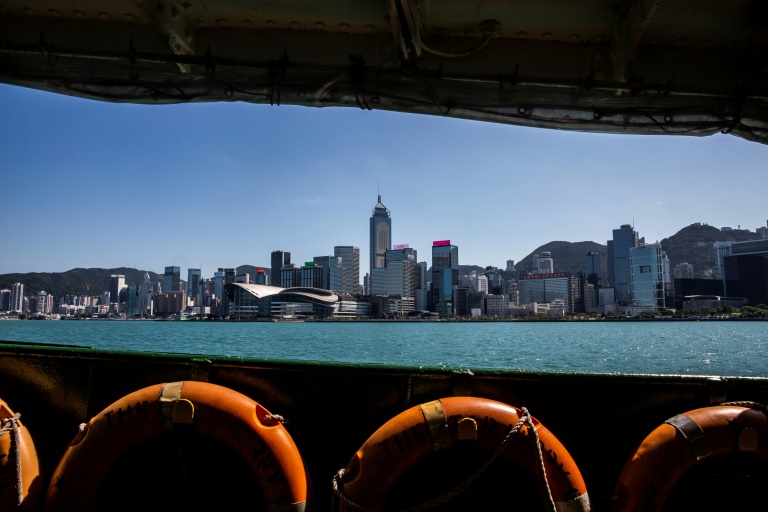
Foreign participants at a high-profile financial summit in Hong Kong next month would be able to skip isolation and leave via “appropriate flight arrangements” if they catch Covid, a top health official said Friday.

The comments followed media reports that attendees — expected to include top executives from some of the world’s most powerful financial institutions — would be allowed to leave on private jets if they test positive for the coronavirus.

Hong Kong is aiming to reassert its position as a global financial hub with the summit, organised by the city’s central bank, after being effectively cut off because of its strict Covid policies — especially for international travellers.

If a summit participant tests positive for the coronavirus, “we will adopt the same isolation arrangements as with other inbound visitors,” Permanent Secretary for Health Thomas Chan told a press conference when asked if any rules would be relaxed for the event.

“But at the same time we will also provide facilitation should there be appropriate flight arrangements for leaving Hong Kong.”

Commercial airlines are restricted from transporting virus-positive passengers to and from Hong Kong.

Bloomberg News had reported Thursday that the Hong Kong government was considering allowing participants at the two-day summit to leave by private jet if they test positive.

Hong Kong has had a difficult three years, with a sweeping crackdown on political freedoms and the imposition of some of the world’s strictest coronavirus pandemic controls, which kept it isolated even as competitors such as Singapore reopened.

It scrapped mandatory hotel quarantine for travellers last month, as warnings grew that the financial hub was suffering brain drain and loss of business.

The Hong Kong Monetary Authority expects to draw 200 participants to the event, including the heads of 30 major financial institutions including Goldman Sachs and Morgan Stanley.

Some Covid restrictions, such as face masks, remain in Hong Kong.

Chief Executive John Lee has not yet outlined a roadmap for full reopening, and has said that the city must remain cautious while relaxing virus curbs.

Google fined $162 mn by Indian watchdog over market dominance

Google has been fined more than $160 million by India’s anti-trust watchdog after a probe found the tech behemoth was abusing its commanding position in the local smartphone market. 

The California-based company’s Android mobile operating system is by far the dominant player in India and is run on 95 percent of all the country’s smartphones, according to research agency Counterpoint.

But the Competition Commission of India (CCI) said the operating system was configured to unlawfully crowd out rivals to YouTube, web browser Chrome and other popular Google apps.

Android had a suite of Google apps pre-installed on its phones, including the company’s own search engine, “which accorded significant competitive edge to Google’s search services over its competitors”, a CCI statement said late Thursday. 

“Markets should be allowed to compete on merits and the onus is on (Google) that its conduct does not impinge this competition on merits,” it added. 

The commission levied a fine of 13.4 billion rupees ($162 million) and instructed the company to allow Android users to remove pre-installed Google apps. 

It also told Google not to enter into any agreement with smartphone makers that would encourage them to only sell Android-based devices or exclusively use its software.

The company said it would review the decision and weigh its next moves.

“The CCI’s decision is a major setback for Indian consumers and businesses, opening serious security risks for Indians… and raising the cost of mobile devices,” a spokesperson told AFP. 

Google faced a similar anti-trust ruling in the European Union that found the company had imposed “unlawful restrictions” on smartphone makers to benefit its search engine. 

Last month the EU’s second-highest court upheld a $4.1 billion fine against the company. 

Global regulators have followed suit, with Google facing a barrage of cases in the United States and Asia based on similar accusations.

India is home to the second-highest number of smartphone users in the world, after China.

Its smartphone market grew 27 percent year on year in 2021, according to Counterpoint, with annual sales exceeding 169 million units.

More than 60 percent of phones sold in the country come from leading Chinese manufacturers including Xiaomi and Oppo.  

Apple remains a minor player in the budget-conscious market but has seen some inroads in recent years, and the company last month announced plans to locally manufacture its flagship iPhone 14. 

Pound sinks on UK political chaos

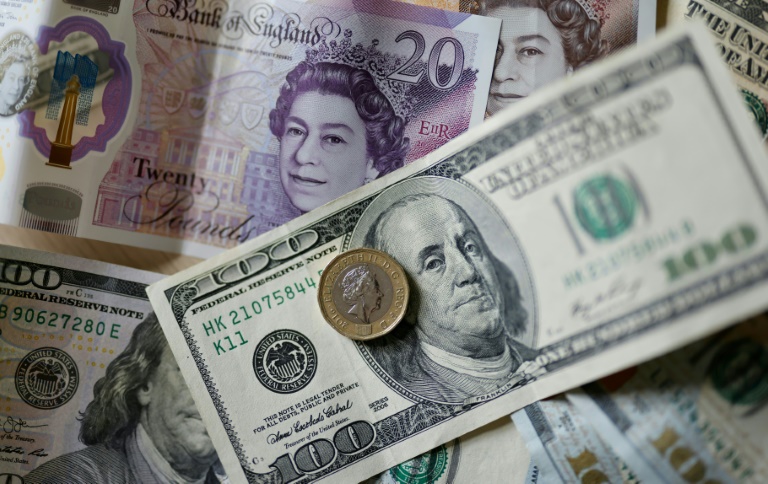
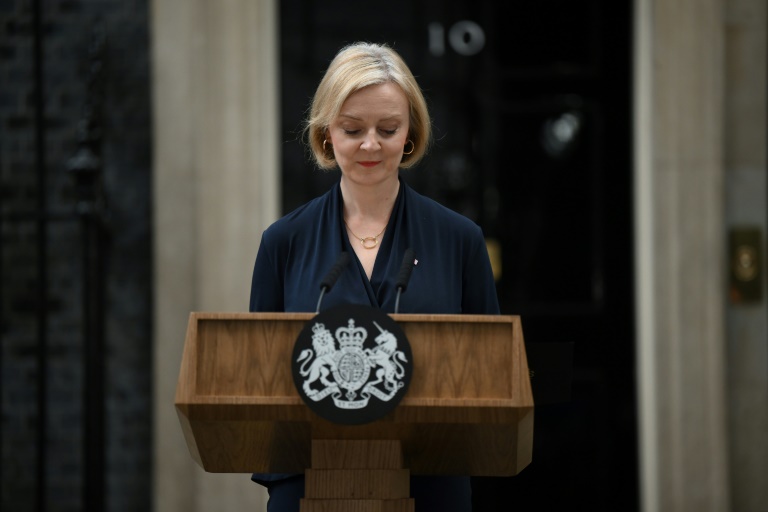
The British pound sank against the dollar Friday on political uncertainty after the resignation of UK Prime Minister Liz Truss, while weak economic data added to the turmoil.

The dollar strengthened also on expectations that the US Federal Reserve would press ahead with its programme of bumper interest rate hikes to target decades-high inflation.

European stock markets fell heavily, mirroring losses in Asia and on Wall Street, as investors fretted that rising global interest rates could tip the world economy into recession.

Sterling slid beneath $1.12, having bounced above $1.13 Thursday after Truss quit. 

The yield on the British government’s 30-year bond, or gilt, climbed back above four percent on Friday.

– ‘Seismic events’ –

“We are seeing retracement of these initial moves as markets realise that there’s still huge uncertainty,” noted Markets.com analyst Neil Wilson.

“The economic policies (of Truss) were already dead in the water so the market doesn’t have a huge amount of genuine new information to move on despite the seismic events of the last 24 hours.”

Truss resigned after 44 days in office, having triggered markets chaos over a tax-cutting budget due to have been funded by debt.

The pound was weighed down Friday additionally by official data showing that UK borrowing surged and retail sales slumped in September.

Elsewhere, traders were girding for another possible intervention by Tokyo after the dollar went above 150 yen.

The dollar burst to a 32-year high Thursday as investors bet the Fed would continue to aggressively ramp up borrowing costs.

In a sign of growing rate hike expectations, US 10-year Treasury yields rose to their highest level since the financial crisis in 2008, which in turn hit equities.

By contrast, the Bank of Japan refuses to raise interest rates despite the country’s sky-high inflation.

– Key figures around 1015 GMT –

Pound/dollar: DOWN at $1.1114 from $1.1235 on Thursday

Dollar/yen: UP at 150.98 yen from 150.15 yen

Euro/dollar: DOWN at $0.9735 from $0.9786

Euro/pound: UP at 87.62 pence from 87.11 pence

London – FTSE 100: DOWN 0.9 percent at 6,883.43 points

Frankfurt – DAX: DOWN 1.5 percent at 12,573.45

Paris – CAC 40: DOWN 1.7 percent at 5,986.60

EURO STOXX 50: DOWN 1.6 percent at 3,437.84

Tokyo – Nikkei 225: DOWN 0.4 percent at 26,890.58 (close)

Hong Kong – Hang Seng Index: DOWN 0.4 percent at 16,211.12 (close)

Shanghai – Composite: UP 0.1 percent at 3,038.93 (close)

New York – Dow: DOWN 0.3 percent at 30,333.59 (close)

Brent North Sea crude: DOWN 0.3 percent at $92.14 per barrel

West Texas Intermediate: DOWN 0.2 percent at $84.31 per barrel

burs-rfj/bcp/lth

Dollar extends gains on Fed rate hike expectations

The dollar extended gains Friday on expectations the Federal Reserve will press ahead with its programme of bumper interest rate hikes for the rest of the year.

Traders were girding for another possible intervention by Tokyo after the yen sank past 150 per dollar, while sterling remained under pressure owing to uncertainty in Westminster after Prime Minister Liz Truss resigned after just six weeks in office.

The fear that has gripped markets for most of the year returned after a brief respite at the start of the week, sending equity markets back into the red, with a series of better-than-expected earnings results unable to lift the gloom.

The dollar burst to a new 32-year high against the yen on Thursday as investors bet the Fed will ramp up borrowing costs much more as it struggles to rein in prices, while the Bank of Japan refuses to budge from its ultra-loose policies citing the need to support the torpid economy.

Even data Friday showing Japanese inflation hit an eight-year high last month — or more than 30 years when excluding VAT rises — was unable to change expectations that the central bank will continue to hold firm.

In a sign of growing rate hike expectations, US 10-year Treasury yields rose to their highest level since the financial crisis in 2008, which in turn hit equities.

“In October, inflation may reach 3.3 percent or 3.4 percent as many food prices are going up, mobile phone fees are giving a lift and service prices are rising,” said Mari Iwashita of Daiwa Securities Co.

“The BoJ seems to focus on downside risks overseas to conclude that it will need to keep up monetary easing. It strikes me that they have already made the decision to maintain easing.”

With the dollar sitting below 150.50 yen, there is a growing sense that authorities in Tokyo will step in to support their currency, though analysts warned that such moves rarely have a lasting effect. The last intervention was on September 22, when the dollar hit 145.90 yen.

– ‘Unmitigated disaster’ –

Finance Minister Shunichi Suzuki again said on Friday that the government was prepared to move and that the recent sudden, one-sided yen weakness was undesirable. 

But Hiroyuki Machida, at ANZ in Tokyo, said: “If moves reflect the rise in US yields on rate hike prospects and the pace is slow, it makes it difficult for Japan to intervene and the dollar-yen looks set to slowly grind higher toward 155.

“But the slow pace of the pair’s climb after touching 150 shows market players are wary of intervention and are cautiously treading water.”

The dollar was also elevated against sterling after a day after Truss resigned, having removed her finance and interior ministers within days and seeing her debt-fuelled, tax-cutting mini-budget torn up.

The pound initially rallied on the news Thursday but fell back as traders contemplated more government drift, and it remained weighed down on Friday.

“Truss has no doubt been an unmitigated disaster and I’m not sure who exactly will make the country feel at ease at this point,” said OANDA’s Craig Erlam.

“There will obviously be calls for a general election but that won’t provide any certainty or leadership for the country in the midst of a crisis. It would appear there are only bad options on the table so we probably shouldn’t expect a positive outcome.”

Equity markets fell again, extending Thursday’s losses and tracking another sell-off on Wall Street as expectations for more rate hikes by central banks around the world continue to grow owing to stubbornly high inflation.

Observers say the Fed could lift rates to as high as five percent before they take their foot off the pedal, and even then keep them there until officials are happy that prices are under control. They are currently at 3.0-3.25 percent.

Asia equity markets were mostly lower, with concerns about fresh lockdowns adding to the unease, after President Xi Jinping reiterated his commitment to the zero-Covid strategy.

Tokyo, Hong Kong, Sydney, Seoul, Singapore, Wellington, Taipei and Manila were all in the red, though Shanghai, Bangkok, Mumbai and Jakarta edged up.

London, Paris and Frankfurt were all down.

– Key figures around 0810 GMT –

Tokyo – Nikkei 225: DOWN 0.4 percent at 26,890.58 (close)

Hong Kong – Hang Seng Index: DOWN 0.4 percent at 16,211.12 (close)

Shanghai – Composite: UP 0.1 percent at 3,038.93 (close)

London – FTSE 100: DOWN 0.3 percent at 6,923.67

Pound/dollar: DOWN at $1.1183 from $1.1224 on Thursday

Dollar/yen: UP at 150.48 yen from 150.19 yen

Euro/dollar: DOWN at $0.9785 from $0.9787 

Euro/pound: UP at 87.36 pence from 87.17 pence

West Texas Intermediate: DOWN 0.2 percent at $84.32 per barrel

Brent North Sea crude: DOWN 0.2 percent at $92.17 per barrel

New York – Dow: DOWN 0.3 percent at 30,333.59 (close)

— Bloomberg News contributed to this story —

Google fined $162 mn by Indian watchdog over market dominance

Google has been fined more than $160 million by India’s anti-trust watchdog after a probe found the tech behemoth was abusing its commanding position in the local smartphone market. 

The California-based company’s Android mobile operating system is by far the dominant player in India and is run on 95 percent of all the country’s smartphones, according to research agency Counterpoint.

But the Competition Commission of India (CCI) said the operating system was configured to unlawfully crowd out rivals to YouTube, web browser Chrome and other popular Google apps.

Android had a suite of Google apps pre-installed on its phones, including the company’s own search engine, “which accorded significant competitive edge to Google’s search services over its competitors”, a CCI statement said late Thursday. 

“Markets should be allowed to compete on merits and the onus is on (Google) that its conduct does not impinge this competition on merits,” it added. 

The commission levied a fine of 13.4 billion rupees ($162 million) and instructed the company to allow Android users to remove pre-installed Google apps. 

It also told Google not to enter into any agreement with smartphone makers that would encourage them to only sell Android-based devices or exclusively use its software.

Google faced a similar anti-trust ruling in the European Union that found the company had imposed “unlawful restrictions” on smartphone makers to benefit its search engine. 

Last month the EU’s second-highest court upheld a $4.1 billion fine against the company. 

Global regulators have followed suit, with Google facing a barrage of cases in the United States and Asia based on similar accusations.

India is home to the second-highest number of smartphone users in the world, after China.

Its smartphone market grew 27 percent year on year in 2021, according to Counterpoint, with annual sales exceeding 169 million units.

More than 60 percent of phones sold in the country come from leading Chinese manufacturers including Xiaomi and Oppo.  

Apple remains a minor player in the budget-conscious market but has seen some inroads in recent years, and the company last month announced plans to locally manufacture its flagship iPhone 14. 

Australia 'concerned' about trade deal after UK turmoil

Australian Prime Minister Anthony Albanese on Friday voiced fears that Britain’s political convulsions and the exit of his counterpart Liz Truss could derail a pending trade deal between the two countries.

“I am concerned about any delay that would occur to the Australia-UK Free Trade Agreement,” the Australian prime minister said.

The agreement was finalised in December 2021 to much fanfare, but has yet to be ratified by either country.

Albanese said he had asked Truss — who now has days left in office before her Conservative party selects a new leader — to fast-track the ratification process.

“We had discussed trying to get it concluded this year to make sure the appropriate parliamentary processes went through,” the centre-left Australian leader said.

“I will of course speak to whoever it is that will become the next prime minister of the United Kingdom about doing that.” 

He added a subtle dig at his counterparts in London, which ruled Australia for over a century until 1901. 

“I must say, I’ve been in office about five months, I’ve met with two British prime ministers so far, and obviously will have contact with the third.”

Australia is no stranger to political tumult, having seen seven changes of prime minister in 15 years, but rules put in place by both leading parties have stemmed the habit of members ousting their own leaders.

“Here in Australia my government is stable, is orderly, the adults are in charge,” Albanese said.

The UK-Australia accord was the first free trade deal to be signed since Britain’s formal departure from the European Union at the start of 2021.

Britain claimed the deal would unlock annual bilateral trade worth £10.4 billion (US$12.4 billion).

But a cross-party UK parliamentary trade committee warned then-prime minister Boris Johnson against “overselling the benefits”.

The British economy has struggled with fraying ties with its largest trading partners inside the EU.

Dollar extends gains on Fed rate hike expectations

The dollar extended gains Friday on expectations the Federal Reserve will press ahead with its programme of bumper interest rate hikes for the rest of the year.

Traders were girding for another possible intervention by Tokyo after the yen sank past 150 per dollar, while sterling remained under pressure owing to uncertainty in Westminster after Prime Minister Liz Truss resigned after just six weeks in office.

The fear that has gripped markets for most of the year returned after a brief respite at the start of the week, sending equity markets back into the red, with a series of better-than-expected earnings results unable to lift the gloom.

The dollar burst to a new 32-year high against the yen on Thursday as investors bet the Fed will ramp up borrowing costs much more as it struggles to rein in prices, while the Bank of Japan refuses to budge from its ultra-loose policies citing the need to support the torpid economy.

Even data Friday showing Japanese inflation hit an eight-year high last month — or more than 30 years when excluding VAT rises — was unable to change expectations that the central bank will continue to hold firm.

“In October, inflation may reach 3.3 percent or 3.4 percent as many food prices are going up, mobile phone fees are giving a lift and service prices are rising,” said Mari Iwashita of Daiwa Securities Co.

“The BoJ seems to focus on downside risks overseas to conclude that it will need to keep up monetary easing. It strikes me that they have already made the decision to maintain easing.”

With the dollar sitting around 150.20 yen, there is a growing sense that authorities in Tokyo will step in to support their currency, though analysts warned that such moves rarely have a lasting effect. The last intervention was on September 22, when the dollar hit 145.90 yen.

– ‘Unmitigated disaster’ –

Finance Minister Shunichi Suzuki again said on Friday that the government was prepared to move and that the recent sudden, one-sided yen weakness was undesirable. 

The dollar was also elevated against sterling after another day of drama in London, where Truss gave in to pressure to resign after removing her finance and interior ministers within days and seeing her debt-fuelled, tax-cutting mini-budget torn up.

The pound initially rallied on the news but fell back as traders contemplated more drift in government.

“Truss has no doubt been an unmitigated disaster and I’m not sure who exactly will make the country feel at ease at this point,” said OANDA’s Craig Erlam.

“There will obviously be calls for a general election but that won’t provide any certainty or leadership for the country in the midst of a crisis. It would appear there are only bad options on the table so we probably shouldn’t expect a positive outcome.”

Equity markets fell back again, extending Thursday’s losses and tracking another sell-off on Wall Street as expectations for more rate hikes by central banks around the world continue to grow owing to stubbornly high inflation.

On Thursday, the head of the Philadelphia Fed, Patrick Harker, said: “We are going to keep raising rates for a while.

“Given our frankly disappointing lack of progress on curtailing inflation, I expect we will be well above four percent by the end of the year”, then take a step back in the new year, he said.

Observers say the Fed could lift rates to as high as five percent before they take their foot off the pedal, and even then keep them there until officials are happy that prices are under control. They are currently at 3.0-3.25 percent.

In early trade, Tokyo, Hong Kong, Sydney, Seoul, Singapore, Wellington, Taipei and Manila were all in the red, though Shanghai and Jakarta edged up.

– Key figures around 0230 GMT –

Tokyo – Nikkei 225: DOWN 0.2 percent at 26,951.59 (break)

Hong Kong – Hang Seng Index: DOWN 0.5 percent at 16,205.50

Shanghai – Composite: UP 0.1 percent at 3,036.56

Pound/dollar: DOWN at $1.1200 from $1.1224 on Thursday

Dollar/yen: UP at 150.25 yen from 150.19 yen

Euro/dollar: DOWN at $0.9772 from $0.9787 

Euro/pound: UP at 87.21 pence from 87.17 pence

West Texas Intermediate: UP 0.1 percent at $84.58 per barrel

Brent North Sea crude: DOWN 0.1 percent at $92.32 per barrel

New York – Dow: DOWN 0.3 percent at 30,333.59 (close)

London – FTSE 100: UP 0.3 percent at 6,943.91 (close) 

Yen sinks to new low as British pound briefly surges after Truss exit

The yen sank to a new 32-year low Thursday against the dollar, while the pound briefly rallied after British Prime Minister Liz Truss announced her resignation following a brief crisis-filled tenure.

Around 1900 GMT the dollar traded at 150.17 against the Japanese currency, which fell to levels last seen in August 1990 in a retreat that reflects the Bank of Japan’s accommodative monetary policy next to the aggressive interest rate hikes adopted by the Federal Reserve.

Analysts say the yen will continue to slide as long as the two policies differ, with more dramatic Fed interest-rate hikes likely to address grinding inflation.

Markets were also fixated on Britain where Truss announced her resignation just 44 days after taking office, as the ruling Conservatives planned a rapid contest to replace the shortest-lived premier in UK history.

The British pound briefly surged more than one percent against the dollar to $1.1336, but later retreated somewhat.

“The political tumult in the UK is not going away anytime soon until we have a clear understanding on who will lead and what will be their agenda,” said Oanda’s Edward Moya.

The FTSE 100 index closed up 0.3 percent while Britain’s borrowing costs eased on the news, as the yield on 30-year government bonds, known as gilts, fell to 3.90 percent.

“Sterling and gilts rallied as the sorry reign of Liz Truss came to an end,” said Markets.com analyst Neil Wilson.

“After a flurry of activity we are seeing retracement of these initial moves as markets realize that there’s still huge uncertainty about whether the Tory party can survive in power.”

– Strong dollar, China fears –

Elsewhere, Wall Street stocks finished lower again, retreating after an early advance following the latest rise in US Treasury yield as weak housing data pointed to the drag from higher lending rates.

The yield on the 10-year US Treasury note climbed further above four percent, reflecting the market’s expectation for more aggressive Fed interest rate hikes.

Data showed existing home sales in the United States fell for an eighth straight month in September, as surging mortgage rates following earlier Fed rate hikes weigh on demand.

Worries about higher interest rates offset a largely positive set of earnings from IBM, A&T and others.

Earlier, Asian markets finished the day in the red, with selling also fuelled by concerns about the Chinese economy as Covid cases spike in the country and leaders stick to lockdown strategies.

– Key figures around 2015 GMT –

New York – Dow: DOWN 0.3 percent at 30,333.59 (close)

New York – S&P 500:  DOWN 0.8 percent at 3,665.78 (close)

New York – Nasdaq: DOWN 0.6 percent at 10,614.84 (close)

London – FTSE 100: UP 0.3 percent at 6,943.91 (close) 

Frankfurt – DAX: UP 0.2 percent at 12,767.41 (close)

Paris – CAC 40: UP 0.8 percent at 6,086.90 (close)

EURO STOXX 50: UP 0.6 percent at 3,492.85 (close)

Tokyo – Nikkei 225: DOWN 0.9 percent at 27,006.96 (close)

Hong Kong – Hang Seng Index: DOWN 1.4 percent at 16,280.22 (close)

Shanghai – Composite: DOWN 0.3 percent at 3,035.05 (close)

Pound/dollar: UP at $1.1224 from $1.1219 on Wednesday

Dollar/yen: DOWN at 150.19 yen from 149.90 yen

Euro/dollar: UP at $0.9787 from $0.9773 

Euro/pound: UP at 87.17 pence from 87.11 pence

Brent North Sea crude: DOWN less than 0.1 percent at $92.38 per barrel

West Texas Intermediate: UP 0.5 percent at $85.98 per barrel

burs-jmb/dw

Thai regulators approve controversial telecom merger

Thailand’s telecom regulator on Thursday approved the merger of Telenor’s Thai arm and a local rival that would create the kingdom’s biggest mobile services provider, despite concerns about competition and consumer harm.

Norwegian giant Telenor and Thai conglomerate Charoen Pokphand (CP) declared their plan to combine their respective mobile units — Dtac and True — last year.

That would create Thailand’s biggest mobile company with more than 51 percent of the market share — and critics say that would effectively result in a duopoly with AIS, which has 47 percent of the market.

While approving the merger, the National Broadcasting and Telecommunications Commission said in a statement that it had placed special conditions, including a price ceiling and rules on frequency sharing.

Telenor and CP said last year that they would each own 33.3 percent of the merged company, with the rest listed on the Thai stock exchange. China Mobile holds an 18 percent stake in CP’s True.

Opponents of the deal have warned that allowing it to go ahead would result in much higher prices for consumers.

“Several studies have suggested that if the merger gets a green light, the general public will be badly affected,” Thailand Development Research Institute president Somkiat Tangkitvanich said in a statement.

The Thailand Consumer Council expressed disappointment at the NBTC’s decision, and said it would seek an emergency hearing from an administrative court to try to stop the merger.

Former NBTC commissioner Supinya Klangnarong — a prominent campaigner against the merger — also flagged civil rights concerns.

“This deal would not only affect us in terms of pricing but it goes further by reflecting on our civil rights and freedom. In the context of Thailand, most capitalists are associated with politicians,” Supinya told AFP.

Active in Northern Europe and Southeast Asia, Telenor is also finalising the merger of its subsidiary in Malaysia, DiGi, with Celcom, controlled by Malaysian group Axiata.

Telenor exited Myanmar following the military coup there last year.

Pound, London stocks climb after Truss resignation

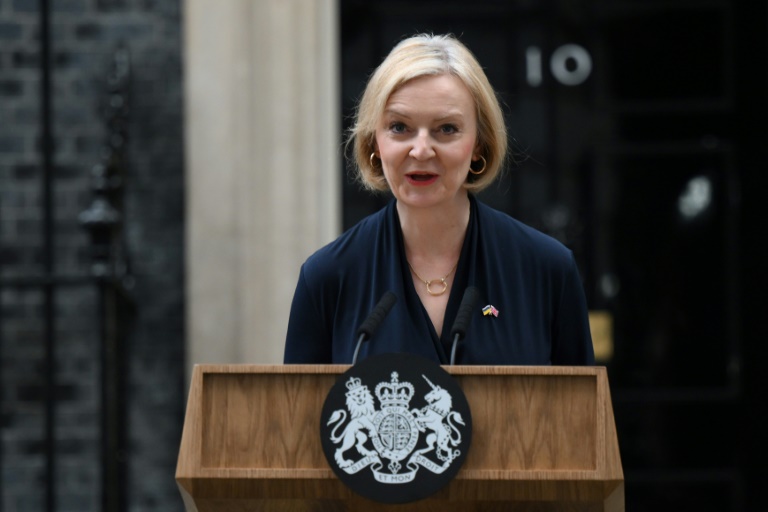
The London stock market and the pound bounced on Thursday after British Prime Minister Liz Truss announced her resignation following disastrous policies that rocked the markets for weeks.

The pound briefly surged more than one percent against the dollar to $1.1336 after Truss ended six tumultuous weeks in power — but analysts said gains were pared by the ongoing uncertainty.

The FTSE 100 index closed up 0.3 percent while the country’s borrowing costs eased on the news, as the yield on 30-year government bonds, known as gilts, fell to 3.90 percent.

“Sterling and gilts rallied as the sorry reign of Liz Truss came to an end,” said Markets.com analyst Neil Wilson.

“After a flurry of activity we are seeing retracement of these initial moves as markets realise that there’s still huge uncertainty about whether the Tory party can survive in power.”

Wilson warned the government’s “economic policies were already dead in the water so the market doesn’t have a huge amount of genuine new information to move on.”

The government had teetered on the brink of collapse after the resignation of home secretary Suella Braverman Wednesday.

On Thursday, Truss announced that she “cannot deliver the mandate on which I was elected.”

It comes days after the sacking of finance minister Kwasi Kwarteng and the dismembering of her government’s debt-fuelled budget that had sparked chronic markets turmoil.

“Although the resignation of Liz Truss as Prime Minister leaves the UK without a leader when it faces huge economic, fiscal and financial market challenges, the markets appear to be relieved,” said Paul Dales, chief UK economist at Capital Economics.

The recovery seen Thursday was due to “the markets… further pricing out the risk premium that the Truss government generated.”

There was still plenty of caution towards the UK.

“While this has brought about a brief respite to the political risk premium it’s hard to see how any replacement will be able to coalesce around any form of unity of policy in this dumpster fire of a government,” said Michael Hewson, chief market analyst at CMC Markets.

– Strong dollar, China fears –

Elsewhere, US and European markets rose a day after losses over persistent concerns over soaring inflation, interest rate hikes and looming recessions.

Wall Street stocks were buoyed by generally solid corporate earnings.

The haven dollar soared above 150 yen for the first time since 1990 before falling back slightly — stoking speculation that Japanese authorities could intervene again to support the battered currency.

The greenback also rallied to a record high at 7.2790 against the offshore yuan, with the US unit boosted by the Federal Reserve’s aggressive interest rate hikes.

Asian markets finished the day in the red, with selling also fuelled by concerns about the Chinese economy as Covid cases spike in the country and leaders stick to lockdown strategies.

A decision to delay the release of China’s third-quarter economic growth data this week added to unease.

Oil extended Wednesday’s rally that came in reaction to a drop in US petroleum stockpiles, and despite President Joe Biden’s decision to release 15 million barrels from US strategic reserves.

– Key figures around 1530 GMT –

New York – Dow: UP 0.9 percent at 30,700.29 points

EURO STOXX 50: UP 0.5 percent at 3,488.64

London – FTSE 100: UP 0.3 percent at 6,943.91 (close) 

Frankfurt – DAX: UP 0.2 percent at 12,767.41 (close)

Paris – CAC 40: UP 0.8 percent at 6,086.90 (close)

Tokyo – Nikkei 225: DOWN 0.9 percent at 27,006.96 (close)

Hong Kong – Hang Seng Index: DOWN 1.4 percent at 16,280.22 (close)

Shanghai – Composite: DOWN 0.3 percent at 3,035.05 (close)

Pound/dollar: UP at $1.1299 from $1.1219 on Wednesday

Dollar/yen: DOWN at 149.75 yen from 149.90 yen

Euro/dollar: UP at $0.9826 from $0.9773 

Euro/pound: DOWN at 86.96 pence from 87.11 pence

Brent North Sea crude: UP 1.0 percent at $93.36 per barrel

West Texas Intermediate: UP 1.2 percent at $85.58 per barrel

burs-rox/rl

Close Bitnami banner
Bitnami