Chinese Business

Stocks mostly slide on strong dollar

Asian and European equities mostly slid Thursday after overnight Wall Street losses, while the dollar jumped as surging inflation, interest rate hikes and recession fears returned to the fore.

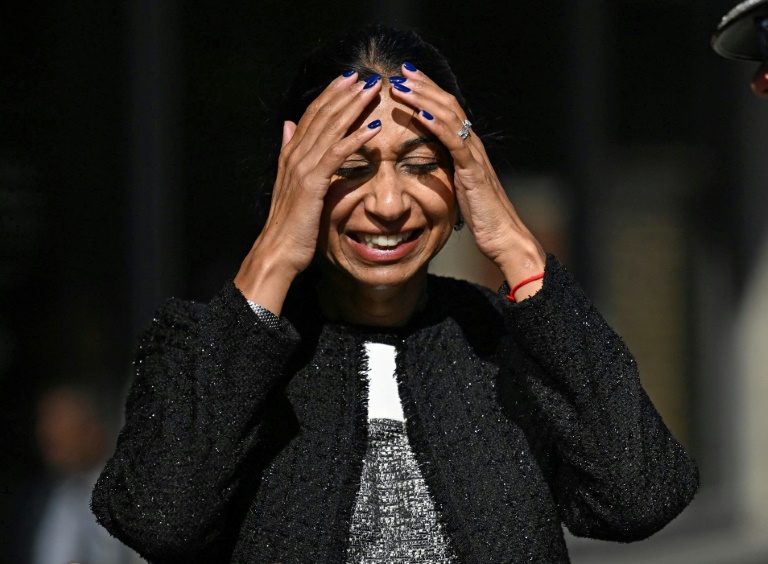
London stocks also dipped and the pound ducked under $1.12, as British Prime Minister Liz Truss’s government teetered on the brink of collapse after the resignation of home secretary Suella Braverman.

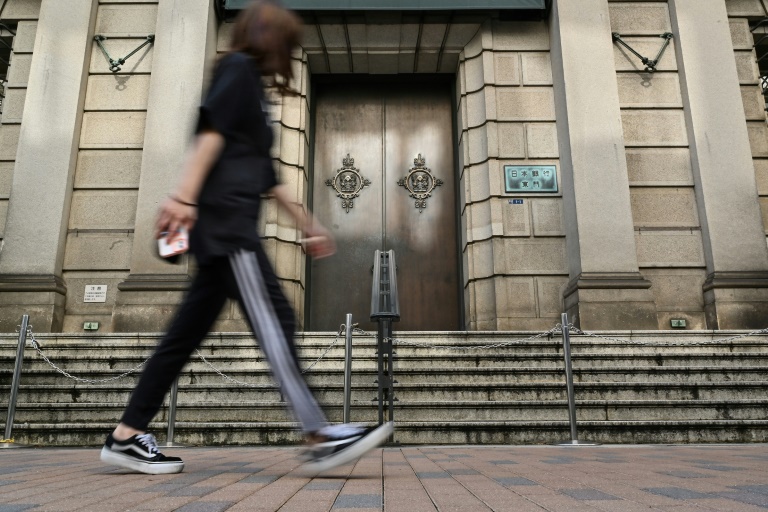
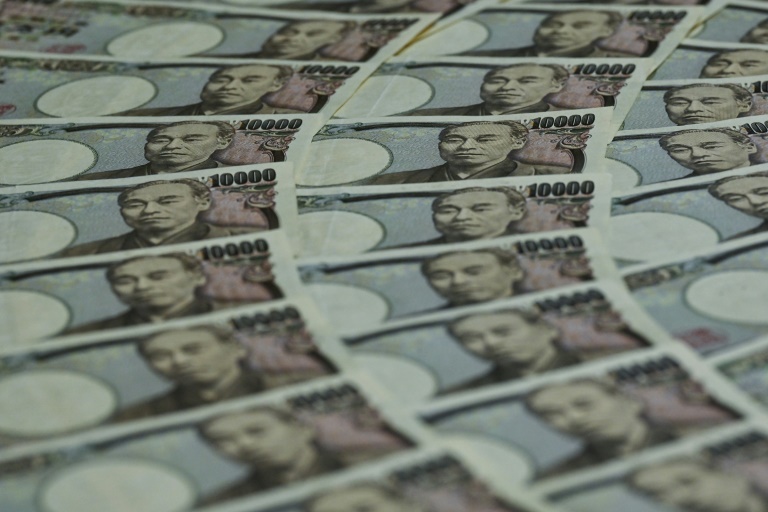
The haven dollar meanwhile soared above 150 yen for the first time since 1990, stoking speculation that Japanese authorities could intervene again to support the battered currency.

The greenback also rallied to a record high at 7.2790 against the offshore yuan, with the US unit boosted by the Federal Reserve’s aggressive interest rate hikes.

– Risk rally fades –

“It looks like the latest risk rally is fading before it really got started,” IG analyst Chris Beauchamp told AFP.

“Markets are worrying about how the rising dollar will begin to break other economies, as it negates their efforts to control inflation by driving their currencies lower while making it more expensive to borrow for a host of emerging market nations.”

He added that disappointing earnings at electric carmaker Tesla “have soured what was a passably good start to the reporting season”.

The unease on trading floors, and concerns that runaway inflation is showing no sign of easing, also sent investors back into the safety of the dollar.

Added to the gloom, Truss looks to be doomed after only six weeks in charge, with her own Conservative MPs calling for her to quit and moves apparently afoot to remove her.

A parliament vote on banning fracking descended into chaos late Wednesday, prompting talk that it was the final nail in the coffin of her premiership.

– ‘Further UK turbulence likely’ –

That came days after the sacking of finance minister Kwasi Kwarteng and the dismembering of the Truss government’s debt-fuelled budget that had sparked chronic markets turmoil.

“The UK was already facing immense challenges from high inflation, rapidly rising interest rates and an economy already probably in recession,” OANDA analyst Craig Erlam told AFP.

“The last thing it needed was an incompetent and unstable government to complete the set,” he said.

“The pound and UK bond yields … both remain vulnerable as the economy finds itself facing enormous headwinds — and the government is on the brink of collapse. Further turbulence looks likely.”

After Wall Street’s drop, markets across Asia were also deep in the red.

Selling was also fuelled by concerns about the Chinese economy as Covid cases spike in the country and leaders stick to lockdown strategies.

A decision to delay the release of China’s third-quarter economic growth data this week added to the unease among investors.

Oil extended Wednesday’s rally that came in reaction to a drop in US petroleum stockpiles, and despite President Joe Biden’s decision to release 15 million barrels from US strategic reserves.

– Key figures around 1040 GMT –

London – FTSE 100: DOWN 0.3 percent at 6,907.59 points

Frankfurt – DAX: DOWN 0.8 percent at 12,643.00

Paris – CAC 40: FLAT at 6,039.51

EURO STOXX 50: DOWN 0.5 percent at 3,455.42

Tokyo – Nikkei 225: DOWN 0.9 percent at 27,006.96 (close)

Hong Kong – Hang Seng Index: DOWN 1.4 percent at 16,280.22 (close)

Shanghai – Composite: DOWN 0.3 percent at 3,035.05 (close)

New York – Dow: DOWN 0.3 percent at 30,423.81 (close)

Pound/dollar: DOWN at $1.1216 from $1.1219 on Wednesday

Dollar/yen: DOWN at 149.78 yen from 149.90 yen

Euro/dollar: UP at $0.9806 from $0.9773 

Euro/pound: UP at 87.39 pence from 87.11 pence

Brent North Sea crude: UP 1.5 percent at $93.77 per barrel

West Texas Intermediate: UP 2.0 percent at $87.24 per barrel

burs-rfj/rl
First-ever licencing deal struck for cancer drug

Pharmaceutical giant Novartis has signed a licensing agreement increasing access to a vital leukaemia treatment, a UN-backed public health organisation said Thursday, marking the first-ever such agreement for a cancer drug.

The deal will give selected manufacturers the opportunity to develop, manufacture and supply generic versions of nilotinib, a twice-daily oral medication used to treat chronic myeloid leukaemia (CML).

“Access to high-quality cancer medicines is a crucial component of the global health response to the cancer burden,” said Charles Gore, head of the Medicines Patent Pool, the United Nations-backed public health organisation working to increase access to life-saving medicines in poorer countries.

While the remaining patent period for nilotinib was “relatively short”, he said the licencing deal set “a vital precedent that I hope other companies will follow”, Gore said in a statement.

Novartis president of global health and sustainability Lutz Hegemann said the company was “proud to be pioneering this new licensing model with MPP”.

The drug is listed on the World Health Organization’s List of Essential Medicines for the treatment of adults and children over the age of one suffering from CML.

Zeba Aziz, a medical oncologist at Hameed Latif Hospital in Lahore, Pakistan, said nilotinib offers an alternative to people who are resistant or intolerant to imatinib, the first-line treatment for CML — about 20 percent of those who contract the disease.

“I am glad more people in (low and middle-income countries) will have access to this essential cancer medicine,” she said in the statement.

The licence includes seven middle-income countries: Egypt, Guatemala, Indonesia, Morocco, Pakistan, the Philippines and Tunisia, where patents on the product are pending or in force, MPP said.

The Access to Oncology Medicines (ATOM) Coalition welcomed the deal.

“This is a first for cancer treatment anywhere and demonstrates that the combined efforts of the private and public sectors can pave the way to help save millions of lives,” ATOM co-chair Anil D-Cruz said in a separate statement.

Stocks drop and dollar rises as inflation, rate fears return

Equities tumbled Thursday, tracking a sell-off on Wall Street, while the dollar jumped further as surging inflation, interest rate hikes and recession fears returned to the fore.

Traders in Europe were keeping tabs on Westminster a day after Prime Minister Liz Truss’s government was plunged into a fresh crisis and facing collapse following the resignation of home secretary Suella Braverman.

That came days after the sacking of finance minister Kwasi Kwarteng and has left Truss’s premiership on a knife-edge.

The positive start to the week, helped by forecast-beating earnings and a major UK government policy U-turn, gave way to the downbeat mood that has characterised markets all year as traders contemplated an extended period of uncertainty.

News that UK inflation bounced back above 10 percent in September highlighted the struggle central banks have in bringing prices down, despite lifting borrowing costs in recent months.

That followed a similarly glum reading out of New Zealand earlier in the week and helped push up government bond yields around the world, indicating higher interest rates.

The unease on trading floors, and concerns that prices are showing no sign of easing, also sent investors back into the safety of the dollar, adding more inflationary pressure outside the United States and dragging on stock markets.

“As is often the case, rising US yields and the strong US dollar are the sledgehammers pounding global equities lower,” said SPI Asset Management’s Stephen Innes. 

After Wall Street’s drop, markets across Asia were deep in the red, with selling also fuelled by concerns about the Chinese economy as Covid cases spike in the country and leaders stick to lockdown strategies.

A decision to delay the release of third-quarter growth data this week added to the unease among investors.

Hong Kong led losses, shedding almost three percent at one point, while Tokyo, Sydney, Seoul, Wellington, Taipei, Shanghai, Mumbai and Manila were also in the red.

There was a brief rally in the afternoon sparked by a report that China was considering easing quarantine rules for people coming into the country, though traders were unable to maintain momentum.

London’s FTSE 100 fell in the morning. Frankfurt was also down but Paris edged up.

– Westminster chaos –

The losses wiped out most of the gains enjoyed at the start of the week, even as positive earnings reports came in from Netflix and top Wall Street banks, with Ellen Hazen of F.L.Putnam Investment Management warning worse could be yet to come.

“As we look at third-quarter results, we think there are going to be more misses than the market is currently expecting,” she told Bloomberg Radio.

“If you look at GDP for this year, it keeps getting revised downward and it’s really hard for companies to keep growing their earnings in the face of that.”

On forex markets the dollar briefly broke to as high as 150.08 yen for the first time since 1990, putting pressure on Japanese authorities who said saying they were keeping a close watch on the market and were ready to step in to support the beleaguered currency.

But analysts warned the yen would continue to slide as long as the Bank of Japan refuses to tighten monetary policy at the same time as the Federal Reserve presses on with its sharp rate hikes.

The pound was also back under pressure, having bounced Monday after Britain’s new finance minister Jeremy Hunt reversed virtually all of Truss’s debt-fuelled, tax-cutting mini-budget that hammered financial markets.

Sterling was hovering just above $1.12 — against more than $1.14 Tuesday — owing to the chaos in Westminster, with many of the prime minister’s own party calling for her to stand down, while there is speculation that more members of the cabinet could walk.

Oil prices extended Wednesday’s rally that came in reaction to a drop in US petroleum stockpiles, and despite President Joe Biden’s decision to release 15 million barrels from US strategic reserves.

The crude was the last batch to be released from the 180 barrels pledged by Biden earlier this year, aimed at bringing costs down.

But Innes added: “Markets will mostly ignore further releases from the Strategic Petroleum Reserves — prices are elevated because of the medium- and longer-term gap between supply and demand resulting from years of oil industry swoon and the resulting low capital expenditure.

“So, the impact of additional… releases will likely have diminishing returns with (reserves) at a multi-decade low.”

– Key figures around 0810 GMT –

Tokyo – Nikkei 225: DOWN 0.9 percent at 27,006.96 (close)

Hong Kong – Hang Seng Index: DOWN 1.4 percent at 16,280.22 (close)

Shanghai – Composite: DOWN 0.3 percent at 3,035.05 (close)

London – FTSE 100: DOWN 0.2 percent at 6,914.36

Pound/dollar: DOWN at $1.1210 from $1.1219 on Wednesday

Dollar/yen: UP at 149.90 yen from 149.88 yen

Euro/dollar: UP at $0.9794 from $0.9778 

Euro/pound: UP at 87.18 pence from 87.10 pence

West Texas Intermediate: UP 1.5 percent at $86.86 per barrel

Brent North Sea crude: UP 1.2 percent at $93.52 per barrel

New York – Dow: DOWN 0.3 percent at 30,423.81 (close)

Yen sinks to 150 per dollar, lowest since 1990

The falling yen hit 150 per dollar for the first time since 1990 on Thursday, driven down by the contrast between Japanese monetary easing and aggressive US interest rate hikes.

The currency has plunged from February levels of around 115 as the Bank of Japan sticks to its longstanding ultra-loose policies, designed to encourage sustainable growth in the world’s third-largest economy.

At the same time the US Federal Reserve has sharply increased borrowing costs in an attempt to quell sky-high inflation fuelled by factors including the war in Ukraine.

The Japanese unit sank to as low as 150.08 per dollar, before easing back soon after.

Analysts say the yen will continue to slide as long as the two policies differ, with more dramatic Fed interest-rate hikes likely as US prices increase faster than expected.

And speculation is growing that Japan could move to prop up its currency again after spending 2.8 trillion yen in September (then around $20 billion) on an intervention that involves selling dollars and buying yen.

Finance Minister Shunichi Suzuki called volatile fluctuations in forex markets “absolutely intolerable” on Thursday, reiterating verbal warnings that authorities will take an “appropriate response” to promote stability.

Earlier this week, Suzuki declined to confirm whether any unannounced “stealth” interventions had recently taken place.

“It’s probably fair to say that… the Japanese government is engaged in a game of chicken with the market” on the yen, Jane Foley, head of FX strategy at Rabobank, told AFP.

“There isn’t a limit,” she said, explaining that in the short term, “interest rate differentials suggest there is a strong drag on the dollar-yen to go higher.”

A weaker yen inflates profits for Japanese exporters, but can also weigh on the country’s trade balance.

Japan is heavily reliant on imported energy and also buys in other goods including much of its food.

September’s intervention “managed to stabilise the dollar-yen rate for a while, because traders are frightened of intervention”, which can cause them to lose money, said Foley.

But the effect of such interventions will be limited if the gap between Japanese and US monetary policy remains, she added.

“It’s very unlikely that anything is going to change from policy at least until the spring,” when key wage negotiations take place in Japan, she said.

Japan scrapped its Covid-19 border restrictions and reopened to tourists this month, and many visitors will find shopping, eating out and domestic travel a bargain thanks to the weak yen and years of stubbornly low inflation.

Prices are now rising in Japan, although at a slower pace than in other major economies.

In August, inflation came in at 2.8 percent, the highest level since 2014, in part because of soaring energy prices linked to the Ukraine war.

That is above the Bank of Japan’s target for sustained two percent inflation, but it views the price increases as temporary and so has kept its easy-money policies in place.

Asian markets drop and dollar rises as inflation, rate fears return

Asian equities tumbled Thursday, tracking a sell-off on Wall Street, while the dollar regained its strength as surging inflation, interest rate hikes and recession fears returned to the fore.

The positive start of the week, helped by forecast-beating earnings and a major UK government policy U-turn, gave way to the downbeat mood that has characterised markets all year as traders contemplated an extended period of uncertainty.

News that UK inflation bounced back above 10 percent in September highlighted the struggle central banks have in bringing prices down, despite lifting borrowing costs in recent months.

That came after a similarly glum reading out of New Zealand earlier in the week and helped push up government bond yields around the world, indicating higher interest rates.

The unease on trading floors, and concerns that prices are showing no sign of easing, also sent investors back into the safety of the dollar, adding more inflationary pressure outside the United States and dragging on stock markets.

“As is often the case, rising US yields and the strong US dollar are the sledgehammers pounding global equities lower,” said SPI Asset Management’s Stephen Innes. 

After Wall Street’s drop, markets across Asia were deep in the red, with selling also fuelled by concerns about the Chinese economy as Covid cases spike in the country and leaders stick to their zero-Covid lockdown strategies.

A decision to delay the release of third-quarter growth data this week added to the unease among investors.

Hong Kong led losses, shedding almost three percent, while Tokyo, Sydney, Seoul, Wellington and Taipei were all off at least one percent.

Shanghai, Singapore and Manila were also in the red.

The losses wiped out most of the gains enjoyed at the start of the week, even as positive earnings reports came in from Netflix and top Wall Street banks, with Ellen Hazen of F.L.Putnam Investment Management warning worse could be yet to come.

“As we look at third-quarter results, we think there are going to be more misses than the market is currently expecting,” she told Bloomberg Radio.

“If you look at GDP for this year, it keeps getting revised downward and it’s really hard for companies to keep growing their earnings in the face of that.”

Forex traders remain on alert as the dollar comes within a whisker of 150 yen, with Japanese authorities saying they are keeping a close watch on the market and are ready to step in to support the beleaguered currency.

– Pound troubles –

The pound was also back under pressure, having bounced Monday after Britain’s new finance minister Jeremy Hunt reversed virtually all of Prime Minister Liz Truss’s debt-fuelled, tax-cutting mini-budget that hammered financial markets.

Sterling was back around $1.12 — down from more than $1.14 Tuesday — as the government was plunged into a fresh crisis following the resignation of Home Secretary Suella Braverman.

That came days after the sacking of Hunt’s predecessor Kwasi Kwarteng and has left Truss’s premiership on a knife edge.

Oil prices were mixed after rallying Wednesday in reaction to a drop in US petroleum stockpiles, and despite President Joe Biden’s decision to release 15 million barrels from US strategic reserves.

The crude was the last batch to be released from the 180 barrels pledged by Biden earlier this year aimed at bringing costs down.

But Innes added: “Markets will mostly ignore further releases from the Strategic Petroleum Reserves — prices are elevated because of the medium- and longer-term gap between supply and demand resulting from years of oil industry swoon and the resulting low capital expenditure.

“So, the impact of additional… releases will likely have diminishing returns with (reserves) at a multi-decade low.”

– Key figures around 0230 GMT –

Tokyo – Nikkei 225: DOWN 1.1 percent at 26,954.15 (break)

Hong Kong – Hang Seng Index: DOWN 2.9 percent at 16,042.75

Shanghai – Composite: DOWN 0.8 percent at 3,021.04

Pound/dollar: DOWN at $1.1200 from $1.1219 on Wednesday

Dollar/yen: UP at 149.93 yen from 149.88 yen

Euro/dollar: DOWN at $0.9758 from $0.9778 

Euro/pound: UP at 87.12 pence from 87.10 pence

West Texas Intermediate: UP 0.6 percent at $86.03 per barrel

Brent North Sea crude: DOWN 0.1 percent at $92.29 per barrel

New York – Dow: DOWN 0.3 percent at 30,423.81 (close)

London – FTSE 100: DOWN 0.2 percent at 6,924.99 (close)

Stocks waver as inflation concerns offset positive earnings

US stocks stumbled Wednesday, snapping a two-day rally, as investors tracked soaring inflation, while oil prices rose despite the latest US petroleum release announcement by President Joe Biden.

The yield on the 10-year US Treasury note, a proxy for Federal Reserve interest rates, jumped above four percent following UK data that showed inflation soaring back above 10 percent last month.

“There’s nothing to suggest that inflation is going to move in the right direction,” said Tom Cahill of Ventura Wealth Management. 

A downcast Federal Reserve “Beige Book” report observed rising recession fears as households grapple with soaring costs and earlier Fed interest rate hikes slowing demand.

After climbing the last two days, major US indices retreated, with the S&P 500 losing 0.7 percent.

Bourses in Paris, London and Frankfurt also pulled back.

Market movements have been dominated in recent months by interest rate hikes by the US Federal Reserve and other central banks as they try to rein in surging inflation.

Foreign exchange traders were keeping tabs also on whether the dollar would reach 150 yen, which would be a fresh high for 32 years.

Japan’s currency is being hit hard as the country’s central bank holds off from hiking interest rates, in sharp contrast to its peers.

Traders were given an extra boost by news that Netflix gained more than two million subscribers in July-September. Shares of Netflix surged more than 13 percent.

In Europe, Nestle’s nominal sales surged in the first nine months of the year as the maker of Nespresso capsules, Purina pet food and Haagen-Dazs ice cream raised its prices in response to soaring inflation.

Nestle’s shares ended the day down 1.3 percent, however, amid concerns about the impact of higher prices on sales volumes.

On commodity markets, crude oil prices rose after US inventory data showed a surprise decline in petroleum reserves. 

The gains also came as Biden announced the release of a final 15 million barrels of an earlier promise to release 180 million barrels from the Strategic Petroleum Reserve.

However, he also urged the US oil industry to get more oil out of the ground, insisting this did not counter his presidency’s priority of pushing the United States into a clean energy future.

“We need to responsibly increase American oil production without delaying or deferring our transition to clean energy,” he said.

– Key figures around 2100 GMT –

New York – Dow: DOWN 0.3 percent at 30,423.81 (close)

New York – S&P 500: DOWN 0.7 percent at 3,695.16 (close)

New York – Nasdaq: DOWN 0.9 percent at 10,680.51 (close)

London – FTSE 100: DOWN 0.2 percent at 6,924.99 (close)

Frankfurt – DAX: DOWN 0.2 percent at 12,741.41 (close)

Paris – CAC 40: DOWN 0.4 percent at 6,040.72 (close)

EURO STOXX 50: UP 0.2 percent at 3,471.24 (close)

Tokyo – Nikkei 225: UP 0.4 percent at 27,257.38 (close)

Hong Kong – Hang Seng Index: DOWN 2.4 percent at 16,511.28 (close)

Shanghai – Composite: DOWN 1.2 percent at 3,044.38 (close)

Pound/dollar: DOWN at $1.1219 from $1.1320 on Tuesday

Dollar/yen: UP at 149.88 yen from 149.26 yen

Euro/dollar: DOWN at $0.9778 from $0.9858 

Euro/pound: UP at 87.10 pence from 87.09 pence

Brent North Sea crude: UP 2.6 percent at $92.41 per barrel

West Texas Intermediate: UP 3.3 percent at $85.55 per barrel

burs-jmb/bfm

Stocks waver as inflation concerns offset positive earnings

Major stock markets fluctuated Wednesday as investors tracked soaring inflation and positive earnings results.

In a sign of the uphill struggle in the battle against soaring prices, UK inflation jumped back above 10 percent last month.

London’s FTSE 100 shares index dipped 0.2 percent and the pound fell following the data — and as Britain’s under-fire Prime Minister Liz Truss faced a grilling in parliament.

Sentiment was also dampened “by a sharp rise in US yields, as well as the US dollar, after Minneapolis Fed President Neel Kashkari said that the Federal Reserve would be in no position to pause on rate rises if inflation was still rising, even with the Fed Funds rate at 4.5 percent,” said market analyst Michael Hewson.

Market movements have been dominated in recent months by interest rate hikes by the US Federal Reserve and other central banks as they try to rein in surging inflation.

Foreign exchange traders were keeping tabs also on whether the dollar would reach 150 yen, which would be a fresh high for 32 years.

Japan’s currency is being hit hard as the country’s central bank holds off from hiking interest rates, in sharp contrast to its peers.

Frankfurt and Paris stocks ended the day modestly lower.

While the Dow was up marginally in late morning trading, both the S&P 500 and tech-heavy Nasdaq Composite were lower. 

“Fortunately, some strength is also being seen in the stocks of several widely-held companies that reported earnings,” said Briefing.com analyst Patrick O’Hare.

Traders were given an extra boost by news that Netflix gained more than two million subscribers in July-September.

In Europe, Nestle’s nominal sales surged in the first nine months of the year as the maker of Nespresso capsules, Purina pet food and Haagen-Dazs ice cream raised its prices in response to soaring inflation.

Nestle’s shares ended the day down 1.3 percent, however, amid concerns about the impact of higher prices on sales volumes.

On commodity markets, crude oil prices rose on renewed supply worries.

They had slumped Tuesday on bets that US President Joe Biden would order the release of more barrels from the country’s emergency reserves in order to keep fuel prices subdued heading into mid-term elections.

– Key figures around 1530 GMT –

New York – Dow: UP less than 0.1 percent at 30,529.07 points

EURO STOXX 50: UP 0.2 percent at 3,471.24

London – FTSE 100: DOWN 0.2 percent at 6,924.99 (close)

Frankfurt – DAX: DOWN 0.2 percent at 12,741.41 (close)

Paris – CAC 40: DOWN 0.4 percent at 6,040.72 (close)

Tokyo – Nikkei 225: UP 0.4 percent at 27,257.38 (close)

Hong Kong – Hang Seng Index: DOWN 2.4 percent at 16,511.28 (close)

Shanghai – Composite: DOWN 1.2 percent at 3,044.38 (close)

Pound/dollar: DOWN at $1.1246 from $1.1332 on Tuesday

Dollar/yen: UP at 149.75 yen from 149.21 yen

Euro/dollar: DOWN at $0.9785 from $0.9862 

Euro/pound: DOWN at 86.98 pence from 87.01 pence

Brent North Sea crude: UP 0.9 percent at $90.83 per barrel

West Texas Intermediate: UP 0.8 percent at $83.46 per barrel

burs-rl/lcm

Stocks stumble as inflation concerns offset positive earnings

Major stock markets stumbled Wednesday, as lingering concerns over sky-high inflation offset positive earnings.

In a sign of the uphill struggle in the battle against soaring prices, UK inflation jumped back above 10 percent last month.

London’s FTSE 100 shares index steadied and the pound fell following the data — and as Britain’s under-fire Prime Minister Liz Truss faced a grilling in parliament.

Foreign exchange traders were keeping tabs also on whether the dollar would reach 150 yen, which would be a fresh high for 32 years.

Japan’s currency is being hit hard as the country’s central bank holds off from hiking interest rates, in sharp contrast to its peers the world over which are aggressively hiking borrowing costs to try and cool decades-high inflation.

Asian stock markets diverged after Wall Street ended higher for a second session running Tuesday, heartened by forecast-beating results from Goldman Sachs and Johnson & Johnson.

They came on the heels of better-than-expected reports from banking giants Citi, JP Morgan and Wells Fargo.

Traders were given an extra boost by news that Netflix gained more than two million subscribers in July-September.

“Earnings season offers investors the opportunity to focus more on the actual earnings power of corporate America, and less on the machinations of the backward-looking economic data stream,” said Art Hogan, a strategist at B. Riley.

“A better-than-feared earnings season may well be the catalyst the market needs to see a break in the steady grind lower.”

In Europe, Nestle’s sales surged in the first nine months of the year as the maker of Nespresso capsules, Purina pet food and Haagen-Dazs ice cream raised its prices in response to soaring inflation.

On commodity markets, crude oil prices rose on renewed supply worries.

They had slumped Tuesday on bets that US President Joe Biden would order the release of more barrels from the country’s emergency reserves in order to keep fuel prices subdued heading into mid-term elections.

– Key figures around 1100 GMT –

London – FTSE 100: FLAT at 6,934.52 points

Frankfurt – DAX: UP 0.1 percent at 12,776.12

Paris – CAC 40: UP 0.4 percent at 6,090.48

EURO STOXX 50: UP 0.7 percent at 3,486.43

Tokyo – Nikkei 225: UP 0.4 percent at 27,257.38 (close)

Hong Kong – Hang Seng Index: DOWN 2.4 percent at 16,511.28 (close)

Shanghai – Composite: DOWN 1.2 percent at 3,044.38 (close)

New York – Dow: UP 1.1 percent at 30,523.80 (close)

Pound/dollar: DOWN at $1.1252 from $1.1332 on Tuesday

Dollar/yen: UP at 149.59 yen from 149.21 yen

Euro/dollar: DOWN at $0.9780 from $0.9862 

Euro/pound: DOWN at 86.97 pence from 87.01 pence

Brent North Sea crude: UP 1.1 percent at $91.03 per barrel

West Texas Intermediate: UP 1.5 percent at $84.04 per barrel

Tokyo Olympics bribery scandal widens with mascot allegations

A corruption scandal surrounding the Tokyo Olympics widened on Wednesday as a former Games executive was re-arrested on suspicion of taking bribes from two firms, one of which reportedly sold official mascot toys.

Prosecution documents seen by AFP accused former Tokyo 2020 board member Haruyuki Takahashi of accepting 54 million yen ($360,000) in bribes from a major advertising firm and a merchandise company.

It was the fourth time the 78-year-old has been arrested over the scandal, following allegations that he received a similar amount from a suit retailer that was an official partner of last year’s pandemic-delayed event.

Prosecutors alleged that Takahashi helped advertising giant ADK Holdings with a sponsorship contract and received 47 million yen “knowing it was meant to be thank-you money”.

They also accused him of accepting seven million yen from a merchandise firm, which Japanese media named as Sun Arrow and said was licensed to sell soft toys of the cute Games mascots.

Three other people including ADK president Shinichi Ueno were also arrested on Wednesday.

ADK Holdings said it was “extremely regrettable that we find ourselves in this situation, and we would like to apologise for the enormous trouble” caused by the arrests.

“Since the investigation remains ongoing, we will refrain from disclosing details,” it said, adding it would fully cooperate with authorities “to help resolve the case”.

The latest arrest of Takahashi — a former advertising executive who served on the Tokyo 2020 board from June 2014 — reportedly brought the total sum of the bribes he allegedly pocketed to 196 million yen.

He has previously been accused of taking bribes from publishing giant Kadokawa and another advertising agency, Daiko.

The ballooning saga is not the first time questions have been raised over impropriety around the Tokyo Games.

The former head of Japan’s Olympic Committee, Tsunekazu Takeda, stepped down in 2019 after French prosecutors launched an investigation into corruption allegations linked to Tokyo’s Olympic bid.

Hong Kong to 'trawl world for talent' in reboot attempt

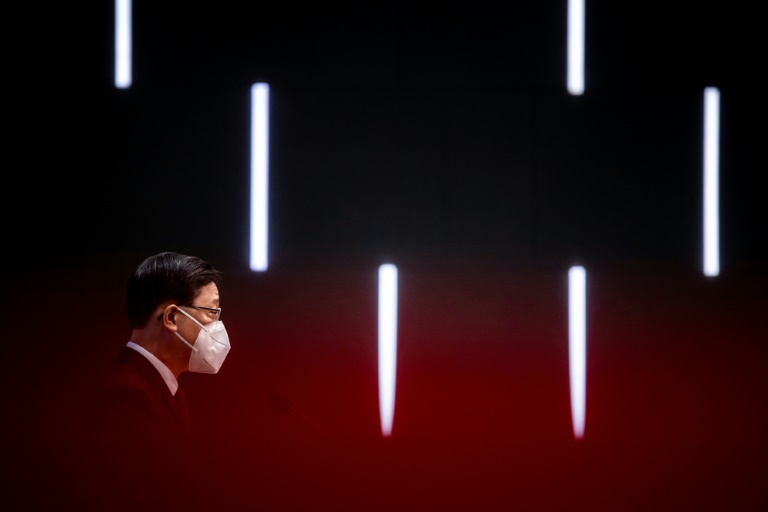
Hong Kong’s leader unveiled plans to resuscitate the business hub’s fortunes on Wednesday, hoping to lure back international expertise after an exodus of talent — but he vowed no let-up in a political crackdown that has transformed the city.

John Lee, a Beijing-anointed former security chief, gave a debut policy speech that prioritised the revival of an economy mired in recession and maintaining security while recognising that many had left a city that serves as a gateway to China.

“Over the past two years, the local workforce shrank by about 140,000,” he said. “Apart from actively nurturing and retaining local talent, the government will proactively trawl the world for talent.”

The former British colony has lately undergone its most tumultuous period since its 1997 handover to China. 

Huge and sometimes violent democracy protests three years ago were followed by a sweeping clampdown on dissent as well as some of the world’s strictest coronavirus pandemic rules, many of which remained in place long after rivals reopened.

The city, which only scrapped mandatory quarantine for international arrivals last month, has seen its deficit soar while the border with the Chinese mainland remains all but closed because of Beijing’s strict zero-Covid rules.

– Talent office –

Lee’s speech offered his blueprint for reversing that downturn, including a talent scouting office, a HK$30 billion ($3.8 billion) co-investment fund to attract overseas businesses and rules to make it easier to hire foreigners.

The city will give preferential treatment to “top talent”, described as people who earn HK$2.5 million or more annually and graduates from the top 100 universities around the world who have relevant work experience.

Even with investor-friendly measures, rebooting Hong Kong will be tough.

Lee took office in July at a time of rising global interest rates, fears for China’s zero-Covid economy, uncertainty sparked by Russia’s Ukraine invasion and dents in Hong Kong’s business-friendly reputation.

The reaction from investors and analysts was lukewarm. 

Hong Kong’s stock exchange, which has lost more than a quarter of its value since the start of the year, closed down 2.38 percent on Wednesday.

“The government still lacks the sense of crisis and understanding of the actual situation,” public affairs commentator Derek Yuen told AFP, saying Lee’s policy focused more on Hong Kong being a gateway to China and less on being a truly international business hub.  

“(Officials) may be aware of the competition from within the region like Singapore but they don’t understand what makes other countries tick,” he added.

Baptist University political scientist Kenneth Chan said there was little to reassure foreign talent about Hong Kong’s core values.

“For a lot of people who are looking at Hong Kong… it’s a new era with a lot of uncertain elements, mostly political elements. They have to think very carefully before making the move and commit,” he told AFP.

– ‘Stability is the prerequisite’ –

After nearly three years, Hong Kong is gradually moving away from its version of China’s zero-Covid policy, which failed to keep out the virus and has left the city internationally cut off.

Authorities have axed the unpopular hotel quarantine for incoming travellers and loosened some social-distancing rules.

But the pace of reopening still lags behind regional rivals such as Singapore — which has gone on its own charm offensive to lure talent and has roared back as a global transport hub.

Overseas arrivals to Hong Kong, for example, cannot enter bars and restaurants for the first three days and Lee’s speech gave no details on a clear timeline to lifting all virus curbs. 

Lee did stress that the government would press ahead with more national security legislation and possible new rules on “false information”. 

“The development of Hong Kong allows no delay. Social stability is the prerequisite for our development, and we have to get rid of any interference,” he said.

Beijing imposed a sweeping national security law on Hong Kong in 2020 after democracy protests the year before, flipping the city’s once outspoken vibe.

Most prominent local democracy activists either are in jail, are awaiting trial or have fled overseas while schools have been ordered to turn students into Chinese patriots.

Lee’s policy speech — which lasted two hours and 45 minutes — also included major infrastructure projects to boost the economy and plans to deliver more housing in a city with one of the world’s least affordable property markets, something successive Hong Kong administrations have failed to tackle.

Close Bitnami banner
Bitnami