Chinese Business

Markets mixed as traders struggle to keep rally's momentum

Investors battled to push markets higher again Wednesday following another healthy run-up on Wall Street boosted by more positive earnings results that raised hopes for the reporting season.

However, while there is a more upbeat mood on trading floors for now, analysts warned that the current rally could soon turn as central banks press on with interest rate hikes aimed at fighting multi-decade-high inflation.

In a sign of the uphill struggle in the battle against prices, the closely watched UK consumer price index jumped back above 10 percent last month owing to soaring food costs.

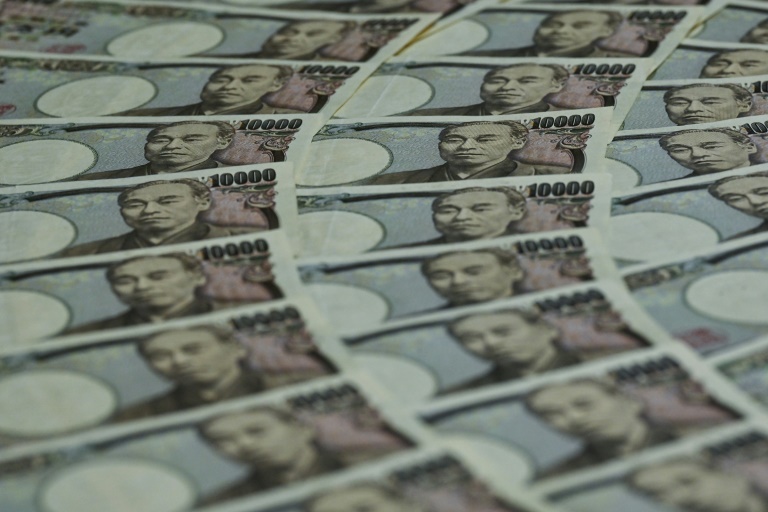
Forex traders were also keeping tabs on the yen as it edges closer to 150 per dollar, with Japanese officials holding off a second intervention in as many months but saying they are ready to act when necessary.

All three main indexes in New York enjoyed back-to-back gains as investors were heartened by forecast-beating results from Goldman Sachs and Johnson & Johnson.

They came on the heels of better-than-expected reports from banking giants Citi, JP Morgan and Wells Fargo.

Traders were given an extra boost by news that Netflix gained more than two million subscribers in July-September, easing worries about the impact of rising borrowing costs on consumers.

“Earnings season offers investors the opportunity to focus more on the actual earnings power of corporate America, and less on the machinations of the backward-looking economic data stream,” Art Hogan, a strategist at B. Riley, said.

“A better-than-feared earnings season may well be the catalyst the market needs to see a break in the steady grind lower.”

Still, Asian markets were mixed, with Hong Kong tanking as investors were left unimpressed with city leader John Lee’s first policy speech, which laid out plans to boost the economy but also saw a vow not to let up on a security crackdown.

There were also losses in Shanghai, Seoul, Taipei and Bangkok, though Tokyo, Sydney, Singapore, Wellington, Mumbai, Manila and Jakarta rose.

London edged down after the inflation reading and ahead of a keenly awaited Prime Minister’s Questions in parliament, the first since Liz Truss’s new finance minister tore up her controversial mini-budget that hammered markets last month.

The pound fell back below $1.13 as European trade began, having rallied in the previous two days on the government U-turn.

Paris and Frankfurt also dipped, while US futures rose.

– Dollar closes on 150 yen –

SPI Asset Management’s Stephen Innes warned there were still plenty of issues keeping a cap on equities including sticky inflation, weak sentiment, hawkish central banks, the Ukraine war, China’s economic woes and “a non-stop drum beat of recessionary rhetoric from vocal market participants”.

“The key to equity markets is (Federal Reserve) certainty, and that is the crucial turn on the road before the rates markets can settle back into a groove and Treasury volatility can decline,” he added.

“But for that to happen, the US data needs to roll over. Given the much-hotter-than-expected inflation data, the Fed may do the opposite of what the market wants — turning volatility up again.”

On currency markets, eyes were on Tokyo as the yen hovers just below 149.50 per dollar, with finance minister Shunichi Suzuki saying “we’ll respond appropriately against excessive moves”.

The unit is much weaker than the 145.90 level it touched last month before authorities stepped in, and analysts said they would likely act before it passes 150.

The yen has plunged more than 20 percent against the dollar as the Bank of Japan refuses to lift interest rates — citing a need to boost the economy — even as the Fed announces a series of bumper increases.

“If dollar-yen rises past the symbolic 150 level, price action will naturally accelerate, so they probably want to halt it before then or buy time,” said Yuji Saito of Credit Agricole CIB. 

Crude rose on renewed supply worries, having slumped Tuesday on bets that President Joe Biden would order the release of more barrels from US emergency reserves in order to keep fuel prices subdued heading into the winter and mid-term elections.

– Key figures around 0810 GMT –

Tokyo – Nikkei 225: UP 0.4 percent at 27,257.38 (close)

Hong Kong – Hang Seng Index: DOWN 2.4 percent at 16,511.28 (close)

Shanghai – Composite: DOWN 1.2 percent at 3,044.38 (close)

London – FTSE 100: DOWN 0.3 percent at 6,918.50

Pound/dollar: DOWN at $1.1290 from $1.1332 on Tuesday

Dollar/yen: UP at 149.35 yen from 149.21 yen

Euro/dollar: DOWN at $0.9836 from $0.9862 

Euro/pound: UP at 87.14 pence from 87.01 pence

West Texas Intermediate: UP 0.7 percent at $83.36 per barrel

Brent North Sea crude: UP 0.1 percent at $90.12 per barrel

New York – Dow: UP 1.1 percent at 30,523.80 (close)

Hong Kong to 'trawl world for talent' in reboot attempt

Hong Kong’s leader unveiled plans to resuscitate the business hub’s fortunes on Wednesday, hoping to lure back international expertise after an exodus of talent — but he vowed no let up in a political crackdown that has transformed the city.

John Lee, a Beijing-anointed former security chief, gave a debut policy speech that prioritised the revival of an economy mired in recession and maintaining security while recognising that tens of thousands of people had left a city that serves as a gateway to China and a regional business hub.

“Over the past two years, the local workforce shrank by about 140,000,” he said. “Apart from actively nurturing and retaining local talent, the government will proactively trawl the world for talent.”

The former British colony has lately undergone its most tumultuous period since its 1997 handover to China. 

Huge and sometimes violent democracy protests three years ago were followed by a sweeping clampdown on dissent as well as some of the world’s strictest coronavirus pandemic rules, many of which remained in place long after rivals reopened.

The city, which only scrapped mandatory quarantine for international arrivals last month, has seen its deficit soar while the border with the Chinese mainland remains all but closed because of Beijing’s strict zero-Covid rules.

– Talent office –

Lee’s speech offered his blueprint for reversing that downturn, including a new talent scouting office, a HK$30 billion ($3.8 billion) fund to attract overseas businesses and new rules to make it easier to hire foreigners in 13 key professions.

The city will give preferential treatment to “top talent”, described as people who earn HK$2.5 million or more annually and graduates from the top 100 universities around the world who have relevant work experience.

Even with investor-friendly measures, rebooting Hong Kong will be tough.

Lee took office in July at a time of rising global interest rates, fears for China’s zero-Covid economy, uncertainty sparked by Russia’s Ukraine invasion and dents in Hong Kong’s business-friendly reputation.

Hong Kong’s stock exchange has lost more than a quarter of its value since the start of the year, one of the region’s worst performers. It was down 1.2 percent in Wednesday morning trade.

– ‘Stability is the prerequisite’ –

After nearly three years, the city is gradually moving away from its version of China’s zero-Covid policy, which failed to keep out the virus and has left the city internationally cut-off.

Authorities have axed the unpopular hotel quarantine for incoming travellers and loosened some social-distancing rules. 

But the pace of reopening still lags regional rivals such as Singapore — which has gone on its own charm offensive to lure talent and has roared back as a global transport hub.

Lee stressed that the government would press ahead with further national security legislation and possible new rules on “false information”. 

“The development of Hong Kong allows no delay. Social stability is the prerequisite for our development, and we have to get rid of any interference,” Lee said.

Many departing residents have cited the ongoing political crackdown as a primary reason for leaving.

Beijing imposed a sweeping national security law on Hong Kong in 2020 after democracy protests the year before, flipping the city’s once outspoken vibe and eradicating most dissent.

Most prominent local democracy activists either are in jail, are awaiting trial or have fled overseas while schools have been ordered to turn students into Chinese patriots.

Lee’s policy speech — which lasted two hours and 45 minutes — also included major infrastructure projects to boost the economy and plans to deliver more housing in a city with one of the world’s least affordable property markets, something successive Hong Kong administrations have failed to tackle.

Asian markets mixed as traders struggle to keep rally's momentum

Asian investors battled to push markets higher again Wednesday following another healthy run-up on Wall Street boosted by more positive earnings results that raised hopes for the reporting season.

However, while there is a more upbeat mood on trading floors for now, analysts warned that the current rally could soon turn as central banks press on with their interest rate hikes aimed at fighting multi-decade-high inflation.

Forex traders were also keeping tabs on the yen as it edges closer to 150 per dollar, with Japanese officials holding off a second intervention in as many months but saying they are ready to act when necessary.

All three main indexes in New York enjoyed back-to-back gains as investors were heartened by forecast-beating results from Goldman Sachs and Johnson & Johnson.

They came on the heels of better-than-expected reports from banking giants Citi, JP Morgan and Wells Fargo.

Traders were given an extra boost by news that Netflix gained more than two million subscribers in July-September, easing worries about the impact of rising borrowing costs on consumers.

“Earnings season offers investors the opportunity to focus more on the actual earnings power of corporate America, and less on the machinations of the backward-looking economic data stream,” Art Hogan, a strategist at B. Riley, said.

“A better-than-feared earnings season may well be the catalyst the market needs to see a break in the steady grind lower.”

Still, Asian markets were mixed in early trade, with profit-takers weighing on Hong Kong after a healthy three-day run-up, while there were also losses in Shanghai, Taipei, Manila and Jakarta.

Tokyo, Sydney, Seoul, Singapore and Wellington rose.

– ‘Volatility up’ –

SPI Asset Management’s Stephen Innes warned there were still plenty of issues keeping a cap on equities including sticky inflation, weak sentiment, hawkish central banks, the Ukraine war, China’s economic woes and “a non-stop drum beat of recessionary rhetoric from vocal market participants”.

“The key to equity markets is (Federal Reserve) certainty, and that is the crucial turn on the road before the rates markets can settle back into a groove and Treasury volatility can decline,” he added.

“But for that to happen, the US data needs to roll over. Given the much hotter-than-expected inflation data, the Fed may do the opposite of what the market wants — turning volatility up again.”

On currency markets, eyes were now on Tokyo as the yen hovers just above 149 per dollar, with finance minister Shunichi Suzuki saying “we’ll respond appropriately against excessive moves”.

The unit is much weaker than the 145.90 level it touched last month before authorities stepped in, and analysts said they would likely act before it passes 150.

“If dollar-yen rises past the symbolic 150 level, price action will naturally accelerate, so they probably want to halt it before then or buy time,” said Yuji Saito of Credit Agricole CIB. 

Crude rose on renewed supply worries, having slumped Tuesday on bets that US President Joe Biden will order the release of more barrels from emergency reserves in order to keep fuel prices subdued heading into the winter and mid-term elections.

– Key figures around 0230 GMT –

Tokyo – Nikkei 225: UP 0.7 percent at 27,353.87 (break)

Hong Kong – Hang Seng Index: DOWN 0.8 percent at 16,781.79

Shanghai – Composite: DOWN 0.4 percent at 3,067.39

Pound/dollar: UP at $1.1344 from $1.1332 on Tuesday

Dollar/yen: DOWN at 149.17 yen from 149.21 yen

Euro/dollar: DOWN at $0.9859 from $0.9862 

Euro/pound: UP at 86.92 pence from 87.01 pence

West Texas Intermediate: UP 1.5 percent at $84.02 per barrel

Brent North Sea crude: UP 0.9 percent at $90.82 per barrel

New York – Dow: UP 1.1 percent at 30,523.80 (close)
London – FTSE 100: UP 0.2 percent at 6,936.74 (close)

Stock markets climb on bright US earnings and UK policy U-turns

Major global equities rose Tuesday, with sentiment boosted by upbeat US earnings and relief over the demise of the new British government’s controversial fiscal plan.

Analysts pointed to better-than-expected reports from Goldman Sachs and Johnson & Johnson as a positive driver for stocks, along with shifting investor sentiment.

On Wall Street, both the Dow and S&P 500 climbed more than one percent following a day of strong trading in Asia and Europe.

“Better-than-expected US earnings reports sparked a rally on Wall Street with positive momentum reverberating across European equities,” Interactive Investor analyst Victoria Scholar told AFP.

US industrial production also picked up more than anticipated in September, according to official data Tuesday, bouncing back after a dip in August.

But Craig Erlam, senior market analyst at OANDA, warned the upbeat investor sentiment might not last, saying there was a “strong feeling of a bear market rally about trading over the course of the last week.”

“From the post-US-inflation rebound to what has now been a strong start to the week — in part driven by the UK’s decision to no longer shoot itself in the foot — nothing about this screams sustainable.”

Companies in the S&P 500 are expected to see earnings growth of just 1.6 percent, the lowest rate in two years, according to Factset.

– UK turbulence –

Frankfurt stocks closed up one percent on Tuesday as a key survey showed German investor confidence climbed slightly in October, but remained at a low level.

London gains were muted after the Bank of England poured cold water on a newspaper report that it could delay the sale of government bonds again to help maintain market stability.

A BoE spokesperson described the Financial Times story as “inaccurate”.

The British pound retreated slightly after jumping Monday above $1.14 as the UK government sensationally ripped up its controversial debt-fuelled budget.

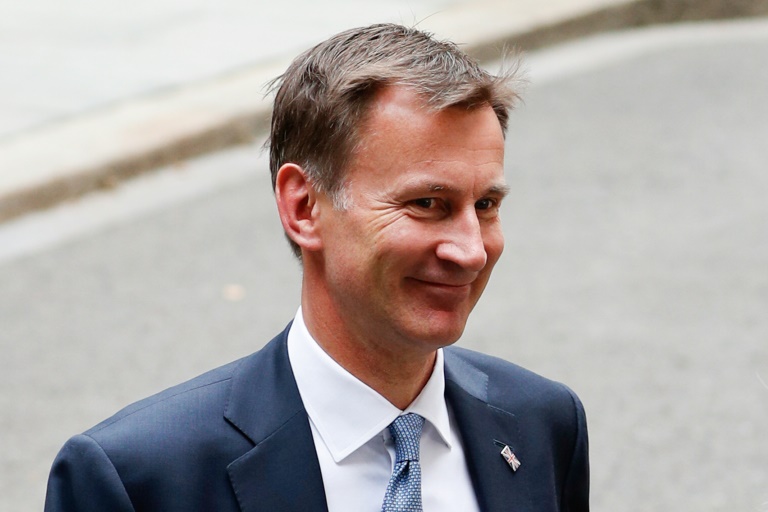
After a volatile few weeks during which the pound hit a record low, new finance minister Jeremy Hunt sought Monday to reassure investors as he scrapped tax cuts and warned of tough spending cuts.

Monday’s move, which dealt a blow to Prime Minister Liz Truss’s authority, sent sterling up as much as two percent at one point and the cost of government borrowing tumbled, while the FTSE 100 jumped.

“Investors continue to monitor the political and economic turbulence surrounding the UK,” noted XTB analyst Walid Koudmani.

Markets in China fluctuated a day after authorities delayed the release of third-quarter economic figures, which analysts said were likely to show the weakest growth since the pandemic owing to Covid-19 lockdowns.

The decision comes as the Communist Party holds a key gathering at which President Xi Jinping is expected to be handed a third term.

Oil prices slumped Tuesday in response on the expectation that the United States will draw more barrels than expected from its strategic reserves heading into the winter season.

– Key figures around 2030 GMT –

New York – Dow: UP 1.1 percent at 30,523.80 (close)

New York – S&P 500: UP 1.1 percent at 3,719.98 (close)

New York – Nasdaq: UP 0.9 percent at 10,772.40 (close)

London – FTSE 100: UP 0.2 percent at 6,936.74 (close)

Frankfurt – DAX: UP 0.9 percent at 12,765.61 (close)

Paris – CAC 40: UP 0.4 percent at 6,067.00 (close)

EURO STOXX 50: UP 0.6 percent at 3,463.83  (close)

Tokyo – Nikkei 225: UP 1.4 percent at 27,156.14 (close)

Hong Kong – Hang Seng Index: UP 1.8 percent at 16,914.58 (close)

Shanghai – Composite: DOWN 0.1 percent at 3,080.96 (close)

Pound/dollar: DOWN at $1.1332 from $1.1358 on Monday

Dollar/yen: UP at  149.21 yen from 149.04 yen

Euro/dollar: UP at $0.9862 from $0.9841 

Euro/pound: UP at 87.01 pence from 86.64 pence

Brent North Sea crude: DOWN 1.7 percent at $90.03 per barrel

West Texas Intermediate: DOWN 3.1 percent at $82.82 per barrel

burs-jmb/bgs

Stock markets climb on bright US earnings and UK policy U-turns

Major global equities rose Tuesday, with sentiment soothed after a series of upbeat US earnings and Britain shredded its controversial budget.

Analysts pointed to better-than-expected reports from Goldman Sachs and Johnson & Johnson as a positive driver for stocks, along with shifting investor sentiment.

On Wall Street, the Dow Jones jumped two percent at the open after a day of strong trading in Asia and Europe, before paring back gains later in the morning.

Goldman Sachs reported a third-quarter update that topped analyst expectations on strong trading revenues.

The investment bank followed on from positive earnings news from the Bank of America on Monday, days after JPMorgan Chase and others also logged solid numbers.

“Better-than-expected US earnings reports sparked a rally on Wall Street with positive momentum reverberating across European equities,” Interactive Investor analyst Victoria Scholar told AFP.

“Risk appetite is picking up after a volatile week for markets, as corporate results look to be the main driver of price action today.”

US industrial production also picked up more than anticipated in September, according to official data Tuesday, bouncing back after a dip in August.

Analysts remain hopeful that an upbeat third-quarter results season could give a shot in the arm to markets which have been slammed this year on fears over inflation and Federal Reserve interest rate hikes.

But Craig Erlam, senior market analyst at OANDA, warned the upbeat investor sentiment might not last, saying there was a “strong feeling of a bear market rally about trading over the course of the last week.”

“From the post-US-inflation rebound to what has now been a strong start to the week — in part driven by the UK’s decision to no longer shoot itself in the foot — nothing about this screams sustainable.”

– UK turbulence –

Frankfurt stocks closed up one percent on Tuesday as a key survey showed German investor confidence climbed slightly in October, but it still held at a low level.

London gains were muted after the Bank of England poured cold water on a newspaper report that it could delay the sale of government bonds again to help maintain market stability.

A BoE spokesperson described the Financial Times story as “inaccurate”.

The British pound retreated slightly after jumping Monday above $1.14 as the UK government sensationally ripped up its controversial debt-fuelled budget.

After a volatile few weeks during which the pound hit a record low, new finance minister Jeremy Hunt sought Monday to reassure investors as he scrapped tax cuts and warned of tough spending cuts.

Monday’s move, which dealt a blow to Prime Minister Liz Truss’s authority, sent sterling up as much as two percent at one point and the cost of government borrowing tumbled, while the FTSE 100 jumped.

“Investors continue to monitor the political and economic turbulence surrounding the UK,” noted XTB analyst Walid Koudmani.

Markets in China fluctuated a day after authorities delayed the release of third-quarter economic figures, which analysts said were likely to show the weakest growth since the pandemic owing to Covid-19 lockdowns.

The decision comes as the Communist Party holds a key gathering at which President Xi Jinping is expected to be handed a third term.

Oil prices slumped Tuesday in response on the expectation that the US will draw more barrels than expected from its strategic reserves heading into the winter season.

– Key figures around 1540 GMT –

London – FTSE 100: UP 0.2 percent at 6,936.74 points

Frankfurt – DAX: UP 0.9 percent at 12,765.61

Paris – CAC 40: UP 0.4 percent at 6,067.00

EURO STOXX 50: UP 0.6 percent at 3,463.83 

New York – Dow: UP 0.4 percent at 30,302.02

Tokyo – Nikkei 225: UP 1.4 percent at 27,156.14 (close)

Hong Kong – Hang Seng Index: UP 1.8 percent at 16,914.58 (close)

Shanghai – Composite: DOWN 0.1 percent at 3,080.96 (close)

Pound/dollar: DOWN at $1.1295 from $1.1358 on Monday

Dollar/yen: UP at  149.25 yen from 149.04 yen

Euro/dollar: DOWN at $0.9826 from $0.9841 

Euro/pound: UP at 86.99 pence from 86.64 pence

Brent North Sea crude: DOWN 2.73 percent at $89.12 per barrel

West Texas Intermediate: DOWN 3.45 percent at $81.58 per barrel

burs-rox/jmm

Crisis-hit Sri Lanka opens fuel market to foreign firms

Sri Lanka’s parliament on Tuesday approved legislation allowing foreign competition in the local fuel market, ending a 19-year duopoly as the bankrupt island struggles to import oil.

The move cleared the way for international oil firms to re-enter Sri Lanka for the first time since the nationalisation of oil companies in the early 1960s, with the exception of the Indian Oil Corporation which has operated there since 2003.

“This will allow global suppliers to enter as retail operators,” energy minister Kanchana Wijesekera said. “This will liberalise the energy sector.”

Officials said private companies will have to finance the import of oil from their own foreign exchange reserves and agree to retain their profits in Sri Lanka for at least a year.

The new law was rushed through as the government is out of foreign exchange to import fuel, a predicament that has brought acute shortages and strict rationing.

The shortages sparked widespread protests that toppled president Gotabaya Rajapaksa in July as Sri Lanka plunged into its worst economic crisis since independence from Britain in 1948.

Sri Lanka nationalised foreign oil firms in the early 1960s, handing a monopoly to the state-owned Ceylon Petroleum Corporation (CPC).

CPC’s monopoly ended in 2003 when Colombo introduced limited competition by allowing India’s state-owned Indian Oil Corporation to enter the local retail market.

The Indian company’s Sri Lankan arm now controls about a third of the domestic fuel market while the rest is held by CPC, which is seeing huge losses and is out of dollars to pay for new imports.

Stock markets climb on bright US earnings

Major global equities rose Tuesday, with sentiment soothed after Britain shredded its controversial budget and following a series of upbeat US earnings.

On Wall Street, the Dow Jones jumped two percent at the open after a day of strong trading in Asia and Europe, as several big banks updated with healthy data.

Goldman Sachs reported lower profits in its results Tuesday — but the firm still topped analyst expectations on strong trading revenues.

It follows positive earnings news from the Bank of America on Monday, days after JPMorgan Chase and others also logged solid numbers.

“Better-than-expected US earnings reports sparked a rally on Wall Street with positive momentum reverberating across European equities,” Interactive Investor analyst Victoria Scholar told AFP.

“Risk appetite is picking up after a volatile week for markets, as corporate results look to be the main driver of price action today.”

Later on Tuesday, investors will also digest results from Johnson & Johnson, Lockheed Martin and Netflix.

Analysts remain hopeful that an upbeat third-quarter results season could give a shot in the arm to markets which have been slammed this year on fears over inflation and Federal Reserve interest rate hikes.

But Craig Erlam, senior market analyst at OANDA, warned the upbeat investor sentiment might not last, saying there was a “strong feeling of a bear market rally about trading over the course of the last week.”

“From the post-US-inflation rebound to what has now been a strong start to the week — in part driven by the UK’s decision to no longer shoot itself in the foot — nothing about this screams sustainable.”

– European positivity –

Frankfurt stocks jumped nearly two percent on Tuesday as a key survey showed German investor confidence climbed slightly in October, but it still held at a low level.

London gains were muted after the Bank of England poured cold water on a newspaper report that it could delay the sale of government bonds again to help maintain market stability.

A BoE spokesperson described the Financial Times story as “inaccurate”.

But the British pound retreated slightly after jumping Monday above $1.14 as the UK government sensationally ripped up its controversial debt-fuelled budget.

After a volatile few weeks during which the pound hit a record low, new finance minister Jeremy Hunt sought Monday to reassure investors as he scrapped tax cuts and warned of tough spending cuts.

Monday’s move, which dealt a blow to Prime Minister Liz Truss’s authority, sent sterling up as much as two percent at one point and the cost of government borrowing tumbled, while the FTSE 100 jumped.

“Investors continue to monitor the political and economic turbulence surrounding the UK,” noted XTB analyst Walid Koudmani.

Markets in China fluctuated a day after authorities delayed the release of third-quarter economic figures, which analysts said were likely to show the weakest growth since the pandemic owing to Covid-19 lockdowns.

The decision comes as the Communist Party holds a key gathering at which President Xi Jinping is expected to be handed a third term.

– Key figures around 1340 GMT –

London – FTSE 100: UP 1.0 percent at 6,985.33 points

Frankfurt – DAX: UP 2.1 percent at 12,931.76

Paris – CAC 40: UP 1.5 percent at 6,130.52

EURO STOXX 50: UP 1.9 percent at 3,504.68

New York – Dow: UP 2.1 percent at 30,828.15 

Tokyo – Nikkei 225: UP 1.4 percent at 27,156.14 (close)

Hong Kong – Hang Seng Index: UP 1.8 percent at 16,914.58 (close)

Shanghai – Composite: DOWN 0.1 percent at 3,080.96 (close)

Pound/dollar: DOWN at $1.1320 from $1.1358 on Monday

Dollar/yen: DOWN at 149.00 yen from 149.04 yen

Euro/dollar: UP at $0.9853 from $0.9841 

Euro/pound: UP at 87.07 pence from 86.64 pence

Brent North Sea crude: DOWN 0.3 percent at $91.30 per barrel

West Texas Intermediate: DOWN 0.6 percent at $84.03 per barrel

burs-rox/kjm

European stock markets climb on bright US earnings

European equities rose Tuesday on upbeat US earnings, with sentiment also soothed after Britain shredded its controversial budget.

Asian and Europe chased Wall Street higher after Bank of America became the latest US financial heavyweight to top estimates, following JPMorgan Chase and others that logged solid numbers Friday.

“Better-than-expected US earnings reports sparked a rally on Wall Street with positive momentum reverberating across European equities,” Interactive Investor analyst Victoria Scholar told AFP.

“Risk appetite is picking up after a volatile week for markets, as corporate results look to be the main driver of price action today.”

Later on Tuesday, investors will digest results from Goldman Sachs, Johnson & Johnson, Lockheed Martin and Netflix.

Analysts remain hopeful that an upbeat third-quarter results season could give a shot in the arm to markets which have been slammed this year on fears over inflation and Federal Reserve interest rate hikes.

Frankfurt stocks jumped more than one percent on Tuesday as a key survey showed German investor confidence climbed slightly in October, but it still held at a low level.

London gains were curbed after the Bank of England poured cold water on a newspaper report that it could delay the sale of government bonds again to help maintain market stability.

A BoE spokesperson described the Financial Times story as “inaccurate”.

The British pound retreated back under $1.13, after jumping Monday above $1.14 as the UK government sensationally ripped up its controversial debt-fuelled budget.

After a volatile few weeks during which the pound hit a record low, new finance minister Jeremy Hunt sought Monday to reassure investors as he scrapped tax cuts and warned of tough spending cuts.

Monday’s move, which dealt a blow to Prime Minister Liz Truss’s authority, sent sterling up as much as two percent at one point and the cost of government borrowing tumbled, while the FTSE 100 jumped.

“Investors continue to monitor the political and economic turbulence surrounding the UK,” noted XTB analyst Walid Koudmani.

Markets in China fluctuated a day after authorities delayed the release of third-quarter economic figures, which analysts said were likely to show the weakest growth since the pandemic owing to Covid-19 lockdowns.

The decision comes as the Communist Party holds a key gathering at which President Xi Jinping is expected to be handed a third term.

– Key figures around 1030 GMT –

London – FTSE 100: UP 0.9 percent at 6,979.19 points

Frankfurt – DAX: UP 1.2 percent at 12,794.07

Paris – CAC 40: UP 0.7 percent at 6,079.98

EURO STOXX 50: UP 0.9 percent at 3,474.10

Tokyo – Nikkei 225: UP 1.4 percent at 27,156.14 (close)

Hong Kong – Hang Seng Index: UP 1.8 percent at 16,914.58 (close)

Shanghai – Composite: DOWN 0.1 percent at 3,080.96 (close)

New York – Dow: UP 1.9 percent at 30,185.82 (close)

Pound/dollar: DOWN at $1.1275 from $1.1358 on Monday

Dollar/yen: UP at 149.11 yen from 149.04 yen

Euro/dollar: DOWN at $0.9835 from $0.9841

Euro/pound: UP at 87.21 pence from 86.64 pence

Brent North Sea crude: DOWN 0.2 percent at $91.47 per barrel

West Texas Intermediate: DOWN 0.2 percent at $85.28 per barrel

burs-rfj/rl

Taiwan's Foxconn unveils more electric vehicle prototypes

Taiwanese tech giant Foxconn unveiled two more electric vehicle prototypes on Tuesday, including a pickup truck, saying commercial production on two other designs would start later this year.

The world’s largest contract electronics maker, Foxconn already plays a lynchpin role in assembling gadgets for a host of top international brands including Apple’s iPhone.

The company has moved to diversify beyond electronics assembly and embraced the competitive but rapidly expanding EV business, unveiling three concept cars last year.

Foxconn chairman Young Liu showed off two more prototypes at Tuesday’s media event in Taipei — a sporty hatchback dubbed the Model B and a pickup, the Model V.

He also announced that commercial production would start by the end of the year on the group’s previously unveiled electric bus and a family sports utility vehicle.

“Foxconn has cut in half the design time and reduced development cost by a third in taking an EV from concept to production-ready,” Liu said.

Foxconn plans to do with electric vehicles what it did for gadgets — become a go-to contract builder.

Its strategy is to construct vehicles for clients rather than sell them under its own name, using the prototypes as a guide.

“I hope one day we can do Tesla cars for Tesla,” Liu told reporters, adding that Foxconn was aiming for five percent of the global EV market by 2025. 

Liu said one of its clients, Taiwanese automaker Luxgen, had received 15,000 customer pre-orders in under two days for its N7 car, which is based on the Foxconn Model C unveiled last year.

He added that various models will be put into production in Taiwan, Thailand and the United States while the company is also eyeing cooperation with Indonesia and India, without providing details.

Foxconn has also started building electric vehicles for Lordstown Motors after completing its purchase of a former General Motors plant in Lordstown, Ohio in May.

This month, it signed a memorandum of understanding with US-based INDIEV Inc to build the first INDI One prototype EV at its Ohio facility.

Its partners also include Fisker, one of a host of US-based electronic car startups hoping to someday challenge Tesla’s supremacy.

Fisker has recently reaffirmed plans to have Foxconn build its upcoming Fisker Pear model at the Ohio factory starting in 2024.

It has been widely reported for years that Apple has a secret electronic car project, something Foxconn could be in an ideal place to partner on given its existing relationship with the California-based giant.

Stocks, sterling extend gains after UK budget U-turn

Equities rose with sterling Tuesday after the UK government scrapped a controversial debt-funded mini-budget that had roiled markets, while traders were also cheered by a broadly positive start to earnings season.

After a volatile few weeks during which the pound hit a record low, new finance minister Jeremy Hunt sought Monday to reassure investors as he unveiled a new spending package, doing away with tax cuts and warning of much lower spending.

The move — which deals a blow to Prime Minister Liz Truss’s authority — sent sterling up as much as two percent at one point and the cost of government borrowing tumbled, while the FTSE 100 jumped.

The positive mood filtered through to other markets, with Wall Street enjoying a much-needed surge, including a more than three percent jump in the Nasdaq.

And most of Asia followed suit, with Tokyo, Hong Kong, Singapore, Mumbai, Bangkok, Sydney, Seoul, Wellington, Taipei, Manila and Jakarta all enjoying a pick-up, though Shanghai dipped.

London opened on the front foot along with Paris and Frankfurt.

The pound was also given an extra boost — at one point topping $1.14 — after a Financial Times report said the Bank of England will likely put off the sale of government bonds again as it looks to maintain market stability.

The Bank had been due to offload the gilts — bought to keep borrowing costs down during the pandemic — from October 6 but delayed that because of the turmoil sparked by the mini-budget, but the FT said it would likely delay again until financial conditions had calmed.

The market gains built on Monday’s rise, though analysts warned that the advances were unlikely to be sustained owing to broader worries about inflation and rising interest rates.

“The last couple of months have been tough for equity markets since peaking towards the end of the summer and a rebound of some kind was going to happen eventually,” said OANDA’s Craig Erlam. 

“I’m just not convinced there’s much substance behind it as the economic landscape looks treacherous and we don’t even know if we’re at peak inflation and interest rate pricing yet. Those are substantial headwinds that will make any stock market rebound extremely challenging.”

The latest data out of New Zealand showing inflation remained at a three-decade high underscored the tough job central banks have in bringing prices down, even after several rate hikes.

Commentators said traders have come to the conclusion that a recession is on the way in major economies, with the main question being how bad it will be.

“I think we can stop saying inflation is ‘hotter than expected’ and shift to ‘hotter than hoped’ — because it really does feel like we’re all just crossing our fingers and hoping prices come down,” said Matt Simpson at City Index.

“And in the few cases that they are, it is clearly not fast enough for anyone’s liking. Conversely to the adage about stock market prices, inflation seems to get the elevator up and the escalator down — but not before lingering around the top floor for an extended period of time.”

Markets in China fluctuated a day after authorities delayed the release of third-quarter economic figures, which analysts said were likely to show the weakest growth since the pandemic owing to Covid-19 lockdowns.

The decision comes as the Communist Party holds a key gathering at which President Xi Jinping is expected to be handed a third term.

“Whenever the release occurs, we should all be prepared for some global financial market reaction if the world’s two largest economies are both in recession this year. Especially, as the global economic slowdown remains ongoing,” said Clifford Bennett at ACY Securities.

“While in China, we have a slightly artificially generated risk of recession due to a zero-Covid policy.

“This policy has been confirmed to remain in place indefinitely. This means China will see further economic disruption over the coming year.”

– Key figures around 0810 GMT –

Tokyo – Nikkei 225: UP 1.4 percent at 27,156.14 (close)

Hong Kong – Hang Seng Index: UP 1.8 percent at 16,914.58 (close)

Shanghai – Composite: DOWN 0.1 percent at 3,080.96 (close)

London – FTSE 100: UP 1.1 percent at 6,994.87

Pound/dollar: UP at $1.1357 from $1.1351 on Monday

Dollar/yen: DOWN at 148.99 yen from 149.03 yen

Euro/dollar: UP at $0.9858 from $0.9840

Euro/pound: UP at 86.80 pence from 86.66 pence

West Texas Intermediate: UP 0.4 percent at $85.82 per barrel

Brent North Sea crude: UP 0.3 percent at $91.89 per barrel

New York – Dow: UP 1.9 percent at 30,185.82 (close)

— Bloomberg News contributed to this story —

Close Bitnami banner
Bitnami