Chinese Business

Asia markets extend rally on rate hopes, OPEC in focus

Asian investors joined their Wall Street counterparts in an equity buying spree Wednesday as more data pointing to weakness in the US economy further fanned hopes the Federal Reserve could temper its rate hike campaign.

The much-needed dose of optimism has also put pressure on the dollar, pushing it down against most of its peers and adding to the upward march in oil prices fuelled by expectations OPEC will announce a massive output cut later in the day.

The mood on trading floors was lightened Monday by data showing US factory activity slowed more than forecast in September to a two-year low, suggesting the Fed’s rate hike campaign against decades-high inflation could be kicking in.

That was followed Tuesday by news that US job openings had also dropped by almost 10 percent in August, its fastest fall since April 2020.

“Rate hikes are really beginning to take a bite out of the US employment numbers,” said Matt Simpson, of City Index.

He added that the figures put more emphasis on jobs reports out later in the week, with weak readings likely to provide more support to stocks as investors bet the Fed will temper its tightening campaign.

However, officials at the central bank continue to flag their determination to crush inflation, even if that means sparking a recession.

“For the market to continue higher, the jobs data will have to be in-line with, or short of expectations,” said Lindsey Bell, of Ally Financial.

The market is currently anticipating a “Goldilocks” labour market report that’s “not too hot and not too cold”.

All three main indexes on Wall Street rallied Tuesday, with the S&P 500 and Nasdaq up more than three percent. European markets also thundered higher Tuesday, though they gave back some of those gains in early trade Wednesday.

And Asia continued the run, with Hong Kong rocketing almost six percent as investors there returned from a one-day break, while there were also healthy performances in Tokyo, Singapore, Sydney, Wellington, Bangkok, Seoul, Taipei, Jakarta and Manila.

– ‘No time to get carried away’ –

“It’s been a very impressive relief rally, albeit one aided by a rose-tinted interpretation of certain economic indicators and a terrible plunge in the weeks before,” said OANDA’s Craig Erlam. 

“This isn’t the time to get carried away but it is understandable that we’re seeing some relief. It all hangs on whether the data is the start of a weakening trend or just a blip, as with the July inflation drop.”

The gains in Asia were also helped by a smaller-than-expected rate hike by the Reserve Bank of Australia.

That came after the Bank of England last week pledged to pump billions of dollars into supporting financial markets after they were hammered by the UK government’s big-borrowing mini-budget.

The BoE pivot “seems to have convinced investors that the Fed now must give more weight to financial stability, which means that the current monetary tightening cycle might end sooner rather than later”, Ed Yardeni, president of Yardeni Research, said.

Focus is now on the meeting later Wednesday of OPEC and other major producers, who are reportedly considering a two million barrels cut in output — double what had earlier been flagged — after prices plunged to their January lows owing to recession concerns.

But such a large reduction would likely annoy the United States, which has joined several other countries in releasing crude from their emergency supplies to help tamp down the cost of energy, which is a key driver of inflation.

Both main contracts have bounced this week on talk of the reductions, while the weaker dollar makes the commodity cheaper for buyers using other currencies.

WTI and Brent edged down slightly Wednesday with downward pressure coming from news that Russia will resume gas deliveries to Italy after suspending them over a transport problem in Austria.

However, analysts said the commodity may have more road to run up as supplies tighten and the dollar softens.

– Key figures around 0810 GMT –

Tokyo – Nikkei 225: UP 0.5 percent at 27,120.53 (close)

Hong Kong – Hang Seng Index: UP 5.9 percent at 18,087.97 (close)

Shanghai – Composite: Closed for a holiday

London – FTSE 100: DOWN 0.4 percent at 7,058.05

Pound/dollar: DOWN at $1.1423 from $1.1477 on Tuesday

Euro/dollar: DOWN at $0.9961 from $0.9992

Euro/pound: UP at 87.15 pence from 87.03 pence

Dollar/yen: UP at 144.44 yen from 144.09 yen

West Texas Intermediate: DOWN 0.2 percent at $86.31 per barrel

Brent North Sea crude: DOWN 0.2 percent at $91.63 per barrel

New York – Dow: UP 2.8 percent at 30,316.32 (close)

— Bloomberg News contributed to this story —
OPEC+ expected to slash oil output

Major oil producers led by Saudi Arabia and Russia were set to meet Wednesday as reports said they were mulling an output cut of up to two million barrels per day in a bid to prop up slumping prices.

If implemented, it would be the first such major cut since a landmark curb on production at the start of the Covid pandemic.

Energy prices soared after Russia invaded Ukraine earlier this year, pushing inflation to decades-high levels that have put pressure on economies across the world.

But they have fallen in recent months on concerns over dwindling demand and a slowdown in the global economy.

The 13 members of the Organization of the Petroleum Exporting Countries (OPEC), led by Saudi Arabia, and their 10 allies headed by Russia will hold their first in-person meeting since March 2020 at the group’s headquarters in Vienna.

Collectively known as OPEC+, the alliance drastically slashed output by almost 10 million barrels per day (bpd) in April 2020 to reverse a massive drop in crude prices caused by Covid lockdowns.

OPEC+ began to raise production last year after the market improved. Output returned to pre-pandemic levels this year, but only on paper as some members have struggled to meet their quotas.

The group agreed last month on a small, symbolic cut of 100,000 bpd from October, the first in more than a year.

– ‘Sizeable cut’? –

Most oil ministers were reluctant to divulge information on possible output cuts as they started to arrive in Vienna.

UAE Energy Minister Suhail al-Mazrouei said Tuesday that the group was still reviewing market data.

“Let’s wait… We will have to listen to the technical team,” he told journalists.

But Bloomberg said officials were discussing the removal of about two million bpd out of the market from November, twice as much as earlier predictions.

“A sizeable cut now looks on the cards, the question is whether it will be large enough to offset the demand destruction caused by the impending economic downturn,” said Craig Erlam, an analyst at trading platform OANDA.

After soaring close to $140 per barrel in the aftermath of Russia’s invasion of Ukraine in late February, oil prices have dropped below the $90 mark.

According to the UBS bank, a cut of at least 500,000 bpd would be necessary to stop the price plunge.

In anticipation of Wednesday’s meeting, oil prices jumped further on Tuesday, with Brent above $90 and WTI around $86, though still far below their March peak.

– Tighter taps ‘unwelcome’ –

Consumer countries have pushed for OPEC+ to open taps more widely to bring down prices — calls that the group has largely ignored.

US President Joe Biden made a controversial trip to Saudi Arabia in July in part to convince the kingdom to loosen the production taps. The trip saw Biden meet Crown Prince Mohammed bin Salman despite his promise to make Riyadh a “pariah” following the 2018 killing of journalist Jamal Khashoggi.

“Any cut would be unwelcome as it’s not the right time for cutting oil supplies to push prices higher,” said Ipek Ozkardeskaya, a Swissquote analyst.

“The global energy crisis, soaring inflation and looming recession already worry the Western leaders,” she said ahead of the Vienna gathering.

“Knowing that Russia is willing to cut output, the move could also be perceived as another escalation of the geopolitical tensions” between Moscow and the West.

Observers have cast doubt on how much more OPEC+ could possibly pump, with some of its members already struggling to meet quotas.

Bjarne Schieldrop, chief commodities analyst at SEB research group, predicted it would be “very easy for the group to implement cuts given that most members are stretched to the limit of what they can produce”.

He said Saudi Arabia was currently producing 11 million bpd.

“It hasn’t maintained such a high production more than twice in history and then only for 1-2 months,” he said.

Equities extend rally on rate hopes, traders await OPEC decision

Asian investors joined their Wall Street and European counterparts in an equity buying spree Wednesday as more data pointing to weakness in the US economy further fanned hopes the Federal Reserve could temper its rate hike campaign.

The much-needed dose of optimism has also put pressure on the dollar, pushing it down against most of its peers and adding to the upward march in oil prices fuelled by expectations OPEC will announce a massive output cut later in the day.

The mood on trading floors was lightened Monday by data showing US factory activity slowed more than forecast in September to a two-year low, suggesting the Fed’s rate hike campaign against decades-high inflation could be kicking in.

That was followed Tuesday by news that US job openings had also dropped by almost 10 percent in August, its fastest fall since April 2020.

“Rate hikes are really beginning to take a bite out of the US employment numbers,” said Matt Simpson, of City Index.

He added that the figures put more emphasis on jobs reports out later in the week, with weak readings likely to provide more support to stocks as investors bet the Fed will temper its tightening campaign.

However, officials at the central bank continue to flag their determination to crush inflation, even if that means sparking a recession.

“For the market to continue higher, the jobs data will have to be in-line with, or short of expectations,” said Lindsey Bell, of Ally Financial.

The market is currently anticipating a “Goldilocks” labour market report that’s “not too hot and not too cold”.

All three main indexes on Wall Street rallied Tuesday, with the S&P 500 and Nasdaq up more than three percent, while European markets also thundered higher.

And Asia continued the run, with Hong Kong rocketing more than five percent as investors there returned from a one-day break, while there were also healthy performances in Tokyo, Singapore, Sydney, Taipei, Jakarta and Manila.

The gains were also helped by a smaller-than-expected rate hike by the Reserve Bank of Australia.

That came after the Bank of England last week pledged to pump billions of dollars into supporting financial markets after they were hammered by the UK government’s big-borrowing mini-budget.

The BoE pivot “seems to have convinced investors that the Fed now must give more weight to financial stability, which means that the current monetary tightening cycle might end sooner rather than later”, Ed Yardeni, president of Yardeni Research, said.

Focus is now on the meeting later Wednesday of OPEC and other major producers, who are reportedly considering a two million barrels cut in output — double what had earlier been flagged — after prices plunged to their January lows owing to recession concerns.

Both main contracts have bounced this week on talk of the reductions, while the weaker dollar makes the commodity cheaper for buyers using other currencies.

While WTI and Brent dipped slightly, analysts said they may have more road to run up as supplies tighten and the dollar softens.

– Key figures around 0230 GMT –

Tokyo – Nikkei 225: UP 0.4 percent at 27,085.97 (break)

Hong Kong – Hang Seng Index: UP 5.2 percent at 17,960.10

Shanghai – Composite: Closed for a holiday

Pound/dollar: DOWN at $1.1430 from $1.1477 on Tuesday

Euro/dollar: DOWN at $0.9961 from $0.9992

Euro/pound: UP at 87.26 pence from 87.03 pence

Dollar/yen: UP at 144.26 yen from 144.09 yen

West Texas Intermediate: DOWN 0.5 percent at $86.10 per barrel

Brent North Sea crude: DOWN 0.4 percent at $91.44 per barrel

New York – Dow: UP 2.8 percent at 30,316.32 (close)

London – FTSE 100: UP 2.6 percent at 7,086.46 (close)

— Bloomberg News contributed to this story —
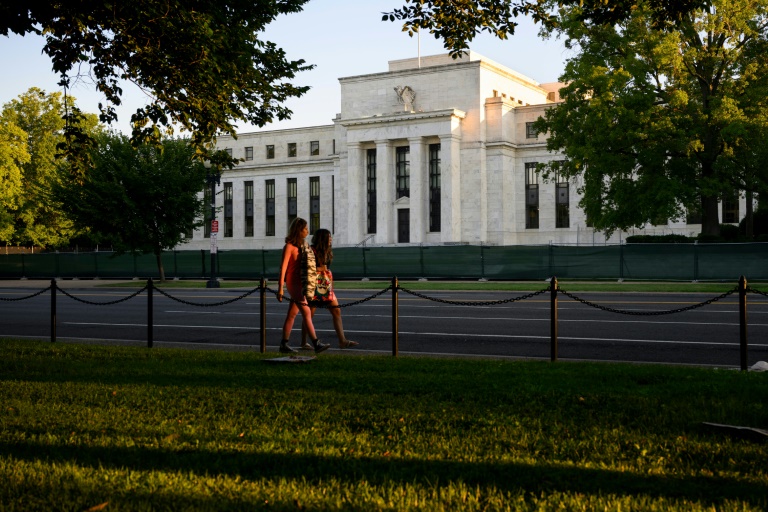
Stocks surge on hopes interest rate hikes will slow

Global stocks gained on Tuesday and the dollar slid amid growing hopes the Federal Reserve could ease its interest-rate hiking plans.

Frankfurt and Paris equities each soared around four percent in value after Tokyo gained 3.0 percent, while London won 2.6 percent.

Wall Street’s surged higher for the second straight day, with the Dow rising 2.8 percent. The S&P 500 jumped 3.1 percent and the Nasdaq Composite 3.3 percent.

The Federal Reserve and other central banks have raised interest rates rapidly to tame soaring inflation, but the monetary tightening has raised fears it could plunge countries into recession.

Those concerns fueled sharp drops in stocks in recent weeks, especially since the Fed has said it will continue to raise interest rates this year and possibly early next year as well to get on top of inflation.

But Wall Street enjoyed a bumper start to the fourth quarter after an industry survey released Monday showed US manufacturing growth slowed more than expected in September to its weakest in more than two years, and pricing pressures eased.

The buoyant trend equities continued on Tuesday after the Reserve Bank of Australia (RBA) raised its policy interest rate just 0.25 percentage point, half the expected increase.

“Weaker-than-expected manufacturing data from the US was taken as a signal that rising interest rates may be having some effect on cooling demand for goods,” said Interactive Investor analyst Richard Hunter.

“This in turn led to hopes of a Federal Reserve pivot, even though the spectre of inflation remains firmly at the top of their stated to-do list.”

The yield on the 10-year US Treasury, a proxy for interest rates expectations, retreated further as investors bet that weakening economic data will prompt a similar pullback from the Fed.

Earlier, Asian markets built on the Wall Street surge. Tokyo and Seoul were among the leaders, despite news that North Korea had fired a missile over Japan for the first time since 2017.

Sydney soared 3.8 percent after the Reserve Bank of Australia lifted interest rates by less than expected.

Hong Kong and Shanghai were closed for holidays.

Investors will focus later this week on Friday’s all-important US employment report for the latest reading on the health of the world’s biggest economy, but new data Tuesday showed a dramatic decline in job openings in August.

That decline lowered the ratio of US openings to unemployed workers — a key indicator of strains in the labor market — to 1.7, from 2.0 in the prior month.

– Sterling extends gains –

Oil also continued to push higher on expectations OPEC and other major producers will slash output this week, having become spooked by a plunge in the price of the commodity on recession fears.

The 13 members of the Organization of the Petroleum Exporting Countries (OPEC), led by Riyadh, and their 10 allies headed by Moscow will hold Wednesday their first in-person meeting at the group’s headquarters in Vienna since March 2020.

The rally in equities came as the US dollar weakened owing to moderating expectations for interest rate hikes, with the pound also supported by the UK government’s decision to scrap a planned cut in the top rate of income tax.

The pound extended gains after breaking back above $1.14, having last Monday tanked to a record low $1.0350. The euro rose around 1.7 percent against the greenback.

– Key figures around 2050 GMT –

New York – Dow: UP 2.8 percent at 30,316.32 (close)

New York – S&P 500: UP 3.1 percent at 3,790.93 (close)

New York – Nasdaq: UP 3.3 percent at 11,176.41 (close)

Paris – CAC 40: UP 4.2 percent at 6,039.69 (close)

Frankfurt – DAX: UP 3.8 percent at 12,670.48 (close)

London – FTSE 100: UP 2.6 percent at 7,086.46 (close)

EURO STOXX 50: UP 4.3 percent at 3,484.48 (close)

Tokyo – Nikkei 225: UP 3.0 percent at 26,992.21 (close)

Hong Kong – Hang Seng Index: Closed for a holiday

Shanghai – Composite: Closed for a holiday

Pound/dollar: UP at $1.1477 from $1.1323 on Monday

Euro/dollar: UP at $0.9992 from $0.9826

Euro/pound: UP at 87.03 pence from 86.77 pence

Dollar/yen: DOWN at 144.09 yen from 144.55 yen

Brent North Sea crude: UP 3.4 percent at $91.80 per barrel

West Texas Intermediate: UP 3.5 percent at $86.52 per barrel

burs-jmb/hs

Stocks surge on interest rate hopes

Global stocks rallied Tuesday and the dollar mostly slid as weak US data sparked hopes the Federal Reserve could ease its interest-rate hiking plans.

Frankfurt and Paris equities both soared around four percent in value after Tokyo gained 3.0 percent, while London won 2.6 percent.

Wall Street’s surged higher for the second straight day, with the Dow rising 2.7 percent. The S&P 500 jumped 2.9 percent and the Nasdaq Composite 3.4 percent.

“Weaker-than-expected manufacturing data from the US was taken as a signal that rising interest rates may be having some effect on cooling demand for goods,” said Interactive Investor analyst Richard Hunter.

“This in turn led to hopes of a Federal Reserve pivot, even though the spectre of inflation remains firmly at the top of their stated to-do list.”

The Fed and other central banks across the world have raised interest rates in efforts to tame runaway inflation, but the monetary tightening has raised fears that it could plunge countries into recession.

Those concerns have fed into sharp drops in stocks in recent weeks, as have expectations that the Fed will have to raise interest rates by a couple more percentage points through much of next year to get on top of inflation.

But Wall Street had enjoyed a bumper start to the fourth quarter on Monday after data showed US manufacturing growth slowed more than expected in September to its weakest in more than two years.

The Institute for Supply Management said its manufacturing index dropped 1.9 points to 50.9 percent, just barely above the 50-percent threshold indicating expansion, as the prices index fell to the lowest in more than two years.

Eurozone manufacturing survey data out Monday showed a contraction on the back of the region’s ongoing energy crisis.

“The turnaround in risk appetite appears to have been driven by another deterioration in PMI surveys as traders speculate that such weakness could be a precursor to slower monetary tightening,” noted OANDA market analyst Craig Erlam.

Asian markets built on the Monday Wall Street surge. Tokyo and Seoul were among the leaders, despite news that North Korea had fired a missile over Japan for the first time since 2017.

Sydney soared 3.8 percent after the Reserve Bank of Australia lifted interest rates by less than expected.

Hong Kong and Shanghai were closed for holidays.

Investors will focus later this week on Friday’s all-important US jobs figures for the latest reading on the health of the world’s biggest economy.

“The specter of the September employment report on Friday, however, is still hanging out there as a potential spoiler,” said Briefing.com analyst Patrick O’Hare.

“By the same token, it could also provide more interest rate relief if it is on the weaker side of things,” he added.

– Sterling extends gains –

Oil also continued to push higher on expectations OPEC and other major producers will slash output this week, having become spooked by a plunge in the price of the commodity on recession fears.

The 13 members of the Organization of the Petroleum Exporting Countries (OPEC), led by Riyadh, and their 10 allies headed by Moscow will hold Wednesday their first in-person meeting at the group’s headquarters in Vienna since March 2020.

The rally in equities came as the dollar weakened owing to lower expectations for US monetary tightening, with the pound also supported by the UK government’s decision to scrap a planned cut in the top rate of income tax.

The pound extended gains after breaking back above $1.14, having last Monday tanked to a record low $1.0350. The euro rose around 1.5 percent against the greenback.

– Key figures around 1530 GMT –

New York – Dow: UP 2.7 percent at 30,273.78 points

EURO STOXX 50: UP 4.3 percent at 3,484.48

Paris – CAC 40: UP 4.2 percent at 6,039.69 (close)

Frankfurt – DAX: UP 3.8 percent at 12,670.48 (close)

London – FTSE 100: UP 2.6 percent at 7,086.46 (close)

Tokyo – Nikkei 225: UP 3.0 percent at 26,992.21 (close)

Hong Kong – Hang Seng Index: Closed for a holiday

Shanghai – Composite: Closed for a holiday

Pound/dollar: UP at $1.1440 from $1.1323 on Monday

Euro/dollar: UP at $0.9976 from $0.9826

Euro/pound: UP at 87.16 pence from 86.77 pence

Dollar/yen: DOWN at 144.39 yen from 144.55 yen

Brent North Sea crude: UP 3.5 percent at $91.94 per barrel

West Texas Intermediate: UP 3.4 percent at $86.48 per barrel

burs-rl/cdw

Markets surge on interest rate hopes

Global stocks rallied Tuesday and the dollar dipped as weak US data sparked hopes the Federal Reserve could ease its interest-rate hiking plans.

Frankfurt and Paris equities soared more than three percent in value after similar stellar gains in Tokyo, while London won two percent.

Wall Street stocks snapped higher at the open, with the Dow climbing 1.3 percent.

“Weaker-than-expected manufacturing data from the US was taken as a signal that rising interest rates may be having some effect on cooling demand for goods,” said Interactive Investor analyst Richard Hunter.

“This in turn led to hopes of a Federal Reserve pivot, even though the spectre of inflation remains firmly at the top of their stated to-do list.”

The Fed and other central banks across the world have raised interest rates in efforts to tame runaway inflation, but the monetary tightening has raised fears that it could plunge countries into recession.

Those concerns have fed into sharp drops in stocks in recent weeks, as have expectations that the Fed will have to raise interest rates by a couple more percentage points through much of next year to get on top of inflation.

But Wall Street had enjoyed a bumper start to the fourth quarter on Monday after data showed US manufacturing growth slowed more than expected in September to its weakest in more than two years.

The Institute for Supply Management said its manufacturing index dropped 1.9 points to 50.9 percent, just barely above the 50-percent threshold indicating expansion, as the prices index fell to the lowest in more than two years.

Eurozone manufacturing survey data out Monday showed a contraction on the back of the region’s ongoing energy crisis.

“The turnaround in risk appetite appears to have been driven by another deterioration in PMI surveys as traders speculate that such weakness could be a precursor to slower monetary tightening,” noted OANDA market analyst Craig Erlam.

Asian markets built on the Monday Wall Street surge. Tokyo and Seoul were among the leaders, despite news that North Korea had fired a missile over Japan for the first time since 2017.

Sydney soared 3.8 percent after the Reserve Bank of Australia lifted interest rates by less than expected.

Hong Kong and Shanghai were closed for holidays.

Investors will focus later this week on Friday’s all-important US jobs figures for the latest reading on the health of the world’s biggest economy.

“The specter of the September employment report on Friday, however, is still hanging out there as a potential spoiler,” said Briefing.com analyst Patrick O’Hare.

“By the same token, it could also provide more interest rate relief if it is on the weaker side of things,” he added.

– Sterling extends gains –

Oil also continued to rise on expectations OPEC and other major producers will slash output this week, having become spooked by a plunge in the commodity on recession fears.

The 13 members of the Organization of the Petroleum Exporting Countries (OPEC), led by Riyadh, and their 10 allies headed by Moscow will hold Wednesday their first in-person meeting at the group’s headquarters in Vienna since March 2020.

The rally in equities came as the dollar weakened owing to lower expectations for US monetary tightening, with the pound also supported by the UK government’s decision to scrap a planned cut in the top rate of income tax.

The pound extended gains after breaking back above $1.13, having last Monday tanked to a record low $1.0350. The euro rose around one percent against the greenback.

– Key figures around 1330 GMT –

Paris – CAC 40: UP 3.2 percent at 5,980.38 points

Frankfurt – DAX: UP 2.8 percent at 12,549.25

London – FTSE 100: UP 2.0 percent at 7,047.34

EURO STOXX 50: UP 3.2 percent at 3,449.00

New York – Dow: UP 1.3 percent at 29,873.99

Tokyo – Nikkei 225: UP 3.0 percent at 26,992.21 (close)

Hong Kong – Hang Seng Index: Closed for a holiday

Shanghai – Composite: Closed for a holiday

Pound/dollar: UP at $1.1358 from $1.1323 on Monday

Euro/dollar: UP at $0.9917 from $0.9826

Euro/pound: UP at 87.33 pence from 86.77 pence

Dollar/yen: UP at 144.74 yen from 144.55 yen

Brent North Sea crude: UP 2.8 percent at $91.31 per barrel

West Texas Intermediate: UP 2.6 percent at $85.83 per barrel

burs-rl/jm

Markets surge on interest rate hopes

Asian and European stocks rallied Tuesday and the dollar dipped as weak US data sparked hopes the Federal Reserve could ease its interest-rate hiking plans.

Frankfurt and Paris equities soared more than three percent in value after similar stellar gains in Tokyo, while London won two percent.

“Weaker-than-expected manufacturing data from the US was taken as a signal that rising interest rates may be having some effect on cooling demand for goods,” said Interactive Investor analyst Richard Hunter.

“This in turn led to hopes of a Federal Reserve pivot, even though the spectre of inflation remains firmly at the top of their stated to-do list.”

The Fed and other central banks across the world have raised interest rates in efforts to tame runaway inflation, but the monetary tightening has raised fears that it could plunge countries into recession.

Wall Street had enjoyed a bumper start to the fourth quarter on Monday after data showed US manufacturing growth slowed more than expected in September to its weakest in more than two years.

The Institute for Supply Management said its manufacturing index dropped 1.9 points to 50.9 percent, just barely above the 50-percent threshold indicating expansion, as the prices index fell to the lowest in more than two years.

Eurozone manufacturing survey data out Monday showed a contraction on the back of the region’s ongoing energy crisis.

“The turnaround in risk appetite appears to have been driven by another deterioration in PMI surveys as traders speculate that such weakness could be a precursor to slower monetary tightening,” noted OANDA market analyst Craig Erlam.

Asian markets built on the Wall Street surge. Tokyo and Seoul were among the leaders, despite news that North Korea had fired a missile over Japan for the first time since 2017.

Sydney soared 3.8 percent after the Reserve Bank of Australia lifted interest rates by less than expected.

Hong Kong and Shanghai were closed for holidays.

Investors will focus later this week on Friday’s all-important US jobs figures for the latest reading on the health of the world’s biggest economy.

– Sterling extends gains –

Oil also continued to rise on expectations OPEC and other major producers will slash output this week, having become spooked by a plunge in the commodity on recession fears.

The 13 members of the Organization of the Petroleum Exporting Countries (OPEC), led by Riyadh, and their 10 allies headed by Moscow will hold Wednesday their first in-person meeting at the group’s headquarters in Vienna since March 2020.

The rally in equities came as the dollar weakened owing to lower expectations for US monetary tightening, with the pound also supported by the UK government’s decision to scrap a planned cut in the top rate of income tax.

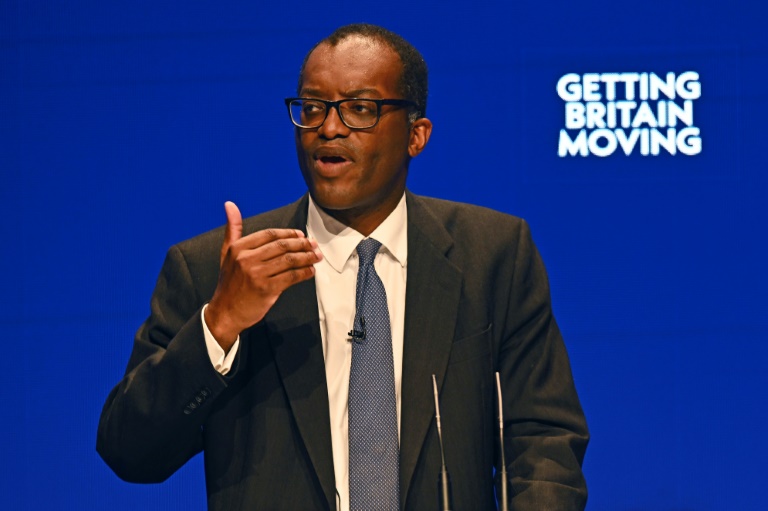
Finance minister Kwasi Kwarteng has dropped the proposal, which was part of a big-borrowing mini-budget that sent shudders through markets.

The pound extended gains after breaking back above $1.13, having last Monday tanked to a record low $1.0350.

– Key figures around 1030 GMT –

Paris – CAC 40: UP 3.5 percent at 5,995.86 points

Frankfurt – DAX: UP 3.1 percent at 12,590.86

London – FTSE 100: UP 2.0 percent at 7,046.02

EURO STOXX 50: UP 3.3 percent at 3,452.98

Tokyo – Nikkei 225: UP 3.0 percent at 26,992.21 (close)

Hong Kong – Hang Seng Index: Closed for a holiday

Shanghai – Composite: Closed for a holiday

New York – Dow: UP 2.7 percent at 29,490.89 (close)

Pound/dollar: UP at $1.1362 from $1.1323 on Monday

Euro/dollar: UP at $0.9898 from $0.9826

Euro/pound: UP at 87.13 pence from 86.77 pence

Dollar/yen: UP at 144.65 yen from 144.55 yen

Brent North Sea crude: UP 1.1 percent at $89.82 per barrel

West Texas Intermediate: UP 0.9 percent at $84.40 per barrel

burs/rfj/lth

Markets rally, dollar dips as US data tempers rate fears

Asian markets rallied Tuesday and the dollar eased after weak US factory data sparked optimism that a series of big interest rate hikes were taking their toll, allowing the Federal Reserve to ease its foot off the pedal.

Oil also continued to rise on expectations OPEC and other major producers will slash output this week, having become spooked by a plunge in the commodity on recession fears.

All three main indexes in New York enjoyed a bumper start to the quarter after data showed US manufacturing growth slowed more than expected in September to its weakest in more than two years.

SPI Asset Management’s Stephen Innes said: “The positive aspect in the data is prices paid dropped to 51.7, the lowest print since June 2020, triggering a mini-risk revival in stocks and a sell-off on the US dollar as US yields continued to slide.

“In this hawkishly priced risk environment, bad data is considered good news, as it raises the possibility of a doveish pivot by the Federal Reserve.”

But he added that there was a lot more data to come this week, topped by Friday’s US jobs figures, that could alter investors’ views, while several Fed officials remained wedded to their rate hike plan to tame inflation.

Nicole Webb, at Wealth Enhancement Group, told Bloomberg Television that while the Fed will at some point stop hiking, “how long they hold us or suspend us there is still in question”.

Still, Asian markets built on the Wall Street surge.

Tokyo and Seoul were among the leaders, despite news that North Korea had fired a missile over Japan for the first time since 2017.

Sydney surged 3.8 percent after the Reserve Bank of Australia lifted interest rates by less than expected.

Singapore, Mumbai, Bangkok, Taipei, Manila, Jakarta and Wellington were also sharply higher. Hong Kong and Shanghai are closed for holidays.

London, Paris and Frankfurt were also well up soon after opening.

– Sterling extends gains –

The rally in equities came as the dollar weakened owing to lower expectations for US monetary tightening, with the pound also supported by the UK government’s decision to scrap a planned cut in the top rate of income tax.

Ahead of a speech to a conference of the ruling Conservatives, finance minister Kwasi Kwarteng dropped the proposal, which was part of a big-borrowing mini-budget that sent shudders through markets.

The pound extended gains after breaking back above $1.13, having last Monday tanked to a record low $1.0350.

The tax cut would have cost about £2-3 billion out of an estimated £72.4 billion worth of debt issuance this year.

But National Australia Bank’s Tapas Strickland said the u-turn “is a sign that the government is responding to market concerns and also to polling which may mean the new government is not as cavalier as some had feared”.

The dollar was also down against the euro and yen, while the Australian dollar overcame an initial drop after the RBA’s rate hike to push higher.

Commodities traders are keenly awaiting Wednesday’s monthly meeting of OPEC and other producers after reports said it is considering a million-barrels-a-day output cut.

WTI surged more than five percent Monday and Brent was up 4.4 percent, recovering some of the huge losses suffered in recent months because of fears about demand caused by an expected recession.

The jump was also helped by the weaker dollar, which makes the so-called black gold cheaper for buyers using other currencies.

A cut would deal an extra blow to central banks trying to fight decades-high inflation, which has partly been driven by the spike in crude markets stoked by Russia’s invasion of Ukraine.

But SPI’s Innes added OPEC could justify the move by pointing to the recent drop in prices, which are down about 40 percent from June.

– Key figures around 0720 GMT –

Tokyo – Nikkei 225: UP 3.0 percent at 26,992.21 (close)

Hong Kong – Hang Seng Index: Closed for a holiday

Shanghai – Composite: Closed for a holiday

London – FTSE 100: UP 0.7 percent at 6,956.55

Pound/dollar: UP at $1.1374 from $1.1315 on Monday

Euro/dollar: UP at $0.9859 from $0.9822

Euro/pound: UP at 86.90 pence from 86.74 pence

Dollar/yen: DOWN at 144.60 yen from 144.66 yen

West Texas Intermediate: UP 0.6 percent at $84.15 per barrel

Brent North Sea crude: UP 0.8 percent at $89.53 per barrel

New York – Dow: UP 2.7 percent at 29,490.89 (close)

Australia hikes rates less than forecast, boosting stocks

Australia raised interest rates less than expected Tuesday, boosting stocks and dragging the local dollar lower, as officials grow concerned about a slowing global economy sparked by rising borrowing costs and surging prices.

While the Reserve Bank of Australia’s 0.25 percentage point hike took the cash rate to a nine-year high of 2.60 percent, the increase was half what had been forecast as it joins others around the world in trying to rein in runaway inflation.

In a statement the RBA noted it had already increased rates “substantially in a short period of time”, though it held its inflation estimate for the year with a peak of 7.75 percent, before dropping to just over four percent in 2023.

“As is the case in most countries, inflation in Australia is too high,” the bank said in a statement.

It added that the surge in prices had been driven by “global factors”, along with strong spending levels in Australia.

The move highlights the tightrope central banks have to walk in trying to bring down inflation while at the same time trying to cushion their economies from a recession, a battle many commentators warn they are losing.

The Federal Reserve and European Central Bank have flagged further hikes at their next meetings, while the United Nations warned that the tightening programmes could trigger prolonged stagnation.

Sydney’s ASX 200 soared 3.8 percent after the announcement, while the Australian dollar dropped from US$0.6510 to as low as $0.6451 though it edged back slightly.

City Index Senior Market analyst Matt Simpson said the decision was “telling” after Australia had to “play catch-up with other central banks”.

“Already that trajectory is dying down. And as long as medium-term inflation expectations continue to behave, the case for a much higher cash is fading,” he said.

Federal Treasurer Jim Chalmers said the rise and international warnings of economic slowdowns would shape his upcoming budget announcement, which is due in three weeks.

“The storm clouds are gathering again in the global economy,” he told a news conference in Canberra.

“There’s no use pretending that the global situation hasn’t deteriorated.

“There’s no use pretending that rising inflation isn’t punching a hole in family budgets.”

Asian traders track Wall St up as US data tempers rate fears

Asian markets followed Wall Street higher Tuesday after weak US factory data sparked optimism that a series of big interest rate hikes were taking their toll, allowing the Federal Reserve to ease its foot off the pedal.

The rally in equities was matched by more gains in sterling as traders welcomed the government’s decision to scrap a planned cut in the top rate of income tax.

Oil also continued to rise on expectations OPEC and other major producers will slash output this week, having become spooked by a plunge in the commodity on recession fears.

All three main indexes in New York enjoyed a bumper start to the quarter after data showed US manufacturing growth slowed more than expected in September to its weakest in more than two years.

SPI Asset Management’s Stephen Innes said: “The positive aspect in the data is prices paid dropped to 51.7, the lowest print since June 2020, triggering a mini-risk revival in stocks and a sell-off on the US dollar as US yields continued to slide.

“In this hawkishly priced risk environment, bad data is considered good news, as it raises the possibility of a doveish pivot by the Federal Reserve.”

But he added that there was a lot more data to come this week, topped by Friday’s US jobs figures, that could alter investors’ views, while several Fed officials remained wedded to their rate hike plan to tame inflation.

Nicole Webb, at Wealth Enhancement Group, told Bloomberg Television that while the Fed will at some point stop hiking, “how long they hold us or suspend us there is still in question”.

Still, in early trade Tuesday, Asia built on the Wall Street surge.

Tokyo and Seoul were among the leaders, despite news that North Korea had fired a missile over Japan for the first time since 2017.

Sydney, Singapore, Taipei, Manila and Wellington were also sharply higher. Hong Kong and Shanghai are closed for holidays.

On currency markets, sterling held its gains against the dollar, which came on the back of lower US rate hike bets as well as the UK government’s decision to walk back a controversial tax cut.

Ahead of a speech to a conference of the ruling Conservatives, finance minister Kwasi Kwarteng dropped the proposal, which was part of a big-borrowing mini-budget that sent shudders through markets.

The UK unit held above $1.13, having last Monday tanked to a record low $1.0350.

The tax cut would have cost about £2-3 billion out of an estimated £72.4 billion worth of debt issuance this year.

But National Australia Bank’s Tapas Strickland said the u-turn “is a sign that the government is responding to market concerns and also to polling which may mean the new government is not as cavalier as some had feared”.

Commodities traders are keenly awaiting Wednesday’s monthly meeting of OPEC and other producers after reports said it is considering a million-barrels-a-day output cut.

WTI surged more than five percent Monday and Brent was up 4.4 percent, recovering some of the huge losses suffered in recent months because of fears about demand caused by an expected recession.

The jump was also helped by the weaker dollar, which makes the so-called black gold cheaper for buyers using other currencies.

A cut would deal an extra blow to central banks trying to fight decades-high inflation, which has partly been driven by the spike in crude markets stoked by Russia’s invasion of Ukraine.

But SPI’s Innes added OPEC could justify the move by pointing to the recent drop in prices, which are down about 40 percent from June.

– Key figures around 0230 GMT –

Tokyo – Nikkei 225: UP 2.4 percent at 26,840.75 (break)

Hong Kong – Hang Seng Index: Closed for a holiday

Shanghai – Composite: Closed for a holiday

Pound/dollar: DOWN at $1.1311 from $1.1315 on Monday

Euro/dollar: DOWN at $0.9817 from $0.9822

Euro/pound: UP at 86.79 pence from 86.74 pence

Dollar/yen: UP at 144.77 yen from 144.66 yen

West Texas Intermediate: UP 0.1 percent at $83.74 per barrel

Brent North Sea crude: UP 0.3 percent at $89.15 per barrel

New York – Dow: UP 2.7 percent at 29,490.89 (close)

London – FTSE 100: UP 0.2 percent at 6,908.76 (close) 

Close Bitnami banner
Bitnami