Chinese Business

Oil jumps but dollar bruised on US data

Oil prices jumped Monday on expectations of an OPEC output cut, while weak US data sent stocks higher amid rising hopes central banks may be able to ease off interest rate hikes.

Investors have been on edge over worries that rising interest rates, aimed at fighting sky-high inflation, could spark recessions, while the United Nations has called on central banks to slow down or risk pushing the world into grim prolonged stagnation.

A key manufacturing survey showing price pressures receding and demand slowing, helped buoy market sentiment amid hopes the Federal Reserve might soon pull back on its aggressive interest rate hikes.

The Institute for Supply Management said its manufacturing index dropped 1.9 points to 50.9 percent, just barely above the 50-percent threshold indicating expansion, as the prices index fell to the lowest in more than two years.

Fed officials have said the central bank will continue raising interest rates until inflation begins to drop, even if that means the US economy enters recession.

New York Fed President John Williams reiterated that message on Monday, saying that despite signs of easing demand and supply issues, inflation has become “broad-based … which will take longer to bring down.”

Still, investors are hoping interest rates may be close to a peak and the benchmark Dow jumped 2.7 percent, a good start to the new quarter after Wall Street’s worst month in 20 years.

Adam Sarhan of 50 Park Investments said “the market was extremely oversold,” which led some investors to come back looking for cheap shares.

“That happens during bear markets, the biggest up moves in history happened during bear markets,” he told AFP.

European stock indices moved higher following the US data, with Frankfurt’s DAX index ending the day 0.8 percent higher, the Paris CAC climbing 0.6 percent and London’s FTSE 100 adding 0.2 percent.

– Oil spikes before OPEC –

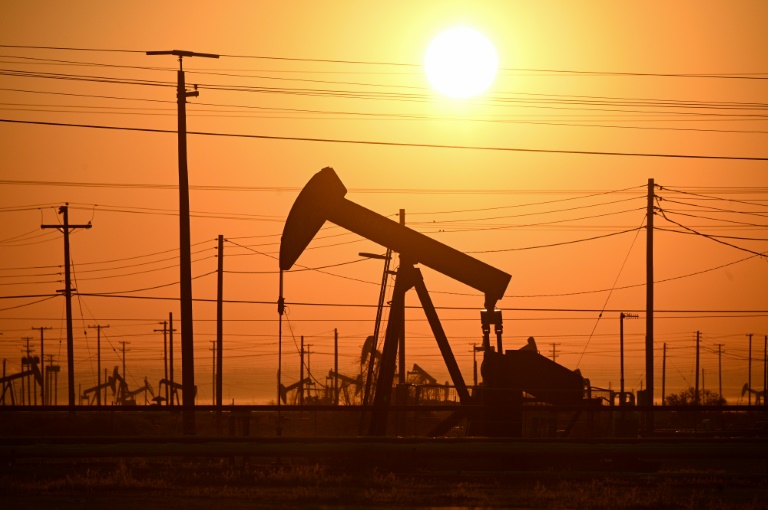
Oil prices leapt on reports that OPEC and its allies are considering a major output cut to stem a price plunge caused by demand worries.

But that stoked concerns about soaring inflation, which has been fueled this year by sky-high energy prices after key producer Russia’s invasion of Ukraine.

“Any cut will no doubt frustrate consuming countries that are on the verge of recession after spending a year dealing with soaring energy costs on the back of the post-pandemic recovery and war in Ukraine,” said OANDA analyst Craig Erlam.

Officials from the 13 members of the Organization of the Petroleum Exporting Countries (OPEC), led by Riyadh, and their 10 partners, led by Moscow, are due to meet physically on Wednesday for the first time since March 2020.

– Sterling gains on U-turn –

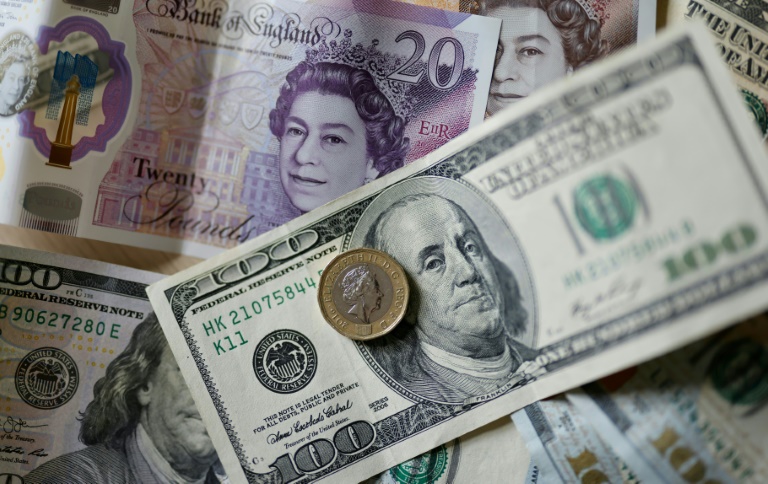
The British pound bounded above $1.13 following the latest US data, and after the UK government scrapped plans to axe its top income tax rate which helped send sterling spiraling to a record dollar low of $1.0350 a week ago.

Shares in Credit Suisse plunged to a new low in Zurich on Monday as the scandal-plagued lender sought to ease concerns about its financial health.

Its stock tumbled 11.6 percent to 3.58 Swiss francs ($3.61) before clawing back most of the ground, ending the day with a drop of 0.9 percent at 3.94 francs.

The Financial Times reported that senior executives sought over the weekend to reassure big clients and investors about the bank’s liquidity and capital position due to concerns raised about its financial strength.

Asian equities mainly fell Monday, with Hong Kong tumbling to its lowest point in more than a decade as fears for China’s economy deepens this year’s investor rout.

– Key figures around 2030 GMT –

New York – Dow: UP 2.7 percent at 29,490.89 (close)

New York – S&P 500: UP 2.6 percent at 3,678.43 (close)

New York – Nasdaq: UP 2.3 percent at 10,815.44 (close)

EURO STOXX 50: UP 0.7 percent at 3,342.17 (close)

London – FTSE 100: UP 0.2 percent at 6,908.76 (close) 

Frankfurt – DAX: UP 0.8 percent at 12,209.48 (close)

Paris – CAC 40: UP 0.6 percent at 5,794.15 (close)

Tokyo – Nikkei 225: UP 1.1 percent at 26,215.79 (close)

Hong Kong – Hang Seng Index: DOWN 0.8 percent at 17,079.51 (close)

Shanghai – Composite: Closed for a holiday

Pound/dollar: UP at $1.1315 from $1.1170 on Friday

Euro/dollar: UP at $0.9822 from $0.9802

Euro/pound: DOWN at 86.74 pence from 87.75 pence

Dollar/yen: DOWN at 144.66 yen from 144.74 yen

Brent North Sea crude: UP 4.4 percent at $88.86 per barrel

West Texas Intermediate: UP 5.2 percent at $82.63 per barrel

burs-rl/cdw/hs/des

Oil jumps but dollar bruised on US data

Oil prices jumped Monday on expectations of an OPEC output cut, while disappointing US data sent the dollar lower and stocks higher.

Investors have on edge over worries that rising interest rates, aimed at fighting sky-high inflation, could spark recessions.

With a key business survey flagging a slowing of the US economy, the dollar and US government bond yields moved lower as the US Federal Reserve may not need to raise interest rates as much as markets have feared to get a grip on inflation.

The Institute for Supply Management said its manufacturing index dropped 1.9 points to 50.9 percent, well below expectations and just barely above the 50-percent threshold indicating expansion.

That was the weakest pace in more than two years, and new orders fell by four percent.

Fed officials have indicated that the central bank will continue raising interest rates until inflation begins to drop, even if that means the US economy enters recession.

A slowdown means that a peak in interest rates may be close, and helped Wall Street stocks add to gains, with the Dow jumping 2.4 percent in late morning trade.

European stock indices moved higher following the US data, with Frankfurt’s DAX index ending the day 0.8 percent higher, the Paris CAC climbing 0.6 percent and London’s FTSE 100 adding 0.2 percent.

– Oil spikes before OPEC –

Oil prices leapt by more than five percent at one point as reports said OPEC and its allies are considering a major output cut to stem a price plunge caused by demand worries.

That stoked stubborn concerns about soaring inflation, which has been fuelled this year by sky-high energy prices after key producer Russia’s invasion of Ukraine.

“Any cut will no doubt frustrate consuming countries that are on the verge of recession after spending a year dealing with soaring energy costs on the back of the post-pandemic recovery and war in Ukraine,” said OANDA analyst Craig Erlam.

The 13 members of the Organization of the Petroleum Exporting Countries (OPEC), led by Riyadh, and their 10 partners led by Moscow will physically meet on Wednesday for the first time since March 2020.

– Sterling gains on U-turn –

The British pound bounded above $1.13 following the latest US data, and after the UK government scrapped plans to axe its top income tax rate in the wake of finance minister Kwasi Kwarteng’s debt-fuelled mini budget which helped send sterling spiralling to a record dollar low of $1.0350 one week ago.

UK gilts, or government bonds, remain supported by an emergency Bank of England intervention after yields had rocketed following the mini budget announcement.

– ‘Dicey’ sentiment –

Shares in Credit Suisse plunged to a new low in Zurich on Monday as the scandal-plagued lender sought to ease concerns about its financial health.

Its stock tumbled 11.6 percent to 3.58 Swiss francs ($3.61) before clawing back most of the ground, ending the day with a drop of 0.9 percent at 3.94 francs.

The Financial Times reported that senior executives sought over the weekend to reassure big clients and investors about the bank’s liquidity and capital position due to concerns raised about its financial strength.

“Sentiment is still pretty dicey and Credit Suisse is definitely weighing heavily today on European equities,” Markets.com analyst Neil Wilson told AFP.

“A globally systemic bank requiring to raise capital would be a major event and could certainly undermine confidence in the banking system.”

Asian equities mainly fell Monday, with Hong Kong tumbling to its lowest point in more than a decade as fears for China’s economy deepens this year’s investor rout.

– Key figures around 1530 GMT –

New York – Dow: UP 2.4 percent at 29,399.70 points

EURO STOXX 50: UP 0.7 percent at 3,342.17

London – FTSE 100: UP 0.2 percent at 6,908.76 (close) 

Frankfurt – DAX: UP 0.8 percent at 12,209.48 (close)

Paris – CAC 40: UP 0.6 percent at 5,794.15 (close)

Tokyo – Nikkei 225: UP 1.1 percent at 26,215.79 (close)

Hong Kong – Hang Seng Index: DOWN 0.8 percent at 17,079.51 (close)

Shanghai – Composite: Closed for a holiday

Pound/dollar: UP at $1.1301 from $1.1170 on Friday

Euro/dollar: UP at $0.9834 from $0.9802

Euro/pound: DOWN at 86.91 pence from 87.75 pence

Dollar/yen: DOWN at 144.32 yen from 144.74 yen

Brent North Sea crude: UP 3.8 percent at $88.41 per barrel

West Texas Intermediate: UP 4.3 percent at $82.88 per barrel

burs-rl/cdw

OPEC+ tipped to make big cut in oil output

Major oil-producing nations led by Saudi Arabia and Russia are expected to make this week their biggest output cut since the start of the Covid pandemic in efforts to buttress prices.

Energy prices soared after Russia invaded Ukraine earlier this year, pushing inflation to decades-high levels that have put pressure on economies across the world.

But crude prices have fallen in recent months on concerns over demand amid a slowdown in the global economy.

The 13 members of the Organization of the Petroleum Exporting Countries (OPEC), led by Riyadh, and their 10 allies headed by Moscow will hold on Wednesday their first in-person meeting at the group’s headquarters in Vienna since March 2020.

Collectively known as OPEC+, the alliance drastically slashed output by almost 10 million barrels per day in April 2020 to reverse a massive drop in crude prices caused by Covid lockdowns.

OPEC+ began to raise production last year after the market improved — output returned to pre-pandemic levels this year, but only on paper as some members struggled to meet their quotas.

The group agreed last month on a slight cut of 100,000 bpd from October, the first in more than a year.

– One million cut –

Analysts now expect — and financial media have reported — that OPEC+ will discuss taking one million bpd out of the market from November at Wednesday’s meeting.

“There’s been plenty of rumours about how the alliance will respond to the deteriorating economic outlook and lower prices,” said Craig Erlam, analyst at trading platform OANDA.

“A sizeable cut now looks on the cards, the question is whether it will be large enough to offset the demand destruction caused by the impending economic downturn,” he added.

After soaring close to $140 per barrel in the aftermath of Russia’s invasion of Ukraine, oil prices have dropped below the $90 mark.

According to the UBS bank, a cut of at least 500,000 bpd would be necessary to stop the price plunge.

In anticipation of Wednesday’s meeting, oil prices jumped on Monday, with Brent North Sea crude, the international benchmark, rising by almost five percent to reach $89.15 — still far from its March peak.

– Ignoring the West –

Stephen Brennock, an analyst with PVM Energy, said OPEC+ would “want to reassert its influence” when the group meets this week.

“After all, the producer group has lost control over the oil market in recent weeks,” he said.

It remains to be seen how the United States and other major oil consumers will react to any OPEC+ decision to slash output.

Consumer countries have pushed for OPEC+ to open taps more widely to bring down prices — calls which the group has largely ignored.

US President Joe Biden made a controversial trip to Saudi Arabia in July in part to convince the kingdom to loosen the production taps, meeting Crown Prince Mohammed bin Salman despite his promise to make Riyadh a “pariah” following the 2018 killing of journalist Jamal Khashoggi.

“OPEC will not be making any friends among Western leaders, especially petroleum importers whose economies and currencies are ravaged by higher oil prices due to a deterioration in the trade balance,” said Stephen Innes, an analyst with SPI Asset Management, ahead of Wednesday’s meeting.

Observers have cast doubt how much more OPEC+ could possibly be pumping with some of its members struggling to meet quotas.

Bjarne Schieldrop, chief commodities analyst at SEB research group, predicted it would be “very easy for the group to implement cuts given that most members are stretched to the limit of what they can produce”.

He said Saudi Arabia was currently producing 11 million barrels per day.

“It hasn’t maintained such a high production more than twice in history and then only for 1-2 months,” he said.

Oil jumps, European stocks wobble on Credit Suisse fears

Oil prices jumped Monday on expectations of an OPEC output cut, while European stocks wobbled on fears over the health of Swiss bank Credit Suisse. 

Investors are already on edge over worries that rising interest rates, aimed at fighting sky-high inflation, could spark recessions.

The British pound bounced above $1.12 after the UK government scrapped plans to axe its top income tax rate, after a debt-fuelled budget had sent sterling spiralling to a record dollar low one week ago.

– Oil spikes before OPEC –

Oil prices leapt by more than five percent as reports said OPEC and its allies are considering a major output cut to stem a price plunge caused by demand worries.

That stoked stubborn concerns about soaring inflation, which has been fuelled this year by sky-high energy prices after key producer Russia’s invasion of Ukraine.

“Any cut will no doubt frustrate consuming countries that are on the verge of recession after spending a year dealing with soaring energy costs on the back of the post-pandemic recovery and war in Ukraine,” said OANDA analyst Craig Erlam.

The 13 members of the Organization of the Petroleum Exporting Countries (OPEC), led by Riyadh, and their 10 partners led by Moscow will physically meet on Wednesday for the first time since March 2020.

– ‘Dicey’ sentiment –

Shares in Credit Suisse plunged to a new low in Zurich on Monday as the scandal-plagued lender sought to ease concerns about its financial health.

Its stock tumbled 11.60 percent to 3.58 Swiss francs ($3.61) before clawing back ground to 3.78 francs, down more than five percent.

The Financial Times reported that senior executives sought over the weekend to reassure big clients and investors about the bank’s liquidity and capital position due to concerns raised about its financial strength.

“Sentiment is still pretty dicey and Credit Suisse is definitely weighing heavily today on European equities,” Markets.com analyst Neil Wilson told AFP.

“A globally systemic bank requiring to raise capital would be a major event and could certainly undermine confidence in the banking system.”

AvaTrade analyst Naseem Aslam said that: “The sad reality is that if there is something wrong with Credit Suisse, then we have a major issue as this is a gigantic institute, and the domino effect will be unbearable.”

– Sterling gains on U-turn –

The pound rallied briefly after UK finance minister Kwasi Kwarteng made a major U-turn by scrapping a controversial plan to axe the top income tax rate.

The cut was part of a controversial mini-budget unveiled by Kwarteng 10 days ago, which had sent sterling spinning to a record low of $1.0350. 

UK gilts, or government bonds, remain supported by an emergency Bank of England intervention after yields had rocketed following the mini budget announcement.

Wall Street’s main stock indices opened higher, with the Dow climbing 1.2 percent.

Asian equities mainly fell Monday, with Hong Kong tumbling to its lowest point in more than a decade as fears for China’s economy deepens this year’s investor rout.

The Hang Seng Index shed 0.83 percent, or 143.32 points, to close at 17,079.51. 

But crucially it crossed below the 17,000 level in the afternoon, touching a nadir not seen since October 2011 and the aftermath of the global financial crash and during the eurozone debt crisis.

– Key figures around 1330 GMT –

London – FTSE 100: DOWN 0.2 percent at 6,880.56 points 

Frankfurt – DAX: UP 0.3 percent at 12,150.08

Paris – CAC 40: DOWN less than 0.1 percent at 5,757.95

EURO STOXX 50: DOWN 0.2 percent at 3,324.27

New York – Dow: UP 1.2 percent at 29,063.74

Tokyo – Nikkei 225: UP 1.1 percent at 26,215.79 (close)

Hong Kong – Hang Seng Index: DOWN 0.8 percent at 17,079.51 (close)

Shanghai – Composite: Closed for a holiday

Pound/dollar: UP at $1.11 from $1.1170 on Friday

Euro/dollar: DOWN at $0.9774 from $0.9802

Euro/pound: DOWN at 86.98 pence from 87.75 pence

Dollar/yen: UP at 144.87 yen from 144.74 yen

Brent North Sea crude: UP 5.1 percent at $89.50 per barrel

West Texas Intermediate: UP 5.9 percent at $84.68 per barrel

burs-rl/lth

OPEC+ tipped to make big cut in oil output

Major oil-producing nations led by Saudi Arabia and Russia are expected to make this week their biggest output cut since the start of the Covid pandemic in efforts to buttress prices.

Energy prices soared after Russia invaded Ukraine earlier this year, pushing inflation to decades-high levels that have put pressure on economies across the world.

But crude prices have fallen in recent months on concerns over demand amid a slowdown in the global economy.

The 13 members of the Organization of the Petroleum Exporting Countries (OPEC), led by Riyadh, and their 10 allies headed by Moscow will hold on Wednesday their first in-person meeting at the group’s headquarters in Vienna since March 2020.

Collectively known as OPEC+, the alliance drastically slashed output by almost 10 million barrels per day in April 2020 to reverse a massive drop in crude prices caused by Covid lockdowns.

OPEC+ began to raise production last year after the market improved — output returned to pre-pandemic levels this year, but only on paper as some members struggled to meet their quotas.

The group agreed last month on a slight cut of 100,000 bpd from October, the first in more than a year.

– One million cut –

Analysts now expect OPEC+ to decide to take one million bpd out of the market from November at Wednesday’s meeting.

“There’s been plenty of rumours about how the alliance will respond to the deteriorating economic outlook and lower prices,” said Craig Erlam, analyst at trading platform OANDA.

“A sizeable cut now looks on the cards, the question is whether it will be large enough to offset the demand destruction caused by the impending economic downturn,” he added.

After soaring close to $140 per barrel in the aftermath of Russia’s invasion of Ukraine, oil prices have dropped below the $90 mark.

According to the UBS bank, a cut of at least 500,000 bpd would be necessary to stop the price plunge.

In anticipation of Wednesday’s meeting, oil prices jumped more than four percent on Monday, with Brent North Sea crude, the international benchmark, reaching $88.55 — still far from its March peak.

– Ignoring the West –

Stephen Brennock, an analyst with PVM Energy, said OPEC+ would “want to reassert its influence” when the group meets this week.

“After all, the producer group has lost control over the oil market in recent weeks,” he said.

It remains to be seen how the United States and other major oil consumers will react to any OPEC+ decision to slash output.

Consumer countries have pushed for OPEC+ to open taps more widely to bring down prices — calls which the group has largely ignored.

US President Joe Biden made a controversial trip to Saudi Arabia in July in part to convince the kingdom to loosen the production taps, meeting Crown Prince Mohammed bin Salman despite his promise to make Riyadh a “pariah” following the 2018 killing of journalist Jamal Khashoggi.

“OPEC will not be making any friends among Western leaders, especially petroleum importers whose economies and currencies are ravaged by higher oil prices due to a deterioration in the trade balance,” said Stephen Innes, an analyst with SPI Asset Management, ahead of Wednesday’s meeting.

Observers have cast doubt how much more OPEC+ could possibly be pumping with some of its members struggling to meet quotas.

Bjarne Schieldrop, chief commodities analyst at SEB research group, predicted it would be “very easy for the group to implement cuts given that most members are stretched to the limit of what they can produce”.

He said Saudi Arabia was currently producing 11 million barrels per day.

“It hasn’t maintained such a high production more than twice in history and then only for 1-2 months,” he said.

Singapore proposes new law to tackle harmful online content

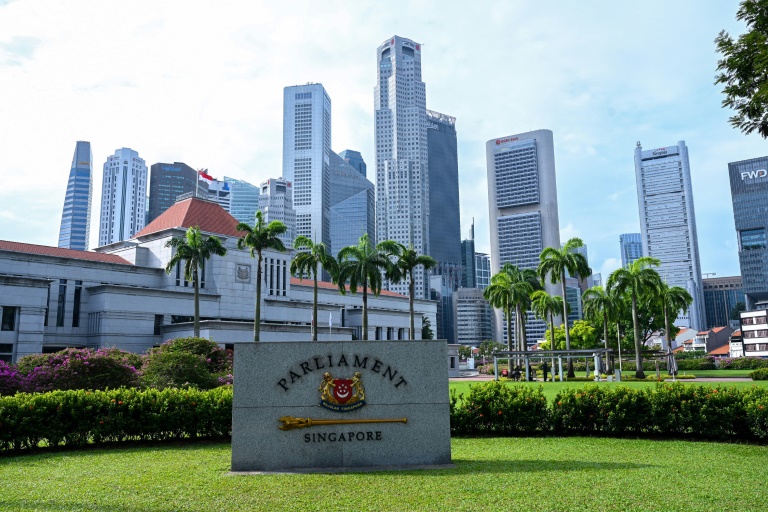
Social media sites could be blocked or fined in Singapore if they fail to stop users in the tightly-controlled country from accessing “harmful” content under a proposed law introduced in parliament on Monday.

Under the bill, regulators can order social media platforms to block “egregious content” including posts advocating violence and terrorism or depictions of child sexual exploitation.

Content that poses a public health risk or that is likely to cause racial and religious disharmony in Singapore is also included, the Ministry of Communications and Information said in a statement on Monday.

“While some online services have made efforts to address harmful content, the prevalence of harmful online content remains a concern, given the high level of digital penetration and pervasive usage of online services among Singapore users, including children”, the ministry said.

Regulators can also order platforms to block a specific account from being accessed by users in Singapore, but the orders will not apply to private communications.

Online communication services “with significant reach or impact in Singapore” may also be required to introduce measures to prevent Singapore users, particularly children, from accessing harmful content, the ministry said, without naming the platforms.

Parliament will debate the bill in November. If it is passed, it would give authorities another tool to control online content.

Singapore last year passed a contentious law aimed at preventing foreign interference in domestic politics. 

The law allows authorities to compel internet service providers and social media platforms to provide user information, block content and remove applications used to spread content they deem hostile.

Three years ago, the city-state passed a law combating “fake news”, which gives government ministers powers to order social media sites to put warnings next to posts authorities deem to be false, and in extreme cases get them taken down.

Europe stocks sink on Credit Suisse fears; oil jumps

European stocks sank Monday on fears over the health of Swiss bank Credit Suisse, while oil jumped on expectations of an OPEC output cut. 

Investors are already on edge over worries that rising interest rates, aimed at fighting sky-high inflation, could spark recessions.

The British pound bounced above $1.12 after the UK scrapped plans to axe its top income tax rate, after a debt-fuelled budget had sent sterling spiralling to a record dollar low one week ago.

– ‘Dicey’ sentiment –

“Sentiment is still pretty dicey and Credit Suisse is definitely weighing heavily today on European equities,” Markets.com analyst Neil Wilson told AFP.

“A globally systemic bank requiring to raise capital would be a major event and could certainly undermine confidence in the banking system.”

Shares in Credit Suisse plunged to a new low in Zurich on Monday as the scandal-plagued lender sought to ease concerns about its financial health.

Stocks tumbled almost 10 percent to 3.58 Swiss francs ($3.61) before clawing back ground to 3.65 francs, down more than eight percent.

The Financial Times reported that senior executives sought over the weekend to reassure big clients and investors about the bank’s liquidity and capital position due to concerns raised about its financial strength.

“The sad reality is that if there is something wrong with Credit Suisse, then we have a major issue as this is a gigantic institute, and the domino effect will be unbearable,” said AvaTrade analyst Naseem Aslam.

– Oil spikes before OPEC –

Oil briefly leapt by more than four percent as reports said OPEC and its allies are considering a major output cut to stem a price plunge caused by demand worries.

That stoked stubborn concerns about soaring inflation, which has been fuelled this year by sky-high energy prices after key producer Russia’s invasion of Ukraine.

“The rumours of a potential OPEC production cut won’t do anything to calm worries about inflation and a recession,” said IG analyst Chris Beauchamp.

The 13 members of the Organization of the Petroleum Exporting Countries (OPEC), led by Riyadh, and their 10 partners led by Moscow will physically meet on Wednesday for the first time since March 2020.

– Sterling gains on U-turn –

The pound rallied briefly after UK finance minister Kwasi Kwarteng made a major U-turn with the scrapping of a controversial plan to axe the top income tax rate.

The cut was part of a controversial mini-budget unveiled by Kwarteng 10 days ago, which had sent sterling spinning to a record low of $1.0350. 

UK gilts, or government bonds, remain supported by an emergency Bank of England intervention after yields rocketed following the debt-fuelled budget late last month.

Asian equities mainly fell Monday, with Hong Kong tumbling to its lowest point in more than a decade as fears for China’s economy deepens this year’s investor rout.

The Hang Seng Index shed 0.83 percent, or 143.32 points, to close at 17,079.51. 

But crucially it crossed below the 17,000 level in the afternoon, touching a nadir not seen since October 2011 and the aftermath of the global financial crash and during the eurozone debt crisis.

– Key figures around 1100 GMT –

London – FTSE 100: DOWN 0.6 percent at 6,851.58 points 

Frankfurt – DAX: DOWN 0.6 percent at 12,045.07

Paris – CAC 40: DOWN 0.9 percent at 5,711.45

EURO STOXX 50: DOWN 0.7 percent at 3,295.64

Tokyo – Nikkei 225: UP 1.1 percent at 26,215.79 (close)

Hong Kong – Hang Seng Index: DOWN 0.8 percent at 17,079.51 (close)

Shanghai – Composite: Closed for a holiday

New York – Dow: DOWN 1.7 percent at 28,725.51 (close)

Pound/dollar: UP at $1.1187 from $1.1170 on Friday

Euro/dollar: DOWN at $0.9775 from $0.9802

Euro/pound: DOWN at 87.35 pence from 87.75 pence

Dollar/yen: UP at 145.08 yen from 144.74 yen

Brent North Sea crude: UP 4.0 percent at $88.55 per barrel

West Texas Intermediate: UP 4.1 percent at $82.71 per barrel

burs/rfj/bcp/kjm

Markets drop as traders eye jobs and earnings, oil jumps

Stocks slipped on Monday as investors await key US jobs data while girding themselves for a corporate earnings season many fear will highlight the impact of surging inflation and interest rates.

A report showing prices rose in the eurozone at a record pace last month added to concerns that central bank tightening has a long way to go, while Federal Reserve vice-chair Lael Brainard said US officials would not pull back too early.

Banks’ battle against inflation could also be made harder — particularly in Europe — as reports said OPEC and other oil producers are considering a major output cut owing to a plunge in prices caused by demand worries. 

Crude prices jumped more than four percent in Asian trade ahead of the possible cut.

Sterling enjoyed a brief rally above $1.12 — having hit a record low $1.0350 last Monday — after UK finance minister Kwasi Kwarteng made a major U-turn by saying he had scrapped controversial plans to axe the top income tax rate.

The cut was part of a controversial mini-budget unveiled by Kwarteng last Monday, which sent markets spinning.

Kwarteng’s announcement came as the ruling Conservatives hold their annual conference with new Prime Minister Liz Truss facing growing anger within the party.

The pound briefly hit a high of $1.1281 before easing back again.

All three main indexes on Wall Street ended down Friday, registering a third straight quarter of losses for the first time since the global financial crisis in 2009.

The release of US jobs data on Friday will be closely watched, with a strong reading likely to give the Fed more ammunition to unveil a fourth successive bumper rate hike at its November meeting.

Asian equity markets fell at the start of the week.

Hong Kong fell, having at one point dropped below 17,000 for the first time since 2011, while Sydney, Mumbai, Bangkok, Singapore, Taipei, Jakarta and Wellington were also in the red.

Tokyo rose, however, even as the Bank of Japan’s Tankan survey showed confidence fell among the country’s largest manufacturers for the third straight quarter. Manila also rose.

London, Paris and Frankfurt all tumbled in the morning.

– Crude slide ‘likely over’ –

With inflation remaining elevated, there is little prospect that the pain will ease any time soon.

On Friday, Brainard said: “Monetary policy will need to be restrictive for some time to have confidence that inflation is moving back to target.

“For these reasons, we are committed to avoiding pulling back prematurely.”

The comments were in line with other Fed officials, who have indicated borrowing costs were unlikely to be lowered until late 2023 or 2024.

“Last week’s developments reinforced our expectation that we will see further tightening in financial conditions, but also illustrated the short-term two-way volatility, which will likely accompany it,” Citigroup’s Ebrahim Rahbari said.

At a time of rising real rates, volatility and the strong dollar “we therefore remain very bearish regarding the outlook for global risk assets”, he added.

Markets are now bracing for company earnings reports, with traders keeping a close eye on their forecasts in light of the uncertain rate environment.

Saxo Capital Markets analysts said in a note that there was a risk-off mood “as corporate earnings misses continue to raise the threat of an ugly earnings season ahead”.

Both the US benchmark West Texas Intermediate crude and Brent climbed more than four percent, as reports said major producers were discussing a million-barrel per day cut in output to support prices in the face of falling demand.

The reduction would be the biggest since the pandemic began, when crude prices collapsed, and would help staunch a plunge in the oil markets over recent months. 

But OANDA’s Edward Moya said: “The slide in oil prices is likely over.

“Energy traders turned pessimistic over the summer given global slowdown fears, but now it seems the risks for oil are to the upside.”

And Suvro Sarkar, an energy analyst at DBS Bank, added: “It’s only going to be a matter of time before oil returns to $100 a barrel, especially with supplies set to tighten toward the end of the year.”

– Key figures around 0810 GMT –

Tokyo – Nikkei 225: UP 1.1 percent at 26,215.79 (close)

Hong Kong – Hang Seng Index: DOWN 0.8 percent at 17,079.51 (close)

Shanghai – Composite: Closed for a holiday

London – FTSE 100: DOWN 0.9 percent at 6,832.70

Pound/dollar: UP at $1.1211 from $1.1156 on Friday

Euro/dollar: DOWN at $0.9811 from $0.9802

Euro/pound: DOWN at 87.51 pence from 87.82 pence

Dollar/yen: UP at 145.00 yen from 144.80 yen

West Texas Intermediate: UP 4.5 percent to $83.06 per barrel

Brent North Sea crude: UP 4.4 percent to $88.83 per barrel

New York – Dow: DOWN 1.7 percent at 28,725.51 (close)

— Bloomberg News contributed to this story —

Asian markets swing as traders eye US jobs, earnings

Stocks drifted in Asia on Monday as investors await key US jobs data, while girding themselves for a corporate earnings season many fear will highlight the impact of surging inflation and interest rates.

A report showing prices rose in the eurozone at a record pace last month added concerns that central bank tightening has a long way to go, while Federal Reserve vice chair Lael Brainard said US officials would not pull back too early.

Banks’ battle against inflation could also be made harder as OPEC and other oil producers consider a major output cut owing to a plunge in prices caused by demand worries. Crude prices jumped more than three percent in Asian trade ahead of the possible cut.

Traders are also keeping an eye on developments in Britain as the ruling Conservatives hold their annual conference a week after new finance minister Kwasi Kwarteng shocked markets with a massive borrowing-dependent, tax-cutting mini budget.

All three main indexes on Wall Street ended down again Friday, registering a third straight quarter of losses for the first time since the global financial crisis in 2009.

The release of US jobs data on Friday will be closely watched, with a strong reading likely to give the Fed more ammunition to unveil a fourth successive bumper rate hike at its November meeting.

Asian markets fluctuated at the start of the week.

Hong Kong dipped along with Sydney, Singapore, Taipei, Jakarta and Wellington.

Tokyo rose, however, even as the Bank of Japan’s Tankan survey showed confidence fell among the country’s largest manufacturers for the third straight quarter. Manila also rose.

With inflation remaining elevated, there is little prospect that the pain will ease any time soon.

On Friday, Brainard said: “Monetary policy will need to be restrictive for some time to have confidence that inflation is moving back to target.

“For these reasons, we are committed to avoiding pulling back prematurely.”

The comments were in line with other Fed officials, who have indicated borrowing costs were unlikely to be lowered until late 2023 or 2024.

“Last week’s developments reinforced our expectation that we will see further tightening in financial conditions, but also illustrated the short-term two-way volatility, which will likely accompany it,” Citigroup’s Ebrahim Rahbari said.

At a time of rising real rates, volatility and the strong dollar “we therefore remain very bearish regarding the outlook for global risk assets”, he added.

Markets are now bracing for company earnings reports, with traders keeping a close eye on their forecasts in light of the uncertain rate environment.

Saxo Capital Markets analysts said in a note that there was a risk-off mood “as corporate earnings misses continue to raise the threat of an ugly earnings season ahead”.

Both the US benchmark West Texas Intermediate crude and Brent climbed 3.3 percent, as major producers discussed a one million barrel per day cut in output to support prices in the face of falling demand.

The reduction would be the biggest since the pandemic began, when crude prices collapsed, and would help staunch a plunge in the oil markets over recent months. 

But OANDA’s Edward Moya said: “The slide in oil prices is likely over.

“Energy traders turned pessimistic over the summer given global slowdown fears, but now it seems the risks for oil are to the upside.”

And Suvro Sarkar, an energy analyst at DBS Bank, added: “It’s only going to be a matter of time before oil returns to $100 a barrel, especially with supplies set to tighten toward the end of the year,” he said.

– Key figures around 0320 GMT –

Tokyo – Nikkei 225: UP 0.7 percent at 26,111.54 (break)

Hong Kong – Hang Seng Index: DOWN 0.9 percent at 17,060.92 

Shanghai – Composite: Closed for a holiday

Pound/dollar: DOWN at $1.1128 from $1.1156 on Friday

Euro/dollar: UP at $0.9813 from $0.9802

Euro/pound: UP at 88.18 pence from 87.82 pence

Dollar/yen: UP at 144.81 yen from 144.80 yen

West Texas Intermediate: UP 3.3 percent to $82.12 per barrel

Brent North Sea crude: UP 3.3 percent to $87.94 per barrel

New York – Dow: DOWN 1.7 percent at 28,725.51 (close)

London – FTSE 100: UP 0.2 percent at 6,893.81 (close)  

— Bloomberg News contributed to this story —

Strong US dollar an unstoppable force endangering other currencies

The dazzling rise of the US dollar, which has hit one record after another, is raising fears of a currency crash of a severity not seen since the 1997 Asian financial crisis reverberated around the world. 

The Federal Reserve’s rapid, steep interest rate increases and the relative health of the US economy has caused investors to flood into the dollar, driving the greenback up and sending the British pound, Indian rupee, Egyptian pound and South Korean won and others to uncharted depths.

“The moves are definitely getting extreme,” said Brad Bechtel of Jefferies, warning that the exchange rates could fall further creating a “dire situation.”

Most other major central banks also are forcefully tightening monetary policy to bring down inflation, but so far the moves have not helped stabilized the currency market, nor has Japan’s direct intervention to support the yen last week. 

Many fear that the same will be the case with the Bank of England’s plan announced Wednesday to conduct emergency purchases of government bonds to support the pound. 

“We have our doubts that the BoE’s plan will be the silver bullet to kill all of the angst that has been pressuring the pound … considering its plan doesn’t have permanency,” said Patrick O’Hare of Briefing.com.

Others, especially emerging market countries, are even worse off. The Pakistani rupee has lost 29 percent of its value against the US dollar in the past year, and the Egyptian pound has weakened by 20 percent.

Those countries, and others like Sri Lanka and Bangladesh which “benefitted from cheap and plentiful liquidity,” when interest rates were low during the pandemic, “are all suffering from tighter global liquidity,” said Win Thin, head of currency strategy at BBH Investor Services. 

“Those countries with the weakest fundamentals are likely to be tested first but others may join them,” he warned.

Those countries rely on imported oil and grain which have seen prices soar, widening their trade deficits and fueling inflation, massive blows to their currencies. 

The appreciation of the US currency has exacerbated the problem, since many commodities are denominated in dollars. 

Already in a fragile position, Pakistan was hit with historic flooding in August, which prompted the government to discuss a restructuring of its debt.

“There are severe pressures on the financial system now. And it’s only a matter of time until there’s a larger crisis somewhere in the world,” warns Adam Button of ForexLive. 

– Bad memories –

US Treasury Secretary Janet Yellen earlier this week said she has not yet seen signs of “disorderly” financial market developments amid the interest rate hikes.

For countries like Taiwan, Thailand or South Korea, which also dependent on energy imports, China’s zero-Covid policy has caused their exports to this key trading partner to plummet. 

Larger economies like China and Japan have contributed in recent weeks to the turbulence on the foreign exchange market. The Japanese yen plunged its lowest level in 24 years, while the Chinese yuan hit its weakest in 14 years.

Fear of destabilization brings back memories of the 1997 Asian financial crisis, which was triggered by the devaluation of the Thai baht. 

Malaysia, the Philippines and Indonesia followed, which panicked foreign investors and led to massive outflows of capital, pushing several countries into a severe recession and South Korea to the brink of default. 

At the time, the collapse of the baht was in part linked to its fixed parity with the dollar, which forced the Thai government to support its currency, depleting its foreign exchange reserves, which was unsustainable in the face of market forces.

Argentina eventually was forced to abandon its peg to the dollar and defaulted in late 2001 — the largest sovereign default in history.

Erik Nelson of Wells Fargo said that is a key difference between 2022 and 1997. 

“Now there’s not a lot of fixed exchange rates,” he said. “I’m frankly more worried about developed markets right now.”

Lebanon, one of the few to still peg its currency to the greenback, on Thursday announced a drastic devaluation, taking the country’s pound to 15,000 to the dollar from the previous fixed value of 1,507. 

In the United States, by contrast, where inflation has soared to a 40-year high “the Fed sees strong dollar as a blessing,” said Christopher Vecchio of DailyFX, noting that it helps “insulate the economy from more significant price pressures.”‘

A strong currency means the country pays less for its imported products. 

Close Bitnami banner
Bitnami