Chinese Business

Strong US dollar an unstoppable force endangering other currencies

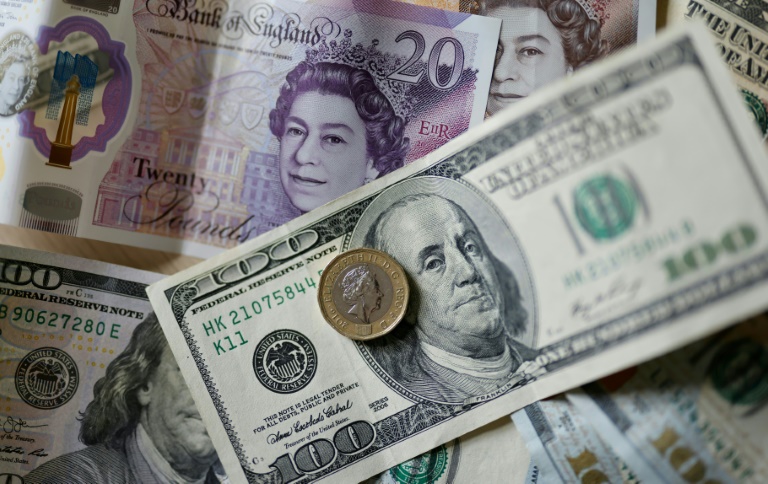
The dazzling rise of the US dollar, which has hit one record after another, is raising fears of a currency crash of a severity not seen since the 1997 Asian financial crisis reverberated around the world. 

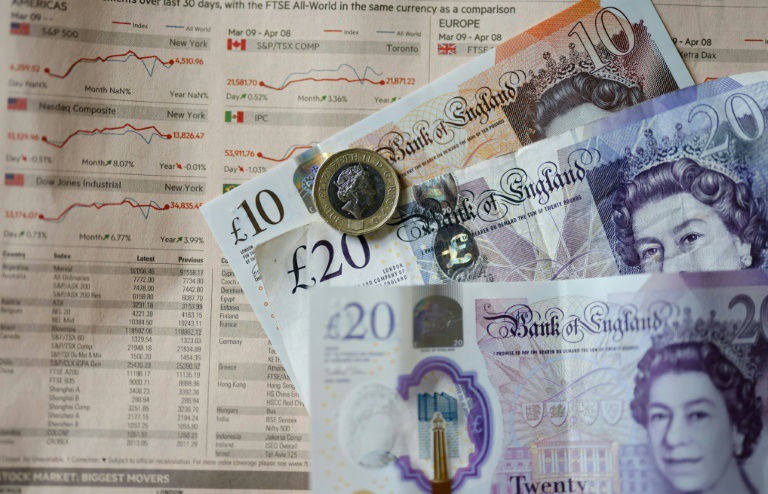
The Federal Reserve’s rapid, steep interest rate increases and the relative health of the US economy has caused investors to flood into the dollar, driving the greenback up and sending the British pound, Indian rupee, Egyptian pound and South Korean won and others to uncharted depths.

“The moves are definitely getting extreme,” said Brad Bechtel of Jefferies, warning that the exchange rates could fall further creating a “dire situation.”

Most other major central banks also are forcefully tightening monetary policy to bring down inflation, but so far the moves have not helped stabilized the currency market, nor has Japan’s direct intervention to support the yen last week. 

Many fear that the same will be the case with the Bank of England’s plan announced Wednesday to conduct emergency purchases of government bonds to support the pound. 

“We have our doubts that the BoE’s plan will be the silver bullet to kill all of the angst that has been pressuring the pound … considering its plan doesn’t have permanency,” said Patrick O’Hare of Briefing.com.

Others, especially emerging market countries, are even worse off. The Pakistani rupee has lost 29 percent of its value against the US dollar in the past year, and the Egyptian pound has weakened by 20 percent.

Those countries, and others like Sri Lanka and Bangladesh which “benefitted from cheap and plentiful liquidity,” when interest rates were low during the pandemic, “are all suffering from tighter global liquidity,” said Win Thin, head of currency strategy at BBH Investor Services. 

“Those countries with the weakest fundamentals are likely to be tested first but others may join them,” he warned.

Those countries rely on imported oil and grain which have seen prices soar, widening their trade deficits and fueling inflation, massive blows to their currencies. 

The appreciation of the US currency has exacerbated the problem, since many commodities are denominated in dollars. 

Already in a fragile position, Pakistan was hit with historic flooding in August, which prompted the government to discuss a restructuring of its debt.

“There are severe pressures on the financial system now. And it’s only a matter of time until there’s a larger crisis somewhere in the world,” warns Adam Button of ForexLive. 

– Bad memories –

US Treasury Secretary Janet Yellen earlier this week said she has not yet seen signs of “disorderly” financial market developments amid the interest rate hikes.

For countries like Taiwan, Thailand or South Korea, which also dependent on energy imports, China’s zero-Covid policy has caused their exports to this key trading partner to plummet. 

Larger economies like China and Japan have contributed in recent weeks to the turbulence on the foreign exchange market. The Japanese yen plunged its lowest level in 24 years, while the Chinese yuan hit its weakest in 14 years.

Fear of destabilization brings back memories of the 1997 Asian financial crisis, which was triggered by the devaluation of the Thai baht. 

Malaysia, the Philippines and Indonesia followed, which panicked foreign investors and led to massive outflows of capital, pushing several countries into a severe recession and South Korea to the brink of default. 

At the time, the collapse of the baht was in part linked to its fixed parity with the dollar, which forced the Thai government to support its currency, depleting its foreign exchange reserves, which was unsustainable in the face of market forces.

Argentina eventually was forced to abandon its peg to the dollar and defaulted in late 2001 — the largest sovereign default in history.

Erik Nielsen of Wells Fargo said that is a key difference between 2022 and 1997. 

“Now there’s not a lot of fixed exchange rates,” he said. “I’m frankly more worried about developed markets right now.”

Lebanon, one of the few to still peg its currency to the greenback, on Thursday announced a drastic devaluation, taking the country’s pound to 15,000 to the dollar from the previous fixed value of 1,507. 

In the United States, by contrast, where inflation has soared to a 40-year high “the Fed sees strong dollar as a blessing,” said Christopher Vecchio of DailyFX, noting that it helps “insulate the economy from more significant price pressures.”‘

A strong currency means the country pays less for its imported products. 
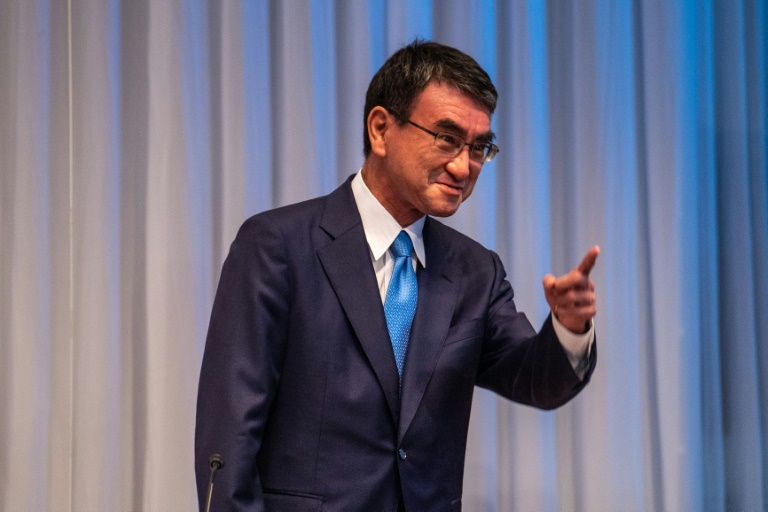
Japan's digital minister says he's ready for a fight

Japan’s media-savvy digital minister said Friday he’s ready to take an iron-fisted approach to speed up the nation’s slow embrace of online services at government offices and workplaces.

Taro Kono — a political heavyweight who has been minister of defence, foreign affairs and Covid vaccines — has already declared war on fax machines, floppy disks and other obsolete technologies that are still common in the world’s third-largest economy.

“I have no plan to be a coordinator. If there are people who have a problem with it, I will beat them up,” he quipped in an online interview with a small group of journalists.

“The pandemic forced everyone to acknowledge that Japan’s digitalisation has been slow,” added Kono.

“It has become crystal clear, compared with other countries, how difficult it is to do business and to conduct daily affairs.”

Japan is often internationally considered a byword for high-tech, but fax machines are still routinely used by businesses and households along with email and texting apps.

Floppy disks and CD-ROMs are less visible to consumers, but some official documents are legally required to be stored in these outdated formats.

“Throughout Covid, we have seen so many countries move their government procedures onto digital platforms,” Kono said. 

“At the same time, we are not there yet.”

He blamed a culture that does not necessarily encourage people to suggest change in the workplace, which he said results in people pretending not to notice problems.

“People are so quick to make changes if something is not convenient at home. But once you step out of your house, everything becomes someone else’s problem,” Kono said. 

“We must build a society where people take actions and suggest improvements to better society.

Kono, who has also sought to phase out the personal ink signature stamps known as hanko, said he was optimistic society would embrace the convenience of digitalisation. 

“If people feel their lives are getting better, more convenient, easier, I think that means the digital agency is successful,” he said.

“How do you measure that? If you see people have more smiles on their face.” 

Indonesia approves first homegrown Covid-19 vaccine

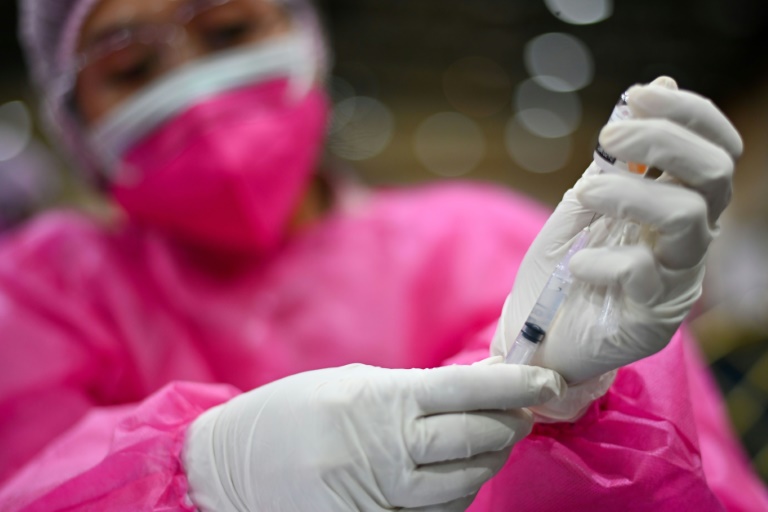
Indonesia has approved its first locally developed Covid-19 vaccine for emergency use, the head of the country’s public health agency said Friday, hailing it as a step toward “the nation’s independence in access to medicine”.

Jakarta has stressed the importance of developing national vaccines since the beginning of the pandemic but it currently relies on China’s Sinovac and the Western-made Moderna and Pfizer-BioNTech mRNA jabs.  

The IndoVac jab, developed by state-owned pharmaceutical company Bio Farma and Texas-based Baylor College of Medicine, can now be used as a primary dose for an unvaccinated or partially vaccinated adult in the world’s fourth most-populous country.

“The development… of a domestic vaccine is a pride for us Indonesians as a foundation and as the first step to achieve the nation’s independence in access to medicine,” head of the national food and drugs agency (BPOM) Penny Lukito said at a press conference Friday.

The medical chief said IndoVac had shown an efficacy rate of 92 percent, while there were no reports of death linked to it in trials and reported side effects were “generally mild”. 

A clinical study to use it as a booster jab is underway, Lukito said.

The agency also announced it had granted emergency use approval for an mRNA vaccine developed in China, becoming the first country to do so. 

The inoculation developed by Walvax Biotechnology will be locally produced in Indonesia, the BPOM chief said.

The homegrown IndoVac jab has been granted a halal certificate, meaning it can be administered in line with the Islamic faith in Muslim-majority Indonesia.

Indonesia became the epicentre of Asia’s Covid-19 pandemic in July last year as the Delta variant swept through the country. 

Daily cases declined significantly by the end of the year but the spread of Omicron brought confirmed cases back to 30,000 a day. 

It has since seen another sharp fall in case numbers and eliminated quarantine requirements for vaccinated travellers.

In total, Southeast Asia’s largest economy has reported over 6.4 million confirmed cases with nearly 160,000 deaths. 

Vaccination rollout has also been relatively slow compared to developed nations, with less than two-thirds of the population of 270 million receiving two jabs.

China dips into pork reserves as rising prices fan inflation fear

China released more pork reserves Friday, state media said, after prices of the staple meat soared by almost a third, triggering inflation concerns.

Beijing’s top economic planner has already dipped into the state reserves three times this month and has ordered suppliers to slaughter more pigs in a bid to rein in costs.

But prices have continued to rise and a possible spike in demand over the week-long national day holiday in early October, has forced officials to respond. 

“China will release more pork from government reserves to the market on Friday to maintain supply and price stability,” official People’s Daily reported.

Pork is the most commonly consumed meat in China, with the average person in the country eating more than 25 kilogrammes per year, according to OECD data.

“From September 19-23, the weekly average retail price of lean meat in 36 large and medium-sized cities increased by 30 percent compared with the same period last year,” the National Development and Reform Commission said in a statement Tuesday.

Pork prices in the country have continued to rise since mid-March, despite government intervention, hitting 31.17 yuan ($4.40) a kilo last week.

China’s consumer inflation reached a two-year high of 2.7 percent in July — largely because of surging pork costs — before cooling slightly to 2.5 percent in August as Covid-related restrictions dampened overall demand, official data showed.

The Chinese government keeps massive stores of frozen pork in warehouses, occasionally releasing reserves to stabilise prices, especially during periods of peak demand including Lunar New Year.

Beijing’s central economic planner pledged more investment in the central pork reserves and to “further increase the distribution if necessary”.

“The domestic production capacity of live pigs is generally reasonable and sufficient, and the number of breeding sows, newborn piglets, and fattening pigs are all on the rise,” it added.

The world’s second-largest economy has mostly been spared the impact of a global surge in food prices caused by Russia’s war in Ukraine.

But pork prices were hit hard after the country’s herds were devastated by African swine fever in recent years, causing consumer inflation to spike.

In 2019, authorities said they would free up land to restore production to pre-swine fever levels, and officials have since released supplies from stockpiles to rein in costs.

Japan plans more stimulus to tackle inflation, low yen

Japan is preparing another round of economic stimulus measures, the government said Friday, as rising prices and the plummeting yen squeeze the world’s third-largest economy.

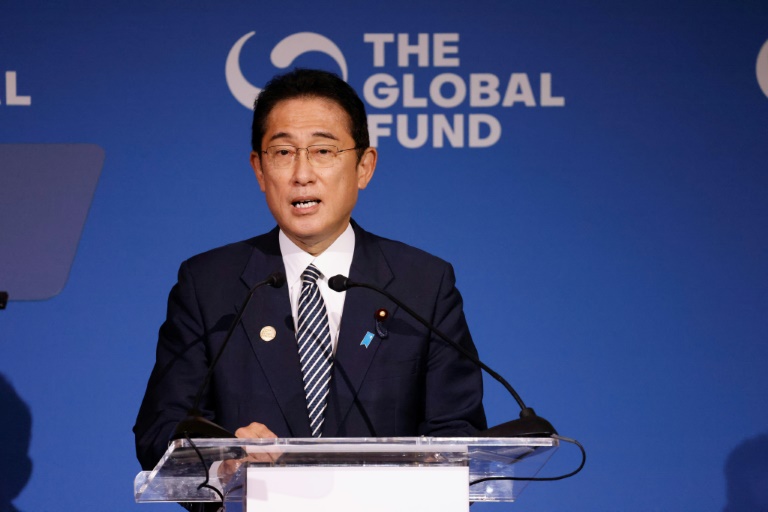
Prime Minister Fumio Kishida told ministers to draft the relief package by the end of October so it can be passed by parliament this year, government spokesman Hirokazu Matsuno told reporters.

He did not give a figure for the measures, but said they would include “efforts to deal with rising prices and to encourage wage increases”.

Ministers have also been told to seek “ways to recover and strengthen regional economies’ abilities to do business by taking advantage of the yen’s depreciation”, Matsuno added.

The yen has hit 24-year lows in recent weeks, prompting an intervention by the government last week.

The slumping currency inflates profits for Japanese exporters but also ramps up the price of imported goods for consumers already facing higher prices, including for energy, partly because of the war in Ukraine.

Matsuno said increased electricity bills had become “a significant burden” for both households and business.

Over the past two years, Japan has injected hundreds of billions of dollars into the economy as part of stimulus measures to support its recovery from the Covid-19 pandemic.

Japan already has one of the highest debt-to-GDP ratios in the world.

Kishida said on Thursday that his government would take “bold” measures to tackle inflation and the falling yen, as “the rapid rise of energy and food prices is directly hitting households”.

On Friday, one dollar bought 144.60 yen, compared with around 115 in March.

The currency’s plunge has mainly been caused by the Bank of Japan’s refusal to move away from its long-standing ultra-loose monetary policies, in contrast to tightening by central banks in the United States and elsewhere.

European and US stocks tumble, pound rebounds

European and US equities sank Thursday on fears that rising interest rates will spark a global recession, while the pound clawed back ground one day after emergency bond-market intervention from the Bank of England.

“Higher US Treasury yields, inflation and rising recession fears are back in the driving seat,” said market analyst Fiona Cincotta at City Index.

German inflation accelerated sharply in September, official data showed Thursday, in the latest indication that Europe’s biggest economy is buckling under the pressure of soaring energy prices.

Consumer prices spiked 10 percent compared to the same month a year earlier.

German Chancellor Olaf Scholz announced that the nation would plough 200 billion euros into shielding households and businesses from skyrocketing energy costs in the wake of Russia’s invasion of Ukraine.

However, Frankfurt stocks slumped 1.7 percent, while Paris fell 1.5 percent.

London equities dropped 1.8 percent, as the pound rebounded somewhat from earlier falls, one day after the BoE snapped up UK bonds to avert a risk to British financial stability.

“The BoE rode to the rescue of the markets for one day, and the overall impact has been limited,” said Cincotta, though the pound bounced more than one percent higher to climb above $1.10.

The BoE, the European Central Bank, the US Federal Reserve and many other counterparts are ratcheting up interest rates to fight decades-high inflation.

Wall Street’s main stock indices slumped as US treasury yields continued to rise, and with the latest data showing a drop in first-time unemployment benefit claims falling under 200,000 for the first time since May.

The reading will be used by the Fed “as a basis to maintain an aggressive line with its rate hikes” because the bank sees a softening of the labor market as necessary to bring inflation back down to its two-percent target, said Patrick O’Hare, analyst at Briefing.com.

The broad-based S&P 500 dropped 2.1 percent to 3,640.47, its lowest close since November 2020.

– ‘Pessimistic’ investors –

“There’s a growing list of reasons why investors are pessimistic right now, with the prospect of an interest-rate recession being right up there,” Craig Erlam, analyst at trading platform OANDA, told AFP.

“But we are increasingly seeing pressures mounting and forcing responses from policymakers that are not normal. That started out as super-sized rate hikes, and now includes Japanese foreign-exchange interventions and the BoE intervening in bond markets.”

Stocks had also rallied Wednesday partly after the BoE’s surprise purchase, which came after Britain’s recent tax-cutting budget sparked soaring bond yields and sent the pound to a record dollar low on Monday. 

The BoE launched a two-week program to buy long-term UK bonds, capped initially at £65 billion ($71 billion), as UK pension funds scrambled to sell investments to remain solvent.

While the UK government’s 30-year sovereign bond yield retreated further to 3.97 percent, having briefly surged Wednesday to a 1998 peak at 5.14 percent, the yield on 10-year bonds began to march higher.

Meanwhile, sentiment was also dented this week by leaks from the undersea Nord Stream pipelines running from Russia to Europe.

That sparked accusations of sabotage amid strained relations between the West and sanctions-hit Russia over the latter’s war on Ukraine.

– Key figures around 2050 GMT –

New York – Dow: DOWN 1.5 percent at 29,225.61 (close)

New York – S&P 500: DOWN 2.1 percent at 3,640.47 (close)

New York – Nasdaq: DOWN 2.8 percent at 10,737.51 (close)

London – FTSE 100: DOWN 1.8 percent at 6,881.59 (close) 

Frankfurt – DAX: DOWN 1.7 percent at 11,975.55 (close) 

Paris – CAC 40: DOWN 1.5 percent at 5,676.87 (close)

EURO STOXX 50: DOWN 1.7 percent at 3,279.04 (close)

Tokyo – Nikkei 225: UP 1.0 percent at 26,422.05 (close)

Hong Kong – Hang Seng Index: DOWN 0.5 percent at 17,165.87

Shanghai – Composite: DOWN 0.1 percent at 3,041.20 (close)

Pound/dollar: UP at $1.1116 from $1.0689 on Wednesday

Euro/dollar: UP at $0.9818 from $0.9735

Euro/pound: DOWN at 88.28 pence from 89.40 pence

Dollar/yen: UP at 144.42 yen from 144.16 yen

Brent North Sea crude: DOWN 0.9 percent at $88.49 per barrel

West Texas Intermediate: DOWN 1.1 percent at $81.23 per barrel

burs-jmb/sw

European and US stocks tumble, pound rebounds

European and US equities sank Thursday on fears that rising interest rates will spark a global recession, while the pound clawed back ground one day after emergency bond-market intervention from the Bank of England.

“Higher US treasury yields, inflation and rising recession fears are back in the driving seat,” said market analyst Fiona Cincotta at City Index.

German inflation accelerated sharply in September, official data showed Thursday in the latest indication that Europe’s biggest economy is buckling under the pressure from soaring energy prices.

Consumer prices spiked 10.0 percent compared to the same month a year earlier.

German Chancellor Olaf Scholz announced that the nation would plough 200 billion euros into shielding households and businesses from skyrocketing energy costs in the wake of Russia’s invasion of Ukraine.

However, Frankfurt stocks slumped 1.7 percent, while Paris fell 1.5 percent.

London equities dropped 1.8 percent as the pound rebounded somewhat from earlier falls, one day after the BoE snapped up UK bonds to avert a risk to UK financial stability.

“The BoE rode to the rescue of the markets for one day, and the overall impact has been limited,” said Cincotta, although the pound bounced more than one percent higher to climb above $1.10.

The BoE, the European Central Bank, the US Federal Reserve and many other counterparts are ratcheting up interest rates to fight decades-high inflation.

Wall Street’s main stock indices slumped as US treasury yields continued to rise, and with the latest data showing a drop in first-time unemployment benefit claims falling under 200,000 for the first time since May.

The reading will be used by the Fed “as a basis to maintain an aggressive line with its rate hikes” because the bank sees a softening of the labour market as necessary to bring inflation back down to its two-percent target, said Patrick O’Hare, analyst at Briefing.com.

The Dow was down 1.6 percent in late morning trading, while the broader S&P 500 fell 2.1 percent, and the tech-heavy Nasdaq Composite tumbled 2.9 percent.

– ‘Pessimistic’ investors –

“There’s a growing list of reasons why investors are pessimistic right now, with the prospect of an interest-rate recession being right up there,” Craig Erlam, analyst at trading platform OANDA, told AFP.

“But we are increasingly seeing pressures mounting and forcing responses from policymakers that are not normal. That started out as super-sized rate hikes, and now includes Japanese foreign-exchange interventions and the BoE intervening in bond markets.”

Stocks had also rallied Wednesday partly after the BoE’s surprise purchase, which came after Britain’s recent tax-cutting budget sparked soaring bond yields and sent the pound to a record dollar low on Monday. 

The BoE launched a two-week programme to buy long-term UK bonds, capped initially at £65 billion ($71 billion), as UK pension funds scrambled to sell investments to remain solvent.

While the UK government’s 30-year sovereign bond yield retreated further to 3.97 percent, having briefly surged Wednesday to a 1998 peak at 5.14 percent, the yield on 10-year bonds began to march higher.

Meanwhile, sentiment was also dented this week by leaks from the undersea Nord Stream pipelines running from Russia to Europe.

That sparked accusations of sabotage amid strained relations between the West and sanctions-hit Russia over the latter’s war on Ukraine.

– Key figures around 1530 GMT –

New York – Dow: DOWN 1.6 percent at 29,217.11 points

EURO STOXX 50: DOWN 1.7 percent at 3,279.04

London – FTSE 100: DOWN 1.8 percent at 6,881.59 (close) 

Frankfurt – DAX: DOWN 1.7 percent at 11,975.55 (close) 

Paris – CAC 40: DOWN 1.5 percent at 5,676.87 (close)

Tokyo – Nikkei 225: UP 1.0 percent at 26,422.05 (close)

Hong Kong – Hang Seng Index: DOWN 0.5 percent at 17,165.87

Shanghai – Composite: DOWN 0.1 percent at 3,041.20 (close)

Pound/dollar: UP at $1.1024 from $1.0689 on Wednesday

Euro/dollar: DOWN at $0.9777 from $0.9735

Euro/pound: UP at 88.65 pence from 89.40 pence

Dollar/yen: UP at 144.51 yen from 144.16 yen

Brent North Sea crude: DOWN 0.2 percent at $89.13 per barrel

West Texas Intermediate: UP 0.1 percent at $82.24 per barrel

burs-rl/jmm

European stocks drop, pound recovers

European equities sank Thursday on fears that rising interest rates will spark a global recession, while the pound clawed back ground one day after emergency bond-market intervention from the Bank of England.

German inflation accelerated sharply in September, official data showed Thursday in the latest indication that Europe’s biggest economy is buckling under the pressure from soaring energy prices.

Consumer prices spiked 10.0 percent compared to the same month a year earlier.

German Chancellor Olaf Scholz announced that the nation would plough 200 billion euros ($194 billion) into shielding households and businesses from skyrocketing energy costs in the wake of Russia’s invasion of Ukraine.

However, Frankfurt stocks accelerated losses to shed 1.6 percent in value, while Paris showed a similar drop.

London equities fell as the pound rebounded somewhat from earlier falls, one day after the BoE snapped up UK bonds to avert a risk to UK financial stability.

The BoE, the European Central Bank, the US Federal Reserve and many other counterparts are ratcheting up interest rates to fight decades-high inflation.

Oil prices dropped on the strong dollar, which makes US-priced commodities more expensive for buyers using weaker units.

– ‘Pessimistic’ investors –

“There’s a growing list of reasons why investors are pessimistic right now, with the prospect of an interest-rate recession being right up there,” Craig Erlam, analyst at trading platform OANDA, told AFP.

“But we are increasingly seeing pressures mounting and forcing responses from policymakers that are not normal. That started out as super-sized rate hikes, and now includes Japanese foreign-exchange interventions and the BoE intervening in bond markets.”

Stocks had also rallied Wednesday partly after the BoE’s surprise purchase, which came after Britain’s recent tax-cutting budget sparked soaring bond yields and sent the pound to a record dollar low on Monday. 

The BoE launched a two-week programme to buy long-term UK bonds, capped initially at £65 billion ($71 billion), as UK pension funds scrambled to sell investments to remain solvent.

Despite falling equities, the UK bond market was further soothed on Thursday.

The UK government’s 30-year sovereign bond yield retreated further to 3.97 percent, having briefly surged Wednesday to a 1998 peak at 5.14 percent.

Meanwhile, sentiment was also dented this week by leaks from the undersea Nord Stream pipelines running from Russia to Europe.

That sparked accusations of sabotage amid strained relations between the West and sanctions-hit Russia over the latter’s war on Ukraine.

– Key figures at around 1210 GMT –

London – FTSE 100: DOWN 1.2 percent at 6,922.60 points 

Frankfurt – DAX: DOWN 1.6 percent at 11,985.83

Paris – CAC 40: DOWN 1.4 percent at 5,683.07

EURO STOXX 50: DOWN 1.5 percent at 3,284.01

Tokyo – Nikkei 225: UP 1.0 percent at 26,422.05 (close)

Hong Kong – Hang Seng Index: DOWN 0.5 percent at 17,165.87

Shanghai – Composite: DOWN 0.1 percent at 3,041.20 (close)

New York – Dow: UP 1.9 percent at 29,683.74 (close)

Pound/dollar: UP at $1.0844 from $1.0689 on Wednesday

Euro/dollar: DOWN at $0.9710 from $0.9735

Euro/pound: UP at 89.53 pence from 89.40 pence

Dollar/yen: UP at 144.70 yen from 144.16 yen

Brent North Sea crude: UP 0.1 percent at $89.37 per barrel

West Texas Intermediate: UP 0.2 percent at $82.28 per barrel

burs-rfj/lth

Sterling, markets drop again as BoE boost wears off

The pound and European equities fell Thursday after the previous day’s bank of England-fuelled rally, with investors growing increasingly worried about the UK economy as Prime Minister Liz Truss backed the controversial mini-budget that sparked turmoil across global markets.

The central bank sparked a surge across risk assets Wednesday following the announcement of a two-week programme to spend £65 billion ($71 billion) buying long-dated UK bonds “to restore orderly market conditions”.

The move came after new finance minister Kwasi Kwarteng unveiled a tax-cutting mini-budget Friday that many experts, including the International Monetary Fund, warned would fan borrowing and deal a further blow to the already fragile economy.

Kwarteng’s plan sent yields on UK government bonds, as well as those of other countries, soaring and raised the prospect of even bigger interest rate hikes.

The BoE move provided a massive shot in the arm for investors, pushing yields down, and sterling and stock markets up. Analysts said the decision provided some hope that central banks were ready to step in with support if things got too bad.

However, the impact was short lived as traders continue to worry about the long-term effect on the UK economy from the budget.

“The Bank moved to stop contagion, but stress remains and it remains the case that it must tighten policy faster to offset the effects of the budget,” said Markets.com analyst Neil Wilson.

The new round of easing also knocked the BoE’s plan to fight inflation off course as it had to suspend a programme to sell “gilts”, which had helped lift borrowing costs.

The pound fell back below $1.0800 Thursday, having spiked at $1.0900 earlier, while the FTSE 100 plunged more than two percent. Paris and Frankfurt were not far behind as data showed German inflation had hit 8.8 percent. Still, in some bright news, Spain said price rises slowed to below 10 percent this month.

That came after most Asian markets enjoyed a rare day of gains.

Truss appeared to push back against calls for her to perform a U-turn.

“We’re facing very, very difficult economic times, we’re facing that on a global level,” she said Thursday in interviews with local BBC radio stations.

“We had to take urgent action to get our economy growing and that means taking controversial and difficult decisions,” she said in her first comments since the storm erupted.

OANDA’s Edward Moya warned of more rough seas for sterling.

“The British pound went on a little roller coaster ride following the BoE action to buy unlimited long-dated gilts, but will still probably remain heavy over the country’s fiscal situation, current account deficit, financial stability risks, and energy poverty likelihood for parts of the population,” he said in a note.

And MUFG analyst Lee Hardman said the BoE move “has certainly upped the level of concern over the potential negative economic and financial market fallout from the loss of confidence in UK’s public finances”.

The general mood on trading floors remains dark as the Fed and other central banks zero in on hiking borrowing costs to fight decades-high inflation.

“All eyes are on inflation and interest rates,” said Josh Emanuel at Wilshire. “Equities are really going to take their cues from bond markets. So if you see bond yields move lower, that is a good sign for equities.”

Julia Raiskin at Citi added that “markets are very pessimistic… Other than the dollar, there are not many assets that are trading constructively.”

– Key figures at around 0720 GMT –

London – FTSE 100: DOWN 2.2 percent at 6,852.06

Pound/dollar: DOWN at $1.0782 from $1.0889 on Wednesday

Euro/dollar: DOWN at $0.9653 from $0.9735

Euro/pound: UP at 89.56 from 89.39 pence 

Dollar/yen: UP at 144.73 yen from 144.11 yen

Tokyo – Nikkei 225: UP 1.0 percent at 26,422.05 (close)

Hong Kong – Hang Seng Index: DOWN 0.5 percent at 17,165.87

Shanghai – Composite: DOWN 0.1 percent at 3,041.20 (close)

West Texas Intermediate: DOWN 0.7 percent at $81.57 per barrel

Brent North Sea crude: DOWN 0.7 percent at $88.68 per barrel

New York – Dow: UP 1.9 percent at 29,683.74 (close)

Hong Kong confirms November banking summit after ending quarantine

Hong Kong confirmed Thursday it will host an international banking summit in early November, days after it lifted mandatory quarantine rules for arrivals that have battered the city’s reputation as a business hub.

The city has had a difficult three years, with a sweeping crackdown on political freedoms and the imposition of some of the world’s strictest coronavirus pandemic controls, which have kept the city isolated even as competitors reopen.

The banking summit on November 2 is expected to draw 200 participants, including the group chairmen or Chief Executive Officers of 30 major financial institutions, according to the Hong Kong Monetary Authority (HKMA).

HKMA Chief Executive Eddie Yue wrote in a blog post that the event would allow guests to “meet their staff and clients in person, and establish new relationships”. 

“For most of them this will only be a short visit and we need to make sure they can meet people, do business and build relationships in the kind of business-as-usual way they expect from a vibrant international city,” Yue added.

The gathering will include panel talks featuring the CEOs of Goldman Sachs, Morgan Stanley and Citigroup, and top executives from HSBC, Standard Chartered, JPMorgan Chase and BlackRock will also attend.

Hong Kong last week scrapped mandatory hotel quarantine for travellers after two-and-a-half years, amid concerns of brain drain and losing business to rivals like Singapore and London, which reopened to the world once their populations were adequately vaccinated.

– ‘We have to be prepared’ –

But the city still adheres to a version of China’s zero-Covid strategy and has kept some pandemic restrictions in place, including social distancing, business hours limitations and compulsory masking.

Arrivals in the city no longer have to quarantine in hotels, but they cannot enter restaurants or bars for three days after landing and must undergo regular testing. 

Those who test positive face being isolated in hotel rooms at their own expense.

Hong Kong’s health secretary Lo Chung-mau told Bloomberg TV on Thursday that the city was committed to reopening, but warned that a new virus variant could change that. 

“We have to be prepared. Emerging diseases may come anytime,” Lo said, adding that any further relaxations to virus curbs will be made after reviewing data.

Hong Kong cannot follow the global trend of living with the virus as the city has an obligation not to “cause a major outbreak in the rest of China”, Lo added.

It is unclear if summit participants will be exempt from the restrictions, and the HKMA said Thursday that it was working to “finalise an appropriate set of arrangements”.

Earlier this month, Singapore overtook Hong Kong to become Asia’s top financial centre, according to a major ranking index, and has become a choice destination for regional conferences.

Singapore abandoned quarantine and social distancing rules months ahead of Hong Kong. This weekend the city state will host the Formula One Singapore Grand Prix. 

Close Bitnami banner
Bitnami