Chinese Business

Hong Kong confirms November banking summit after ending quarantine

Hong Kong confirmed Thursday it will host an international banking summit in early November, days after it lifted mandatory quarantine rules for arrivals that have battered the city’s reputation as a business hub.

The city has had a difficult three years, with a sweeping crackdown on political freedoms and the imposition of some of the world’s strictest coronavirus pandemic controls, which have kept the city isolated even as competitors reopen.

The banking summit on November 2 is expected to draw 200 participants, including the group chairmen or Chief Executive Officers of 30 major financial institutions, according to the Hong Kong Monetary Authority (HKMA).

HKMA Chief Executive Eddie Yue wrote in a blog post that the event would allow guests to “meet their staff and clients in person, and establish new relationships”, now that travel to Hong Kong has become easier.

“For most of them this will only be a short visit and we need to make sure they can meet people, do business and build relationships in the kind of business-as-usual way they expect from a vibrant international city,” Yue added.

The gathering will include panel talks featuring Goldman Sachs CEO David Solomon, Morgan Stanley CEO James Gorman, Citigroup CEO Jane Fraser, as well as top executives from JPMorgan Chase, BlackRock, UBS and KKR, according to the HKMA.

Hong Kong last week scrapped mandatory hotel quarantine for travellers after two-and-a-half years, amid concerns of brain drain and losing business to rivals like Singapore and London, which reopened to the world once their populations were adequately vaccinated.

But the city still adheres to a version of China’s zero-Covid strategy and has kept some pandemic restrictions in place, including social distancing, business hours limitations and compulsory masking.

Arrivals in the city no longer have to quarantine in hotels, but they cannot enter restaurants or bars for three days after landing and must undergo regular testing. 

Those who test positive face being isolated in hotel rooms at their own expense.

It is unclear if summit participants will be exempt from the pandemic restrictions, and the HKMA said Thursday that it was working to “finalise an appropriate set of arrangements”.

HSBC Chief Executive Noel Quinn and Standard Chartered CEO Bill Winters were among the banking industry leaders who previously committed to attending the Hong Kong summit in person.
Asian stocks pick up after BoE steps in, but pound rally wanes

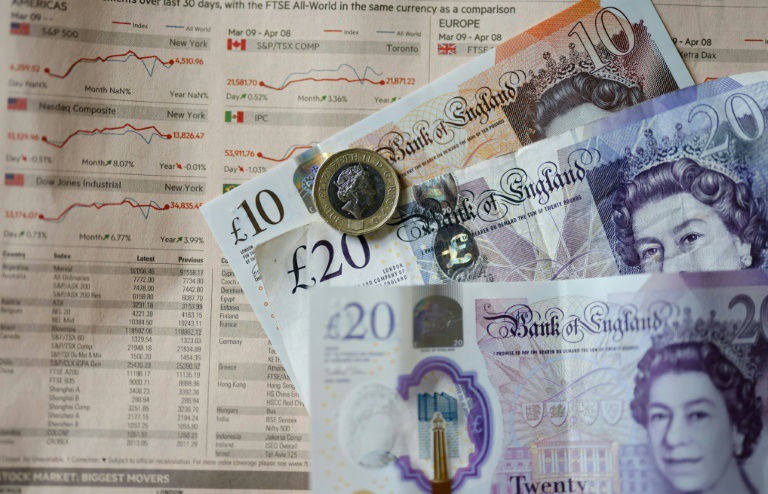
Asian stocks rallied Thursday as UK and US government yields fell after the Bank of England jumped into bond markets to prevent a fresh financial catastrophe.

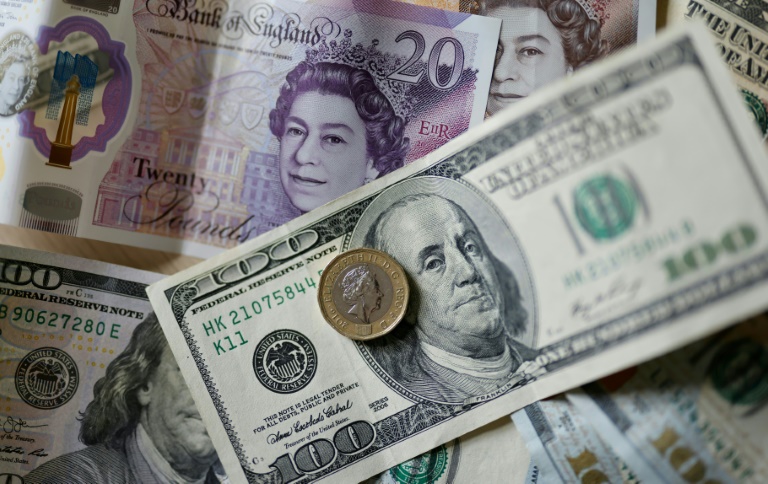
However, the pound — which earlier this week hit a record low against the dollar — struggled to hold its advance against the greenback, with commentators warning it could face further pain.

Financial markets are being hammered as central banks around the world ramp up interest rates to tackle runaway inflation, fuelling worries about a recession and a possible hit to company profits.

And the selling picked up this week after new UK finance minister Kwasi Kwarteng unveiled a tax-cutting mini-budget Friday, which many experts including the International Monetary Fund warned would fan borrowing and deal a further blow to the already fragile economy.

The spending plan sent yields on UK government bonds, as well as those of other countries, soaring and raised the prospect of even bigger interest rate hikes.

That led the Bank of England on Wednesday to announce a two-week programme to spend £65 billion ($71 billion) buying long-dated UK bonds “to restore orderly market conditions”.

The move meant the BoE had to suspend a programme to sell “gilts” as part of its drive to fight inflation, though analysts speculated that it could give traders some hope that similar support could be provided elsewhere.

National Australia Bank’s Ray Attrill said traders had grown accustomed to the fact that central banks were not ready to simply help asset markets when they drop in response to inflation-fighting measures.

But now there was an understanding that “when markets become dysfunctional with potential real world economic consequences, central banks’ financial stability obligations can still kick in”.

All three main indexes on Wall Street surged around two percent Wednesday, while European markets were also up.

And Asia extended the gains, though the initial surge was beginning to wane as the day wore on.

Hong Kong, Sydney, Seoul, Singapore, Wellington and Manila were all up more than one percent, while Tokyo, Shanghai, Taipei and Jakarta were also in positive territory.

However, the pound was weakening again sitting just below $1.0800, having spiked at $1.0900 earlier, as the dollar remained the go-to unit owing to Fed plans to lift rates further this year.

OANDA’s Edward Moya warned of more rough seas for sterling.

“The British pound went on a little roller coaster ride following the BoE action to buy unlimited long-dated gilts, but will still probably remain heavy over the country’s fiscal situation, current account deficit, financial stability risks, and energy poverty likelihood for parts of the population,” he said in a note.

The uptick across markets, however, was rare and the general mood on trading floors remains dark as the Fed and other central banks zero in on hiking borrowing costs to fight decades-high inflation.

“All eyes are on inflation and interest rates,” said Josh Emanuel at Wilshire. “Equities are really going to take their cues from bond markets. So if you see bond yields move lower, that is a good sign for equities.”

And Julia Raiskin, at Citigroup, added that “markets are very pessimistic… Other than the dollar, there are not many assets that are trading constructively.”

– Key figures at around 0230 GMT –

Tokyo – Nikkei 225: UP 0.3 percent at 26,238.32 (break)

Hong Kong – Hang Seng Index: UP 1.3 percent at 17,477.77

Shanghai – Composite: UP 0.5 percent at 3,060.83

Pound/dollar: DOWN at $1.0789 from $1.0889 on Wednesday

Euro/dollar: UP at $0.9638 from $0.9735

Euro/pound: UP at 89.68 from 89.39 pence 

Dollar/yen: UP at 144.30 yen from 144.11 yen

West Texas Intermediate: DOWN 0.4 percent at $81.84 per barrel

Brent North Sea crude: DOWN 0.4 percent at $89.00 per barrel

New York – Dow: UP 1.9 percent at 29,683.74 (close)

London – FTSE 100: UP 0.3 percent at 7,005.39 (close)

Stocks rally with sterling after surprise move by Bank of England

Global stock markets rallied on Wednesday in volatile trading after a surprise intervention by the Bank of England pressured bond yields in Britain and the United States and lifted the pound.

The Dow snapped a six-day streak of losses, piling on nearly 550 points, or 1.9 percent after the BoE action.

Following a historic slump in the pound, the BoE announced it was temporarily buying up long-dated UK government bonds “to restore orderly market conditions.”

The “intervention helped calm markets and led to a reversal of a spike (in bond yields) that we had seen earlier this morning,” said Angelo Kourkafas of Edward Jones.

Analysts noted that stocks were poised for an upturn after a bruising stretch since mid-August that had pushed major indices to their lowest level of 2022.

Britain’s new Finance Minister Kwasi Kwarteng’s tax-cutting budget sent shock waves through markets, pushing the pound to a record low and leading to dire warnings for Britain’s economy — though sterling later rallied against the dollar.

The BoE intervention followed rare criticism from the International Monetary Fund, which argued that Britain’s recent budget could increase inequality and worsen inflation.

The pound, which had sunk to an all-time low against the dollar, jumped about 1.5 percent against the US currency.

“The dollar weakness was triggered by the BoE intervention today, as that gave rise to speculation that other central banks might step in to support their currencies and bonds,” City Index analyst Fawad Razaqzada told AFP.

After early losses, major indices in London, Frankfurt and Paris all closed up Wednesday.

But geopolitical concerns continued to temper enthusiasm, analysts said, with heightened Ukraine tensions and looming recession fears.

– Fear grips markets –

Analysts warned of looming risks in the shape of soft economic data and crumbling earnings expectations.

“Fear of tightening-induced recessions has wiped out the recovery we saw in stock markets over the bulk of the summer as investors were once again burned by an over-eagerness to catch the bottom in the market, despite there being little evidence of it being justified,” said OANDA’s Craig Erlam.

“That fear has now gripped the markets and we may see a little more caution going forward,” Erlam added.

Sentiment was also rattled by worries about developments in Ukraine, after Kremlin-installed authorities in four regions under Russian control claimed victory in annexation votes, with Moscow warning it could use nuclear weapons to defend the territories.

Ukraine and its allies have denounced the so-called referendums as a sham, saying the West would never recognize the results.

Volatile oil prices also rose Wednesday, as the European Union proposed a new round of sanctions on Moscow, including a possible oil price cap.

Leaks from two Russia-Germany undersea gas pipelines, which the EU said were caused by deliberate sabotage, also threatened to fuel further tensions in the energy conflict.

– Key figures at around 2050 GMT –

New York – Dow: UP 1.9 percent at 29,683.74 (close)

New York – S&P 500: UP 2.0 percent at 3,719.04 (close)

New York – Nasdaq: UP 2.1 percent at 11,051.64 (close)

London – FTSE 100: UP 0.3 percent at 7,005.39 points (close)

Frankfurt – DAX: UP 0.4 percent at 12,183.28 (close)

Paris – CAC 40: UP 0.2 percent at 5,765.01 (close)

EURO STOXX 50: UP 0.2 percent at 3d335.30 (close)

Tokyo – Nikkei 225: DOWN 1.5 percent at 26,173.98 (close)

Hong Kong – Hang Seng Index: DOWN 3.4 percent at 17,250.88 (close)

Shanghai – Composite: DOWN 1.6 percent at 3,045.07 (close)

Pound/dollar: UP at $1.0889 from $1.0733 on Tuesday

Euro/dollar: UP at $0.9735 from $0.9594

Euro/pound: FLAT at 89.39 pence 

Dollar/yen: DOWN at 144.11 yen from 144.80 yen

Brent North Sea crude: UP 3.5 percent at $89.32 per barrel

West Texas Intermediate: UP 4.6 percent at $82.15 per barrel

burs-jmb/sw

Stocks rally but investors cautious over recession fears

Global stock markets rallied on Wednesday in a volatile trading, with investors given an “energy boost” by an intervention by the Bank of England.

But geopolitical tensions continued to temper enthusiasm, analysts said, with heightened Ukraine tensions and looming recession fears.

Wall Street stocks traded up after the Bank of England’s surprise intervention in the British bond market pushed down bond yields in Britain and the United States.

Following a historic slump in the pound, the BoE announced it was temporarily buying up long-dated UK government bonds “to restore orderly market conditions.”

“The BoE intervention helped cooling the (dollar) strength and give an energy boost to the market,” said Ipek Ozkardeskaya, senior analyst at Swissquote bank.

The UK government’s 30-year bond yield retreated to 4.44 percent after the announcement, having hit a 1998 peak at 5.14 percent.

The yield on the 10-year US Treasury note — a closely-watched proxy of US interest rates — also pulled back as analysts said the BoE manoeuvre had “soothed” investors in the short run.

Britain’s new finance minister Kwasi Kwarteng’s tax-cutting budget sent shockwaves through markets, pushing the pound to a record low and leading to dire warnings for Britain’s economy — though sterling later rallied against the US currency.

The BoE intervention followed rare criticism from the International Monetary Fund, which argued that Britain’s recent budget could increase inequality and worsen inflation.

“The BoE’s intervention is an attempt to soothe investor nerves after they were spooked by last week’s mini-budget,” said City Index analyst Fawad Razaqzada.

After early losses, major indices in London, Frankfurt and Paris all closed up Wednesday.

– Fear grips markets –

Analysts warned of looming risks in the shape of soft economic data and crumbling earning expectations.

“Fear of tightening-induced recessions has wiped out the recovery we saw in stock markets over the bulk of the summer as investors were once again burned by an over-eagerness to catch the bottom in the market, despite there being little evidence of it being justified,” said OANDA’s Craig Erlam.

“That fear has now gripped the markets and we may see a little more caution going forward,” Erlam said.

Sentiment was also rattled by worries about developments in Ukraine, after Kremlin-installed authorities in four regions under Russian control claimed victory in annexation votes, with Moscow warning it could use nuclear weapons to defend the territories.

Ukraine and its allies have denounced the so-called referendums as a sham, saying the West would never recognise the results.

Volatile oil prices also rose Wednesday, as the EU proposed a new round of sanctions on Moscow, including a possible oil price cap.

Leaks from two Russia-Germany undersea gas pipelines — which the EU said were caused by deliberate sabotage — also threatened to fuel further tensions in the energy conflict.

– Key figures at around 1550 GMT –

London – FTSE 100: UP 0.3 percent at 7005.39 points (close)

Frankfurt – DAX: UP 0.4 percent at 12183.28 (close)

Paris – CAC 40: UP 0.2 percent at 5765.01 (close)

EURO STOXX 50: UP 0.2 percent at 3335.30 (close)

New York – Dow: UP 1.1 percent at 29436.77 

Tokyo – Nikkei 225: DOWN 1.5 percent at 26,173.98 (close)

Hong Kong – Hang Seng Index: DOWN 3.4 percent at 17,250.88 (close)

Shanghai – Composite: DOWN 1.6 percent at 3,045.07 (close)

Pound/dollar: UP at $1.0748 from $1.0730 on Tuesday

Euro/dollar: UP at $0.9639 from $0.9595

Euro/pound: UP at 90.67 pence from 89.39 pence 

Dollar/yen: DOWN at 144.45 yen from 144.81 yen

Brent North Sea crude: UP 1.9 percent at $86.73 per barrel

West Texas Intermediate: UP 2.9 percent at $80.77 per barrel

burs-rfj/rox/cdw

Stocks slump, dollar surges on recession fears

Global stock markets mostly sank Wednesday and the dollar soared as investors fretted over recession fears and heightened Ukraine tensions.

“With the prospect of a sharp economic slowdown, further pain for households and businesses, and investor sentiment on its knees, alas equities markets continue their descent,” said AJ Bell investment director Russ Mould.

The major Asian markets all closed down, and European stocks were down through afternoon trading.

The US was the exception, with markets edging up slightly at the open.

The British pound slumped 1.7 percent against the haven dollar — despite the Bank of England snapping up UK government bonds to try to bring calm to markets.

However, the UK government’s 30-year bond yield managed to retreat to 4.44 percent, having hit a 1998 peak at 5.14 percent.

The BoE intervention followed rare criticism Tuesday from the International Monetary Fund, which argued that Britain’s recent budget could increase inequality and worsen inflation.

Credit ratings agency Moody’s also waded in overnight with a warning about soaring debt.

New finance minister Kwasi Kwarteng’s tax-cutting plan last week sent shockwaves through markets, pushing the pound to a record low and leading to dire warnings for Britain’s economy.

“The BoE’s intervention is an attempt to soothe investor nerves after they were spooked by last week’s mini-budget,” said City Index analyst Fawad Razaqzada.

– Go-to dollar –

The dollar remains the go-to unit as the US Federal Reserve leads the way in raising interest rates.

Observers are betting that US borrowing costs will peak at around 4.75 percent next year, and are expected to remain elevated for some time.

The prospect of such tight monetary policy has battered equities, as US 10-year Treasury yields — a gauge of future rates — hit four percent for the first time since 2010.

“Fear of tightening-induced recessions has wiped out the recovery we saw in stock markets over the bulk of the summer as investors were once again burned by an over-eagerness to catch the bottom in the market, despite there being little evidence of it being justified,” said OANDA’s Craig Erlam.

“That fear has now gripped the markets and we may see a little more caution going forward,” he said.

Sentiment was also rattled by worries about developments in Ukraine, after Kremlin-installed authorities in four regions under Russian control claimed victory in annexation votes, with Moscow warning it could use nuclear weapons to defend the territories.

Ukraine and its allies have denounced the so-called referendums as a sham, saying the West would never recognise the results.

– Key figures at around 1345 GMT –

London – FTSE 100: DOWN 0.3 percent at 6,984.59 points

Frankfurt – DAX: DOWN 0.3 percent at 12104.37 

Paris – CAC 40: DOWN 0.5 percent at 5,728.16 

EURO STOXX 50: DOWN 0.4 percent at 3,315.49

New York – Dow: UP 0.2 percent at 29,193.25 

Tokyo – Nikkei 225: DOWN 1.5 percent at 26,173.98 (close)

Hong Kong – Hang Seng Index: DOWN 3.4 percent at 17,250.88 (close)

Shanghai – Composite: DOWN 1.6 percent at 3,045.07 (close)

Pound/dollar: DOWN at $1.0655 from $1.0730 on Tuesday

Euro/dollar: DOWN at $0.9587 from $0.9595

Euro/pound: UP at 90.67 pence from 89.39 pence 

Dollar/yen: DOWN at 144.43 yen from 144.81 yen

Brent North Sea crude: UP 0.1 percent at $85.67 per barrel

West Texas Intermediate: UP 1.0 percent at $79.46 per barrel

burs-rfj/rox/cdw

Stocks slump, dollar surges on recession fears

Global stock markets sank Wednesday and the dollar soared as investors fretted over recession fears and heightened Ukraine tensions.

“With the prospect of a sharp economic slowdown, further pain for households and businesses, and investor sentiment on its knees, alas equities markets continue their descent,” said AJ Bell investment director Russ Mould.

The haven dollar held at multi-year highs against rival currencies, with the euro plumbing a new 20-year low at $0.9536.

The British pound slumped 1.7 percent against the greenback — despite the Bank of England snapping up UK government bonds to try and bring calm to markets.

However, the UK government’s 30-year bond yield managed to retreat to 4.44 percent, having hit a 1998 peak at 5.14 percent.

The BoE intervention followed criticism Tuesday from the International Monetary Fund, which argued that Britain’s recent budget could increase inequality and worsen inflation.

New finance minister Kwasi Kwarteng’s tax-cutting plan last week sent shockwaves through markets, pushing the pound to a record low and leading to dire warnings for Britain’s economy.

The dollar remains the go-to unit as the US Federal Reserve leads the way in raising interest rates.

Observers are betting that US borrowing costs will peak at around 4.75 percent next year, and are expected to remain elevated for some time.

The prospect of such tight monetary policy has battered equities, as US 10-year Treasury yields — a gauge of future rates — hit four percent for the first time since 2010.

Sentiment was also rattled by worries about developments in Ukraine, after Kremlin-installed authorities in four regions under Russian control claimed victory in annexation votes, with Moscow warning it could use nuclear weapons to defend the territories.

Ukraine and its allies have denounced the so-called referendums as a sham, saying the West would never recognise the results.

– Key figures at around 1145 GMT –

London – FTSE 100: DOWN 0.8 percent at 6,927.75 points

Frankfurt – DAX: DOWN 1.5 percent at 11,961.92

Paris – CAC 40: DOWN 1.4 percent at 5,675.32

EURO STOXX 50: DOWN 1.5 percent at 3,279.53

Tokyo – Nikkei 225: DOWN 1.5 percent at 26,173.98 (close)

Hong Kong – Hang Seng Index: DOWN 3.4 percent at 17,250.88 (close)

Shanghai – Composite: DOWN 1.6 percent at 3,045.07 (close)

New York – Dow: DOWN 0.4 percent at 29,134.99 (close)

Pound/dollar: DOWN at $1.0569 from $1.0730 on Tuesday

Euro/dollar: DOWN at $0.9556 from $0.9595

Euro/pound: UP at 90.41 pence from 89.39 pence 

Dollar/yen: DOWN at 144.76 yen from 144.81 yen

Brent North Sea crude: UP 0.1 percent at $86.36 per barrel

West Texas Intermediate: UP 0.5 percent at $78.86 per barrel

burs-rfj/bcp/rox

Stocks and oil drop as dollar gains on recession, Ukraine fears

Equities and crude prices fell while the dollar held at multi-year highs Wednesday as recession fears mount and traders grow increasingly concerned about tensions between Russia and the West.

Investors are keeping a close eye on London, after new finance minister Kwasi Kwarteng’s tax-cutting last week sent shock waves through markets, pushing the pound to a record low and leading to dire warnings for Britain’s economy.

While Asia saw small gains Tuesday, New York and Europe ended mostly in the red again, with Wall Street jolted by data showing a surprise improvement in US consumer confidence — likely because of a dip in petrol prices — and a jump in home sales.

The figures pointed to resilience in the world’s top economy despite three successive bumper Federal Reserve rate hikes — and expectations for another in November — as it tries to tame four-decade-high inflation.

Several Fed officials have lined up this week to reassert their determination to keep hiking until prices are brought under control, even at the cost of a recession.

Observers are now betting that borrowing costs will top out at around 4.75 percent next year, and some policymakers have suggested they could remain elevated for some time.

The prospect of such tight monetary policy has battered equities, as US 10-year Treasury yields — a gauge of future rates — hit four percent for the first time since 2010.

The Dow and S&P 500 ended down Tuesday, though the Nasdaq enjoyed a slight uptick. 

Asia resumed its downtrend Wednesday, with Hong Kong down more than three percent, while Seoul, Taipei and Manila sank more than two percent. Tokyo, Shanghai and Singapore were off more than one percent.

There were also losses in Sydney, Wellington, Bangkok and Mumbai, while London, Paris and Frankfurt were also sharply lower.

– Russia nuclear warning –

The dollar remains the go-to unit as the Fed leads the way in central bank tightening.

“The fact we have such a strong increase in US yields is attracting flows into the US dollar,” said Nannette Hechler-Fayd’herbe, of Credit Suisse Group AG.

“As long as monetary and fiscal policy worldwide are really not coming to strengthen their own currencies, we should be anticipating a very strong dollar.”

The greenback rose against sterling, with the British currency battered by concerns that Kwarteng’s spending plan would ramp up borrowing just as the Bank of England was trying to hike rates to fight inflation, causing consternation among many observers.

The dollar was also approaching 145 yen, having sunk from a high close to 146 yen after the Japanese government intervened last week to support its currency. 

Sentiment was also rattled by worries about developments in Ukraine, after Kremlin-installed authorities in four regions under Russian control claimed victory in annexation votes, with Moscow warning it could use nuclear weapons to defend the territories.

Ukraine and its allies have denounced the so-called referendums as a sham, saying the West would never recognise the results.

In response, Kyiv on Wednesday called for the West to “significantly” increase its military aid to Ukraine.  

But former Russian leader Dmitry Medvedev — an ally of President Vladimir Putin and now deputy chairman of the country’s security council — issued a stark warning that Moscow was ready to act decisively.

“I want to remind you — the deaf who hear only themselves: Russia has the right to use nuclear weapons if necessary,” he said on social media.

On crude markets, both main contracts were down more than two percent on recession worries and as Bloomberg quoted sources saying that US inventories increased more than four million barrels last week.

The drop comes despite a report that Moscow is calling on OPEC and other major groups to slash output by a million barrels a day when they meet next week.

“With Brent trading only a little above $80 and WTI below, you have to wonder how much more OPEC+ will tolerate, and the size of (any) output cut they may be considering next week in light of the new economic outlook and price,” said OANDA’s Craig Erlam.

– Key figures at around 0810 GMT –

Tokyo – Nikkei 225: DOWN 1.5 percent at 26,173.98 (close)

Hong Kong – Hang Seng Index: DOWN 3.4 percent at 17,250.88 (close)

Shanghai – Composite: DOWN 1.6 percent at 3,045.07 (close)

London – FTSE 100: DOWN 2.0 percent at 6,845.82

Pound/dollar: DOWN at $1.0680 from $1.0730 on Tuesday

Euro/dollar: DOWN at $0.9562 from $0.9595

Euro/pound: UP at 89.50 pence from 89.39 pence 

Dollar/yen: DOWN at 144.60 yen from 144.81 yen

West Texas Intermediate: DOWN 2.2 percent at $76.76 per barrel

Brent North Sea crude: DOWN 2.1 percent at $84.50 per barrel

New York – Dow: DOWN 0.4 percent at 29,134.99 (close)

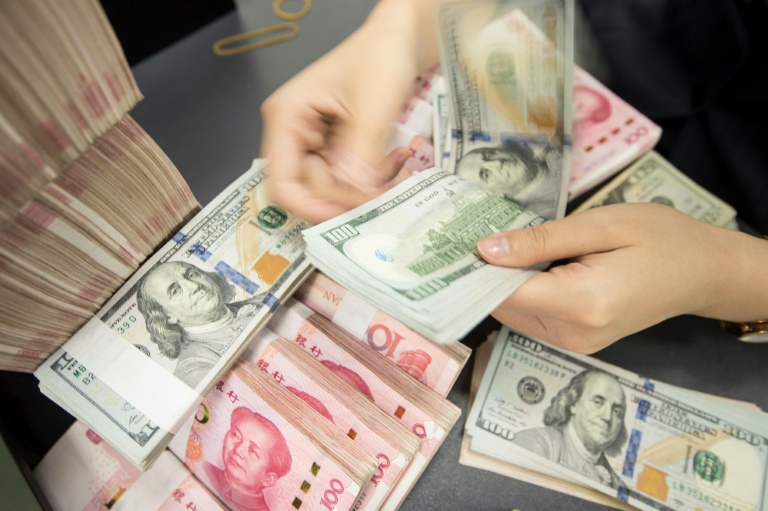
China's offshore yuan hits record low against dollar

China’s yuan hit a record low against the surging US dollar in offshore trading Wednesday, despite recent efforts by the country’s central bank to shore up the currency.

The offshore yuan — which is circulated outside mainland China and is more freely traded than currency in the domestic market — fell to 7.2386 against the dollar on Wednesday, according to Bloomberg. 

That is its weakest level since clearing banks in Hong Kong were given the go-ahead to open renminbi accounts freely in 2010.

The US Federal Reserve’s increasingly hawkish tone and expectations of further interest rate hikes to fight soaring inflation have seen investors pile into the dollar, sending it to record or multi-decade peaks against other major currencies.

The onshore yuan, which is not freely convertible and limited to a two percent range on either side of a central parity rate set each day, also extended its slump to a 14-year low of 7.2297 per dollar Wednesday.

The depreciation comes despite recent efforts by the Chinese central bank to protect the currency’s value without directly intervening, including a decision to raise the foreign exchange risk reserve ratio.

The move, announced by the People’s Bank of China on Monday, effectively makes it more expensive for financial institutions to sell yuan and buy dollars.

The Chinese economy has been hammered in recent months by Covid-related curbs, extreme weather, and a property market slump.

The sharp slowdown in economic growth had led officials to announce a series of easing measures in recent months to provide support, but putting pressure on the yuan as the US Federal Reserve continues to tighten policy.

But the yuan’s depreciation could mean “the central bank will have to at least pay more attention than in the past” to balancing domestic stimulus and its foreign exchange policies, Tianfeng Securities analysts wrote in a note Tuesday. 

China's offshore yuan hits record low against dollar

China’s yuan hit a record low against the surging US dollar in offshore trading Wednesday, despite recent efforts by the country’s central bank to shore up the currency.

The offshore yuan — which is circulated outside mainland China and is more freely traded than currency in the domestic market — fell to 7.2386 against the dollar on Wednesday, according to Bloomberg. 

That is its weakest level since clearing banks in Hong Kong were given the go-ahead to open renminbi accounts freely in 2010.

The US Federal Reserve’s increasingly hawkish tone and expectations of further interest rate hikes to fight soaring inflation have seen investors pile into the dollar, sending it to record or multi-decade peaks against other major currencies.

The onshore yuan, which is not freely convertible and limited to a two percent range on either side of a central parity rate set each day, also extended its slump to a 14-year low of 7.2297 per dollar Wednesday.

The depreciation comes despite recent efforts by the Chinese central bank to protect the currency’s value without directly intervening, including a decision to raise the foreign exchange risk reserve ratio.

The move, announced by the People’s Bank of China on Monday, effectively makes it more expensive for financial institutions to sell yuan and buy dollars.

The Chinese economy has been hammered in recent months by Covid-related curbs, extreme weather, and a property market slump.

The sharp slowdown in economic growth had led officials to announce a series of easing measures in recent months to provide support, but putting pressure on the yuan as the US Federal Reserve continues to tighten policy.

But the yuan’s depreciation could mean “the central bank will have to at least pay more attention than in the past” to balancing domestic stimulus and its foreign exchange policies, Tianfeng Securities analysts wrote in a note Tuesday. 

Stocks and oil drop as dollar gains on recession, Ukraine fears

Equities and crude prices fell, while the dollar held at multi-year highs Wednesday as recession fears mount, while traders are also growing increasingly concerned about tensions with Russia after it declared victory in controversial Ukraine annexation polls.

Investors are also keeping a close eye on London, after new finance minister Kwasi Kwarteng’s tax-cutting mini-budget last week sent shock waves through markets, pushing the pound to a record low and leading to dire warnings for Britain’s economy.

While Asia saw small gains Tuesday, New York and Europe ended mostly in the red again, with Wall Street jolted by data showing a surprise improvement in US consumer confidence — likely because of a dip in petrol prices — and a jump in home sales.

The figures pointed to resilience in the world’s top economy despite three successive bumper Federal Reserve rate hikes — and expectations for another in November — as it tries to tame four-decade-high inflation.

Several Fed officials have lined up this week to reassert their determination to keep hiking until prices are brought under control, even at the cost of a recession.

Observers are now betting that borrowing costs will top out at around 4.75 percent next year, and some policymakers have suggested they could remain elevated for some time.

The prospect of such tight monetary policy has battered equities, as US 10-year Treasury yields — a gauge of future rates — approach four percent for the first time since 2010.

The Dow and S&P 500 ended down Tuesday, though the Nasdaq enjoyed a slight uptick. 

Asia resumed its downtrend, with Tokyo, Hong Kong and Seoul all down more than two percent, while Shanghai, Sydney, Singapore, Wellington, Taipei, Manila and Jakarta were also off.

– Russia nuclear warning –

And the dollar remains the go-to unit as the Fed leads the way in central bank tightening.

“The fact we have such a strong increase in US yields is attracting flows into the US dollar,” said Nannette Hechler-Fayd’herbe, of Credit Suisse Group AG.

“As long as monetary and fiscal policy worldwide are really not coming to strengthen their own currencies, we should be anticipating a very strong dollar.”

The greenback rose against sterling, with the British currency battered by concerns that Kwarteng’s spending plan would ramp up borrowing just as the Band of England was trying to hike rates to fight inflation, causing consternation among many observers.

The dollar was also approaching 145 yen, having sunk from a high close to 146 yen after the Japanese government intervened last week to support its currency. 

Sentiment was also rattled by worries about developments in Ukraine, after Kremlin-installed authorities in four regions under Russian control claimed victory in annexation votes, with Moscow warning it could use nuclear weapons to defend the territories.

Ukraine and its allies have denounced the so-called referendums as a sham, saying the West would never recognise the results of the ballots.

But former Russian leader Dmitry Medvedev — an ally of President Vladimir Putin and now deputy chairman of the country’s security council — issued a stark warning that Moscow was ready to act decisively.

“I want to remind you — the deaf who hear only themselves: Russia has the right to use nuclear weapons if necessary,” he said on social media.

On crude markets both main contracts were down more than one percent on recession worries and as Bloomberg quoted sources as saying that US inventories increased more than four million barrels last week.

The drop comes despite a report that Moscow is calling on OPEC and other major groups to slash output by a million barrels a day when they meet next week.

– Key figures at around 0230 GMT –

Tokyo – Nikkei 225: DOWN 2.2 percent at 25,984.51 (break)

Hong Kong – Hang Seng Index: DOWN 2.4 percent at 17,433.43

Shanghai – Composite: DOWN 0.8 percent at 3,069.22

Pound/dollar: DOWN at $1.0663 from $1.0730 on Tuesday

Euro/dollar: DOWN at $0.9551 from $0.9595

Euro/pound: UP at 89.71 pence from 89.39 pence 

Dollar/yen: UP at 144.83 yen from 144.81 yen

West Texas Intermediate: DOWN 1.9 percent at $76.99 per barrel

Brent North Sea crude: DOWN 1.9 percent at $84.67 per barrel

New York – Dow: DOWN 0.4 percent at 29,134.99 (close)

London – FTSE 100: DOWN 0.5 percent at 6,984.59 (close)

Close Bitnami banner
Bitnami