Chinese Business

Stocks volatile, pound hits record low

Wall Street stocks fell again Monday as recession fears brought volatility to financial markets, pushing the pound to an all-time low against the greenback and pressuring oil prices.

After last week’s rout, US indices climbed early in the session before tumbling back into the red.

Both the Dow and S&P 500 dropped more than one percent to finish at their lowest value of the year. The Dow also entered a “bear market,” defined as a 20 percent retreat from its last record.

London shares closed flat, paring earlier losses after the pound hit a record low against the dollar on surging fears about the ailing UK economy, before recovering ground.

“Investors are reacting to a really toxic brew of bad news that was made worse by what happened in the UK on Friday, which was the stimulus spending into an already bigger inflationary problem,” said Andy Kapyrin, co-chief investment officer at RegentAtlantic. 

“I’m not sure that we’ve seen the bottom here,” Kapyrin said. “But I think it does make sense for investors to dip their toe into the water, the stock market is materially cheaper than it started the year.”

Having extended losses in morning trading, Frankfurt and Paris edged higher by mid-afternoon, only to close the session in the red.

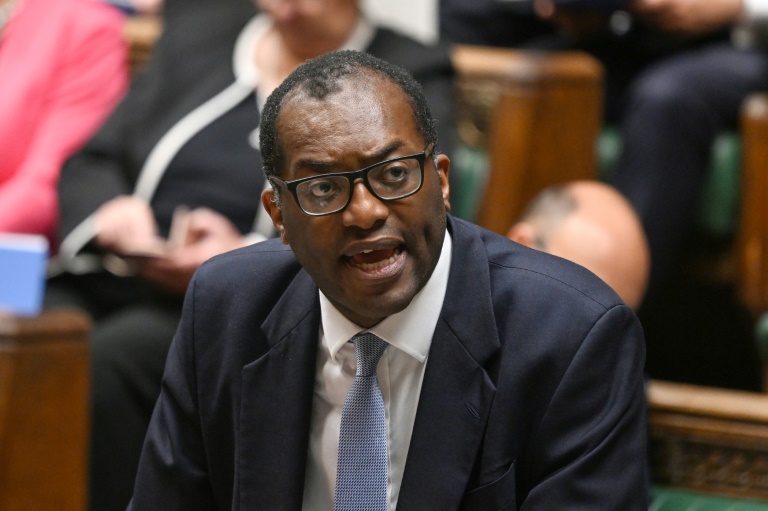
The pound on Monday struck an all-time low at $1.0350, days after new UK finance minister Kwasi Kwarteng’s inflation-fighting budget.

The Bank of England said it was paying close attention to financial markets and would “not hesitate to change interest rates by as much as needed” to curb inflation.

Economists expressed concerns that last week’s huge tax-cutting budget from the government of new Prime Minister Liz Truss — aimed at helping the recession-threatened economy — could actually spark massive borrowing and further fuel inflation.

Sterling has struggled in recent years as the UK fails to strike major trade deals following its exit from the European Union.

Prior to Monday’s crash, the pound suffered a series of 37-year lows against the greenback this month on UK recession fears propelled by sky-high inflation.

The euro has additionally come under heavy selling pressure against the dollar in recent months, as the Federal Reserve hikes interest rates more aggressively than the European Central Bank.

The euro struck a new 20-year low at $0.9554 on Monday before recovering.

A day after Eurosceptic populists swept to victory in Italy’s general election, the interest rates on 10-year government bonds hit their highest level for around a decade in France, Germany and Italy.

But the Italian stock market closed higher as markets assessed the future political landscape.

“Time will tell how successful the new government will prove to be but the prospect of some political stability appears to be generating a small relief rally today,” said Craig Erlam, analyst at trading platform OANDA.

Elsewhere, oil prices pulled back, with US benchmark West Texas intermediate ending at its lowest level since January, as the strong dollar weighed on the commodity, along with worries over petroleum demand.

– Key figures at around 2030 GMT –

Pound/dollar: DOWN at $1.0689 from $1.0859 on Friday

Euro/dollar: DOWN at $0.9611 from $0.9687

Euro/pound: UP at 89.87 pence from 89.29 pence 

Dollar/yen: UP at 144.72 yen from 143.31 yen

New York – Dow: DOWN 1.1 percent at 29,260.81 (close)

New York – S&P 500: DOWN 1.0 percent at 3,655.04 (close)

New York – Nasdaq: DOWN 0.6 percent at 10,802.92 (close)

London – FTSE 100: UP less than 0.1 percent at 7,020.95 (close)

Frankfurt – DAX: DOWN 0.5 percent at 12,227.92 (close)

Paris – CAC 40: DOWN 0.2 percent at 5,769.39 (close)

EURO STOXX 50: DOWN 0.2 percent at 3,342.56  (close)

Tokyo – Nikkei 225: DOWN 2.7 percent at 26,431.55 (close)

Hong Kong – Hang Seng Index: DOWN 0.4 percent at 17,855.14 (close)

Shanghai – Composite: DOWN 1.2 percent at 3,051.23 (close)

West Texas Intermediate: DOWN 2.6 percent at $78.71 per barrel

Brent North Sea crude: DOWN 2.4 percent at $84.06 per barrel
Stocks volatile, pound hits record low

Markets seesawed and the British pound took a beating Monday as recession fears brought volatility to the markets.

Having extended losses in morning trading, Frankfurt and Paris edged higher by mid afternoon, only to close the session in the red.

London shares closed flat, paring earlier losses after the pound hit a record low against the dollar on surging fears about the ailing UK economy, before recovering ground.

Further clouding the horizon, the OECD warned the world economy would take a bigger hit than previously forecast next year due to the effects of Russia’s war in Ukraine.

“Volatility reigns supreme in a jittery market environment,” analyst Patrick O’Hare at Briefing.com said.

Wall Street stocks also fell, amid the upheaval in the foreign exchange market.

The pound on Monday struck an all-time low at $1.0350, days after new UK finance minister Kwasi Kwarteng’s inflation-fighting budget.

The Bank of England said it was paying close attention to financial markets and would “not hesitate to change interest rates by as much as needed” to curb inflation.

Economists expressed concerns that last week’s huge tax-cutting budget from the government of new Prime Minister Liz Truss — aimed at helping the recession-threatened economy — could actually spark massive borrowing and further fuel inflation.

“The market’s reactions show that investors have lost confidence in the government’s approach, creating a level of volatility that puts the pound on par with some emerging market peers,” said Fiona Cincotta, a senior analyst at City Index.

“Attention is now turning to the BoE (Bank of England) to step in to support the pound.”

Sterling has struggled in recent years as the UK fails to strike major trade deals following its exit from the European Union.

Prior to Monday’s crash, the pound suffered a series of 37-year lows against the greenback this month on UK recession fears propelled by sky-high inflation.

The euro has additionally come under heavy selling pressure against the dollar in recent months, as the Federal Reserve hikes interest rates more aggressively than the European Central Bank.

The euro struck a new 20-year low at $0.9554 on Monday before recovering.

A day after Eurosceptic populists swept to victory in Italy’s general election, the interest rates on 10-year government bonds hit their highest level for around a decade in France, Germany and Italy.

But the Italian stock market closed higher as markets assessed the future political landscape.

“Time will tell how successful the new government will prove to be but the prospect of some political stability appears to be generating a small relief rally today,” said Craig Erlam, analyst at trading platform OANDA.

Elsewhere, the Moscow stock exchange plunged by 10 percent to its lowest point since Russia began its Ukraine offensive seven months ago as tensions grew across the country over partial military mobilisation.

– Key figures at around 1545 GMT –

Pound/dollar: DOWN at $1.0696 from $1.0852 on Friday

Euro/dollar: DOWN at $0.9627 from $0.9695

Euro/pound: UP at 89.97 pence from 89.28 pence 

Dollar/yen: UP at 144.42 yen from 143.31 yen

London – FTSE 100: UP 0.03 percent at 7,020.95 points

Frankfurt – DAX: DOWN 0.5 percent at 12,227.92

Paris – CAC 40: DOWN 0.2 percent at 5,769.39 

EURO STOXX 50: DOWN 0.2 percent at 3,342.56  

New York – Dow: DOWN 0.6 percent at 29,417.19  

Tokyo – Nikkei 225: DOWN 2.7 percent at 26,431.55 (close)

Hong Kong – Hang Seng Index: DOWN 0.4 percent at 17,855.14 (close)

Shanghai – Composite: DOWN 1.2 percent at 3,051.23 (close)

West Texas Intermediate: DOWN 0.4 percent at $78.42 per barrel

Brent North Sea crude: DOWN 0.5 percent at $85.75 per barrel

burs-bcp/kjm/cdw

Stocks volatile, pound hits record low

Markets seesawed and the British pound took a beating Monday as recession fears brought volatility to the markets.

Having extended losses in morning trading, Frankfurt and Paris edged higher by mid afternoon.

London shares remained lower, however, after the pound hit a record low against the dollar on surging fears about the ailing UK economy, before recovering.

Further clouding the horizon, the OECD warned the world economy would take a bigger hit than previously forecast next year due to the effects of Russia’s war in Ukraine.

“Volatility reigns supreme in a jittery market environment,” analyst Patrick O’Hare at Briefing.com said.

Wall Street stocks also fell shortly after trading opened, amid the upheaval in the foreign exchange market.

The pound on Monday struck an all-time low at $1.0350, days after new UK finance minister Kwasi Kwarteng’s inflation-fighting budget.

Economists expressed concerns that last week’s huge tax-cutting budget from the government of new Prime Minister Liz Truss — aimed at helping the recession-threatened economy — could actually spark massive borrowing and further fuel inflation.

“The market’s reactions show that investors have lost confidence in the government’s approach, creating a level of volatility that puts the pound on par with some emerging market peers,” said Fiona Cincotta, a senior analyst at City Index.

“Attention is now turning to the BoE (Bank of England) to step in to support the pound.”

Sterling has struggled in recent years as the UK fails to strike major trade deals following its exit from the European Union.

Prior to Monday’s crash, the pound suffered a series of 37-year lows against the greenback this month on UK recession fears propelled by sky-high inflation.

The euro has additionally come under heavy selling pressure against the dollar in recent months, as the Federal Reserve hikes interest rates more aggressively than the European Central Bank.

The euro struck a new 20-year low at $0.9554 on Monday before recovering.

A day after Eurosceptic populists swept to victory in Italy’s general election, the interest rates on 10-year government bonds hit their highest level for around a decade in France, Germany and Italy.

But the Italian stock market climbed as markets assessed the future political landscape.

“Time will tell how successful the new government will prove to be but the prospect of some political stability appears to be generating a small relief rally today,” said Craig Erlam, analyst at trading platform OANDA.

Elsewhere, the Moscow stock exchange plunged by 10 percent to its lowest point since Russia began its Ukraine offensive seven months ago as tensions grew across the country over partial military mobilisation.

– Key figures at around 1340 GMT –

Pound/dollar: UP at $1.0861 from $1.0852 on Friday

Euro/dollar: DOWN at $0.9663 from $0.9695

Euro/pound: DOWN at 0.8895 pence from 89.28 pence 

Dollar/yen: UP at 144.05 yen from 143.31 yen

London – FTSE 100: DOWN 0.4 percent at 6,991.89 points

Frankfurt – DAX: UP 0.4 percent at 12,336.04 

Paris – CAC 40: UP 0.3 percent at 5,800.28

EURO STOXX 50: UP 0.5 percent at 3,364.39 

New York – Dow: DOWN 0.3 percent at 29,496.06 

Tokyo – Nikkei 225: DOWN 2.7 percent at 26,431.55 (close)

Hong Kong – Hang Seng Index: DOWN 0.4 percent at 17,855.14 (close)

Shanghai – Composite: DOWN 1.2 percent at 3,051.23 (close)

West Texas Intermediate: UP 1.1 percent at $79.57 per barrel

Brent North Sea crude: UP 0.8 percent at $86.80 per barrel

burs-bcp/

Apple to make iPhone 14 in India in shift away from China

Apple will manufacture its new flagship smartphone in India, the US tech giant said Monday, as it seeks to diversify production away from a dependence on China.

The iPhone supply chain is based mainly in China but the country’s zero-Covid policies and tensions with the United States have hurt production, analysts say.

“We’re excited to be manufacturing iPhone 14 in India,” Apple said in a brief statement.

The California-based firm already makes older iPhone models in India via Taiwanese manufacturers such as Foxconn, which has a factory in the southern state of Tamil Nadu.

The latest announcement comes just weeks after Apple launched new smartphones. The tech behemoth is commencing production of the iPhone 14 in India much earlier than it did for previous models, Canalys analyst Sanyam Chaurasia said.

“Over the last couple of years, it has been increasingly diversifying its supply chain to India,” Chaurasia told AFP.

About 7.5 million iPhones — around three percent of Apple’s global production — were made in India last year, the analyst added.

“We expect that the local production of iPhones could reach more than 11 million this year,” he said.

Apple’s announcement will be a boost to Prime Minister Narendra Modi’s “Make in India” strategy under which he has urged foreign businesses to manufacture goods in the South Asian nation.

UK eyes big TikTok fine over child privacy lapse

Britain on Monday warned it could fine TikTok £27 million ($29 million) over a potential failure to protect children’s privacy on the Chinese-owned video app.

The Information Commissioner’s Office said the social media company “may have processed the data of children under the age of 13 without appropriate parental consent”.

The ICO also found that the short-form video platform may have “failed to provide proper information to its users in a concise, transparent and easily understood way”.

The watchdog has served the group with a notice of intent — which is a legal document that precedes a possible fine — over the possible breach of UK data protection law.

“We all want children to be able to learn and experience the digital world, but with proper data privacy protections,” said Information Commissioner John Edwards.

“Companies providing digital services have a legal duty to put those protections in place, but our provisional view is that TikTok fell short of meeting that requirement.”

In response, TikTok said it disagreed with the ICO’s provisional views and stressed that no final conclusions had been reached.

“While we respect the ICO’s role in safeguarding privacy in the UK, we disagree with the preliminary views expressed and intend to formally respond to the ICO in due course,” TikTok said in a statement.

Pound hits record low versus dollar, Italy stocks up after vote

The pound hit a record low against the dollar Monday on surging fears about the ailing UK economy.

Stock markets mostly extended losses and oil prices fell further after last week’s routs that were triggered by growing prospects of a global recession.

However, the Italian stock market climbed as markets assessed Italy’s future political landscape after Eurosceptic populists swept to victory in the eurozone member’s general election.

“The pound’s crash is showing markets have a lack of confidence in the UK and that its financial strength is under siege,” said Jessica Amir at Saxo Capital Markets.

“The pound is a whisker away from (dollar) parity and the situation is going to only worsen from here.”

Economists expressed concerns that last week’s huge tax-cutting budget from the government of new Prime Minister Liz Truss — aimed at helping the recession-threatened economy — could actually spark massive borrowing and further fuel inflation.

The pound on Monday struck an all-time low at $1.0350, days after new UK finance minister Kwasi Kwarteng’s inflation-fighting budget.

Sterling has struggled in recent years as the UK fails to strike major trade deals following its exit from the European Union.

Prior to Monday’s crash, the pound suffered a series of 37-year lows against the greenback this month on UK recession fears propelled by sky-high inflation.

The euro has additionally come under heavy selling pressure against the dollar in recent months, as the Federal Reserve hikes interest rates more aggressively than the European Central Bank.

– Italian stocks –

In stock market trading Monday, Milan’s FTSE MIB rose 0.5 percent to 21,174.60 points.

However the euro struck a new 20-year low at $0.9554.

“Italy is clearly outperforming following the election result,” noted Craig Erlam, analyst at Oanda trading group. 

“Time will tell how successful the new government will prove to be but the prospect of some political stability appears to be generating a small relief rally today.”

Italy took a sharp turn to the right after Giorgia Meloni’s Eurosceptic populist party swept to victory in a weekend general election, putting a one-time Mussolini admirer on course to become the first woman to lead the country.

Meloni’s Brothers of Italy party, which has neo-fascist roots, won 26 percent in Sunday’s election, according to partial results.

It leads a coalition set to win a majority in parliament.

Elsewhere, the Moscow stock exchange plunged 10 percent to its lowest point since Russia began its Ukraine offensive seven months ago as tensions grew across the country over partial military mobilisation.

The benchmark ruble-denominated Moex index sank 10.2 percent to 1,873.55 points in early afternoon trading, dropping below the 1,900 points mark for the first time since the February invasion of neighbouring Ukraine.

– Key figures at around 1215 GMT –

Pound/dollar: DOWN at $1.0721 from $1.0852 on Friday

Euro/dollar: DOWN at $0.9645 from $0.9695

Euro/pound: UP at 89.93 pence from 89.28 pence 

Dollar/yen: UP at 144.30 yen from 143.31 yen

London – FTSE 100: DOWN 0.7 percent at 6,969.77 points

Frankfurt – DAX: DOWN 0.1 percent at 12,273.63

Paris – CAC 40: DOWN 0.1 percent at 5,777.09

EURO STOXX 50: DOWN 0.1 percent at 3,346.93

Tokyo – Nikkei 225: DOWN 2.7 percent at 26,431.55 (close)

Hong Kong – Hang Seng Index: DOWN 0.4 percent at 17,855.14 (close)

Shanghai – Composite: DOWN 1.2 percent at 3,051.23 (close)

New York – Dow: DOWN 1.6 percent at 29,590.41 (close)

West Texas Intermediate: DOWN 1.0 percent at $77.98 per barrel

Brent North Sea crude: DOWN 1.1 percent at $85.17 per barrel

burs-bcp/rfj/kjm

Pound hits record low versus dollar, markets hit by recession fears

The pound hit a record low against the dollar Monday on surging fears about the UK economy after the government unveiled a huge tax-cutting budget.

The selloff came as equity markets across Asia and Europe fell again owing to a growing expectation that central bank interest rate hikes to fight runaway inflation would lead to deep and painful recessions. Oil also suffered more hefty selling.

Officials in several countries including the United States, Britain, Switzerland and Sweden announced more increases in the cost of borrowing.

The moves sent equity markets deep into the red again after officials reiterated their focus on fighting inflation, even if that means causing a recession.

But the biggest casualty of the week was the pound, which fell below $1.10 for the first time since 1985 as new finance minister Kwasi Kwarteng announced his controversial mini-budget.

It then extended the losses Monday to briefly touch an all-time low of $1.0350 in Asian trade after he said he intended to unveil further reductions, despite his budget causing ructions on London’s markets.

It also fell to a two-year low against the euro, though the single currency remains under pressure against the dollar, sitting at 2002 levels.

Now, observers are warning that the pound could fall even further.

“The pound’s crash is showing markets have a lack of confidence in the UK and that its financial strength is under siege,” said Jessica Amir, of Saxo Capital Markets. 

“The pound is a whisker away from parity and the situation is going to only worsen from here.”

Kwarteng, who was appointed by Liz Truss after she became prime minister earlier this month, said he planned to slash taxes to kickstart the British economy and provide cash to cushion families from rocketing energy costs.

But investors were spooked by the huge amount of borrowing likely needed for the multi-billion-pound package, which critics said would benefit the rich far more than the poorest during a cost-of-living crisis.

Sterling’s drop has led to speculation the Bank of England will have to step in with an emergency interest rate hike to give the currency a much-needed shot in the arm.

– ‘Macau casinos soar’ –

“Whether or not the UK government announcement of the biggest tax reduction since 1972… will in time yield a significant growth dividend is not something markets are yet willing to contemplate,” said National Australia Bank’s Ray Attrill.

“Instead, they were consumed by worries over the scale of near-term UK government financing needs, at a time when the current account deficit is running at more than eight percent of GDP.”

He added: “Chatter about a possible UK sovereign rating downgrade has already begun.”

And former US treasury secretary Lawrence Summers was scathing of Britain’s recent monetary policy decisions.

“It makes me very sorry to say, but I think the UK is behaving a bit like an emerging market turning itself into a submerging market,” he told Bloomberg Television’s Wall Street Week last week.

“Between Brexit, how far the Bank of England got behind the curve and now these fiscal policies, I think Britain will be remembered for having (pursued) the worst macroeconomic policies of any major country in a long time.”

The collapse in sterling came as markets across the world are sent into a spin by recession worries caused by a sharp tightening of monetary policy by central banks fighting decades-high inflation. 

New York’s three main indexes ended well down, with the Dow at a two-year low, and Asia followed suit.

Tokyo shed more than two percent as traders there returned from a long weekend break, while Seoul was off more than three percent, with Sydney, Shanghai, Mumbai, Singapore, Taipei and Jakarta also tanking.

Hong Kong was also down having reversed early gains that came after the city said it would relax strict hotel quarantine measures for international travellers.

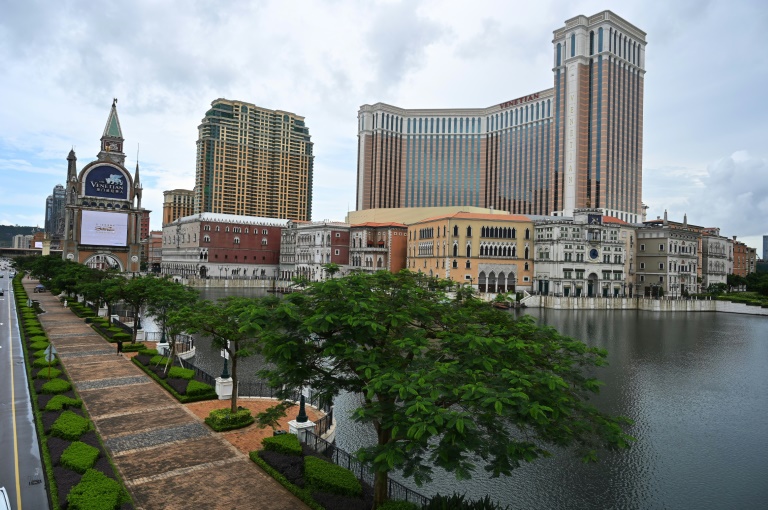
Still, Macau casino stocks rallied as the city said it would accept Chinese tour groups again from November, having been blocked during the pandemic.

London edged up tentatively after Friday’s hammering, while Paris and Frankfurt were also higher.

Oil prices ticked lower, extending the big losses suffered Friday as expectations that a recession is looming hammer demand expectations.

The surging greenback added to the sell-off in crude, which is priced in dollars and therefore ore expensive for buyers using other currencies. 

Both main contracts are sitting at their lowest levels since January, having wiped out all the gains seen in the wake of Russia’s invasion of Ukraine.

Black Gold Investors’ Gary Ross described the strong dollar as “a wrecking ball for commodities”.

– Key figures at around 0810 GMT –

Pound/dollar: DOWN at $1.0700 from $1.0852 on Friday

Euro/pound: UP at 90.40 pence from 89.28 pence 

Euro/dollar: DOWN at $ 0.9673 from 0.9695

Dollar/yen: UP at 143.96 yen from 143.31 yen

London – FTSE 100: UP 0.3 percent at 7,039.64

Tokyo – Nikkei 225: DOWN 2.7 percent at 26,431.55 (close)

Hong Kong – Hang Seng Index: DOWN 0.4 percent at 17,855.14 (close)

Shanghai – Composite: DOWN 1.2 percent at 3,051.23 (close)

West Texas Intermediate: DOWN 0.2 percent at $78.58 per barrel

Brent North Sea crude: DOWN 0.4 percent at $85.84 per barrel

New York – Dow: DOWN 1.6 percent at 29,590.41 (close)

Tokyo stocks end 2.7% lower on slowdown fears

Tokyo stocks closed lower Monday with investors disheartened by global selloffs linked to growing fears over an economic slowdown.

The benchmark Nikkei 225 index plunged 2.66 percent, or 722.28 points, to end at 26,431.55, while the broader Topix index lost 2.71 percent, or 51.84 points, to 1,864.28.

The dollar fetched 143.89 yen, against 143.31 yen on Friday in New York.

Recession fears spread on Friday after central banks ramped up interest rates to combat decades-high inflation, causing stock markets to tumble and the pound to crash against the dollar.

The Federal Reserve’s decision Wednesday to again lift borrowing costs by 75 basis points was followed by a warning that more big rises were in the pipeline and that rates would likely come down only in 2024.

There were similar moves by central banks in other countries, including Britain, Sweden, Norway, Switzerland, the Philippines and Indonesia — all pointing to a dark outlook for markets.

“Last week’s monetary policy meetings around the world highlighted the prospect that rate hikes will continue, which is having a negative impact on Japanese stocks, too,” Makoto Sengoku, senior equity market analyst at Tokai Tokyo Securities, told AFP.

“Stock prices also keep going down, leaving more and more investors feeling uncertain,” he added.

Among major shares in Tokyo, SoftBank Group nosedived 5.18 percent to 5,066 yen, Sony Group plummeted 3.85 percent to 9,682 yen and Toyota plunged 3.20 percent to 1,963 yen. 

Uniqlo operator Fast Retailing ended down 0.83 percent at 80,600 yen. 

Macau casino stocks surge on mainland travel hopes

Casino stocks soared in Macau on Monday after authorities announced plans to gradually welcome back tour groups from the Chinese mainland, the demographic that makes up the vast majority of punters.

Macau is the only place in China where casinos are legal and the former Portuguese colony used to dwarf Las Vegas for the scale of bets placed each month.

But China’s strict zero-Covid controls have laid waste to the gaming sector, hammering the city’s economy and its main source of revenue.

Some much-needed relief came on Sunday when city leader Ho Iat-seng said Macau would start allowing group tours from mainland provinces, as well as easier e-visa rules for mainlanders, from November.

Gaming stocks surged the most in six months on Monday morning, with a Bloomberg Intelligence gauge of the city’s six licensed casino operators showing overall gains of more than 10 percent. 

Sands China led the pack, soaring more than 18 percent, SJM holdings rose more than 14 percent while Wynn Macau was up 10 percent.

Ho said tour group rules would initially be eased for the neighbouring mainland province of Guangdong, followed by other major population centres including Shanghai, Zhejiang, Jiangsu and Fujian.

Daily visitation numbers, he added, could rise to 40,000, compared with just 11,000 in August.

But Macau will not, for now, follow Hong Kong which last week announced it was finally scrapping mandatory hotel quarantine for international travellers.

Instead the city will remain largely closed to overseas visitors, maintaining a seven-day hotel quarantine policy.

Even if pandemic measures are fully lifted it is unlikely Macau’s casinos will see a return to their headiest, freewheeling days.

Chinese President Xi Jinping has spearheaded an anti-corruption campaign that has seen increased scrutiny of the high-rollers and officials who travel to gamble in Macau, where cases of money laundering are common.

Macau’s six operating concessions are currently up for renewal. 

Earlier this month all the current operators made bids alongside a seventh newcomer, a company controlled by Malaysian tycoon and Genting chairman Lim Kok Thay.

Inflation hits home for Mongolians struggling for basic goods

At Ulaanbaatar’s Naiman Sharga money exchange market, elderly women stand in the street waving wads of money at passers-by, encouraging them to change foreign currency to Mongolian tugriks.

Each transaction nets them a small profit — but when the value of the tugrik fluctuates it makes that more difficult, and lately the currency has taken a dive. 

This year the currency has fallen almost 15 percent against the US dollar — most of that since the start of Russia’s invasion of Ukraine.

Angara Banerji, the International Monetary Fund’s mission chief, listed a raft of factors behind the country’s inflation, including a rise in domestic meat prices, China’s border restrictions, surging oil and food prices, and an increase in transportation and logistical costs for imports.

The declining currency has pushed up the cost of everyday goods for a country struggling to navigate global economic headwinds caused by transportation bottlenecks and inflationary pressures, war and economic uncertainty. 

“The rate is going down dramatically because of the war in Ukraine and the coronavirus,” said Ts. Maisaikhan, a currency trader who operates inside the market. 

“We don’t produce much ourselves, most things are imported, so when the dollar goes up the price of everything goes up too.”

Like elsewhere in the world, Mongolia’s inflation has soared this year and reached 14.4 percent in August, compared with 9.5 percent during the same month in 2021, according to the country’s National Statistical Office.

Prices for food and beverages increased by about a fifth on-year in August — the same rate as medicine and health care — while the cost of clothing, utilities and housing also went up.

“Inflation has surged sharply since mid-2021 and has exceeded the Bank of Mongolia’s target band,” said Banerji.

Last summer there were a few weeks when potato prices temporarily tripled after China closed the border over Covid-19.

Next to the money exchange offices lies Urt Tsagaan (Long White), a pedestrian mall filled with jewellery makers, seamstresses, hairdressers, boot repair stalls, cobblers, and tattoo studios. 

In a sewing shop near the money exchange, Sukhbaatar Tuya said she buys some meat and vegetables each day but when prices spike suddenly it just means buying less produce. 

“We’re just going day by day,” she said. “We don’t have any plans beyond the next three days or a week.”

“We have to live like this,” she said. “There is no other way.”

Close Bitnami banner
Bitnami