Chinese Business

Pound hits record low versus dollar, markets drop on recession fears

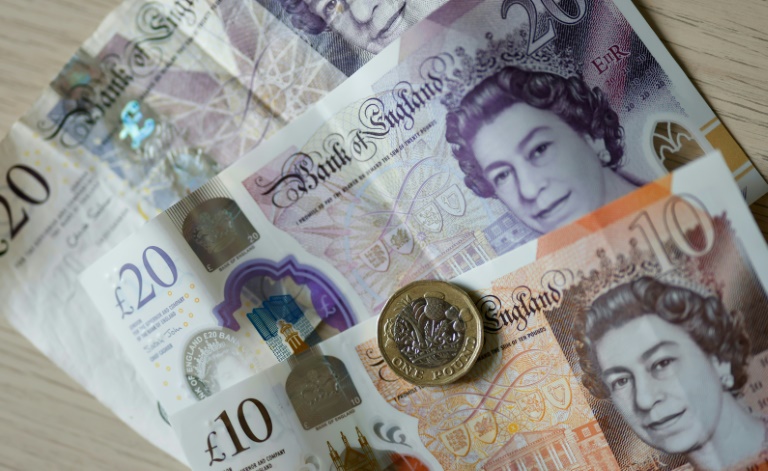
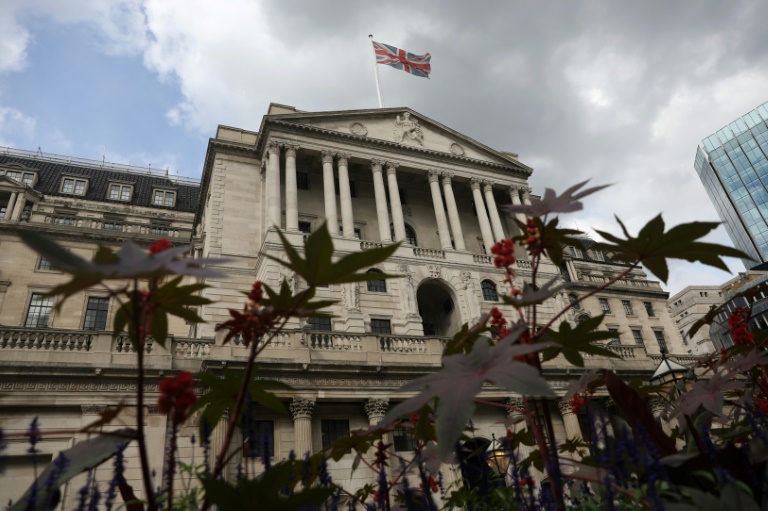
The pound hit a record low against the dollar Monday on surging fears about the UK economy after the government unveiled a huge tax-cutting budget.

The selloff came as most equity markets across Asia fell again owing to a growing expectation that central bank interest rate hikes to fight runaway inflation would lead to deep and painful recessions.

Officials in several countries including the United States, Britain, Switzerland and Sweden unveiled more increases in the cost of borrowing.

The moves sent equity markets deep into the red again after officials reiterated their focus on fighting inflation, even if that means causing a recession.

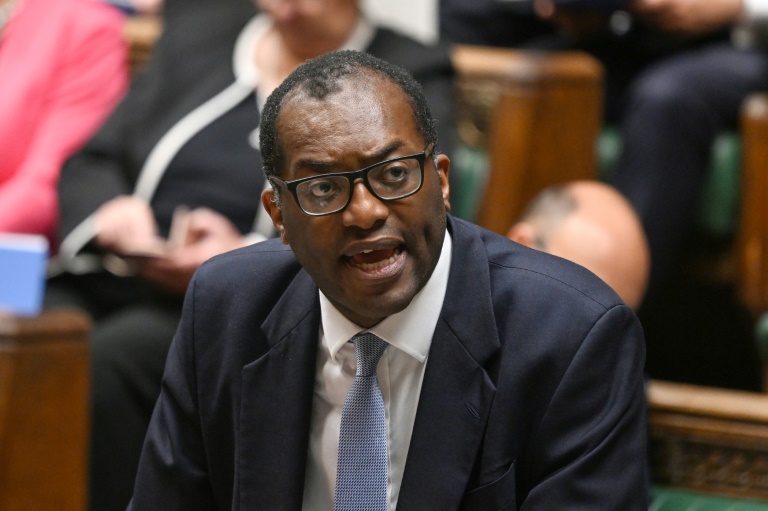
But the biggest casualty of the week was the pound, which fell below $1.10 for the first time since 1985 as new finance minister Kwasi Kwarteng announced his controversial mini-budget.

It then extended the losses Monday to an all-time low of $1.0350 in Asian trade after he said he intended to unveil further reductions, despite his budget causing ructions on London’s markets.

It also fell to a two-year low against the euro, though the single currency remains under pressure against the dollar, sitting at 2002 levels.

Now, observers are warning that the pound could fall to parity with the greenback.

Kwarteng, who was put in place by Liz Truss after she became prime minister earlier this month, said he planned to slash taxes to kickstart the British economy and provide cash to cushion families from rocketing energy costs.

But investors were spooked by the huge amount of borrowing likely needed for the multibillion-pound package, which critics said would benefit the rich far more during a cost-of-living crisis.

“Whether or not the UK government announcement of the biggest tax reduction since 1972… will in time yield a significant growth dividend is not something markets are yet willing to contemplate,” said National Australia Bank’s Ray Attrill.

“Instead, they were consumed by worries over the scale of near-term UK government financing needs, at a time when the current account deficit is running at more than eight percent of GDP.”

He added: “Chatter about a possible UK sovereign rating downgrade has already begun.”

And former US treasury secretary Lawrence Summer was scathing of Britain’s recent monetary policy decisions.

“It makes me very sorry to say, but I think the UK is behaving a bit like an emerging market turning itself into a submerging market,” he told Bloomberg Television’s Wall Street Week last week.

“Between Brexit, how far the Bank of England got behind the curve and now these fiscal policies, I think Britain will be remembered for having (pursued) the worst macroeconomic policies of any major country in a long time.”

The collapse in sterling came as markets across the world are sent into a spin by recession worries caused by a sharp tightening of monetary policy by central banks fighting decades-high inflation. 

The retreat in London was mirrored in Europe and New York, where the Dow hit a two-year low, and Asia followed suit.

Tokyo shed two percent as traders there returned from a long weekend break, while Sydney, Seoul, Singapore, Taipei and Jakarta also tanked.

But Hong Kong rose as traders welcomed news that the city had relaxed strict hotel quarantine measures for travellers, providing a much-needed boost to the embattled economy.

Macau casino stocks led the way as the city said it would accept Chinese tour groups again from November, having been blocked during the pandemic.

Shanghai stocks also rose.

Oil prices edged up slightly, though barely made a dent in the big losses suffered Friday as expectations that a recession is looming hammer demand expectations.

– Key figures at around 0230 GMT –

Pound/dollar: DOWN at 1.0570 from 1.0852 on Friday

Euro/pound: UP at 91.38 pence from 89.28 pence 

Euro/dollar: DOWN at $ 0.9656 from 0.9695

Dollar/yen: UP at 143.82 yen from 143.31 yen

Hong Kong – Hang Seng Index: UP 0.2 percent at 17,970.69 

Shanghai – Composite: UP 0.1 percent at 3,091.82 

Tokyo – Nikkei 225: DOWN 2.0 percent at 26,619.53 (break)

West Texas Intermediate: UP 0.5 percent at $79.13 per barrel

Brent North Sea crude: UP 0.4 percent at $86.52 per barrel

New York – Dow: DOWN 1.6 percent at 29,590.41 (close)

London – FTSE 100: DOWN 2.0 percent at 7,018.60 (close) 
'You cannot survive': Inflation bites as Thai election looms

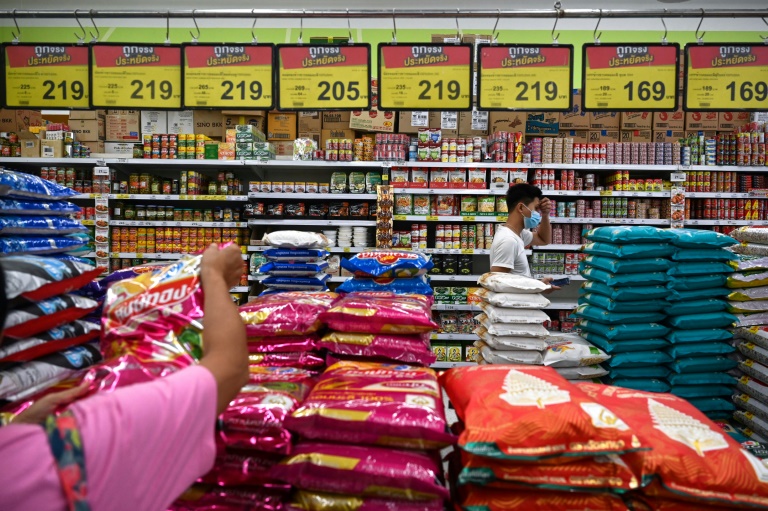
Sheltering from rain near Bangkok’s Grand Palace, scores of unemployed Thais queue alongside homeless people waiting for free meals as 14-year-high inflation sends living costs soaring — causing a headache for the government ahead of a looming general election.

The leadership came to power eight years ago under Prayut Chan-O-Cha, promising to provide stability after long-running protests started to hit the kingdom’s economy.

However, it struggled to live up to its pledges and the damage wrought by the pandemic on the travel industry has been compounded by a global inflationary crisis that has sent prices rising beyond many people’s reach.

And in a move seen as symbolic of the severity of the situation but likely to cause more pain for consumers, the government recently raised the price of instant noodles for the first time in more than a decade after manufacturers agitated for a rise.

For those waiting in the rain, the impact is already painfully clear.

“A few years ago, I was able to afford buying my own food but now food is too expensive,” said Somchai, who only gave one name, and who is unemployed.

“I couldn’t bear the prices so I have to come out and find food donation like this,” said the 42-year-old after he had collected his meal.

A general election must be called by March, giving the coalition government led by the military-friendly Palang Pracharat Party (PPRP) little time to turn things around.

– Unkept promises –

Adding to PPRP’s woes, Prayut was suspended from office last month while the Constitutional Court decides whether he has reached his term limit as prime minister.

In a bid to ease the pain for struggling Thais, the government has approved a proposal to raise the daily minimum wage to between 328 and 354 baht ($8.83 and $9.53) after earlier agreeing to extend a fuel tax break.

But political analyst Napisa Waitoolkiat at Naresuan University told AFP the measures were taken “for winning votes” but doubted they would turn many voters around.

“The damage is beyond repair,” she said.

The economy looks set to be a major factor in the election, and Napisa said voters would not forget the PPRP’s vows to improve it.

“Yet, once they are in power, they cannot keep the promise,” she said.

And while the minimum wage hike goes some way, Thammasat University international business professor Pavida Pananond suggested more was needed.

“What we now need to look at is more targeted policy measures that would help alleviate the difficulty from rising living costs among Thai lower-income households,” she said.

Growth remains sluggish — just 2.5 percent in the second quarter, dragged by high inflation despite the return of foreign visitors after the pandemic shutdowns.

“You will see that even the GDP growth rate of Thailand is the slowest in the region,” Pavida said.

– ‘You cannot survive’ –

Pavida also warned that price rises, like those of instant noodles, could be a precursor to further hikes in foodstuff.

“For lower-income people, whose majority of income is spent on food or energy, they would be even more impacted by this,” she said.

Veerayuth Sae-ung, queueing to buy a noodle lunch in central Bangkok, said his “way of eating has changed a lot”.

“I used to come down here and buy lunch like this daily, but lately I just couldn’t afford to buy from stalls every day anymore,” the 34-year-old said.

Greg Lange, co-founder of Bangkok Community Help Foundation which distributes 500 meals a day, warned they were helping more and more people.

“Even in spite of the rain, there are some times that the line goes two or three blocks,” he said.

“I think it was already very hard for the elderly to make ends meet,” his co-founder Friso Poldervaart added.

Poldervaart said many of the elderly people they helped had lost touch with their families and were unable to survive on the government support of between 600 and 1,000 baht a month.

“You cannot survive on that. That’s just the way it is,” he said.

“So it was already hard, but of course with increasing prices it just gets harder for everyone to make ends meet.”

World markets plunge on growing recession fears

Stock markets tumbled, the pound crashed against the dollar and oil prices slumped Friday on growing recession fears after central banks this week ramped up interest rates to fight decades-high inflation.

With price rises showing no solid sign of letting up, monetary policymakers have gone on the offensive, warning that short-term hits to economies are less painful than the long-term effects of not acting.

The Federal Reserve’s decision Wednesday to lift borrowing costs by 0.75 percentage points for a third successive meeting was followed by a warning that more big rises were in the pipeline and that rates would likely come down only in 2024.

There were similar moves by central banks in other countries including Britain, Sweden, Norway, Switzerland, the Philippines and Indonesia — all pointing to a dark outlook for markets.

Wall Street extended losses Friday while European equities sank in afternoon deals and Asia finished lower.

“A negative end to the week in Asia, and Europe has quickly followed as the prospect of much more tightening and a recession weighs on sentiment,” said Craig Erlam, analyst at trading platform OANDA.

In a sign that recession expectations are rising, the 10-year US Treasury yield jumped to its highest level in a decade.

“It’s a messy situation in the Treasury market to be sure and that is creating a messy situation for stocks. However, it’s not just a US situation. Things are messy elsewhere,” said Briefing.com analyst Patrick O’Hare.

The UK 10-year yield struck an 11-year high on Friday.

The British pound tumbled to a 37-year low under $1.10 as a tax-cutting budget sparked public finance concerns while recession fears mounted.

“Equity markets are also plunging on concerns that this (UK) package could further push inflation even higher, and thus make it more difficult to bring back down,” said Michael Hewson, chief market analyst at CMC Markets UK.

In the eurozone, recession fears deepened as data showed its economic activity fell once again in September.

The S&P eurozone PMI dropped to 48.2 in September — with a score under 50 representing economic contraction.

The euro hit a new two-decade low at $0.9751.

“A eurozone recession is on the cards as companies report worsening business conditions and intensifying price pressures linked to soaring energy costs,” said Chris Williamson, chief business economist at S&P Global Market Intelligence.

He added that falling UK business activity this month indicates that the British economy is likely already in recession.

Recession fears also caused oil prices to fall, with the main US contract, WTI, falling below $80 for the first time since January.

Traders were keeping a close eye as well on developments following the Japanese finance ministry’s intervention to support the yen, after it hit a new 24-year low of 146 against the dollar.

The first such intervention since 1998 helped strengthen the yen but it remained above 140.

Analysts warned the move was unlikely to have much long-term impact and the yen remained vulnerable owing to the Bank of Japan’s refusal to tighten policy — citing a need to boost the economy.

– Key figures at around 1435 GMT –

New York – Dow: DOWN 1.4 percent at 29,644.98 points

London – FTSE 100: DOWN 2.3 percent at 6,997.50 

Frankfurt – DAX: DOWN 1.9 percent at 12,294.22

Paris – CAC 40: DOWN 2.3 percent at 5,782.79

EURO STOXX 50: DOWN 2.3 percent at 3,349.75

Hong Kong – Hang Seng Index: DOWN 1.2 percent at 17,933.27 (close)

Shanghai – Composite: DOWN 0.7 percent at 3,088.77 (close)

Tokyo – Nikkei 225: Closed for a holiday

Pound/dollar: DOWN at $1.0972 from $1.1252 Thursday

Euro/dollar: DOWN at $0.9726 from $0.9839

Euro/pound: UP at 88.65 pence from 87.40 pence 

Dollar/yen: UP at 143.12 yen from 142.35 yen

West Texas Intermediate: DOWN 4.9 percent at $78.61 per barrel

Brent North Sea crude: DOWN 4.6 percent at $84.95 per barrel

burs-lth/ach  

World markets plunge on growing recession fears

Stock markets tumbled, the pound crashed against the dollar and oil prices slumped Friday on growing recession fears after central banks this week ramped up interest rates to fight decades-high inflation.

With price rises showing no solid sign of letting up, monetary policymakers have been forced to go on the offensive, warning that short-term hits to economies are less painful than the long-term effects of not acting.

The Federal Reserve’s decision Wednesday to lift borrowing costs by 0.75 percentage points for a third successive meeting was followed by a warning that more big rises were in the pipeline and that rates would likely come down only in 2024.

That came along with similar moves by banks in several other countries including Britain, Sweden, Norway, Switzerland, the Philippines and Indonesia — all pointing to a dark outlook for markets.

“We see this new even-higher-for-longer rate path as associated with a substantially higher likelihood of a hard landing, and so not just unambiguously hawkish but unambiguously bad for risk,” said Krishna Guha, vice-chair of Evercore ISI.

In a sign that recession expectations are rising, the 10-year US Treasury yield jumped to 3.7 percent, its highest level in a decade, while on Wall Street the S&P 500 has sunk to its weakest level since June and just above its 2022 lows.

The UK 10-year yield struck at an 11-year high at 3.84 percent Friday.

The pound slumped to $1.1021, the lowest level since 1985, even as the UK government unveiled a tax-cutting budget aimed at driving growth.

In the eurozone, recession fears deepened as data showed its economic activity fell once again in September.

The S&P eurozone PMI dropped to 48.2 in September — with a score under 50 representing economic contraction.

“A eurozone recession is on the cards as companies report worsening business conditions and intensifying price pressures linked to soaring energy costs,” said Chris Williamson, chief business economist at S&P Global Market Intelligence. 

He added that falling UK business activity this month indicates that the British economy is likely already in recession.

Traders were keeping a close eye also on developments following the Japanese finance ministry’s intervention to support the yen, after it hit a new 24-year low of 146 against the dollar.

The first such intervention since 1998 helped strengthen the yen to just above 140.

But analysts warned the move was unlikely to have much long-term impact and the yen remained vulnerable owing to the Bank of Japan’s refusal to tighten policy — citing a need to boost the economy.

Recession fears also caused oil prices to fall by more than three percent.

– Key figures at around 1115 GMT –

London – FTSE 100: DOWN 2.4 percent at 6,984.85 points

Frankfurt – DAX: DOWN 2.6 percent at 12,201.91

Paris – CAC 40: DOWN 2.4 percent at 5,777.00

EURO STOXX 50: DOWN 2.6 percent at 3,337.10

Hong Kong – Hang Seng Index: DOWN 1.2 percent at 17,933.27 (close)

Shanghai – Composite: DOWN 0.7 percent at 3,088.77 (close)

Tokyo – Nikkei 225: Closed for a holiday

New York – Dow: DOWN 0.4 percent at 30,076.68 (close)

Pound/dollar: DOWN at $1.1059 from $1.1252 Thursday

Euro/dollar: DOWN at $0.9760 from $0.9839

Euro/pound: UP at 88.27 pence from 87.40 pence 

Dollar/yen: UP at 142.90 yen from 142.35 yen

West Texas Intermediate: DOWN 3.4 percent at $80.68 per barrel

Brent North Sea crude: DOWN 3.2 percent at $87.56 per barrel

burs-bcp/rfj/lth

Markets endure further losses, dollar rises as central banks turn screws

Asian markets fell again Friday and the dollar extended gains as part of a global sell-off fuelled by recession fears after central banks around the world ramped up interest rates to fight decades-high inflation.

With price rises showing no solid sign of letting up, monetary policymakers have been forced to go on the offensive, warning that short-term hits to economies are less painful than the long-term effects of not acting.

The Federal Reserve’s decision Wednesday to lift borrowing costs 75 basis points for a third successive meeting was followed by a warning that more were in the pipeline and they would not likely come down until 2024.

That came along with similar moves by banks in several other countries including Britain, Sweden, Norway, Switzerland, the Philippines and Indonesia — all pointing to a dark outlook for equities.

“We see this new even-higher-for-longer rate path as associated with a substantially higher likelihood of a hard landing, and so not just unambiguously hawkish but unambiguously bad for risk,” Krishna Guha, vice-chair of Evercore ISI, said.

In a sign that recession expectations are rising, the 10-year US Treasury yield jumped to 3.7 percent, its highest level in a decade, while the S&P 500 sank to its weakest level since June and just above its 2022 lows.

There were also losses on the Nasdaq and Dow, while London, Paris and Frankfurt shed more than one percent apiece.

Asia followed suit.

Hong Kong dropped, even as the city’s government lifted long-running hotel quarantine rules for incoming travellers as officials look to kickstart the battered economy. 

Shanghai, Sydney, Mumbai, Bangkok, Seoul, Singapore, Wellington, Taipei and Manila also retreated.

London, Paris and Frankfurt all fell in the morning.

The dollar, which has surged to multi-decade highs against its major peers as well as emerging currencies, held its strength.

Traders are keeping a close eye on developments following the Japanese finance ministry’s intervention to support the yen, after it hit a new 24-year low of 146 against the dollar.

The first such intervention since 1998, it helped strengthen the yen to just above 140.

But analysts warned the move was unlikely to have much long-term impact and the yen remained vulnerable owing to the Bank of Japan’s refusal to tighten policy — citing a need to boost the economy — as the Fed ramps up rates.

“Given the now even starker contrast between the (central bank’s) policy stance and central banks everywhere else in the world… (the) MoF will need to be in this intervention game for the long haul and in size if it is to have much hope of arresting yen weakness in an ongoing strong dollar environment,” said National Australia Bank’s Ray Attrill.

The pound also fell to a new 37-year low of $1.1170, even after the Bank of England hiked interest rates by half a point.

Oil markets remain subdued by concerns about a hit to demand caused by the expected recession.

Both main contracts dipped even as speculation swirled that OPEC and other major producers could cut output as they fear prices are falling too fast.

The commodity has fallen about a third from highs seen soon after Russia’s February invasion of Ukraine, and is even below levels seen before the conflict.

“This is going to be a very, very volatile last quarter,” said Amrita Sen, of Energy Aspects, on Bloomberg Television. She added that there were “just too many different and contradictory factors driving prices right now”.

– Key figures at around 0810 GMT –

Hong Kong – Hang Seng Index: DOWN 1.2 percent at 17,933.27 (close)

Shanghai – Composite: DOWN 0.7 percent at 3,088.77 (close)

London – FTSE 100: DOWN 0.4 percent at 7,130.11

Tokyo – Nikkei 225: Closed for a holiday

Dollar/yen: DOWN at 142.27 yen from 142.35 yen Thursday

Pound/dollar: DOWN at $1.1178 from $1.1252

Euro/dollar: DOWN at $0.9777 from $0.9839

Euro/pound: UP at 87.43 pence from 87.40 pence 

West Texas Intermediate: DOWN 1.6 percent at $82.19 per barrel

Brent North Sea crude: DOWN 1.5 percent at $89.13 per barrel

New York – Dow: DOWN 0.4 percent at 30,076.68 (close)

— Bloomberg News contributed to this story —

Lachlan Murdoch faces off with Crikey in defamation row

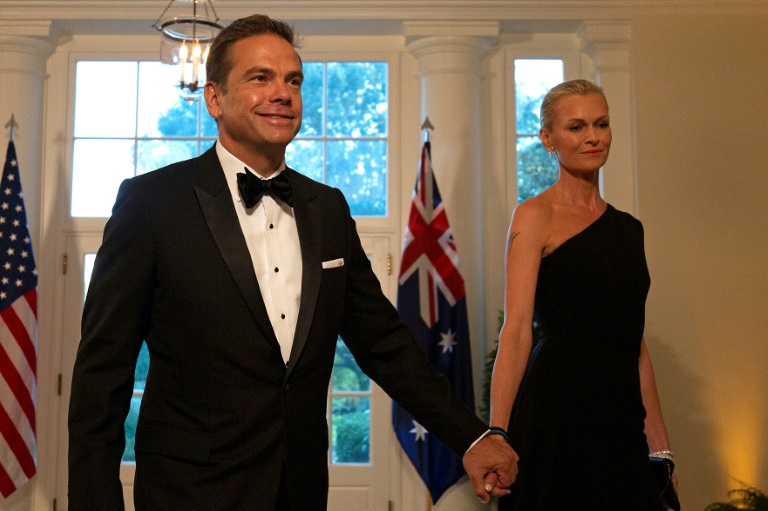
A high-stakes defamation battle between News Corp co-chairman Lachlan Murdoch and small Australian news outlet Crikey will go to trial beginning March 27 in Sydney.

Rupert Murdoch’s eldest son — who is also chief executive of Fox News parent Fox Corporation — is suing Crikey over an opinion piece that linked his family’s media empire to the January 6, 2021 storming of the US Capitol by supporters of then-President Donald Trump.

The media scion’s lawyers claimed their client was defamed over a dozen times in the article, which accused “the Murdochs and their slew of poisonous Fox News commentators” of being “unindicted co-conspirators” in the Capitol riot.

On Friday, Murdoch’s barrister — top defamation litigator Sue Chrysanthou — pushed in the preliminary hearing for the earliest possible trial date, arguing Crikey had been “directing ridicule and hatred” towards her client.

Crikey was “publicly claiming martyrdom”, she told the largely administrative case management hearing, pointing to the outlet running billboard advertisements about the case and fundraising online for its defence.

In the past month, Crikey’s GoFundMe campaign has raised nearly A$500,000 (US$333,000) and garnered support from two former Australian Prime Ministers, Kevin Rudd and Malcolm Turnbull.

“Lachlan Murdoch owns boats that are worth more than Crikey,” Turnbull commented alongside his Aus$5,000 (US$3,400) donation.

– A very public fight –

The legal scuffle over the opinion piece burst into international headlines last month, when Crikey ran an advertisement in The New York Times daring Murdoch to sue.

The often pugilistic website said it welcomed the opportunity to “test this important issue of freedom of public interest journalism in a courtroom”.

Murdoch filed his lawsuit the next day.

The tussle pits an upstart website, with subscriber numbers in the low tens of thousands, against one of the world’s largest media empires.

Defamation expert David Rolph from the University of Sydney told AFP Murdoch’s case could be the first test of recent attempts to reform Australia’s notoriously tough defamation laws.

Australia has gained a reputation as “the defamation capital of the world” after a slew of lawsuits launched by high-profile figures, including actors and politicians.

Crikey’s defence, filed with the Federal Court Tuesday, denied it defamed Murdoch and flagged it would lean on two new defences created by the reforms.

“One is a serious harm threshold… the plaintiff now has to prove that they not only suffered some harm to reputation, but that it was serious harm to reputation,” Rolph explained.

Crikey will also seek to argue that the opinion piece, by writer Bernard Keane, was in the public interest.

“I suppose the difficulty here is that defence is entirely untested. This will be a test case of that,” Rolph said.

– Public interest fight –

In a statement issued Thursday, Crikey chief executive Will Hayward said his company was fighting the case because “there is an issue of fundamental public importance at stake”.

“We think it is important in an open, well-functioning society that the rich and powerful can be critiqued.”

While Murdoch has stayed quiet since launching the case, his statement of claim accused Crikey of using the legal saga to drive subscriptions.

He has asked the court to permanently ban Crikey from publishing anything suggesting he “illegally conspired with Donald Trump” around the events of January 6.

The case will be heard by Justice Wigney, who has overseen several closely-watched defamation trials — including actor Geoffrey Rush’s successful suit against another Australian media outlet.

Wigney said Friday that before the trial begins, he would seek to have the parties enter mediation where “cool commercial minds may prevail”.

Hong Kong replaced by Singapore as Asia's top finance centre

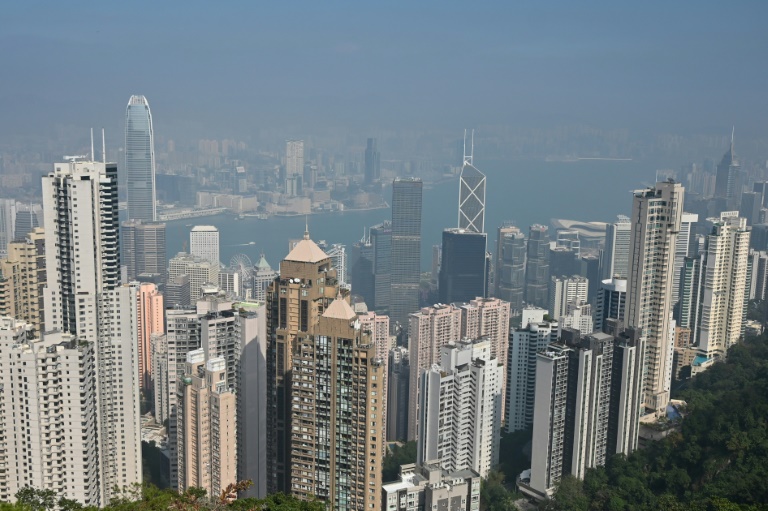
Hong Kong has lost its crown as Asia’s premier finance centre to Singapore in a global ranking list where New York and London maintained their number one and two spots.

Singapore jumped three places to third in the twice-a-year Global Financial Centres Index (GFCI) which assesses 119 cities around the world and was published late Thursday.

Hong Kong has adhered to a version of China’s strict zero-Covid rules throughout the pandemic, battering the economy and deepening a brain drain as rival business hubs reopen.

The city still mandates three days of hotel quarantine for all international arrivals while its border with the Chinese mainland is mostly closed.

In contrast, Singapore successfully shifted to endemicity earlier this year and has reopened without restrictions.

The city-state is hosting a slew of financial and business conferences in the coming months as well as a Formula 1 night race next week, while about four million people are expected to visit this year.

In a 600-word statement responding to the latest GFCI ranking, Hong Kong’s government focused on the city scoring a higher points rating than the year before.

“We will continue to listen to views and be bold in taking forward reforms to consolidate and strengthen Hong Kong’s capital market and our role as an international financial centre,” the government said.

The statement did not mention the coronavirus or the ongoing pandemic controls.

San Francisco came in at number five in the survey, up two spots. Shanghai, which was shut down earlier this year under China’s coronavirus controls, was number six followed by Los Angeles, Beijing and Shenzhen. 

Paris took tenth spot, replacing Tokyo which fell to 16th place.

Lachlan Murdoch faces off with Crikey in defamation row

The high-stakes defamation battle between News Corp co-chairman Lachlan Murdoch and small Australian news outlet Crikey will go to trial beginning March 27 in Sydney.

Rupert Murdoch’s eldest son — who is also chief executive of Fox News parent Fox Corporation — is suing Crikey over an opinion piece that linked his family’s media empire to the January 6, 2021 storming of the US Capitol by supporters of then-President Donald Trump.

The media scion’s lawyers claimed their client was defamed over a dozen times in the article, which accused “the Murdochs and their slew of poisonous Fox News commentators” of being “unindicted co-conspirators” in the Capitol riot.

On Friday, Murdoch’s barrister — top defamation litigator Sue Chrysanthou — pushed for the earliest possible trial date, arguing Crikey had been “directing ridicule and hatred” towards her client.

She said Crikey was “publicly claiming martyrdom”, pointing to the outlet running billboard advertisements about the case and fundraising online for its defence.

In the past month, Crikey’s GoFundMe campaign has raised nearly A$500,000 (US$333,000) and garnered support from two former Australian Prime Ministers, Kevin Rudd and Malcolm Turnbull.

“Lachlan Murdoch owns boats that are worth more than Crikey,” Turnbull commented alongside his Aus$5,000 (US$3,400) donation.

– A very public fight –

The legal scuffle over the opinion piece burst into international headlines last month, when Crikey ran an advertisement in The New York Times daring Murdoch to sue.

The often pugilistic website said it welcomed the opportunity to “test this important issue of freedom of public interest journalism in a courtroom”.

Murdoch filed his lawsuit the next day.

The tussle pits an upstart website, with subscriber numbers in the low tens of thousands, against one of the world’s largest media empires.

Defamation expert David Rolph from the University of Sydney told AFP Murdoch’s case could be the first test of recent attempts to reform Australia’s notoriously tough defamation laws.

Australia has gained a reputation as “the defamation capital of the world” after a slew of lawsuits launched by high-profile figures, including actors and politicians.

Crikey’s defence, filed with the Federal Court Tuesday, denied it defamed Murdoch and flagged it would lean on two new defences created by the reforms.

“One is a serious harm threshold… the plaintiff now has to prove that they not only suffered some harm to reputation, but that it was serious harm to reputation,” Rolph explained.

Crikey will also seek to argue that the opinion piece, by writer Bernard Keane, was in the public interest.

“I suppose the difficulty here is that defence is entirely untested. This will be a test case of that,” Rolph said.

– Public interest fight –

In a statement issued Thursday, Crikey chief executive Will Hayward said his company was fighting the case because “there is an issue of fundamental public importance at stake”.

“We think it is important in an open, well-functioning society that the rich and powerful can be critiqued.”

While Murdoch has stayed quiet since launching the case, his statement of claim accused Crikey of using the legal saga to drive subscriptions.

He has asked the court to permanently ban Crikey from publishing anything suggesting he “illegally conspired with Donald Trump” around the events of January 6.

The case will be heard by Justice Wigney, who has overseen several closely-watched defamation trials — including actor Geoffrey Rush’s successful suit against another Australian media outlet.

Wigney said Friday that before the trial begins, he would seek to have the parties enter mediation where “cool commercial minds may prevail”.

Asian markets suffer further losses as central banks turn screws

Asian markets fell again Friday as part of a global sell-off fuelled by recession fears after central banks around the world ramped up interest rates to fight decades-high inflation.

With price rises showing no solid sign of letting up, monetary policymakers have been forced to go on the offensive, warning that short-term hits to economies are less painful than the long-term effects of not acting.

The Federal Reserve’s decision Wednesday to lift borrowing costs 75 basis points for a third successive meeting was followed by a warning that more were in the pipeline and they would not likely come down until 2024.

That came along with similar moves by banks in several other countries including Britain, Sweden, Norway, Switzerland, the Philippines and Indonesia — all pointing to a dark outlook for equities.

“We see this new even-higher-for-longer rate path as associated with a substantially higher likelihood of a hard landing, and so not just unambiguously hawkish but unambiguously bad for risk,” Krishna Guha, vice chairman of Evercore ISI, said.

In a sign that recession expectations are rising, the yield on a 10-year US Treasury jumped to 3.7 percent, its highest level in a decade, while the S&P 500 sank to its weakest level since June and just above its 2022 lows.

There were also losses on the Nasdaq and Dow, while London, Paris and Frankfurt shed more than one percent apiece.

Asia largely followed suit, though bargain-buying provided a modicum of support.

Hong Kong, Shanghai, Sydney, Seoul, Singapore, Wellington, Taipei and Manila all dropped.

The dollar, which has surged to multi-decade highs against its major peers as well as emerging currencies, held its strength.

Traders are keeping a close eye on developments following the Japanese finance ministry’s intervention to support the yen, after it hit a new 24-year low of 146 against the dollar.

The first such intervention since 1998, it helped strengthen the yen to just above 140.

However, analysts warned the move was unlikely to have much long-term impact and the yen remained vulnerable owing to the Bank of Japan’s refusal to tighten policy — citing a need to boost the economy — as the Fed ramps up rates.

“Given the now even starker contrast between the (central bank’s) policy stance and central banks everywhere else in the world… (the) MoF will need to be in this intervention game for the long haul and in size if it is to have much hope of arresting yen weakness in an ongoing strong dollar environment,” said National Australia Bank’s Ray Attrill.

Oil markets remain subdued by concerns about a hit to demand caused by the expected recession.

Both main contracts fluctuated as speculation swirled that OPEC and other major producers could cut output as they fear prices are falling too fast.

The commodity has fallen about a third from highs seen soon after Russia’s February invasion of Ukraine, and is even below levels seen before the conflict.

“This is going to be a very, very volatile last quarter,” said Amrita Sen, of Energy Aspects, on Bloomberg Television. She added that there were “just too many different and contradictory factors driving prices right now”.

– Key figures at around 0230 GMT –

Hong Kong – Hang Seng Index: DOWN 0.5 percent at 18,066.14

Shanghai – Composite: DOWN 0.4 percent at 3,096.17

Tokyo – Nikkei 225: Closed for a holiday

Dollar/yen: DOWN at 142.13 yen from 142.35 yen Thursday

Pound/dollar: DOWN at $1.1239 from $1.1252

Euro/dollar: DOWN at $0.9829 from $0.9839

Euro/pound: UP at 87.46 pence from 87.40 pence 

West Texas Intermediate: FLAT at $83.47 per barrel

Brent North Sea crude: DOWN 0.1 percent at $90.40 per barrel

New York – Dow: DOWN 0.4 percent at 30,076.68 (close)

London – FTSE 100: DOWN 1.1 percent at 7,159.52 (close)

— Bloomberg News contributed to this story —

Markets drop as central banks hike rates

Stock markets retreated on Thursday as the US Federal Reserve and several of Europe’s central banks unleashed more hefty interest rate hikes that aim to stomp inflation but raise fears of recession.

On Wall Street, the Dow Jones Industrial Average was off 0.4 percent in late morning trading, with the broader S&P 500 and tech-heavy Nasdaq Composite down further.

European markets finished lower, with London’s FTSE 100 down 1.1 percent after the Bank of England raised its rate again to combat inflation and signalled that the UK entered recession in the current quarter.

The BoE’s 0.5-percentage-point hike was smaller than the US Federal Reserve’s third consecutive 0.75-point increase.

“Today has seen another bout of downside for stock markets throughout Europe and the US, with geopolitical and economic concerns providing a drag on risk assets once again,” Joshua Mahony, senior market analyst at online trading platform IG.

“On a week dominated by central banks, it was always going to be difficult to envisage a scenario where traders emerge with a positive outlook,” he added.

The world’s major central banks are rushing to ramp up rates to dampen red-hot global consumer prices, but traders fear rising borrowing costs will herald recession.

While the Fed’s 0.75-percentage-point rise was widely expected, there was some surprise at the central bank’s forecast that borrowing costs would likely be held above four percent throughout next year.

Fed chairman Jerome Powell reiterated his determination to focus on bringing down inflation — which is at a four-decade high — and accepted that the campaign would hit Americans hard.

“What hit home for market participants yesterday is that the Fed, steered by Fed Chair Powell, really means business now in restoring price stability, and if that means a hard landing for the economy, so be it,” said Briefing.com analyst Patrick O’Hare.

– Japan bucks the trend –

Switzerland and Norway also sprang hefty interest rate hikes on Thursday, two days after a super-sized increase in Sweden.

In Asia, Indonesia and the Philippines also tightened monetary policy but the Bank of Japan bucked the global trend as it left its status quo in place.

The dollar pared back gains after rising against other major currencies following the Fed’s rate decision.

The British pound briefly dived to a new 37-year low at $1.1212 but recovered after the BoE announcement.

The euro touched a new 20-year dollar low of $0.9809.

The yen, which has been plummeting due to the policy gap between the US and Japanese central banks, clawed back against the dollar after Japan’s finance ministry said it intervened in the currency market.

Oil prices extended recent gains after Russian President Vladimir Putin announced a partial mobilisation of the Russian army and made a veiled threat to use nuclear weapons against the West.

– Key figures at around 1530 GMT –

New York – Dow: DOWN 0.4 percent at 30,055.94 points

EURO STOXX 50: DOWN 1.9 percent at 3,427.14

London – FTSE 100: DOWN 1.1 percent at 7,159.52 (close)

Frankfurt – DAX: DOWN 1.8 percent at 12,531.63 (close)

Paris – CAC 40: DOWN 1.9 percent at 5,918.50 (close)

Tokyo – Nikkei 225: DOWN 0.6 percent at 27,153,83 (close)

Hong Kong – Hang Seng Index: DOWN 1.6 percent at 18,147.95 (close)

Shanghai – Composite: DOWN 0.3 percent at 3,108.91 (close)

Pound/dollar: DOWN at $1.1256 from $1.1270 Wednesday

Euro/dollar: DOWN at $0.9821 from $0.9837

Euro/pound: DOWN at 87.24 pence from 87.29 pence 

Dollar/yen: DOWN at 142.25 yen from 144.06 yen

Brent North Sea crude: UP 0.9 percent at $90.63 per barrel

West Texas Intermediate: UP 0.9 percent at $83.69 per barrel

burs-rl/lth

Close Bitnami banner
Bitnami