Chinese Business

Stocks advance ahead of US rate hike

Stock markets pushed higher Wednesday as traders awaited another hefty US interest rate hike from the Federal Reserve.

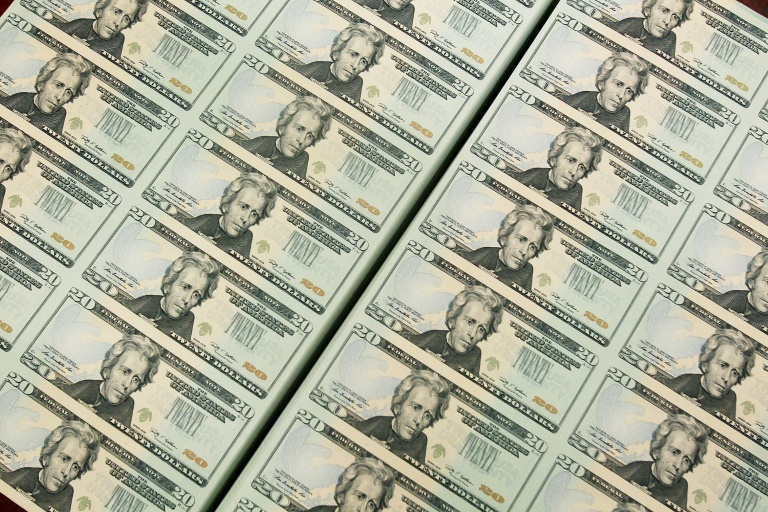
The dollar reached the highest level in 20 years against a basket of major rival currencies with investors seeking safety as Russia escalates operations in its war against Ukraine.

The Dollar index, which compares the US unit against currencies including the euro, pound and yen, jumped to 111.06 points, also as the Fed prepares a third successive jumbo rate hike to combat decades-high inflation.

The British pound hit a new 37-year low at $1.1305, even as the Bank of England prepares to announce its own large interest rate hike Thursday.

“Global stock markets remain under pressure as investors await the Federal Reserve’s much-anticipated interest rate decision today, keep a close eye on the energy crisis in Europe, and weigh other risks including a slowing Chinese and global economies,” said City Index analyst Fawad Razaqzada.

Although European and US equity indices were advancing ahead of the Fed’s decision, Razaqzada said he believes “the path of least resistance is to the downside and the selling pressure will likely resume amid a bearish macro-outlook.”

Stocks have taken a battering since hotter-than-expected US inflation data last week solidified expectations that the Fed will announce another 75 basis-point lift, with some predicting a full percentage-point move.

The current Fed rate is 2.25 to 2.50 percent.

“The Fed is having to be cruel in order to restore price stability,” noted Russ Mould, investment director at AJ Bell.

“Higher rates will cause pain to households and businesses, with the jobs market being closely watched for signs of redundancies and hiring freezes.”

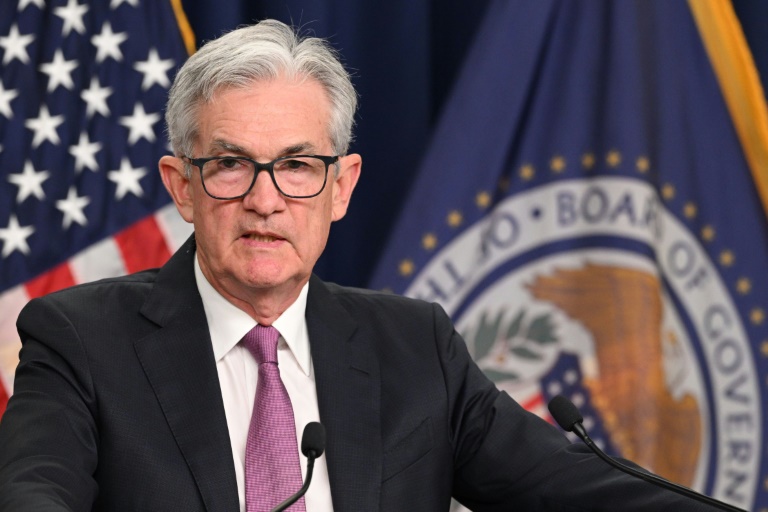
In the event of no surprises on the rate hike, the US central bank’s forecast and post-meeting comments from boss Jerome Powell will be the main attraction for investors.

Briefing.com analyst Patrick O’Hare said investors will be looking at the updated projection for the peak of this cycle of interest rate hikes, or the terminal rate, with the market now expecting a peak of 4.50-4.75 percent by May 2023.

If the Fed’s projection is lower, then a relief rally could come about, depending on what Powell says in his press conference, he said.

If Powell “strikes a softer tone than he did at the Jackson Hole Conference (of central bankers) in late August, suggesting the Fed may be getting close to a point where it can pause its rate hikes, then the stock market should respond quite favorably,” said O’Hare.

Other central banks are meeting this week. On Tuesday, policymakers in Sweden surprised markets by unveiling a one percentage-point hike.

Adding to the cautious mood was Vladimir Putin’s announcement of a “partial mobilisation” as Russia’s president upped the ante in his battle against Ukraine.

Putin backed annexation referendums in four regions in Russian-held parts of Ukraine and issued a thinly-veiled threat about using nuclear weapons.

The moves mark an escalation in the seven-month war, which has roiled markets and sparked an energy crisis.

Oil prices surged nearly three percent on Wednesday before turning negative. They have wilted in recent months on weaker demand expectations fuelled by recession fears.

“Crude oil prices have edged higher in the wake of this morning’s hawkishness from Russia, however once again progress has been difficult, as recession concerns dominate,” said Michael Hewson at CMC Markets.

Asian stock markets closed lower Wednesday, reversing Tuesday’s bounce.

– Key figures at around 1530 GMT –

New York – Dow: UP 0.4 percent at 30,840.96 points

EURO STOXX 50: UP 0.7 percent at 3,491.87

London – FTSE 100: UP 0.6 percent at 7,237.64 (close)

Frankfurt – DAX: UP 0.8 percent at 12,6767.15 (close)

Paris – CAC 40: UP 0.9 percent at 6,031.33 (close)

Tokyo – Nikkei 225: DOWN 1.4 percent at 27,313.13 (close)

Hong Kong – Hang Seng Index: DOWN 1.8 percent at 18,444.62 (close)

Shanghai – Composite: DOWN 0.2 percent at 3,117.18 (close)

Pound/dollar: DOWN at $1.1329 from $1.1384 Tuesday

Euro/dollar: DOWN at $0.9877 from $0.9970

Euro/pound: DOWN at 87.12 pence from 87.63 pence 

Dollar/yen: UP at 144.11 yen from 143.72 yen

Brent North Sea crude: DOWN 1.0 percent at $89.71 per barrel

West Texas Intermediate: DOWN 1.1 percent at $83.01 per barrel

burs-rl/lth

Stocks recover before US rate hike

European stock markets recovered from initial falls Wednesday, as traders awaited another hefty US interest rate hike from the Federal Reserve.

The dollar reached the highest level in 20 years against a basket of major rival currencies with investors seeking safety as Russia escalates operations over Ukraine.

The Dollar index, which compares the US unit against currencies including the euro, pound and yen, jumped to 110.87 points, also as the Fed prepares a third successive jumbo rate hike to combat decades-high inflation.

The British pound hit a new 37-year low at $1.1305, even as the Bank of England prepares to announce its own large interest rate hike Thursday.

“The Fed is having to be cruel in order to restore price stability,” noted Russ Mould, investment director at AJ Bell.

“Higher rates will cause pain to households and businesses, with the jobs market being closely watched for signs of redundancies and hiring freezes.”

Most analysts are predicting that the Fed will announce another 75 basis-point lift, though some have tipped a full percentage-point move.

In the event of no surprises, the US central bank’s forecast and post-meeting comments from boss Jerome Powell will be the main attraction for investors.

“Volumes remain light and the mood cautious, with few looking to take on large positions before hearing what the Fed says,” according to Fiona Cincotta at City Index trading group.

Other central banks are meeting this week. On Tuesday, officials in Sweden surprised markets by unveiling a one percentage-point hike.

Adding to the cautious mood was Vladimir Putin’s announcement of a “partial mobilisation” as Russia’s president upped the ante in his battle against Ukraine.

Putin said he would annex the territories his forces had occupied and backed referendums in four regions in Russian-held parts of Ukraine.

“We will definitely use all means available” to protect Russian territory, he warned, adding: “That’s not a bluff.”

The moves mark an escalation in the seven-month war, which has roiled markets and sparked an energy crisis.

Oil prices surged nearly three percent Wednesday, having wilted in recent months on weaker demand expectations fuelled by recession fears.

Putin’s announcement and possible escalation in the war “raises a whole new set of uncertainties”, Rabobank’s Jane Foley said.

Asian stock markets closed lower Wednesday, reversing Tuesday’s bounce.

– Key figures at around 1100 GMT –

London – FTSE 100: UP 0.7 percent at 7,244.18 points

Frankfurt – DAX: FLAT at 12,668.47

Paris – CAC 40: UP 0.2 percent at 5,991.70

EURO STOXX 50: UP 0.1 percent at 3,469.99

Tokyo – Nikkei 225: DOWN 1.4 percent at 27,313.13 (close)

Hong Kong – Hang Seng Index: DOWN 1.8 percent at 18,444.62 (close)

Shanghai – Composite: DOWN 0.2 percent at 3,117.18 (close)

New York – Dow: DOWN 1.0 percent at 30,706.23 (close)

Pound/dollar: DOWN at $1.1343 from $1.1384 Tuesday

Euro/dollar: DOWN at $0.9928 from $0.9970

Euro/pound: DOWN at 87.52 pence from 87.63 pence 

Dollar/yen: UP at 143.88 yen from 143.72 yen

Brent North Sea crude: UP 2.7 percent at $93.10 per barrel

West Texas Intermediate: UP 2.5 percent at $86.00 per barrel

Markets drop as Fed hike looms, Putin move lifts dollar and oil

Stocks fell Wednesday ahead of what many expect to be a third successive jumbo rate hike by the Federal Reserve, while the dollar hit fresh multi-decade highs against the pound and euro after Russia stepped up its war in Ukraine.

Equities around the world have been clattered by fears of a recession in major economies as central banks ramp up borrowing costs to combat the highest inflation in decades, which has been compounded by the Ukraine war and supply chain snarls.

In Washington, the Fed is due to conclude its latest policy meeting, with most analysts predicting it will announce another 75 basis-point lift, though some have tipped a full percentage-point move.

However, while the hike has largely been priced into the markets, the US central bank’s forecast and post-meeting comments from boss Jerome Powell are the main attraction for investors.

“Volumes remain light and the mood cautious, with few looking to take on large positions before hearing what the Fed says and where policy makers see rates going by the end of the hiking cycle,” Fiona Cincotta, at City Index, said.

“This is what will drive the markets, not the rate hike… but what the Fed plans to do next.”

Fed officials have for months stuck to the mantra that they will only ease up on their hawkish drive when inflation comes down and remains subdued.

This has led many to warn that rates are unlikely to come down anytime soon, possibly as late as 2024, with a recession more than likely in the United States as well as other major economies.

– Dollar extends rally –

Other central banks are also meeting this week. On Tuesday, officials in Sweden surprised markets by unveiling a one percentage-point hike, while the United Kingdom and Switzerland are expected to announce more increases.

Asian markets were back in the red, reversing Tuesday’s bounce.

Tokyo, Hong Kong, Sydney and Manila were all down more than one percent, while there were also losses in Shanghai, Seoul, Singapore, Wellington, Taipei, Mumbai and Jakarta.

London rose in early trade, but Paris and Frankfurt were down.

Adding to the dour mood was Vladimir Putin’s announcement of a “partial mobilisation” as he upped the ante in his battle against Ukraine after his forces were routed from several cities in recent weeks.

He added that he would annex the territories his forces have already occupied and backed weekend referendums in four regions in Russian-held parts of Ukraine.

“We will definitely use all means available” to protect Russian territory, he warned, adding: “That’s not a bluff.”

The moves mark an escalation of the seven-month war, which has roiled markets and sparked an energy crisis.

Oil prices, which have wilted in recent months owing to worries about demand caused by any recession, surged more than three percent.

And the dollar, a safe haven in times of uncertainty and turmoil and which was already elevated ahead of the rate decision, rallied further.

It hit a fresh 37-year high of $1.1305 against sterling and a new 20-year peak of $0.9885 per euro, with the eurozone already in economic trouble owing to sanctions on Russian oil and Putin’s decision to cut off gas supplies to the continent.

The announcement and possible escalation in the war “raises a whole new set of uncertainties”, Rabobank’s Jane Foley said.

“This is set to weigh on the euro and on the currencies of eastern Europe.”

– Key figures at around 0810 GMT –

Tokyo – Nikkei 225: DOWN 1.4 percent at 27,313.13 (close)

Hong Kong – Hang Seng Index: DOWN 1.8 percent at 18,444.62 (close)

Shanghai – Composite: DOWN 0.2 percent at 3,117.18 (close)

London – FTSE 100: DOWN 0.3 percent at 7,210.45

Euro/dollar: DOWN at $0.9909 from $0.9977 on Tuesday

Dollar/yen: DOWN at 143.71 yen from 143.72 yen

Pound/dollar: DOWN at $1.1345 from $1.1384

Euro/pound: DOWN at 87.35 pence from 87.63 pence 

West Texas Intermediate: UP 3.2 percent at $86.62 per barrel

Brent North Sea crude: UP 3.1 percent at $93.39 per barrel

New York – Dow: DOWN 1.0 percent at 30,706.23 (close)

— Bloomberg News contributed to this story —

Zero-Covid harming 75% of European firms in China: business group

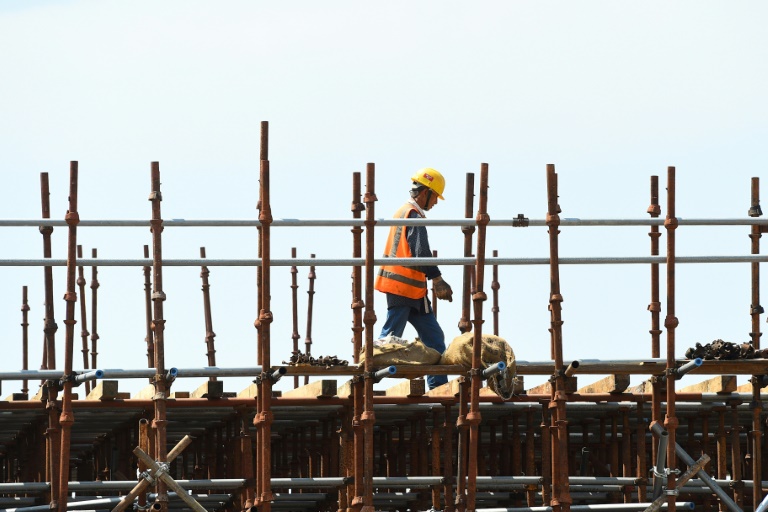
China’s “inflexible” and “inconsistent” zero-Covid policy is crippling European business operations in the country, a major business lobby said Wednesday, warning that the presence of the companies “can no longer be taken for granted”.

The report by the European Union’s Chamber of Commerce in China marks the latest statement by the foreign business community that Beijing’s hardline virus curbs are harming the world’s second-largest economy and isolating it on the international stage.

China is the last major economy wedded to a strategy of stamping out emerging virus outbreaks as they arise, through a combination of snap lockdowns, mass testing and lengthy quarantines.

Despite sparking business closures and roiling global supply chains, President Xi Jinping has declared the approach China’s most “economic and effective” path forward, and officials have not indicated when the rules might be eased.

The European Chamber — a group of more than 1,800 European companies in China — said in a position paper that zero-Covid and its “massive uncertainty” had had a “negative impact” on 75 percent of its members’ operations.

“China’s business environment will remain unpredictable as long as the threat of lockdowns exists,” the organisation said, calling Xi’s flagship policy “inflexible and inconsistently implemented” and cautioning that ideology seemed to be “trumping the economy”.

It added that the situation had prompted nearly a quarter of firms to consider shifting current or planned investments out of China, the highest percentage in the past decade.

Despite China’s significant growth potential, “the extent of European firms’ engagement can no longer be taken for granted”, the report said.

China in June reduced the length of mandatory quarantine for inbound travellers from 21 to 10 days, but a lack of flights and sky-high ticket prices remain a major obstacle to travel.

The near-total shutdown of the country’s borders since 2020 has quickened an “exodus” of European nationals and left those who remain more isolated than before, according to the report.

If Beijing continues to persist with the policy, “the business environment will continue to become more challenging”, it said.

In a foreword to the report, European Chamber President Joerg Wuttke wrote that “the rest of the world has largely resumed pre-pandemic levels of ‘normality’, but China remains reluctant to open its doors”.

European companies “need China to fulfil its huge economic potential”, he added.

China’s economy expanded just 0.4 percent in the second quarter as virus restrictions across swathes of the country caused business shutdowns and roiled supply chains.

Analysts say the country is set to miss its annual growth target of around 5.5 percent by a wide margin.

Asian traders resume selling as another jumbo Fed hike looms

Asian markets resumed their downward spiral Wednesday after a brief respite the previous day, as traders prepared for what many expect to be a third successive jumbo interest rate hike by the Federal Reserve.

Equities around the world have been clattered by fears of a recession in major economies as central banks ramp up borrowing costs to combat the highest inflation in decades, which has been compounded by the Ukraine war and supply chain snarls.

Adding to the dour mood, four regions in Russian-held parts of Ukraine said they will hold weekend referendums on annexation by Moscow — a move that risks escalating the conflict as President Vladimir Putin could claim an attack in those regions was an attack on Russia.

But for now all eyes are on Washington, where the Fed is due to conclude its latest policy meeting, with most analysts predicting it will announce another 75 basis-point lift though some have tipped a full percentage-point move.

However, while the hike has largely been priced into the markets, the US central bank’s forecast and post-meeting comments from boss Jerome Powell are the main attraction for investors.

“Volumes remain light and the mood cautious, with few looking to take on large positions before hearing what the Fed says and where policy makers see rates going by the end of the hiking cycle,” Fiona Cincotta, at City Index, said.

“This is what will drive the markets, not the rate hike… but what the Fed plans to do next.”

Fed officials have for months stuck to the mantra that they will only ease up on their hawkish drive when inflation comes down and remains subdued.

This has led many to warn that rates are unlikely to come down anytime soon, possibly as late as 2024, with a recession more than likely in the United States as well as other major economies.

– ‘Long and ugly’ recession? –

Other central banks are also meeting this week.

On Tuesday, officials in Sweden surprised markets by unveiling a one percentage-point hike, while the United Kingdom and Switzerland are expected to announce more increases.

While there is debate on how bad any contraction will be, Nouriel Roubini, who predicted the 2008 economic meltdown, said he saw a “long and ugly” recession by the end of the year that would not likely end until the end of 2023 with severe consequences for equities.

“Even in a plain vanilla recession, the S&P 500 can fall by 30 percent,” he said, adding that “a real hard landing”, which he has forecast, could see it give up 40 percent.

In early trade, Asian markets were back in the red, reversing Tuesday’s rate bounce.

Tokyo, Hong Kong, Sydney and Manila were all down more than one percent, while there were also losses in Shanghai, Seoul, Wellington, Taipei and Jakarta.

Part of the reason for the weakness is the sharp slowdown in China, which has been battered by a series of Covid-linked lockdowns this year that have seen tens of millions of people shut away and factories close down for months.

In light of that — as well as the Ukraine war and rate hikes — the Asian Development Bank on Wednesday cut its 2022 growth forecast for developing Asia and warned of “global headwinds” to the recovery.

– Key figures at around 0230 GMT –

Tokyo – Nikkei 225: DOWN 1.4 percent at 27,308.66 (break)

Hong Kong – Hang Seng Index: DOWN 1.4 percent at 18,515.54

Shanghai – Composite: DOWN 0.4 percent at 3,110.55

Euro/dollar: DOWN at $0.9969 from $0.9977 on Tuesday

Dollar/yen: DOWN at 143.64 yen from 143.72 yen

Pound/dollar: DOWN at $1.1380 from $1.1384

Euro/pound: DOWN at 87.60 pence from 87.63 pence 

West Texas Intermediate: DOWN 0.1 percent at $83.85 per barrel

Brent North Sea crude: FLAT at $90.63 per barrel

New York – Dow: DOWN 1.0 percent at 30,706.23 (close)

London – FTSE 100: DOWN 0.6 percent at 7,192.66 (close)

— Bloomberg News contributed to this story —

China should do more to help avoid debt crisis: US official

The “enormous scale” of Chinese lending to developing nations makes it critical Beijing do more to participate in restructurings to avoid a new international debt crisis, a senior US Treasury official said Tuesday.

In the wake of the pandemic, many countries are facing debt distress, and China has delayed or failed to participate in multinational efforts to try to work out those borrowing loads, said Brent Neiman, counselor to the Treasury Secretary.

“China’s enormous scale as a lender means its participation is essential,” Neiman said in a speech to the Peterson Institute for International Economics.

He noted that estimates of the total of outstanding Chinese official loans, while uncertain due to a lack of transparency, range widely to as much as $1 trillion.

“China became the world’s largest official creditor in 2017, surpassing the claims of the World Bank, IMF, and all Paris Club official creditors combined,” he said.

The high borrowing, outflow of funds from developing nations and strong US dollar amid rising interest rates have increased the pain for debtor countries, and “these ingredients all but assure debt distress in a number of countries,” he said.

“Failure to act on these debts could imply years of ongoing difficulties with the servicing of debts and with underinvestment and lower growth in low and middle income countries.”

In a now familiar message, repeated by government officials as well as the International Monetary Fund and World Bank, Neiman called on China to end the “enormous delays” in participating in the international efforts to provide relief.

The G20 has agreed on a “common framework” for debt restructuring for the poorest countries, but to date only three have qualified, and only one, Zambia, has received assurances from China of debt restructuring, allowing it to secure an IMF aid package.

Neiman warned the delays “may discourage others from requesting needed treatments, and preclude the best outcomes.”

Middle income countries have fared no better in debt workouts with Chinese creditors, he said, and crisis-hit countries like Sri Lanka are not eligible for the common framework.

He called on Beijing to take steps to speed the workouts, including setting up a single entity to deal with bad loans, and providing more transparency on the terms and lending amounts.

Stocks drop as jumbo Swedish rate hike fans Fed fears

Stocks retreated Tuesday as Sweden’s jumbo interest rate hike, aimed at tackling inflation, stoked expectations of more increases this week from the US Federal Reserve and the Bank of England.

The Swedish central bank sprang its biggest rise in three decades, ramping up its policy rate by a full percentage point to 1.75 percent.

The news sent the region’s markets into reverse as tighter global borrowing costs bear down on economic activity.

Frankfurt equities ended the day down 1.0 percent as news of rocketing German producer prices further fanned inflation fears, and the government appeared close to nationalising the energy company Uniper, which has been brought low by the spike in gas prices.

London fell after reopening following the funeral of Queen Elizabeth II on Monday.

The US dollar rose against rivals as the Fed’s almost certain interest rate hike approached, while oil prices slid.

Wall Street’s main stocks indices fell, with the Dow down 1.1 percent in late morning trading.

– ‘Nerves jangling again’ –

“European stocks rallied at the open — but a jumbo rate hike from Sweden’s central bank sent the nerves jangling again as investors worry about what’s in store from global central banks,” Markets.com analyst Neil Wilson told AFP.

The Fed’s decision has been the main focus for the markets after figures last week showed consumer prices are still rising at a pace not seen since the early 1980s.

With Fed officials vowing to hike rates sufficiently to bring inflation down, expectations were strengthened that it will raise its key interest rate by another 0.75 percentage points on Wednesday.

Some observers now speculate over a possible one-percentage-point move.

On Thursday, the Bank of England (BoE) is predicted to deliver another sizeable increase in British borrowing costs.

“The (Swedish) hike underlined just how serious central banks are taking the inflation threat and with 75 basis point hikes from the Bank of England and Federal Reserve looking like slam-dunk certainties, the early optimism in the markets quickly evaporated,” added Wilson.

“The reality of central bank tightening… is keeping a lid on stocks and will continue to act as a headwind for risk.”

Sentiment on Wall Street was also dampened by data showing a drop in housing construction permits, although housing starts increased 12.2 percent month-on-month in August.

“The key takeaway from the report is that the weakness in the permits data suggests the strength in starts is not sustainable, especially when also taking into account that mortgage rates have risen since the July-August period,” said analyst Patrick O’Hare at Briefing.com.

Asian markets meanwhile enjoyed a much-needed bounce Tuesday, tracking Wall Street’s late Monday rally.

Elsewhere on Tuesday, the British pound remained under pressure, even as the BoE lines up another rate hike, after sliding on Friday to a 1985 low at $1.1351.

Oil prices continued their march lower.

“A strong US dollar, rising yields and concerns over demand as the global economy slows is weighing on crude oil prices again,” said market analyst Michael Hewson at CMC Markets.

– Key figures at around 1530 GMT –

New York – Dow: DOWN 1.1 percent at 30,690.39 points

EURO STOXX 50: DOWN 0.9 percent at 3,467.09

London – FTSE 100: DOWN 0.6 percent at 7,192.66 (close)

Frankfurt – DAX: DOWN 1.0 percent at 12,670.83 (close)

Paris – CAC 40: DOWN 1.4 percent at 5,979.47 (close)

Tokyo – Nikkei 225: UP 0.4 percent at 27,688.42 (close)

Hong Kong – Hang Seng Index: UP 1.2 percent at 18,781.42 (close)

Shanghai – Composite: UP 0.2 percent at 3,122.41 (close)

Euro/dollar: DOWN at $0.9987 from $1.0024 on Monday

Dollar/yen: UP at 143.74 yen from 143.21 yen

Pound/dollar: DOWN at $1.1415 from $1.1431

Euro/pound: DOWN at 87.57 pence from 87.70 pence 

Brent North Sea crude: DOWN 1.4 percent at $90.74 per barrel

West Texas Intermediate: DOWN 1.6 percent at $84.04 per barrel

burs-rl/kjm

Stock markets drop on jumbo Swedish rate hike

Stocks retreated Tuesday as Sweden’s jumbo interest rate hike, aimed at tackling inflation, stoked expectations of more increases this week from the US Federal Reserve and the Bank of England.

The Swedish central bank sprang the biggest rise in three decades, ramping up its rate by a full percentage point to 1.75 percent.

The news sent the region’s markets into reverse as tighter global borrowing costs bear down on economic activity.

Frankfurt equities dropped about 0.8 percent as news of rocketing German producer prices further fanned inflation fears.

London fell after reopening following the funeral of Queen Elizabeth II on Monday.

The euro dipped against main rivals after Monday’s surge, while oil prices slid on the stronger dollar.

Wall Street’s main stocks indices all fell by 0.8 percent as trading got underway.

– ‘Nerves jangling again’ –

“European stocks rallied at the open — but a jumbo rate hike from Sweden’s central bank sent the nerves jangling again as investors worry about what’s in store from global central banks,” Markets.com analyst Neil Wilson told AFP.

The Fed’s decision is the main markets focus after figures last week showed consumer prices are still rising at a pace not seen since the early 1980s.

The US Federal Reserve is forecast Wednesday to hike its key interest rate by another 0.75 percentage points.

Some observers have even speculated over a possible one-percentage-point move.

One day later, the Bank of England (BoE) is predicted to deliver another sizeable increase in British borrowing costs.

“The (Swedish) hike underlined just how serious central banks are taking the inflation threat and with 75 basis point hikes from the Bank of England and Federal Reserve looking like slam-dunk certainties, the early optimism in the markets quickly evaporated,” added Wilson.

“The reality of central bank tightening… is keeping a lid on stocks and will continue to act as a headwind for risk.”

Sentiment on Wall Street was also dampened by data showing drop in housing construction permits, although housing starts increased 12.2 percent month-on-month in August.

“The key takeaway from the report is that the weakness in the permits data suggests the strength in starts is not sustainable, especially when also taking into account that mortgage rates have risen since the July-August period,” said analyst Patrick O’Hare at Briefing.com.

Asian markets meanwhile enjoyed a much-needed bounce Tuesday, tracking Wall Street’s late rally as investors gird themselves for another big Fed hike, though fears of a recession remain elevated.

Elsewhere on Tuesday, the British pound remained under pressure, even as the BoE lines up another rate hike, after sliding on Friday to a 1985 low at $1.1351.

– Key figures at around 1330 GMT –

London – FTSE 100: DOWN 0.4 percent at 7,207.87 points

Frankfurt – DAX: DOWN 0.8 percent at 12,696.14

Paris – CAC 40: DOWN 1.2 percent at 5,991.86

EURO STOXX 50: DOWN 0.8 percent at 3,470.70

New York – Dow: DOWN 0.8 percent at 30,775.29

Tokyo – Nikkei 225: UP 0.4 percent at 27,688.42 (close)

Hong Kong – Hang Seng Index: UP 1.2 percent at 18,781.42 (close)

Shanghai – Composite: UP 0.2 percent at 3,122.41 (close)

Euro/dollar: DOWN at $0.9960 from $1.0024 on Monday

Dollar/yen: UP at 143.85 yen from 143.21 yen

Pound/dollar: UP at $1.1384 from $1.1431

Euro/pound: DOWN at 87.51 pence from 87.70 pence 

Brent North Sea crude: DOWN 0.6 percent at $91.46 per barrel

West Texas Intermediate: UP 0.8 percent at $84.64 per barrel

burs-rl/lth

EU hopes for trade pact with Indonesia within two years

The European Union hopes to strike a free-trade agreement with Indonesia within two years despite disputes with Southeast Asia’s largest economy over palm oil and nickel, the bloc’s trade commissioner said Tuesday.

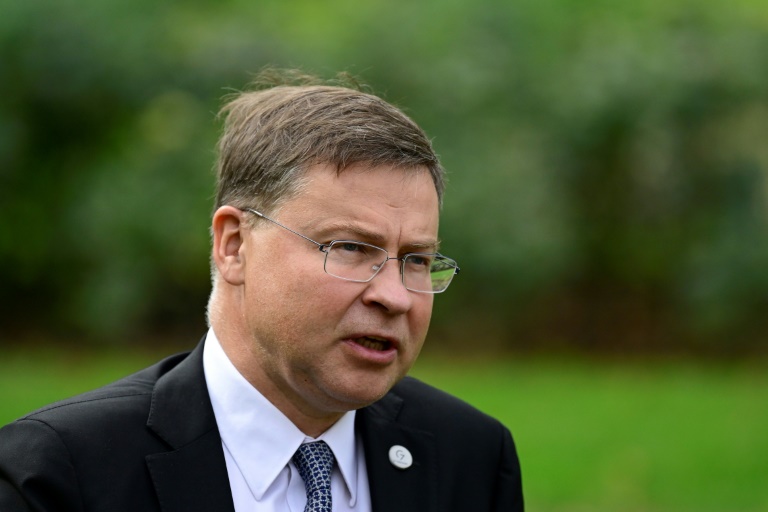
“We think it is feasible by mid-2024” to conclude a comprehensive economic partnership agreement, Valdis Dombrovskis told reporters in the Indonesian capital Jakarta. 

“We see there is some renewed momentum and we hope to build on that.”

The two sides opened bilateral negotiations on a trade deal in 2016 but progress has been stalled over EU restrictions on the use of palm oil-based biofuels and an Indonesian embargo on nickel exports.

Dombrovskis said the disputes needed to be resolved through negotiation and the World Trade Organization.

Indonesia and Malaysia have filed appeals at the WTO over the biofuels dispute.

As part of its “Red II” directive, the EU has decided that biofuels based on palm oil will not count towards its targets for the use of renewable energy by 2030 and it is looking to phase out their use.

The EU has filed its own WTO challenge against Indonesia over a temporary embargo imposed by Jakarta on exports of raw materials used in stainless steel, including nickel.

The trade commissioner is in Indonesia for a G20 ministerial meeting. He is also due to brief Indonesian officials on a proposed European law aimed at banning imports to the EU that contribute to deforestation.

The law’s text, which is not yet final, will affect several Indonesian sectors, including wood, palm oil and rubber.

“Of course there are questions being raised by the Indonesian side, so we’re going to explain how it will work and reassure the Indonesian side that it’s an environmental measure and not a measure to hinder access to the EU market,” Dombrovskis said.

Trade in goods between the EU and Indonesia amounted to $24.7 billion last year.

Europe equities drop on jumbo Swedish rate hike

European stocks retreated Tuesday as Sweden’s jumbo interest rate hike, aimed at tackling inflation, stoked expectations of more increases this week from the US Federal Reserve and the Bank of England.

The Swedish central bank sprang the biggest rise in three decades, ramping up its rate by a full percentage point to 1.75 percent.

The news sent the region’s markets into reverse as tighter global borrowing costs bear down on economic activity.

Frankfurt and Paris equities also dropped about one percent as news of rocketing German producer prices further fanned inflation fears.

London fell after reopening following funeral of Queen Elizabeth II on Monday.

The euro dipped against main rivals after Monday’s surge, while oil price gains were capped by the stronger dollar.

– ‘Nerves jangling again’ –

“European stocks rallied at the open — but a jumbo rate hike from Sweden’s central bank sent the nerves jangling again as investors worry about what’s in store from global central banks,” Markets.com analyst Neil Wilson told AFP.

The US Federal Reserve is forecast Wednesday to hike its key interest rate by another 0.75 percentage points.

One day later, the Bank of England (BoE) is predicted to deliver another sizeable increase in British borrowing costs.

“The (Swedish) hike underlined just how serious central banks are taking the inflation threat and with 75 basis point hikes from the Bank of England and Federal Reserve looking like slam-dunk certainties, the early optimism in the markets quickly evaporated,” added Wilson

“The reality of central bank tightening… is keeping a lid on stocks and will continue to act as a headwind for risk.”

Asian markets meanwhile enjoyed a much-needed bounce Tuesday, tracking Wall Street’s late rally as investors gird themselves for another big Fed hike, though fears of a recession remain elevated.

The Fed’s decision is the main markets focus after figures last week showed consumer prices are still rising at a pace not seen since the early 1980s.

Some observers have even speculated over a possible one-percentage-point move.

Elsewhere on Tuesday, the British pound remained under pressure, even as the BoE lines up another rate hike, after sliding on Friday to a 1985 low at $1.1351.

– Key figures at around 1100 GMT –

London – FTSE 100: DOWN 0.3 percent at 7,218.59 points

Frankfurt – DAX: DOWN 0.9 percent at 12,694.32

Paris – CAC 40: DOWN 1.0 percent at 6,002.38

EURO STOXX 50: DOWN 0.8 percent at 3,472.62

Tokyo – Nikkei 225: UP 0.4 percent at 27,688.42 (close)

Hong Kong – Hang Seng Index: UP 1.2 percent at 18,781.42 (close)

Shanghai – Composite: UP 0.2 percent at 3,122.41 (close)

New York – Dow: DOWN 0.2 percent at 30,765.98

Euro/dollar: DOWN at $1.0007 from $1.0024 on Monday

Dollar/yen: UP at 143.65 yen from 143.21 yen

Pound/dollar: UP at $1.1435 from $1.1431

Euro/pound: DOWN at 87.51 pence from 87.70 pence 

Brent North Sea crude: UP 0.6 percent at $92.58 per barrel

West Texas Intermediate: UP 0.5 percent at $86.19 per barrel

burs-rfj/bcp/rl

Close Bitnami banner
Bitnami