Chinese Business

Oil tumbles on recession worries as US stocks rebound

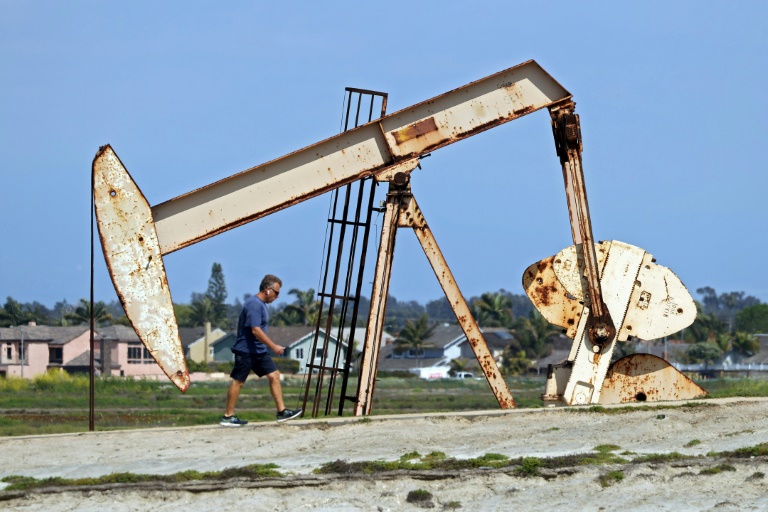
US oil prices finished Wednesday at their lowest level since January on growing recession fears, while US stocks rebounded after a weak stretch left the market “oversold,” as analysts put it.

Oil prices briefly climbed early on Wednesday as Russia’s President Vladimir Putin said his country would stop delivering oil and gas supplies to countries that introduce price caps.

But then oil prices then turned sharply lower, with Brent crude, the main international contract, passing under $90 per barrel for the first time since February.

US benchmark West Texas Intermediate slid 5.7 percent to end at $81.94, its lowest closing price since January.

“The oil market is a blood bath as the crude demand outlook took a major hit after Chinese and US trade data showed global demand is sharply weakening,” said Oanda’s Edward Moya. 

“It appears the risk of losing Russian energy supplies is no longer keeping oil prices supported and that has energy traders solely fixated on the demand side drivers.” 

Recession concerns also dampened sentiment towards equities, but Briefing.com analyst Patrick O’Hare said those worries were competing for investors’ attention with “the idea that the stock market is oversold on a short-term basis and due for a bounce”.

US stocks finished firmly higher, with the S&P 500 winning 1.8 percent.

On Wednesday, Federal Reserve Vice Chair Lael Brainard warned that the US central bank will stay the course on its aggressive fight against high inflation “for as long as it takes” to bring prices down.

She said interest rates need to rise further, again knocking down hopes of a rate cut next year as the economy slows.

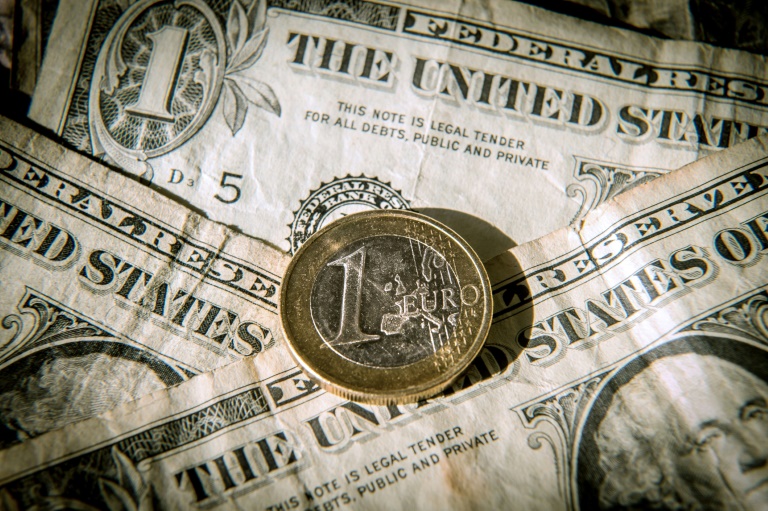
The aggressive Fed posture has bolstered the dollar, which rose further against the Japanese yen even as it retreated against the euro.

“The reason that we are seeing this much strength in the dollar against the yen is purely because of the difference in two central banks’ policies,” noted Naeem Aslam, chief market analyst at AvaTrade. 

“The Fed is as hawkish as it can be, and the BoJ still doesn’t seem to be bothered much about inflation or changing its stance on monetary policy.”

Japan’s finance minister, Shunichi Suzuki, on Wednesday expressed concern about the yen’s drop.

“For now, we’re monitoring with a sense of urgency how it’s developing, but if this continues, it makes sense that we will take necessary measures,” he said, without detailing what the measures might be.

– Key figures at around 2110 GMT –

Brent North Sea crude: DOWN 5.2 percent at $88.00 per barrel

West Texas Intermediate: DOWN 5.7 percent at $81.94 per barrel

New York – Dow: UP 1.4 percent at 31,581.28 (close)

New York – S&P 500: UP 1.8 percent at 3,979.87 (close)

New York – Nasdaq: UP 2.1 percent at 11,791.90 (close)

London – FTSE 100: DOWN 0.9 percent at 7,237.83 (close)

Frankfurt – DAX: UP 0.4 percent at 12,915.97 (close)

Paris – CAC 40: FLAT at 6,105.92 (close)

EURO STOXX 50: UP 0.1 percent at 3,502.09 (close)

Tokyo – Nikkei 225: DOWN 0.7 percent at 27,430.30 (close)

Hong Kong – Hang Seng Index: DOWN 0.8 percent at 19,044.30 (close)

Shanghai – Composite: UP 0.1 percent at 3,246.29 (close)

Dollar/yen: UP at 143.79 yen from 142.80 yen on Tuesday

Euro/dollar: UP at $1.0012 from $0.9904 

Pound/dollar: UP at $1.1535 from $1.1520

Euro/pound: UP at 86.74 pence from 85.97 pence

burs-jmb/st
Oil tumbles to pre-war level on recession fears

Oil prices tumbled back to pre-war levels Wednesday as recession fears returned to the forefront.

Stocks were also hit by the negative outlook for the global economy but perked up as energy prices and bond yields fell, while currency markets were gripped by the prospect for interest rate hikes.

Oil prices briefly climbed early on Wednesday as Russia’s President Vladimir Putin said his country would stop delivering oil and gas supplies to countries that introduce price caps.

G7 industrialised powers have vowed to move urgently towards implementing a price cap on Russian oil imports to cut off a major source of funding for Moscow’s military action in Ukraine.

But then oil prices then turned sharply lower, with Brent crude, the main international contract, passing under $90 per barrel for the first time since February.

OPEC and its allies earlier this week cut production targets for the first time in more than a year in a bid to lift prices.

“While the 100,000 barrel cut wasn’t fundamentally significant, it was clearly intended as a warning not to drive the price lower or face further cuts,” said OANDA trading platform analyst Craig Erlam.

“Unfortunately, it seems traders are in no mood to be told what to do and growth fears are instead dictating the price direction.”

Recession concerns also dampened sentiment towards equities, but Briefing.com analyst Patrick O’Hare said those worries were competing for investors’ attention with “the idea that the stock market is oversold on a short-term basis and due for a bounce”.

Recession fears have been driven in large part by central banks moving aggressively to rein in surging inflation.

The dollar continues to gain strength from expectations of a third-straight blockbuster hike to US interest rates later this month.

US Federal Reserve officials have lined up in recent weeks to say their main focus is bringing inflation down from four-decade highs, even if that means tipping the economy into recession.

The different pace in lifting rates taken by central banks is fuelling swings in currency values.

The European Central Bank is Thursday forecast to deliver another bumper rate increase, mirroring aggressive moves by the Fed and Bank of England.

Nevertheless, it has moved slower and the euro remains lodged below parity with the dollar.

Meanwhile, the dollar rose to 144.99 yen — the Japanese currency’s weakest showing since 1998.

“The reason that we are seeing this much strength in the dollar against the yen is purely because of the difference in two central banks’ policies,” noted Naeem Aslam, chief market analyst at AvaTrade. 

“The Fed is as hawkish as it can be, and the BoJ still doesn’t seem to be bothered much about inflation or changing its stance on monetary policy.”

Japan’s finance minister, Shunichi Suzuki, on Wednesday expressed concern about the yen’s drop.

“For now, we’re monitoring with a sense of urgency how it’s developing, but if this continues, it makes sense that we will take necessary measures,” he said, without detailing what the measures might be.

The greenback also struck a 37-year peak against sterling after a Bank of England official said plans by new PM Liz Truss to cap energy bills would reduce inflation pressures, leading markets to believe the central bank may let up on rate hikes. 

– Key figures at around 1530 GMT –

Brent North Sea crude: DOWN 3.4 percent at $89.80 per barrel

West Texas Intermediate: DOWN 3.8 percent at $83.55 per barrel

Dollar/yen: UP at 144.44 yen from 142.80 yen on Tuesday

Euro/yen: UP at 143.66 yen from 141.43 yen

Euro/dollar: UP at $0.9946 from $0.9905 

Pound/dollar: DOWN at $1.1444 from $1.1519

Euro/pound: UP at 86.72 pence from 85.97 pence

New York – Dow: UP 0.8 percent at 31,385.35 points

EURO STOXX 50: UP less than 0.1 percent at 3,502.09

London – FTSE 100: DOWN 0.9 percent at 7,237.83 (close)

Frankfurt – DAX: UP 0.4 percent at 12,915.97 (close)

Paris – CAC 40: FLAT at 6,105.92 (close)

Tokyo – Nikkei 225: DOWN 0.7 percent at 27,430.30 (close)

Hong Kong – Hang Seng Index: DOWN 0.8 percent at 19,044.30 (close)

Shanghai – Composite: UP 0.1 percent at 3,246.29 (close)

burs-rl/jj

Oil tumbles to pre-war level on recession fears

Oil prices tumbled back to pre-war levels Wednesday as recession fears returned to the forefront.

Stocks were also hit by the negative outlook for the global economy, while currency markets were gripped by the prospect for interest rate hikes.

Oil prices briefly climbed on Wednesday as Russia’s President Vladimir Putin said his country would stop delivering oil and gas supplies to countries that introduce price caps.

G7 industrialised powers have vowed to move urgently towards implementing a price cap on Russian oil imports to cut off a major source of funding for Moscow’s military action in Ukraine.

But oil prices then turned sharply lower, with Brent crude, the main international contract, passing under $90 per barrel for the first time since February.

OPEC and its allies earlier this week cut production targets for the first time in more than a year in a bid to lift prices.

“While the 100,000 barrel cut wasn’t fundamentally significant, it was clearly intended as a warning not to drive the price lower or face further cuts,” said OANDA trading platform analyst Craig Erlam.

“Unfortunately, it seems traders are in no mood to be told what to do and growth fears are instead dictating the price direction.”

Recession concerns also dampened sentiment towards equities, with European indices lower, although Wall Street managed small gains at the open.

“Investors appear reluctant to buy anything in this macro environment, where inflation is soaring, global growth is weakening, and central banks are tightening,” said City Index and FOREX.com analyst Fawad Razaqzada. 

“Something must fundamentally change before we see the onset of a serious recovery,” he added.

Recession fears are being driven in large part by central banks moving aggressively to rein in surging inflation.

The dollar continues to gain strength from expectations of a third-straight blockbuster hike to US interest rates later this month.

US Federal Reserve officials have lined up in recent weeks to say their main focus is bringing inflation down from four-decade highs, even if that means tipping the economy into recession.

The different pace in lifting rates taken by central banks is fuelling swings in currency values.

The European Central Bank is Thursday forecast to deliver another bumper rate increase, mirroring aggressive moves by the Fed and Bank of England.

Nevertheless, it has moved slower and the euro remains lodged below parity with the dollar.

Meanwhile, the dollar rose to 144.99 yen — the Japanese currency’s weakest showing since 1998.

“The reason that we are seeing this much strength in the dollar against the yen is purely because of the difference in two central banks’ policies,” noted Naeem Aslam, chief market analyst at AvaTrade. 

“The Fed is as hawkish as it can be, and the BoJ still doesn’t seem to be bothered much about inflation or changing its stance on monetary policy.”

Japan’s finance minister, Shunichi Suzuki, on Wednesday expressed concern about the yen’s drop.

“For now, we’re monitoring with a sense of urgency how it’s developing, but if this continues, it makes sense that we will take necessary measures,” he said, without detailing what the measures might be.

The greenback also struck 37-year peak against sterling, plagued by recession fears on the eve of new Prime Minister Liz Truss’s economic stimulus plan.

– Key figures at around 1330 GMT –

Brent North Sea crude: DOWN 3.1 percent at $89.92 per barrel

West Texas Intermediate: DOWN 3.5 percent at $83.86 per barrel

Dollar/yen: UP at 144.78 yen from 142.80 yen on Tuesday

Euro/yen: UP at 143.44 yen from 141.43 yen

Euro/dollar: UP at $0.9907 from $0.9905 

Pound/dollar: DOWN at $1.1478 from $1.1519

Euro/pound: UP at 86.65 pence from 85.97 pence

London – FTSE 100: DOWN 1.1 percent at 7,222.53 points

Frankfurt – DAX: DOWN 0.4 percent at 12,816.13

Paris – CAC 40: DOWN 0.6 percent at 6,066.06

EURO STOXX 50: DOWN 0.7 percent at 3,477.31

New York – Dow: DOWN 0.1 percent at 31,109.95

Tokyo – Nikkei 225: DOWN 0.7 percent at 27,430.30 (close)

Hong Kong – Hang Seng Index: DOWN 0.8 percent at 19,044.30 (close)

Shanghai – Composite: UP 0.1 percent at 3,246.29 (close)

burs-rl/lth

Yen extends slide, oil rises tracking central banks and Putin

The yen slumped to a 24-year low against the dollar and shed more than one percent versus the euro Wednesday as Japan refuses to hike interest rates to combat sky-high inflation.

The European Central Bank is Thursday forecast to deliver another bumper rate increase, mirroring aggressive moves by the US Federal Reserve and Bank of England.

Elsewhere Wednesday, oil prices climbed as Russia’s President Vladimir Putin said his country would stop delivering oil and gas supplies to countries that introduce price caps.

G7 industrialised powers have vowed to move urgently towards implementing a price cap on Russian oil imports to cut off a major source of funding for Moscow’s military action in Ukraine.

In stock market trading, European and Asian indices mostly retreated but Shanghai closed slightly up.

On foreign exchange markets, one dollar was worth 144.38 yen — the Japanese currency’s weakest showing since 1998.

“The reason that we are seeing this much strength in the dollar against the yen is purely because of the difference in two central banks’ policies,” noted Naeem Aslam, chief market analyst at AvaTrade. 

“The Fed is as hawkish as it can be, and the BoJ still doesn’t seem to be bothered much about inflation or changing its stance on monetary policy.”

Japan’s finance minister, Shunichi Suzuki, on Wednesday expressed concern about the yen’s drop.

“For now, we’re monitoring with a sense of urgency how it’s developing, but if this continues, it makes sense that we will take necessary measures,” he added.

The dollar continues to gain strength from expectations of a third-straight blockbuster hike to US interest rates next month.

Several top Fed officials — including head Jerome Powell — have lined up in recent weeks to say their main focus is bringing inflation down from four-decade highs, even if that means tipping the economy into recession.

The euro remained lodged below parity with the dollar, despite the European Central Bank preparing to further ramp up rates.

And the greenback was also pushing towards a 37-year peak against sterling, which saw a brief rally Tuesday on reports new UK Prime Minister Liz Truss was planning a £130 billion ($150 billion) package to freeze a looming surge in household energy costs.

– Key figures at around 1045 GMT –

Dollar/yen: UP at 144.50 yen from 142.80 yen on Tuesday

Euro/yen: UP at 143.10 yen from 141.43 yen

Euro/dollar: DOWN at $0.9902 from $0.9905 

Pound/dollar: DOWN at $1.1475 from $1.1519

Euro/pound: UP at 86.33 pence from 85.97 pence

Brent North Sea crude: UP 0.7 percent at $93.43 per barrel

West Texas Intermediate: UP 0.5 percent at $87.33 per barrel

London – FTSE 100: DOWN 0.7 percent at 7,252.44 points

Frankfurt – DAX: DOWN 0.4 percent at 12,818.98

Paris – CAC 40: DOWN 0.4 percent at 6,077.91

EURO STOXX 50: DOWN 0.5 percent at 3,484.33

Tokyo – Nikkei 225: DOWN 0.7 percent at 27,430.30 (close)

Hong Kong – Hang Seng Index: DOWN 0.8 percent at 19,044.30 (close)

Shanghai – Composite: UP 0.1 percent at 3,246.29 (close)

New York – Dow: DOWN 0.6 percent at 31145.30 (close)

burs-bcp/rfj/lth

Dollar rallies, stocks sink as traders prepare for big rate hikes

The dollar surged Wednesday against other major currencies and equities sank after a forecast-beating US economic report gave new life to talk of a third straight blockbuster interest rate hike next month.

The services sector data showed the world’s top economy remained resilient in the face of surging prices and borrowing costs, highlighting the job the Federal Reserve has in taming inflation while trying to prevent a recession — a goal many observers doubt can be achieved.

The reading added to the gloom blanketing trading floors as investors face a range of headwinds including a worsening energy crisis in Europe, Russia’s war in Ukraine and Chinese economic woes caused by Covid-19 lockdowns.

“Overall, the (services) survey paints a picture of solid activity in the services sector of the US economy supported by wages growth suggesting the Fed still has more work to do in order to cool the economy,” said National Australia Bank’s Rodrigo Catril.

All three main indexes on Wall Street finished in the red Tuesday as they reopened after a long weekend, with expectations growing that the Fed will announce a third successive 75 basis-point rate hike later this month.

Several top Fed officials — including head Jerome Powell — have lined up in recent weeks to say their main focus is bringing inflation down from four-decade highs, even if that means tipping the economy into recession.

The prospect of more big rate hikes has sent the dollar soaring this year, and on Wednesday it hit a new 24-year high of 144.38 yen before easing back slightly.

The yen’s losses continued to mount despite comments from government officials hinting at possible intervention to provide support, though there was no sign the Bank of Japan would shift from its ultra-loose monetary policies aimed at kickstarting the economy.

The euro remained lodged below parity with the dollar and at a 20-year low, even as the European Central Bank prepares to ramp up rates, having done so in July for the first time in eight years.

And the greenback was also pushing towards a 37-year peak against sterling, which saw a brief rally Tuesday on reports new UK Prime Minister Liz Truss was planning a £130 billion ($150 billion) package to freeze energy bills.

– China export weakness –

The losses in New York were tracked by Asia, where Hong Kong, Tokyo, Sydney, Seoul, Singapore, Taipei, Wellington, Mumbai, Jakarta and Manila all fell, though Shanghai and Bangkok edged up.

London, Paris and Frankfurt joined the sell-off in early business.

“The September swoon is in play as a resilient economy paves the way for more Fed tightening,” said OANDA’s Edward Moya. 

“Stocks are going to struggle because too much of the (US) economy is doing well. The dovish pivot and the end of interest rate hikes with the December (Fed meeting) is not how this will play out.”

In a sign of the weakness in the global economy and the impact China’s zero-Covid policies are having, Beijing released data showing the country’s exports grew far sharper in August than in July.

The figures, which were also well off forecasts, “merely serve to underscore how weak domestic demand still is, and how far away that end of year GDP target of 5.5 percent is”, said CMC Markets’ Michael Hewson.

“The target may well have been downgraded to an aspiration only last month, but it’s further away than ever after today’s data and we could be lucky to see half that number at this rate.”

China’s lockdown and the stronger dollar and expectations that leading economies will tip into recession continue to push oil prices lower, with both main contracts down more than one percent Wednesday.

Bets on a plunge in demand have seen the commodity tank about 20 percent in recent months, putting them below the levels seen just before Russia invaded Ukraine and sent prices skyrocketing.

And while concerns remain about supplies, OANDA’s Moya added: “The short-term crude demand outlook appears to be poised for another wave of China Covid-related lockdowns.

“Despite some better-than-expected US services data, global growth isn’t looking good at all and that is trouble for crude prices.”

– Key figures at around 0810 GMT –

Tokyo – Nikkei 225: DOWN 0.7 percent at 27,430.30 (close)

Hong Kong – Hang Seng Index: DOWN 0.8 percent at 19,044.30 (close)

Shanghai – Composite: UP 0.1 percent at 3,246.29 (close)

London – FTSE 100: DOWN 0.9 percent at 7,236.86

Euro/dollar: UP at $0.9910 from $0.9905 on Tuesday

Pound/dollar: DOWN at $1.1497 from $1.1519

Dollar/yen: UP at 144.10 yen from 142.80 yen

Euro/pound: UP at 86.14 pence from 85.97 pence

West Texas Intermediate: DOWN 1.6 percent at $85.53 per barrel

Brent North Sea crude: DOWN 1.4 percent at $91.56 per barrel

New York – Dow: DOWN 0.6 percent at 31145.30 (close)

China export growth slows sharply in August: official data

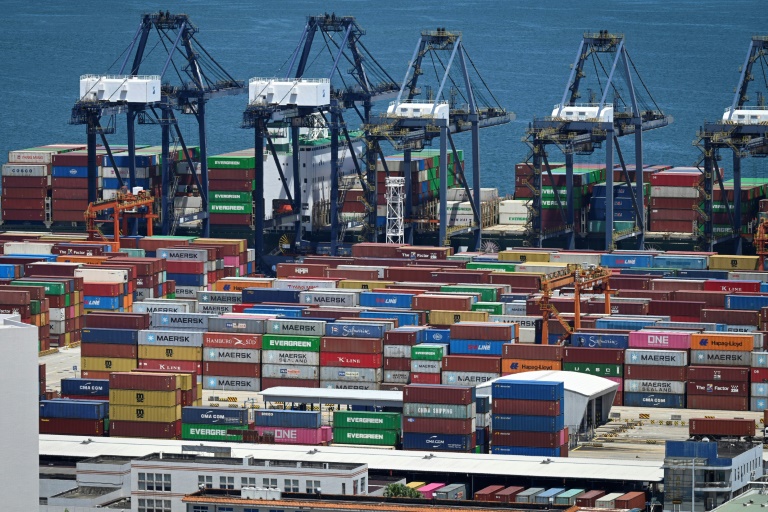
China’s export growth slowed significantly in August, customs authorities said Wednesday, as economic uncertainty is exacerbated by strict Covid-19 lockdowns across the country.

The weakness in trade comes as global demand for Chinese products weakens with energy prices soaring and the United States facing the threat of recession.

At the same time the domestic property sector — which accounts for about a quarter of the world’s number-two economy — continues to struggle with firms staggering under vast amounts of debt.

Overseas shipments increased 7.1 percent on-year, against 18 percent growth in July, China’s General Administration of Customs said, while imports were up only 0.3 percent, compared with a 2.3 percent.

Analysts surveyed by Bloomberg forecast export growth of 13 percent and a 1.1 percent increase in imports.

Sporadic Covid-19 lockdowns around China have dampened consumer enthusiasm and business confidence, while searing temperatures across large parts of the country this summer prompted power rationing for factories.

China’s factory activity shrank for the second month in a row in August, but officials are showing few signs of relaxing strict pandemic curbs, with southwestern megacity Chengdu locking down its 21 million inhabitants last week.

And while officials have announced a range of measures aimed at bolstering the economy, commentators warned that there will not likely be any concerted recovery until the tough Covid measures are removed for good.

“As rising energy prices and monetary policy tightening hit US and Western European households, demand for Chinese manufacturing exports is cooling,” Rajiv Biswas, APAC Chief Economist at S&P Global Market Intelligence told AFP.

Biswas said he expected these factors to continue dampening Chinese exports for the rest of the year, while the country faces “continued weak domestic demand due to the ongoing impact of pandemic-related restrictive measures on consumer spending as well as the residential construction slowdown”.

“Single-digit export growth is more likely for the rest of the year,” Zhang Zhiwei, chief economist at Pinpoint Asset Management, told Bloomberg News.

Chinese leaders had originally set a full-year GDP growth target of around 5.5 percent, but with economic expansion of just 0.4 percent in the second quarter, analysts believe it is unlikely to hit that goal.

Michael Hewson of CMC markets said the latest figures “merely serve to underscore how weak domestic demand still is, and how far away that end of year GDP target of 5.5 percent is”.

“The target may well have been downgraded to an aspiration only last month, but it’s further away than ever after today’s data and we could be lucky to see half that number at this rate.”

Nomura analysts on Tuesday lowered their 2022 growth forecast for China to 2.7 percent from an earlier estimate of 2.8 percent, with nearly every province in the country fighting Covid outbreaks in recent days.

“The picture is not pretty, as China continues to battle the broadest wave of Covid infections thus far,” analysts wrote in a note.

At the same time, China’s property market, a major driver of growth, is struggling with a debt crisis and disruptions to construction.

China’s central bank last month cut the five-year Loan Prime Rate — a benchmark for mortgages — in an effort to boost the flagging sector.

East Timor says China could help fund major pipeline project

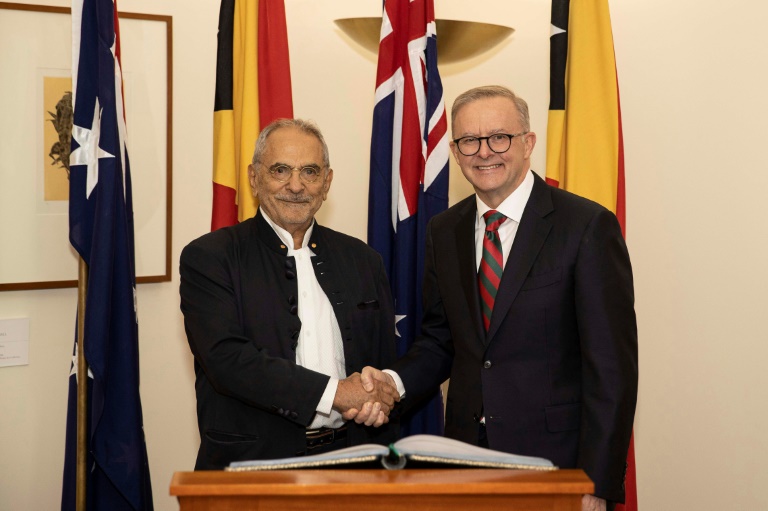
East Timor leader Jose Ramos-Horta on Wednesday said China could help fund a vast fossil fuel project seen as crucial to the nation’s economic future, dismissing Western concerns over Beijing’s growing influence.

Speaking to reporters after a meeting with Australian Prime Minister Anthony Albanese in Canberra, the president and Nobel peace laureate said “of course, China” could be involved in the Greater Sunrise project, which aims to tap trillions of cubic feet of natural gas.

The project, located in waters between East Timor and Australia, has long been touted as a joint venture between the two countries.

But exploration has been stalled for years due to disputes over maritime boundaries and whether the gas should be refined in Australia or East Timor.

Ramos Horta is pushing hard to gain foreign financing and to have LNG facilities built in his country, seeing it as a potential economic game-changer.

He told reporters that a number of Asia-Pacific countries could be involved in the project — including Japan and South Korea — but also mooted Beijing’s involvement, aware it was likely to raise hackles in Canberra.

“Of course China (could be involved). It’s a pipeline, we are not talking about maritime security. It’s just a pipeline. China would just be an investor,” he said.

But policymakers in Canberra are likely to baulk at Chinese involvement in critical infrastructure so close to Australia’s borders.

Australia is already concerned about China’s rapidly expanding regional influence, including in East Timor, which gained independence in 2002 and sits just a few hundred kilometres (miles) off Australia’s northern coast.

China built the country’s parliament, Ramos-Horta’s presidential palace and the foreign ministry.

Revenues from existing fossil fuel projects are soon expected to run dry, and the country’s sovereign wealth fund is rapidly dwindling, leading some to warn of an impending “fiscal cliff.”

Australia’s top diplomat, Penny Wong, recently warned Dili that it faces some “pretty serious economic challenges” and warned against the risks of so-called “debt trap” diplomacy, a term widely used in reference to Chinese investment strategy in countries like Sri Lanka.

“Our debt, our loans, they are in the spirit of wanting East Timor to be more resilient”, she said on a visit to the island nation’s capital. 

“We know that economic resilience can be affected, can be constrained, by unsustainable debt burdens or by lenders who have different objectives.”

Stocks tank, dollar rises as traders prepare for big rate hikes

Equity markets suffered more losses in Asia on Wednesday and the dollar extended a rally after a forecast-beating US economic report gave new life to talk of a third straight blockbuster interest rate hike next month.

The services sector data showed the world’s top economy remained resilient in the face of surging prices and borrowing costs, highlighting the job the Federal Reserve has in taming inflation while trying to prevent a recession — a goal many observers doubt can be achieved.

The reading added to the gloom blanketing trading floors as investors face a range of headwinds including a worsening energy crisis in Europe, Russia’s war in Ukraine and Chinese economic woes caused by Covid-19 lockdowns.

“Overall, the (services) survey paints a picture of solid activity in the services sector of the US economy supported by wages growth suggesting the Fed still has more work to do in order to cool the economy,” said National Australia Bank’s Rodrigo Catril.

All three main indexes on Wall Street finished in the red Tuesday as they reopened after a long weekend, with expectations growing that the Fed will announce a third successive 75 basis-point rate hike later this month.

Several top Fed officials — including head Jerome Powell — have lined up in recent weeks to say their main focus is bringing inflation down from four-decade highs, even if that means tipping the economy into recession.

The prospect of more big rate hikes has sent the dollar soaring this year, and on Wednesday it hit a new 24-year high of 143.71 yen, leading to speculation the Bank of Japan will step in to support its currency.

The euro remained lodged below parity with the dollar, even as the European Central Bank prepares to ramp up rates, having done so in July for the first time in eight years.

And the greenback was also pushing towards a 37-year peak against sterling, which saw a brief rally Tuesday on reports new UK Prime Minister Liz Truss was planning a £130 billion ($150 billion) package to freeze energy bills.

The losses in New York were tracked by Asia, where Hong Kong, Tokyo, Sydney, Seoul and Taipei all lost at least one percent. Singapore, Wellington and Manila also fell, though Shanghai and Jakarta edged up.

“The September swoon is in play as a resilient economy paves the way for more Fed tightening,” said OANDA’s Edward Moya. 

“Stocks are going to struggle because too much of the (US) economy is doing well. The dovish pivot and the end of interest rate hikes with the December (Fed meeting) is not how this will play out.”

Expectations that leading economies will tip into recession, China’s lockdown of millions across the country and the stronger dollar continue to push oil prices lower, with both main contracts down more than one percent Wednesday.

Bets on a plunge in demand have seen the commodity tank about 20 percent in recent months, putting them below the levels seen just before Russia invaded Ukraine and sent prices skyrocketing.

And while concerns remain about supplies, OANDA’s Moya added: “The short-term crude demand outlook appears to be poised for another wave of China Covid-related lockdowns.

“Despite some better-than-expected US services data, global growth isn’t looking good at all and that is trouble for crude prices.”

– Key figures at around 0230 GMT –

Tokyo – Nikkei 225: DOWN 1.0 percent at 27,362.83 (break)

Hong Kong – Hang Seng Index: DOWN 1.4 percent at 18,943.18

Shanghai – Composite: UP 0.2 percent at 3,249.72

Euro/dollar: DOWN at $0.9892 from $0.9905 on Tuesday

Pound/dollar: DOWN at $1.1480 from $1.1519

Dollar/yen: UP at 143.40 yen from 142.80 yen

Euro/pound: UP at 86.16 pence from 85.97 pence

West Texas Intermediate: DOWN 1.6 percent at $85.50 per barrel

Brent North Sea crude: DOWN 1.2 percent at $92.69 per barrel

New York – Dow: DOWN 0.6 percent at 31145.30 (close)

London – FTSE 100: UP 0.2 percent at 7,300.44 (close) 

Dollar weighs on yen and euro as US stocks extend slump

The euro and yen sunk to new multi-year lows against the dollar on Tuesday as investors focused on central bank efforts to contain surging inflation and fears of an economic slowdown.

The dollar struck a 24-year high of $142.98 yen, while the euro sank to $0.9864, a level unseen since December 2002.

“Recession concerns around the world continue to boost the appetite for US dollar, even at these levels,” said City Index and FOREX.com analyst Fawad Razaqzada.

“Investors are becoming more and more convinced that the Fed is going to hike by 75 basis points this month and proceed with further aggressive hikes until inflation comes back under control,” he added.

The Fed has increased the key lending rate four times this year, including two supersized 75 basis points (0.75 percentage point) hikes in June and July, with Fed chief Jerome Powell indicating another similar increase is possible this month.

Yields on US government debt continue to rise as investors expect further hikes.

The Fed’s earlier start to raising interest rates, and pledge to continue to aggressively raise them until it has tamed surging inflation, has boosted the attractiveness of the dollar for investors.

The European Central Bank brought an end to eight years of negative interest rates with a surprisingly-aggressive 0.50 percentage point hike in July, and is expected to hike interest rates on Thursday by at least the same amount to tackle surging eurozone inflation.

Meanwhile the Bank of Japan has dug in its heels on its easy-money policies as it seeks to ensure inflation is here to stay after a long deflationary period. 

In the first session back after the Labor Day holiday, Wall Street fell again, extending an equity downturn as worries about tightening central bank policy and Europe’s energy woes offset good US services industry data.

European stocks ended the day higher despite poor German data, a day after tumultuous trading as Russia curbed gas supplies to Europe.

– ‘Wait-and-see mood’ –

Nevertheless, traders are still wary.

“Investors remain cautious amid worries about the slowing global economy,” noted Hargreaves Lansdown analyst Susannah Streeter.

“There is a wait-and-see mood hanging over markets.”

Russia’s decision over the weekend to halt gas supplies to Germany in retaliation for sanctions over Ukraine sent shock waves through European trading floors on Monday as it ramped up expectations of a painful recession in major economies.

That continues to bedevil the euro, as well as measures that European governments are taking to prop up their economies in face of the energy crisis.

Razaqzada said these measures are likely to fuel inflation even further. This would require the ECB to hike interest rates even more aggressively, meaning a sharper recession.

“So, it is a catch-22 situation for the ECB,” he said.

“For this reason, traders are reluctant to buy the euro.”

Similarly, the yield on 10-year British government bonds surged to the highest level since 2011 after Britain’s new Prime Minister Liz Truss unveiled a 130-billion-pound package to freeze consumer energy bills. 

– Key figures at around 2050 GMT –

New York – Dow: DOWN 0.6 percent at 31145.30 (close)

New York – S&P 500: DOWN 0.4 percent at 3,908.19 (close)

New York – Nasdaq: DOWN 0.7 percent at 11,544.91 (close)

London – FTSE 100: UP 0.2 percent at 7,300.44 (close) 

Frankfurt – DAX: UP 0.9 percent at 12,871.44 (close)

Paris – CAC 40: UP 0.2 percent at 6,104.61 (close)

EURO STOXX 50: UP 0.3 percent at 3,572.76 (close)

Tokyo – Nikkei 225: FLAT at 27,626.51 (close)

Hong Kong – Hang Seng Index: DOWN 0.1 percent at 19,202.73 (close)

Shanghai – Composite: UP 1.4 percent at 3,243.45 (close)

Euro/dollar: DOWN at $0.9905 from $0.9929 on Monday

Pound/dollar: UP at $1.1519 from $1.1517

Dollar/yen: UP at 142.80 yen from 140.60 yen

Euro/pound: DOWN at 85.97 pence from 86.21 pence

West Texas Intermediate: UP less than 0.1 percent at $86.88 per barrel

Brent North Sea crude: DOWN 3.0 percent at $92.93 per barrel

burs-jmb/jh

Dollar weighs on yen and euro

The euro and yen sunk new multi-year lows against the dollar on Tuesday as investors focused on central bank efforts to contain surging inflation and fears of an economic slowdown.

The dollar struck a 24-year high of $142.98 yen, while the euro sank to $0.9864, a level unseen since December 2002.

“Recession concerns around the world continue to boost the appetite for US dollar, even at these levels,” said City Index and FOREX.com analyst Fawad Razaqzada.

“Investors are becoming more and more convinced that the Fed is going to hike by 75 basis points this month and proceed with further aggressive hikes until inflation comes back under control,” he added.

The Fed has increased the key lending rate four times this year, including two supersized 75 basis points (0.75 percentage point) hikes in June and July, with Fed chief Jerome Powell indicating another similar increase is possible this month.

Yields on US government debt continue to rise as investors expect further hikes.

The Fed’s earlier start to raising interest rates, and pledge to continue to aggressively raise them until it has tamed surging inflation, has boosted the attractiveness of the dollar for investors.

The European Central Bank brought an end to eight years of negative interest rates with a surprisingly-aggressive 0.50 percentage point hike in July, and is expected to hike interest rates on Thursday by at least the same amount to tackle surging eurozone inflation.

Meanwhile the Bank of Japan has dug in its heels on its easy-money policies as it seeks to ensure inflation is here to stay after a long deflationary period. 

Wall Street stocks wobbled during morning trading after a three-day holiday weekend, with the Dow down 0.1 percent approaching midday.

European stocks ended the day higher despite poor German data, a day after tumultuous trading as Russia curbed gas supplies to Europe.

– ‘Wait-and-see mood’ –

Nevertheless, traders are still wary.

“Investors remain cautious amid worries about the slowing global economy,” noted Hargreaves Lansdown analyst Susannah Streeter.

“There is a wait-and-see mood hanging over markets.”

Russia’s decision over the weekend to halt gas supplies to Germany in retaliation for sanctions over Ukraine sent shock waves through European trading floors on Monday as it ramped up expectations of a painful recession in major economies.

That continues to bedevil the euro, as well as measures that European governments are taking to prop up their economies in face of the energy crisis.

Razaqzada said these measures are likely to fuel inflation even further. This would require the ECB to hike interest rates even more aggressively, meaning a sharper recession.

“So, it is a catch-22 situation for the ECB,” he said.

“For this reason, traders are reluctant to buy the euro.”

Similarly, the yield on 10-year British government bonds surged to the highest level since 2011 after Britain’s new Prime Minister Liz Truss unveiled a 130-billion-pound package to freeze consumer energy bills. 

“UK gilt yields have pushed above three percent for the first time since 2014, in anticipation that the Bank of England may have to adopt a slightly more aggressive rate posture,” said CMC Markets analyst Michael Hewson.

In Asia on Tuesday, Shanghai advanced after China unveiled fresh economy-boosting measures, but the overall picture was mixed.

Sydney dipped after the Reserve Bank of Australia lifted interest rates to a near eight-year high and warned of more pain ahead.

– Key figures at around 1530 GMT –

New York – Dow: DOWN 0.1 percent at 31,287.54 points

EURO STOXX 50: UP 0.2 percent at 3,496.77

London – FTSE 100: UP 0.2 percent at 7,300.44 (close) 

Frankfurt – DAX: UP 0.9 percent at 12,871.44 (close)

Paris – CAC 40: UP 0.2 percent at 6,104.61 (close)

Tokyo – Nikkei 225: FLAT at 27,626.51 (close)

Hong Kong – Hang Seng Index: DOWN 0.1 percent at 19,202.73 (close)

Shanghai – Composite: UP 1.4 percent at 3,243.45 (close)

Euro/dollar: DOWN at $0.9913 from $0.9929 on Monday

Pound/dollar: UP at $1.1532 from $1.1517

Dollar/yen: UP at 142.90 yen from 140.60 yen

Euro/pound: DOWN at 85.94 pence from 86.21 pence

West Texas Intermediate: DOWN 0.2 percent at $86.66 per barrel

Brent North Sea crude: DOWN 3.2 percent at $92.70 per barrel

burs-rl/rox

Close Bitnami banner
Bitnami