Chinese Business

Global stocks selloff intensifies on recession fears

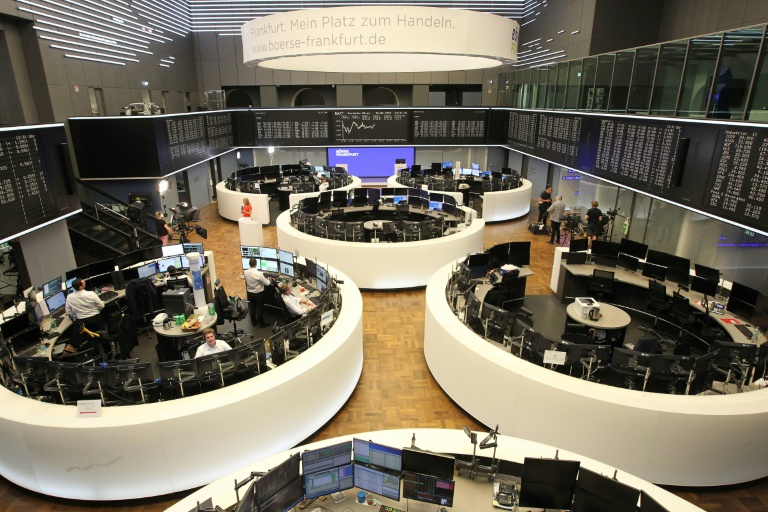
Global stock markets sank Thursday, propelled by rampant inflation and growing recession fears as another major Chinese city went into lockdown.

Frankfurt, London and Paris equities each slid about 1.5 percent in afternoon trading as record-high eurozone inflation fuelled fears that borrowing costs are set to climb even higher, as the region faces rocketing winter energy costs due to Russia’s war on Ukraine.

On Wall Street, the Dow opened down 0.5 percent at 31,359.86 points.

Asian markets posted losses as investors braced for more interest rate hikes, which seek to quell runaway inflation but could derail economic activity, while oil prices tumbled on demand worries.

“More pain is likely for investors as Europe’s energy crunch gets worse”, said City Index analyst Fawad Razaqzada.

The European Central Bank will announce its latest monetary policy decision next Thursday, after delivering its first rate hike in a decade in July.

– ‘Tougher times ahead’ –

“Markets remain unable to snap their recent losing streak, with investors still positioning for tougher times ahead,” said Interactive Investor analyst Richard Hunter.

“Central to current concerns are recessionary fears in the US and a beleaguered China. 

“With the world’s two largest economies under pressure, the immediate outlook is poor.”

Asian equities weakened further Thursday as traders continued to digest shrinking factory activity in powerhouse economy China.

Shanghai also dropped after news that the Chinese city of Chengdu would effectively lock down around 16 million people in a bid to contain a Covid-19 outbreak, likely dealing another blow to a stuttering economy.

It was a “morose session with a flight to the dollar”, said Swissquote Bank analyst Ipek Ozkardeskaya.

Wall Street had slid Wednesday as Treasury yields — a key gauge of future interest rates — rose further as a broadly healthy report on US private jobs showed there was room for the Federal Reserve to continue tightening monetary policy.

A government jobs report Friday will be closely watched by traders hoping for an idea about the next move by the bank.

“Rising Treasury yields, reports that China has locked down Chengdu (city of 21.2 million residents) for Covid testing, a litany of manufacturing PMI readings for August around the globe that were sub-50.0 (i.e. indicative of contraction), and some disappointing earnings guidance … are among the headline catalysts contributing to the weak disposition of the futures market,” Briefing.com analyst Patrick J. O’Hare wrote to clients ahead of the start of trading in New York.

PMIs, which are surveys of executives about current business conditions and the outlook for the future, are valued by the market as providing near real-time indications about the condition of the economy.

However Fed officials have made clear they are willing to tolerate an economic slowdown in order to bring interest rates down. 

The prospect of more US rate hikes continued to push the dollar higher, with 140 yen within reach for the first time since 1998.

The greenback was also at its strongest level against the pound since the height of the pandemic in 2020, with sterling buying less than $1.16.

– Key figures at around 1330 GMT –

New York – Dow: DOWN 0.5 percent at 31,359.86 points

London – FTSE 100: DOWN 1.7 percent at 7,163.46

Frankfurt – DAX: DOWN 1.3 percent at 12,669.90

Paris – CAC 40: DOWN 1.6 percent at 6,029.01

EURO STOXX 50: DOWN 1.4 percent at 3,466.46

Tokyo – Nikkei 225: DOWN 1.5 percent at 27,661.47 (close)

Hong Kong – Hang Seng Index: DOWN 1.8 percent at 19,597.31 (close)

Shanghai – Composite: DOWN 0.5 percent at 3,184.98 (close)

Euro/dollar: DOWN at $0.9982 from $1.0054 on Wednesday

Pound/dollar: DOWN at $1.1565 from $1.1622

Euro/pound: UP at 86.31 pence from 86.50 pence

Dollar/yen: UP at 139.55 yen from 138.96 yen

West Texas Intermediate: DOWN 2.1 percent at $87.65 per barrel

Brent North Sea crude: DOWN 2.0 percent at $93.73

burs-lcm/rl
Global stocks selloff intensifies on recession fears

Global stock markets sank Thursday, propelled by rampant inflation and growing recession fears.

Frankfurt, London and Paris equities each slid about 1.5 percent, while oil prices tumbled on demand worries.

That followed losses across Asia as investors braced for more interest rate hikes, which seek to quell runaway inflation yet could derail economic activity.

Europe’s stocks also fell Wednesday as record-high eurozone inflation fuelled fears that borrowing costs are set to climb even higher, as the region faces rocketing winter energy costs due to Russia’s war on Ukraine.

The European Central Bank will announce its latest monetary policy decision next Thursday, after delivering its first rate hike in a decade in July.

– ‘Tougher times ahead’ –

“Markets remain unable to snap their recent losing streak, with investors still positioning for tougher times ahead,” said Interactive Investor analyst Richard Hunter.

“Central to current concerns are recessionary fears in the US and a beleaguered China. 

“With the world’s two largest economies under pressure, the immediate outlook is poor.”

Asian equities weakened further Thursday as traders continued to digest shrinking factory activity in powerhouse economy China.

Shanghai also dropped after news that the Chinese city of Chengdu would effectively lock down around 16 million people in a bid to contain a Covid-19 outbreak, likely dealing another blow to a stuttering economy.

Wall Street slid Wednesday as Treasury yields — a key gauge of future interest rates — rose further, as a broadly healthy report on US private jobs showed there was room for the Federal Reserve to continue tightening monetary policy.

Another top Fed official signalled the bank was determined to keep lifting borrowing costs, mirroring recent comments by the US central bank’s head Jerome Powell that there would be no let-up in the fight against inflation.

US interest rates are currently at 2.25-2.5 percent, and there is a growing expectation they will be hiked by a bumper 75 basis points for a third successive meeting later this month.

A government jobs report Friday will be closely watched by traders hoping for an idea about the next move by the bank.

The prospect of more US rate hikes continued to push the dollar higher, with 140 yen within reach for the first time since 1998.

The greenback was also at its strongest level against the pound since the height of the pandemic in 2020, with sterling buying less than $1.16.

– Key figures at around 1040 GMT –

London – FTSE 100: DOWN 1.5 percent at 7,175.82 points

Frankfurt – DAX: DOWN 1.3 percent at 12,673.46

Paris – CAC 40: DOWN 1.5 percent at 6,032.09

EURO STOXX 50: DOWN 1.4 percent at 3,467.88

Tokyo – Nikkei 225: DOWN 1.5 percent at 27,661.47 (close)

Hong Kong – Hang Seng Index: DOWN 1.8 percent at 19,597.31 (close)

Shanghai – Composite: DOWN 0.5 percent at 3,184.98 (close)

New York – Dow: DOWN 0.9 percent at 31,510.43 (close)

Euro/dollar: DOWN at $1.0011 from $1.0054 on Wednesday

Pound/dollar: DOWN at $1.1564 from $1.1622

Euro/pound: UP at 86.56 pence from 86.50 pence

Dollar/yen: UP at 139.34 yen from 138.96 yen

West Texas Intermediate: DOWN 2.1 percent at $87.64 per barrel

Brent North Sea crude: DOWN 2.5 percent at $93.22

burs-rfj/rl

Asian investors step up selling as rate hikes loom

Investors further unloaded equities in Asia on Thursday as they girded themselves for more interest rate hikes aimed at quelling runaway inflation, with some analysts warning that markets could retest the lows touched in June.

Data showing prices rose at a record clip in the eurozone in August reinforced fears that central banks have a long road to run before they win their battle, which has fanned warnings of a recession in the world’s leading economies.

Another drop on Wall Street came as Treasury yields — a key gauge of future interest rates — rose further as a broadly healthy report on US private jobs showed there was still plenty of wiggle room for the Fed to continue tightening monetary policy.

Meanwhile, another top Fed official signalled the bank was determined to keep lifting borrowing costs, mirroring comments by head Jerome Powell last week that there would be no let-up in the fight against inflation.

“My current view is that it will be necessary to move the Fed funds rate up to somewhat above four percent by early next year and hold it there,” said Cleveland Fed President Loretta Mester in remarks prepared ahead of an event for the Dayton Area Chamber of Commerce.

“I do not anticipate the Fed cutting the Fed funds rate target next year.”

Interest rates are currently at 2.25-2.5 percent, and there is a growing expectation they will be hiked by a bumper 75 basis points for a third successive meeting later this month.

A government jobs report Friday will be closely watched by traders hoping for an idea about the next move by the bank, which has said it will make its decision based on data.

In a further warning that policymakers had a win-at-all-costs mentality, Mester later told the audience: “Even if the economy were to go into a recession, we have to get inflation down.”

The hawkish remarks out of the Fed have dealt a hefty blow to a rally in markets from their June lows.

And some have warned that more pain could be on the way, with Frances Stacy, of Optimal Capital Advisors, telling Bloomberg Radio: “I don’t think we’ve seen the bottom for this year.”

CMC markets analyst Michael Hewson added: “When you have the likes of a typical Fed dove like Minneapolis Fed President Neel Kashkari talk about the unlikely prospect of rate cuts in 2023, it’s hard to envisage a scenario of anything other than a 75-basis-point rate hike later this month, as the Fed continues to insist that their priority is to keep going on rates until the job is done.”

The downbeat mood in New York and Europe, which is also being buffeted by a major energy crisis, spread to Asia.

Tokyo, Hong Kong, Sydney, Seoul, Mumbai, Bangkok and Taipei were all deep in the red, though Singapore, Wellington, Manila and Jakarta eked out small gains.

Shanghai gave up an early advance following news that the Chinese city of Chengdu would effectively lock down around 16 million people in a bid to contain a Covid-19 outbreak, likely dealing another blow to an already stuttering economy.

London, Paris and Frankfurt fell further in early trade.

The prospect of more US rate hikes continued to press the dollar higher against all other currencies, with the psychological 140 yen mark well within sight for the first time since 1998.

And analysts are speculating that a breach of that barrier could see the Bank of Japan intervene, though they also warned it was unlikely to make much difference owing to Tokyo’s refusal to tighten its own monetary policy despite rising prices.

“There will likely be some sort of verbal intervention as 140 approaches,” said David Lu, of NBC Financial Markets Asia.

“But an actual intervention is likely to be ineffective at this point where the dollar is rising broadly on US monetary policy prospects while there is no support for the yen from the Bank of Japan.”

The greenback was also at its strongest level against the pound since the height of the pandemic in 2020, with sterling buying less than $1.16 in afternoon Asian trade.

– Key figures at around 0810 GMT –

Tokyo – Nikkei 225: DOWN 1.5 percent at 27,661.47 (close)

Hong Kong – Hang Seng Index: DOWN 1.8 percent at 19,597.31 (close)

Shanghai – Composite: DOWN 0.5 percent at 3,184.98 (close)

London – FTSE 100: DOWN 1.0 percent at 7,212.26

Euro/dollar: DOWN at $1.0026 from $1.0054 on Wednesday

Pound/dollar: DOWN at $1.1590 from $1.1619

Euro/pound: DOWN at 86.46 pence from 86.50 pence

Dollar/yen: UP at 139.40 yen from 138.98 yen

West Texas Intermediate: DOWN 0.6 percent at $88.99 per barrel

Brent North Sea crude: DOWN 0.6 percent at $95.09 per barrel

New York – Dow: DOWN 0.9 percent at 31,510.43 (close)

Moscow approves Japan stakes in Sakhalin energy project

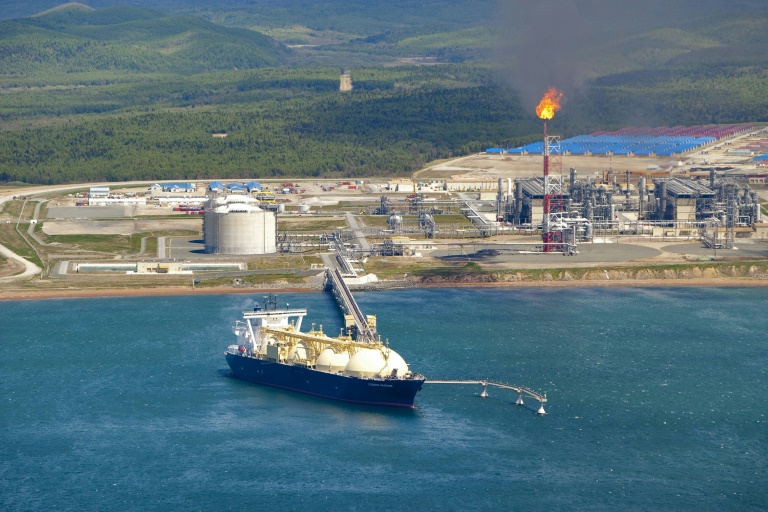
Two Japanese trading houses will maintain stakes in a Russian energy project despite Tokyo joining sanctions on Moscow over the war in Ukraine, as the Asian country looks to secure its power supply.

Moscow is transferring operation of the Sakhalin-2 oil and gas project to a new Russian firm, with foreign stakeholders required to apply for approval to maintain their interests.

Like other countries that have joined sanctions, Japan is seeking to reduce its reliance on Russian energy imports but struggling to find alternatives.

The resource-poor country faced a power crunch during a summer heatwave this year, and is looking ahead to a potentially difficult winter.

Mitsubishi Corp said Thursday that its 10 percent stake in the Sakhalin-2 project had been approved by Moscow, a day after Mitsui said its 12.5 percent interest had also been given the green light.

The Japanese government had backed both firms continuing in the project.

Russia supplies around nine percent of Japan’s liquified natural gas (LNG) demands, almost all of which comes from Sakhalin-2.

“This decision is extremely significant for our nation’s stable energy supply,” government spokesman Hirokazu Matsuno said at a regular briefing on Thursday.

“We will continue to monitor the situation to ensure stable LNG supplies, together with the public and private sectors.”

Japan is heavily dependent on imported fossil fuels, in part because many of its nuclear reactors have been offline since the 2011 Fukushima disaster.

The country had previously ruled out withdrawal from the Sakhalin-2 project, despite joining Western-led energy sanctions on Russia.

Last week, Prime Minister Fumio Kishida called for a push to revive the country’s nuclear power industry in a bid to tackle soaring imported energy costs linked to the war.

Before the Fukushima meltdown, around a third of Japan’s power generation came from nuclear sources, but in 2020 the figure was less than five percent.

“LNG accounts for over one-third of electricity generation in Japan, while the recent closure of ageing thermal power plants has further constrained policymakers’ options,” wrote James Brady, vice president of Teneo consultancy, in a note.

“The Sakhalin decisions reflect the pragmatic realities of keeping the country’s heat and lights on during the most challenging international energy market environment for decades.”

Asian investors step up selling as rate hikes loom

Investors further unloaded equities in Asia on Thursday as they girded themselves for more interest rate hikes aimed at quelling runaway inflation, with some analysts warning that markets could retest the lows touched in June.

Data showing prices rose at a record clip in the eurozone in August reinforced fears that central banks have a long road to run before they win their battle, which has fanned warnings of a recession in the world’s leading economies.

Another drop on Wall Street came as Treasury yields — a key gauge of future interest rates — rose further as a broadly healthy report on US private jobs showed there was still plenty of wiggle room for the Fed to continue tightening monetary policy.

Meanwhile, another top Fed official signalled the bank was determined to keep lifting borrowing costs, mirroring comments by head Jerome Powell last week that there would be no let-up in the fight against inflation.

“My current view is that it will be necessary to move the Fed funds rate up to somewhat above four percent by early next year and hold it there,” said Cleveland Fed President Loretta Mester in remarks prepared ahead of an event for the Dayton Area Chamber of Commerce.

“I do not anticipate the Fed cutting the Fed funds rate target next year.”

Interest rates are currently at 2.25-2.5 percent, and there is a growing expectation they will be hiked by a bumper 75 basis points for a third successive meeting later this month.

A government jobs report Friday will be closely watched by traders hoping for an idea about the next move by the bank, which has said it will make its decision based on data.

In a further warning that policymakers had a win-at-all-costs mentality, Mester later told the audience: “Even if the economy were to go into a recession, we have to get inflation down.” 

The hawkish remarks out of the Fed have dealt a hefty blow to a rally in markets from their June lows.

And some have warned that more pain could be on the way, with Frances Stacy, of Optimal Capital Advisors, telling Bloomberg Radio: “I don’t think we’ve seen the bottom for this year.”

The downbeat mood in New York and Europe, which is also being buffeted by a major energy crisis, spread to Asia.

Tokyo, Hong Kong, Sydney, Seoul, Singapore, Wellington, Taipei and Jakarta were all deep in the red, though Shanghai eked out small gains with Manila.

The prospect of more US rate hikes continued to press the dollar higher against all other currencies, with the psychological 140 yen mark well within sight for the first time since 1998.

And analysts are speculating that a breach of that barrier could see the Bank of Japan intervene, though they also warned it was unlikely to make much difference owing to Tokyo’s refusal to tighten its own monetary policy despite rising prices.

“There will likely be some sort of verbal intervention as 140 approaches,” said David Lu, of NBC Financial Markets Asia.

“But an actual intervention is likely to be ineffective at this point where the dollar is rising broadly on US monetary policy prospects while there is no support for the yen from the Bank of Japan.”

– Key figures at around 0230 GMT –

Tokyo – Nikkei 225: DOWN 1.5 percent at 27,673.14 (break)

Hong Kong – Hang Seng Index: DOWN 0.8 percent at 19,795.76

Shanghai – Composite: UP 0.3 percent at 3,210.75

Euro/dollar: DOWN at $1.0026 from $1.0054 on Wednesday

Pound/dollar: DOWN at $1.1584 from $1.1619

Euro/pound: UP at 86.55 pence from 86.50 pence

Dollar/yen: DOWN at 139.62 yen from 138.98 yen

West Texas Intermediate: DOWN 0.2 percent at $89.35 per barrel

Brent North Sea crude: DOWN 0.3 percent at $95.34 per barrel

New York – Dow: DOWN 0.9 percent at 31,510.43 (close)

London – FTSE 100: DOWN 1.1 percent at 7,284.15 (close)

US, European stocks drop amid rate hike fears

US and European stock markets slid Wednesday as record-high inflation fanned fears that more interest rate hikes are on their way.

Wall Street’s main stock indices closed lower for a fourth day, a downward trend that follows Federal Reserve chief Jerome Powell’s warning last week there will be no respite from increasing interest rates.

Frankfurt, London and Paris stocks all dropped as data showed eurozone inflation hit 9.1 percent in August on surging fuel prices, raising pressure on the European Central Bank to tighten its monetary policy.

And most Asian markets closed lower as well on concerns the US Fed’s rate-hiking policy could send the world’s biggest economy into recession.

Following Powell’s highly anticipated statement, the US “had a quiet start to the week in data,” said Jack Ablin of Cresset Capital. 

Traders are now awaiting the release of US job-creation figures on Friday for a better idea about the state of the economy.

“Starting tomorrow and Friday, I think we’ll have a lot more information to digest,” Ablin said.

– ‘One direction only’ –

Major central banks are rushing to contain surging consumer price inflation that has largely been prompted by fallout from key energy supplier Russia’s invasion of Ukraine.

“The data from the EU has confirmed that inflation is moving in one direction only, and the ECB has a long way to go before it can put a leash on inflation,” said Naeem Aslam, chief market analyst for Markets.com.

The ECB is set to lift borrowing costs next week, having increased them in July for the first time in a decade to help tackle rampant inflation.

Meanwhile, oil prices fell on demand jitters as China imposes further pandemic restrictions, and the possibility that a deal on Iran’s nuclear program could unlock crude exports.

State energy giant Gazprom suspended gas deliveries to Germany on a major pipeline on Wednesday.

It was the latest in a series of supply halts that have fueled Europe’s energy crisis and sent gas and electricity prices soaring before the peak-demand winter.

European gas prices, however, fell on Wednesday after flirting with a record high last week.

– Key figures at around 2030 GMT –

New York – Dow: DOWN 0.9 percent at 31,510.43 points (close)

New York – S&P 500: DOWN 0.8 percent at 3,955.00 (close)

New York – Nasdaq: DOWN 0.6 percent at 11,816.20 (close)

EURO STOXX 50: DOWN 1.3 percent at 3,517.25 (close)

London – FTSE 100: DOWN 1.1 percent at 7,284.15 (close)

Frankfurt – DAX: DOWN 0.7 percent at 12,873.48 (close)

Paris – CAC 40: DOWN 1.4 percent at 6,125.10 (close)

Tokyo – Nikkei 225: DOWN 0.4 percent at 28,091.53 (close)

Hong Kong – Hang Seng Index: FLAT at 19,954.39 (close)

Shanghai – Composite: DOWN 0.8 percent at 3,202.14 (close)

Euro/dollar: UP at $1.0054 from $1.0015 on Tuesday

Pound/dollar: DOWN at $1.1619 from $1.1656

Euro/pound: UP at 86.50 pence from 85.92 pence

Dollar/yen: DOWN at 138.9780 yen from 139.00 yen

West Texas Intermediate: DOWN 2.3 percent at $89.55 per barrel

Brent North Sea crude: DOWN 2.8 percent at $96.49 per barrel

burs-rl-bfm/wd

European stocks drop on record eurozone inflation

European stock markets slid Wednesday as record-high eurozone inflation fanned fears that more interest rate hikes could herald recession.

Frankfurt, London and Paris stocks all dropped as data showed eurozone inflation hit 9.1 percent in August on surging fuel prices, raising pressure on the European Central Bank to tighten its monetary policy.

Wall Street’s main stock indices were lower in late morning trading, while most Asian markets closed lower on concerns the US Federal Reserve’s rate-hiking policy would send the world’s biggest economy into recession.

Meanwhile, oil prices fell on demand jitters as China imposes further pandemic restrictions, and the possibility a deal on Iran’s nuclear programme could unlock crude exports.

“Traders aren’t just ready to back riskier assets and losing their appetite for them because there are concerns about the Fed’s hawkish monetary policy,” said Naeem Aslam, chief market analyst for Markets.com.

“The data from the EU has confirmed that inflation is moving in one direction only, and the ECB has a long way to go before it can put a leash on inflation,” he said.

The ECB is set to lift borrowing costs next week, having increased them in July for the first time in a decade to help tackle rampant inflation.

– Recession risk –

“The reality is that a more aggressive (ECB) tightening is going to be needed, and when the economy is already as fragile as it is, the situation quickly starts to look quite problematic,” OANDA analyst Craig Erlam told AFP.

“That’s not good for stocks as it’s extremely difficult for companies to prosper if the bloc is in a deep recession made worse by higher interest rates, which is now a real risk.”

Major central banks are rushing to contain runaway consumer price inflation that has largely been prompted by fallout from key energy supplier Russia’s invasion of Ukraine.

State energy giant Gazprom suspended gas deliveries to Germany on a major pipeline on Wednesday.

It was the latest in a series of supply halts that have fuelled Europe’s energy crisis and sent gas and electricity prices soaring before the peak-demand winter.

European gas prices, however, fell on Wednesday after flirting with a record high last week.

Markets have struggled since Fed chief Jerome Powell warned last Friday that the US central bank would need to tighten policy much more to tackle sky-high inflation.

“Inflation remains the key issue, with commentary from both the Fed and ECB serving to highlight the fact that controlling prices will remain the central target irrespective of economic suffering,” IG analyst Joshua Mahony told AFP.

“A drawn out period of higher costs, higher wages, and lower demand point towards further downside for equity markets,” he noted.

Traders are now awaiting the release of US job-creation figures on Friday for a better idea about the state of the economy.

– Key figures at around 1530 GMT –

New York – Dow: DOWN 0.3 percent at 31,689.95 points

EURO STOXX 50: DOWN 1.3 percent at 3,517.25

London – FTSE 100: DOWN 1.1 percent at 7,284.15 (close)

Frankfurt – DAX: DOWN 0.7 percent at 12,873.48 (close)

Paris – CAC 40: DOWN 1.4 percent at 6,125.10 (close)

Tokyo – Nikkei 225: DOWN 0.4 percent at 28,091.53 (close)

Hong Kong – Hang Seng Index: FLAT at 19,954.39 (close)

Shanghai – Composite: DOWN 0.8 percent at 3,202.14 (close)

Euro/dollar: UP at $1.0074 from $1.0015 on Tuesday

Pound/dollar: DOWN at $1.1643 from $1.1656

Euro/pound: UP at 86.45 pence from 85.92 pence

Dollar/yen: DOWN at 138.61 yen from 139.00 yen

West Texas Intermediate: DOWN 1.4 percent at $90.32 per barrel

Brent North Sea crude: DOWN 2.6 percent at $96.72 per barrel

burs-rl/

Crisis-hit Sri Lanka's inflation hits another record

Crisis-hit Sri Lanka’s inflation hit an eleventh consecutive monthly record in August, official data showed on Wednesday, rising to 64.3 percent as the International Monetary Fund extended bailout talks by one more day.

The benchmark year-on-year Colombo Consumer Price Index (CCPI) in August was more than eight times higher than the 7.6 percent recorded in October 2021. Since then it has set a new record high every month.

According to the department of census and statistics, food inflation in August was even higher, hitting 93.7 percent.

Inflation in August was impacted by a more than threefold increase in electricity tariffs and kerosene oil prices that hit in the middle of the month.

The CCPI figures were released hours after the IMF said it had extended by a day official-level talks with the Sri Lankan government on a possible bailout.

“The IMF Mission in Colombo has been extended by one day because discussions are still ongoing with the authorities,” the IMF said in a brief statement.

The IMF had asked Sri Lanka to contain spiralling inflation and address corruption as part of efforts to salvage the troubled economy, which has been ravaged by a foreign exchange crisis.

The Sri Lankan rupee has lost more than 45 percent of its value against the US dollar this year.

An unprecedented economic crisis — which saw the country default on its $51 billion debt in April — forced Gotabaya Rajapaksa to step down as president last month, after prolonged protests against acute shortages of food, fuel and medicines.

The country’s 22 million people have also been enduring lengthy electricity blackouts due to the government’s inability to import enough fuel to run generators.

India quarterly GDP up 13.5% on pandemic rebound, below expectations

A post-pandemic rebound saw India’s economy grow 13.5 percent in the June quarter, official figures showed Wednesday, but the expansion was below forecasts thanks to the headwinds buffeting Asia’s third-largest economy.

The increase from the same quarter last year reflects a dramatic uptick in activity since mid-2021, when the peak of the country’s most devastating coronavirus wave began to recede.

That outbreak saw thousands of people dying across India each day, overwhelming hospitals and crematoriums, and came after an extended lockdown that pummelled consumer spending and brought factories to a standstill. 

Wednesday’s figure was the highest since the 20.1 percent expansion recorded during the same period last year, at a time when business activity was recovering from government shutdown edicts.

But the result is well below the 16.2 percent forecast by the Reserve Bank of India (RBI), the country’s central bank, with inflation and other indications of economic weakness dragging down performance. 

“The numbers are lower than we expected,” State Bank of India chief economic advisor Soumya Kanti Ghosh told AFP. 

He added that the RBI would most likely revise down its 7.2 percent growth forecast for the year to March 2023, with weakness in the manufacturing sector a cause for concern.

Elevated crude oil prices and a seven percent fall in the rupee this year have left India struggling with a deteriorating trade balance. 

India’s merchandise trade deficit widened to a record $31 billion in July, compared to $10.6 billion in the same month last year, provisional data showed.

Import costs, led by petroleum products and coal, were more than twice as high as export revenues.

India imports more than 80 percent of its crude oil needs and shocks to the market since Russia’s invasion of Ukraine have left its 1.4 billion people struggling with higher fuel charges.

Consumer inflation has consistently overshot the central bank’s two-to-six percent target range this year, hitting an eight-year high of 7.79 percent in April before cooling to 6.71 percent in July.

But Bank of Baroda chief economist Madan Sabnavis said household spending had remained resilient because of pent-up demand left over from the shock to the economy during the pandemic.

“Normally with high inflation, purchasing power comes down, but that doesn’t seem to have played out so far,” he told AFP. 

In August, India’s central bank hiked interest rates for the third time in four months, pushing borrowing costs up to pre-pandemic levels.

The International Monetary Fund last month slashed its growth outlook for India to 7.4 percent, a figure that still exceeds every other major economy besides Saudi Arabia.

India GDP surges 13.5% on pandemic rebound, despite headwinds

A post-pandemic rebound saw India’s economy grow 13.5 percent in the June quarter, official figures showed Wednesday, but inflation and other headwinds signal a looming slowdown in Asia’s third-largest economy.

The double-digit expansion from last year reflects a dramatic uptick in activity since mid-2021, when the peak of the country’s most devastating coronavirus wave began to recede.

That outbreak saw thousands of people dying across India each day, overwhelming hospitals and crematoriums, and came after an extended lockdown that pummelled consumer spending and brought factories to a standstill. 

Wednesday’s figure from the national statistics office was the highest since the 20.1 percent expansion recorded during the same period last year, at a time when business activity was recovering from government shutdown edicts.

State Bank of India chief economic advisor Soumya Kanti Ghosh said in a note that India was navigating well through global uncertainty “with leading indicators continuing to show acceleration”.

A rebound in capital inflows in August after months of investor flight from Indian debt and equities also pointed to improved sentiment, Ghosh said.

But Wednesday’s result is lower than the 16.2 percent forecast by India’s central bank, and other economists expect headwinds to buffet the economy and dampen growth into the next year. 

Elevated crude oil prices and a seven percent fall in the rupee this year have hit living costs and left India struggling with a deteriorating trade balance. 

India’s merchandise trade deficit widened to a record $31 billion in July, compared to $10.6 billion in the same month last year, provisional data showed.

Import costs, led by petroleum products and coal, were more than twice as high as export revenues.

India imports more than 80 percent of its crude oil needs and shocks to the market since Russia’s invasion of Ukraine have left its 1.4 billion people struggling with higher fuel charges.

Consumer inflation has consistently overshot the central bank’s two-to-six percent target range this year, hitting an eight-year high of 7.79 percent in April before cooling to 6.71 percent in July.

In August, India’s central bank hiked interest rates for the third time in four months, pushing borrowing costs up to pre-pandemic levels.

The Reserve Bank of India forecasts 7.2 percent growth for the current financial year owing to “geopolitical tensions” and the risk of “global recession”. 

The International Monetary Fund last month slashed its own outlook for the same period to 7.4 percent, a figure that still exceeds every other major economy besides Saudi Arabia.

Close Bitnami banner
Bitnami