Chinese Business

Baidu reports 5% year-on-year decrease in Q2 revenue

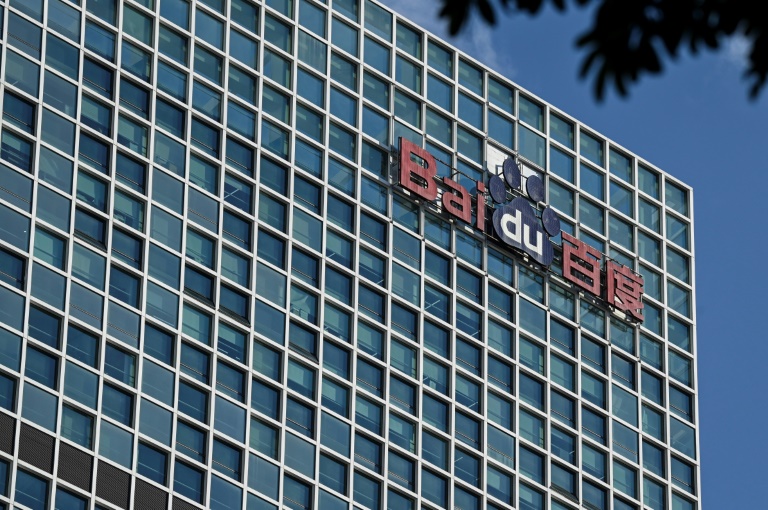
Chinese internet giant Baidu Inc. on Tuesday announced second-quarter revenues of 29.6 billion yuan ($4.3 billion), down five percent from last year after the company faced a challenging economic climate and tight controls on China’s once-thriving tech sector.

Other Chinese tech giants, including Tencent and e-commerce behemoth JD.com, had also reported disappointing results in recent weeks. 

China’s major tech companies have been grappling with economic uncertainty, Covid-19 restrictions that have kept consumers jittery, and heightened scrutiny from regulators in recent months.

Baidu, which operates China’s most widely used search engine, saw revenues decrease but posted a net profit of 3.6 billion yuan ($522 million), buoyed by a 31 percent year-on-year growth in its cloud computing business.

“Despite a challenging macro environment caused by Covid-19, Baidu Core generated  RMB23.2 billion in revenues in the second quarter,” CEO Robin Li was quoted as saying in an official press release.

“Going forward, we remain committed to quality revenue growth and sustainable business models.”

Last year, the Beijing-based group reported second-quarter revenue of 31.4 billion yuan ($4.5 billion), up 20 percent year-on-year at the time.

Baidu has heavily diversified into artificial intelligence, cloud computing and autonomous driving technologies in recent years, as advertising revenue remains sluggish. 

Li claimed Apollo Go, its autonomous driving arm, further consolidated its position as a leading intelligent ride-hailing provider, with fully driverless taxi services launched in the cities of Chongqing and Wuhan.

Beijing regulators’ widespread crackdown on the tech sector, beginning in late 2020, saw record fines, cancelled IPOs and lengthy investigations targeting top players, which decimated revenues and put further pressure on the stalling economy. 

The campaign is intended to reduce monopolistic practices and promote competition between internet platforms. 

Last week, Alibaba rival JD.com reported its slowest revenue growth to date in the second quarter, after tech giant Tencent reported its first drop in quarterly revenue since going public.

Didi Chuxing, China’s answer to Uber, was also fined the equivalent of $1.2 billion last month after a year-long cybersecurity investigation. 

Many parts of China have faced lockdowns and other Covid restrictions in recent months, disrupting business activity and adding to consumer worries as Beijing tries to stamp out the Omicron variant’s spread under its strict zero-Covid policy.
Most markets bounce after Powell-induced sell-off

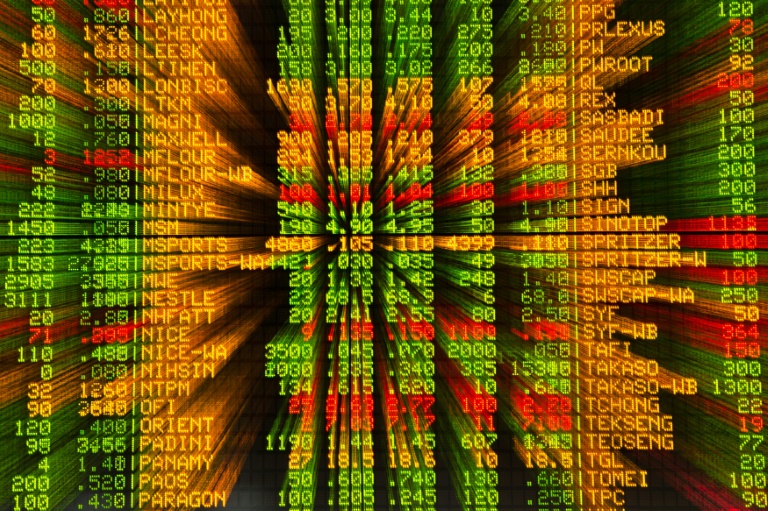
Markets mostly rose Tuesday on bargain-buying following the latest sell-off, but confidence remains at a premium as traders contemplate the prospect of more Federal Reserve interest rate hikes and a possible recession.

Wall Street suffered another day in the red after Friday’s capitulation in response to a warning from US central bank boss Jerome Powell that more tightening was needed to bring inflation down from four-decade highs.

Bets on a third successive three-quarter-point increase next month have surged since his comments, which blew a hole in a recent rally across markets from their June lows.

Now there is a growing fear that the Fed’s priority of beating inflation at any cost will damage the world’s top economy, which is already in a technical recession following two straight quarters of contraction.

“The markets are spooked because they are afraid that the Fed could create a hard landing — that they’ll raise rates into a recession, and that will be really painful for the economy and for corporate profits,” Terri Spath, of Zuma Wealth, told Bloomberg Television.

After Monday’s retreat, Asian equities fared a little better, as bargain buyers jumped back, though sentiment was still weak.

Tokyo, Sydney, Seoul, Singapore, Mumbai, Taipei, Bangkok, Jakarta and Wellington all rose.

But Hong Kong, Shanghai and Manila fell.

London, Paris and Frankfurt edged up in the morning.

In light of the sell-off in response to the Powell speech, Minneapolis Fed President Neel Kashkari said it appeared traders had now accepted the fact that policymakers were focused on fighting price rises.

“People now understand the seriousness of our commitment to getting inflation back down to two percent,” he said.

And Michael Hewson of CMC Markets added: “The effect of higher interest rates as well as the rising cost of living has already started to manifest itself in the most recent lending data.

“It’s been a trend that has been in place since the start of this year, but appears to be accelerating as we head into the autumn.”

While central banks around the world commit to lifting rates to fight inflation, a major driver of the gains continues to cause a headache.

A warning from OPEC kingpin Saudi Arabia that it could cut output has put fresh upward pressure on the commodity, offsetting concerns about a hit to demand from any economic slowdown.

Both main contracts dipped in Asian trade but held most of the more than four percent rally enjoyed Monday.

Waning optimism about an imminent Iran nuclear deal, fresh unrest in Libya and China’s economic travails were adding to the oil market’s strength.

“A combination of fresh supply risks from Libya, along with uncertainty over the upcoming OPEC+ meeting, has provided a boost,” said Warren Patterson of ING Groep NV.

But he added that “fundamentally, the market is in a more comfortable state, and in the absence of a large supply disruption or OPEC+ intervention, it is difficult to see significant upside in the short term”.

– Key figures at around 0810 GMT –

Tokyo – Nikkei 225: UP 1.1 percent at 28,195.58 (close)

Hong Kong – Hang Seng Index: DOWN 0.4 percent at 19,949.03 (close)

Shanghai – Composite: DOWN 0.4 percent at 3,227.22 (close)

London – FTSE 100: UP 0.7 percent at 7,481.54

Euro/dollar: UP at $1.0027 from $0.9998 on Monday

Pound/dollar: UP at $1.1739 from $1.1703

Euro/pound: DOWN at 85.41 pence from 85.42 pence 

Dollar/yen: DOWN at 138.38 yen from 138.73 yen

West Texas Intermediate: UP 0.4 percent at $97.36 per barrel

Brent North Sea crude: UP 0.1 percent at $105.17

New York – Dow: DOWN 0.6 percent at 32,098.99 (close)

Japan business leader and monk Inamori dies at 90

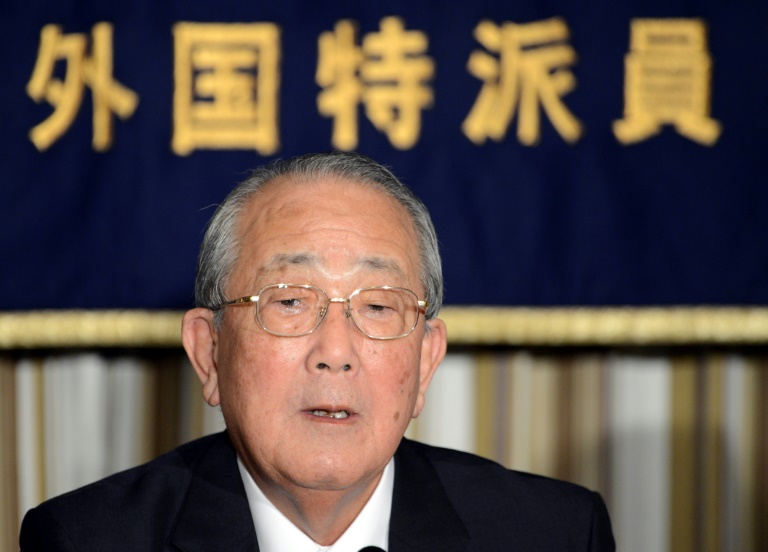
Kazuo Inamori, a business guru and ordained Buddhist monk who reversed the fortunes of debt-ridden Japan Airlines, has died aged 90, a company he founded said Tuesday.

The entrepreneur was one of Japan’s most respected executives, having established electric components maker Kyocera and another firm that later became part of telecoms group KDDI.

He died “of old age” at his Kyoto home on August 24 and a family funeral has since been held, Kyocera said in a statement.

Japan’s government convinced Inamori to come out of retirement in 2010 to head Japan Airlines (JAL) after the ailing carrier filed for bankruptcy.

The businessman — who was 78 at the time — said he was a “complete amateur” in the transport industry, but promised to “do my best”.

His overhaul was successful and JAL shares were relisted on the stock exchange in 2012, less than three years after the airline was forced to delist.

Inamori was an advocate of reducing government interference in business and he was known for his “amoeba management” theory, which grants autonomy to each unit of a company while group members pool their knowledge.

He was also a philanthropist whose close work with Alfred University in the US state of New York led it to rename its engineering department after him.

After stepping down from an active role at Kyocera, he earned the status of Buddhist monk in 1997 at a Kyoto temple, but he did not live a reclusive religious lifestyle.

Kyocera said it planned to hold a separate memorial for Inamori but details had not yet been decided.

China state support for economy this year exceeds 2020, premier says

State support for China’s economy this year is now greater than it was in 2020, Beijing’s premier has said, surpassing help given at the height of the coronavirus pandemic as the country grapples with the impacts of its zero-Covid policy and a property sector crisis.

Economists have widely predicted that China will fail to meet its 5.5 percent GDP growth target, blaming record youth unemployment, ballooning developer debt and manufacturing disruptions from frequent Covid lockdowns.

“In response to new challenges, (we have) decisively launched a package of policies to stabilise the economy. Their strength surpasses those of 2020,” Premier Li Keqiang said during a Monday State Council conference.

China’s economy has also been battered by the two-month lockdown of Shanghai, a nationwide mortgage boycott, and a severe drought and heatwave which shut down manufacturing hubs and severely impacted the agricultural sector.

The grim economic outlook underscores the difficulty of balancing economic growth with the country’s strict zero-Covid policy, with targeted lockdowns, travel restrictions and mass testing depleting fiscal revenues and causing disruption to everyday life.

Li hinted at this fact earlier in August, telling officials “the number of people in difficulty has seen an increase” due to the virus and recent natural disasters.

Real estate sales, a major economic driver, fell 22 percent in August, year on year, while new home prices have fallen for 11 months straight, according to data released earlier this month.

China’s economic growth came in at just 0.4 percent on-year in the second quarter — its slowest rate since the pandemic began in 2020.

Beijing has taken a number of steps to help revive its economy, including a ramping-up of infrastructure investment, tax credits and loan facilities for SMEs. 

China’s banks last week lowered their benchmark lending rates, including on mortgage loans, for the second time this year.

Beijing also announced last week that it would allow local governments to issue more bonds.

But Ting Lu, an analyst at Nomura, wrote these measures would likely not be “game changers” due to the continued zero-Covid policy and the persistent distress affecting the property sector. 

In shadow of abandoned US airbase, Bagram's economy withers

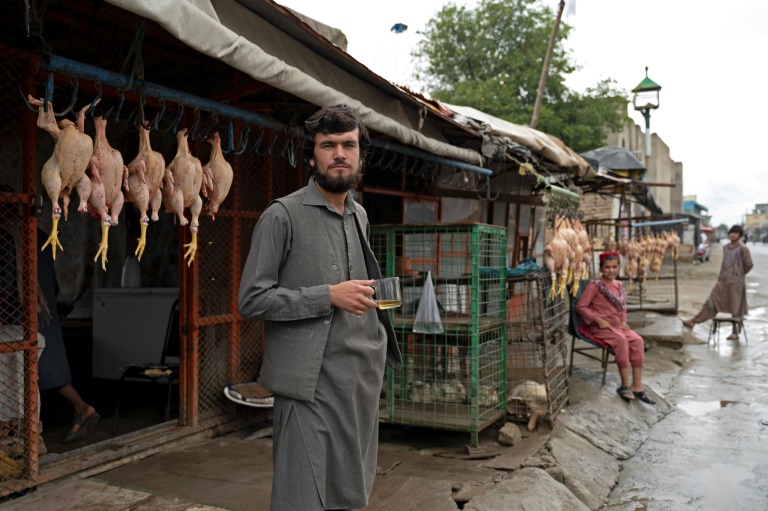
For years, the sprawling military base at Bagram, just north of Kabul, was a potent symbol of the United States’ two decades of war in Afghanistan.

The sprawling complex included an air base that was the linchpin of the US invasion; a prison where rights groups allege widespread violations occurred; and a residential area that featured swimming pools, cinemas and spas.

But weeks before Washington officially ended its military presence in Afghanistan last August, US troops left the airbase in the dead of night.

Today, the military base is occupied by the Taliban, who took over the country in a swift offensive as US forces were exiting.

The US departure from Bagram has also seen the collapse of the economy in the nearby town of the same name, an illustration of how Afghanistan’s fortunes were so heavily tied to the war and foreign aid.

“Today, I’m jobless. I don’t know much about politics, but the exit of US forces from the base is a big economic loss,” said Saifulrahman Faizi, one of the town’s 80,000 residents.

Faizi earned $30 a day when he was employed at the base, at a time when hundreds would queue for hours outside the compound in the hope of getting work.

“Now, nobody goes there. Everything has just crashed, everybody is struggling”, he said.

– Shuttered shops –

Nowhere is the town’s economic collapse more evident than in the main market.

It is marked by rows of shuttered shops and warehouses, and those that remain open have seen sales plummet. 

Shah Wali, a 46-year-old grocery store keeper, said he used to earn an income of between 20,000 and 30,000 Afghanis ($230 and $340). 

Today, he can barely pay his rent.

“With the Islamic Emirate (Taliban) coming to power, peace has returned but business has gone,” Wali told AFP, clutching his prayer beads.

At the peak of the US invasion, Bagram was home to tens of thousands of troops and contractors, with the town serving as a hub for tons of supplies that would service the base.

The airfield was first built by the Americans for their Afghan ally during the Cold War in the 1950s.

The Soviet Union vastly expanded it after the Red Army invaded Afghanistan in 1979.

After their withdrawal, the base was controlled by the Moscow-backed government, and later by the shaky mujahideen administration during the 1990s civil war.

With the Taliban seizing power last year, the airfield is now under their control.

– ‘Empty town’ –

When the US military pulled out, it took much of its military hardware home, but tons of civilian equipment was left behind. 

For several months, the town managed to thrive on a booming scrap business, but residents say that now that, too, is dying.

Shops that sold used gym equipment, generators, air conditioners and spare car parts are either shut or receive few orders.

Several houses are now deserted, their residents having moved to Kabul or elsewhere in search of work.

Many who had worked at the base have also fled the country, fearing reprisals from the Taliban.

“Half the people have gone, the town feels so empty,” said Faizi.

China arrests hundreds over banking scandal that sparked rare protests

Chinese police have arrested more than 200 suspects linked to one of the country’s biggest banking scandals that triggered rare mass protests and dealt a major blow to confidence in the country’s financial system.

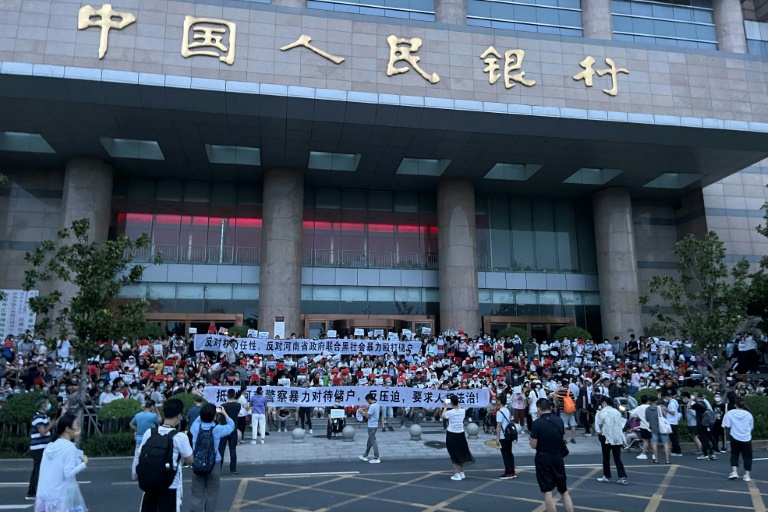
Four banks in China’s central Henan province suspended cash withdrawals in April as regulators cracked down on mismanagement, freezing the funds of hundreds of thousands of customers and sparking protests that at times ended in violence.

Police in the city of Xuchang said Monday they had now arrested 234 people in connection with the scandal and that progress was being made in recovering stolen funds.

They said in a statement that a “gang” had taken control of a number of local banks, attracting depositors with interest rates as high as 18 percent.

Large amounts of funds, they said, were then “exploited by financial brokers”.

Authorities previously said the gang had effectively controlled the banks since 2011.

China’s rural banking sector has been hit hard by Beijing’s efforts to rein in a property bubble and spiraling debt, in a financial crackdown that has had ripple effects across the world’s second-largest economy.

The size and scale of the fraud dealt an unprecedented blow to public confidence in China’s financial system, analysts have said, with the banks involved allegedly operating illegally for more than a decade.

Beijing is desperate to avoid disruptions to social stability just months away from a major meeting of the ruling Communist Party, where President Xi Jinping is expected to secure an unprecedented third term in power. 

A July 10 mass demonstration by depositors in Henan’s provincial capital Zhengzhou was violently quashed, with demonstrators forced onto buses by police and beaten, according to eyewitness accounts given to AFP and verified photos on social media.

Regulators have been gradually offering repayments to depositors since mid-April.

On Monday, the Henan banking and insurance regulator promised to repay those who had deposited between 400,000 and 500,000 yuan ($57,900 to $72,300) starting this week. 

Depositors who owed smaller amounts had been repaid.

Asian markets mixed as traders steel for more rate hikes

Asian markets were mixed Tuesday with confidence at a premium as traders contemplate the prospect of more Federal Reserve interest rate hikes and a possible recession.

Wall Street suffered another day in the red after Friday’s capitulation in response to a warning from US central bank boss Jerome Powell that more tightening was needed to bring inflation down from four-decade highs.

Bets on a third successive three-quarter-point increase next month have surged since his comments, which blew a hole in a recent rally across markets from their June lows.

Now there is a growing fear that the Fed’s priority of beating inflation at any cost will damage the world’s top economy, which is already in a technical recession following two straight quarters of contraction.

“The markets are spooked because they are afraid that the Fed could create a hard landing — that they’ll raise rates into a recession, and that will be really painful for the economy and for corporate profits,” Terri Spath, of Zuma Wealth, told Bloomberg Television.

After Monday’s retreat, Asian equities fared a little better, though sentiment remained weak.

Tokyo, Sydney, Seoul, Singapore, Jakarta and Wellington all rose, but Hong Kong, Shanghai and Manila sank.

In light of the sell-off in response to the Powell speech, Minneapolis Fed President Neel Kashkari said it appeared traders had now accepted the fact that policymakers were focused on fighting price rises.

“People now understand the seriousness of our commitment to getting inflation back down to two percent,” he said.

But while central banks around the world commit to lifting rates to fight inflation, a major driver of the gains continues to cause a headache.

A warning from OPEC kingpin Saudi Arabia that it could cut output has put fresh upward pressure on the commodity, offsetting concerns about a hit to demand from any economic slowdown.

Waning optimism about an imminent Iran nuclear deal, fresh unrest in Libya and China’s economic travails were adding to the oil market’s strength.

“A combination of fresh supply risks from Libya, along with uncertainty over the upcoming OPEC+ meeting, has provided a boost,” Warren Patterson, of ING Groep NV, said. 

But he added that “fundamentally, the market is in a more comfortable state, and in the absence of a large supply disruption or OPEC+ intervention, it is difficult to see significant upside in the short term”.

– Key figures at around 0230 GMT –

Tokyo – Nikkei 225: UP 1.0 percent at 28,162.52 (break)

Hong Kong – Hang Seng Index: DOWN 1.8 percent at 19,669.45

Shanghai – Composite: DOWN 0.6 percent at 3,220.96

Euro/dollar: DOWN at $0.9985 from $0.9998 on Monday

Pound/dollar: DOWN at $1.1692 from $1.1703

Euro/pound: DOWN at 85.40 pence from 85.42 pence 

Dollar/yen: DOWN at 138.59 yen from 138.73 yen

West Texas Intermediate: DOWN 0.3 percent at $96.68 per barrel

Brent North Sea crude: DOWN 0.7 percent at $104.38

New York – Dow: DOWN 0.6 percent at 32,098.99 (close)

London – FTSE 100: Closed for public holiday

China arrests hundreds over banking scandal that sparked rare protests

Chinese police have arrested more than 200 suspects linked to one of the country’s biggest-ever banking scandals, which triggered rare mass protests.

Four banks in central China’s Henan province suspended cash withdrawals in April as regulators cracked down on mismanagement, freezing the funds of hundreds of thousands of customers and sparking protests that at times ended in violence.

Police said Monday they had now arrested 234 people in connection with the scandal and that “significant progress” was being made in recovering stolen funds.

“A criminal gang… illegally controlled four village and town banks… and was suspected of committing a series of serious crimes,” police in the city of Xuchang said in a statement on Monday.

China’s rural banking sector has been hit hard by Beijing’s efforts to rein in a property bubble and spiralling debt in a financial crackdown that has had ripple effects across the world’s second-largest economy.

Regulators have been gradually offering repayments to depositors since mid-April. 

On Monday, the Henan banking and insurance regulator promised to repay those who had deposited between 400,000 and 500,000 yuan ($57,900 to $72,300) starting this week. 

Depositors who owed smaller amounts were repaid earlier.

The size and scale of the fraud dealt an unprecedented blow to public confidence in China’s financial system, analysts have said, with the banks involved allegedly operating illegally for more than a decade.

A July 10 mass demonstration by depositors in Henan’s provincial capital, Zhengzhou, was violently quashed, with demonstrators forced onto buses by police and beaten, according to eyewitness accounts given to AFP and verified photos on social media.

Stocks extend losses after Fed chief's warning

Stocks slid further Monday and the dollar rallied as traders continued to digest US Federal Reserve chief Jerome Powell’s warning of more interest rate hikes to fight inflation.

Wall Street’s main indices closed lower, extending Friday’s steep losses immediately following Powell’s speech, where he made clear the Fed’s priority is to bring inflation down from a four-decade high — even at the expense of economic growth and employment.

“Restoring price stability will take some time and requires using our tools forcefully to bring demand and supply into better balance,” he told the Jackson Hole gathering of global monetary policymakers.

The comments dealt a blow to markets, which had in recent weeks enjoyed a bounce from June lows as some weak economic data and a modest slowdown in price rises fanned hopes the Fed would temper its interest rate hike drive and potentially start to lower rates next year.

Powell doused those hopes.

He “didn’t splash some cold water on the stock market’s face,” said market analyst Patrick O’Hare at Briefing.com. 

“He dumped a whole bucket of ice water on it and the stock market wasn’t ready for the ice bucket challenge.”

Yanxi Tan of Malayan Banking said: “The game of assessing the Fed outlook has shifted from guessing how high the peak rate might be to also understanding how long it might stay there for.”

Analysts said the chances of a third successive 75 basis-point increase next month had risen, with US Treasury yields — a gauge of future interest rates — surging. That in turn helped propel the dollar higher.

The dollar closed in on the 140-yen mark not seen since 1998, but an easing in European gas prices helped the euro limit its losses.

“Powell sent the dollar rallying… on the back of a solid divergence between the decidedly hawkish Fed, and more hawkish, but increasingly worried, other central banks,” said Swissquote Bank analyst Ipek Ozkardeskaya.  

“Other major central banks are also hawkish, but they are less aggressive than the Fed,” she added.

Asian stocks ended sharply lower except for Shanghai, which eked out a small gain.

In European trading, both Paris and Frankfurt ended the day in the red.

London was closed for a public holiday.

European gas prices retreated from record highs set last week after Germany said Sunday it is replenishing its gas stocks more quickly than expected, and should meet an October target early despite drastic Russian supply cuts.

An emergency meeting of EU energy ministers was called for next week, with European Commission chief Ursula von der Leyen saying the bloc is working on an “emergency intervention” to rein in electricity prices sent soaring by Russia’s war in Ukraine as well as a structural reform of the market.

Oil prices jumped despite talk that surging interest rates could choke off the economic recovery as traders focused on supply concerns.

The commodity has fallen in recent weeks on bets that demand will be hit by an expected drop in economic output, particularly from China as it continues to battle a Covid-19 outbreak with lockdowns.


– Key figures at around 2100 GMT –

New York – Dow: DOWN 0.6 percent at 32,098.99 points (close)

New York – S&P 500: DOWN 0.7 percent at 4,030.61 (close)

New York – Nasdaq: DOWN 1.0 percent at 12,017.67 (close)

EURO STOXX 50: DOWN 0.9 percent at 3,570.51 (close)

Frankfurt – DAX: DOWN 0.6 percent at 12,892.99 (close)

Paris – CAC 40: DOWN 0.8 percent at 6,222.28 (close)

London – FTSE 100: Closed for public holiday

Tokyo – Nikkei 225: DOWN 2.7 percent at 27,878.96 (close)

Hong Kong – Hang Seng Index: DOWN 0.7 percent at 20,023.22 (close)

Shanghai – Composite: UP 0.1 percent at 3,240.73 (close)

Euro/dollar: UP at $0.9998 from $0.9964 Friday

Pound/dollar: DOWN at $1.1703 from $1.1743

Euro/pound: UP at 85.42 pence from 84.85 

Dollar/yen: UP at 138.73 yen from 137.38

West Texas Intermediate: UP 4.2 percent at $97.01 per barrel

Brent North Sea crude: UP 4.5 percent at $105.09

burs-rl/hs/sst

Stocks extend losses after Fed chief's rates warning

Stocks slid further Monday and the dollar rallied as traders continued to digest Federal Reserve chief Jerome Powell’s warning of more interest rate hikes to fight inflation.

Wall Street’s main indices opened lower, extending losses of between three and four percent on Friday immediately following Powell’s speech where he clearly stated his priority of bringing inflation down from four-decade highs, even at the expense of economic growth.

“Restoring price stability will take some time and requires using our tools forcefully to bring demand and supply into better balance,” he told the Jackson Hole gathering of global monetary policymakers.

The comments dealt a blow to markets, which had in recent weeks enjoyed a bounce from June lows as weak economic data and a slowdown in price rises fanned hopes the Fed would temper its interest rate hike drive and bring down rates next year.

Powell “didn’t splash some cold water on the stock market’s face,” said market analyst Patrick O’Hare at Briefing.com. 

“He dumped a whole bucket of ice water on it and the stock market wasn’t ready for the ice bucket challenge.”

Yanxi Tan of Malayan Banking said: “The game of assessing the Fed outlook has shifted from guessing how high the peak rate might be to also understanding how long it might stay there for.” 

Analysts said the chances of a third successive 75 basis-point increase next month had risen, with US Treasury yields — a gauge of future interest rates — surging. That in turn helped propel the dollar higher.

The dollar closed in on the 140 yen mark not seen since 1998, but an easing in European gas prices helped the euro limit its losses.

“Powell sent the dollar rallying… on the back of a solid divergence between the decidedly hawkish Fed, and more hawkish, but increasingly worried other central banks,” said Swissquote Bank analyst Ipek Ozkardeskaya.  

“Other major central banks are also hawkish, but they are less aggressive than the Fed,” she added.

Asian stocks ended sharply lower save for Shanghai, which eked out a small gain.

In European trading, both Paris and Frankfurt ended the day in the red.

London was closed for a public holiday.

European gas prices retreated from record highs set last week after Germany said Sunday it is replenishing its gas stocks more quickly than expected, and should meet an October target early despite drastic Russian supply cuts.

An emergency meeting of EU energy ministers was called for next week, with European Commission chief Ursula von der Leyen saying the bloc is working on an “emergency intervention” to rein in electricity prices sent soaring by Russia’s war in Ukraine as well as a structural reform of the market.

Oil prices jumped despite talk that surging interest rates could choke off the economic recovery as traders focused on supply concerns.

“Oil rallied on rising risks of a potential civil war that could put Libyan output at risk and over growing expectations that OPEC+ is positioning themselves to cut production,” said OANDA analyst Edward Moya. 

The commodity has fallen in recent weeks on bets that demand will be hit by an expected drop in economic output, particularly from China as it continues to battle a Covid-19 outbreak with lockdowns.


– Key figures at around 1530 GMT –

New York – Dow: DOWN 0.7 percent at 32,064.39 points 

EURO STOXX 50: DOWN 1.0 percent at 3,569.51

Frankfurt – DAX: DOWN 0.6 percent at 12,892.99 (close)

Paris – CAC 40: DOWN 0.8 percent at 6,222.28 (close)

London – FTSE 100: Closed for public holiday

Tokyo – Nikkei 225: DOWN 2.7 percent at 27,878.96 (close)

Hong Kong – Hang Seng Index: DOWN 0.7 percent at 20,023.22 (close)

Shanghai – Composite: UP 0.1 percent at 3,240.73 (close)

Euro/dollar: UP at $0.9989 from $0.9964 Friday

Pound/dollar: DOWN at $1.1704 from $1.1743

Euro/pound: UP at 85.34 pence from 84.85 

Dollar/yen: UP at 138.67 yen from 137.38

West Texas Intermediate: UP 3.2 percent at $95.99 per barrel

Brent North Sea crude: UP 3.0 percent at $103.98

burs-rl/rox/kjm

Close Bitnami banner
Bitnami