Chinese Business

Stocks extend losses after Fed chief's rates warning

Stocks slid further Monday and the dollar rallied as traders continued to digest Federal Reserve chief Jerome Powell’s warning of more interest rate hikes to fight inflation.

Wall Street’s main indices opened lower, extending losses of between three and four percent on Friday immediately following Powell’s speech where he clearly stated his priority is bringing inflation down from four-decade highs, even at the expense of economic growth.

“Restoring price stability will take some time and requires using our tools forcefully to bring demand and supply into better balance,” he told the Jackson Hole gathering of global monetary policymakers.

The comments dealt a blow to markets, which had in recent weeks enjoyed a bounce from June lows as weak economic data and a slowdown in price rises fanned hopes the Fed would temper its interest rate hike drive and bring down rates next year.

Powell “didn’t splash some cold water on the stock market’s face,” said market analyst Patrick O’Hare at Briefing.com. “He dumped a whole bucket of ice water on it and the stock market wasn’t ready for the ice bucket challenge.”

Yanxi Tan of Malayan Banking said: “The game of assessing the Fed outlook has shifted from guessing how high the peak rate might be to also understanding how long it might stay there for.” 

Analysts said the chances of a third successive 75 basis-point increase next month had risen, with US Treasury yields — a gauge of future interest rates — surging. That in turn helped propel the dollar higher.

The dollar closed in on the 140 yen mark not seen since 1998, but an easing in European gas prices helped the euro recup its losses.

“Powell sent the dollar rallying … on the back of a solid divergence between the decidedly hawkish Fed, and more hawkish, but increasingly worried other central banks,” said Swissquote Bank analyst Ipek Ozkardeskaya.  

“Other major central banks are also hawkish, but they are less aggressive than the Fed,” she added.

Asian stocks ended sharply lower save for Shanghai, which eked out a small gain.

In afternoon European trading Paris and Frankfurt were also nursing losses. London was closed for a holiday.

European gas prices retreated from record highs set last week after Germany said Sunday that it is replenishing its gas stocks more quickly than expected and should meet an October target early despite drastic Russian supply cuts.

An emergency meeting of EU energy ministers was called for next week, with European Commission chief Ursula von der Leyen saying the bloc is working on an “emergency intervention” to rein in electricity prices sent soaring by Russia’s war in Ukraine as well as a structural reform of the market.

Oil prices extended gains despite talk that surging interest rates could choke off the economic recovery as traders focused on supply concerns.

The commodity has fallen in recent weeks on bets that demand will be hit by an expected drop in economic output, particularly from China as it continues to battle a Covid-19 outbreak with lockdowns.

But fresh unrest in Libya, warnings that an Iran nuclear deal was not imminent and a possible OPEC output cut kept prices elevated.


– Key figures at around 1330 GMT –

New York – Dow: DOWN 0.8 percent at 32,039.07 points 

EURO STOXX 50: DOWN 1.1 percent at 3,562.85

Frankfurt – DAX: DOWN 0.9 percent at 12,858.66

Paris – CAC 40: DOWN 1.2 percent at 6,199.37

London – FTSE 100: Closed for a holiday

Tokyo – Nikkei 225: DOWN 2.7 percent at 27,878.96 (close)

Hong Kong – Hang Seng Index: DOWN 0.7 percent at 20,023.22 (close)

Shanghai – Composite: UP 0.1 percent at 3,240.73 (close)

Euro/dollar: UP at $1.0002 from $0.9964 Friday

Pound/dollar: DOWN at $1.1713 from $1.1743

Euro/pound: UP at 85.40 pence from 84.85 pence

Dollar/yen: UP at 138.46 yen from 137.38 yen

West Texas Intermediate: UP 1.7 percent at $94.65 per barrel

Brent North Sea crude: UP 1.5 percent at $102.51

burs-rl/lth
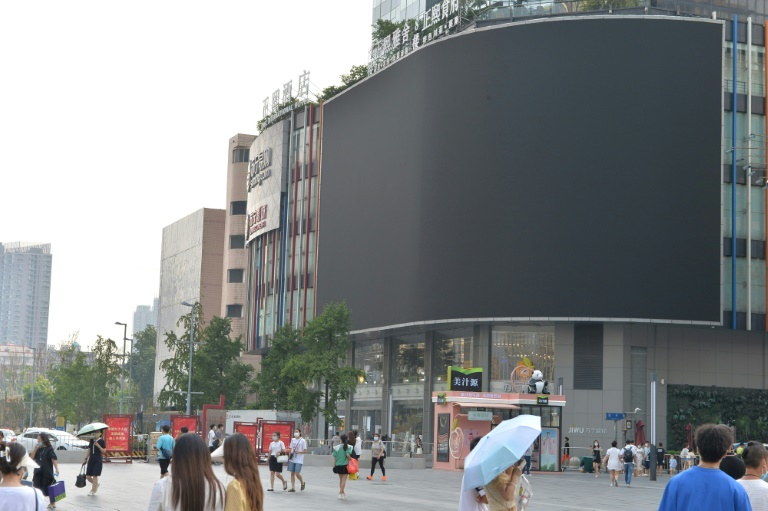
Heatwave-hit Chinese province resumes power to factories

The southwestern Chinese province of Sichuan downgraded emergency energy supply measures on Monday, restoring power to some factories after weeks of rolling blackouts due to a heatwave-induced shortage.

Parts of Sichuan province and neighbouring Chongqing saw rainfall and lower temperatures beginning Sunday, after weeks of record temperatures higher than 40 Celsius (104 Fahrenheit) and a crippling drought that strained hydropower generators throughout the region.

“Reservoir water levels are gradually increasing and the power supply capacity has improved,” the Sichuan government announced Monday, adding that the power supply crisis had been “alleviated to a certain extent”.

The provincial emergency energy supply response was downgraded from the highest level starting Monday, the notice said, allowing power to be gradually restored to factories.

The region is home to major auto manufacturers, including Toyota in Sichuan and Honda in Chongqing, which said they resumed operations Monday. Apple iPhone manufacturer Foxconn also restarted work at its Sichuan plant, Nikkei reported.

State broadcaster CCTV reported Sunday that the “general industrial and commercial power consumption in Sichuan province has been fully restored”, adding that energy-intensive industries would resume production once hydropower reservoir levels rose further.

The lower temperatures have also lessened electricity demand from households, whose use of air conditioners had increased during the heatwave.

Authorities have forecast intense rains in the region for the next ten days, with the China Meteorological Association on Sunday issuing an orange alert for mountain torrents in Sichuan and Shaanxi provinces.

Southern China has recorded its longest continuous period of high temperatures since records began more than 60 years ago, forcing power cuts that have hit the agricultural sector particularly hard.

Power shortages also forced malls in parts of Sichuan and Chongqing to shorten their opening hours, while landscape and subway lighting was switched off and some households experienced rolling blackouts. 

Honda, LG to invest $4.4 bn in US battery plant

Japanese auto giant Honda and South Korean battery maker LG Energy Solution announced a joint venture Monday to invest $4.4 billion in a new US electric car battery plant.

The move comes after California last week ruled that all new cars sold in America’s most populous state must be zero-emission from 2035, with other US states expected to follow suit.

In a joint statement, the firms said they expected construction of the plant to begin next year, aiming for “mass production of advanced lithium-ion battery cells by the end of 2025”.

The tie-up was decided “based on the shared belief that expanding local electric vehicle production and ensuring the timely supply of batteries would put them in the best position to target the rapidly-growing North American EV market”, the companies added.

Last month, Japanese electronics giant and Tesla supplier Panasonic announced its own $4 billion investment to build a new battery factory in the United States for electric vehicles.

Panasonic CEO Kazuo Tadanobu said the new plant, the company’s second electric battery operation in the United States, was “critical to help meet demand”.

Earlier this year, Honda said it planned to invest nearly $40 billion in electric vehicle technology over the next decade as it works towards switching all sales away from traditional fuel cars.

It wants to launch 30 EV models by 2030, with an annual production volume of more than two million units, and aim to have electric and fuel cell vehicles account for 100 percent of all sales by 2040.

The success of Elon Musk’s Tesla, built solely on electric vehicles, and growing government pressure to move away from cars with combustion engines, are pushing traditional automakers to speed up the transition to electric.

Washington state’s governor has backed a move similar to California, while the European Union has taken steps to ban the sale of gas- or diesel-fuelled cars — and even hybrids — by 2035.

China wants at least half of all new cars to be electric, plug-in hybrid or hydrogen-powered by that time.

Asian, European markets tumble after Powell's rates warning

Markets sank Monday and the dollar rallied after Fed boss Jerome Powell warned of more interest rate hikes to fight inflation and poured cold water on the prospects of a cut in the new year.

The hefty selling tracked a painful day on Wall Street, where all three main indexes tanked between three and four percent as investors contemplated an extended period of monetary tightening.

In a much-anticipated speech to global finance chiefs Friday, Federal Reserve Chair Powell said his priority was bringing inflation down from four-decade highs, even at the expense of economic growth, adding that failure to act now would cause more pain later.

“Restoring price stability will take some time and requires using our tools forcefully to bring demand and supply into better balance,” he told the symposium at Jackson Hole, Wyoming.

The comments dealt a blow to markets, which had in recent weeks enjoyed a bounce from June lows as weak economic data and a slowdown in price rises fanned hopes the Fed would temper its interest rate hike drive.

Analysts said the chances of a third successive 75 basis-point increase next month had risen, with US Treasury yields — a gauge of future interest rates — surging.

“The game of assessing the Fed outlook has shifted from guessing how high the peak rate might be to also understanding how long it might stay there for,” Yanxi Tan, of Malayan Banking, said.

In Asian trade, investors ran for the hills as they contemplated an era of high borrowing costs with Charles Schwab & Co’s Liz Ann Sonders saying that once the Fed gets to “whatever the final hike is, they’re going to stay there for a while”.

“The market had trouble digesting that,” she told Bloomberg Television.

Tokyo, Hong Kong, Sydney, Seoul, Mumbai, Taipei, Singapore, Manila, Bangkok, Jakarta and Wellington were all well down, though Shanghai eked out a small gain.

Paris and Frankfurt were sharply lower in the morning. London was closed for a holiday.

The dollar jumped against its major peers, closing in on the 140 yen mark not seen since 1998, while an energy crisis in Europe kept the euro depressed.

Still, oil prices extended gains as talk that surging interest rates could choke off the economic recovery was not enough to offset supply concerns.

The commodity has fallen in recent weeks on bets that demand will be hit by an expected drop in economic output, particularly from China as it continues to battle a Covid-19 outbreak with lockdowns.

But fresh unrest in Libya, warnings that an Iran nuclear deal was not imminent and a possible OPEC output cut kept prices elevated.


– Key figures at around 0810 GMT –

Tokyo – Nikkei 225: DOWN 2.7 percent at 27,878.96 (close)

Hong Kong – Hang Seng Index: DOWN 0.7 percent at 20,023.22 (close)

Shanghai – Composite: UP 0.1 percent at 3,240.73 (close)

Dollar/yen: UP at 138.72 yen from 137.38 yen Friday

Euro/dollar: DOWN at $0.9941 from $0.9964

Pound/dollar: DOWN at $1.1672 from $1.1743

Euro/pound: UP at 85.17 pence from 84.85 pence

West Texas Intermediate: UP 1.1 percent at $94.06 per barrel

Brent North Sea crude: UP 0.8 percent at $101.81

New York – Dow: DOWN 3.0 percent at 32,283.4 points (close)

London – FTSE 100: Closed for a holiday

Japanese bath houses find new ways to stay afloat

Just before it opens each afternoon, elderly residents gather outside one of Tokyo’s last remaining old-style bath houses carrying flannels, soap and shampoo for their regular soak.

With its communal naked tubs, bright mural of Mount Fuji and sliding wooden entrance under a pointed roof, Inariyu is a classic example of a Japanese public bath, or sento.

Once ubiquitous in crowded urban areas, sentos are now closing quickly as more people take baths at home and owners struggle with faltering machinery, high gas prices and a lack of successors, tempting them to sell their valuable land.

Nationwide, the number of bath houses has plunged to around 1,800 from a peak of nearly 18,000 in the late 1960s.

But some such as Inariyu have been given a new lease on life through renovations, while others are reinventing themselves as trendy hangouts or using data analysis to boost business.

One person pushing to save neighbourhood baths is Yasuko Okuno, who discovered them as a way to unwind after working late.

“Day after day, my mind was tired. Even when I went home, I couldn’t forget about work,” said the 36-year-old writer for the Tokyo Sento Association.

“Then I went to a sento for the first time in a while, and it felt like a weight had lifted. There was a large bath, and the regulars greeted me kindly,” she told AFP.

Over time, “it began to feel like a home from home.”

Japan has never imposed a strict Covid-19 lockdown, and places such as gyms and sentos remained open even when many offices switched to home working and restaurants shortened opening hours.

Masks are commonly worn on trains and in other public places, but there is no requirement to wear them in sentos, although social distancing and quiet bathing are encouraged.

For many elderly people, it is a “daily routine” that they did not want to stop during the pandemic, and some feel safer taking a bath with others around in case they fall, Yasuko said.

– ‘Sense of urgency’ –

Bathhouse closures can erode community ties, said Sam Holden, whose organisation Sento & Neighborhood used a grant of around $200,000 from the World Monuments Fund to renovate Inariyu.

The group strived to keep the cosy, welcoming atmosphere of the bathhouse — built in 1930 in a low-rise area of northern Tokyo where narrow walkways snake between homes.

Inariyu has customers of all ages, including “a lot of elderly people, many of whom might live alone and be prone to isolation”, said Holden, a 32-year-old American who has lived in the capital for nearly a decade.

“My colleagues and I had a sense of urgency in wanting to preserve some of these historic structures before they were redeveloped into apartment complexes and other things.”

Bathers pay 500 yen ($3.70) to enter the men’s or women’s bath, a fee set by the Tokyo government.

Leaving their shoes in a small locker, they strip off in the changing room and take a shower before climbing into the tubs for a relaxing soak.

Unlike Japan’s hot springs, known as onsen, the water in sentos is usually heated with gas.

Shunji Tsuchimoto, who runs Inariyu with his wife, told AFP that the bathhouse is paying 50 percent more for energy than it did last year.

But he hopes that holding events in the renovated buildings will raise revenue by drawing younger customers. 

“I want them to know this sento culture,” he said.

– ‘Trendy and modern’ –

One sento that has managed to draw a youthful clientele is Koganeyu in eastern Tokyo, which reopened in 2020 after a full makeover.

On a recent Saturday, the bath house was packed with young customers drinking craft beer and listening to vinyl records.

Tech worker Kohei Ueda, 25, travelled an hour to use Koganeyu’s sauna with a friend.

“I do have the image of sentos being where grandpas and grandmas gather,” he said.

“But a sento like this that’s more trendy and modern is not like that… I feel more comfortable coming here.”

Kom-pal, another sento, may not have hipster appeal, but 36-year-old owner Fumitaka Kadoya has managed to increase footfall using data-crunching skills he acquired in his previous job as a technician for optical equipment maker Olympus.

Kadoya’s family has run the sento since the 1950s and when he took over three years ago, he set up a database to track information about customers and the timing of their visits.

The data has allowed him to make targeted business decisions, such as hiring female staff to encourage more women to visit and opening on Sunday mornings to ease crowds.

“Sentos have always been a part of Japanese culture,” Kadoya told AFP, and nowadays, leaving everything in a locker while you soak can be a kind of “digital detox”.

“That’s exactly what I think young people need these days.”

Asian markets tumble after Powell's rate hike warning

Asian markets sank Monday and the dollar rallied after Fed boss Jerome Powell warned of more interest rate hikes to fight inflation and poured cold water on the prospects of a cut in the new year.

The hefty selling tracked a painful day on Wall Street, where all three main indexes tanked between three and four percent as investors contemplated an extended period of monetary tightening.

In a much-anticipated speech to global finance chiefs Friday, Federal Reserve Chair Powell said his priority was bringing inflation down from four-decade highs, even at the expense of economic growth, adding that failure to act now would cause more pain later.

“Restoring price stability will take some time and requires using our tools forcefully to bring demand and supply into better balance,” he told the symposium at Jackson Hole, Wyoming.

The comments dealt a blow to markets, which had in recent weeks enjoyed a bounce from June lows as weak economic data and a slowdown in price rises fanned hopes the Fed would temper its interest rate hike drive.

Analysts said the chances of a third successive 75 basis-point increase next month had risen, with US Treasury yields — a gauge of future interest rates — surging.

“The game of assessing the Fed outlook has shifted from guessing how high the peak rate might be to also understanding how long it might stay there for,” Yanxi Tan, of Malayan Banking, said.

In Asian trade, investors ran for the hills as they contemplated an era of high borrowing costs with Charles Schwab & Co’s Liz Ann Sonders saying that once the Fed gets to “whatever the final hike is, they’re going to stay there for a while”.

“The market had trouble digesting that,” she told Bloomberg Television.

Tokyo, Sydney, Seoul and Taipei all fell more than two percent. Hong Kong, Shanghai, Singapore, Jakarta and Wellington were also well down.

The dollar jumped against its major peers, closing in on the 140 yen mark not seen since 1998, while an energy crisis in Europe kept the euro depressed.

Still, oil prices extended gains as talk that surging interest rates could choke off the economic recovery was not enough to offset supply concerns.

The commodity has fallen in recent weeks on bets that demand will be hit by an expected drop in economic output, particularly from China as it continues to battle a Covid outbreak with lockdowns.

But fresh unrest in Libya, warnings that an Iran nuclear deal was not imminent and a possible OPEC output cut kept prices elevated.


– Key figures at around 0230 GMT –

Tokyo – Nikkei 225: DOWN 2.8 percent at 27,851.68 (break)

Hong Kong – Hang Seng Index: DOWN 0.9 percent at 19,989.39

Shanghai – Composite: DOWN 0.6 percent at 3,217.78

Dollar/yen: UP at 138.53 yen from 137.38 yen Friday

Euro/dollar: DOWN at $0.9931 from $0.9964

Pound/dollar: DOWN at $1.1672 from $1.1743

Euro/pound: UP at 85.07 pence from 84.85 pence

West Texas Intermediate: UP 1.1 percent at $94.05 per barrel

Brent North Sea crude: UP 0.8percent at $101.79

New York – Dow: DOWN 3.0 percent at 32,283.4 points (close)

London – FTSE 100: DOWN 0.7 percent at 7,427.31 (close) 

Ethereum crypto overhaul targets environmental impact

The world’s second biggest cryptocurrency after bitcoin, ethereum, will soon overhaul its blockchain technology to curb the network’s much-criticised environmental impact.

Ethereum, whose digital unit ether tumbled in a crypto crash earlier this year, will in September undergo a major technical revolution.

So what is the backdrop for the looming reset — known as the Merge — and how will it calm prices and cut electricity usage?

– Why does crypto use so much energy? –

Bitcoin, ethereum and other such currencies are “mined” by solving complex puzzles using powerful computers that consume enormous amounts of energy in vast warehouses, often near cheap electricity sources.

A blockchain is the decentralised and secure ledger for recording those transactions, which occur when encrypted codes are passed across a computer network.

Users validate their success via a so-called “proof of work” mechanism that rewards them with cyber currency — but only after they have proved their participation in such energy-intensive mining.

The lucrative crypto industry is worth about $1.0 trillion, despite crashing in the first half of 2022.

However, ethereum is still down by a hefty 55 percent in value so far this year.

– Why is ethereum popular? –

Ethereum is nevertheless regarded as vital because it is where most virtual assets, including headline-grabbing non-fungible tokens (NFTs), are bought and sold.

That is partly because users can create “smart contracts” or algorithmic computer code, which carry out customised transactions for different functions.

“The ethereum blockchain is the base layer infrastructure of the majority of the whole crypto ecosystem,” summarised Lennart Ante, CEO and co-founder of the Blockchain Research Lab.

“Everything relies on ethereum,” he told AFP.

“In the last few years, there have been other similar platforms such as Solana or Cadano, but none of these have this huge network and this huge amount of developers and projects, and historical success.”

– Why is it changing? –

Ethereum’s broad adoption makes it even more important to address environmental concerns and change tack, as those worries had sparked a partial boycott.

“Proof-of-work mining is environmentally destructive, expensive, and inefficient,” summarised digital currency specialist Eswar Prasad, a professor at Cornell University.

Yet the carbon footprint of a decentralised blockchain system is difficult to assess because electricity sources are not always identified.

– What is the switch? –

Ethereum creator Vitalik Buterin has planned for a switch to a so-called “proof of stake” mechanism from the middle of September.

This means that participation no longer requires proof of electricity usage, and instead relies on staking blocks of ether.

Users will then validate, or effectively bet their currency, in order to try and win more ether.

Ethereum currently consumes about 45 terawatt hours of power per year.

Bitcoin in contrast is estimated to use 95 terawatt hours of power per year, equivalent to Pakistan’s annual consumption.

– What are pros and cons? –

Experts estimates the upgrade will use 99 percent less energy than the current set-up.

It would therefore allow users to execute quicker and more efficient transactions.

“The energy consumption would be close to zero,” Ante told AFP.

“You do not need any of the hardware anymore, only the software.”

At the same time, the new approach is not without risks.

Some users might decide to switch to rival networks where they can still able to use enormous amounts of energy to mine currency.

Prasad also cautioned that the proof-of-stake method was “not perfect” owing to liquidity and governance concerns.

Japan vows billions at Africa investment conference

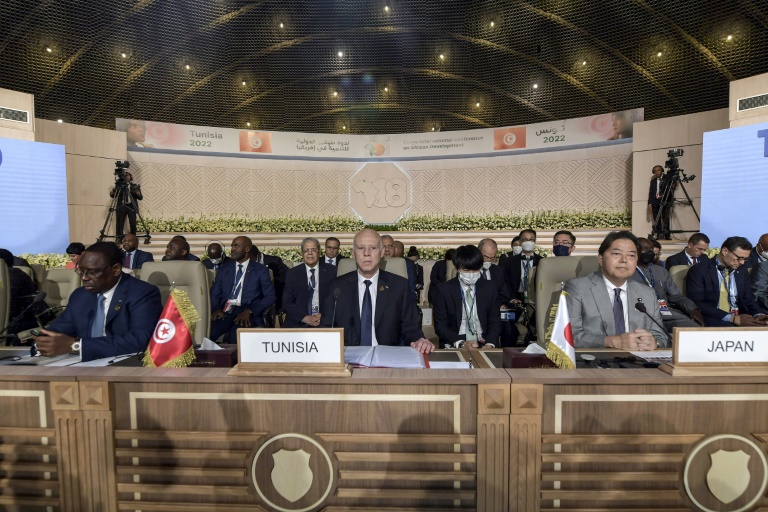
Japanese Prime Minister Fumio Kishida Saturday pledged $30 billion over three years for Africa in a virtual address to a development conference in Tunis aiming to counter China’s growing continental influence.

The eighth Tokyo International Conference on African Development (TICAD8) takes place amid a “complex” international environment caused by the coronavirus pandemic and the war in Ukraine, the Japanese foreign ministry said.

Host country Tunisia is among the countries bearing the brunt of global supply chain disruptions and price spikes unleashed by these two factors, since it is heavily import dependent and is not an energy player.

In his opening speech, Tunisian President Kais Saied urged delegates to “search together for ways for African peoples to achieve the hopes and dreams of the first generation after independence”.

Praising Japan’s strong track record of development and “preserving” its culture, he said that “the world cannot continue as it was. With all its wealth and assets, Africa cannot watch its people live through poverty.”

Kishida, speaking over live video from Tokyo after testing positive for Covid-19 days earlier, pledged that “Japan will invest both public and private funds worth $30 billion over the next three years” across Africa.

“To improve the lives of Africans, we will provide up to $5 billion in co-financing with the African Development Bank,” he said.

The pledge come as China cements its influence on the continent with its “Belt and Road” infrastructure initiative, and as experts express concern about the long-term sustainability of some African nations’ borrowing from Beijing. 

– Rabat-Tunis tensions –

Japan’s initiative “includes up to $1 billion in a new special quota to be established by Japan to promote debt consolidation reforms” in Africa, the Japanese premier said.

He also pledged $300 million in co-financing with the African Development Bank to boost food production, vowing to help African countries weather grain shortages caused by the war in Ukraine, a major wheat producer.

Senegalese President Macky Sall, the current chairman of the African Union, paid tribute to Africa’s “partnership” with Japan, praising “concrete results in the agriculture, health, education and water” sectors.

He also urged a suspension of interest on debt owed to G20 countries, calling for a seat for the continent at the next G20 summit.

On the eve of TICAD, Morocco withdrew from the event and recalled its ambassador from Tunisia for consultations, after Saied hosted the head of Western Sahara’s Polisario secessionist movement.

Tunis in turn said it would recall its own ambassador from Rabat, pointing to its “total neutrality” on Western Sahara, a territory Rabat sees as an integral part of Morocco. 

Sall said he “regrets Morocco’s absence”, expressing hopes for a solution to the disagreement.

It is the first TICAD — held every three years either in Japan or an African country — since the coronavirus pandemic began.

The Japanese delegation is led by Foreign Minister Yoshimasa Hayashi, with about 5,000 participants set to attend.

Among those are 48 representatives of African countries, including at least 20 heads of state or government, according to Tunisian diplomatic sources.

A slick promotional video said the conference aims to promote “African development led by African people”.

But no journalists from African news outlets were given access to delegates ahead of the event, except Tunisian state media, alongside Japanese journalists.

The conference has sparked anger among Tunisians as major road closures threatened traffic disruptions in the capital.

Authorities spruced up parts of the city likely to be seen by delegates and dug in roadside plants, but these efforts also drew ire from social media users.

“I feel deeply insulted by the clean-up of Tunis for the TICAD,” one Tunisian wrote on Twitter, arguing that “those we pay to make our lives easier” should instead focus on making the capital livable for citizens all year round.

Tunis hosts Japan-Africa investment conference

Tunisia and Japan launched a pan-African investment conference on Saturday, seeking to counter the influence of rival China whose economic imprint on the continent has steadily grown.

The conference takes place amid a “complex” international environment caused by the coronavirus pandemic and the war in Ukraine, the Japanese foreign ministry has said.

Some 30 heads of state and government are attending the event in the capital Tunis, at a time when the import-dependent North African nation is grappling with a deepening economic malaise.

In his opening speech, Tunisian President Kais Saied urged delegates to “search together for ways for African peoples to achieve the hopes and dreams of the first generation after independence”.

He praised Japan’s success in “achieving development at the same time as preserve its culture and social traditions”.

“The world cannot continue as it was. With all its wealth and assets, Africa cannot watch its people live through poverty,” he said.

The eighth Tokyo International Conference on African Development (TICAD8) also comes as Beijing cements its influence on the continent with its “Belt and Road” infrastructure initiative.

It is the first TICAD — held every three years either in Japan or an African country — since the pandemic began.

Prime Minister Fumio Kishida will be attending remotely after testing positive for Covid-19.

The Japanese delegation is being led by Foreign Minister Yoshimasa Hayashi, with about 5,000 participants set to attend.

Morocco withdrew from the event and recalled its ambassador from Tunisia for consultations, after Saied hosted the head of Western Sahara’s Polisario independence movement.

The conference will focus on three pillars: economy, society, and peace and stability.

A slick promotional video said the conference aims to promote “African development led by African people”.

But no journalists from African news outlets had been given access to delegates ahead of the event, except Tunisian state media, alongside Japanese journalists.

Japanese economic paper Nikkei reported that aid to Africa could increase by 40 percent over the next three years, in response to other powers that have boosted their presence on the continent.

– Beware of ‘excessive’ debt –

At the last TICAD in 2019, former premier Shinzo Abe — who was assassinated at a campaign event last month — warned investors in Africa they must beware of burdening countries with “excessive” debt, an apparent swipe at China.

Tunisian authorities hope their struggling economy will benefit from hosting the conference by attracting Japanese investment, particularly in the health, automotive and renewable energy sectors.

The conference has sparked anger among Tunisians as major road closures threatened traffic disruptions in the capital.

Authorities also drew widespread mockery after detaining Japanese satellite engineers — TICAD delegates — at Tunis airport for hours because they were in possession of a model satellite that they intend to use to showcase technology.

Authorities have spruced up parts of the city likely to be seen by delegates and dug in roadside plants, but these efforts have also drawn the ire of social media users.

“I feel deeply insulted by the clean-up of Tunis for the TICAD,” one Tunisian wrote on Twitter, arguing that “those we pay to make our lives easier” should instead focus on making the capital livable for citizens all year round.

Tunis hosts Japan-Africa investment conference

Japan opens an African investment conference in Tunisia on Saturday, seeking to counter the influence of rival China which has steadily grown its economic imprint on the continent.

The conference takes place amid a “complex” international environment caused by the coronavirus pandemic and the war in Ukraine, the Japanese foreign ministry has noted.

Some 30 heads of state and government are expected to attend the event in the capital Tunis, at a time when the import-dependent North African nation is grappling with a deepening economic malaise.

The eighth Tokyo International Conference on African Development (TICAD8) also comes as Beijing cements its influence on the continent with its “Belt and Road” infrastructure initiative.

It is the first TICAD — held every three years either in Japan or an African country — since the pandemic began.

Prime Minister Fumio Kishida will be attending remotely after testing positive for Covid-19.

The Japanese delegation will be led by Foreign Minister Yoshimasa Hayashi, with about 5,000 participants set to attend.

But the opening risks being overshadowed by Morocco withdrawing from the event and recalling its ambassador from Tunisia for consultations, after Tunisia’s President Kais Saied hosted the head of Western Sahara’s Polisario independence movement.

Since 1993, TICAD conferences backed by the United Nations and other international agencies have generated 26 development projects in 20 African countries.

Most are funded by the Japan International Cooperation Agency (JICA).

The conference will focus on three pillars: economy; society; and peace and stability.

A slick promotional video said the conference aims to promote “African development led by African people”.

But no journalists from African news outlets have been given access to delegates ahead of the event, except Tunisian state media, alongside Japanese journalists.

Japanese economic paper Nikkei reported that aid to Africa could increase by 40 percent over the next three years, in response to other powers that have boosted their presence on the continent.

At the last TICAD in 2019, former premier Shinzo Abe — who was assassinated at a campaign event last month — warned investors in Africa that they must beware of burdening countries with “excessive” debt, an apparent swipe at China.

Tunisian authorities hope their struggling economy will benefit from hosting the conference by attracting Japanese investment, particularly in the health, automotive and renewable energy sectors.

The conference has sparked anger among Tunisians as major road closures threatened traffic disruptions in the capital.

Authorities also drew widespread mockery after detaining Japanese satellite engineers — TICAD delegates — at Tunis airport for hours because they were in possession of a model satellite that they intend to use to showcase technology.

Authorities have spruced up parts of the city likely to be seen by delegates and dug in roadside plants, but these efforts have also drawn the ire of social media users.

“I feel deeply insulted by the clean-up of Tunis for the TICAD,” one Tunisian wrote on Twitter, arguing that “those we pay to make our lives easier” should instead focus on making the capital livable for citizens all year round.

Close Bitnami banner
Bitnami