Chinese Business

Eurozone stocks slide, gas prices soar

Eurozone equities sank Tuesday, as natural gas prices surged after Russia tightened the screw on supplies in fresh Ukraine fallout.

Investors also digested major earnings updates on the eve of another likely large US interest rate hike aimed at tackling soaring inflation.

General Motors reported a big drop in second-quarter profits owing to a semiconductor shortage.

Google parent Alphabet, Coca-Cola, Microsoft and McDonald’s are also publishing results Tuesday.

Europe gas reference price Dutch TTF surged more than 10 percent to 198.00 euros per megawatt hour, one day after Russia’s Gazprom said it would cut daily gas deliveries to Europe via the Nord Stream pipeline.

“With no clear timeline for when capacity is likely to increase, the prospect of further uncertainty over gas supplies is weighing on European markets today,” CMC Markets analyst Michael Hewson told AFP.

Frankfurt’s DAX slumped 0.9 percent while the CAC in Paris shed 0.5 percent. 

“The euro is also under pressure as it becomes increasingly apparent that a slowing economy will make it increasingly difficult for the ECB to hike aggressively as we head into the winter months. Good luck raising rates against that sort of backdrop,” he added.

It fell by more than one percent to under $1.0150.

Eurozone bond yields also fell as investors fled to the relative safety of government debt.

Oil prices also leapt on concerns of a broader squeeze on global energy supplies, while the euro remained on the back foot against the dollar.

Gazprom will cut the gas deliveries to 33 million cubic metres a day — about 20 percent of the pipeline’s capacity — from Wednesday.

That has heightened market worries over supplies during the northern hemisphere winter later this year.

At the same time, European Union member states have reached agreement on how to cut their consumption of gas by 15 percent and reduce their dependence on Russian energy.

Gas prices remain way below the record March peak of 345 euros struck after Russia launched its assault on Ukraine.

Markets.com analyst Neil Wilson predicted a “big push to fill (gas) stockpiles in what is left of the summer, at any price, to avert a winter crisis”.

EU states have accused Russia of squeezing supplies in retaliation for Western sanctions.

Elsewhere Tuesday, Asian stock markets closed mixed.

Investors welcomed news that e-commerce giant Alibaba would seek a primary listing in Hong Kong, which could pave the way for it to be traded by mainland Chinese investors.

Wall Street opened lower, with a profit warning by Walmart rattling investors.

The retailer said it expects its earnings per share in its non-standard second quarter, which wraps up at the end of this month, to be down by 8-9 percent with an even bigger reduction next year.

Walmart shares tumbled more than eight percent at the start of trading.

“The basis for Walmart’s warning, though, is the real issue for the broader market,” said Patrick J. O’Hare at Briefing.com.

The retailer said food and fuel inflation was pushing consumers to defray discretionary spending on general merchandise.

“That is causing concerns about a trickle-down effect to other retailers, as well as suppliers to Walmart, that is weighing on sentiment and earnings expectations,” said O’Hare.

He said this was also fanning fears the US Federal Reserve, which meets Wednesday and Thursday, will pursue aggressive rate hikes to tame inflation.

– Key figures at around 1330 GMT –

Frankfurt – DAX: DOWN 0.9 percent at 13,092.50 points

Paris – CAC 40: DOWN 0.5 percent at 6,205.54

London – FTSE 100: UP 0.2 percent at 7,323.32

EURO STOXX 50: DOWN 0.8 percent at 3,576.87

New York – Dow: DOWN 0.2 percent at 31,917.53

Tokyo – Nikkei 225: DOWN 0.2 percent at 27,655.21 (close)

Hong Kong – Hang Seng Index: UP 1.7 percent at 20,905.88 (close)

Shanghai – Composite: UP 0.8 percent at 3,277.44 (close)

Euro/dollar: DOWN at $1.0140 from $1.0223 Monday

Pound/dollar: DOWN at $1.2016 from $1.2046 

Euro/pound: DOWN at 84.46 pence from 84.83 pence

Dollar/yen: DOWN at 136.45 yen from 136.65 yen

Brent North Sea crude: UP 1.6 percent at $106.87 per barrel

West Texas Intermediate: UP 1.5 percent at $98.17 per barrel

burs-rl/raz
China's 'Silicon Valley' tightens rules over Covid flare-up

China’s biggest tech hub is rushing to stamp out a fresh Covid outbreak, ordering some of the country’s biggest manufacturers to operate in a ‘closed loop’ to reduce infections, state media reported.

The city of Shenzhen, which borders Hong Kong, reported just 19 Covid cases Tuesday as the city’s health authority said the risk of “large-scale spread is low”.

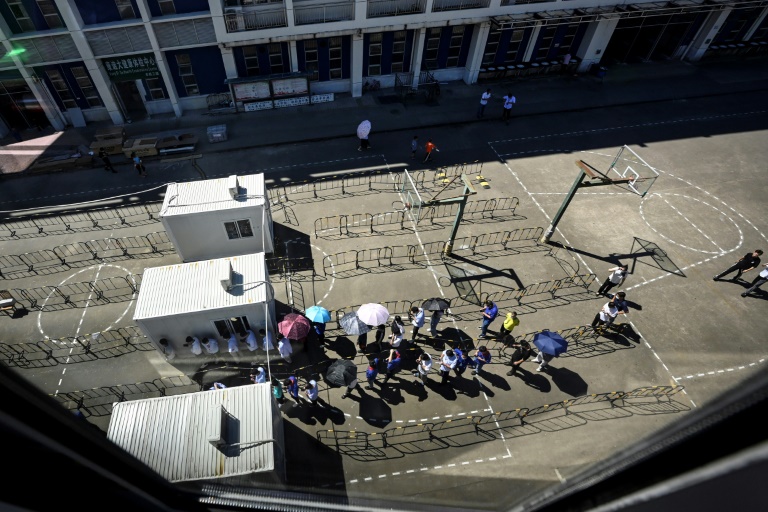
But Beijing’s reluctance to budge from its strict zero-Covid policy had led to daily mass testing for the 13 million residents of Shenzhen for over a week and the closure of at least three subway stations by Tuesday.

Top manufacturers including iPhone maker Foxconn, electric carmaker BYD, drone maker DJI and telecom equipment maker ZTE are among the companies told to operate under a “closed-loop” production system. 

It would restrict movement of employees for seven days, state-run business news site Yicai reported Monday.

The closed-loop operation mode involves control measures such as locking workers within a compound and conducting daily nucleic acid testing. 

Bloomberg News reported Tuesday that a government notice told companies to reduce unnecessary interaction between non-manufacturing staff and factory floors to curb infection.

Health officials had earlier said all cases found in Shenzhen from July 15 were infected with the highly contagious Omicron subvariant BA.2.

While it is expensive and reduces the scale of production, manufacturers — including Tesla’s site south of Shanghai in the past — have opted to operate in a closed-loop instead of resorting to full shutdown during local Covid flareups.

Strict virus controls have threatened global supply chains and cooled China’s economy with Q2 growth coming in at a dismal 0.4 percent — the weakest growth since the pandemic started.

China reported 976 covid cases Tuesday, with the biggest outbreaks reported in the southern Guanxi region and Gansu province in the northwest. 

Eurozone stocks slide, gas prices soar

Eurozone equities sank Tuesday, as natural gas prices surged after Russia tightened the screw on supplies in fresh Ukraine fallout.

Investors digested also major earnings updates on the eve of another likely large US interest rate hike aimed at tackling soaring inflation.

General Motors reported a big drop in second-quarter profits owing to a semiconductor shortage.

Google parent Alphabet, Coca-Cola, Microsoft and McDonald’s are also publishing results Tuesday.

In Europe, stock markets “are under pressure as investors absorb what the news from Gazprom is likely to mean when it comes to gas supplies over the next few days”, noted CMC Markets analyst Michael Hewson.

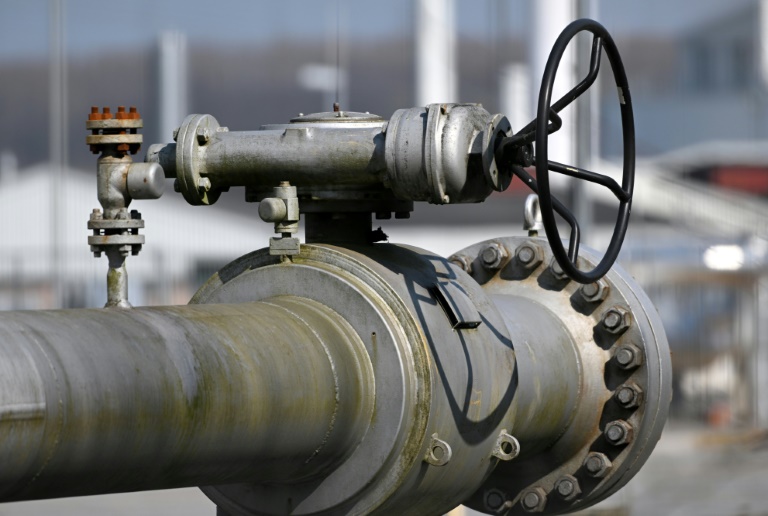
Europe gas reference Dutch TTF surged more than ten percent to 197.97 euros per megawatt hour, one day after Russia’s Gazprom said it would cut daily gas deliveries to Europe via the Nord Stream pipeline.

Oil prices also leapt on concerns of a broader squeeze on global energy supplies, while the euro remained on the back foot against the dollar.

Gazprom will cut the gas deliveries to 33 million cubic metres a day — about 20 percent of the pipeline’s capacity — from Wednesday.

That has heightened market worries over supplies during the northern hemisphere winter later this year.

At the same time, European Union member states have reached agreement on how to cut their consumption of gas by 15 percent and reduce their dependence on Russian energy.

Gas prices remain way below the record March peak of 345 euros struck after Russia launched its assault on Ukraine.

Markets.com analyst Neil Wilson predicted a “big push to fill (gas) stockpiles in what is left of the summer, at any price, to avert a winter crisis”.

EU states have accused Russia of squeezing supplies in retaliation for Western sanctions.

Elsewhere Tuesday, Asian stock markets closed mixed.

Investors welcomed news that e-commerce giant Alibaba would seek a primary listing in Hong Kong, which could pave the way for it to be traded by mainland Chinese investors.

– Key figures at around 1100 GMT –

Frankfurt – DAX: DOWN 1.1 percent at 13,064.82 points

Paris – CAC 40: DOWN 0.7 percent at 6,196.57

London – FTSE 100: UP 0.4 percent at 7,335.10

EURO STOXX 50: DOWN 0.8 percent at 3,575.41

Tokyo – Nikkei 225: DOWN 0.2 percent at 27,655.21 (close)

Hong Kong – Hang Seng Index: UP 1.7 percent at 20,905.88 (close)

Shanghai – Composite: UP 0.8 percent at 3,277.44 (close)

New York – Dow: UP 0.3 percent at 31,990.04 (close)

Euro/dollar: DOWN at $1.0148 from $1.0223 Monday

Pound/dollar: DOWN at $1.1998 from $1.2046 

Euro/pound: DOWN at 84.59 pence from 84.83 pence

Dollar/yen: DOWN at 136.59 yen from 136.65 yen

Brent North Sea crude: UP 1.3 percent at $106.47 per barrel

West Texas Intermediate: UP 1.9 percent at $98.56 per barrel

Alibaba seeks dual-primary listing in Hong Kong

E-commerce giant Alibaba said Tuesday it will seek a primary listing in Hong Kong, potentially giving access to China’s vast pool of investors, as mainland officials indicate a long-running crackdown on the tech sector could be coming to an end.

The move also comes as Chinese tech companies traded in New York grow increasingly worried about a regulatory drive by United States authorities as tensions simmer between the superpowers.

While Alibaba has a secondary listing in Hong Kong, it does not allow it to join a popular Stock Connect programme that links to bourses in Shanghai and Shenzhen.

The primary listing, which is expected to take place before the end of the year, would open that door.

News of the plan sent shares in Alibaba soaring 4.8 percent Tuesday, boosting other tech firms and helping drag the broader Hang Seng Index higher.

The Hangzhou-based group is one of a number of tech behemoths ensnared in a wide-ranging regulatory crackdown on alleged anti-competitive practices since late 2020.

The campaign to rein in big tech is driven by fears that massive internet companies control too much data and have expanded too quickly.

But officials appear to be taking a lighter touch as they grapple with a slowing economy. And in May, Premier Li Keqiang urged support for tech companies to list both domestically and abroad.

CEO and group chairman Daniel Zhang said on Tuesday the primary listing aimed to foster “a wider and more diversified investor base to share in Alibaba’s growth and future, especially from China and other markets in Asia”.

“Hong Kong is also the launch pad for Alibaba’s globalisation strategy, and we are fully confident in China’s economy and future.”

Alibaba said on Tuesday it had an average daily trading volume of $3.2 billion in the United States in the first six months of the year, while its Hong Kong secondary listing saw around $700 million.

– Mainland access –

Hong Kong’s Stock Connect programme allows firms to take advantage of liquidity from mainland China for easier financing and higher valuations, but to qualify they must conduct a majority of their annual trading in the Chinese finance hub.

Alibaba is among a category of “innovative” Chinese firms with weighted voting rights or variable interest entities that would be eligible for dual-primary listing in Hong Kong, following a rule change by the bourse in January.

Analyst Willer Chen, at Forsyth Barr Asia, told Bloomberg that the move would be “massive” for Alibaba, adding that inclusion in Stock Connect could lead to a “more diversified investor base”.

Beijing has opposed an attempt by US regulators to inspect the audit papers of Chinese firms listed there, and Alibaba is one of 250 companies facing potential removal if no deal is reached.

Domestically, Alibaba is still reeling from the tech crackdown as well as China’s slowing economy caused by the fallout from strict Covid curbs.

The firm has lost around two-thirds of its value since a 2020 peak, according to Bloomberg, and in May the firm reported that profit fell 59 percent in the last fiscal year.

– Shake-up at Ant –

News of plans for the dual-primary listing came as Alibaba announced it had removed all executives linked to its digital payments arm Ant Group from a joint governing body.

Seven Ant Group executives including CEO Eric Jing and Chief Technology Officer Ni Xingjun were removed from Alibaba Partnership, a group that can nominate the majority of Alibaba’s board, as of May 31, according to an annual report Tuesday.

It is part of a lengthy state-guided restructuring process after a planned 2020 share offering by Ant Group — which would have been the world’s largest IPO at the time — was scuttled last minute, according to a spokesman for the company.

Ant Group has terminated its data sharing agreement with Alibaba and reshuffled its board recently, filling half the seats with independent directors and reducing the number of non-executive directors from the Alibaba Group to two from three.

But Beijing last month rebuffed reports it had started discussions on the potential revival of the IPO.

Asia stocks rise as Alibaba boosts tech, eases pre-Fed nerves

Asian markets rose Tuesday as an Alibaba-fuelled surge in Hong Kong provided a much-needed boost to sentiment ahead of a slew of earnings reports from the world’s biggest firms and an expected Federal Reserve interest rate hike.

A shock cut in US retail titan Walmart’s profit outlook fanned concerns that surging inflation and rising borrowing costs are hammering consumer spending and could send the economy into recession.

The news left markets concerned about what’s to come from other Wall Street giants this week — including Apple, Amazon, McDonald’s and General Motors.

Adding to the unease was news that Russia’s Gazprom will cut back gas deliveries to Germany, citing a faulty turbine, less than a week since restarting flows after 10 days of maintenance work.

But after a cautious start to the day, most Asian markets enjoyed a healthy run-up.

Hong Kong led the way in reaction to news that market heavyweight Alibaba will seek a primary listing in the city, which could pave the way for it to be traded by mainland Chinese investors.

The move from a secondary listing would come as several Chinese firms listed in the United States grow increasingly worried about a regulatory crackdown by authorities as part of a stand-off in the tech sector between Washington and Beijing.

It also further indicated the firm is more confident that a long-running period of clampdowns by China on the industry is coming to an end.

“This could boost its liquidity after a year-long sell-off triggered by China’s economic slowdown and Beijing’s crackdown on its most potent internet firms,” said Stephen Innes at SPI Asset Management.

The over five percent surge in Alibaba gave a boost to other tech giants — with JD.com, Tencent, NetEase and Bilibili all up.

– ‘Significant risks’ –

There were also gains in Shanghai, Sydney, Seoul, Singapore, Manila and Jakarta, though Tokyo, Taipei and Wellington slipped.

London was on the front foot in the morning, though Paris and Frankfurt dipped.

Analysts were cautious about the outlook for world markets, despite a positive run-up in July.

“This is most likely a bear market rally and there are significant risks still facing this market,” Katerina Simonetti, at Morgan Stanley Private Wealth Management, told Bloomberg Television.

“We’re probably going to be seeing a lot of choppiness and potentially some further declines in the market before the year-end.”

For now, there will be little respite for investors from the Fed as it continues to ramp up borrowing costs, with another 75 basis point lift expected this week, and more before the end of the year.

Several officials at the bank, including boss Jerome Powell, have suggested they are determined to bring inflation down from four-decade highs, even at the expense of economic growth.

Still, market strategist Louis Navellier said they could start to loosen monetary policy in the new year when the economy shows strains.

“Uncertainty is high as to the Fed’s willingness to keep tightening if the economy slows significantly, with many forecasts projecting that the Fed will reverse and start cutting rates by the summer of 2023 as the economy slows and inflation wanes,” he said in a note. 

– Key figures at around 0810 GMT –

Tokyo – Nikkei 225: DOWN 0.2 percent at 27,655.21 (close)

Hong Kong – Hang Seng Index: UP 1.7 percent at 20,905.88 (close)

Shanghai – Composite: UP 0.8 percent at 3,277.44 (close)

London – FTSE 100: UP 0.5 percent at 7,338.96

Euro/dollar: UP at $1.0220 from $1.0223 Monday

Pound/dollar: UP at $1.2047 from $1.2046 

Euro/pound: UP at 84.86 pence from 84.83 pence

Dollar/yen: DOWN at 136.62 yen from 136.65 yen

West Texas Intermediate: UP 1.9 percent at $98.53 per barrel

Brent North Sea crude: UP 1.8 percent at $107.03 per barrel

New York – Dow: UP 0.3 percent at 31,990.04 (close)

Stocks wobble as markets begin big week

European and American stocks moved in mixed directions Monday as markets began a busy week, with the US Federal Reserve poised to lift interest rates again and some of the world’s biggest companies scheduled to publish their latest earnings reports.

Asian markets ended lower.

The Fed is widely tipped to hike borrowing costs by 0.75 percentage points Wednesday as it battles soaring inflation.

US second-quarter gross domestic product data are due Thursday, with some observers warning it could show a second successive contraction — which is considered a technical recession.

Investors are also awaiting an extremely heavy week of earnings reports featuring tech giants like Apple, and industrial behemoths such as Boeing and General Motors, along with McDonald’s and other consumer-oriented names.

“Recent risk-on moves appear to be on thin ice as markets gear up for another bout of earnings and a crucial Fed rate decision,” said market analyst Joshua Mahony at trading platform IG.

Wall Street had a mixed day with the Dow and S&P 500 advancing and the tech-rich Nasdaq retreating.

The pullback in Nasdaq reflects reticence ahead of an intense 72-hour stretch that will see releases from most of the biggest US companies, beginning Tuesday with Google parent Alphabet and Microsoft.

“Investors won’t want to touch Nasdaq stocks until we hear from Alphabet tomorrow and if they don’t like what they hear they may wait to see if Thursday’s massive results from Apple and Amazon provide any reasons to be optimistic with tech stocks,” said a note from Oanda’s Edward Moya.

Despite the deluge of market-moving news on the calendar, European stocks had been trading higher across the board until an announcement by Russia’s Gazprom that it was cutting back gas deliveries to Germany due to a faulty turbine, which pulled down the DAX index in Frankfurt.

It ended the day down 0.3 percent, while the CAC in Paris climbed 0.3 percent and London’s FTSE 100 rose 0.4 percent.

Consumer prices are soaring worldwide after economies reopened from pandemic lockdowns and as the war in Ukraine keeps energy prices elevated.

That, in turn, has sparked aggressive rate hikes from major central banks to try and dampen inflationary pressures.

“We still see further downside for risky assets as recession fears accumulate and central banks remain committed to fighting inflation at the expense of growth,” said Standard Chartered strategist Eric Robertsen.

– Key figures at around 2120 GMT –

New York – Dow: UP 0.3 percent at 31,990.04 (close)

New York – S&P 500: UP 0.1 percent at 3,966.84 (close)

New York – Nasdaq: DOWN 0.4 percent at 11,782.67 (close)

London – FTSE 100: UP 0.4 percent at 7,306.30 (close) 

Frankfurt – DAX: DOWN 0.3 percent at 13,210.32 (close)

Paris – CAC 40: UP 0.3 percent at 6,237.55 (close)

EURO STOXX 50: UP 0.2 percent at 3,604.16 (close)

Tokyo – Nikkei 225: DOWN 0.8 percent at 27,699.25 (close)

Hong Kong – Hang Seng Index: DOWN 0.2 percent at 20,562.94 (close)

Shanghai – Composite: DOWN 0.6 percent at 3,250.39 (close)

Euro/dollar: UP at $1.0223 from $1.0213 Friday

Pound/dollar: UP at $1.2046 from $1.1999 

Euro/pound: DOWN at 84.83 pence from 85.09 pence

Dollar/yen: UP at 136.65 yen from 136.12 yen

Brent North Sea crude: UP 1.9 percent at $105.15 per barrel

West Texas Intermediate: UP 2.1 percent at $96.70 per barrel

burs-jmb/bfm

Stocks wobble as markets begin big week

European and American stocks moved in mixed directions Monday as markets began a busy week, with the US Federal Reserve poised to lift interest rates again and some of the world’s biggest companies scheduled to publish their latest earnings reports.

Asian markets ended lower.

The Fed is widely tipped to hike borrowing costs by 0.75 percentage points Wednesday as it battles soaring inflation.

US second-quarter gross domestic product data are due Thursday, with some observers warning it could show a second successive contraction — which is considered a technical recession.

Investors are also awaiting the release of earnings from business titans Apple, Amazon and Google parent Alphabet.

“Recent risk-on moves appear to be on thin ice as markets gear up for another bout of earnings and a crucial Fed rate decision,” said market analyst Joshua Mahony at trading platform IG.

Despite the deluge of market-moving news on the calendar, European stocks had been trading higher across the board until an announcement by Russia’s Gazprom that it was cutting back gas deliveries to Germany due to a faulty turbine, which pulled down the DAX index in Frankfurt.

It ended the day down 0.3 percent, while the CAC in Paris climbed 0.3 percent and London’s FTSE 100 rose 0.4 percent.

“Gazprom and turbine problems aside, today’s more resilient tone appears to suggest that the prospect of further economic weakness might act as a catalyst that could prompt central banks to pare back some of their more hawkish rhetoric when it comes to raising rates,” said Michael Hewson at CMC Markets.

On Wall Street, both the Dow and S&P 500 were showing modest gains in late morning trade, while the tech-heavy Nasdaq Composite was lower.

Markets were roiled last week when the European Central Bank finally began ramping up interest rates to tackle runaway consumer prices in the eurozone.

The ECB had surprised investors Thursday with a bigger-than-expected rate increase of 0.5 percentage points.

Consumer prices are soaring worldwide after economies reopened from pandemic lockdowns and as the war in Ukraine keeps energy prices elevated.

That, in turn, has sparked aggressive rate hikes from major central banks to try and dampen inflationary pressures.

Federal Reserve chiefs have already said their main priority was bringing inflation down from four-decade highs, even at the expense of growth.

“We still see further downside for risky assets as recession fears accumulate and central banks remain committed to fighting inflation at the expense of growth,” said Standard Chartered strategist Eric Robertsen.

Others warned that while inflation could begin to ease, the Fed could still push borrowing costs to around five percent and was unlikely to lower rates as soon as many traders hope.

– Key figures at around 1530 GMT –

New York – Dow: UP 0.3 percent at 31,996.90 points

EURO STOXX 50: UP 0.2 percent at 3,604.16

London – FTSE 100: UP 0.4 percent at 7,306.30 (close) 

Frankfurt – DAX: DOWN 0.3 percent at 13,210.32 (close)

Paris – CAC 40: UP 0.3 percent at 6,237.55 (close)

Tokyo – Nikkei 225: DOWN 0.8 percent at 27,699.25 (close)

Hong Kong – Hang Seng Index: DOWN 0.2 percent at 20,562.94 (close)

Shanghai – Composite: DOWN 0.6 percent at 3,250.39 (close)

Euro/dollar: UP at $1.0214 from $1.0213 Friday

Pound/dollar: UP at $1.2041 from $1.1999 

Euro/pound: DOWN at 84.82 pence from 85.11 pence

Dollar/yen: UP at 136.70 yen from 136.12 yen

Brent North Sea crude: UP 1.7 percent at $104.90 per barrel

West Texas Intermediate: UP 1.6 percent at $96.25 per barrel

burs-rl/raz

Stock markets drift lower as traders prepare for big week

Equity markets in Asia and Europe slipped Monday at the start of a key week for equities as the Federal Reserve prepares to lift interest rates again and some of the world’s biggest companies report earnings.

While the US central bank is widely expected to hike borrowing costs by 75 basis points, traders will be poring over policymakers’ views on the outlook for the world’s biggest economy as they try to rein in inflation while nurturing growth.

The decision comes a day before second-quarter gross domestic product data is released, with some observers warning it could show a second successive contraction, which is considered a technical recession.

All three main indexes on Wall Street ended last week with a loss, ending a three-day rally, following a big data miss on the crucial services sector.

Asia and Europe fared little better, with Tokyo, Hong Kong, Shanghai, Sydney, Taipei, Mumbai, Manila, Jakarta and Wellington all in the red, while London, Paris and Frankfurt dropped in early trade.

There were small gains in Singapore, Bangkok and Seoul.

Investors are also awaiting the release of earnings from business titans Apple, Amazon and Google parent Alphabet.

The figures will provide a clearer idea about the impact of surging inflation and rising interest rates on consumer spending and companies’ bottom lines.

But analysts remain cautious about the outlook, while attention on trading floors turns from rising prices to economic growth, with some saying a slowdown could allow banks to ease up on their monetary tightening.

Fed chiefs have already said their main priority was bringing inflation down from four-decade highs, even at the expense of growth.

“We still see further downside for risky assets as recession fears accumulate and central banks remain committed to fighting inflation at the expense of growth,” said Standard Chartered strategist Eric Robertsen.

And Stephen Innes at SPI Asset Management added: “While rising jobless claims, softer home sales, and a buildup in gasoline inventory show the Fed front-loading rate hikes are causing a slowdown and bringing inflation under control, the issue is at what cost.”

Others warned that while inflation could begin to ease, the Fed could still push borrowing costs to around five percent and were unlikely to lower rates as soon as many traders hope.

The economic slowdown — and the expected hit to demand — continues to put pressure on oil prices, with both main contracts well down Monday.

Crude has given up most of the gains seen since Russia’s invasion of Ukraine, and Vandana Hari, of Vanda Insights, said she saw further losses.

“While prices have been volatile, I expect renewed downward pressure on crude,” she said, adding that the Fed decision “will likely serve as a fresh reminder of the economic headwinds ahead”.

– Key figures at around 0810 GMT –

Tokyo – Nikkei 225: DOWN 0.8 percent at 27,699.25 (close)

Hong Kong – Hang Seng Index: DOWN 0.2 percent at 20,562.94 (close)

Shanghai – Composite: DOWN 0.6 percent at 3,250.39 (close)

London – FTSE 100: DOWN 0.3 percent at 7,258.20

Euro/dollar: DOWN at $1.0206 from $1.0220 on Friday

Pound/dollar: UP at $1.2008 from $1.1998 

Euro/pound: DOWN at 85.00 pence from 85.07 pence

Dollar/yen: UP at 136.40 yen from 136.05 yen

West Texas Intermediate: DOWN 1.6 percent at $93.22 per barrel

Brent North Sea crude: DOWN 1.3 percent at $101.88 per barrel

New York – Dow: DOWN 0.4 percent at 31,899.29 (close)

— Bloomberg News contributed to this story —

Indonesia foot and mouth outbreak prompts NZ, Australia restrictions

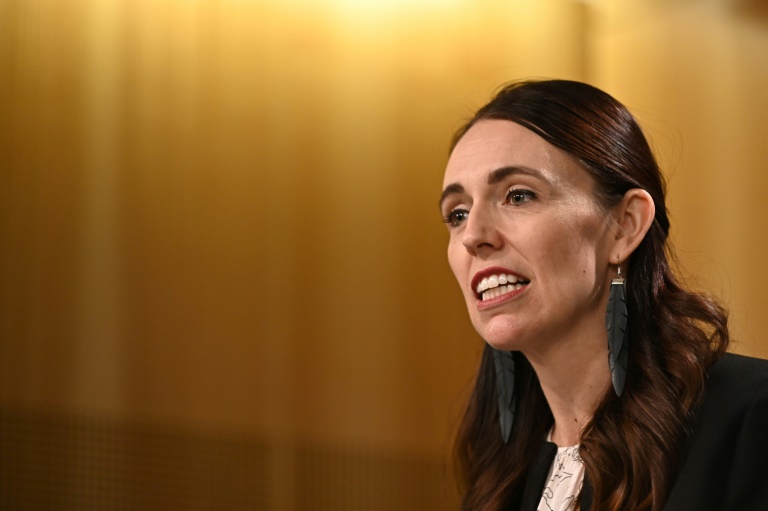
Prime Minister Jacinda Ardern warned an outbreak of foot-and-mouth disease in Indonesia could cost thousands of New Zealand jobs, as her nation and neighbouring Australia stepped up border biosecurity restrictions.

“While not a threat to humans, it would devastate our national herd. Essentially, all animals that are of cloven hoof are at risk,” Ardern told reporters in Wellington.

Ardern warned that the disease, first detected in Indonesia in April, has the potential to threaten up to 100,000 jobs in New Zealand’s agriculture sector.

Foot and mouth disease is a severe, highly contagious viral disease of livestock.

It can have a significant economic impact, especially on a country like New Zealand which exported around 17 million sheep and two million cattle in the eight months up until May 2022. 

A foot-and-mouth outbreak has ripped through two Indonesian provinces, killing thousands of cows and infecting hundreds of thousands more.

Ardern said New Zealand has never had an outbreak — and wants to keep it that way by tightening border restrictions.

“We want to make sure that we’ve got all our settings in place to protect ourselves from this emerging threat,” she added.

There are currently no direct flights from Indonesia to New Zealand, but Ardern said it is important to stop it from entering the country, potentially via Australian tourists who had visited south-east Asia.

Travellers from Indonesia will not be allowed to bring meat products into New Zealand, baggage will be screened and there will be disinfectant mats at airports to clean footwear.

In Australia, parcels and baggage from China and Indonesia are now being checked and there are also foot mats at airports in response to the disease.

Canberra has so far rejected opposition calls to close the border to Indonesia completely, but further measures have not been ruled out.

Ardern said her government is working with Australian authorities to try to further reduce the risk.

New Zealand is set to fully open its borders at midnight on Sunday to all visitors.

New Zealand’s Biosecurity Minister Damien O’Connor said “vigilance is absolutely crucial” as the disease could also affect up to 77 percent of the country’s wildlife population, including wild deer, pigs and sheep.

He referred to how foot and mouth devastated British farming in 2001 when millions of cattle and sheep had to be slaughtered.

The centuries-old mines stirring Japan-South Korea tensions

Under a split-top mountain on the Japanese island of Sado lies a network of centuries-old mines that have sparked a new diplomatic row with South Korea.

Some of the gold and silver mines of Sado, off Japan’s west coast, are believed to have started operating as early as the 12th century and produced until after World War II.

Japan believes that lengthy history and the artisanal mining techniques used there at a time when European mines had turned to mechanisation merit recognition on UNESCO’s World Heritage List.

But in Seoul, the focus is on what isn’t mentioned in the bid: the use of conscripted Korean labour during the Second World War, when Japan occupied the Korean peninsula.

Japan is seeking recognition of three sites — the Nishimikawa gold mine, the Tsurushi silver mine, and the Aikawa gold and silver mines — for the period between 1603 and 1867.

Officials and supporters of the bid say that era was when the mines were the world’s most productive and mining was done by hand.

But it also stops short of the period when conscripted Koreans toiled in conditions that even some backers of the UNESCO bid call “extremely harsh”.

The World Heritage effort has been years in the making, inspired in part by the successful recognition of a silver mine in western Japan’s Shimane region.

Ryo Usami, from Sado city’s World Heritage Promotion section, said locals hoped the recognition would highlight the mine’s contributions to the unique culture and history of the island.

“Many people migrated to Sado to mine gold and silver… They came from all over Japan and brought their local cultures,” Usami told AFP.

“Sado’s history is basically the history of these gold mines, and its culture formed in part thanks to the mining operations. That’s what Sado city wants to preserve.”

– ‘Discrimination did exist’ –

Production at the sites petered out by the 1960s, when mine operator Mitsubishi Materials began accepting tourists.

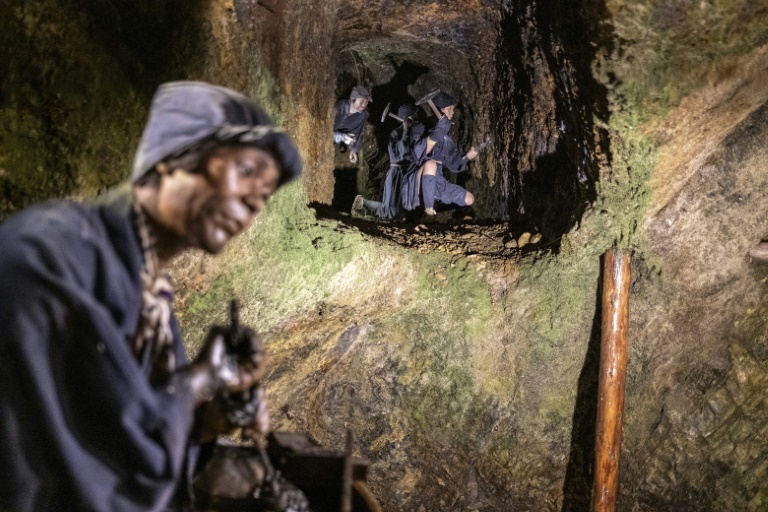
In the 1970s, animatronic robots were installed in some mining tunnels to give a sense of what life there was like.

The eerie, rundown figures remain, their heads swivelling side-to-side and arms mechanically swinging pickaxes up and down in a forlorn fashion.

Groups of domestic tourists file through the frigid tunnels and read panels that explain the history of Sado’s mining industry.

The panels note that Edo-era miners were often homeless or unregistered people who were captured and forced to work, and that child labour was used at times.

But there is little to testify that an estimated 1,500 Koreans worked at the sites during World War II.

Their status is disputed, with some arguing around two-thirds signed contracts voluntarily, while the remainder were conscripted during war-time mobilisation.

“The working conditions were extremely harsh, nevertheless the pay was very high, that’s why lots of people, including many Japanese, applied,” said Koichiro Matsuura, a former UNESCO director-general who is backing Sado’s bid.

Others argue the recruitment conditions effectively amounted to forced labour, and that Korean workers faced significantly harsher conditions than their Japanese counterparts.

“Discrimination did exist,” said Toyomi Asano, a professor of history of Japanese politics at Tokyo’s Waseda University.

“Their working conditions were very bad and dangerous. The most dangerous jobs were allocated to them.”

– ‘A part of our history’ –

Wartime issues like forced labour have soured ties between Japan and South Korea, and Seoul has formed a task force to push back against the UNESCO bid.

After the bid was announced, the government summoned Tokyo’s ambassador and issued a statement saying it “strongly regrets” the nomination and “sternly urges Japan to stop its attempt”.

The issue of forced labour affects other Japanese heritage sites, including the “Sites of the Meiji Industrial Revolution” inscribed in 2015.

UNESCO last year demanded an information centre for the sites properly explain that a “large number of Koreans and others (were) brought against their will and forced to work under harsh conditions”.

Matsuura believes Japan must “avoid making the same mistake” at Sado.

“We must say in a more concrete and more honest manner how the Korean workers lived and worked at the Sado gold mines.”

It’s a view shared by some visitors, including 79-year-old Hideji Yamagami.

“Of course they should (explain), I didn’t know about it at all,” he told AFP after a trip through the Aikawa site.

“I thought it was Japanese who had done all the hard work.”

Asano hopes UNESCO will insist the full history of Sado’s mines is on display if the site gets World Heritage status, and believes Japan “should not fear” recognising a part of its history.

“Every nation has its dark history, those nations who are completely exempt do not exist.”

Close Bitnami banner
Bitnami