Chinese Business

Philippines' Ressa says 'business as usual' despite news outlet's shutdown order

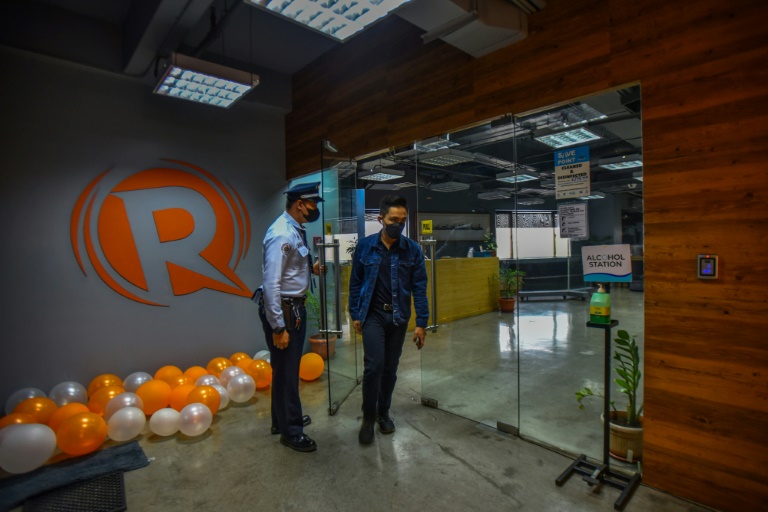
Philippine Nobel Peace Prize winner Maria Ressa’s news company Rappler was ordered Wednesday to shut down, a day before President Rodrigo Duterte is due to leave office, but she vowed to keep the site running.

Ressa has been a vocal critic of Duterte and the deadly drug war he launched in 2016, triggering what media advocates say is a grinding series of criminal charges, probes and online attacks against her and Rappler.

The latest blow was delivered by the Philippine Securities and Exchange Commission. 

In a statement Wednesday, it confirmed the “revocation of the certificates of incorporation” of Rappler for violating “constitutional and statutory restrictions on foreign ownership in mass media”.

Rappler said the decision “effectively confirmed the shutdown” of the company and vowed to appeal, describing the proceedings as “highly irregular”.

But Ressa was characteristically defiant, vowing the news site would continue to operate as they followed the legal process.

“We continue to work, it is business as usual,” Ressa told reporters, adding “we can only hope for the best” under Duterte’s successor Ferdinand Marcos Jr.

Marcos Jr, the son of the Philippines’ former dictator who presided over widespread human rights abuses and corruption, takes over from Duterte on Thursday.

Activists fear Marcos Jr’s presidency could worsen the situation for human rights and freedom of speech in the country.

– ‘Retaliation’ –

Rappler has had to fight for survival as Duterte’s government accused it of violating a constitutional ban on foreign ownership in securing funding, as well as tax evasion. 

It has also been accused of cyber libel — a new criminal law introduced in 2012, the same year Rappler was founded.

Duterte has attacked the website by name, calling it a “fake news outlet”, over a story about one of his closest aides.

The news organisation is accused of allowing foreigners to take control of its website through its parent company Rappler Holdings’ issuance of “depositary receipts”.

Under the constitution, investment in media is reserved for Filipinos or Filipino-controlled entities.

The case springs from a 2015 investment from the US-based Omidyar Network, which was established by eBay founder Pierre Omidyar.  

Omidyar Network later transferred its investment in Rappler to the site’s local managers to stave off efforts by Duterte to shut it down.

Ressa, who is also a US citizen, and Russian journalist Dmitry Muratov were awarded the Nobel Peace Prize in October for their efforts to “safeguard freedom of expression”.

Ressa is fighting at least seven court cases, including an appeal against a conviction in a cyber libel case, for which she is on bail and faces up to six years in prison. 

Rappler faces about eight cases, Ressa said.

– ‘Legal harassment’ –

Human Rights Watch said the website was facing “retaliation for its fearless reporting”.

The International Center For Journalists (ICFJ) urged the Philippine government to reverse its order to shut down Rappler. 

“This legal harassment not only costs Rappler time, money and energy. It enables relentless and prolific online violence designed to chill independent reporting,” ICFJ said on Twitter. 

The future of Rappler and its battle in the country’s highly politicised legal system under Marcos Jr’s presidency is uncertain. 

The president-elect has given few clues about his views on the website and the broader issue of freedom of speech. 

He has largely shunned media interviews and press conferences, preferring to communicate via his press secretary and through social media.

US Second Gentleman Douglas Emhoff, who is heading a delegation to the Philippines for Marcos Jr’s inauguration, would not comment on the Rappler case.

He told reporters in Manila that the US administration had a “deep commitment towards freedom of speech, freedom of expression, human rights”.
Hong Kong's blurring border with China a sign of things to come

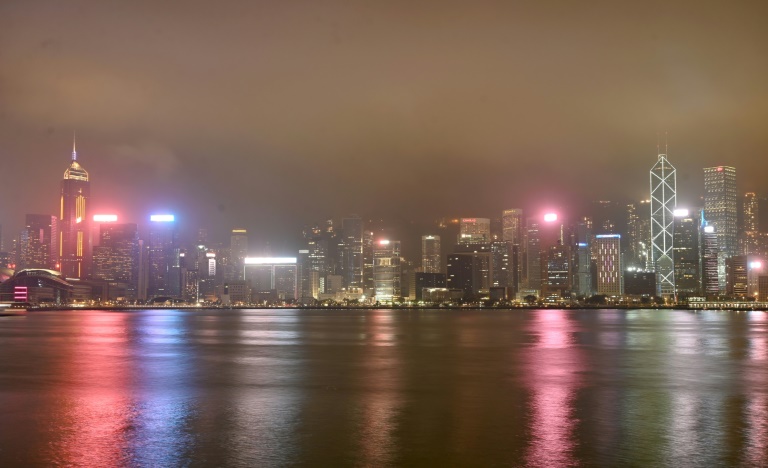
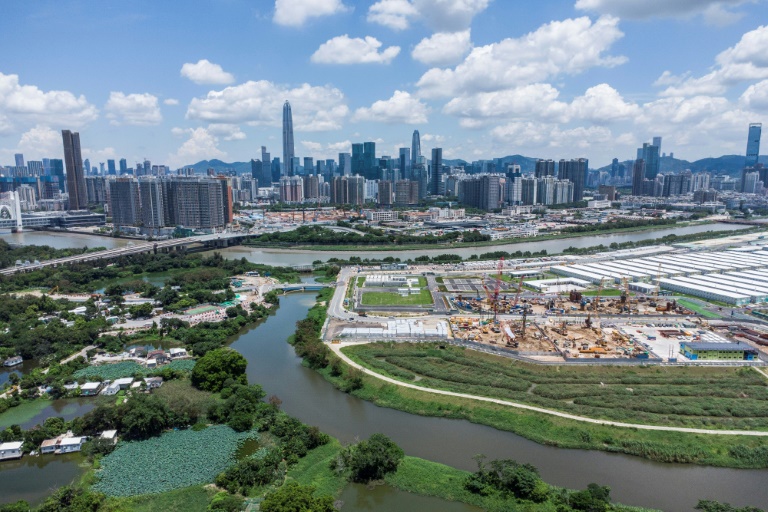
From the hill in northernmost Hong Kong where Jasper Law stood, the border with China was obvious — a narrow river dividing farmlands and fishponds from the gleaming skyscrapers of megacity Shenzhen.

Friday is the 25th anniversary of Hong Kong’s transition from British to Chinese rule.

While the view from the hilltops of Lok Ma Chau suggests Hong Kong remains clearly distinct from mainland China, the territory is fast being subsumed into Beijing’s blueprint for southern China.

And as the border is chipped away, the lack of public consultation has done little to ease the lingering discomfort some Hong Kongers feel about living on the mainland’s doorstep.

“In the 25 years since the handover, the border has become more and more blurry,” said Law, a pro-democracy politician from the border area.

The softening boundary has preoccupied many Hong Kongers.

And it was one of the catalysts for the huge democracy protests in the finance hub three years ago, a movement initially triggered by an attempt to allow extraditions to China’s mainland.

Beijing’s subsequent crackdown has only sped up Hong Kong’s absorption.

– Security agents roam free –

The integration of Hong Kong’s population and economy with mainland China has been under way for decades.

Between 1997 and 2021, more than 1.1 million people migrated from China via a limited-quota “one-way permit” scheme, almost a seventh of Hong Kong’s current population.

Mandarin was increasingly pushed in schools, sparking resentment among those who felt the city’s distinct Cantonese culture was being eroded. 

Hong Kong’s borders were also tweaked, most notably in the 2010s with an expansion of China’s high-speed rail into the city.

Part of the terminus in Hong Kong came under Chinese jurisdiction, meaning the mainland’s Communist Party-controlled legal system applied there.

Beijing’s imposition of a sweeping national security law to curb dissent following the 2019 protests has further eroded the legal firewall between Hong Kong and the mainland.

Under the law, which was imposed by Beijing directly rather than passed through the legislature, the mainland’s security agents can now operate freely in Hong Kong, immune from the city’s laws.

Beijing says it can now also try the most serious national security offences in mainland China.

And the Covid-19 pandemic has further whittled away at the boundaries.

While the border has been mostly closed under China’s strict zero-Covid rules, mainland medics were granted exemptions to work in Hong Kong’s hospitals.

Construction teams were also sent across the border to build emergency health facilities, even constructing a new bridge with Shenzhen to ease their travel.

– ‘Power imbalance’ –

Hong Kong’s government now plans to transform the border area with a two-decade plan that will place integration with Shenzhen at the heart of economic development in the city’s northernmost areas, shifting focus away from Hong Kong’s glitzy Victoria Harbour.

Dubbed the “Northern Metropolis”, the HK$100 billion ($12.7 billion) project envisages building a new megacity next to Shenzhen — a new node in Beijing’s “Greater Bay Area” ambitions to create a Chinese Silicon Valley connecting Hong Kong and multiple cities in neighbouring Guangdong province.

The government says the new metropolis will create 650,000 new jobs as well as much-needed new homes in one of the world’s least affordable cities.

Veteran urban planner Kenneth To said he thought the government’s vision was far from coherent, and bemoaned the small circle of vested interests that dominated discussion on development in Hong Kong. 

“The power imbalance is worrying,” he told AFP.

But Jack Lam, a mobile phone accessories seller who lives in a district near the border, was more upbeat. 

“When the population increases, you can expect more development to come, there will be more people starting businesses for sure,” the 35-year-old said.

Uber inks deal for Australian gig worker rights

Uber has reached a deal with a powerful Australian union after years of legal battles, campaigns and negotiations that will offer 100,000 drivers and food delivery workers more protections.

The Transport Workers Union — one of Uber’s most vocal critics — reached the agreement with the rideshare giant late Tuesday, with both sides backing minimum standards for all gig economy workers and the right to unionise.

In a joint statement, Uber and the union said they also supported the setting up of an independent body by the Australian government to create standards across the sector.

The “gig economy” — which uses temporary independent contractors for short-term tasks — has grown rapidly since Uber’s launch in 2009 and is promoted as a flexible way for people to earn money without the constraints of a full-time job.

But there has been growing backlash in Australia about the conditions and dangers gig workers face, particularly after a spate of delivery driver deaths during the Covid-19 pandemic when demand spiked.

A 2020 survey by the Transport Workers Union found 73 percent of food delivery drivers were worried about “being seriously injured or killed at work” — although safety concerns are not limited to Australia, or Uber.

In the United States, according to the advocacy group Gig Workers Rising, more than 50 drivers working for companies including Uber and Lyft have been killed on the job since 2017.

An Australian court last week ruled slain gig worker Xiaojun Chen, who was killed on the job in 2020 while working for food delivery service Hungry Panda, was an employee, not a contractor.

His family was awarded an A$830,000 (US$573,000) compensation payment, believed to be the first of its kind for a gig worker in Australia.

Uber’s general manager in Australia, Dom Taylor, conceded that the company and the union “may not seem like obvious allies”, but the deal struck between the two would “improve workers’ protections”.

“We want to see a level playing field for the industry and preserve the flexibility that gig workers value most,” he said.

The deal comes in the wake of Australia’s May election of a centre-left Labor government that has previously supported reforms to protect gig workers.

Hong Kong economy faces uncertain future 25 years after handover

When Hong Kong transitioned from British to Chinese rule, Edmond Hui was a floor trader at the bustling stock exchange, witnessing the roaring growth of a city at the crossroads of the West and Asia.

Under a deal signed with Britain ahead of the 1997 handover, China promised Hong Kong could keep its capitalist system for 50 years, an arrangement that helped the city thrive as one of the world’s top financial hubs.

Friday marks the halfway point of that experiment, with uncertainty clouding the economic future of Hong Kong — a city reliant on an increasingly isolated China, struggling to shake off the reputational damage from political unrest and pandemic-induced border closures.

Hui, now the chief executive of a mid-tier stockbroker with nearly 300 employees, said post-handover markets have undergone a drastic shift, becoming more China-focused than ever.

“Before 1997, foreign capital propped up half of the market,” he said. “After 1997, things changed gradually until the whole market was held up by Chinese capital.”

China’s meteoric rise in the past two decades yielded vast benefits for Hong Kong, which became the gateway for mainland firms to raise funds and for foreign businesses to access what is today the world’s second-largest economy.

“Hong Kong was sort of a poster child of free trade and open markets,” veteran pro-Beijing Hong Kong politician Regina Ip told AFP.

But the interlocking of its fate with China has also led to warnings about overreliance and complacency.

Chinese companies made up around 80 percent of the market capitalisation in Hong Kong’s stock market this year, up from 16 percent in 1997.

And Chinese firms now account for seven of the top 10 holdings of the benchmark Hang Seng Index, which used to be anchored by homegrown brands such as Cathay Pacific and Television Broadcasts Limited.

Hong Kong’s GDP, meanwhile, has gone from being equivalent to 18 percent of mainland China’s in 1997 to less than three percent in 2020.

Hui greeted this comprehensive shift with a mild shrug.

“It’s just a matter of changing who’s boss,” he said.

“We can only hope that our country’s momentum will surpass that of Europe and the United States.”

– ‘The gateway to China’ –

As China’s economic and political power has grown over the last few decades, so have tensions with Western nations — which has also affected Hong Kong.

Beijing cracked down on dissent in the city after massive democracy protests in 2019, prompting the United States to revoke Hong Kong’s preferential trade status on the grounds that it was no longer autonomous enough.

Washington also sanctioned some Hong Kong officials.  

“Back in 1997, we were able to play the role of a very important middleman. But now… everyone has more doubts about our background,” Yan Wai-hin, an economics lecturer at the Chinese University of Hong Kong, told AFP.

“If a trading partner feels that (Hong Kong) isn’t a neutral middleman… then the mutual trust might be lost.”

Yan said regional rivals such as Singapore were looking to capitalise on what they saw as an opening to supplant Hong Kong.  

Adding to that pressure, the tightening of political control has also meant Hong Kong has stuck to mainland China’s zero-Covid policy.

Stringent travel restrictions have kept the business hub cut off both from China and the world for the last two years, with authorities acknowledging it has prompted a talent exodus. 

But Ip said once restrictions were lifted, Hong Kong would recover.

“Our extremely advantageous geographical location is still there,” she said.

“We’re still the gateway to China.”

– ‘Complacent and insular’ –

Some industries other than finance, though, have struggled after the handover. 

“In the past 10 years or so, our GDP growth has lost steam and I think this had to do with Hong Kongers being complacent and insular,” said Simon Ho, president of the Hang Seng University of Hong Kong.

The city’s port, for instance, was among the world’s busiest for decades but has slipped in the rankings after peaking in 2004.

“The government took a neoliberal, non-interventionist approach, and there was no blueprint for developing industries and the economy,” Ho added.

He said authorities had devoted resources to sectors such as research and development, but that the results were “half-baked” and not competitive enough when compared with neighbouring tech hub Shenzhen.

“Hong Kong needs to figure out its role,” Ho said.

“In the past, we didn’t know how to complement the mainland, and in some cases even competed with it. In the long run, that will only get harder.” 

Sony launches PC gaming gear, expanding beyond PlayStation

Japan’s Sony is launching a new brand that will offer PC gaming gear, the company announced Wednesday, as it tries to compete for a share of the lucrative gaming peripherals market.

Sony is looking to expand beyond its flagship PlayStation console and boost revenue from other sectors, including PC and mobile gaming.

The gaming peripherals market of items used by players was valued at $3.88 billion globally in 2019 according to Grand View Research.

Sony’s first offerings from its new Inzone brand will be three wireless headsets and two monitors, the priciest of which will retail for a suggested $899.99 in the United States.

“The market has been expanding with a higher interest in gaming with the spread of esports tournaments and the advancement of gaming entertainment,” said Yukihiro Kitajima, head of Sony’s game business and marketing office, in a statement.

Sony is “very late” to the “hopelessly crowded” sector, said Serkan Toto, CEO of game industry consultancy Kantan Games.

Rival Microsoft is already well-positioned, along with competitors like Razer, though Sony will bring unique hardware features, he told AFP.

The firm’s decision to enter the market now is linked to its “aggressive plan to boost sales from PC and mobile for its PlayStation unit to around 50 percent by fiscal 2025,” Toto said.

It “apparently believes that the goal is easier to achieve by leveraging its position in hardware to raise awareness among PC gamers.”

Philippines' Ressa says 'business as usual' despite news outlet's shutdown order

Philippine Nobel Peace Prize winner Maria Ressa’s news company Rappler was ordered Wednesday to shut down, a day before President Rodrigo Duterte is due to leave office, but she vowed to keep the site running.

Ressa has been a vocal critic of Duterte and the deadly drug war he launched in 2016, triggering what media advocates say is a grinding series of criminal charges, probes and online attacks against her and Rappler.

The latest blow was delivered by the Philippine Securities and Exchange Commission. 

In a statement Wednesday, it confirmed the “revocation of the certificates of incorporation” of Rappler for violating “constitutional and statutory restrictions on foreign ownership in mass media”.

Rappler said the decision “effectively confirmed the shutdown” of the company and vowed to appeal, describing the proceedings as “highly irregular”.

But Ressa was characteristically defiant, vowing the news site would continue to operate as they followed the legal process.

“We continue to work, it is business as usual,” Ressa told reporters, adding “we can only hope for the best” under Duterte’s successor Ferdinand Marcos Jr.

Rappler has had to fight for survival as Duterte’s government accused it of violating a constitutional ban on foreign ownership in securing funding, as well as tax evasion. 

It has also been accused of cyber libel — a new criminal law introduced in 2012, the same year Rappler was founded.

Duterte has attacked the website by name, calling it a “fake news outlet”, over a story about one of his closest aides.

The news portal is accused of allowing foreigners to take control of its website through its parent Rappler Holdings’ issuance of “depositary receipts”.

Under the constitution, investment in media is reserved for Filipinos or Filipino-controlled entities.

The case springs from the 2015 investment from the US-based Omidyar Network, which was established by eBay founder Pierre Omidyar.  

Omidyar later transferred its investment in Rappler to the site’s local managers to stave off efforts by Duterte to shut it down.

Ressa, who is also a US citizen, and Russian journalist Dmitry Muratov were awarded the Nobel Peace Prize in October for their efforts to “safeguard freedom of expression”.

Ressa is fighting at least seven court cases, including an appeal against a conviction in a cyber libel case, for which she is on bail and faces up to six years in prison. 

Rappler faces about eight cases, Ressa said.

The International Center for Journalists has urged the Philippine government to reverse its order to shut down Rappler. 

“This legal harassment not only costs Rappler time, money and energy. It enables relentless and prolific online violence designed to chill independent reporting,” ICFJ said in a statement posted on Twitter. 

Marcos Jr, the son of the Philippines’ former dictator who presided over widespread human rights abuses and corruption, takes over from Duterte on Thursday.

Activists fear Marcos Jr’s presidency could worsen human rights and freedom of speech in the country.

Asian market losses driven by recession, inflation fears

Fears of a recession caused by sharp interest rate hikes aimed at fighting soaring inflation sent Asian markets tumbling Wednesday, tracking a sharp drop on Wall Street.

The hefty selling came after more than a week of gains across the world caused by hopes that any signs of contraction could give central banks room to ease up on their pace of monetary tightening.

The fluctuations on trading floors show how tough it has become for investors to find their feet, just as financial policymakers struggle to find a balance between containing prices and maintaining economic growth.

Wednesday’s selling came after New York’s three main indexes tanked in reaction to data showing confidence among US consumers — who are a crucial driver of the world’s top economy — had fallen to its lowest level in more than a year.

The mood-sapping reading was partly driven by a feeling inflation would persist, suggesting consumers are not sure the Federal Reserve’s aggressive efforts to tame inflation will work.

The news overshadowed a surprise move by China to slash the quarantine period for incoming travellers, raising hopes for further relaxations that can allow the country’s giant economy to recover more quickly.

In early Asian trade, Hong Kong, Tokyo, Shanghai, Sydney, Seoul, Taipei, Jakarta and Wellington were all well down.

Top Fed officials on Tuesday tried to play down the chances of a recession, with the heads of the Fed in San Francisco and New York saying they were upbeat a soft landing could be achieved.

“I see us tapping on the brakes to slow to a more sustainable pace, rather than slamming on the brakes, going over the handlebars and having the proverbial recession,” San Francisco’s Mary Daly told an online event hosted by LinkedIn.

“I wouldn’t be surprised, and it’s actually in my forecast, that growth will slip below two percent, but it won’t actually pivot down into negative territory for a long period of time.”

– Threading a fine line –

But analysts were more sceptical, with Sim Moh Siong at Bank of Singapore saying “low US consumer expectations suggest weaker growth in (the second half of 2022) as well as growing risk of recession by year end”.

The Conference Board’s chief economist Dana Peterson warned the United States will likely see a recession in late 2022.

And Emily Weis, at State Street Corp, said: “The Fed still believes it can thread that very fine line between tightening financial conditions while not hurting the economy too much.

“We’re still not sure they’re going to be able to pull that off. That’s what we’ve seen reflected in the markets over the last month or so.”

Oil prices dipped though remain elevated following a run-up in recent days on expectations that demand will continue to rise — despite recessionary talk — and supplies remain tight owing to the ban on imports from Russia.

And while G7 leaders agreed to work on a price cap for Russian oil as part of efforts to cut the Kremlin’s revenues, observers warned that will not likely have a massive impact on prices.

“The easing of China’s zero-Covid policy helped oil to the third day of gains following a decent correction in recent weeks,” said Craig Erlam at OANDA. 

“As did reports that the UAE and Saudi Arabia are producing near capacity, in stark contrast to claims that both are holding back and could do more.”

He added that OPEC and other major producers were 2.7 million barrels per day below target in May, “taking the total shortfall under the agreement to more than half a billion”.

“Even sanctions being lifted on Iran and Venezuela can’t do much against that backdrop. It may well take a recession to return oil prices to sustainable levels any time soon,” he warned.

– Key figures at around 0230 GMT –

Tokyo – Nikkei 225: DOWN 1.1 percent at 26,759.99 (break)

Hong Kong – Hang Seng Index: DOWN 0.9 percent at 22,205.99

Shanghai – Composite: DOWN 0.1 percent at 3,404.32

Dollar/yen: DOWN at 136.10 yen from 136.20 yen Friday

Pound/dollar: UP at $1.2207 from $1.2187

Euro/dollar: UP at $1.0531 from $1.0525

Euro/pound: DOWN at 86.26 pence from 86.32 pence

West Texas Intermediate: DOWN 0.5 percent at $111.24 per barrel

Brent North Sea crude: DOWN 0.6 percent at $117.25 per barrel

New York – Dow: DOWN 1.6 percent at 30,946.99 (close)

London – FTSE 100: UP 0.9 percent at 7,323.41 (close) 

Stocks split on China, US consumer confidence

European and Asian stocks climbed Tuesday and oil prices rallied further as China slashed the quarantine time for visitors, fuelling hopes of recovery for the world’s second largest economy.

But US equities were hit by another disappointing economic sentiment indicator, reviving investor concerns about the impact of a likely recession.

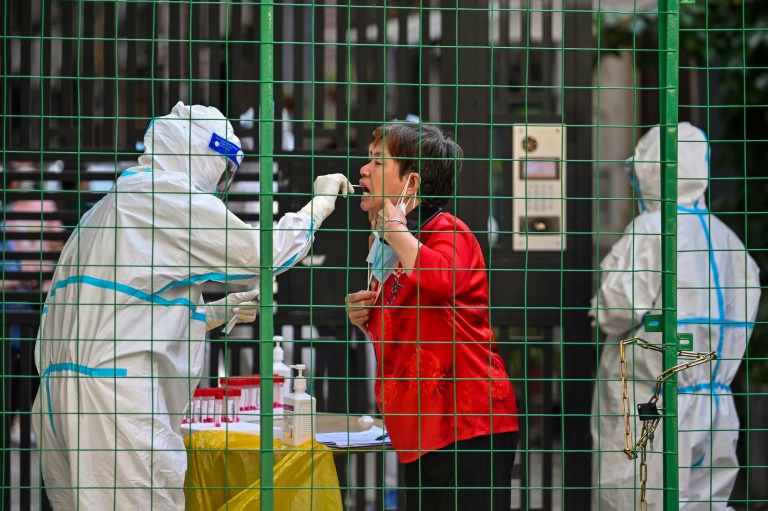
The news from China came as Beijing and Shanghai appeared to have contained a Covid outbreak that had forced officials to impose lockdowns that compounded global supply chain snarls, further pushing up inflation.

Authorities said inbound travellers would have to quarantine for only 10 days instead of three weeks.

The news boosted share prices, already striving to rebound from recent sharp losses triggered by fears of a global recession.

“The Covid crisis appears to be rapidly retreating in China,” noted Susannah Streeter, senior investment and markets analyst at Hargreaves Lansdown.

“The prospects of rapid recovery for the world’s second largest economy is helping lift miners, as metals prices rise in expectation of a surge in demand in the commodity-hungry economy.”

Asian markets closed higher, with both Hong Kong and Shanghai rising 0.9 percent.

At the same time, G7 leaders meeting in Germany condemned China’s “non-transparent and market-distorting” international trade practices in an end-of-summit statement that hit out directly at Beijing for the first time.

Traders also digested comments from European Central Bank President Christine Lagarde, who said the ECB would go “as far as necessary” to fight inflation that is set to remain “undesirably high”.

Paris rose 0.6 percent and Frankfurt added 0.4 percent. London climbed 0.9 percent.

Global equity markets have been recovering ground as investors believe central banks could decide to raise interest rates by more modest amounts than previously thought.

The US Federal Reserve and its peers are hiking borrowing costs in an attempt to cool inflation, which has soared around the world to the highest levels in decades.

Such action has increased the prospect of a global recession, causing economists to think that future rate hikes could be less steep than in recent months.

But early gains on Wall Street evaporated following a new report showing a drop in US consumer confidence.  

The Conference Board’s monthly consumer confidence index fell to 98.7 from 103.2, its lowest level since February 2021, as US consumer prices rise at their fastest pace in more than four decades.

“It looks like investors are potentially underestimating the big macro risks facing them by bidding up equity prices over the last few days,” City Index analyst Fawad Razaqzada told AFP.

“It is far too early to be optimistic that this latest recovery will hold.”

The Dow was down 0.4 percent in late morning trade, while the S&P 500 slid 0.7 percent and the tech-heavy Nasdaq Composite fell 1.4 percent.

– Oil jumps as G7 targets Russia –

Oil prices, a major driver of the soaring inflation, rose on fears of further supply tightening, in addition to prospects for higher Chinese demand.

This comes after G7 leaders agreed to work on a price cap for Russian oil, a US official said Tuesday, as part of efforts to cut the Kremlin’s revenues.

International sanctions placed on Russia following its invasion of Ukraine are taking their toll.

Moody’s ratings agency has confirmed that Russia defaulted on its foreign debt for the first time in a century, after bond holders did not receive $100 million in interest payments.

– Key figures at around 1530 GMT –

New York – Dow: DOWN 0.4 percent at 31,324.65 points

EURO STOXX 50: UP 0.2 percent at 3,506.13

London – FTSE 100: UP 0.9 percent at 7,323.41 (close) 

Frankfurt – DAX: UP 0.4 percent at 13,231.82 (close)

Paris – CAC 40: UP 0.6 percent at 6,086.02 (close)

Tokyo – Nikkei 225: UP 0.7 percent at 27,049.47 (close)

Hong Kong – Hang Seng Index: UP 0.9 percent at 22,418.97 (close)

Shanghai – Composite: UP 0.9 percent at 3,409.21 (close)

Brent North Sea crude: UP 2.0 percent at $113.22 per barrel

West Texas Intermediate: UP 1.4 percent at $111.11 per barrel

Euro/dollar: DOWN at $1.0527 from $1.0583 Monday

Pound/dollar: DOWN at $1.2188 from $1.2268

Euro/pound: UP at 86.35 pence from 86.24 pence

Dollar/yen: UP at 136.26 yen from 135.48 yen

burs-rl/kjm

G7 takes aim at China over 'market-distorting' practices

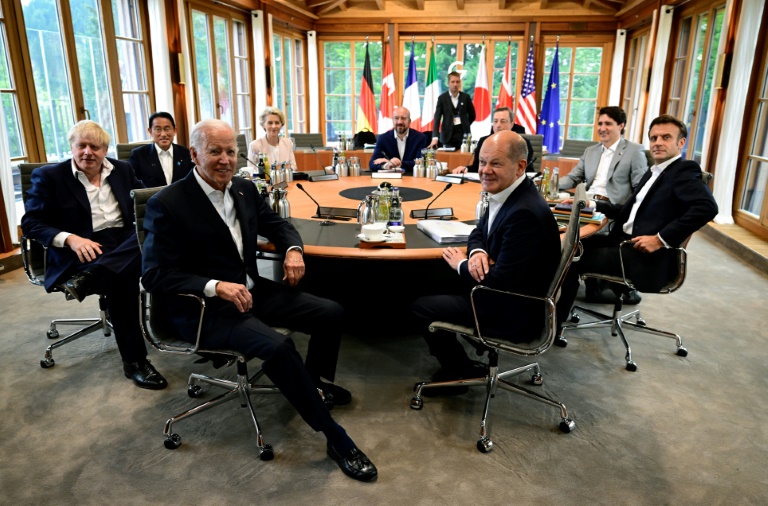
G7 leaders on Tuesday condemned China’s “non-transparent and market-distorting” international trade practices in an end-of-summit statement billed as “unprecedented” by the United States.

The statement, which also pledged to reduce “strategic dependencies” on China, came hours before the leaders join a larger group of their counterparts at a NATO summit in Madrid.

There, the 30-member alliance was also poised to toughen its stance against Beijing in an update of its “strategic concept”.

The United States has long cast a wary eye at China over its trade practices, which Washington believes are designed to accord an unfair advantage to Chinese companies over foreign firms.

Russia’s invasion of Ukraine and Beijing’s refusal to distance itself from Vladimir Putin has prompted other countries, including export giant Germany, to also reconsider their economic reliance on the Asian giant.

Beijing’s increasingly strident claims over much of the South China Sea has also sparked alarm over its military ambitions.

In their closing statement following a three-day summit in the Bavarian Alps, the G7 leaders signalled that they would seek to extricate themselves from economic dependence on China. 

They vowed to “foster diversification and resilience to economic coercion, and to reduce strategic dependencies”.

A US official called the collective statement “unprecedented in the context of the G7” in acknowledging “the harms caused by China’s non-transparent, market distorting, industrial directives”. 

The leaders also voiced concern about human rights violations in China, urging Beijing to respect fundamental freedoms. 

They stressed that the situation in Tibet, and in Xinjiang, where there is “forced labour”, “is of major concern to us”.

The statement also urged China to “honour its commitments” under the Sino-British Joint Declaration, in which Beijing agreed Hong Kong could keep some freedoms and autonomy for 50 years under a “One Country, Two Systems” model.

It pressed Beijing to get Russia to withdraw from Ukraine.

– ‘Serious danger’ –

German Chancellor and summit host Olaf Scholz underlined the “ambivalence” in the West’s relationship with China.

But he said in an interview with Welt daily it was now “very clear that we need to diversify our supply chains and exports”.

That means also “having an eye on the entire Asian zone, because many countries have risen, not just China”.

After several years of detente and cooperation as China caught up economically with the West, Beijing has since taken a more assertive tone on the world stage.

Western allies acknowledge that the world’s biggest challenges, including climate change, cannot be solved without Beijing’s cooperation, but have become more cautious about China’s actions and aims.

The export powerhouse has over recent years offered billions in investments and loans to build roads, rail and bridges in poorer countries around the world.

While greeted enthusiastically in the beginning, some receiving countries have later found themselves mired in debt.

Scholz recently warned that China’s years-long lending spree in poorer countries, particularly in Africa, poses a “serious danger” that could plunge the world into the next financial crisis.

Critics have also accused Beijing of seeking to buy influence in the south.

To offer an alternative to the world’s poorest, the G7 on Sunday pledged $600 billion for global infrastructure programmes.

European Commission President Ursula von der Leyen said the huge programme showed partners in the developing world “that they have a choice”. 

Beyond economic aid, Western allies are also poised for the first time to pivot their military strategy to address the challenges posed by China as they gather in Madrid for a NATO summit. 

The update of the “strategic concept” is the alliance’s first in a decade.

Stocks bounce as China eases quarantine measures

Stock markets climbed Tuesday and oil prices rallied further as China slashed the quarantine time for visitors, fuelling hopes of recovery for the world’s second largest economy.

The news came as Beijing and Shanghai appeared to have contained a Covid outbreak that had forced officials to impose lockdowns that compounded global supply chain snarls, further pushing up inflation.

Authorities said inbound travellers would have to quarantine for only 10 days instead of three weeks.

The news boosted share prices, already striving to rebound from recent sharp losses triggered by fears of a global recession.

“The Covid crisis appears to be rapidly retreating in China,” noted Susannah Streeter, senior investment and markets analyst at Hargreaves Lansdown.

“The prospects of rapid recovery for the world’s second largest economy is helping lift miners, as metals prices rise in expectation of a surge in demand in the commodity-hungry economy.”

At the same time, G7 leaders meeting in Germany condemned China’s “non-transparent and market-distorting” international trade practices in an end-of-summit statement that hit out directly at Beijing for the first time.

Traders also digested comments from European Central Bank President Christine Lagarde, who said the ECB would go “as far as necessary” to fight inflation that is set to remain “undesirably high”.

Ben Laidler, a global markets strategist at online trading platform eToro, said current economic weakness had been largely factored in by dealers.

“Much is already discounted by markets, which may be in ‘bad news is good news’ mode, as a slowdown cools inflation and interest rate fears,” he said.

Global equity markets are recovering ground as investors believe central banks could decide to raise interest rates by more modest amounts than previously thought.

The US Federal Reserve and its peers are hiking borrowing costs in an attempt to cool inflation, which has soared around the world to the highest levels in decades.

However, such action has increased the prospect of a global recession, causing economists to think that future rate hikes could be less steep than in recent months.

“Wall Street seems to be close to figuring out how high central banks may take rates over in the short-term and that is supportive for long-term investors to scale into positions,” said market analyst Edward Moya at OANDA trading platform. 

Wall Street stocks opened higher, with the Dow adding 0.6 percent.

Europe’s main indices were higher in afternoon trading, with London and Paris both rising 1.1 percent, while Frankfurt added 0.8 percent.

Asian markets closed higher.

– Oil jumps as G7 targets Russia –

Oil prices, a major driver of the soaring inflation, rose on fears of further supply tightening, in addition to prospects for higher Chinese demand.

This comes after G7 leaders agreed to work on a price cap for Russian oil, a US official said Tuesday, as part of efforts to cut the Kremlin’s revenues.

International sanctions placed on Russia following its invasion of Ukraine are taking their toll.

Moody’s ratings agency has confirmed that Russia defaulted on its foreign debt for the first time in a century, after bond holders did not receive $100 million in interest payments.

– Key figures at around 1330 GMT –

London – FTSE 100: UP 1.1 percent at 7,336.93 points

Frankfurt – DAX: UP 0.8 percent at 13,292.26

Paris – CAC 40: UP 1.1 percent at 6,115.94

EURO STOXX 50: UP 0.6 percent at 3,519.16

New York – Dow: UP 0.6 percent at 31,636.49

Tokyo – Nikkei 225: UP 0.7 percent at 27,049.47 (close)

Hong Kong – Hang Seng Index: UP 0.9 percent at 22,418.97 (close)

Shanghai – Composite: UP 0.9 percent at 3,409.21 (close)

Brent North Sea crude: UP 1.4 percent at $112.57 per barrel

West Texas Intermediate: UP 1.1 percent at $110.77 per barrel

Euro/dollar: DOWN at $1.0533 from $1.0583 Monday

Pound/dollar: DOWN at $1.2219 from $1.2268

Euro/pound: DOWN at 86.20 pence from 86.24 pence

Dollar/yen: UP at 136.19 yen from 135.48 yen

burs-rl/lth

Close Bitnami banner
Bitnami