Chinese Business

Bankrupt Sri Lanka opens oil market to foreign firms

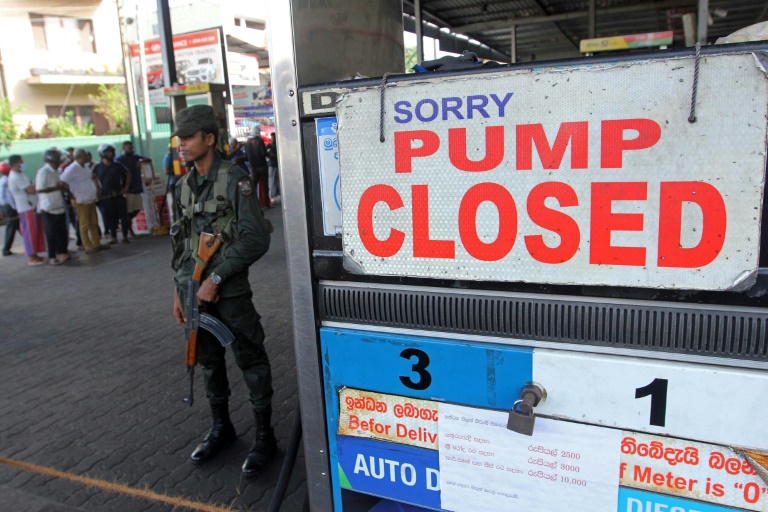
Cash-strapped Sri Lanka announced Tuesday it was opening its oil market to foreign competition, a day after chronic fuel shortages forced a nationwide halt to petrol and diesel sales.

The South Asian island country is suffering an unprecedented economic crisis because it cannot afford to import essentials, including enough oil and gas to meet energy needs. 

Lengthy blackouts are now a feature of daily life, while motorists have been forced to wait in daylong queues for scarce supplies of petrol. 

A rationing system has been in effect but on Monday night the government banned fuel sales for two weeks to conserve Sri Lanka’s limited stockpiles for emergencies. 

Ministers said the crisis had made it an appropriate time to allow market entry from firms in oil-producing nations “to enable them to import and sell fuel using their funds”, a cabinet statement said Tuesday. 

Sri Lanka’s oil industry was nationalised in 1961, though a third of the market was granted to a local unit of India’s state-owned oil and gas company in 2003. 

Despite the sales ban, long queues of vehicles were seen outside pumping stations on Monday with motorists hoping to top up whenever supplies resumed.

Sri Lanka defaulted on its $51 billion foreign debt in April and is currently in bailout talks with the International Monetary Fund.

The government has dispatched ministers to Russia and Qatar to source discounted oil, while President Gotabaya Rajapaksa this week met with Moscow’s envoy in Sri Lanka to discuss fuel and other imports.

A US delegation is also in Colombo to assess the country’s needs after the United Nations issued a flash appeal to some 1.7 million urgently in need of food support.

President Joe Biden on Tuesday announced a $20 million grant to feed around 800,000 children while at the G7 Summit in Germany.

Stocks bounce as China eases quarantine measures

Stock markets jumped Tuesday and oil prices rallied further as China slashed the quarantine time for visitors, fuelling hopes of recovery for the world’s second largest economy.

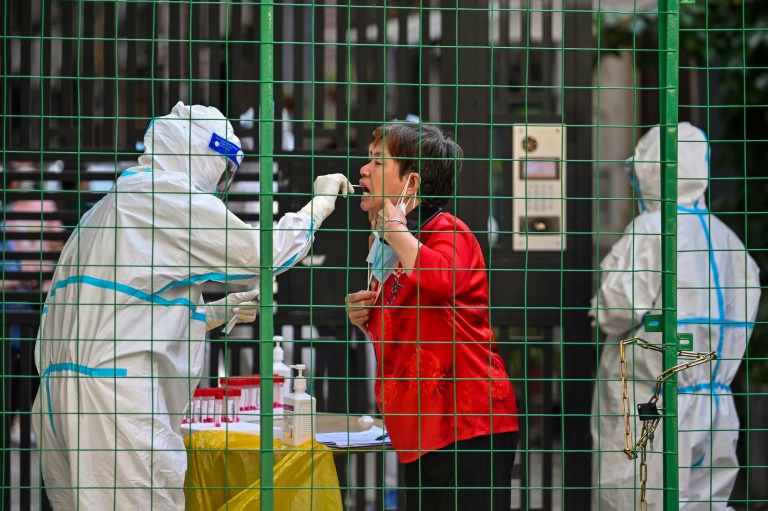
The news came as Beijing and Shanghai appeared to have contained a Covid outbreak that had forced officials to impose lockdowns that compounded global supply chain snarls, further pushing up inflation.

Authorities said inbound travellers would have to quarantine for only 10 days instead of three weeks.

The news boosted share prices, already striving to rebound from recent sharp losses triggered by fears of a global recession.

“The Covid crisis appears to be rapidly retreating in China,” noted Susannah Streeter, senior investment and markets analyst at Hargreaves Lansdown.

“The prospects of rapid recovery for the world’s second largest economy is helping lift miners, as metals prices rise in expectation of a surge in demand in the commodity-hungry economy.”

At the same time, G7 leaders will condemn China’s “distorting” international trade practices in an end-of-summit statement Tuesday, a senior US official said.

“You’ll see leaders release a collective statement, which is unprecedented in the context of the G7, acknowledging the harms caused by China’s non-transparent, market distorting, industrial directives,” the official told reporters.

Traders digested comments also from European Central Bank boss Christine Lagarde, who said the ECB would go “as far as necessary” to fight inflation that is set to remain “undesirably high”.

Ben Laidler, a global markets strategist at online trading platform eToro, said current economic weakness had been largely factored in by dealers.

“Much is already discounted by markets, which may be in ‘bad news is good news’ mode, as a slowdown cools inflation and interest rate fears,” he said.

Global equity markets are recovering ground as investors believe central banks could decide to raise interest rates by more modest amounts than previously thought.

The US Federal Reserve and its peers are hiking borrowing costs in an attempt to cool inflation, which has soared around the world to the highest levels in decades.

However, such action has increased the prospect of a global recession, causing economists to think that future rate hikes could be less steep than in recent months.

– Oil jumps as G7 targets Russia –

Oil prices, a major driver of the soaring inflation, jumped around two percent Tuesday on fears of further supply tightening, in addition to prospects for higher Chinese demand.

This comes after G7 leaders agreed to work on a price cap for Russian oil, a US official said Tuesday, as part of efforts to cut the Kremlin’s revenues.

International sanctions placed on Russia following its invasion of Ukraine are taking their toll.

Moody’s ratings agency has confirmed that Russia defaulted on its foreign debt for the first time in a century, after bond holders did not receive $100 million in interest payments.

– Key figures at around 1030 GMT –

London – FTSE 100: UP 1.2 percent at 7,246.58 points

Frankfurt – DAX: UP 0.8 percent at 13,286.57

Paris – CAC 40: UP 1.2 percent at 6,121.49

EURO STOXX 50: UP 0.9 percent at 3,569.57

Tokyo – Nikkei 225: UP 0.7 percent at 27,049.47 (close)

Hong Kong – Hang Seng Index: UP 0.9 percent at 22,418.97 (close)

Shanghai – Composite: UP 0.9 percent at 3,409.21 (close)

New York – Dow: DOWN 0.2 percent at 31,438.26 (close)

Brent North Sea crude: UP 2.3 percent at $117.74 per barrel

West Texas Intermediate: UP 1.8 percent at $111.55 per barrel

Euro/dollar: UP at $1.0590 from $1.0583 Monday

Pound/dollar: FLAT at $1.2268

Euro/pound: UP at 86.33 pence from 86.24 pence

Dollar/yen: UP at 136.01 yen from 135.48 yen

Bankrupt Sri Lanka opens oil market to foreign firms

Cash-strapped Sri Lanka announced Tuesday it was opening its oil market to foreign competition, a day after chronic fuel shortages forced a nationwide halt to petrol and diesel sales.

The South Asian island country is suffering an unprecedented economic crisis because it cannot afford to import essentials, including enough oil and gas to meet energy needs. 

Lengthy blackouts are now a feature of daily life, while motorists have been forced to wait in daylong queues for scarce supplies of petrol. 

A rationing system has been in effect but on Monday night the government banned fuel sales for two weeks to conserve Sri Lanka’s limited stockpiles for emergencies. 

Ministers said the crisis had made it an appropriate time to allow market entry from firms in oil-producing nations “to enable them to import and sell fuel using their funds”, a cabinet statement said Tuesday. 

Sri Lanka’s oil industry was nationalised in 1961, though a third of the market was granted to a local unit of India’s state-owned oil and gas company in 2003. 

Despite the sales ban, long queues of vehicles were seen outside pumping stations on Monday with motorists hoping to top up whenever supplies resumed.

The government has dispatched ministers to Russia and Qatar to source discounted oil, while President Gotabaya Rajapaksa this week met with Moscow’s envoy in Sri Lanka to discuss fuel and other imports.

Sri Lanka defaulted on its $51 billion foreign debt in April and is currently in bailout talks with the International Monetary Fund.

Asian markets bounce as China eases quarantine measures

Most Asian markets reversed early losses Tuesday and oil continued its recent rally after China slashed the quarantine time for visitors, fuelling hope for a boost to the embattled economy.

The news came as Beijing and Shanghai appeared to have contained a Covid outbreak that had forced officials to impose lockdowns which compounded global supply chain snarls.

Authorities said inbound travellers would now only have to quarantine for 10 days, instead of the three weeks that had been in place during the pandemic.

The news provided a much-needed boost to shares, which had mostly been down on renewed concerns about central bank interest rate hikes and soaring inflation.

On Monday the central People’s Bank of China pledged to provide support to the world’s number two economy.

The gains extended a rally enjoyed last week on bets that a possible recession next year could allow finance chiefs to ease up on their monetary tightening campaign.

“This relaxation sends the signal that the economy comes first,” Li Changmin, at Snowball Wealth, said. “It is a sign of the importance of the economy at this point.”

After spending the morning in the red, Hong Kong, Shanghai, Tokyo, Seoul and Wellington turned higher, while there were also gains in Sydney, Manila and Bangkok. Mumbai, Taipei and Jakarta slipped while Singapore was flat.

London, Paris and Frankfurt were all up as traders digest comments from European Central Bank boss Christine Lagarde, who said it would go “as far as necessary” to bring inflation back down to its two percent goal.

However, Huang Yanzhong of the New York-based Council on Foreign Relations warned: “It’s not surprising that China has managed to return to so-called zero, after all the huge effort it’s made.

“But that doesn’t mean it can claim a thorough and durable victory because it didn’t eradicate the virus,” he said. “Unless they thoroughly fence off Beijing and Shanghai, the virus could sneak in anytime.”

– Inflation fears –

Still, while the inflation and rate situation remains a worry, compounded by the war in Ukraine, some commentators remain relatively upbeat as the second half of the year approaches.

Market strategist Louis Navellier said in a note: “While it’s sobering that the first half of the year is the worst since 1970, history also says that when the first half of the year is down at least 15 percent the second half of the year is up every single time with an average return of 24 percent.”

And Ben Laidler, a global markets strategist at eToro, added that a lot of the expected economic weakness had been largely factored in by dealers.

“Much is already discounted by markets, which may be in ‘bad news is good news’ mode, as a slowdown cools inflation and interest rate fears,” he said.

“A ‘less bad’ gradual easing of inflation risks is possible, as is a slowdown — not recession — driving a ‘U-shaped’ rebound. The focus for investors is on cheap and defensive assets while managing rising risks.”

Oil prices surged more than one percent to build on a rally that has seen Brent and WTI pile on more than eight percent since Wednesday. Both main contracts had fallen heavily earlier in the month on recession worries.

The gains have come on the back of a pick-up in demand from China, while supply fears have been raised by political crises in producers Libya and Ecuador.

“The rhetoric around declaring victory in Shanghai over Omicron seems to be prompting Asian traders to continue buying,” said OANDA’s Jeffrey Halley.

Meanwhile, Moody’s ratings agency confirmed Russia had defaulted on foreign debt for the first time in a century after bondholders did not receive $100 million in interest payments.

The missed payments follow a series of Western sanctions that have increasingly isolated Moscow following its invasion of Ukraine.

Russia lost the last avenue to service its foreign-currency loans after the United States removed an exemption last month that allowed US investors to receive Moscow’s payments.

– Key figures at around 0810 GMT –

Tokyo – Nikkei 225: UP 0.7 percent at 27,049.47 (close)

Hong Kong – Hang Seng Index: UP 0.9 percent at 22,418.97 (close)

Shanghai – Composite: UP 0.9 percent at 3,409.21 (close)

London – FTSE 100: UP 0.8 percent at 7,316.77

West Texas Intermediate: UP 1.2 percent at $110.90 per barrel

Brent North Sea crude: UP 1.2 percent at $116.43 per barrel

Dollar/yen: UP at 135.77 yen from 135.48 yen on Monday

Euro/dollar: DOWN at $1.0577 from $1.0583

Pound/dollar: DOWN at $1.2266 from $1.2268

Euro/pound: DOWN at 86.23 pence from 86.24 pence

New York – Dow: DOWN 0.2 percent at 31,438.26 (close)

Asian markets' rally fizzles as rates, inflation fears return

Asian markets mostly fell Tuesday as investors struggled to maintain a recent rally while weighing central banks’ inflation-fighting rate hikes and the possibility of a recession.

Renewed concerns about thinning supplies and rising demand also helped push oil even higher, after enjoying a big bounce Monday. 

Shares rallied last week as the prospect of a contraction saw traders lower their bets on how long finance chiefs will tighten monetary policy, with some commentators eyeing possible cuts at the back end of 2023.

But the global advance fizzled Monday in New York, and on Tuesday, Asian investors ran out of puff. 

Meanwhile, analysts said there was a worry on trading floors that the upcoming earnings season could see a lot of firms lower their forecasts for the year ahead.

“There is a clear lack of conviction by investors, with light trading volumes favouring the notion of an exhausted market with big declines set to be recorded this quarter, notwithstanding the outsized gains logged last week,” said National Australia Bank’s Rodrigo Catril.

Hong Kong was among the big losers, with tech firms reversing the previous day’s surge, while there were also losses in Shanghai, Tokyo, Seoul, Singapore, Taipei, Jakarta and Wellington.

Sydney and Manila bucked the trend.

Another pledge by the central People’s Bank of China to provide support to the world’s number two economy had little impact on sentiment.

Still, some commentators remain relatively upbeat as the second half of the year approaches.

Market strategist Louis Navelier said in a note: “While it’s sobering that the first half of the year is the worst since 1970, history also says that when the first half of the year is down at least 15 percent the second half of the year is up every single time with an average return of 24 percent.”

And Ben Laidler, a global markets strategist at eToro, added that a lot of the expected economic weakness had been largely factored in by dealers.

“Much is already discounted by markets, which may be in ‘bad news is good news’ mode, as a slowdown cools inflation and interest rate fears,” he said.

“A ‘less bad’ gradual easing of inflation risks is possible, as is a slowdown — not recession — driving a ‘U-shaped’ rebound. The focus for investors is on cheap and defensive assets while managing rising risks.”

Oil prices jumped, building on a rally that has seen Brent and WTI pile on more than eight percent since Wednesday. Both main contracts had fallen heavily earlier in the month on recession worries.

The gains have come on the back of a pick-up in demand from China as it gradually emerges from lockdowns, while supply fears have been raised by political crises in producers Libya and Ecuador.

– Key figures at around 0230 GMT –

Tokyo – Nikkei 225: DOWN 0.2 percent at 26,830.69 (break)

Hong Kong – Hang Seng Index: DOWN 0.8 percent at 22,046.66

Shanghai – Composite: DOWN 0.4 percent at 3,366.48

West Texas Intermediate: UP 1.1 percent at $110.72 per barrel

Brent North Sea crude: UP 1.1 percent at $116.39 per barrel

Dollar/yen: DOWN at 135.25 yen from 135.48 yen on Monday

Euro/dollar: DOWN at $1.0575 from $1.0583

Pound/dollar: DOWN at $1.2263 from $1.2268

Euro/pound: DOWN at 86.22 pence from 86.24 pence

New York – Dow: DOWN 0.2 percent at 31,438.26 (close)
London – FTSE 100: UP 0.7 percent at 7,258.32 (close) 

Stock markets extend recovery

Global stock markets mostly advanced on Monday, building upon last week’s advances as speculation that inflation may have peaked tempered expectations about central bank interest rate hikes.

With prices surging at a pace not seen in a generation, central banks have been forced to lift borrowing costs and wind back their ultra-loose monetary policies in recent months, sending a chill across trading floors.

But a string of weak data has led many investors to believe that inflation may have plateaued or is about to, giving room for banks to be less hawkish.

The prospect that rates will not go as high as initially expected helped send Wall Street stocks higher Friday, with the S&P 500 and Nasdaq ending up more than three percent.

Asia continued the rally on Monday while London and Frankfurt closed higher and Wall Street edged up nearing midday. Paris closed lower.

Hong Kong led gainers, climbing more than two percent thanks to a strong performance in Chinese tech firms. 

Indications that China’s crackdown on the sector could be coming to an end added to the upbeat mood in the city.

“Market conviction that perhaps the Fed won’t now hike rates as aggressively as previously feared and/or that rate cuts before the end of 2023 are now an even more realistic prospect… have had a big hand” in boosting sentiment, said National Australia Bank’s Ray Attrill.

While Fed chiefs continue to flag further big interest rate hikes in the pipeline, expectations for a prolonged period of increases have waned, which has in turn taken some heat out of the dollar.

Market analyst Patrick O’Hare at Briefing.com said the question going forward is: “can the market look past a weakening fundamental situation that includes higher interest rates, persistently high inflation, and slower growth?”

The strong rebounds seen last week were possible as the market was so oversold, he said, but may soon hit resistance. 

“That should become increasingly apparent in coming weeks as more companies temper their full-year outlooks” as they release their second quarter earnings.

Bitcoin has also won some support, trading above $21,000 after a recent slump.

Oil prices rose after sharp falls last week.

“We appear to be seeing an interesting moment in oil where a tight market is being priced against a likely economic decline, even a recession, which could help to rebalance it,” said Craig Erlam at trading platform OANDA.

– G7 action over Russia –

Elsewhere, traders were keeping a close eye on the G7 summit in Germany, focused on further coordinated financial action against Russia following its invasion of Ukraine.

Among the new action being weighed by the G7 was a price cap on Russian oil imports and fresh sanctions on Russia’s defence sector, the White House said.

G7 member France urged oil producers to ramp up crude output by “exceptional” volumes owing to Russian supply constraints.

The group — comprising also Britain, Canada, Germany, Italy, Japan and the United States — kicked off their gathering Sunday by announcing plans to ban imports of Russian gold.

It was the latest in a series of sanctions aimed at punishing President Vladimir Putin for his February 24 invasion.

– Key figures at around 1530 GMT –

New York – Dow: UP 0.2 percent at 31,574.20 points

EURO STOXX 50: UP 0.4 percent at 3,547.66

London – FTSE 100: UP 0.7 percent at 7,258.32 (close) 

Frankfurt – DAX: UP 0.5 percent at 13,186.07 (close)

Paris – CAC 40: DOWN 0.4 percent at 6,047.31 (close)

Tokyo – Nikkei 225: UP 1.4 percent at 26,871.27 (close)

Hong Kong – Hang Seng Index: UP 2.4 percent at 22,229.52 (close)

Shanghai – Composite: UP 0.9 percent at 3,379.19 (close)

Euro/dollar: UP at $1.0612 from $1.0559 Friday

Pound/dollar: UP at $1.2305 from $1.2280

Euro/pound: UP at 86.23 pence from 85.95 pence

Dollar/yen: DOWN at 135.13 yen from 135.17 yen

Brent North Sea crude: UP 1.4 percent at $114.74 per barrel

West Texas Intermediate: UP 1.5 percent at $109.28 per barrel

burs-rl/lth

Stock markets extend recovery as rate hike fears subside

Asian and European markets rallied Monday, building on last week’s advances as speculation that inflation may have peaked tempered expectations about central bank interest rate hikes.

With prices surging at a pace not seen in a generation, central banks have been forced to lift borrowing costs and wind back their ultra-loose monetary policies in recent months, sending a chill across trading floors.

But a string of weak data has led many investors to believe that inflation may have plateaued or is about to, giving room for banks to be less hawkish.

The prospect that rates will not go as high as initially expected helped send Wall Street stocks higher Friday, with the S&P 500 and Nasdaq ending up more than three percent.

Asia and Europe continued the rally on Monday while Wall Street opened higher, with the Dow adding 0.2 percent

Hong Kong led gainers, climbing more than two percent thanks to a strong performance in Chinese tech firms. 

Indications that China’s crackdown on the sector could be coming to an end added to the upbeat mood in the city.

“Market conviction that perhaps the Fed won’t now hike rates as aggressively as previously feared and/or that rate cuts before the end of 2023 are now an even more realistic prospect… have had a big hand” in boosting sentiment, said National Australia Bank’s Ray Attrill.

While Fed chiefs continue to flag further big interest rate hikes in the pipeline, expectations for a prolonged period of increases have waned, which has in turn taken some heat out of the dollar.

Market analyst Patrick O’Hare at Briefing.com said the question going forward is: “can the market look past a weakening fundamental situation that includes higher interest rates, persistently high inflation, and slower growth?”

The strong rebounds seen last week were possible as the market was so oversold, he said, but may soon hit resistance. 

“That should become increasingly apparent in coming weeks as more companies temper their full-year outlooks” as they release their second quarter earnings.

Bitcoin has also won some support, trading above $21,000 after a recent slump.

– G7 action over Russia –

Elsewhere, traders were keeping a close eye on the G7 summit in Germany, focused on further co-ordinated financial action against Russia following its invasion of Ukraine.

Among the new action being weighed by the G7 was a price cap on Russian oil imports and fresh sanctions on Russia’s defence sector, the White House said.

G7 member France urged oil producers to ramp up crude output by ‘exceptional’ volumes owing to Russian supply constraints.

The group — comprising also Britain, Canada, Germany, Italy, Japan and the United States — kicked off their gathering Sunday by announcing plans to ban imports of Russian gold.

It was the latest in a series of sanctions aimed at punishing President Vladimir Putin for his February 24 invasion.

– Key figures at around 1330 GMT –

London – FTSE 100: UP 0.4 percent at 7,239.40 points

Frankfurt – DAX: UP 0.5 percent at 13,176.68

Paris – CAC 40: DOWN 0.4 percent at 6,049.55

EURO STOXX 50: UP 0.2 percent at 3,541.76

New York – Dow: UP 0.2 percent at 31,555.45

Tokyo – Nikkei 225: UP 1.4 percent at 26,871.27 (close)

Hong Kong – Hang Seng Index: UP 2.4 percent at 22,229.52 (close)

Shanghai – Composite: UP 0.9 percent at 3,379.19 (close)

Euro/dollar: UP at $1.0580 from $1.0559 Friday

Pound/dollar: DOWN at $1.2268 from $1.2280

Euro/pound: UP at 86.24 pence from 85.95 pence

Dollar/yen: UP at 135.35 yen from 135.17 yen

Brent North Sea crude: UP less than 0.1 percent at $113.16 per barrel

West Texas Intermediate: DOWN less than 0.1 percent at $107.54 per barrel

burs-rl/

Stock markets extend recovery as rate hike fears subside

Asian and European markets rallied Monday, building on last week’s advances and following a strong pre-weekend performance on Wall Street as speculation that inflation may have peaked tempered expectations about central bank interest rate hikes.

With prices surging at a pace not seen in a generation, finance chiefs have been forced to lift borrowing costs and wind back their ultra-loose monetary policies in recent months, sending a chill across trading floors.

But a string of weak data has led many investors to believe that inflation may have plateaued or is about to, giving room for banks to be less hawkish.

The prospect that rates will not go as high as initially expected helped send Wall Street stocks higher Friday, with the S&P 500 and Nasdaq ending up more than three percent.

Asia and Europe continued the rally on Monday.

Hong Kong led gainers, climbing more than two percent thanks to a strong performance in Chinese tech firms. 

Indications that China’s crackdown on the sector could be coming to an end added to the upbeat mood in the city.

“Market conviction that perhaps the Fed won’t now hike rates as aggressively as previously feared and/or that rate cuts before the end of 2023 are now an even more realistic prospect… have had a big hand” in boosting sentiment, said National Australia Bank’s Ray Attrill.

While Fed chiefs continue to flag further big interest rate hikes in the pipeline, expectations for a prolonged period of increases have waned, which has in turn taken some heat out of the dollar.

Bitcoin has also won some support, trading above $21,000 after a recent slump.

– G7 action over Russia –

Elsewhere, traders were keeping a close eye on the G7 summit in Germany, focused on further co-ordinated financial action against Russia following its invasion of Ukraine.

Among the new action being weighed by the G7 was a price cap on Russian oil imports and fresh sanctions on Russia’s defence sector, the White House said.

G7 member France meanwhile urged oil producers to ramp up crude output by ‘exceptional’ volumes owing to Russian supply constraints.

The group — comprising also Britain, Canada, Germany, Italy, Japan and the United States — kicked off their gathering Sunday by announcing plans to ban imports of Russian gold.

It was the latest in a series of sanctions aimed at punishing President Vladimir Putin for his February 24 invasion.

– Key figures at around 1100 GMT –

London – FTSE 100: UP 0.6 percent at 7,250.27 points

Frankfurt – DAX: UP 0.8 percent at 13,220.81

Paris – CAC 40: UP 0.1 percent at 6,078.53

EURO STOXX 50: UP 0.7 percent at 3,557.65

Tokyo – Nikkei 225: UP 1.4 percent at 26,871.27 (close)

Hong Kong – Hang Seng Index: UP 2.4 percent at 22,229.52 (close)

Shanghai – Composite: UP 0.9 percent at 3,379.19 (close)

New York – Dow: UP 2.7 percent at 31,500.68 (close)

Euro/dollar: UP at $1.0586 from $1.0559 Friday

Pound/dollar: UP at $1.2282 from $1.2280

Euro/pound: UP at 86.22 pence from 85.95 pence

Dollar/yen: UP at 135.22 yen from 135.17 yen

Brent North Sea crude: UP 0.4 percent at $113.56 per barrel

West Texas Intermediate: UP 0.2 percent at $107.88 per barrel

Markets extend rally as rate hike fears subside

Asian and European markets rallied again Monday, building on last week’s advances and following a strong performance on Wall Street as speculation that inflation may have peaked tempered expectations about central bank interest rate hikes.

With prices surging at a pace not seen in a generation, finance chiefs have been forced to lift borrowing costs and wind back their ultra-loose monetary policies in recent months, sending a chill across trading floors.

But a string of weak data has led many investors to believe that inflation may have plateaued or is about to, giving room for banks to be less hawkish.

The prospect that rates will not go as high as initially expected helped send Wall Street stocks higher Friday, with the S&P 500 and Nasdaq ending up more than three percent.

And Asia continued last week’s rally.

Hong Kong led gainers, climbing more than two percent thanks to a strong performance in Chinese tech firms. Indications that China’s crackdown on the sector could be coming to an end added to the upbeat mood in the city.

Tokyo, Shanghai, Seoul, Singapore, Sydney, Manila, Bangkok, Mumbai and Wellington were also well up.

London, Paris and Frankfurt were all up in early trade.

“Market conviction that perhaps the Fed won’t now hike rates as aggressively as previously feared and/or that rate cuts before the end of 2023 are now an even more realistic prospect if recession-like conditions lay ahead, have had a big hand in last week’s improvement in risk sentiment,” said National Australia Bank’s Ray Attrill.

He added that the rally had helped pare about two-thirds of the losses suffered in a painful sell-off from June 9 to 16.

While Fed chiefs continue to flag further big interest rate hikes in the pipeline, expectations for a prolonged period of increases have waned, which has in turn taken some heat out of the dollar.

Bitcoin has also won some support, after falling to as low as $17,600 last week for the first time since December 2020.

“There’s a feeling that things aren’t as bad as we thought they were going to be,” Carol Pepper, of Pepper International, told Bloomberg Radio.

“There’s a hope that perhaps we’ve oversold, perhaps there’s not going to be a recession,” she said.

But others warned that while the markets were enjoying a moment of calm, they were not out of the woods yet.

“Over the last week, equity markets have snapped back from oversold territory, which brought a sense of relief to investors,” said Bank of Singapore’s Eli Lee. 

“It is unsurprising in bear markets to see relief rallies, which can be unpredictable in magnitude and duration. However, we continue to see a fragile environment for risk assets over the next 12 months.”

Traders are keeping an eye on the G7 summit in Germany, which is set to be dominated by Russia’s war in Ukraine.

The leaders agreed money collected from higher trade tariffs imposed on Russian exports should be funnelled as aid to Ukraine, the White House said.

– Key figures at around 0810 GMT –

Tokyo – Nikkei 225: UP 1.4 percent at 26,871.27 (close)

Hong Kong – Hang Seng Index: UP 2.4 percent at 22,229.52 (close)

Shanghai – Composite: UP 0.9 percent at 3,379.19 (close)

London – FTSE 100: UP 0.9 percent at 7,270.69

Dollar/yen: DOWN at 135.06 yen from 135.17 yen late Friday

Pound/dollar: UP at $1.2315 from $1.2280

Euro/dollar: UP at $1.0587 from $1.0559

Euro/pound: UP at 85.97 pence from 85.95 pence

West Texas Intermediate: UP 0.2 percent at $107.80 per barrel

Brent North Sea crude: UP 0.6 percent at $113.72 per barrel

New York – Dow: UP 2.7 percent at 31,500.68 (close)

Asian markets extend rally as rate hike fears subside

Asian markets rallied again Monday, building on last week’s advances and following a strong performance on Wall Street as speculation that inflation may have peaked tempered expectations about central bank interest rate hikes.

With prices surging at a pace not seen in a generation, finance chiefs have been forced to lift borrowing costs and wind back their ultra-loose monetary policies in recent months, sending a chill across trading floors.

But a string of weak data has led many investors to believe that inflation may have plateaued or is about to, giving room for banks to be less hawkish.

The prospect that rates will not go as high as initially expected helped send Wall Street stocks higher Friday, with the S&P 500 and Nasdaq ending up more than three percent.

And Asia continued last week’s rally.

Hong Kong led gainers, climbing more than two percent thanks to a strong performance in Chinese tech firms. Indications that China’s crackdown on the sector could be coming to an end added to the upbeat mood in the city.

Tokyo, Shanghai, Seoul, Singapore, Sydney, Manila and Wellington were also well up.

“Market conviction that perhaps the Fed won’t now hike rates as aggressively as previously feared and/or that rate cuts before the end of 2023 are now an even more realistic prospect if recession-like conditions lay ahead, have had a big hand in last week’s improvement in risk sentiment,” said National Australia Bank’s Ray Attrill.

He added that the rally had helped pare about two-thirds of the losses suffered in a painful sell-off from June 9-16.

While Fed chiefs continue to flag further big interest rate hikes in the pipeline, expectations for a prolonged period of increases have waned, which has in turn taken some heat out of the dollar.

Bitcoin has also won some support, after falling to as low as $17,600 last week for the first time since December 2020.

“There’s a feeling that things aren’t as bad as we thought they were going to be,” Carol Pepper, of Pepper International, told Bloomberg Radio.

“There’s a hope that perhaps we’ve oversold, perhaps there’s not going to be a recession,” she said.

– Key figures at around 0230 GMT –

Tokyo – Nikkei 225: UP 1.0 percent at 26,768.77 (break)

Hong Kong – Hang Seng Index: UP 2.7 percent at 22,297.74

Shanghai – Composite: UP 0.8 percent at 3,377.22

Dollar/yen: DOWN at 134.63 yen from 135.17 yen late Friday

Pound/dollar: UP at $1.2282 from $1.2280

Euro/dollar: UP at $1.0563 from $1.0559

Euro/pound: UP at 86.01 pence from 85.95 pence

West Texas Intermediate: DOWN 0.2 percent at $107.41 per barrel

Brent North Sea crude: FLAT at $113.10 per barrel

New York – Dow: UP 2.7 percent at 31,500.68 (close)

London – FTSE 100: UP 2.7 percent at 7,208.81 (close)

Close Bitnami banner
Bitnami