US Business

Microsoft seeks to bring internet to millions in Africa by satellite

Microsoft announced plans Wednesday to bring internet access via satellite to 10 million people, half of them in Africa, as part of efforts to bridge a digital divide with the developing world.

At a summit with African leaders in Washington led by President Joe Biden, the technology leader said it would start the satellite project immediately with a priority on bringing internet for the first time to parts of Egypt, Senegal and Angola.

Microsoft president Brad Smith said that the company has been impressed by its engineers in Nairobi and Lagos.

In Africa, “there is no shortage of talent, but there is a huge shortage of opportunity,” Smith told AFP.

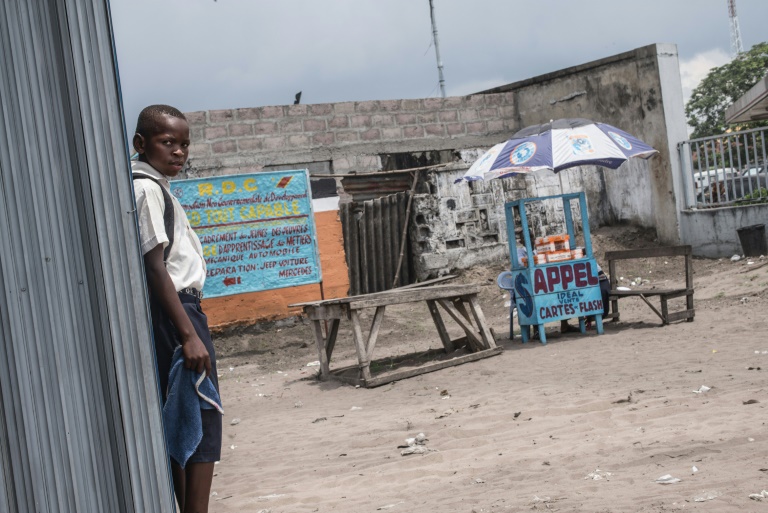
In the partnership with satellite provider Viasat, Microsoft said it would also provide internet in Guatemala, Mexico and more remote parts of the United States and also step up efforts in Nigeria and the Democratic Republic of Congo.

Smith said the biggest holdup to internet access has been the lack of electricity, which is not reliable for around half of Africans.

“For people who don’t go there or don’t spend time thinking about Africa, it’s hard for them to even to imagine that because electricity in my view is the greatest invention of the 19th century,” Smith said.

“When you think about broadband, you cannot have access to the internet at any speed without access to electricity,” he said.

He said Microsoft was focused on finding low-cost solutions in areas where both the internet and electricity are absent.

Smith said he saw wide support in Africa for bringing internet access, saying many governments have leapfrogged over their Western counterparts in ease of regulation as the continent did not have the same “extraordinary web of licensing regimes” in place from the past.

Ministries are often led by Africans with industry experience, “so they know how business works and they know how government works,” Smith said.

“Even in countries where we may find more authoritarian challenges, I think it’s more likely that governments are going to want to control what’s available on the internet rather than its availability,” he said.

The latest effort is part of Microsoft’s Airband Initiative, which aims to provide internet access to 250 million people, 100 million of them in Africa, by the end of 2025.

Despite rapid strides in the internet in developed nations and some major emerging economies, 2.9 billion people, or more than one-third of the world, have never gone online, according to the UN’s International Telecommunication Union.
Stocks diverge before expected US rate hike

Global stock markets diverged Wednesday, with Asia rising and Europe falling before an expected interest rate hike from the Federal Reserve, with inflation around the highest levels in decades despite moderate slowdowns.

London losses nearing the half-way mark were cushioned by news that UK inflation nudged lower in November.

Frankfurt and Paris also fell despite the Ifo research institute’s forecast that Germany’s recession could be milder than previously predicted.

Asian indices closed higher following Tuesday’s softer-than-expected US inflation data that could allow the Federal Reserve to slow its pace of interest rate hikes.

The Fed is forecast to increase borrowing costs 50 basis points Wednesday after four 75-point rises in a row.

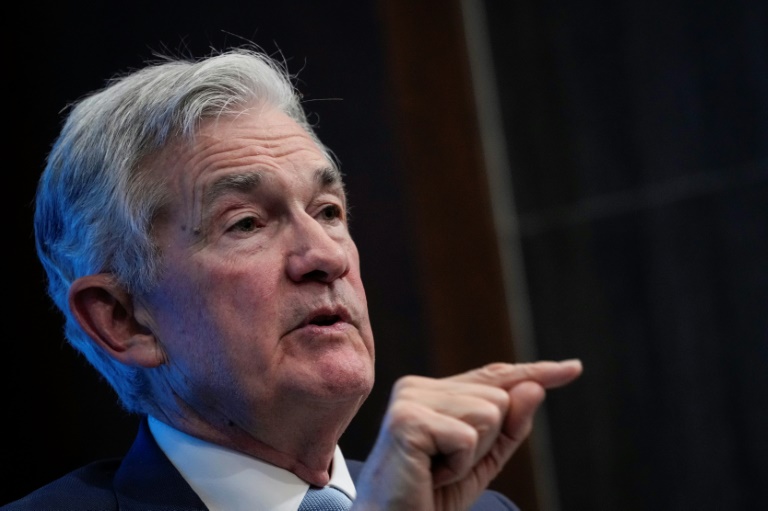
The US central bank’s post-meeting statement and boss Jerome Powell’s comments are the main focus for traders, along with the Fed’s infamous “dot plot” chart of the rate outlook.

“At the end of the day, it’s Jerome Powell, and the Fed, who will either give a green light for a modest Santa rally (for equities), or tell investors that Santa is stuck in a snow storm this year,” noted SwissQuote analyst Ipek Ozkardeskaya.

It’s the turn of Europe on Thursday, with the Bank of England and European Central Bank expected to announce less aggressive rate hikes compared with their recent monetary policy decisions.

Wall Street rebounded Tuesday in reaction to data showing US consumer prices rose 7.1 percent last month, less than forecast and the slowest pace since December 2021.

The reading followed an October slowdown and fuelled hopes that inflation in the world’s biggest economy has finally peaked, after several months of Fed rate hikes.

Markets are also eyeing developments in China, which is continuing to roll back its strict zero-Covid strategy that has battered the world’s number two economy, though fears of a sharp surge in infections are causing some unease among dealers.

Oil extended recent gains as traders awaited the weekly US inventories report for clues on demand in the world’s top crude consuming nation.

– Key figures around 1200 GMT –

London – FTSE 100: DOWN 0.3 percent at 7,479.69 points

Frankfurt – DAX: DOWN 0.7 percent at 14,391.94

Paris – CAC 40: DOWN 0.6 percent at 6,702.55

EURO STOXX 50: DOWN 0.8 percent at 3,956.14

Tokyo – Nikkei 225: UP 0.7 percent at 28,156.21 (close)

Hong Kong – Hang Seng Index: UP 0.4 percent at 19,673.45 (close)

Shanghai – Composite: FLAT at 3,176.53 (close)

New York – Dow: UP 0.3 percent at 34,108.64 (close)

Euro/dollar: UP at $1.0653 from $1.0635 on Tuesday

Dollar/yen: DOWN at 134.96 yen from 135.59 yen

Pound/dollar: UP at $1.2377 from $1.2366

Euro/pound: UP at 86.04 pence from 85.96 pence

Brent North Sea crude: UP 0.9 percent at $81.40 per barrel

West Texas Intermediate: UP 1.0 percent at $76.15 per barrel

UK inflation slows, remains close to 11 percent

British inflation slowed more than expected in November but remained near the highest level in more than 40 years, official data showed Wednesday, as a cost-of-living crisis sparks fresh UK strikes.

The consumer prices index eased to 10.7 percent last month, the Office for National Statistics (ONS) said in a statement, against expectations of a drop to 10.9 percent.

The ONS said motor fuel prices had risen at a slower pace than a year earlier.

October’s annual inflation rate had stood at 11.1 percent, the highest level since 1981, after energy prices and food bills soared across the world this year on supply constraints caused by Russia’s invasion of Ukraine and the lifting of pandemic lockdowns.

Wednesday’s data comes amid crippling UK industrial action by public and private sector workers demanding higher wages.

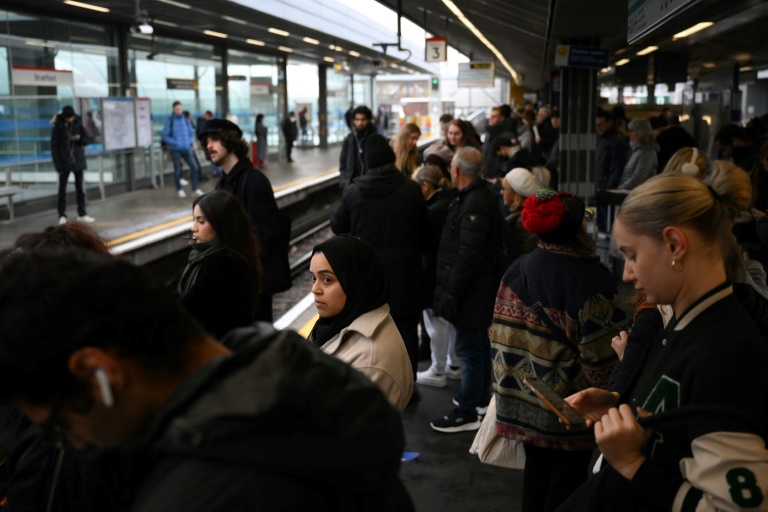
Railway staff were staging a two-day national strike due to end Wednesday, kicking off a month of walkouts involving professions from nurses to passport control and postal workers that spells Christmas misery for millions of Britons.

November’s inflation data was meanwhile published on the eve of an interest rate decision from the Bank of England, which is widely expected to deliver its ninth hike in a row as policymakers try to tackle rampant prices.

Economists expect the BoE will lift its key lending rate to 3.5 percent from 3.0 percent on Thursday, further squeezing Britons’ disposable incomes with rising loan costs.

Inflation is still running at more than five times the central bank’s official target level of two percent.

– ‘Historically high’ –

“Although still at historically high levels, annual inflation eased slightly in November,” noted ONS chief economist Grant Fitzner.

“Prices are still rising, but by less than this time last year, with the most notable example of this being motor fuels.”

Reacting to the data, finance minister Jeremy Hunt said “getting inflation down so people’s wages go further” was his “top priority”.

Prime Minister Rishi Sunak’s Conservative government insists that inflation-busting pay hikes would worsen inflation.

Nurses meanwhile are set to walk out for the first time in their union’s 106-year history on Thursday.

– Inflation peak? –

Britain remains on course for a long-lasting recession on fallout from the highest inflation in decades, despite this week’s news that the country’s economy grew in October.

The government and BoE have each said they believe Britain is already in a recession that the bank expects to last all next year.

While Wednesday’s data “doesn’t constitute a new trend, it is a move in the right direction and comes as inflation in the US, and the eurozone shows signs of cooling”, said Fawad Razaqzada, market analyst at City Index trading group.

The Federal Reserve and European Central Bank are both expected to announce less aggressive interest rate hikes in the next 24 hours compared with their recent monetary policy decisions.

“Inflation may be past the peak but given that prices for UK consumers have scaled a mountain, there is still a vertiginous descent to navigate before it’s back down to less dangerous levels,” said Susannah Streeter, senior investment and markets analyst at stockbroker Hargreaves Lansdown.

The ONS added Wednesday that the retail prices index — the inflation measure that includes mortgage interest payments and is used by trade unions and employers when negotiating wage increases — eased to 14 percent in November.

Once a star, Ghana battles economic crisis

The packing machine at Nakobs’ Pac factory in the outskirts of Ghana’s capital Accra is running at full pace, churning out sachets of treated drinking water.

But all is not well at Nakobs’. Like other small businesses in Ghana these days, owner Daniel Tekyi is struggling.

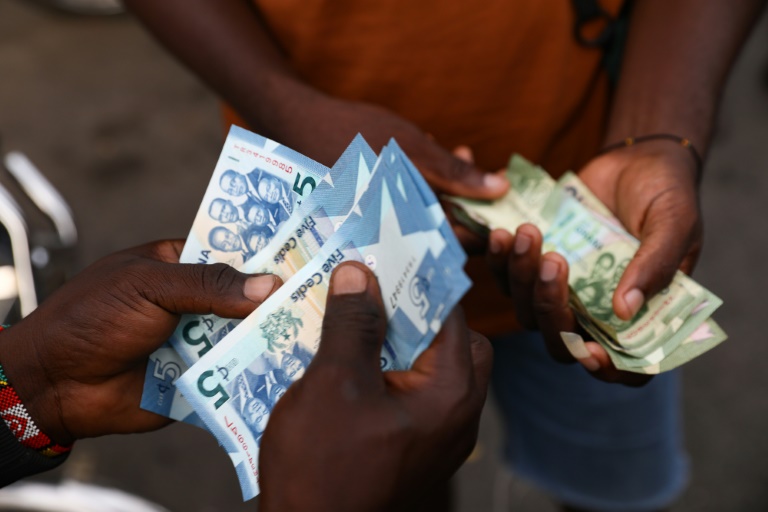
With inflation at over 50 percent, the currency worth half what it was last year, fuel prices doubling and debt payments gobbling up more than half the government’s revenues, Ghana is battling its worst economic crisis in decades.

Ghana signed a $3 billion bailout deal with the International Monetary Fund on Tuesday in a bid to shore up public finances, but economic stability is still a way off.

“It would be better for us to close the factory,” said Tekyi. “We really don’t know when this crisis is going to end.”

Once applauded as a rock of economic stability and security in a region plagued by coups and jihadist wars, Ghana has steadily lost investor confidence.   

Like much of the continent, Ghana slowly emerged from the pandemic only to face the fallout of the war in Ukraine and the surge in fuel and food costs.

Facing a crunch in payments, President Nana Akufo-Addo this year reversed course from his “Ghana Beyond Aid” concept and entered talks with the IMF for a bailout.

Already, the government has announced a 2.5 percent increase in VAT and a freeze on public worker hires to help cut costs and hike revenues. A debt restructuring is underway.

With an IMF team in Accra, Finance Minister Kenneth Ofori-Atta promised the credit deal, debt swap and a reform package would restore investor confidence and steer the economy out of “grave times”.

But many Ghanaians are bracing for potential austerity before any stability returns, with the impact of new taxes and spending cuts.

How Ghana’s government emerges may also have political fallout. Elections are two years away with Akufo-Addo stepping aside and ruling New Patriotic Party or NPP allies already jostling for position for primaries in early 2023.

The government has to find ways to mitigate any impact from reforms, especially on public sector employment and high taxes, economist Daniel Anim Amarteye said. 

“If that is not done, it could be politically fatal,” he said.

– Dimmed star –

Ghana’s economic story was brighter a few years ago. Before the pandemic, the West African state was a star with fast growth rates, growing oil production and strong investor interest.

But its high level of debt was a looming problem. 

Since the start of the year, its cedi currency has lost half its value, which has helped increase its debt burden by $6 billion, with warnings Ghana risked a default.

A major part of the IMF agreement is bringing the country back to debt sustainability through a restructuring, calling on investors to exchange bonds for new ones maturing later. 

IMF approval of the $3 billion loan will depend on its success. Officials say they have the means to help offset any impact on local banks or pension funds — major holders of domestic bonds.

But Ghana’s major labour movement, the Trades Union Congress, is already rumbling over the deal’s potential impact on workers’ pensions. 

Opposition National Democratic Congress has been quick to blame Akufo-Addo’s government for ballooning debt, even trying and failing to censure the finance minister.  

“No matter how the IMF programme turns out and how they can turn the corner, the records will show that they took us to 40 percent inflation, the records will show the market was closed to us, the markets will show the cedi depreciated 54 percent,” said NDC lawmaker Isaac Adongo.

Akufo-Addo’s government spent heavily on social programmes such as free high schools. But his ruling New Patriotic Party says the crisis is all about external shocks — Covid and Russia’s war in Ukraine.

“Assuming Covid didn’t happen, what would our story be?” NPP communications director Richard Ahiagbah told AFP.

– Daily struggle –

Testifying before parliament last month, Ofori-Atta apologised to Ghanaians for their pain, but officials dismissed NDC charges of mismanagement.

But political calculations are not a luxury Patience Tesonkeh can afford. 

Stung by the soaring price of cooking gas, the single mother switched to cheaper charcoal to cook. Her usual weekly shopping budget no longer stretches to all her family’s needs.

“I withdrew 300 cedis ($20) thinking I would get everything I needed but I couldn’t,” she said on a recent trip to buy rice, fish and yams at a market in her Accra neighbourhood.

Unionised traders and shopkeepers in the capital also closed their businesses last month in a three-day protest over rising living costs.

For factory owner Tekyi the numbers just don’t add up. Production and transport now total 5.8 cedis per water bag. But he can only sell them for five. 

“We planned closing our factory because we are not making any profit,” he said.

“But we had a second thought that if we close and we lay off our workers, how can they also survive? So for now, we are producing and making a loss.”

Zara owner's profits rise despite inflation

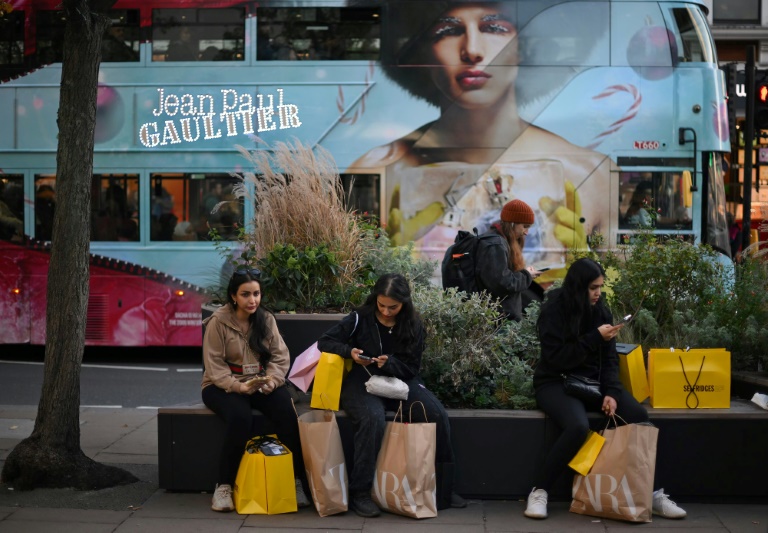
Zara owner Inditex reported Wednesday a jump in profits in the third quarter of its fiscal year despite soaring inflation and the war in Ukraine impacting business costs.

The group, which also owns Massimo Dutti, said it pulled in a net profit of 1.3 billion euros ($1.4 billion), between August 1 and October 31, compared to 1.23 billion euros in the same period last year.

Analysts surveyed by financial information service Factset had expected a net profit of 1.3 billion euros.

Between February 1 and October 31, the ready-to-wear giant said net income rose by 3.1 billion euros, up 24 percent from the same period in 2021.

Sales were also up 19 percent to reach 23 billion euros, thanks to a strong showing in stores and online.

The results come despite “the current challenging context”, Inditex CEO Oscar Garcia Maceiras said, referring to red-hot inflation and the conflict in Ukraine.

The company has seen manufacturing and transport costs rise, along with other businesses impacted by supply chain bottlenecks after Covid lockdowns and Russia’s invasion of Ukraine.

It said operating costs rose by 17 percent between August 1 and October 31 compared to the same period in 2021.

Inditex decided in March to shut 502 stores in Russia and stop online sales in the country, which had been one of its biggest markets after Spain, accounting for 10 percent of company sales.

The retailer in October said the Russian stores would be bought by United Arab Emirates-based Daher group, Inditex’s franchisee in the Middle East.

Inditex said global online and in-store sales rose by 12 percent at current exchange rates between November 1 and December 8, compared to the same period in 2021.

UK inflation slows but remains elevated

British inflation slowed in November but sat near the highest level in more than 40 years, data showed Wednesday, as a cost-of-living crisis sparks fresh strikes.

The Consumer Prices Index eased somewhat to 10.7 percent last month, the Office for National Statistics (ONS) said in a statement, against expectations of 10.9 percent.

That marked a modest improvement from October’s 11.1 percent, the highest level since 1981, but pressures remain high due to soaring domestic energy and food bills after Russia’s war on Ukraine.

The news comes amid crippling industrial action by public and private sector workers demanding higher wages, which have been dramatically eroded by rising living costs this year.

Railway staff are currently staging their second day of a two-day national strike, kicking off a month of walkouts involving professions from nurses to passport control and postal workers that spells Christmas misery for millions.

November’s inflation data was also published on the eve of an interest rate decision from the Bank of England, which is widely expected to deliver the ninth hike in a row as policymakers try to tackle rampant prices.

– Historically high –

“Although still at historically high levels, annual inflation eased slightly in November,” noted ONS chief economist Grant Fitzner.

“Prices are still rising, but by less than this time last year, with the most notable example of this being motor fuels.”

British finance minister Jeremy Hunt blames Russian President Vladimir Putin’s war in Ukraine for fuelling sky-high energy prices, as well as the economic reopening from Covid restrictions.

“The aftershocks of Covid-19 and Putin’s weaponisation of gas mean high inflation is plaguing economies across Europe, and I know families and businesses are struggling here in the UK,” Hunt said.

“Getting inflation down so people’s wages go further is my top priority.”

“I know it is tough for many right now, but it is vital that we take the tough decisions needed to tackle inflation — the number one enemy that makes everyone poorer.”

Prime Minister Rishi Sunak’s Conservative government insists that inflation-busting pay hikes would further worsen the situation.

Nurses are set to walk out for the first time in their union’s 106-year history on Thursday.

Economists meanwhile expect the BoE will lift its key lending rate from 3.0 percent to 3.5 percent on Thursday, further squeezing Britons’ disposable incomes with rising loan costs.

Inflation is still running at more than five times the BoE’s official target level of just two percent.

– Inflation past peak? –

Britain remains on course for a long-lasting recession on fallout from the highest inflation in decades, despite this week’s news of economic growth in October.

The government and BoE have each said they believe Britain is already in a recession that the bank expects to last all next year.

Wednesday’s data nevertheless stoked hope that inflation may have peaked in October, but analysts warn more hefty interest rate hikes could further darken the outlook.

“Inflation may be past the peak but given that prices for UK consumers have scaled a mountain, there is still a vertiginous descent to navigate before it’s back down to less dangerous levels,” said Susannah Streeter, senior investment and markets analyst at stockbroker Hargreaves Lansdown.

Yet the ONS was quick to dampen talk of a peak.

“Some may be calling this a peak. It is, I think, too early. We’ve only seen one fall from a 40-year high, so let’s wait a few months,” Fitzner told BBC radio.

Ukraine downs swarm of attack drones over Kyiv

Ukrainian forces said Wednesday they had shot down an entire swarm of Iranian-made drones launched at the capital by Russian troops in their latest attack on Kyiv.

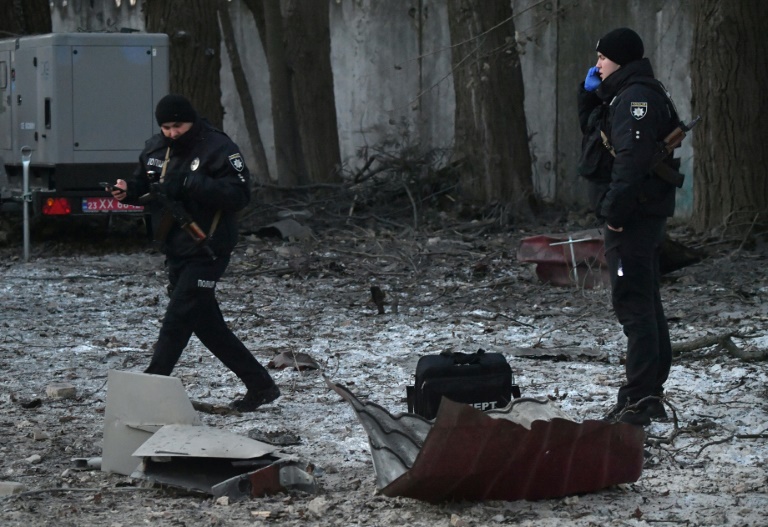
Explosions rang out over a central neighbourhood in the early hours of Wednesday, the mayor said, and AFP journalists saw law enforcement and emergency service workers inspecting metal fragments at a snow-covered impact site.

“The terrorists started this morning with 13 Shaheds,” Ukrainian President Volodymyr Zelensky said, referring to the Iran-made weapons.

“According to the preliminary information, all 13 were shot down by our Ukrainian air defence systems.”

He added that residents of the capital, which has now been subjected to nearly ten months of air raid sirens and frequent aerial attacks since Russia invaded the country in February, should stay alert to government warnings of incoming attacks.

Kyiv region officials praised the Ukrainian air defence and electronic warfare units for downing the latest wave of suicide drones.

US ambassador in Ukraine Bridget Brink said following the morning attacks that Kyiv could continue to rely on Washington’s backing.

“More support is on the way,” she wrote on Twitter.

– ‘Fight through winter’ –

Mayor Vitali Klitschko announced on social media at 6:41 am local time (0441 GMT) that “explosions” had been heard in the central district of Shevchenkivsky and that emergency services were responding.

“Debris from downed drones hit one administrative building and four more residential buildings suffered minor damage. No one was injured,” added Sergiy Popko, the head of the Kyiv regional military administration.

Since a series of key battlefield setbacks this summer and autumn, Russia has been pummelling critical infrastructure across Ukraine with missiles and drones, plunging millions into cold and darkness in winter.

Moscow last week also targeted Ukrainian energy infrastructure, piling pressure on the country’s power grid, whose operators have for weeks been forced to implement rolling blackouts.

Ukrainian Prime Minister Denys Shmygal said this week that between 40 and 50 percent of the country’s grid was out of action because of Russia’s strikes.

The latest round of attacks on Wednesday came one day after Zelensky issued urgent appeals to around 70 countries and international organisations at a Paris conference to help Ukraine withstand Russian attacks this winter.

In a video message from Kyiv, Zelensky said Tuesday that Ukraine needed assistance worth around 800 million euros in the short term for its battered energy sector.

He also said that his country needs spare parts for repairs, high-capacity generators, extra gas and increased electricity imports.

Foreign Minister Dmytro Kuleba called on Ukraine’s allies to provide his country with more weapons to help it “fight through the winter” and sustain Kyiv’s military advances.

Istanbul mayor's 'insult' trial resumes ahead of elections

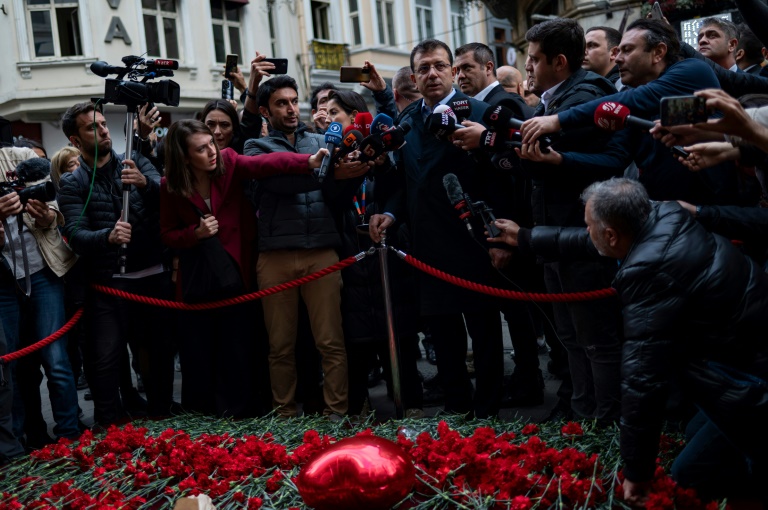
Istanbul’s popular opposition mayor faced new hearings Wednesday in a politically-charged trial that could bar him from seeking office months before next year’s general election.

Prosecutors want to sentence Ekrem Imamoglu to between 15 months and four years in jail over a remark he made after defeating President Recep Tayyip Erdogan’s ally in a hugely controversial 2019 mayoral vote.

People who are sentenced to less than four years are rarely put behind bars in Turkey.

But a conviction would disqualify Imamoglu — one of the brightest stars of Turkey’s main secular party — from politics for the duration of the sentence.

Imamoglu would continue serving as Istanbul’s mayor while his almost certain appeal wound its way through the courts.

The mayor’s team views the trial as Erdogan’s personal vendetta against one of his biggest rivals.

“Despite everything, I want to trust the judges, the prosecutors and the decision makers,” he said on the eve of Wednesday’s third hearing in the trial.

The case stems from an offhand remark Imamoglu made to reporters a few months after defeating Erdogan’s ally in a re-run election held after his first victory was annulled.

Officials reported discovering hundreds of thousands of “suspicious votes” after Erdogan refused to acknowledge Imamoglu’s initial win in a city that he himself ran before entering national politics two decades ago.

The decision backfired badly on Erdogan’s Islamic-rooted party.

Waves of protests and a groundswell of support from all political corners delivered Imamoglu an overwhelming victory in a re-run vote held that June.

Imamoglu let his frustration at the entire episode spill over a few months later by calling the people who annulled the first vote “idiots”.

Prosecutors have charged the mayor with the crime of “insulting” public officials.

Imamoglu has not personally attended the hearings and there has been no indication of how long the trial might last.

–  Divided opposition –

Imamoglu’s potential disqualification from politics comes with Turkey’s opposition parties still arguing about who should stand against Erdogan in next June’s presidential vote.

The Istanbul mayor is among a handful of opposition leaders that polls show could beat Erdogan in a head-to-head race.

Erdogan’s domination of Turkish politics has been shaken by an economic crisis made worse by his unconventional approach to interest rates.

But more recent polls show Erdogan’s ratings beginning to recover thanks to his widely-praised handling of Russia’s invasion of Ukraine.

This puts even more pressure on the opposition to put aside their personal rivalries in the election campaign.

Imamoglu’s CHP party is headed by Kemal Kilicdaroglu — a leftist former civil servant who generally performs poorly in opinion polls.

The CHP has been holding round-table talks with five smaller allies about a single candidate who would not split the anti-Erdogan vote.

Those talks have been mired by arguments over policy and general unease about fielding Kilicdaroglu instead of someone more likely to beat Erdogan.

Imamoglu’s legal troubles have effectively disqualified him from the race.

He told reporters this week that Kilicdaroglu was the only possible candidate from the CHP.

“But at the end of the day it is up to the round-table to make a decision about a single candidate,” Imamoglu said.

Asian markets extend US rally after inflation boost, eyes on Fed

Asian markets rose Wednesday and the dollar struggled to recover as investors welcomed softer-than-expected US inflation data that could allow the Federal Reserve to slow down its pace of interest rate hikes.

The reading provided some much-needed Christmas cheer on trading floors and came the day before the US central bank’s last policy decision of the year, which will be pored over for clues about its plans for 2023.

There is also some focus on China as it continues to roll back its strict zero-Covid strategy that has battered the world’s number two economy, though fears of a sharp surge in infections are causing some unease among dealers.

All three main indexes on Wall Street ended in positive territory Tuesday in reaction to data showing consumer prices rose 7.1 percent last month, less than forecast and the slowest pace since December 2021.

The reading followed an October slowdown and fuelled hopes that inflation has finally peaked, after several months of Fed rate hikes.

It “came with the caveat that it was ‘just one month of data’ but the November numbers add further weight to the interpretation that the long-awaited goods disinflation is showing up in the data,” said National Australia Bank’s Taylor Nugent.

Asian markets tracked Wall Street higher, though the gains were limited ahead of the Fed meeting with traders accepting that seven percent inflation was still very high.

Hong Kong, Tokyo, Sydney, Seoul, Singapore, Mumbai, Taipei, Manila and Bangkok all rose, while Shanghai was flat though Wellington and Jakarta dipped.

And the dollar moved only slightly after Tuesday’s retreat that came in reaction to the inflation report, with the yen, euro and pound the main beneficiaries.

London dipped as data showed UK inflation had also slowed in November, though it still remained elevated at 10.7 percent.

Paris and Frankfurt also fell.

While the Fed is widely expected to increase borrowing costs by 50 basis points Wednesday — after four successive 75-point hikes — its post-meeting statement and boss Jerome Powell’s comments are the main focus for traders.

And while the slower inflation print was welcomed, there is still concern that the US economy will tip into recession next year as rates will remain elevated until prices are brought under control and within the bank’s target of around two percent.

Silvia Dall’Angelo, at Federated Hermes, said policymakers would slow the pace of hikes so they could “assess the impact on the real economy from the large cumulative tightening that has taken place since March.

“However, the Fed will stress that it is still far from mission accomplished with respect to its fight (against) high inflation, and more hikes will follow in coming months,” she added.

“Our expectation is that while inflation will decline over 2023, it will remain above target, which will prevent the Fed from easing next year.”

Oil prices edged down slightly after rallying on the back of the weaker dollar, though Brent held above $80.

– Key figures around 0820 GMT –

Tokyo – Nikkei 225: UP 0.7 percent at 28,156.21 (close)

Hong Kong – Hang Seng Index: UP 0.4 percent at 19,673.45 (close)

Shanghai – Composite: FLAT at 3,176.53 (close)

London – FTSE 100: DOWN 0.3 percent at 7,481.69

Euro/dollar: DOWN at $1.0630 from $1.0635 on Tuesday

Dollar/yen: DOWN at 135.53 yen from 135.59 yen

Pound/dollar: DOWN at $1.2361 from $1.2366

Euro/pound: UP at 86.00 pence from 85.96 pence

West Texas Intermediate: DOWN 0.1 percent at $75.33 per barrel

Brent North Sea crude: DOWN 0.1 percent at $80.60 per barrel

New York – Dow: UP 0.3 percent at 34,108.64 (close)

Ten years after Sandy Hook, a mother's grief and healing

Jenny Hubbard struggles to believe that 10 years have passed since her six-year-old daughter’s murder at Sandy Hook Elementary during the deadliest school shooting in US history.

Catherine Violet Hubbard was among 20 children and six adults gunned down by Adam Lanza in the five-minute killing spree in Newtown, Connecticut, on December 14, 2012.

The massacre shocked America and the world, sparked heightened security measures at schools, and renewed a contentious fight for gun control laws that continues a decade later.

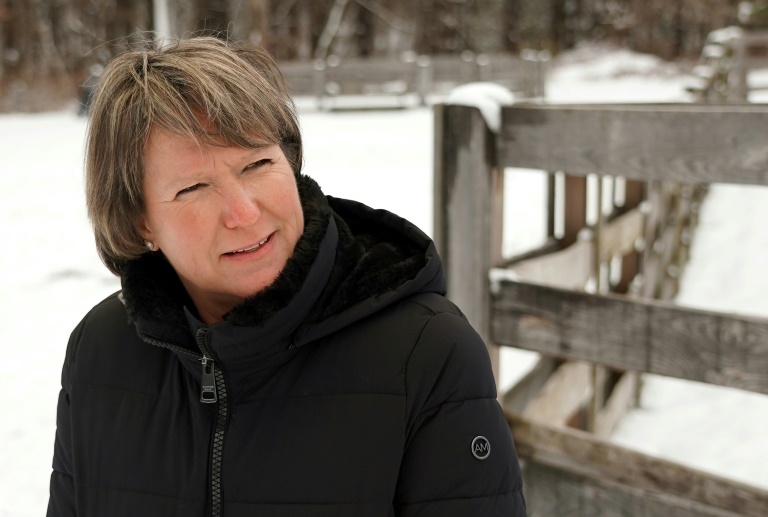
“It’s a reminder that time is so fleeting,” Hubbard, 50, says of Wednesday’s anniversary, which, like every year, will be marked with quiet reflection in the town of just 27,000 people.

“It’s been a lifetime because from that day to now, my life is totally different, and yet at the same time it was like it was yesterday,” she tells AFP. 

Hubbard remembers Catherine and her eight-year-old son’s excitement as she put them on the school bus that morning, with Christmas just around the corner.

“They were over the moon for the holidays. It was one of those mornings where I look back on, and I think it was rushed and chaotic, but it was also one of the best mornings that we had,” she recalls.

At 9:30 am (1430 GMT), 20-year-old Lanza entered the school armed with a Bushmaster AR-15 assault rifle and two pistols after shooting dead his mother at home.

“The phone call came in that something had happened, and the rest of the day was just a long fog of knowing that something terrible had happened but not understanding the magnitude of what that was,” says Hubbard.

– ‘The unthinkable loss’-

Lanza fired more than 150 times in the corridors and classrooms, killing 20 six-and-seven-year-olds, and six women who worked at the school, before committing suicide.

At a nearby firehouse, where authorities had taken children to be picked up by their parents, Hubbard learned that Catherine had died.

“Most people were just frozen. (It was) the unthinkable loss,” she says.

Slowly, over time, Hubbard says she has been able to heal, thanks to accepting the kindness of others and religious faith.

“The first step was just getting out of bed, and that was because of my son. I had to get up because he had a right to live his life. Then every single day, there was just one more step that I would take,” she says.

Difficult days include the first school day of every year and when other mass shootings occur, like at Robb Elementary School in Uvalde, Texas, in May when 19 children and two teachers were killed.

“I know that the journey that the families are about to take is not easy, and it’s lonely, and it’s dark at times,” says Hubbard.

Following Sandy Hook, described by Barack Obama as the worst day of his presidency, schools reinforced doors and windows, upped teaching children how to respond to an “active shooter,” and boosted staff training on how to barricade classrooms.

But tougher national restrictions on guns did not follow until after Uvalde, when Congress passed legislation that expanded background checks and reinforced measures to get firearms out of the hands of potentially dangerous people.

A stricter law that expired in 2004, banning military-style rifles with large capacity magazines, remains elusive amid opposition from Republicans who cite the constitutional right to gun ownership.

“Civilians should not have access to weapons that we give to armed soldiers to fight foreign enemies,” Connecticut Against Gun Violence executive director Jeremy Stein, told AFP.

– A gentle animal lover –

A circular memorial pool honoring the Sandy Hook victims opened near the school last month. Single white roses rested on each name this week.

Nearby, sits the 34-acre Catherine Violet Hubbard Animal Sanctuary that Hubbard founded in honor of her daughter, who loved animals.

Hubbard remembers Catherine as “fiercely determined,” “gentle” and “compassionate.”

Sometimes, she finds herself wanting to know what 16-year-old Catherine would be like, but tries to stop herself.

“I will never understand why that’s not possible in my life, but I carry with me the six years that she shared with me and the memories,” Hubbard says.

Close Bitnami banner
Bitnami