US Business

Ukraine secures 1 bn euros in aid 'to get through winter'

Ukraine’s Western allies pledged an additional one billion euros ($1.1 billion) in emergency winter aid on Tuesday, responding to pleas from President Volodymyr Zelensky to help the country withstand Russia’s onslaught against its energy grid.

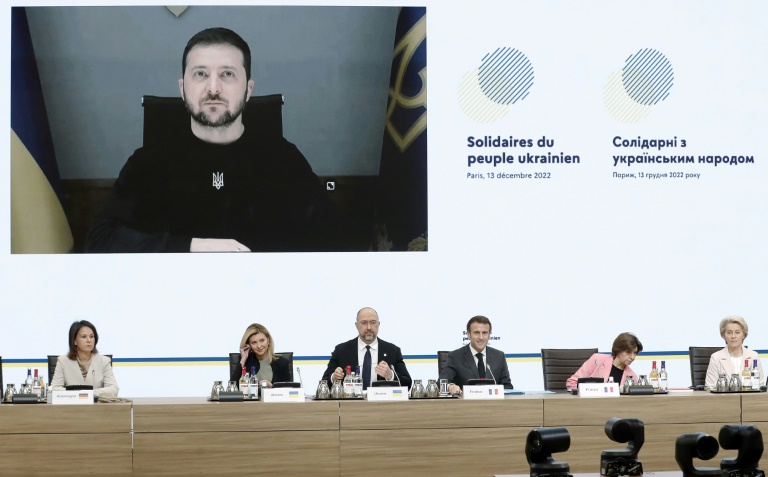
Around 70 countries and international organisations gathered in Paris for a meeting aimed at enabling Ukrainians “to get through this winter”, said French President Emmanuel Macron.

In a video message, Zelensky said Ukraine needed assistance worth around 800 million euros in the short term for its battered energy sector.

“Of course it is a very high amount, but the cost is less than the cost of a potential blackout,” Zelensky told the conference via video link.

Pledges for the energy sector comprised 400 million euros of the funds raised on Tuesday, France’s Foreign Minister Catherine Colonna said. 

Ukraine needs spare parts for repairs, high-capacity generators, extra gas as well as increased electricity imports, Zelensky said.

“Generators have become as necessary as armoured vehicles and bullet-proof jackets,” he said.

Ukrainian Prime Minister Denys Shmygal said 40 to 50 percent of the country’s grid was out of action because of Russia’s strikes.

Many areas of the country have power for only a few hours a day.

Another 1.5 million people were left without power in southern Odessa over the weekend after Russian drone attacks. 

“They want to put us into darkness and it will fail, thanks to our partners all over the world,” Shmygal told delegates.

– Bridge attack –

On the battlefield Tuesday, local authorities in the Russian-occupied city of Melitopol said pro-Kyiv forces had used explosives to damage a strategic bridge.

Melitopol is an important transport hub for Russian forces in the region of Zaporizhzhia and is key for Ukraine’s hopes of liberating the south of the country.

The bridge in the eastern suburbs “was damaged by terrorists”, Vladimir Rogov, a Moscow-installed regional official, said on the Telegram messaging app.

He did not specify the extent of the damage, but images on his social media accounts showed that a middle section of the bridge had collapsed.

Elsewhere on Tuesday, Belarus held a surprise inspection of its armed forces, raising fears of a possible escalation in the conflict.

Belarus is a close ally of Moscow, but Belarusian leader Alexander Lukashenko has repeatedly said he does not plan to send Belarusian troops to Ukraine.

Ukrainian PM Shmygal also said Tuesday that the UN nuclear watchdog IAEA had agreed to dispatch permanent teams to monitor the country’s nuclear plants.

They are expected to take up positions in the Russian-controlled Zaporizhzhia plant, a hotspot of fighting, which has been a source of global concern in recent months.

A deal to de-militarise the site, which would see both sides withdraw forces, has proved impossible so far despite international diplomatic efforts.

– ‘War crimes’ – 

Tuesday’s conference in Paris, titled “Standing with the Ukraine People,” also saw the launch of a new so-called Paris Mechanism to coordinate civilian aid to Ukraine.

The digital platform, announced by G7 leaders on Monday, will enable Ukraine to list its requirements and allow international donors to coordinate their responses in real-time.

“A large number of countries will use this mechanism — all the members to the European Union, but it will go beyond to other partners, including non-European partners,” Colonna told reporters.

A similar platform exists for military aid, which is coordinated via meetings of Ukraine’s Western allies at the US-run Ramstein military base in Germany.

Macron hosted Tuesday’s conference alongside Zelensky’s wife Olena, giving the French leader an opportunity to reaffirm his support for Kyiv.

He condemned Russia’s “cynical” and “cowardly” attacks on Ukrainian civilian infrastructure. 

“These strikes… which Russia openly admits are designed to break the resistance of the Ukrainian people, are war crimes,” Macron said in his opening address.

“They violate without any doubt the most basic principles of humanitarian law,” he said. 

“These acts are intolerable and will not go unpunished.”

The French president has riled some of his allies in Kyiv in the past, most notably in June when he said “we must not humiliate Russia”.

On December 3, he also called for Russia to be offered “security guarantees” at the end of the war, drawing criticism from some Ukrainian and eastern European politicians who believe the focus should be on pushing back Moscow’s forces militarily.

– Mine clearance –

In a video address to the New Zealand parliament on Wednesday, Zelensky appealed to Wellington — whose military has extensive experience in mine clearing — for long-term help in clearing mines in war-ravaged Ukraine.

“As of now, 174,000 square kilometres (67,000 square miles) of Ukrainian territory are contaminated with mines and unexploded ordnance,” Zelensky said, calling Russia’s nearly year-old invasion as an “ecocide” that would have a lasting impact. 

“There is no real peace for any child who can die from a hidden Russian antipersonnel mine.”

In Russia, the Kremlin announced that Putin will not hold his annual end-of-year press conference this year, a break with tradition.

Kremlin spokesman Dmitry Peskov gave no reason for not holding the event that Putin has hosted almost every year he has been in power since 2000.
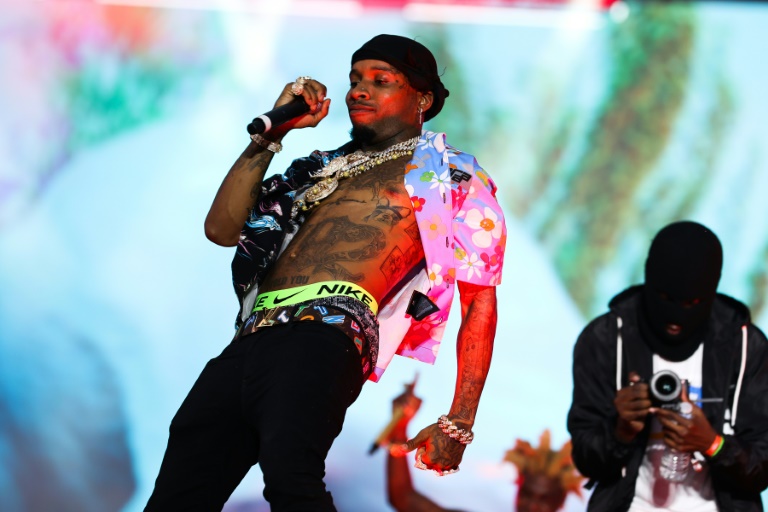
Tory Lanez offered Megan Thee Stallion $1m over shooting, court hears

Canadian rapper Tory Lanez offered Megan Thee Stallion $1 million not to tell police he had shot her feet, she told a Los Angeles court on Tuesday.

Lanez, whose real name is Daystar Peterson, denies a raft of charges relating to a 2020 dispute with the rap queen, including assault with a semiautomatic firearm and using a firearm to inflict great bodily injury.

The “WAP” hitmaker said she had been in a car with Lanez, his bodyguard and her friend Kelsey Harris after a party at Kylie Jenner’s Hollywood home in July of that year when an argument erupted.

Megan Thee Stallion — whose real name is Megan Pete — said she and Lanez had become close in the months before the incident, and occasionally had sex.

Harris, who only learned of the sexual relationship that night, had a “crush” on Lanez, the witness said, and an argument then erupted in the car, with Megan Thee Stallion demanding to be let out of the vehicle.

The “Savage” singer said she saw Lanez pointing a gun at her and opening fire “after he said, ‘Dance, bitch.'”

“I’m in shock. I’m scared. I hear the gun going off and I can’t believe he’s shooting at me,” she told the court.

“I did not know he had a gun that night.”

In pain and bleeding from both feet, Megan Thee Stallion — who was wearing only a thong bikini — eventually agreed to get back into the car.

“He started apologizing,” she said, and said to her “‘Don’t say anything and I’ll give you a million dollars.'”

Police stopped the car a short time later, and Megan Thee Stallion was transported to a hospital for treatment, telling police that she had cut her feet on broken glass.

The “Hot Girl Summer” artist said in mid-2020 — in the wake of the police killings of George Floyd and Breonna Taylor — she did not want to talk to officers.

“At the time, we are at the height of police brutality… I felt like if I said this man has just shot me, they might shoot first and ask questions later,” she said.

“I don’t feel safe in the car. I don’t feel safe with the police officers either.”

And, she added “in the Black community, it’s not really acceptable to be cooperating with police officers.”

The trial in downtown Los Angeles earlier heard how a gun that was still warm to the touch was found on the floor near where Lanez had been sitting.

Lanez and Harris both subsequently tested positive for gunshot residue, a prosecutor said.

Megan Thee Stallion told the court she felt she had “been turned into some kind of villain,” in the wake of the shooting, with the male-dominated rap world frequently seeming to be against her.

But she also acknowledged that she had lied on television when she denied having an intimate relationship with Lanez.

“I kept the sexual relationship out of it because it had nothing to do with the shooting,” she said, but she agreed the argument began after the relationship was mentioned in front of her then-best friend and personal assistant, Harris, who was sweet on her alleged attacker.

For Lanez, attorney George Mgdesyan said Monday that the jury needed to keep an open mind.

He insisted this was a “case about jealousy,” and that he would prove the accusations against his client were lies.

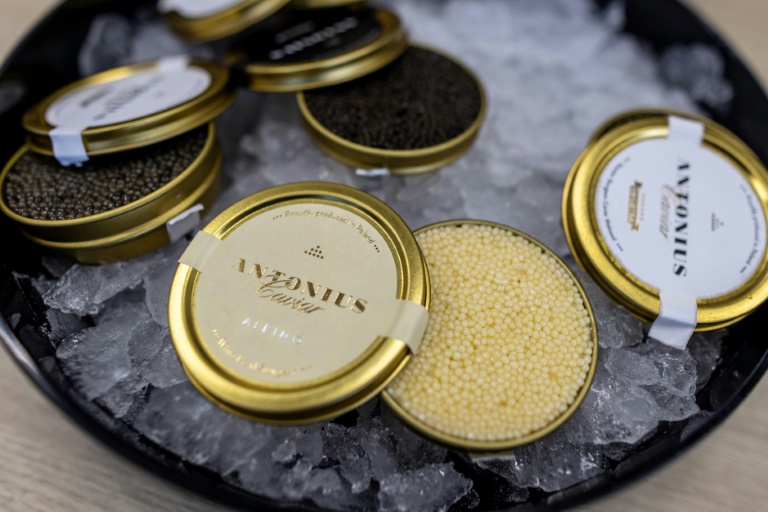
Polish fish farm fights 'myth of Russian caviar'

With Moscow blacklisted since it invaded Ukraine, Europe’s main producer of caviar wants to put an end, once and for all, to the delicacy’s traditional association with Russia.

“For most people, caviar means Russia, but that hasn’t been the case for a long time now,” said Agata Lakomiak-Winnicka, marketing and sales manager for Poland’s Antonius Caviar. 

Based in the northeastern village of Rus, the company is one of the world’s top makers of the luxury food, having produced 42 tonnes of black caviar last year — more than any one firm in Italy or France and almost as much as those in China.

“We used to get clients who couldn’t locate Poland on a map. Today we’re on a whole different level,” Lakomiak-Winnicka said.

The company exports mostly to the United Arab Emirates, the United States, France and Denmark and also supplies Michelin-starred restaurants around the world.

Retail prices range from 1,200 to 2,400 euros ($1,275-2,550) for sturgeon caviar and up to 8,000 euros for the albino kind.

The company’s challenge now, one faced by producers worldwide, is the battle against “the myth of Russian caviar”. 

“Take any box of caviar that reads ‘Russian tradition’ or ‘Russian method’ and you’ll see that 99 percent of the time it doesn’t actually come from Russia,” Lakomiak-Winnicka said. 

– Russia boycott –

Traditionally, caviar was made from eggs from wild sturgeon in the Caspian and Black seas with the best-known producers in Russia and Iran.

But years of overfishing and pollution left the sturgeon at risk of extinction, and it is now a protected species. 

Most caviar today is produced on fish farms and has nothing to do with Russia.

But consumers still associate the two — a challenge for those who out of solidarity for Ukraine no longer want to buy Russian.

“Because of the war… clients ask about the provenance of the caviar,” said Wiktoria Yerystova-Rostkowska, who owns a Russian shop outside Warsaw.

“They want good caviar but it can’t be Russian,” she told AFP, adding that she sources hers from Germany.

The EU and United States have banned Russian caviar as part of their sanctions against Moscow, but it was already practically impossible to buy due to restrictions to protect wild sturgeon.

– Aquaculture –

The green and black boxes of caviar are on display in the shop window. 

Featuring a drawing of the fish, the label reads “malossol” — the Russian for “lightly salted” and the name of the traditional method used to preserve caviar.

Yerystova-Rostkowska said the boycott of Russian products has left her struggling to stay open.

“It’s no longer profitable. I’m down 80 percent in revenue,” she said. 

Lakomiak-Winnicka for her part sees the boycott as an opportunity. 

“It’s a chance to explain that caviar no longer comes from Russia,” she said.

It has been years since wild Russian caviar was available on the international market.

“The Caspian Sea no longer has any importance in caviar production,” said Antonius head Marek Szczukowski.

“The vast majority of caviar sold around the world is derived from aquaculture,” including in Russia, he added.

– Sturgeon ‘on vacation’ –

On the Antonius fish farm in Rus, thousands of sturgeon — some more than a metre (three feet) in length — swim around in canals fed by the crystal clear water of a nearby river.

The company initially farmed trout there, but because of climate change they switched to sturgeon, which prefer warmer water.

“The sturgeon are on vacation here, like they’re in Hawaii,” Szczukowski said. 

The caviar is harvested after the fish reach maturity, with the entire operation taking under 20 minutes.  

Workers extract the caviar, wash and salt it, then box it up.

The label reads: “Proudly produced in Poland”. 

It used to also include the word “Russian” — to denote the fish species — but from now on it will just say “sturgeon caviar”. 

“At the express request of clients, we’re changing the labels, leaving no room for doubt,” Lakomiak-Winnicka said.  

US charges crypto tycoon Bankman-Fried with 'massive' fraud

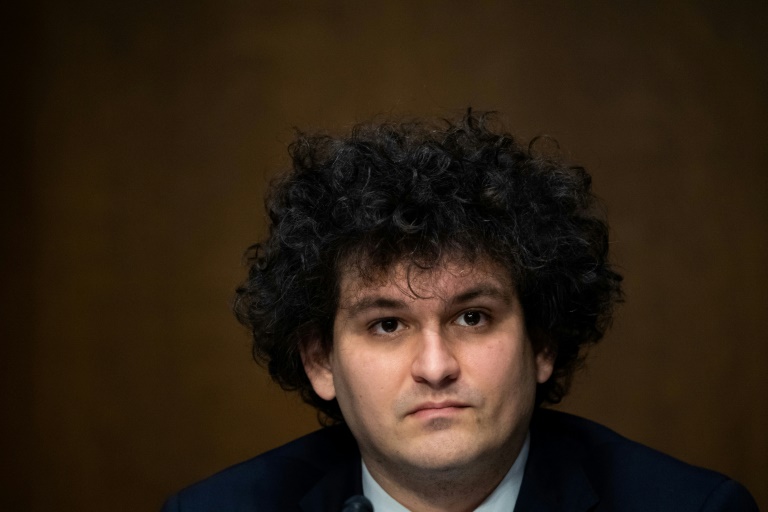
Disgraced cryptocurrency tycoon Sam Bankman-Fried was hit with multiple criminal charges Tuesday, accused of committing one of the biggest financial frauds in US history.

The 30-year-old founder of the FTX platform, who was arrested in the Bahamas Monday at the request of the United States, is facing a raft of accusations, including from US market regulators who say that the investor knowingly built a fraudulent house of cards.

A Bahamian judge denied Bankman-Fried bail and remanded him into custody as the one-time high-flyer began to battle his extradition in a Nassau court room, with his parents looking on.

A new Bahamas court date to examine the US request for extradition was set for February 8, local media reported. 

Given the seriousness of the accusations, legal analysts said that Bankman-Fried risked as much as life in prison, recalling the fate of financier Bernie Madoff who died in a US prison last year after running the largest Ponzi scheme in US history.

In their indictment, US prosecutors said Bankman-Fried also carried out money laundering, violated campaign finance laws and committed wire fraud since the start of his company in 2019.

“It’s hard to compare these things, but this is one of the biggest financial frauds in American history,” said US Attorney Damian Williams when asked to compare the case to the Madoff affair.

When asked if further charges against other individuals would be forthcoming, Williams added: “I can only say this: Clearly, we are not done.”

– ‘Massive fraud’ –

Bankman-Fried “was orchestrating a massive, years-long fraud, diverting billions of dollars of the trading platform’s customer funds for his own personal benefit and to help grow his crypto empire,” prosecutors said.

The legal hammer fell after the 30-year-old spent weeks defying legal advice and made multiple media appearances defending his actions, usually by video link from the Bahamas, where his company is headquartered.

“Mr. Bankman-Fried is reviewing the charges with his legal team and considering all of his legal options,” his lawyer Mark Cohen said in a statement.

Bankman-Fried had embodied the emergence of cryptocurrency as an above-board investment rather than a dodgy get-rich-quick scheme for high-risk investors.

His FTX platform was plugged by celebrities in advertising campaigns and he became a regular presence in Washington, where he donated tens of millions of dollars in political contributions, mainly to the Democratic Party.

But after reaching a valuation of $32 billion, FTX’s implosion was swift following a November 2 media report on ties between FTX and Alameda, a trading company also controlled by Bankman-Fried.

The report exposed that Alameda’s balance sheet was heavily built on the FTT currency — a token created by FTX with no independent value — and exposed Bankman-Fried’s companies as being dangerously interlinked.

– ‘Grossly inexperienced’ –

Reeling from customer withdrawals and short some $8 billion, FTX and around 100 related entities filed for bankruptcy protection on November 11, inviting scrutiny from regulators, prosecutors and furious clients.

“If convicted he could be facing the rest of his life in prison, given the dollar amount of the fraud,” Jacob S. Frenkel, a former federal criminal prosecutor at Dickinson Wright, told AFP.

“We would not see an indictment if prosecutors were not absolutely convinced that they will win a conviction.”

In his media interviews, Bankman-Fried has admitted to mistakes, but has denied intent to defraud his customers.

FTX CEO John Ray, who came to the company after the debacle, told Congress on Tuesday that the problems arose because control was “in the hands of a very small group of grossly inexperienced and unsophisticated individuals.”

“Never in my career have I seen such an utter failure of corporate controls at every level of an organization, from the lack of financial statements to a complete failure of any internal controls or governance whatsoever,” Ray said.

The fall of FTX has caused major doubts about the long term viability of cryptocurrency and heaped stress on other platforms and entities that rode the success of Bitcoin and other currencies.

US charges crypto tycoon Bankman-Fried with 'massive' fraud

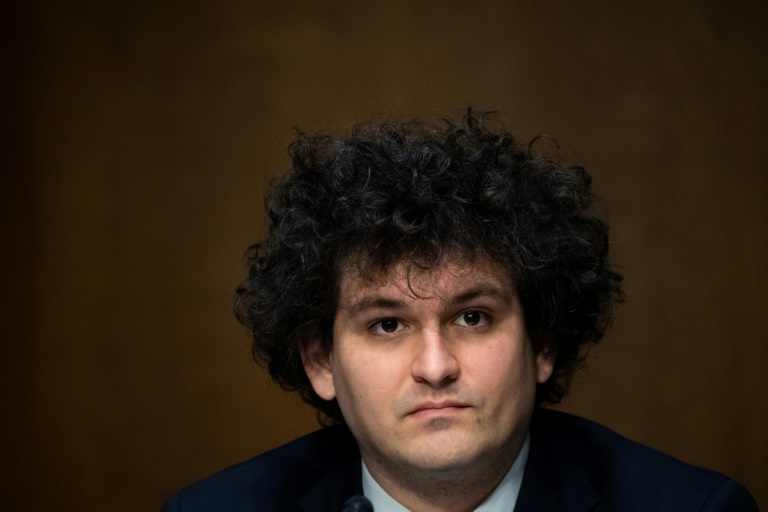
Disgraced cryptocurrency tycoon Sam Bankman-Fried was hit with multiple criminal charges Tuesday, accused of committing one of the biggest financial frauds in US history.

The 30-year-old founder of the FTX platform, who was arrested in the Bahamas Monday at the request of the United States, is facing a raft of accusations, including from US market regulators who say that the investor knowingly built a fraudulent house of cards.

A Bahamian judge denied Bankman-Fried bail and remanded him into custody as the one-time high-flyer began to battle his extradition in a Nassau court room, with his parents looking on.

A new Bahamas court date to examine the US request for extradition was set for February 8, local media reported. 

Given the seriousness of the accusations, legal analysts said that Bankman-Fried risked as much as life in prison, recalling the fate of financier Bernie Madoff who died in a US prison last year after running the largest Ponzi scheme in US history.

In their indictment, US prosecutors said Bankman-Fried also carried out money laundering, violated campaign finance laws and committed wire fraud since the start of his company in 2019.

“It’s hard to compare these things, but this is one of the biggest financial frauds in American history,” said US Attorney Damian Williams when asked to compare the case to the Madoff affair.

When asked if further charges against other individuals would be forthcoming, Williams added: “I can only say this: Clearly, we are not done.”

– ‘Massive fraud’ –

Bankman-Fried “was orchestrating a massive, years-long fraud, diverting billions of dollars of the trading platform’s customer funds for his own personal benefit and to help grow his crypto empire,” prosecutors said.

The legal hammer fell after the 30-year-old spent weeks defying legal advice and made multiple media appearances defending his actions, usually by video link from the Bahamas, where his company is headquartered.

“Mr. Bankman-Fried is reviewing the charges with his legal team and considering all of his legal options,” his lawyer Mark Cohen said in a statement.

Bankman-Fried had embodied the emergence of cryptocurrency as an above-board investment rather than a dodgy get-rich-quick scheme for high-risk investors.

His FTX platform was plugged by celebrities in advertising campaigns and he became a regular presence in Washington, where he donated tens of millions of dollars in political contributions, mainly to the Democratic Party.

But after reaching a valuation of $32 billion, FTX’s implosion was swift following a November 2 media report on ties between FTX and Alameda, a trading company also controlled by Bankman-Fried.

The report exposed that Alameda’s balance sheet was heavily built on the FTT currency — a token created by FTX with no independent value — and exposed Bankman-Fried’s companies as being dangerously interlinked.

– ‘Grossly inexperienced’ –

Reeling from customer withdrawals and short some $8 billion, FTX and around 100 related entities filed for bankruptcy protection on November 11, inviting scrutiny from regulators, prosecutors and furious clients.

“If convicted he could be facing the rest of his life in prison, given the dollar amount of the fraud,” Jacob S. Frenkel, a former federal criminal prosecutor at Dickinson Wright, told AFP.

“We would not see an indictment if prosecutors were not absolutely convinced that they will win a conviction.”

In his media interviews, Bankman-Fried has admitted to mistakes, but has denied intent to defraud his customers.

FTX CEO John Ray, who came to the company after the debacle, told Congress on Tuesday that the problems arose because control was “in the hands of a very small group of grossly inexperienced and unsophisticated individuals.”

“Never in my career have I seen such an utter failure of corporate controls at every level of an organization, from the lack of financial statements to a complete failure of any internal controls or governance whatsoever,” Ray said.

The fall of FTX has caused major doubts about the long term viability of cryptocurrency and heaped stress on other platforms and entities that rode the success of Bitcoin and other currencies.

Asian markets extend US rally after inflation boost, eyes on Fed

Asian markets rose Wednesday and the dollar struggled to recover as investors welcomed softer-than-expected US inflation data that could allow the Federal Reserve to slow down its pace of interest rate hikes.

The reading provided some much-needed Christmas cheer on trading floors and came the day before the US central bank’s last policy decision of the year, which will be pored over for clues about its plans for 2023.

There is also some focus on China as it continues to roll back its strict zero-Covid strategy that has battered the world’s number two economy, though fears of a sharp surge in infections is causing some unease among dealers.

All three main indexes on Wall Street ended in positive territory Tuesday in reaction to data showing consumer prices rose 7.1 percent last month, less than forecast and the slowest pace since December 2021.

The reading followed an October slowdown and fuelled hopes that inflation has finally peaked, after several months of Fed rate hikes.

“Last month’s positive surprise came with the caveat that it was ‘just one month of data’ but the November numbers add further weight to the interpretation that the long-awaited goods disinflation is showing up in the data,” said National Australia Bank’s Taylor Nugent.

Asian markets tracked Wall Street higher, though the gains were limited ahead of the Fed meeting.

Hong Kong, Tokyo, Shanghai, Sydney, Seoul, Singapore, Taipei, Manila and Jakarta all rose.

And the dollar held the losses suffered Tuesday in reaction to the inflation report, with the yen, euro and pound the main beneficiaries.

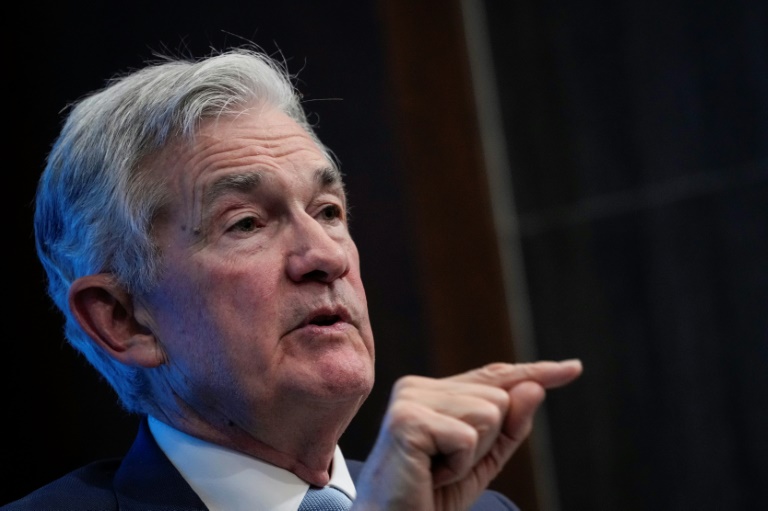
While the Fed is widely expected to increase borrowing costs 50 basis points Wednesday — after four successive 75-point rises — its post-meeting statement and boss Jerome Powell’s comments are the main focus for traders.

And while the slower inflation print was welcomed, there is still a growing concern among investors that the US economy will tip into recession next year as rates will remain elevated until prices are brought under control and within the bank’s target around two percent.

Silvia Dall’Angelo, at Federated Hermes, said monetary policymakers would slow the pace of hikes so they could “assess the impact on the real economy from the large cumulative tightening that has taken place since March.

“However, the Fed will stress that it is still far from mission accomplished with respect to its fight (against) high inflation, and more hikes will follow in coming months,” she added.

“Our expectation is that while inflation will decline over 2023, it will remain above target, which will prevent the Fed from easing next year.”

Oil prices edged down slightly after rallying on the back of the weaker dollar, though Brent held above $80.

– Key figures around 0230 GMT –

Tokyo – Nikkei 225: UP 0.7 percent at 28,141.41 (break)

Hong Kong – Hang Seng Index: UP 0.3 percent at 19,662.40

Shanghai – Composite: UP 0.1 percent at 3,178.01

Euro/dollar: DOWN at $1.0633 from $1.0635 on Tuesday

Dollar/yen: DOWN at 135.44 yen from 135.59 yen

Pound/dollar: DOWN at $1.2353 from $1.2366

Euro/pound: UP at 86.08 pence from 85.96 pence

West Texas Intermediate: DOWN 0.5 percent at $75.00 per barrel

Brent North Sea crude: DOWN 0.6 percent at $80.18 per barrel

New York – Dow: UP 0.3 percent at 34,108.64 (close)

London – FTSE 100: UP 0.8 percent at 7,502.89 (close)

Ten years after Sandy Hook, a mother's grief and healing

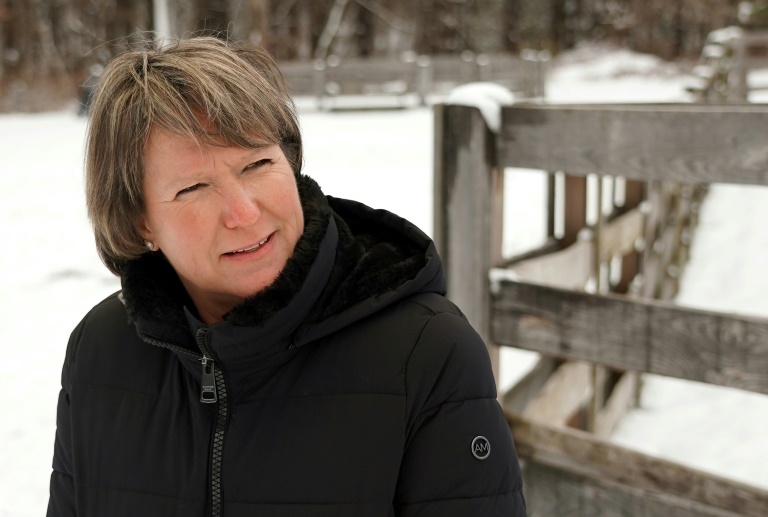
Jenny Hubbard struggles to believe that 10 years have passed since her six-year-old daughter’s murder at Sandy Hook Elementary during the deadliest school shooting in US history.

Catherine Violet Hubbard was among 20 children and six adults gunned down by Adam Lanza in the five-minute killing spree in Newtown, Connecticut, on December 14, 2012.

The massacre shocked America and the world, sparked heightened security measures at schools, and renewed a contentious fight for gun control laws that continues a decade later.

“It’s a reminder that time is so fleeting,” Hubbard, 50, says of Wednesday’s anniversary, which, like every year, will be marked with quiet reflection in the town of just 27,000 people.

“It’s been a lifetime because from that day to now, my life is totally different, and yet at the same time it was like it was yesterday,” she tells AFP. 

Hubbard remembers Catherine and her eight-year-old son’s excitement as she put them on the school bus that morning, with Christmas just around the corner.

“They were over the moon for the holidays. It was one of those mornings where I look back on, and I think it was rushed and chaotic, but it was also one of the best mornings that we had,” she recalls.

At 9:30 am (1430 GMT), 20-year-old Lanza entered the school armed with a Bushmaster AR-15 assault rifle and two pistols after shooting dead his mother at home.

“The phone call came in that something had happened, and the rest of the day was just a long fog of knowing that something terrible had happened but not understanding the magnitude of what that was,” says Hubbard.

– ‘The unthinkable loss’-

Lanza fired more than 150 times in the corridors and classrooms, killing 20 six-and-seven-year-olds, and six women who worked at the school, before committing suicide.

At a nearby firehouse, where authorities had taken children to be picked up by their parents, Hubbard learned that Catherine had died.

“Most people were just frozen. (It was) the unthinkable loss,” she says.

Slowly, over time, Hubbard says she has been able to heal, thanks to accepting the kindness of others and religious faith.

“The first step was just getting out of bed, and that was because of my son. I had to get up because he had a right to live his life. Then every single day, there was just one more step that I would take,” she says.

Difficult days include the first school day of every year and when other mass shootings occur, like at Robb Elementary School in Uvalde, Texas, in May when 19 children and two teachers were killed.

“I know that the journey that the families are about to take is not easy, and it’s lonely, and it’s dark at times,” says Hubbard.

Following Sandy Hook, described by Barack Obama as the worst day of his presidency, schools reinforced doors and windows, upped teaching children how to respond to an “active shooter,” and boosted staff training on how to barricade classrooms.

But tougher national restrictions on guns did not follow until after Uvalde, when Congress passed legislation that expanded background checks and reinforced measures to get firearms out of the hands of potentially dangerous people.

A stricter law that expired in 2004, banning military-style rifles with large capacity magazines, remains elusive amid opposition from Republicans who cite the constitutional right to gun ownership.

“Civilians should not have access to weapons that we give to armed soldiers to fight foreign enemies,” Connecticut Against Gun Violence executive director Jeremy Stein, told AFP.

– A gentle animal lover –

A circular memorial pool honoring the Sandy Hook victims opened near the school last month. Single white roses rested on each name this week.

Nearby, sits the 34-acre Catherine Violet Hubbard Animal Sanctuary that Hubbard founded in honor of her daughter, who loved animals.

Hubbard remembers Catherine as “fiercely determined,” “gentle” and “compassionate.”

Sometimes, she finds herself wanting to know what 16-year-old Catherine would be like, but tries to stop herself.

“I will never understand why that’s not possible in my life, but I carry with me the six years that she shared with me and the memories,” Hubbard says.

US Fed expected to slow pace of rate hikes as inflation eases

US central bankers open the second day of a key policy meeting Wednesday, with mounting anticipation of a smaller hike to its benchmark lending rate as inflation showed signs of easing.

The Federal Reserve has embarked on an all-out campaign to cool demand in the world’s biggest economy, raising rates six times this year with interest-sensitive sectors like housing already reeling from tightening policy.

But there have been positive signs, with consumer inflation in the United States easing in November, according to government data released Tuesday.

The consumer price index, a key gauge of inflation, logged its smallest annual increase in nearly a year, fueling optimism that the Fed could soon moderate its efforts.

Households have been squeezed by red-hot prices, with conditions worsened by surging food and energy costs after Russia’s invasion of Ukraine, and fallout from China’s zero-Covid measures.

To make borrowing more expensive, the Fed has raised interest rates six times, including four bumper 0.75-point increases, bringing the rate to between 3.75 percent and four percent.

Analysts widely expect the Fed to adopt a smaller, half-point hike on Wednesday, with Ian Shepherdson of Pantheon Macroeconomics calling it a “a done deal” in an analysis.

While this marks a step down from earlier 0.75-point increases, it would still be a steep jump.

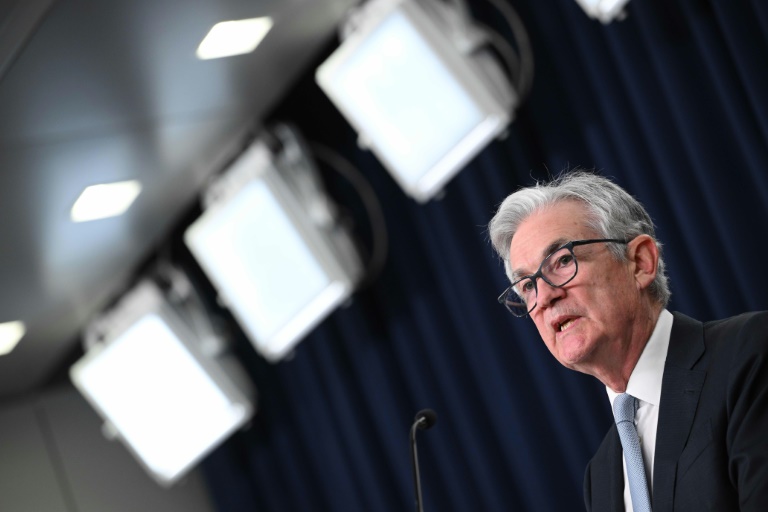
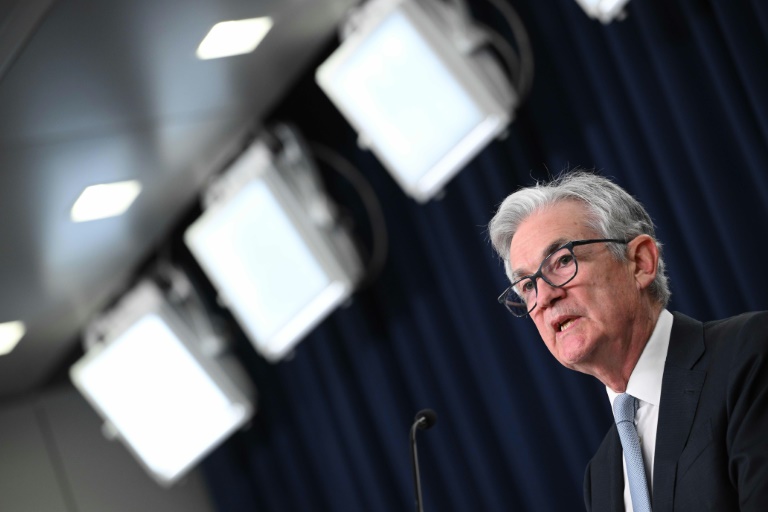
Shepherdson cautioned that Fed Chair Jerome Powell is “in no hurry to say what markets want to hear.”

“(Powell) is unlikely to deviate from his clear line that the Fed will do whatever is necessary to squeeze out inflation, and that some pain will be necessary,” Shepherdson added.

– ‘Not yet proof’ –

Recent easing in inflation data is welcome news to policymakers, but this is “not yet proof that inflation has sustainably cooled to levels consistent with the inflation target,” cautioned economist Edoardo Campanella of UniCredit Bank in a note.

The Fed has a longer-term inflation target of two percent.

“The Fed will likely further slow the pace of rate hikes early next year to 25 basis points,” Campanella added.

“However, with the labor market still very tight… and with broad financial conditions easing, the Fed will likely say that their job is not done,” he said.

Neil Saunders, managing director of GlobalData, added that the Fed is taking a “hawkish view on inflation” and will likely conclude further tightening is needed, based on the continued strength of underlying demand in the economy.

“As much as this action may have the desired effect, it will cool the economy at a time when it is already under pressure heading into 2023,” said Saunders.

The Fed’s further rate hike will also mark “a new phase” in its tightening cycle, said Nationwide chief economist Kathy Bostjancic in a note Monday.

This comes as officials look to adjust policy now that it is “within the range considered restrictive.”

Financial markets will be watching for signals of how high rates might go, and “the path for rates beyond that peak,” she added.

US Fed expected to slow pace of rate hikes as inflation eases

US central bankers open the second day of a key policy meeting Wednesday, with mounting anticipation of a smaller hike to its benchmark lending rate as inflation showed signs of easing.

The Federal Reserve has embarked on an all-out campaign to cool demand in the world’s biggest economy, raising rates six times this year with interest-sensitive sectors like housing already reeling from tightening policy.

But there have been positive signs, with consumer inflation in the United States easing in November, according to government data released Tuesday.

The consumer price index, a key gauge of inflation, logged its smallest annual increase in nearly a year, fueling optimism that the Fed could soon moderate its efforts.

Households have been squeezed by red-hot prices, with conditions worsened by surging food and energy costs after Russia’s invasion of Ukraine, and fallout from China’s zero-Covid measures.

To make borrowing more expensive, the Fed has raised interest rates six times, including four bumper 0.75-point increases, bringing the rate to between 3.75 percent and four percent.

Analysts widely expect the Fed to adopt a smaller, half-point hike on Wednesday, with Ian Shepherdson of Pantheon Macroeconomics calling it a “a done deal” in an analysis.

While this marks a step down from earlier 0.75-point increases, it would still be a steep jump.

Shepherdson cautioned that Fed Chair Jerome Powell is “in no hurry to say what markets want to hear.”

“(Powell) is unlikely to deviate from his clear line that the Fed will do whatever is necessary to squeeze out inflation, and that some pain will be necessary,” Shepherdson added.

– ‘Not yet proof’ –

Recent easing in inflation data is welcome news to policymakers, but this is “not yet proof that inflation has sustainably cooled to levels consistent with the inflation target,” cautioned economist Edoardo Campanella of UniCredit Bank in a note.

The Fed has a longer-term inflation target of two percent.

“The Fed will likely further slow the pace of rate hikes early next year to 25 basis points,” Campanella added.

“However, with the labor market still very tight… and with broad financial conditions easing, the Fed will likely say that their job is not done,” he said.

Neil Saunders, managing director of GlobalData, added that the Fed is taking a “hawkish view on inflation” and will likely conclude further tightening is needed, based on the continued strength of underlying demand in the economy.

“As much as this action may have the desired effect, it will cool the economy at a time when it is already under pressure heading into 2023,” said Saunders.

The Fed’s further rate hike will also mark “a new phase” in its tightening cycle, said Nationwide chief economist Kathy Bostjancic in a note Monday.

This comes as officials look to adjust policy now that it is “within the range considered restrictive.”

Financial markets will be watching for signals of how high rates might go, and “the path for rates beyond that peak,” she added.

Vietnam factory workers laid off as West cuts imports

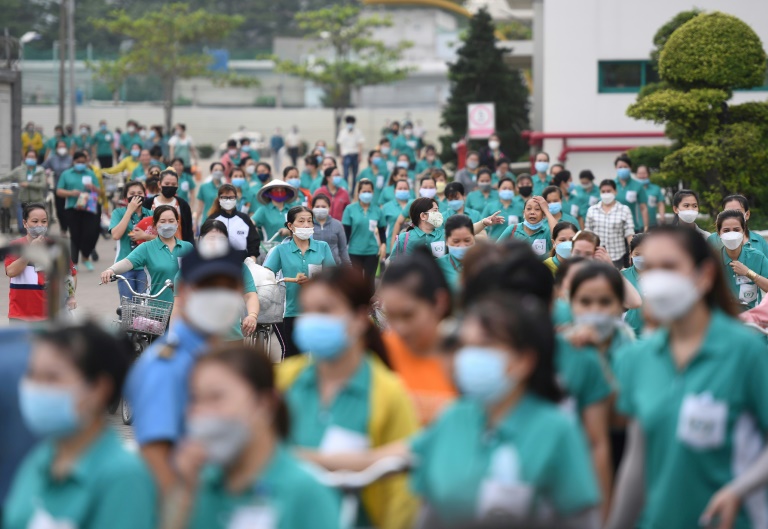
Phan Thi Nhieu has spent a decade assembling shoes for worldwide brands such as Timberland and K-Swiss, but she is now among tens of thousands of Vietnamese factory workers laid off as Western consumers cut spending.

Almost half a million others have been forced to work fewer hours as orders fall in the Southeast Asian country, one of the world’s largest exporters of clothing, footwear and furniture.

The cost-of-living crisis in Europe and the United States — major markets for Vietnamese-produced goods — has seen the buying power of Western shoppers plunge.

Women factory workers, who make up 80 percent of the labour force in Vietnam’s garment industry, have been hit the hardest by the knock-on effect.

Early last month, 31-year-old Nhieu — who lives in a nine-square-metre (100 square feet) room in Ho Chi Minh City with her two young sons and husband — was told she was no longer needed at Ty Hung Company, a Taiwanese shoemaker that supplies big Western labels.

“They told us they did not have enough orders,” she said of Ty Hung’s announcement that it would fire 1,200 of its 1,800 staff. 

“I was so, so shocked and so scared, I cried, but I can do nothing, I have to accept it.”

The job earned Nhieu just $220 a month in an expensive city where the average monthly income is $370, but the money was regular and a step up from the mushroom picking she did as a teenager in the heat of the Mekong Delta.

– ‘Worse than Covid’ –

Now, with just two months’ severance pay to survive on, Nhieu must feed her family on a few dollars a day, and her kids are struggling to get enough to eat.

“We have no one to help us. I will have to get us through this on my own.”

Since September, more than 1,200 companies — mostly foreign businesses in the garment, footwear and furniture sectors — have been forced to sack staff or cut working hours, according to the Vietnam General Confederation of Labour. 

Compared with last year, orders are down 30-40 percent from the United States and 60 percent from Europe, where inflation and energy bills have soared because of the war in Ukraine.

More than 470,000 workers have had their hours slashed in the last four months of the year while about 40,000 people have lost their jobs — 30,000 of them women aged 35 or older, the confederation said.

Taiwanese giant Pouyuen, a Nike shoe producer, has put 20,000 of its workers on paid leave in rotation, while reports said Vietnam’s largest foreign investor, Samsung Electronics, has started reducing its smartphone production at factories in the north.

The situation is bleaker than during the Covid-19 pandemic, say workers, who were helped out with food donations when strict quarantine measures forced them to stay home — and were quickly in demand again once restrictions lifted at the end of 2021.

“It’s not easy to find a new job like before (following the pandemic),” said Nguyen Thi Thom, 35, who was laid off from a South Korean garment firm that makes clothes for US retail giant Walmart.

– No dream –

Since her factory work finished, Thom, who has three young children, spends her days on the streets of a shiny new suburban district of Ho Chi Minh City, selling dried noodles, shrimp sauce and oranges to passers-by.

The slowdown has come as a shock because export businesses in Vietnam were running at “their fullest capacity” for the first half of 2022, according to Tran Viet Anh, deputy head of Ho Chi Minh City’s Business Association. 

“At the start of the third quarter, due to global inflation, consumption demands have shrunk, leading to the suspension of orders… and huge stock surplus,” he told AFP.

But the downturn in Vietnam will likely only be temporary, Viet Anh added. 

A cut in production during the pandemic led to a shortage of goods in the first six months of 2022, and the situation will likely repeat a year on.

Viet Anh said that “2023 will be a period where we increase production to compensate”.

Until then, women like Nhieu and Thom, who form the backbone of a low-paid workforce that has helped Vietnam become a key manufacturing hub seen as an alternative to China, must find another way to keep their families afloat.

“I have never had the luxury of dreaming what I want from life. I have only one wish, of earning enough to survive,” Nhieu said.

Close Bitnami banner
Bitnami