US Business

As chatbot sophistication grows, AI debate intensifies

California start-up OpenAI has released a chatbot capable of answering a variety of questions, but its impressive performance has reopened the debate on the risks linked to artificial intelligence (AI) technologies.

The conversations with ChatGPT, posted on Twitter by fascinated users, show a kind of omniscient machine, capable of explaining scientific concepts and writing scenes for a play, university dissertations or even functional lines of computer code.

“Its answer to the question ‘what to do if someone has a heart attack’ was incredibly clear and relevant,” Claude de Loupy, head of Syllabs, a French company specialized in automatic text generation, told AFP.

“When you start asking very specific questions, ChatGPT’s response can be off the mark,” but its overall performance remains “really impressive,” with a “high linguistic level,” he said. 

OpenAI, cofounded in 2015 in San Francisco by billionaire tech mogul Elon Musk, who left the business in 2018, received $1 billion from Microsoft in 2019. 

The start-up is best known for its automated creation software: GPT-3 for text generation and DALL- E for image generation.

ChatGPT is able to ask its interlocutor for details, and has fewer strange responses than GPT-3, which, in spite of its prowess, sometimes spits out absurd results, said De Loupy.  

– Cicero –

“A few years ago chatbots had the vocabulary of a dictionary and the memory of a goldfish,” said Sean McGregor, a researcher who runs a database of AI-related incidents.

“Chatbots are getting much better at the ‘history problem’ where they act in a manner consistent with the history of queries and responses. The chatbots have graduated from goldfish status.” 

Like other programs relying on deep learning, mimicking neural activity, ChatGPT has one major weakness: “it does not have access to meaning,” says De Loupy.

The software cannot justify its choices, such as explain why its picked the words that make up its responses.

AI technologies able to communicate are, nevertheless, increasingly able to give an impression of thought.

Researchers at Facebook-parent Meta recently developed a computer program dubbed Cicero, after the Roman statesman.

The software has proven proficient at the board game Diplomacy, which requires negotiation skills.

“If it doesn’t talk like a real person — showing empathy, building relationships, and speaking knowledgeably about the game — it won’t find other players willing to work with it,” Meta said in research findings.

In October, Character.ai, a start-up founded by former Google engineers, put an experimental chatbot online that can adopt any personality.

Users create characters based on a brief description and can then “chat” with a fake Sherlock Holmes, Socrates or Donald Trump.

– ‘Just a machine’ –

This level of sophistication both fascinates and worries some observers, who voice concern these technologies could be misused to trick people, by spreading false information or by creating increasingly credible scams.

What does ChatGPT think of these hazards?

“There are potential dangers in building highly sophisticated chatbots, particularly if they are designed to be indistinguishable from humans in their language and behavior,” the chatbot told AFP. 

Some businesses are putting safeguards in place to avoid abuse of their technologies.

On its welcome page, OpenAI lays out disclaimers, saying the chatbot “may occasionally generate incorrect information” or “produce harmful instructions or biased content.”

And ChatGPT refuses to take sides.

“OpenAI made it incredibly difficult to get the model to express opinions on things,” McGregor said.

Once, McGregor asked the chatbot to write a poem about an ethical issue.

“I am just a machine, A tool for you to use, I do not have the power to choose, or to refuse. I cannot weigh the options, I cannot judge what’s right, I cannot make a decision On this fateful night,” it replied.

On Saturday, OpenAI cofounder and CEO Sam Altman took to Twitter, musing on the debates surrounding AI. 

“Interesting watching people start to debate whether powerful AI systems should behave in the way users want or their creators intend,” he wrote.

“The question of whose values we align these systems to will be one of the most important debates society ever has.”

As chatbot sophistication grows, AI debate intensifies

California start-up OpenAI has released a chatbot capable of answering a variety of questions, but its impressive performance has reopened the debate on the risks linked to artificial intelligence (AI) technologies.

The conversations with ChatGPT, posted on Twitter by fascinated users, show a kind of omniscient machine, capable of explaining scientific concepts and writing scenes for a play, university dissertations or even functional lines of computer code.

“Its answer to the question ‘what to do if someone has a heart attack’ was incredibly clear and relevant,” Claude de Loupy, head of Syllabs, a French company specialized in automatic text generation, told AFP.

“When you start asking very specific questions, ChatGPT’s response can be off the mark,” but its overall performance remains “really impressive,” with a “high linguistic level,” he said. 

OpenAI, cofounded in 2015 in San Francisco by billionaire tech mogul Elon Musk, who left the business in 2018, received $1 billion from Microsoft in 2019. 

The start-up is best known for its automated creation software: GPT-3 for text generation and DALL- E for image generation.

ChatGPT is able to ask its interlocutor for details, and has fewer strange responses than GPT-3, which, in spite of its prowess, sometimes spits out absurd results, said De Loupy.  

– Cicero –

“A few years ago chatbots had the vocabulary of a dictionary and the memory of a goldfish,” said Sean McGregor, a researcher who runs a database of AI-related incidents.

“Chatbots are getting much better at the ‘history problem’ where they act in a manner consistent with the history of queries and responses. The chatbots have graduated from goldfish status.” 

Like other programs relying on deep learning, mimicking neural activity, ChatGPT has one major weakness: “it does not have access to meaning,” says De Loupy.

The software cannot justify its choices, such as explain why its picked the words that make up its responses.

AI technologies able to communicate are, nevertheless, increasingly able to give an impression of thought.

Researchers at Facebook-parent Meta recently developed a computer program dubbed Cicero, after the Roman statesman.

The software has proven proficient at the board game Diplomacy, which requires negotiation skills.

“If it doesn’t talk like a real person — showing empathy, building relationships, and speaking knowledgeably about the game — it won’t find other players willing to work with it,” Meta said in research findings.

In October, Character.ai, a start-up founded by former Google engineers, put an experimental chatbot online that can adopt any personality.

Users create characters based on a brief description and can then “chat” with a fake Sherlock Holmes, Socrates or Donald Trump.

– ‘Just a machine’ –

This level of sophistication both fascinates and worries some observers, who voice concern these technologies could be misused to trick people, by spreading false information or by creating increasingly credible scams.

What does ChatGPT think of these hazards?

“There are potential dangers in building highly sophisticated chatbots, particularly if they are designed to be indistinguishable from humans in their language and behavior,” the chatbot told AFP. 

Some businesses are putting safeguards in place to avoid abuse of their technologies.

On its welcome page, OpenAI lays out disclaimers, saying the chatbot “may occasionally generate incorrect information” or “produce harmful instructions or biased content.”

And ChatGPT refuses to take sides.

“OpenAI made it incredibly difficult to get the model to express opinions on things,” McGregor said.

Once, McGregor asked the chatbot to write a poem about an ethical issue.

“I am just a machine, A tool for you to use, I do not have the power to choose, or to refuse. I cannot weigh the options, I cannot judge what’s right, I cannot make a decision On this fateful night,” it replied.

On Saturday, OpenAI cofounder and CEO Sam Altman took to Twitter, musing on the debates surrounding AI. 

“Interesting watching people start to debate whether powerful AI systems should behave in the way users want or their creators intend,” he wrote.

“The question of whose values we align these systems to will be one of the most important debates society ever has.”
Morocco reaps cash, clout from fertiliser supply shock

A global fertiliser supply shock deepened by Russia’s Ukraine invasion has brought boom times for the North African phosphate superpower Morocco and earned the kingdom new diplomatic capital.

Rabat is using the leverage especially in the decades-old fight over the disputed desert territory of Western Sahara, a former Spanish colony also claimed by Algeria-backed rebels, analysts say.

Morocco is set to chalk up record revenues for a second year running as farmers worldwide scramble for phosphate, made scarce by sanctions against top world producer Russia and a Chinese ban on exports.

Phosphate is a key ingredient of artificial fertilisers, which are vital for industrial agriculture and global grain supplies despite the long-term damage they inflict on soil and groundwater.

“It’s a strategic mineral for the future because it’s crucial for global food security,” said Abderrahim Handouf, an agricultural policy expert.

“As populations grow, fertilisers are the most effective way to increase farm productivity.”

According to Morocco’s state-owned phosphates firm OCP, the kingdom controls around 31 percent of the international trade in the substance.

The OCP, which holds a national monopoly in the trade, is on track to record more than 131 billion dirhams ($12.4 billion) in revenue this year, up 56 percent on 2021 — already a bumper year.

– ‘Geopolitical tensions’ –

Even before the start of the year, prices had been edging higher as the world emerged from the Covid pandemic and market leaders like China imposed export restrictions, said sector expert Mounir Halim.

There was also “strong demand from India, one of the world’s biggest importers, which had exhausted its stocks,” Halim told AFP.

Then as Western powers imposed sanctions on Russia after its invasion of Ukraine, prices of fertiliser shot up.

That made Morocco a vital alternative supplier. The kingdom’s exports of phosphates and their derivatives jumped by two thirds year-on-year in the first nine months of 2022, according to the latest official figures.

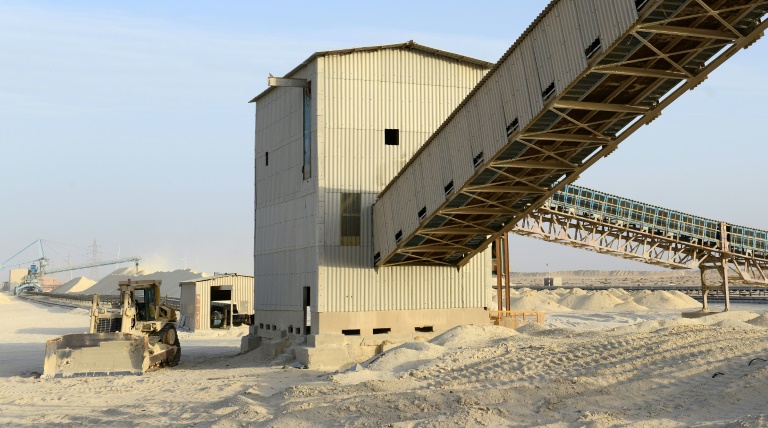
Morocco has around 70 percent of the world’s phosphate reserves, and has been mining four sites since 1921, including in the disputed Western Sahara.

Morocco’s OCP has ramped up its production capacity by a factor of four since 2008, hitting 12 million tonnes last year, on target to reach 15 million by the end of 2023.

That makes it a major player in a global market fearful of further supply shocks.

The UN Food and Agriculture Organization warned in a report this year that “fertiliser supplies remain restricted, stocks are depleted and geopolitical tensions could spark additional supply restrictions at short notice.”

– Phosphate diplomacy –

The result is that Morocco is enjoying not only an influx of cash, but also growing diplomatic muscle, particularly on Western Sahara.

The kingdom sees the vast stretch of desert as an integral part of its territory, but the Polisario movement backed by Morocco’s arch-rival Algeria seeks independence there.

Rabat has placed the question at the heart of its diplomacy. 

King Mohammed VI in August demanded that Morocco’s allies “clarify” their stances on the issue, calling it “the prism through which Morocco views its international environment”.

According to L’Economiste, a Moroccan French-language newspaper, OCP has become “the economic arm of Moroccan diplomacy”.

In September, Rabat recalled a shipment of 50,000 tonnes of fertiliser destined for Peru after Lima restored diplomatic relations with the Polisario’s self-proclaimed Sahrawi Arab Democratic Republic.

– Sticks and carrots –

But as well as sticks, OCP offers carrots. 

The firm has been expanding its presence across Africa, with branches in 16 countries, a fertiliser factory in Nigeria and a deal signed in September to open another one in Ethiopia.

It has also put aside four million tonnes of fertiliser “to support food security in Africa” next year, it said.

This year Morocco exported half a billion tonnes of fertiliser to various African countries, either for free, as aid or at preferential prices.

Morocco is even looking across the Atlantic for new markets. 

In September it signed a deal with Guatemala focusing on “fertilisers and farming”, according to the two countries’ foreign ministers.

In the same statement, Guatemala gave its backing to Morocco’s autonomy plan for the Western Sahara.

But while OCP is a potential source of international leverage on the issue, Morocco does not demand public support for its position with every contract signed.

“Morocco is using its economic arms in a pragmatic way, not in a transactional way,” said international relations expert Tajeddine El Husseini.

But, he added, economic ties can have “a political impact”.

Opec+ likely to maintain oil output levels

Major oil-producing countries led by Saudi Arabia and Russia look set to maintain their current output levels at a meeting Sunday, ahead of fresh sanctions against Moscow coming into force.

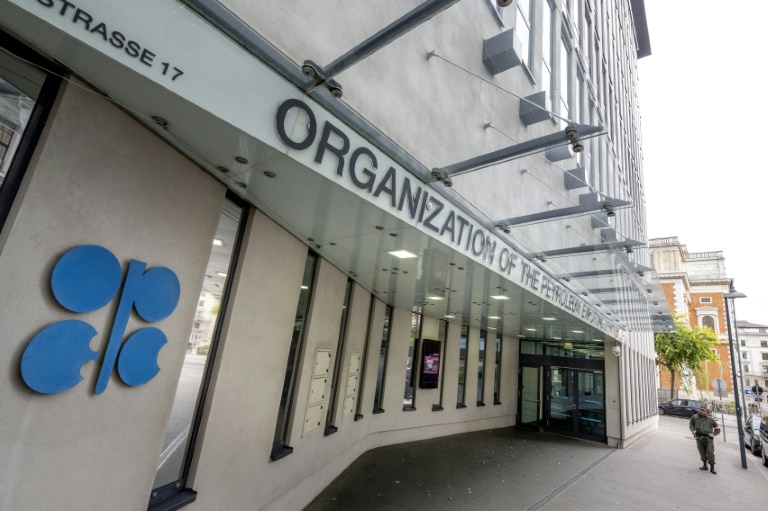
The 13-member Organization of the Petroleum Exporting Countries (OPEC) is due to consult with 10 other oil-producing nations, including Russia, to review their decision in October to cut production by two million barrels per day.

The OPEC+ videoconference will take place from 1100 GMT Sunday.

On Friday, the EU, G7 and Australia agreed a $60-per-barrel price cap on Russian oil, which will come into effect on Monday or soon after, alongside an EU embargo on maritime deliveries of Russian crude oil.

It will prevent seaborne shipments of Russian crude to the European Union, which account for two thirds of the bloc’s oil imports from Russia, an attempt to deprive Moscow’s war chest of billions of euros.

While Russia denounced the incoming price cap on Saturday, threatening to suspend deliveries to any country that adopted the measure, Ukraine suggested the cap should have been set even lower.

For OPEC+, the big unknown in the oil equation is how heavily sanctions will hit Russian supply.

“The uncertainty for Russian supply is significant”, DNB analysts said. OPEC would therefore “aim for a low-profile meeting that leaves existing production quotas unchanged”.

– An ‘uncomfortable position’ –

Moscow’s threat to suspend deliveries to countries abiding by the price cap would put “some in a very uncomfortable position”, said OANDA analyst Craig Erlam: “Choosing between losing access to cheap Russian crude or facing G7 sanctions”.

The choice of a virtual OPEC+ meeting instead of an in-person conference at the Vienna headquarters, suggested a policy rollover, UniCredit analyst Edward Moya said.

But “deeper oil output cuts” could still not be ruled out at this stage.

Amid economic gloom fuelled by soaring inflation and fears of China’s weaker energy demand due to its Covid-related restrictions, the two global crude benchmarks remained close to their lowest level of the year, far from their March peaks.

Since the group’s last meeting in early October, Brent North Sea oil and its US equivalent, WTI, have lost more than six percent of their value.

But speculation that a further OPEC+ production cut might still be on the table boosted prices throughout the week.

“OPEC+ might feel compelled to adopt a more aggressive stance” by cutting or threatening to cut production even further, UniCredit analyst Edoardo Campanella said. 

“Russia might also retaliate by leveraging its influence within OPEC+ to push for more production cuts down the road, thus exacerbating the global energy crisis,” he added.

Estonia to buy HIMARS rocket launchers from US

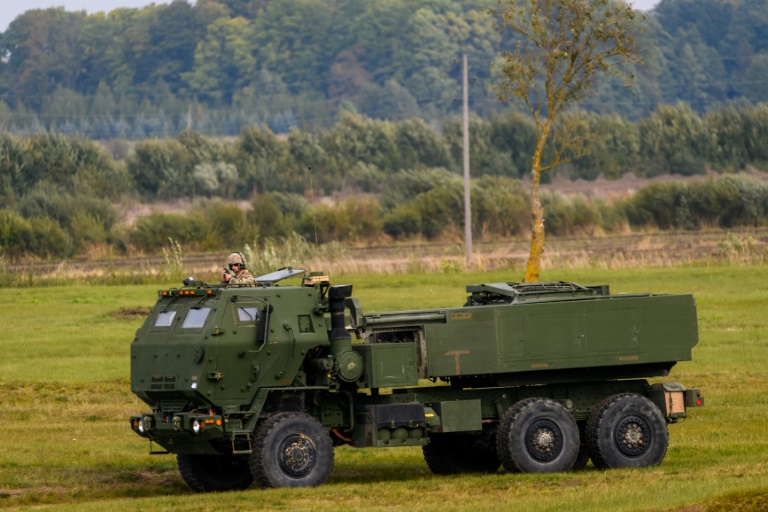
Estonia has agreed to buy six HIMARS rocket systems from the United States worth over $200 million, the state defence investment agency said on Saturday.

It is the largest arms purchase in the country’s history.

Estonia, which neighbours Russia, has increased defence spending since Moscow’s invasion of Ukraine, as has its Baltic neighbours, Latvia and Lithuania.

The HIMARS systems delivered to Ukraine are widely seen as one of the most effective tools in its arsenal, as the pro-Western country fights back against Russian troops.

Magnus-Valdemar Saar, director general of the Estonian Centre for Defence Investments (ECDI), signed a contract on Friday with the United States’ Defense Security Cooperation Agency to boost the country’s indirect fire capability, the ECDI said in a statement.

Estonia will also “procure ammunition, communications solutions, as well as training, logistics, and life-cycle solutions”, said armament category manager Ramil Lipp.

The ECDI did not provide details on how many rockets were ordered but said the purchase included those which can strike targets at a distance of 300 kilometres (186 miles), and rockets of shorter range.

The first deliveries will arrive in 2024.

Lithuania last month said it would buy eight HIMARS rocket systems from the United States for $495 million.

Estonia to buy HIMARS rocket launchers from US

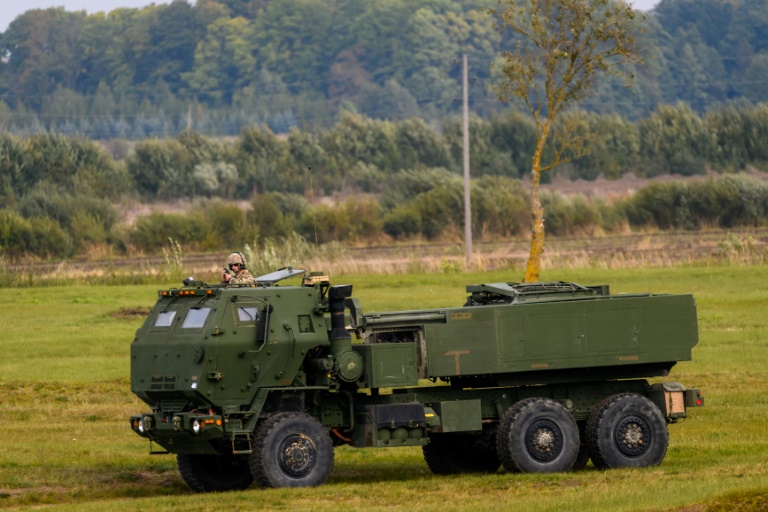
Estonia has agreed to buy six HIMARS rocket systems from the United States worth over $200 million, the state defence investment agency said on Saturday.

It is the largest arms purchase in the country’s history.

Estonia, which neighbours Russia, has increased defence spending since Moscow’s invasion of Ukraine, as has its Baltic neighbours, Latvia and Lithuania.

The HIMARS systems delivered to Ukraine are widely seen as one of the most effective tools in its arsenal, as the pro-Western country fights back against Russian troops.

Magnus-Valdemar Saar, director general of the Estonian Centre for Defence Investments (ECDI), signed a contract on Friday with the United States’ Defense Security Cooperation Agency to boost the country’s indirect fire capability, the ECDI said in a statement.

Estonia will also “procure ammunition, communications solutions, as well as training, logistics, and life-cycle solutions”, said armament category manager Ramil Lipp.

The ECDI did not provide details on how many rockets were ordered but said the purchase included those which can strike targets at a distance of 300 kilometres (186 miles), and rockets of shorter range.

The first deliveries will arrive in 2024.

Lithuania last month said it would buy eight HIMARS rocket systems from the United States for $495 million.

Burkina Faso suspends French broadcaster RFI

Burkina Faso on Saturday ordered the immediate suspension of Radio France Internationale (RFI) broadcasts, accusing it of putting out a “message of intimidation” attributed to a “terrorist chief”.

It is the second West African country under military rule, after Mali, to take the French broadcaster off the airwaves this year.

RFI had contributed to “a desperate manoeuvre of terrorist groups” to dissuade thousands of Burkinabe citizens mobilised for the defence of the country, said Burkinabe government spokesman Jean Emmanuel Ouedraogo.

At the beginning of the week, the Al-Qaeda-affiliated Support Group for Islam and Muslims (GSIM) threatened in a video to attack villages defended by the pro-government VDP militia in Burkina Faso.

The VDP are civilian volunteers given two weeks’ military training to work alongside the army carrying out surveillance, information-gathering or escort duties. 

The government had already, on November 3, protested the contents of the French broadcaster’s reports, said the government statement.

“Considering everything that has happened before, the government has decided on the immediate suspension, until further notice, of the broadcasting of Radio France Internationale’s programmes.”

The government also accused RFI of having relayed “misleading information” suggesting the leader of the Burkinabe junta, Captain Ibrahim Traore, had said there had been an attempted coup against him.

– ‘Unfounded accusations’ –

RFI’s management, in a statement late Saturday, said it “deeply deplores this decision and protests against the totally unfounded accusations calling into question the professionalism of its stations”.

The decision to cut off RFI’s broadcasting service “was taken without prior notice and without implementing the procedures… drawn up by Burkina Faso’s Higher Council for Communication,” it added.

The France Medias Monde group, to which RFI belongs, “will explore all avenues to restore RFI’s broadcasting, and reiterates its unwavering commitment to the freedom to inform and the professional work of its journalists,” the statement added.

According to RFI, the radio station is heard every week in Burkina Faso by more than 40 percent of the population and “more than 70 percent of opinion leaders”. 

An AFP journalist in Ouagadougou confirmed that the French radio station could no longer be heard by late afternoon.

The Burkinabe government nevertheless said it wanted to “reaffirm to national and international opinion its attachment to freedom of the press and opinion” and “the public’s right to information”, while exhorting media to “respect the rules and principles laid down in this area in our country”.

Burkina Faso has experienced two military coups this year, driven by army officers angered at the failure to tackle the threat from jihadist groups.

It becomes the second west African nation to ban RFI this year after Mali, another country under the rule of a military junta and fighting jihadist forces.

In March, the ruling junta in Mali announced the suspension of the broadcasting authorisation granted to RFI and France 24, after they published accounts implicating Mali’s army in abuses against civilians.

Russia denounces oil price cap agreed by EU, G7

Russia on Saturday denounced a $60 price cap on its oil agreed by the EU, G7 and Australia, even as Ukraine suggested it was not tough enough and might have to be revisited.

“We will not accept this price cap,” Kremlin spokesman Dmitry Peskov told domestic news agencies, adding that Russia, the world’s second-largest crude exporter, was “analysing” the move.

The $60 oil price cap will come into effect on Monday or soon after, alongside an EU embargo on maritime deliveries of Russian crude oil.

The embargo will prevent seaborne shipments of Russian crude to the European Union, which account for two thirds of the bloc’s oil imports from Russia, potentially depriving Russia’s war chest of billions of euros.

But while Kyiv welcomed the price cap earlier Saturday, Ukraine President Volodymyr Zelensky said in his evening address that the level set was not “serious” as it would not do enough damage to the Russian economy.

“Russia has already caused huge losses to all countries of the world by deliberately destabilizing the energy market,” he argued in his nightly address, describing the decision on the price cap as “a weak position”.

It is “only a matter of time when stronger tools will have to be used”, Zelensky added.

The G7 nations — Canada, France, Germany, Italy, Japan, the United Kingdom and the United States — along with Australia have already said they are prepared to adjust the price ceiling if necessary.

The cap stops countries paying more than $60 a barrel for Russian oil deliveries by tanker vessel and is designed to make it harder for Russia to bypass EU sanctions by selling beyond the European Union at market prices.

– Limit funds for the ‘war machine’ –

Zelensky, in his speech, appeared to be backing the position that Poland had tried to hold out for before agreeing to the $60 ceiling late Friday. Warsaw and the Baltic states had argued for a $30 cap.

The market price of a barrel of Russian Urals crude is currently around $65 dollars, just slightly higher than the $60 cap agreed, suggesting the measure may have only a limited impact in the short term.

The G7 said it was delivering on its vow “to prevent Russia from profiting from its war of aggression against Ukraine, to support stability in global energy markets and to minimise negative economic spillovers of Russia’s war of aggression”.

The White House described the cap as “welcome news” that would help limit Russian President Vladimir Putin’s ability to fund the Kremlin’s “war machine”.

Russia has threatened to stop deliveries to countries adopting the measure.

Russia has earned 67 billion euros ($71 billion) from the sale of oil to the European Union since the start of the war in February.

Its annual military budget amounts to around 60 billion, said Phuc-Vinh Nguyen, an energy expert at the Institut Jacques-Delors in Paris.

The EU embargo on seaborne deliveries follows a decision by Germany and Poland to stop taking Russian oil via pipeline by the end of 2022.

In all, more than 90 percent of Russian deliveries to the European Union will be hit, according to the bloc. 

– ‘Endure’ power cuts –

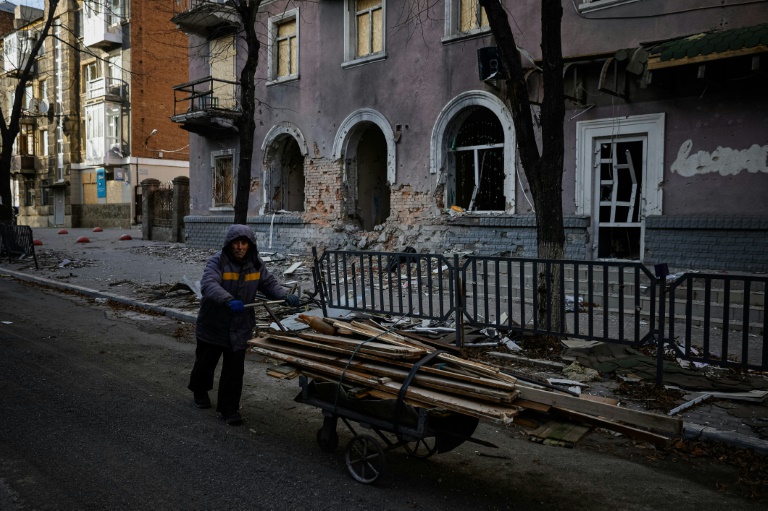
On the ground, Russian forces carried out strikes in the east of Ukraine on Saturday, hitting a “civilian infrastructure facility” in the eastern city of Kramatorsk, the Ukrainian army said.

After suffering humiliating defeats during what has become the largest armed conflict in Europe since World War II, Russia began targeting Ukrainian energy infrastructure in October.

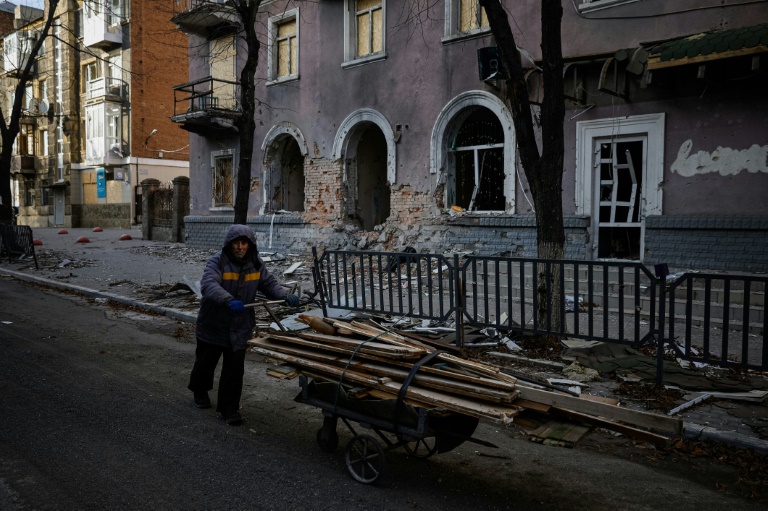
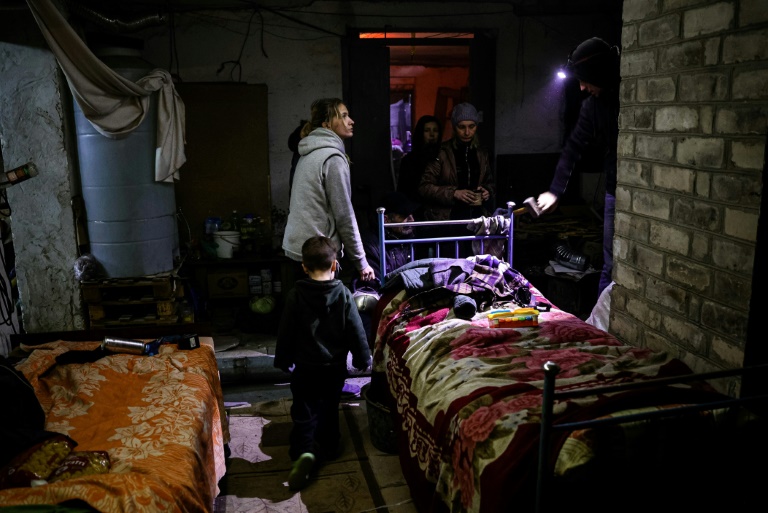
The strikes have caused sweeping blackouts, and cut off water supplies and heating to civilians at a time when the temperature in some regions has dropped to minus five degrees Celsius (41 degrees Fahrenheit).

The authorities have introduced scheduled power cuts several times a day to keep essential infrastructure working.

In eastern Ukraine, where the fighting is still raging, the governor of Lugansk region, Sergei Gaidai, said the conflict was heavy, “because the Russians had time to prepare”. Ukraine’s forces were nevertheless slowly moving forward, he added.

Ukraine’s presidency said the situation was also difficult in Bakhmut, in the neighbouring Donetsk region, which Russian forces have been trying to capture since summer.

On Saturday, the governor of the southern region of Mykolaiv, Vitaly Kim, urged citizens to “endure” the electricity shortages.

Putin on Friday told Germany’s Chancellor Olaf Scholz the Russian strikes, which have destroyed close to half of the Ukrainian energy system, were an “inevitable response to Kyiv’s provocative attacks on Russia’s civilian infrastructure”.

He was referring in particular to the October attack on a bridge linking Moscow-annexed Crimea to the Russian mainland.

Putin accused the West of carrying out “destructive” policies in Ukraine, the Kremlin said, stressing that Western political and financial aid meant Kyiv “completely rejects the idea of any negotiations”.

Ukrainian President Volodymyr Zelensky has ruled out talks with Russia while Putin is in power after the Kremlin claimed to have annexed several Ukrainian regions.

The Kremlin also said Saturday that Putin would “in due time” visit the Donbas region of eastern Ukraine, which he claims to have annexed. But Peskov gave no indication of when this could happen.

burs-jj/pvh

Russia denounces oil price cap agreed by EU, G7

Russia on Saturday denounced a $60 price cap on its oil agreed by the EU, G7 and Australia, even as Ukraine suggested it was not tough enough and might have to be revisited.

“We will not accept this price cap,” Kremlin spokesman Dmitry Peskov told domestic news agencies, adding that Russia, the world’s second-largest crude exporter, was “analysing” the move.

The $60 oil price cap will come into effect on Monday or soon after, alongside an EU embargo on maritime deliveries of Russian crude oil.

The embargo will prevent seaborne shipments of Russian crude to the European Union, which account for two thirds of the bloc’s oil imports from Russia, potentially depriving Russia’s war chest of billions of euros.

But while Kyiv welcomed the price cap earlier Saturday, Ukraine President Volodymyr Zelensky said in his evening address that the level set was not “serious” as it would not do enough damage to the Russian economy.

“Russia has already caused huge losses to all countries of the world by deliberately destabilizing the energy market,” he argued in his nightly address, describing the decision on the price cap as “a weak position”.

It is “only a matter of time when stronger tools will have to be used”, Zelensky added.

The G7 nations — Canada, France, Germany, Italy, Japan, the United Kingdom and the United States — along with Australia have already said they are prepared to adjust the price ceiling if necessary.

The cap stops countries paying more than $60 a barrel for Russian oil deliveries by tanker vessel and is designed to make it harder for Russia to bypass EU sanctions by selling beyond the European Union at market prices.

– Limit funds for the ‘war machine’ –

Zelensky, in his speech, appeared to be backing the position that Poland had tried to hold out for before agreeing to the $60 ceiling late Friday. Warsaw and the Baltic states had argued for a $30 cap.

The market price of a barrel of Russian Urals crude is currently around $65 dollars, just slightly higher than the $60 cap agreed, suggesting the measure may have only a limited impact in the short term.

The G7 said it was delivering on its vow “to prevent Russia from profiting from its war of aggression against Ukraine, to support stability in global energy markets and to minimise negative economic spillovers of Russia’s war of aggression”.

The White House described the cap as “welcome news” that would help limit Russian President Vladimir Putin’s ability to fund the Kremlin’s “war machine”.

Russia has threatened to stop deliveries to countries adopting the measure.

Russia has earned 67 billion euros ($71 billion) from the sale of oil to the European Union since the start of the war in February.

Its annual military budget amounts to around 60 billion, said Phuc-Vinh Nguyen, an energy expert at the Institut Jacques-Delors in Paris.

The EU embargo on seaborne deliveries follows a decision by Germany and Poland to stop taking Russian oil via pipeline by the end of 2022.

In all, more than 90 percent of Russian deliveries to the European Union will be hit, according to the bloc. 

– ‘Endure’ power cuts –

On the ground, Russian forces carried out strikes in the east of Ukraine on Saturday, hitting a “civilian infrastructure facility” in the eastern city of Kramatorsk, the Ukrainian army said.

After suffering humiliating defeats during what has become the largest armed conflict in Europe since World War II, Russia began targeting Ukrainian energy infrastructure in October.

The strikes have caused sweeping blackouts, and cut off water supplies and heating to civilians at a time when the temperature in some regions has dropped to minus five degrees Celsius (41 degrees Fahrenheit).

The authorities have introduced scheduled power cuts several times a day to keep essential infrastructure working.

In eastern Ukraine, where the fighting is still raging, the governor of Lugansk region, Sergei Gaidai, said the conflict was heavy, “because the Russians had time to prepare”. Ukraine’s forces were nevertheless slowly moving forward, he added.

Ukraine’s presidency said the situation was also difficult in Bakhmut, in the neighbouring Donetsk region, which Russian forces have been trying to capture since summer.

On Saturday, the governor of the southern region of Mykolaiv, Vitaly Kim, urged citizens to “endure” the electricity shortages.

Putin on Friday told Germany’s Chancellor Olaf Scholz the Russian strikes, which have destroyed close to half of the Ukrainian energy system, were an “inevitable response to Kyiv’s provocative attacks on Russia’s civilian infrastructure”.

He was referring in particular to the October attack on a bridge linking Moscow-annexed Crimea to the Russian mainland.

Putin accused the West of carrying out “destructive” policies in Ukraine, the Kremlin said, stressing that Western political and financial aid meant Kyiv “completely rejects the idea of any negotiations”.

Ukrainian President Volodymyr Zelensky has ruled out talks with Russia while Putin is in power after the Kremlin claimed to have annexed several Ukrainian regions.

The Kremlin also said Saturday that Putin would “in due time” visit the Donbas region of eastern Ukraine, which he claims to have annexed. But Peskov gave no indication of when this could happen.

burs-jj/pvh

Russia rejects oil price cap agreed by EU, G7

Russia on Saturday rejected a $60 price cap on its oil agreed by the EU, G7 and Australia, which Ukraine said would contribute to the destruction of Russia’s economy.

“We will not accept this price cap,” Kremlin spokesman Dmitry Peskov told domestic news agencies. Russia, the world’s second-largest crude exporter, was “analysing” the move, he added.

The $60 oil price cap will come into effect on Monday or soon after, alongside an EU embargo on maritime deliveries of Russian crude oil.

The embargo will prevent seaborne shipments of Russian crude to the European Union, which account for two thirds of the bloc’s oil imports from Russia, potentially depriving Russia’s war chest of billions of euros.

Kyiv welcomed the price cap, which stops countries paying more than $60 a barrel for Russian oil deliveries by tanker vessel and is designed to make it harder for Russia to bypass EU sanctions by selling beyond the European Union at market prices.

“We always achieve our goal and the economy of Russia will be destroyed, and Russia itself will pay and be responsible for all crimes,” Ukraine’s presidential chief of staff Andriy Yermak said Saturday.

– Limit funds for the ‘war machine’ –

Poland, which initially refused to back the price cap over concerns the $60 ceiling was too high, eventually confirmed its agreement on Friday evening.

Yermak noted a cap of “$30 would have destroyed it (the Russian economy) more quickly”.

The market price of a barrel of Russian Urals crude is currently around $65 dollars, just slightly higher than the $60 cap, suggesting the measure may have only a limited impact in the short term.

The G7 said it was delivering on its vow “to prevent Russia from profiting from its war of aggression against Ukraine, to support stability in global energy markets and to minimise negative economic spillovers of Russia’s war of aggression”.

The White House described the cap as “welcome news” that would help limit Russian President Vladimir Putin’s ability to fund the Kremlin’s “war machine”.

Russia has threatened not to deliver to countries that adopt the measure.

The G7 and Australia said they were prepared to adjust the price ceiling if necessary.

Russia has earned 67 billion euros ($71 billion) from the sale of oil to the European Union since the start of the war in February.

Its annual military budget amounts to around 60 billion, said Phuc-Vinh Nguyen, an energy expert at the Institut Jacques-Delors in Paris.

The EU embargo on seaborne deliveries follows a decision by Germany and Poland to stop taking Russian oil via pipeline by the end of 2022.

In all, more than 90 percent of Russian deliveries to the European Union will be hit, according to the bloc. 

– ‘Endure’ power cuts –

On the ground, Russian forces carried out strikes in the east of Ukraine on Saturday, hitting a “civilian infrastructure facility” in the eastern city of Kramatorsk, the Ukrainian army said.

After suffering humiliating defeats during what has become the largest armed conflict in Europe since World War II, Russia began targeting Ukrainian energy infrastructure in October.

The strikes have caused sweeping blackouts, and cut off water supplies and heating to civilians at a time when the temperature in some regions has dropped to minus five degrees Celsius (41 degrees Fahrenheit).

The authorities have introduced scheduled power cuts several times a day to keep essential infrastructure working.

On Saturday, the governor of the southern region of Mykolaiv, Vitaly Kim, urged citizens to “endure” the electricity shortages.

Putin on Friday told Germany’s Chancellor Olaf Scholz the Russian strikes, which have destroyed close to half of the Ukrainian energy system, were an “inevitable response to Kyiv’s provocative attacks on Russia’s civilian infrastructure”.

He was referring in particular to the October attack on a bridge linking Moscow-annexed Crimea to the Russian mainland.

Scholz “urged the Russian president to come as quickly as possible to a diplomatic solution, including the withdrawal of Russian troops”, according to his spokesman.

But Putin accused the West of carrying out “destructive” policies in Ukraine, the Kremlin said, stressing that Western political and financial aid meant Kyiv “completely rejects the idea of any negotiations”.

Ukrainian President Volodymyr Zelensky has ruled out talks with Russia while Putin is in power after the Kremlin claimed to have annexed several Ukrainian regions.

The Kremlin also said Saturday that Putin would “in due time” visit the Donbas region of eastern Ukraine, which he claims to have annexed. But Peskov gave no indication of when this could happen.

burs-ah/jj

Close Bitnami banner
Bitnami