US Business

World equities extend gains on Fed rate optimism

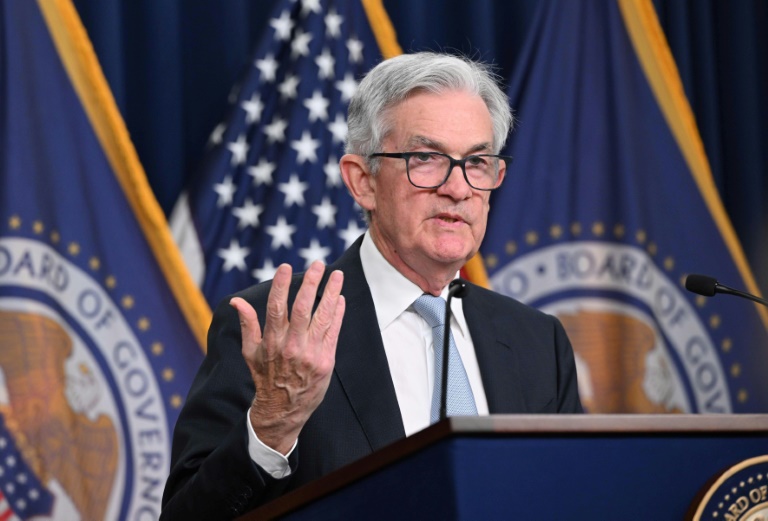
Global stocks mostly rose Thursday as Federal Reserve boss Jerome Powell flagged a moderation in interest rate hikes, while China signalled a softer approach to fighting Covid.

Asian and European equities tacked higher as investors also eyed news that eurozone unemployment plumbed to a record-low 6.5 percent in October.

On Wall Street, the Dow was down but the Nasdaq and S&P 500 rose after a closely-watched measure of US inflation edged down in October, data showed Thursday, in news likely to bring more relief following Powell’s comments.

Oil prices climbed before this weekend’s OPEC output meeting of key crude producing nations.

– ‘Positive news’ –

“Powell… signalled a potential slowing of interest rate hikes,” noted equity analyst Matt Britzman at UK stockbroker Hargreaves Lansdown.

“Markets have been clinging to every scrap of positive news lately and this was a continuation of that trend.”

In a much-anticipated speech Wednesday, Powell said the full effects of the Fed’s belt-tightening had yet to be felt but that it “makes sense to moderate the pace of our rate increases as we approach the level of restraint that will be sufficient to bring inflation down”.

He signalled the US central bank’s December gathering would likely see officials lift borrowing costs by 50 basis points.

The Fed has yanked up rates by a bumper 75 points at each of the last four meetings.

However, Powell did say policy would need to remain tight “for some time” to restore price stability, echoing comments from other Fed officials who suggested there might not be any cuts until 2024.

Analysts said the reaction to Powell’s remarks — which had been expected to be his most dovish in some time — highlighted a sense of relief among investors that a long-hoped-for pivot was on the cards.

On Thursday, the Fed’s preferred inflation measure — the personal consumption expenditures (PCE) price index — rose six percent from a year ago in October, down from a larger jump the month before.

– Santa Rally on cards? –

“For the first time in an age it feels like Powell is telling markets what they want to hear,” said AJ Bell investment director Russ Mould.

“The message that an easing in the pace of rate hikes could come before the end of the year was just what investors were looking for and raises the prospect of a Santa Rally heading into Christmas.”

The main US indices had surged in response on Wednesday, with the Nasdaq leading the way as rate-sensitive tech firms rocketed.

Hong Kong extended gains into a third day, with tech giants including Alibaba and Tencent tracking massive gains in their US-listed stock, while Shanghai was also up.

Equities were also helped by signs that China is edging towards a more pragmatic approach to fighting the coronavirus, having hammered the economy this year with its strict zero-Covid strategy of lockdowns and mass testing.

“We shouldn’t be naive to the fact that a move away from the (Covid-zero) policy won’t be easy and there’ll be plenty of setbacks. But it’s certainly a step in the right direction,” said OANDA’s Craig Erlam.

After widespread unrest against the measures — and calls for more political freedoms — authorities have announced moves aimed at loosening some restrictions.

The dollar sank, having soared across the board this year as Fed monetary policy diverged more and more from other central banks.

– Key figures around 1430 GMT –

London – FTSE 100: FLAT at 7,569.10 points

Frankfurt – DAX: UP 0.9 percent at 14,526.68

Paris – CAC 40: UP 0.4 percent at 6,764.67

EURO STOXX 50: UP 0.7 percent at 3,991.82

New York – Dow: DOWN 0.1 percent at 34,538.59

Tokyo – Nikkei 225: UP 0.9 percent at 28,226.08 (close)

Hong Kong – Hang Seng Index: UP 0.8 percent at 18,736.44 (close)

Shanghai – Composite: UP 0.5 percent at 3,165.47 (close)

Euro/dollar: UP at $1.0509 from $1.0406 on Wednesday

Dollar/yen: DOWN at 136.16 yen from 138.07 yen

Pound/dollar: UP at $1.2264 from $1.2058

Euro/pound: DOWN at 85.68 pence from 86.30 pence

Brent North Sea crude: UP 2.0 percent at $88.75 per barrel

West Texas Intermediate: UP 2.6 percent at $82.63 per barrel

burs-raz/lth

Spanish PM, US embassy targeted in wave of letter bombs

Spanish police were investigating Thursday a series of letter bombs sent to targets including the prime minister and the US embassy, similar to one which went off at the Ukrainian embassy, hurting a staff member.

The interior ministry revealed that an envelope with “pyrotechnic material” had arrived at Prime Minister Pedro Sanchez’s official residence on November 24. It was destroyed in a controlled explosion.

Spain’s High court meanwhile announced it had broadened an initial investigation over the Ukraine embassy letter bomb to cover the all the other incidents.

Both announcements came a day after the security officer at Ukraine’s embassy in Madrid suffered a light injury to one hand while opening a letter bomb addressed to the Ukrainian ambassador, an incident that prompted Kyiv to boost security at its embassies worldwide.

That letter, like the others discovered, arrived by regular mail.

Later in the evening, a second “suspicious postal shipment” was intercepted at the headquarters of military equipment firm Instalaza in the northeastern city of Zaragoza, the interior ministry said.

Instalaza makes the grenade launchers that Spain donates to Ukraine.

Then on Thursday morning letter bombs arrived and at the defence ministry; and at an air base in Torrejon de Ardoz, just outside Madrid, from where weapons donated by Spain are sent to Ukraine.

“The characteristics of the envelopes, as well as their content, are similar in the five cases,” Spain’s Secretary of State of Security, Rafael Perez, told journalists.

“There are signs that indicate that the letters came from Spanish territory, but I insist we must be prudent…we are at the beginning of the investigation.”

A few hours after he spoke the interior ministry said another letter “with similar characteristics as the others” had been intercepted at the US embassy in Madrid.

– ‘Terrorist methods’ –

Ukraine’s ambassador to Spain, Serhii Pohoreltsev, appeared to blame Russia for the letter bomb at its embassy.

“We are well aware of the terrorist methods of the aggressor country,” he said during an interview late Wednesday with Spanish public television.

“Russia’s methods and attacks require us to be ready for any kind of incident, provocation or attack,” he added.

But in a statement Thursday, Russia’s embassy in Spain said: “Any threat or terrorist act, especially those that target a diplomatic mission, is to be totally condemned.”

The letter to the defence ministry was addressed to Defence Minister Margarita Robles. The one sent to the air base was meant for a European Union satellite centre located there.

That centre supports the bloc’s foreign and security policy by gathering information from satellite imagery, according to its website.

After scanning the envelope that arrived at the air base by X-ray, security officers determined it contained “a mechanism”, the ministry statement said. Police were still analysing the envelope.

Ukraine’s Foreign Minister Dmytro Kuleba ordered the strengthening of security at all of their embassies, the country’s foreign ministry spokesperson said Wednesday after the letter bomb went off at the embassy in Madrid.

Spain’s interior minister said it had ordered increased security measures at all embassies and consulates in the country, as well as “other sites that require special protection”.

Security had already been boosted in February after the start of Russia’s invasion of Ukraine.

In addition to sending arms to help Ukraine, Spain is training Ukrainian troops as part of a European Union programme and providing humanitarian aid.

Brexit ramps up UK food bills by £6 bn: study

Britain’s exit from the European Union added almost £6 billion to consumers’ food bills, hitting the poor the hardest and further stoking red-hot inflation, a study said Thursday.

Brexit increased household food bills by an average £210 in the two years to the end of 2021, according to findings from the London School of Economics.

Food prices were pushed higher by the rising cost of extra checks and requirements on EU imports, the LSE noted in the report.

The LSE judged that Brexit started ramping up food bills from late 2019 onwards, as firms anticipated higher costs and adjusted prices accordingly.

Products increased in price by six percent over the two-year period, it added.

The hike disproportionately hit the poor because those on low incomes spend a greater share of their pay on food than richer people.

“In leaving the EU, the UK swapped a deep trade relationship with few impediments to trade for one where a wide range of checks, forms and steps are required before goods can cross the border,” said Bristol University professor and study co-author Richard Davies.

“Firms faced higher costs and passed most of these onto consumers.”

Britain has been gripped by a worsening cost-of-living crisis this year as inflation surged to multi-decade peaks, sparking a wave of strikes across the economy as pay fails to keep pace.

Consumer prices have also been propelled by rocketing energy bills after key producer Russia’s invasion of Ukraine, and by rebounding demand as the Covid pandemic recedes.

“The UK inflation rate rose above 11 percent in 2022, the highest rate in 40 years,” added Davies.

“Many factors, affecting both supply and demand for goods and services, are involved.

“One factor in this high inflation has been the rise in non-tariff barriers for trade with the EU.”

Britain withdrew from the European single market and customs union at the start of 2021, after voting narrowly in favour in a 2016 referendum.

However, London then clinched a post-Brexit Trade and Cooperation Agreement with Brussels which maintained largely tariff-free trade with the EU’s remaining 27 members.

Yet companies still faced a sharp increase in costs, red tape and border delays.

Netflix airs trailer of Harry and Meghan series

Netflix on Thursday unveiled a long-awaited trailer for a six-part docuseries in which Prince Harry and wife Meghan lift the lid on their lives in the royal family.

Omid Scobie, a close friend and biographer of the couple, tweeted that the series would be aired on December 8, adding it will share “the other side of their love story and the challenges they faced”.

The announcement coincides with Harry’s elder brother William’s first trip to the United States as Prince of Wales and another race row within the family back home.

William — the heir to the throne — has been forced to part ways with one of his godmothers after she used racially charged language to a black British woman at a palace reception on Tuesday.

Harry and Meghan, a mixed-race former television actress, cited racism in the royal household as one of the reasons for their acrimonious departure almost three years ago.

Royal insiders described William’s visit to Boston to present his annual climate change awards to innovators on Friday as his “Superbowl moment”.

But Scobie tweeted that “if tomorrow is Prince William’s Super Bowl, then here’s your Halftime Show” as he shared the trailer.

“With commentary from friends, family, and historians discussing the state of the British Commonwealth today (and the Royal Family’s relationship with the press), the Netflix series aims to ‘paint a picture of our world and how we treat each other’,” he added.

The family will be braced for more revelations from the docuseries and Harry’s autobiography “Spare”, which is due out in January.

The minute-long trailer, posted on Twitter, features intimate photographs of the couple, interspersed with a clip of Harry saying: “No one sees what’s going on behind closed doors” and images of Meghan wiping her eyes.

Disasters cost $268 billion in 2022: Swiss Re

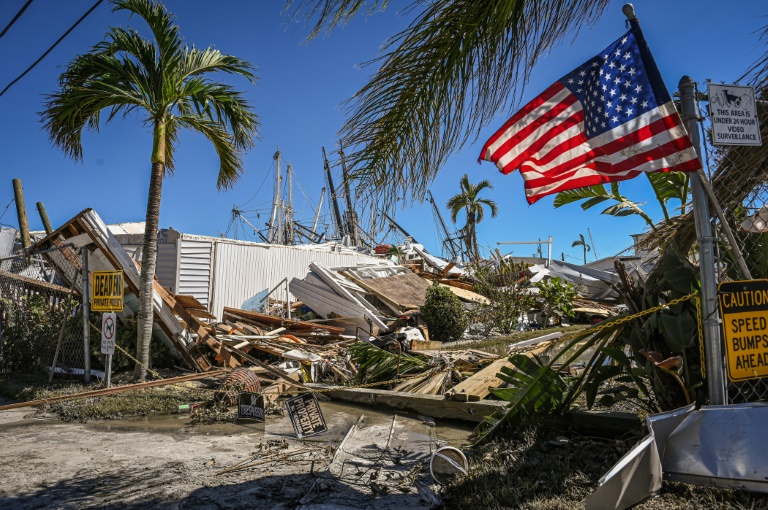
Natural and man-made catastrophes have caused $268 billion of economic losses so far in 2022, chiefly driven by Hurricane Ian and other extreme weather disasters, reinsurance giant Swiss Re estimated Thursday.

Insured losses covered $122 billion — less than half — of the total economic losses to date this year, said the Zurich-based group, which acts as an insurer for insurers.

“Hurricane Ian and other extreme weather events such as the winter storms in Europe, flooding in Australia and South Africa as well as hailstorms in France and in the United States resulted in an estimated $115 billion of natural catastrophe insured losses this year to date,” Swiss Re said in a statement.

There were $7 billion of insured losses from man-made disasters.

It is the second consecutive year in which total insured losses from natural catastrophes topped $100 billion, with the figure hitting $121 billion last year.

“Urban development, wealth accumulation in disaster-prone areas, inflation and climate change are key factors at play, turning extreme weather into ever rising natural catastrophe losses,” explained Martin Bertogg, Swiss Re’s head of catastrophe perils.

“When Hurricane Andrew struck 30 years ago, a $20 billion loss event had never occurred before; now there have been seven such hurricanes in just the past six years.”

Hurricane Ian is by far the largest loss-causing event in 2022, with an estimated insured loss of $50-65 billion, said Swiss Re.

It estimated that Hurricane Ian caused the second-costliest insured loss ever, after Hurricane Katrina in 2005.

– Neighbourhoods flattened –

Ian, a category four hurricane, caused more than 150 deaths, almost all in Florida, where it made landfall on September 28.

One of the most powerful storms ever to hit the United States, it flattened whole neighbourhoods and knocked out power for millions of people. Storm surges and immense downpours left even inland neighbourhoods submerged.

“This highlights the threat potential of a single hurricane hitting a densely populated coastline,” Swiss Re said.

The reinsurer added that so-called secondary natural disasters such as floods and hailstorms — as opposed to major disasters such as earthquakes and hurricanes — caused more than $50 billion of insured losses.

The storms in Europe in February prompted estimated insured losses of over $3.7 billion, putting winter storms back on the insurance industry’s agenda, Swiss Re said.

France experienced the most severe hailstorms ever observed in the European spring and summer, with insured market losses reaching an estimated five billion euros ($5.3 billion), said Swiss Re.

And in Australia in February and March, torrential summer rains led to widespread flooding that, at an estimated $4 billion, became the country’s costliest-ever natural catastrophe.

– ‘Vast’ protection gap –

Swiss Re highlighted how the insurance and reinsurance industry covered roughly only 45 percent of the economic losses so far this year.

“The protection gap remains vast,” said Thierry Leger, the group’s chief underwriting officer.

Of the estimated $268 billion total economic losses for property damage so far this year, $260 billion are from natural catastrophes and $8 billion from man-made disasters, such as industrial accidents.

The $268 billion figure is down 12 percent from $303 billion last year, but above the $219 billion average over the previous 10 years.

At $115 billion, total insured losses from natural catastrophes were down five percent from the $121 billion in 2021, but well above the previous 10-year average of $81 billion.

How bringing back lost species revives ecosystems

Scientists often study the grim impacts of losing wildlife to hunting, habitat destruction and climate change. But what happens when endangered animals are brought back from the brink?

Research has shown restoring so-called “keystone” species — those with an outsized impact on their environment — is vital for the health of ecosystems, and can come with unexpected benefits for humans.

Here are some notable examples from North America. 

– Wolves –

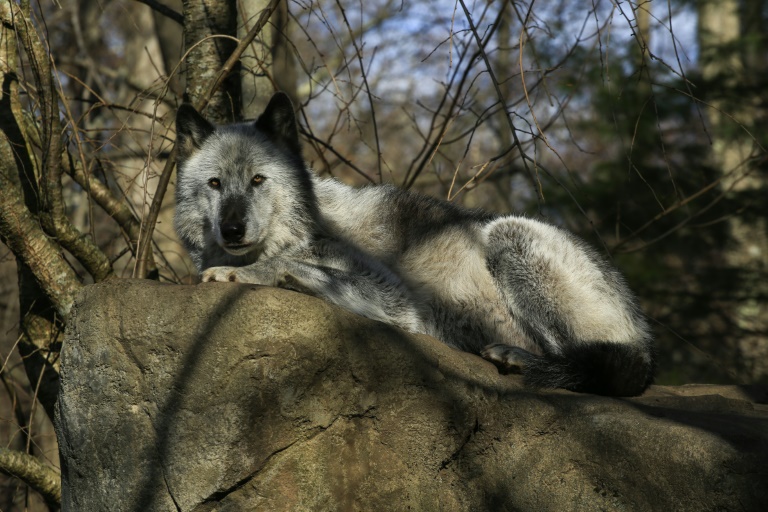
Few species evoke the American wild as much as wolves. 

Though revered by Indigenous communities, European colonists who arrived in the 1600s embarked on widespread extermination campaigns through hunting and trapping.

By the mid-20th century, fewer than a thousand gray wolves were left in the contiguous United States, down from at least a quarter million before colonization.

Extinction was averted in the 1970s when lawmakers passed the Endangered Species Act, helping revive the apex predator in parts of its former range.

Then, in the mid-1990s, the government took wolves from Canada and reintroduced them to Yellowstone National Park.

This generated a wealth of data that scientists are still working to understand.

The new arrivals kept elk numbers down, preventing them from over-browsing vegetation that provides material for birds to build nests and beavers to build dams — a phenomenon known as a trophic cascade.

The recovered vegetation helped stop soil erosion into rivers, changing their course by reducing meandering.

While building their dams, the beavers also create deep ponds that juvenile fish and frogs need to survive.

When they embark on hunts, wolves focus on weak and diseased prey, ensuring survival of the fittest.

A recent paper even found that wolves brought back in the midwestern state of Wisconsin kept deer away from roads, reducing collisions with cars.

Amaroq Weiss, a biologist and senior wolf advocate for the Center for Biological Diversity compared ecosystems to tapestries, “and when we take out some of the threads, we weaken that tapestry,” she told AFP.

It’s thought there are now more than 6,000 gray wolves in the contiguous United States. The main threat is legalized hunting in some states.

– Buffalo –

The story of the American buffalo — also known as bison — is inextricably linked to the dark history of the early United States.

From an estimated 30 million, their number plummeted to just hundreds by the late 19th century as the US government sought to wipe out plains tribe Indians whose way of life depended on the animal.

“It was an intentional genocide to remove the buffalo, to the remove the Indians and force them onto reservations,” Cody Considine of The Nature Conservancy (TNC) told AFP.

Buffalo, he explained, are an integral part of TNC’s efforts to re-establish prairies in the Nachusa Grasslands of Illinois.

The buffalo, who were introduced there in 2014 and now number around a hundred, favor eating grass over flowering plants and legumes, which in turn allows a variety of birds, insects and amphibians to flourish.

“Some of these species without that grazing simply just disappear off the landscape due to the high competition of the grasses,” added Considine.

As they forage, bisons’ hooves kick up and aerate the soil, further aiding in plant growth as well as seed dispersion. 

TNC currently manages some 6,500 buffalo, and is creating a pilot program with tribal partners that involves transferring excess animals to Indigenous communities, as part of broader efforts to revive America’s national mammal. 

Some 20,000 buffalo are now thought to roam in “conservation herds,” though none are truly free roaming, added Considine.

– Sea otters –

As the dominant predator of marine nearshore environments, sea otters play a hugely important role in their ecosystem.

Historically they spanned from Baja California up the West Coast up to Alaska, Russia and northern Japan, but hunting for fur in the 1700s and 1800s decimated their numbers, which were once up to 300,000. 

They were thought for a while to have been completely exterminated off California, but a small surviving population of around 50 helped them partially recover to some 3,000 today.

Jess Fujii, sea otter program manager at the Monterey Bay Aquarium, told AFP that research during the 1970s in the Aleutian Islands showed the otters maintained the balance of kelp forest by keeping a check on the sea urchins that graze on them.

In the last decade, more complex interactions have come to light. These include the downstream benefits of otters for eelgrass habitats in California estuaries. 

Here, the sea otters controlled the population of crabs, which meant there were more sea slugs who were able to graze algae, keeping the eelgrass healthy.

Eelgrass is considered a “nursery of the sea” for juvenile fish, and it also reduces erosion, which can factor in coastal floods.

“Kelp and eelgrass are often considered good ways to sequester carbon which can help mitigate the ongoing impacts of climate change,” stressed Fujii, a prime example of how destruction of nature can worsen planetary warming.

How bringing back lost species revives ecosystems

Scientists often study the grim impacts of losing wildlife to hunting, habitat destruction and climate change. But what happens when endangered animals are brought back from the brink?

Research has shown restoring so-called “keystone” species — those with an outsized impact on their environment — is vital for the health of ecosystems, and can come with unexpected benefits for humans.

Here are some notable examples from North America. 

– Wolves –

Few species evoke the American wild as much as wolves. 

Though revered by Indigenous communities, European colonists who arrived in the 1600s embarked on widespread extermination campaigns through hunting and trapping.

By the mid-20th century, fewer than a thousand gray wolves were left in the contiguous United States, down from at least a quarter million before colonization.

Extinction was averted in the 1970s when lawmakers passed the Endangered Species Act, helping revive the apex predator in parts of its former range.

Then, in the mid-1990s, the government took wolves from Canada and reintroduced them to Yellowstone National Park.

This generated a wealth of data that scientists are still working to understand.

The new arrivals kept elk numbers down, preventing them from over-browsing vegetation that provides material for birds to build nests and beavers to build dams — a phenomenon known as a trophic cascade.

The recovered vegetation helped stop soil erosion into rivers, changing their course by reducing meandering.

While building their dams, the beavers also create deep ponds that juvenile fish and frogs need to survive.

When they embark on hunts, wolves focus on weak and diseased prey, ensuring survival of the fittest.

A recent paper even found that wolves brought back in the midwestern state of Wisconsin kept deer away from roads, reducing collisions with cars.

Amaroq Weiss, a biologist and senior wolf advocate for the Center for Biological Diversity compared ecosystems to tapestries, “and when we take out some of the threads, we weaken that tapestry,” she told AFP.

It’s thought there are now more than 6,000 gray wolves in the contiguous United States. The main threat is legalized hunting in some states.

– Buffalo –

The story of the American buffalo — also known as bison — is inextricably linked to the dark history of the early United States.

From an estimated 30 million, their number plummeted to just hundreds by the late 19th century as the US government sought to wipe out plains tribe Indians whose way of life depended on the animal.

“It was an intentional genocide to remove the buffalo, to the remove the Indians and force them onto reservations,” Cody Considine of The Nature Conservancy (TNC) told AFP.

Buffalo, he explained, are an integral part of TNC’s efforts to re-establish prairies in the Nachusa Grasslands of Illinois.

The buffalo, who were introduced there in 2014 and now number around a hundred, favor eating grass over flowering plants and legumes, which in turn allows a variety of birds, insects and amphibians to flourish.

“Some of these species without that grazing simply just disappear off the landscape due to the high competition of the grasses,” added Considine.

As they forage, bisons’ hooves kick up and aerate the soil, further aiding in plant growth as well as seed dispersion. 

TNC currently manages some 6,500 buffalo, and is creating a pilot program with tribal partners that involves transferring excess animals to Indigenous communities, as part of broader efforts to revive America’s national mammal. 

Some 20,000 buffalo are now thought to roam in “conservation herds,” though none are truly free roaming, added Considine.

– Sea otters –

As the dominant predator of marine nearshore environments, sea otters play a hugely important role in their ecosystem.

Historically they spanned from Baja California up the West Coast up to Alaska, Russia and northern Japan, but hunting for fur in the 1700s and 1800s decimated their numbers, which were once up to 300,000. 

They were thought for a while to have been completely exterminated off California, but a small surviving population of around 50 helped them partially recover to some 3,000 today.

Jess Fujii, sea otter program manager at the Monterey Bay Aquarium, told AFP that research during the 1970s in the Aleutian Islands showed the otters maintained the balance of kelp forest by keeping a check on the sea urchins that graze on them.

In the last decade, more complex interactions have come to light. These include the downstream benefits of otters for eelgrass habitats in California estuaries. 

Here, the sea otters controlled the population of crabs, which meant there were more sea slugs who were able to graze algae, keeping the eelgrass healthy.

Eelgrass is considered a “nursery of the sea” for juvenile fish, and it also reduces erosion, which can factor in coastal floods.

“Kelp and eelgrass are often considered good ways to sequester carbon which can help mitigate the ongoing impacts of climate change,” stressed Fujii, a prime example of how destruction of nature can worsen planetary warming.

World equities extend gains on Fed rate optimism

Global stocks rose further Thursday as Federal Reserve boss Jerome Powell flagged a moderation in interest rate hikes, while China signalled a softer approach to fighting Covid.

Asian and European equities tacked higher as investors also eyed news that eurozone unemployment plumbed to a record-low 6.5 percent in October.

Oil prices climbed before this weekend’s OPEC output meeting of key crude producing nations.

– ‘Positive news’ –

“Powell … signalled a potential slowing of interest rate hikes,” noted equity analyst Matt Britzman at UK stockbroker Hargreaves Lansdown.

“Markets have been clinging to every scrap of positive news lately and this was a continuation of that trend.”

In a much-anticipated speech Wednesday, Powell said the full effects of the Fed’s belt-tightening had yet to be felt but that it “makes sense to moderate the pace of our rate increases as we approach the level of restraint that will be sufficient to bring inflation down”.

He signalled the US central bank’s December gathering would likely see officials lift borrowing costs by 50 basis points.

The Fed has yanked up rates by a bumper 75 points at each of the last four meetings.

However, Powell did say policy would need to remain tight “for some time” to restore price stability, echoing comments from other Fed officials who suggested there might not be any cuts until 2024.

Analysts said the reaction to Powell’s remarks — which had been expected to be his most dovish in some time — highlighted a sense of relief among investors that a long-hoped-for pivot was on the cards.

– Santa Rally on cards? –

“For the first time in an age it feels like Powell is telling markets what they want to hear,” said AJ Bell investment director Russ Mould.

“The message that an easing in the pace of rate hikes could come before the end of the year was just what investors were looking for and raises the prospect of a Santa Rally heading into Christmas.”

All three main indexes on Wall Street surged in response on Wednesday, with the Nasdaq leading the way as rate-sensitive tech firms rocketed.

Hong Kong extended gains into a third day, with tech giants including Alibaba and Tencent tracking massive gains in their US-listed stock, while Shanghai was also up.

Equities were also helped by signs that China is edging towards a more pragmatic approach to fighting the coronavirus, having hammered the economy this year with its strict zero-Covid strategy of lockdowns and mass testing.

After widespread unrest against the measures — and calls for more political freedoms — authorities have announced moves aimed at loosening some restrictions.

The dollar sank, having soared across the board this year as Fed monetary policy diverged more and more from other central banks.

– Key figures around 1115 GMT –

London – FTSE 100: UP 0.1 percent at 7,578.14 points

Frankfurt – DAX: UP 0.7 percent at 14,496.76

Paris – CAC 40: UP 0.2 percent at 6,748.44

EURO STOXX 50: UP 0.6 percent at 3,986.56

Tokyo – Nikkei 225: UP 0.9 percent at 28,226.08 (close)

Hong Kong – Hang Seng Index: UP 0.8 percent at 18,736.44 (close)

Shanghai – Composite: UP 0.5 percent at 3,165.47 (close)

New York – Dow: UP 2.2 percent at 34,589.77 (close)

Euro/dollar: UP at $1.0442 from $1.0406 on Wednesday

Dollar/yen: DOWN at 136.34 yen from 138.07 yen

Pound/dollar: UP at $1.2150 from $1.2058

Euro/pound: DOWN at 85.94 pence from 86.30 pence

Brent North Sea crude: UP 0.6 percent at $87.45 per barrel

West Texas Intermediate: UP 0.7 percent at $81.11 per barrel

burs-rfj/lth

UK royals show ruthlessness in latest race row

The timing could not have been worse for Britain’s royal family, not long after one racial reckoning involving Prince Harry and ahead of a new publicity blitz from the maverick “spare heir”.

Harry’s elder brother Prince William — the heir to the throne — has been forced to part ways with one of his godmothers after she used racially charged language to a black British woman at a palace reception on Tuesday.

King Charles III moved rapidly to evict Lady Susan Hussey from the royal household after the hurtful exchange was revealed on Twitter by Ngozi Fulani — while William and his wife Kate were flying to Boston.

When Hussey started to quiz her about her origins, the UK-born Fulani said she tried to give the 83-year-old courtier the benefit of the doubt.

“But it soon dawned on me very quickly that this was nothing to do with her capacity to understand,” the charity campaigner, who works with survivors of domestic abuse, told BBC radio on Thursday.

Hussey repeatedly asked Fulani where she was “really” from, refusing to accept her explanation that she was British.

“But this is her trying to make me really denounce my British citizenship,” Fulani said, as many other Britons of colour shared similarly demeaning experiences on social and traditional media.

It is the most serious controversy yet since Charles succeeded his mother in September. Hussey was not just any courtier — she was at Queen Elizabeth II’s side for six decades.

But she was unceremoniously dumped as Charles and William moved rapidly to draw a line under the row, earning plaudits from some black commentators.

– ‘Shocking’ –

Labour MP Diane Abbott, the first black woman to sit in the House of Commons when she was elected in the 1980s, said it was “really shocking” that a black Briton’s identity could be interrogated in this way.

But she told Times Radio that Buckingham Palace had made “progress” on race issues in the past 10 years.

Back then, “they would have said she (Fulani) was oversensitive and just dismissed it”, said Abbott.

The palace appears to have taken lessons on board particularly since last year, when Harry and his mixed-race wife Meghan accused an unidentified royal of racism with regard to their unborn baby.

Then, William retorted: “We are very much not a racist family.” But the family said the matter would be dealt with “privately”.

The royal household has also begun publishing data on the ethnic breakdown of its staff, admitting it has more to do to ensure due representation. 

Yet from their new lives in California, the duke and duchess of Sussex have been portraying themselves as modernising outsiders who tried to take on a reactionary establishment.

Ironies abound as the feuding brothers both find themselves on the US East Coast — with no plans to meet. 

William is set to award an environmental prize in Boston inspired by former president John F. Kennedy’s “Moonshot” ambition in the 1960s.

Next week, Harry and Meghan are due to attend an awards gala in New York held by the human rights foundation of Kennedy’s brother Robert. 

– Meghan vindicated? –

His daughter Kerry Kennedy says the couple will be recognised for taking a “heroic stand” against “structural racism” within the British monarchy.

But for their critics, Harry and Meghan are cashing in after quitting royal duties. A new Netflix documentary is imminent, and the prince’s autobiography “Spare” is due out in January.

UK public opinion had been turning against them, at least until the row over Hussey erupted. 

When Meghan entered the family, the lady-in-waiting was assigned to educate her in royal protocol, a role that Hussey also served for William and Harry’s mother Diana. 

Meghan rejected the offer, according to one biographer.

“The stifled horse laugh you can hear emanating from California is the noise of a duchess trying not to guffaw ‘I told you so’,” commentator Trevor Phillips — a former head of the Commission for Racial Equality — wrote in The Times.

There is further irony in the row erupting in the week that saw new data from the 2021 census confirm that Britain is more racially diverse — and less Christian — than ever before.

Charles himself has a lifelong commitment to multi-culturalism and religious diversity while the government is led by the country’s first prime minister of colour, Rishi Sunak.

Phillips added: “A mindset that colour codes British identity is not just distasteful and anachronistic, it is unambiguously racist.” 

Engineering giant to repay S.Africa over 'criminal conduct' at utility

Swedish-Swiss engineering giant ABB, which helped construct a huge power plant near Johannesburg, will pay reparations to South Africa over “criminal conduct” at the struggling power utility Eskom, prosecutors said Thursday.

“ABB has acknowledged liability and taken responsibility for the alleged criminal conduct of its employees involving contracts with Eskom,” the National Prosecuting Authority (NPA) said in a statement.

It said it had finalised a settlement agreement with Asea Brown Boveri (ABB) to pay over more 2.5 billion rand ($144,000) in “punitive reparations” to South Africa.

In 2020, ABB returned 1.6 million rand ($92,000) it received for the construction of the coal-fired Kusile power station, commissioned by Eskom in 2007. 

Construction of the plant, the fourth largest coal-fired generator in the world, has been fraught with allegations of graft. 

The NPA said the latest development showed its determination to “deal with corruption through prosecuting perpetrators and recovering the stolen money.”

“This settlement represents a bold and innovative step towards accountability… particularly in the form of restitution for the serious crimes committed at Eskom, during the state capture (corruption) period,” said the NPA.

The deal was negotiated with partner countries including Italy, Germany, the United States and Switzerland.

In October eight people, including the former CEO of Eskom, Matshela Koko, were arrested on corruption charges linked to a multi-million-dollar contract with the Swedish-Swiss firm.

Close Bitnami banner
Bitnami